
 Sinh Giang
Vietnam in December and January is three different trips, and the right plan is to pick one rather than try to cover the whole country. The south and the Central Highlands are in their dry season, with sun and warm nights. The north is cold, grey and often damp, with an average January high of 20.0°C (67.9°F) in Hanoi and a real chill in the mountains. The central coast is the region in transition: Da Nang’s long-term December rainfall is 272 mm and January’s is 83 mm, so the same beach town can be a washout on 10 December and fine on 20 January.
This winter adds two things that older guides miss. Vietnam’s national forecasting centre expects a very strong El Niño to hold through January, which points to a warmer, drier winter than usual. And Tet, the Lunar New Year, falls on 6 February 2027, so the last ten days of January start the busiest travel stretch of the year. We checked the figures on 31 October 2026 against Viet Nam’s weather-service data on the WMO site, government notices and the forecasting centre’s outlook, and we say where we could not confirm something. We guide in Sapa, so the northern sections are first-hand and the rest is research.
The Calendar Matters More Than the Month
The most useful way to read these two months is as four windows, not two: early December, the holiday fortnight, most of January, and the Tet rush.
Our reading of the windows, built from the averages and dates in this guide. Colours are a judgement, not an official rating.
1 to 18 December are the quietest weeks. The north is cold and the south is dry, but the central coast has not finished its wet season: Da Nang averages 21 rain days and 272 mm for the whole of December, and Nha Trang 224 mm. Put beach days in the far south or the highlands and keep the centre for culture.
19 to 31 December bring the foreign holiday crowd. Christmas Day is not on the list of paid public holidays in Article 112 of Vietnam’s 2019 Labour Code, but hotels in Hanoi, Hoi An and the beach towns fill anyway. Da Lat’s eleventh Flower Festival runs from 19 to 31 December 2026, according to Vietnam News on 14 October 2026, citing the Lam Dong People’s Committee.
1 to 22 January is the sweet spot. New Year’s Day is a one-day holiday under the same article, and 1 January 2027 is a Friday, so Vietnamese families get a three-day weekend. After that the centre has dried out, the south is at its driest and the north is at its coldest but not yet crowded. From 23 January the Tet rush begins: Vietnam Railways lists the travel period as 23 January to 25 February 2027, and we cover it in its own section below.
Which Region Suits Which Traveller
Go south or to the Central Highlands for sun, the central coast in January for old towns and food, and the north only if you want the cold season itself.
Northern Vietnam
Cold- December
- Hanoi 22.1°C by day, 15.4°C at night, 24 mm of rain over 7 days.
- January
- Hanoi 20.0°C by day, 14.6°C at night, 28 mm over 11 days; colder in the mountains.
- Best for
- Hanoi evenings, Ninh Binh, a quiet and moody Sapa.
- Think twice if
- You want green terraces, clear views or warm evenings.
Central coast
Wet to dry- December
- Da Nang 25.3°C by day, 272 mm of rain over 21 days.
- January
- Da Nang 25.2°C by day, 83 mm over 14 days.
- Best for
- Hue, Hoi An and Da Nang in the second half of the winter.
- Think twice if
- Your dates fall in early December and you need beach weather.
Central Highlands
Dry, cool nights- December
- Buon Ma Thuot 26.3°C by day, 19.0°C at night, 26 mm.
- January
- Buon Ma Thuot 27.4°C by day, 18.2°C at night, 7 mm over 3 days.
- Best for
- Da Lat’s flowers and cool air, coffee country, waterfalls.
- Think twice if
- You want a sea view; Da Lat is higher and cooler than the Buon Ma Thuot station.
Southern Vietnam
Dry and hot- December
- Ho Chi Minh City 31.6°C by day, 23.9°C at night, 41 mm over 5 days.
- January
- Ho Chi Minh City 32.0°C by day, 23.4°C at night, 12 mm over 2 days.
- Best for
- The Mekong Delta, city breaks, the islands.
- Think twice if
- Heat tires you; midday walking is slow even in the dry season.
What a Strong El Niño Means for This Winter
It points to a warmer and drier winter than the long-term average, with weaker cold air in the north and less rain in the centre and south, but it is an outlook, not a promise.
On 16 October 2026 Vietnam’s National Centre for Hydro-Meteorological Forecasting published its winter outlook, as reported by VTV the same day. It says El Niño is expected to stay very strong from November 2026 to January 2027, with a probability of 96 per cent. For December 2026 and January 2027 it expects average temperatures 0.5 to 1.5°C above the multi-year average across the country, and 1 to 2°C above in the Central Highlands and the south. Cold air is expected to be weaker than usual, and the cold spells that bring the lowest temperatures to the north may arrive late. The centre does not rule out short, strong cold snaps.
The rainfall part matters for travellers. In December the outlook puts rain below average by 20 to 40 mm from Quang Tri to Hue, by 50 to 100 mm along the coast of the South Central region, and by 10 to 20 mm in the Central Highlands and the south. For January it expects 10 to 30 mm below average in the other areas, and little rain in the highlands and south. VietNamNet, reporting the same outlook on 16 October, adds that saltwater intrusion in the Mekong Delta may come early and be stronger than average.
It is a monthly average, not a daily forecast. A strong El Niño shifts the odds; it does not cancel storms. In the 24 hours to 9 December 2018, Da Nang received 635 mm of rain, the heaviest fall since detailed records began in 1975 according to a report quoting VnExpress. Check the forecast the week you fly, and keep one flexible day in the centre.
For a visitor, the practical reading is modest. Pack warm layers for the north anyway, because a milder average still leaves cold, damp days. Do not book a December beach week in the centre on the strength of an outlook. And if you plan a Mekong Delta stay in February to April, read the salinity news first.
The Official Numbers, City by City
Hanoi’s average December high is 22.1°C (71.8°F) and January’s is 20.0°C (67.9°F), while Ho Chi Minh City sits at 31.6°C and 32.0°C: a gap of more than 10°C between the two ends of the country.
| Station | December temperature | December rain | January temperature | January rain |
|---|---|---|---|---|
| Lang Son | 19.8 / 11.5 | 30 mm, 8 days | 17.4 / 10.7 | 44 mm, 12 days |
| Hanoi | 22.1 / 15.4 | 24 mm, 7 days | 20.0 / 14.6 | 28 mm, 11 days |
| Hai Phong | 22.3 / 15.7 | 25 mm, 7 days | 20.0 / 14.6 | 40 mm, 11 days |
| Lao Cai | 21.3 / 15.4 | 34 mm, 6.4 days | 20.2 / 14.5 | 40 mm, 9.1 days |
| Da Nang | 25.3 / 20.5 | 272 mm, 21 days | 25.2 / 19.7 | 83 mm, 14 days |
| Nha Trang | 27.4 / 22.9 | 224 mm, 15 days | 27.2 / 21.9 | 54 mm, 9 days |
| Buon Ma Thuot | 26.3 / 19.0 | 26 mm, 9 days | 27.4 / 18.2 | 7 mm, 3 days |
| Ho Chi Minh City | 31.6 / 23.9 | 41 mm, 5 days | 32.0 / 23.4 | 12 mm, 2 days |
Read these with three limits in mind. The WMO page does not state the reference period for each station, so we cannot tell you which years the averages cover. It does not list Sapa, Hue, Da Lat or Phu Quoc, and the Lao Cai station is in the lowland border city, not in the mountains above it. And an average hides spread: Hanoi’s January mean of 11 rain days and 28 mm reads like drizzle rather than downpours, but that is our reading of the numbers, not a statement from the weather service.
Northern Vietnam: Hanoi, Ha Long Bay and Ninh Binh in the Cold Months
Expect 15 to 22°C in Hanoi and the delta, grey skies more often than blue ones, and damp, not wet, weather.
The coastal station nearest Ha Long Bay in the WMO data, Hai Phong, shows almost the same numbers as Hanoi: a December high of 22.3°C and a low of 15.7°C, then 20.0°C and 14.6°C in January. On the water it feels colder than the figures, because wind and spray do the rest, so a cruise in these months is a fleece and windbreaker trip. We found no official sunshine or fog record for the bay, so we promise no visibility; ask your operator what happens on a cancelled day. Lang Son, on the northern border, runs colder still: a January low of 10.7°C.
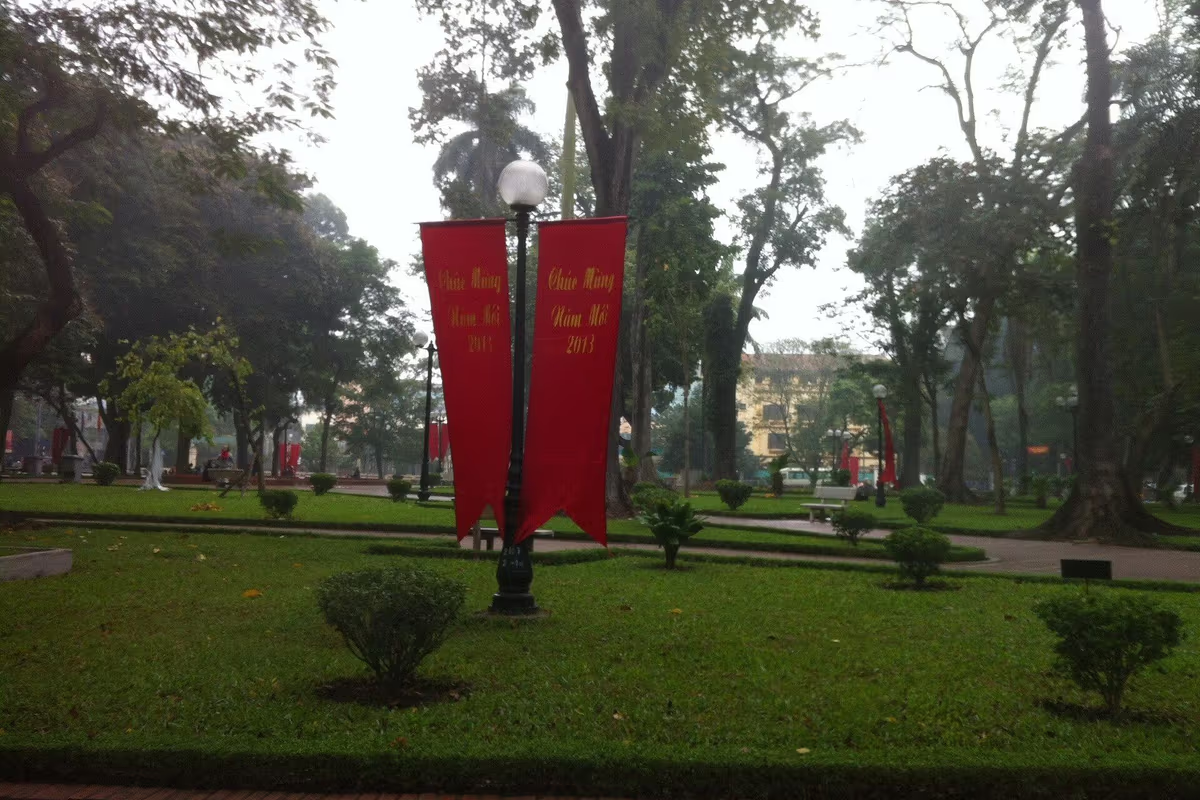
Two things catch visitors out in Hanoi. The first is the air. Vietnamese press and officials describe pollution as worst in the winter and spring months; Dai Doan Ket, in a report of 12 January 2026, described the problem as especially bad in those months and noted a trial forecasting system called HanoiAir run by the city’s Department of Agriculture and Environment with the national forecasting centre. We did not verify a seasonal average, so check a live reading on the day. The second is heating: most small hotels and cafes have none, and the damp makes 15°C feel colder than it does at home.
What Hanoi does well in the cold is the evening: hot food, hot drinks and indoor shows. We cover the three best-known in our guide to water puppets, egg coffee and food tours, and the daytime routes in things to do in Hanoi and two days in Hanoi. For a day out, Ninh Binh is a good choice in a cool, calm winter, and our ranked day trips show what else is within reach. The rice terraces of Pu Luong, Mai Chau and Mu Cang Chai are as bare after the autumn harvest as Sapa’s, so if they are on your list, read our guide to choosing between them before you go in winter.
Sapa and the High North: Cold, Foggy and Quiet
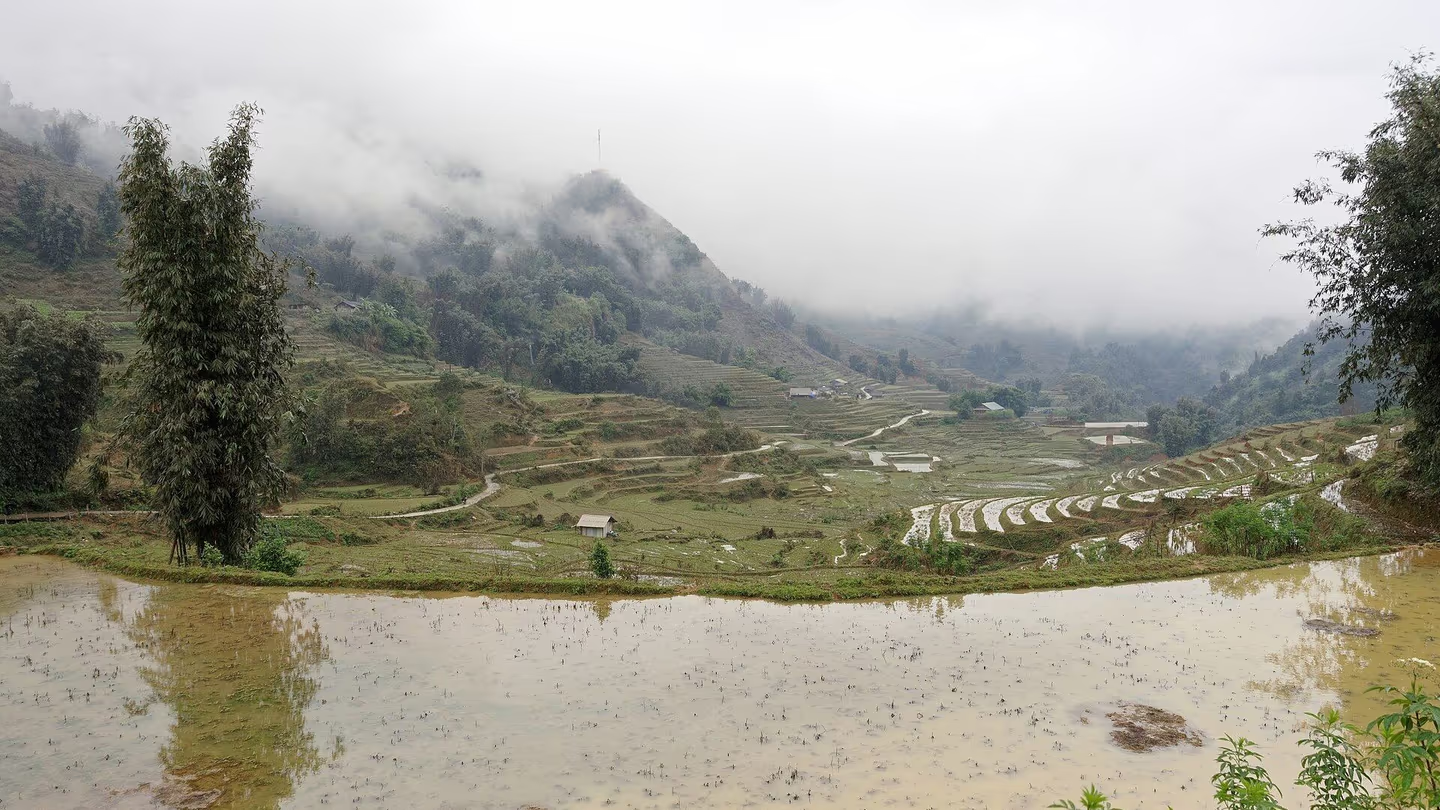
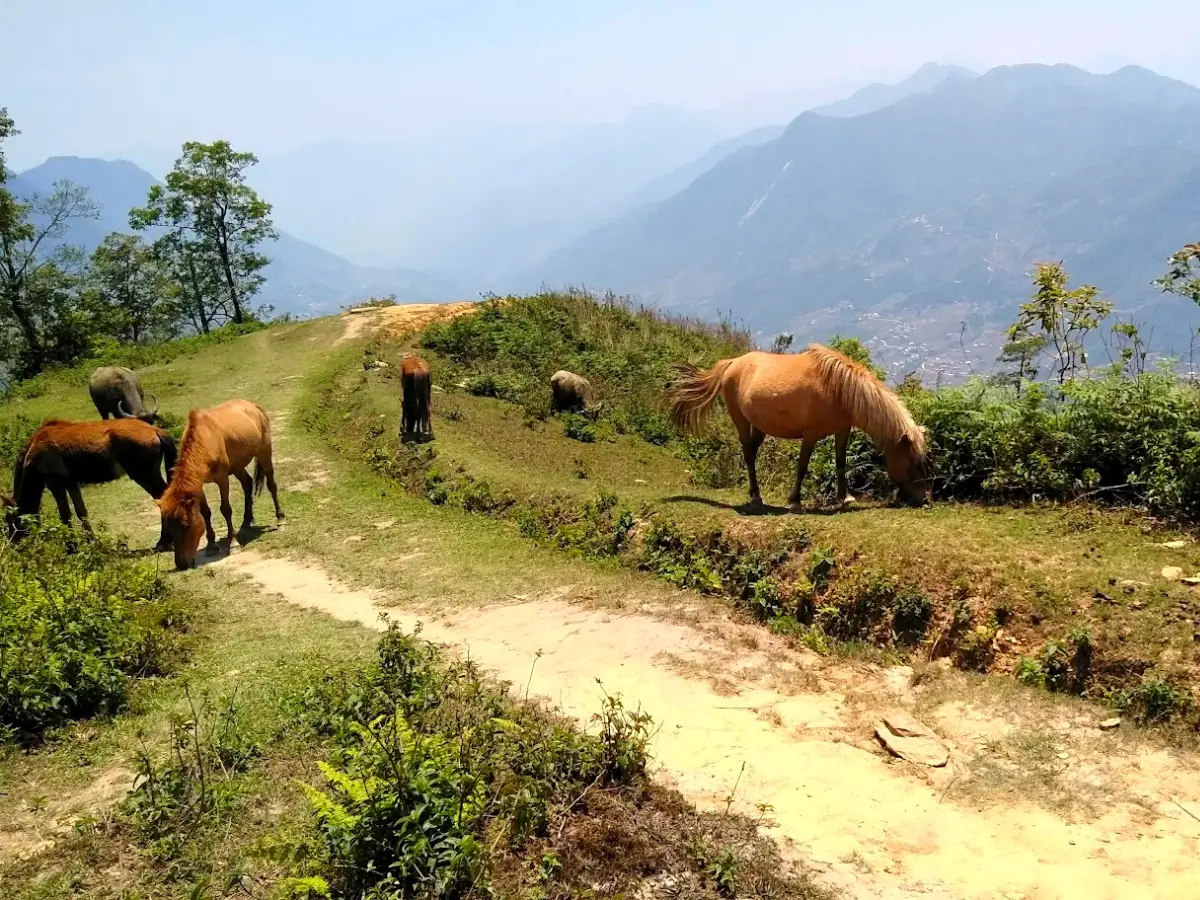
Sapa in December and January is a cold-weather destination: cloud on most mornings, near-freezing nights on cold spells, and terraces that are neither green nor gold.
Sapa town sits between roughly 1,500 and 1,800 m depending on which source you read, and that height is the difference. The lowland border city of Lao Cai, in the WMO data, shows a January high of 20.2°C and a low of 14.5°C. Up the mountain it is much colder, and we found no official monthly average for the town, so we will not quote one. What we can give you are events. On 24 January 2016 snow fell heavily in Sa Pa; the director of the Lao Cai hydrometeorological forecasting centre told VnExpress that it reached −3.2°C at 10 a.m., the lowest in the agency’s records there, after the station read −2°C at 6 a.m. Other outlets reported readings as low as about −4°C that morning, and we did not reconcile the two. On Fansipan, Vietnam News reported frost about half a centimetre thick on the summit on Christmas morning 2025, with 1 to 3°C and the ice melting by about 7:30.
A strong El Niño lowers the odds of such cold this year. That is our inference from the outlook of weaker cold air, not a forecast for Sapa. If frost or a rare snow day is the reason you are coming, do not count on it, and check Fansipan’s month-by-month weather first.
The cold has a bright side. Winter is the quiet season, the air is clear on the afternoons the cloud lifts, and the villages are calm. Our December guide for Sapa gives a fuller verdict, and Sapa weather by month and the best time to visit Sapa put winter beside the other seasons. Those pages use our guides’ own experience for temperatures; this page uses only published records. What we tell travellers from the ground is simple: choose valley-floor walks over ridge walks, start after the morning fog thins, carry a rain shell, and give Sapa at least two days so one clear window can be found. For the Hmong New Year, see our festival guide.
To reach Sapa from Hanoi, the bus, train and van options run all winter, and the timetable shows the hours. Treat a winter trek as a walk through villages and cloud, not a harvest photo shoot. We sell Sapa treks only; these suit the cold months.
Walk Sapa’s Valleys in Winter
 Local Favourite
Mountain Views and Villages Trek
Quieter ridge and village trails above the valley, best on the days the cloud lifts.
 1-Day Trek
Trekking Through Rice Terraced Fields
The Lao Chai to Ta Van valley day, on the valley floor, with a local guide.
 Homestay
Rice Terraced Fields & Homestay
A night with a local family in the valley, with a home-cooked dinner.
Central Vietnam: Hue, Da Nang and Hoi An, Wet in December and Dry by January
The central coast is worth visiting in January, and risky for a December beach week: Da Nang’s December normal is 272 mm over 21 rain days, falling to 83 mm over 14 days in January.
The WMO data has no Hue station, so for Hue we lean on the forecasting centre’s outlook, which puts December rain 20 to 40 mm below average from Quang Tri to Hue. A drier-than-usual month is still a month with rain, and the same coast can flood. If you are choosing between December and January, the numbers say January for this region by a wide margin. Temperatures are close: Da Nang averages 25.3°C by day in December and 25.2°C in January, with nights near 20°C.

Hoi An is the town where the calendar shows most. In the second half of the winter the old town is dry and walkable, the tailors are busy before Tet, and the lanterns hang over bright streets, as in the photograph above. In early December the Thu Bon River can rise, so ask your hotel about the river level if the forecast is wet, and book a flexible cancellation window. For Da Nang and its beaches, see things to do in Da Nang, and if you are coming from the mountains, the best way from Sapa to Da Nang compares the routes.
The Highlands and the South: Da Lat, Nha Trang, Ho Chi Minh City and the Mekong
The highlands and the south are the safest regions for sun in these months, with one exception on the coast: Nha Trang is wet in December.
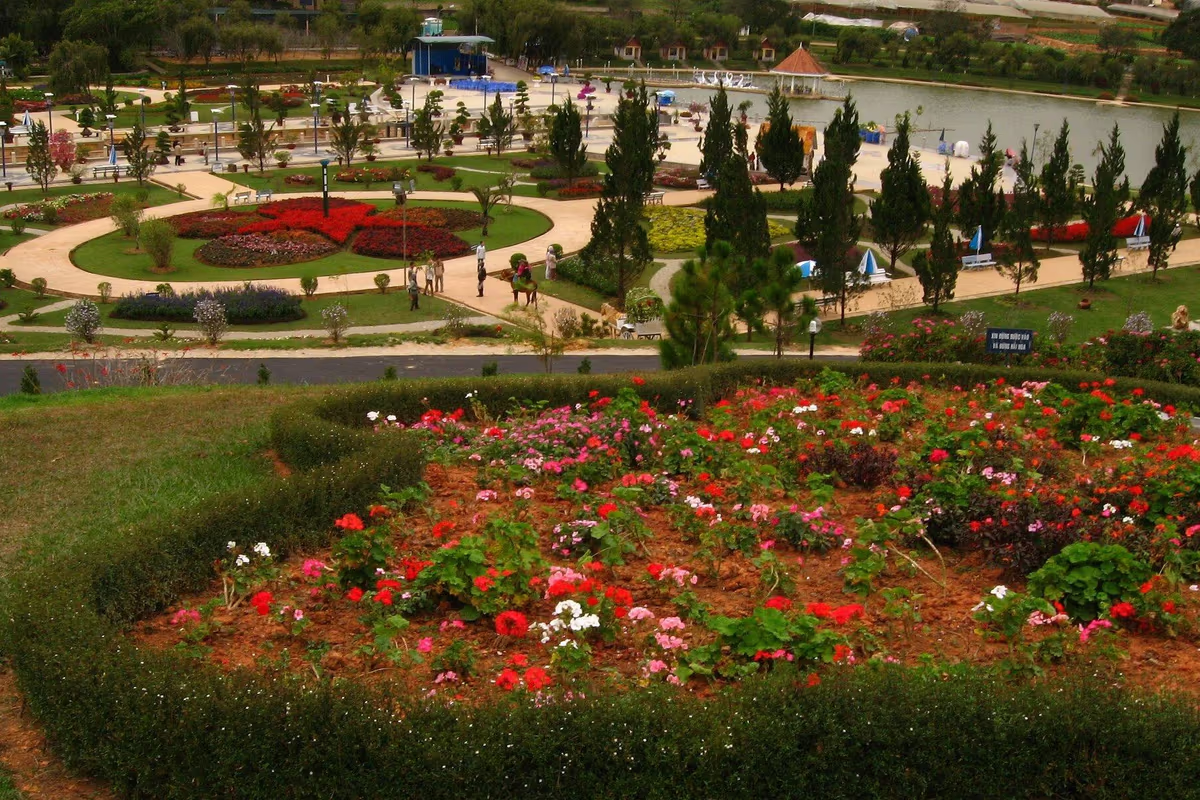
Da Lat has no station in the WMO list, so we use Buon Ma Thuot, lower in the same highlands, as a rough guide to the dry season: 26 mm in December and 7 mm in January, with nights near 18 or 19°C. Da Lat sits higher and is cooler; a local news site reported a 3°C morning there in January 2026, the coldest since 2014, but named no measuring agency, so treat it as a rare event. The festival dates, 19 to 31 December, mean you should book early.
Nha Trang averages 224 mm over 15 days in December, but only 54 mm over 9 days in January. That gap is the most important beach fact in this guide: a December week in Nha Trang can be wet, while January is far drier. The outlook expects 50 to 100 mm less rain than average along the South Central coast in December, which helps, but we would still rather book January.
Ho Chi Minh City and the Mekong Delta are the most reliable: Ho Chi Minh City sees 41 mm over five days in December and 12 mm over two in January, with daytime highs above 31°C. Heat, not rain, is the problem, so plan early starts and a long lunch. For the Delta, the outlook says saltwater intrusion may arrive early this year; that mostly affects farmers and the orchards you visit later in the dry season, but check recent news before booking a Delta stay in February to April.
Phu Quoc is often named as the best island for winter, but we found no official monthly averages, and the travel pages we read contradicted each other on its seasons, so we make no claim beyond: check the forecast.
Christmas, New Year and the Tet Squeeze
Tet 2027 falls on 6 February, and the public-sector holiday runs from Thursday 4 February to Wednesday 10 February 2027, so the last week of January is when Vietnamese and foreign travellers collide. Our Tet 2027 guide covers closures and prices in detail.
The holiday dates come from the government’s own paperwork. Document 10065/VPCP-KGVX of the Government Office, dated 2 October 2026, conveys the Deputy Prime Minister’s agreement with the Ministry of Home Affairs: seven days from 4 to 10 February 2027, which is the 28th of the last lunar month to the 5th of the first month. Five of the seven are statutory and two are compensation days for weekends, according to press reports of the Ministry’s notice of 9 October 2026. The sources we read did not state the first day of the new year; counting back from the fifth, it is Saturday 6 February. Private employers follow the Labour Code, which gives five paid Tet days, and in our experience many family-run shops and restaurants close for longer.
The transport side is public too. Vietnam Railways began selling Tet tickets at 8:00 on 5 September 2026: about 300,000 tickets on 57 train trips with more than 800 carriages, for a Tet travel period of 23 January to 25 February 2027 (Saigon Station via SGGP, 5 September 2026). We have no official figures for flights, sleeper buses or hotel prices, so we give no percentages. The railway’s dates tell you when demand begins, and we expect the last week of January to be when a cheap, flexible plan stops being possible.
That is why January splits in two. Before about the 22nd, the weather is at its best across the country and the crowds are the winter norm. After it, expect full trains and cities that empty out around 6 February as people go home. Some visitors love Tet for its flowers and atmosphere; if that is you, book internal transport and your first and last nights well ahead, and expect many restaurants to close in the first days of the new year.
Two Winter Routes That Work
Two ten-to-twelve-day shapes fit the data: a December route that keeps the central coast to the end of the month, and a January route that finishes before Tet.
December, north to south. Start in Hanoi for three nights, add Ninh Binh or Sapa, then fly to Da Lat for the flower festival and finish in Ho Chi Minh City or the Mekong Delta. The centre appears only as a short Hoi An stop at the end of the month, if at all. Our 10-day itinerary and northern 5-day itinerary are the base plans.
January, before Tet. Use the first three weeks: Hanoi, Sapa for two or three days, a flight to Da Nang or Hue, three nights in Hoi An, then Ho Chi Minh City by 21 or 22 January. Finish the hardest legs before the railway’s travel period opens. The two-week and one-week itineraries give day-by-day versions, and how many days in Vietnam helps you decide whether twelve is enough.
Add a Few Days in Sapa to Your Winter Trip
1-Day Trek
Trekking Through Rice Terraced Fields
A single day on the valley floor that fits between Hanoi and your flight south.
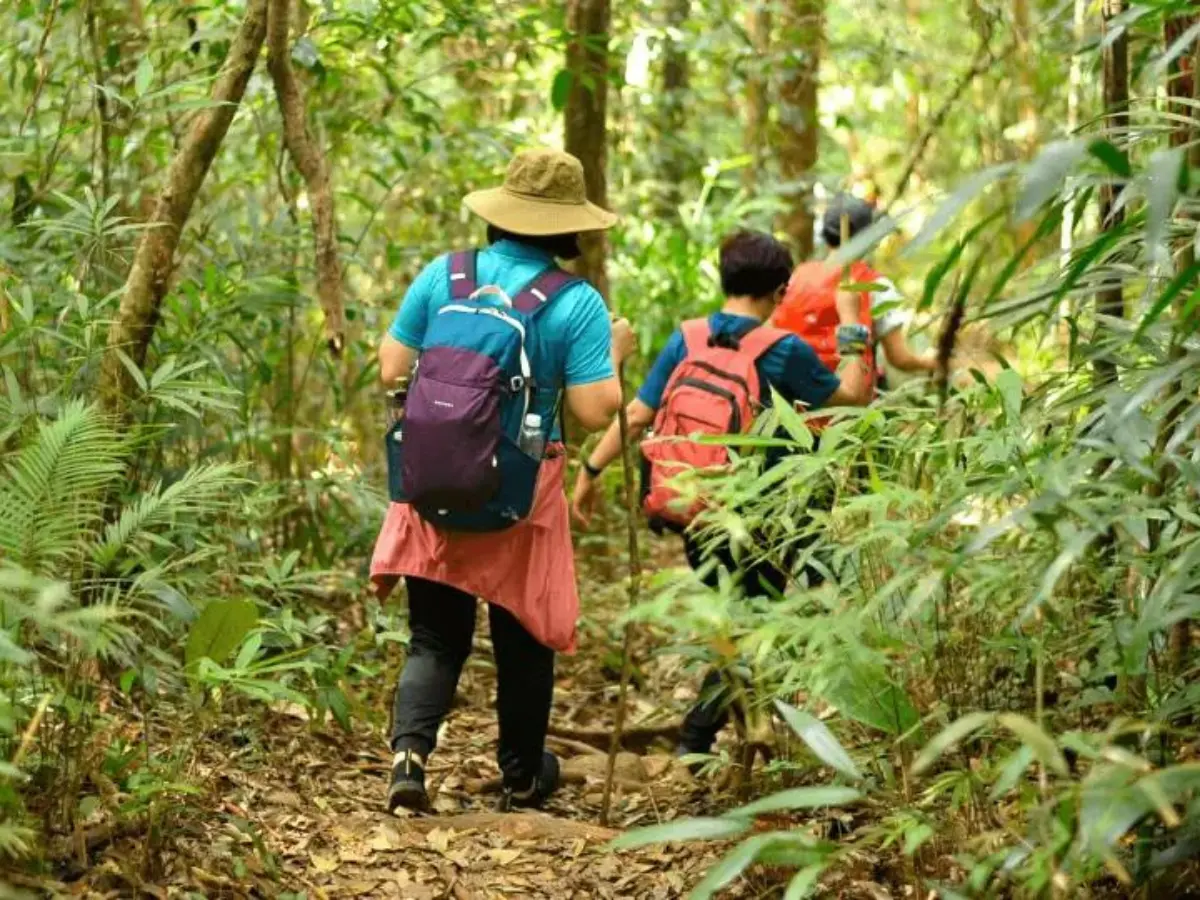 Cable Car
Fansipan Trek One Day Tour – Roof of Indochina
A cable-car day to the summit; it is cold and windy up there, so check the forecast first.
Homestay
Rice Terraced Fields & Homestay
Two days that include an evening by a family fire in the valley.
What to Pack for the Two Months
Pack for two climates at once: a warm, waterproof layer for the north and light, breathable clothes for the south.
For the north, bring a fleece or light down jacket, a rain shell, a hat and a pair of gloves if you go to Sapa, and shoes that grip wet stone. For the centre in December, add a rain jacket and a dry bag for your phone. For the south and the highlands, bring a sun hat, sunscreen and one long-sleeved layer for Da Lat evenings. Our Sapa packing list covers the mountain end. If you would rather not carry boots and poles across the country, rent them at our Sapa office.
Rent at Our Office Before You Trek
 Gear Rental
Trekking Boots Rental
Waterproof ankle-support boots. Cleaned and checked before each rental. Available at 105 Thach Son Street.
 Gear Rental
Walking Poles Rental
Trekking poles available to rent at $2/day at our office, 105 Thach Son Street. Essential for descents.
Sources and How We Checked
Every figure above comes from a source we opened on 31 October 2026. Where a source was a news report of an official document, we say so.
- Climate averages: WMO World Weather Information Service pages for the eight stations, with data from the Viet Nam Meteorological and Hydrological Administration. Reference periods are not shown.
- Winter outlook: the National Centre for Hydro-Meteorological Forecasting, as reported by VTV and VietNamNet on 16 October 2026. We did not read the centre’s own bulletin.
- Tet 2027: Government Office document 10065/VPCP-KGVX of 2 October 2026, as reported by the government news site Bao Chinh Phu, and the Ministry of Home Affairs notice of 9 October 2026 as reported in the press. The 6 February date is our count.
- Public holidays: Article 112 of the 2019 Labour Code, from press and law-information summaries, not the full legal text.
- Tet trains: Saigon Station and Vietnam Railways, via SGGP, 5 September 2026.
- Other events: Vietnam News, 14 October 2026 (Da Lat festival) and 25 December 2025 (Fansipan frost); VnExpress, 24 January 2016 (Sa Pa snow); Dai Doan Ket, 12 January 2026 (Hanoi air); a hazard-monitoring site quoting VnExpress, 13 December 2018 (Da Nang rain).
We could not verify monthly averages for Sapa, Hue, Da Lat and Phu Quoc, a Ha Long Bay fog record, flight and hotel prices around Tet, or the reference years of the WMO averages. Check before you go; official decisions can change.
Frequently Asked Questions
January suits most routes. The central coast is far drier (Da Nang averages 83 mm in January against 272 mm in December), and the south and highlands are dry in both months. Finish before about 22 January, when Vietnam Railways' Tet travel period begins.
In the north, yes. Hanoi averages 22.1°C by day and 15.4°C at night in December, and 20.0°C and 14.6°C in January; Sapa is colder still. Ho Chi Minh City stays above 31°C by day. These are WMO long-term averages checked on 31 October 2026.
Often in early December, much less in January. Da Nang averages 272 mm over 21 rain days in December and 83 mm over 14 days in January. The national forecasting centre expects below-average December rain from Quang Tri to Hue, but keep a spare day.
Tet falls on 6 February 2027, and the public-sector holiday runs from 4 to 10 February. Vietnam Railways lists 23 January to 25 February as its Tet travel period. You can travel, but transport is full and many family businesses close, so book early or finish by about 22 January.
Yes, if you want a cold, quiet, misty mountain landscape and accept that the terraces are bare. Nights can approach freezing, frost is possible on Fansipan and fog is common. For green or golden terraces, come in spring or autumn.
The national forecasting centre's outlook of 16 October 2026 expects temperatures 0.5 to 1.5°C above average in December and January, weaker cold air and less rain in the centre and south. It is a monthly outlook, so still pack for cold in the north.
The far south is the safest bet, and on the mainland coast January beats December. Nha Trang averages 224 mm of rain in December and 54 mm in January. We found no official Phu Quoc averages, so check its forecast.
No. Article 112 of the 2019 Labour Code lists New Year's Day, Tet (5 days), the Hung Kings commemoration, 30 April, 1 May and National Day, and Christmas Day is not among them. Tourist-area hotels and restaurants still fill up around it.