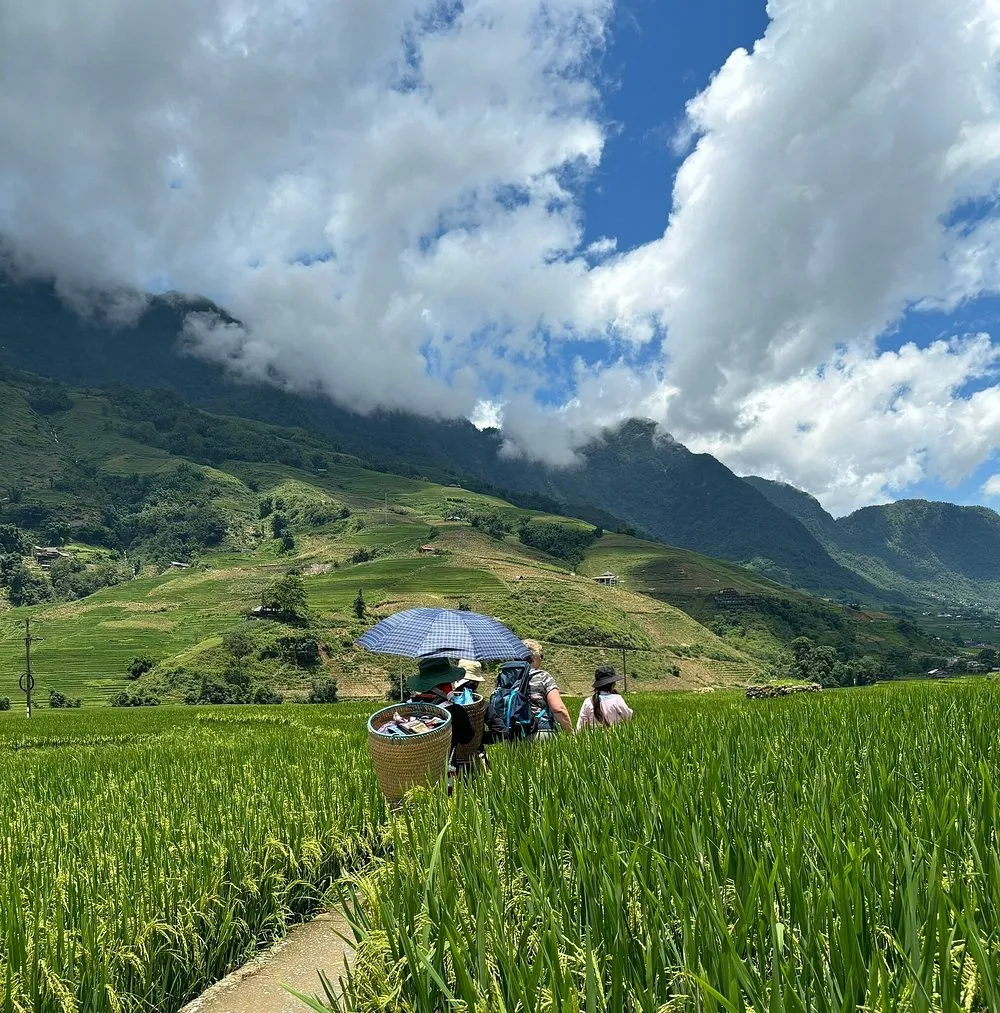
 Sinh Giang
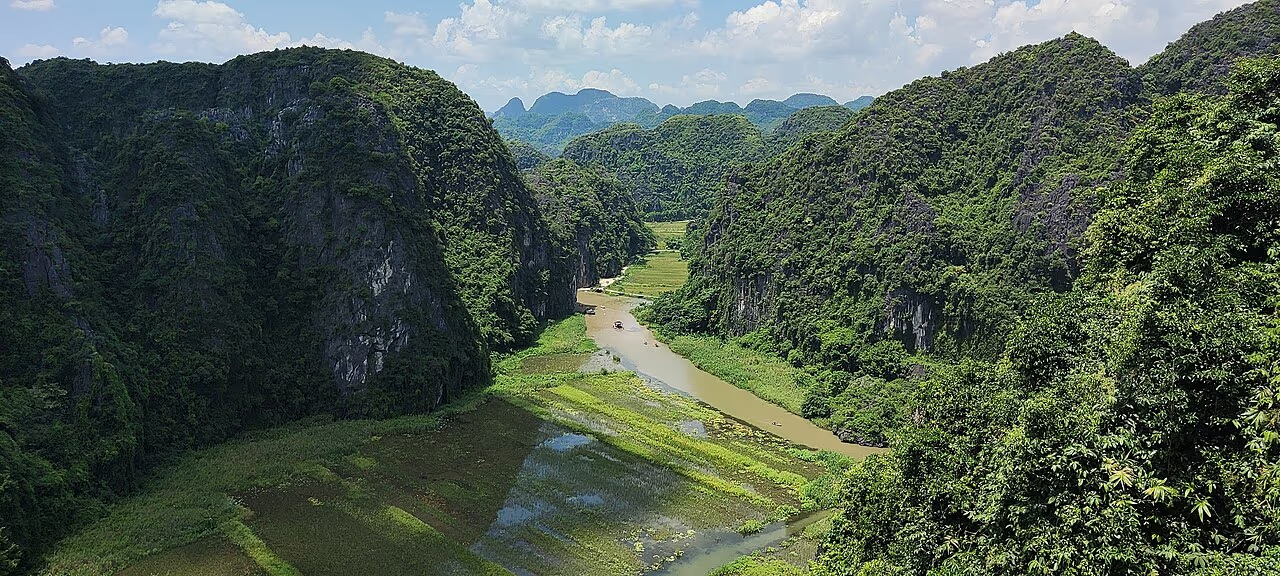
Ninh Binh is the most spectacular place in Vietnam that most people have never heard of — and the one that surprises travelers most. Two hours south of Hanoi, it has the same towering limestone karsts that made Ha Long Bay famous, except here they rise not from the sea but from a patchwork of emerald rice paddies and slow green rivers. You explore it the perfect way: drifting beneath the cliffs in a little rowing boat, the boatwoman rowing with her feet, herons lifting off the reeds.
It's earned its nickname — "Ha Long Bay on land" — but Ninh Binh is more than scenery. This was Vietnam's first imperial capital a thousand years ago, so ancient temples and sacred caves are woven through the landscape, and the whole Trang An area is a UNESCO World Heritage Site for both its nature and its culture. It's also blissfully easy: a day trip or relaxed overnight from Hanoi, flat and green and made for cycling.
This is the complete local guide — what to do, the all-important Trang An versus Tam Coc decision, a perfect-day plan, how to get there, when to come, and honestly where Ninh Binh fits in a wider trip through the north (hint: it pairs beautifully with the mountains). Let's start with the essentials.
The best part is how complete a place it is: in a single relaxed day you can drift through a UNESCO river-cave landscape, climb to a postcard viewpoint, stand in a thousand-year-old imperial temple and cycle home through the paddies at sunset — all an easy hop from the capital, and all for the price of a single Hanoi taxi back home. Few destinations pack so much beauty and history into so little time and money.
Ninh Binh at a Glance
The quick orientation before you plan — everything you need to know in one box.
Is Ninh Binh Right for You?
Ninh Binh is one of the easiest "yes" answers in northern Vietnam, but it suits some travelers more than others. Here's the honest fit.
❤️ You'll love Ninh Binh if you…
🤔 It may not suit you if you…
Trang An vs Tam Coc: The Boat Routes
The single most-asked Ninh Binh question is which boat trip to take. The two main options — Trang An and Tam Coc — are both wonderful but quite different, and there's a quieter third option in Van Long. Here's how they compare so you can choose.
| Route | Duration | Scenery | Crowds | Best for |
|---|---|---|---|---|
| Trang An | ~3 hrs | Caves, temples, film sets | Busier, well-organised | First-timers, the full experience |
| Tam Coc | ~1.5 hrs | Rice fields & cliffs | Busy midday, magical at dawn | Rice season, photography |
| Van Long | ~1.5 hrs | Still wetland, wildlife | Quiet & serene | Peace, birdwatching, escaping crowds |
The short answer: if you can only do one, choose Trang An — the three-hour route glides through nine caves and past riverside temples (it doubled as a film set for Kong: Skull Island), and the boats are well managed. Choose Tam Coc if you're visiting in the late-May-to-June rice harvest, when the valley turns gold, or want a shorter, cheaper ride. And if crowds aren't your thing, the quiet Van Long wetland is a serene alternative few tourists reach.
One practical note on tickets and timing: Trang An and Tam Coc are separate sites with separate boat tickets, a short drive apart — you don't need to do both, and trying to squeeze in two long boat rides in one day is a recipe for exhaustion. Pick the one that matches your trip (and the season), and spend the saved time cycling or at Mua Cave instead.
The Best Things to Do in Ninh Binh
Beyond the boats, Ninh Binh packs an extraordinary amount into a small area — viewpoints, ancient temples, vast pagodas and quiet nature reserves, almost all within a short cycle or drive of each other.
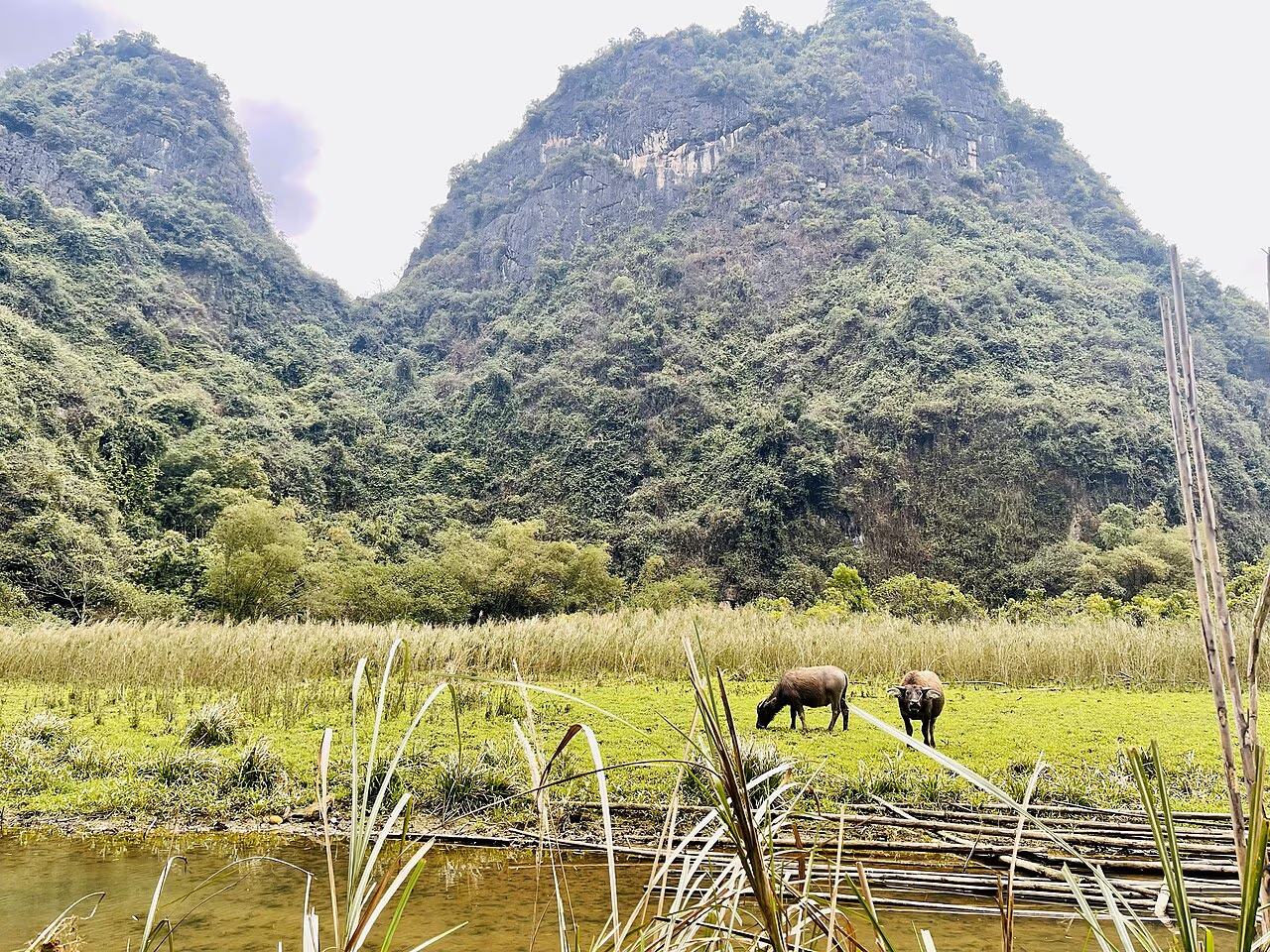
The beauty of Ninh Binh is its compactness: unlike most of Vietnam, where the highlights are hours apart, here a boat trip, a viewpoint, an ancient temple and a vast pagoda all sit within a roughly 15-kilometre radius. That is what makes it such a satisfying day — you are never in a vehicle for long, and the gaps between sights, cycled through rice fields and past grazing buffalo, are as lovely as the sights themselves.
1. Glide Through Trang An
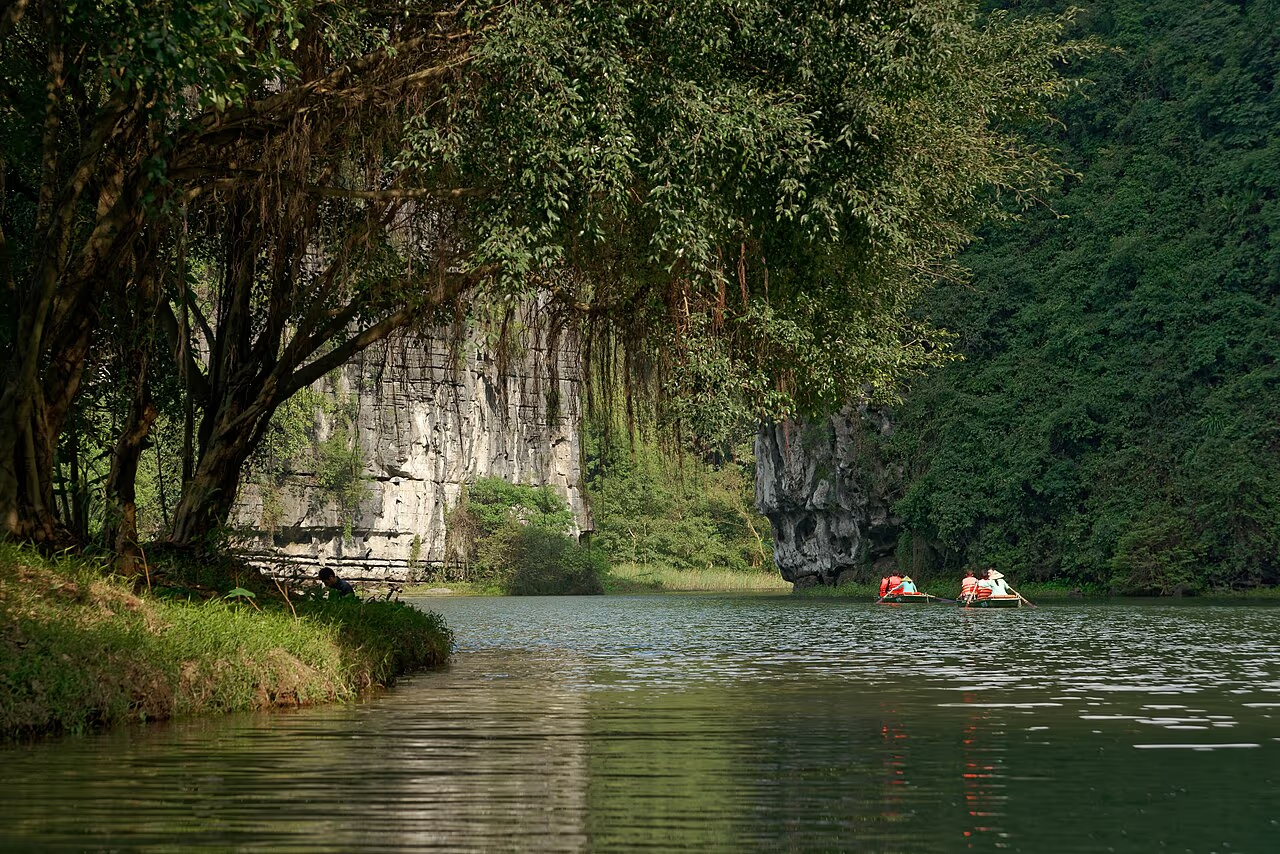
The Trang An Landscape Complex is the heart of Ninh Binh and the reason it's a UNESCO World Heritage Site. Your rowing boat winds for three hours through a maze of flooded valleys, slipping through low, dark river caves (duck your head) and stopping at ancient temples tucked against the cliffs. It's serene, cinematic, and the single best thing to do in the region — book the longer route for the full nine-cave loop.
What makes Trang An special is how it layers nature and history. Between the caves you stop at small temples reached by stone steps — quiet, incense-scented places dedicated to the kings and generals of the old Hoa Lu court. The boats are limited in number and rowed by local women, so even at its busiest it never feels like a theme park; it feels like drifting through a thousand-year-old landscape that happens to be a film set. Bring sun protection and a little cash to tip your rower.
2. Climb Mua Cave for the View
For the iconic Ninh Binh panorama — the one on the cover of every guidebook — climb the roughly 500 stone steps up Mua Cave (Hang Mua). At the top, a stone dragon snakes along the ridge and the whole Tam Coc valley unfolds below: the river bending through golden or green paddies, hemmed in by jagged karst peaks. Go early morning or late afternoon to dodge the heat and the crowds; it's a short but steep climb, and the reward is the best view in the region (shown at the top of this guide).
There are actually two peaks at the top of Mua Cave — the dragon ridge on one side and a small pagoda-topped summit on the other — so take the few extra minutes to see both views before you descend. It's the one climb in Ninh Binh, and at maybe twenty minutes up it's manageable for most fitness levels, but wear proper shoes: the stone steps are uneven and slippery when wet.
3. Take the Tam Coc Boat Through the Rice Fields
Tam Coc — "three caves" — is the gentler, shorter boat trip, and in the late-May-to-June harvest it's pure magic: the river winds between cliffs through a sea of ripening gold rice. The rest of the year it's lush green. Come at dawn for the soft light and the genuinely local riverside market before the day-trippers arrive, and you'll see Tam Coc at its most beautiful and least crowded.
The Tam Coc boats are rowed return along the same river, passing through three natural caves (hence the name, "three caves") where the ceiling drops so low you instinctively duck. It's gentler and more pastoral than Trang An — less about temples and caves, more about that dreamlike glide between cliffs and rice. A gentle warning: some rowers will press you to buy drinks or souvenirs mid-river; a polite, friendly "no thank you" is all you need.
4. Step Back in Time at Hoa Lu
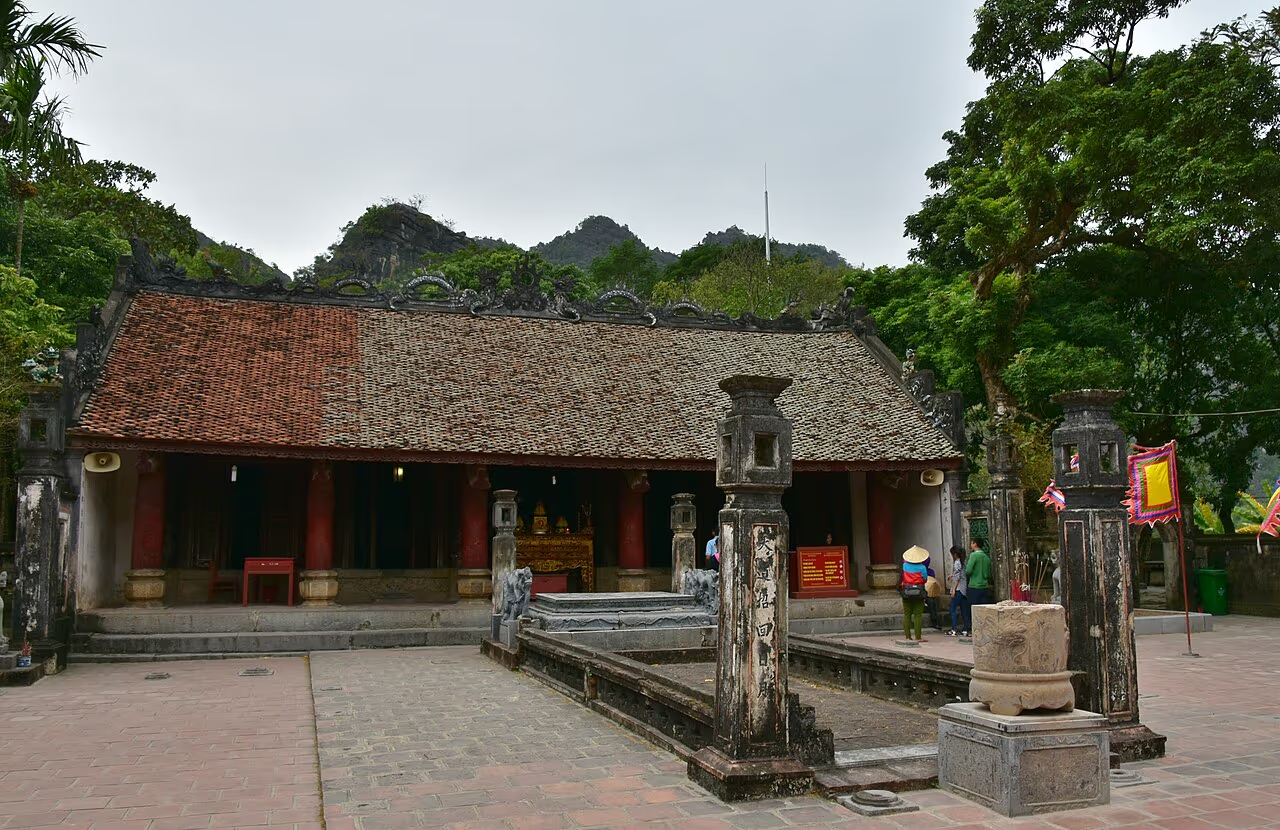
A thousand years ago, Hoa Lu — not Hanoi — was the capital of Vietnam, seat of the Dinh and Le dynasties. The ancient citadel is mostly gone, but two atmospheric temples honouring the emperors remain, set among the karst with their carved stone, tiled roofs and courtyards. It's a quiet, shaded, deeply historic counterpoint to the boats, and an easy add-on to a Trang An morning.
Take a few minutes to understand what you're looking at: in the 10th and 11th centuries, this cramped valley ringed by karst was deliberately chosen as the capital precisely because the mountains made it a natural fortress. The kingdom later moved to what became Hanoi, and Hoa Lu faded into the quiet countryside you see today. That arc — from imperial seat to sleepy village — is what gives the temples their poignant, time-stopped atmosphere.
5. Marvel at Bai Dinh Pagoda
Bai Dinh is the largest Buddhist temple complex in Southeast Asia — a sprawling, modern construction of vast halls, a 100-tonne bronze Buddha, a corridor lined with 500 stone arhat statues, and gilded ceilings that stop you in your tracks. It's grand rather than ancient, and electric-buggy rides ferry visitors across the huge grounds. Pair it with Trang An, which sits right next door.
Opinions on Bai Dinh divide travelers: some find it breathtaking, others a little too new and commercial compared with Ninh Binh's ancient sites. Both are fair. Go for the sheer scale and the photogenic arhat corridor, keep your visit to a couple of hours, and you'll enjoy it; just don't expect the worn, centuries-old patina of Hoa Lu. Early morning or late afternoon avoids both the heat and the tour-group crush.

6. Find the Cave Pagodas of Bich Dong
Just beyond Tam Coc, Bich Dong is a serene three-tier pagoda built into a karst cliff and its caves, reached over a little stone bridge and through a tunnel in the rock. It's smaller and quieter than the headline sights, lit by shafts of light and incense smoke, and a lovely, atmospheric stop for anyone who likes their temples a little wild and off the main path.
Nearby, two more low-key spots reward the curious: Thung Nham bird garden, where thousands of egrets and storks come home to roost at dusk, and the Trang An-area viewpoints that catch the karst in golden evening light. None of these are must-dos, but they're exactly the kind of unhurried, crowd-free corners that make a second day in Ninh Binh worthwhile.
7. Escape to Van Long & Cuc Phuong
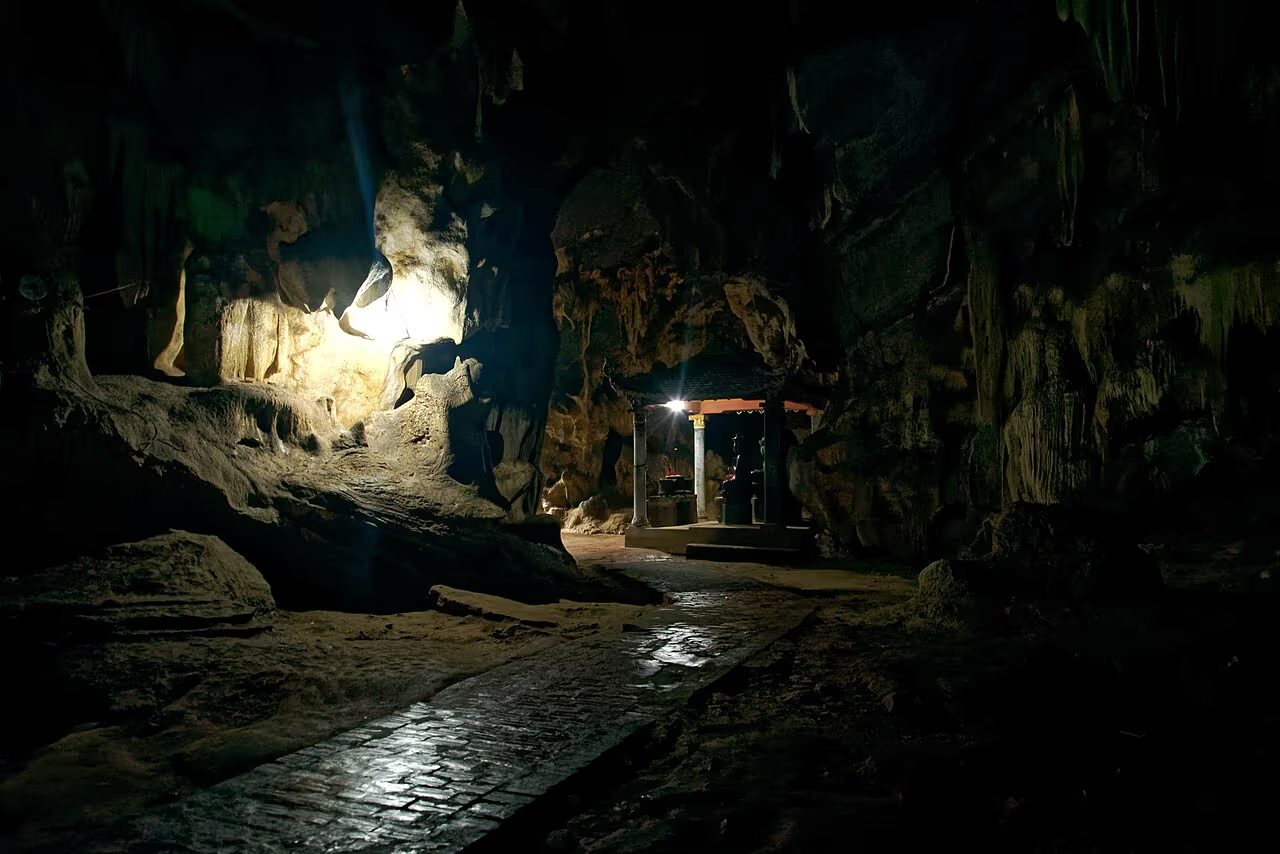
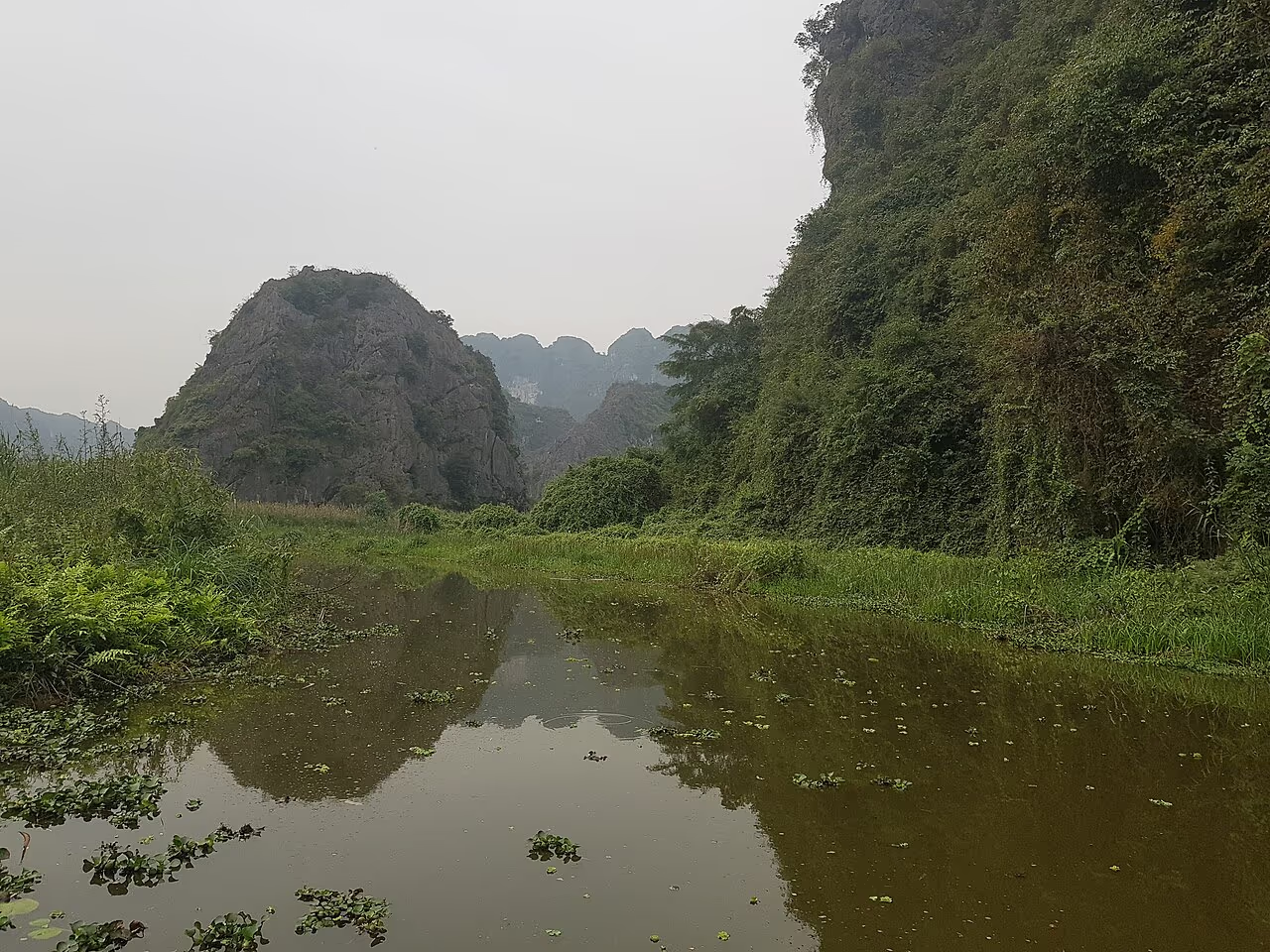
For nature and quiet, two reserves reward the extra effort. The Van Long Nature Reserve is a vast, mirror-still wetland where a quiet sampan glides past karst reflections and rare langurs cling to the cliffs — the serene antidote to busier Tam Coc. And Cuc Phuong, Vietnam's oldest national park, offers ancient rainforest, a thousand-year-old tree, caves, and an excellent endangered-primate rescue centre, an hour or so away.
Of the two, Van Long is the easy add-on — close to Tam Coc, a one-hour sampan ride, and astonishingly peaceful, with a real chance of spotting the rare Delacour's langur on the cliffs. Cuc Phuong is more of a commitment (best as its own half- or full day) but deeply rewarding for nature lovers: jungle trails to a 1,000-year-old tree, prehistoric caves, and the moving work of the primate and turtle conservation centres near the gate.
"We almost skipped Ninh Binh and I'm so glad we didn't. The Trang An boat trip through the caves was magic, and climbing Mua Cave at sunrise — just us and that view — was the most beautiful morning of our whole Vietnam trip. Then we went up to Sapa and somehow it got even better."
— Eva & Lukas M., Vienna, Austria (October 2025)
A Perfect Day in Ninh Binh
Only have one day? Here's how to fit the very best of Ninh Binh into it, dawn to dusk, without rushing.
Mua Cave sunrise
Climb the 500 steps for the valley view before the heat
Breakfast + cycle
Fuel up, rent a bike, ride the country lanes
Trang An boat
The three-hour cave-and-temple loop
Lunch + Hoa Lu
Goat (the local speciality), then the ancient capital
Bich Dong
The quiet cave pagoda in the late light
Sunset cycle
Back through the paddies as the karst glows
With a second day, slow right down: a dawn Tam Coc boat, the serenity of Van Long, or a half-day at Cuc Phuong. And don't leave without trying Ninh Binh's signature dishes — mountain goat (de nui) and crispy scorched rice (com chay).
Do not over-plan it, though. Half the joy of Ninh Binh is the unstructured time — pedalling a quiet lane with no particular destination, stopping for an iced coffee with a karst view, watching a farmer work a paddy the way it has been done for centuries. Leave room in the day for the moments you cannot schedule.
What to Eat in Ninh Binh
Ninh Binh has two signature dishes worth planning a meal around. The first is de nui (mountain goat) — the karst hills are home to herds of free-ranging goats, and the meat, typically grilled or seared and served with fresh herbs and rice paper, is the local delicacy. The second is com chay, crispy scorched rice: a golden, crunchy rice cake, often topped with a savoury stir-fry, that you'll see in restaurants across the region. Try them together at a local spot near Tam Coc for the classic Ninh Binh meal.
Beyond the specialities, the region does the staples of the Red River delta well — fresh river fish, snails, and the herbs and vegetables grown in those photogenic paddies. Many homestays and family restaurants serve excellent set menus, and eating where the local families eat, away from the boat docks, is both cheaper and better.
How to Get to Ninh Binh
Ninh Binh is one of the easiest trips in the north. It's about 95 km south of Hanoi — roughly two hours — and there are frequent options: the train (a scenic, cheap 2.5-hour ride to Ninh Binh station), limousine vans and tourist buses (the most comfortable, with hotel pickup), and organised day tours that bundle Trang An, Mua Cave and Hoa Lu with transport and lunch. Once there, rent a bicycle or motorbike, or use Grab, to get between the sights.
A tip many travelers miss: the train from Hanoi is genuinely lovely — an old-school, inexpensive ride that rattles south through the countryside in about 2.5 hours and drops you right in Ninh Binh town. It's not the fastest option, but it's atmospheric and stress-free, and a fun alternative to the road for at least one leg of the journey.
Most travelers do Ninh Binh as a day trip or one-night stop from Hanoi, then continue to the mountains. If Sapa is on your list too, the Hanoi–Sapa leg is the one worth booking as a proper, comfortable transfer — we run it door-to-door so you arrive rested.
Pairing Ninh Binh with the Mountains? Get to Sapa Easily


Best Time to Visit Ninh Binh
The most magical time is late May to early June, the brief window when the Tam Coc rice ripens to gold and the valley glows — the region's most photographed moment. After that, the next-best stretch is September to November: dry, mild and clear, with lush green paddies.
Spring (February to April) is pleasant but can be misty and drizzly, which gives the karst an atmospheric, brooding beauty if you don't mind grey skies. Summer (June to August) is hot and humid with afternoon downpours, though the landscape is at its greenest. Whenever you come, start early: the boats and Mua Cave are far nicer — and far emptier — in the cool morning light.
A note on weekends and holidays: Ninh Binh is hugely popular with domestic tourists, so Saturdays, Sundays and Vietnamese public holidays (especially around Tet and the April–May holidays) bring big crowds and full guesthouses. If your dates are flexible, visit midweek — the boats are quieter, the prices softer, and the whole region feels like it's yours.
Where to Stay in Ninh Binh
Where you base yourself shapes the trip. The Tam Coc area is the most popular — walkable, with the widest choice of homestays, bungalows and restaurants, and an easy ride to Mua Cave. The Trang An / Ninh Hai side is quieter and more scenic, with boutique eco-lodges and homestays set right among the karst and paddies, ideal if you want to wake up to the view. Ninh Binh city itself is more functional — handy for the train but lacking the scenery.
The standout experience is a homestay or eco-lodge nestled in the rice fields, where evenings are silent but for frogs and the karst glows at sunset — affordable, characterful, and the reason an overnight beats a rushed day trip. Book ahead in the late-May-to-June rice season and over weekends, when the best places fill fast.
Where Ninh Binh Fits in a North Vietnam Trip
Here's the honest local take. Ninh Binh is superb, but it's a day or two, not a whole trip — and it's at its best as one piece of a wider northern loop. The classic, well-balanced week looks like this: a couple of days in Hanoi, a day in Ninh Binh, an overnight Ha Long Bay cruise, and — the part travelers most often call the highlight — two days trekking in Sapa.
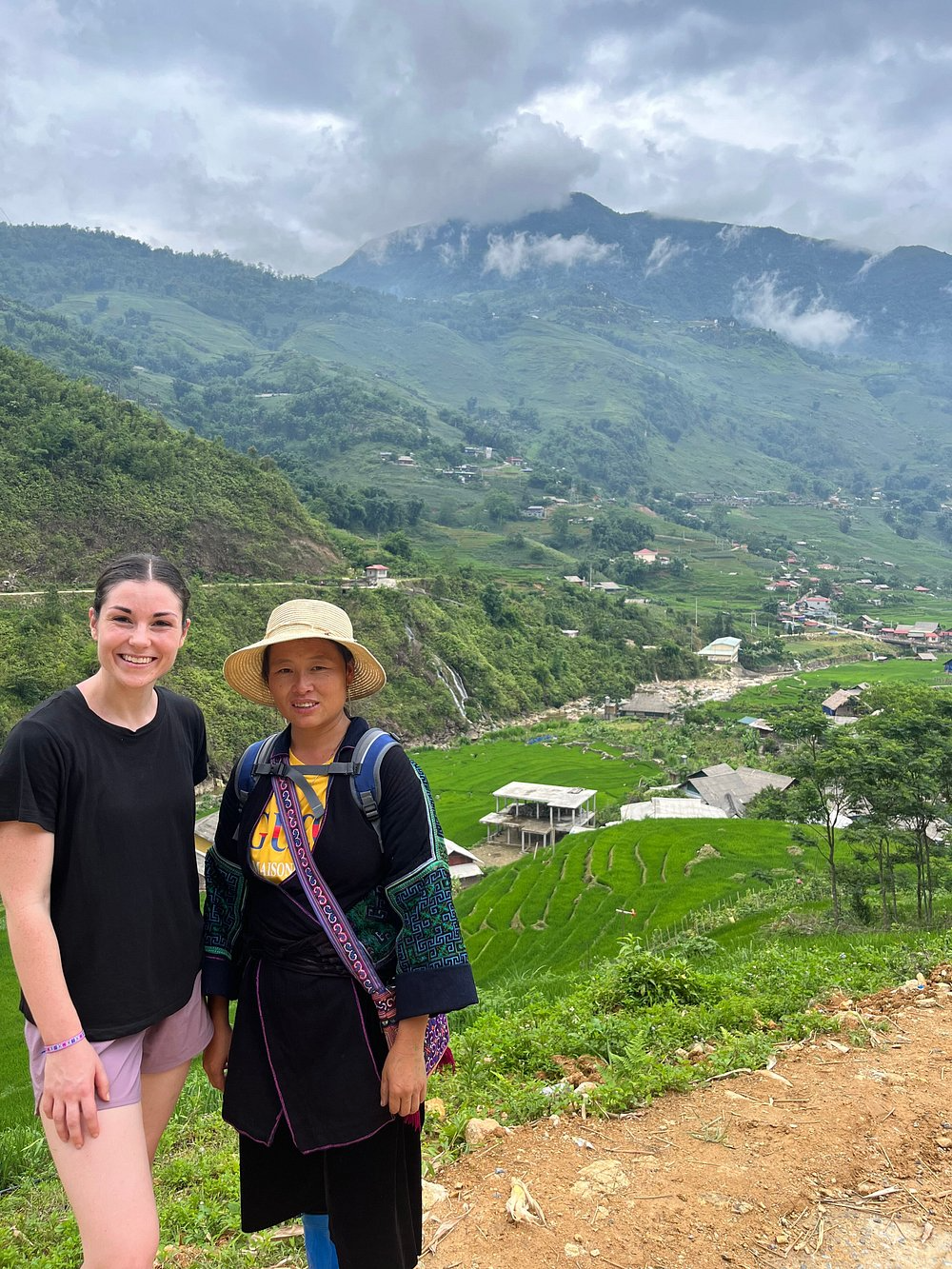
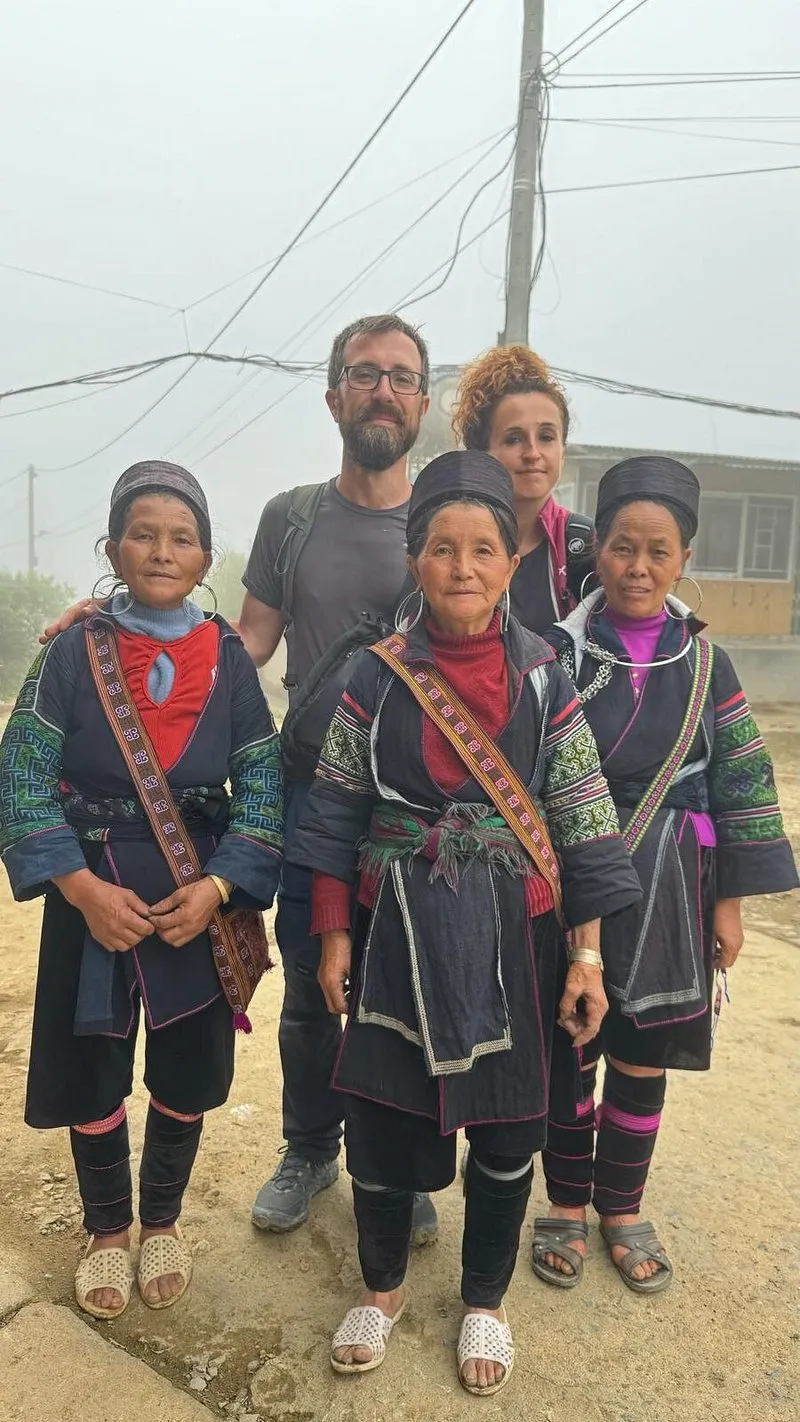
Why pair Ninh Binh with Sapa in particular? Because they're wonderfully complementary. Ninh Binh is gentle, flat, scenery-from-a-boat; Sapa is the high mountains, rice terraces walked on foot, and a home-cooked lunch with a Black H'mong family. One is a serene float through the karst, the other an immersive trek into hill-tribe culture — together they show you the two faces of northern Vietnam. After a relaxed day in Ninh Binh, the Sapa trek is the experience our guests remember most.
If you're building a route, a simple rule helps: do the gentle, low-altitude places (Hanoi, Ninh Binh, Ha Long) in any order that suits your dates, and treat Sapa as the special centrepiece to build the trip around — it needs an overnight and rewards the time most. Ninh Binh, being so close to Hanoi and so easy, slots in almost anywhere, which is part of what makes it such a stress-free, high-reward stop.
Add a Sapa Trek to Your Northern Trip
 1 Day Trek
Trekking Through Rice Terraced Fields
The Muong Hoa Valley on foot with a local guide and a family lunch — the perfect contrast to Ninh Binh's boats.
 2D1N Homestay
Rice Terraced Fields & Homestay
Two days trekking the valley and a night with a local family — the deeper Sapa experience.
 Families & Seniors
Sapa Easy Trekking For Seniors
Gentle, flat paths where poles can be rented at our office — the northern mountains for every age and fitness level.
Heading up to Sapa after Ninh Binh? You don't need to fly with hiking boots — rent waterproof boots and poles at our office in town the day before you trek.
Boots & Poles for the Sapa Leg
 Gear Rental
Trekking Boots Rental
Waterproof ankle-support boots, cleaned and checked before each rental. At 105 Thach Son Street.
 Gear Rental
Walking Poles Rental
Trekking poles at $2/day from our office at 105 Thach Son Street. Essential for the descents.
Ninh Binh Travel Tips
- Start at dawn. Mua Cave and the Tam Coc boats are cooler, emptier and more beautiful in the early morning — the single best tip for the region.
- Cycle between sights. The valley is flat and gorgeous; a rented bicycle is the perfect way to get around and the country lanes are half the charm.
- Choose one boat trip. Trang An for the full cave-and-temple experience; Tam Coc for the rice season; Van Long for peace. You don't need all three.
- Tip the boat rowers. They row for hours, often with their feet — a small tip on top of the ticket is customary and appreciated.
- Try the local food. Mountain goat (de nui) and crispy scorched rice (com chay) are Ninh Binh specialities worth seeking out.
- Pair it with Sapa. A relaxed Ninh Binh day plus a Sapa trek is the ideal northern combination — our team confirms trek availability on WhatsApp in 5–10 minutes.