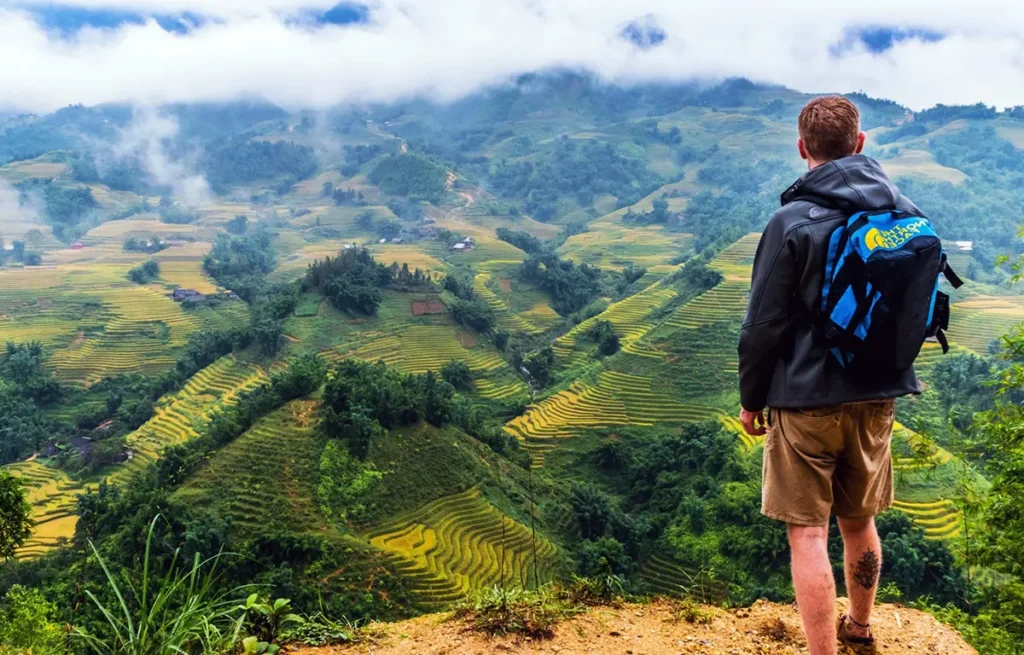
 Sinh Giang
By the time you reach Ta Van in the third week of September, you understand why everyone who comes to Sapa once wants to come back at the same time every year. The rice paddies in the lower Muong Hoa Valley have turned from deep green to amber and gold, and Black H'mong families are already cutting by hand in the lower fields. The air smells of cut grass and wood smoke from the homestay kitchens. The mist that rolled in overnight has lifted by 9am. It is, without question, the best week of the year to be in these mountains.
But September is not the only good time, and there is no single bad time that makes a trip worthless. What changes month by month is what you come for and what you need to prepare for. This guide — written by someone who walks these trails 52 weeks a year — tells you exactly what to expect at every point in the calendar.
The Short Answer — Two Peak Seasons
If you want a direct answer: September to October and March to May are the two windows when Sapa is at its most rewarding for trekking. September and October bring the harvest season — golden terraces, cooperative weather, and the most photogenic light of the year. March to May brings the plum and peach blossoms in the higher villages, dry trails, and flooded terraces in April that reflect the sky like mirrors.
Every other month has something going for it. December has the cold-morning mist and, occasionally, frost on Fansipan. June has waterfalls at full flow. January is quiet and atmospheric if you dress correctly. The only period we gently advise against is late July and early August, when rainfall is at its heaviest and trail erosion is at its worst — but even then, we run tours daily.
| Month | Rating | Highlights | Watch out for |
|---|---|---|---|
| January | Fair | Quiet, misty, cold atmosphere | Cold (4–8°C nights), possible frost |
| February | Fair | Plum blossoms begin; H'mong New Year | Cold and damp; Tet crowds in town |
| March | Good | Blossoms; Gau Tao Festival; dry trails | Can be hazy before rains arrive |
| April | Peak | Flooded terraces; Khau Vai Love Market | Afternoon showers building |
| May | Good | Green terraces; warm; pre-rainy season | Rain starts mid-May |
| June | Fair | Lush green; waterfalls full; fewer crowds | Heavy rain; muddy trails |
| July | Fair | Deep green terraces; waterfall season | Heaviest rain month; slippery trails |
| August | Fair | Late-summer green; less rain than July | Still wet; occasional trail closures |
| September | Peak | Golden harvest; best photography light | Book early — fills up fast |
| October | Peak | Late harvest; clear skies; comfortable | Busy on weekends |
| November | Good | Post-harvest quiet; good visibility | Cold evenings; shorter daylight |
| December | Good | Mist photography; cold atmosphere | Cold and cloudy; grey light mid-day |
Our 34 Most Popular Sapa Tours
 Best Seller
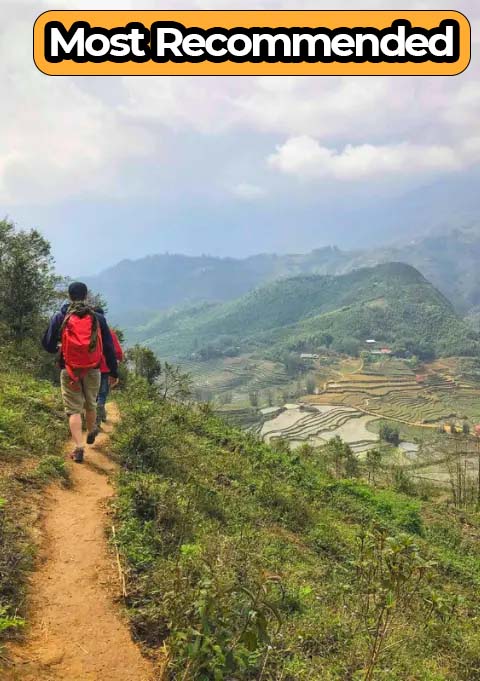
Trekking Through Rice Terraced Fields
Walk the Muong Hoa Valley floor through Lao Chai & Ta Van — best September–October.
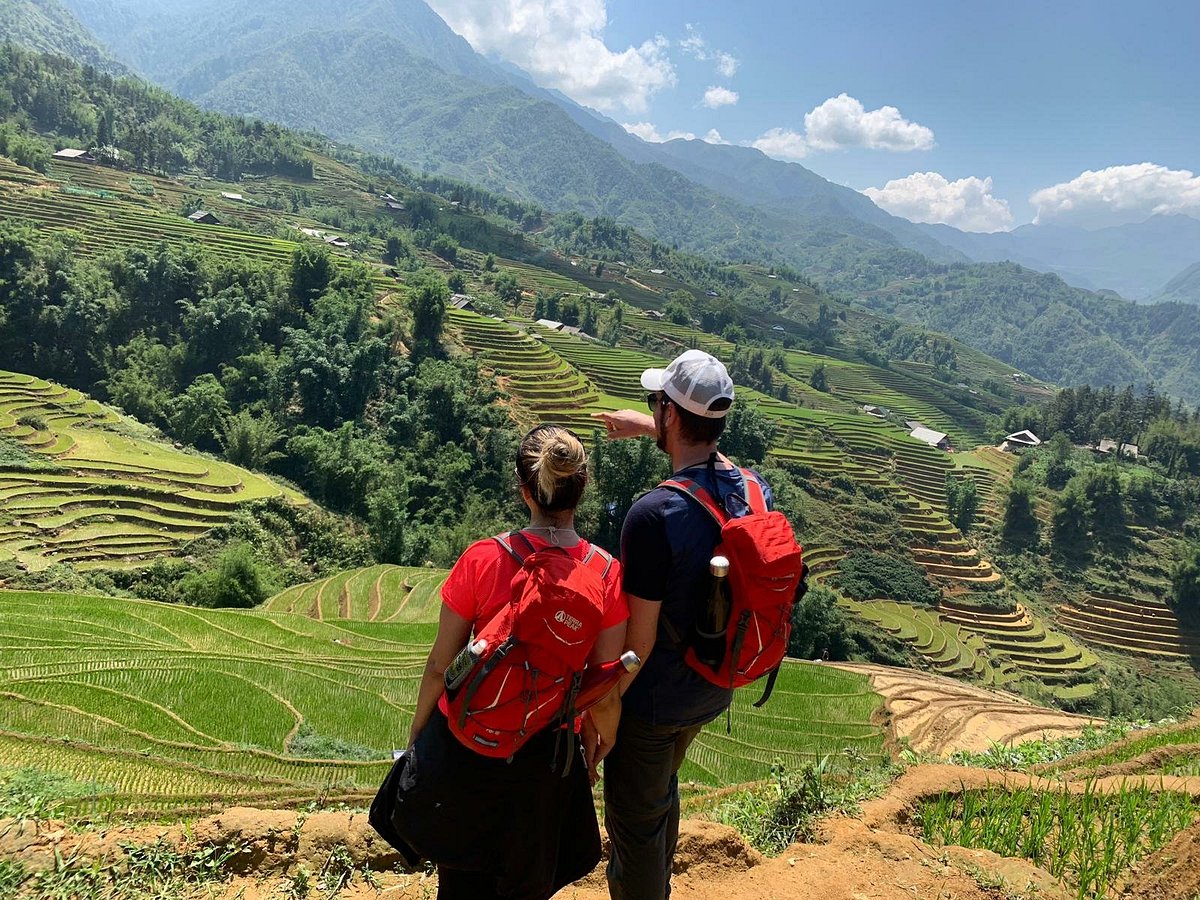
Rice Terraced Fields & Homestay
Overnight with a Black H'mong family in Lao Chai — home-cooked dinner, terraces at dawn.
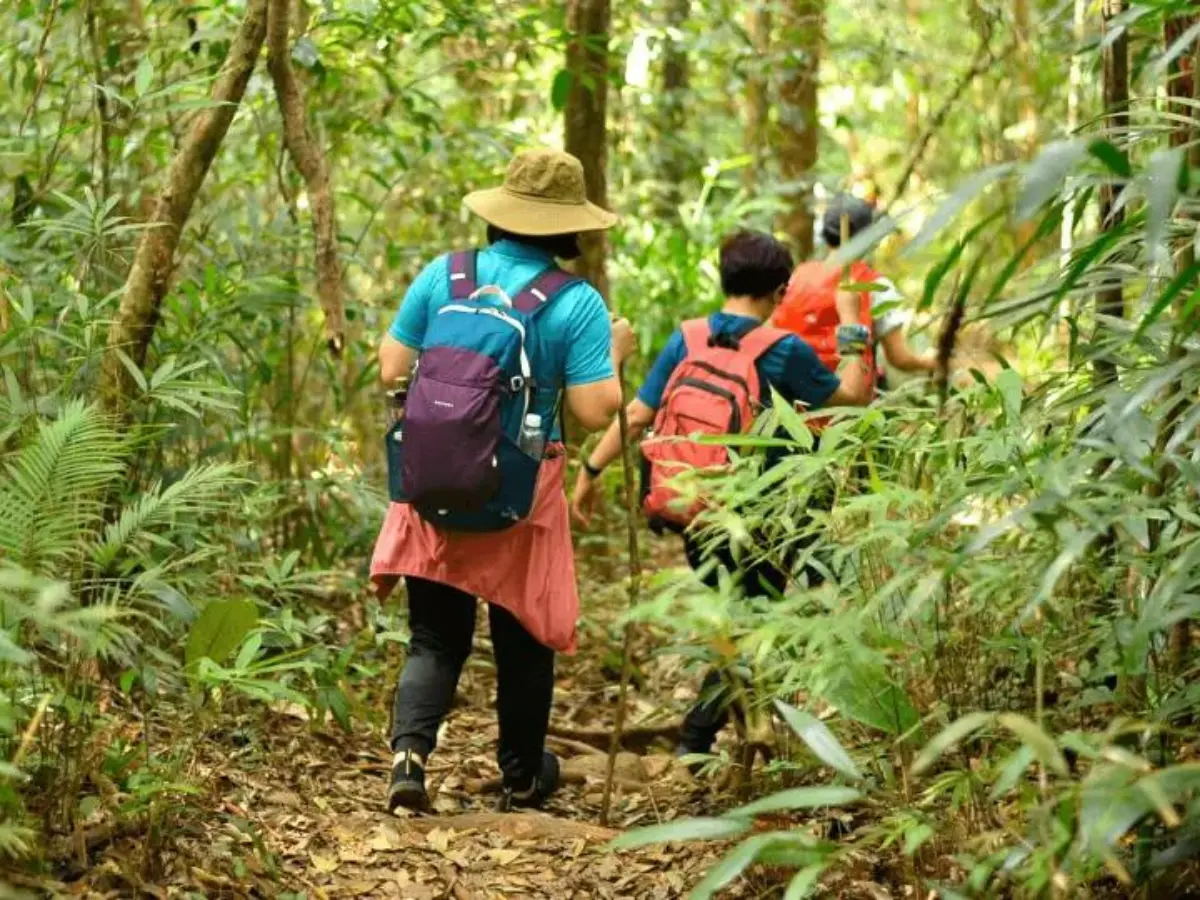
Fansipan Trek One Day Tour – Roof of Indochina
Cable car to Indochina's highest peak — above the clouds, best October–November.
Experience The Real Sapa
3 nights with a H'mong family — harvest, village life, off-trail routes.
Month-by-Month Breakdown
Spring — March, April, May
March is when Sapa shakes off winter properly. Morning temperatures in Sapa town are around 12–15°C and afternoons warm to 18–22°C. The trails to Ta Van and Lao Chai are dry — the best trail conditions you will find all year on the valley floor routes. The plum and peach trees around Ta Phin and the upper villages above Ma Tra are flowering white and pink, usually peaking in the last two weeks of March. Photography light is good in the mornings but tends toward haze by midday. The terraces are bare or just beginning to be flooded for the new planting season, so they lack the drama of September but the blossom compensation is real.
April is the month for terrace reflections. As farmers flood the fields for planting, the paddies around Y Linh Ho and Lao Chai become flat mirrors in overcast light — which is actually what you want. Sunshine creates hot spots and uneven exposure; a cloudy April morning gives you even, diffuse light that makes the reflections look almost unreal. The road above Y Linh Ho village, looking down toward Lao Chai, is the single best spot for this effect. Afternoon showers arrive from mid-April, so plan morning treks. Average morning temperature 14–16°C, afternoon 21–24°C.
May bridges spring and the rainy season. The terraces are now green and lush, freshly planted, and the Muong Hoa Valley floor is particularly vivid. Rain starts arriving from mid-May — usually short sharp afternoon showers rather than all-day rain. Morning treks to Ta Van and Hang Da are typically dry and pleasant. Mornings around 17°C, afternoons 24–27°C. Trails are still mostly dry. It is the last reliable month before you need to accept that rain is part of the deal.
April overcast days are better for terrace photography than sunshine. Diffuse cloud eliminates harsh shadows on flooded water mirrors. Best spot: the road above Y Linh Ho, looking down toward Lao Chai.
Summer / Rainy Season — June, July, August
June brings the proper rainy season. Sapa town gets around 200–250mm of rain in June, mostly in late afternoon and overnight. The trails to Lao Chai and Ta Van are wet and muddy — not dangerous, but genuinely slippery on any slope. We run all tours in June; you just go out prepared. The Hang Da waterfall and the falls near Hau Thao village are at full, thundering flow and worth seeing specifically at this time of year. The terraces are an intense, saturated green that no other season matches. Morning temperatures around 20–22°C, afternoons 26–28°C.
From a photography standpoint, rain actually creates extraordinary mood. Wet rice paddies reflect the sky in fragments, Black H'mong women in indigo-dyed clothing stand out against intense green backgrounds, and the mist around Hang Da is cinematic. You need a weatherproof camera bag or dry bag, and quick-dry clothing — cotton stays wet all day at this humidity.
July is the heaviest rain month of the year — around 250–300mm. Trails to higher elevations (above Ma Tra, toward Fansipan's lower slopes) can have erosion on the steeper sections. Valley floor routes to Ta Van and Lao Chai are fine with proper footwear. The advantage: fewer foreign tourists. Vietnamese domestic tourism is active in July (school holidays), but international travelers thin out considerably, and the villages feel noticeably quieter than in September or October. Mornings 21–23°C, afternoons 27–30°C.
August sees rain easing slightly. By mid-August, the terraces are a deep mid-green and the rice plants are beginning to fill out toward harvest. Some years, a few lower-elevation fields near Lao Chai show the first yellowing by the last week of August — an early teaser of what September brings. Trail conditions are still wet but improving. The transition from rainy to harvest season begins here.
The trail between Lao Chai and Ta Van can be genuinely slippery on clay sections after rain. We always bring walking poles and carry spare gaiters. On any morning after overnight rain, allow an extra 30–45 minutes for the valley floor section.
Harvest Season — September, October
September is the month that defines Sapa's reputation. See the dedicated section below.
October continues the harvest season at higher elevations. By early October, most of the low-valley fields near Lao Chai and Y Linh Ho have been harvested and the paddies are cut stubble — but the Red Dao fields above Ta Phin and Ma Tra are at their peak golden colour. Late October sees the terraces transition from gold to brown as harvest completes, but the weather is outstanding: mornings around 16–18°C, afternoons 22–25°C, and skies bluer than any other month. The trail to Fansipan is at its best in October — clear summit views, firm trail surface.
If September is fully booked (it often is), October is not a consolation prize — it is a genuine alternative with different but equally compelling scenery. Ask us which elevation is peaking when you plan to visit.
Winter — November, December, January, February
November is the quiet month after harvest. The post-harvest terraces have a muted, earthy beauty — brown stubble, burnt terrace edges where farmers clear the fields, smoke rising from valley villages at dusk. Traffic drops significantly and the trails feel private. Temperatures begin dropping: mornings 13–16°C, afternoons 18–22°C. Visibility is excellent on clear days — from the trail above Lao Chai you can see all the way to Sa Seng Mountain to the north-west.
December turns genuinely cold. Morning temperatures in Sapa town drop to 8–12°C and nights to 5–8°C. But December has a visual trick: valley mist settles thick overnight and burns off slowly in the morning. The view from above Ma Tra, looking down when cloud is below you and sun is above, produces some of the most extraordinary landscape photographs of the year. This is a patience game — mist clears from valleys by 10–11am on good days; on other days it stays all morning. Bring a tripod. Afternoons clear but cold.
January is the coldest month. Temperatures in Sapa town: 4–8°C at night, 10–14°C during the day. On Fansipan's upper slopes, temperatures reach 0°C and below, with ice on the higher trail sections on winter mornings. Sapa town itself gets frost on 5–10 days per year. Snow in the town is rare — 3–5 days per year at most, and not predictable enough to plan around. When it does snow, it lasts a few hours and the terraces near Ta Phin look extraordinary. January is quiet, cold, and deeply atmospheric if you dress for it properly.
February begins the thaw. H'mong New Year (which follows the lunar calendar and usually falls in November–December on the Western calendar, but community celebrations extend into early February in some villages) brings traditional clothing, khèn flute music, and spinning-top games in the village squares near Y Linh Ho and Hau Thao. The wild plum and peach blossoms begin appearing in the highest villages by mid-to-late February, and by the end of the month Sapa town already feels like the turn of spring. The Vietnamese Tet holiday falls in January or February and brings crowds to Sapa town — if you want quieter villages, head out to Lao Chai and Ta Van where the domestic tourism effect is minimal.
January in Sapa requires proper layers — not just a hoodie. Think: thermal base layer + mid-layer fleece + waterproof outer shell. Add wool socks and gloves for early morning starts. We have seen travelers arrive in October clothing in January and spend the whole day uncomfortable. Pack for the temperature, not the country.
September — The Golden Month
September is the month I designed most of our routes around. Not because the others are poor, but because there is a specific week — usually the second or third week of September — when the lower Muong Hoa Valley turns from green to amber and gold, and the light at 5:30pm hits the terraces at an angle that no camera filter on earth can replicate. It happens once a year and it lasts about 10–14 days per elevation band.
Here is how the harvest actually progresses, because it is not one single event that you either catch or miss:
The Black H'mong fields in the lower Muong Hoa Valley — around Y Linh Ho, Lao Chai, and Ta Van — begin turning around the first week of September, typically at elevations below 900m. These are the same families who planted in April; they grow shorter-cycle rice varieties suited to the valley floor. By the second week, the lower fields are deep gold and some families have already started cutting by hand. The cutting sound — a soft, rhythmic swish-pause — carries across the valley in the morning quiet.
The Red Dao fields at higher elevations, above Ta Phin village and around Ma Tra at 1,000–1,100m, follow 1–2 weeks later. This is partly due to elevation (colder nights slow the ripening), partly due to different rice varieties that the Red Dao traditionally grow, and partly due to a different agricultural calendar that the community maintains. By late September or early October, the upper slopes above Ta Phin are the golden areas while the lower fields below Lao Chai are already harvested brown.
This means the September visitor who stays 3–4 days can experience both phases. The first two days, walk the valley floor toward Lao Chai and Ta Van for the peak lower-elevation gold. Day three, take the trail up to Ta Phin and Ma Tra for the upper fields just beginning to turn.
Suggested 3 Days in September
- Day 1 — Valley Floor (peak lower gold): Trekking Through Rice Terraced Fields — Lao Chai to Ta Van via Y Linh Ho. Lower-elevation fields at full harvest gold. Finish at Ta Van — best late-afternoon light is on the terraces above the village at 4:30–5:30pm.
- Day 2 — Upper Villages (early turn): Mountain Views and Villages Trek to Ta Phin and Ma Tra via the ridge trail. Red Dao fields beginning to show gold at upper elevation. Ta Phin market is active on Sunday mornings — time your visit accordingly. Return to Sapa for lunch.
- Day 3 — Homestay (valley experience): 2D1N Rice Terraced Fields & Homestay with an overnight in a Black H'mong family home in Lao Chai. Wake up inside the harvest — the family usually starts cutting at 6am. Sunrise over the terraces from the homestay porch is why people come back every September.
On the photography question — Instagram versus reality — here is what no one tells you upfront: the golden hour photographs you see from September Sapa are real, but they happen in a two-hour window twice a day. Sunrise is around 5:45am in late September; the useful morning light runs from about 6:00–8:00am before the sun gets too high. Afternoon light re-enters the valley around 4:00–4:30pm and is best from 4:30–6:00pm. Midday September light, from roughly 10am to 3pm, is flat and harsh — fine for walking, poor for photography. If photography is your main goal, plan your day so you are at your chosen viewpoint — either the terraces above Ta Van or the ridge above Lao Chai — at those windows. The midday hours are best spent at lunch in Y Linh Ho or in the village.
Weather in September: mornings around 18–20°C, afternoons 22–26°C, evenings dropping to 15–17°C. Rain is possible but typically brief and afternoon-biased. The mist that rolls in overnight usually lifts by 9–10am. Most days are workable. Cloud behaviour in the Muong Hoa Valley follows a pattern: clouds build against the southern ridge (toward Hang Da) from mid-morning and drift north by early afternoon. By the time you are walking back toward Sapa via Ta Van, the sky above Fansipan is often clear. Keep this in mind when planning your direction of travel.
Sapa Weather by Month — What It Means for Trekking
Weather affects trail conditions more than comfort. You can dress for cold or heat; you cannot dress for a slippery clay trail that drops 200m in 500 horizontal metres unless you have the right footwear and poles.
The main trail types and how weather affects them:
Valley floor — Muong Hoa Valley: The track between Lao Chai and Ta Van is a wide, mostly flat compacted earth trail. After rain, it becomes soft clay in sections — slippery without grip-soled shoes, fine with them. Walking poles reduce the risk substantially. In dry season (October–May), this trail is suitable even for light trainers. In rainy season, trail runners or light hiking shoes are the minimum.
Ridge trails — above Lao Chai toward Ma Tra: These trails climb 150–200m over the ridge between villages. Steeper sections on clay slopes become genuinely dangerous without poles and grip soles after heavy rain. In November to April, these trails are firm and enjoyable. In June to August, we route groups on these trails but keep tighter control of pace and footing.
Fansipan approach trails (from Tram Ton Pass): Above 2,000m, trail surfaces are rocky and exposed. Rain creates fast-running surface water on the rock sections. This route is safest October to November and March to May. January and February bring ice on upper sections. In rainy season, even experienced hikers find this route significantly harder — reserve it for the dry windows.
On temperature layering by season: in September and October, the trail is warm enough that you start in a light shirt, but evenings in the village drop quickly after 5pm — always carry a light fleece and a waterproof shell in your daypack. In November and December, start with a mid-layer you can shed as you warm up. In January and February, dress in full winter layers for the start and carry a dry bag for the mid-layers you will want to remove by 10am.
Cloud behaviour matters for route planning too. In the Muong Hoa Valley, mist typically forms overnight along the valley floor between October and February and rises as temperature increases. By 9–10am on most days, the valley floor is clear. But on overcast days, cloud can sit at 900–1000m all day — meaning the ridge trails above Lao Chai stay in cloud while the valley floor below is clear. We adjust routes based on morning conditions, and if you are with us, we will tell you what the day looks like before you start.
When to Avoid Sapa
There is no month when Sapa is genuinely not worth visiting. But there are conditions worth knowing about:
Vietnamese public holidays — especially Tet (Lunar New Year, January or February), 30 April / 1 May (Reunification Day and Labour Day), and 2 September (National Day) — bring large numbers of domestic tourists to Sapa town and the main cable car to Fansipan. Sapa town gets very crowded, accommodation prices rise 50–100%, and the cable car queue can stretch to 2–3 hours. If you are visiting for trekking, the impact on the trails to Lao Chai and Ta Van is minimal — these routes are largely unaffected by domestic tourism. But if you need a hotel in town during a national holiday weekend, book 3–4 weeks in advance.
Late July specifically (roughly 15–31 July) combines the heaviest rainfall of the year with the Vietnamese summer school holiday peak. Trail conditions are at their muddiest, prices are elevated, and accommodation fills up. If your dates are flexible, shifting to early July or early August gives you similar scenery with meaningfully better conditions.
The week before Tet sees Vietnamese domestic tourists returning home for the holiday, emptying Sapa town quickly. The week after Tet is a surprise — genuinely quiet, sometimes cold, and the H'mong and Red Dao communities are returning to normal rhythms after the holiday. Some of our guides find this post-Tet week one of the most interesting times to be in the villages.
Best Time for Each Trek Type
Easy 1-Day Treks — All Year
All our 1-day valley treks — including the Rice Terraced Fields Trek and the Rice Paddies and Cultures Trek — operate year-round without interruption. The valley floor routes to Lao Chai and Ta Van are manageable in all seasons with appropriate footwear. In rainy season, we provide walking poles from our office at 105 Thach Son Street and route groups on the driest available sections. The visually peak window for valley floor treks is mid-September to mid-October, followed by April (flooded terraces) and March (blossoms). But on any dry morning from November to May, these routes offer excellent trekking with almost no weather disruption.
Fansipan Summit Trek — October to November Best
The Fansipan one-day trek from Tram Ton Pass is most reliable from October to November and again in March to May. October and November combine dry, firm trail surfaces with the best chance of a clear summit — cloud is lower and summit views are more frequent in these months than any other. March and April are the second-best window. Rainy season (June–September) adds 2–3 hours to the total time due to slower pace on wet rock sections, and summit visibility is often poor. January and February bring ice on upper sections and require microspikes or crampons above 2,500m. We can advise on current Fansipan trail conditions via WhatsApp before your booking.
Homestay 2-Night Treks — September to October
For the 2D1N Rice Terraced Fields & Homestay and the longer 3D2N Experience The Real Sapa routes, the September to October harvest window is by far the most immersive time to book. Waking up inside the harvest — hearing the early-morning cutting rhythm, joining the family for a breakfast of freshly milled rice — is a different experience from any other month. Second recommendation is March to April: spring flowers around the homestay in the higher villages, dry trails, and a quieter overall atmosphere than harvest season. Rainy season homestay treks are perfectly possible and some guests prefer the intimacy of wet-weather trekking; just prepare for muddy trail clothing and a different kind of adventure.
The Sapa Festival Calendar — When Culture Meets Season
The festival calendar in Sapa follows the lunar year, which means exact dates shift each year on the Western calendar. The events below are the most significant cultural moments for visitors. Check dates with us before booking — we confirm current-year festival dates via WhatsApp. For official national holiday dates, the Vietnam National Administration of Tourism publishes the annual public holiday calendar each year.
Khau Vai Love Market (tháng 3 âm lịch — typically April on the Western calendar) is the most singular event in the entire northern mountain region. Held in Meo Vac district about 200 km east of Sapa, it draws H'mong, Dao, Tay, and Nung communities from across the region. The market has roots in a tradition where former partners, people who once loved each other but could not marry, are allowed to meet freely for one day a year without judgment from their families. The atmosphere is unlike any other market in Vietnam — there is a specific emotional weight to it that goes beyond tourism. For travelers willing to combine a Sapa trek with a journey to Meo Vac, this is worth planning around. Ask us about logistics.
Tet — Lunar New Year (January or February) splits into two separate experiences in Sapa. The Kinh (ethnic Vietnamese) Tet is the national holiday — this is when Sapa town gets crowded with domestic tourists, restaurants close for a day or two, and the cable car to Fansipan has long queues. The Black H'mong New Year follows a different lunar calendar entirely and falls in November or December, sometimes extending community celebrations into late January. In the villages around Y Linh Ho and Hau Thao, you may encounter traditional games — spinning tops, a form of crossbow competition — and khèn flute music during January visits that have nothing to do with the Kinh Tet. Our guides' home villages celebrate on the H'mong calendar. If you want to see H'mong New Year specifically, message us in October to confirm that year's dates.
Gau Tao Festival (H'mong Spring Festival, typically January to March) is among the least-known but most authentic H'mong cultural events accessible to visitors. Communities gather in open fields — traditionally to give thanks for a healthy child or recovery from illness — and the celebrations include communal fires, khèn flute and bamboo flute music, ném còn (a game where embroidered balls are thrown through a ring on a tall pole), and singing. The larger Gau Tao gatherings in Lao Cai province take place in late January and early February. Most Western visitors have no idea this exists. We can connect you with local knowledge on timing.
Rice Harvest Ceremony (September) is not a formal named festival but each village holds its own small ceremony when the first rice of the season is harvested — the "eating of the new rice" (cơm mới in Vietnamese, but with distinct H'mong and Red Dao ritual forms). Guests staying overnight in homestays in Lao Chai and Ta Van during September are often invited to join the family meal that marks the first harvest. It is a quiet domestic ceremony rather than a public spectacle, and the invitation to join it is a privilege. Nothing in a guidebook can arrange this for you — it happens because you are present, eating with the family, and the timing falls right.
What to Pack — Season by Season
The number one packing mistake in Sapa is underdressing. The second is overpacking boots. Here is what actually matters, broken down by season.
Harvest Season
- T-shirt or light long-sleeve + fleece layer
- Light waterproof rain jacket (afternoon showers possible)
- Trail runners or light hiking shoes — no need for heavy boots on valley routes
- Walking poles (free loan at our office — ask when booking)
- Camera: golden light 4:30–6:30pm — bring extra battery. Cold evenings drain batteries faster than expected.
- DEET mosquito repellent for village homestays (citronella brands are not effective here)
- 1.5–2L water + small snacks
Winter
- Thermal base layer (merino or synthetic — not cotton)
- Mid-layer fleece
- Waterproof outer shell — wind as well as rain
- Gloves, hat, wool socks — not optional in January
- Hand warmers for early morning starts (available in Sapa town market)
- Waterproof hiking boots for January / February
- Dry bags for electronics and camera
- Extra layers in daypack — mornings cold, midday warms up considerably
Spring
- Light base layer + packable fleece
- Light waterproof poncho for afternoon showers (fine from May onwards)
- Sunscreen and sunglasses — UV is strong at altitude even on cloudy days
- Trail runners or light hiking shoes
- Sun hat for exposed ridge sections
- 1.5–2L water — warmer temperatures mean faster dehydration
Rainy Season
- Full waterproof jacket — a poncho is not enough on exposed sections
- Quick-dry synthetic clothing — cotton stays wet all day
- Waterproof phone case or dry bag for electronics
- Gaiters for muddy sections (we carry spare gaiters — ask before departure)
- Two pairs of socks — carry a dry pair in a zip-lock bag
- Hiking shoes or trail runners with proper grip soles
- Insect repellent (DEET) — humidity increases mosquito activity
For all seasons: small daypack with 1.5–2L water, cash in small denominations (VND 10,000–50,000 notes) for village purchases and tips, and fully charged phone. Walking poles are provided free at our office at 105 Thach Son Street — just ask when you book. We open at 7am.
Getting from Hanoi to Sapa — How Season Affects Your Journey
Sapa is 320 km / 200 miles northwest of Hanoi — a journey that used to take 8–10 hours and now, with the Hanoi–Lao Cai expressway, takes as little as 3.5 hours by limousine van.
Your options, and how season affects each one:
Limousine van (3.5–4 hours, from around $21 per person) is the fastest and most weather-resilient option. The Hanoi–Lao Cai expressway is a modern dual carriageway that is almost never affected by weather. From Lao Cai it is a further 40 minutes on a mountain road to Sapa — this section can have occasional delays in heavy rain, but it is well-maintained. Year-round reliable. We recommend this for September–October when speed and reliability matter most.
Sleeper bus (5–6 hours, from around $17) runs year-round from My Dinh Bus Station and Gia Lam Bus Station in Hanoi. The journey uses a mix of expressway and older mountain road. In July and August, occasional landslides on the older road section near the Sapa approach can cause delays of 1–2 hours — not dangerous, but frustrating if you have a morning tour booked. We recommend booking the train or limousine in high-rain months if you have a tight arrival schedule.
Overnight train to Lao Cai + local bus (8 hours overnight + 40 minutes by bus from Lao Cai to Sapa) is the most weather-reliable long option. The train line runs through the valley and avoids all mountain road risk. It departs Hanoi at around 9:30–10pm and arrives in Lao Cai at 5:30–6am — you arrive in Sapa for breakfast ready to trek. In rainy season, this is the option we most often recommend. Sleeper berths from around $30.
Private car (3.5–4 hours on the expressway, same road as the limousine) is the most flexible option for groups of 4 or more. Cost runs from around $100–120 for the vehicle. Good for families or groups where departure time needs to be flexible.
Our recommendation by season:
- September–October: Book any transport option a minimum of 1 week in advance — all modes fill up. Limousine van preferred for flexibility and speed.
- July–August: Train or limousine van preferred; sleeper bus has slightly higher weather delay risk on the old mountain road section.
- November–March: All options reliable. Book 3–4 days ahead; no peak pressure.
We offer a transport add-on from Hanoi included with tour bookings. Choose the option that suits your budget, schedule, and travel style:
 Most Popular
Bus
Sleeper & cabin options · 5–6 hours · From $17
 Fastest
Limousine Van
Door-to-door express · ~3.5 hours · Direct highway
Most Reliable
Train
Overnight Hanoi–Lao Cai · ~8 hours · No mountain road risk
Most Flexible
Private Car
Groups & families · ~3.5 hours · Any departure time
Sapa Photography Guide — Best Light by Season
Photography is one of the main reasons international travelers choose Sapa. Here is honest information about what light is available when, rather than the generic advice that every month is beautiful.
September and October golden hour is the benchmark. Sunrise in late September is around 5:45am; the useful morning light window runs from roughly 6:00–8:00am before the sun climbs too high and flattens the scene. The low September sun hits the terraces at approximately a 30-degree angle — this is the light that creates the deep shadow lines between terrace walls that make the valley look three-dimensional. The afternoon equivalent window is 4:00–6:00pm, with the best of it at 4:30–5:30pm. The ridge trail above Lao Chai, looking south toward Ta Van, is the classic vantage. The terrace walls above Y Linh Ho, looking east, catch the evening light well. Midday light from roughly 10am to 3pm is harsh and flat — acceptable for documentary shots of harvest activity, poor for landscape.
April flooded terraces are actually better photographed on overcast days than in sunshine. When the sun hits flooded paddies directly, you get blown-out reflections and hard contrast. Diffuse cloud gives you even, soft reflections of sky in the water mirrors. The road above Y Linh Ho village, looking down toward Lao Chai, is the single best viewpoint for this effect. Best time: 8–11am before the afternoon showers build.
December and January mist photography is a different discipline entirely. Valley mist settles thick overnight and the game is patience — waiting for the mist to lift and break. On good days, the view from above Ma Tra or Ta Phin when cloud is below you and sun is above produces extraordinary layered landscapes that no other season can replicate. This requires an early start (before 7am) and being positioned above the cloud layer before the mist begins to thin. Bring a tripod. A 24–70mm or equivalent lens handles most situations; telephoto compresses the terrace layers effectively.
Harvest portrait photography — a note on approach. Ask before photographing anyone, and let your guide introduce you properly. A portrait taken after a real conversation — with the family understanding who you are and why you are there — is worth ten candid shots taken from a distance. Black H'mong women in indigo-dyed clothing against the gold terraces is one of the most compelling portrait opportunities in Southeast Asia, but it requires the relationship. Our guides facilitate this naturally; it is part of why we exist.
Rain photography in June to August produces its own rewards. Wet rice paddies reflect sky in fragmented, impressionistic patterns. Black H'mong women in deep indigo stand out intensely against saturated green backgrounds. The challenge is equipment protection — bring a weatherproof camera bag or a dry bag with a clear panel. Modern phones (iPhone 15+, Samsung S24 series) produce excellent results in good overcast light and are more practical in rain than a DSLR with a separate bag.
For any season: September golden hour is forgiving of any equipment. The light does the work. In other seasons, the skill of placement and timing matters more.
FAQ — Best Time to Visit Sapa
September and October are the best months to visit Sapa. The rice terraces in Muong Hoa Valley turn gold just before harvest, skies are clearer than in summer, and temperatures are comfortable — around 18–22°C in the afternoons. March to May is the second-best window: plum and peach blossoms are out, trails are dry, and the flooded terraces in April create mirror-like reflections. If you can only pick one month, choose the third week of September.
Yes, with the right expectations. June to August brings heavy rain — often 200–300mm per month — and the trails to Ta Van and Lao Chai become genuinely muddy and slippery. But the terraces are a deep, vivid green, the waterfalls near Hau Thao and Hang Da are at full flow, and crowds are lighter on weekdays. If you come in rainy season, pack gaiters and quick-dry clothing, and choose morning start times before the heaviest afternoon rain.
Sapa gets light snow or frost on a handful of days each January or February — usually on Fansipan's upper slopes rather than in Sapa town itself. When it does snow in town (it happens maybe 3–5 days a year), the terraces near Ma Tra and Ta Phin look extraordinary. But you cannot plan a trip around it. What you can plan around is the cold: January temperatures drop to 4–8°C at night and 10–14°C during the day. Dress in proper layers.
Harvest season runs from mid-September through early October, but the exact timing shifts by elevation. The Black H'mong fields in lower Muong Hoa Valley — around Y Linh Ho and Lao Chai — typically turn gold first, around the second week of September. Red Dao fields at higher elevations, above Ta Phin and Ma Tra, follow 1–2 weeks later. The peak golden window per area is only 10–14 days. Message us before you book and we will tell you exactly which fields are at their best that week.
The best light is 6:00–8:00am and 4:00–6:00pm in September and October — the low sun angle hits terraces at around 30 degrees, creating depth and shadow lines that midday light eliminates entirely. In December and January, mist clears from valleys by 10–11am on good days, giving a dramatic window of layered fog above Lao Chai. April overcast days are ideal for flooded terrace photography — diffuse cloud eliminates harsh shadows on the water mirrors.
The weather is identical — Sapa town and the villages in Muong Hoa Valley experience the same temperature and rainfall. But the crowd dynamics are very different. Sapa town gets packed with domestic tourists on Vietnamese public holidays regardless of season. Villages like Ta Van, Ma Tra, and Lao Chai are largely insulated from those crowds — tour buses do not reach the valley floor. If you are sensitive to crowds, the village experience is more consistent year-round than the town experience.
Yes. All our treks are guided — you will always be with a licensed local guide, either in a small group or privately. We do not offer unguided trekking. In terms of safety record, we have never had a serious incident involving a solo female traveler in over 10,000 guided treks. In rainy season, slippery trails are a physical safety consideration for everyone — not a security issue. If you are travelling alone and prefer a private guide rather than joining a group, message us on WhatsApp and we will arrange it.