 Sinh Giang

The first time I watch someone try to walk down the trail from Ma Tra village in flat sports shoes, I know how their afternoon is going to end. The clay on that section — a grey-brown paste that forms after even light rain — grabs onto smooth rubber soles and holds nothing. By the time we reach the valley floor, they are holding onto my arm, their shoes completely caked, moving at half the pace of everyone else in the group. It happens every few weeks, and it is entirely preventable.
Renting proper trekking boots before your Sapa trek costs $2 USD per day at our office. That is the price of a banh mi from the morning market on Thach Son Street. For that, you get waterproof boots with a CrossContact sole, mid-ankle protection, and a waterproof membrane — the specific features that make the difference between a confident, enjoyable walk and a stressful, injury-prone one on Sapa's terrain.
Trekking Boots Rental — Sapa
Waterproof. Ankle support. CrossContact sole. Sizes 38–44. Pick up at 105 Thach Son Street from 7:30 AM on your trek day. Message us your size in advance to guarantee availability.
Why Sapa Trails Demand Proper Footwear
Sapa's terrain is unlike most hiking destinations in Southeast Asia, and the footwear requirement is not marketing — it is geology. The Muong Hoa Valley floor, the trails connecting Lao Chai to Ta Van, the climb above Y Linh Ho toward the Red Dao villages in Ta Phin — all of these surfaces are dominated by laterite clay that holds water even hours after rain stops. In the dry season from October through February, morning dew is enough to reset the grip coefficient of that clay to near zero.
The trails also involve changes in elevation that are harder than they look on a map. The descent from Ma Tra into the valley drops around 150 metres over roughly 1 kilometre / 0.6 miles of uneven path. Exposed tree roots cross the path at ankle height. Wet stone steps, built by Black H'mong families to connect their terraced fields, are polished smooth from decades of use. On each of these features, a flat-soled sports shoe offers no mechanical advantage over bare feet. A CrossContact trekking sole with individual lugs channels mud away from the contact surface and bites into soft ground, exactly as a car tyre clears water from wet asphalt.
Many guests assume the trails are similar to paved city paths or easy forest walks elsewhere in Vietnam. The section between Hang Da and Lao Chai village is where we see the most slips. Even during the dry season, the shaded north-facing sections of this path stay damp until midday. If you have brought only trainers, mention it when you book — we will prioritise this rental for you.
Beyond grip, ankle injuries are the injury we see most often on Sapa treks, and virtually all of them happen to guests in low-top footwear. The trail surface is irregular enough that a single misplaced step — a root hidden under leaf cover, a loose stone on the edge of a rice terrace wall — can roll the ankle laterally. A mid-ankle boot collar absorbs that lateral force before it reaches the joint. I have walked these routes hundreds of times and I still wear ankle-support boots every single time, particularly on routes that pass through Hang Da and the steep section above Hau Thao.

Boot Specifications — What You Are Renting
Our rental boots are high-rain and trekking boots with the following specifications, chosen specifically for Sapa conditions after years of testing on these routes.
| Feature | Specification | Why It Matters on Sapa Trails |
|---|---|---|
| Waterproof membrane | Full lining | Keeps feet dry when crossing shallow water channels between rice terraces, common on routes through Y Linh Ho and Ta Phin |
| Ankle protection | Mid-ankle collar | Absorbs lateral force on uneven ground — the primary cause of ankle injury on descents from Ma Tra and Hang Da |
| Outsole | CrossContact lug pattern | Channels mud away from contact surface; grips wet laterite clay and polished stone steps throughout Muong Hoa Valley |
| Weight | ~250 g per shoe (size 44) | Light enough to avoid leg fatigue on an 8–12 km / 5–7 mile day route |
| Shaft height | 35.5 cm (uniform across all sizes) | Consistent ankle coverage regardless of foot size |
| Available sizes | 38 / 39 / 40 / 41 / 42 / 43 / 44 | Unisex fit; if between sizes, size up |
| Rental price | $2 USD per day | Per trekking day; charged on pick-up at the office |
Wear the socks you plan to trek in when you try on the rental boots at the office. Thin socks with a size 40 boot can create the same fit as thick trekking socks with a size 39. Most guests bring standard cotton socks from home, which also work, but moisture-wicking material makes a real difference on the longer routes through the Muong Hoa Valley. If you need socks, ask at the office — we have basic pairs available.
How to Reserve Your Boot Rental
Reserving boots is straightforward — message us your shoe size at the same time you book your tour and we will set a pair aside for you.
The easiest way is WhatsApp. When you confirm your booking, simply add "boot rental, size [EU size]" to your message. We reply within 5–10 minutes during office hours (6:30 AM to 10:30 PM GMT+7, every day of the week). You can also add boot rental during the checkout process on this website.
Pick-up is at the Trekking Tour Sapa office, 105 Thach Son Street, Sapa Town. We ask guests to arrive by 7:30 AM on trek day so we have 15–20 minutes to fit the boots properly, brief you on the route, and hand out any other gear before departure. Drop-off is at the same location at the end of your trek — you do not need to clean the boots before returning them.
Trekking poles are also available to rent for $2/day. On descents — particularly the section dropping from Ma Tra down into the Muong Hoa Valley, or the steep path from Hang Da toward Hau Thao — poles take 20–30% of the load off your knees and significantly improve balance. I take them on every route above easy difficulty. Most guests who try them on day one ask for them again on their second day.
Before You Leave the Office — Boot Fit Checklist
Spend two minutes checking these before you step out. A poorly fitting boot on the Muong Hoa Valley trail is far harder to deal with than one that was caught at the office.
Boots Ready — Now Pick Your Trail
 Best Seller
Trekking Through Rice Terraced Fields
12 km through Lao Chai and Ta Van. Good trail, manageable for standard boots.
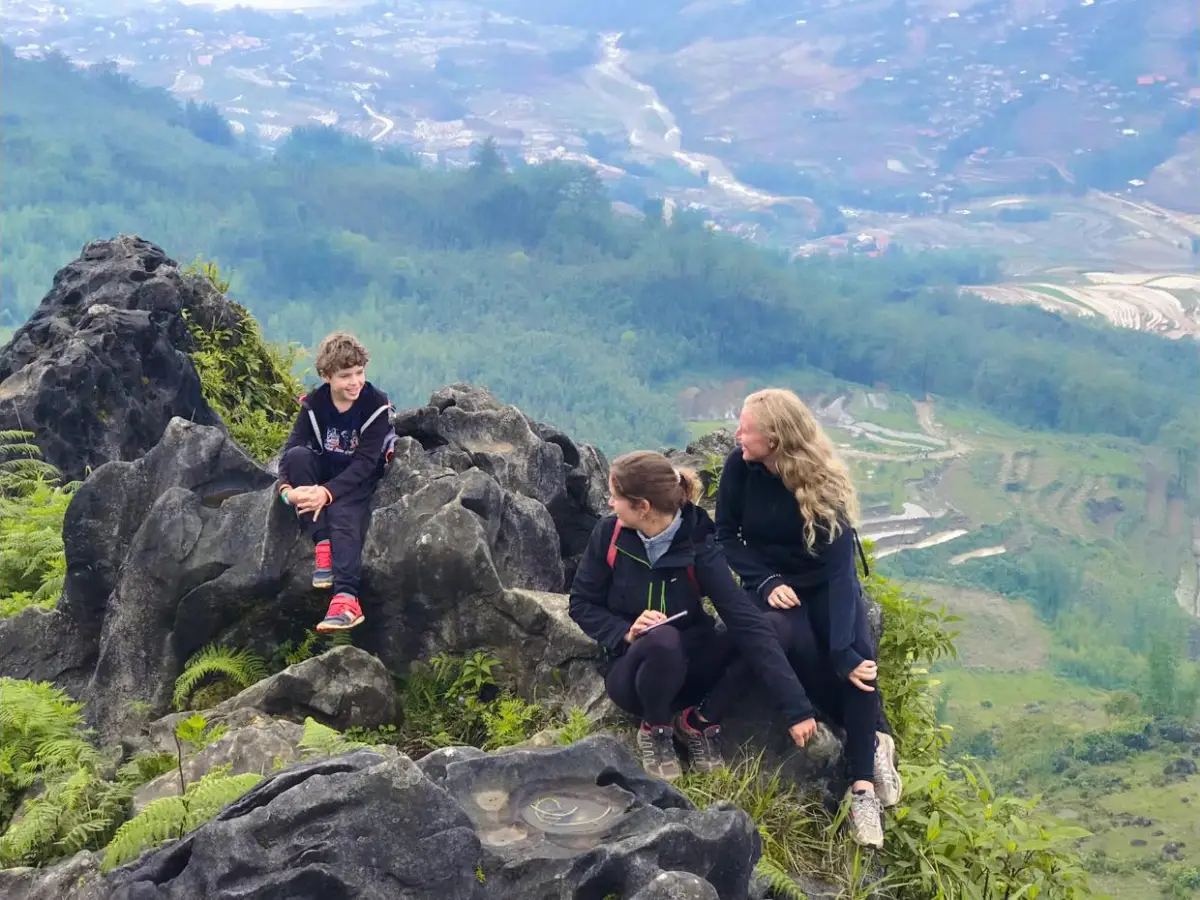
Mountain Views and Villages Trek
Ridge trail above the valley. Ankle support boots strongly recommended — rent at our office.
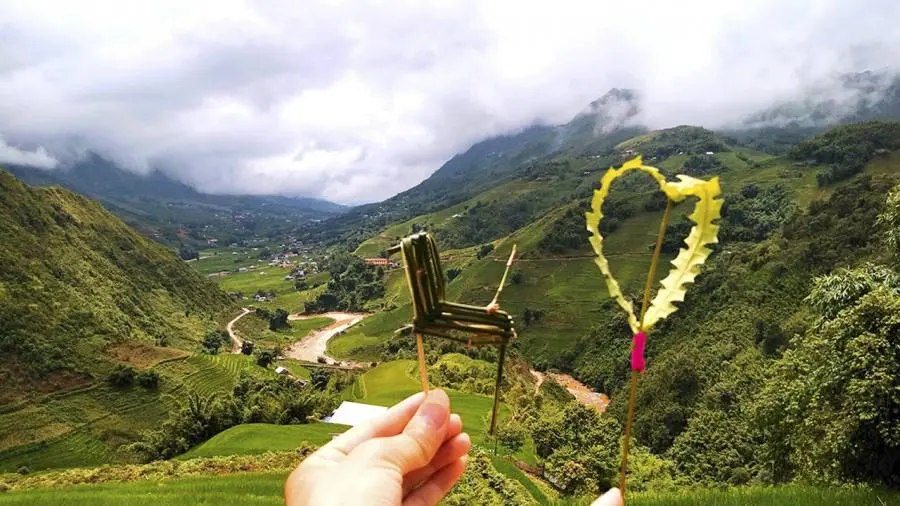 Very Easy
Sapa Easy Trekking For Seniors
Flat trail, soft-sole boots preferred. Walking poles provided free.
Rent at Our Office Before You Trek
 Gear Rental
Trekking Boots Rental
Waterproof ankle-support boots. Cleaned and checked before each rental. Available at 105 Thach Son Street.
 Gear Rental
Walking Poles Rental
Trekking poles available to rent at $2/day at our office, 105 Thach Son Street. Essential for descents.
Frequently Asked Questions
We strongly advise against it. Sapa trails — especially in Muong Hoa Valley, on the paths between Ta Van and Lao Chai, and the ridge routes above Ma Tra — involve clay-heavy mud, exposed tree roots, and wet stone steps. Sports shoes have no ankle support and their flat rubber soles lose grip completely on wet clay. Even during the dry season (October to March), early morning dew makes the trail surface slippery. Trekking boots with ankle support and a proper traction sole are the right tool for these conditions.
Boot rental is $2 USD per day. For a 1-day trek that is $2 total. For a 2D1N or 3D2N trip you pay for the number of trekking days. Trekking poles are also available for rental at $2 per day — most guests add a pair when they pick up their boots.
We stock sizes 38 through 44 (European sizing). The boots are unisex high-rain and trekking boot style with a uniform shaft height of 35.5 cm across all sizes. If you wear a half size, we recommend sizing up. Message us your shoe size on WhatsApp before your trek date and we will confirm availability in advance.
Boot rental pick-up is at the Trekking Tour Sapa office at 105 Thach Son Street, Sapa Town. We ask guests to arrive by 7:30 AM on their trek day so we have time to fit boots properly and brief you on the route before departure. Drop-off is the same location at the end of your trek.
The rental boots feature a waterproof membrane lining, mid-ankle protection collar, and a CrossContact outsole designed for mixed terrain — wet clay, rock, and loose gravel. Each shoe weighs approximately 250 grams (size 44), which is light enough not to fatigue the legs on a full-day route. The shaft height is 35.5 cm across all sizes, providing consistent ankle coverage regardless of foot size.
We recommend mentioning your boot size when you book your tour — either through our website checkout or via WhatsApp. We hold stock for all confirmed bookings. Walk-in rental is possible if we have your size available, but during peak season (September–October and December–January) some sizes, especially 38 and 44, can run short. A quick message the day before guarantees your pair is ready when you arrive.