 Sinh Giang
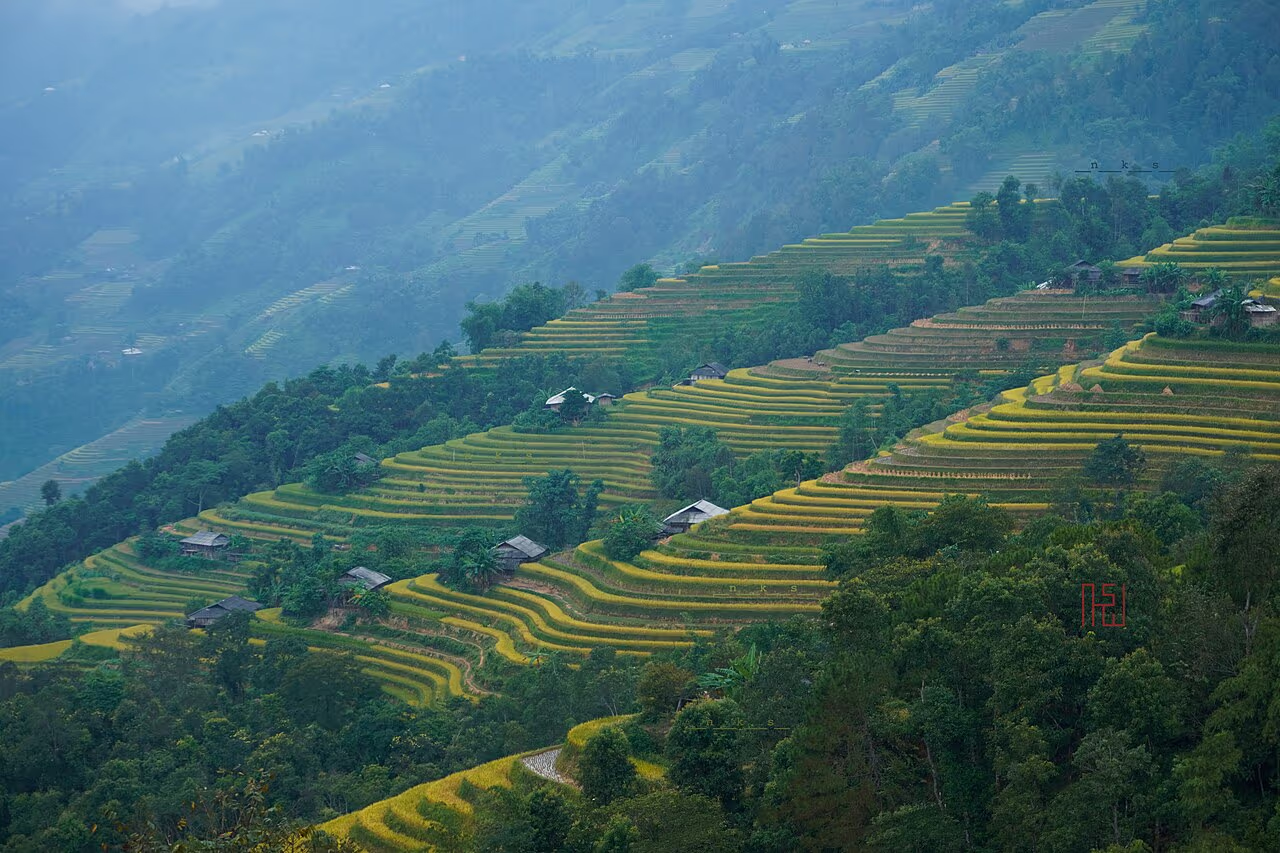
If you only see one part of Vietnam, see the north. This is where the country keeps its postcard — the limestone bays, the cloud-wrapped rice terraces, the thousand-year-old capital, and the hill-tribe villages that have farmed these valleys for centuries. The south has the energy and the Mekong; the centre has the beaches and the old towns. But the north has the scenery and the soul, packed into an area you can cover in ten unforgettable days.
We're based here, in Sapa, so this guide is written from the inside — not a list scraped from other lists, but the way we'd actually plan a northern trip for someone who wants the real thing. We'll map out the region, show you how dramatically the land rises from the Red River delta to the roof of Indochina, walk through the five destinations that matter most, and tell you honestly when to come and how to string it all together.
Northern Vietnam covers a lot of ground — in landscape if not in distance — so this guide is built to be skimmed or read in full. Use the map and the altitude chart to get your bearings, jump to the destinations that interest you, and lean on the seasons, transport and route sections to turn it into an actual plan. Everything here is what we'd tell a friend arriving in Hanoi next week.
One thing to know up front: almost everything in the north radiates from Hanoi, and the experiences travelers rate highest aren't in the cities at all — they're up in the mountains. Let's start with the map.
Northern Vietnam at a Glance
Northern Vietnam is compact and hub-shaped: Hanoi sits in the middle of the Red River delta, and every great destination is a half-day's travel out from it. The map below shows how the region fits together — the mountains to the north and west, the bays to the east, the karsts to the south.
The practical upshot of that hub shape is simple: base yourself in Hanoi and treat the rest as spokes. You rarely need to haul your luggage from place to place — most travelers leave a bag at their Hanoi hotel and head out light to Sapa or Ha Long for a night or two before circling back. It keeps the logistics painless and the capital as your reliable anchor between adventures.
From Delta to Summit
What makes the north so scenic is its sheer range of altitude. In a single short journey you climb from the sea-level rice fields of the Red River delta to the 3,143-metre summit of Fansipan, the highest mountain in Indochina. That climb is why the north has both steamy paddies and pine-cool mountain towns — and why the weather can change completely in a two-hour drive.
That range is also why the north packs so much variety into such a small area. In a single week you can stand in a steamy delta rice field, cruise a calm sea bay, and shiver in mountain fog at 1,600 metres — three different climates and three different Vietnams, all within a day's travel of Hanoi. No other part of the country compresses so much into so little.
You don't have to climb Fansipan to feel the height — a cable car runs to the summit ridge — but the altitude is the whole point of Sapa. At 1,600 metres the air is cool and clear, the terraces stack hundreds of metres up the valley walls, and you trek through the landscape rather than looking at it from a boat. More on that below; first, the gateway.
Hanoi — The Gateway
Every northern trip begins in Hanoi, and you should give it at least two days rather than treating it as an airport. Vietnam's thousand-year-old capital is the most atmospheric city in the country: the tangled Old Quarter where 36 streets still carry the names of medieval trades, the lake-and-villa calm of the French Quarter, and a street-food culture — pho, bun cha, egg coffee — that's reason enough to come.
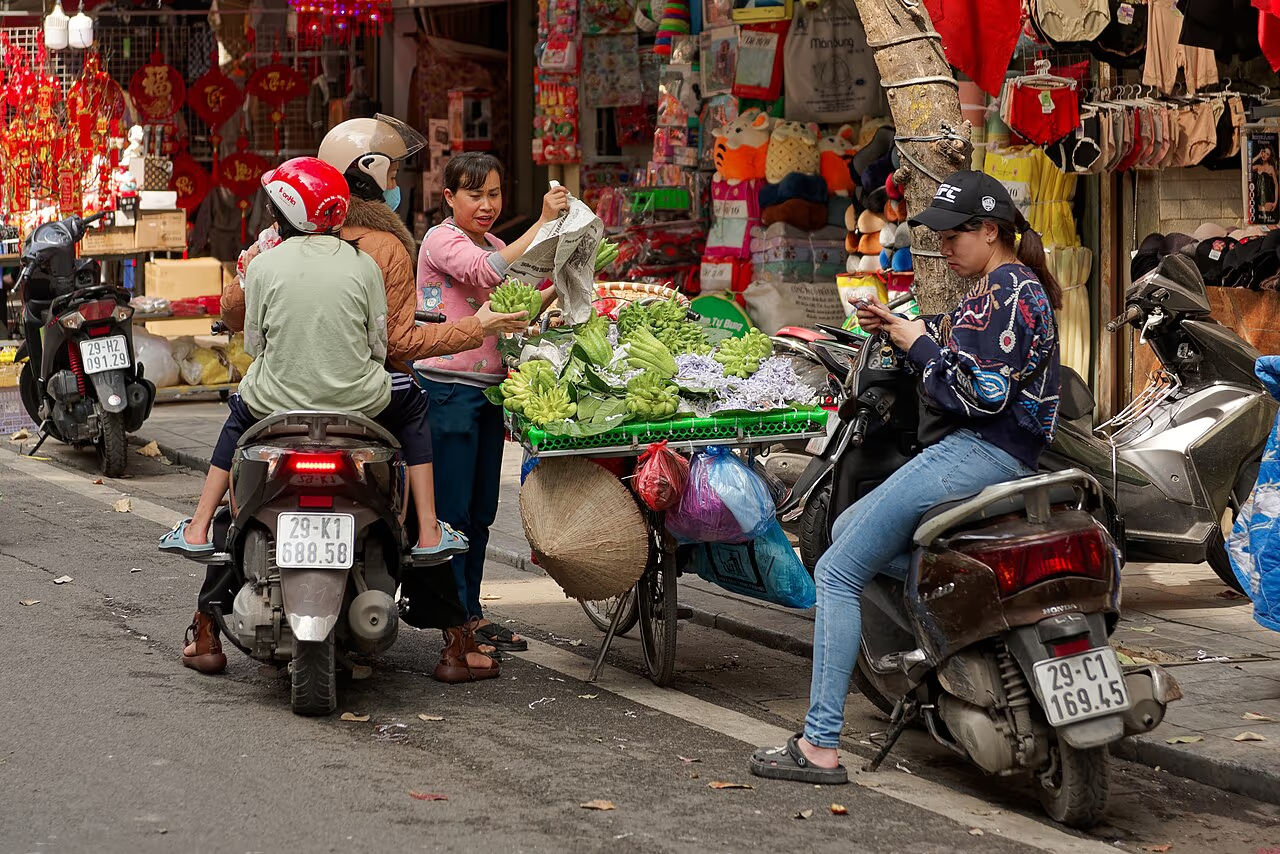
Beyond the food and the wandering, Hanoi is the launchpad: every other destination on this page is reached from here, by night train, sleeper bus, or private transfer. Spend your first days adjusting to the rhythm of the place — the dawn tai chi around Hoan Kiem Lake, the chaos of the motorbike rivers, the water-puppet theatre that's survived a thousand years — and use it as your base for everything that follows.
If you want specifics, prioritise the Old Quarter and Hoan Kiem Lake on your first morning, the Temple of Literature and the Ho Chi Minh Mausoleum complex on the second, and at least one proper street-food crawl — bun cha for lunch, egg coffee in a hidden upstairs cafe, bia hoi on a plastic stool at dusk. Hanoi rewards slow wandering far more than hard sightseeing; leave time to simply get a little lost in it.
Ha Long Bay — The Icon
Ha Long Bay is the image that sells Vietnam: nearly 2,000 limestone karsts rising sheer from emerald water, the country's only natural UNESCO World Heritage Site. An overnight cruise is the classic way to see it — kayaking into hidden lagoons, swimming off the boat, and waking to mist on the water before the day-trippers arrive.

One honest tip: the main Ha Long circuit has become busy. The scenery is identical in the adjoining Lan Ha Bay and Bai Tu Long Bay, with a fraction of the crowds, so look for a cruise that runs through those rather than the central tourist channel. Three hours from Hanoi, it's an easy two-day, one-night add-on — and the single most photogenic thing in the north after the mountains.
A few practical notes. Cruises run from one to three nights; two days and one night is the sweet spot for most travelers. Quality varies enormously, so book a reputable boat rather than the cheapest — the price gap between a great cabin and a grim one is small, and the experience gap is huge. The bays are sheltered and calm, so seasickness is rarely an issue. And if you can, choose Bai Tu Long or Lan Ha, which still feel genuinely wild, with working fishing villages and far fewer boats than the central channel.
Ninh Binh — The Inland Bay
Two hours south of Hanoi, Ninh Binh is often called "Ha Long Bay on land" — the same dramatic karst towers, but rising from rice fields and rivers instead of the sea. You explore it by small rowing boat, drifting through the Trang An or Tam Coc waterways as the limestone cliffs close in overhead and the boats slip through low river caves.
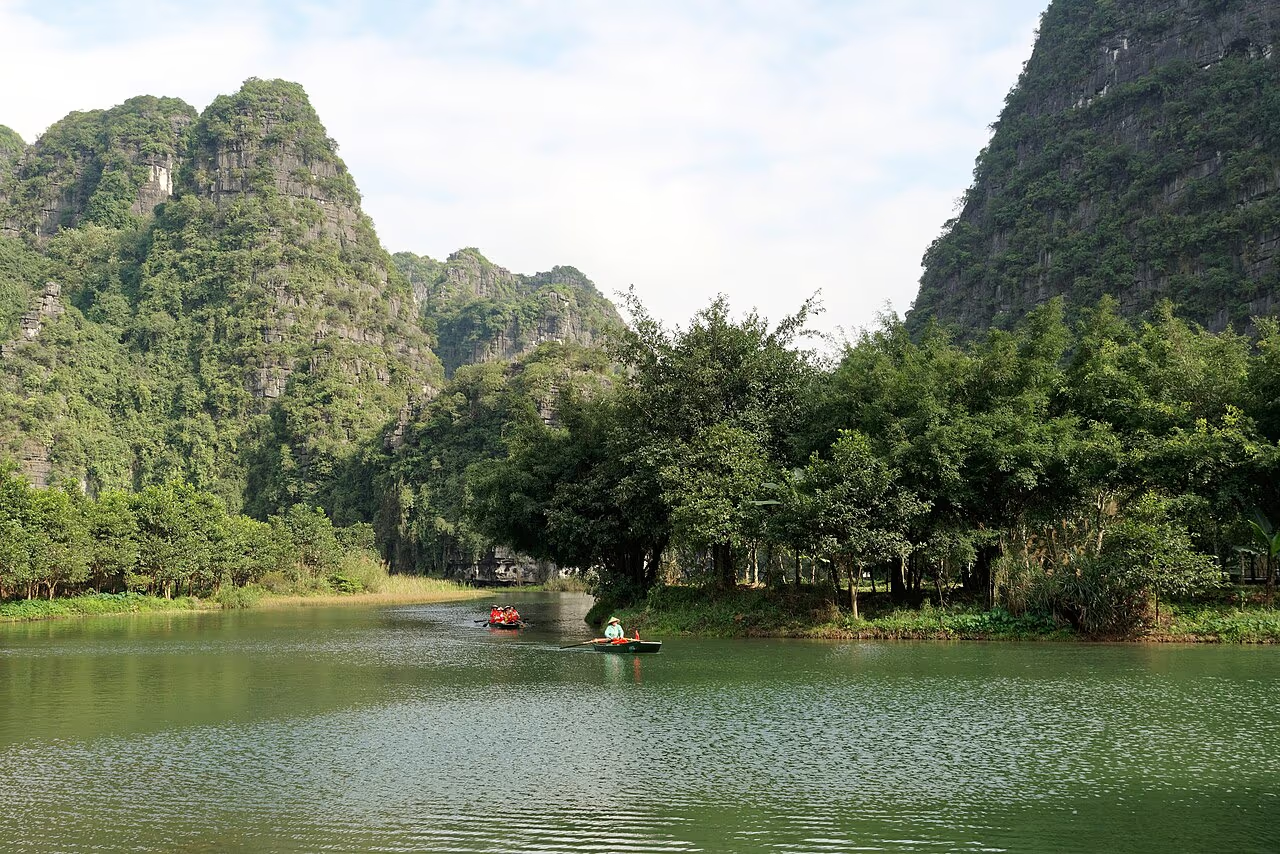
Add the cave-temple complex of Bich Dong, the panoramic climb up Mua Cave's 500 steps for the classic view over the Tam Coc river bend, and the ancient capital of Hoa Lu, and Ninh Binh easily fills a day — many travelers give it an overnight. It's the gentlest of the north's headline sights and a beautiful counterpoint to the mountains.
Ninh Binh works two ways: as a long day trip from Hanoi — two hours each way still leaves time for a boat ride and the Mua Cave climb — or, better, as an overnight that lets you catch the karsts in the soft light of early morning and late afternoon, once the day-trip buses have gone. The countryside around Tam Coc is flat and gorgeous for cycling, and the area has grown into a relaxed base of homestays and boutique stays tucked among the limestone, a lovely pause between the bustle of Hanoi and the climbs of Sapa.
Sapa — The Heart of the North
Sapa is, for most of the travelers we host, the highlight of the entire north — and it's our home. At 1,600 metres in the Hoang Lien Son mountains, it's a former French hill station surrounded by some of the most spectacular rice terraces on Earth, farmed for generations by the Black H'mong, Red Dao, Giay and Tay communities who give the valleys their character.
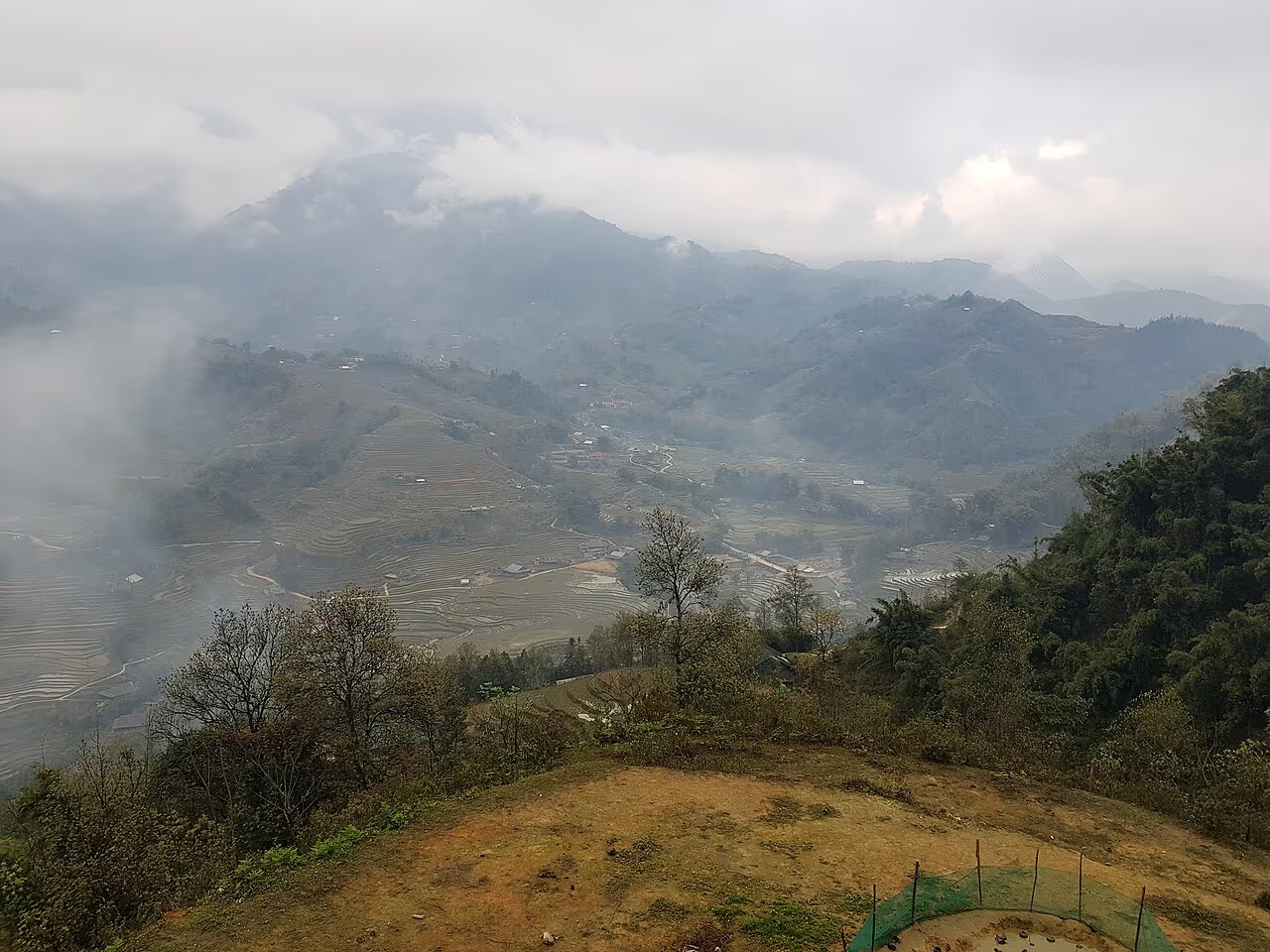
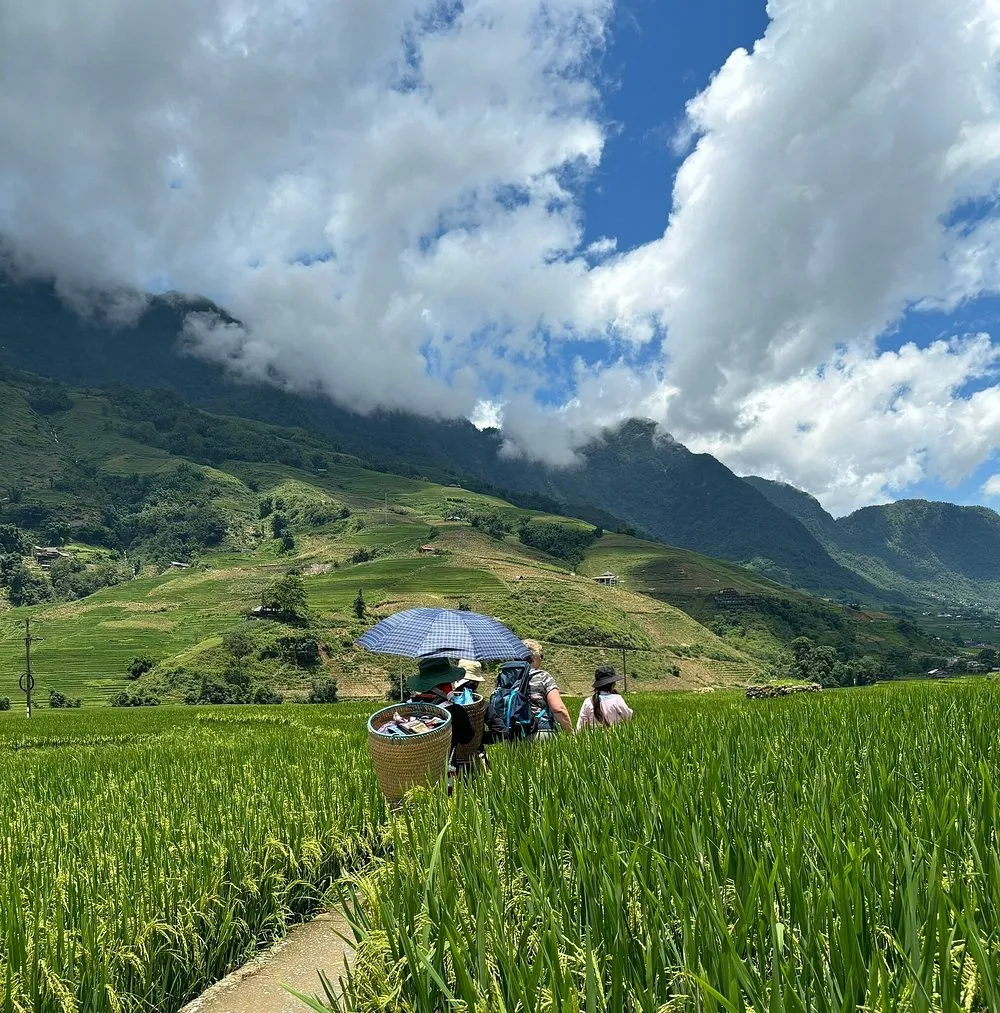
What sets Sapa apart from every other stop is that you don't just look at it — you walk into it. A guided trek leads you down off the road into the Muong Hoa Valley, through villages like Lao Chai, Ta Van and Y Linh Ho, across the terraces and into a local family's kitchen for a home-cooked lunch. That day on the trail, with a guide born in these hills, is the thing our guests remember above Ha Long, above Hanoi, above all of it. The town itself has grown busy, but one ridge off the main path the valleys are as quiet and beautiful as ever.
Practically, Sapa deserves two to three days: a transfer up from Hanoi, a full day (or two) trekking the valley with a homestay night, and a little time to enjoy the town's cool air and markets. The trekking ranges from gentle valley walks suitable for families and older travelers to harder routes into the far villages, so there's a version for every fitness level. Whatever you choose, go with a local guide — the trails are unmarked, the conditions shift with the weather, and the welcome into village homes comes through relationships you simply can't book on an app.
"We did the whole north — Hanoi, a Ha Long cruise, Ninh Binh — and all of it was wonderful. But the day we spent trekking the Sapa terraces and eating with a H'mong family is the one our kids still talk about. If you do one thing in the north, do this."
— The Bergström family, Gothenburg, Sweden (October 2025)
Trek the Sapa Terraces with a Local Guide
 1 Day Trek
Trekking Through Rice Terraced Fields
Muong Hoa Valley — Lao Chai, Ta Van, Y Linh Ho — with a local guide and a family lunch.
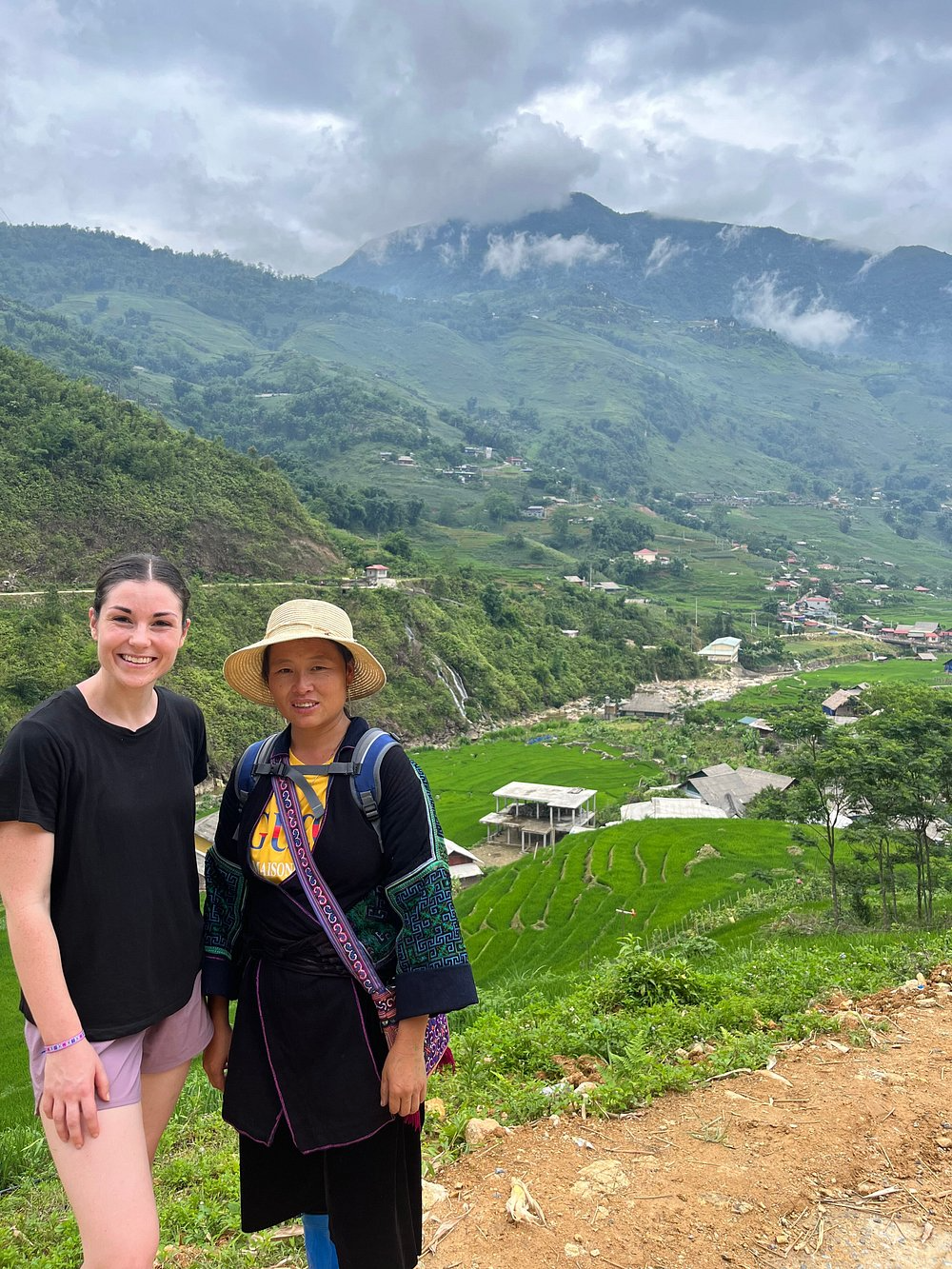 2D1N Homestay
Rice Terraced Fields & Homestay
Two days on the trail, a night in a valley homestay, dinner with the family. The full experience.
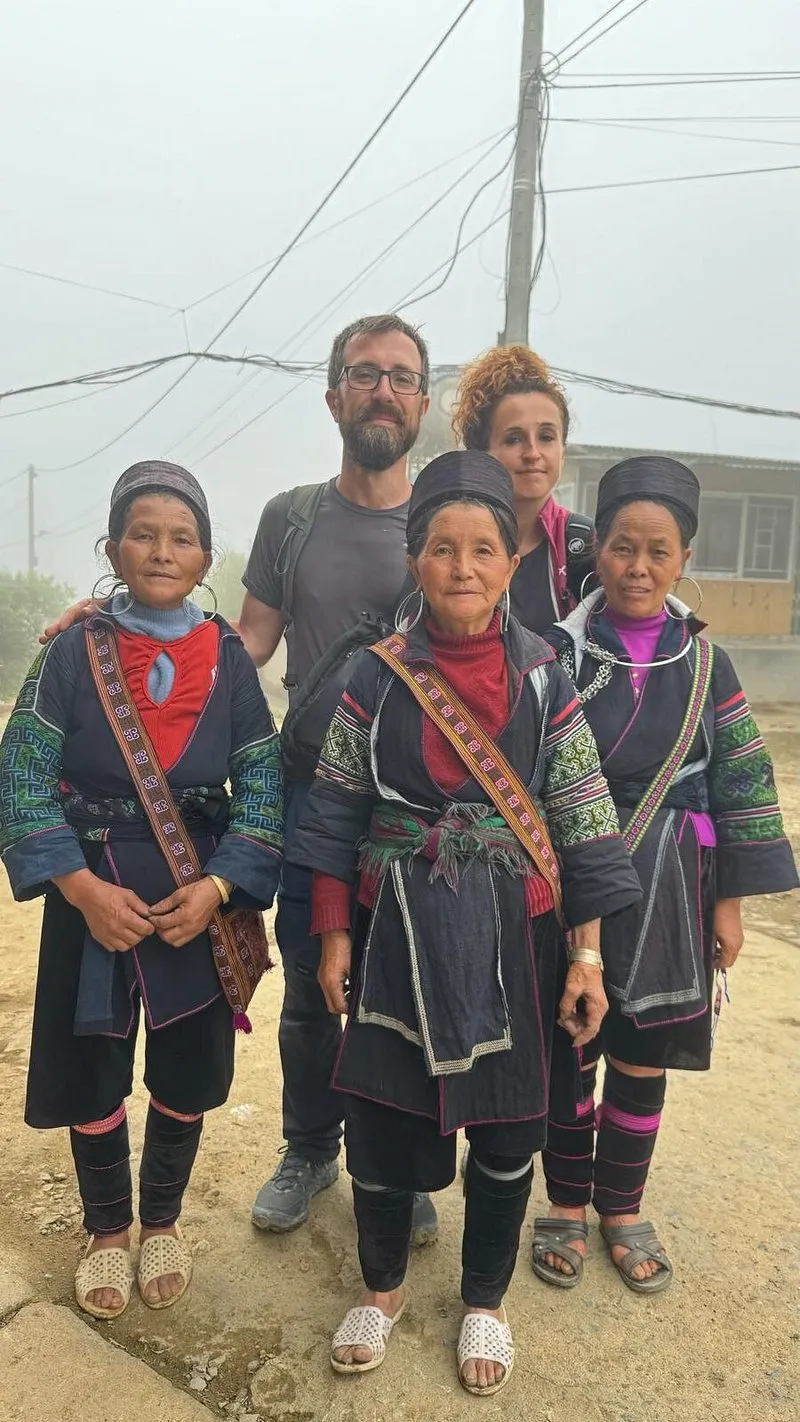 Families & Seniors
Sapa Easy Trekking For Seniors
Gentle paths, no steep sections, poles can be rented at our office — perfect for 60+ travelers and families.
Ha Giang — The Last Frontier
For travelers who want the north at its wildest, Ha Giang is the final frontier — a remote province on the Chinese border whose mountain loop has become Vietnam's great road adventure. Towering limestone plateaus, the vertiginous Ma Pi Leng Pass above the turquoise Nho Que River, and ethnic-minority markets that have barely changed in generations make it the most dramatic landscape in the country.
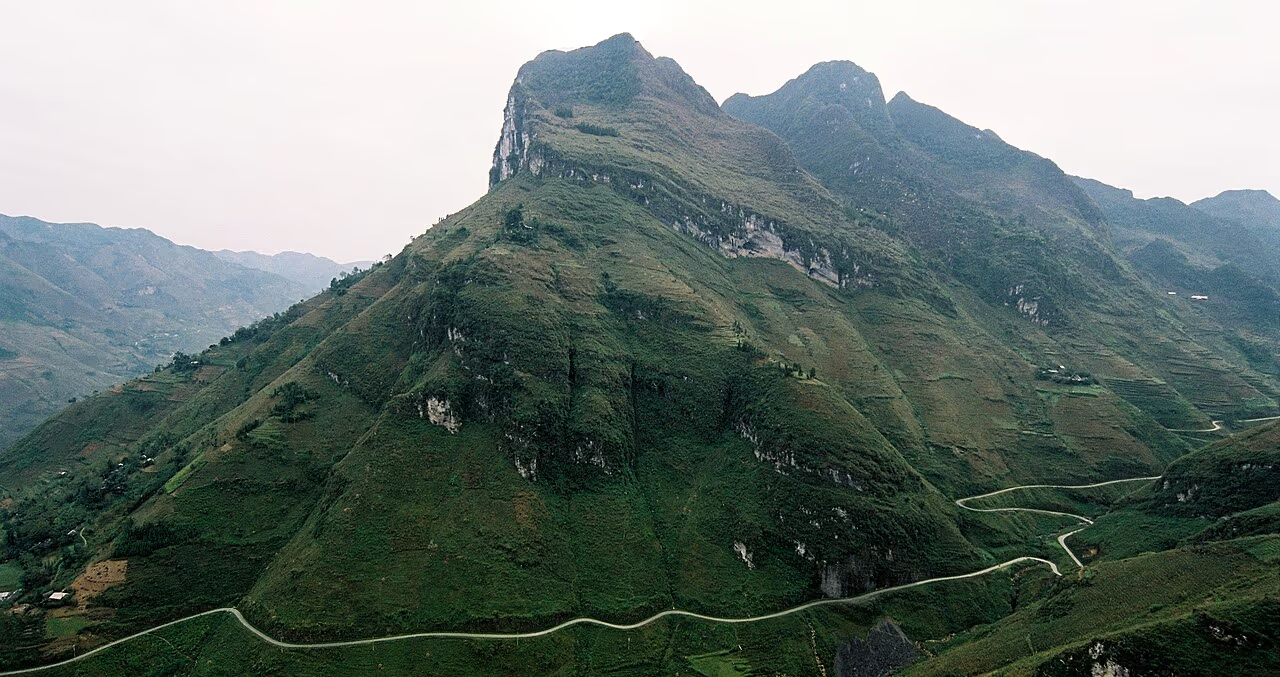
The Ha Giang Loop is typically a three-to-four-day circuit, ridden by motorbike (often with an "easy rider" driver) or driven by private car, sleeping in homestays along the way. It takes more time and effort than the other stops — six hours from Hanoi just to reach the start — which is exactly why it stays special. And it doesn't end there: the far north hides more, from the giant Ban Gioc Waterfall in Cao Bang to the silent Ba Be Lake, which you can read about in our guide to Vietnam's hidden places.
Be honest with yourself about Ha Giang before you add it: it's the most rewarding part of the north, but also the most demanding. The loop means several days on winding mountain roads, simple homestays, and real time in the saddle or the car. If that sounds like the trip of a lifetime, it is one. If you'd rather not spend your holiday on a motorbike, the terraces of Sapa deliver mountain Vietnam in a far gentler, more accessible form — which is exactly why most first-timers make Sapa the priority and save Ha Giang for a return trip.
When to Visit Northern Vietnam
The best time to visit northern Vietnam is September to November, when the air is clear and mild and the rice terraces turn gold for the harvest — the most beautiful season in the mountains. March to May is the next-best window: warm, dry, and green, with the terraces freshly planted and reflecting the sky.
Summer (June to August) is hot and humid in the lowlands and brings the brightest emerald-green paddies up in Sapa, though it's also the wettest season, with afternoon downpours and the occasional landslide on mountain roads. Winter (December to February) turns Sapa and Ha Giang genuinely cold — single digits, thick fog, and on rare days a dusting of snow — beautiful but bracing, so pack warm layers if you come then. Whatever the month, the mountains are always cooler than Hanoi; bring a jacket even in summer.
If you can time it, the rice cycle is worth planning around. The terraces are flooded and mirror-like from May into early June as planting begins, lush green through July and August, and turn to gold for the harvest from mid-September into early October — the single most photographed moment in the north. Markets add another layer of colour: the Sunday market at Bac Ha and the ethnic gatherings across Ha Giang are vivid, worth building a day around if your dates line up.
Getting Around the North
Because everything radiates from Hanoi, getting around the north is straightforward once you're in the capital. Ha Long and Ninh Binh are short drives; Sapa is five to six hours northwest by sleeper bus or limousine van; Ha Giang is a longer haul best done as an organised loop. The one leg worth booking as a proper, comfortable transfer rather than leaving to chance is the Hanoi–Sapa run — it's the gateway to the mountains, and you want to arrive rested.
A word on the famous night train: the Hanoi–Lao Cai sleeper is a romantic, old-school way to reach Sapa, arriving at dawn after a night in a berth, though it drops you an hour's drive below the town. The limousine vans are faster and fully door-to-door; the sleeper buses are the cheapest. All three work well — choose by whether you're optimising for comfort, speed, or budget.
The Comfortable Way Into the Mountains


A Classic 10-Day Northern Route
Ten days is the comfortable sweet spot for the north. Here's the route we'd recommend to a first-time visitor who wants the highlights without rushing:
- Days 1–2 — Hanoi. Settle in, eat your way through the Old Quarter, see the lake and the water puppets.
- Days 3–4 — Ha Long / Lan Ha Bay. An overnight cruise among the karsts, then back to Hanoi.
- Days 5–7 — Sapa. Overnight transfer up, then two days trekking the Muong Hoa Valley with a homestay night — the heart of the trip.
- Day 8 — Ninh Binh. A boat through the karsts and the climb up Mua Cave.
- Days 9–10 — Hanoi & depart (or extend with the Ha Giang Loop if you have four more days).
Prefer wild over famous? Swap the Ha Long cruise for the Ha Giang Loop and trade Ninh Binh for an extra night in the Sapa valleys. Short on time? The north's essence — Hanoi plus a two-day Sapa trek — can be done in a rich four days.
However you shape it, resist the urge to cram. The north's distances are short on the map but slow on the ground, and the best memories here come from the unhurried hours — a long lunch in a valley homestay, a slow boat through the karsts, a second coffee watching a Hanoi street wake up — not from ticking off one more sight. Leave gaps in the plan, and let the place fill them.
One practical note for the mountain leg: Sapa's valley trails turn to slick clay after rain, and the air is cool even in summer. You don't need to fly with hiking boots — rent them, and a pair of poles, at our office in town the day before you trek.
Boots & Poles for the Mountains
 Gear Rental
Trekking Boots Rental
Waterproof ankle-support boots, cleaned and checked before each rental. At 105 Thach Son Street.
 Gear Rental
Walking Poles Rental
Trekking poles at $2/day from our office at 105 Thach Son Street. Essential for the descents.
Tips for the North
- Base in Hanoi and loop out. Don't drag your luggage everywhere — leave a bag at your Hanoi hotel and travel light to Sapa and Ha Long.
- Take the night transfer to Sapa. An overnight sleeper bus or train saves a daytime and a hotel night, and you wake up in the mountains.
- Always pack a layer. The mountains are cool to cold year-round; even a summer evening in Sapa needs a jacket.
- Trek with a local guide. The valleys' best trails are unmarked and the warmest welcomes come through guides who grew up there.
- Time it for the harvest. Late September turns the terraces gold — the north's most spectacular few weeks, and worth planning around.
- Book the dated parts early. Small-group treks (max 12) and peak-season cruises fill up; our team confirms availability on WhatsApp in 5–10 minutes.