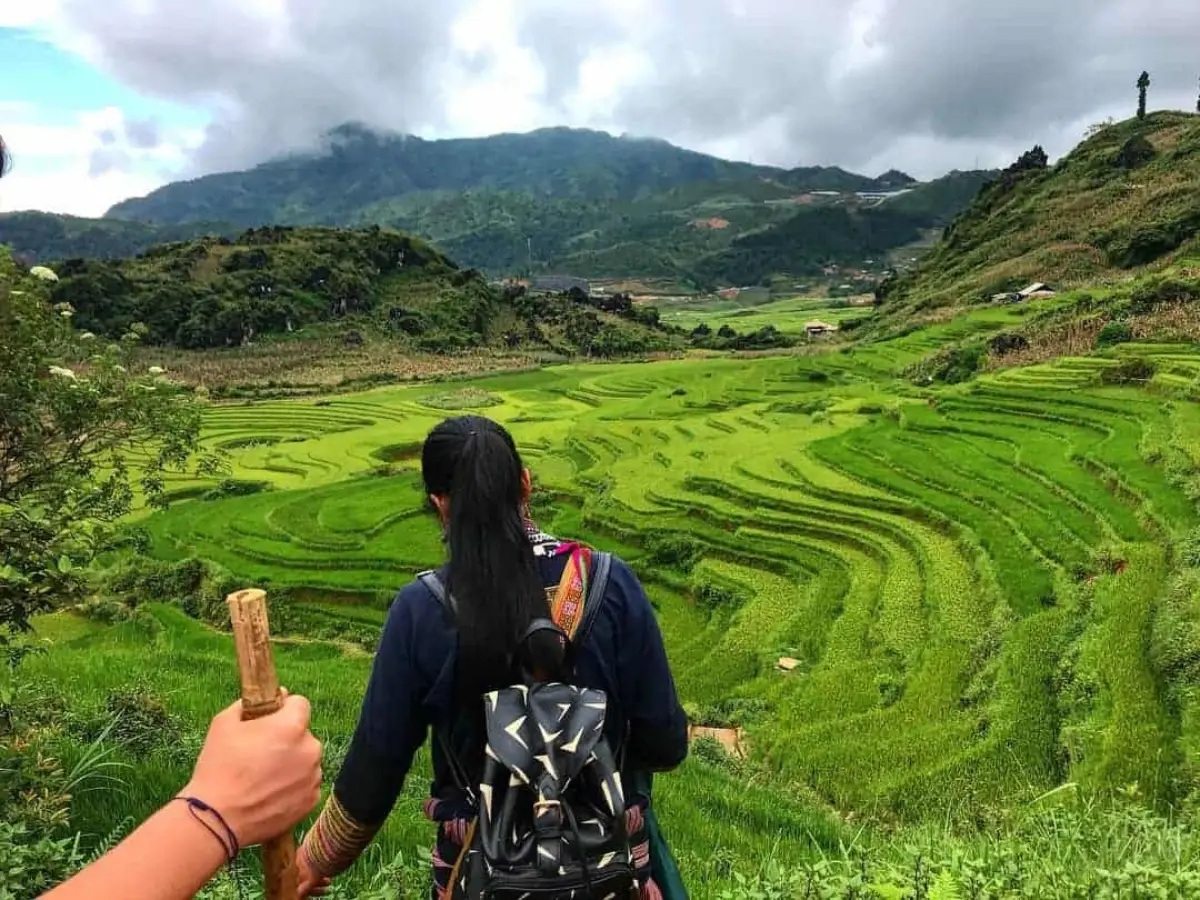
 Sinh Giang
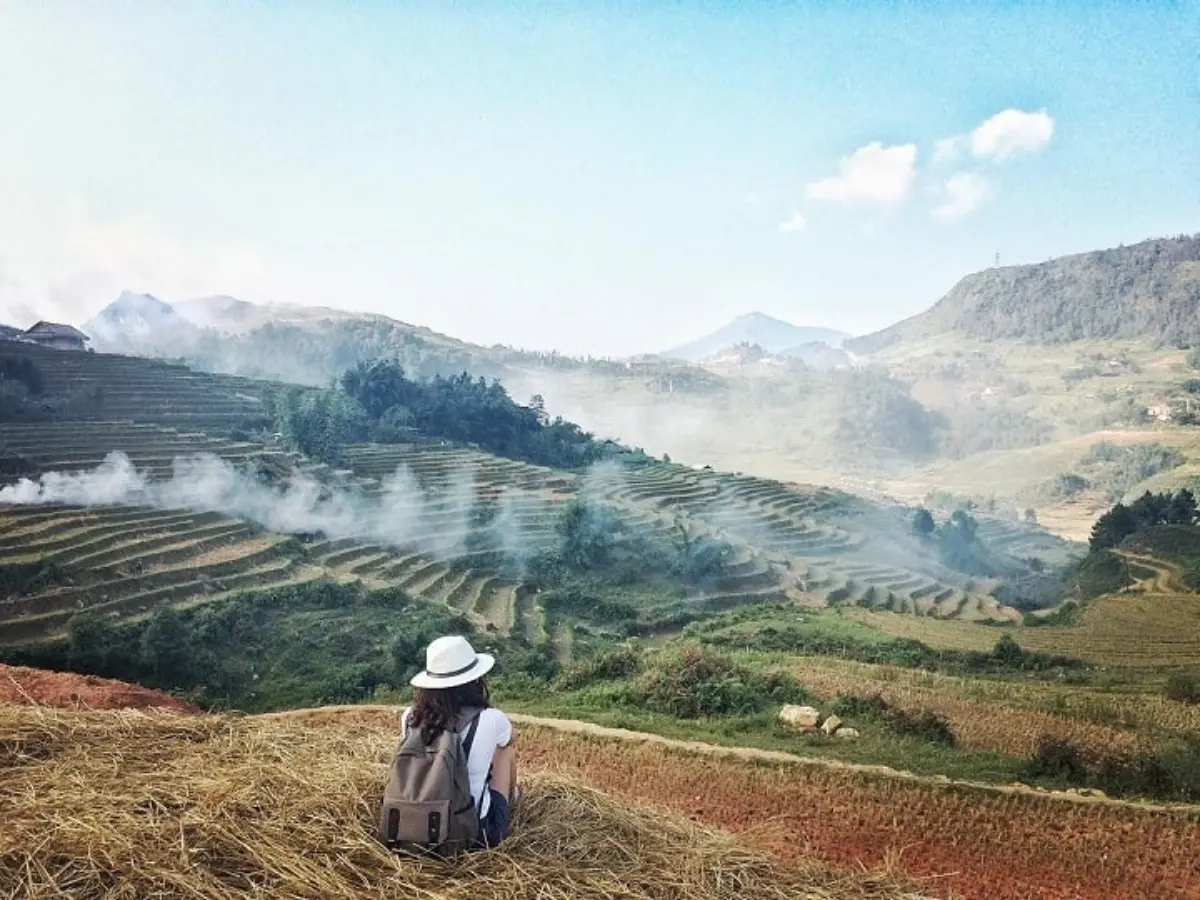
The first thing travelers notice about the Black H'mong is the color. It isn't quite black and it isn't quite blue — it's a deep indigo that looks different in morning mist than it does in afternoon sun, and it comes from a dye vat that's been running in the same family yard for generations. When you walk into Lao Chai village early on a trekking morning, before the tour buses have come down from Sapa town, you'll often smell it before you see it: a sharp, slightly fermented smell from the cloth soaking in the vats behind the houses.
The Black H'mong are the largest ethnic minority group in the Sapa district, with communities spread across more than 40 villages in the Muong Hoa Valley and the ridges above it. They are not simply a cultural backdrop to trekking — they are the reason the landscape looks the way it does. The rice terraces carved into the Muong Hoa Valley slopes, the stone walls, the footpaths between villages: most of this was built and maintained by Black H'mong communities over more than two centuries.
Who Are the Black H'mong?
The Black H'mong are one of more than a dozen sub-groups of the broader H'mong ethnic family — a family that also includes White H'mong, Flower H'mong, Green H'mong, and several others, each with distinct clothing styles, dialects, and village customs. The name "Black H'mong" comes directly from the indigo-dyed hemp cloth they wear, which gives their traditional clothing a characteristic dark blue-black appearance.
Their migration history traces back to Yunnan province in southwestern China. Over centuries, H'mong communities moved southward through the mountains — into Guizhou, then Guangxi, and eventually across the border into what is now northern Vietnam and Laos. The Black H'mong branch settled the highlands of Lao Cai province more than 200 years ago, establishing the villages that still exist today in the Sa Pa district. The Muong Hoa Valley, which runs below Sapa town, became the center of their agricultural world: its south-facing slopes, reliable rainfall, and access to irrigation streams made it some of the most productive rice-terrace land in northern Vietnam.
The language spoken in Lao Chai, Ta Van, and Y Linh Ho is a variant of the Hmongic branch of the Sino-Tibetan language family. It is tonal and bears no resemblance to Vietnamese — a Black H'mong person from Sapa and a Vietnamese speaker from Hanoi cannot understand each other without a shared third language. This is why our guides' fluency in both H'mong and English is more significant than it might seem: they are genuinely bridging two very different worlds, not simply translating tourist phrases.
Black H'mong and Red Dao — Two Groups You'll Meet on Trek
Don't confuse Black H'mong with Red Dao — they are completely different people. The Black H'mong wear deep indigo-dyed hemp clothing, often with minimal decorative embroidery at the cuffs and hem, and no distinctive headwear. Red Dao women wear striking red headdresses decorated with coins and tassels, heavily embroidered tunics, and many have tattooed forearms — a Red Dao tradition. They speak different languages, live in separate villages, and have entirely different spiritual practices. On a 1-day trek in the Muong Hoa Valley, you will primarily meet Black H'mong communities. If your route extends to Ta Phin village, northeast of Sapa town, you are in Red Dao territory.
Both groups have adapted to the presence of trekking tourism in different ways. In the Muong Hoa Valley, Black H'mong women often walk alongside trekking groups between villages, selling embroidery and silver jewelry along the route. This is not something we arrange — it is a well-established income stream that developed organically over decades of tourism. In Ta Phin, Red Dao women run herbal bath houses where travelers can experience the traditional medicinal bathing ritual that Red Dao communities use to treat muscle pain and fatigue. These are two very different interactions with two very different cultures, and understanding the distinction makes both encounters more meaningful.
The Villages — Where Black H'mong Communities Live Around Sapa
The main Black H'mong villages in the Sapa area form a loose arc across the Muong Hoa Valley floor and the ridges above it. Each village has its own character, its own age distribution, and its own relationship with tourism.
Lao Chai sits at around 1,200 meters on the valley floor, about 7 km from Sapa town by trail. It is one of the largest Black H'mong villages in the area — roughly 120 households — and the most frequently visited on trekking routes. The path into Lao Chai crosses a suspension bridge over the Muong Hoa stream, and on a clear day in September when the rice is ripening, the approach walk across the terraces is as good as anything in the valley. Ta Van, a few kilometers further downstream, is smaller and slightly more mixed — there is a Red Dao neighborhood at the upper end of the village, though the majority of families here are Black H'mong.
Y Linh Ho is where we take the route on our Sapa Easy Trekking For Seniors tour — a quieter village tucked into a side valley, with less foot traffic than Lao Chai. Hang Da and Hau Thao are smaller settlements further from the main trail network, which means the families here have had less contact with mass tourism and the interactions feel correspondingly more natural. We visit both on our 2D1N Rice Terraced Fields & Homestay route. Ma Tra sits on a ridge about 8 km from Sapa town and is notable for the panoramic views it offers across to Fansipan — on a clear morning in October or November, you can see the summit from the upper edge of the village.
Tours Led by Black H'mong Guides
 Best Seller
Trekking Through Rice Terraced Fields
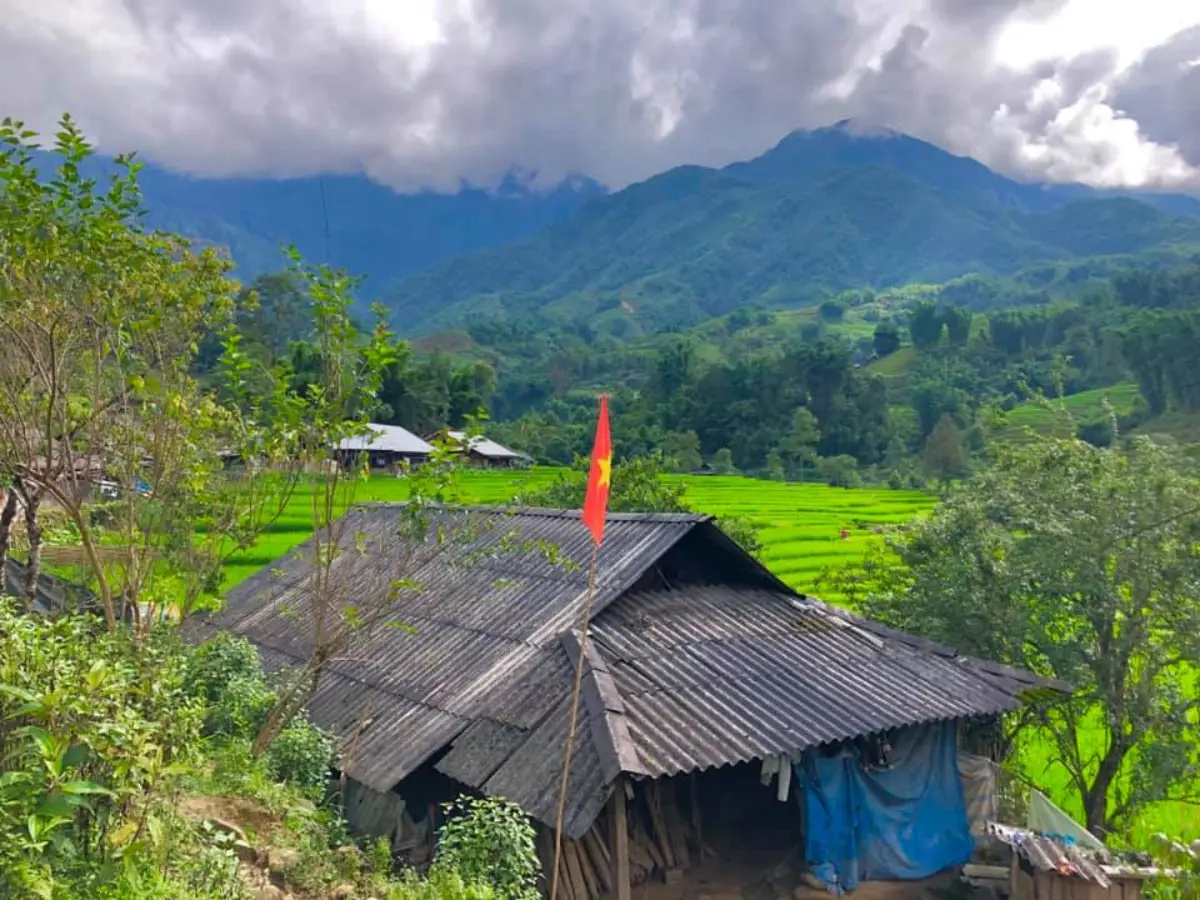
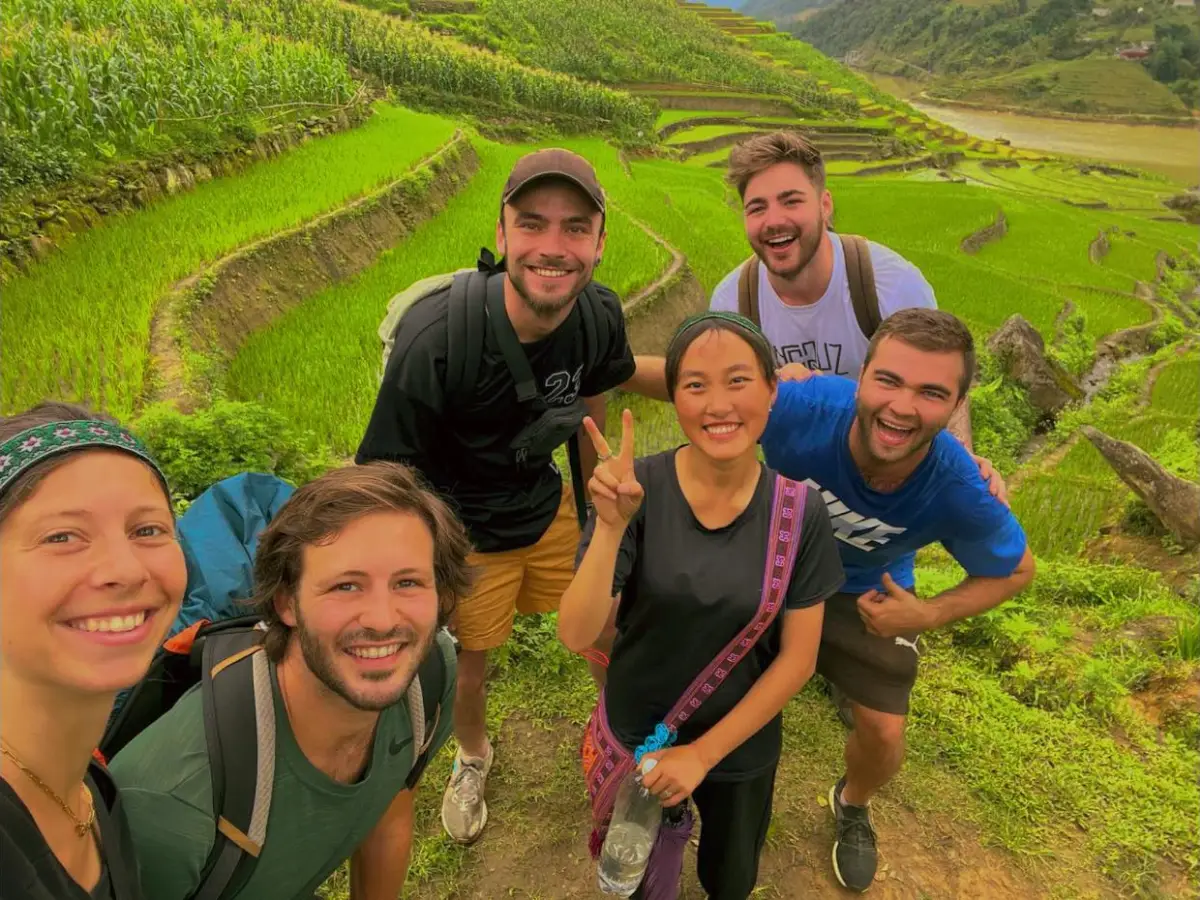
Walk the Muong Hoa Valley through Lao Chai and Ta Van — Black H'mong villages on the valley floor.
Rice Paddies and Cultures – Easy Hiking
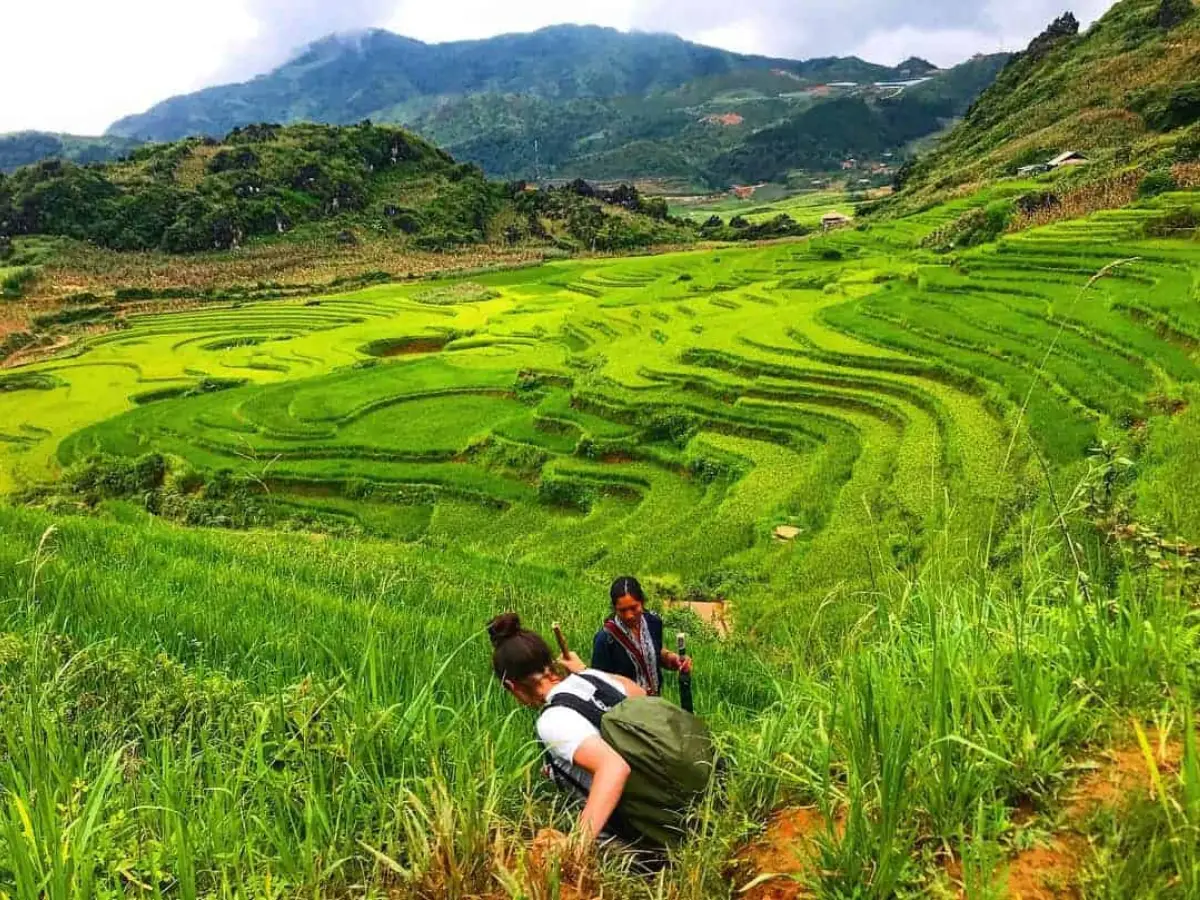
Flat valley walking through working rice paddies with stops at H'mong homes in Y Linh Ho.
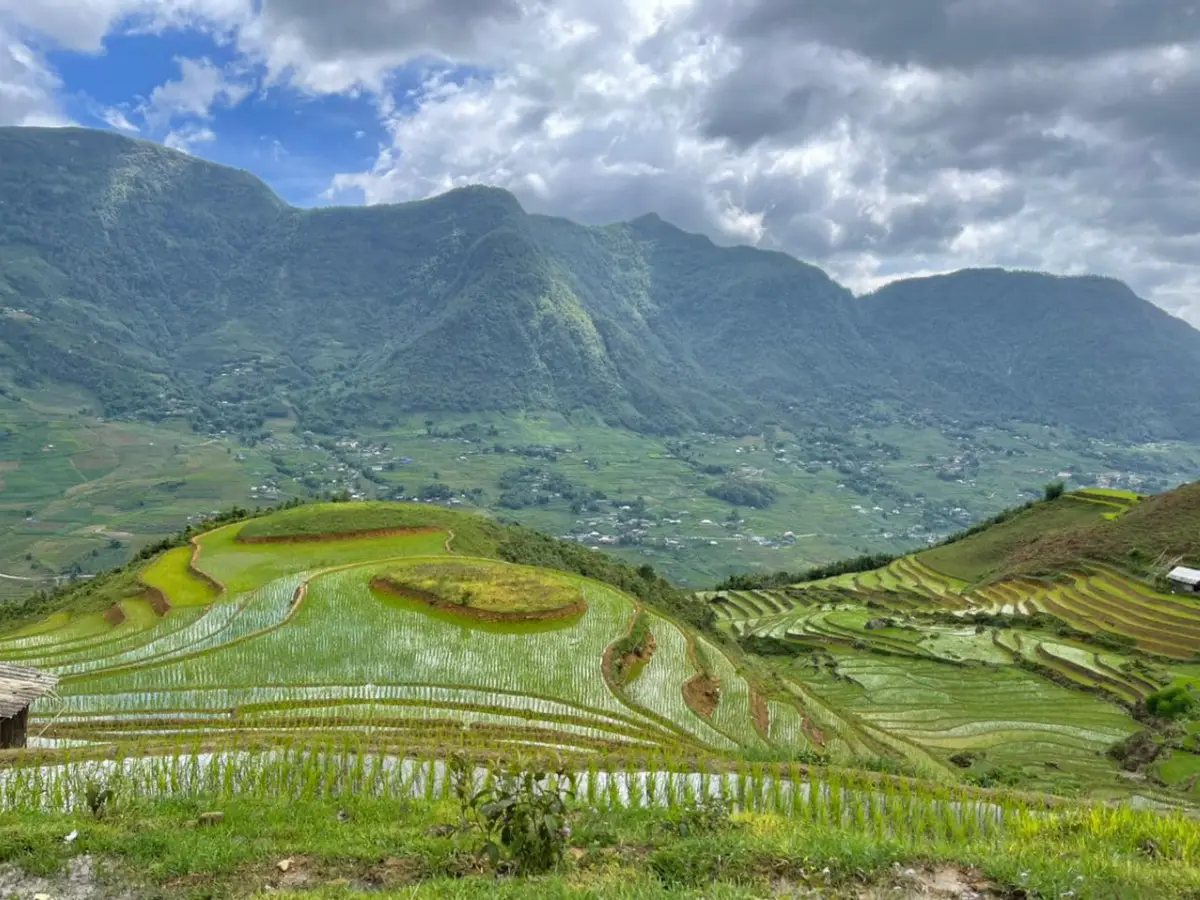
Rice Terraced Fields & Homestay
Overnight with a Black H'mong family in Hang Da — home-cooked dinner, terraces at dawn before day-trippers arrive.
How the Rice Calendar Shapes Everything
The Black H'mong do not live by a tourist calendar. They live by a rice calendar, and every significant decision — when to plant, when to flood the terraces, when to hold a ceremony, when there is time to guide trekkers and when there isn't — is organized around the cultivation cycle of glutinous rice on the Muong Hoa slopes.
The planting season begins in April and May, when small seedlings are started in nursery beds at the bottom of the terraces. In June, families spend two to three weeks doing the transplanting: wading knee-deep in flooded paddies, pressing seedlings into the mud in rows. This is the hardest physical work of the year, and it requires every available hand in the family — which means this is not the easiest time to arrange a community homestay, since the families are genuinely occupied from first light until dark.
By late July and August, the terraces are the deep, saturated green you see on most Sapa travel photographs. Then, in September and October, comes the harvest. The rice turns from green to gold, starting at the bottom of the valley and working upward as the cooler air at higher altitude slows ripening. The Sa Seng Mountain ridgeline above Hang Da village is usually the last to turn — sometimes not until early November in a cold year. This window, from mid-September to mid-October, is the most visually dramatic time to trek in the Muong Hoa Valley, and it's the period when we receive the most booking requests.
After harvest, the terraces are drained and the families turn to other work: repairing walls, weaving, dyeing fabric, and attending the winter market in Sapa town. It is also the season when our local guides have the most flexibility to take longer multi-day treks — when the pressure of the farming calendar lifts and there is time for something other than the terraces.
Indigo Dyeing — The Trade You'll Smell Before You See It
Hemp cloth is grown on small plots beside the rice terraces. After the fibers are retted and spun, the cloth goes into a vat of indigo dye — a paste made from the fermented leaves of the indigo plant, mixed with wood ash lye and left to develop for at least three days before the first piece of fabric goes in. The smell is distinctive: organic, slightly sour, somewhere between a compost heap and a forest floor after rain.
The dyeing process is not a single immersion. A deep, durable black-blue requires the cloth to be soaked, wrung, and air-dried repeatedly — 10, 15, sometimes 20 cycles over several weeks. At each stage, the fabric darkens slightly. The final cloth is then beaten smooth with a wooden mallet on a flat stone, which gives it the distinctive sheen you notice on women's clothing in Lao Chai and Ta Van. A woman's full traditional outfit — leggings, tunic, apron, and cuffs — can represent weeks of dyeing work, which is why these garments are worn carefully and repaired rather than discarded.
The indigo-stained hands you'll notice on older women in the villages are not accidental. The dye penetrates the skin after years of repeated contact and doesn't wash out easily. It is, in an unintentional way, a mark of craft seniority.
Cross-Stitch Embroidery and What the Patterns Mean
Rice Farming
The glutinous rice terraces of the Muong Hoa Valley are the foundation of Black H'mong life — planting in June, harvest in September-October, every season structured around the crop.
Cultural CoreIndigo Dyeing
Hemp cloth is dyed in fermented indigo vats over 10–20 cycles, then beaten smooth. The deep blue-black color is the defining visual marker of the Black H'mong sub-group.
Textile CraftCross-Stitch Embroidery
Geometric patterns on cuffs, collars, and aprons — each motif has cultural meaning. Girls learn to embroider from age 7–8; skill level is a marker of status and marriageability.
Visual IdentityH'mong Language
A tonal Sino-Tibetan language with no relation to Vietnamese. Our local guides speak both — they narrate village life in their own words, not through a third-party translator.
Living LanguageThe geometric cross-stitch embroidery that decorates Black H'mong clothing is not purely decorative. The patterns are a visual vocabulary that communicates family lineage, marital status, and regional identity to anyone who knows how to read them. Square spiral patterns represent the path of the sun; diamond grids reference the terraced fields themselves; certain arrangements of triangles indicate which clan a family belongs to.
Girls in Lao Chai typically begin learning embroidery between the ages of 7 and 8 — not at school, but watching their mothers and grandmothers work during the evenings. A young woman's embroidery skill has historically been one of the ways her readiness for marriage was assessed, and the most elaborately embroidered garments are still worn to the Saturday market in Sapa town, which functions partly as a social gathering where different villages see each other.
Beyond the fabric, silver jewelry is an important part of Black H'mong dress — particularly the large earrings, necklaces, and decorative clasps worn by women on ceremonial occasions. Silver was historically the primary store of wealth for H'mong families, and large silver neck rings are still passed down through generations as family heirlooms. The silversmithing tradition remains active in several villages, though it has declined as machine-made jewelry has become cheaper and more available in the Sapa market.
Walk through villages on designated paths rather than cutting through private gardens. Ask before photographing individuals — a smile and a gesture toward your camera is usually understood. If you buy embroidery or jewelry directly from village women, pay the asking price without aggressive bargaining: these items represent hours of skilled work, not mass-produced souvenirs. When invited into a home, remove your shoes at the doorway. Avoid touching the household altar, which is usually positioned against the back wall of the main room. Our guides will give you a full briefing at the start of each trek.
Our Guides — Black H'mong From These Villages
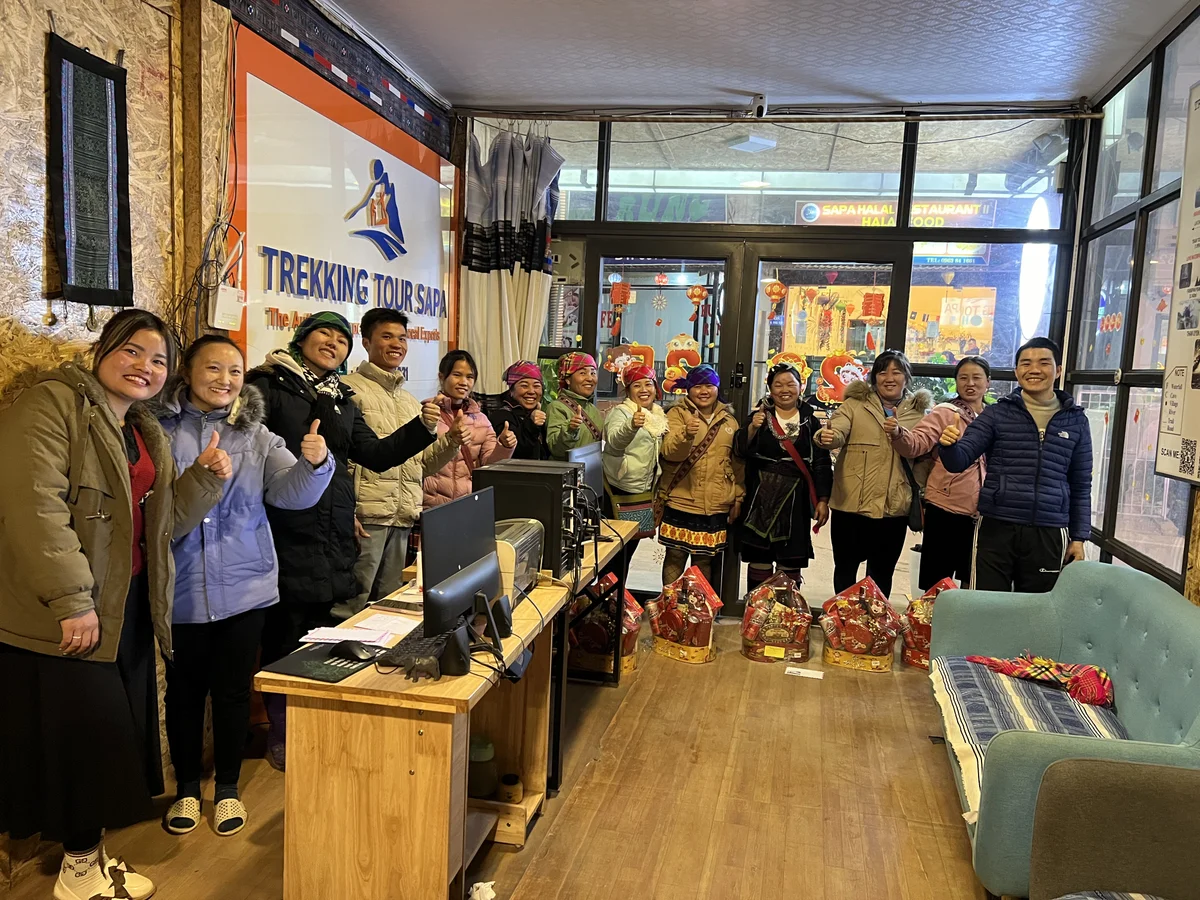
Our local guides grew up in Black H'mong families in the Muong Hoa Valley. Their English didn't come from a language school — it came from years of talking to early trekking visitors while selling handicrafts at the Sapa market as teenagers, then formalizing that knowledge through guiding qualifications. They now lead our most demanding routes, including the 3D2N Experience The Real Sapa trek, which passes through villages few mainstream operators visit because they lack the community connections to enter them comfortably.
Our local guides have similar backgrounds. One is originally from Hau Thao village — one of the smaller Black H'mong settlements off the main trekking circuit — and when they lead a group through Hau Thao, the people who greet them are their actual neighbors and relatives. This is not a performance of local connection; it is simply the reality of where they come from. When a family member offers travelers sticky rice at a home in Hau Thao, they do so because the guide has been friends with them since childhood — not because it is a paid demonstration of H'mong hospitality.
This is the central difference between trekking with a Black H'mong guide and trekking with a Vietnamese or Kinh guide who has learned about H'mong culture from training materials. Both can explain what you are seeing. Only one of them is also living it.
What Tourism Has Changed
Sapa has been a trekking destination since the early 1990s, and three decades of tourism have changed Black H'mong communities in ways that are visible if you know what you're looking at. The most obvious is economic: families in Lao Chai and Ta Van have significantly higher cash incomes than they did thirty years ago, primarily from trekking guide fees, homestay income, embroidery sales, and market stalls. The stone houses that line the main paths through these villages are largely built with tourism money — most families in the Muong Hoa Valley were living in wooden structures until the early 2000s.
Children's lives have changed substantially. A generation ago, it was common to see children as young as eight or nine accompanying their mothers to sell trinkets to trekking groups along the trail — this was the informal English school for the guides of that generation. Today, school attendance rates in Black H'mong villages are considerably higher, partly because the government has made primary education compulsory, but also because families that have benefited economically from tourism understand that their children's opportunities depend on formal education. You still see older women walking alongside trekking groups with embroidery to sell — this has become a normal part of the trekking economy — but you see fewer children doing it during school hours.
What hasn't changed is the farming calendar. The rice terraces of the Muong Hoa Valley are still planted, maintained, and harvested by hand, by the same families who built them. Tourism income supplements agricultural income; it does not replace it. When you walk into Lao Chai in September and see a family bent over in the terraces pulling in rice stalks, that is not a demonstration for tourists. The crop has to come in, and it has to come in now, regardless of who happens to be walking past with a camera.
Rent at Our Office Before You Trek
 Gear Rental
Trekking Boots Rental
Waterproof ankle-support boots. Cleaned and checked before each rental. Available at 105 Thach Son Street.
 Gear Rental
Walking Poles Rental
Trekking poles available to rent at $2/day at our office, 105 Thach Son Street. Essential for descents.
Frequently Asked Questions
No. While they share the same Hmong ethnic roots and a migration history from Yunnan province in southern China, the Black H'mong in Sapa are a distinct sub-group with their own dialect, clothing traditions, and cultural practices. The Hmong communities in Laos, Thailand, and Myanmar developed differently after centuries of separate migration and have quite different customs, dress, and languages — even though the core ethnic identity is related.
Black H'mong and Red Dao are completely separate ethnic groups. Black H'mong women wear indigo-dyed hemp clothing that appears almost black-blue, with minimal embroidery on cuffs and collars. Red Dao women wear striking red headdresses and heavily embroidered tunics with silver coins, and often have tattooed forearms. They speak entirely different languages, live in different villages, and have different agricultural and spiritual traditions. You will typically meet Black H'mong in villages like Lao Chai, Ta Van, Y Linh Ho, and Hang Da, while Red Dao communities are concentrated in Ta Phin village.
Yes — our Black H'mong guides all speak fluent conversational English. They learned initially through interactions with early trekking tourists and developed their language skills into a professional qualification over many years. This is part of what makes their guiding distinctive: the stories they tell about their own villages and families are told in their own words, not through translation.
Always ask before photographing an individual, especially elders and children. A simple smile and gesture toward your camera is usually understood. Most Black H'mong people in trekking villages are accustomed to travelers and will either agree or politely decline. Never photograph inside a home without clear invitation, and avoid photographing women doing personal tasks like bathing or washing. When trekking with our guides, they will guide you on appropriate moments — and will always translate a request if needed.
The main Black H'mong villages in the Sapa area are Lao Chai, Ta Van, Y Linh Ho, Hang Da, Hau Thao, and Ma Tra. Lao Chai and Ta Van sit on the floor of the Muong Hoa Valley and are visited on almost all of our 1-day trekking routes. Y Linh Ho is a quieter village further along the valley, and Ma Tra sits on a ridge above Sapa town with panoramic views across to Fansipan. Hang Da and Hau Thao are smaller settlements off the main tourist path — we visit these on our 2-day and 3-day treks.
The most genuine way is to trek with a Black H'mong guide — you will walk through their actual home villages, stop at family homes, and have the guide introduce you to people they grew up with. Our local guides are both from these communities. The 1-day Trekking Through Rice Terraced Fields route passes through Lao Chai and Ta Van, while the 2D1N Rice Terraced Fields and Homestay tour includes an overnight with a Black H'mong family. A homestay gives you dinner, breakfast, and a morning in a working village before any day-trippers arrive.