 Sinh Giang

Da Nang is about 800 kilometres south of Sapa as the crow flies — but the route requires going through Hanoi regardless of how you travel. I get this question every week from travelers finishing their time in the mountains and heading down the coast. Here is every option laid out honestly, with current costs and real travel times so you can plan your move south without any surprises.
The journey is not complicated, but it has a few moving parts. Sapa sits at 1,500 metres in Lao Cai Province, in Vietnam's northwest. The nearest airport is Noi Bai in Hanoi, roughly 320 km from Sapa via the Lao Cai expressway. From Hanoi, Da Nang is another 760 km south. Every route — whether you fly, take the train, or ride a bus — follows this same logic: Sapa to Lao Cai to Hanoi to Da Nang.
Understanding the Route — Why You Go Through Hanoi
There are no direct trains or flights from Lao Cai (Sapa's rail gateway) to Da Nang. Lao Cai Station connects only to Hanoi, operating about eight departures per day in each direction. From Hanoi, your options multiply: frequent flights, multiple daily train departures, and a busy overnight bus network all cover the Hanoi–Da Nang corridor.
One thing that catches travelers out: Hanoi has two main stations. Hanoi Station (Ga Ha Noi), on Le Duan Street, handles nearly all southbound trains including every service to Da Nang and Ho Chi Minh City. Gia Lam Station handles some northbound trains toward Lao Cai and the Chinese border. If you are heading south to Da Nang, you want Hanoi Station — not Gia Lam. Check your ticket carefully.
The Lao Cai–Hanoi connection typically runs 3 hours 30 minutes by express train and about 4–5 hours by limousine bus on the expressway. Either gets you into Hanoi with time to connect the same day, assuming you leave Sapa in the morning.
Option 1 — Fly (Fastest, Most Expensive)
Flying via Noi Bai Airport is the fastest way to cover this distance, and the best choice if you have a tight schedule or need to make a connection to another country. The door-to-door time from Sapa town to Da Nang airport runs 6–8 hours if your connections work cleanly.
- Sapa to Lao Cai: Taxi takes 30–45 minutes and costs 200,000–250,000 VND ($8–10 USD). A shared minibus from Sapa town center costs 50,000 VND ($2) but stops more frequently and can take an hour or longer.
- Lao Cai to Noi Bai Airport: Limousine buses depart Lao Cai at approximately 5am, 7am, and 9am, arriving 2.5–3 hours later at the airport. Cost: 150,000–200,000 VND ($6–8). A private taxi from Lao Cai direct to Noi Bai runs 1,200,000–1,500,000 VND ($50–60) and takes the same time but on your schedule.
- Noi Bai to Da Nang: Vietnam Airlines, VietJet Air, Bamboo Airways, and Vietravel Airlines all operate multiple daily flights. The journey is 1 hour 15 minutes. Fares range from 400,000–1,500,000 VND ($16–60) depending on how far in advance you book and which carrier you choose.
Total time: 6–8 hours door to door, with a reasonable connection. Total cost: $30–80 USD, with the main variable being your taxi choices and flight price.
Book the Hanoi–Da Nang flight at least 5 days in advance. Same-day or next-day fares from Noi Bai to Da Nang can exceed $100 on major carriers. VietJet's cheapest fares appear 2–4 weeks out and can go as low as $16–20 for early morning departures.
Option 2 — Overnight Sleeper Train (Best Balance of Cost and Experience)
The overnight train is our most popular recommendation for travelers who want to travel comfortably without spending a lot. It costs about the same as the bus but gives you a private berth to sleep in — and the Hanoi–Da Nang route on the SE1 and SE3 trains is genuinely one of the more scenic rail journeys in Southeast Asia.
- Sapa to Lao Cai: Same options as above — taxi or shared minibus.
- Lao Cai to Hanoi: The express daytime train takes 3 hours 30 minutes. An overnight train departs Lao Cai around 9pm and arrives in Hanoi around 5:30am — slower (8.5 hours) but you sleep instead of sitting. For most travelers connecting to the southbound train, the express daytime service works better.
- Hanoi to Da Nang: Trains SE1, SE3, SE5, and SE7 depart from Hanoi Station daily. Journey time is 14–16 hours. The SE1 departs around 6am and the SE3 departs around 7:30pm — the overnight SE3 departure is the one most travelers choose. Soft sleeper (4-berth cabin) is strongly recommended over hard sleeper for this distance. Cost: 550,000–950,000 VND ($22–38) for a soft sleeper berth depending on departure time.
Total time: 20–26 hours, depending on your Hanoi connection. Total cost: $25–45 USD all-in.
One specific detail worth knowing: the Hanoi–Da Nang train crosses the Hai Van Pass — May Deo in Vietnamese — between the cities of Hue and Da Nang. This stretch hugs the coast on a narrow clifftop ledge with the South China Sea directly below. On the SE1 and SE3 departures from Hanoi, you pass through this section in early morning light, which is the best possible time to see it. If you are booking a 4-berth soft sleeper, request the lower berths on the east side of the train (berths 1 and 2 in each cabin) for the sea view.
Book the Hanoi–Da Nang train on 12go.asia or the Vietnamese Railway website (dsvn.vn) at least 3 days before travel in low season, 7–10 days in advance during peak season (October–November, and January–February around Tet). Soft sleeper berths sell out significantly faster than hard sleeper.
Option 3 — Full Bus Journey (Cheapest but Slowest)
If budget is the main constraint and you do not mind a full day and night on the road, combining the Sapa limousine bus with the Hanoi–Da Nang overnight sleeper bus is the most affordable option at $18–28 USD total.
- Sapa to Hanoi: Multiple limousine bus operators run departures from Sapa town center between 6am and 8pm. Cost: 180,000–250,000 VND ($7–10). Travel time: 5–6 hours on the expressway.
- Hanoi to Da Nang: Futa Bus, Hoang Long, and several other operators run overnight sleeper buses (giuong nam) that depart from My Dinh Bus Station or Nuoc Ngam Bus Station in Hanoi between 6pm and 8pm, arriving in Da Nang around 8–10am the following morning. Cost: 280,000–450,000 VND ($11–18).
Total time: 22–28 hours. Total cost: $18–28 USD all-in.
To be honest: the Hanoi–Da Nang road journey is 800 km along National Route 1A (QL1A) through the coastal lowlands. The road is fine, but it is a long haul. Buses stop once or twice at highway restaurants around midnight — adequate but basic. The sleeper seats recline flat enough to sleep, but they are narrower than train berths. For a few extra dollars, the train is noticeably more comfortable.
Comparison at a Glance
| Option | Total Time | Total Cost | Best For |
|---|---|---|---|
| Fly via Hanoi | 6–8 hours | $30–80 USD | Speed, tight itineraries, onward international connections |
| Train via Hanoi | 20–26 hours | $25–45 USD | Comfort, scenic Hai Van Pass, budget-conscious travelers |
| Bus via Hanoi | 22–28 hours | $18–28 USD | Tightest budget, flexible departure times |
Do Sapa First — Before the Long Journey to Da Nang
 Best Seller
Trekking Through Rice Terraced Fields
A half-day version is possible if you are catching an afternoon bus — ask us about timing.

Mountain Views and Villages Trek
Start at 7am, finish by 1pm — leaves time to catch the evening train from Lao Cai.
 Flexible
Sapa Private Car Tour
Flexible schedule — we can drop you at Lao Cai station at the end of the day.
What to Do in Da Nang
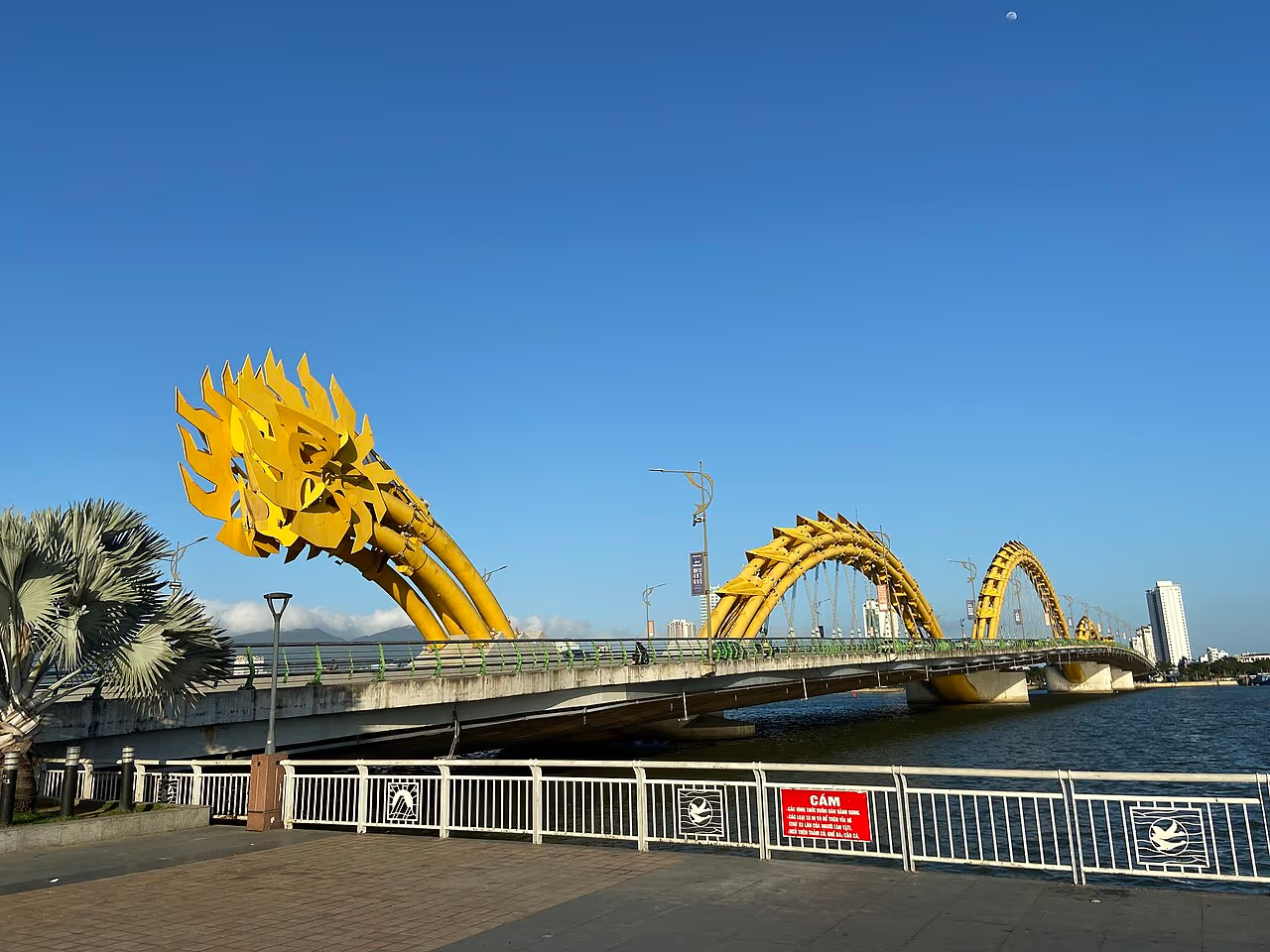
The Dragon Bridge (Cau Rong) opens to traffic every evening, but the spectacle is on Saturday and Sunday nights when it breathes fire and sprays water at 9pm. Watch from the east bank of the Han River for the best angle — arrive 20 minutes early to get a position. The show lasts about 15 minutes and the crowd thins quickly afterward.
My Khe Beach runs for 9 km north of the Da Nang port. The southern section near the Furama Resort and Pullman hotels sees the most foot traffic; if you walk 20 minutes north from the main hotel strip toward Non Nuoc Beach you will find the water just as clear and significantly fewer people. Surf conditions are best from September to December when northeast swells reach 1–2 metres.
The Marble Mountains (Ngu Hanh Son) sit 9 km south of downtown Da Nang — five marble and limestone formations rising out of flat coastal ground. Inside the mountain called Thuy Son you will find Buddhist sanctuaries, a 15th-century Cham temple ruin, and Huyen Khong Cave, a natural chamber large enough to hold hundreds of people with light filtering through ceiling holes. Grab motorbike or use Grab app — 200,000–250,000 VND each way from the city center. Note: the cable car ticket and some pagoda entrances charge separately.
Hoi An Ancient Town is 30 km south of Da Nang. A Grab taxi or private car costs 200,000–250,000 VND and takes 40 minutes. The Ancient Town itself is worth at least a full day — the lantern-lit streets after dark, the Hoi An market on Tran Phu Street, and the Thu Bon River by dawn are the three things that make it feel genuinely different from every other UNESCO old town in Asia. Many travelers use Da Nang as an airport base and spend their actual nights in Hoi An.
Gear Up in Sapa Before the Long Trip South
 Gear Rental
Trekking Boots Rental
Waterproof ankle-support boots. Cleaned and checked before each rental. Available at 105 Thach Son Street.
 Gear Rental
Walking Poles Rental
Trekking poles available to rent at $2/day at our office, 105 Thach Son Street. Essential for descents.
Frequently Asked Questions
The fastest option (flight via Hanoi) takes 6–8 hours door to door. The overnight train option takes 20–26 hours total. Budget a full day of travel regardless of which route you choose.
No. All routes go through Hanoi. The train from Lao Cai (Sapa's rail station) goes to Hanoi, and from Hanoi you connect to Da Nang.
The full bus route (Sapa–Hanoi limousine bus plus Hanoi–Da Nang overnight sleeper bus) costs $18–28 USD total. The overnight train via Hanoi costs about the same but is more comfortable.
Taxi takes 30–45 minutes and costs 200,000–250,000 VND ($8–10 USD). Shared minibuses depart from Sapa town center for 50,000 VND ($2) but take longer. Book a taxi the night before for early morning departures.
Vietnam Airlines, VietJet Air, Bamboo Airways, and Vietravel Airlines all operate the route. VietJet typically has the cheapest fares if booked in advance. The flight takes 1 hour 15 minutes.
Yes — the Hanoi–Da Nang train crosses the Hai Van Pass (May Deo) between Hue and Da Nang, passing through a tunnel at the summit. On the SE1 and SE3 trains, you cross the pass in early morning with full light — book the east-facing berth (seats 1 and 2 in a 4-berth cabin) for the sea view.