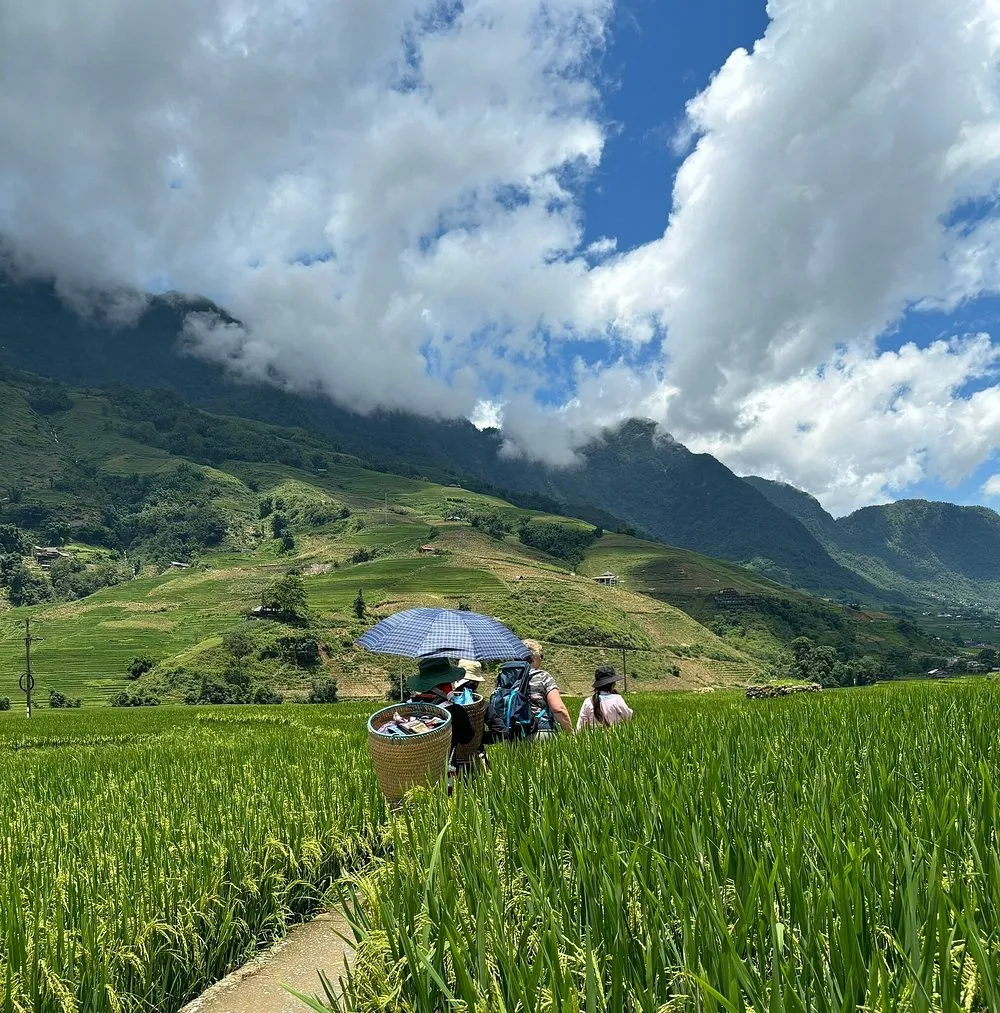
 Sinh Giang
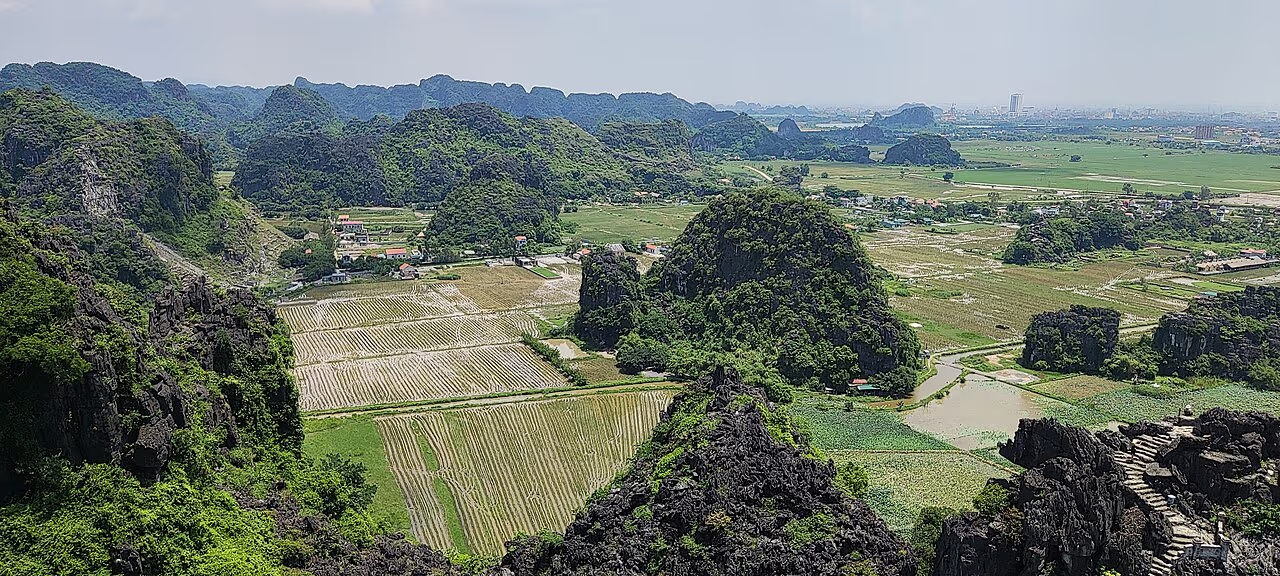
The best northern Vietnam 5-day itinerary pairs Hanoi with Sapa — the capital and the mountains — plus one of Ha Long Bay or Ninh Binh. Our recommended five days: a day in Hanoi, an overnight transfer to Sapa for two days trekking and a village homestay, then back via a Ninh Binh day trip (or swap in an overnight Ha Long Bay cruise). It needs no internal flights and never feels rushed.
Five days isn't long, so the key is to resist cramming in everything — the north alone has more than a week's worth of highlights. Focus on the two that define it, Hanoi and Sapa, then add a single third stop. We're a local trekking company based in Sapa, so this north Vietnam itinerary reflects how we'd actually spend five days here: where to go, what to skip, the big Ha Long-versus-Ninh Binh decision, and how to make the Sapa trek — the highlight for most visitors — the heart of the trip. Done this way, a north Vietnam itinerary of just five days still feels full rather than frantic. Here's the plan.
The North in 5 Days at a Glance
The shape of a well-planned five days in northern Vietnam.
The Big Choice: Ha Long or Ninh Binh?
With Hanoi and Sapa locked in, your five days come down to one decision: add an overnight Ha Long Bay cruise, or a Ninh Binh day trip? Here's the honest comparison.
Add Ha Long Bay
- Vietnam's most famous sight — the iconic karst seascape
- An overnight cruise is a memorable experience in itself
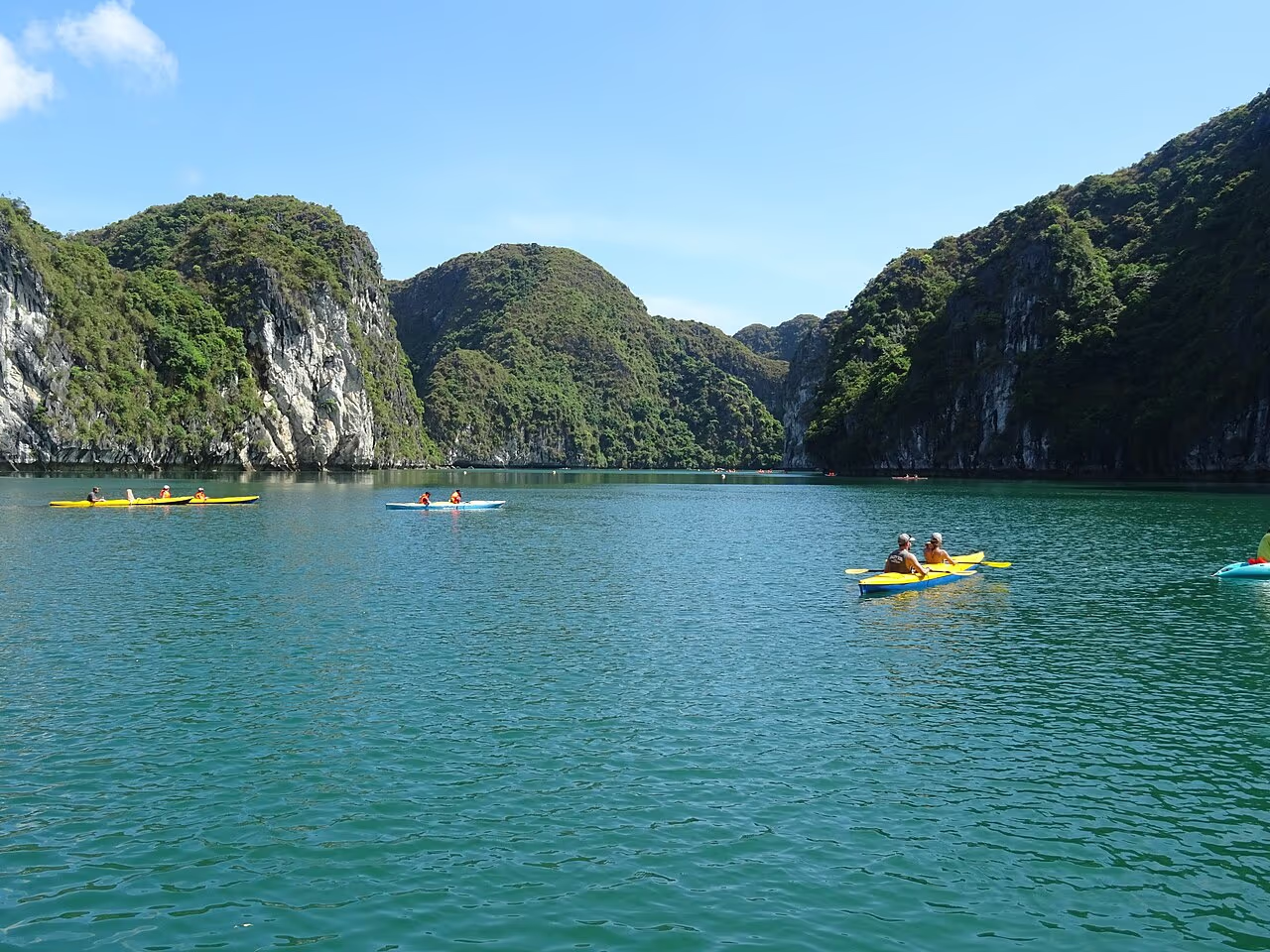
- Kayaking, caves, sunrise on the water
- Best if you want the bucket-list bay and don't mind the travel
- Trade-off: the cruise plus transfers eat most of two days
Add Ninh Binh
- Easy day trip from Hanoi (about 2 hours each way)
- "Ha Long Bay on land" — karst, rivers, rowing boats
- No overnight needed, so it fits a tight 5 days better
- Quieter and cheaper than a Ha Long cruise
- Trade-off: lovely, but not as world-famous as the bay
Our take: on a tight five days, Ninh Binh is the more efficient choice — it slots in as a single day without an overnight, leaving more time for Sapa. Choose Ha Long if seeing the famous bay matters more to you than the extra hours of travel. Either way, Hanoi and Sapa stay the core.
Why these two as the non-negotiable core? Hanoi is your gateway — it's where you land, where transfers depart, and a wonderful city in its own right, with the Old Quarter, the lake, the coffee culture and some of the best street food in Asia. Sapa, five to six hours away, is the emotional high point: trekking the rice terraces with a local guide and staying overnight with a hill-tribe family is the experience travelers remember long after the trip. Anchor your five days on these two and the rest is detail.
It's worth saying why we're so firm about not adding a fourth stop. The north is compact on a map but slow on the ground — the mountain roads to Sapa and the drives to Ha Long or Ninh Binh each take hours. Squeeze in too many and you spend your short trip in transit instead of in the places themselves. A focused northern Vietnam itinerary of three well-chosen stops beats a frantic four every time, and leaves you actually remembering the trip rather than the traffic.
If you're weighing this against a whirlwind tour that promises Hanoi, Sapa, Ha Long and Ninh Binh in five days, our honest advice is to be wary. Those itineraries exist, but they're punishing — back-to-back overnight buses, early starts every day, and barely time to enjoy anywhere. The whole point of a short trip is to come home refreshed and full of vivid memories, not exhausted with a blur of bus windows. Less really is more here.
That said, this five-day plan is genuinely complete, not a compromise — it covers a great city, the country's most famous mountains and a karst landscape, with a homestay night thrown in. Plenty of travelers who only had five days for the north tell us afterwards it was the best part of a much longer Southeast Asia trip. Short doesn't mean shallow when you choose the right three places and give each one room to breathe.
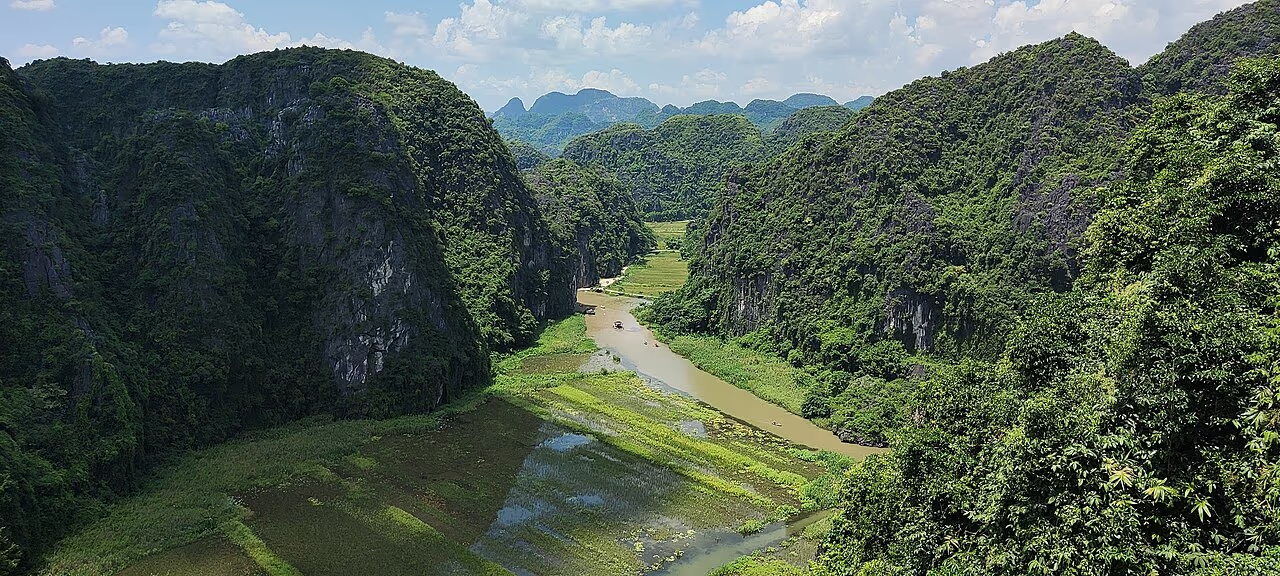
3 Ways to Spend 5 Days in the North
There's more than one good five-day route. Here are the three that work best, depending on what you're after.
Route A: Hanoi + Sapa + Ninh Binh (our pick)
The most efficient and relaxed: a day in Hanoi, two days trekking and homestaying in Sapa, and a Ninh Binh day trip — all overland, no overnight cruise to time. You still get a city, the mountains and the karst landscapes, with Sapa given the room it deserves. This is the route we detail below and recommend for most first-timers.
Route B: Hanoi + Sapa + Ha Long Bay
The classic bucket-list version: swap the Ninh Binh day for an overnight Ha Long Bay cruise. It's more iconic but tighter on time, since the cruise and transfers take the best part of two days — meaning a slightly shorter Sapa leg. Choose this if seeing Ha Long Bay is non-negotiable.
Route C: Hanoi + deep Sapa
The slow option: skip the third stop entirely and spend three full days in and around Sapa — a longer trek, quieter far valleys like Ta Phin, a homestay and the Fansipan cable car — bookended by Hanoi. Ideal if the mountains and hill-tribe culture are why you're coming, and you'd rather go deep than tick boxes.
Whichever route you pick, the structure stays the same: loop out from Hanoi and back, using overnight transfers to and from Sapa so you never lose a daytime to travel. That single trick — sleeping on the move — is what makes a five-day northern Vietnam itinerary work without feeling like a race. It buys you two extra days of actual sightseeing compared with daytime travel, which on a short trip is the difference between rushed and relaxed.
Route C — Hanoi plus a deep Sapa — deserves a special mention for anyone who came mainly for the mountains. Skipping the third stop entirely frees up three full days around Sapa, enough for a longer two or three-day trek through quieter valleys like Ta Phin and Ta Van, a herbal bath with a Red Dao family, and the Fansipan cable car without watching the clock. For hikers and culture lovers, it's quietly the best version of all three routes.
And if five days turns out to be four, don't despair — simply drop the third stop and keep Hanoi and Sapa. One night in Hanoi and a two-day Sapa trek with a homestay, linked by overnight transfers, is a superb mini-trip and the absolute essence of the north. When time is tight, protect the Sapa days and trim everything else; it's the part of the trip nobody ever regrets prioritising.
A quick word on visas and arrival, since it affects Day 1: most visitors need a Vietnam e-visa, which you arrange online a couple of weeks before you fly, so have it sorted before you arrive in Hanoi. Flights tend to land in the evening, which is why Day 1 of this itinerary is a gentle settle-in rather than a packed sightseeing day — perfect for shaking off the journey with a bowl of pho and an early night before the mountains.
The Recommended 5-Day Itinerary, Day by Day
Here's Route A in detail — Hanoi, Sapa and Ninh Binh, overland and unrushed, with the Sapa trek as its heart.
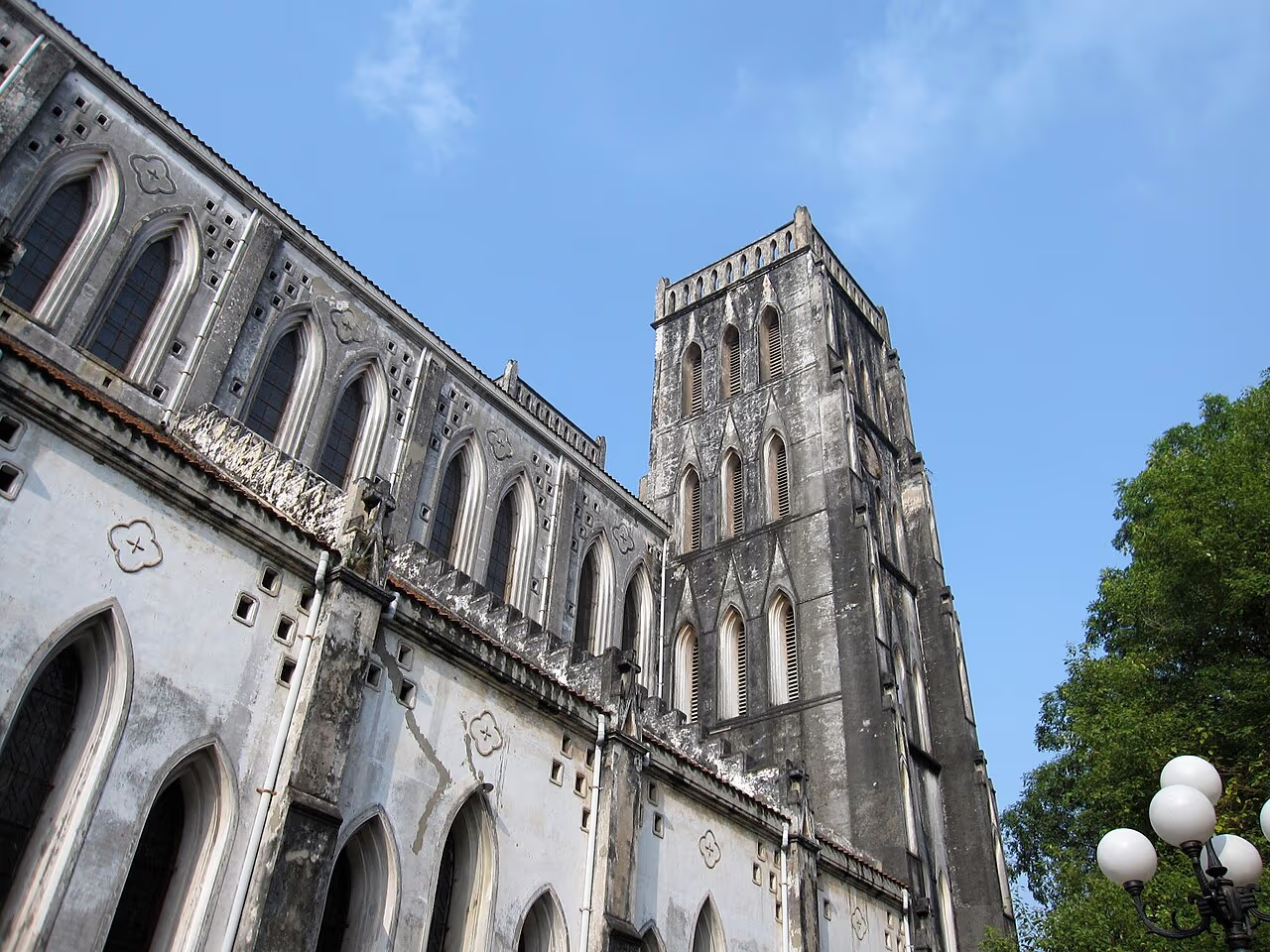
Your Sapa Trek (Days 2–3)
 2D1N Homestay
Rice Terraced Fields & Homestay
Two days trekking the valley and a night in a village home — the heart of the five days.
 1 Day Trek
Trekking Through Rice Terraced Fields
The classic Muong Hoa Valley day trek with a local guide and a family lunch.
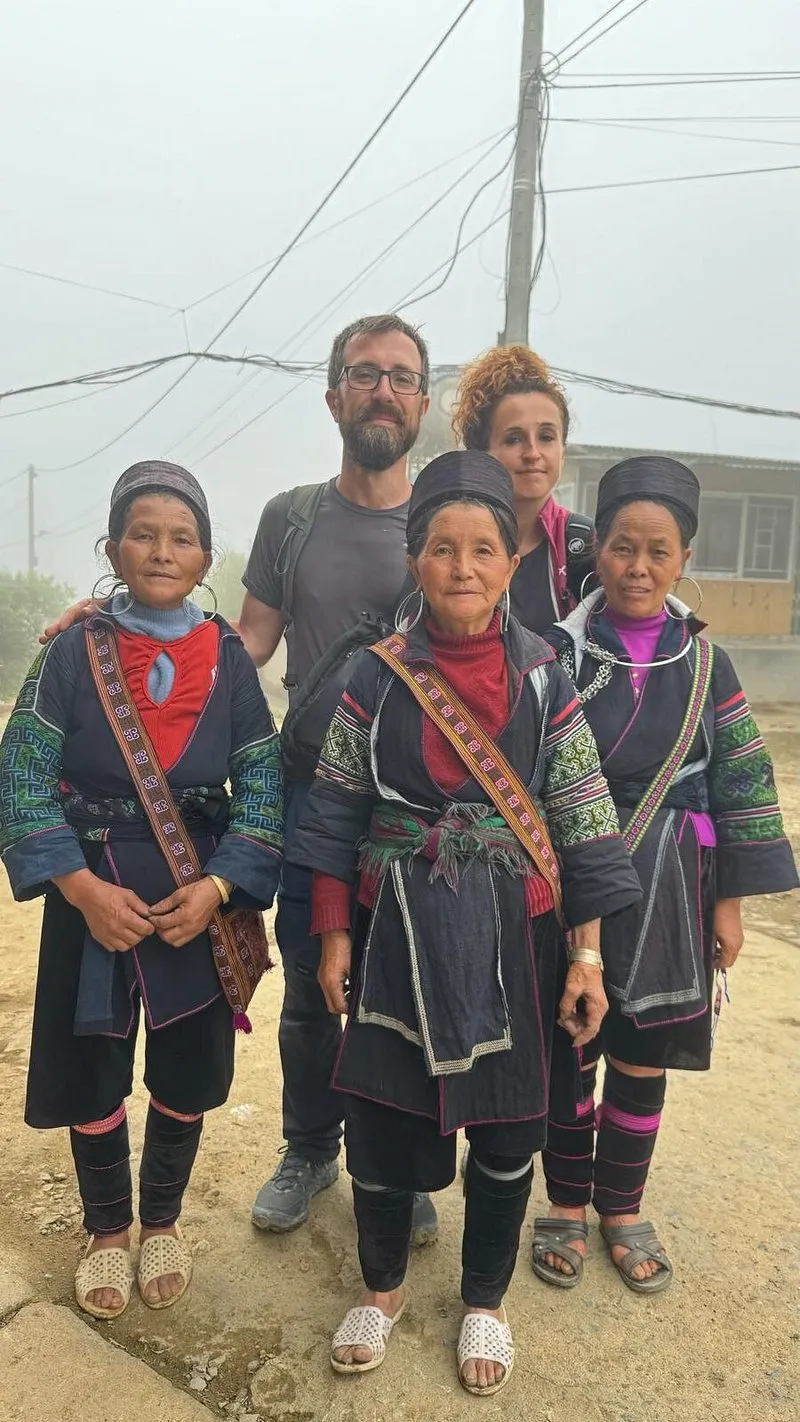 Families & Seniors
Sapa Easy Trekking For Seniors
A gentle valley walk where poles can be rented at our office — for 60+ travelers and families.
When to Go
The best time for a northern Vietnam itinerary is September to November — the Sapa rice terraces turn gold, the skies are clear, and the weather is crisp for trekking and cruising. March to May is the lovely runner-up, mild and dry with green or flooded terraces. Avoid the summer wet season (June to August) if you can, when heavy rain can disrupt both the Sapa trails and Ha Long Bay, and winter (December to February), when the northern mountains turn genuinely cold and foggy. Whatever the month, pack warm layers — Sapa is always cooler than Hanoi.
If your dates are flexible, late September and October are our absolute favourite for this trip: the Sapa terraces glow gold with the harvest, the air is clear and cool for trekking, and Ha Long Bay and Ninh Binh are past the summer storms. Spring (March to May) is the next best, mild and green. Whatever the season, the north has its own beauty — misty and moody in winter, lush and dramatic in the summer rains — so there's no truly bad time, only different moods.
A note on the harvest, since it's the question we're asked most: the Sapa rice terraces are planted around May (when they flood and shimmer like mirrors), grow green through summer, and turn brilliant gold in mid to late September before the October harvest. If golden terraces are your dream photo, aim for late September; if you'd rather see the flooded, reflective paddies, come in May or early June. Both are spectacular, just very different.
Winter (December to February) deserves a fair word too, since it's often dismissed. Sapa can be cold and wrapped in fog, occasionally even seeing frost on the highest peaks, and the views come and go — but the trade-off is far fewer tourists, dramatic cloud-scapes rolling through the valleys, and cosy evenings by a homestay fire. If you don't mind layering up and accepting some misty days, a winter northern trip has a quiet magic the peak months can't match.
Whichever month you choose, build the trip around the Sapa weather rather than Hanoi's, since the mountains are the highlight and the most weather-sensitive part. Our team lives and guides here year-round, so if you tell us your travel dates we'll tell you honestly what the terraces and trails are likely to be doing — flooded, green or golden, clear or misty — and tailor the route accordingly. That local, on-the-ground knowledge is hard to get from a generic booking site.
What 5 Days in the North Costs
A five-day northern trip is excellent value because it needs no internal flights. For a comfortable mid-range trip — decent hotels, a guided Sapa trek with a homestay, a Ninh Binh day trip (or Ha Long cruise) and good food — budget roughly $500–750 per person, excluding international flights to Vietnam.
Backpackers can do these five days for around $300–450 with hostels, sleeper buses and street food; choosing the Ha Long cruise option (Route B) adds roughly $100–200 for the overnight boat. Travelers wanting boutique hotels and private guides might spend $1,200–1,800. As always, the two things worth not skimping on are a good local Sapa guide and, if you choose it, a reputable Ha Long boat — small premiums that make a big difference.
A few easy ways to keep costs down without hurting the trip: take the overnight sleeper bus to Sapa (it doubles as a night's accommodation), eat at street stalls and family restaurants rather than tourist spots, and book your Sapa trek and any cruise a week or two ahead. Conversely, a good local guide in Sapa is the one upgrade always worth paying for — it's the difference between a walk and a genuine window into hill-tribe life.
To put the value in context: a typical mid-range five-day northern trip — comfortable hotels, a guided two-day Sapa trek with a homestay, transfers and a Ninh Binh day — comes to roughly what a single night in a Western city hotel might cost. Food is the bargain of the trip: a bowl of pho or a banh mi runs a dollar or two, and a sit-down family dinner rarely tops a few dollars a head. Few destinations give you this much experience for the money.
It's worth budgeting a little extra for the experiences that define the trip rather than spreading it thin: the guided Sapa trek with a homestay, and — if you choose it — a reputable Ha Long cruise. These are the memories you'll keep, and the gap between a budget and a quality version is small in absolute terms but large in how the day feels. Everywhere else — food, local transport, simple hotels — Vietnam is so cheap that splurging on the highlights barely moves your total.
Where to Stay
You only need to book a few places for a five-day northern trip. In Hanoi, stay in or beside the Old Quarter — it puts you within walking distance of the lake, the cathedral and the street food, and it's where most Sapa transfers pick up. In Sapa, the standout is a village homestay on your trek (arranged as part of the tour), ideally with a night in a Sapa-town hotel with valley views on either side. If you add Ha Long Bay, your bed is the cruise boat itself — pick a reputable operator on the quieter Lan Ha or Bai Tu Long bay.
Because you're booking just two or three places, you can afford nicer ones than on a fast multi-stop tour — one good Old Quarter hotel and a memorable homestay go a long way. Northern Vietnam's accommodation is some of the best value in Asia, and outside the peak autumn weeks you rarely need to book more than a week or two ahead.
For families and older travelers, this northern Vietnam itinerary adapts beautifully: choose the gentle Sapa valley walk rather than a hard trek, favour a private limousine transfer over the sleeper bus, and consider a comfortable Sapa-town hotel with valley views instead of (or as well as) the homestay. The route stays exactly the same — Hanoi, Sapa and one more — you simply soften the edges. Five days in the north is wonderfully forgiving for a slower pace.
Getting Around
The beauty of a northern itinerary is that it needs no flights — everything is within a few hours of Hanoi. You travel overland: to Ninh Binh and Ha Long Bay by road, and to Sapa by comfortable limousine van or overnight sleeper bus (there's no airport in Sapa). The overnight Hanoi–Sapa transfers are what make a five-day trip work, saving you hotel nights and daytime hours. Getting that leg right is the key to a smooth trip.
For the Hanoi day trips, Ninh Binh is an easy two-hour drive each way and most travelers visit on a guided day tour that bundles the boat ride, the Mua Cave climb and lunch. Ha Long Bay, if you choose it, is best as a one-night cruise rather than a rushed day trip — the overnight on the water is the whole point. In Hanoi itself, everything in the Old Quarter is walkable, and the Grab app handles anything further for a dollar or two.
One scheduling tip that prevents stress: don't book your international departure too early on Day 5. If you take the overnight transfer back from Sapa, you'll arrive in Hanoi in the early morning, which is perfect for a relaxed last day — but a dawn flight home would mean a tight, tiring connection. Leave yourself an afternoon or evening departure, and the five days end gently rather than in a rush to the airport.
The Comfortable Way to Sapa


What to Pack
Pack light and layered. Hanoi, Ha Long and Ninh Binh are warm and humid, but Sapa is cool to cold and often wet, so add a warm layer and a rain jacket. For the Sapa trek you'll want grippy footwear — but you don't have to fly with boots, you can rent waterproof boots and trekking poles at our office in Sapa the day before.
Boots & Poles for the Sapa Leg
 Gear Rental
Trekking Boots Rental
Waterproof ankle-support boots, cleaned and checked before each rental. At 105 Thach Son Street.
 Gear Rental
Walking Poles Rental
Trekking poles at $2/day from our office at 105 Thach Son Street — great on the muddy terraces.
Tips for Your 5-Day North Trip
- Don't try to do it all. Hanoi + Sapa + one more is the sweet spot; cramming in everything just means a blur.
- Protect the Sapa days. The trek and homestay are the highlight — build the five days around them.
- Pick Ninh Binh for a tight trip, Ha Long if the famous bay is a must-see — you rarely have time for both in five days.
- Use overnight transfers to Sapa both ways to save hotel nights and daylight.
- Fly into and out of Hanoi — the whole itinerary loops from the capital, so no open-jaw ticket needed.
- Pack a warm layer even in summer — Sapa is cool and often misty year-round.