 Sinh Giang
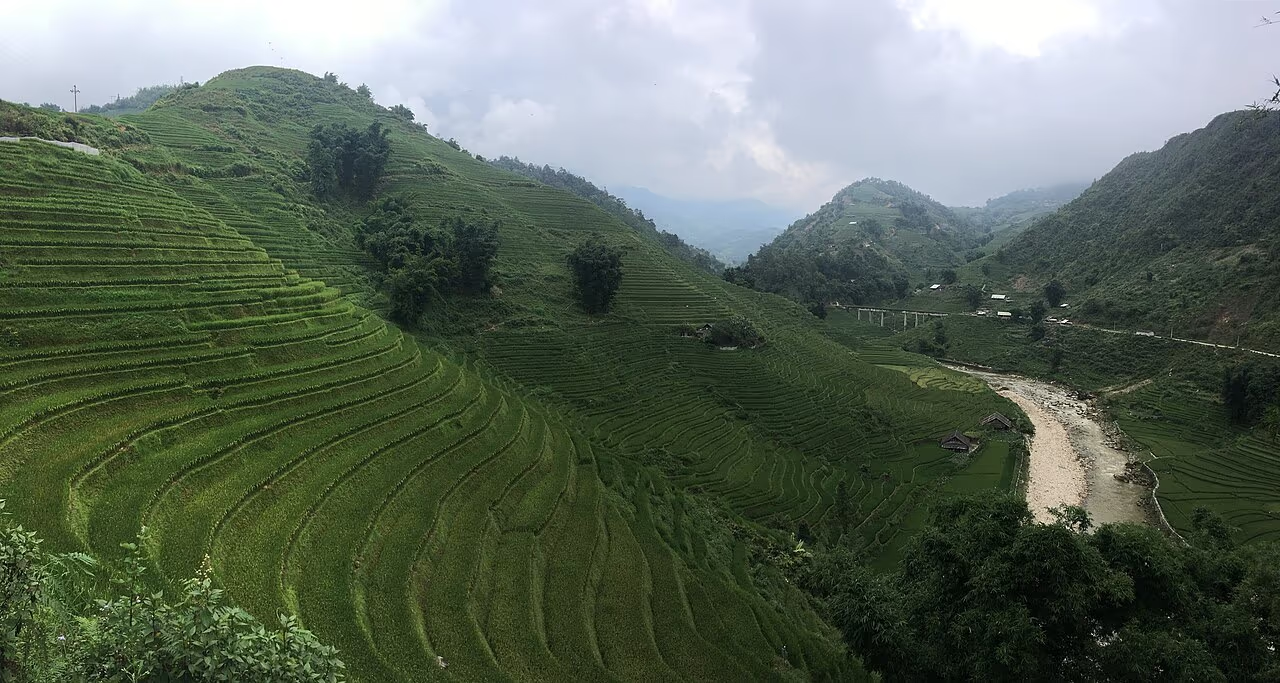
Sapa is the best place to trek in Vietnam, and one of the finest trekking destinations in Southeast Asia. High in the Hoang Lien Son mountains, its trails drop off the roads and into the Muong Hoa Valley, winding for hours between hand-carved rice terraces, bamboo forest and the villages of the Black H'mong, Red Dao, Giay and Tay peoples. It's not wilderness hiking — it's walking through a living, farmed landscape, ending the day with a home-cooked meal in a family's kitchen.
We're a local trekking company founded by members of the Black H'mong community, born and raised in these valleys, and guiding travelers along these trails is what we do every day. So this is the honest, on-the-ground guide to trekking Sapa: what it's actually like, the main routes, how hard they are, what to bring, and how to choose the right trek — whether you're a serious hiker or someone who's never trekked before.
The short version: almost anyone can trek in Sapa. There are gentle, near-flat valley walks for families and older travelers, and tough multi-day routes for the fit and adventurous. The trick is matching the trek to you — and that's exactly what this guide will help you do.
It helps to understand what makes Sapa trekking different from hiking elsewhere. You're not heading into empty wilderness — you're walking through one of the most beautiful working landscapes on Earth, terraces carved and farmed by hand over centuries, dotted with villages where families still live and farm much as their grandparents did. That means the trekking here is as much about people and culture as scenery: the lunch in a family kitchen, the chat with your guide about the rice and the plants, the night in a homestay. Take that away and it's just a nice walk; with it, it's the trip of a lifetime.
What Sapa Trekking Is Really Like
Before the details, here's Sapa trekking in four numbers — and then what a trek actually involves.
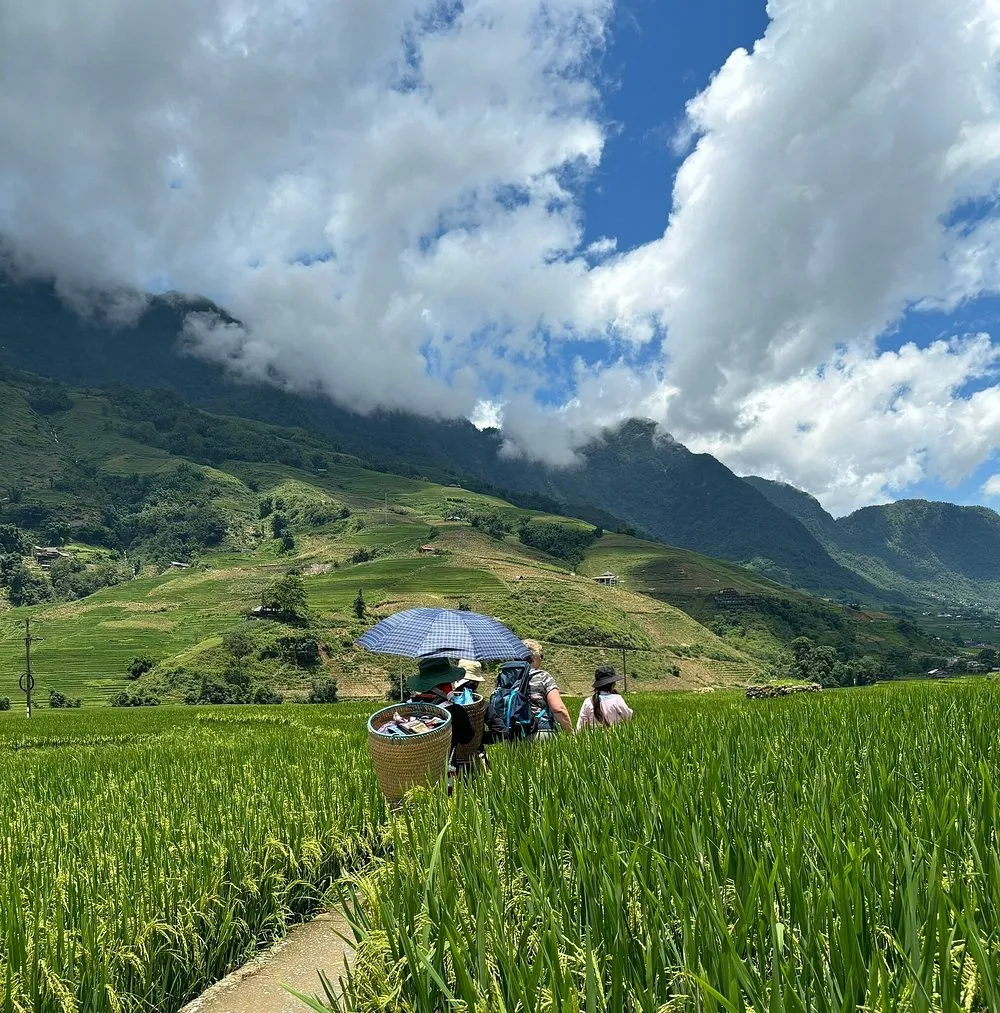
A typical trek goes like this: you're picked up in town after breakfast and driven a short way to a trailhead, then you walk — descending on dirt paths through the terraces as your guide points out the rice at whatever stage the season has it, the indigo used to dye the H'mong clothes, the medicinal plants. You pass water buffalo, cross streams, and walk through a village or two. Around midday you stop at a family's home for a hot, home-cooked lunch, then continue before being driven back (or, on an overnight trek, walking on to a homestay). It's active but unhurried, sociable, and far more accessible than the word "trek" suggests.
A few honest words on the conditions. The trails are mostly dirt and stone, and after rain they turn to slick, sticky clay — the single biggest factor in how hard a day feels. There's plenty of up and down, but rarely anything sustained or technical on the standard routes. You'll cross small streams, sometimes on bamboo bridges, and share the path with buffalo and motorbikes near the villages. None of it is dangerous with sensible footwear and a guide, but it's real walking outdoors in mountain weather, so come prepared rather than expecting a paved promenade.
The reward for that effort is real, though. Within twenty minutes of leaving the road you are usually past the crowds and into quiet, working countryside — just you, your guide, the terraces and the occasional farmer. It is a world away from the busy town, and that contrast, from tourist street to silent valley in half an hour, is part of what makes Sapa trekking so special.
On fitness, a little preparation goes a long way but you do not need to train like an athlete. If you can comfortably walk for a few hours with some ups and downs, you can do the standard valley treks. For the longer or harder routes, a few weeks of regular walking beforehand makes the days more enjoyable. And remember Sapa sits at altitude (around 1,600 m) and is much cooler than the lowlands, so give yourself a gentle first morning to adjust rather than charging straight onto a hard trail.
The Main Trekking Routes
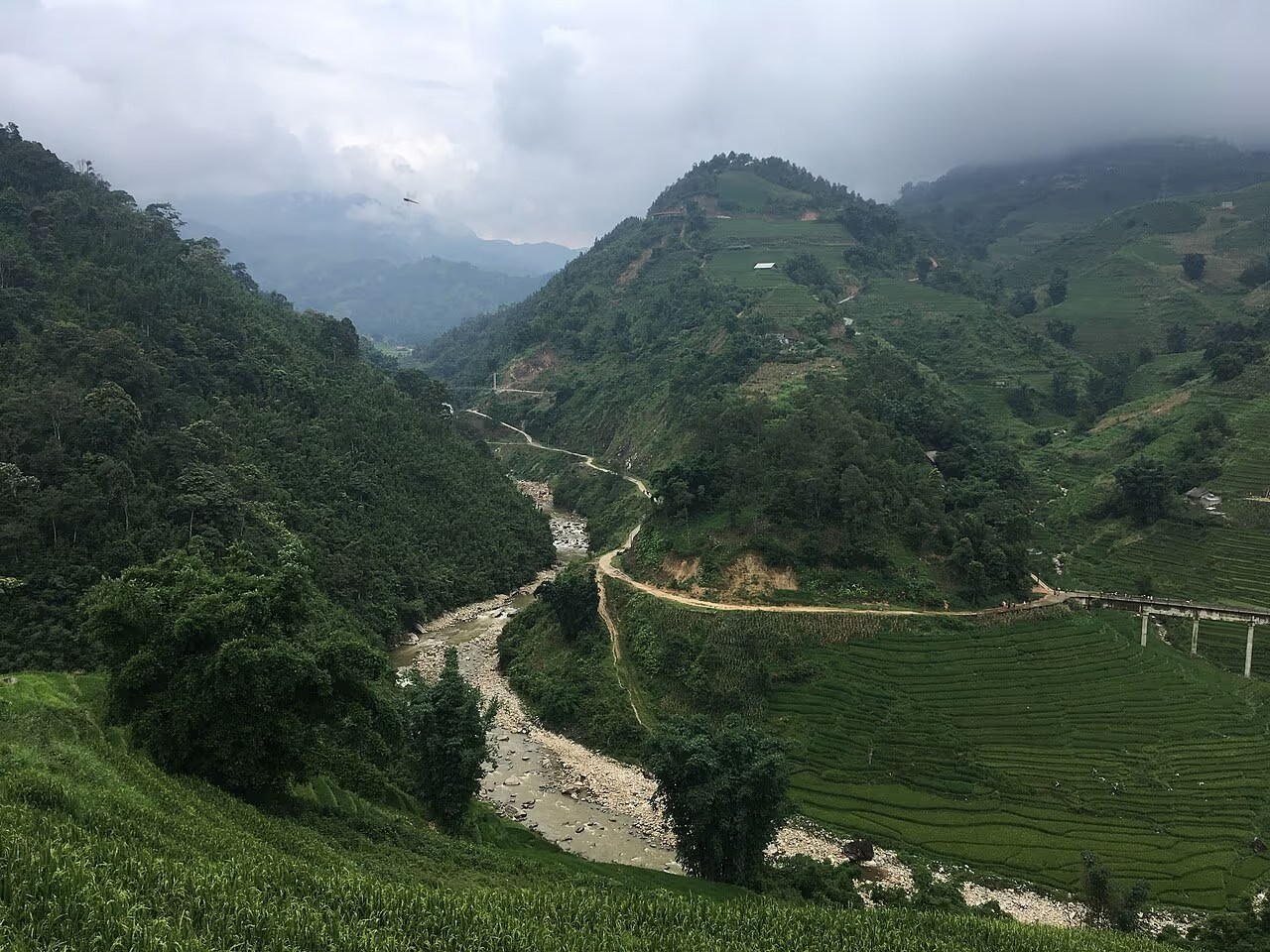
Most Sapa trekking happens in and around the Muong Hoa Valley, with a handful of classic routes. Here are the ones worth knowing.
Lao Chai – Ta Van (the classic)
The most popular and most scenic day route. You descend from the road into the heart of the Muong Hoa Valley, through the Black H'mong village of Lao Chai and the Giay village of Ta Van, along terraces and the river. It can be done as a gentle few hours or a full day, and it's the route most first-timers walk — for good reason.
Distances on this route are flexible: you can be driven part-way and walk a gentle two to three hours, or trek the full valley over five or six. It's the route we most often recommend for a first trek because it packs in everything that makes Sapa special — big terrace views, two distinct villages, river scenery and a family lunch — without demanding serious fitness.
Y Linh Ho – Lao Chai – Ta Van (the full valley)
A longer, slightly tougher version that starts higher at Y Linh Ho, with steeper, narrower trails and bamboo forest before joining the classic route. More effort, fewer people in the first stretch, and a great full-day or two-day trek with a homestay in Ta Van.
This is the one to choose if you want a bit more challenge and quieter trails in the morning before the day-trippers appear. The early descent from Y Linh Ho is the steepest part of most travelers' trip, so trekking poles and good boots earn their keep here; once you're down in the valley it eases into the classic route.
Ta Phin (Red Dao country)
A quieter valley north-east of town and the heartland of the Red Dao, famous for their herbal medicine baths and embroidery. The Ta Phin loop mixes terraces, a cave and village life, and sees far fewer trekkers than the Muong Hoa routes — lovely for a second day or for travelers wanting something calmer.
Ta Phin pairs especially well with a Red Dao herbal bath at the end — trek the valley, then soak tired legs in a tub of medicinal mountain herbs in the village. It's a gentler, more cultural day than the big Muong Hoa routes, and a lovely change of pace if you're spending several days trekking around Sapa.
Cat Cat – Sin Chai (easy & close)
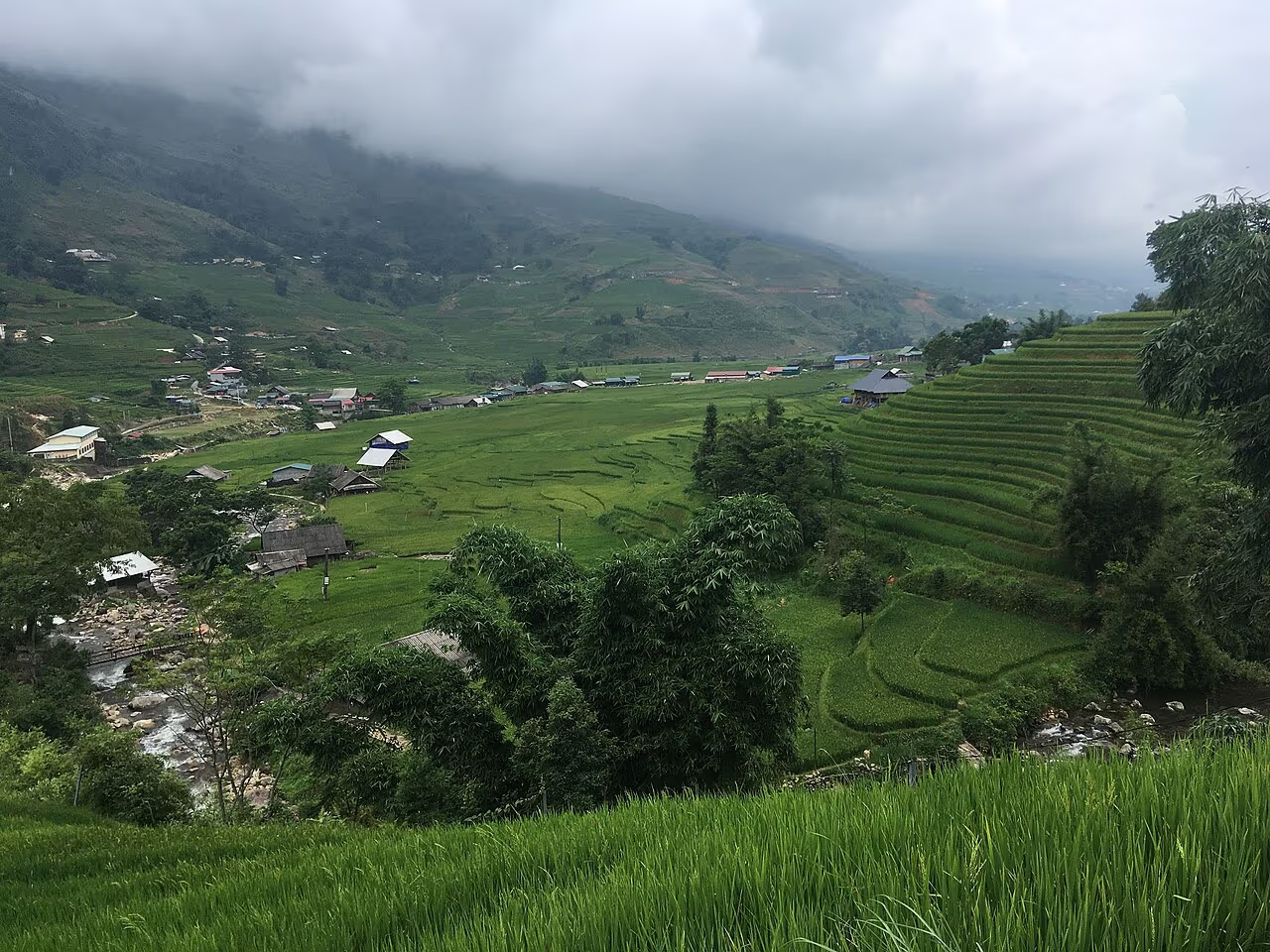
The gentlest option, right next to town: a short, mostly paved walk down to Cat Cat village and its waterfall, optionally continuing to Sin Chai. It's touristy and easy, ideal for limited time or energy — but it's a taste, not the real, quiet valley you reach on a proper trek.
Fansipan (the big one)
For fit, experienced hikers, the trek to the 3,143 m summit of Fansipan — the Roof of Indochina — is a serious one-to-two-day mountain climb through montane forest, cold and steep. It's a world apart from the gentle valley walks, and a real achievement. Everyone else takes the cable car.
If you are tempted by Fansipan on foot, be realistic: it's a cold, steep, multi-day mountain trek that needs genuine fitness, a guide, a permit and proper gear, and it's far less about culture than the valley routes. Most travelers who want the summit (and the view) are better served by the cable car, saving their legs for the terraces. We can arrange the guided summit trek for those who really want the challenge.
How Hard Is It? Choosing Your Trek
Sapa trekking ranges from near-flat valley strolls to a hard mountain summit. Here's roughly where our most popular treks fall, so you can pick one that matches your fitness.
Not sure where you sit? Tell us your fitness and time and we'll match the route — that's the whole point of a local guide.
The good news is the price difference between them is small, and every guided trek includes a local guide, a home-cooked lunch and hotel pickup, in a small group capped at 12. Here are our most popular options to book.
Worth knowing on group size: "small group" means something different everywhere. Some operators run treks of 20 or more, which on a narrow valley trail becomes a slow, impersonal procession. We cap ours at 12, and most days the groups are smaller — it is the difference between a guided walk and a guided crowd, and it is why the village lunches and conversations actually work.
Our Most Popular Sapa Treks
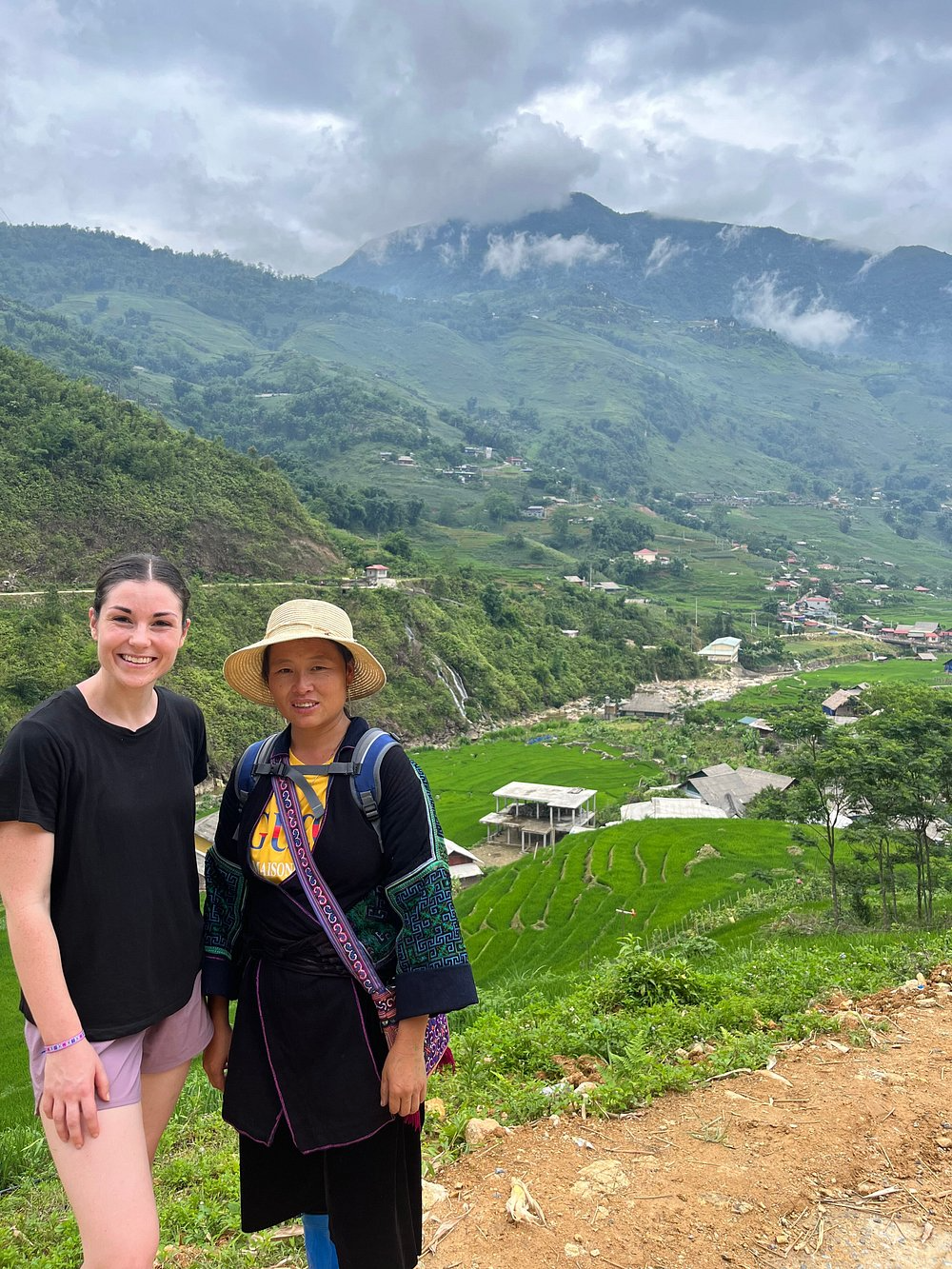
 1 Day Trek
Trekking Through Rice Terraced Fields
The classic Lao Chai – Ta Van valley route with a local guide and a family lunch.
 2D1N Homestay
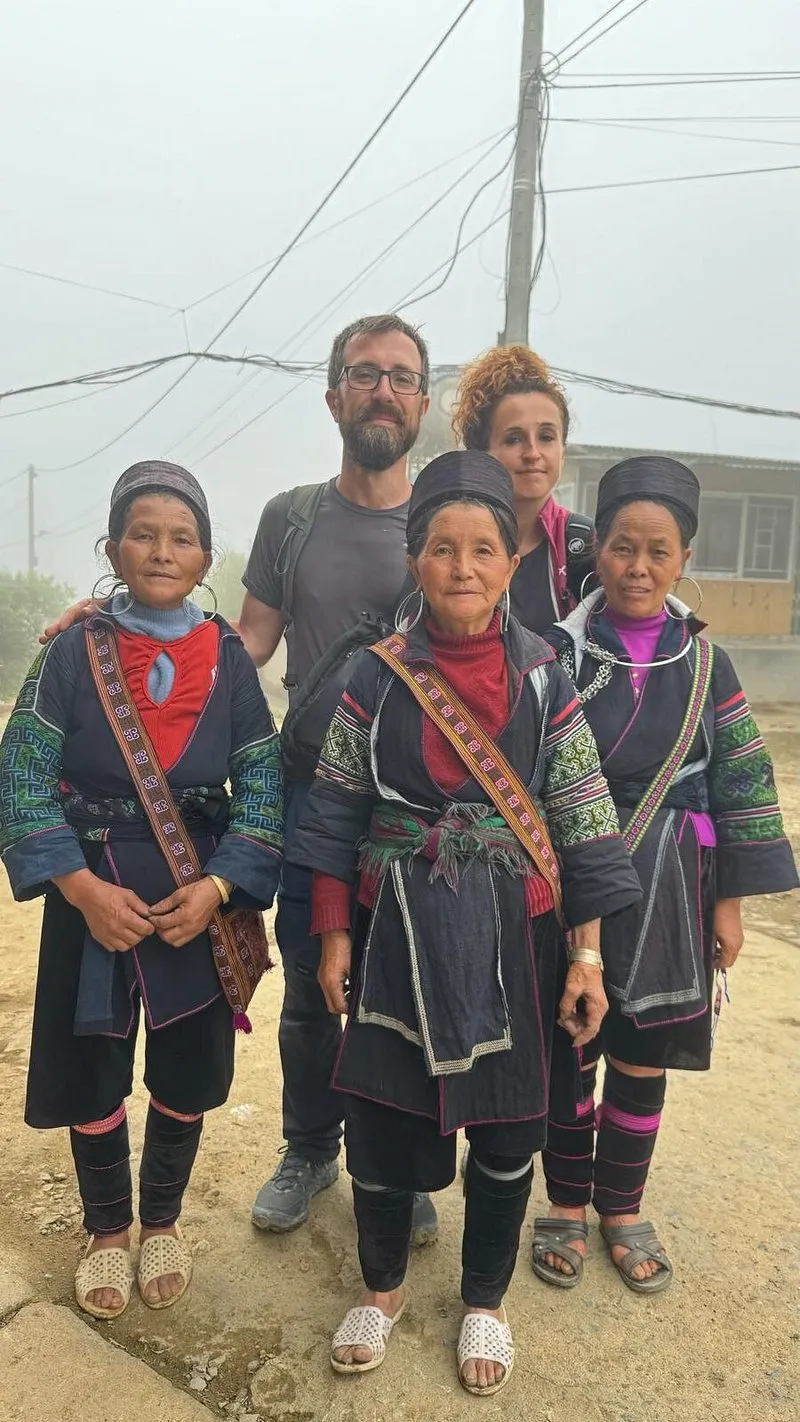
Rice Terraced Fields & Homestay
Two days on the trail and a night in a valley homestay — the full experience.
 Families & Seniors
Sapa Easy Trekking For Seniors
Gentle, flat paths where poles can be rented at our office — perfect for 60+ travelers and families.
A Trekking Day, Step by Step
Wondering what an actual day on the trail looks like? Here's how a typical guided day trek unfolds.
Morning pickup & briefing
Your guide meets you at your hotel after breakfast, checks your shoes and gear, and you drive a short way to the trailhead.
~8:30 amInto the valley
You leave the road and descend on dirt paths through the terraces, your guide reading the landscape as you go.
MorningThrough the villages
Walk between Black H'mong and Giay villages, crossing streams and passing buffalo, fields and families at work.
Late morningHome-cooked lunch
Stop at a family's home for a hot, fresh lunch — the social heart of the day, included on every trek.
~12:30 pmAfternoon trail & return
Walk on through the valley, then drive back to town — or, on an overnight trek, continue to your homestay for the night.
AfternoonGuided vs Going It Alone
Can you trek Sapa without a guide? On the easy, popular routes, technically yes. But here's the honest case for going with a local guide — and not just because it's what we do.
With a local guide
- The best trails are unmarked — a guide knows every path and shortcut
- The village welcome and family lunch come through their relationships
- Safety: weather, river crossings and slippery trails handled
- Real cultural insight — the farming, the plants, the customs
- Your money supports the local H'mong and Dao community
Going it alone
- Easy to lose the unmarked valley trails
- You miss the homes, lunches and welcome guides unlock
- Weather turns fast — no local read on conditions
- No homestay access in the way a guided trek arranges
- Some routes and areas really aren't safe solo
For the easy Cat Cat walk, going alone is fine. For everything that makes Sapa special — the quiet valleys, the village homes, the overnight stays — a local guide isn't just safer, it's the difference between looking at Sapa and being welcomed into it.
There's also a quieter reason that matters to us: trekking with local guides keeps tourism money in the valleys that maintain these terraces. The women who guide, cook the lunches and host the homestays are the backbone of the local economy, and choosing community-rooted guides over outside operators helps make tourism a force that sustains the landscape rather than just passing through it. It's the better trip and the better choice.
To be clear, a guided trek is not restrictive — quite the opposite. Because the guide handles the route, the logistics, the lunch and the language, you are freed to just walk, look and talk. You can go faster or slower, stop for photos, ask endless questions, or sit quietly and take it in. The structure is exactly what makes that freedom possible.
Safety is part of that structure too. Our guides carry a basic first-aid kit, know the trails and the weather, and can adapt the route or turn back if conditions change — the kind of judgement that only comes from walking these valleys for years. Solo trekkers who get into trouble in Sapa are almost always those who underestimated the weather or lost an unmarked trail; with a guide, those risks largely disappear.
Where You'll Stay & Eat
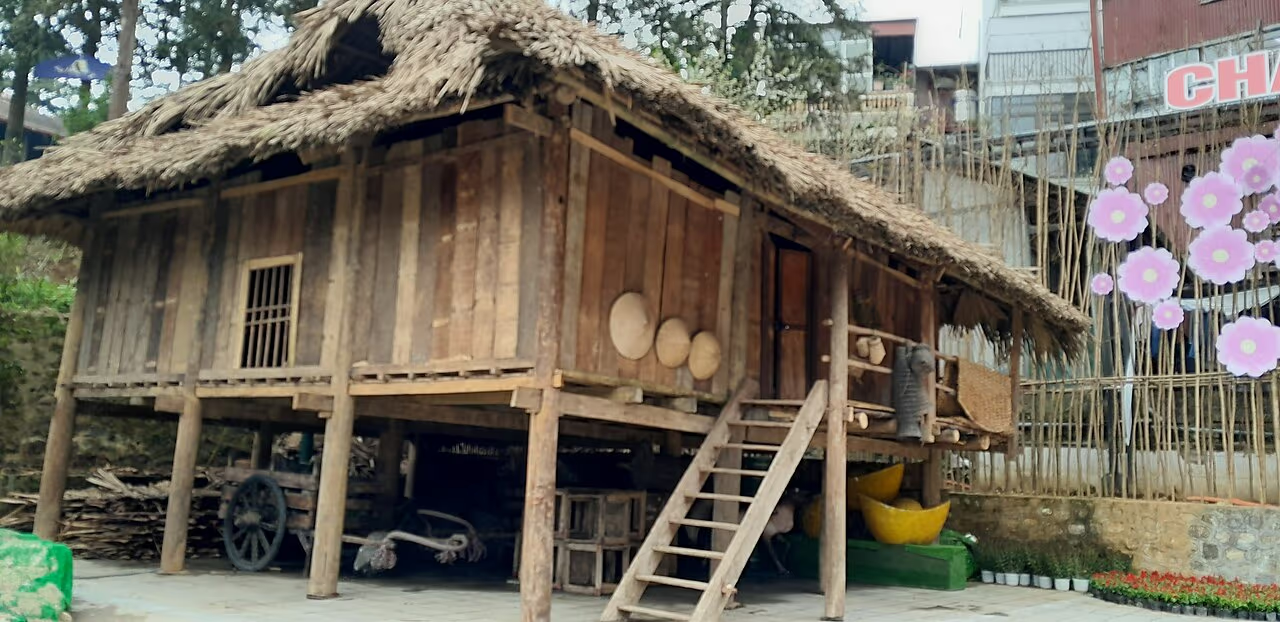
On a day trek you're back in town by evening, but the real magic is an overnight in the valley. A village homestay means a simple, comfortable bed in a family's stilt house, a home-cooked dinner around the fire, stories with your hosts, and waking to mist over the terraces. Lunches on every trek are cooked fresh in a village home — garden vegetables, river fish, rice, an omelette over the fire — the kind of meal you can't buy in a restaurant.
Don't expect luxury at a homestay — expect something better. The rooms are simple (a clean mattress, a mosquito net, shared bathrooms, blankets for the cool nights), but the evenings are the magic: dinner cooked over the fire, a glass of rice wine with your hosts, kids and chickens underfoot, and a silence broken only by the stream. You wake to mist lifting off the terraces. For most of our guests it's the single most memorable night of their Vietnam trip, and no hotel comes close.
If you only do one upgrade to your Sapa trip, make it the homestay night. It costs little, it is where the friendships and the stories happen, and it is the single change that travelers most often tell us turned a good trek into the highlight of their whole time in Vietnam. A day trek shows you the valley; a night in it lets you feel it.
Booking is simple and low-pressure. Tell us your dates, group size, fitness and what you are hoping for, and we will recommend a route and confirm everything on WhatsApp — usually within five to ten minutes. You can pay a deposit to hold your spot — cancel 7 or more days before the tour for a full refund, 2–6 days before for a 25% refund, and within 24 hours of the start the deposit is non-refundable — and we will line your trek up with your arrival so no time is wasted. No account, no long forms, no fuss.
What to Bring
Sapa's mountain weather changes fast, so pack for cool and wet even in summer: warm layers, a rain jacket or poncho, sun protection, and a small daypack with 1.5–2 litres of water. The most important item is footwear — the valley trails turn to slick clay after rain, and proper boots make all the difference. You don't need to fly with them: rent waterproof boots and trekking poles at our office in town the day before you trek.
Boots & Poles, Rented in Town
 Gear Rental
Trekking Boots Rental
Waterproof ankle-support boots, cleaned and checked before each rental. At 105 Thach Son Street.
 Gear Rental
Walking Poles Rental
Trekking poles at $2/day from our office at 105 Thach Son Street. Essential for the muddy descents.
Sapa Trekking Tips for Beginners
Never trekked before? Don't worry — most of our guests aren't seasoned hikers. A few things that make the first time easier:
- Start with an easy or 1-day route. The Lao Chai – Ta Van valley or the Seniors trek are perfect first treks — beautiful, manageable, and you can always go bigger next time.
- Wear proper shoes. The number-one beginner mistake is smooth-soled trainers on muddy trails. Rent grippy boots — it transforms the day.
- Use the poles. Trekking poles save your knees on the descents and give you confidence on slippery ground. They can be rented at our office.
- Go at your own pace. It's not a race. A good guide sets the pace to the group, with plenty of stops for photos and rest.
- Pack light but smart. A layer, a poncho, water, sunscreen and a charged phone — that's really all you need for a day.
- Tell us your level honestly. The more we know about your fitness and any worries, the better we match the route and pace.
Above all, do not let inexperience put you off. Sapa is where a great many people do their very first trek, and they leave hooked. With the right route, decent boots, a good guide and a sensible pace, trekking here is welcoming, safe and genuinely life-affirming — not an endurance test. Come as you are; we will take care of the rest.
One last reassurance for the nervous: every year we guide grandparents, young kids, total beginners and people who told us they were not sure they could do it — and they almost all finish beaming. The valleys are forgiving, the pace is yours, and your guide is there the whole way. The hardest part of Sapa trekking is usually just deciding to do it.
Best Time to Trek in Sapa
You can trek Sapa year-round, but some months are far better than others. September to November is the prime window — the rice ripens to gold for the harvest, the skies are clearest, and the air is crisp and cool for walking. March to May is the lovely runner-up, dry and mild, with the terraces flooded and mirror-like in May as planting begins. These two windows have the best weather and the most spectacular terraces.
The summer wet season (June to August) is the greenest but the wettest, with heavy afternoon rain that turns trails slippery — trekking is still good in the mornings, and the lush valleys are beautiful, but pack a poncho and expect mud. Winter (December to February) is dry but genuinely cold and often foggy, with mist hiding the views on bad days and rare frost or snow on the heights. Whatever the season, the weather changes fast up here, so layers and a rain jacket are essential, and an early start gives you the clearest skies.
One planning tip whatever the month: give yourself a flexible day or two rather than a single fixed trekking date. Mountain weather is fickle, and being able to pick the clearer of two mornings — or simply wait out a downpour over coffee — is the difference between a misty trudge and the trek you came for. With a couple of days in Sapa you almost always catch a good one.
Getting to Sapa
Sapa is about 320 km (5–6 hours) north-west of Hanoi, with no airport, so you travel overland. Most trekkers take a comfortable daytime limousine van or an overnight sleeper bus (which saves a hotel night and a day of travel). Sort the Hanoi–Sapa leg first, tell us your arrival time, and we'll have your guide ready so you can hit the trail without delay.
A practical sequence many travelers use: take an overnight sleeper bus or the night train up to Sapa, trek for a day or two with a homestay, then travel back to Hanoi on a second overnight service — so the long journeys cost you no daylight at all. Give yourself the morning after you arrive to ease into the altitude and the cool air before your first trek, and you will enjoy it far more.
Get to the Trailhead in Comfort