 Sinh Giang
Every week I meet travelers at our office on Thach Son Street who have packed either too much or too little. The ones who packed too much are carrying 12kg packs on a trail where you only need 4kg. The ones who packed too little are the ones I end up lending a poncho to somewhere between Lao Chai and Ta Van because the cloud came in off Fansipan at 10am — which it does, even in October. I have been walking these trails since I was sixteen. Let me tell you what actually goes in the bag.
The Muong Hoa Valley sits at 1,000–1,500m elevation between Sapa town and the ridge villages of the Black H'mong and Red Dao communities. The altitude means the weather is genuinely unpredictable, the ground changes from hard-packed earth to slick clay within 100 metres depending on shade and drainage, and mornings are always colder than your hotel forecast suggests. The gear that works here is specific to these conditions — it is not the same list you would take to a national park trail in Europe or North America.
Your Feet Carry Everything — Footwear for Sapa Trails
The right footwear is the difference between a confident descent and a slow shuffle with white knuckles on the poles. For the flat valley sections between Ta Van and Lao Chai — and the Trekking Through Rice Terraced Fields route — trail runners or clean running shoes with a rubber outsole give you all the grip you need from October through April when the ground is dry. The trail here is hard-packed clay with embedded stone, about 4 metres wide at most sections, and the slopes are gentle enough that ankle support is optional rather than critical.
Where footwear actually matters is the descent back into Sapa from above the Ta Phin village area, and on any route that crosses the ridge above Y Linh Ho. Those sections get muddy from June through September even on dry days — the shade keeps moisture in the soil. If you are visiting during the wet season or trekking to Ta Phin where the Red Dao communities live at higher elevation, waterproof ankle-support boots make a real difference. They do not need to be mountaineering boots — a mid-weight waterproof trail boot is exactly right. If you did not bring them from home, we rent clean waterproof boots at our office for $2 per day.
Sandals, flip-flops, and flat canvas sneakers are a genuine hazard on wet clay. The trail from the upper terrace section near Hang Da village back down to the road is a 35-degree slope in places. Every year we see someone trying to manage it in sandals. It is not pleasant for anyone. Leave sandals at the hotel — you can change into them at lunch.
Dressing for Sapa's Layers
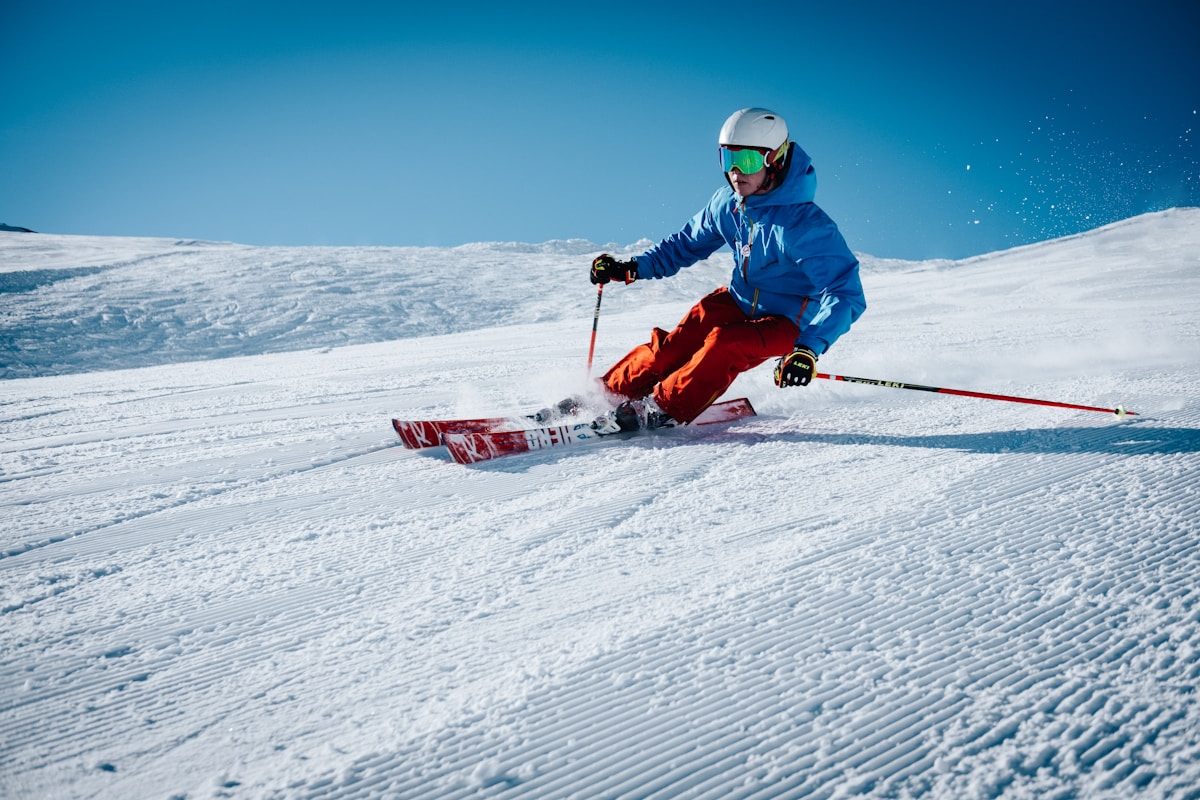
The single biggest packing mistake I see is people treating Sapa like a warm tropical destination because they flew from Ho Chi Minh City or Bangkok. Sapa is at 1,500m above sea level in the Hoang Lien Son range in Lao Cai Province, and even in July the mornings start at 18–20°C with a wind chill from the valley. By November, the 7am temperature at our office on Thach Son Street is routinely 10–12°C, and by January it can drop to 3°C. More importantly, it warms quickly — by 11am in October you will be at 24°C in direct sun on the exposed terrace sections above Lao Chai village.
The solution is layers, not one heavy jacket. A lightweight moisture-wicking base layer, a thin fleece or softshell mid-layer you can stuff into your pack, and a packable waterproof outer shell. You will take the fleece off by 10am and put the rain shell on by noon if cloud comes in off Fansipan. This is not speculation — it is the daily pattern across roughly nine months of the year.
The Muong Hoa Valley fills with fog between 6am and 8am from late September through March. This is not dangerous, but it is cold and damp on exposed skin. A thin neck gaiter or buff is one of the lightest, most useful items you can carry. The fog usually lifts by 8:30am to reveal clear views across to the terraces — but until it does, you will be glad of the extra warmth around your neck and chin.
Harvest Season (Peak)
- Short-sleeve base layer + fleece
- Packable rain jacket (essential)
- Light trekking trousers
- Trail runners or waterproof boots
- Sunscreen — UV is intense above 1,200m
- Buff / neck gaiter for morning fog
Cold Season
- Thermal base layer (top + bottom)
- Fleece mid-layer
- Windproof waterproof outer shell
- Warm gloves + wool/fleece hat
- Waterproof ankle-support boots
- Thick trekking socks (wool preferred)
Green Season (Rice Planting)
- Short-sleeve base + light long-sleeve
- Packable rain jacket (high rain risk)
- Quick-dry trekking trousers
- Waterproof boots (trails are wet)
- Insect repellent for lower trail sections
- Extra socks — feet get wet in rice paddies
Wet Season
- Lightweight quick-dry clothes only
- Full waterproof jacket (not just a poncho)
- Waterproof gaiters if available
- Waterproof ankle boots (mud is serious)
- Dry bag for phone and documents
- Spare dry set of clothes for after the trek
Essential Gear — What Fits in a Daypack
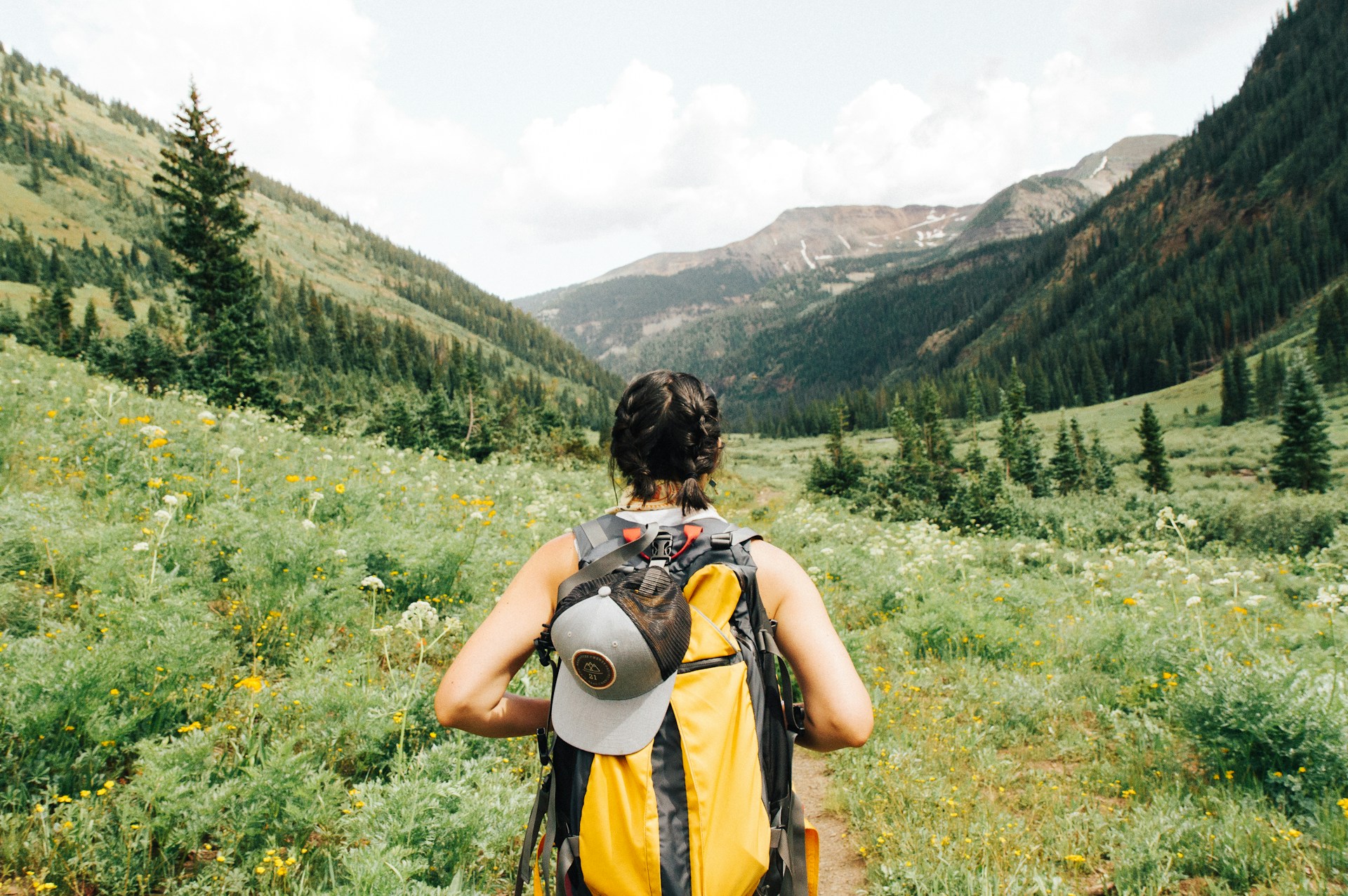
For a 1-day trek in Sapa, you do not need more than a 15–20L daypack. Everything below fits comfortably and leaves room for the packed lunch we provide at the trailhead. The Black H'mong guides carry nothing heavier than 5kg on a day route. They carry exactly what works. Here is what we recommend you bring:
- Rain jacket or packable poncho — the single most important item. Weighs 300–400g, fits in its own stuff sack.
- Water — 1.5 to 2 litres. Refill stations are available at the lunch stop in Ta Van village.
- Sunscreen SPF 30+ — UV at 1,200m is significantly more intense than at sea level, even through cloud cover.
- Sunglasses — reflected light from the wet terrace surfaces is stronger than most people expect.
- Small first aid kit — plasters and blister bandages; we carry a group kit but personal supplies are sensible.
- Snacks — lunch is included, but a banana or energy bar for the morning section is always welcome on longer distances.
- Charged phone or camera — the light in the Muong Hoa Valley between 9am and 11am is extraordinary. Do not miss it with a dead battery.
- Cash — approximately $5–10 USD equivalent in Vietnamese Dong for drinks, souvenirs in the Black H'mong village market at Lao Chai, or the Red Dao weaving cooperative near Ta Phin.
Treks That Match Your Packing Level
 Best Seller
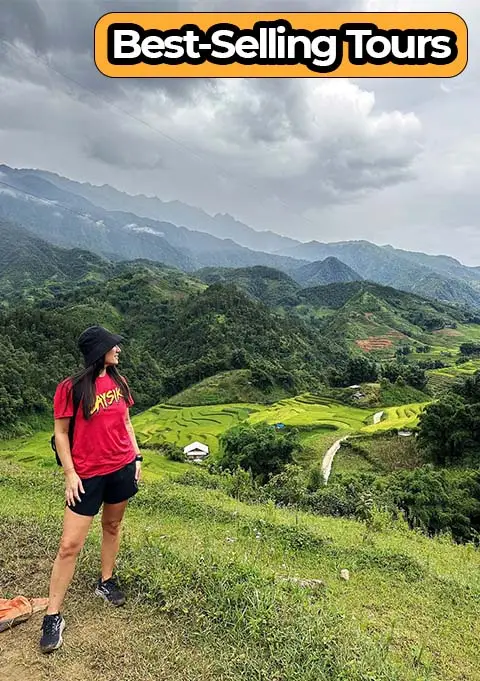
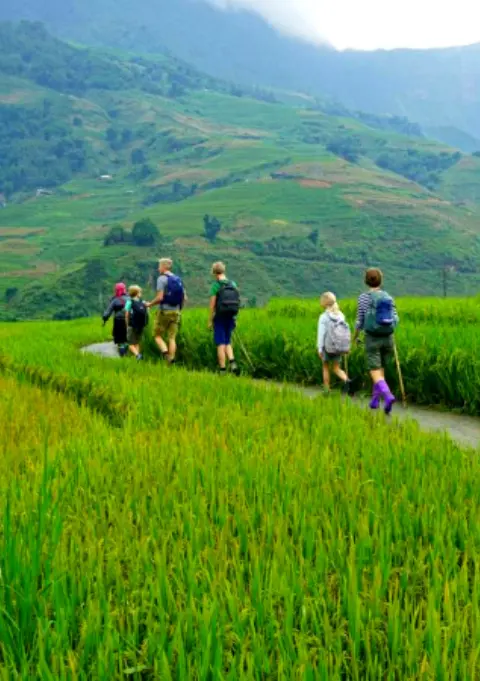
Trekking Through Rice Terraced Fields
Valley floor trails — trail runners suffice. Packed lunch + poles on request. Best September–October.
 Seniors & Families
Sapa Easy Trekking For Seniors
Gentle flat paths — flat shoes are fine. Walking poles included. No steep sections.
Fansipan Trek One Day Tour
Summit route — full waterproofs and ankle boots essential. The most demanding gear list of any 1-day tour.
Gear for Multi-Day Homestay Treks (2D1N and Longer)
If you are staying overnight with a Black H'mong family in Lao Chai or a Red Dao family near Ta Phin, the packing list changes. The homestay provides a sleeping mattress, blankets, and basic toiletries, but it is a working family home — not a hotel. You will be responsible for your own clothes, personal items, and anything you want to have at hand during the evening.
Add to the 1-day list above:
- Change of clothes for the evening — trekking clothes will be damp and muddy by 4pm. A clean shirt, light trousers, and dry socks weigh almost nothing.
- Warm layer for the evening — after the sun drops behind the ridge above Lao Chai, the temperature drops 8–10 degrees within an hour. A down jacket or thick fleece is not overkill.
- Headlamp or phone torch — homestay homes do not have bright outdoor lighting. The walk to the toilet block at 11pm is genuinely dark.
- Personal toiletries in a small bag — toothbrush, toothpaste, face wipes. The homestay provides soap and water but packing your own is more comfortable.
- Earplugs (optional) — roosters in Lao Chai start at approximately 4:30am. This is part of the experience, but light sleepers will be grateful.
- Small padlock — for your bag at the homestay. This is not a safety concern per se — the communities are safe — but it gives some travelers peace of mind.
For 3-day and 4-day treks into the areas above the Muong Hoa Valley towards the ridge routes near Sa Seng Mountain and the less-visited trails our local guides know through the forest, a 35–45L pack is appropriate. Add full cold-weather waterproof layers and a lightweight sleeping bag liner.
What to Leave Behind
Over-packing is a real problem on Sapa treks. Every item in your pack is weight on your back for 6–8 hours. Here is what I tell every group at the morning briefing:
- Your large rolling suitcase — leave it locked at your hotel. Carry only what goes in the daypack.
- Your passport — a phone photo is sufficient for any checkpoint on the Muong Hoa Valley trails. Leave the original at the hotel safe.
- Trekking poles (if doing an easy route) — our team provides poles on request for group tours. You do not need to carry your own for the easy valley trails.
- Expensive camera equipment — a full DSLR setup is a significant weight on 15 km / 9 miles of mixed terrain. A mirrorless camera body or a phone gives you 95% of the results at 20% of the weight.
- More than one full change of clothes — for a 1-day trek you do not need a spare outfit. For a homestay, one spare set is enough.
- A full-size umbrella — a packable rain jacket fits in a side pocket and does not turn inside-out on a mountain ridge. Leave the umbrella in your room.
Rent at Our Office Before You Trek
Gear Rental
Trekking Boots Rental
Waterproof ankle-support boots. Cleaned and checked before each rental. Available at 105 Thach Son Street.
Gear Rental
Walking Poles Rental
Trekking poles available to rent at $2/day at our office, 105 Thach Son Street. Essential for descents.
Frequently Asked Questions
For most 1-day trails in the Muong Hoa Valley — including the routes through Lao Chai, Ta Van, and Y Linh Ho — you do not need technical hiking boots. Waterproof trail runners or clean running shoes with good grip are sufficient in the dry season (October–April). In the wet season (May–September), ankle-support waterproof boots make a real difference on the muddy descent sections. We rent waterproof ankle-support boots at our office at 105 Thach Son Street for $2/day if you do not want to carry them from home.
December through February is the coldest period in Sapa, with temperatures dropping to 3–8°C (37–46°F) in the early morning. You need a base thermal layer, a fleece or down mid-layer, and a wind-proof outer shell. Do not rely on a single thick jacket — Sapa's temperature swings 12–15 degrees between 7am and noon, and you will overheat if you cannot remove layers. Warm waterproof gloves and a wool or fleece hat are essential. In January, frost is possible on the higher trails above 1,800m near Fansipan.
Yes. We rent waterproof trekking boots and walking poles directly from our office at 105 Thach Son Street, Sapa, at $2 per item per day. Boots are cleaned and inspected before each rental. Walking poles are carbon-fibre with adjustable straps. You can book gear rental alongside your tour on our trekking gear page. Other rental items — ponchos, daypacks — are available from shops along Cau May Street in Sapa town.
A rain jacket or packable poncho is the single most important item for Sapa trekking, regardless of season. Sapa sits at 1,500m in the Hoang Lien Son mountain range and receives orographic rainfall throughout the year. Even in the "dry" season from October to March, afternoon mist and light rain are common above 1,200m. A waterproof outer layer weighs less than 400g, packs into a small stuff sack, and has saved more of our group tours from misery than any other piece of kit.
Yes, always. Even in October and November — Sapa's driest and most popular trekking months — the Muong Hoa Valley can receive afternoon mist and short rain showers above 1,300m. The trails through the terraces between Lao Chai and Ta Van are exposed, and the descent from the ridge back into town becomes slippery when wet. A compact packable rain jacket takes up no space and you will not regret bringing it.
Leave behind: a full-size backpack (a small 15–20L daypack is all you need), a sleeping bag (provided for all our homestay tours), trekking poles if you are doing an easy 1-day route (we provide these on request), and heavy DSLR camera gear (your phone camera is fine for most of the day). A packed lunch is included in all our tours, so you do not need to carry food beyond personal snacks. Leave your passport at the hotel — a phone photo of it is sufficient for any checkpoint.