 Sinh Giang
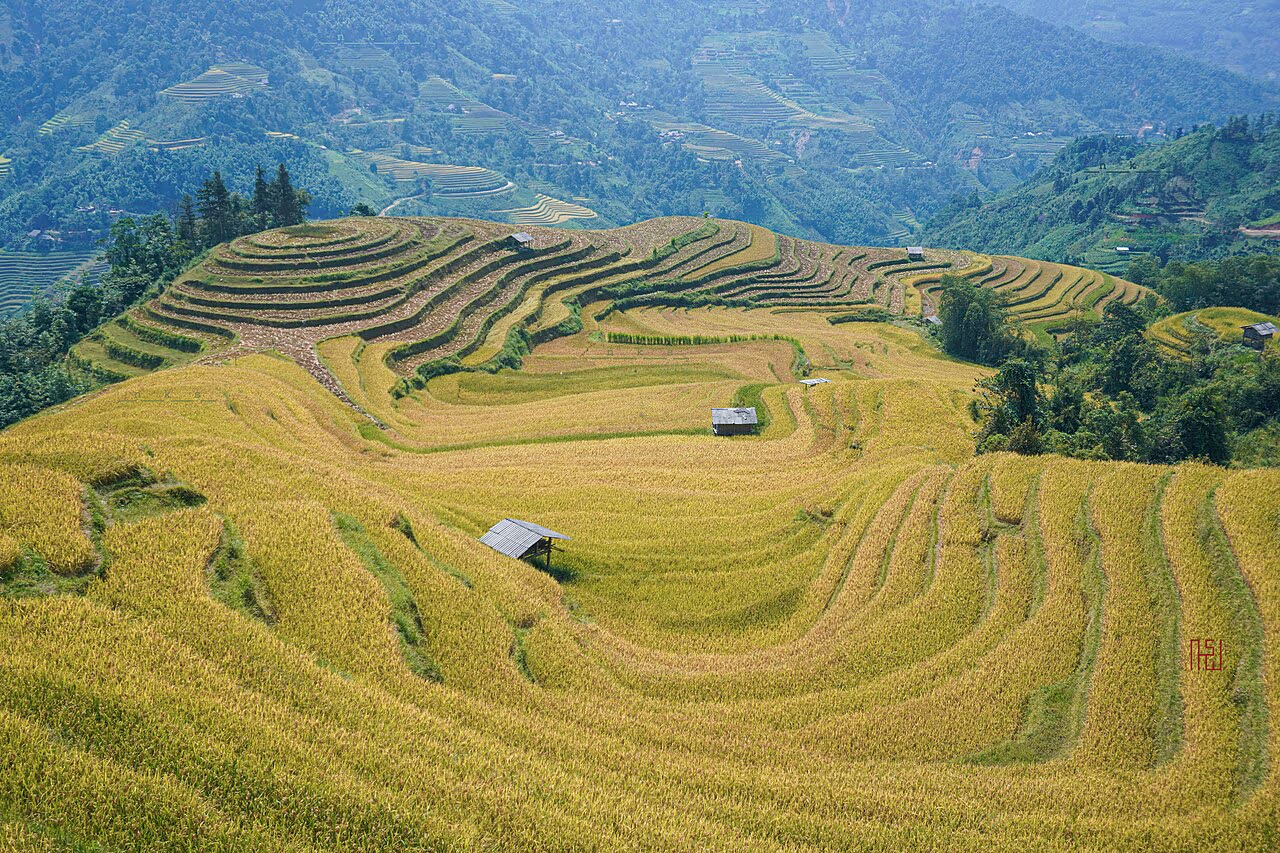
Vietnam's rice terraces are among the most beautiful landscapes on Earth. Carved by hand over centuries into the steep mountainsides of the far north, they curve and cascade down the slopes like contour lines drawn by a giant — flooded and mirror-bright in early summer, deep green in the growing months, and a breathtaking gold at harvest. For many travelers, seeing them is the single most memorable thing they do in Vietnam.
But "where to see the rice terraces" has more than one answer. Sapa is the famous one, and rightly so, but Mu Cang Chai, Hoang Su Phi, Y Ty, Pu Luong and the Bac Son Valley each have their own character — some busier, some wonderfully remote, each peaking at a slightly different time. This guide covers the best of them, when to go, and how to actually get among the terraces rather than just glimpse them from a viewpoint.
We're a local trekking company based in Sapa, in the heart of the terraced north, and we've walked these valleys our whole lives. So here's the honest, on-the-ground version: the rice cycle that decides everything, the six regions worth your time, and which one suits your trip.
A quick word on why they exist at all. These aren't decorative — they're working farmland, sculpted into the mountains over centuries by ethnic-minority communities because the slopes are too steep to farm any other way. Every level step holds water for the rice; every channel and bank was dug by hand and is still maintained today. That's what gives the terraces their soul: you're not looking at a landscaped attraction but at a living, thousand-year-old agricultural landscape that people still depend on. Walking through one at harvest, with families out cutting the rice, is as moving as it is beautiful.
It is also worth knowing that Vietnam has terraces beyond these six — you will find beautiful ones around Tu Le, Binh Lieu, Cao Bang and elsewhere — but the regions in this guide are the ones that combine genuine grandeur with at least some way for a traveler to reach and enjoy them. Together they represent the very best of a landscape that, at the right time of year, ranks among the finest scenery anywhere in Asia.
When the Terraces Turn Gold (The Rice Cycle)
Timing is everything with rice terraces — the same hillside looks completely different month to month. There are two magic windows: the water season (around May–June), when the flooded paddies turn to mirrors reflecting the sky, and the golden harvest (around September–October), when the ripe rice glows amber before it's cut. Here's the year at a glance for the northern terraces.
One important note: the exact timing shifts by a week or two each year and by region — lower, warmer valleys ripen earlier than high, cold ones. As a rule, aim for mid-to-late September for the gold across most of the north, or late May into June for the flooded-mirror look. Outside those windows the terraces are still pretty, just not at their jaw-dropping best.
It also helps to picture the cycle itself. From around March the farmers plough and prepare the dry terraces; in May they divert the streams and flood them, and for a few weeks the water turns every step into a mirror. The seedlings go in, the paddies green up through the summer monsoon, and by September the rice has ripened to gold and the harvest begins, cut by hand within a week or two. Then the terraces lie bare and brown through winter until the cycle starts again. Knowing roughly where in that cycle you'll arrive is the single most useful thing for planning a terrace trip.
A practical tip on the gold specifically: it does not arrive everywhere at once. Lower, warmer valleys ripen first and higher, cooler ones a week or two later, so the harvest rolls across the north through September and into early October. If your dates are fixed, ask a local contact which valleys will be gold during your window rather than assuming a single nationwide date — the difference between arriving a week early and a week late can be the difference between green and gold, or gold and bare stubble.
The Best Rice Terraces in Vietnam
Six regions stand out, from the famous and accessible to the gloriously remote. We've ordered them roughly by how easy they are to reach and experience — starting with the one most travelers can actually fit into a trip.
A note on access before we dive in: only Sapa is genuinely set up for international visitors to walk among the terraces with guides, homestays and easy transport. The others range from "doable with a private car or tour" (Mu Cang Chai, Pu Luong, Bac Son) to "real expedition territory" (Hoang Su Phi, Y Ty). That difference matters as much as the scenery when you're deciding where to go — the most beautiful terrace in the world is little use if you can't comfortably reach it.
1. Sapa & the Muong Hoa Valley
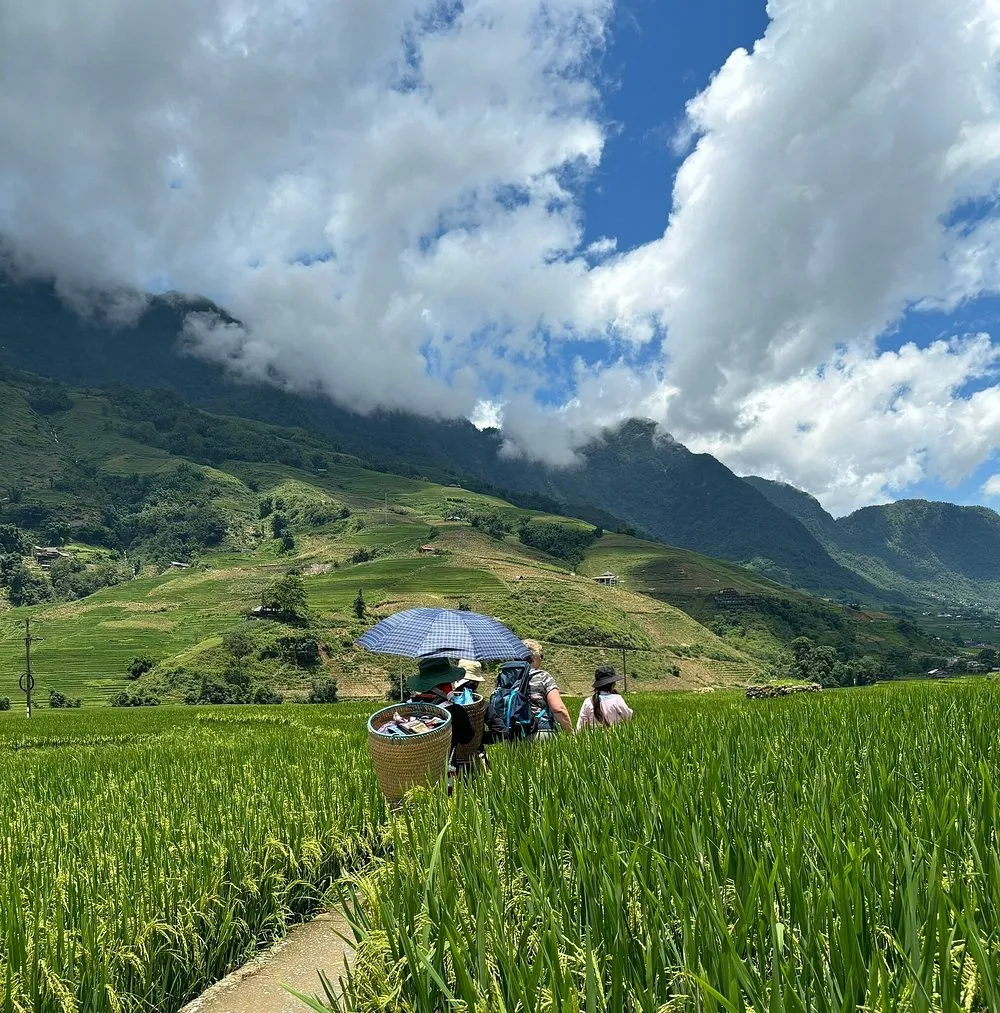
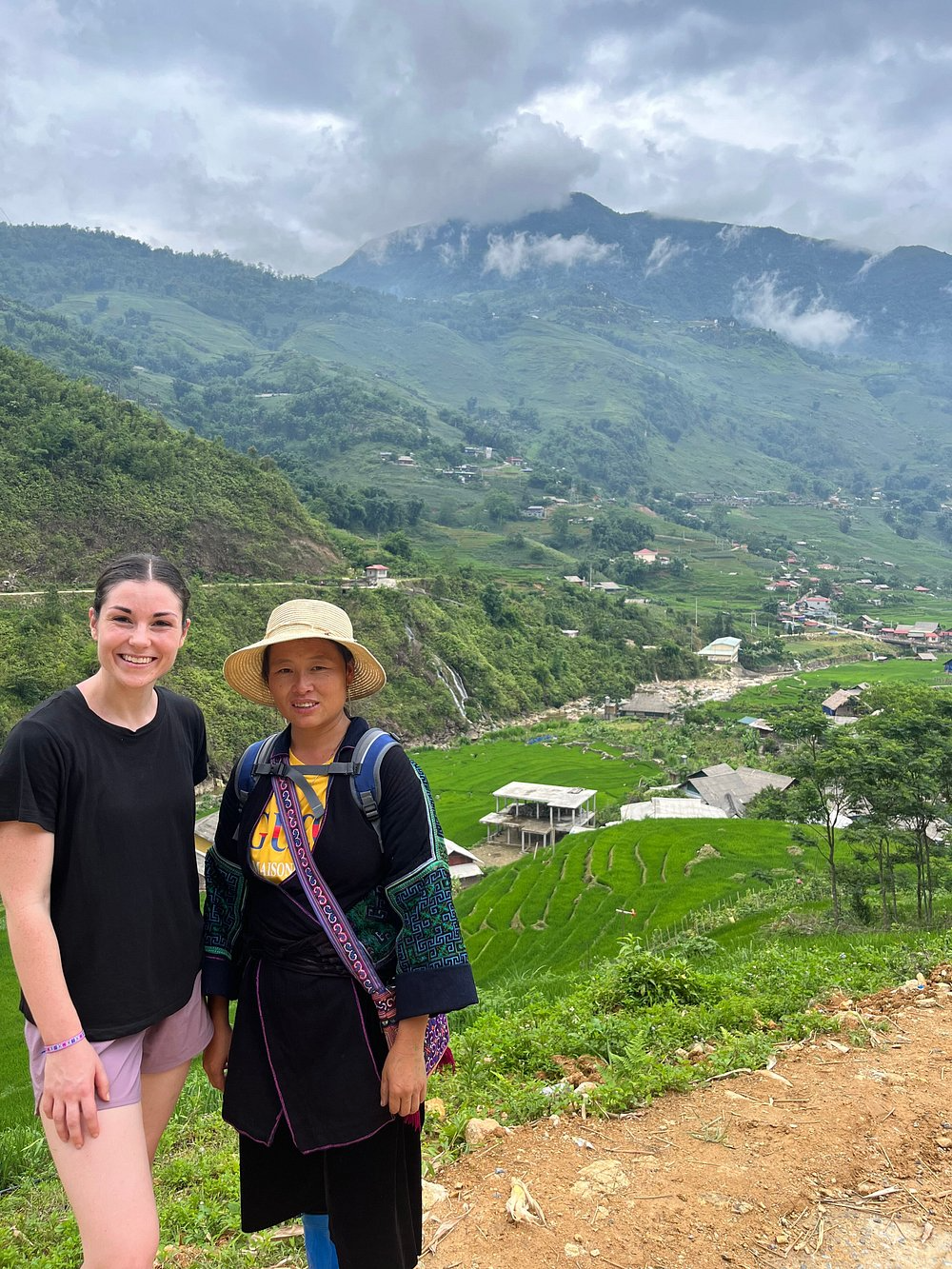
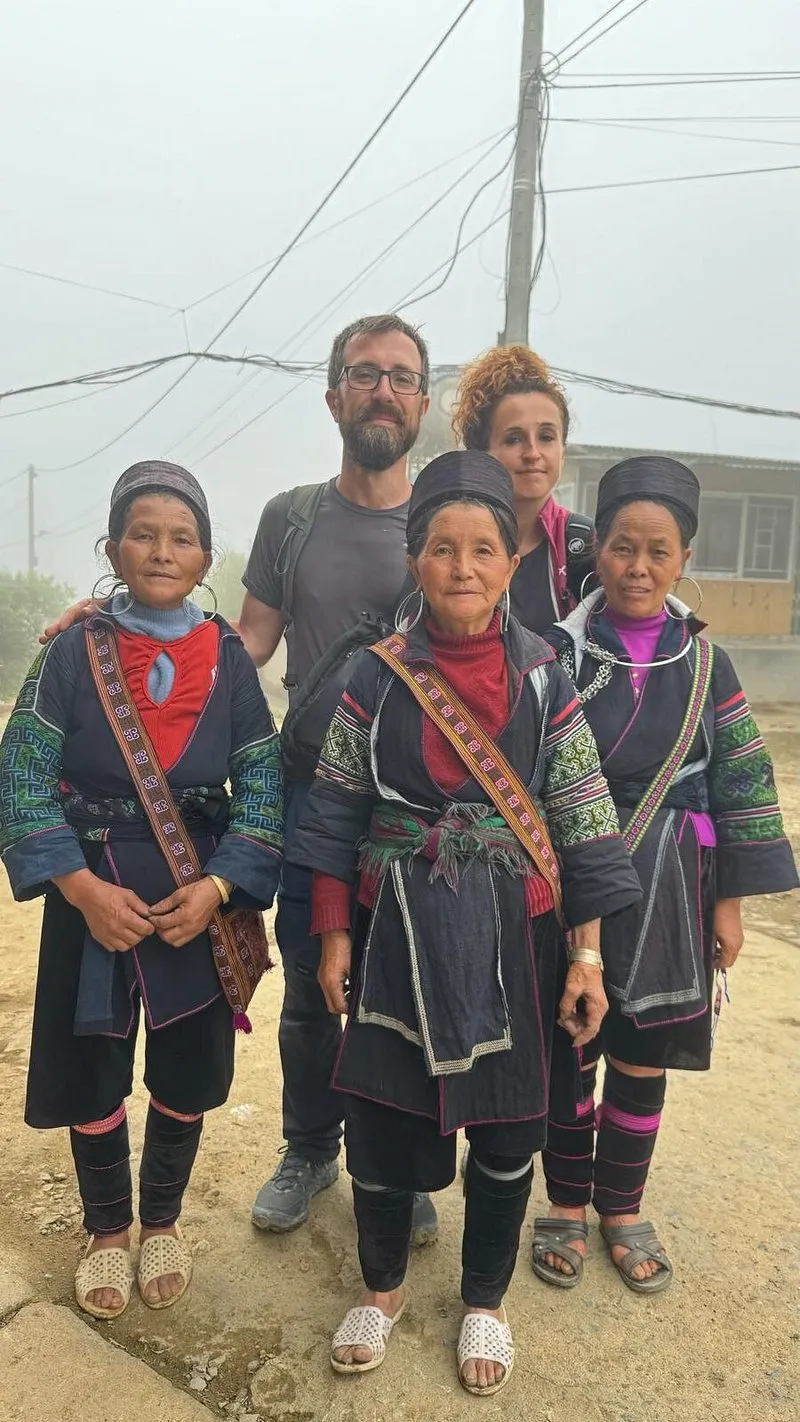
Sapa is the most famous — and the most accessible — place to see Vietnam's rice terraces, and for most travelers it's the right choice. The terraces of the Muong Hoa Valley stack hundreds of metres up the hillsides below the town, threaded with the trails of Black H'mong and Red Dao villages like Lao Chai, Ta Van and Y Linh Ho. What sets Sapa apart isn't just the scenery but the access: you don't view these terraces from a roadside, you trek down into them with a local guide and lunch with a family along the way. It's five to six hours from Hanoi, with the best beds, food and guides of any terrace region.
It's also the most rewarding for a real experience rather than a quick photo. On a guided trek you walk for hours along the contour paths, descending through Lao Chai and Ta Van, crossing streams and passing water buffalo, while your H'mong or Dao guide explains the farming, the plants and the village life around you — then you stop for a home-cooked lunch in a family's kitchen. In the September gold or the May water season it is, simply, one of the most beautiful walks in Asia, and you can tailor it from a gentle half-day to a two-day trek with a homestay.
Sapa also wins on flexibility of effort, which matters more than people expect. The same valley can be experienced as an easy, mostly flat stroll for families and older travelers, or as a proper multi-day trek for the fit — same scenery, different intensity. No other terrace region offers that range with the safety net of guides, vehicles and comfortable beds close by, which is why we steer most first-time visitors here regardless of their fitness.
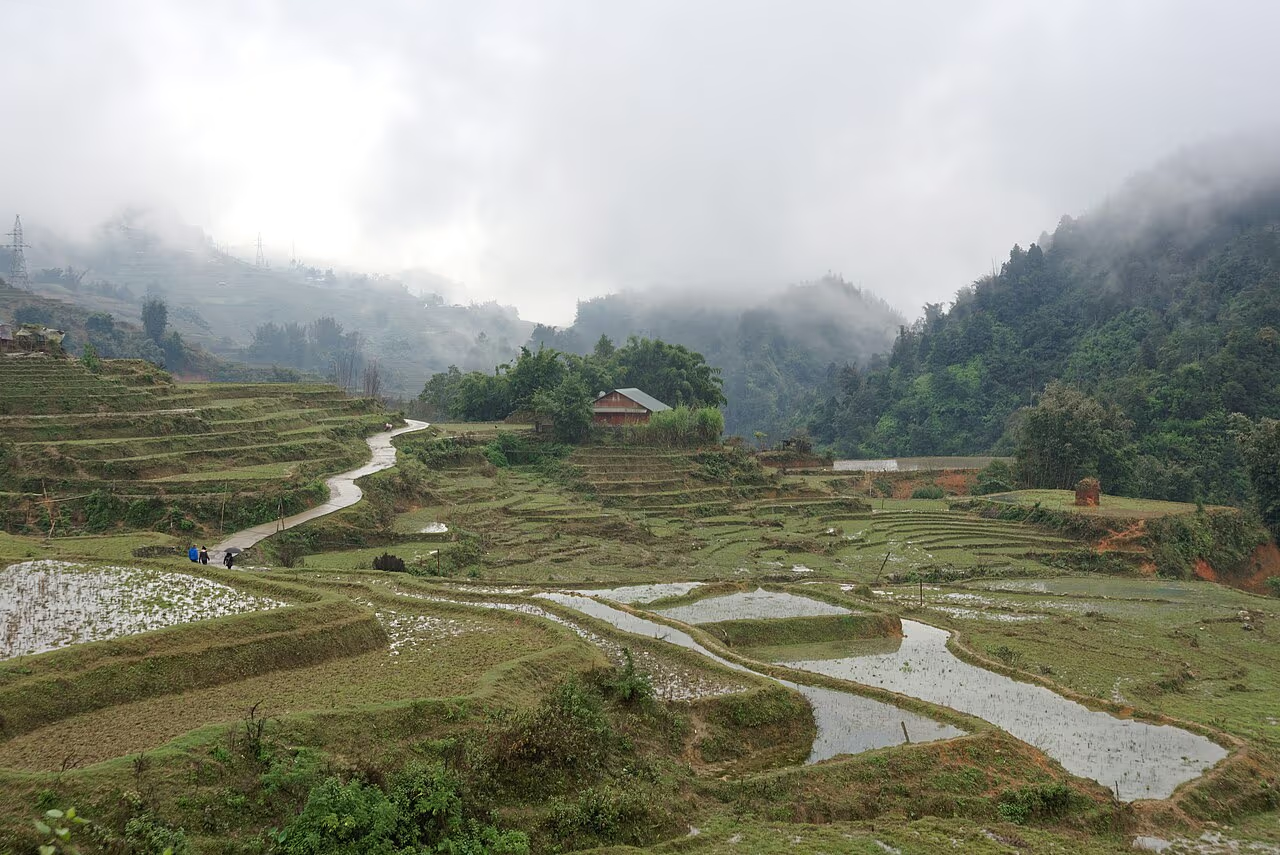
Walk Into the Muong Hoa Valley
 1 Day Trek
Trekking Through Rice Terraced Fields
Muong Hoa Valley with a local guide and a family lunch — the classic terraces day.
 2D1N Homestay
Rice Terraced Fields & Homestay
Two days deep in the terraces and a night with a valley family — the full experience.
 Families & Seniors
Sapa Easy Trekking For Seniors
Gentle, flat paths through the paddies where poles can be rented at our office — perfect for 60+ and families.
2. Mu Cang Chai
If Sapa is the most famous, Mu Cang Chai is the connoisseur's choice for sheer terraced spectacle. In Yen Bai province, about six to seven hours from Hanoi, its hillsides — especially around La Pan Tan, Che Cu Nha and De Xu Phinh — are sculpted into vast, sweeping amphitheatres of rice that are at their most jaw-dropping during the September golden season. The terraces here are a recognised national heritage site, and "mâm xôi" (the rice-bowl hill) is one of the most photographed spots in Vietnam. It's less set up for foreign trekkers than Sapa, but unbeatable for pure scenery.
If you're a keen photographer, Mu Cang Chai is probably the one you've seen on postcards and competition winners' walls. The scale is what stuns people: whole mountainsides terraced from valley floor to ridge in rippling, concentric curves. The trade-off is logistics — there's less English spoken, fewer guided-trek options and basic accommodation — so most visitors come by private car or photography tour, often pairing it with the Khau Pha Pass, one of Vietnam's great mountain roads, on the way in from Hanoi.
3. Hoang Su Phi
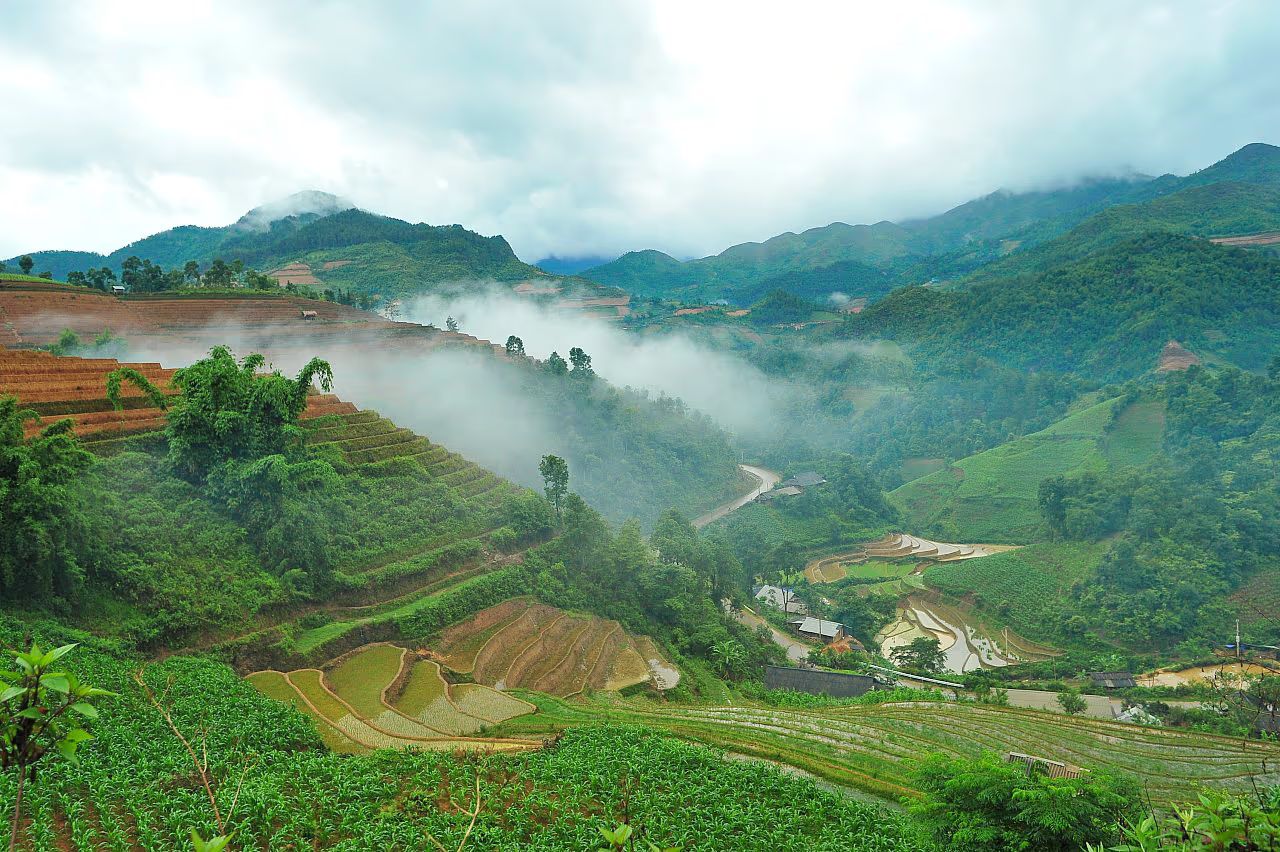
Remote, dramatic and far less visited, Hoang Su Phi sits in western Ha Giang province, seven to eight hours from Hanoi, where the terraces tumble down impossibly steep slopes built by the La Chi, Dao and Nung peoples. Also a national heritage site, its terraces are arguably the most vertiginous in Vietnam, glowing gold in late September against a backdrop of high peaks. The remoteness is the point: you trade easy access for genuine quiet and a landscape few foreign tourists ever reach.
Hoang Su Phi works best combined with a wider Ha Giang trip rather than as a standalone target, given the long journey. Those who make the effort are rewarded with terraces that feel genuinely discovered rather than visited, draped over ridges so steep they seem to defy gravity, and villages where tourism has barely arrived. Go for the late-September gold, bring patience for the roads, and you'll have one of the north's great landscapes largely to yourself.
Practically, the nearest base for Hoang Su Phi is the town of Ha Giang or Vinh Quang, and the mountain roads in are slow and winding, so allow a full day of travel each way. This is a region that rewards slowing down: a couple of unhurried days walking between villages and homestays beats a frantic dash for photos, and it is how you actually meet the people whose hands shaped the hillsides.
4. Y Ty
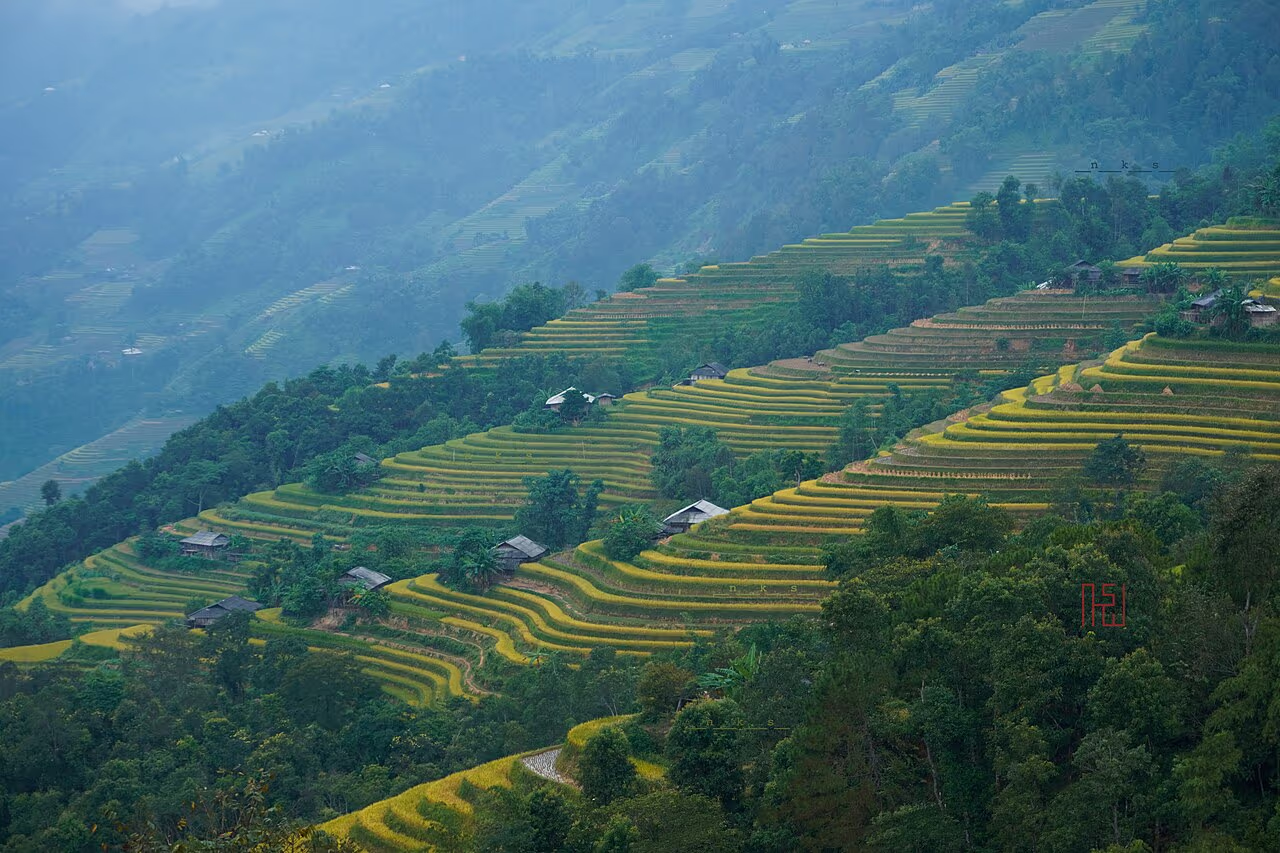
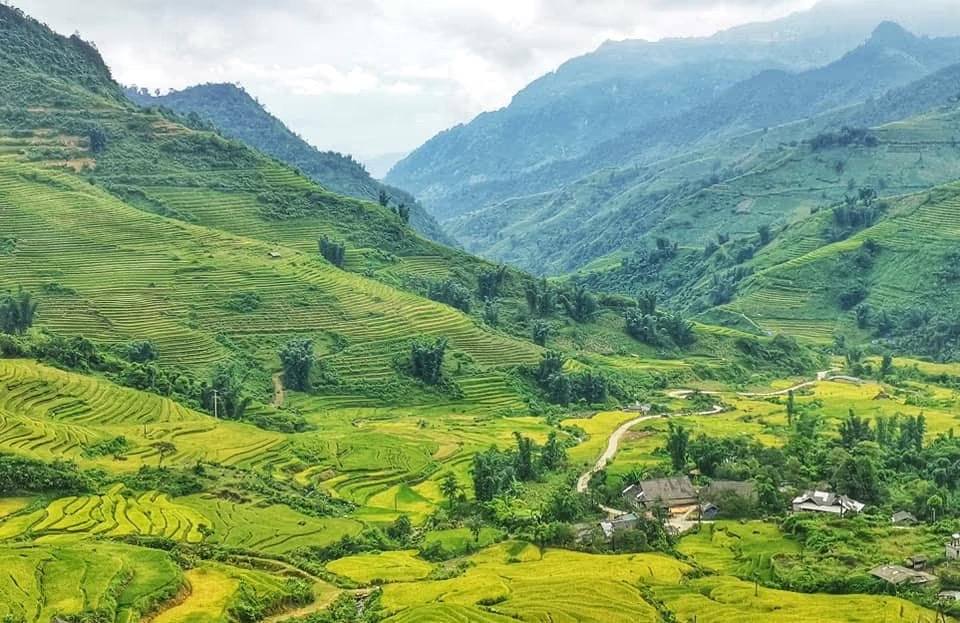
High on the Chinese border in Lao Cai province — the same province as Sapa, but a world away in atmosphere — Y Ty is a misty, cloud-wreathed village ringed by terraces farmed by the Ha Nhi people, known for their distinctive mushroom-shaped earthen houses. Sitting at around 2,000 metres, it's often above the clouds, and its terraces are spectacular in the September harvest. It's remote and basic, with little tourist infrastructure, which is exactly why adventurous travelers love it.
Y Ty pairs naturally with Sapa for the adventurous, since both are in Lao Cai — some travelers base in Sapa and make the long day trip or overnight out to Y Ty for the contrast. Where Sapa is developed, Y Ty is raw: a frontier village wrapped in cloud, with the terraces appearing and vanishing in the mist, and a culture (the Ha Nhi) you won't meet elsewhere. It's not for everyone, but for travelers who've "done" Sapa and want something wilder, it's a revelation.
5. Pu Luong
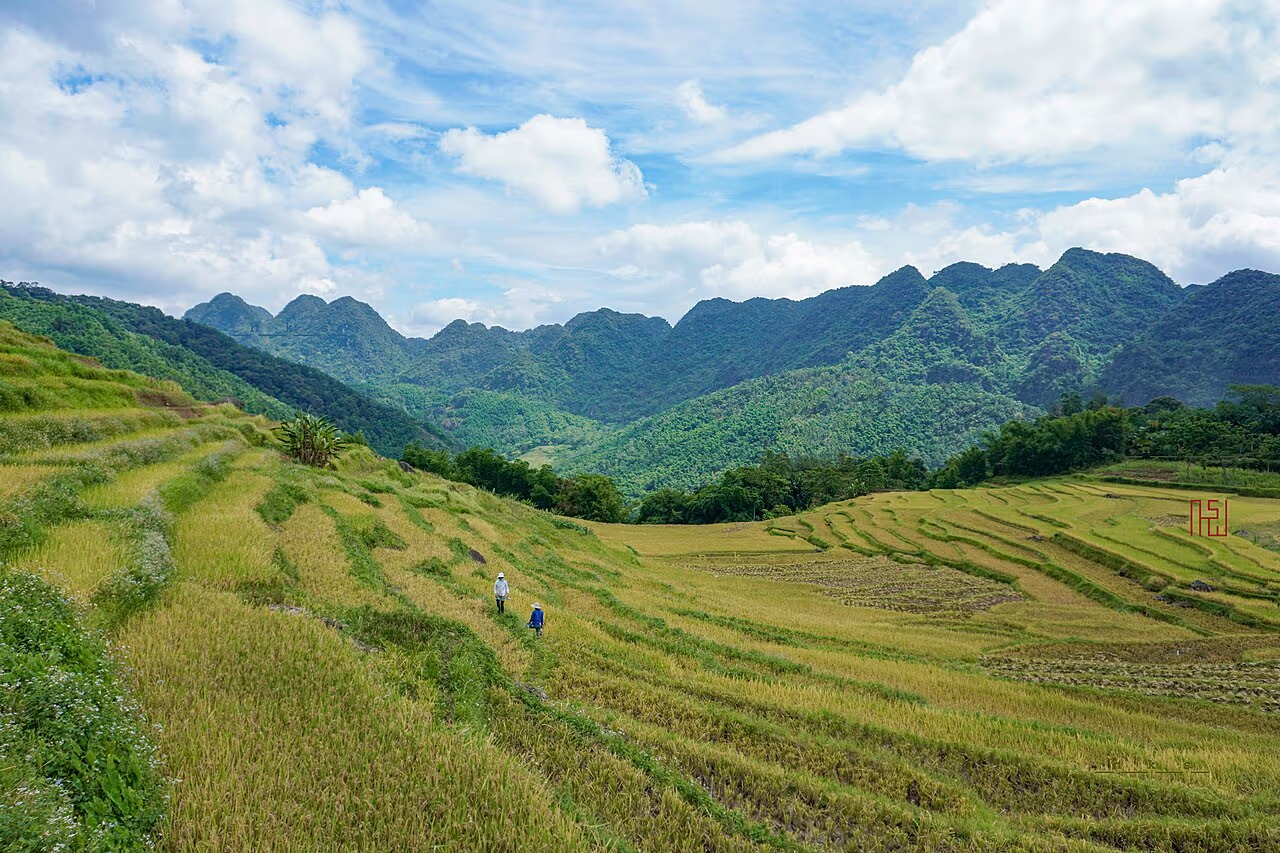
The closest great terraces to Hanoi — just four to five hours away in Thanh Hoa province — Pu Luong is a nature reserve where rice terraces meet limestone karst, water wheels and a growing crop of stylish eco-lodges. Because it's lower and warmer, Pu Luong has two harvests, so you can catch ripe gold terraces in both late May/June and September. It's the easy, relaxing terrace escape: gorgeous, comfortable, and far quieter than Sapa, ideal if you're short on time but still want the scenery.
Pu Luong is also the easiest to combine with the rest of a classic Vietnam itinerary, sitting roughly between Hanoi and Ninh Binh. Many travelers slot in a night or two at a Pu Luong eco-lodge — infinity pool looking over the paddies, included guided walks to the terraces and water wheels — as a restful counterpoint to the cities. It doesn't have Sapa's cultural depth or its high-mountain drama, but for sheer relaxing beauty with minimal effort, it's hard to beat.
6. Bac Son Valley
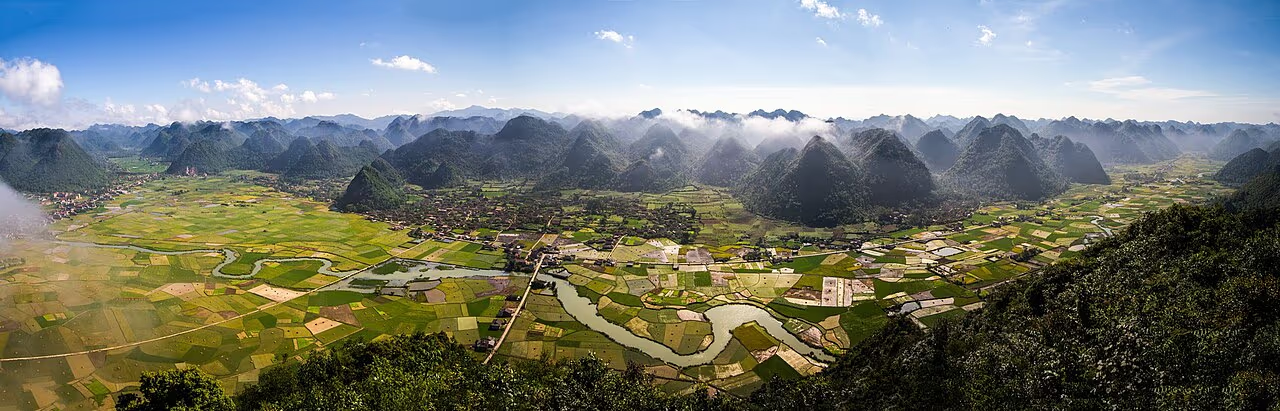
Different in character from the mountain terraces, Bac Son in Lang Son province is a vast, flat-bottomed valley of patchwork rice fields ringed by jagged limestone karst, just three to four hours from Hanoi. The classic experience is to climb Na Lay peak at dawn for the panoramic view as the valley's fields shift from green to gold below you. The rice ripens a little differently here — often around July and again in November — making it a good option when the mountain terraces are between seasons.
Because it's so close to Hanoi and so different in character — flat valley fields rather than stacked mountain terraces — Bac Son makes a good short add-on rather than a main destination. It's popular with photographers for that one iconic Na Lay summit panorama, and quiet the rest of the time. If your dates miss the mountain harvest, or you only have a day or two, it's a lovely, easy taste of Vietnam's rice-growing country.
The Terraces Compared
Six regions, side by side — so you can match one to your time, your dates and how far off the beaten track you want to go.
| Region | Province | Peak season | From Hanoi | Crowds |
|---|---|---|---|---|
| Sapa / Muong Hoa | Lao Cai | Sep gold · May water | 5–6 hrs | Busy |
| Mu Cang Chai | Yen Bai | Sep–Oct gold | 6–7 hrs | Moderate |
| Hoang Su Phi | Ha Giang | Sep–Oct gold | 7–8 hrs | Quiet |
| Y Ty | Lao Cai | Sep gold | ~7 hrs | Very quiet |
| Pu Luong | Thanh Hoa | Jun & Sep | 4–5 hrs | Quiet |
| Bac Son | Lang Son | Jul & Nov | 3–4 hrs | Quiet |
The pattern is clear: Sapa offers the best access, infrastructure and trekking; the others trade some convenience for fewer crowds. If it's your first time and you want to walk among the terraces with a guide, Sapa wins. If you're chasing pure, uncrowded spectacle and don't mind a long drive, Mu Cang Chai or Hoang Su Phi reward the effort.
For a typical first trip to Vietnam, the maths is simple: Sapa is reachable on a comfortable overnight transfer, slots into almost any itinerary, and lets you actually walk the terraces with a guide — so it delivers the most terrace experience for the least hassle. Save the remoter regions for a return trip, or for travelers specifically chasing photography or solitude who have the time and patience for the long roads.
Our Pick: The Terraces Ranked
If you're choosing just one, here's how we rank the six overall — weighing not only beauty but how easy they are to reach and actually experience up close.
Sapa tops it not because it's the most dramatic — Mu Cang Chai and Hoang Su Phi rival or beat it for pure spectacle — but because it's the one where you can most easily, comfortably and deeply experience the terraces: trek them, sleep among them, and share a meal with the families who farm them.
Of course, "best" is personal. A photographer with a week and a rented car might rank Mu Cang Chai or Hoang Su Phi top; a family with three days and young kids will be far happier on a gentle Sapa valley walk and a Pu Luong eco-lodge. Use the ranking as a starting point, then weigh it against your own time, season and appetite for rough travel — the "right" terrace is the one you can reach at the right moment in the rice cycle.
"We came to Vietnam for the food and the cities, but the morning we trekked down through the Sapa terraces with our H'mong guide, the rice glowing gold all around us, is the photo on our wall now. Nothing else came close."
— Hannah & Tom B., Bristol, UK (September 2025)
How to See the Terraces
All the northern terraces are reached overland from Hanoi — there are no airports in the terrace country. For most travelers, Sapa is the practical choice: it's the closest of the truly spectacular regions, has the best transport links, and is the only one set up for guided trekking right among the rice. Sort a comfortable Hanoi–Sapa transfer, and you can be walking the terraces the next morning.
For the remoter regions, plan differently: Mu Cang Chai, Pu Luong and Bac Son are best with a private car and driver (and often a local guide), while Hoang Su Phi and Y Ty usually mean a multi-day road trip or an organised tour. Wherever you go, the golden rule is to time your visit to the rice cycle first and book transport second — arriving in the wrong week is the one mistake that no amount of good planning elsewhere can fix.
Get to the Terraces in Comfort


To get the most from any terrace region, walk into it. The viewpoints are lovely, but the magic is on the trails between the paddies — and for that you'll want decent footwear, which you can rent in Sapa rather than flying with:
Boots & Poles, Rented in Town
 Gear Rental
Trekking Boots Rental
Waterproof ankle-support boots, cleaned and checked before each rental. At 105 Thach Son Street.
 Gear Rental
Walking Poles Rental
Trekking poles at $2/day from our office at 105 Thach Son Street. Great on the muddy paddy paths.
Visiting the Terraces Responsibly
These are working farms and people's homes, not a theme park, so a little care goes a long way. Stick to the paths and the earth banks between paddies — never walk across planted or flooded fields, which damages the crop a family depends on. Always ask before photographing people, and a small purchase from the women selling handicrafts on the trails is a fair exchange for the photos and the welcome. If a local offers to guide you, agree the price first.
The bigger picture matters too: choosing community-rooted local guides, eating and sleeping in village homestays, and buying directly from farmers keeps tourism money in the valleys that maintain these terraces. The landscapes survive because the communities still farm them, and respectful, locally-spent tourism helps make that worthwhile. Travel gently and you leave the terraces — and your welcome in them — intact for the next visitor.
One last thing worth saying: the best souvenir from the terraces is not a photo but the memory of being welcomed into them. Take the time to sit with a family over lunch, learn a few words, watch how the rice is grown — that human connection, more than any view, is what travelers tell us they remember years later. The scenery draws you in; the people are why you stay in love with the place.