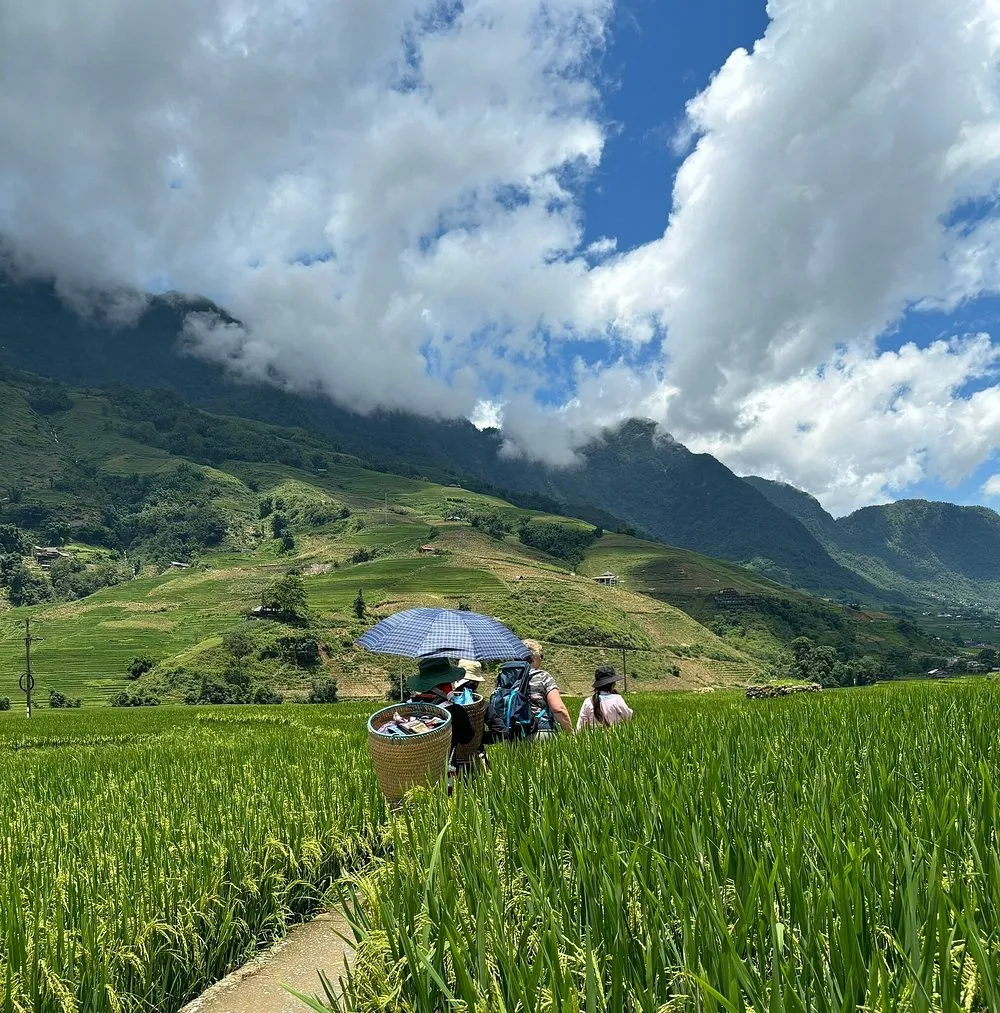
 Sinh Giang
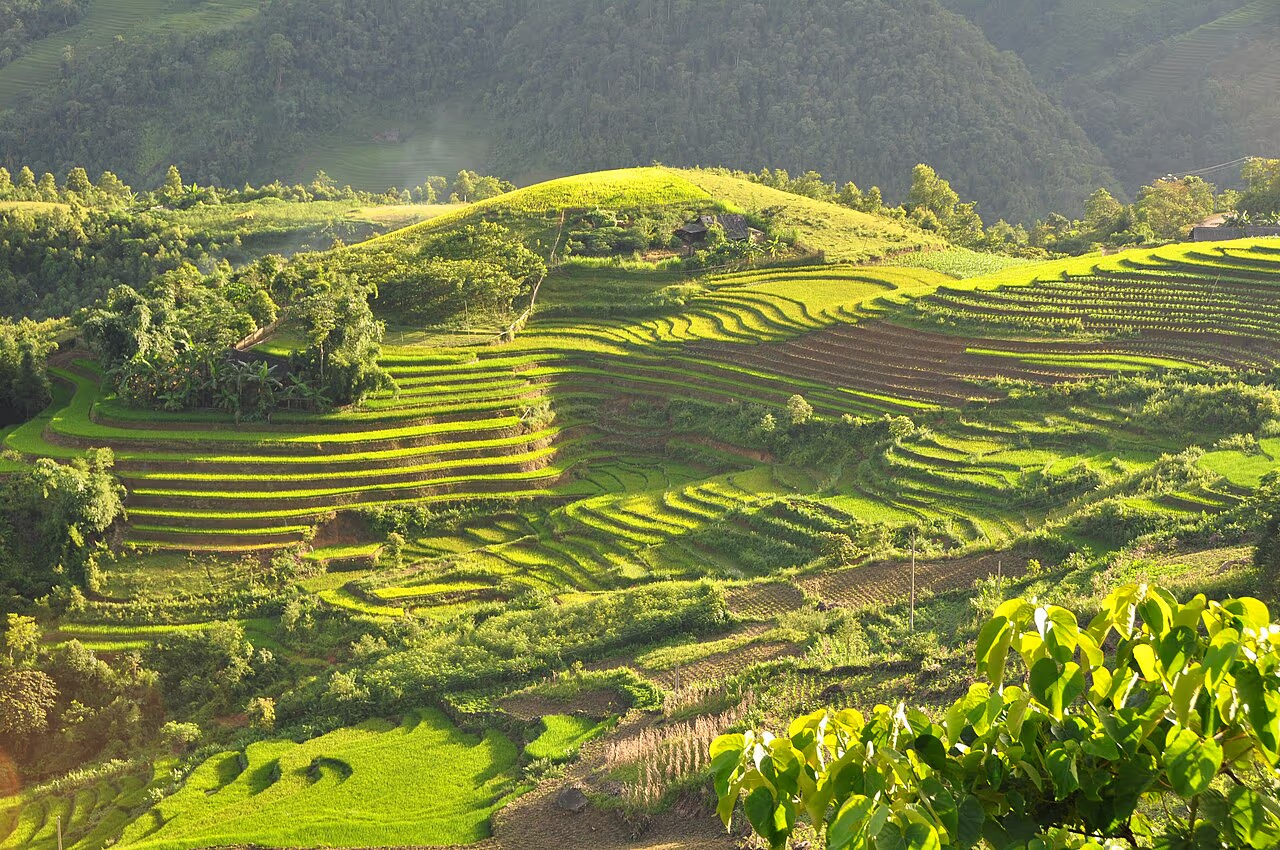
Sapa is the most beautiful corner of Vietnam, and the reason most travelers fall in love with the north. High in the Hoang Lien Son mountains near the Chinese border, it's a former French hill station wrapped in some of the most spectacular rice terraces on Earth, farmed for generations by the Black H'mong, Red Dao, Giay and Tay communities who give these valleys their soul. Above it all rises Fansipan, the highest peak in Indochina. It is, simply, where Vietnam is at its most dramatic.
We should be upfront: we're a local trekking company, founded by members of the Black H'mong community, and Sapa is our home. We've walked these trails since childhood and guided travelers along them for years. So this isn't a list scraped from other lists — it's the guide we'd give a friend arriving next week: what to actually do, which trek suits you, when to come, and how to experience the real Sapa, not just the busy town.
And one honest word on that town: Sapa town itself has grown busy and built-up in recent years. But the magic was never really in the town — it's one ridge away, down in the quiet valleys and villages where the terraces stack hundreds of metres up the hillsides and a home-cooked lunch waits in a family's kitchen. Get out of town and onto the trails, and Sapa is as breathtaking as it ever was.
That perspective — from inside the community rather than outside it — is what we hope makes this guide different. Our guides learned English not in a classroom but on these very trails, walking with travelers while selling handicrafts as children, and now lead the way as professional, licensed guides. It means we can take you to quieter valleys and family homes that mainstream operators simply can't reach, because the welcome there is built on relationships, not transactions. Keep that in mind as you read: everything below is the Sapa we actually live in.
First, the basics. Sapa sits in Lao Cai province in Vietnam's far north-west, about 320 km from Hanoi and right up near the Chinese border, at around 1,600 metres above sea level. That altitude is the key to everything: it gives Sapa its cool, often misty climate (a relief from the lowland heat), its pine-and-bamboo hillsides, and the steep valleys where generations of farmers have terraced the slopes for rice. It is a different Vietnam from the beaches and cities — cooler, greener, and quieter.
Sapa at a Glance
The essentials before you plan — Sapa in four numbers.
The Best Things to Do in Sapa
Sapa rewards the traveler who gets out and into the landscape. Here are the experiences worth your time, in roughly the order we'd recommend them.
A quick orientation first. Almost everything worth doing radiates out from Sapa town: the Muong Hoa Valley and its villages spread south and east, Fansipan rises to the west, and the big markets sit an hour or two out. You don't need to plan it all to the minute — pick a trek as your centrepiece, add a market or Fansipan if you have time, and leave room to simply wander.
1. Trek the Rice Terraces of the Muong Hoa Valley
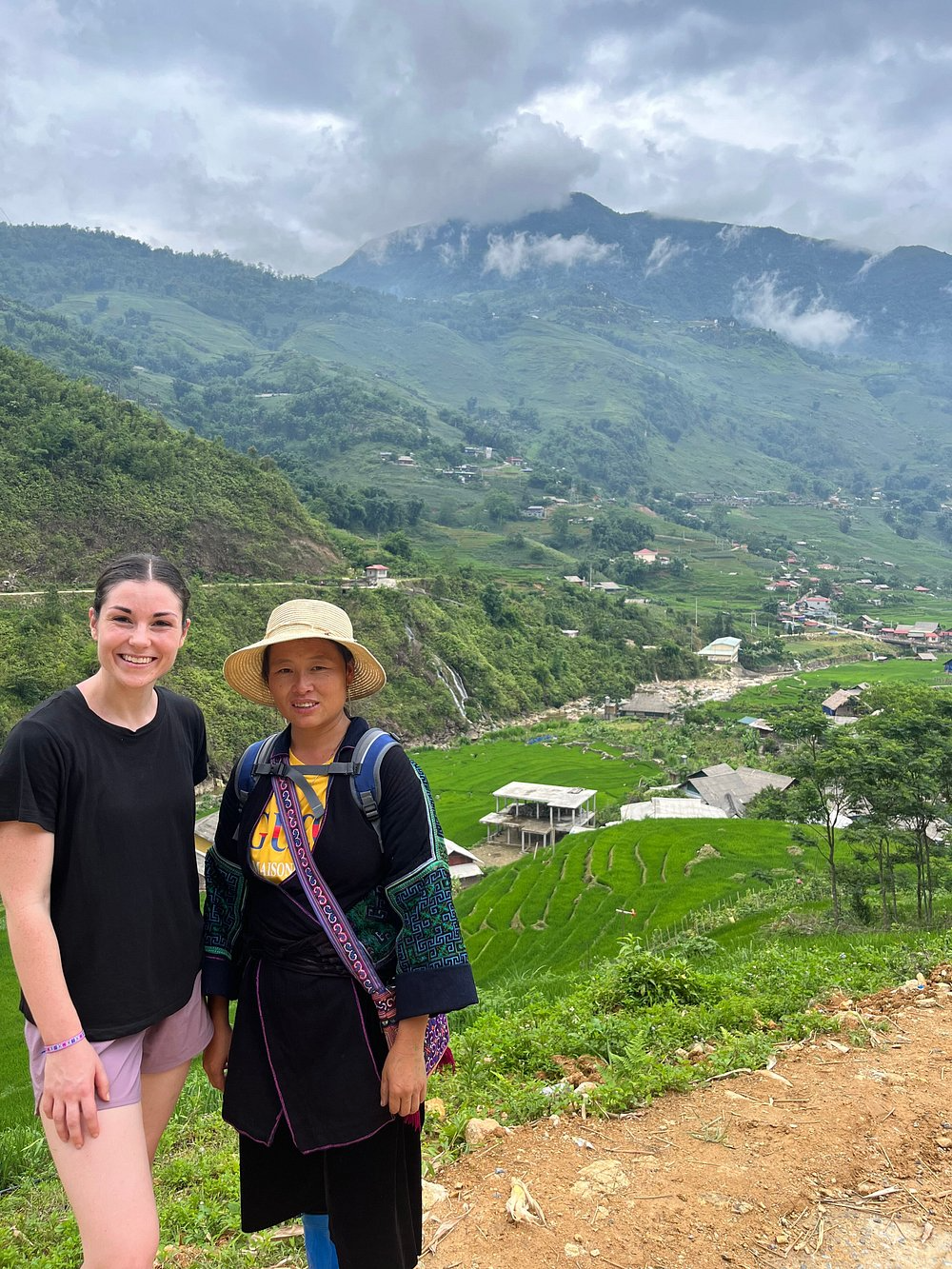
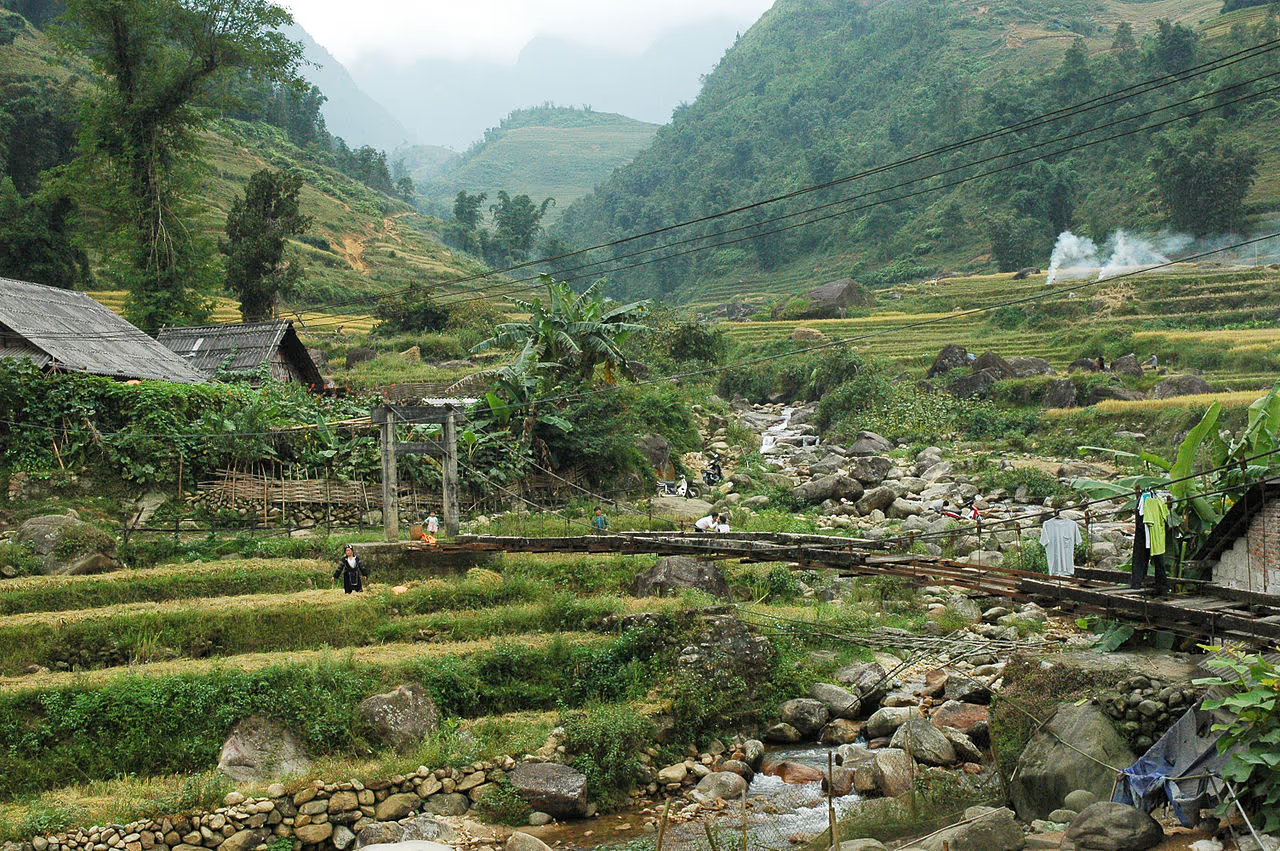
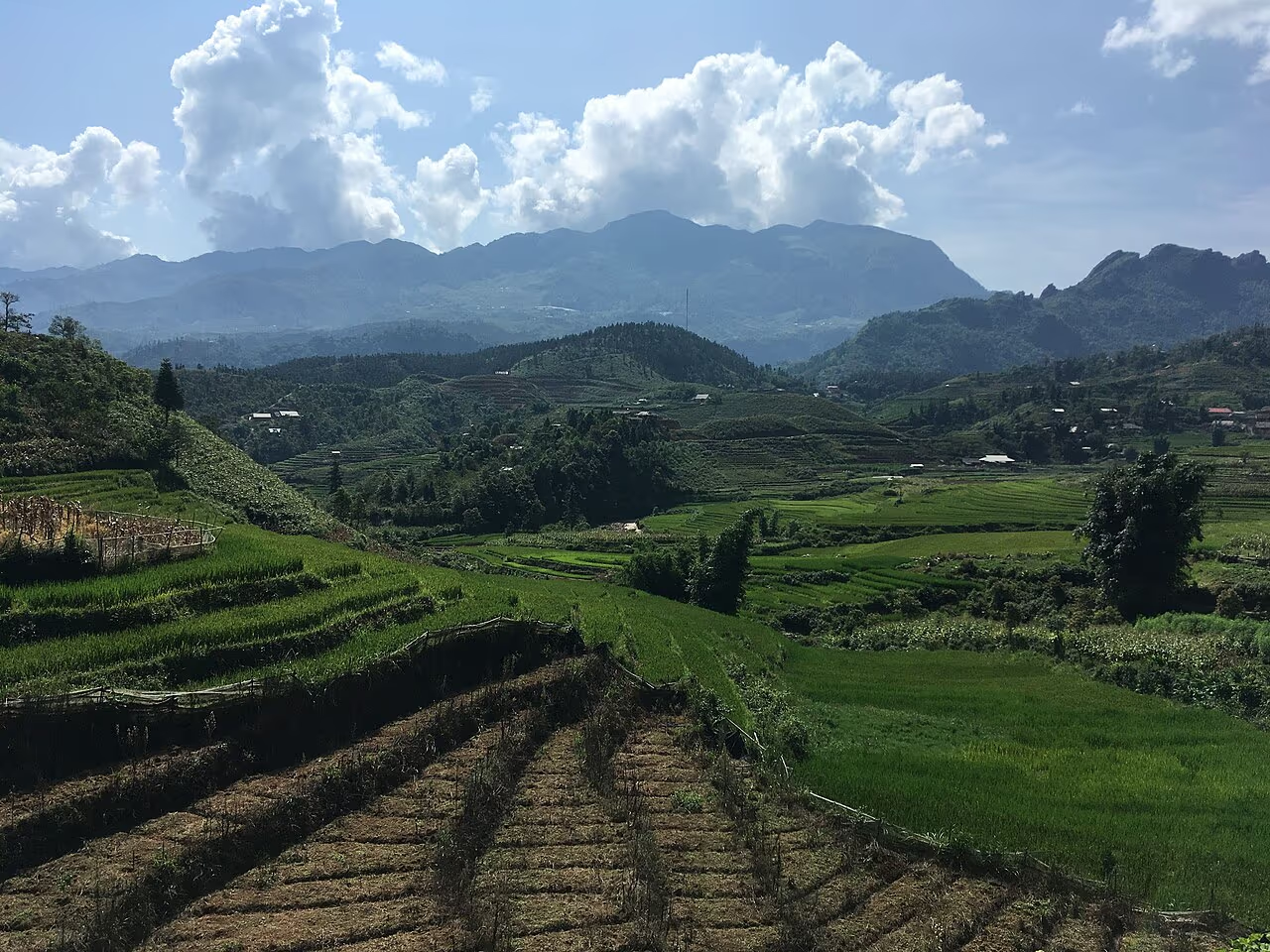
This is the heart of Sapa and the single best thing to do here. A guided trek leads you off the road and down into the Muong Hoa Valley, along trails that thread between the terraces — flooded and mirror-bright in early summer, electric green in August, golden at the September harvest. You pass water buffalo, indigo plots and farmers at work, and the day ends with a home-cooked lunch in a village family's home. It's not a viewpoint you photograph from a bus; it's a landscape you walk through, and it's why people remember Sapa above everywhere else in Vietnam.
What does a trek day actually look like? You're picked up in town after breakfast and driven a short way to the trailhead, then you walk — gently or more seriously, depending on the route you choose — descending through the terraces as your guide points out the rice at whatever stage the season has it, the medicinal plants, the indigo used to dye the H'mong clothes. Around midday you stop at a family's home for a hot, home-cooked lunch, then continue through a village or two before being driven back. It's active but unhurried, and suitable for far more people than the word "trek" suggests.
As for routes, the classic is the Lao Chai – Ta Van trail through the heart of the Muong Hoa Valley — the most scenic and most popular, ranging from a few gentle hours to a full day. For more solitude, the routes toward Y Linh Ho, Su Pan or the far villages of Ta Giang Phinh and Ban Ho see a fraction of the foot traffic. We pick the trail to match your group's pace and the day's weather, and on a clear day we'll always steer you somewhere the crowds aren't.
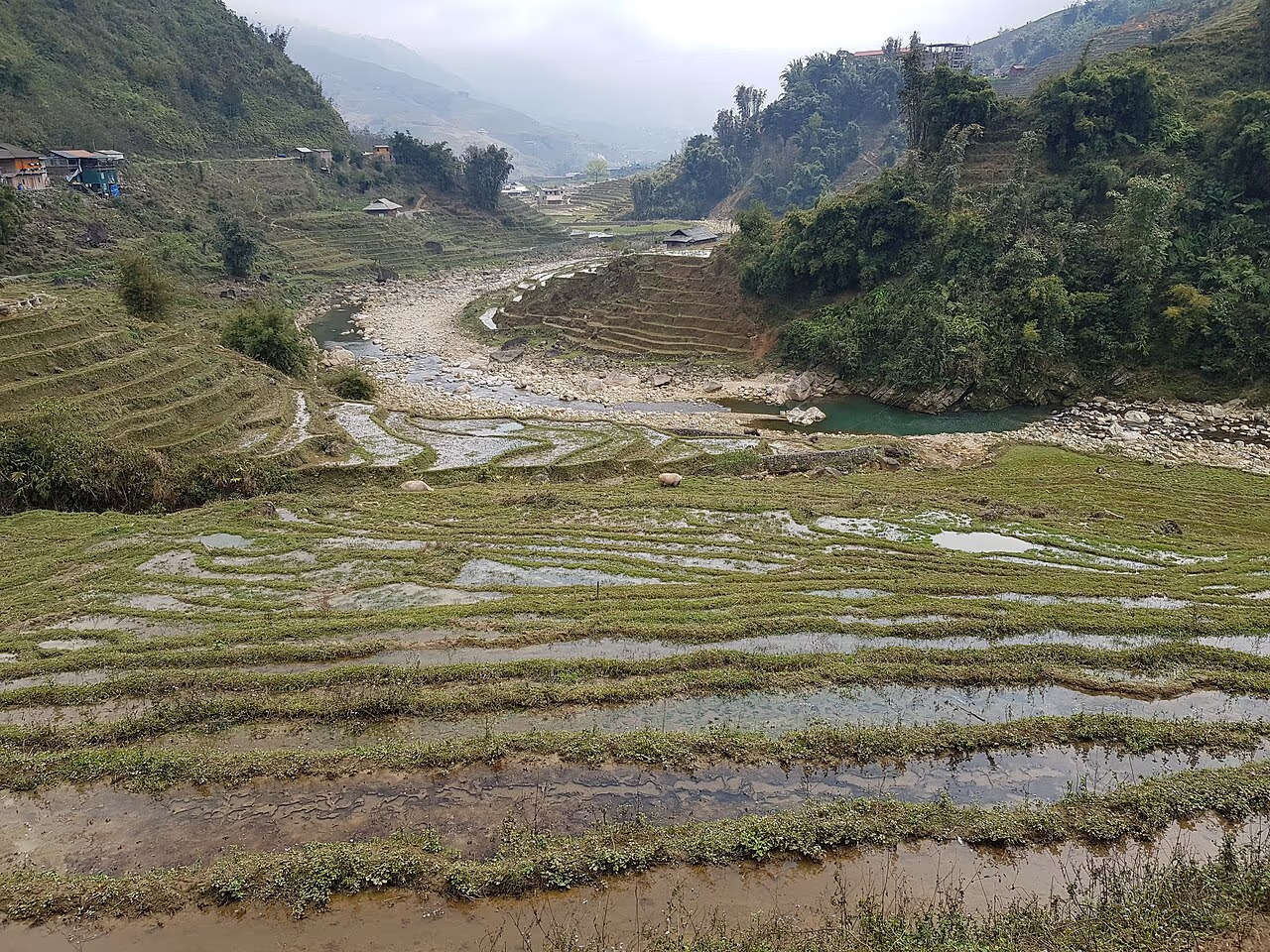
Trek the Rice Terraces with a Local Guide
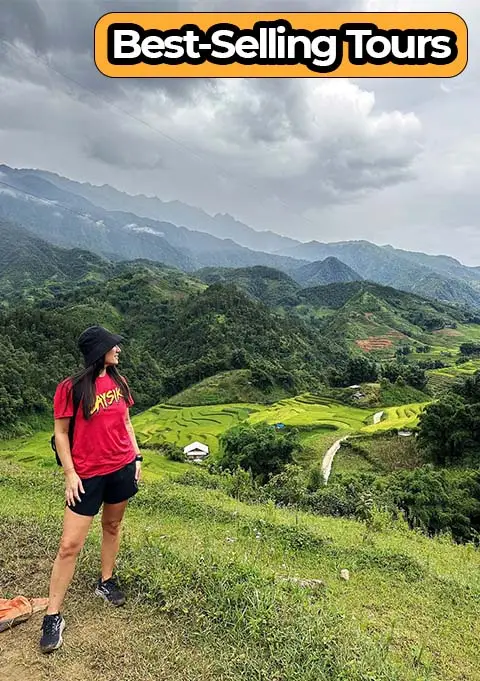 1 Day Trek
Trekking Through Rice Terraced Fields
Muong Hoa Valley — Lao Chai, Ta Van, Y Linh Ho — with a local guide and a family lunch.
 2D1N Homestay
Rice Terraced Fields & Homestay
Two days on the trail and a night in a valley homestay — the full Sapa experience.
 Families & Seniors
Sapa Easy Trekking For Seniors
Gentle, flat paths where poles can be rented at our office — perfect for 60+ travelers and families.
2. Visit the Villages — Lao Chai, Ta Van & Ta Phin
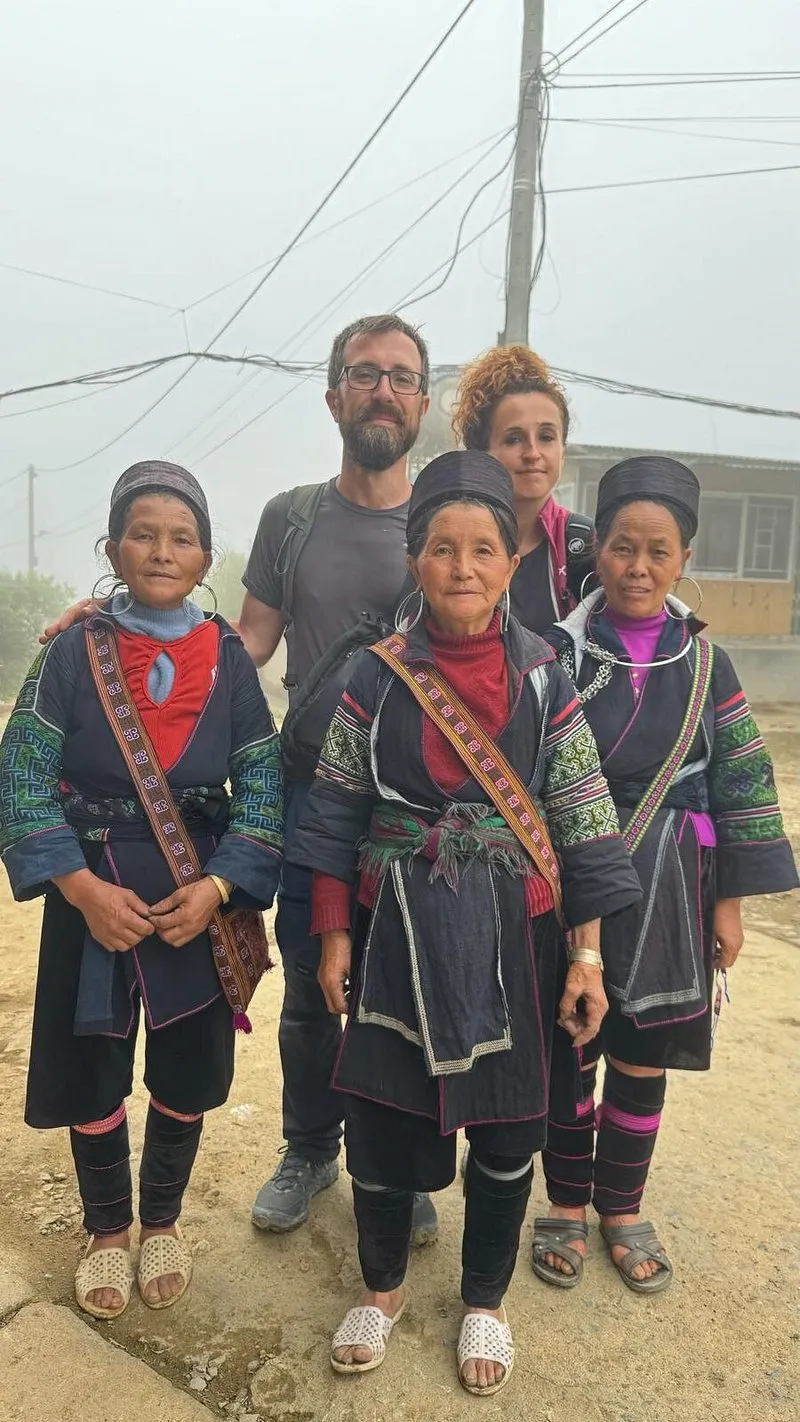
The villages are where Sapa's culture lives. Lao Chai and Ta Van, strung along the Muong Hoa Valley, are the classic Black H'mong and Giay villages most treks pass through — stilt houses, terraced fields, and the chance to share a meal with a family. Ta Phin, in a quieter valley, is the heart of the Red Dao community, famous for their herbal medicine baths and intricate embroidery. Visiting with a local guide — rather than wandering in alone — is what turns a look at a village into a genuine welcome.
Each community has its own character. The Black H'mong are the largest group, known for their indigo-dyed hemp clothing and the hill farms that built the terraces; the Red Dao wear striking red headdresses and are famous for herbal medicine, including the restorative bath you can try after a long trek; the Giay and Tay tend to live lower in the valleys near the rivers. Spending real time with even one of these communities — over lunch, an overnight, or a market morning — is the part of Sapa that stays with people long after the views fade.
3. Reach the Summit of Fansipan
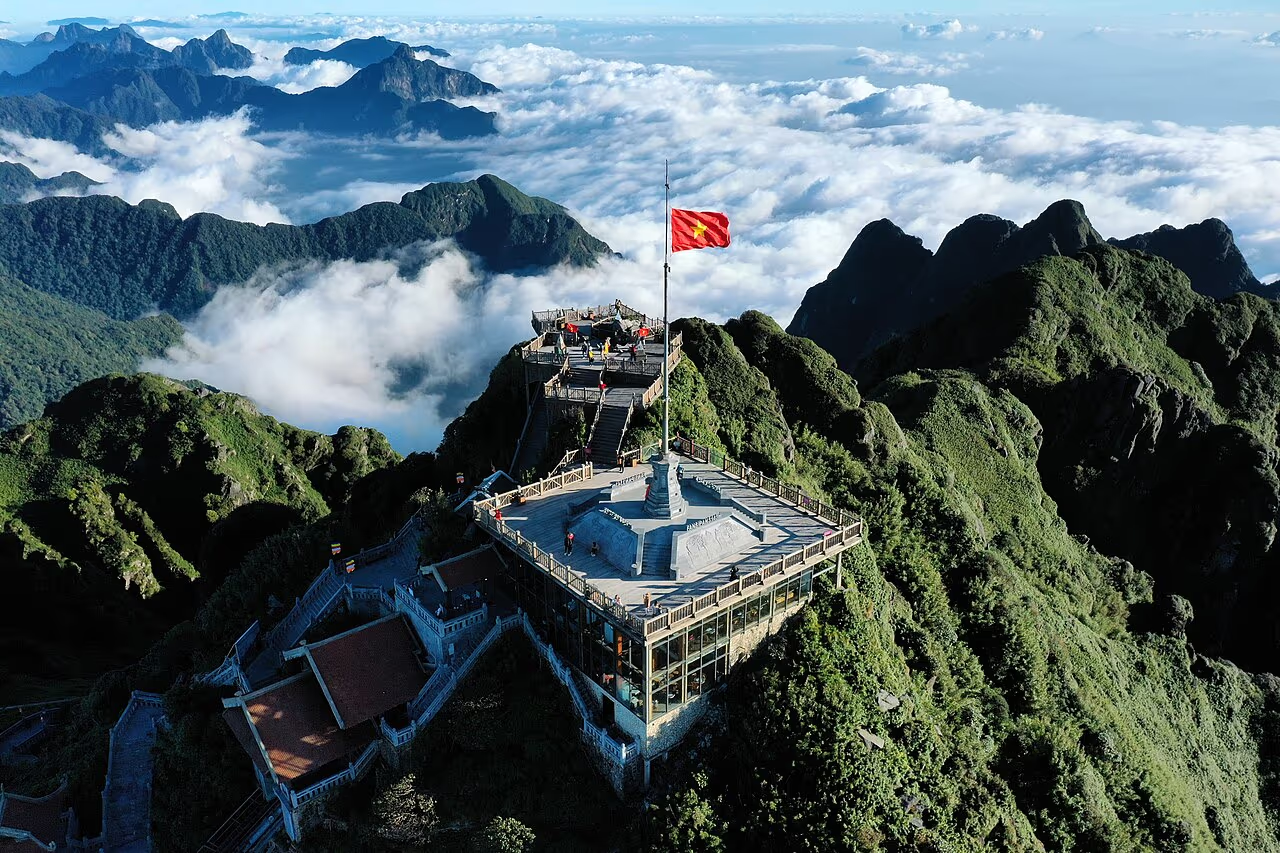
At 3,143 metres, Fansipan is the highest mountain in Vietnam and all of Indochina — "the roof of Indochina". There are two ways up: a tough two-day trek for fit, experienced hikers, or the cable car, one of the world's longest, which whisks you from Sapa to the summit ridge in about fifteen breathtaking minutes. At the top you'll find a complex of temples and, on a clear day, a sea of clouds with mountains floating above it. Go early before the cloud closes in.
Be realistic about which version suits you. The two-day trek to the summit is a serious mountain undertaking — cold, steep and demanding, for fit and experienced hikers only, and far less travelled than it once was now the cable car exists. For everyone else, the cable car is genuinely spectacular and not a cop-out: the ride itself, gliding over the Muong Hoa Valley with the terraces far below, is half the experience. Either way, Fansipan is an add-on to Sapa, not the main event — the valley treks are what most people come for.
4. Experience a Hill-Tribe Market
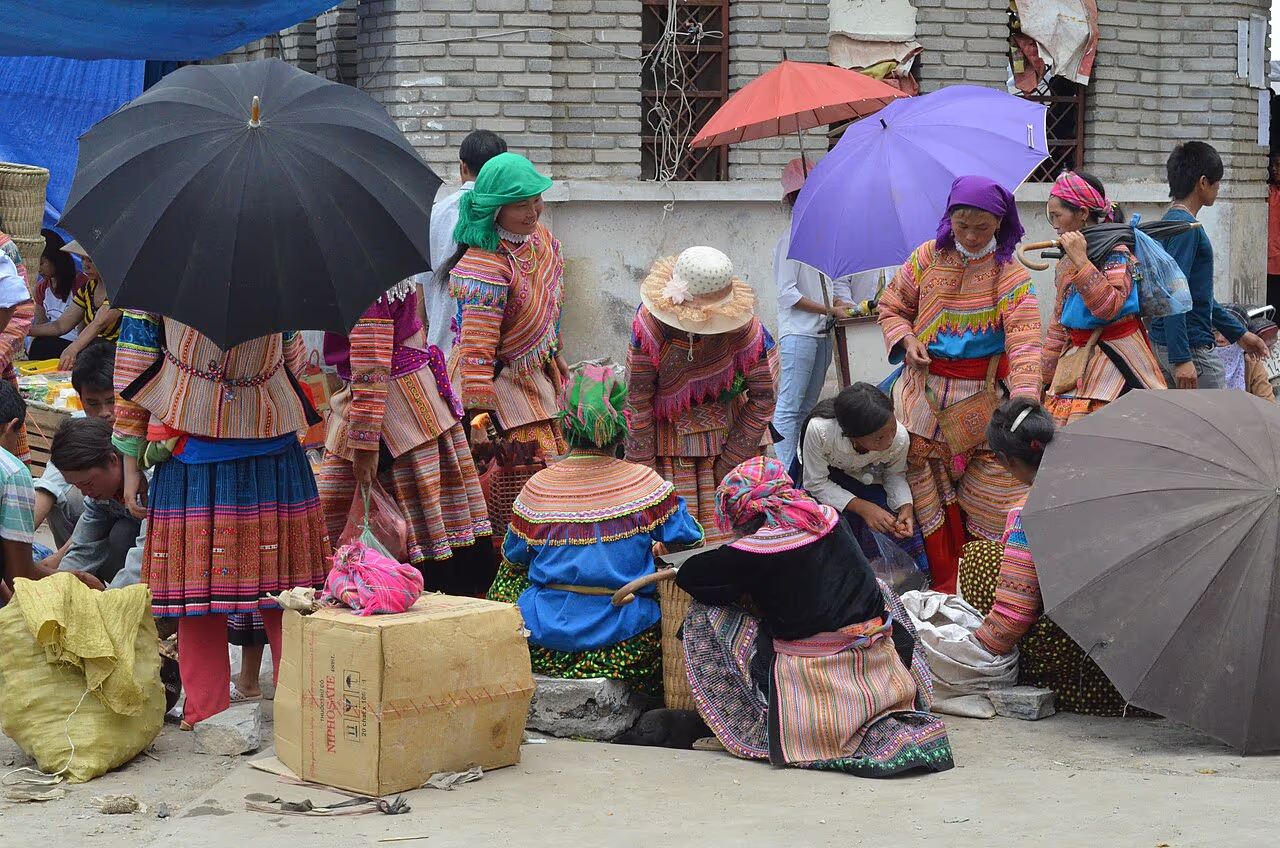
The markets are a riot of colour and the social heartbeat of the highlands. The most famous is the Bac Ha Sunday market, a couple of hours from Sapa, where Flower H'mong families in dazzling embroidered dress gather to trade everything from buffalo to brocade. Closer to town, the Sapa and Ta Phin markets, and the Tuesday Coc Ly and Saturday Can Cau markets, each have their own rhythm. Go early, buy a little, and ask before photographing people.
A note on which market to choose. Bac Ha (Sunday only) is the biggest and most colourful and worth the early start if your dates line up. If they don't, the smaller markets — Can Cau on Saturdays, Coc Ly on Tuesdays, and the daily activity in Sapa and Ta Phin — each offer a glimpse of the same trading culture with fewer tour buses. Markets are working events, not performances: the best way to experience one is to buy something, eat something, and let the morning unfold rather than treating it as a photo opportunity.
5. Explore Sapa Town & the Easy Sights
Sapa town itself is worth a wander for its cool air, its lake, the old stone church, and the buzz of the evening market. For gentle half-day outings close to town, Cat Cat village (a short, paved walk to a waterfall, though touristy), the Silver Waterfall (Thac Bac), and Ham Rong Mountain's flower gardens with their town views are all easy options — handy if you have limited time or energy, or are travelling with small children. Just don't let the town be all you see.
Which Sapa Trek? (Our Tours Compared)
The big question for most visitors is which trek to do. Here are our most popular options side by side, so you can match one to your fitness, your time and your travel style.
| Trek | Difficulty | Length | From | Best for |
|---|---|---|---|---|
| Easy Trek for Seniors | Very Easy | 1 day | $45 | 60+, families, gentle pace |
| Rice Terraced Fields | Easy | 1 day | $35 | First-timers, day visitors |
| Rice Fields & Homestay | Moderate | 2D / 1N | $60 | The full experience + a village night |
| The Real Sapa | Moderate | 3D / 2N | $153 | Deeper, quieter valleys & culture |
All our treks run in small groups (max 12), include a local guide and a home-cooked lunch, and start with hotel pickup in Sapa town. Not sure which fits? The personas below point you to the right one.
One thing worth saying plainly: the price differences are small, and the value is enormous. A full day in the mountains with a licensed local guide and a home-cooked lunch in a family's kitchen, in a small group, costs about the same as a single restaurant dinner back home. Sapa is one of the best-value world-class experiences anywhere — so choose your trek by the experience you want, not by saving a few dollars.
Which Sapa Trip Is Right for You?
Find the traveler that sounds most like you, and the trek that suits them best.
If you straddle two of these — a fit family, say, or a first-timer who also wants a homestay — the 2-day trek is the most popular all-rounder, and we're always happy to tailor the pace and route to your group. There's no single "right" trek; there's the one that fits how you like to travel.
The First-Timer
Families & Seniors
The Culture Seeker
The Adventurer
"We'd read that Sapa was 'too touristy' and almost skipped it. So wrong. The town is busy, sure — but ten minutes into the trek we were alone on a trail above the terraces with our H'mong guide, and by lunch we were eating with her family in their kitchen. Easily the best day of our month in Vietnam."
— Daniel & Priya S., Toronto, Canada (October 2025)
The People & Culture of Sapa
Sapa's scenery would be beautiful empty, but it's the people who make it unforgettable. The terraces you walk through were carved by hand over generations by the ethnic-minority communities who still farm them — the Black H'mong, Red Dao, Giay, Tay and Xa Pho. Each has its own language, dress, architecture and customs, often living in villages a short walk apart, which makes this one of the most culturally rich corners of Southeast Asia.
Travelling here thoughtfully matters. The women who guide treks, weave the hemp and sell handicrafts are the backbone of the local economy, and choosing community-rooted guides, buying directly from makers, and accepting a family's hospitality with respect all help keep tourism a force for good in the valleys. It's also simply the richer way to travel: the conversations on the trail and around the dinner table are, for most of our guests, the heart of the whole trip.
If you can time it, the local festivals are extraordinary. The Sapa area comes alive around Tet (late January or February) and for events like the H'mong and Dao spring festivals, the "Love Market" courting traditions, and harvest celebrations in autumn — full of colour, music and ritual. You don't need to plan around them, but landing on a festival or a big market day adds a whole extra layer to a visit.
What to Eat in Sapa
Mountain cooking is hearty and distinctive up here. The signature dish is thang co, a traditional H'mong stew, though more approachable highland favourites include com lam (sticky rice grilled in bamboo), cap nach ("armpit" pig — small free-range pork, grilled), fresh salmon and sturgeon hotpot (farmed in Sapa's cold streams), and stacks of colourful steamed corn and sweet potato sold at every market. Wash it down with sweet-corn wine if you're brave.
The best meals, though, are the ones on the trail: a home-cooked lunch in a family's kitchen — garden vegetables, river fish, rice, and an omelette over an open fire — eaten with your guide and the family who grew most of it. It's simple, fresh, and the kind of meal you can't buy in a restaurant. It comes included on every one of our treks.
In town, the dining scene has grown a lot: you'll find everything from cosy hotpot restaurants and H'mong-run eateries to cafes with valley views serving Western comfort food and good Vietnamese coffee. After a day on the trail, a hotpot of Sapa salmon by a warm stove, or a bowl of pho and a strong ca phe sua da, hits exactly right. Self-caterers and snackers will love the evening market stalls grilling skewers, eggs and sweet potatoes.
When to Visit Sapa (Month by Month)
Sapa is a year-round destination, but the experience changes dramatically with the seasons. Here's the honest month-by-month, colour-coded so you can plan around the weather and the rice.
September to November is the golden window — literally: the rice ripens to amber for the harvest, the skies clear, and the air is crisp and cool. March to May is the lovely runner-up, with the terraces flooded and mirror-like in May as planting begins. Summer (June to August) is the greenest but also the wettest, with afternoon downpours, while winter (December to February) turns Sapa genuinely cold and foggy — beautiful, atmospheric, and on rare days dusted with frost or snow. Whenever you come, bring warm layers: it's always cooler up here than in Hanoi.
A note for photographers and rice-chasers specifically: the terraces change character completely through the year, so time your trip to the look you want. Want the famous gold? Come in the last two weeks of September. Want the mirror-like flooded terraces reflecting the sky? Late May into early June, as planting begins. Want vivid, jungle-green hillsides? July and August, if you can take the rain. There is no single "best" — only the version of Sapa you most want to see.
How to Get to Sapa
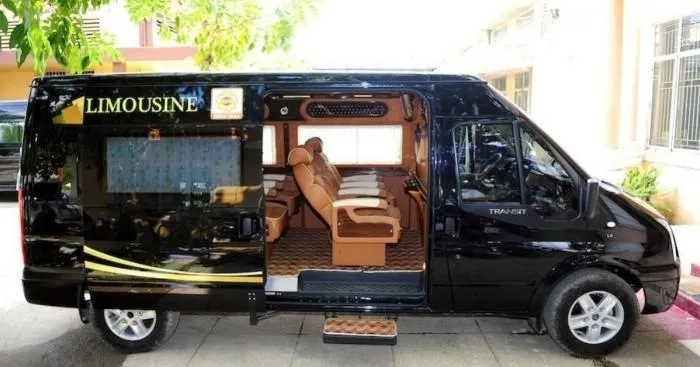
Sapa is about 320 km north-west of Hanoi, and there's no airport — you travel overland, which is half the adventure. The most popular options are the overnight sleeper bus (leave Hanoi in the evening, wake in the mountains, and save a night's hotel) and the more comfortable limousine van (reclining seats, fewer passengers, about 5.5 hours by day). There's also the romantic night train to Lao Cai, an hour below Sapa by road. Whichever you choose, the Hanoi–Sapa leg is the one journey worth booking as a proper, comfortable transfer so you arrive rested and ready to walk.
A practical sequence many travelers use: take the night bus or train up to Sapa, trek for a day or two with a homestay, then travel back to Hanoi on a second overnight service — so the two long journeys cost you no daylight at all. From Hanoi, Sapa also slots neatly alongside Ninh Binh and a Ha Long Bay cruise to make a complete week in the north. However you arrive, give yourself the morning after to ease into the altitude and the cool air before you set off.
Getting around Sapa itself is easy. The town is small and walkable; for the trailheads and nearby sights, your trek includes transport, and otherwise taxis, Grab and rented motorbikes are all available. You won't need your own wheels if you're trekking with us — pickup and drop-off in town are part of every tour, so you can leave the logistics to your guide and just enjoy the mountains.
The Comfortable Way to the Mountains

Where to Stay in Sapa
Where you sleep shapes the trip. Sapa town has the widest choice — from backpacker hostels to luxury hotels with valley views — and is convenient for transport, restaurants and easy sights, though it's busy and built-up. For something quieter and more scenic, a growing number of boutique eco-lodges sit on the hillsides just outside town with sweeping terrace views. But the most memorable option is a village homestay on a 2-day trek: a simple, comfortable bed in a family's stilt house, a home-cooked dinner, and a morning waking to mist over the rice. It's the single best way to experience the real Sapa, and it's built into our overnight treks.
Whichever you pick, book ahead for the peak months (September to November and around holidays), when the best rooms and homestays fill quickly. If you're doing one of our overnight treks, the homestay is arranged for you as part of the trip — a vetted family home, clean and comfortable, with dinner and breakfast included, so you get the authentic experience without the guesswork of booking it yourself.
What to Pack for Sapa
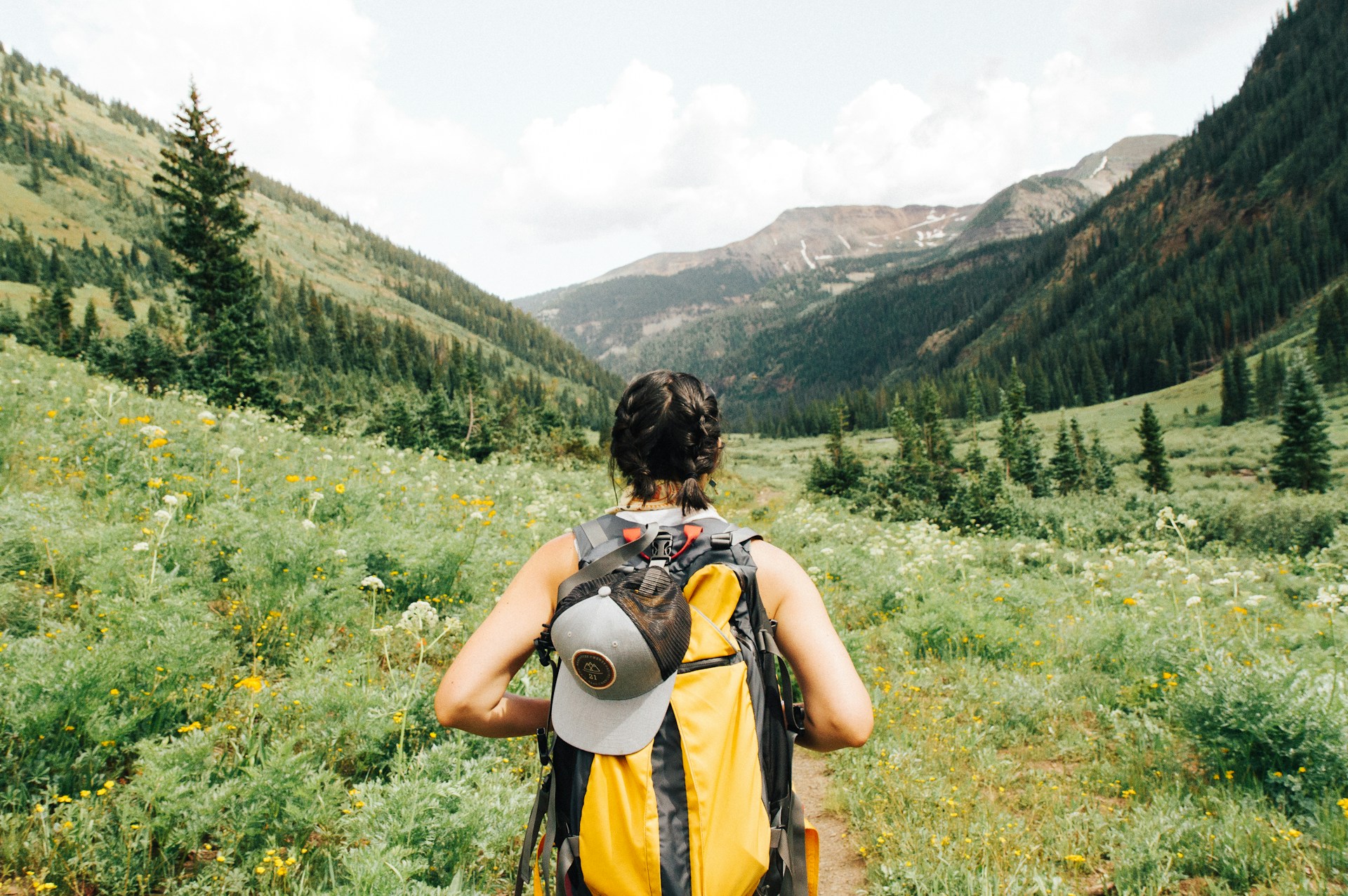
Sapa's mountain weather is changeable, so pack for cool and wet even in summer: warm layers and a light jacket, a rain poncho, sun protection, and a small daypack with water. The most important item is footwear — the valley trails turn to slick clay after rain, and proper boots make all the difference. You don't need to fly with them, though: rent good waterproof boots and trekking poles at our office in town the day before you trek.
A short checklist for the trek itself: comfortable layers you can add and remove, a rain poncho (Sapa's weather turns fast), sun protection, a hat, a small daypack with 1.5–2 litres of water, any personal medication, and a little cash for drinks or market buys. Leave the heavy luggage at your hotel in town — you only need a daypack on the trail, and on an overnight trek your homestay provides bedding and meals.
Boots & Poles, Rented in Town
 Gear Rental
Trekking Boots Rental
Waterproof ankle-support boots, cleaned and checked before each rental. At 105 Thach Son Street.
 Gear Rental
Walking Poles Rental
Trekking poles at $2/day from our office at 105 Thach Son Street. Essential for the descents.
Sapa Travel Tips
- Get out of town. The town is busy; the magic is in the valleys. Spend your time trekking, not shopping.
- Trek with a local guide. The best trails are unmarked, the weather turns fast, and a guide's family welcome is the heart of the experience.
- Take the night transfer. An overnight sleeper bus or train saves a day and a hotel night — you wake up in the mountains.
- Always pack a layer and a poncho. Sapa is cool to cold year-round and the weather changes by the hour.
- Time it for the harvest. Late September turns the terraces gold — the most spectacular few weeks of the year.
- Book small-group treks ahead. Our groups cap at 12 and fill up in peak season — we confirm availability on WhatsApp in 5–10 minutes.