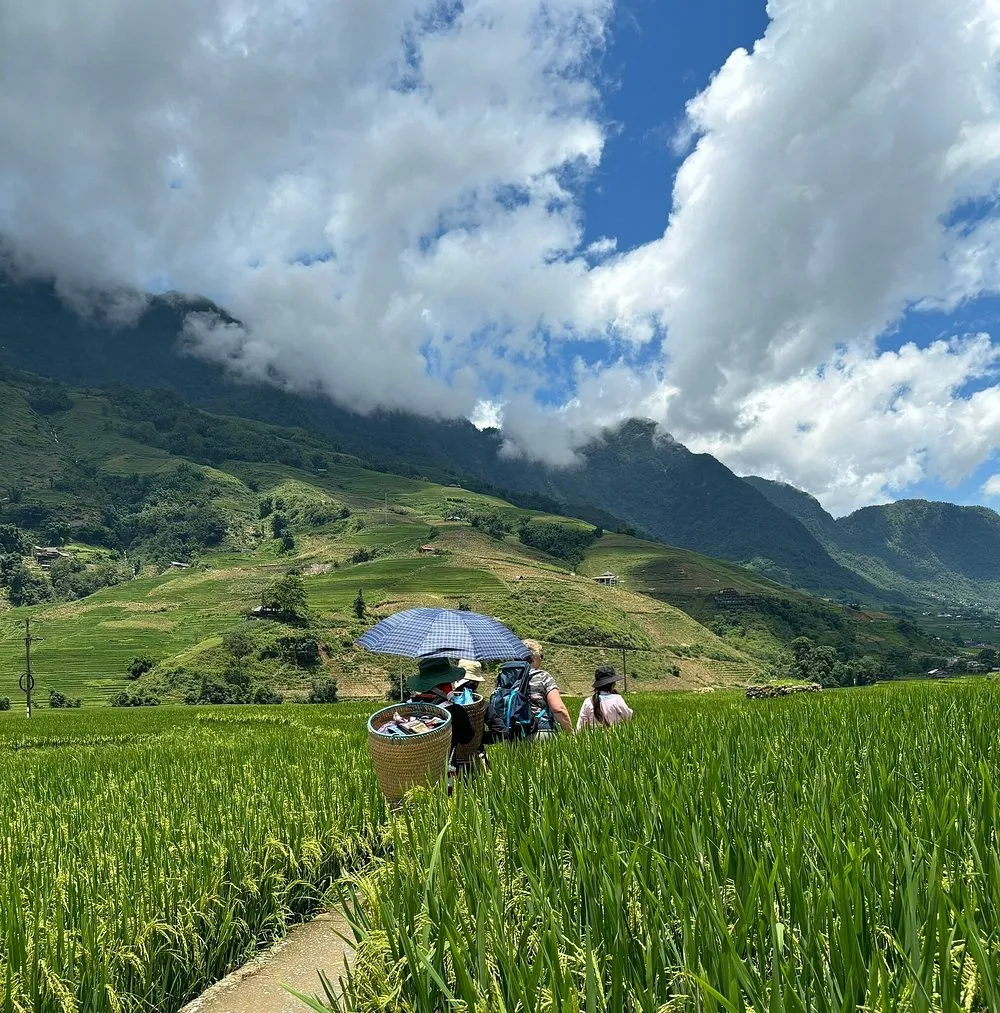
 Sinh Giang
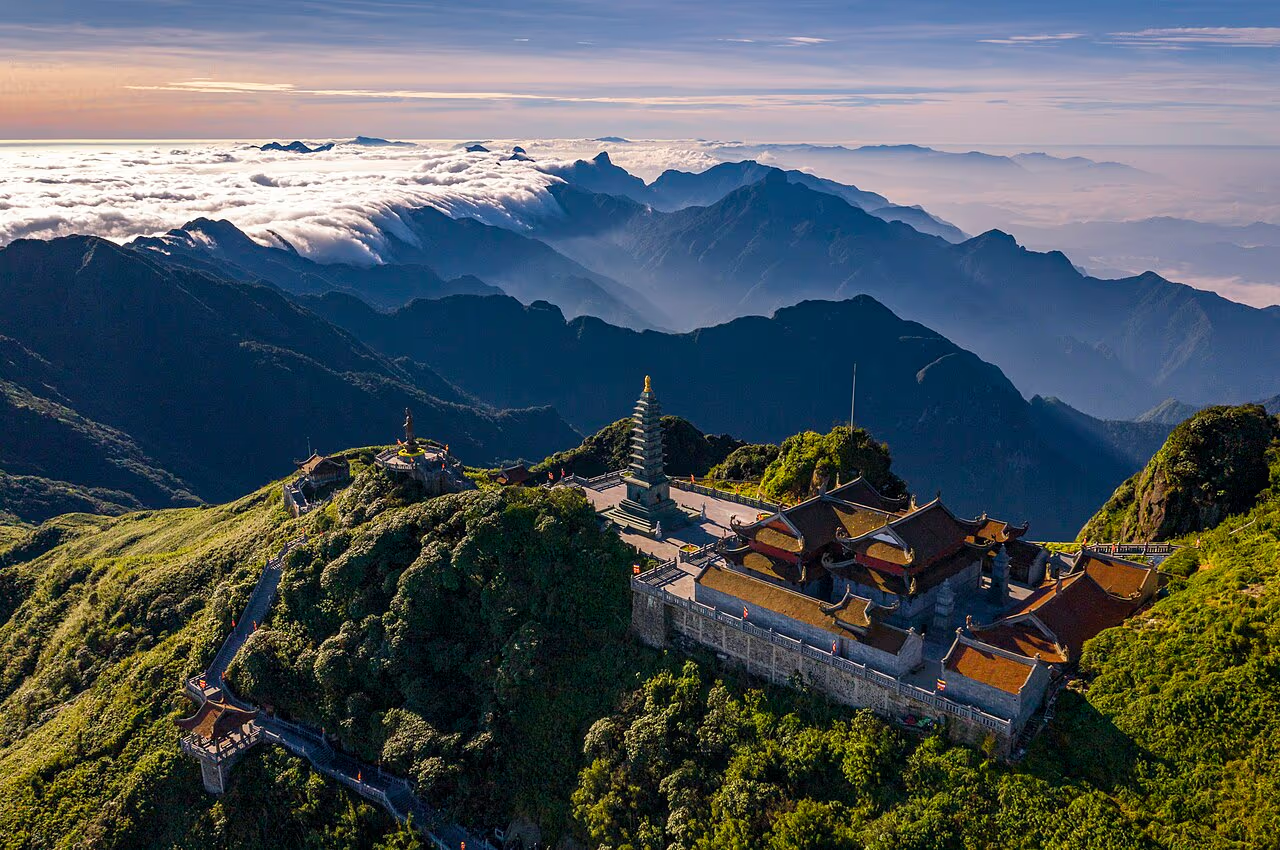
Fansipan is the highest mountain in Vietnam — and in all of Indochina — rising to 3,143 metres (10,312 feet) above the town of Sapa. They call it "the Roof of Indochina", because no point in Vietnam, Laos or Cambodia stands higher. On a clear morning the summit floats above a sea of clouds, with the Hoang Lien Son range rolling away in every direction; it's one of the great views in Southeast Asia.
For decades, reaching that summit meant a hard two-day trek through montane forest — the preserve of fit, determined hikers. Today there are two very different ways up: that same classic trek, or a record-breaking cable car that lifts you from Sapa to the summit ridge in about fifteen minutes. This guide covers both honestly, so you can choose the one that's right for you.
We're a local trekking company based in Sapa, at the foot of the mountain, and we've guided travelers up Fansipan both on foot and by cable car for years. So here's the straight version: what Fansipan is, how to get to the top whichever way suits you, what you'll actually find up there, when to go, and how to make the most of the Roof of Indochina.
One thing to set expectations on first: Fansipan today is two experiences in one. For the adventurous, it's still a tough wilderness trek through one of Vietnam's last great montane forests. For everyone else, it's now a remarkably accessible day out, thanks to the cable car and the sprawling spiritual park at the top. Neither is "the real Fansipan" — they're just different doors to the same summit, and the right one depends entirely on what kind of traveler you are.
For context, Fansipan towers over Sapa by more than 1,500 metres — the town sits at around 1,600 m, the summit at 3,143 m — which is why the air at the top is so much colder and thinner, and why the mountain so often wears a cap of cloud while the valley below is clear. Understanding that vertical gulf is the key to planning your visit: dress for a different climate than the one you left in town, and treat the weather at the top as its own thing entirely.
Fansipan Fast Facts
Everything you need to know about the mountain at a glance.
Two Ways Up Fansipan
There are two ways to stand on the Roof of Indochina: ride the cable car, or trek up on foot. They're completely different experiences, and the right one depends on your fitness, your time and what you're after. Here they are side by side.
| Cable Car | Trekking | |
|---|---|---|
| Time to the top | ~15–20 minutes | 1–2 days |
| Difficulty | Very easy | Hard |
| Fitness needed | Almost none | Good — experienced hikers |
| From | ~$30 (ticket) | ~$65–120 (guided) |
| Best for | Most visitors, families, short on time | Fit adventurers chasing the challenge |
| The reward | The same summit & views, effortlessly | Forest, solitude & a real sense of achievement |
The honest truth: the cable car reaches the same summit as the trek, in a fraction of the time and effort, which is why the great majority of visitors now take it. The trek is for those who want the journey itself — the forest, the camp, the dawn push — more than just the view from the top.
It's worth being clear-eyed about what each one gives you. The cable car delivers the summit, the altitude and the views with almost no effort — perfect if you're short on time, travelling with kids or older relatives, or simply not a hiker. The trek delivers something the cable car can't: the forest, the quiet, the burn in your legs, and the particular satisfaction of having walked to the highest point in the country. If that distinction matters to you, you already know which one you want.
A popular hybrid deserves a mention: trek up and ride the cable car down. Fit hikers who want the forest and the achievement but not the punishing descent (which is hard on the knees) climb to the summit on foot over one long day or two, then take the cable car back to Sapa in fifteen comfortable minutes. It is the best of both worlds for many, and your guide can arrange it — you simply buy a one-way descent ticket at the top.
Is the Summit Right for You?
Fansipan is spectacular — but it isn't a must-do for every traveler. Here's an honest gut-check before you commit a half-day and a ticket.
Go up Fansipan if you…
Maybe skip it if you…
The Cable Car Experience
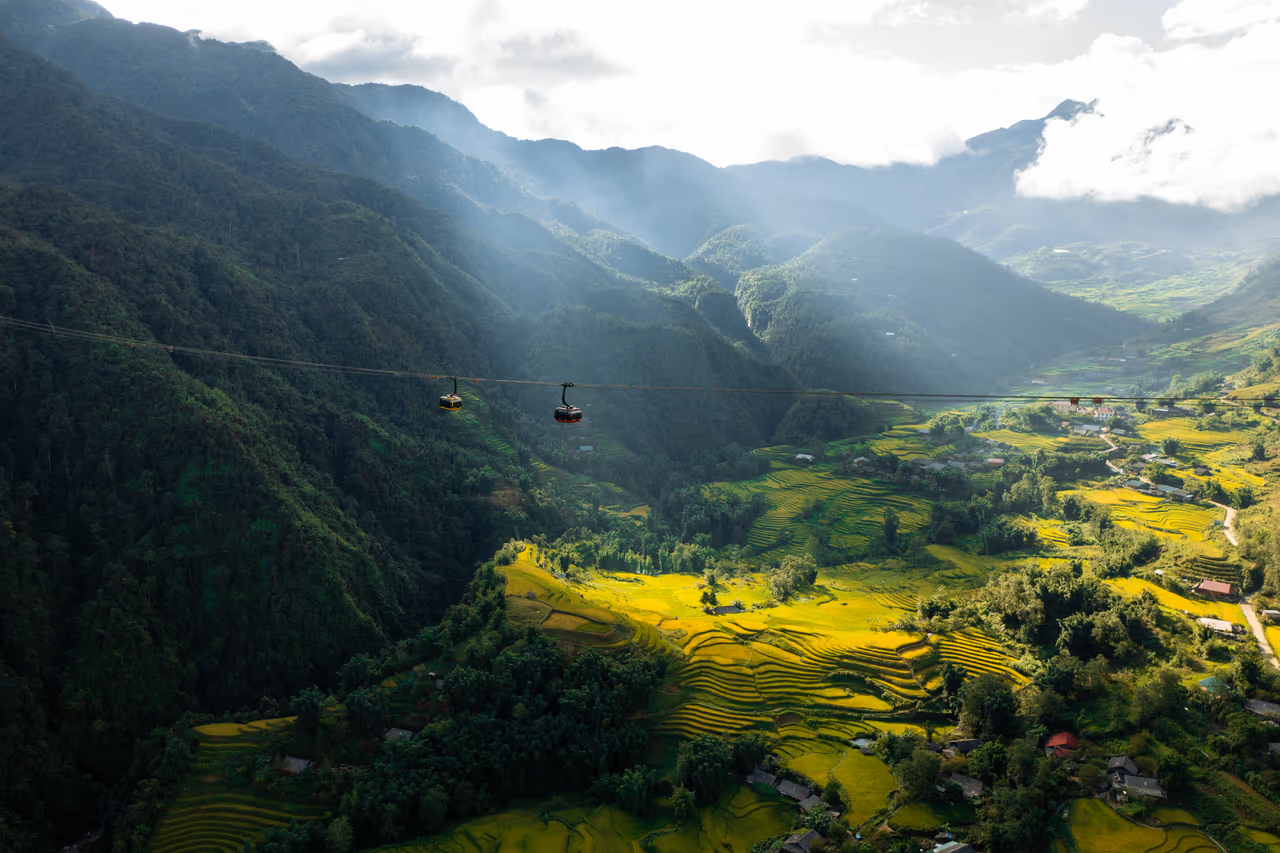
The Fansipan Legend cable car opened in 2016 and broke two Guinness World Records at the time, including the greatest elevation difference of any three-rope cable car. It climbs roughly 6.3 km from the Sun World station in Sapa to the summit ridge in about fifteen to twenty minutes, soaring over the Muong Hoa Valley with its terraces and the green flanks of the mountain below — the ride itself is genuinely spectacular, not just a means to an end.
At the top station you're at around 3,000 m; from there it's a short funicular or a climb of roughly 600 stone steps to the very summit. The whole complex — with its giant bronze Buddha, pagodas and landscaped walkways — is run by Sun World, and a ticket covers the cable car (the funicular and some attractions are extra). It's effortless, family-friendly, and gets you to the same summit as the trek without the sweat.
Practically, the cable car runs daily from around 7:30am, and a round-trip adult ticket is roughly 800,000 VND (about $30 USD), with reduced rates for children and seniors; the little funicular train from the upper station to the summit steps is a small extra. Allow two to four hours for an unhurried visit. The complex has cafes, restrooms and viewpoints, so you can take your time — though on busy weekends and Vietnamese holidays, expect queues both for the cable car and the funicular, and aim for the first departures of the day.
Getting to the cable car is simple: the Sun World Fansipan Legend station sits at the southern edge of Sapa town, a short walk or quick taxi from most hotels, and a charming little mountain railway also runs from the town centre to the station if you fancy it. Buy tickets at the station or online; there is no need for a guide or any booking for the cable car itself. It is genuinely a turn-up-and-go attraction, which is a big part of its appeal.
Why take the cable car
- Summit in ~15–20 minutes — no fitness required
- Works for all ages, from kids to grandparents
- The same summit and views as the trek
- Runs in most weather, even when trails are closed
- The ride over the valley is a highlight in itself
Things to know
- Queues can be long on weekends and holidays
- Still ~600 steps (or a paid funicular) to the true summit
- If it's fogged in, you'll see little — check the forecast
- It's a built-up, commercial complex, not wild nature
- The view is "given", not "earned" — some miss that
Trekking to the Summit
Trekking Fansipan is a serious mountain undertaking and a genuine achievement. The classic route starts at the Tram Ton Pass and climbs through layers of montane forest — bamboo, rhododendron, moss-draped old trees — before breaking out onto the exposed, rocky summit ridge. It's cold, steep and often wet underfoot, and it should only be attempted with a guide and decent fitness. Done right, it's unforgettable: the forest, the silence, and a dawn arrival at the top before the cable-car crowds.
Be honest with yourself about fitness before committing. This is not a walk-up: you're gaining well over a kilometre of altitude on steep, root-tangled, frequently muddy trail, often in cloud and cold, with a night in a basic mountain camp. Reasonably fit, regular hikers will find it tough but achievable; if you don't hike regularly, the cable car is the wiser choice and there's no shame in it. Either way, the mountain sits inside Hoang Lien National Park and a permit and licensed guide are required to trek.
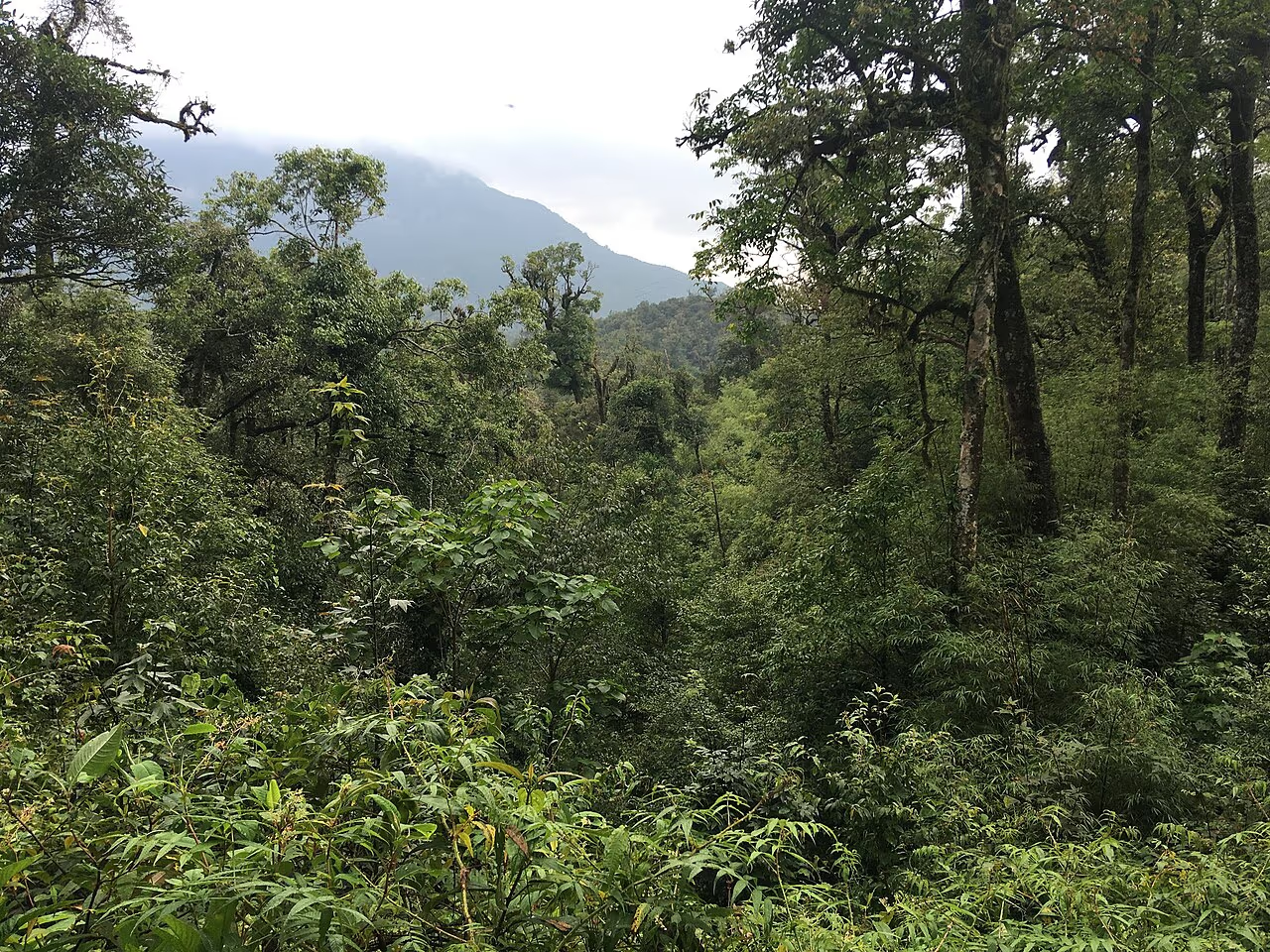
Most people do it over two days with a night camping on the mountain, though very fit hikers can do a long single day (often trekking up and riding the cable car down). Here's the classic two-day shape:
If the summit trek sounds like your kind of challenge, our guided Fansipan treks include an experienced local guide, permits, camping gear and meals — everything but your boots. Not sure you're up for two hard days? A gentler valley trek delivers Sapa's famous scenery with far less effort.
What's included matters when you compare trek prices. A proper guided Fansipan trek should cover the national park permit, an experienced local guide, porters carrying the camping gear and food, tents and sleeping equipment at the camp, and all meals on the mountain — so the figure you pay is close to all-in. Cheaper "deals" sometimes leave out the permit or the gear, so always ask exactly what's covered before you book, and make sure your guide is properly licensed for the park.
What's at the Top
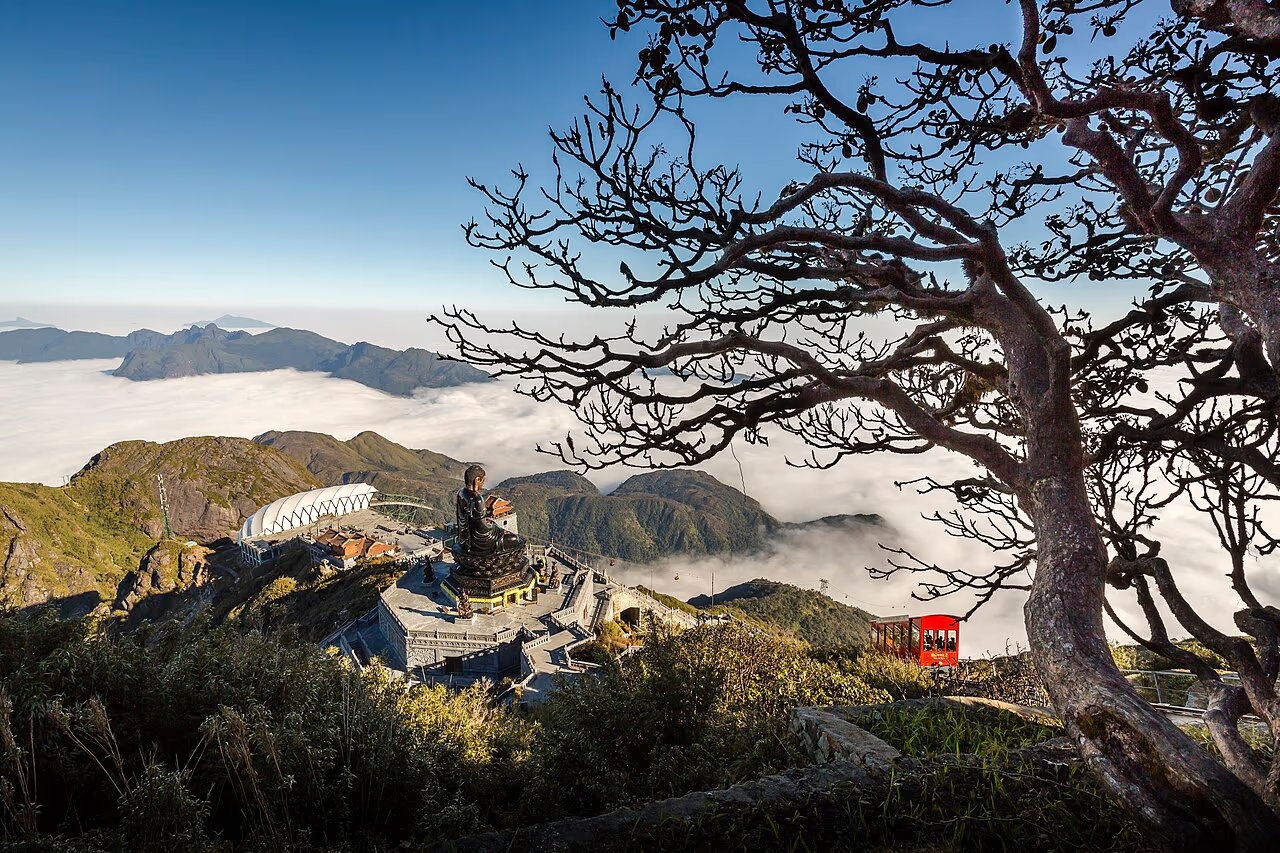
However you get there, the summit itself is a surreal mix of wild mountain and grand monument. The true high point is marked by a stainless-steel pyramid reading "Fansipan 3,143m" — the photo every visitor wants. Around and below it spreads the Sun World spiritual complex: a towering bronze Buddha (one of the tallest in Vietnam), tiered pagodas, bell towers and stone stairways winding across the ridge, often half-wrapped in drifting cloud.
The spiritual complex deserves a slow look rather than a quick photo. Built into the ridge below the summit, it includes the towering Buddha Amitabha statue, the Bich Van pagoda, a great bronze bell, and a path of arhat statues, all linked by stone stairways that thread along the mountain spine. Whatever you make of building it up here, it's undeniably dramatic, especially when the cloud rolls through and the rooflines and statues appear and vanish in the mist. Give yourself time to walk the whole ridge, not just dash to the marker.
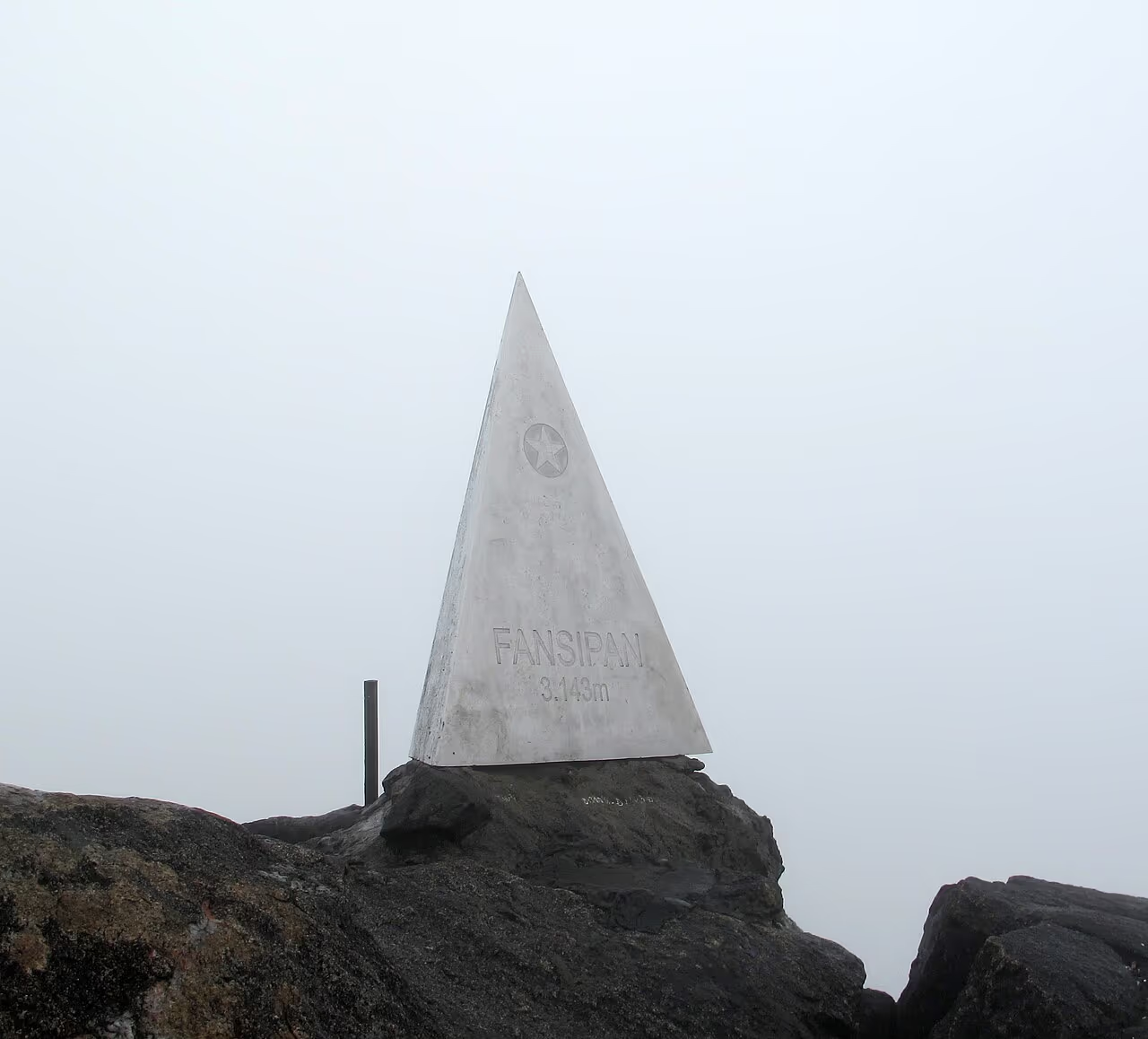
On a clear day the reward is the view: an endless sea of clouds with the peaks of the Hoang Lien Son rising through it like islands, and the Muong Hoa Valley far below. It's worth knowing that the weather is fickle up here — the summit is in cloud much of the time — so an early start gives you the best odds of a clear window before the midday mist and crowds roll in.
And manage your expectations about the view: Fansipan is clouded over far more often than it is clear, sometimes for days at a stretch, so a totally socked-in summit is a real possibility on any given visit. There's no way to guarantee it, but your odds are best in the dry months, early in the morning, after a clear night. If you have a few days in Sapa and flexibility, simply wait for the clearest morning of your stay — that patience is often the difference between a white-out and the view of a lifetime.
If the summit does happen to be clouded over on your visit, do not despair — the complex itself, with its statues and pagodas materialising out of the mist, is atmospheric in its own right, and the cable car ride below the cloud base is often clear and beautiful even when the very top is not. Many travelers come away from a misty summit having enjoyed it anyway. It is the trek, more than the cable car, where a total white-out really stings, because you have worked so hard for the view.
Fansipan: Name, History & Meaning
The name "Fansipan" is thought to come from "Hua Xi Pan" in the local language, often translated as "the tottering giant rock" — a fitting description for the great block of granite that tops the Hoang Lien Son. The range itself is sometimes called the Tonkinese Alps, a spur of the eastern Himalayas, and Fansipan is its high point. Geologically it's old, weathered rock; ecologically it's a treasure, with the upper slopes protected as Hoang Lien National Park for their rare montane forest, orchids and wildlife.
The first recorded ascent came in 1905, when a French colonial survey team reached the top during the mapping of Indochina. For most of the twentieth century the summit stayed the preserve of scientists, soldiers and a trickle of hardy trekkers. That changed dramatically in 2016, when the Sun World cable car opened and, almost overnight, turned a two-day expedition into a fifteen-minute ride — transforming Fansipan from a mountaineer's challenge into one of Vietnam's most visited attractions.
That transformation is part of the story you should understand before you go. To some, the cable car and the temple complex made a sacred wilderness too commercial; to others, they opened an extraordinary place to elderly parents, young children and travelers who could never have trekked it. Both views are fair. What's certain is that Fansipan still means something to Vietnamese visitors — a point of national pride, the very top of the country — and standing there, however you arrive, you feel it.
For Vietnamese travelers especially, reaching Fansipan carries real weight — it features on bucket lists and school trips alike, and the summit marker is one of the most photographed spots in the country. Knowing that adds something to the experience: you are not just ticking off a viewpoint, you are standing on a place that an entire nation regards as its rooftop. It is one of those rare attractions that is both a natural wonder and a cultural one at the same time.
Best Time to Climb Fansipan
The best months for Fansipan are September to November and March to May — the dry seasons, when you get the clearest skies and the best chance of that sea-of-clouds view. Autumn (Sep–Nov) is the most reliable, with crisp air and stable weather; spring brings blooming rhododendrons on the higher slopes. These are also the only sensible windows for trekking, when the trails are driest and safest.
Avoid the summer wet season (June to August) for trekking — heavy rain makes the trail slippery and dangerous and the views are often socked in (though the cable car still runs). Winter (December to February) is dry but bitterly cold at the top, occasionally dusting the summit with frost or even snow, which draws Vietnamese visitors hoping to see it. Whenever you go, go early in the day for the clearest skies.
Getting to Sapa & Fansipan
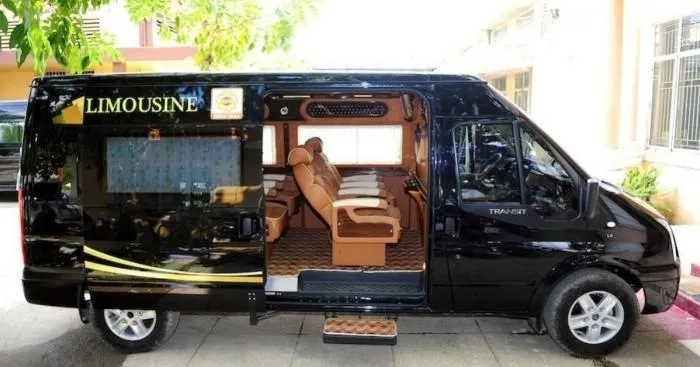
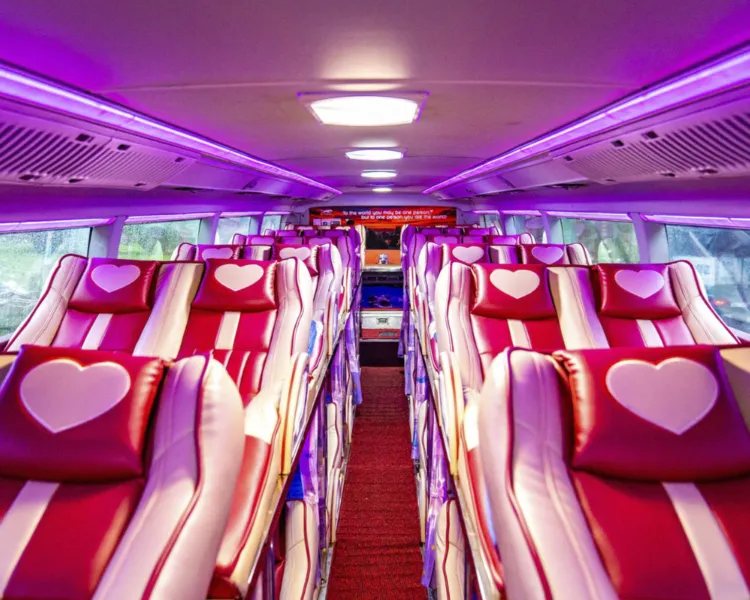
Fansipan rises right beside Sapa town, so getting to the mountain means getting to Sapa first. There's no airport — you travel overland from Hanoi, about 320 km (5–6 hours) by road. The cable car's Sun World station is at the edge of Sapa town, a short taxi or walk from most hotels; trekkers start a little further out at the Tram Ton Pass. Sort your Hanoi–Sapa transfer first, and the mountain is easy from there.
Once in Sapa, the cable-car station is walkable or a two-minute taxi from the town centre, and trekkers are driven the short way out to the Tram Ton trailhead by their guide. If Fansipan is the main reason for your trip, give yourself at least two nights in Sapa — one to arrive and settle, and a flexible day to pick the clearest weather window for the top. That buffer is the single best thing you can do to avoid a wasted, fogged-in summit visit.
Get to the Mountain in Comfort
What to Pack for Fansipan
Even on the cable car, dress for cold: the summit is around 10–15°C cooler than Sapa town and far cooler than Hanoi, with wind and damp cloud. Bring a warm layer and a windproof or rain jacket, plus sturdy shoes for the steps. If you're trekking, you need proper kit — waterproof boots with ankle support, full waterproofs, warm layers, a headlamp for the dawn summit push, and trekking poles for the steep, slippery descent. You don't have to fly with all of it: rent boots and poles at our office in Sapa the day before.
Boots & Poles, Rented in Town
 Gear Rental
Trekking Boots Rental
Waterproof ankle-support boots, cleaned and checked before each rental. At 105 Thach Son Street.
 Gear Rental
Walking Poles Rental
Trekking poles at $2/day from our office at 105 Thach Son Street. Essential for the descent.
Most travelers pair Fansipan with the real magic of Sapa — trekking the rice terraces and villages of the Muong Hoa Valley with a local guide:
Trek the Valleys Below Fansipan
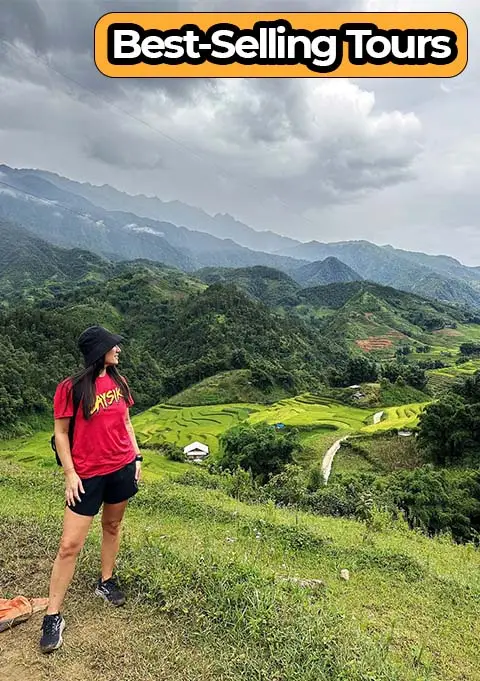 1 Day Trek
Trekking Through Rice Terraced Fields
Muong Hoa Valley with a local guide and a family lunch — the classic Sapa day.
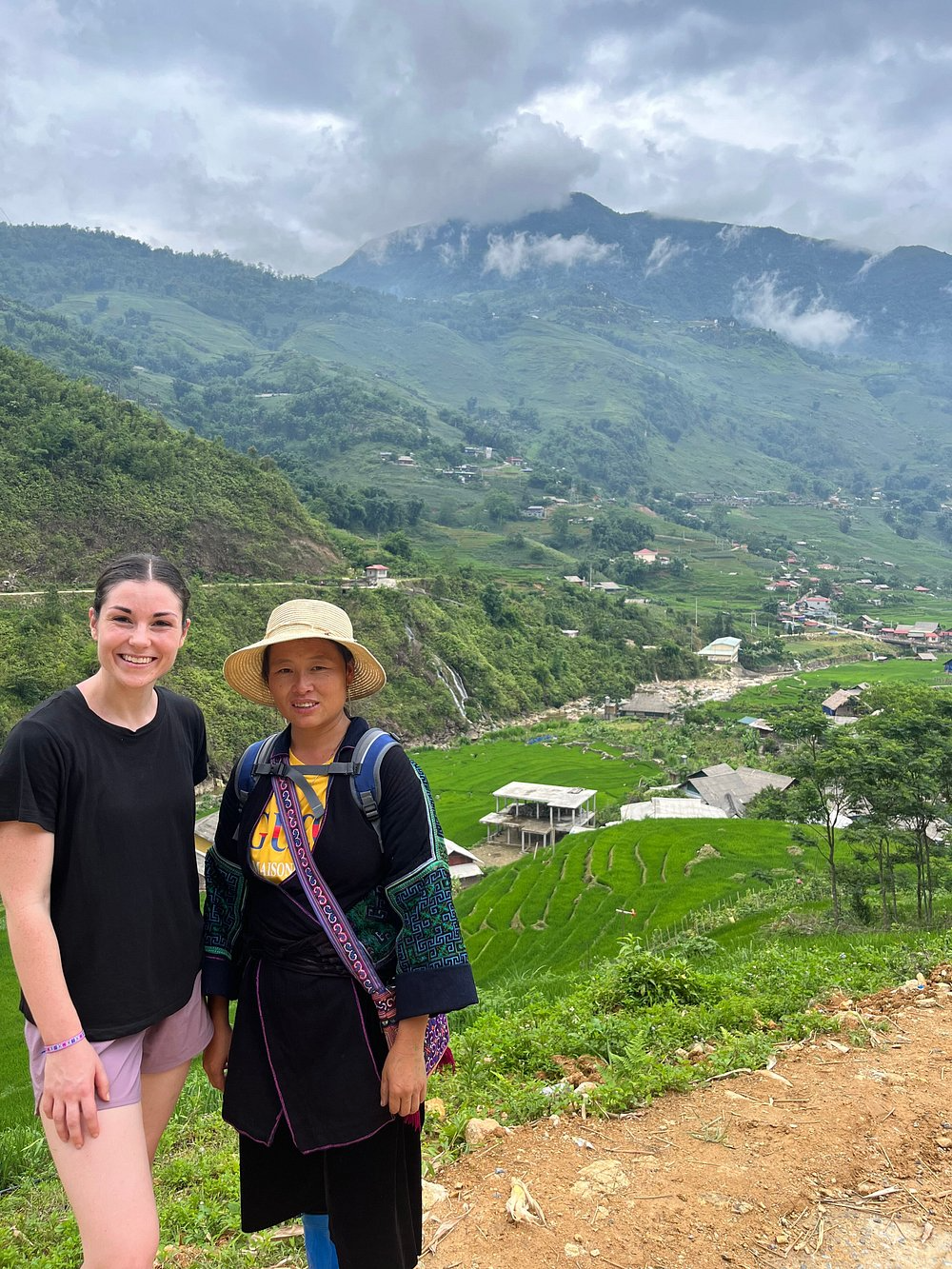 2D1N Homestay
Rice Terraced Fields & Homestay
Two days trekking and a night with a valley family — the full experience.
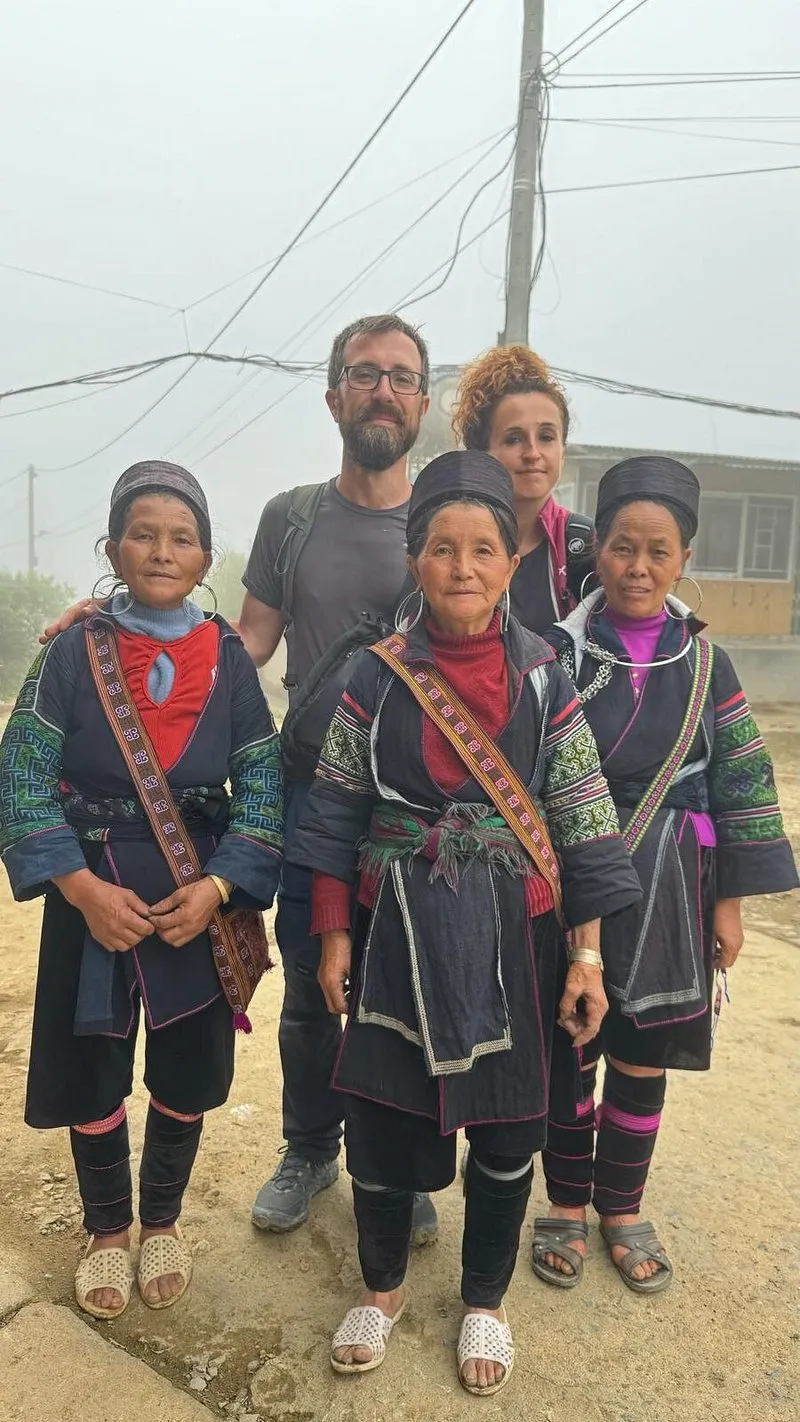 Families & Seniors
Sapa Easy Trekking For Seniors
Gentle, flat paths where poles can be rented at our office — perfect for 60+ travelers and families.
Tips for Your Visit
- Go early. The summit is clearest at dawn and often clouds over by late morning — first cable car or a dawn trek arrival beats the cloud and the crowds.
- Check the forecast. If it's solid fog, you'll see nothing from the top; if you can, be flexible and pick the clearest day of your stay.
- Dress warm, even for the cable car. The summit is much colder than town — a jacket makes the difference between magic and misery.
- Budget for the extras. The funicular from the cable-car station to the very top, and some attractions, cost extra on top of the cable-car ticket.
- Only trek with a guide. The route is steep, remote and weather-exposed — a guided trek (with permits and gear) is the safe, legal way to do it.
- Pair it with a valley trek. Many travelers do Fansipan in half a day and spend the rest of their Sapa time trekking the rice terraces — the part most people remember most.