 Sinh Giang
The best month to visit Vietnam is usually March, with February to April the best overall window for a whole-country trip — the north is dry, the central beaches are in season, and the south is in its dry prime, all with comfortable humidity. But because Vietnam stretches over 1,600 km across three different climates, the single best month really depends on where you are going and what you want to do. If your heart is set on the north and Sapa, the clear skies and golden rice harvest of October and November are just as strong a choice.
This guide gives you a clear, honest answer to the best month to visit Vietnam from every angle: the best months overall, the best month for your travel style (beaches, trekking, budget, festivals), a month-by-month verdict, and the ideal time for each region. We are a local team based in Sapa, guiding here year-round, so these picks reflect what the seasons actually deliver on the ground. Whatever dates you are weighing up, by the end you will know exactly which month suits your trip — here is the full picture.
The Short Answer: The Best Months
If you just want the headline picks before the detail, here they are — the ideal time depends on your priority, and these four cover most trips.
In short: pick February to April if you want the safest weather for a trip spanning the whole country, September to November if the north and Sapa are the focus, the summer if the central beaches are the priority, and the wetter low-season months if value and quiet matter most. The rest of this guide shows you exactly how to match your month to your plans.
Best Month by What You Want
The ideal time to go changes completely depending on your travel style. Find the traveler below who sounds most like you and go with their window.
Beach & sun seeker
Trekker & nature lover
Budget & quiet seeker
Culture & festivals
If more than one of these sounds like you, weight the decision toward whichever region you will spend the most time in — a trekking-and-beach trip, for example, leans on the March–April overlap, when both the northern trails and the central sands are at their best.
Month-by-Month Verdict
Here is a quick verdict on every month for an overall trip, so you can see at a glance how your travel window rates. Remember a "low" overall month can still be perfect in one region — October is difficult on the central coast yet the finest month in the north.
| Month | Overall | In a nutshell |
|---|---|---|
| January | Good | South at its dry-season best; north cold, Sapa foggy but dry. |
| February | Great | Dry nearly everywhere; Tet falls here — magical but book early. |
| March | Best | The single best all-round month — clear, dry, comfortable countrywide. |
| April | Best | Excellent; last of the cool window before the heat, great beaches. |
| May | Mixed | Hot; north's terraces flood to mirrors; south's afternoon rains begin. |
| June | Mixed | Peak central beaches; hot and humid north; brief southern showers. |
| July | Low | Hottest, wettest north; great central beaches; family high season. |
| August | Low | Similar to July; lush green north; late-month it starts to ease. |
| September | Good | North turns clear; Sapa harvest begins; watch central typhoons. |
| October | Great* | Superb in the north (gold harvest); wettest on the central coast. |
| November | Great | North crisp & clear, south drying out; centre still wet early. |
| December | Good | South in festive-season prime; north cold, Sapa foggy. |
*October is rated for the country as a whole; for the north alone it is one of the very best months of the year. The clear pattern is that February to April and the northern autumn (October to November) are the standout windows, while the deep-summer months trade weather for value and quiet.
The reason there is no single perfect month is simple geography: Vietnam runs more than 1,600 km from the mountains of the far north to the tropical Mekong Delta, crossing three separate climate zones that are often out of sync. When the north is basking in clear autumn skies, the central coast can be flooding; when the central beaches are at their sunny peak in June, the north is hot and wet. So rather than hunting for one flawless month, use the table above to find the window that best fits the specific mix of places on your list.
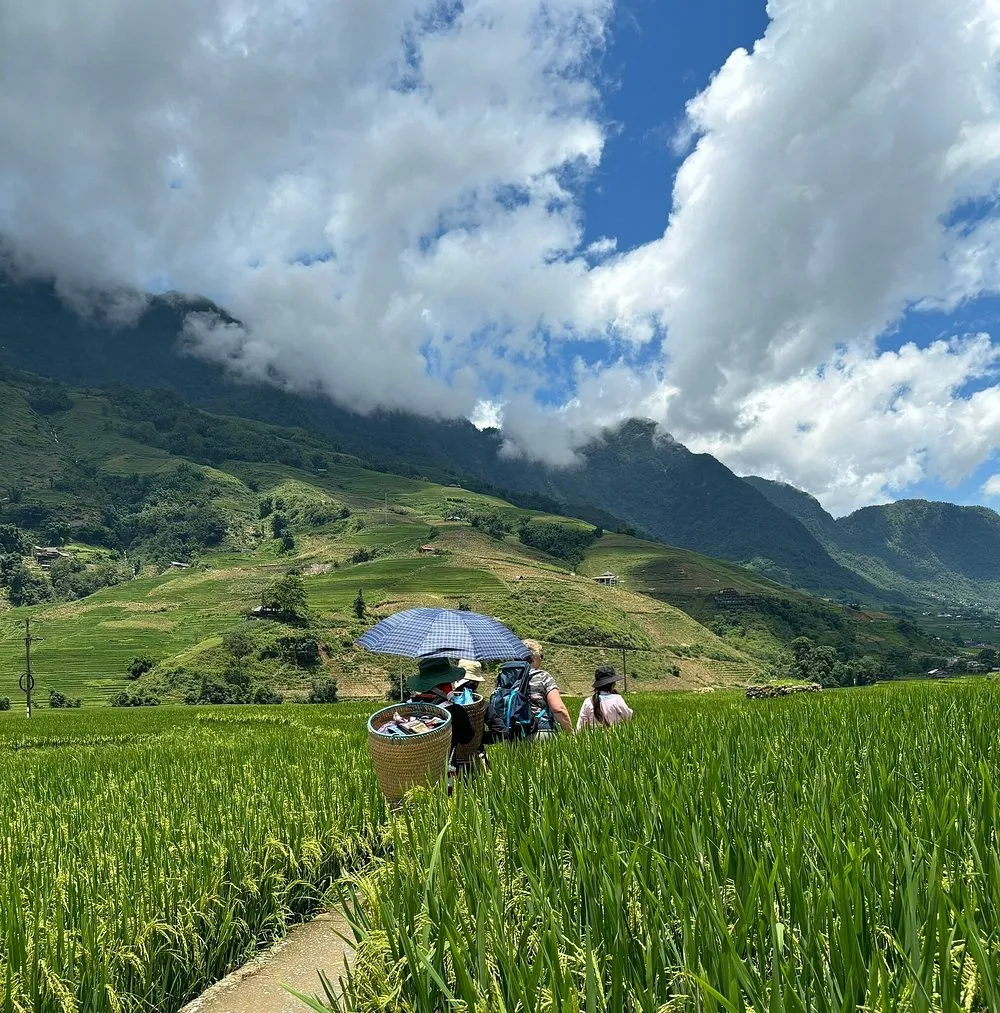
Trek Sapa in the North's Best Months
 1 Day Trek
Trekking Through Rice Terraced Fields
The Muong Hoa Valley day trek — golden in October, mirror-green in May.
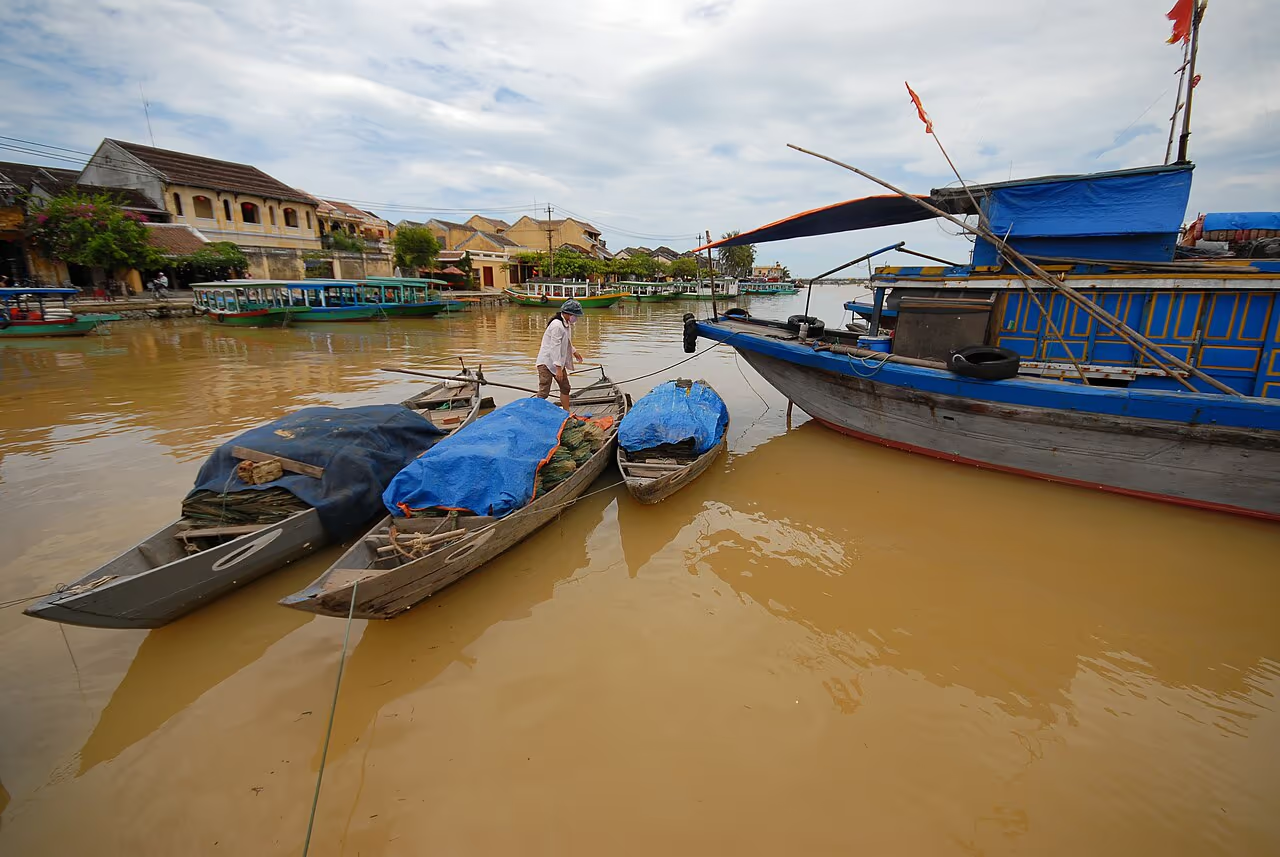
 2D1N Homestay
Rice Terraced Fields & Homestay
Two days on the trail and a village homestay — unbeatable in harvest season.
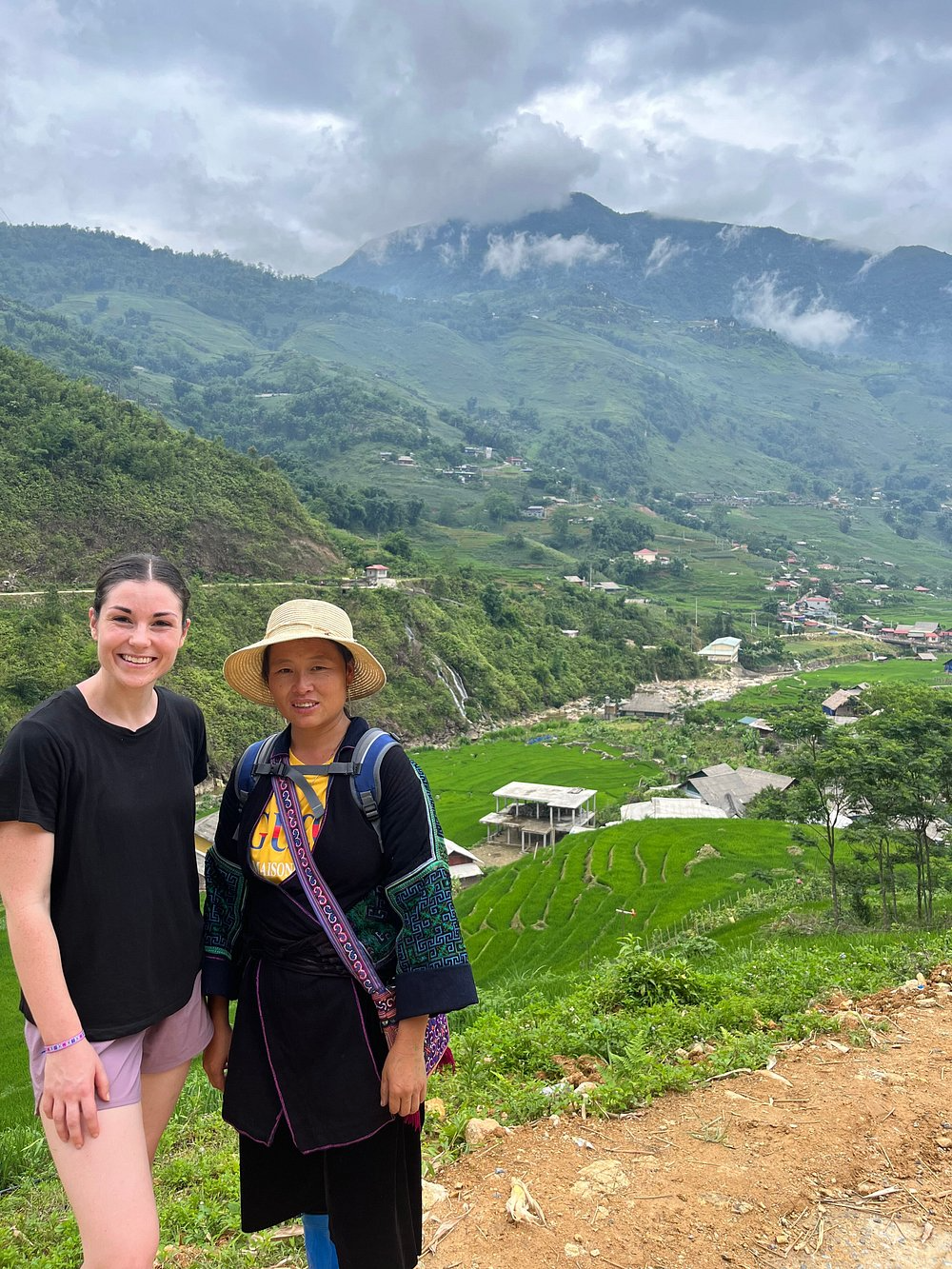
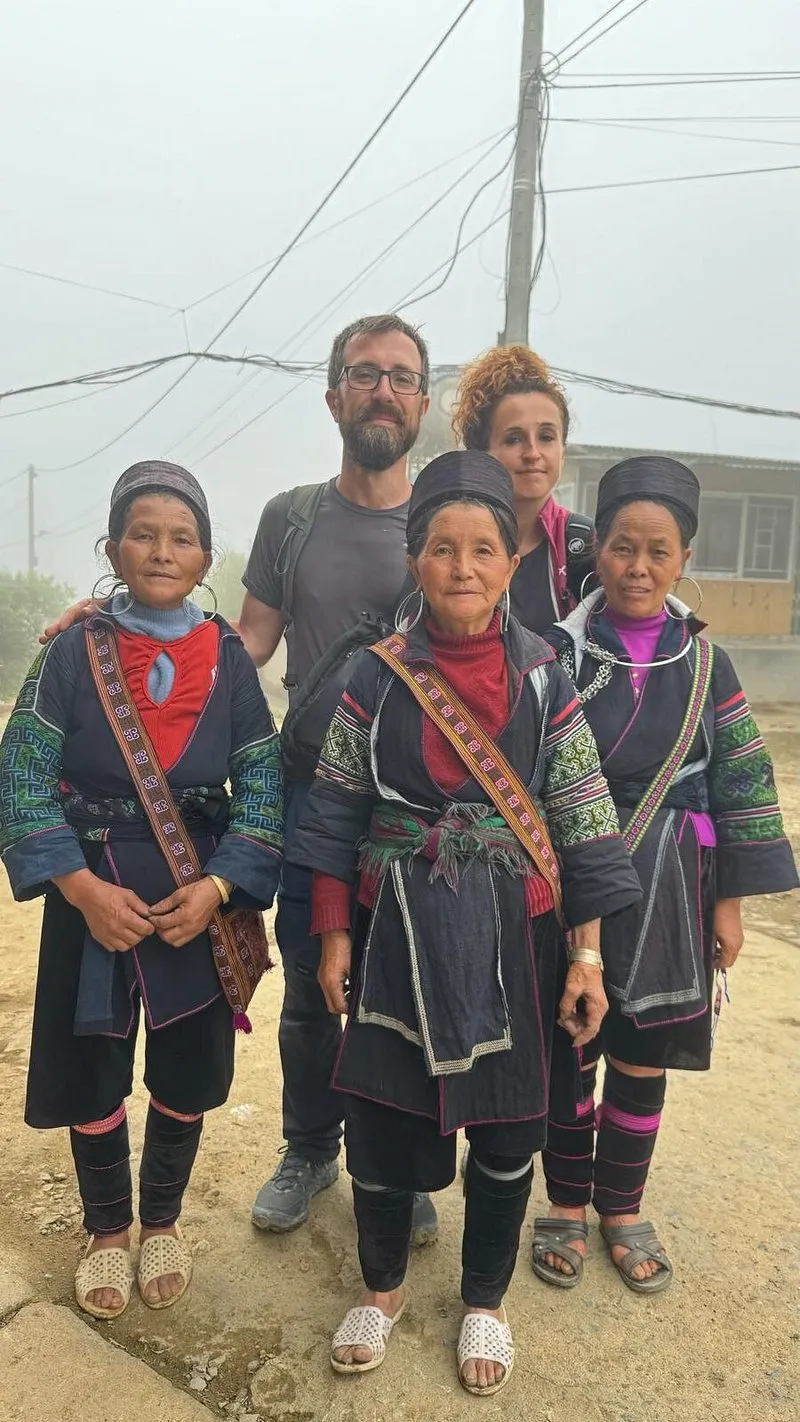 Families & Seniors
Sapa Easy Trekking For Seniors
A gentle valley walk with poles provided — comfortable in the cool months.
Peak, Shoulder & Low Season
Beyond the weather, your month decides how busy and how expensive the trip will be. Here is roughly where each part of the year sits on the crowds-and-prices spectrum.
Peak season (roughly November to April) brings the best weather and the biggest crowds, with prices spiking hardest around Christmas, New Year and Tet. Low season (May to September) is the wettest but also the cheapest and quietest — great value if you do not mind afternoon rain. The shoulder months of March and late September to October are the sweet spot, pairing excellent weather with thinner crowds and gentler prices. If you can travel in a shoulder month, you get the best of both worlds.
How you weigh weather against crowds and price is a personal call. If this is a once-in-a-lifetime trip and the photos matter most, pay the peak-season premium for the cleanest skies. If you are flexible and value-driven, the low season delivers the same landscapes — often greener — for far less, as long as you are relaxed about an afternoon shower. Most travelers land happily in the middle, in a shoulder month, which is exactly why March and October book up early.
Best Month by Region
Because the three regions run on different clocks, the best month for each is different — and the wettest time in one is often the finest in another. Here is the quick verdict.
The North (Hanoi, Sapa, Ha Long Bay)
The best months for the north are September to November — cool, clear and dry, with the Sapa rice terraces turning gold — and March to May, which is mild and green. Avoid the heaviest summer rain (July–August) and the cold, foggy depths of winter (December–February) up in Sapa, when the views often vanish into cloud.
Central Vietnam (Hue, Hoi An, Da Nang)
The centre's best months are February to August, a long dry, hot season that is prime for the beaches, with June and July the sunniest. The one window to plan around is October and November, when heavy rain and the risk of flooding hit Hoi An and Hue — the mirror opposite of the north's finest month.
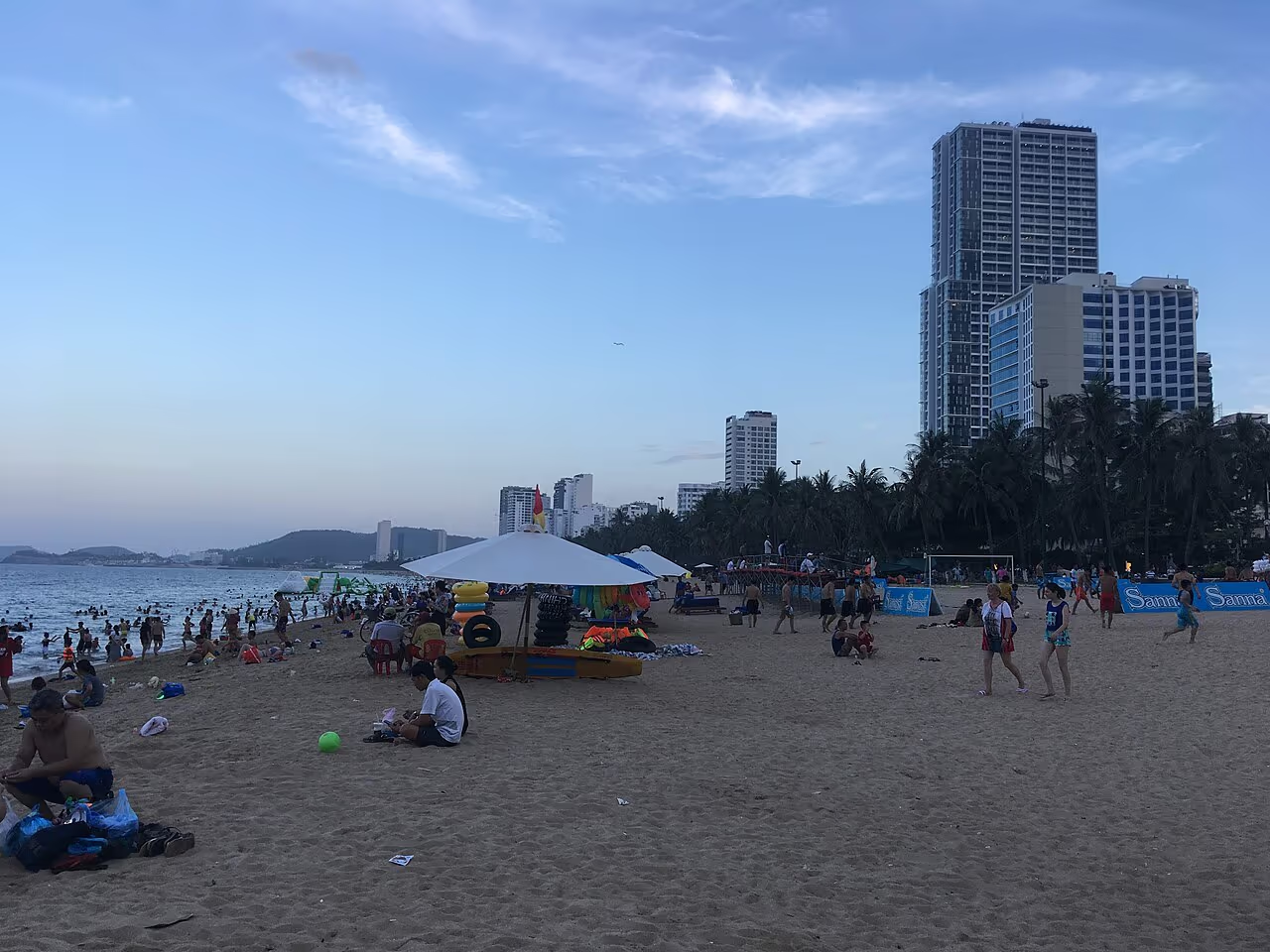
The South (Ho Chi Minh City, Mekong, Islands)
The south is warm all year, so it comes down to dry versus wet: the best months are November to April, sunny and low in humidity, ideal for Ho Chi Minh City, the Mekong Delta and Phu Quoc. The May-to-October wet season is still fine — the rain is mostly short afternoon downpours — and it is the cheapest, quietest time to go.
Best Month by Activity
If your trip is built around one experience, plan the month around that rather than the calendar as a whole. Some of the country's best weather for one activity overlaps with the worst for another, so it pays to line up your dates with what you actually came to do.
- Ha Long Bay cruises: October to April for the calmest, clearest sailing; summer storms (July–August) can occasionally cancel departures.
- Trekking Sapa & the north: September to November (cool, clear, golden harvest) and March to May (mild and green).
- Beaches: February to August on the central coast, November to April for the southern islands.
- Caves & national parks (Phong Nha): spring to early summer, before the autumn rains can flood the lower caves.
- Festivals: Tet (late January or February) for the biggest celebration, Mid-Autumn (September) for lanterns and mooncakes.
- Photography: mid-September to mid-October for golden terraces, May to June for the flooded, mirror-like paddies.
City sightseeing in Hanoi, Hoi An and Saigon works in almost any month — a passing shower is easily waited out over a coffee — so if your trip is mostly urban, you have far more flexibility on timing than a beach or trekking holiday does.
Best Month for Sapa & the North
If Sapa and the northern mountains are the heart of your trip — and for many travelers they are — the best month to visit Vietnam is one of the northern autumn months. Late September to early October brings the golden rice harvest, when the terraces glow and the skies are at their clearest; October and November stay cool, crisp and dry, perfect for trekking. For a green, flooded-terrace look instead, come in May, just as the rice is planted.
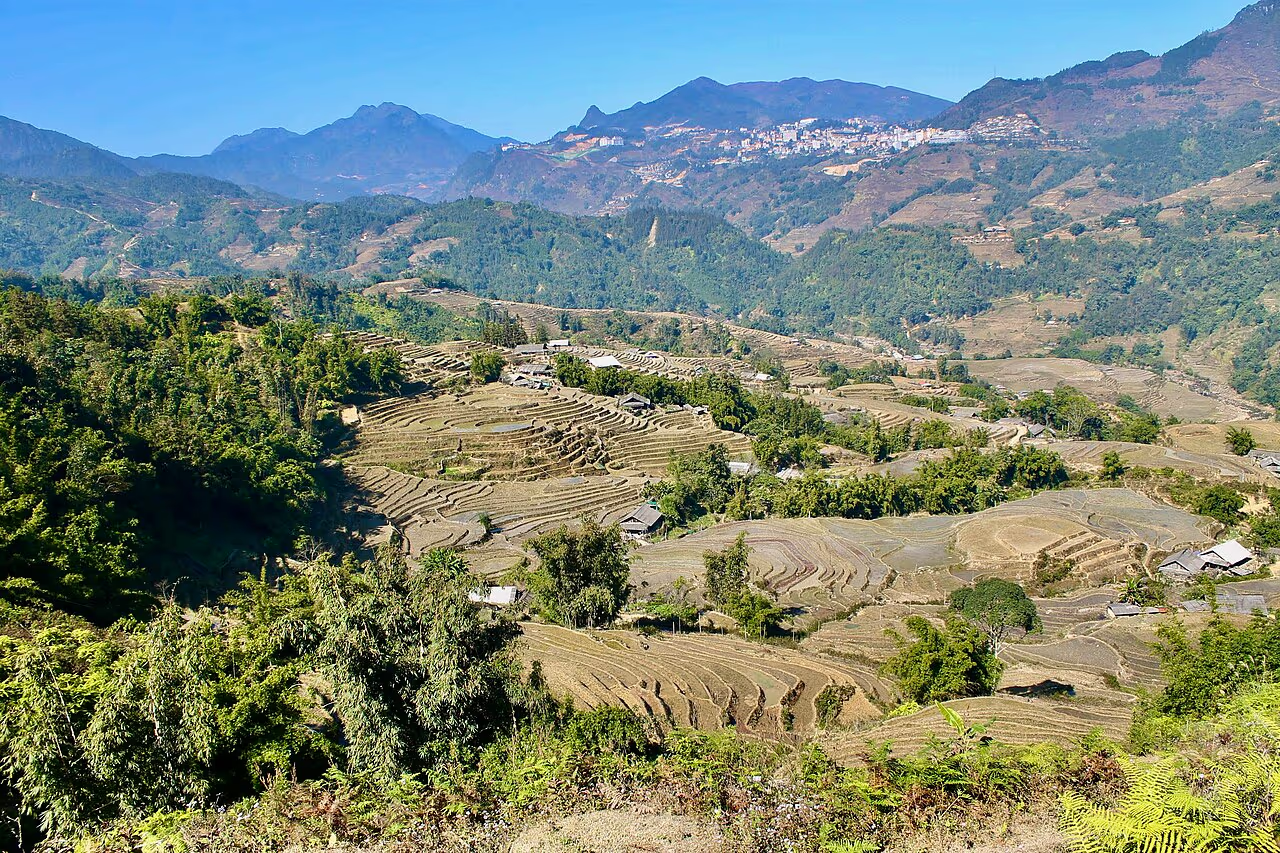
We trek in Sapa in every month of the year, so whatever your dates, we can shape a route to suit the conditions — golden terraces in autumn, mirror-flooded paddies in late spring, or quiet, misty trails in the green summer. If the harvest is what you are picturing, book early: mid-September to mid-October is our busiest window, and the best homestays fill up fast.
One honest note: the north is also the one region with a genuine cold season, so if you are coming between December and February, pack proper warm layers for Sapa — days can sit in single digits up high, and the fog that rolls in can hide the views for hours. It is still a beautiful, atmospheric time to trek, just a very different experience from the crisp gold of autumn or the fresh green of spring.
Comfortable in Any Season


When to Watch Out
No month is off-limits countrywide, but a few windows are worth planning around. The clearest one is the central coast in October and November, when heavy rain and possible flooding make Hoi An and Hue a gamble — go north or south instead in those months. Up in Sapa, December to February can be cold and fog-bound, so if crisp mountain views matter, choose autumn or spring. And the peak of summer (June to August) is hot and humid in the north and centre, plus it is the domestic high season, so beaches are at their busiest.
The other thing to time around is Tet (Lunar New Year, late January or February). It is a wonderful, atmospheric time to be in Vietnam, but transport and hotels book out and many businesses close for several days, so plan carefully around the exact dates. Outside these few windows, with a region-aware plan, Vietnam rewards visitors in every month of the year.
It also helps to match your month to the shape of your itinerary. A classic north-to-south route that takes in Hanoi, the central coast and the south is happiest in the February-to-April overlap; a focused northern trip built around Sapa and Ha Long shines in autumn; and a beach-and-city break can work almost any time if you follow the dry season down the coast. If you are still mapping out the route itself, our itinerary guides pair naturally with this one — decide the month here, then let the day-by-day plan fall into place around it.
How to Choose Your Month
Pulling it all together, the simplest way to pick your month is to work in this order: choose the region you most want to see, match it to that region's best window, then fine-tune for crowds and budget. If you cannot travel in the ideal window, keep the trip shorter and regional rather than chasing perfect weather across the whole country. And whatever month you land on for the north, pack a warm, waterproof layer — Sapa is cool and can be wet in any season, though you can rent boots and poles at our office rather than carrying them.
Boots & Poles for Any Month in Sapa
 Gear Rental
Trekking Boots Rental
Waterproof ankle-support boots — handy in the greener, wetter months. At 105 Thach Son Street.
 Gear Rental
Walking Poles Rental
Trekking poles at $2/day — steadying on the terraces in any season. At 105 Thach Son Street.