 Sinh Giang
Two weeks is the sweet spot for Vietnam. It's long enough to travel the length of this long, narrow country — from the misty mountains and bays of the north, through the imperial cities and beaches of the centre, to the buzzing south and the Mekong Delta — without rushing every day. Fourteen days lets you see the headline highlights and still slow down for a trek, a cruise and a lazy lunch or two.
This is our recommended 2-week Vietnam itinerary, refined over years of helping travelers plan trips that include time with us in Sapa. It runs north to south (the most popular direction), balances famous sights with real, slower experiences, and is built to be flexible — swap, shorten or extend any leg to suit you. We're a local trekking company in Sapa, so we'll be honest about where to spend your precious days, including why the north deserves more of them than most itineraries give it.
Below you'll find the route at a glance, a day-by-day plan, what it costs, how to get around, and how to tailor it to your travel style. Whether this is your first trip to Vietnam or a long-awaited return, here's how to make two weeks count.
A quick word on what this itinerary is — and isn't. It's a tried-and-tested framework, not a rigid timetable: the places, the order and the rough number of days per region are what most first-time visitors find works best. But every traveler is different, so treat it as a starting point. Want more beach and less city? More trekking and fewer temples? A slower pace? All of that is easy to adjust, and we'll show you how at the end. The one thing we'd gently insist on is giving the north its due — it's the part travelers most often wish they'd allowed more time for.
For context on the geography: Vietnam is shaped like a long letter S, stretching more than 1,600 km from the Chinese border in the north to the Gulf of Thailand in the south, which is why you fly between regions rather than drive the whole way. The north is cool and mountainous, the centre is coastal and historic, and the south is tropical and fast-moving — three quite different countries in one, and seeing all three is exactly what makes a two-week trip so rewarding.
Your 2 Weeks at a Glance
The shape of the trip, in four numbers.
The Route & How It Flows
Vietnam is over 1,600 km long, so the classic 2-week trip follows the country end to end rather than backtracking. Most travelers go north to south: start in Hanoi, explore the northern mountains and bays, then hop down the coast by short domestic flights to the centre (Hue, Hoi An) and finish in Ho Chi Minh City and the Mekong Delta. You can run it in reverse if your flights suit — the order matters less than not zig-zagging.
Here's the at-a-glance flow: Hanoi → Ha Long Bay → Sapa (the north, days 1–7) → Hue → Hoi An (the centre, days 8–11) → Ho Chi Minh City → Mekong Delta (the south, days 12–14). Domestic flights of 1–2 hours connect the regions cheaply, so you spend your time in places, not in transit. Our one strong piece of advice: give the north enough days — it holds the most distinctive scenery and culture in the country, and it's where a Sapa trek will likely become the highlight of your trip.
Why north to south specifically? Two reasons. First, it eases you in: you start in Hanoi's walkable old streets and the cool northern mountains, then finish in the hot, high-energy south, which feels like a natural build. Second, it suits most international flight routing, with cheap onward flights home from Ho Chi Minh City. That said, if your flights land in Saigon, simply run the whole thing in reverse — nothing about the plan depends on the direction, only on following the country in a single line rather than doubling back.
One routing detail worth planning early: book your international flights as a multi-city or open-jaw ticket where possible — into Hanoi and out of Ho Chi Minh City (or vice versa). Flying into one end and out of the other saves you a wasted day backtracking to your arrival city, and the fares are usually similar to a return. It is the single smartest booking decision for a north-to-south Vietnam trip.
Days 1–7: The North
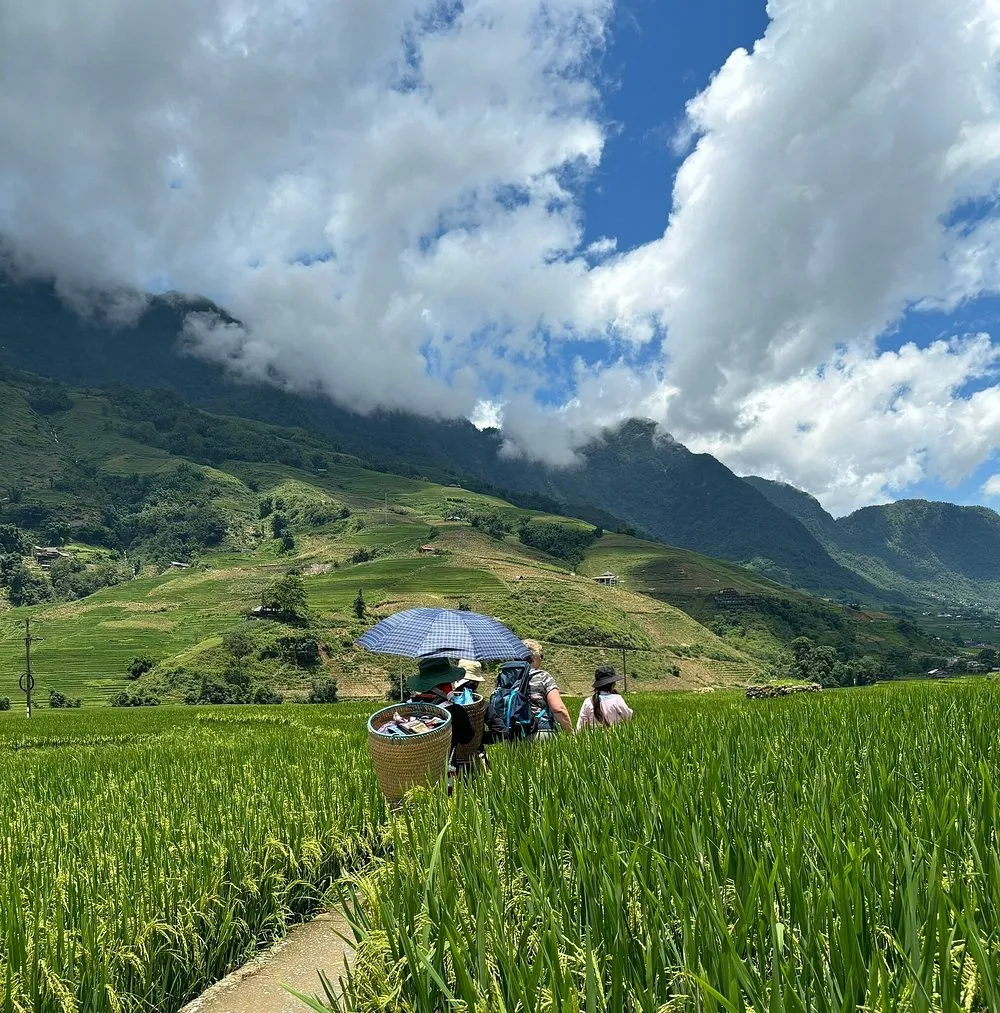
The north is the soul of Vietnam — Hanoi's old streets, the limestone islands of Ha Long Bay, and the rice-terraced mountains of Sapa. Give it a full week and it rewards you more than any other region.
Here's how the northern week breaks down. Two days in Hanoi is enough to find your feet, beat the jet lag and soak up the Old Quarter; a one-night Ha Long Bay cruise is the sweet spot (two nights if you want to truly unwind on the water); and three days for Sapa, including the overnight transfers, lets you trek properly and sleep in a village rather than rushing in and out. If you had to add a single day anywhere in the whole fortnight, we'd add it here — a second day trekking in Sapa, or a slower start in Hanoi.
Hanoi also makes the natural base for the whole northern week: you can leave a bag at your hotel, do the Ha Long cruise and the Sapa trek as loops out from the city, and travel light on each. That keeps the logistics simple and means you only fully unpack once before flying south. Most travelers find this hub-and-spoke approach far less tiring than dragging all their luggage up the mountain and back.
If your schedule allows only six or seven days in the north rather than a split across the country, that is a wonderful trip in its own right: Hanoi, a Ha Long cruise and several days trekking and homestaying around Sapa, taken slowly. Many repeat visitors to Vietnam end up doing exactly this — skipping the dash south entirely in favour of going deep in the mountains. It is the part of the country we know best, and the part we would always give the most time.

Trek the Rice Terraces in Sapa
 1 Day Trek
Trekking Through Rice Terraced Fields
The classic Muong Hoa Valley route with a local guide and a family lunch.
 2D1N Homestay
Rice Terraced Fields & Homestay
Two days on the trail and a night in a valley homestay — perfect for the Sapa leg.
 Families & Seniors
Sapa Easy Trekking For Seniors
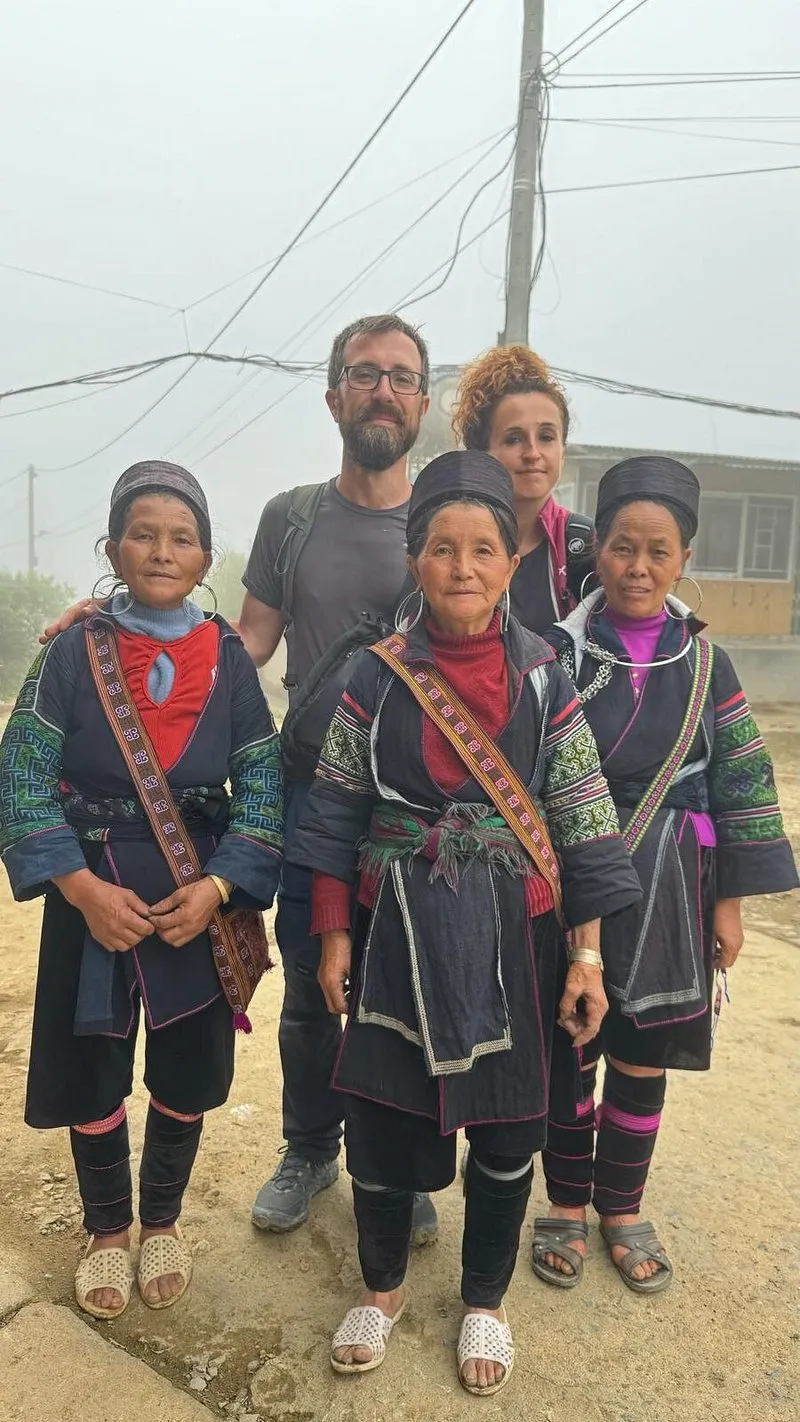
A gentle, flat valley walk where poles can be rented at our office — for 60+ travelers and families.
Days 8–11: The Centre
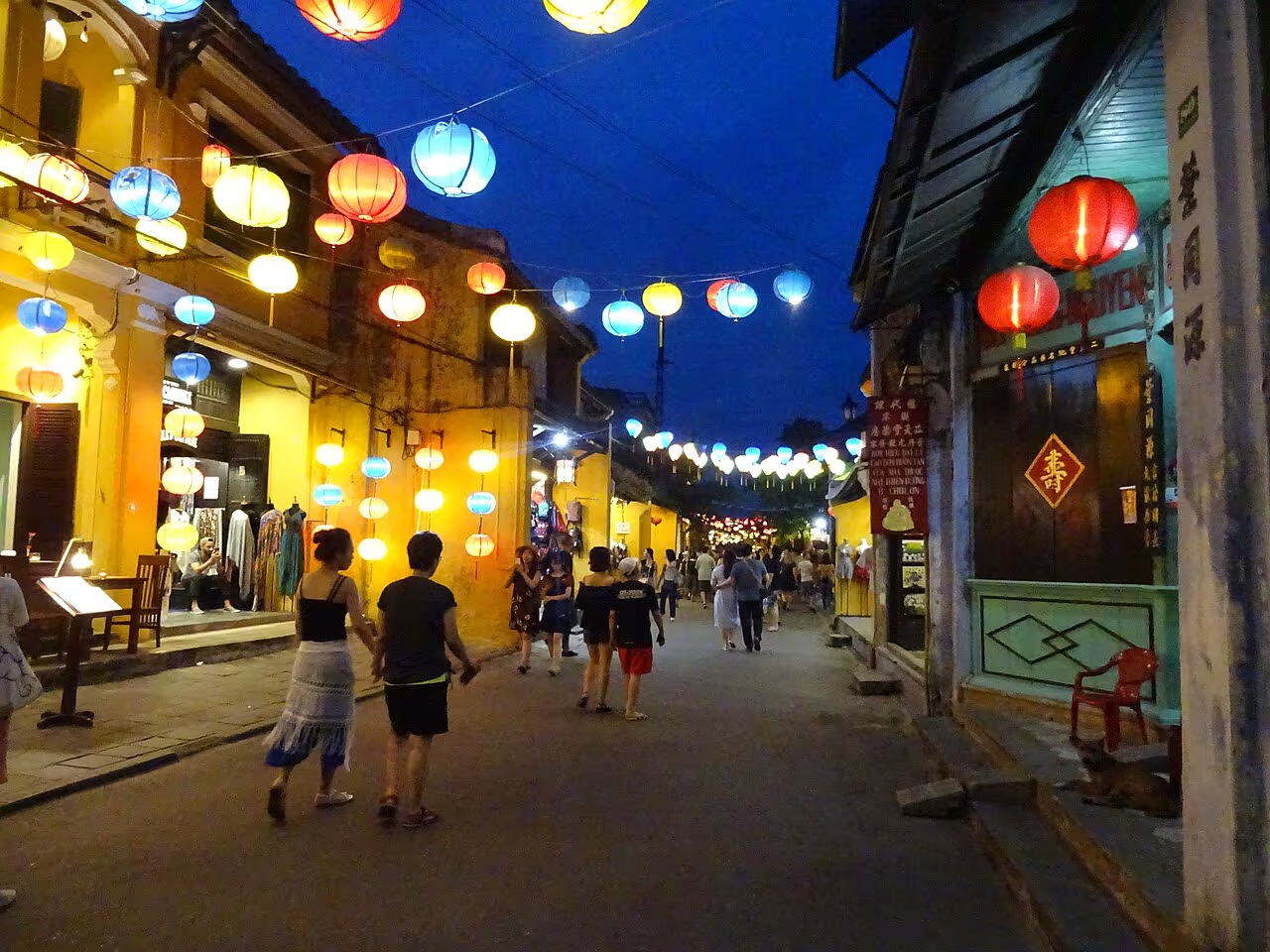
Fly from Hanoi to the centre (about 1.5 hours) for a change of pace: imperial history in Hue, lantern-lit charm in Hoi An, and the beaches of Da Nang in between. This is the relaxed, cultural heart of the trip.
The centre is where you downshift. After the active north, Hue and Hoi An are about wandering, eating and soaking up atmosphere rather than ticking off big sights. The two are linked by the spectacular Hai Van Pass and the beaches of Da Nang, so the transfer between them is part of the experience — many travelers take a private car over the pass, stopping for photos and a swim. If you love a place, this is the region where it's easiest to add a lazy extra day.
A note on flights into the centre: you fly into Da Nang, which sits between Hue (about 2 hours north over the Hai Van Pass) and Hoi An (about 45 minutes south). Many travelers do Hue first then work back down to Hoi An to fly out of Da Nang again, or simply base in Hoi An and day-trip to Hue. Either way, Da Nang itself, with its long beach and big-city comforts, is worth at least an afternoon if you have the time.

Days 12–14: The South
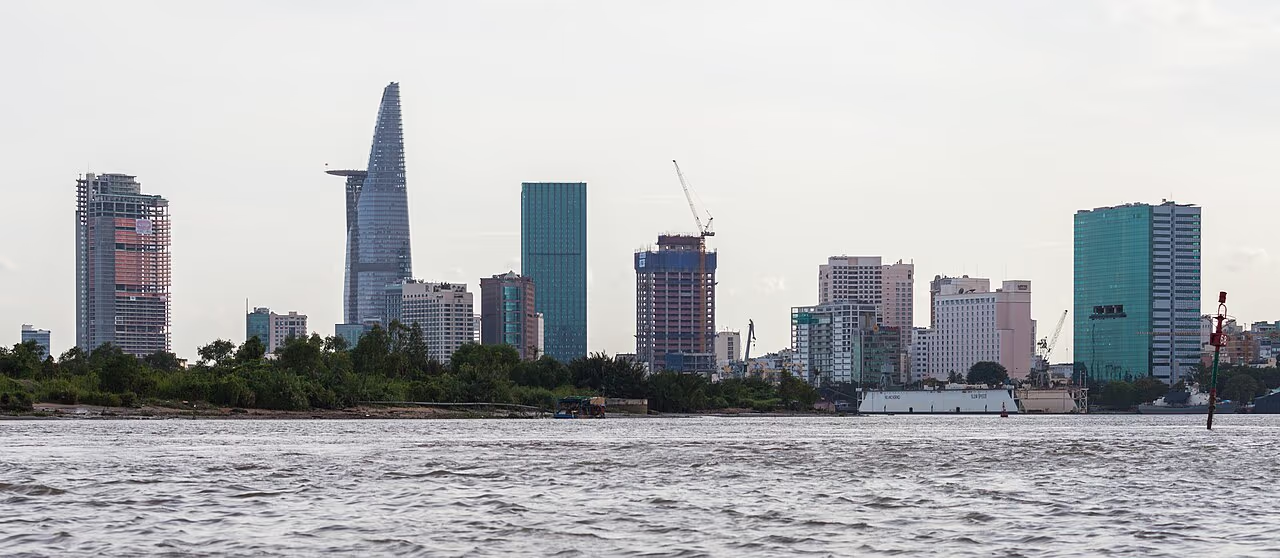
Fly south to finish (about 1.25 hours): the high-energy metropolis of Ho Chi Minh City and the watery world of the Mekong Delta. It's a lively, fitting end before you fly home from Saigon's international airport.
The south is optional, and that's worth saying plainly. If two weeks feels tight or you'd rather not rush, you can happily end your trip in the centre and skip the southern leg for a future visit — plenty of travelers do exactly that and never feel they missed out. But if you want the full sweep of the country and a taste of the Mekong, the three southern days round the trip off with energy and contrast before you fly home.

What 2 Weeks in Vietnam Costs
Vietnam is excellent value. Here's a realistic per-person budget for two comfortable mid-range weeks, excluding international flights to and from Vietnam.
Backpackers can do it for well under $1,000 with hostels, buses and street food; comfort travelers and those wanting boutique hotels and private guides will spend $2,500–4,000+. Either way, your money goes a long way here — a guided Sapa trek, a Ha Long cruise and a Mekong day cost a fraction of equivalents elsewhere.
A few ways to control the budget: book domestic flights and your Ha Long cruise a few weeks ahead for the best prices, eat where the locals eat (a brilliant bowl of pho costs a dollar or two), and travel in shoulder season for cheaper rooms. Conversely, the things most worth paying up for are a reputable Ha Long boat and a good local guide in Sapa — the cheapest options in both can really dent the experience, and the difference in price is small against the difference in the day.
Tipping and money, briefly: Vietnam is largely a cash economy outside hotels and bigger restaurants, so carry Vietnamese dong for markets, street food and the villages. Tipping is not obligatory but is appreciated for guides, drivers and homestay hosts who make your trip special. ATMs are everywhere in cities but scarce in the mountains, so withdraw enough before heading to Sapa or the Mekong backroads.
Which 2-Week Style Suits You?
This classic route works for most people, but you can tilt it to your taste. Find the traveler that sounds most like you.
The First-Timer
The Slow Traveler
Beach & Culture
The Adventurer
"We followed this route almost exactly on our honeymoon. Hanoi and Ha Long were wonderful, but the three days in Sapa — trekking with our guide, the homestay, the terraces at dawn — were the part we talk about most. So glad we gave the north proper time."
— Emma & Chris T., Auckland, New Zealand (November 2025)
One scheduling note before logistics: with 14 days you genuinely don't need to rush. The plan above has built-in slow moments — a homestay night, a Hoi An afternoon, a Mekong morning — and you can always trade a destination for more time in the ones you love. Quality beats quantity on a two-week trip.
The most common mistake we see is over-stuffing the route — trying to add Ninh Binh, Phong Nha, Da Lat or the islands on top of everything else in the same fortnight. Each is wonderful, but cramming them in turns a holiday into a logistics marathon of early flights and packed bags. Two weeks comfortably holds the north, centre and south as laid out here; anything more and something has to give. When in doubt, do less, but do it properly.
How to Tailor This Itinerary
The 14-day route above is the all-rounder, but it bends easily to your taste. Short on time (10 days)? Keep the north in full and pick just one of the centre or south — Hanoi, Ha Long, Sapa and Hoi An make a superb ten days. Got three weeks? Add Ninh Binh after Hanoi, a couple of beach days in Da Nang or Phu Quoc, and a slower Mekong overnight. Travelling with kids or older parents? Swap the harder Sapa trek for our gentle valley walk, favour private transfers over buses, and build in more downtime.
By interest, the tweaks are simple: foodies add cooking classes in Hanoi, Hoi An and Saigon; history buffs add the Cu Chi Tunnels and more time in Hue; nature lovers trade a city day for Ninh Binh or a longer Sapa trek; and beach seekers stretch the Hoi An/Da Nang leg. The framework stays the same — north to south, fly between regions, don't backtrack — you simply dial each region up or down. Tell us what you're into and we'll help shape the northern part around the rest of your plan.
Whatever shape you settle on, build in at least one genuine rest day — a beach afternoon, a spa, or simply a slow morning with coffee — somewhere around the middle of the trip. Two weeks of constant sightseeing, however well planned, catches up with everyone, and the travelers who pace themselves come home raving rather than exhausted. The point of a holiday, after all, is to feel rested as well as to have seen things.
It is also worth leaving a little unplanned space each day rather than scheduling dawn to dusk. Some of the best Vietnam memories are unplanned — a street-food stall you stumble on, an invitation to join a family meal in a Sapa homestay, a quiet hour watching boats on the Mekong. A good itinerary sets the skeleton; the magic fills in the gaps you leave open. Book the big-ticket items (cruise, trek, flights) firmly, and keep the in-between time loose.
Getting Around
Between regions, short domestic flights (Vietnam Airlines, VietJet, Bamboo) are cheap and save days — Hanoi to Hue/Da Nang and Da Nang to Ho Chi Minh City are each 1–1.5 hours. Within the north, you travel overland: Hanoi to Ha Long by road, and Hanoi to Sapa by comfortable limousine van or overnight sleeper bus (there's no airport in Sapa). Sorting the Hanoi–Sapa leg well is the key to a smooth northern week.
A tip on internal flights: Vietnam's domestic airlines are cheap and frequent, but budget carriers can be strict on baggage and occasionally delayed, so book a little buffer around connections and don't schedule an international departure too tight after a domestic hop. For the overnight Hanoi–Sapa legs, the sleeper bus and train both work well; we can arrange the transfer and have your guide meet you, so the northern logistics — usually the fiddliest part of a Vietnam trip — are handled.
Trains are a lovely alternative for one or two legs if you have time: the Reunification Express runs the length of the country, and the Hanoi–Lao Cai night train to Sapa and the coastal Hue–Da Nang stretch are particularly scenic. They are slower than flying, so most two-week travelers use them selectively — one memorable overnight train rather than the whole route by rail — but even a single leg adds a nostalgic, only-in-Vietnam flavour to the trip.
Safety and practicalities are reassuringly easy here. Vietnam is a very safe country for travelers, with the main hazards being chaotic traffic (look both ways, twice) and the odd petty theft in crowded cities (keep your phone secure on a motorbike-heavy street). Tap water is not drinkable — stick to bottled or filtered — and a basic e-visa, arranged online before you fly, covers the standard tourist stay. None of it should give a first-timer pause.
The Comfortable Way North


What to Pack
Pack light and layered. Vietnam runs hot and humid in the lowlands, so bring breathable clothes, but the north — especially Sapa — is cool to cold and often wet, so add a warm layer and a rain jacket. For the Sapa trek you'll want grippy footwear; you don't have to fly with boots, though — rent waterproof boots and trekking poles at our office in Sapa the day before.
Boots & Poles for the Sapa Leg
 Gear Rental
Trekking Boots Rental
Waterproof ankle-support boots, cleaned and checked before each rental. At 105 Thach Son Street.
 Gear Rental
Walking Poles Rental
Trekking poles at $2/day from our office at 105 Thach Son Street — great on the muddy terraces.
Tips for Your 2-Week Trip
- Give the north a full week. It's the most distinctive region — don't shortchange Hanoi, Ha Long and especially Sapa.
- Fly between regions. Short domestic flights are cheap and save whole days versus long buses or trains.
- Use overnight legs. The Hanoi–Sapa sleeper bus or train saves a hotel night and a day of travel.
- Don't over-pack the schedule. Two weeks is generous — leave room for a slow lunch, a beach afternoon, a homestay night.
- Pack for two climates. Hot and humid in the lowlands, cool and wet in the northern mountains.
- Get a Vietnam e-visa in advance and download Grab for easy, fair-priced city rides.