
 Sinh Giang
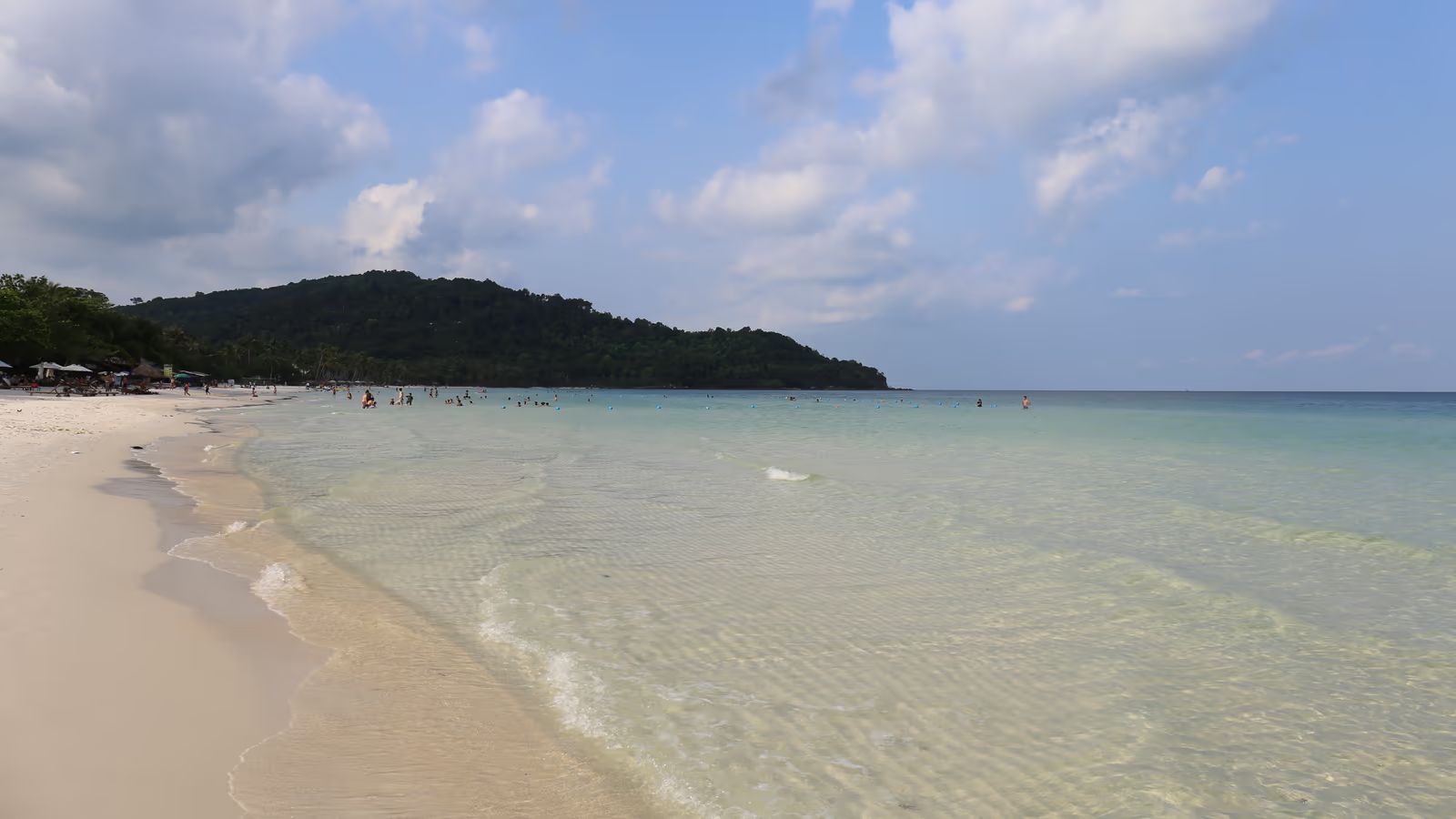
Vietnam has no single beach season, because its long coast sits in three different weather zones. The short version: choose Phu Quoc, Con Dao or Mui Ne from November to April, choose Da Nang, Hoi An or Quy Nhon from February to August, and expect rain, rough water and typhoon risk on the central coast from September to December. The north has a short season too, roughly April or May to September (Rough Guides, 25 November 2025; IDC Travel, 28 May 2026).
We are a Sapa trekking company, not a beach operator, so this guide is built from published sources that we read on 3 November 2026, plus climate tables from Wikipedia, with the source and date beside each claim. Where sources disagree, which happens often for Nha Trang and Con Dao, we say so. Our job here is the question we hear from trekkers: “after Sapa, which beach, and when?”
Key Takeaways
- South coast and islands (Phu Quoc, Con Dao, Mui Ne): best November to April, wet May to October (Rough Guides; IDC Travel; Travel Local, 5 September 2025).
- Central coast (Da Nang, Hoi An, Quy Nhon): best roughly February to August. Da Nang gets 628 mm of rain in October against 24 mm in February (Wikipedia climate table).
- Storm season on the central coast runs September to December, with typhoon risk named for October (Travel Local) and for September to November at Quy Nhon (Rough Guides).
- North (Cat Ba, Ha Long): April or May to September for swimming, though summer is hot and wet. Water is cooler than in the south.
- No beach is good all year, and some sources contradict each other on Nha Trang and Con Dao, so check a current forecast a week before you book.
Three Coasts, Three Seasons
Vietnam’s beaches split by region, and the wet and dry seasons of the south, the centre and the north do not line up. Travel Local (5 September 2025) describes the south’s wet season as May to October with intense afternoon showers, the centre’s rain as heavy between September and December with a risk of flooding and typhoons in October, and the north as hot, humid and rainy in summer with mild spring and autumn. That is why a December trip to Phu Quoc is a good idea and a December trip to Da Nang is not.
The climate tables show the difference clearly. Below is the monthly rainfall for three beach destinations, from the Wikipedia pages for Da Nang, Quy Nhon and Con Dao, which credit the Vietnam Institute for Building Science and Technology and the 1932 to 1933 Yearbook of Indochina. They are long-term averages, so any single year can differ. We found no equivalent table for Phu Quoc or Nha Trang, so they are missing here rather than guessed.
| Month | Da Nang | Quy Nhon | Con Dao |
|---|---|---|---|
| January | 82 | 67 | 13 |
| February | 24 | 28 | 13 |
| March | 25 | 33 | 11 |
| April | 35 | 34 | 39 |
| May | 81 | 85 | 210 |
| June | 83 | 62 | 289 |
| July | 93 | 44 | 297 |
| August | 141 | 77 | 298 |
| September | 351 | 231 | 316 |
| October | 628 | 521 | 351 |
| November | 448 | 464 | 175 |
| December | 218 | 206 | 53 |
Read the table by column. Da Nang and Quy Nhon, on the central coast, are dry from February to August and soaked from September to December, with October the worst. Con Dao, in the south, is the mirror image: very dry from December to April and wet from May to October. Wikipedia’s Da Nang article says the same in words: “a typhoon and wet season from September to December and a dry season from January to August”.
Which Beach in Which Month
The table below is our reading of the sources above, not a forecast and not a single source’s advice. Where sources disagree we chose the safer option and marked it. If you are checking the weather for the whole country, our Vietnam weather by month and best month to visit Vietnam guides give the wider picture.
| Month | Best bets | Avoid or be careful |
|---|---|---|
| January | Phu Quoc, Mui Ne, Con Dao | Central coast, still wet (82 mm at Da Nang) |
| February | Phu Quoc, Mui Ne; Da Nang and Quy Nhon as the dry season starts | North, cooler and mistier (Rough Guides) |
| March | Da Nang, Hoi An, Quy Nhon, Ky Co, Phu Quoc | Nothing major |
| April | Da Nang, Hoi An, Quy Nhon, Cat Ba | Nothing major |
| May | Da Nang, Hoi An, Quy Nhon, Cat Ba | South islands as the rains begin |
| June to August | Da Nang, Hoi An, Quy Nhon, Ky Co, Cat Ba | Phu Quoc (wet), north in July and August heat |
| September | Cat Ba and the north, with care | Central coast storms begin; Phu Quoc is wet |
| October | Few good choices; Ha Long Bay is on IDC Travel’s list for October to December | Central coast: highest rain and typhoon risk |
| November | Phu Quoc and Mui Ne as the southern dry season begins | Central coast, still stormy |
| December | Phu Quoc, Con Dao, Mui Ne, Ho Tram | Central coast: wet and rough |
The hardest months are September and October, when the south is wet and the centre is stormy. That is also the Sapa rice harvest, so many trekkers have a gap in their plans. The sensible choice is to skip the beach in those weeks, or to head for Phu Quoc in November.
The South: Phu Quoc, Con Dao and Mui Ne
The southern beaches share a dry season from about November to April, calm water in the west of Phu Quoc and good diving at Con Dao, and a wet season from May to October. Phu Quoc is the easy choice for families and first-time visitors, Con Dao is for divers and people who want quiet, and Mui Ne is for wind sports.
Phu Quoc
Phu Quoc is best from November to April. Rough Guides recommends Star Beach, about 15 miles (24 km) from Duong Dong town, for calm, protected water and shallow coral gardens roughly 150 feet (45 m) from shore, so you can snorkel without a boat. In the same source, May to October brings rain and rougher surf that can cloud visibility. IDC Travel describes the west-side water as calm and warm, about 28°C (82°F) for much of the dry season, and calls the island a good fit for families and first-time visitors. Visibility of 10 metres or more is reported near the An Thoi archipelago. We could not find a Phu Quoc climate table.
Con Dao
Con Dao is a group of 16 islands about 185 km from Vung Tau and 230 km from Ho Chi Minh City, (Wikipedia), and IDC Travel recommends it to couples who want seclusion. Rough Guides says to visit between March and September, when the sea is calm and the weather hot, with the water around 82°F in summer, and that October to February brings stronger winds. The rainfall table above points the other way, with the driest months from December to April, and Travel Local calls December a great month for Con Dao. The likely reason is that calm sea and dry weather are different things. We can only say that the sources disagree, so a trip in March or April, when both lists agree, is the safe choice.
Getting there is part of the decision. Rough Guides reports daily flights from Ho Chi Minh City to Con Dao Airport, about 8 miles (13 km) from the main town, and IDC Travel puts the flight at about 45 minutes. Wikipedia says the airport has a 1,830 metre runway and that a hydrofoil from Vung Tau, which began in February 2019, takes 4 to 5 hours, while IDC Travel describes a speedboat of about three hours that depends on the weather. Divers and snorkellers go for the clear water, and Rough Guides mentions dugongs and reef sharks. There is, in IDC Travel’s words, no party scene.
Mui Ne
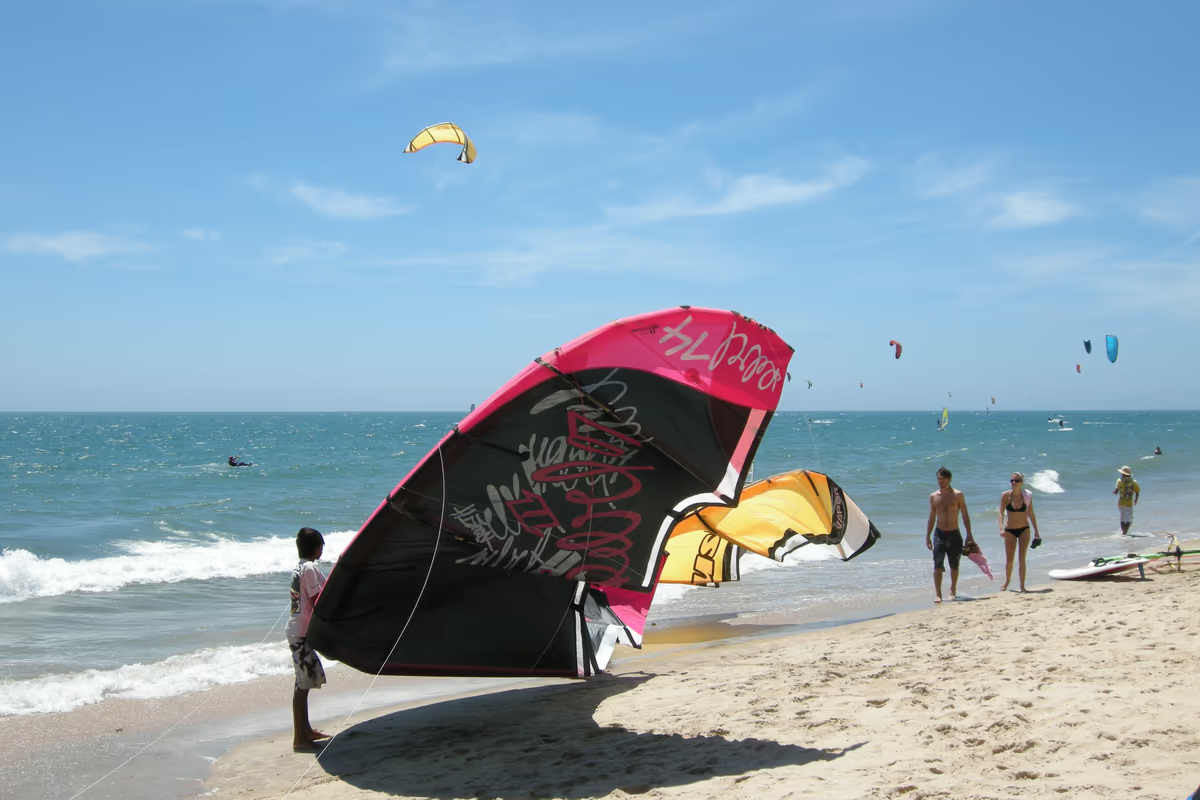
Mui Ne, near Phan Thiet, is best from November to April, and December to March for steady wind, which makes it a kitesurfing centre (IDC Travel). The water can be choppy, so it is not a first choice for young children. IDC Travel calls the main strip unpretentious and a good fit for kitesurfers, couples and budget backpackers. Rough Guides gives October to March for Phan Thiet in an expert tip. Ho Tram, east of Ho Chi Minh City, is calmer: IDC Travel gives November to April, gentle waves suitable for children and about two hours by bus from the city.
The Centre: Da Nang, Hoi An, Quy Nhon and Nha Trang
The central coast has the best beach weather from February to August and the worst storms from September to December. The four places below cover most travellers: Da Nang for a city with a long beach, Hoi An for a historic town with a nearby beach, Quy Nhon for quiet bays and Nha Trang for the resort scene.
Da Nang and My Khe
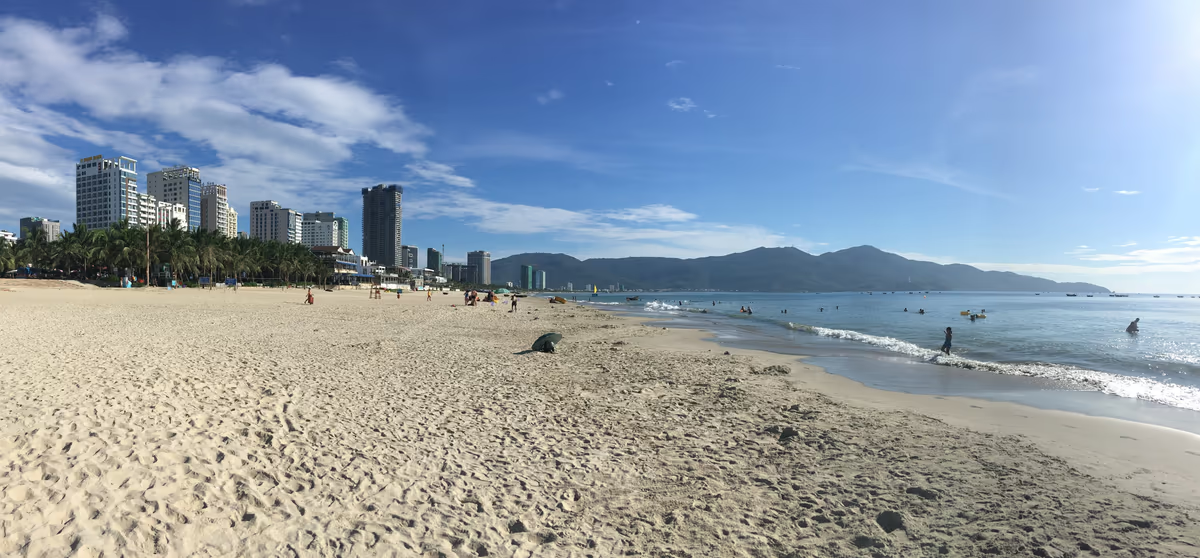
My Khe is the city beach, about 3 miles (5 km) from the centre, and Da Nang International Airport is about 5 miles (8 km) away (Rough Guides). Visit between April and August for prime beach weather and the most reliable surf, according to Rough Guides, or March to August with May and June near perfect, according to IDC Travel. Waves are consistent and beginner-friendly in the morning, with stronger swells by afternoon. The rainy season from September to December is surfable but choppier and less predictable. IDC Travel notes that many travellers arrive in October expecting sunshine and find rain, which the 628 mm figure explains. For the city itself, see our things to do in Da Nang.
An Bang, near Hoi An
An Bang is about 2.5 miles (4 km) north of Hoi An old town and under 15 minutes by bike or taxi (Rough Guides). The same source describes calm, shallow water, lifeguards on duty and gentle waves that suit young swimmers, and gives March to August as the best time. IDC Travel reports that Cua Dai, the older Hoi An beach, has lost much of its original shoreline to erosion. Hoi An became part of Da Nang city in July 2025, so some maps now list the two together; our Hoi An travel guide has the town, the ticket and the flood season, and the Sapa to Da Nang guide has the journey from the mountains.
Quy Nhon and Ky Co
Quy Nhon is the quiet choice. Rough Guides recommends February to August, with the sea calm and the slope gentle, and warns against September to November, when typhoons sometimes brush the coast. IDC Travel gives January to August with March to June ideal and notes that visitors are mostly Vietnamese. Phu Cat Airport is about 20 miles (32 km) from the city and has flights to Hanoi and Ho Chi Minh City on Vietnam Airlines, Bamboo Airways, VietJet and Pacific Airlines (Wikipedia). Ky Co, a bay a short boat ride away, is best from March to September (Rough Guides). A speedboat from Nhon Ly village takes under 30 minutes, and the same source says to avoid October to December, when the waves pick up.

Nha Trang
Nha Trang is the case where sources disagree most. IDC Travel says February to August and to avoid October to December, when rain can be heavy. An expert tip in Rough Guides lists Nha Trang, Phu Quoc, Con Dao and Phan Thiet as at their best from October to March. Travel Local gives the central dry season as January to August with heavy rain from September to December. We cannot reconcile them, so choose March to August, where two of the three sources agree, and check a forecast. IDC Travel gives water of 26 to 28°C for most of the year, and notes the beach can feel crowded in peak season.
More beaches along the coast
Several smaller beaches appear in the Rough Guides and IDC Travel lists, and they follow the same central-coast pattern. Use the table as a quick check if your route passes through them.
| Beach | Best months | Avoid |
|---|---|---|
| Lang Co (near Hue) | March to August; April to June calmest | Not stated |
| Doc Let (north of Nha Trang) | January to August | September to December: storms, rougher water |
| Dai Lanh | February to August | October to December: storms |
| Ho Coc (about 75 miles from Ho Chi Minh City) | December to May | June to November: afternoon showers |
Doc Let is about 30 miles (48 km) north of Nha Trang and Dai Lanh about 20 miles (32 km) north (Rough Guides). Lang Co is on the road between Hue and Da Nang, so our Hue guide is a useful companion if you travel by road or rail.
The North: Cat Ba and Ha Long Bay
The north is for scenery as much as swimming, and the season is short. IDC Travel says the beach season in the north is concentrated between May and September, with cooler water, while Rough Guides says to visit Cat Co beaches on Cat Ba Island between April and October, when the weather is warm and mostly dry. Winter is cooler and mistier. The same source says Cat Co 1 is busiest, Cat Co 3 quietest and good for snorkelling, and about a mile from Cat Ba Town. IDC Travel gives Ha Long Bay as October to December and March to May, avoiding the very hot July and August, with sheltered coves calm enough for non-swimmers and water of about 25°C in spring. For the island itself, with bus, ferry and speedboat times, the national park and when to go, see our Cat Ba Island travel guide.
Cat Ba Island is reached by bus and ferry from Hai Phong, Ha Long and Hanoi, according to Rough Guides. For the bay itself, our Ha Long Bay cruise guide compares overnight cruises and day trips, and Hanoi weather by month helps you choose the month.
Choosing by What You Want
Match the beach to your priority, then check the month. The list below comes from the sources already cited, not from our own visits.
| You want | Try | Months |
|---|---|---|
| Calm water for families | Phu Quoc, An Bang, Ho Tram | Nov to Apr (south); Mar to Aug (An Bang) |
| Snorkelling and diving | Phu Quoc Star Beach, Con Dao, Cat Co 3 | Nov to Apr; Mar to Sep; Apr to Oct |
| Surf | My Khe, Da Nang | Apr to Aug |
| Kitesurfing | Mui Ne | Dec to Mar for wind |
| Quiet bays | Quy Nhon, Ky Co, Con Dao | Feb to Aug; Mar to Sep |
| A city and a beach together | Da Nang with Hoi An | Feb to Aug |
Sea temperature matters less than weather in Vietnam, because the water is warm for most of the year, but the sources give a few numbers worth knowing. Phu Quoc’s west side runs about 28°C (82°F) in the dry season, Nha Trang 26 to 28°C for most of the year, Con Dao around 82°F in summer, and Ha Long Bay about 25°C (77°F) in spring (IDC Travel; Rough Guides). Visibility is better in the dry season: IDC Travel reports 10 metres or more near the An Thoi islands off Phu Quoc and about 15 metres on a clear day off Nha Trang.
A month can be dry and still have rough sea, or wet and calm. Con Dao is the clearest case in these sources: the rainfall table says December to April is driest, while Rough Guides rates March to September as calm. If you want to snorkel, ask your hotel about the sea on the day, not only the month.
Storms, Crowds and Getting There
The central coast carries the real weather risk. Travel Local names October for typhoons and flooding, and Rough Guides advises avoiding September to November at Quy Nhon, September to December at Doc Let and October to December at Dai Lanh. When storms hit, flights and ferries are cancelled and beaches close, so buy flexible tickets, carry travel insurance that covers weather, and read our Vietnam rainy season guide.
Crowds follow Vietnamese school holidays more than the weather. We found a search summary that says Con Dao and Quy Nhon remain safe bets outside the holidays, and IDC Travel says Quy Nhon is mostly visited by Vietnamese. Our Tet 2027 guide explains why beaches fill and flights sell out around the new year. For prices, our Vietnam travel costs guide covers budgets, and for getting around, the Grab guide covers rides from airports to beaches.
We found no single reliable flight table, so check an airline timetable. For the long way down the coast, our train guide covers the Reunification Express.
Fitting a Beach After Sapa
Sapa is at its best in September and October for the rice harvest and from March to May, and those months fall at different ends of the beach calendar, which is the planning problem. Our guides on the best time to visit Sapa and the rice harvest season give the mountain side. The pairing below is our own inference from the sources, not an official recommendation.
- Trek in March to May, then Da Nang, Hoi An or Quy Nhon. Both are at their best, and the central coast is dry.
- Trek in September or October, then go south in November. The central coast is stormy, so go to Phu Quoc once the southern dry season starts.
- Trek in winter, then Phu Quoc, Con Dao or Mui Ne. December to March is the dry season in the south, and Sapa is cold and misty.
- Trek in summer, then Cat Ba or the central coast. Both are dry enough, but Sapa is in the rainy season, so read trekking in the rainy season.
From Sapa, the beach starts with the road to Hanoi and a flight. Our Sapa to Da Nang guide gives about 6 to 8 hours door to door for the fly route, and the how to get to Sapa guide covers the mountain end. If you are building a longer trip, the 2-week itinerary and the 10-day itinerary show where a beach fits, and how many days you need helps with the total. For a different kind of northern journey, read our Dien Bien Phu travel guide. And before you leave the mountains, a day in the valleys with a local guide is a good way to start.
Sapa Treks to Walk Before a Beach Holiday
 1-Day Trek
Trekking Through Rice Terraced Fields
Lao Chai to Ta Van with lunch at a family restaurant in Y Linh Ho.
 Homestay
Rice Terraced Fields & Homestay
Dinner and breakfast with a family in Ta Van, lunch on day one.
 Local Favourite
Mountain Views and Villages Trek
Lunch at a restaurant run by local people in Hang Da village.
Sources and the Dates We Checked Them
We read these pages on 3 November 2026. Where a page could not be opened or two pages disagree, the text says so. Most travel pages here are commercial sites.
- Rough Guides, best beaches in Vietnam, updated 25 November 2025.
- IDC Travel, best time for a beach holiday in Vietnam, updated 28 May 2026; commercial site, parts read through a summary.
- Travel Local, best time to visit Vietnam, 5 September 2025; commercial site.
- Climate tables and airport facts: Wikipedia pages for Da Nang, Quy Nhon and Con Dao; secondary source.
- Con Dao and Quy Nhon school-holiday remark: a search summary of a travel page that we did not open in full. Localvietnam.com’s list of beaches could not be read beyond its introduction.
The Part We Do Sell
- Hanoi to Sapa transport — sleeper buses, limousines and the overnight train, bookable with your trek
- Hanoi to Sapa guide — what each option costs and how long it takes
- How to get to Sapa — the first leg, in detail
Rent at Our Office Before You Trek
 Gear Rental
Trekking Boots Rental
Waterproof ankle-support boots. Cleaned and checked before each rental. Available at 105 Thach Son Street.
 Gear Rental
Walking Poles Rental
Trekking poles available to rent at $2/day at our office, 105 Thach Son Street. Essential for descents.
Frequently Asked Questions
There is no single best month, because the coast has three weather zones. Phu Quoc, Con Dao and Mui Ne are best from November to April, while Da Nang, Hoi An and Quy Nhon are best roughly from February to August (Rough Guides, 25 November 2025; IDC Travel, 28 May 2026).
Phu Quoc, Con Dao, Mui Ne and Ho Tram. Travel Local says December marks the start of the dry season in the south. The central coast, including Da Nang, is still wet, with 218 mm of rain on average (Wikipedia climate table).
Usually not for the beach. Da Nang gets an average 628 mm of rain in October and Travel Local names it for typhoon and flood risk on the central coast. IDC Travel advises avoiding Nha Trang from October to December, although another Rough Guides tip disagrees.
Phu Quoc is the easiest first choice in the dry season, with calm west-coast water (IDC Travel). An Bang near Hoi An has calm, shallow water and lifeguards (Rough Guides), and Ho Tram has gentle waves (IDC Travel).
In summer only. IDC Travel puts the northern beach season between May and September with cooler water, and Rough Guides says to visit the Cat Co beaches on Cat Ba Island from April to October. Winter is cooler and mistier.
Phu Quoc has shallow coral gardens at Star Beach from November to April, and Con Dao is the choice for divers, with dugongs and reef sharks mentioned by Rough Guides. Cat Co 3 on Cat Ba is described as quiet and good for snorkelling.
By air from Ho Chi Minh City: Rough Guides reports daily flights, and IDC Travel puts the flight at about 45 minutes. Wikipedia says a hydrofoil from Vung Tau, started in February 2019, takes 4 to 5 hours.
It depends on the month. After a March to May trek, Da Nang, Hoi An or Quy Nhon are in their dry season. After a September or October trek, the central coast is stormy, so go to Phu Quoc once the southern dry season starts in November. This pairing is our own inference from the sources.