 Sinh Giang
Hue is the old imperial capital of Vietnam, in the centre of the country, and the quickest way to reach it from Hanoi is a flight of about 1 hour 15 minutes. By train it is 688 km and takes roughly 12.5 to 15 hours. From Sapa there is no direct route: you go down to Hanoi first, which makes Sapa to Hue a long travel day or an overnight. Most visitors give Hue two full days, pay 200,000 VND to enter the Imperial City, and come between February and April, when the rain is lightest.
We should be plain about who is writing. We are a Sapa trekking operator in the northern mountains, not a Hue company, and we do not sell tours there. This guide exists because many of our guests ask how Hue fits after a Sapa trek. We checked everything below on 31 October 2026, and we say where we could not reach an official page: UNESCO's site and the Hue Monuments Conservation Centre's site did not load for us, so ticket prices come from Vietnamese state newspapers that quote the official list, and train times come from a private tourism site that says it checked them on 21 October 2026. Where a number is our own arithmetic or judgement, we say so.
What Hue Is, in Three Facts
Hue is a UNESCO World Heritage city: the Complex of Hue Monuments was inscribed in 1993 (UNESCO reference 678). We could not load UNESCO's page to confirm which criteria apply, and sources disagree, so we give the year only. It was the capital of the Nguyen dynasty from 1802, when Gia Long took the throne, until the dynasty's end in 1945, which is standard history and not something we sourced anew. And since 1 January 2025 it has been a centrally governed city, under National Assembly Resolution 175/2024/QH15, passed on 30 November 2024, according to VOV, the army newspaper QDND and VnEconomy.
The same reports say the city now covers the whole former province: 4,947.11 square kilometres and 1,236,393 people in 2024. You may see a larger population figure on Wikipedia, 1,578,600; we use the state-media number because it matches the new boundary and the date. For a traveller, the practical meaning is the same as ever: the monuments sit on both banks of the Perfume River, a short ride from a compact city centre, and the tombs lie in the countryside to the south.
The Hue Monuments Conservation Centre runs an e-ticket page (eticket.hueworldheritage.org.vn). It loaded for us but showed no prices or hours, so we could not use it as a source. Check it for current opening times and any closures, particularly around festivals.
How to Get From Hanoi to Hue
Fly if you have ten days or fewer; take the train if you want the journey itself. Those are our recommendations, based on the numbers below. A bus is the cheapest and slowest option, and we would only choose it for budget reasons.
Fly Hanoi to Hue
Fastest- Time
- About 1 h 15 min in the air, about 3 flights a day on Vietnam Airlines' route page
- Cost
- From about 1.16 million VND one way on the day we checked; fares move daily
- Catch
- Phu Bai airport is outside the centre: Vietnam Airlines says about 8 km, other pages say 13 to 16 km, so we give no single figure
Train (Reunification line)
Scenic- Time
- 12 h 30 min to 15 h 05 min over 688 km, on services SE1, 3, 5, 7, 9, 11, 17, 19 and 23
- Cost
- About 570,000 VND for a soft seat up to about 1.22 million VND for a soft sleeper
- Catch
- Hue station is on the south bank; check times on the railway's own timetable, because we read these on a private site
Sleeper bus
Cheapest- Time
- 10.5 to 13.5 hours on the listings we read
- Cost
- From about 490,000 to 500,000 VND
- Catch
- The slowest and least comfortable way to arrive; times vary with traffic
From Da Nang or Hoi An
Coast- Da Nang
- 103 km by rail with about 11 trains a day taking 2 h 28 min to 3 h 58 min; 2 to 2 h 50 min by road
- Hoi An
- About 120 to 130 km, 3 to 4 hours, and Hoi An has no railway station
- Catch
- Buses use the Hai Van tunnel and skip the coastal pass
The fare and timetable figures come from news and booking pages, not from the airline's or the railway's own checkout, so treat them as a guide. The flight time is the only one we could read on an operator's own page. If the exact train matters to your plan, check dsvn.vn before you book.
From Sapa to Hue: The Honest Chain
No source publishes a single journey time from Sapa to Hue, and there is no direct service. The trip has two legs, with Hanoi in the middle. The table adds them up with the numbers on our own transfer pages and the Hanoi to Hue figures above. The sum is our arithmetic, and a plan, not a timetable.
| Leg | How | Time |
|---|---|---|
| Sapa to Hanoi | Limousine van or bus | About 5.5 to 6 hours (our timetable page) |
| Sapa to Hanoi | Shuttle to Lao Cai, then night train | About 1 hour plus about 8 hours on the train (the Hanoi to Lao Cai figure; we did not check a return timetable for this page) |
| Hanoi to Hue | Flight | About 1 h 15 min, plus airport time at both ends |
| Hanoi to Hue | Train | 12 h 30 min to 15 h 05 min |
| Whole chain | Morning limousine, then an evening flight | A long day: roughly 10 to 12 hours door to door, arriving at night |
Our advice is to split it. Finish your last Sapa trek the day before, travel to Hanoi on the morning of day two, sleep in Hanoi or catch an evening flight, and start Hue fresh. Never put a trek and the first leg on the same day: a Sapa path that is wet can finish late. Our Hanoi to Sapa guide has the options in reverse, and the two days in Hanoi plan gives you something to do if you stay a night in the capital.
How Long to Stay in Hue
Two full days suit most visitors. That is what the one commercial source we read says: two days for most travellers, three if you add a trip to the former demilitarised zone, and one day feels rushed. We agree, with the reason that the Imperial City alone takes a morning and the three tombs take another half-day. It is a judgement, not a measurement.
Opening hours are the first thing to plan around. Travel sites give 06:30 to 17:30 in summer and 07:00 to 17:00 in winter for the Imperial City, and say tickets sell until 17:30, but none gives the dates when the season changes and none is official. Tombs may follow a slightly different schedule. Arrive in the first hour, and check the e-ticket page the day before.
Imperial City, Thien Mu, river
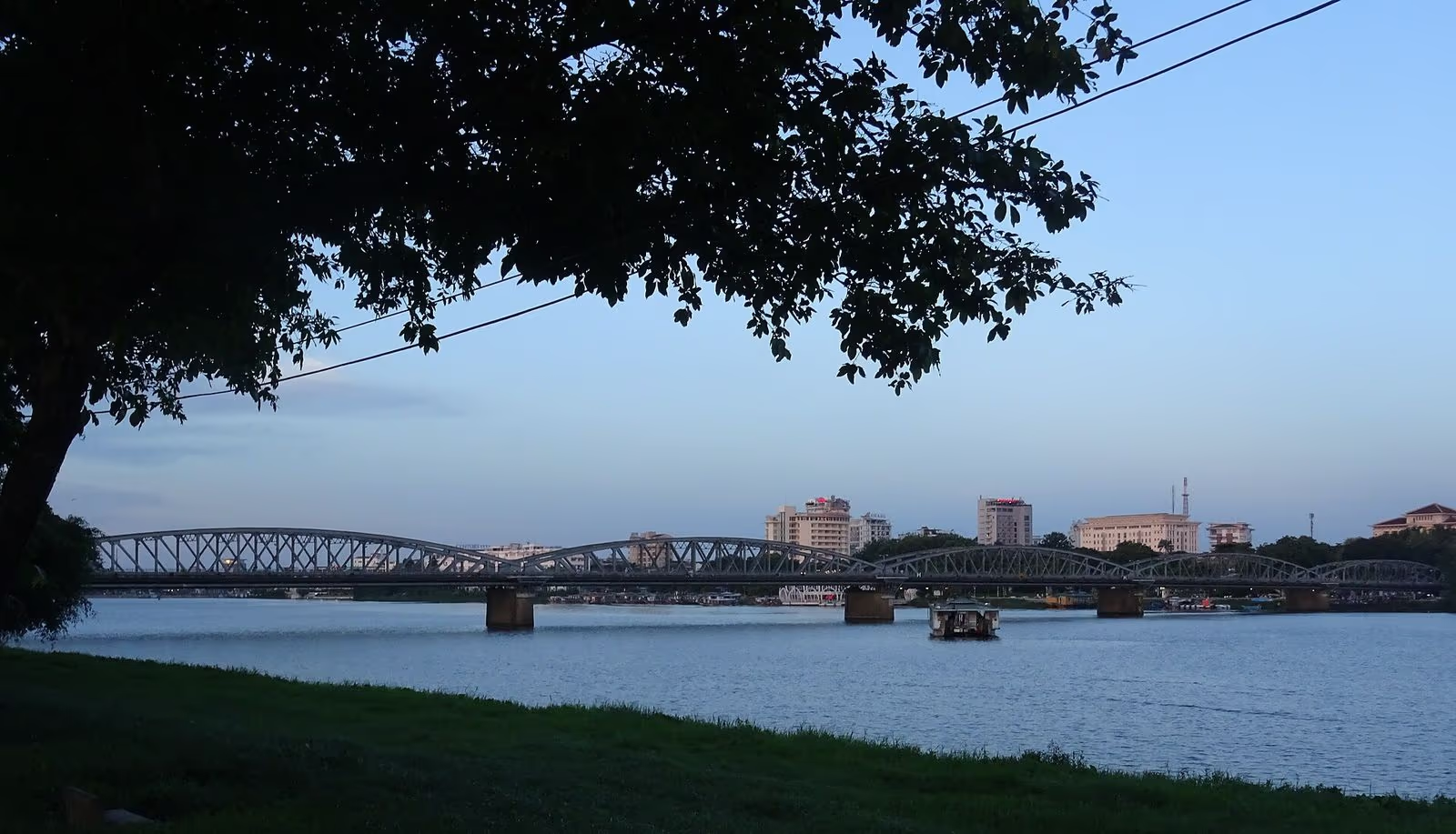
Imperial City in the morning, a late lunch, Thien Mu Pagoda in the afternoon, then the river bank at dusk as the lights come on over Truong Tien Bridge.
The tombs
Minh Mang, Khai Dinh and Tu Duc tombs, which lie about 8 to 15 km from the centre by the one source we could use. Hire a car or motorbike for the day, and finish at Dong Ba Market.
Optional: the coast road
Go on south over the Hai Van Pass towards Da Nang and Hoi An, or leave the city by plane if your trip ends here.
What It Costs to See the Sights
Entry fees are the largest cost of a Hue visit after the room. These are the figures we could source. The 2025 figures come from Tuoi Tre, and the Hue state newspaper Hue Ngay Nay reported on 4 January 2026 that the combined-ticket prices continued into 2026. Neither is the Conservation Centre's own page.
| Ticket | Adult | Child (7 to 12) |
|---|---|---|
| Imperial City | 200,000 | 40,000 |
| Minh Mang, Tu Duc or Khai Dinh tomb, each | 150,000 | Not stated in our sources |
| Four-site combo: Imperial City plus the three tombs | 530,000 | 100,000 |
| All-site pass, valid for 5 days | 600,000 | 120,000 (the source prints 120,00, which we read as a typo) |
| Thien Mu Pagoda | Free | Free |
The four-site combo is worth knowing about. Bought separately, the Imperial City and three tombs come to 650,000 dong (200,000 plus three times 150,000), so the combo at 530,000 saves 120,000 dong. That is our arithmetic from the published prices. The all-site pass costs 70,000 more than the combo and lasts five days, but we could not confirm which extra sites it covers, so ask at the ticket office before choosing. Combos for two or three sites were reported as unchanged in 2026, without prices in the article we read.
Hue Ngay Nay also reported that from early 2026 the city expanded free and discounted entry. School pupils on organised visits get in free; older people, poor households and students in Hue pay reduced fees; and during tourism promotions, festivals and big events the discount can reach 50 per cent for both domestic and international visitors. The article gives no percentage for ordinary tourists, and one guide we read says the ticket booths take cash only, so carry dong.
The Sights, in the Order We Would See Them
The Imperial City
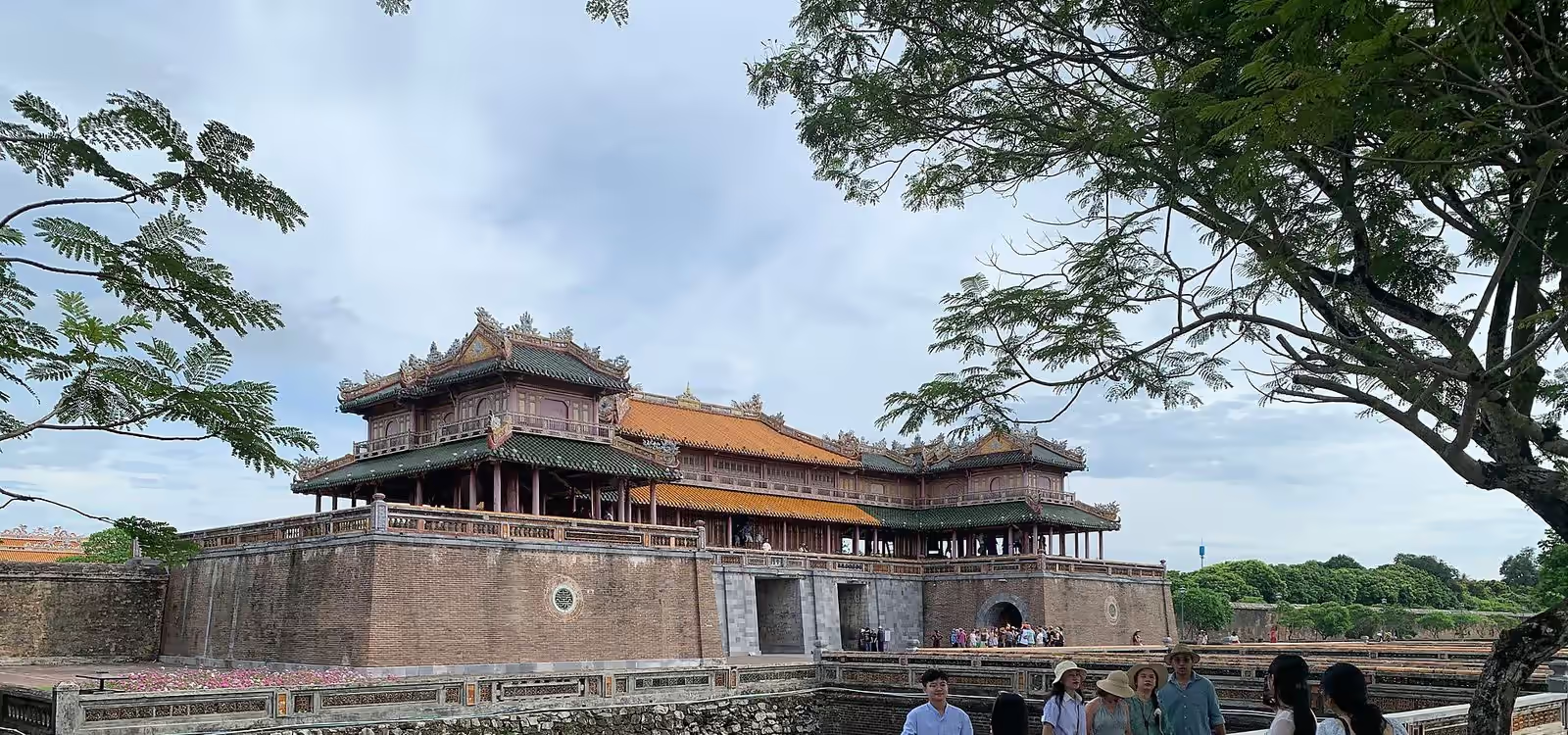
The Imperial City, entered through the Ngo Mon gate, is the walled palace complex of the Nguyen emperors and the centre of the World Heritage listing. Vietnamese press reported that the Thai Hoa Palace, the throne hall, reopened on 23 November 2024 after restoration, which we count as likely rather than confirmed. Plan on a morning, wear shoes you can walk on stone in, and carry water: the courtyards are open and sunny. We found no official dress-code rule for the palace, only the usual advice to cover shoulders and knees at temples.
The three tombs
Minh Mang, Tu Duc and Khai Dinh are the three emperors' tombs most visitors choose, and each has its own 150,000 dong ticket. The one source we found puts them roughly 8 to 15 km from the centre, with no per-tomb distances, and we could not verify the detail of each, so we do not describe their interiors here. They are in the countryside, spread apart, so a car, a motorbike taxi or a bicycle you are happy to ride in heat is the practical way to string them together.
Thien Mu Pagoda
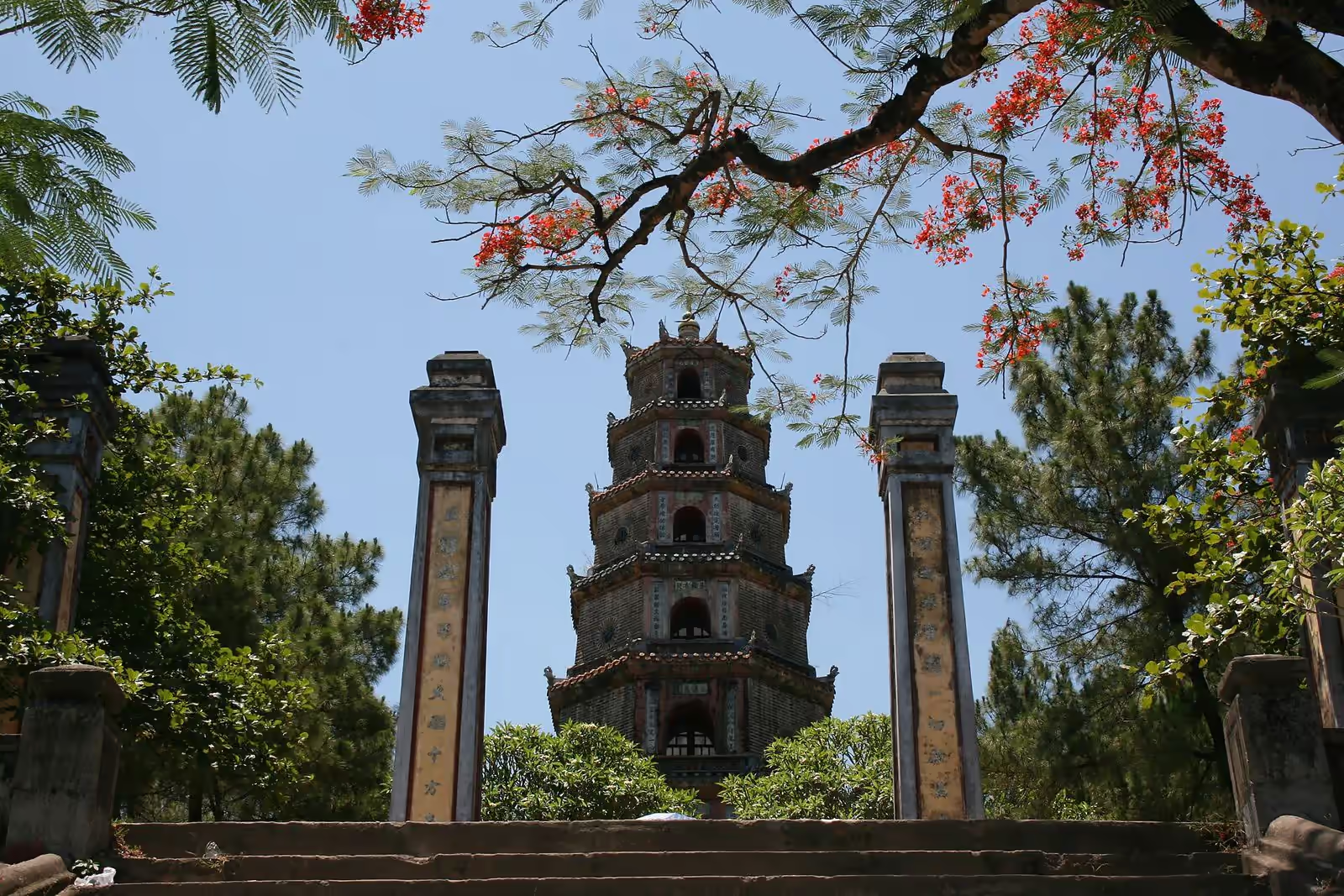
Thien Mu Pagoda, with its tall tiered tower beside the Perfume River, is free to enter. Its founding is dated to 1601 in the sources we read, which we count as likely. It makes a gentle half-day with the river, and unlike the Imperial City and the tombs it needs no ticket at all. We could not confirm opening hours or how best to reach it, so ask your hotel.
The Perfume River and Truong Tien Bridge
The river is the spine of the city, and the Truong Tien iron bridge, with its row of arches, is where visitors gather at dusk. We found no sourced prices for river cruises, so we leave them out; ask your hotel before you pay a boat owner on the bank. If you want a quiet end to the day, a grassy stretch of the river bank, like the one the photograph below was taken from, is the simplest place to watch the light change.
Dong Ba Market
Dong Ba Market is one of the best-known markets in the city and a natural place to try local dishes. We found no sourced figures for it, such as the number of stalls or opening hours, so we say only that it is a working market and worth an hour on the way back from the tombs.
Walk the Northern Valleys First
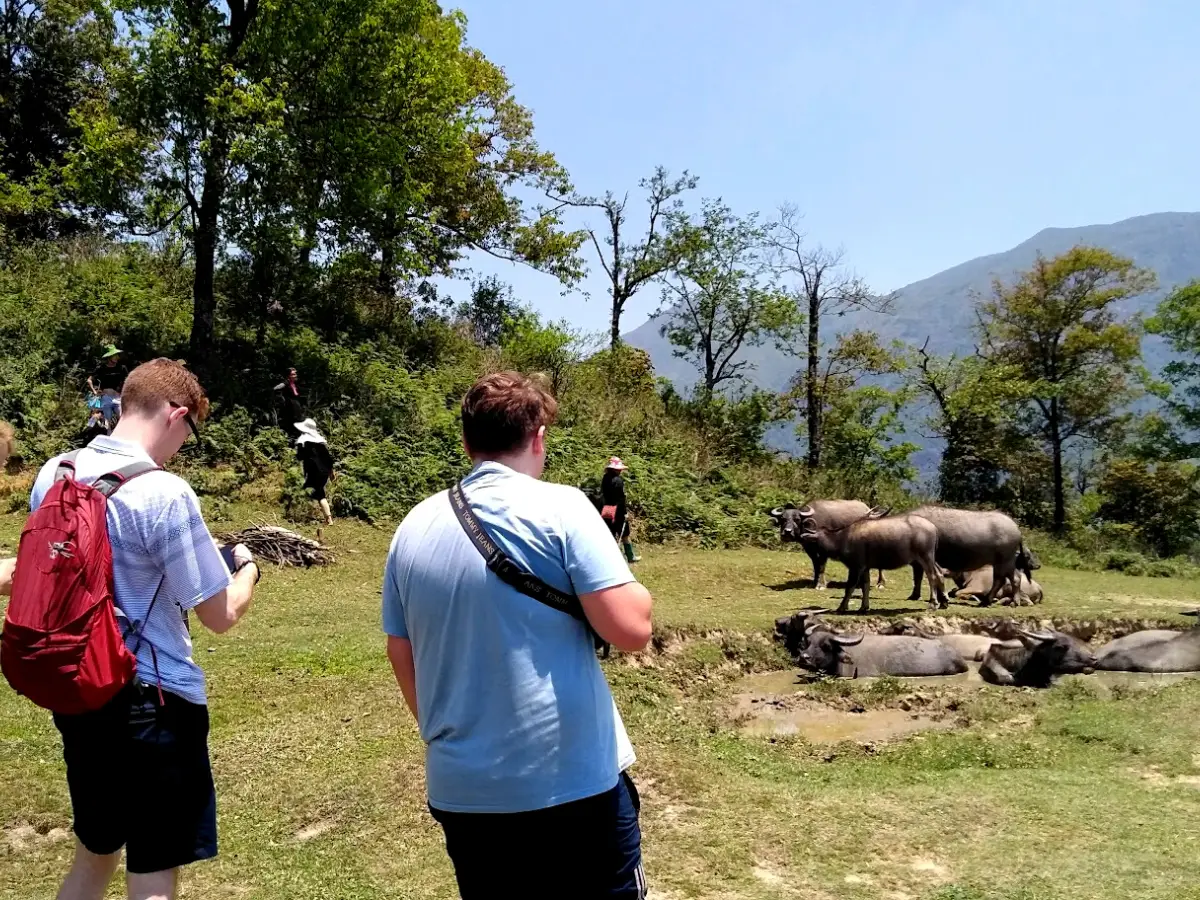 1-Day Trek
Trekking Through Rice Terraced Fields
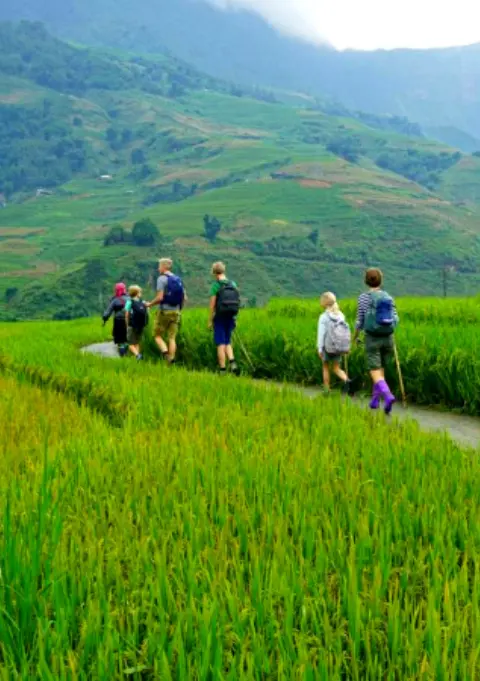
The Lao Chai to Ta Van valley day with a local guide, ending in Sapa town.
 Homestay
Rice Terraced Fields & Homestay
A night with a local family in the valley before the trip south.
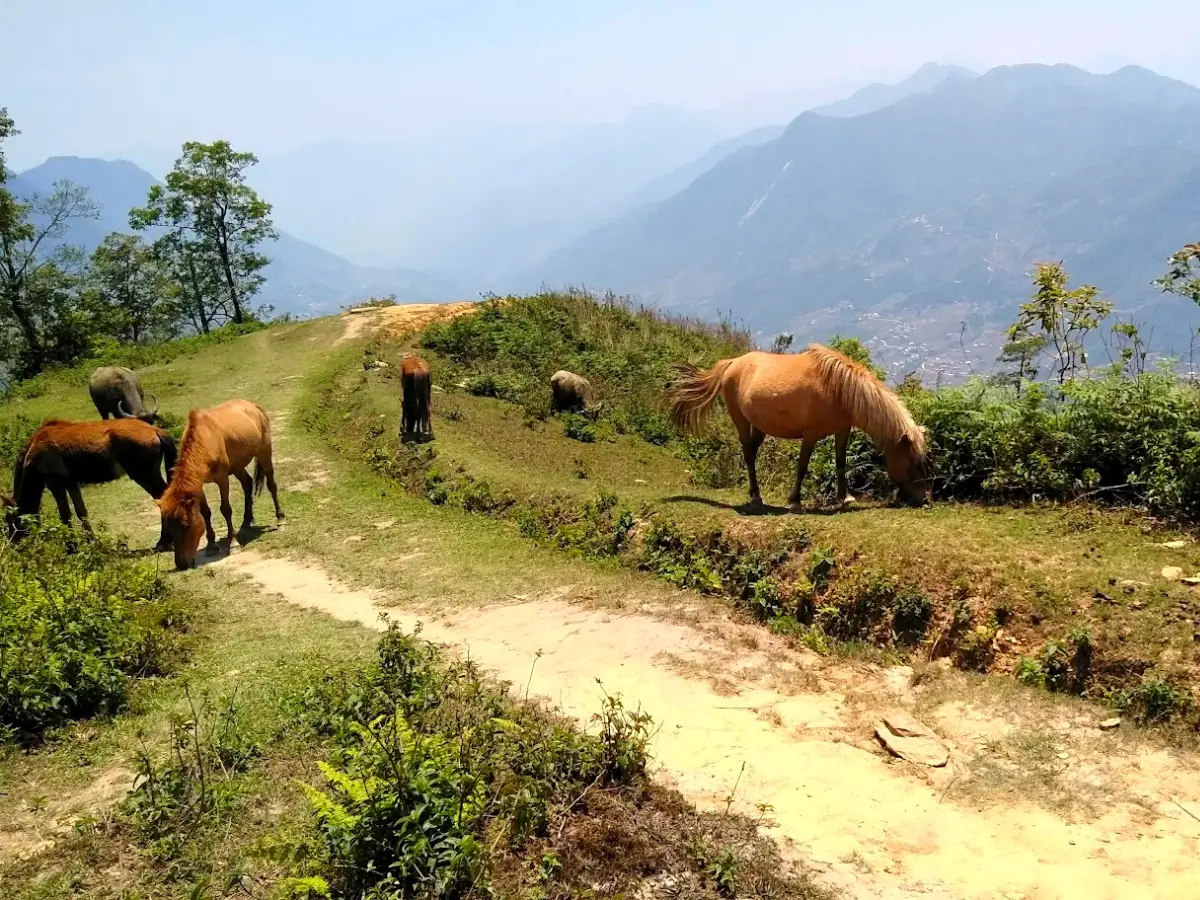 Local Favourite
Mountain Views and Villages Trek
A quieter ridge and village route for a half-rested day.
What to Eat in Hue
Hue's cooking is its second reason to visit, and the dishes below are the ones every source names. Bun bo Hue is a beef noodle soup with royal roots. Banh khoai is a crisp pancake served with a dipping sauce called nuoc leo. Com hen is baby clams over rice with herbs. Banh beo, banh nam and banh loc are small steamed rice cakes eaten with a sauce. We have no sourced prices, and we will not guess them. Eat at crowded local places, and look for a bowl of bun bo and a plate of banh khoai in the same trip: they are the two dishes that most visitors remember.
When to Go to Hue
Hue's rain is concentrated at the end of the year. The table uses Wikipedia's Hue station data, which cites the Vietnam Institute for Building Science and Technology; we could not reach the national weather service or the World Meteorological Organization, so we count the numbers as likely.
| Months | What to expect |
|---|---|
| October | The wettest month, about 773 mm of rain |
| November | About 642 mm |
| September | About 411 mm; typhoon risk begins |
| December | About 350 mm |
| February to April | The driest stretch, about 50 to 60 mm a month |
| June to August | Hot, with highs of 34 to 35 °C |
February to April is the commonly cited best window, and we agree with it. We found no frequency figures for typhoons, only that September to November is the risky time. One source called autumn "pleasant", which the rainfall figures contradict. If you must go in October or November, keep your plan flexible and book refundable rooms. Our Vietnam weather by month and rainy season guides cover the whole country, and best month to visit Vietnam places Hue in a full trip.
The Hue Festival is a year-long series in 2026, with nearly 80 events announced on 1 January by VOV, and a Festival Week from 13 to 18 June. We found no announced dates for 2027 as of 31 October 2026; they are usually published in November or December. Tet falls in February and changes the picture everywhere: see our Gau Tao and Tet guide for the 2027 dates and what Tet does to prices and crowds.
Getting Around and Where to Stay
The commercial sources we read quote Grab rides at about 30,000 to 80,000 dong, cyclos at about 100,000 to 200,000 dong an hour, and a hired motorbike at about 150,000 dong a day. We could not check these against an official source, so treat them as the going rate to negotiate from, and agree a price before you ride. The south bank near Truong Tien Bridge is the practical base for most visitors, with restaurants, hotels and the river in easy walking distance; the citadel side is quieter. That recommendation is our reading of the sources.
Where Hue Fits After Sapa
Most guests who ask us about Hue are doing a north-to-south trip and want to know whether it earns a place. Our answer is yes if you have at least ten days, and probably not if you have a week. The plans below are our own suggestions, built from the transfer times above.
| Trip length | Order | Where Hue fits |
|---|---|---|
| 7 days | Hanoi, Sapa, Hanoi | Skip Hue. A week covers one region, as our one-week guide says |
| 10 days | Hanoi 2, Sapa 3, Hue 2, Hoi An or Da Nang 3 | Fly from Hanoi to Hue, then travel south by train or road. See the 10-day itinerary |
| 14 days | Hanoi, Sapa, Hue, Hoi An, then the south | Fly Hanoi to Hue, drive over the Hai Van Pass, and see the two-week plan for the rest |
If you want to base on the coast instead, our Da Nang guide covers the city, and the best way from Sapa to Da Nang compares flying, the night train and the bus. Hue is about 103 km from Da Nang by rail, with 11 trains a day in 2 hours 28 minutes to 3 hours 58 minutes according to the sources we read. The Hai Van Pass between them is about 20 to 21 km long and about 500 m high, with a tunnel of about 6.2 km that opened in 2005, as a Da Nang tourism portal reported on 2 August 2025. The portal warns that the pass can be slippery and foggy from September to December. Our how many days in Vietnam guide places Hue in the whole country.
The Part We Do Sell
- Hanoi to Sapa transport — sleeper buses, limousines and the overnight train, bookable with your trek
- Hanoi to Sapa guide — what each option costs and how long it takes
- How to get to Sapa — the first leg, in detail
Is Hue Worth the Detour?
This is our judgement, not a sourced fact. Hue earns its place if you care about history and food and have at least ten days. It is not a beach or nightlife stop in the way Da Nang and Hoi An are; it asks you to walk through large open heritage sites in heat or rain, and it rewards early starts. It is a poor fit for a one-week trip, where Hanoi and Sapa already fill the days, and a poor fit for October and November, when the rain is heaviest.
The comparison with Sapa is a fair one. Sapa's value is mountains, villages and terraces on foot; Hue's is built heritage and cooking at a slower pace. After a few days of trekking, two days of palaces, tombs and river walks can be a welcome change of rhythm, and the food is a reason in itself. If you have to cut one stop from a long trip, cut the one you would rush.
A Short Checklist Before You Go
These are our own reminders, built from the sources above. Check the e-ticket page the day before for closures and hours. Carry cash in dong for the ticket booths, since one guide we read says they take cash only. Start at the opening time, with a hat and water, and leave the Imperial City before the hottest part of the afternoon in summer. Book refundable rooms if you travel between September and November, and keep a spare day for weather. Tell your hotel which sights you plan to see so they can arrange a car for the tombs.
What We Can and Cannot Help With
We can help with the Sapa end of your trip: the trek, the homestay and the transfer to Hanoi. We cannot sell you Hue tours, tombs tickets or hotel rooms, and we are not an authority on the city. If you tell us you are heading to Hue after Sapa, we can say which morning departure fits your trek and your flight. For the rest, rely on the official e-ticket page and the sources named above. Our northern Vietnam guide covers everything on our side of the Hai Van Pass.
Rent at Our Office Before You Trek
 Gear Rental
Trekking Boots Rental
Waterproof ankle-support boots. Cleaned and checked before each rental. Available at 105 Thach Son Street.
 Gear Rental
Walking Poles Rental
Trekking poles available to rent at $2/day at our office, 105 Thach Son Street. Essential for descents.
Frequently Asked Questions
Fly in about 1 hour 15 minutes (Vietnam Airlines lists about 3 flights a day), take the Reunification line train over 688 km in roughly 12.5 to 15 hours, or take a sleeper bus in about 10.5 to 13.5 hours. Fares and times come from booking pages and a private tourism site that checked train times on 21 October 2026, so confirm with the operator.
Fly if you have ten days or fewer, because the train costs most of a day each way. Take the train if you want the journey, which is roughly 570,000 VND for a soft seat to 1.22 million VND for a soft sleeper on the pages we read. This is our judgement, not a sourced rule.
Two full days suit most visitors: the Imperial City and Thien Mu on one day, the three tombs on the other. Add a third day for a trip to the former demilitarised zone or the coast road. One day feels rushed, according to the one commercial source we read, and we agree.
200,000 VND for an adult and 40,000 VND for a child aged 7 to 12, according to Vietnamese press in 2025. A four-site combo with the Minh Mang, Tu Duc and Khai Dinh tombs is 530,000 VND, and an all-site pass is 600,000 VND for five days (Hue Ngay Nay, 4 January 2026). We could not read the official ticket page, so check it.
February to April is the commonly cited best window and the driest stretch, at about 50 to 60 mm of rain a month. October is the wettest month at about 773 mm and November follows with about 642 mm, with typhoon risk from September to November. The rainfall figures are likely rather than confirmed.
Only just, and we do not advise it. By our arithmetic a morning limousine to Hanoi (about 5.5 to 6 hours) plus an evening flight (about 1 hour 15 minutes) is roughly 10 to 12 hours door to door, arriving at night. No source publishes a single Sapa to Hue journey time. Splitting it over two days is kinder.
About 103 km by rail, with roughly 11 trains a day taking 2 hours 28 minutes to 3 hours 58 minutes, or 2 to 2 hours 50 minutes by road. The Hai Van Pass is about 20 to 21 km long and about 500 m high, with a tunnel of about 6.2 km that buses use. A Da Nang tourism portal warns it can be slippery and foggy from September to December.
No. We run Sapa treks and Hanoi to Sapa transfers, and we are not an authority on Hue. We can help you plan the Sapa end around a trip south, but Hue tickets, rooms and tours are best arranged through the Hue Monuments Conservation Centre's e-ticket page and local providers.