 Sinh Giang
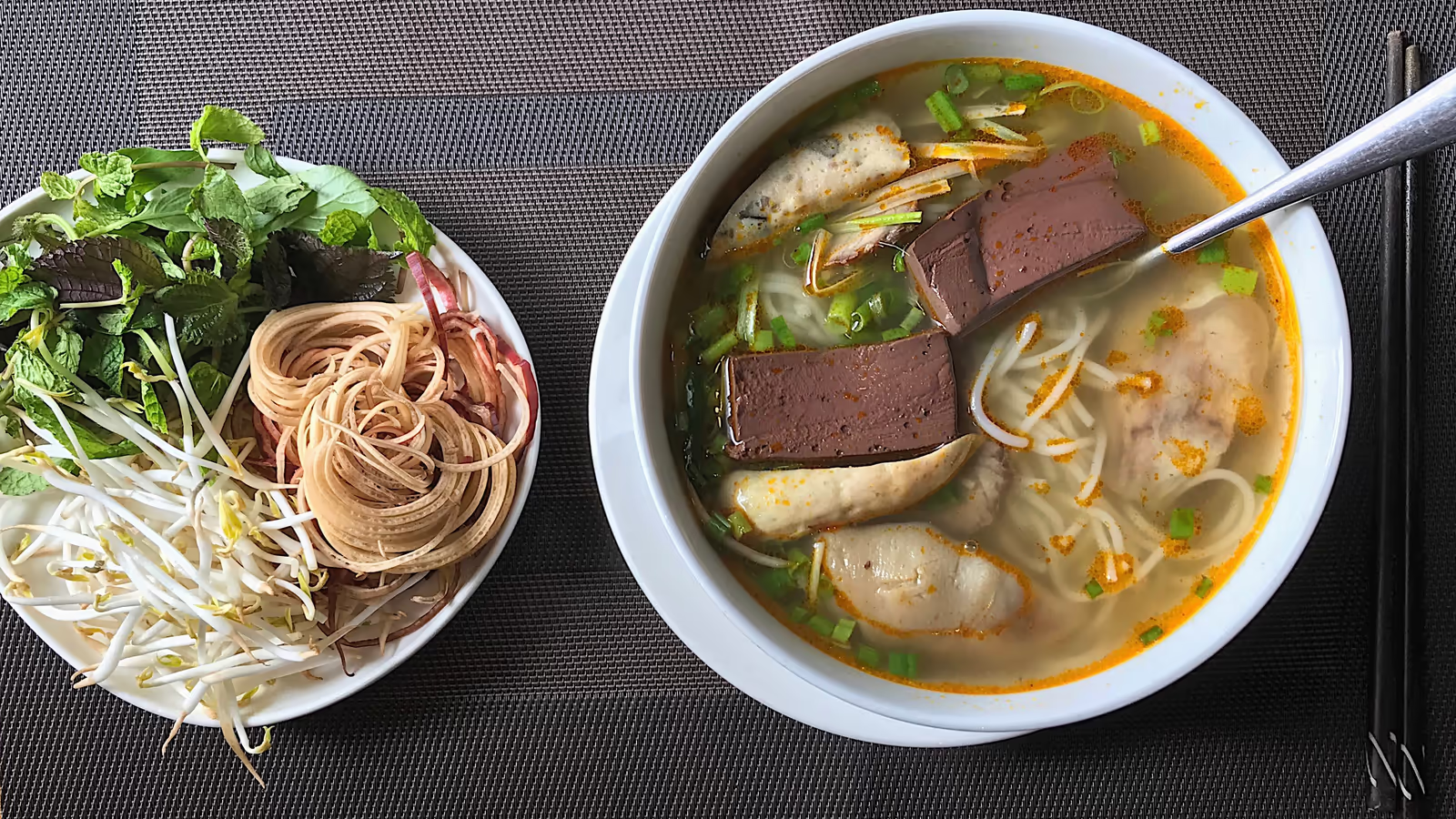
Vietnam has far more noodle dishes than pho and bun cha, and they follow a simple pattern: the noodle shape and the region tell you what the bowl is. Thick round bun and a red, lemongrass broth means bun bo Hue from the centre. Wide yellow noodles with almost no broth mean mi Quang from Quang Nam. Chewy clear tapioca noodles in a sweet pork broth mean hu tieu from the south. Bowls cost about 30,000 to 80,000 VND on the street (vietnamtourism.com, 14 and 20 October 2026), and a few of them are made of ingredients that need a question if you are vegetarian or allergic.
We are a Sapa trekking company, not a food magazine, so this guide is built from published food sources that we read on 3 November 2026, with the source and date next to each price and claim. Where two sources disagree, as they do on the region of bun rieu and on the chilli in bun bo Hue, we say so. Step 0 of this guide was to check what the site already covers: our pho guide and bun cha guide each deal with one dish, and no page covers the other noodle dishes, so this page is about those and does not repeat them. It gives the most room to the central dishes, which connect to our Hue, Hoi An and Da Nang guides.
Key Takeaways
- Noodle shape is a clue: bun is round rice vermicelli, pho is flat and soft, hu tieu and banh canh are chewy tapioca blends, mi is egg noodle, and mi Quang and cao lau are wide and chewy (vietnamtourism.com, 14 October 2026).
- Typical prices: bun bo Hue 40,000 to 80,000 VND, bun rieu 30,000 to 65,000, hu tieu 30,000 to 80,000, mi Quang 40,000 to 60,000, cao lau 35,000 to 50,000 (two pages, October 2026).
- Bun bo Hue is the spicy one and the hardest to make vegetarian; bun rieu uses crab and, often, snails; hu tieu sa te has a peanut broth.
- Most noodles here are rice or tapioca, so mostly gluten-free, but egg noodles such as mi vit tiem and some hu tieu are not, and soy sauce in a broth may contain wheat.
- Order with mot to (one bowl) and say khong cay for no chilli; eat within 10 to 15 minutes while the broth is hot.
The Noodles: Bun, Pho, Hu Tieu, Mi and the Rest
Start with the noodle, because the name of the dish usually begins with it. The table puts what two pages say about each type side by side. They are travel and food sites and agree on the broad picture.
| Noodle | What it is | Where you meet it |
|---|---|---|
| Bun | Round rice vermicelli: thick for bun bo Hue, thin for bun rieu, fine for bun thang | Bun bo Hue, bun rieu, bun thang, bun cha ca, bun oc, bun thit nuong |
| Pho | Flat rice noodle, soft and silky, not chewy | Pho (our separate guide) |
| Hu tieu | Tapioca or a rice-tapioca blend, chewy and slightly translucent, they do not soften like pho noodles | Hu tieu Nam Vang, hu tieu My Tho |
| Banh canh | Thick tapioca or rice-tapioca noodle, about the thickness of a chopstick, similar to udon | Banh canh cua, banh canh Trang Bang |
| Mi | Egg noodle, springy | Mi vit tiem; egg noodles on request in hu tieu |
| Mi Quang noodle | Wide turmeric-yellow rice noodle | Mi Quang |
| Cao lau noodle | Chewy, almost soba-like, said to be made with water from the Ba Le well and ash lye | Hoi An only |
Glass noodles (mien) belong in this family too, but none of the pages we could read covers them, so we leave them out. The word bun is also not banh mi, the bread; for that, see our banh mi guide.
North: Bun Rieu and Bun Thang
The northern bowls are lighter, sourer and less spicy. Bun rieu, vietnamtourism.com says, is a soup of thin round rice noodles in a tomato broth stained orange with annatto, with pounded field crab, snails, fried tofu and pork, sometimes a poached egg, and a garnish of perilla and mint. One page describes the broth as sour from vinegar and unripe star fruit in the snail version (bun oc). It is a breakfast soup in the north, and the page says to look in residential neighbourhoods and not the tourist centre. Vegetarian bun rieu chay, without crab or fish sauce, is found at many vegan restaurants.
Bun thang is the most refined of the three. It was originally a Hanoi Lunar New Year dish, according to the second page, with fine vermicelli in a clear chicken-and-dried-shrimp broth topped with finely julienned omelette, chicken and pork sausage. It is mild. We have read the price for one named Hanoi shop, 60,000 to 80,000 VND at Bun Thang Ba Duc on Cau Go in the Old Quarter (20 October 2026), and no vegetarian or allergen note.
The two pages disagree about bun rieu. In the first, a key-facts line calls it a central and southern staple while the body calls it a northern soup, and its table says northern origin; the second lists it under the north. We have followed the body and the table. The pages also disagree on its spice, low or medium, so add chilli at the table. For the northern noodle you probably already know, see our bun cha guide, which is a different dish: grilled pork with noodles and dipping sauce, not a soup.
Centre: Bun Bo Hue, Mi Quang, Cao Lau and Bun Cha Ca
The central noodles are the boldest. They also connect most directly with the guides we have written on the coast, because mi Quang and cao lau belong to Da Nang and Hoi An.
Bun bo Hue
Bun bo Hue is the spicy beef noodle soup of Hue. Thick round rice noodles, closer to udon in texture than pho according to vietnamtourism.com (14 October 2026), sit in a broth of beef and pork bones with lemongrass, shrimp paste and chilli oil, topped with beef shank, pork knuckle and sometimes blood cake or pig trotter, with banana blossom, mint and lime on the side. The second page says the broth is stained red with annatto oil, and the two disagree on whether the chilli is built into the broth or added at the table. It is a full meal and not a light breakfast, and the Saigon version is often sweeter and less spicy, while Hanoi’s is a compromise.
Prices differ: 40,000 to 70,000 VND on the first page and 50,000 to 80,000 VND on the second, both dated 2026. The second names Quan Cam in Hue and Bun Bo Ba Thi on Nguyen Du Street, and says to skip the tourist restaurants near the citadel for neighbourhoods such as Phu Cat. For the city, see our Hue travel guide.
Mi Quang
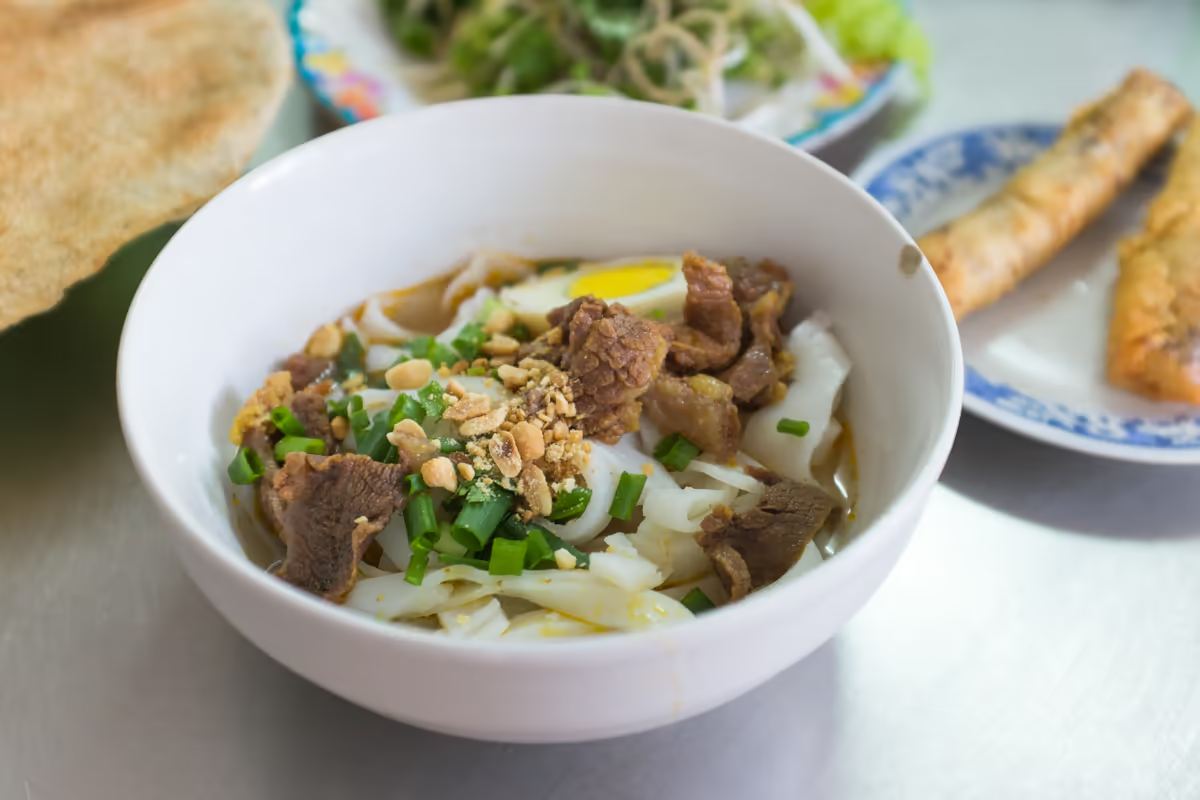
Mi Quang comes from Quang Nam province and is, in the words of the second page, less a soup than a noodle dish. Wide turmeric-yellow rice noodles sit in a small puddle of intensely concentrated, almost gravy-like broth with shrimp, pork, quail eggs, peanuts and a shard of crispy rice cracker (banh trang me). It is medium in heat. The page puts a bowl at 40,000 to 60,000 VND at Mi Quang Ba Mua in Da Nang or any roadside stand in Hoi An’s Cam Ha district, and gives the order phrase mot to mi Quang tom thit, one bowl with shrimp and pork. A frog-leg version costs 60,000 to 90,000 VND in Tam Ky.
Cao lau
Cao lau exists only in Hoi An. The chewy, almost soba-like noodles are reportedly made only with water from the ancient Ba Le well and lye from local cajeput wood ash, and the bowl holds just a few spoonfuls of broth, pork in a char siu style, herbs and crisp croutons. It is mild. The one price we have is 35,000 to 50,000 VND at Thanh Cao Lau on Thai Phien Street in the ancient town. The Ba Le well claim carries the word “reportedly” on the page, and we cannot check it. Our Hoi An guide covers the town.
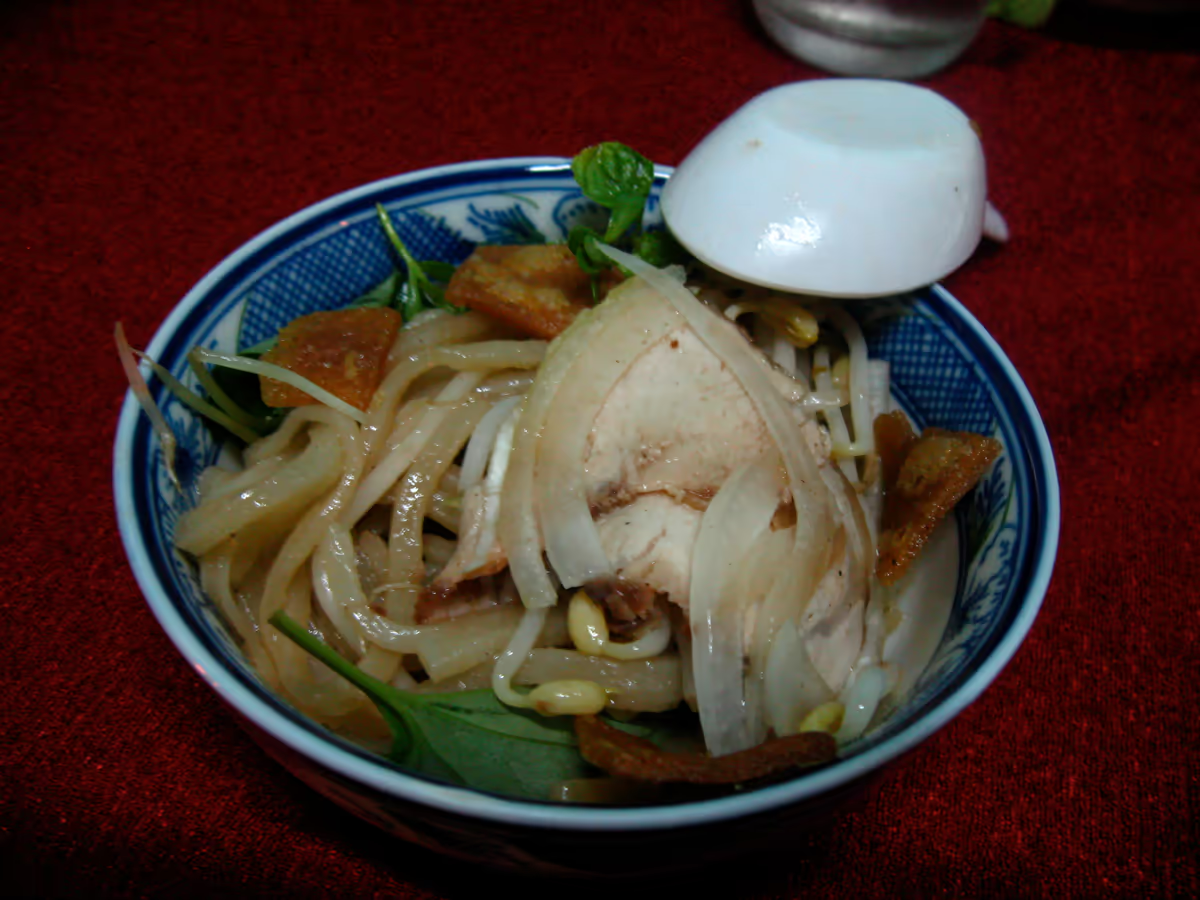
Bun cha ca
Bun cha ca is a coastal soup of round rice vermicelli in a clear, sweet-savoury broth with fish cakes made from mackerel or other coastal fish, found in Da Nang and Nha Trang. It is mild. The price is 35,000 to 45,000 VND at Bun Cha Ca 109 on Nguyen Chi Thanh in Da Nang. The name confuses visitors, because the grilled-pork bun cha of Hanoi is a different dish.
South: Hu Tieu and Banh Canh
The southern bowls are sweeter and lighter, and often come with a choice of wet or dry. Hu tieu is the south’s signature, with chewy tapioca noodles in a pork-based broth that vietnamtourism.com calls sweeter and cloudier than pho, though the second page calls the Nam Vang broth clear. Ho Chi Minh City is hu tieu country, the page says, and a second article calls Saigon its holy land. It has no spice by default.
Three versions recur. Hu tieu Nam Vang has dried shrimp, quail eggs, pork liver and shrimp, and you can ask for kho, dry, with the broth on the side. Hu tieu My Tho comes from the Mekong delta with a slightly sweeter broth, bean sprouts, garlic chives and lime, and is served drier. And hu tieu sa te is a Teochew specialty found in Chinatown with beef and offal in a peanutty, chilli-laden broth, which should be avoided or ordered khong cay. The pages give prices of 55,000 to 80,000 VND for Nam Vang at Hu Tieu Nam Vang Ty Lum in District 5, 40,000 to 60,000 VND for My Tho at Hu Tieu Chu Tho 44 in My Tho, and 70,000 to 95,000 VND for sa te at Quynh Hu Tieu Sa Te on Trieu Quang Phuc in District 5.
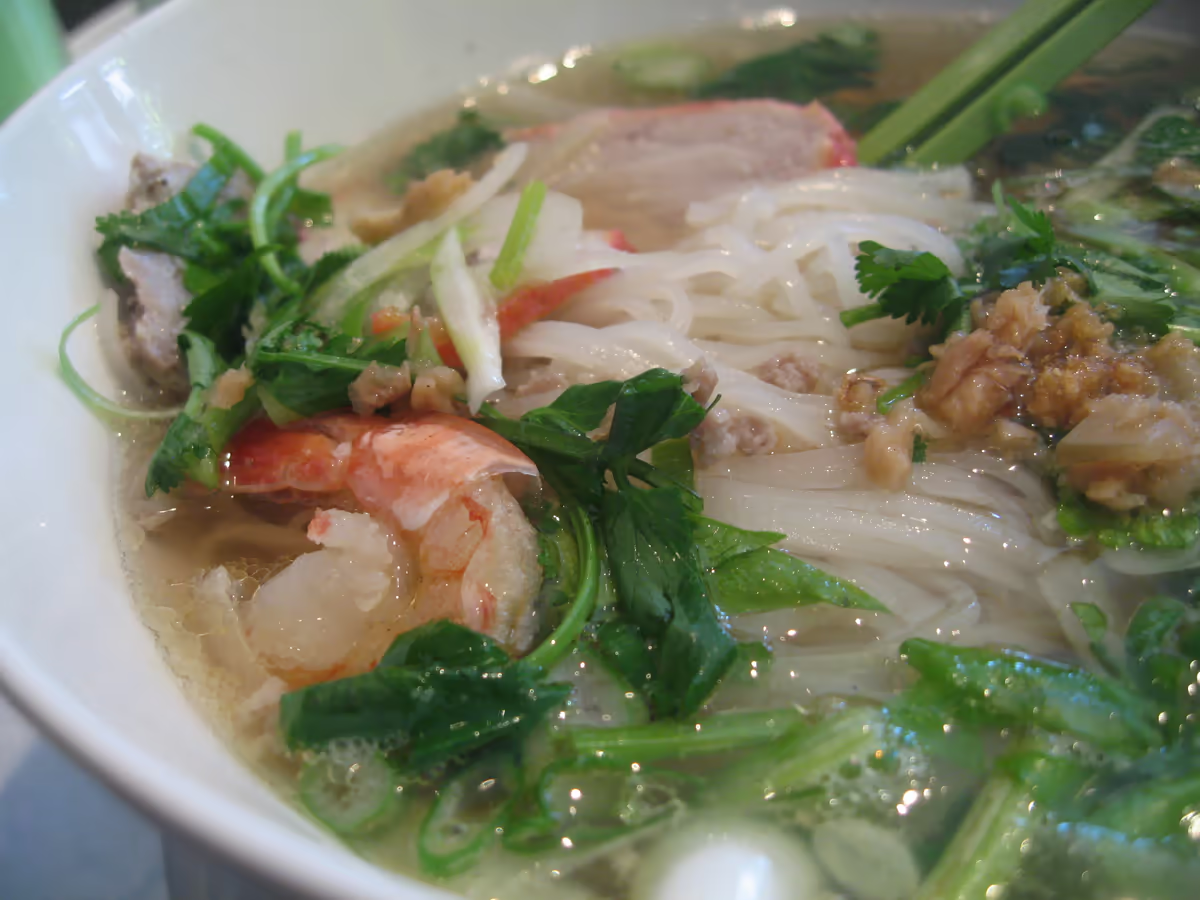
Banh canh is the thick-noodle soup, about as thick as a chopstick and similar to udon, in a very thick broth. One page calls it a central dish that is uncommon outside the centre, while the second lists crab banh canh as southern and gives two Ho Chi Minh City shops, which is a real disagreement. Banh canh cua has a goldenrod broth thickened with crab roe, crab claws, pork knuckle and quail eggs, and costs 70,000 to 120,000 VND at Banh Canh Cua 14 on Nguyen Phi Khanh in District 1; banh canh Trang Bang comes from Tay Ninh with a pork-bone broth and sliced pork, at 60,000 to 90,000 VND at Hoang Ty on Vo Van Tan. For the southern food scene, see street food by region.
Nine Bowls Side by Side
| Bowl | Region | Noodle | Broth or sauce | Heat |
|---|---|---|---|---|
| Bun bo Hue | Hue, centre | Thick round vermicelli | Beef and pork bones, lemongrass, shrimp paste, chilli oil | Hot |
| Bun rieu | North | Thin round vermicelli | Tomato and crab | Low or medium |
| Bun thang | Hanoi | Fine vermicelli | Clear chicken and dried shrimp | Mild |
| Mi Quang | Quang Nam | Wide yellow rice noodle | Small amount of strong broth | Medium |
| Cao lau | Hoi An | Chewy, soba-like | A few spoonfuls of broth | Mild |
| Bun cha ca | Da Nang, Nha Trang | Round vermicelli | Clear, sweet-savoury, fish cakes | Mild |
| Hu tieu Nam Vang | South | Chewy tapioca | Clear pork-bone | Mild |
| Banh canh cua | South (one page says centre) | Thick tapioca | Crab roe, thick | Mild |
| Mi vit tiem | Cantonese origin, District 5 | Springy egg noodle | Five-spice and medicinal herbs, braised duck | Mild |
What They Cost
Prices are low and the sources give them for named shops, which is the useful way to read them. The ranges below are the two pages’ own: vietnamtourism.com gives a street range of 30,000 to 80,000 VND (US$1.20 to 3.20) on 14 October 2026, and its other page gives 35,000 to 140,000 VND (US$1.40 to 5.60) on 20 October 2026, so the two do not match.
| Bowl | Range on page 1 (14 Oct) | Shop price on page 2 (20 Oct) |
|---|---|---|
| Bun bo Hue | 40,000 to 70,000 VND | 50,000 to 80,000 VND |
| Bun rieu | 30,000 to 60,000 VND | 45,000 to 65,000 VND at Bun Rieu Co Beo, near Hoan Kiem Lake |
| Bun thang | Not given | 60,000 to 80,000 VND at Bun Thang Ba Duc, Old Quarter |
| Hu tieu | 30,000 to 60,000 VND | 55,000 to 80,000 VND (Nam Vang); 40,000 to 60,000 VND (My Tho) |
| Mi Quang | Not given | 40,000 to 60,000 VND |
| Cao lau | Not given | 35,000 to 50,000 VND |
| Mi vit tiem | Not given | 90,000 to 140,000 VND |
If a price is double or triple these ranges in a tourist zone, ask for the menu and check the figure; our tourist-trap guide and currency guide cover small notes and honesty on the street.
How to Order and Eat
Order with the phrases vietnamtourism.com gives, which we have not tested ourselves. Say mot to for one bowl, khong cay for no chilli, it cay for less chilli, khong rau thom for no herbs and tinh tien for the bill. Eat within 10 to 15 minutes while the broth is hot, the same page says, and for bun bo Hue the other page suggests asking for chilli oil on the side. Our phrase guide has more.
Two practical tips. First, the best stalls sell out, one page says by mid-morning and the other by 11 am, so go for breakfast or an early lunch. Second, a bowl is a meal in itself. If you want a snack to go with it, our spring roll guide and dessert guide cover the sides.
Vegetarian, Allergies and Safety
Noodle soups are hard to adapt, and the broth is the problem. Vietnamtourism.com says bun bo Hue is the hardest to make vegetarian because its broth depends on beef and shrimp paste, bun rieu chay and hu tieu chay exist at vegan restaurants, and pho chay exists too. The allergens we can name are the ingredients the pages list: shrimp paste in the bun bo Hue broth, crab and shrimp paste in bun rieu, shrimp and quail eggs in hu tieu Nam Vang and mi Quang, and peanuts in mi Quang and the sa te broth. None of the pages gives allergy advice, so a serious allergy needs a plain conversation.
On gluten, the second page says most of these noodles are rice or tapioca, so mostly gluten-free, with the exceptions of mi vit tiem and certain hu tieu variants that use egg noodles, and warns that soy sauce in some broths may contain wheat. On safety, it says crowded shops are safer and the first page says the broth is boiled, and both suggest avoiding raw herbs and bean sprouts if you have a sensitive stomach. Our health guide and insurance guide cover the rest.
Where to Eat: What the Sources Name
The sources name a handful of shops and neighbourhoods. We list them as the pages give them, without having eaten at any of them, and with no claim that they are the best: Quan Cam and Bun Bo Ba Thi in Hue; Bun Rieu Co Beo near Hoan Kiem Lake and Bun Thang Ba Duc on Cau Go in Hanoi; Mi Quang Ba Mua and Bun Cha Ca 109 in Da Nang; Thanh Cao Lau in Hoi An; Hu Tieu Nam Vang Ty Lum, Quynh Hu Tieu Sa Te, Banh Canh Cua 14, Hoang Ty and Hai Ky Mi Gia in Ho Chi Minh City; and Hu Tieu Chu Tho 44 in My Tho. Shops close, change hands and change name, so check on a map on the day.
A first noodle week, north to south
This route is our own suggestion, built from the regions above and not a sourced itinerary, and each stop uses a dish the sources describe.
- Hanoi: a breakfast bun rieu or bun thang, with bun cha and pho from our own guides for the rest of the north.
- Hue: bun bo Hue, ordered it cay the first time, in a neighbourhood shop and not near the citadel.
- Da Nang and Hoi An: mi Quang for lunch and cao lau in the ancient town, each with a different noodle.
- Ho Chi Minh City: hu tieu, wet and then dry, and banh canh if you like a thick noodle.
Reading a menu: the name tells you the noodle
Most noodle dishes are named noodle first and topping second. Bun means vermicelli, so bun bo is vermicelli with beef and bun rieu is vermicelli with crab. Mi means wheat or egg noodle, hu tieu means the tapioca noodle and banh canh means the thick one. The word after tells you the region (Hue, Nam Vang, My Tho) or the topping (cua, crab; ca, fish; chay, vegetarian). The meanings are standard Vietnamese, and the pages we read confirm chay and cua in their own entries.
What the sources do not cover
Four gaps are worth stating. No page gives mien (glass noodle) dishes, bun dau mam tom, bun mam or nui xao. None names a Sapa noodle shop. The two vietnamtourism.com pages and the 2020 blog do not agree on the region of bun rieu or banh canh. And none gives an allergen warning, only the ingredients. If any of these matters, ask the cook, and tell us what you learn so that we can correct the page.
Noodles on a Sapa Trip
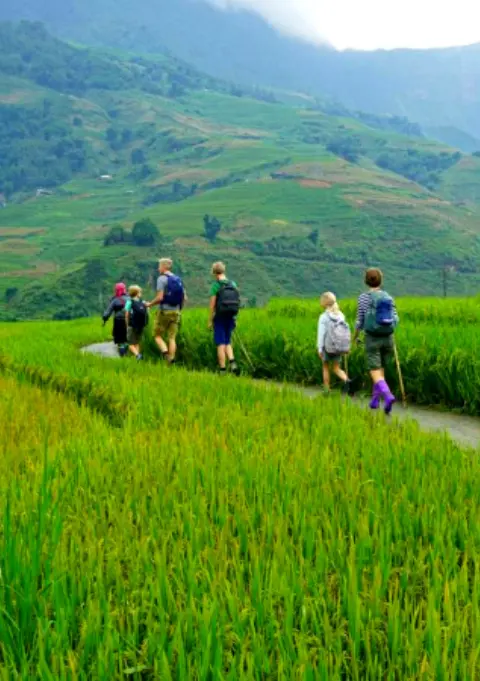
The pages we read cover no Sapa noodle shop, so we do not name one. The sensible route is the one our other guides take: eat the northern bowls in Hanoi before or after the mountains, and the central bowls on the coast if you continue south. Our guide to getting to Sapa shows the route, Sapa to Da Nang shows the road to the central bowls, and the Da Nang weather guide tells you when the noodle-and-coast trip is dry. A day on foot in the Muong Hoa valley with a local guide is a good start, and the tour cards below show the options.
Sapa Treks That End With a Hot Meal
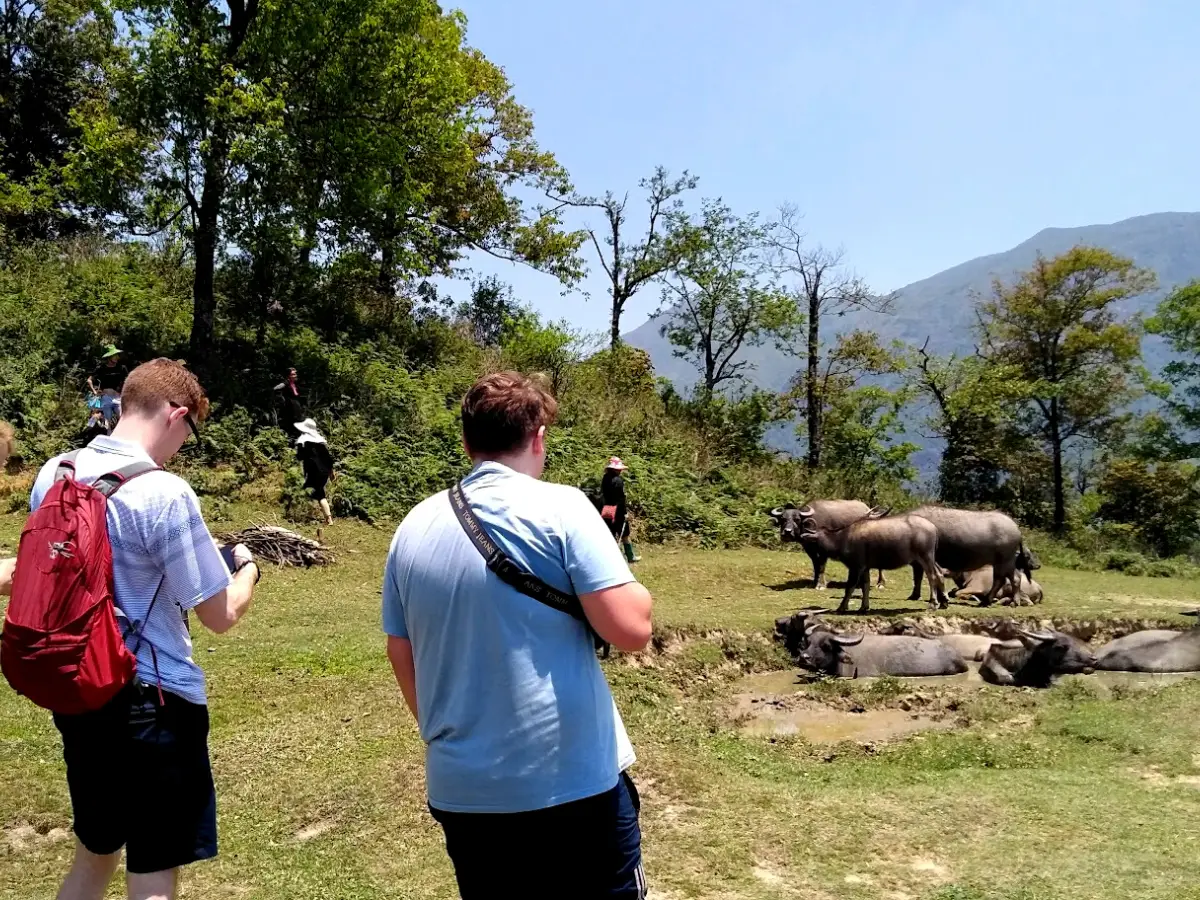 1-Day Trek
Trekking Through Rice Terraced Fields
Lao Chai to Ta Van with lunch at a family restaurant in Y Linh Ho.
 Homestay
Rice Terraced Fields & Homestay
Dinner and breakfast with a family in Ta Van, lunch on day one.
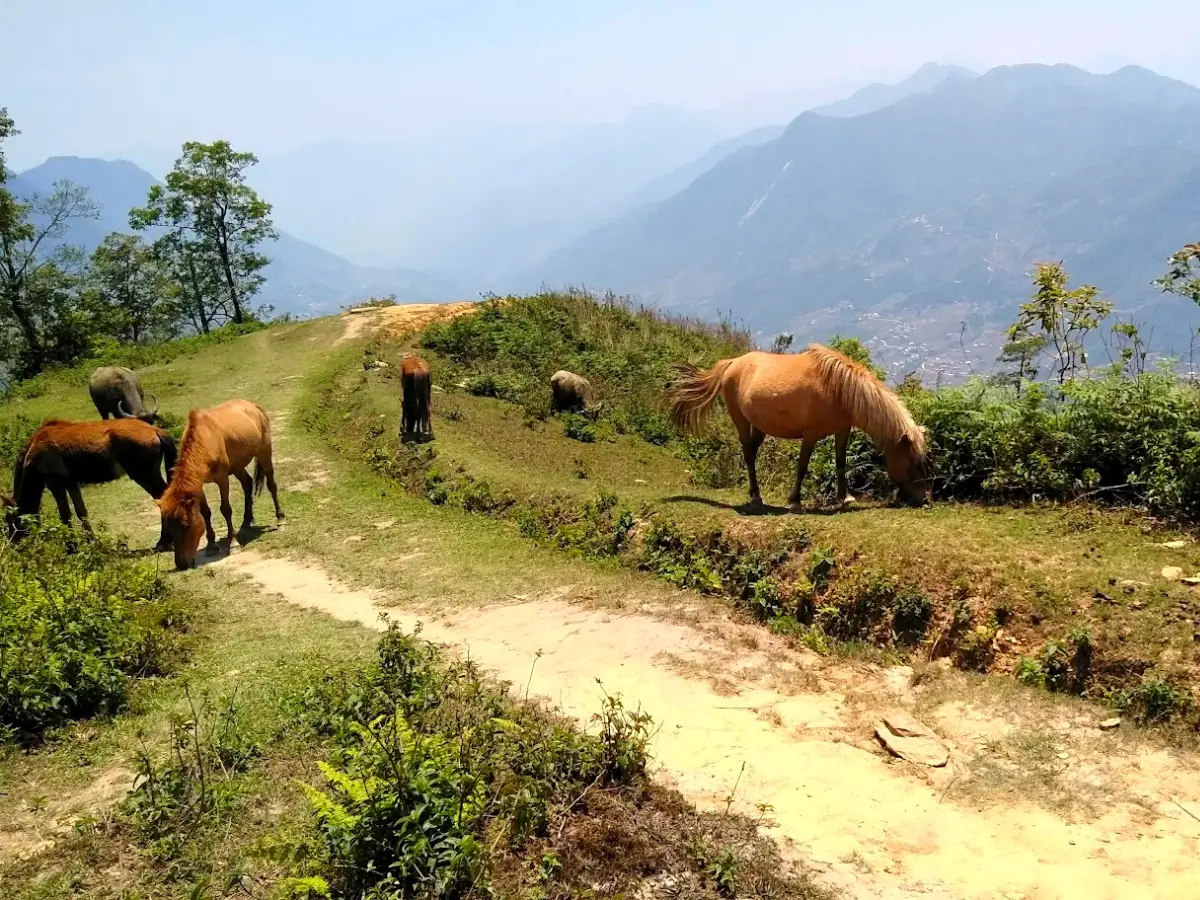 Local Favourite
Mountain Views and Villages Trek
Lunch at a restaurant run by local people in Hang Da village.
Sources and the Dates We Checked Them
We read these pages on 3 November 2026. Where a page could not be opened or two pages disagree, the text says so. All are commercial or travel sites.
- vietnamtourism.com, bun rieu vs bun bo Hue vs pho vs hu tieu, updated 14 October 2026.
- vietnamtourism.com, beyond pho: 15 Vietnamese noodle soups, updated 20 October 2026; the source of most shop names and prices, and of the ordering phrases.
- evivatour.com, Vietnamese noodles part 1: pho, hu tieu and banh canh, a tour-company blog dated August 2020 and November 2021, with no prices.
- Two further pages could not be used: the Afar article returned an empty page and The Culture Trip timed out. The pages do not cover mien (glass noodles), bun dau mam tom, bun mam, banh da cua, bun moc or nui xao, so this guide does not either.
The Part We Do Sell
- Hanoi to Sapa transport — sleeper buses, limousines and the overnight train, bookable with your trek
- Hanoi to Sapa guide — what each option costs and how long it takes
- How to get to Sapa — the first leg, in detail
Rent at Our Office Before You Trek
 Gear Rental
Trekking Boots Rental
Waterproof ankle-support boots. Cleaned and checked before each rental. Available at 105 Thach Son Street.
 Gear Rental
Walking Poles Rental
Trekking poles available to rent at $2/day at our office, 105 Thach Son Street. Essential for descents.
Frequently Asked Questions
Bun is round rice vermicelli, thick in bun bo Hue and thin in bun rieu, while pho is a flat, soft rice noodle that should be silky and not chewy (vietnamtourism.com, 14 October 2026). Hu tieu and banh canh use chewier tapioca or rice-tapioca blends.
A spicy beef and pork noodle soup from Hue. Thick round noodles sit in a lemongrass broth with shrimp paste and chilli oil, topped with beef shank, pork knuckle and sometimes blood cake. A bowl costs about 40,000 to 80,000 VND, and it is the hardest noodle soup to make vegetarian.
A noodle dish from Quang Nam province, found in Da Nang and Hoi An: wide turmeric-yellow rice noodles with a small amount of concentrated broth, shrimp, pork, quail eggs, peanuts and a rice cracker. It is medium in heat and costs about 40,000 to 60,000 VND.
A noodle dish found only in Hoi An, with chewy noodles reportedly made with water from the Ba Le well and ash lye, a few spoonfuls of broth, pork, herbs and crisp croutons. It is mild and costs about 35,000 to 50,000 VND.
The south's signature noodle soup, with chewy tapioca or rice-tapioca noodles in a pork broth that one page calls sweeter and cloudier than pho. It comes wet or dry, with Nam Vang toppings such as dried shrimp and quail eggs or the simpler My Tho version, and costs about 30,000 to 80,000 VND.
Only if you ask and choose carefully. Bun rieu chay, hu tieu chay and pho chay exist at vegan restaurants, but bun bo Hue is the hardest to adapt because its broth depends on beef and shrimp paste. Most sauces and broths contain fish sauce or shrimp paste.
Mostly, since they use rice or tapioca noodles. The exceptions are mi vit tiem and certain hu tieu variants that use egg noodles, and soy sauce in some broths may contain wheat (vietnamtourism.com, 20 October 2026).
On the street about 30,000 to 80,000 VND (US$1.20 to 3.20), with named shops at 35,000 to 140,000 VND depending on the dish. Mi vit tiem and banh canh cua are at the top of the range (vietnamtourism.com, 14 and 20 October 2026).