 Sinh Giang

Most scams in Vietnam are not clever. They are a price nobody said out loud, a meter nobody watched, or a menu nobody asked for. That is good news, because a price you can check is a price you can defend. This guide is a field list of 15 traps recorded in Hanoi and Sapa, each with what it looks like, the reference price or rule we could source, and what to do on the spot.
It is not a safety essay. Our Is Vietnam Safe guide and Solo Travel Vietnam guide already cover the big picture, with a short scam table each. This page goes deeper on the numbers: real cases from 2025 and 2026, official notices and the prices we can point to. Where we found no figure, we say so instead of guessing.
All three multiples come from VnExpress International (3 March 2026). They are the newspaper’s comparisons for single cases, not an average.
How We Checked, and What Counts as a Scam
We use two labels. Documented means we opened a published source (an official notice, a government travel advisory or a news report) and name it with its date. Common practice means a long-running habit that guides describe but for which we found no figure, so we give none. Every source was opened on 31 October 2026. Prices are in Vietnamese dong, with a dollar figure only where the source gave one.
A scam here is a charge that is hidden, invented or many times the going rate. A seller who names a high opening price and accepts a polite “no, thank you” is haggling, not cheating. Fares and rules change, so confirm anything important before you pay. The Sapa figures come from our own pages on getting around Sapa and permits and tickets.
Before You Land: Visa, Airport and Train Traps
Three scams start before you reach a hotel: a fake visa website, an unlicensed airport ride and a train ticket bought from the wrong place.
1. Fake e-visa websites
Documented. Vietnam News Agency, 5 August 2026; Immigration Department notice reported by Vietnam News, 26 October 2022; the official e-visa portal. Checked 31 October 2026.
Lookalike sites buy search ads, register misleading domain names and promise “instant” or “guaranteed” visas. The Vietnam News Agency reported on 5 August 2026 that authorities advise using only the official portals, evisa.gov.vn and thithucdientu.gov.vn, and only addresses ending in .gov.vn; a fake site can also take your passport details and card number. The Immigration Department’s 2022 notice put the e-visa fee at US$25, paid through the official electronic gateway, and the portal says it is not refunded if the application is refused.
How to check: type the address yourself, never click an advert, and read the fee on the portal before you pay. The 2022 figure may have changed, so treat it as a yardstick for “far too much”. If it happened: keep every receipt, tell your bank and report it to the police, as the officer quoted by the Vietnam News Agency advised.
2. The unlicensed airport taxi and the “free hotel shuttle”
Documented. UK Foreign, Commonwealth and Development Office travel advice for Vietnam; a Vietnam Airlines guide to the airport transfer. Checked 31 October 2026.
The UK government’s advice for Vietnam says to be cautious about offers of free bus transfers to hotels unless you organised them in advance, because they may be scams. It adds that metered taxis from larger firms are generally reliable, that the driver should identify themselves before you set off, and that Grab or XanhSM supply licensed cabs. A Vietnam Airlines guide warns of unlicensed taxis that approach you at the airport and lists bus 86 at VND45,000, paid in cash, running about 5 am to 9 pm to Hanoi Railway Station. Other guides quote other fares, so confirm on the day.
How to check: arrange the transfer with your hotel before you fly, or see the price in a ride app before you walk to the car. If a driver approaches you inside arrivals, say no. If it happened: pay only the agreed price and ask your hotel to speak to the driver.
3. Look-alike train-ticket sites
Documented. Vietnam News, 7 January 2019, quoting Vietnam Railways. Checked 31 October 2026.
Vietnam Railways has long warned about unofficial websites that resell tickets at a premium. In its 2019 example, an SE1 sleeper ticket from Hanoi to Ho Chi Minh City cost US$92.56 (VND2.1 million, with a 4 per cent service charge) on an unofficial site and VND1.3 million (US$55.9) at the official outlets. The year is old; the gap is the lesson. The railway named dsvn.vn and vetau.com.vn as its online outlets, plus its own company sites, stations and ticket offices.
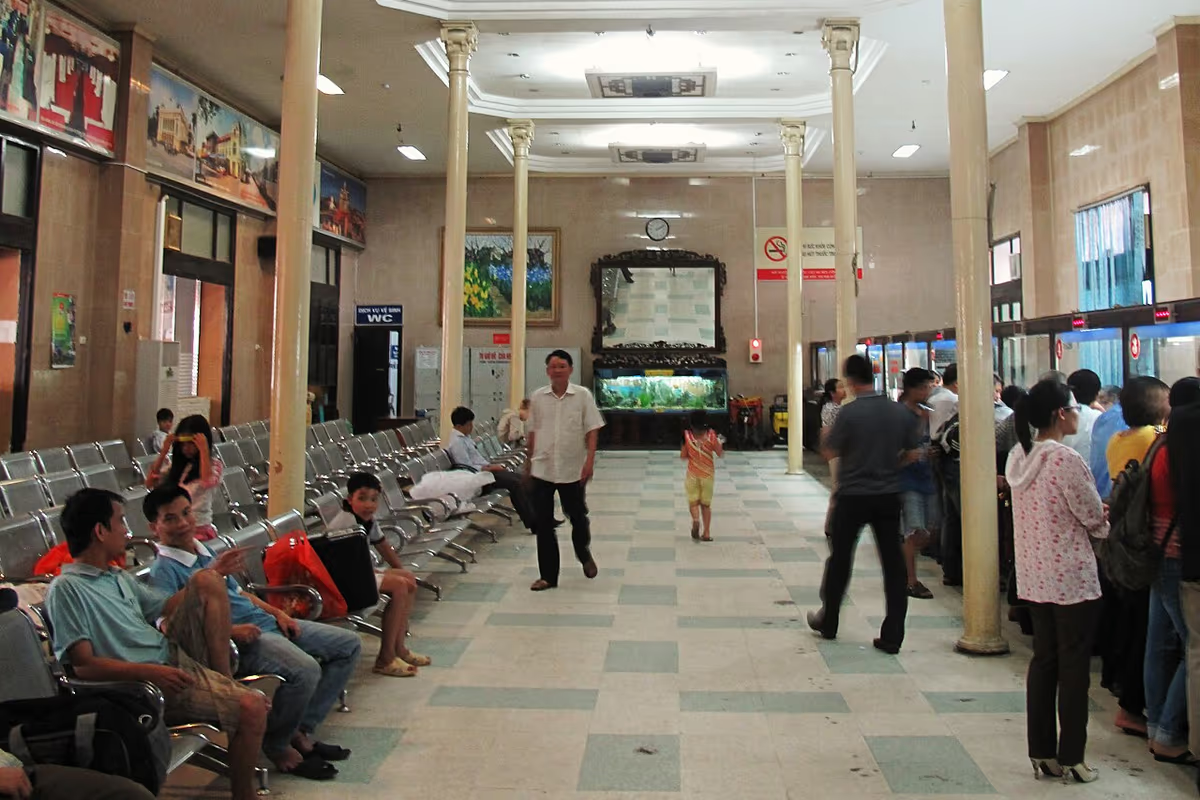
How to check: buy at the station counter or on the official outlets, and compare any other price with theirs. For the night train to Lao Cai, our Hanoi to Sapa timetable and King Sapa Train review explain the cabins. If it happened: take the confirmation to a station ticket office well before travel day and ask the railway to confirm it.
Our Transport page lists the Hanoi–Sapa sleeper bus, limousine van and night train with their prices, so you know the fare before you pay.
On the Streets of Hanoi: Rides, Vendors, Menus and Change
For a street-by-street plan of the area, see our Hanoi Old Quarter and Train Street guide.
The Old Quarter is where most recorded overcharging happens. Tran Trung Hieu, deputy director of the Hanoi Department of Tourism, told VnExpress in March 2026 that gouging persists there, especially during festivals, and that the department has set up a tourist hotline and added weekend security on pedestrian streets.
4. The taxi that ignores the meter
Documented. VnExpress International, 3 March 2026; UK government travel advice. Checked 31 October 2026.
In July 2025 a group of Filipino tourists paid VND1.4 million (about US$53) for a taxi ride of less than one kilometre in Hanoi, roughly 50 times the normal fare, VnExpress reported. The UK advice in entry 2 is the simplest defence: a larger firm, a driver who identifies themselves, or a ride app.
How to check: book in an app and read the price before you get in, or insist on the meter and watch it start. Photograph the plate before you leave the kerb. If it happened: pay no more than the meter or app price, and take the photo to the police or your hotel. Do not hand over a large note while you argue; entry 9 explains why.
5. The motorbike-taxi fare that grows on the way
Documented. VnExpress International, 3 March 2026; VietNamNet, 26 February 2026. Checked 31 October 2026.
On 24 February 2026 an American visitor was charged VND1 million (about US$38) for a 7 km motorbike-taxi ride in Hanoi, which VnExpress put at about 14 times the usual fare. VietNamNet reported that the driver admitted taking her outside the agreed route; he apologised and refunded VND800,000, so the ride cost her VND200,000.
How to check: use GrabBike or XanhSM so the fare is fixed before you sit. If you take a street rider, type the total into your phone and show it, because a “hundred” can become a hundred thousand. If it happened: the case above was settled within two days after the tourist complained to police, so complaining works.
6. The cyclo ride sold by the hour
Documented. Vietnam News, 23 September 2025; VnExpress International, 23 September 2025 and 3 March 2026. Checked 31 October 2026.
On 22 September 2025 two cyclo drivers charged an Australian family of four VND1.2 million (about US$46) for a short Old Quarter ride. Hoan Kiem ward police had them apologise, return the full amount and commit to charging fares in line with regulations; Vietnam News reports a warning, not a fine. VnExpress first called the fare six times normal and later three times the regulated rate. The benchmark it gave was a 60-minute Old Quarter cyclo tour advertised on booking apps for nearly VND200,000, and it cited no official tariff.
How to check: agree the total for the whole party and the duration before you sit, on a phone screen if need be. If it happened: ask a shopkeeper to call the ward police.
7. Street vendors and the price that doubles when you hold the item
Documented. VnExpress International, 13 January 2026 and 3 March 2026. Checked 31 October 2026.
On Hang Gai Street in January 2026 a vendor asked two foreign tourists for VND250,000 (about US$9.50) for a conical hat that normally costs VND40,000 to 70,000. Police questioned her; she dropped to VND150,000 and the tourists declined. VnExpress’s March roundup says the vendor was fined. The fruit-basket photo and the shoe-shine bill are in our safety guide’s scam table.

How to check: ask the price, then see what the shop next door charges. A fair vendor accepts “no, thank you” and smiles. Do not take a pole, hat or basket in your hands before the price is said. If it happened: hand the item back, not the money.
8. The menu with no prices
Documented. VnExpress International, 3 March 2026; Tuoi Tre, 2 January 2023. Checked 31 October 2026.
The Hanoi tourism official quoted above called unposted prices and forced purchases fraudulent practices. The clearest Sapa example is older but official: in January 2023 the People’s Committee of Sa Pa Town fined a restaurant owner VND7 million (about US$296) for failing to sell according to its listed prices, after a dish with a few slices of wild boar was charged at VND495,000 (about US$21). Seafood sold by weight and drinks without a printed price are the usual surprises.
How to check: ask for a menu with prices before you order, photograph it, and ask for the total of anything sold by weight. If it happened: offer to pay the listed price, show your photo, and ask for the bill in writing. Do not leave your passport or phone behind as a guarantee.
9. Change, notes and the extra zero
Common practice. No figure found. Travel guides repeat the warning; we found no State Bank of Vietnam source on the notes, so we describe no colours.
Vietnamese notes carry many zeros, and travel guides repeatedly warn that two of the high notes are easy to confuse in a hurry. The trick is a quick count: you hand over a large note and receive change for a smaller one, or a note is swapped before it reaches the till.
How to check: count the zeros on each note aloud, hand over one note at a time and say its value, and carry a few small notes so you are never at someone’s mercy for change. Count your change before you leave the counter. If it happened: say so at once and politely; honest shopkeepers will correct it on the spot.
10. “Your hotel is closed”
Common practice. No figure found. Covered briefly in our solo-travel guide.
A driver tells you your hotel is shut, full or flooded, then offers a “better” one that pays him commission. It works best on tired arrivals at night.
How to check: call the hotel yourself, from the number on your booking confirmation, and show the driver the address on your screen. If it happened: get out of the car at the place you chose, and book the next night online, not with the driver.
Tours and Rentals: Where the Contract Matters
The next two traps are about what you agree before the trip. A written list of what is included defeats both.
11. The tour that changes after you pay
Common practice. No figure found for Hanoi or Sapa. Our own prices are quoted from our own pages.
The pattern is a low headline price, then extra “fees” on the day, an unplanned shopping stop, or a different guide or vehicle from the one in the photos. It is hardest to spot when the sale happens through a street tout or a chat with no company name.
How to check: ask for the company name, the street address and a written list of what the price covers, then look the address up on a map. Our solo-trekking guide gives the yardstick for Sapa: a group tour costs $35–45 USD per person and includes the guide, lunch at a local family home and an insurance-covered activity, and a private guided tour for two starts around $60–85 USD in total. Our cost breakdown shows what each line is for. If it happened: pay only what the written list says, and keep the chat.
12. The motorbike rental: passport, damage and licence
Documented. UK government travel advice; Tuoi Tre, 14 May 2026; our Getting Around Sapa guide (September 2026). Checked 31 October 2026.
The UK advice is direct: do not use your passport as a deposit for hiring vehicles, and do not hire a motorbike if you are not an experienced rider. The “damage” trick, where a shop blames you for an old scratch and keeps the deposit, is in our safety guide’s table. The licence is the part nobody mentions at the counter. Tuoi Tre reported on 14 May 2026 that Khanh Hoa traffic police stopped foreigners without a valid international driving permit, fined one and impounded his bike, and fined the bike’s owner for letting an unlicensed person ride it.
In Sapa, our getting-around guide puts rental bikes at roughly VND150,000 to 200,000 a day and says we see visitors get hurt on those roads most years. How to check: film every side of the bike with the date visible, leave a cash deposit with a receipt instead of your passport, and ask what your permit covers. If it happened: pay for real damage only, against a written estimate.
Our 3 Most Popular Sapa Tours
 Best Seller
Trekking Through Rice Terraced Fields
Group price, guide and lunch at a family home are listed on the page before you book.

Rice Terraced Fields & Homestay
Overnight with a Black H'mong family in Lao Chai, with the homestay booked for you.

Fansipan Trek One Day Tour – Roof of Indochina
Our guides carry the mountain permit; the group is confirmed 48 hours ahead.
Sapa: Fees, Guides and Arrival
Sapa has fewer scams than Hanoi, and they are mostly fees that do not exist, guides who cannot show a card and rides priced by guess.
13. The roadside “ticket” and the permit that is only a fee
Documented. Our permit guide, checked 30 October 2026, citing a Vietnam tourism page updated 24 October 2026 and an operator news page dated 10 March 2026.
Our permit guide found no source that requires a trekking permit for the usual valley walks (Muong Hoa Valley, Lao Chai, Ta Van, Cat Cat, Ta Phin), though it could not open an official text. What exists is tickets. Cat Cat village charges about VND150,000 per adult and locals do not pay; the Fansipan cable car costs VND850,000 per adult round trip, and it is a ticket, not a permit. The scam is a person on the road, or at a car park, who sells a “permit” or “entrance ticket” for a trail that has no ticket office. Our Cat Cat guide covers the real entrance.
How to check: pay at a ticket window and ask for a printed receipt; fees change, so confirm both prices at the office. If it happened: ask your host or guide whether a ticket exists for that route before you hand anything over.
14. The guide with no card, and the pressure to hire
Documented. Vietnam Law Magazine on Article 59 of Law 09/2017/QH14; our permit guide and solo-trekking guide. Checked 31 October 2026.
Article 59 of the Law on Tourism sets the conditions for a tour guide card, and a person needs one to work as a guide. Our permit guide adds the one Sapa trek where the rules are clear: Fansipan on foot needs registration and a licensed operator with a guide. For ordinary valley day walks, our solo-trekking guide says no law requires a guide. The trap is the stranger at the bus drop who insists you need one, promises a “free” trek and then pushes a homestay or a bill.
Be fair to the villagers: Black H’mong and Red Dao women who walk beside visitors and sell bracelets or bags are earning a living, which is not a scam. Ask the price before you take anything in your hand. How to check: for a paid guide, ask for the card and the company name, and for what the price includes. If it happened: thank the person and walk on.
15. Arrival in Sapa: rides priced by guess and the “full” homestay
Documented for prices (our Getting Around Sapa guide, September 2026); common practice for the homestay line, no figure found.
Our getting-around guide gives local figures to measure a quote against (the price-check table below repeats them). Metered taxis start around VND11,000 and add roughly VND13,000 to 15,000 per kilometre; xe om has no meter, and a ride to Ta Van or Lao Chai is typically VND100,000 to 150,000 one way. Some drivers switch to a flat night rate after about 9 or 10 pm.
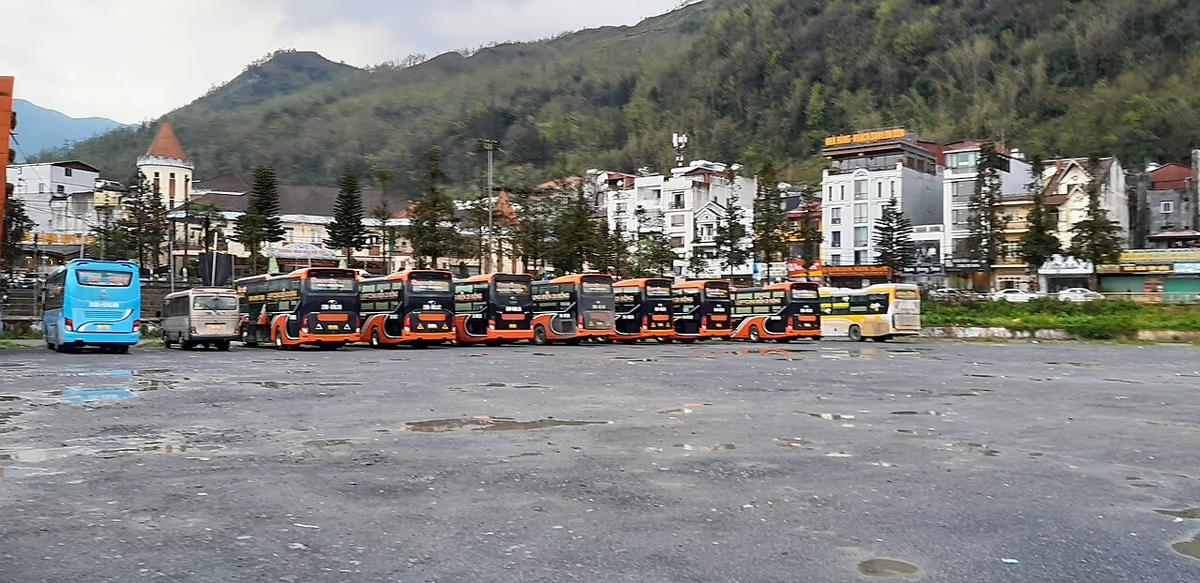
The other line to know is the driver or tout at the bus drop who says your homestay is full, closed or too far, and offers another. How to check: arrange a pickup with your hotel before you arrive, agree any xe om price out loud before you sit, and phone your host if someone says they are full. If it happened: get down, walk a few steps and message the host to send a ride.
The Price-Check Table
These are the reference figures we could source. Use them as a yardstick, not a tariff: a price far above the row is the moment to stop and ask.
| What you are paying for | Reference figure | Source and date | How to check |
|---|---|---|---|
| E-visa fee | US$25 | Immigration Department notice, 26 Oct 2022 | Read the fee on the official portal first |
| Bus 86, Noi Bai to Hanoi Railway Station | VND45,000, cash | Vietnam Airlines guide, 31 Oct 2026 | Other guides differ; ask on board |
| SE1 sleeper ticket, Hanoi to Ho Chi Minh City | VND1.3 million official; VND2.1 million unofficial | Vietnam News, 7 Jan 2019 | Buy at the station or official outlets |
| Cyclo, one hour in the Old Quarter | Nearly VND200,000 on booking apps; no official tariff | VnExpress, 23 Sep 2025 | Agree the total for the party first |
| Cat Cat village entrance | About VND150,000 per adult; locals free | Our permit guide, 30 Oct 2026 | Pay at the ticket window; ask for a receipt |
| Fansipan cable car, adult round trip | VND850,000 | Our permit guide (operator page, 10 Mar 2026) | Confirm at the ticket office |
| Sapa metered taxi across town | VND40,000–60,000 (flag about VND11,000, then VND13,000–15,000 per km) | Our getting-around guide, Sep 2026 | Watch the meter; question flat night rates |
| Sapa xe om to Ta Van or Lao Chai | VND100,000–150,000 one way; a short hop VND20,000–30,000 | Our getting-around guide, Sep 2026 | Agree the total before you sit |
| Sapa motorbike rental, per day | VND150,000–200,000 | Our getting-around guide, Sep 2026 | Cash deposit and receipt, not your passport |
If You Have Already Paid: Five Steps
You can often get the money back. The February 2026 motorbike-taxi refund came within two days of the complaint, and the cyclo drivers repaid in full at the police station.
Stop and pay nothing more
Say calmly that you will pay the agreed or listed price. Do not hand over a passport, a phone or a large note.
First minutePhotograph the evidence
The meter, the plate, the menu, the receipt or the chat. Photos give a police officer something to act on.
Before you leaveGo to the ward police, with a local if you can
Hoan Kiem ward police handled the cyclo and motorbike-taxi cases above. Ask your hotel to phone ahead. Emergency numbers are in our safety guide.
Same dayAsk your hotel to call the Hanoi tourist hotline
VnExpress reports that the Hanoi Department of Tourism runs a hotline. We could not confirm the number, so ask your hotel for the current one.
Same dayTell your bank or card provider
If you paid by card or PayPal, ask for the charge to be disputed at once, and replace the card if you typed the number into a fake site.
Within daysWhen a Fixed Price Helps
Almost every trap above disappears when the price is written down before the trip and every line has a name. That is the idea behind our Sapa tours: the price is stated per person, and our solo-trekking guide spells out what a group tour covers. Our tour list shows each tour’s price.
If you are holding a quote that feels odd, compare it with our trekking cost breakdown, or send it to our team on WhatsApp and ask whether it is in range. Our office is at 105 Thach Son Street in Sapa.
Sources and Check Dates
Every source below was opened on 31 October 2026.
- Vietnam News Agency, e-visa report, 5 August 2026; Vietnam News, Immigration Department warning, 26 October 2022; the official e-visa portal (new addresses from 11 November 2024, refund rule).
- UK Foreign, Commonwealth and Development Office, Vietnam safety and security advice; Vietnam Airlines, Noi Bai transfer guide (neither shows a date).
- Vietnam News, unofficial train-ticket websites, 7 January 2019.
- VnExpress International: overcharging roundup, 3 March 2026; Hanoi vendor, 13 January 2026; cyclo case, 23 September 2025.
- Vietnam News, cyclo refund, 23 September 2025; VietNamNet, driver refund, 26 February 2026.
- Tuoi Tre News: Sa Pa restaurant fine, 2 January 2023; Khanh Hoa permit checks, 14 May 2026.
- Vietnam Law Magazine, Article 59 of Law No. 09/2017/QH14.
- Our pages: Sapa permit guide (30 October 2026), Getting Around Sapa (September 2026), Trekking Sapa Without a Guide.
Not confirmed: the current e-visa fee, an official Noi Bai fare list, an official cyclo tariff, the Hanoi hotline number and the State Bank of Vietnam note specifications. We left those figures out.
Rent at Our Office Before You Trek
 Gear Rental
Trekking Boots Rental
Waterproof ankle-support boots. Cleaned and checked before each rental. Available at 105 Thach Son Street.
 Gear Rental
Walking Poles Rental
Trekking poles available to rent at $2/day at our office, 105 Thach Son Street. Essential for descents.
Frequently Asked Questions
In Hanoi and Sapa the recorded ones are unlicensed or fast-meter taxis, motorbike-taxi and cyclo fares that grow on the way, vendors who quote several times the normal price, menus without prices, fake e-visa and train-ticket websites, and roadside "tickets" in Sapa. Almost all are about money, not safety.
Book in a ride app and read the price before you get in, or use a larger metered firm and make sure the driver identifies themselves, which is the UK government advice for Vietnam. Pay what the meter or app shows. Cases from 2025 and 2026 ended in refunds after complaints to Hoan Kiem ward police.
Use only evisa.gov.vn or thithucdientu.gov.vn, the official portals named by the Vietnam News Agency on 5 August 2026, and only addresses ending in .gov.vn. A 2022 Immigration Department notice put the fee at US$25, paid through the official gateway. Check the current fee on the portal itself.
We found no official tariff. VnExpress reported that a 60-minute Old Quarter cyclo tour was advertised on booking apps for nearly VND200,000 in September 2025, and that a 7 km motorbike-taxi ride charged at VND1 million in February 2026 was about 14 times the usual fare. Agree the total before you sit, or use an app.
Yes. Our permit guide, checked on 30 October 2026, gives about VND150,000 per adult for Cat Cat village (locals do not pay) and VND850,000 per adult round trip for the Fansipan cable car. They are tickets sold at a window with a receipt, not permits sold on the road. Confirm both at the office.
For ordinary valley day walks no law requires one, according to our solo-trekking guide, while Fansipan on foot needs registration and a licensed operator with a guide. A paid guide should be able to show a guide card, which Article 59 of the Law on Tourism requires, and say what the price includes.