 Sinh Giang

Yes — Vietnam is a very safe country for tourists, and one of the safest in Southeast Asia. Violent crime against visitors is genuinely rare, millions of people travel the length of the country every year without a single frightening moment, and locals are famously warm toward guests. The risks that do exist are almost all minor and manageable: petty theft like phone-snatching in the big cities, small tourist scams around taxis and markets, and — the one that actually deserves your respect — the chaotic traffic. This guide gives you the honest, local version of Vietnam's safety picture: what crime really looks like, the exact scams to watch for and how to sidestep them, why the roads matter more than the criminals, how to eat and drink safely, the weather hazards by season, a region-by-region rundown, and the emergency numbers to save before you fly.
I write this from Sapa, in the northern mountains, where our team hosts travellers from all over the world every week — first-timers to Asia, families, solo women, retirees. The question we hear more than any other before people book is simply, “Is it safe?” The short answer is a confident yes, with a few sensible habits; the longer answer is below, written plainly and without the scaremongering you'll find on some travel forums. For the specifics of travelling alone, our companion guides on solo travel in Vietnam and solo female travel in Vietnam go deeper.
Is Vietnam Safe for Tourists?
Vietnam sits firmly at the safe end of the scale for international travel. It is a stable, welcoming country where tourism is a major part of the economy and visitors are treated well. Compared with many popular destinations, the risk of serious crime is low, and the everyday feeling on the street — even in the biggest, busiest cities — is one of bustle and friendliness rather than menace.
The clearest way to picture it is on a simple risk scale. Vietnam lands solidly toward “very safe”, with the important caveat that “safe” means low crime, not zero hassle — the annoyances that remain are about money and traffic, not your personal safety.
Vietnam is very safe overall — the risks that remain are your wallet and the roads, not you.
A few things make the country feel as calm as it does. Guns are extremely rare, so confrontations almost never turn violent. The culture places a high value on hospitality, and a visibly lost or struggling tourist tends to attract people who want to help rather than exploit. And the traveller trail — Hanoi, Ha Long, Hue, Hoi An, Da Nang, Ho Chi Minh City, plus the northern mountains — is well worn, well set up, and rarely leaves you far from other travellers or English-speaking staff.
Crime & Petty Theft: What's Really Common
The crime you might realistically meet in Vietnam is petty and opportunistic, not violent. Pickpocketing and bag- or phone-snatching in crowded tourist areas are the main things to guard against — and they are entirely avoidable with a little awareness. Muggings and assaults on tourists are rare enough to be genuine news when they happen.
Phone-snatching is the number one city crime. In Hanoi's Old Quarter and Ho Chi Minh City's District 1, thieves on passing motorbikes will grab a phone straight out of your hand while you stand at the kerb texting or filming. The fix is simple: keep your phone away from the road side of the pavement, don't stand still using it near traffic, and use a cross-body strap. The same goes for handbags worn on the traffic side — wear them across your body and toward the buildings.
Pickpockets work crowds and distractions. Busy markets, packed night buses, festival crowds and tourist viewpoints are where a wallet quietly disappears. Keep valuables in a front pocket or a zipped inner bag, split your cash and cards between two places, and leave your passport and spare money in your accommodation safe — the same common sense you'd use in any busy city.
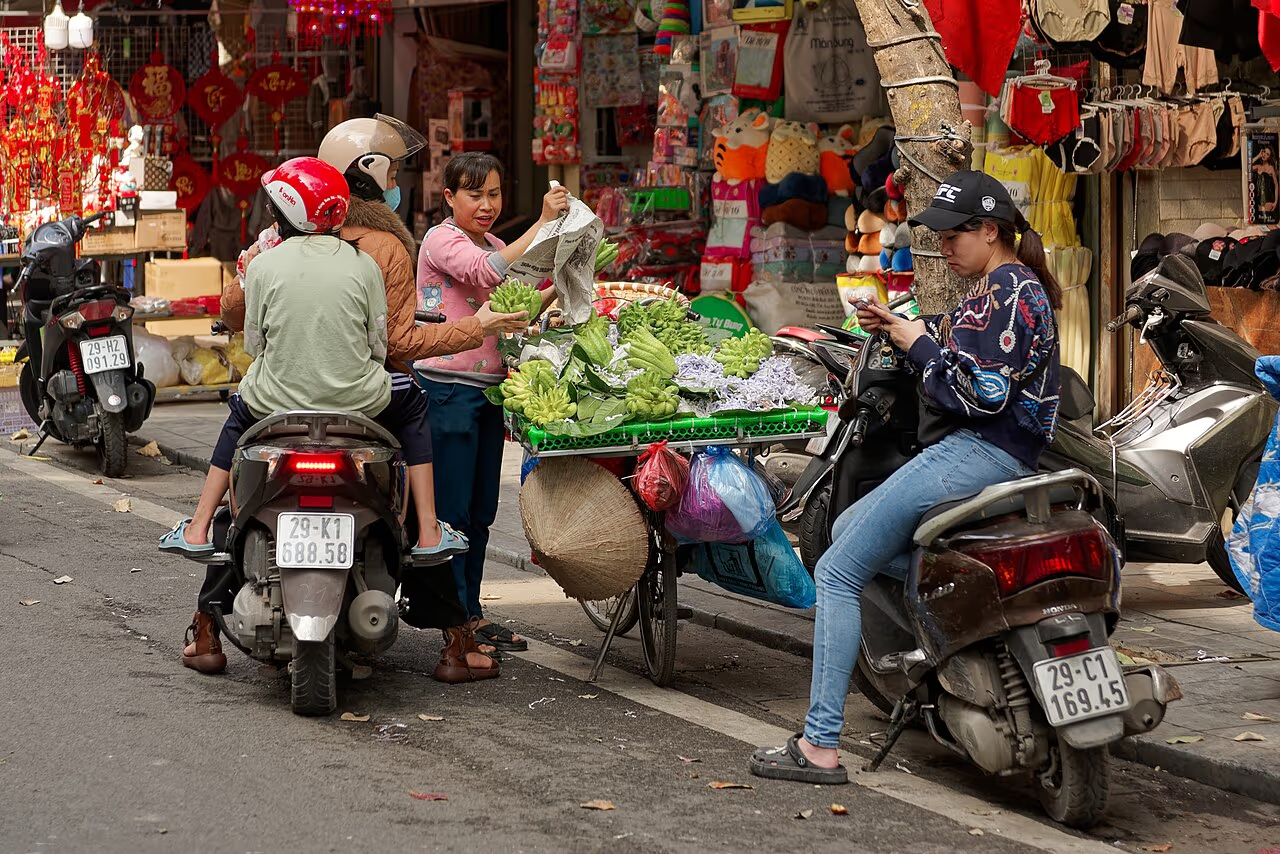
Here is the reassuring part: away from the handful of dense tourist hotspots, even petty theft drops off sharply. In smaller towns, the countryside and the northern mountains, crime is close to a non-issue, and the bigger risk is simply losing track of your own belongings. In Sapa, our guests routinely leave bags at homestays and wander villages without a second thought — not because we tell them to be careless, but because it genuinely is that relaxed.
Common Scams & How to Avoid Them
Most “danger” stories about Vietnam are really about scams — small money tricks aimed at tourists, not threats to your safety. Almost every one is defused by the same rule: agree the price before you accept any service, and keep small notes handy so you are never at someone's mercy for change. Here are the ones worth knowing, with the fix for each.
| The scam | What happens | How to avoid it |
|---|---|---|
| Rigged taxi meter | The meter runs fast, or the driver takes a long route. | Use the Grab app — fixed price, tracked route. If you must take a street taxi, use Mai Linh or Vinasun. |
| “Price changed” ride | A xe om (motorbike taxi) or cyclo quotes one price, then demands far more at the end. | Agree the fare out loud before getting on, or book the ride in Grab so the price is locked. |
| Market overcharging | Tourists are quoted several times the local price with no marked prices. | Check a rough price first, haggle with a smile, and walk away if it's silly — it usually drops. |
| Bill padding | Extra dishes, “service” or inflated drink prices appear on the bill. | Ask prices before ordering, especially for seafood and beers on tourist streets, and check the bill. |
| Short-changing | You pay with a big note and get change for a smaller one; the zeros on the dong confuse tourists. | Say the note's value out loud as you hand it over, and count your change before leaving. |
| Motorbike-rental “damage” | On return, the shop claims you caused a scratch and keeps your deposit or passport. | Photograph and video the bike before you ride, and never leave your actual passport as deposit. |
| “It's closed” | Someone says an attraction is shut/under repair, then steers you to a shop or tour that pays them. | Check opening times yourself and walk to the official entrance before believing anyone. |
The thread running through all of these is money, not malice. No one is trying to hurt you — they are trying to earn a few extra dollars from a tourist who hasn't checked the price. A calm, informed traveller who books rides in Grab and agrees costs upfront simply doesn't get caught by any of it. Booking key parts of your trip — transfers, tours, guides — through a licensed operator with fixed, transparent pricing removes another whole layer of it.
Safe, Fixed-Price Sapa Treks With Local Guides
 Easiest
Very Easy
Easiest
Very Easy
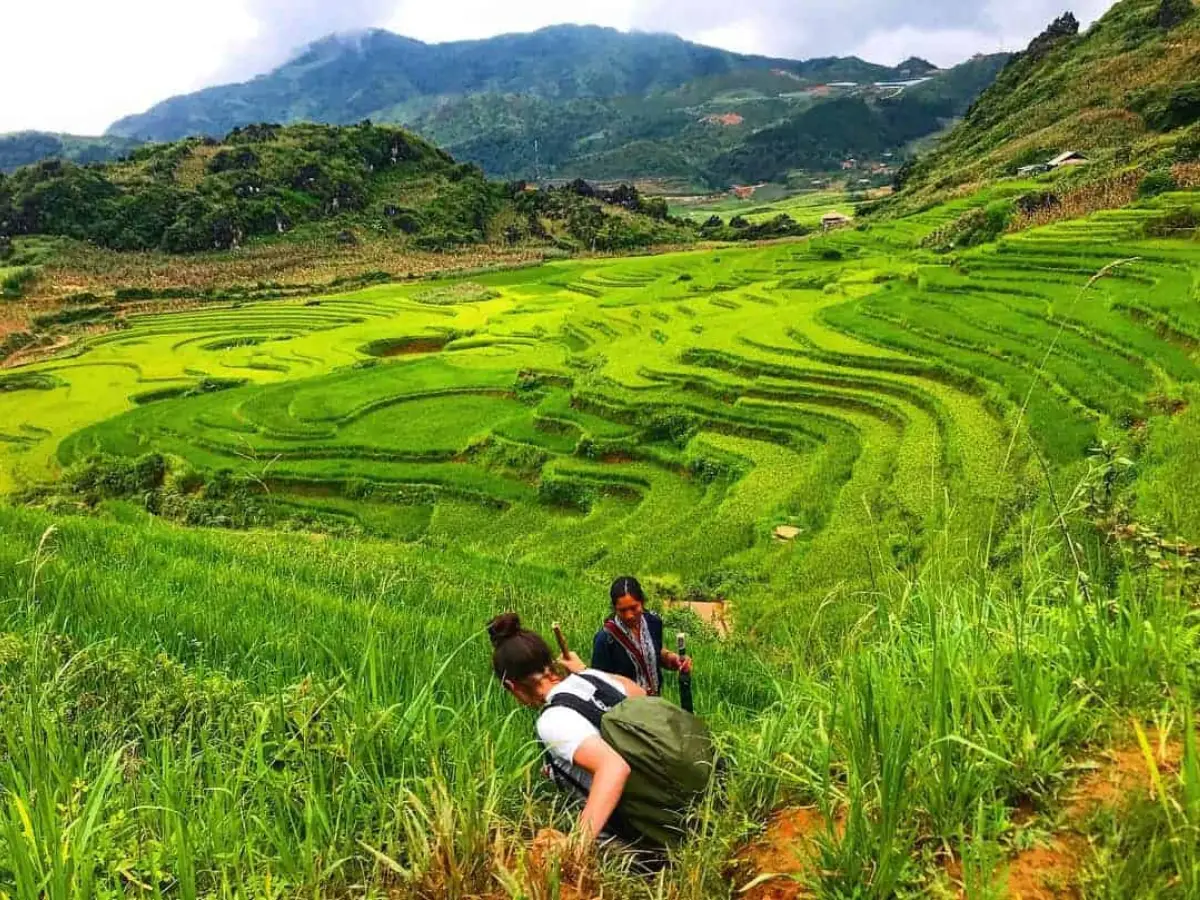
Sapa Easy Trekking
Gentle, scenic day walk at a relaxed pace — ideal for a first trip, families or older travellers.
 Most Popular
Easy
Most Popular
Easy
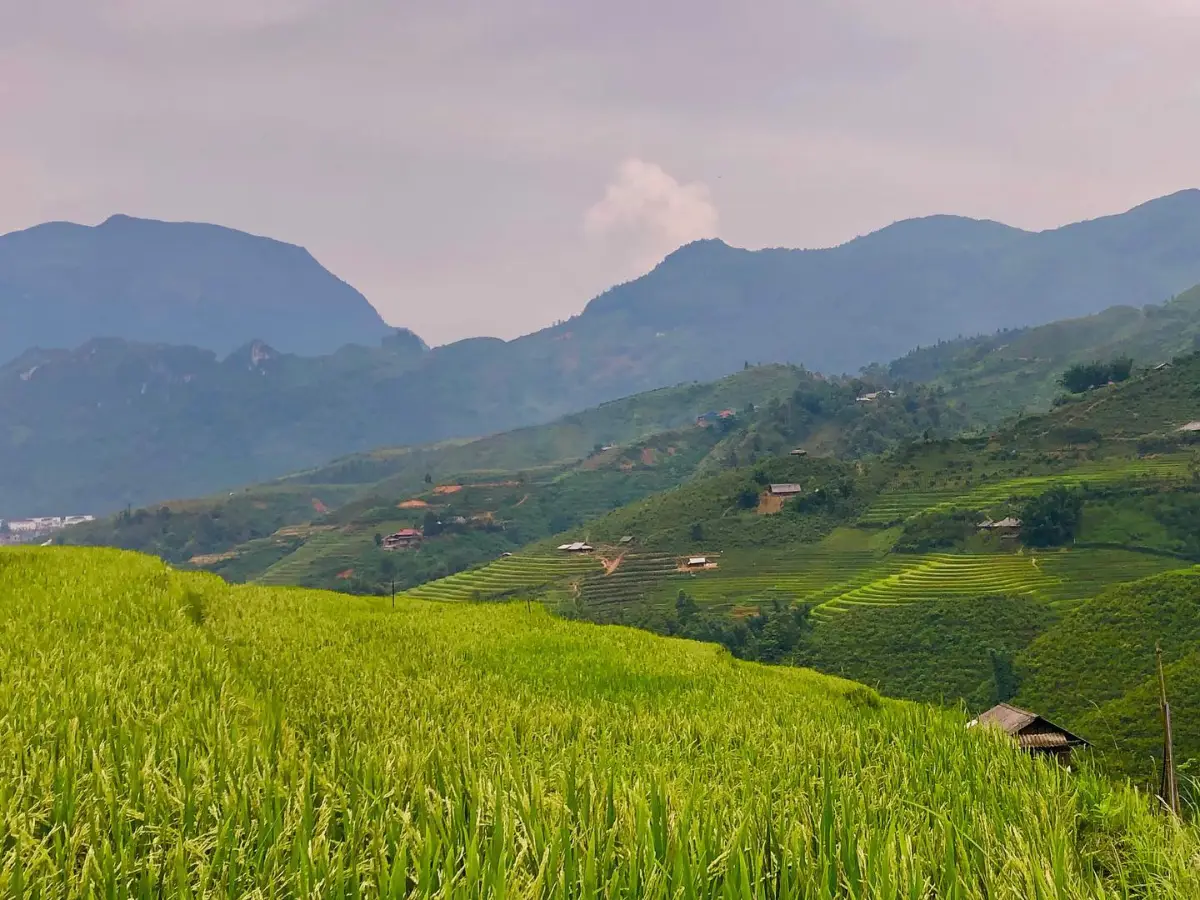
Rice Terraced Fields Trek
The classic Muong Hoa valley walk through Lao Chai and Ta Van — homestay lunch included.
 Great Value
Easy
Great Value
Easy
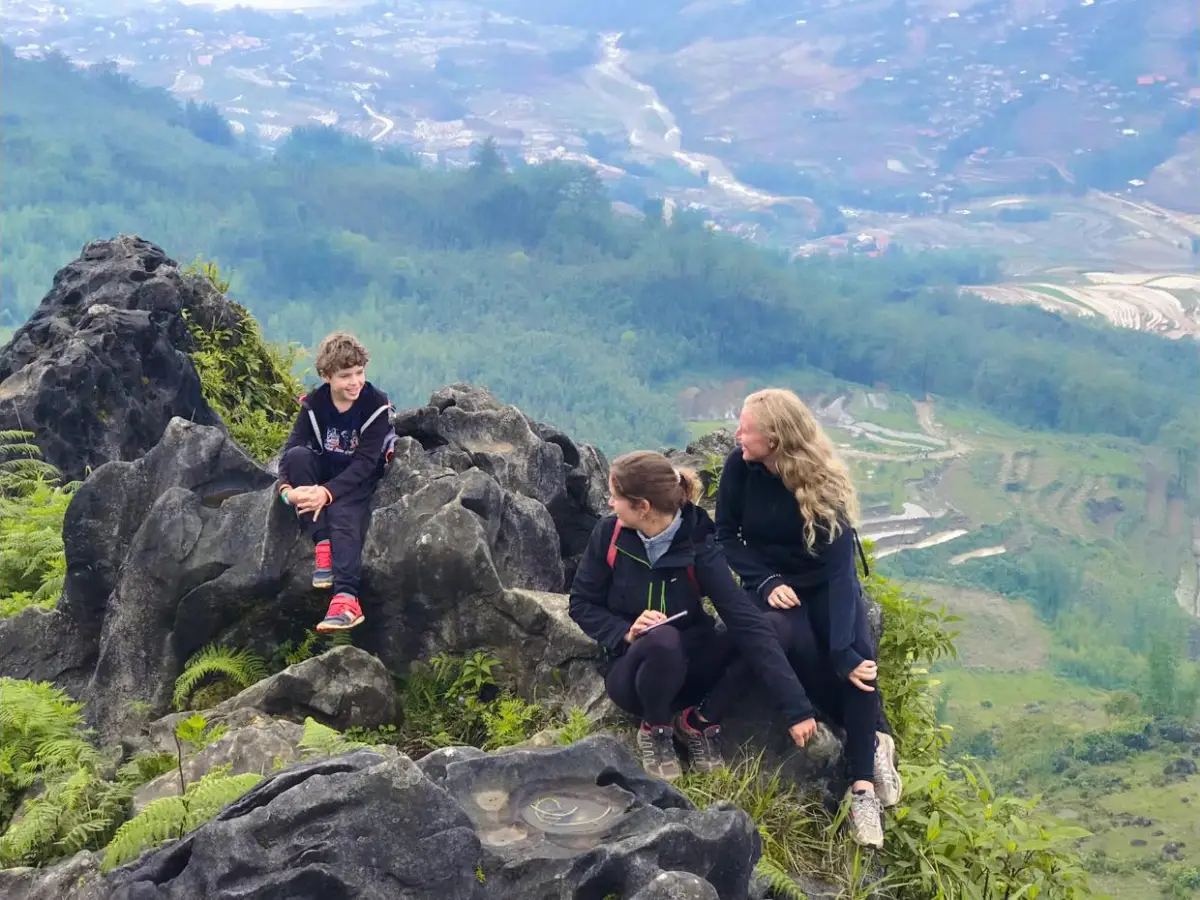
Mountain Views & Villages
Quieter trails, big views and real village life — away from the day-tripper crowds.
Traffic: The Real Danger
If there is one genuine risk in Vietnam, it is the traffic — not crime. Vietnam has millions of motorbikes, the flow rarely stops, and road-accident rates are high by Western standards. The good news is that as a tourist on foot, you can stay safe with one counter-intuitive skill and a couple of firm rules.
Crossing the road is the thing that unnerves first-timers most, and the technique is the opposite of your instinct. In Hanoi and Ho Chi Minh City the scooters will not stop for you, so you step off the kerb and walk slowly, steadily and predictably straight across — and the flow simply parts around you. The rules are: do not freeze, do not sprint, and never step backwards, because the riders are all reading your speed and adjusting to it. It feels alarming on day one and completely normal by day three. When in doubt, cross alongside a local.
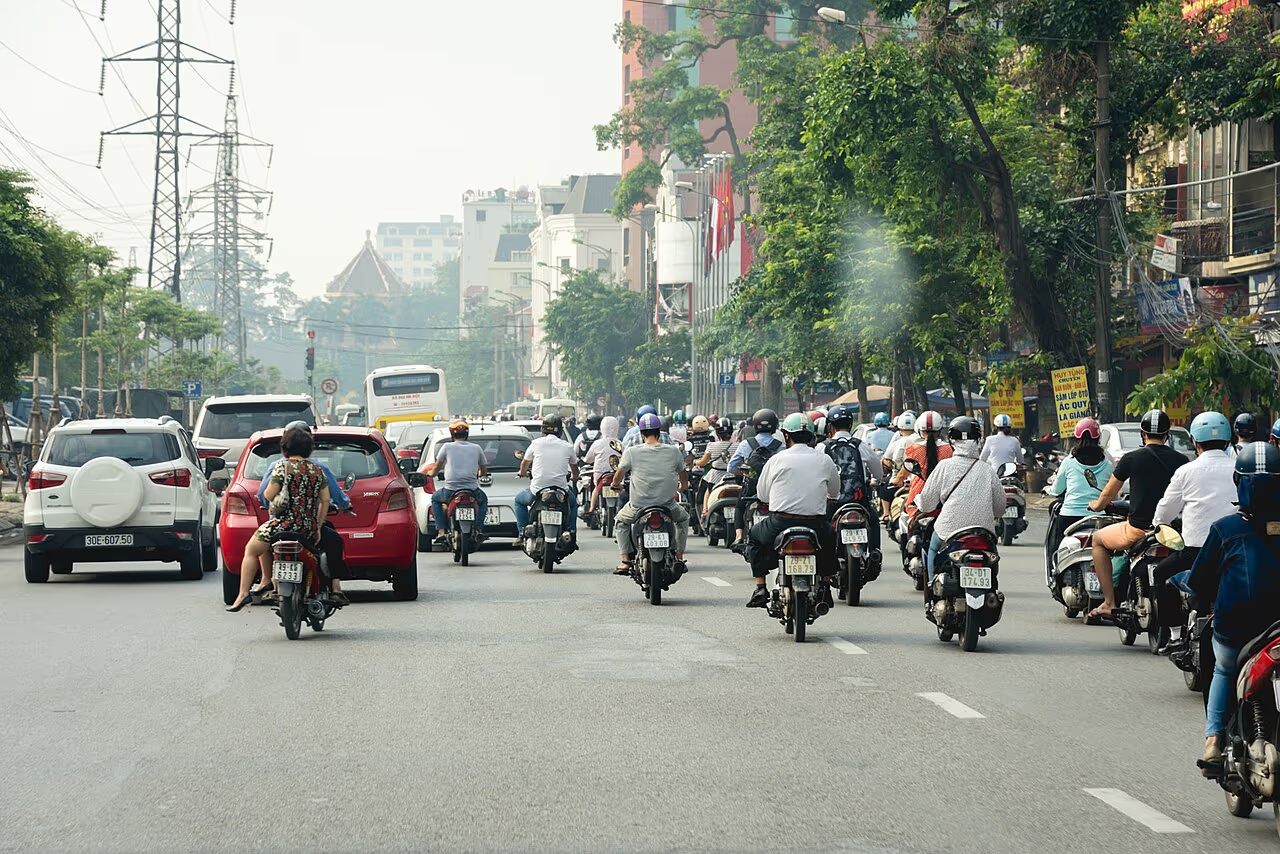
Renting a motorbike is where tourists most often get hurt. The Ha Giang Loop and coastal roads are a rite of passage, but if you are not a confident, experienced rider, the middle of Vietnamese traffic is not the place to learn. If you do ride, always wear a proper helmet, get travel insurance that explicitly covers motorbikes (many policies don't unless you hold the right licence), and ride within your limits. A huge share of serious tourist injuries in Vietnam trace back to inexperienced riders — it is the one statistic worth taking to heart.
For longer journeys, skip the DIY option entirely and use reputable transport: Grab cars in the cities, the overnight train or a quality cabin sleeper bus for the mountains, or a private transfer door-to-door. It is cheap, comfortable, and takes the single biggest risk in the country almost entirely off your plate. We arrange transfers from Hanoi to Sapa for our guests for exactly this reason.
Skip the Risky Roads — Safe Transfers From Hanoi
The overnight train (via Lao Cai) and the daytime cabin sleeper buses are both well-run, comfortable and far safer than riding yourself. Compare your options on our Hanoi–Sapa transport page, or we can book your seat or arrange a private car door-to-door — just ask.
Ask about safe transfersFood, Water & Health Safety
Vietnamese food is one of the best reasons to visit, and it is generally very safe to eat — including the street food. The simple rule is to eat where it is busy: a stall with a queue of locals turns over fresh ingredients constantly and cooks in front of you, which is exactly what you want. An empty restaurant with food sitting out is the thing to skip.
Don't drink the tap water. This is the one firm health rule. Stick to bottled or filtered water, use it for brushing your teeth, and you'll be fine. Ice is a common worry but is usually factory-made (the cylinders with a hole through the middle) and safe in cafes and restaurants — it's tap water in remote homes you'd avoid. Hot drinks, sealed bottles and canned drinks are always safe.
A mild stomach upset is common in the first few days as your gut adjusts to new bacteria and spices — it is rarely true food poisoning. Pack rehydration salts, an anti-diarrhoeal and basic painkillers, wash or sanitise your hands before eating, and ease into the spicier dishes. Pharmacies are excellent, cheap and everywhere, and staff in cities often speak some English, so a minor bug is easily sorted.
Beyond that, standard tropical-travel sense applies: use mosquito repellent (dengue exists, mostly in the wet-season south), wear sunscreen, and ask a travel clinic about routine vaccinations before you fly — the same short checklist as any trip to Southeast Asia.
Weather & Natural Hazards by Season
Vietnam's weather is a bigger practical factor than crime, and it varies hugely along the country's length. The one hazard worth planning around is the storm season, when typhoons and heavy rain can hit the central coast and cause flooding, roughly from July to November and peaking in September and October. Here is the year at a glance, coloured for how weather-friendly each month tends to be for travel overall.
Typhoons and flooding mainly affect central Vietnam — Hue, Da Nang, Hoi An — in the late-year storm season, when Hoi An's old town can flood for a few days at a time. Storms are well forecast, so the practical move is to watch the weather in the days before you travel to the coast and keep a buffer day or two in your plans rather than a razor-tight itinerary.
In the north and Sapa, the summer months of June to August bring heavy rain that makes mountain trails muddy and, occasionally, triggers small landslides that briefly close roads. It's still a fine time to trek with a local guide who knows which paths are safe; you just want poles, a rain jacket and a flexible plan. December and January are genuinely cold up in the mountains — occasionally near freezing — so pack real layers. For the full breakdown, see our guide to the best time to visit Sapa.
Is It Safe Region by Region?
Safety is broadly consistent across Vietnam, but each region has its own texture. Here's the honest rundown of the places most tourists visit, and what — if anything — to keep in mind in each.
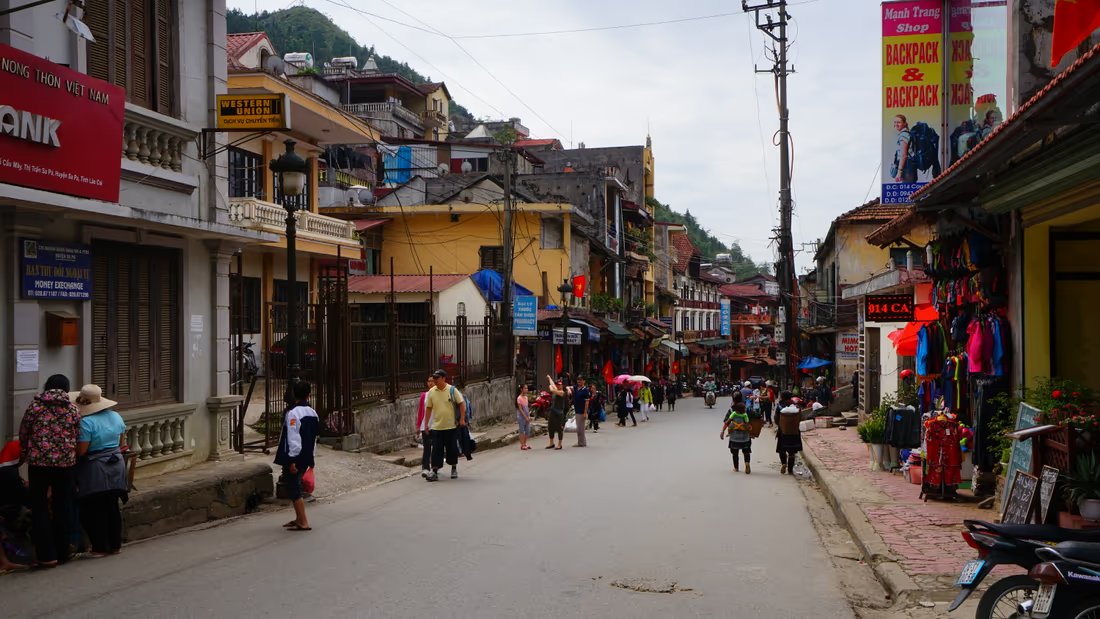
The pattern is clear: the biggest cities carry the most petty theft, the central coast carries the weather risk, and the mountains and countryside are the most relaxed of all. Wherever you go, a licensed local operator smooths out the rough edges — on our treks through the Muong Hoa Valley and villages like Ta Van, safety is simply built in: a guide who knows the trails, the weather and every family along the way.
Solo, Female & Family Safety
Vietnam is an excellent choice for solo travellers, women travelling alone, and families alike — it consistently ranks among Asia's easiest and safest countries for all three. The core safety picture is the same for everyone; the differences are in emphasis, and they're small.
Solo travellers find Vietnam sociable and easy: a well-trodden trail, superb hostels, and group tours that make meeting people effortless. You're rarely truly alone unless you want to be. Women travelling alone report Vietnam as noticeably calmer than many destinations — harassment is usually limited to mild staring or a catcall rather than anything threatening, and the usual night-time habits (use Grab, stick to lit streets, watch your drink) cover it. Families find Vietnamese people adore children, so kids are welcomed everywhere; the main things to manage are the traffic and the heat, both easily handled.
For the detail — itineraries, costs, where to stay, and honest region notes — we've written two dedicated guides: solo travel in Vietnam and solo female travel in Vietnam. Both go far deeper than there's room for here, from a woman's-eye view of what to actually expect to how to meet other travellers on the road.
Overnight Homestay Treks — The Safest Way to Go Deeper
 2D1N
Easy–Mod
2D1N
Easy–Mod
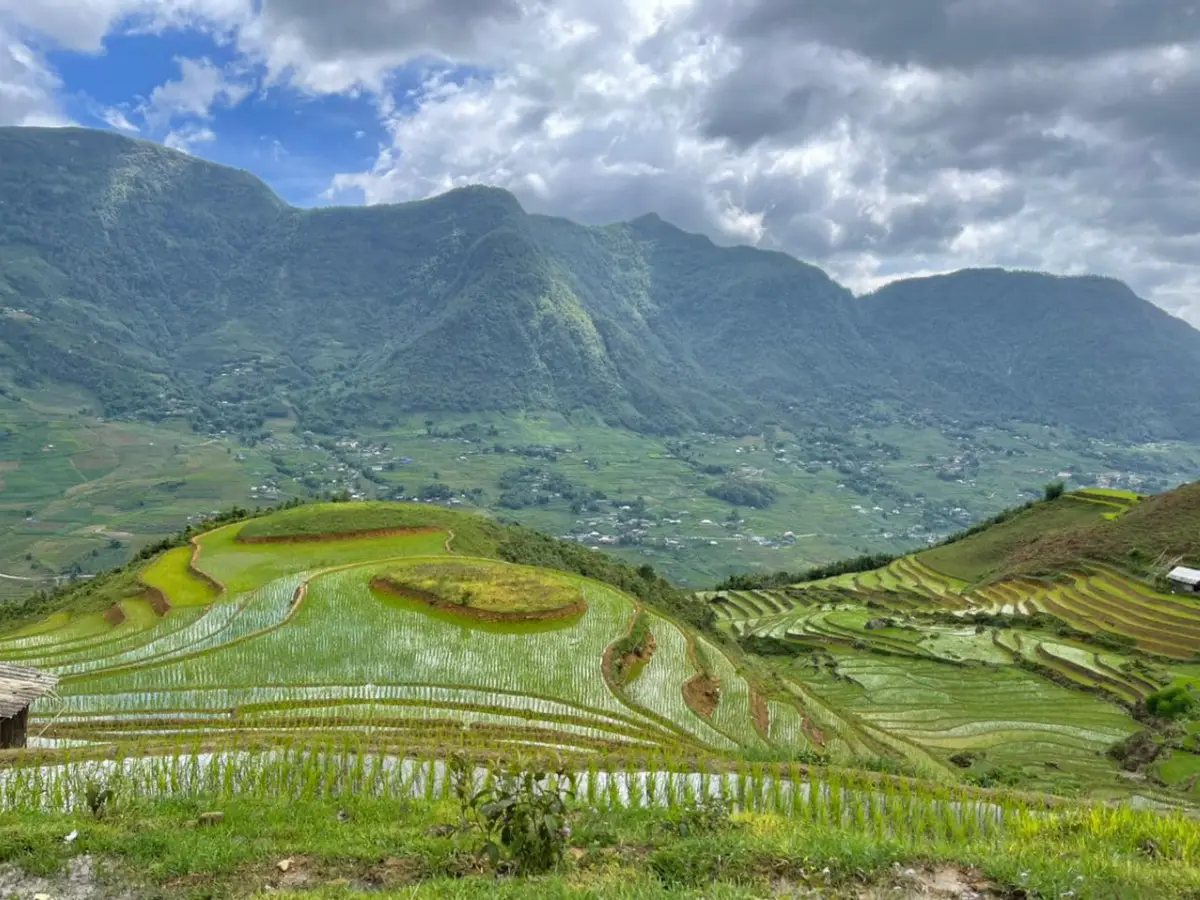
Rice Fields & Homestay
Trek the valley, sleep with a local family in Ta Van, share a home-cooked dinner. Warm, safe and unforgettable.
 Quieter Trails
Moderate
Quieter Trails
Moderate
Explore Nature & Homestay
Off the tourist track through quiet valleys and villages, with a night in a family homestay. Fully guided throughout.
Emergency Numbers & If Things Go Wrong
The odds are you'll never need any of this — but two minutes of preparation buys a lot of calm. Save these numbers in your phone before you fly, and note your accommodation's number and your embassy's details on arrival.
Vietnam Emergency & Help Numbers
- Police:113 — free from any phone
- Fire & rescue:114 — free from any phone
- Ambulance / medical:115 — free from any phone
- Tourist information:National hotline 1800 1091 (toll-free)
- Your embassy:In Hanoi & Ho Chi Minh City — note it on arrival
- Trekking with us:WhatsApp reply in 5–10 min — we translate & help fast
If your phone or wallet is stolen, cancel your cards immediately, then report it to the local police — you'll need the report for your insurance claim. Hotels and licensed operators can help you translate and navigate the process. If you lose your passport, contact your embassy; it's a common enough problem that the process is well established. And for any medical issue, the international clinics in Hanoi, Da Nang and Ho Chi Minh City are used to treating travellers and are straightforward to reach.
The single most useful thing, though, is having a local you can message. For our guests, that's us: if something goes sideways — a missed bus, a language wall, a question at midnight — a quick WhatsApp reaches a real person on our team who can help in minutes. That safety net is a big part of why travelling with a local operator feels so much easier than going it entirely alone.
Top Safety Tips for Vietnam
Everything above distils into a short list of habits. Get these right and you've covered the overwhelming majority of what could go wrong — and none of them ask you to travel scared.
Notice what's not on that list: nothing about avoiding whole cities or being suspicious of every friendly face. Vietnam simply doesn't demand that kind of vigilance — these are the light-touch habits of any smart traveller, and once they're second nature you're free to relax into one of Asia's warmest, easiest countries to explore.
Rent at Our Office Before You Trek
 Gear Rental
Trekking Boots Rental
Waterproof ankle-support boots. Cleaned and checked before each rental. Available at 105 Thach Son Street.
 Gear Rental
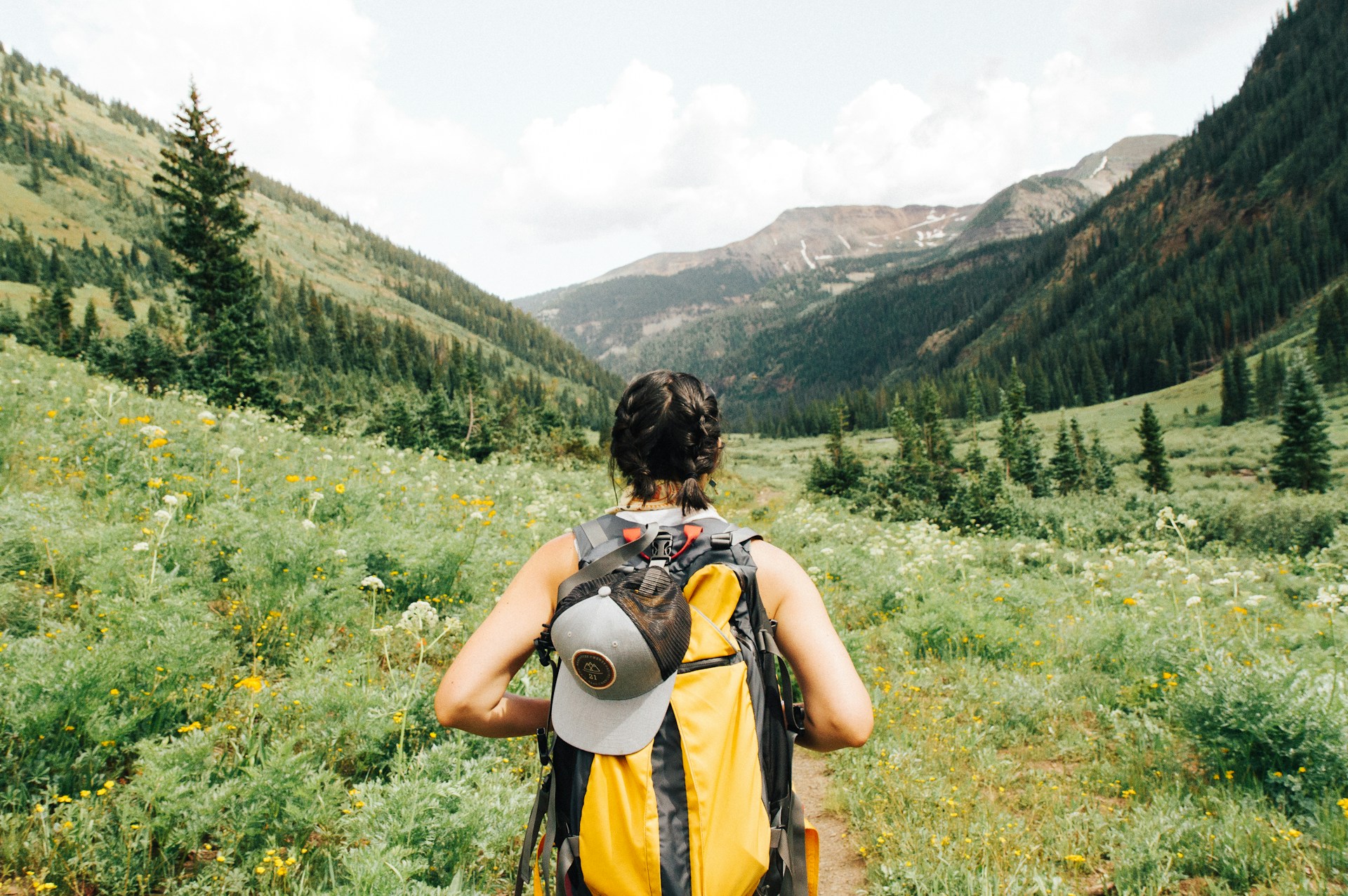
Walking Poles Rental
Trekking poles available to rent at $2/day at our office, 105 Thach Son Street. Essential for descents.
Frequently Asked Questions
Yes — Vietnam is a very safe country for tourists and one of the safest in Southeast Asia. Violent crime against visitors is rare, and millions of tourists travel the whole country every year without any serious trouble. The realistic risks are minor: petty theft such as phone-snatching and bag-snatching in big cities, small tourist scams like taxi-meter tricks and overcharging, and above all the chaotic traffic. Keep your valuables secure, use the Grab app, take care crossing the road, and you will almost certainly have a smooth, friendly trip.
The most common scams are minor money tricks, not dangerous crimes. Watch for rigged or fast-running taxi meters (use Grab instead), motorbike-taxi and cyclo drivers quoting one price then demanding more, overcharging in markets and unmetered “tourist menus”, the motorbike-rental “you damaged it” deposit scam, short-changing when you break a large note, and someone insisting an attraction is closed so they can take you elsewhere. Agree every price before you accept a service, keep small notes handy, and photograph any rental before you ride it.
The traffic is the single biggest genuine risk in Vietnam, far more than crime. Cities like Hanoi and Ho Chi Minh City have millions of motorbikes and the flow rarely stops. To cross safely, step off the kerb and walk slowly, steadily and predictably so the scooters can flow around you — do not freeze, sprint or step backwards. Avoid renting a motorbike unless you are an experienced rider, always wear a helmet, and use Grab cars or reputable transfers for longer journeys.
Vietnamese street food is one of the highlights of any trip and is generally safe — eat where it is busy and freshly cooked in front of you. Do not drink tap water; stick to bottled or filtered water, and use it for brushing your teeth too. Ice in cafes and restaurants is normally factory-made and fine. A little traveller's stomach upset is common when adjusting to new food, so pack rehydration salts and basic medicine, but serious food poisoning is uncommon if you choose busy, popular stalls.
Yes. Vietnam is consistently rated one of Asia's best countries for solo travel and for women travelling alone. Harassment is usually limited to mild staring or catcalling rather than anything threatening, and locals are warm and protective toward guests. The same sensible habits apply as anywhere: use Grab at night, keep to lit main streets, watch your drink and secure your valuables. Our separate guides on solo travel and solo female travel in Vietnam go into much more detail.
The main storm season runs roughly from July to November, when typhoons and heavy rain can hit central Vietnam (Hue, Da Nang, Hoi An) and cause flooding, with the peak around September and October. The north, including Sapa, gets heavy summer rain from June to August that can make mountain trails muddy and occasionally trigger landslides on the roads. The far north is also genuinely cold in December and January. None of this makes travel unsafe — just check the forecast, build in buffer days, and travel with a flexible operator.
Sapa is one of the safest places in Vietnam for tourists. Crime is very low, the town is relaxed, and trekking with a licensed local guide is safe and straightforward. The things to be mindful of are practical, not criminal: mountain weather changes fast, trails can be slippery after rain, and you should trek with a local guide rather than heading into remote valleys alone. Our guides are local Black H'mong women who know every trail and family in the valley.
In Vietnam, dial 113 for police, 114 for fire and rescue, and 115 for an ambulance or medical emergency. These are free to call from any phone. For less urgent problems, contact your hotel, your embassy in Hanoi or Ho Chi Minh City, or the national tourist information hotline on 1800 1091. Save your accommodation's number and, if you are trekking with us, our WhatsApp — we reply within 5 to 10 minutes and can help translate or arrange help fast.