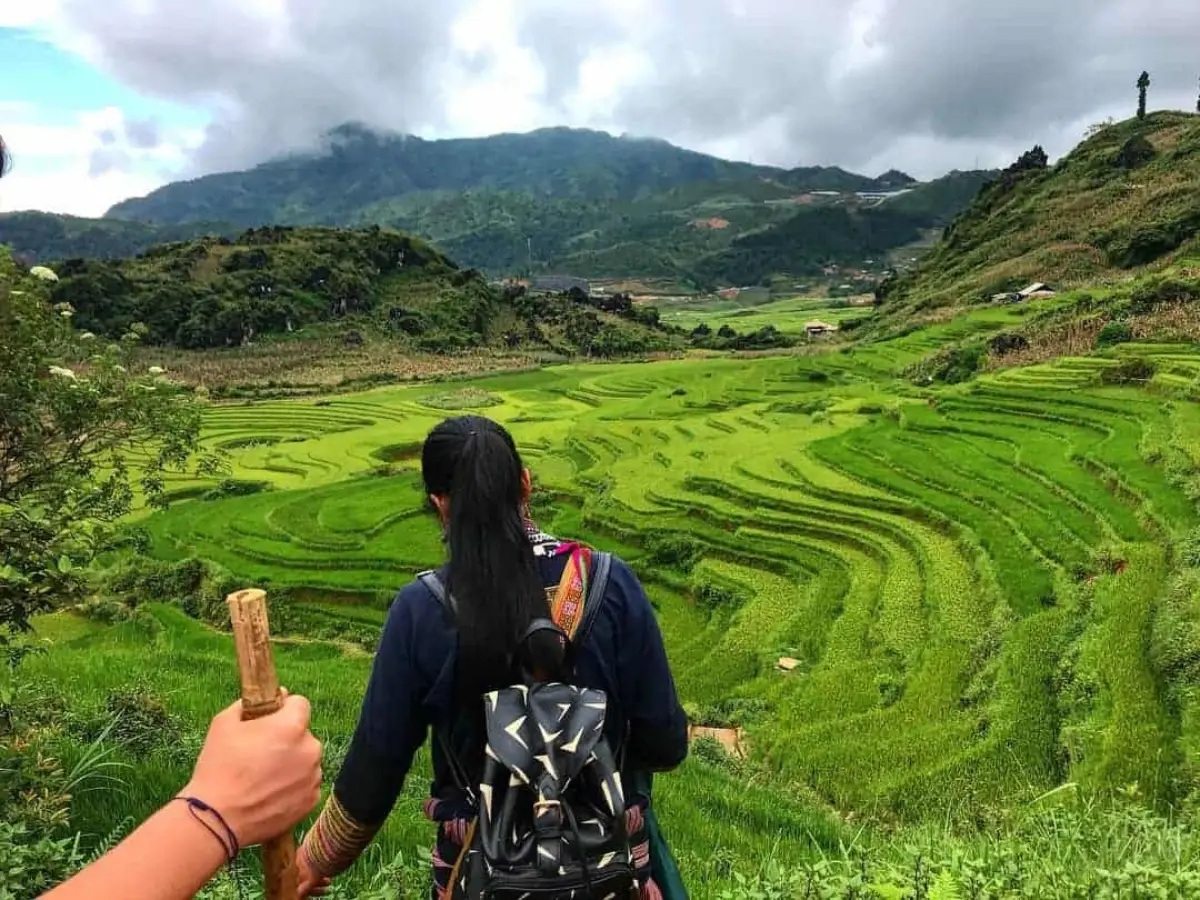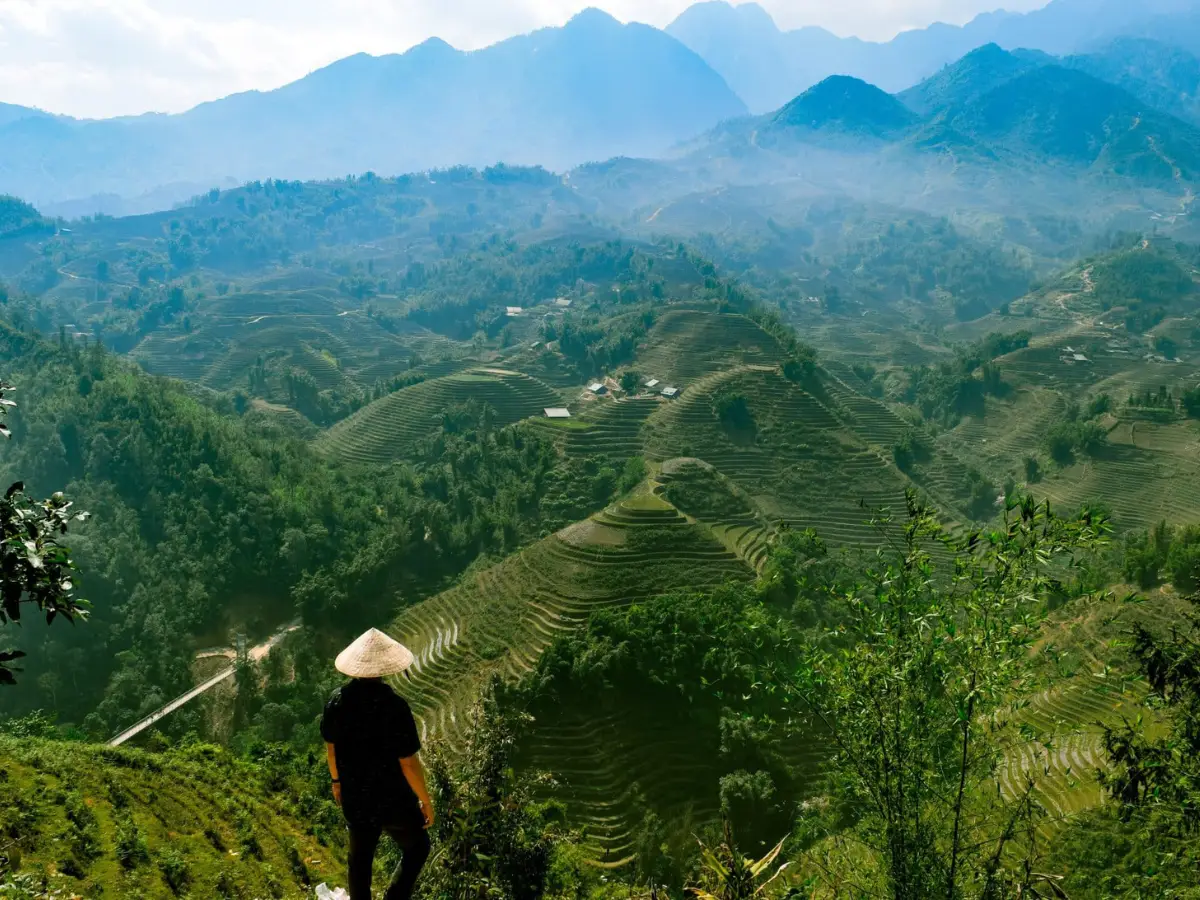
You hear the Muong Hoa River before you see Ta Van. Coming down the trail from the north, somewhere between the last stand of cardamom trees and the first corn terrace, the sound of the river drifts up through the mist — that low, constant rush over round stones that you will hear all evening if you stay overnight. I have walked into Ta Van village from the ridge above Lao Chai more times than I can count. Every time, that sound is the signal that the hard part of the descent is done and the valley floor is close.
I bring groups to Ta Van because it sits at the real heart of the Muong Hoa Valley — not at the entrance where the tour buses park, but at the bottom, where the Black H'mong families have been farming rice and cardamom for generations. Cat Cat village, which most visitors see, is 15 minutes from Sapa centre and was redesigned with tourists in mind. Ta Van still runs on its own rhythm. The corn goes up on the drying racks in October. The women weave at the loom in the open doorway while they watch the children. The men are in the fields. If you want to understand what the Muong Hoa Valley actually is — not what it looks like from a viewpoint — you come here.
What Ta Van Actually Is
Ta Van is a Black H'mong village of roughly 200 households sitting at the base of the Muong Hoa Valley, approximately 8 km (5 miles) south of Sapa town. The elevation is around 900 metres — noticeably lower and warmer than Sapa town, which sits at 1,550 metres. On cold February mornings when Sapa is wrapped in frost, Ta Van can be 4–5 degrees warmer. The village runs along the west bank of the Muong Hoa River, with the terraces climbing steeply up both valley walls behind it.
Directly across the river, separated by a suspension bridge and a few hundred metres of flat paddy field, is Lao Chai — another Black H'mong village and the other main stop on the classic valley trekking route. The two villages are distinct communities with their own local leadership and their own patterns, but they share the same valley and the same river. Thirty minutes on foot south of Ta Van brings you to Hang Da, a smaller village that sees almost no organised tourism. Further south still is Hau Thao.
One thing worth clarifying: Ta Van in the Muong Hoa Valley is a Black H'mong community and should not be confused with Ta Phin, which is in a completely different valley north-east of Sapa and is home to the Red Dao community. They are different ethnic groups, different textile traditions, different villages, and different trek routes. I mention this because I regularly meet travelers who have booked a "Ta Van and Ta Phin" tour thinking they are nearby — they are not.
The Trail Down from Sapa — What the Route Looks Like
The trail from Sapa to Ta Van starts high and descends — that is the main physical fact you need to know. From the edge of Sapa town you drop from 1,550 metres down to roughly 900 metres at the valley floor, losing about 650 metres of elevation over 8 kilometres. The descent is gradual for the first hour: stone steps through the forest edge above Y Linh Ho, then a ridge walk where you are looking down into the full width of the Muong Hoa Valley for the first time. This is usually where I stop the group and let them take it in. The terraces drop in steps from the ridgeline all the way to the river — in September, when the harvest is coming, the whole hillside is three shades of gold.
The steeper section comes after the ridge walk, a proper downhill through corn and cardamom terraces with clay paths that become slippery after rain. You pass through a short section of forest where wild cardamom grows thick on both sides of the path — the smell is distinct, sweet and spicy at once, and it tells you you are in the right valley. Then the path levels out through the lower rice paddies before you arrive at the northern edge of Lao Chai. From Lao Chai it is another 20 minutes on flat ground along the river to reach Ta Van village.
Don't take the road down to Ta Van. The tarmac road that runs from Sapa along the valley rim misses the rice terraces entirely and deposits you at a car park on the wrong side of the village. The trail from the ridge above Lao Chai is the correct approach — it gives you the full panorama and arrives at the northern entrance where the village life begins.
Getting to Ta Van — Trail vs Road
The trekking trail to Ta Van starts behind the old rail station area on the southern edge of Sapa town — your guide will take you from there. If you are booking independently, look for the path that leads down from the ridge above Lao Chai: it is marked at the top but not at the many forks lower down. The easiest approach is to join a guided trek from our office at 105 Thach Son Street — we start at 7:30am to reach Ta Van before the midday heat.
Tours That Pass Through Ta Van Village
 Best Seller
Trekking Through Rice Terraced Fields
Classic Muong Hoa Valley trail — Lao Chai to Ta Van. The most complete single-day terrace walk in Sapa.
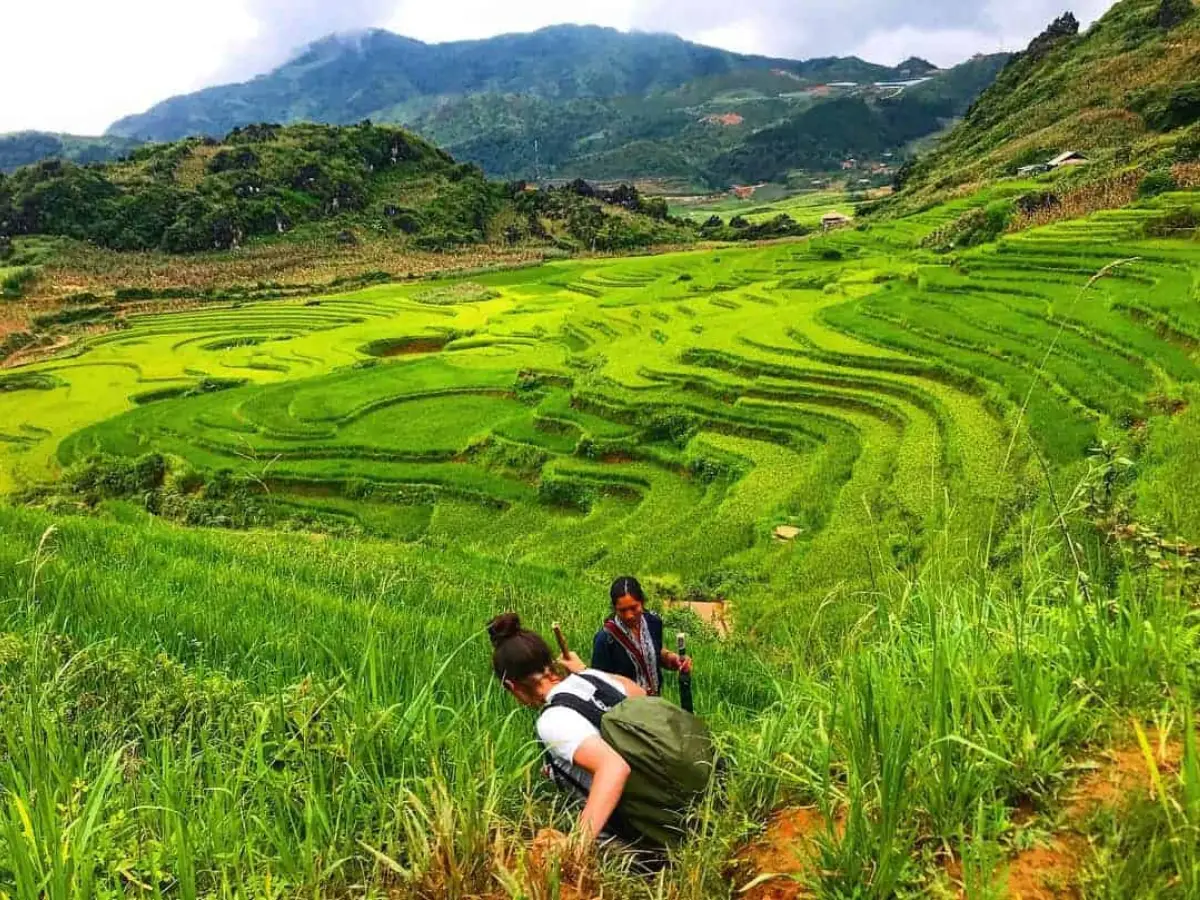
Rice Paddies and Cultures – Easy Hiking
Flat valley walking through working rice paddies, stopping at Black H'mong and Red Dao homes.
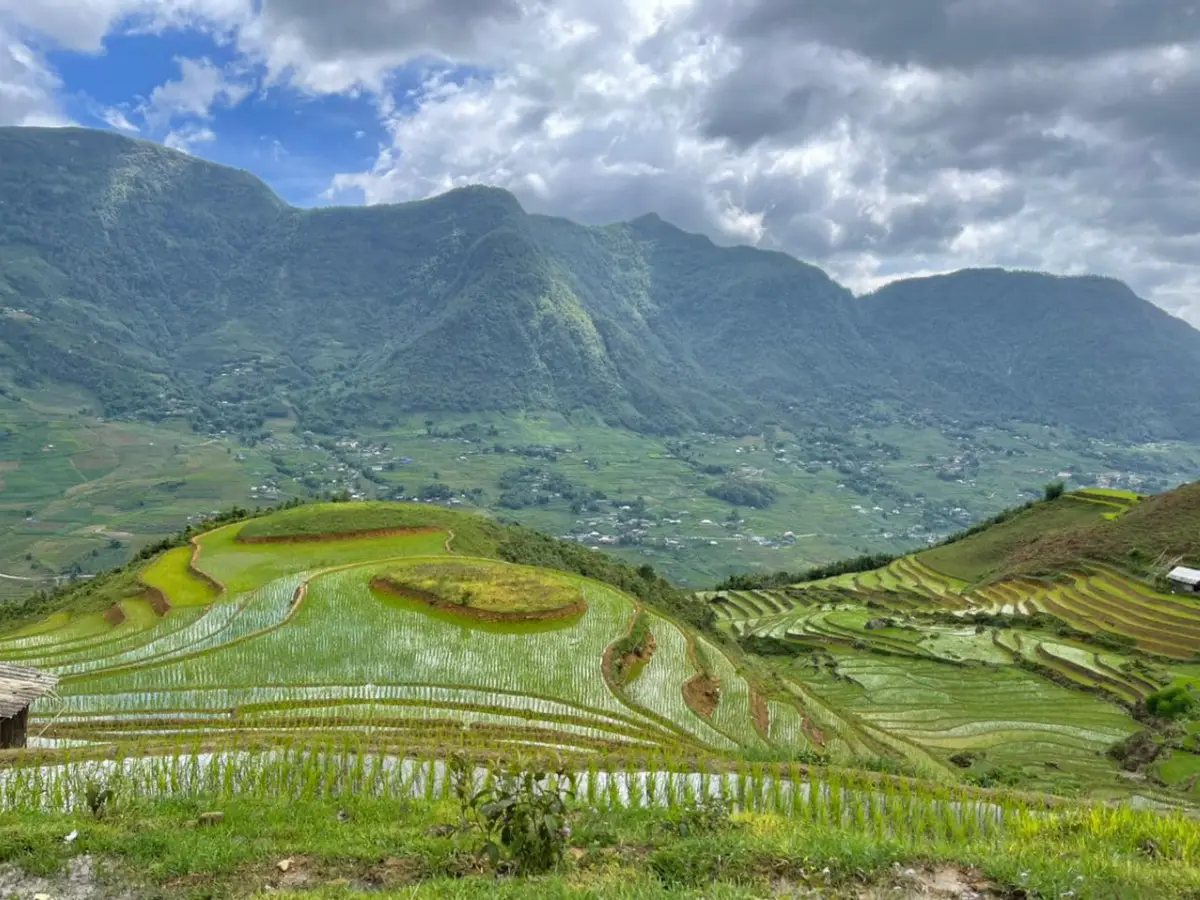
Rice Terraced Fields & Homestay
Overnight with a Black H'mong family in Ta Van — home-cooked dinner, terraces at dawn, valley to yourself.
Inside the Village — What You'll Actually See

Walking into Ta Van from the north, the first things you notice are the corn drying racks. In October, every house in the village has ears of corn hanging in bundles from the roof beams and eaves — yellow-orange against the dark wood walls, drying for the winter. The houses themselves are a mix of traditional wooden structures and newer brick builds, most with bamboo water pipes running from the hill springs down through the yard to the kitchen. Open a door anywhere in the village in the morning and you will catch the smell of wood smoke from the breakfast fire and, if it is autumn, the faintly sweet smell of fermenting rice from the rice wine vats.
The weaving looms are set up in the open doorways of most homes — that is not decorative; that is where the light is best. Black H'mong women weave throughout the day between other tasks, the rhythm of the shuttle going back and forth while they watch the lane outside. The cloth they are making is indigo-dyed hemp, the deep blue-black fabric that defines Black H'mong dress.
Rice Terrace Views
The Muong Hoa Valley terraces are widest and deepest around Ta Van — nowhere else in the valley gives you the same panorama from the valley floor looking up.
Best in Sept–OctHomestay Overnight
Around a dozen Black H'mong family homestays take overnight guests. Communal sleeping, home-cooked dinner, wood fire at 6am. The most honest accommodation in the valley.
Book in advanceTrail to Lao Chai
The flat riverside path connecting Ta Van and Lao Chai runs along the Muong Hoa River through paddy fields — 20 minutes on foot. The suspension bridge crossing is one of the best photo spots in the valley.
Flat trailH'mong Family Lunch
Lunch is eaten at a family home in the village — mountain vegetables, tofu, sometimes river fish when the catch is good, and rice wine if you want it. Cooked on a wood fire by the family who hosts you.
Included in toursThe Muong Hoa River runs through the northern edge of Ta Van, and the crossing options tell you a lot about how the village works. At the upper end, where the trail from Lao Chai arrives, there is a concrete footbridge used by locals going back and forth daily with supplies and water buffalo. At the lower end, a suspension bridge connects to the far bank and is used mainly by trek groups returning to the road. I always prefer the stepping stones that appear in the dry season at the narrow bend in the middle — the locals use them too, and jumping across in October when the water is lower is genuinely enjoyable rather than just a crossing.
The Homestay Experience in Ta Van
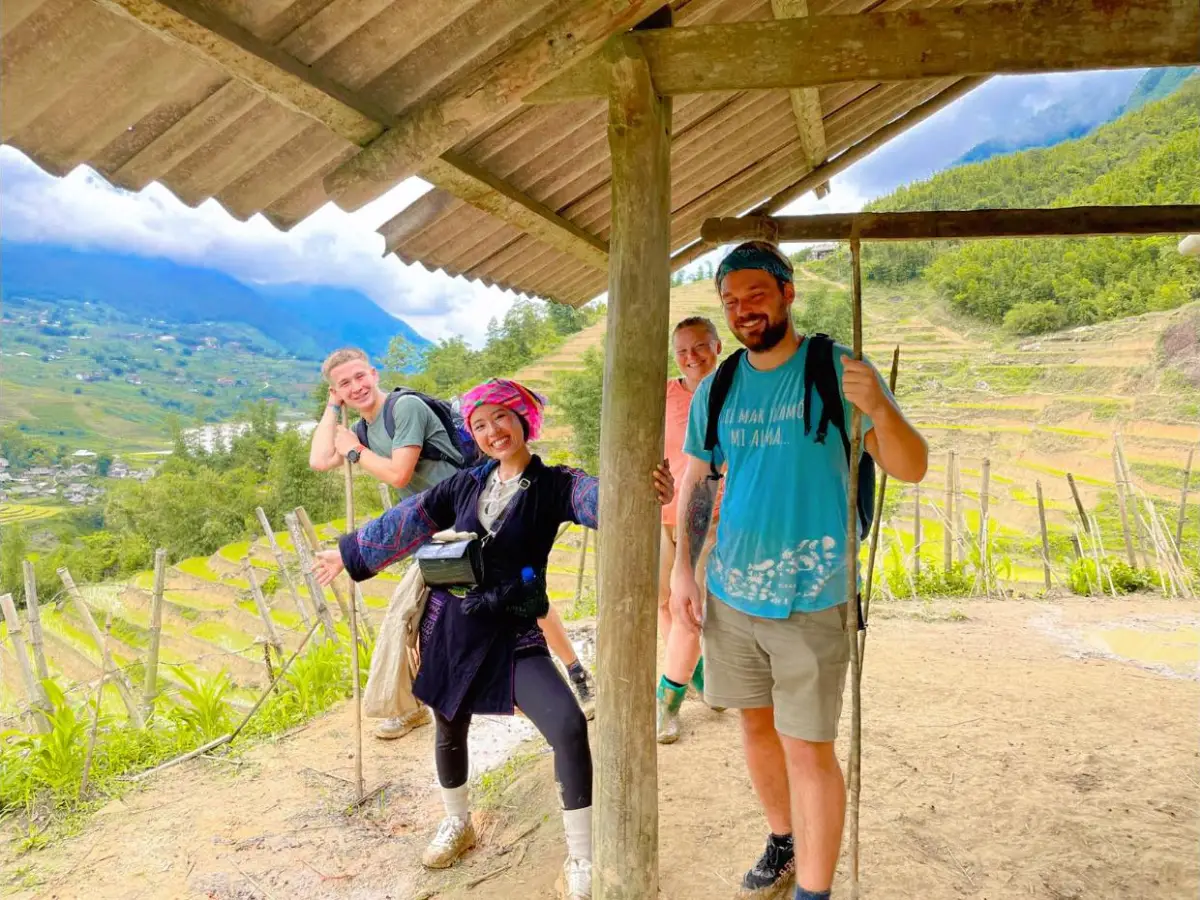
When you stay overnight in Ta Van, dinner is the centre of the evening. The family I usually use — the Hang family at the north end of the village — sets the table in the main room by 6pm. The meal is almost always the same four or five elements: stir-fried morning glory or water spinach from the garden, a tofu dish cooked with ginger, a small bowl of river herbs, and rice. In season there is river fish, caught that morning with a line trap below the village. Rice wine comes in a shared bottle. The food is not elaborate but it is specific to this valley — the herbs and vegetables are grown in the garden ten metres from where you are sitting.
The sleeping arrangements in most Ta Van homestays are communal: a long platform room with individual mattresses and cotton blankets. The blankets are heavy and warm. The fire in the main room goes out around midnight, and by 3am the wooden walls are the only barrier between you and the cold valley air. I tell groups to bring a light down jacket even in September. By 6am the guide has relit the wood fire and is heating water for tea — that moment, sitting around the fire in the dark before the valley wakes up, is the thing most guests tell me they remember longest.
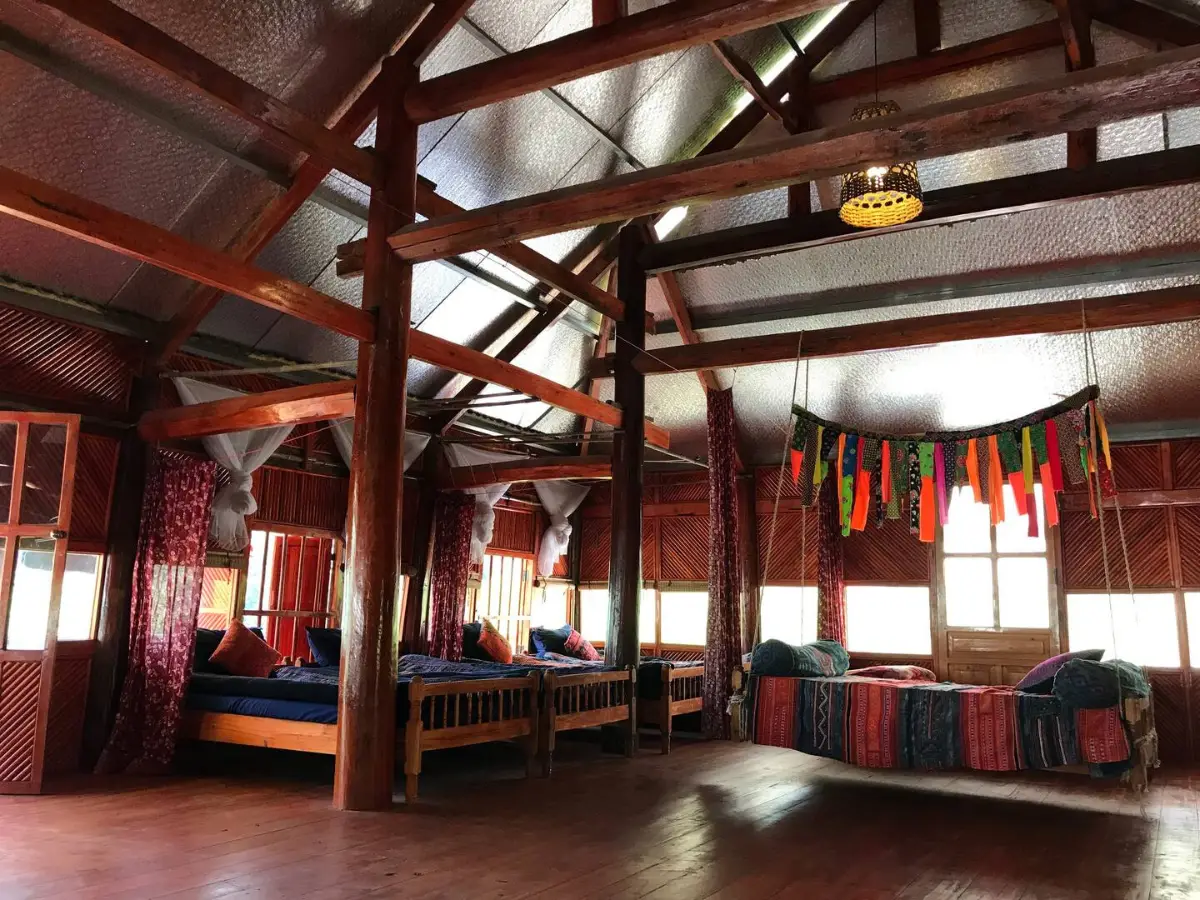
One honest note on facilities: most family homestays in Ta Van have a squat toilet and either a bucket shower or a basic warm-water tap. A small number of the more recently built homestays have a sit-down toilet and a basic hot shower. If this matters to you, tell us when you book and we will match you to the right family. The homestays that have been set up specifically for tourism are cleaner but they have also lost something — there is no replacement for sitting in the actual family kitchen.
Ta Van in September — When the Rice Turns Gold
September is the month I recommend most often when people ask me when to come. The rice on the upper terraces above Ta Van starts turning from green to gold around the second week of September. By the end of the month the harvest crews are out — whole families working the terraces at once, cutting by hand with small sickles and carrying the sheaves in baskets down to the threshing areas at the bottom of the field. You can hear the threshing machines running from the trail half a kilometre away, a rhythmic mechanical sound against the otherwise silent valley.
October continues the harvest energy and adds another layer: by mid-October many fields have been cut and the stubble is burned, sending thin columns of smoke up the valley sides in the afternoon. The light in October is cleaner than September — less haze, longer shadows in the afternoon, the mountains above Fansipan sometimes visible from the southern end of the village on clear mornings.
May and June are the other window worth mentioning. The paddies in late May are a brilliant, almost artificial green — rice seedlings just transplanted, standing in rows in the flooded terraces, the water catching the morning light. The weather in May is warm and relatively dry before the heavy rains begin. June brings more cloud and afternoon showers, but the valley is lush and the trails are still passable. July and August are beautiful in their own way, but I tell people honestly: the clay trails become genuinely difficult after a day of rain, and some of the steeper sections above Lao Chai are a real slog. If you come in July or August, bring walking poles and set your expectations accordingly.
What Most Visitors Miss — The Trail to Hang Da
Beyond Ta Van, 30 minutes further south on the trail that follows the Muong Hoa River, is Hang Da village. Almost no organised tour groups go there. The path runs along the river edge through stands of bamboo and past small gardens where chilli and pumpkin grow on the banks. Hang Da is a smaller Black H'mong community than Ta Van — maybe 50 households — and the families there rarely interact with tour groups. When I bring overnight groups through Hang Da, children come out to look and then go back to whatever they were doing. It is the unperformed version of daily life that Ta Van used to have a decade ago.
The trail from Hang Da continues south to Hau Thao, where the valley narrows and the rice terraces give way to steeper hillside cultivation. This is the section I use for the second day of overnight treks — heading south through Hang Da and Hau Thao, looping back via the ridge on the eastern valley wall. The path is muddy in wet season and I always carry extra walking poles for this stretch. But on a clear October morning, with the harvest underway in the fields above Hau Thao and nobody else on the trail, it is the version of Sapa trekking that brought me into guiding in the first place.
Can You Visit Ta Van Without a Guide?
The honest answer is: yes, you can reach Ta Van without a guide if you follow the road, but the road misses the point. The trekking trail from Sapa down to Ta Van is achievable for confident walkers in dry conditions — the main path from the ridge above Lao Chai is reasonably well-trodden and you can follow the descent without getting badly lost. In that sense, it is more accessible than many trekking routes in northern Vietnam.
The difficulty begins south of Ta Van. The trail network through Ta Van, Lao Chai, Hang Da, and Hau Thao has more than 15 unmarked forks. The rice terrace paths at the lower elevations flood in wet season and become indistinguishable from the paddy edges — I have seen capable, experienced hikers walk knee-deep into a flooded field because the path disappeared into the water. The trails are not on reliable digital maps; Google Maps and even offline apps like Maps.me show routes that do not match the ground.
I have been walking this valley since I was a child. My father showed me paths through the cardamom forest above Hang Da that do not appear on any map and probably never will. That is not mysticism — it is just the kind of local knowledge that takes years to accumulate and that changes after every heavy rain season. If you are staying in Ta Van for a night and not moving beyond the village, you will be fine without a guide. If you want to go further, or if you want to understand what you are looking at when you walk through the terraces, a guide who grew up here makes the difference between a walk and an experience.
Rent at Our Office Before You Trek
 Gear Rental
Trekking Boots Rental
Waterproof ankle-support boots. Cleaned and checked before each rental. Available at 105 Thach Son Street.
 Gear Rental
Walking Poles Rental
Trekking poles available to rent at $2/day at our office, 105 Thach Son Street. Essential for descents.
Frequently Asked Questions
Ta Van village is approximately 8 km (5 miles) from Sapa town centre. By the trail it takes 3–4 hours on foot from Sapa, descending roughly 300 metres in elevation. By road it is around 20–25 minutes by motorbike or car, though the road route misses the rice terrace views entirely.
The best way is on foot via the trekking trail that starts above Lao Chai, descending through rice terraces into Ta Van — 3 to 4 hours from Sapa centre. You can also take a motorbike taxi or hire a car down the valley road, which takes 20–25 minutes. We always recommend the trail over the road: the road deposits you at the far end of the village with no context, while the trail gives you the full panorama of the Muong Hoa Valley and arrives at the northern entrance where the village life is most active.
Yes. Ta Van has around a dozen Black H'mong family homestays that take overnight guests. Most are in wooden or brick houses with communal sleeping rooms, cotton blankets, and home-cooked evening meals. Facilities are basic: most homestays have a squat toilet and a bucket-shower or basic warm-water tap. If you book through Trekking Tour Sapa, our guide arranges the homestay with a family he knows personally — you will not be placed in a commercialised guesthouse.
Ta Van is known as the end point of the classic Muong Hoa Valley trekking route from Sapa. The village sits at the bottom of the valley where the Muong Hoa River bends south, surrounded on both sides by the most dramatic rice terrace landscapes in northern Vietnam. It is a Black H'mong community of around 200 households, and the village retains much of its daily agricultural rhythm — corn drying racks, weaving looms in open doorways, and families working the terraces by hand. It is also the departure point for the lesser-visited trail south to Hang Da and Hau Thao.
The main trail from Sapa down to Ta Van is manageable for confident walkers in dry conditions, but the trail network south of Ta Van — through Hang Da, Hau Thao, and Lao Chai — has more than 15 unmarked forks. In wet season the rice terrace paths flood and become indistinguishable from the paddy edges. If you plan to walk beyond Ta Van or to return via a different route, a local guide who knows the paths personally makes a significant difference. Our local guides have walked this valley since childhood.
September and October are the peak season — the rice is turning gold and the harvest is underway, which is the most visually dramatic period in the valley. May and June are also excellent: the paddies are brilliant green with freshly transplanted seedlings and the weather is warm with afternoon cloud. July and August are beautiful but the trails are very muddy after rain. December to February is cold (Ta Van sits at about 900 metres elevation) but clear days in January can be stunning, especially on the ridge above Lao Chai.