 Sinh Giang
No vaccine is required to enter Vietnam for most visitors, but that is not the same as “you need nothing”. The US Centers for Disease Control and Prevention (CDC) says yellow fever vaccine is not required for entry, and then recommends that you are up to date on routine vaccines and that most travellers consider hepatitis A and typhoid too. Hepatitis B, Japanese encephalitis and rabies depend on your plans, and malaria depends on where you go. For a Sapa trek, the useful question is not “what does everyone get” but “what does a travel clinic say about my dates and my route”.
We run treks in Sapa and are not doctors. This guide collects what the CDC, the UK’s TravelHealthPro and the UK government say, with dates, so you arrive at your travel clinic with good questions. Official pages change, and our copy of one of them may be older than the live page. Ask a doctor or travel clinic about your own health, medicines, age and pregnancy.
Key Takeaways
- The CDC page for Vietnam, last reviewed 25 August 2026, says yellow fever vaccine is “not required” for entry and “not recommended”. Some countries ask for a certificate from people arriving from yellow fever countries, so check with your airline if you have a stopover in Africa or South America.
- CDC advises seeing a doctor at least a month before you go. The UK government says at least 8 weeks.
- Neither the CDC nor TravelHealthPro names Sapa or Lao Cai in its malaria text. Do not assume Sapa is safe or unsafe: ask a clinic.
- Rabid dogs are sometimes found in Vietnam. After any bite or scratch, wash the wound and get post-exposure treatment the same day.
- Tap water and ice are unsafe, per the CDC Yellow Book. Road traffic, not an exotic disease, is the main practical risk for most visitors.
The Short Answer: What Is Recommended
The table below puts the two main official sources side by side. We read both on 31 October 2026. The CDC traveller page for Vietnam was last reviewed on 25 August 2026, although its malaria and yellow fever entries carry the date 23 April 2025. The TravelHealthPro page shows no overall review date, and its newest dated item is from 22 April 2025.
| Vaccine | CDC (US) | TravelHealthPro (UK) |
|---|---|---|
| Routine (MMR, tetanus, polio, COVID-19, flu) | Be up to date before every trip. Measles: all travellers fully vaccinated (notice of 28 May 2025). | Keep routine UK vaccines up to date, with a tetanus booster if the last dose was over 10 years ago. |
| Hepatitis A | Recommended for unvaccinated travellers aged one year or older. | Recommended for all previously unvaccinated travellers. |
| Typhoid | Recommended for most travellers. | Most travellers. |
| Hepatitis B | Recommended for unvaccinated travellers of all ages. | May be considered for all travellers; recommended for higher risk. |
| Japanese encephalitis | For stays of a month or more, or short rural and outdoor trips with higher risk. Not for short urban trips. | May be considered for stays of a month or more in the season, among other groups. |
| Rabies | A decision with your clinician, based on activities and access to care. | For higher-risk groups, including stays over a month. |
| Yellow fever | Not required, not recommended. | No Vietnam entry on the page. |
Two other lines are worth knowing. The CDC says chikungunya vaccination is “generally not recommended” for Vietnam, and recommends mpox vaccine only for specific risk groups. It does not mention cholera on the Vietnam page, and neither does TravelHealthPro.
Read the “recommended” column as a menu for a conversation, not as a shopping list. A clinician weighs your age, your history, your route and your budget. A one-week trip that stays in Hanoi and Sapa town is a different case from three weeks on rural roads, and that difference is the main reason to ask.
Is Any Vaccine Required to Enter?
For travellers from the United States, the United Kingdom, Australia and most of Europe, the answer is no. The CDC says yellow fever vaccine “is not required” for entry to Vietnam. The catch is a rule that many countries share: you may be asked for a yellow fever certificate if you arrive from a country with yellow fever transmission, for example after a stopover in Africa or South America.
Sources disagree on the details. The Australian Embassy’s Hanoi vaccination page, which has no date, says proof of yellow fever vaccination is compulsory for travellers arriving within six days of leaving or transiting an infected area. We could not find the Vietnamese legal text or the WHO country list, because the WHO page returned an access error. So we will not give the six-day figure as current law. If your trip includes a stopover in a risk country, ask your airline or the Vietnamese embassy before you fly.
Our guide to the Vietnam visa in 2026 covers the paperwork side of entry, which is a separate question from health.
When to Go and How the Schedules Work
See a clinic early. The CDC says to visit your doctor “at least a month before your trip”, and the UK government’s health page for Vietnam says “at least 8 weeks before”. Some courses need more than one visit.
The schedules that matter most for a short trip, according to the CDC pages we read:
- Rabies before travel: two doses, on day 0 and day 7. The CDC page, dated 16 July 2025, says the two-dose schedule replaced the old three-dose one and protects for up to three years. Some risk groups need a titer check or a booster.
- Rabies after a bite, never vaccinated: immune globulin plus four doses on days 0, 3, 7 and 14, per the CDC Yellow Book (23 April 2025). If you were vaccinated before, it is two doses on days 0 and 3, with no immune globulin.
- Hepatitis A and typhoid: we saw dosing only in search snippets of the Yellow Book, not on pages we opened, so we do not repeat the schedules. Your clinic will give them.
Prices are not in this guide. We did not find a dated official or clinic price page for typhoid, hepatitis A, the rabies series or Japanese encephalitis, and prices vary by country and clinic.
Malaria and Sapa
The honest answer for Sapa is that the official pages do not settle it, so a clinic should. This is the section where being precise matters most.
The CDC says it recommends that travellers going to certain areas of Vietnam take prescription medicine to prevent malaria. Transmission is in “rural areas only, with rare cases in the Mekong and Red River Deltas”, and there is “no transmission” in Da Nang, Hai Phong, Hanoi, Ho Chi Minh City, Nha Trang and Quy Nhon. The CDC Yellow Book adds that travellers to rural areas outside the two deltas “should take malaria chemoprophylaxis”. The UK’s TravelHealthPro frames the risk differently: it describes a low risk in the southern part of the country, naming Tay Ninh, Lam Dong, Dak Lak, Gia Lai and Kon Tum, and no risk in large cities including Hanoi, in the Red River delta or on Phu Quoc.
Neither text names Lao Cai, Sapa, Ha Giang, Cao Bang, Lai Chau or Dien Bien. We could not read the CDC’s map colour for Lao Cai, and we found no WHO or Vietnamese Ministry of Health statement for the province. The two bodies differ in emphasis, and neither addresses Sapa trekking, so do not read this section as “Sapa has no malaria” or “Sapa needs tablets”. Neither claim is supported by the pages we read.
What helps is a question for your clinic: “I am trekking and staying in homestays in the Sapa valleys in this month. Does current guidance recommend antimalarial tablets for that itinerary?” Bring the route and the dates. We also have a homestay guide that explains what a village night involves.
Dengue: Season, Numbers and Vaccine
Dengue is the mosquito-borne disease most visitors to Vietnam actually meet in the news. The CDC Yellow Book says dengue is endemic with transmission “year-round”, peaking in the summer rainy season, and the Aedes mosquito that carries it bites mostly in the early morning and late afternoon. There is no medicine that prevents it.
The numbers are inconsistent between outlets, so we give them as reported, not as settled:
- January to October 2025110,503 cases and 23 deaths nationwide, according to the Vietnamese government news site, while a separate outlet reported 184,903 cases and 43 deaths for the whole year. We could not reconcile the two.
- To end of May 202650,372 cases and 5 deaths, about double the same period of 2025, according to Tuoi Tre on 1 May 2026.
- First 30 weeks of 2026, southern VietnamMore than 56,300 cases and 10 deaths, Viet Nam News reports, with hospitals bracing for a peak from August to November.
We found no 2026 figures for Hanoi or Lao Cai on their own. For Sapa, the season you most likely hear about is summer, but the Yellow Book says transmission is year-round, so do not treat winter as a free pass.
Vaccine
In the United States the Yellow Book says the Qdenga vaccine “is not available or recommended for use in the United States”. In the United Kingdom, TravelHealthPro’s dengue factsheet, updated 16 September 2026, says Qdenga is licensed from age 4 and that vaccination can be considered after a discussion with an experienced travel health clinician, and that it is contraindicated for people who are immunosuppressed, pregnant, breastfeeding or under 4. We could not confirm Australian or EU availability. Ask your clinic what applies where you live.
Prevention and symptoms
The prevention advice is the same everywhere: screened or air-conditioned rooms, long sleeves and trousers, and an EPA-registered repellent. Symptoms the CDC lists include fever for two to seven days, severe headache, pain behind the eyes, muscle and joint pain and a rash, starting about five to seven days after a bite (range three to ten). Warning signs of severe disease are severe belly pain, persistent vomiting, bleeding from the gums or nose, dizziness on standing and lethargy or restlessness. Seek care for any fever within 14 days of returning home. The CDC clinician page says to avoid aspirin and ibuprofen-type drugs and use acetaminophen for fever; that is clinician guidance, so ask a doctor.
Japanese Encephalitis
Japanese encephalitis (JE) is a viral infection spread by mosquitoes, mainly in rural farming areas, which is why it matters to anyone walking through paddies. The Yellow Book says it is endemic throughout Vietnam, with seasonal peaks from May to October and the highest rates in the northern provinces around Hanoi and in the north-west and north-east provinces bordering China. Lao Cai is not named in that text, so the link to Sapa is our inference. Treat it as a reason to ask, not as a finding.
The CDC recommends vaccination for travellers spending at least a month in affected areas, and says to consider it for shorter trips with higher-risk activities such as rural visits, hiking, camping, or staying where there is no air-conditioning, screens or bed nets. It does not recommend it for short trips to urban areas. A multi-night Sapa homestay trek fits the “consider it” description in May to October, and that is a decision for a clinic, since the full schedule needs to start well before travel.
Rabies and Dogs
Dogs are the issue. The CDC says that “dogs infected with rabies are sometimes found in Vietnam” and that rabies vaccines are typically available throughout most of the country. The Yellow Book says Vietnam has an average of 75 rabies deaths a year, with rabid dogs causing 99 percent of infections. A news snippet from an international research institute gives 77 human deaths in 2025, but we could not open the page, so we rely on the CDC average.
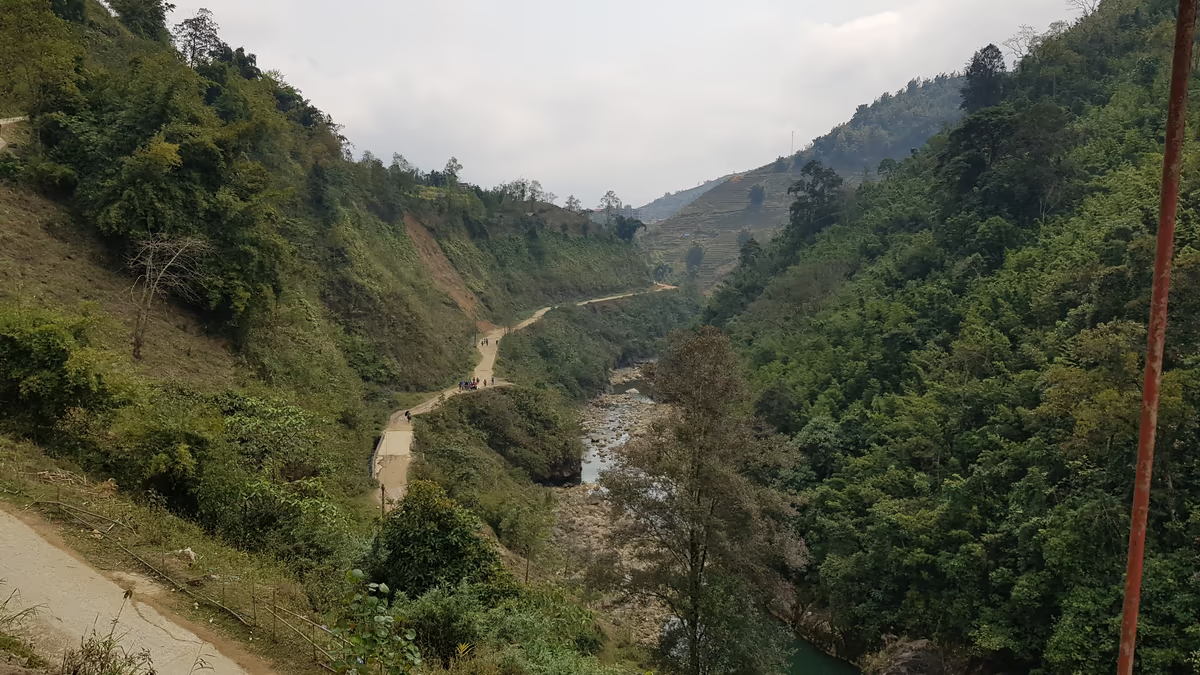
In villages around Sapa you will see dogs, puppies and chained guard dogs, and children who want to pet them. The advice does not change from what you would give at home: do not touch animals you do not know, and treat a bite or scratch as an emergency even when it looks small.
Wash at once
The CDC says to clean the wound immediately with soap and water.
Tell your guide or host
They can get you to a facility quickly, and in Sapa that matters.
Go for post-exposure treatment the same day
The CDC Yellow Book says the vaccine is available at most district health centres, all provincial CDCs and four regional institutes, while rabies immune globulin is available only at provincial centres and regional institutes.
Call your insurer
Tell them where you are and what happened, because the immune globulin step may mean a trip to a larger centre.
That access gap is the practical argument for pre-exposure shots for trekkers, because after one the post-exposure course shrinks to two doses with no immune globulin. The CDC suggests pre-exposure vaccination for outdoor activities such as camping and caving, for people working with animals, for long-term travellers and for young children. Whether that describes you is a conversation to have with a clinic.
On the Trail: Water, Altitude, Bites and Cold
This is the section where our own work meets the official guidance. We stay with the sources, and we say where we have no source.
Water and food
The CDC Yellow Book says tap water and ice are unsafe in Vietnam. It advises avoiding raw or undercooked food, and dishes that include uncooked blood or meat. Our Sapa packing list covers bottles and water treatment for the trail.
Altitude
Sapa town sits at about 1,500 to 1,600 m, as our guide to Sapa’s altitude explains. TravelHealthPro notes that Vietnam has a point above 2,500 m, which is Fansipan at 3,143 m. The CDC rates altitude risk by the elevation where you sleep the first night: low below 2,750 m, medium from 2,750 to 3,400 m and high above 3,400 m. Acute mountain sickness looks like a hangover with headache, nausea, dizziness and tiredness two to twelve hours after arrival, and the treatment is to go down, not up. Acetazolamide is a doctor’s decision.
The upshot for most Sapa visitors is that the town and the valleys sit in the low-risk band, and the summit of Fansipan is the exception. We found no official page about Fansipan treks in particular.
Insects, ticks and leeches
TravelHealthPro advises avoiding insect and tick bites day and night. A Yellow Book summary we saw in search results suggests repellent on skin and clothing, protective clothing and checking yourself after walking, and mentions scrub typhus in rural Southeast Asia, which is treated with doxycycline. We could not open that chapter, so we flag it as a snippet. We found no official page on leeches, so we do not give leech advice as sourced. Your guide will tell you what the trail is like on the day, which is better information than a general page.
Sun, heat and cold
The CDC mentions heat, humidity and sun, and suggests broad-spectrum sunscreen of SPF 15 or higher. We found no medical source on hypothermia in Sapa winters, so we rely on our Sapa weather by month page for the numbers and on common sense: pack layers.
Air quality
The Yellow Book says pollution is high in Hanoi and Ho Chi Minh City, and asthmatics should carry inhalers. IQAir said Hanoi’s air quality index reached 208 in early December 2025, with winter inversions the worst. We found no Sapa-specific air quality data.
Sapa Treks, With Honest Notes on the Trail
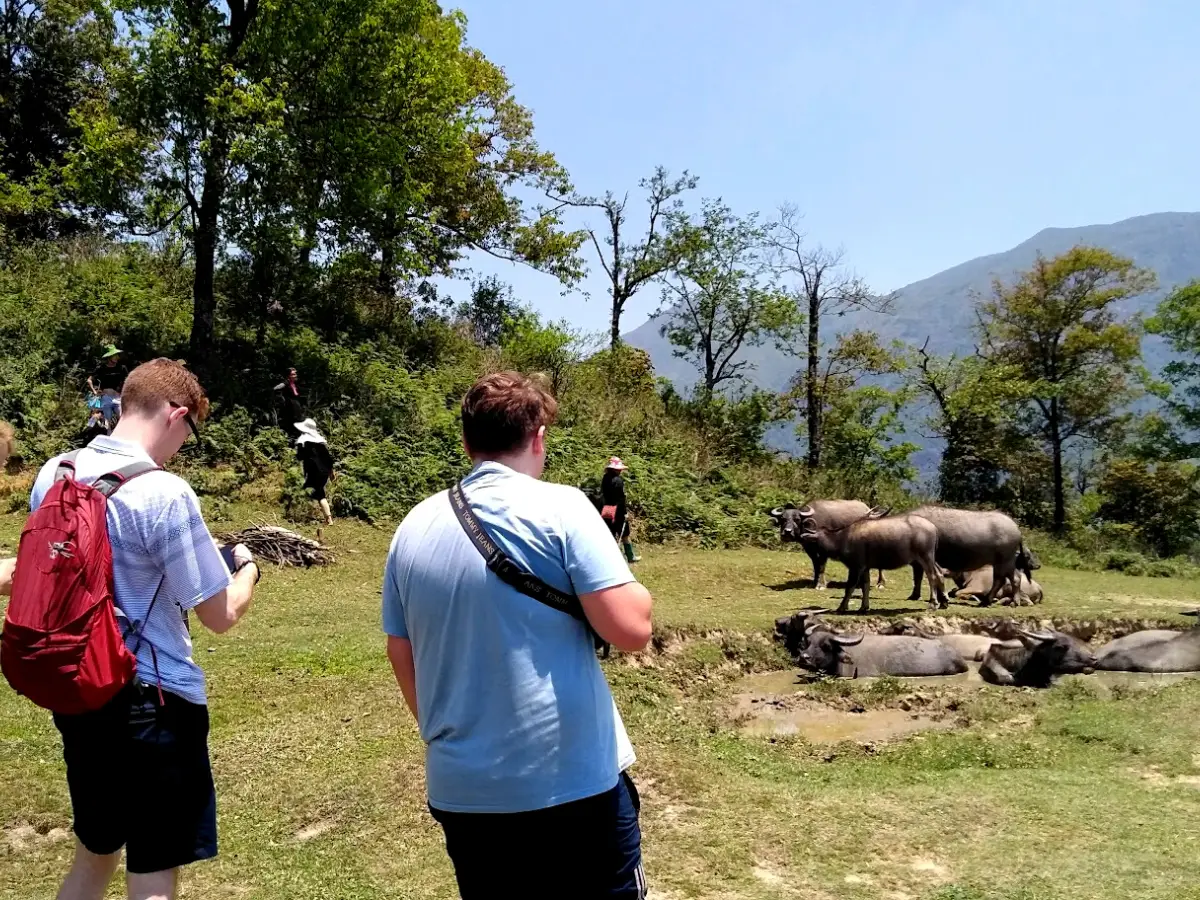 1-Day Trek
Trekking Through Rice Terraced Fields
Lao Chai to Ta Van with lunch at a family restaurant in Y Linh Ho.
 Homestay
Rice Terraced Fields & Homestay
Dinner and breakfast with a family in Ta Van, lunch on day one.
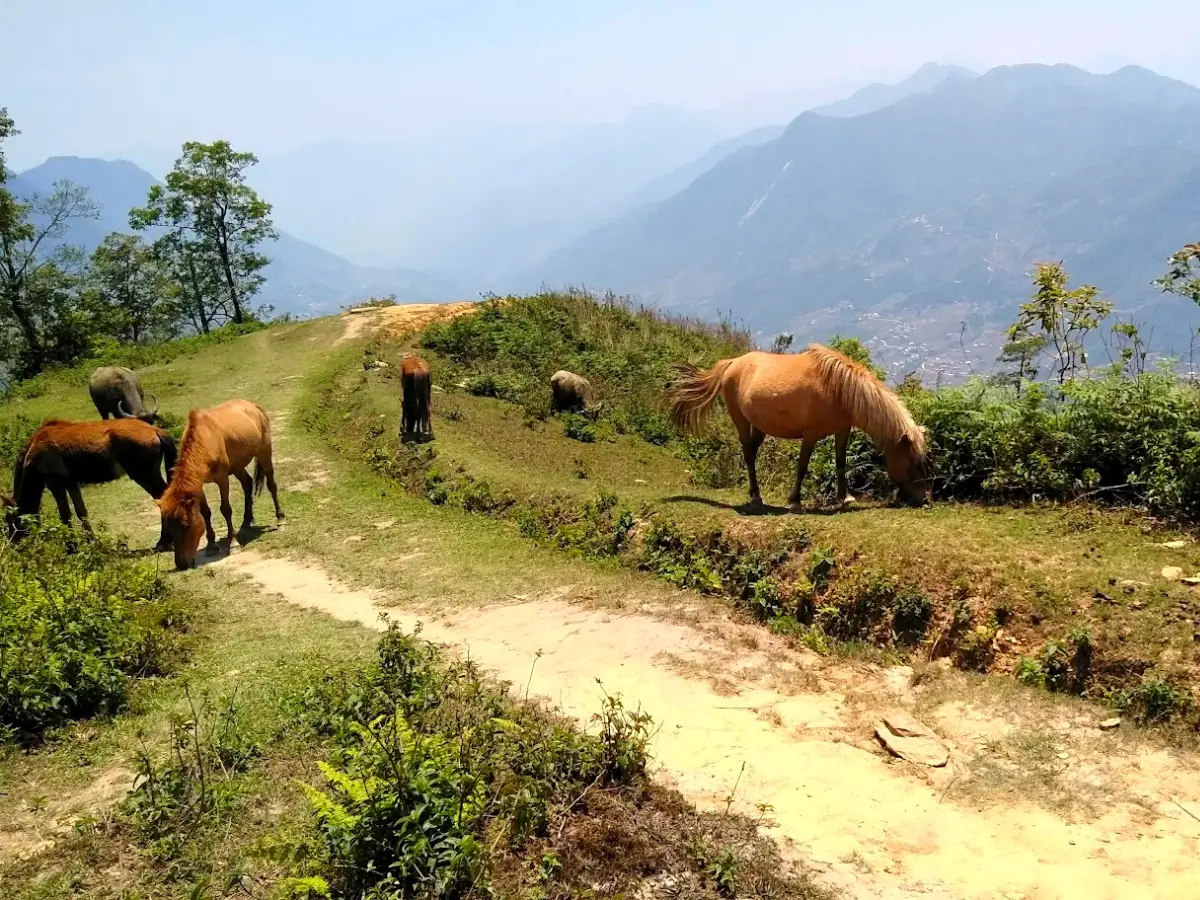 Local Favourite
Mountain Views and Villages Trek
Lunch at a restaurant run by local people in Hang Da village.
The Real Risk: Roads
Many visitors prepare carefully for tropical diseases and then climb on the back of a motorbike without a helmet. The CDC calls traffic in Vietnam “chaotic” and recommends helmets and seatbelts. Tuoi Tre, reporting the 2023 WHO road safety report, said Vietnam’s road death rate fell from 25.4 to 17.7 per 100,000 people between 2010 and 2021. A Vital Strategies brief of April 2025 puts two-wheelers at 57 percent of fatalities, quoting the National Traffic Safety Committee; that is not a WHO figure.
Wear a helmet on every motorbike, and think twice about renting one yourself. Our guides on whether Vietnam is safe and whether Sapa trekking is safe go further. If you are using ride apps in Hanoi, see our guide to using Grab in Vietnam for the helmet law and fines.
Medical Care in Hanoi and Sapa
If you need care, the big hospitals are in Hanoi, and Sapa has a small public hospital. The UK government’s list of medical facilities for Hanoi and the northern provinces, last updated 24 June 2022, names these. It is a list, not an endorsement, and it says it is not exhaustive.
Hanoi French Hospital
1 Phuong Mai Street. Its own site lists a hotline and an emergency line and says it is available 24/7. English-speaking staff, per the UK list.
Vinmec Times City
458 Minh Khai Street. Vinmec’s site shows a 24/7 customer service line. Some English, per the UK list.
Sapa General Hospital
A public hospital on Dien Bien Phu Street, Sapa town, with limited English per the UK list. We could not find an official site or a current phone number, so ask your hotel to call.
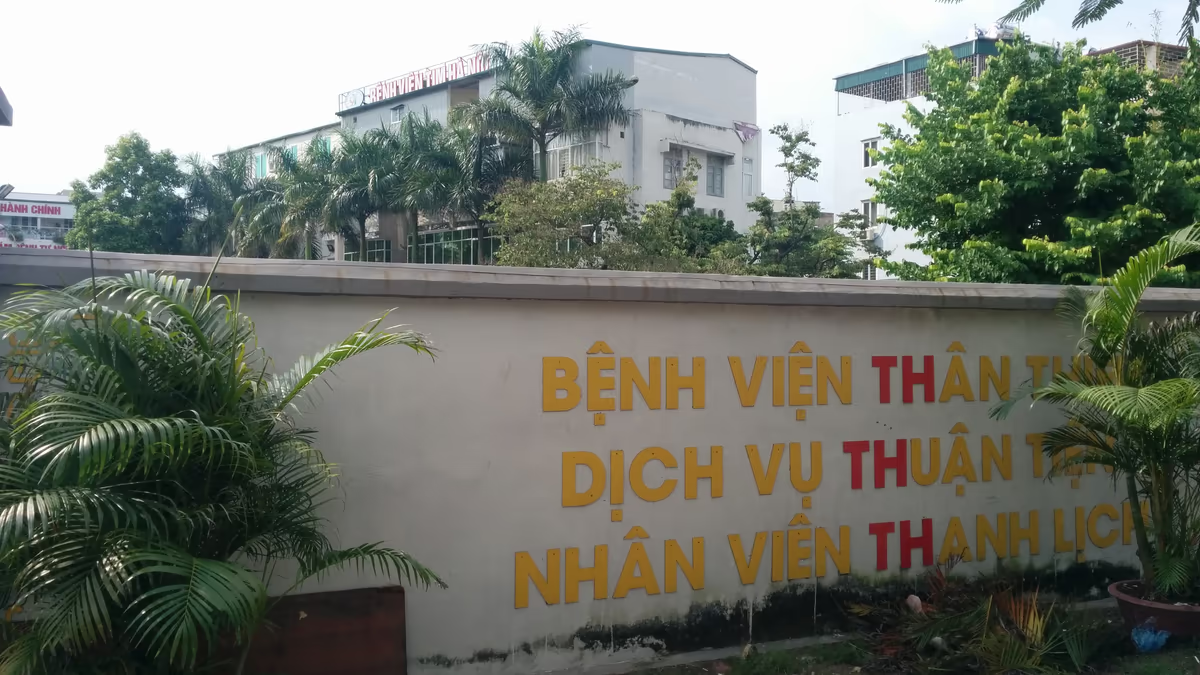
The UK government says to dial 115 for an ambulance. Other sources we saw give 113 for police and 114 for fire, but we did not open a page that confirms them, so check before you rely on them. The UK government also warns that some medicines can be hard to find and many are fake. We could not verify how often pharmacies sell antibiotics without a prescription.
Insurance matters here. The CDC Yellow Book recommends medical evacuation insurance and says care is good in Hanoi and Ho Chi Minh City but generally lower elsewhere; evacuation is usually to Singapore or Bangkok. The UK government says its embassy does not pay medical bills. Read your policy for pre-existing conditions, air ambulance cover and trekking limits. Our what to expect on a Sapa trek guide explains how the days run.
A Pre-Trip Checklist
Book a travel clinic 8 weeks out
Bring your route, dates, past vaccinations and list of medicines.
Check routine vaccines first
MMR in particular, given the CDC measles notice.
Ask about malaria for your exact route
Name Sapa, the valleys you will walk and the month.
Buy insurance with evacuation cover
Confirm it covers trekking and pre-existing conditions.
Pack a small kit
Repellent, sunscreen, any prescription medicines in their original packaging, plasters, and a copy of your insurance details.
Plan the signal
Have data on arrival so you can call for help. Our SIM and eSIM guide explains how.
Sources and the Dates We Checked Them
We read these pages on 31 October 2026. Pages we could not open are named in the text, and facts that came only from search snippets are marked as such.
- CDC Travelers’ Health, Vietnam, last reviewed 25 August 2026.
- CDC Yellow Book 2026, Vietnam, 23 April 2025.
- TravelHealthPro, Vietnam, no overall date; newest item 22 April 2025.
- TravelHealthPro, dengue factsheet, updated 16 September 2026; reached from the Vietnam page above.
- GOV.UK, Vietnam travel advice: health, no date shown.
- GOV.UK, list of medical facilities in Hanoi and northern provinces, 24 June 2022.
- Australian Embassy, Hanoi, vaccinations, undated.
- Hanoi French Hospital and Vinmec, own sites, read 31 October 2026.
- Vietnam government news, dengue strategy, 30 November 2025.
- Tuoi Tre, rise in dengue cases, 1 May 2026.
- Viet Nam News, dengue cases surge in the south, 2026, covering the first 30 weeks.
- IQAir, Hanoi among the most polluted cities, December 2025.
- Tuoi Tre, traffic deaths down, WHO report, 15 December 2023.
The Part We Do Sell
- Hanoi to Sapa transport — sleeper buses, limousines and the overnight train, bookable with your trek
- Hanoi to Sapa guide — what each option costs and how long it takes
- How to get to Sapa — the first leg, in detail
Rent at Our Office Before You Trek
 Gear Rental
Trekking Boots Rental
Waterproof ankle-support boots. Cleaned and checked before each rental. Available at 105 Thach Son Street.
 Gear Rental
Walking Poles Rental
Trekking poles available to rent at $2/day at our office, 105 Thach Son Street. Essential for descents.
Frequently Asked Questions
No vaccine is required for most visitors. The CDC lists yellow fever vaccine as not required for entry. The CDC and TravelHealthPro recommend that routine vaccines are up to date, and that most travellers consider hepatitis A and typhoid. Hepatitis B, Japanese encephalitis and rabies depend on your plans. See a travel clinic at least a month before you go, or 8 weeks per the UK government.
Not if you arrive from the US, UK, Australia or most of Europe. The CDC says the vaccine is not required for entry and not recommended for Vietnam. Many countries can ask for a certificate from people arriving from a yellow fever country, for example after a stopover in Africa or South America, so check with your airline or the Vietnamese embassy.
The official pages do not say. Neither the CDC nor TravelHealthPro names Sapa or Lao Cai. The CDC advises tablets for rural areas outside the Mekong and Red River deltas and says there is no transmission in Hanoi, while the UK describes only a low risk in the south. Ask a travel clinic about your exact route and month.
It is a decision to make with a clinic. The CDC says rabid dogs are sometimes found in Vietnam and suggests pre-exposure vaccination for outdoor activities, long stays and young children. The current schedule is two doses on day 0 and day 7. After any bite, wash the wound at once and get post-exposure treatment the same day.
No. The CDC Yellow Book says tap water and ice are unsafe. Drink bottled or treated water, and avoid raw or undercooked food.
Yes. The CDC Yellow Book says dengue transmission occurs year-round and peaks in the summer rainy season. There is no medicine to prevent it. The CDC says Qdenga is not available or recommended in the US, while TravelHealthPro (16 September 2026) says it is licensed in the UK from age 4 and can be considered after a clinician discussion.
The CDC recommends it for stays of a month or more and says to consider it for shorter rural or outdoor trips, such as hiking and homestays without screens or bed nets. Risk peaks from May to October, with the highest rates in the north. Lao Cai is not named in the CDC text, so ask a clinic.
Road traffic. The CDC calls traffic chaotic and recommends helmets and seatbelts, and a 2025 brief puts two-wheelers at 57 percent of road deaths. Wear a helmet on every motorbike, and take travel insurance that covers medical costs and evacuation.