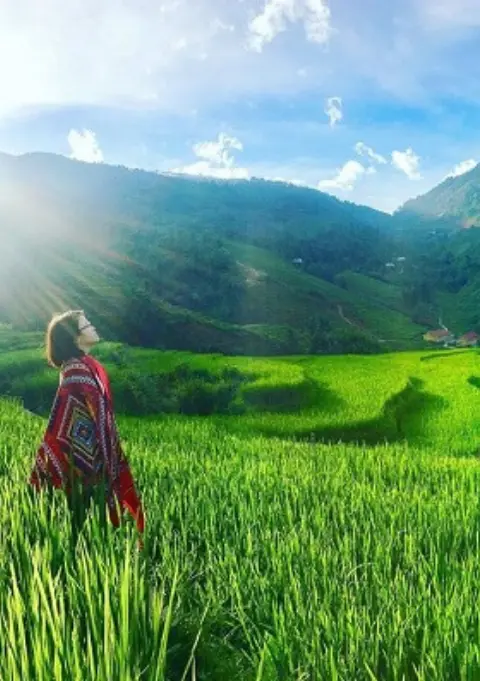
 Sinh Giang
Sapa is high, but not high enough to make most visitors ill. The town sits at about 1,500 to 1,600 metres (roughly 5,000 feet) above sea level, which is well above Hanoi and enough to give you cool, thin-feeling mornings, yet below the level at which the US Centers for Disease Control say altitude sickness becomes a real risk for unacclimatised travellers. On the usual Sapa trips, the town, the valley villages and the rice-terrace treks, you are at or below the town's own height. The one exception is the summit of Fansipan, 3,143 metres up, and even there a day visit is a very different thing from sleeping at that height.
If you are planning Sapa with a parent, a toddler or a bad memory of a high-altitude trip, this guide gives you the real elevations with their sources, says where the medical thresholds sit and what they mean for each part of a Sapa trip, and tells you honestly where we are guessing. It is not medical advice: if you have a heart or lung condition, ask your own doctor before you go above the town.
How High Is Sapa? The Real Elevations
Sapa town is about 1,500 to 1,600 metres above sea level. The figure varies because the town is spread over a slope and each source measures a different point: Vietnam News Agency gives 1,600 m, a Wikipedia infobox 1,600 m with a climate table at 1,570 m, and the Sun World operator's guide around 1,500 m. We use "about 1,500–1,600 m" and so should you.
Bars are drawn to scale against 3,200 m. The pass top is "about 2,000 m" in a Vietnam Pictorial article; other travel sites say 1,900–2,200 m. The upper station is "nearly 3,000 m" according to the operator; we found no exact figure.
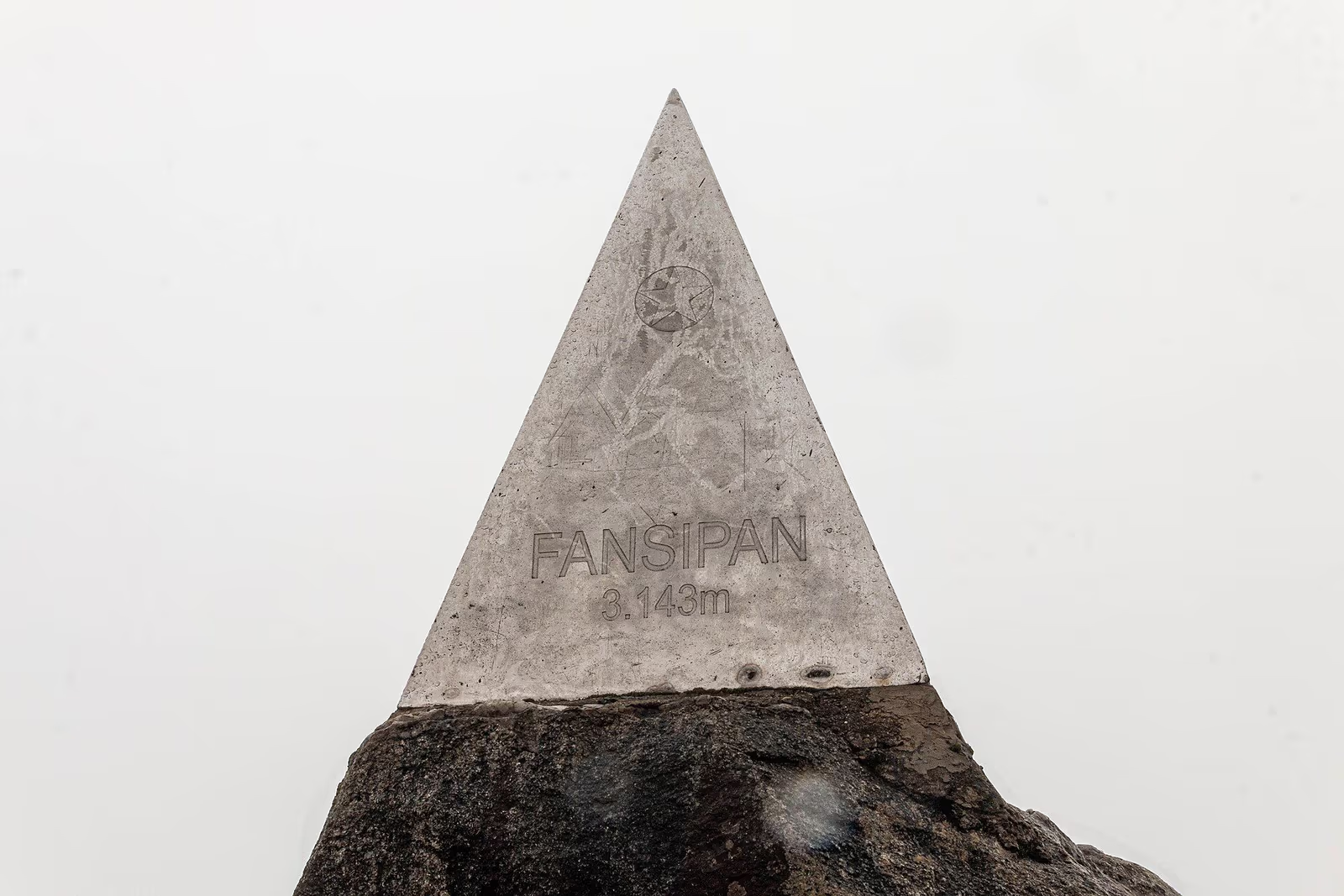
Two other figures are worth knowing. Fansipan's height is usually given as 3,143 metres, the number engraved on the summit marker pictured at the top of this page, although Wikipedia mentions a revised survey of 3,147.3 m. We use 3,143 m because that is what you will see at the top. And the villages you trek to, Lao Chai, Ta Van and Cat Cat, lie down in the Muong Hoa Valley below the town. We have no surveyed elevation for them that we could verify, so we give none, but the trails descend from Sapa to the river and climb back, which is why the valley is the low-altitude part of a visit.
Does Sapa Cause Altitude Sickness?
For the town and the valley treks, almost certainly not. Three medical sources we checked put the usual starting point well above Sapa town. The CDC's Yellow Book says unacclimatised travellers who sleep at about 2,450 m (8,000 ft) or higher, "and sometimes lower", are at risk, and its low-risk band runs up to 2,750 m. The NHS says altitude sickness usually happens above 2,500 m. The Wilderness Medical Society's 2024 update says acute mountain sickness generally occurs above 2,500 m, with the caveat that "some otherwise healthy people develop symptoms around 2000 m".
Read honestly, that means Sapa town is below every threshold, with a small margin of uncertainty for unusually sensitive people. Our own rule on the trail is simple: if you arrive from sea level, expect the first morning to feel a little different (cooler, with the occasional shortness of breath on a hill), walk slowly, drink water, and do not worry about it unless you already have a medical reason to. Our companion guides cover how hard Sapa trekking is in terms of fitness and how safe it is overall; this page is only about the height.
The Fansipan Exception
Fansipan is the one place on a normal Sapa visit where altitude sickness is a real question. The summit is 3,143 m, above all the thresholds in the last section. The cable car takes about 20 minutes to cover 6.3 km and gains about 1,410 m between its stations, and the operator says the station is about 600 stone steps from the peak, a stretch a mountain train covers in three to five minutes. Getting from the station to the summit takes about 30 to 40 minutes according to the operator's guide.
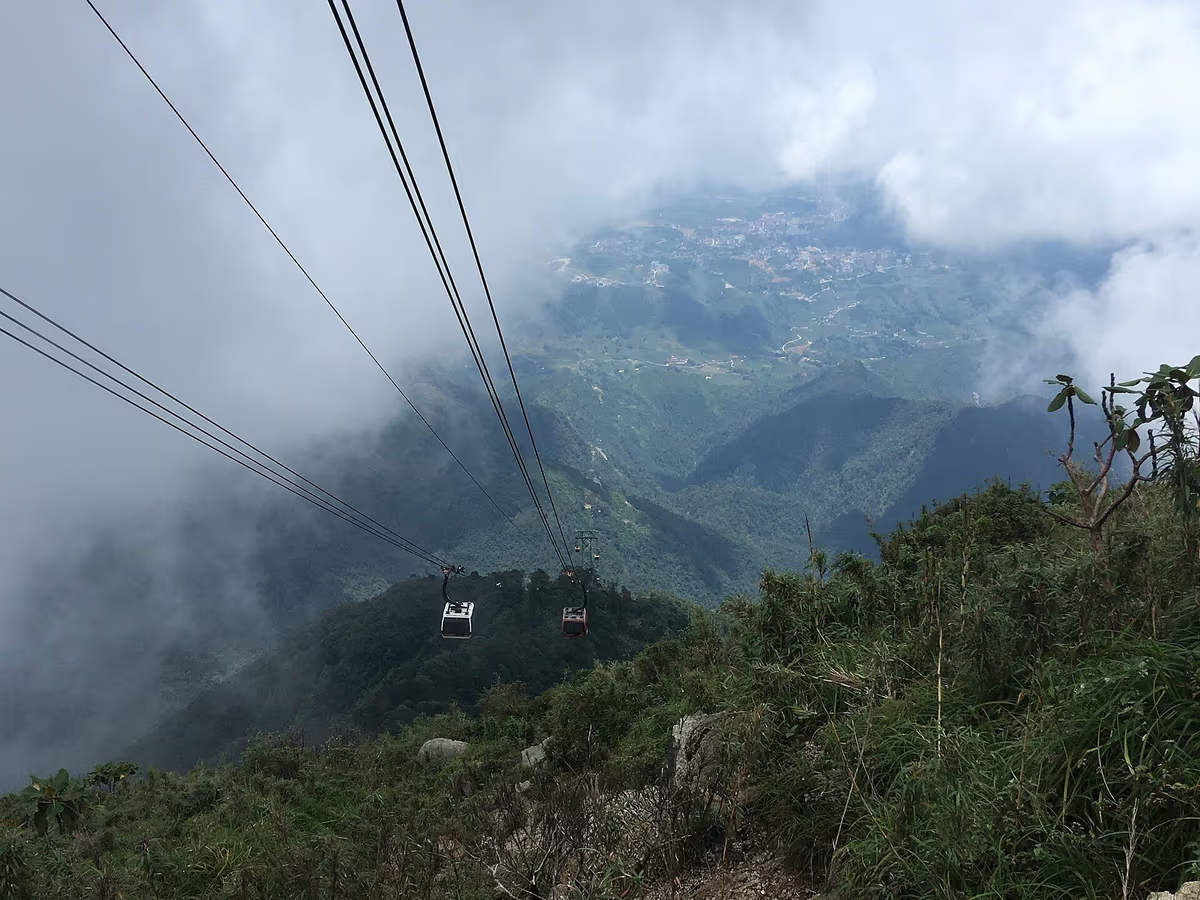
For a day visit that matters less than it sounds. The CDC notes that altitude sickness typically starts 2 to 12 hours after arrival and is usually triggered by sleeping high, and visitors who go up the cable car, spend an hour or two at the top and come back down are not sleeping there. The cable car does skip the acclimatisation that a walker would get, so a headache, nausea or dizziness at the top is possible. If it happens, sit down, drink some water, eat something, and go back down. Going down is the cure.
The two-day trek is a different case. A commercial guide says the two-day Tram Ton route camps near 2,800 m. At that height the CDC's "medium risk" band for the first night (2,750 to 3,400 m) would apply, though arriving with a day or two already spent in Sapa at 1,500 m helps. That is our reading of the CDC table, not a medical judgement, so if you want the two-day route and you have any health concern or a history of altitude sickness, ask a doctor first. A good guide never pushes anyone higher while they have symptoms, and you should not let anyone push you. See our guide to climbing Fansipan and our page on the Sapa cable car for the practical details of each route.
Fansipan, With a Guide Who Watches How You Feel
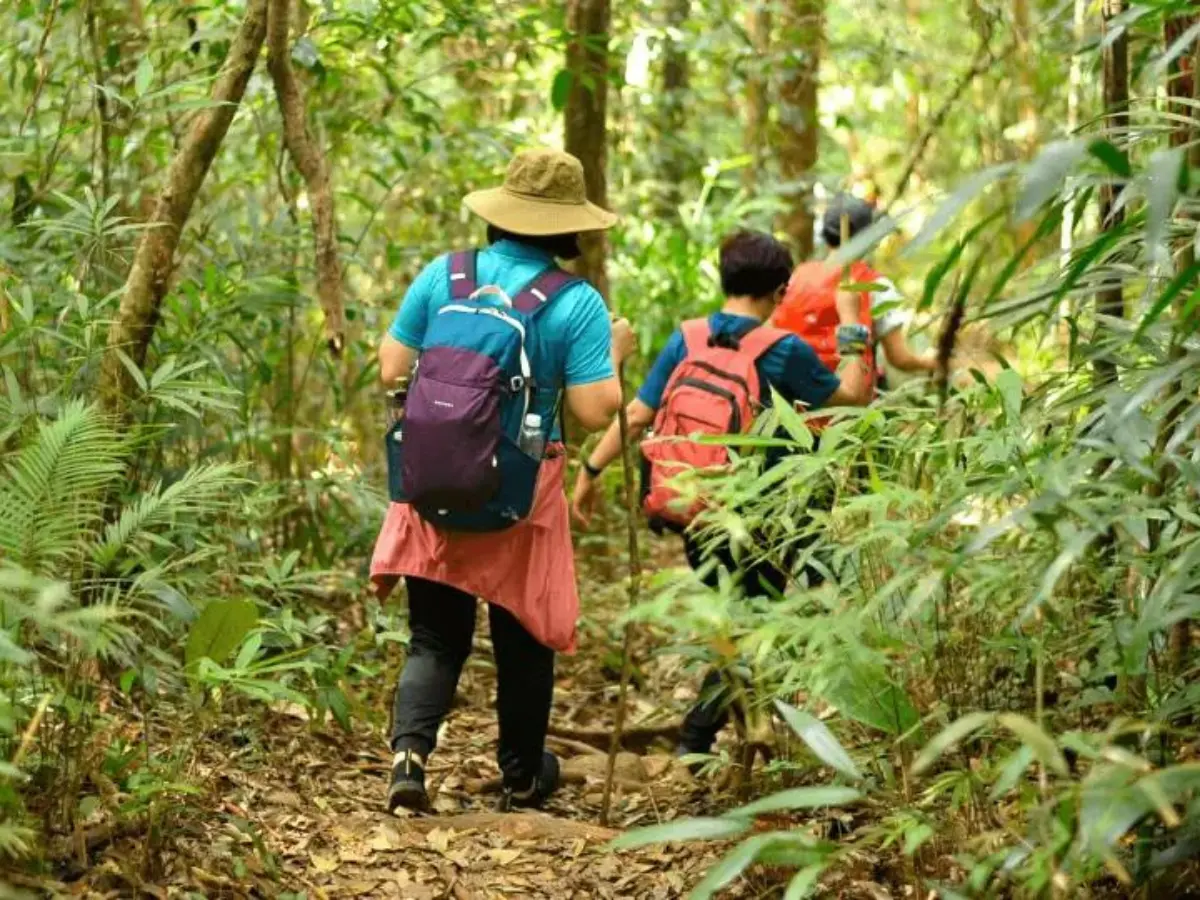 Fansipan
 Trek One Day Tour – Roof of Indochina
The one-day route to the 3,143 m summit with a local guide; tell us about any health concerns when you book.
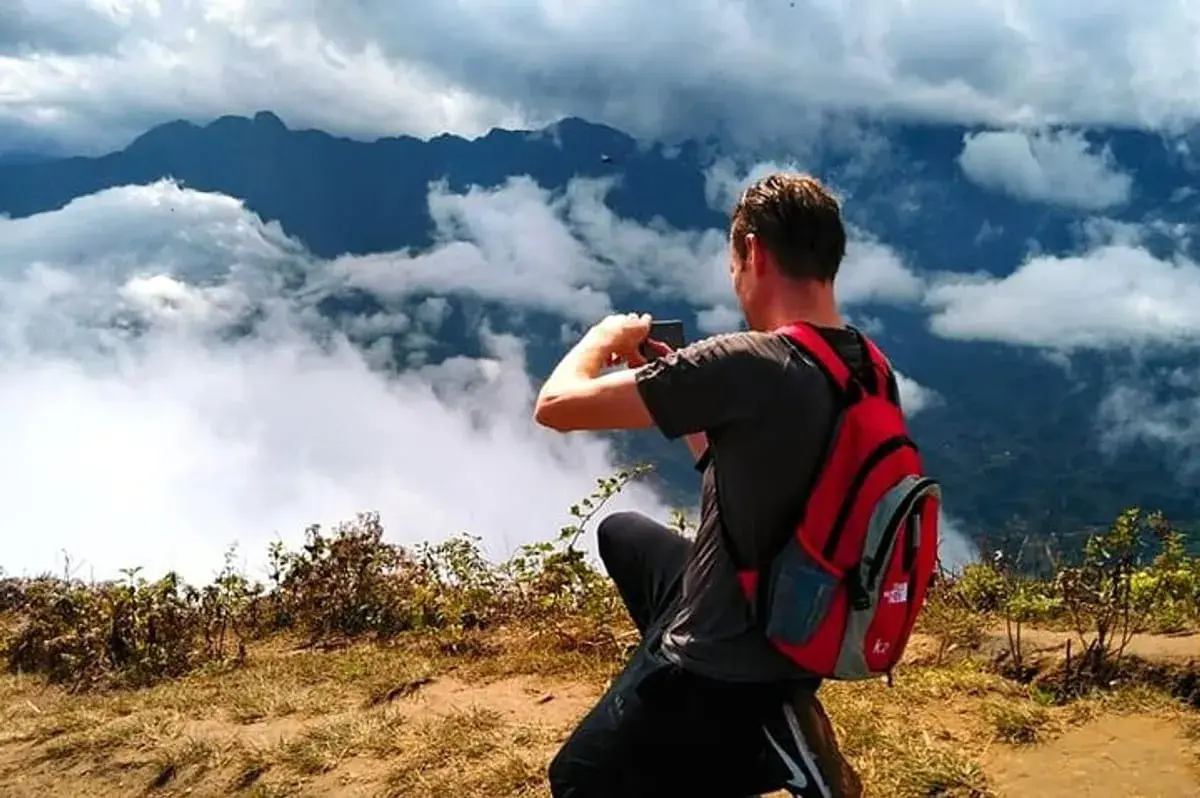 2D1N Trek
Mountain Views & Muong Hoa Valley Trek
Ridge views over the Muong Hoa Valley and a night in a village, all well below the altitude-sickness range.
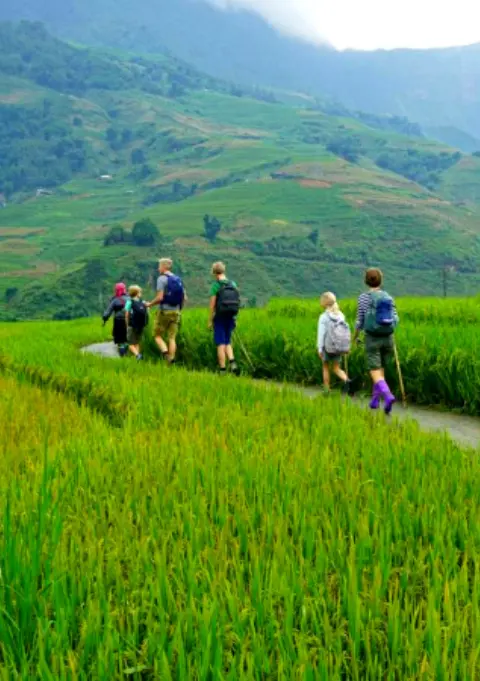 Very Easy
Sapa Easy Trekking For Seniors
A flat, slow day through Y Linh Ho and Ta Van for anyone who wants Sapa without the climbs.
What Altitude Sickness Looks Like
Acute mountain sickness, the mild form, feels like a bad hangover. The CDC defines it as a headache plus at least one of loss of appetite, dizziness, fatigue, nausea or vomiting. The two serious forms are much rarer and need urgent descent, and the warning signs below come from the CDC and the NHS.
| Condition | What you notice | What to do |
|---|---|---|
| Acute mountain sickness (mild) | Headache plus loss of appetite, dizziness, tiredness, nausea or vomiting; often poor sleep | Rest, drink water, do not go higher until better; descend if it worsens |
| High-altitude pulmonary oedema (fluid in the lungs) | Chest congestion, cough, breathlessness that is out of proportion to the effort; later, breathless at rest and a frothy or bloody cough | Urgent descent and medical help |
| High-altitude cerebral oedema (swelling of the brain) | Confusion, loss of balance and coordination, drowsiness | Urgent descent and medical help; the CDC calls it rare below 4,300 m, far above anything in Sapa |
What to Do if You Feel Unwell
Stop and tell someone
Tell your guide or the person you are with. A headache with nausea or dizziness at height is not to be soldiered through.
Do not go higher
The CDC says never ascend to sleep while you have symptoms. On Fansipan that means skipping the summit and starting down.
Rest, drink water, skip the alcohol
Both the CDC and the NHS advise against alcohol; the CDC suggests mild activity only for the first 48 hours at height.
Go down if it gets worse
The CDC says a descent of about 300 m usually improves mild sickness. Breathlessness at rest, confusion, loss of balance or blue lips mean go down now and get medical help.
Urgent signsWho Should Take Extra Care?
Fitness does not protect you. The CDC says children are as susceptible as adults and that the best predictor of altitude illness is having had it before. It names a handful of conditions that make high altitude riskier: COPD, coronary artery disease, pulmonary hypertension, sickle cell trait and sleep apnoea. For pregnant women it advises avoiding sleeping above about 3,050 m (10,000 ft), which is above everything except the Fansipan summit area.
Probably nothing to worry about if
Ask a doctor first if
Getting to Sapa: The Road Climb
Most people notice the altitude change on the road up. Hanoi is only 5 to 20 metres above sea level on average, and Sapa is about 300 to 320 km away by road, so you climb roughly 1,500 m over the day or the night. That is a gentle gain compared with the cable car, and the ride gives you time to adjust, but you may feel a little breathless or clear your ears on the final switchbacks. Flying into Hanoi adds no altitude at all. Our guide to how to get to Sapa compares the train, bus and private car options.
What to Expect: Practical Tips
Practical advice for a normal Sapa visit is short.
- Take the first day slowly. A relaxed afternoon in town before a long climb is plenty of adjustment for most people.
- Drink water and go easy on the alcohol the first night; both the CDC and the NHS advise against it at altitude.
- Expect cooler air at height. One commercial guide puts the Fansipan summit about 10 °C cooler than Sapa town, with winter temperatures between 0 and 9 °C at the top. Treat it as a guide rather than an official forecast and bring layers and a waterproof jacket. Our packing list covers the rest.
- Tell your guide about any medical condition when you book, so we can choose the route and pace for you.
- Remember that fog and cloud at the top can hide the view; see our Fansipan weather guide for the months with the best chance, and our guide to cloud hunting in Sapa for when the cloud is below you instead.
We are a trekking company, not doctors, and the figures above come from public medical guidance and published elevations, not from our own measurements. Individual reactions vary: the Wilderness Medical Society notes that some healthy people have symptoms at around 2,000 m. If you have a medical condition, a pharmacist, doctor or travel clinic is the right place to ask, before you travel.
Low-Altitude Days in the Valley Villages
 1-Day Trek
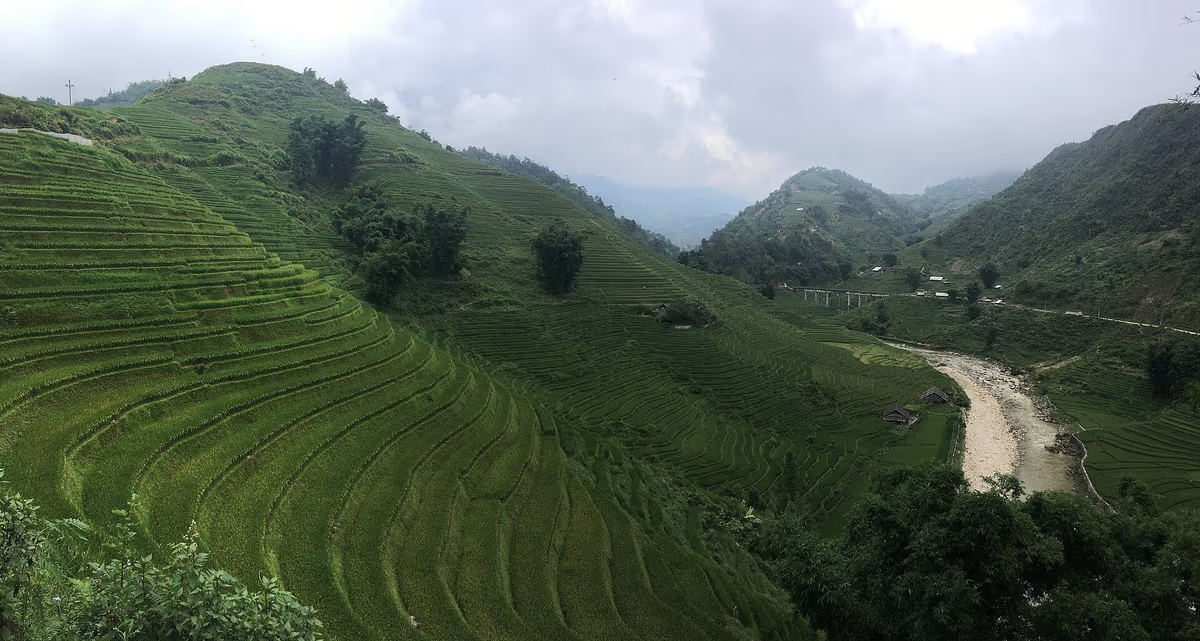
Trekking Through Rice Terraced Fields
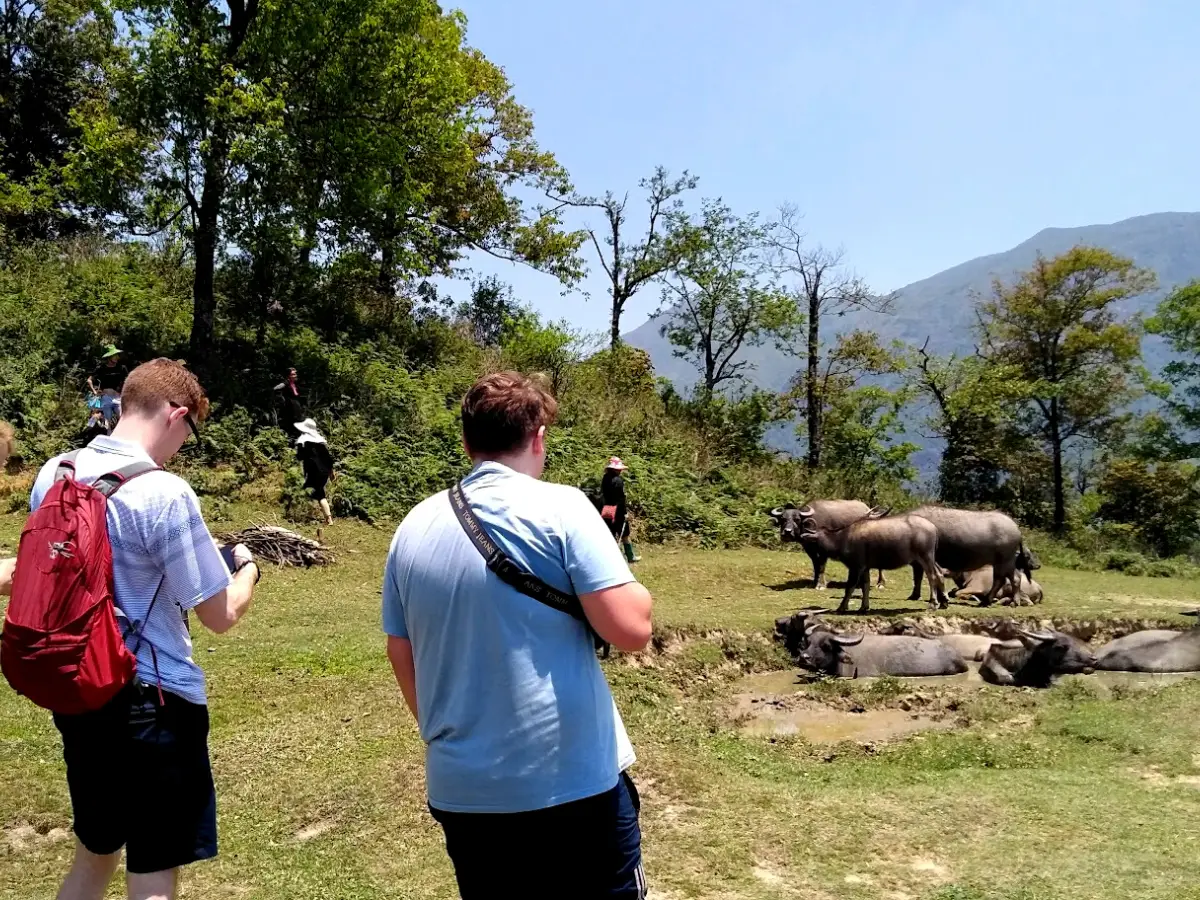
Lao Chai to Ta Van through the valley, below the height of Sapa town the whole way.
 Local Favourite
Mountain Views and Villages Trek
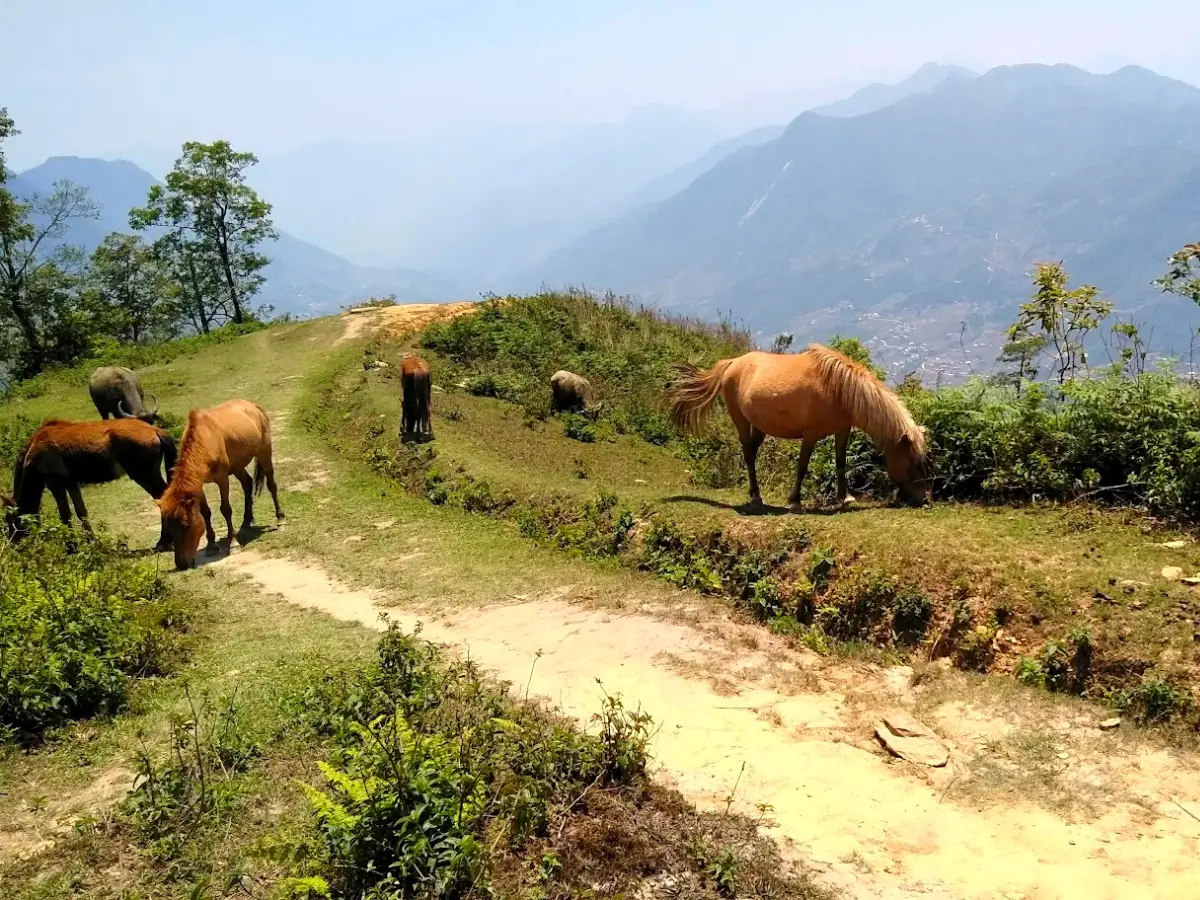
Villages and ridge views without a summit climb.
 Homestay
Rice Terraced Fields & Homestay
Sleep in a village house in the valley and walk back to Sapa town the next day.
Rent at Our Office Before You Trek
 Gear Rental
Trekking Boots Rental
Waterproof ankle-support boots. Cleaned and checked before each rental. Available at 105 Thach Son Street.
 Gear Rental
Walking Poles Rental
Trekking poles available to rent at $2/day at our office, 105 Thach Son Street. Essential for descents.
Frequently Asked Questions
Moderately. Sapa town sits at about 1,500–1,600 m above sea level, depending on which point of the town a source measures. That is high enough to feel the cool air but below the roughly 2,450 m level where altitude sickness becomes a real risk for most people. The only truly high point on a normal visit is the Fansipan summit at 3,143 m.
Very unlikely in Sapa town or on the valley treks. The US CDC says unacclimatised travellers sleeping at about 2,450 m or higher are at risk, the NHS says it usually happens above 2,500 m, and the Wilderness Medical Society notes that some otherwise healthy people feel symptoms around 2,000 m. Sapa town and the valleys sit below all of those lines.
About 1,500–1,600 m, which is roughly 4,900–5,250 ft. Sources vary because the town is spread over a slope and each figure is measured at a different point. Vietnam News Agency gives 1,600 m, a Wikipedia infobox 1,600 m with a climate table at 1,570 m, and the Sun World operator guide around 1,500 m.
It is possible but uncommon on a day visit. The cable car climbs about 1,410 m in around 20 minutes to a station close to 3,000 m, and the summit is 3,143 m. Altitude sickness usually starts several hours after arrival and mostly affects people who sleep high, and day visitors go back down the same day. If you feel a headache, dizziness or nausea at the top, rest, drink water and go back down.
Sapa town and the valleys are generally fine, because they are below the altitude where problems are expected. The CDC says children are as susceptible to altitude illness as adults, and advises pregnant women to avoid sleeping above about 3,050 m, which Sapa town is far below. For Fansipan or any trip with a high night, ask your own doctor first.
Not for Sapa town or the valley treks. Preventive medication is a decision for a doctor or travel clinic, and the CDC discusses it only for medium- and high-risk trips. If you plan a two-day Fansipan trek with a night near 2,800 m, or you have had altitude sickness before, ask a doctor in advance.
Much colder than Sapa town. One commercial guide puts the summit about 10 °C cooler than the town and says winter temperatures at the top can fall between 0 and 9 °C. Fog and wind are common, so bring a waterproof jacket and warm layers even if the town is mild.