
 Sinh Giang
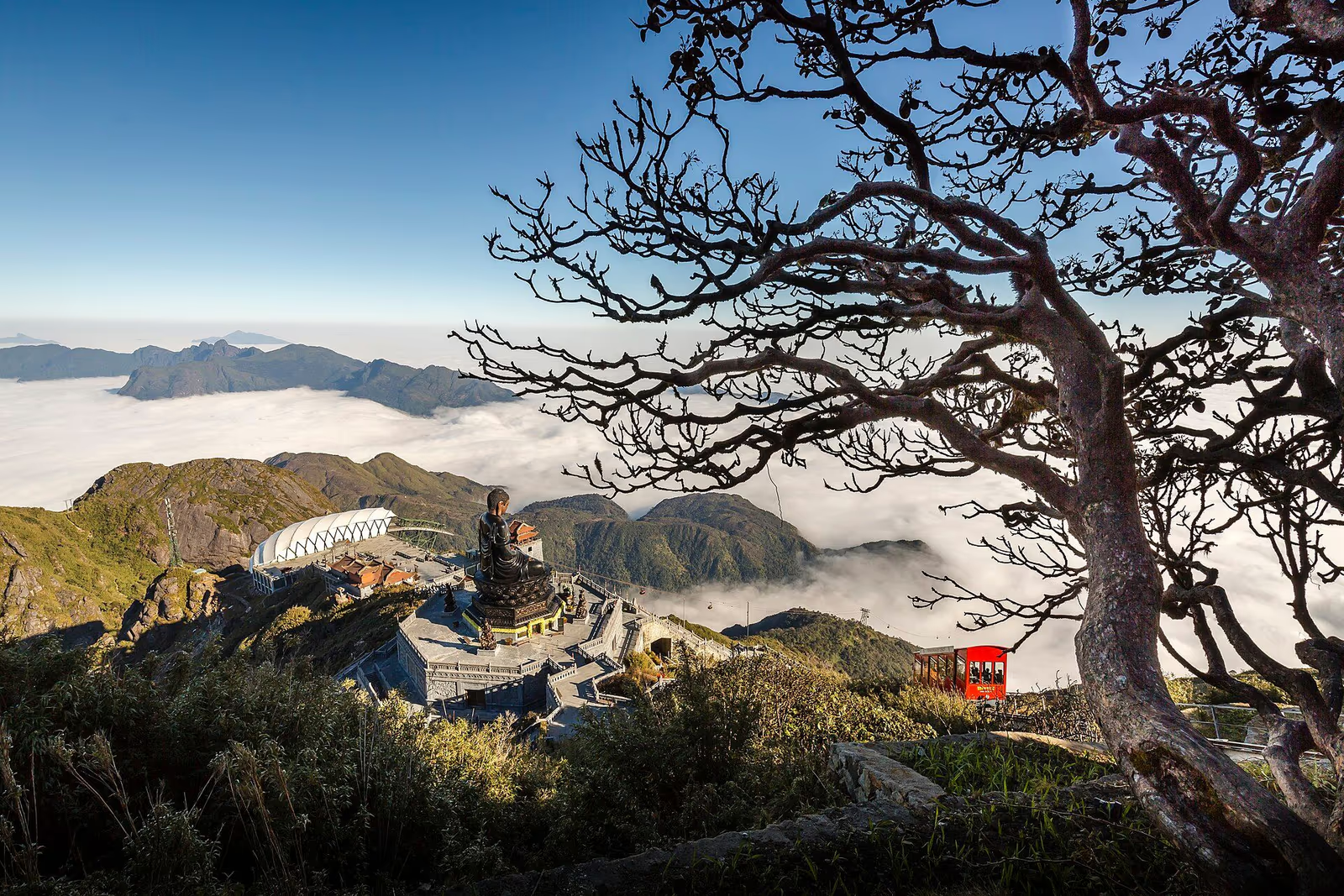
The sea of clouds is a layer of cloud lying in the valleys with its top so level that the peaks poke through like islands, and in Sapa the way to see it is to stand above it: on the Fansipan summit, on the O Quy Ho Pass or on a high ridge. The odds are best from November to January, according to the company that runs the Fansipan cable car, and in the morning. No month and no viewpoint guarantees it. Sapa town itself, at about 1,500 metres, is more often inside the cloud than above it, which is why people who stay in town and look up on a foggy morning conclude that the famous view does not exist.
This guide explains how the cloud sea forms in plain language, which months and which hours give the best chance, what each viewpoint can and cannot show, and how to decide on the day whether to go up. It also says what we could not verify. We found no weather statistics for the real odds, so we do not quote a success rate; anyone who gives you a percentage for a particular month is guessing.
What Is the Sea of Clouds, and Why Does Sapa Get It?
A sea of clouds is a layer of cloud in the valleys, seen from above, whose top is fairly flat. It usually forms in very stable air, often under a temperature inversion, where warmer air lies over cooler air like a lid. Moisture in the cool layer condenses into a uniform cloud, and the air above it must be dry and clear for the view to work.
The mechanism behind a typical Sapa morning is radiation fog. On a clear, calm night the ground loses heat and cools the air touching it; if that air is humid enough it reaches saturation and fog forms. Strong wind prevents it, and valleys make it thicker and longer-lasting because cold air pools in them. The Met Office notes that radiation fog usually dissipates soon after sunrise as the ground warms, with high ground an exception. Put together, this explains the pattern that matters for a visitor: the cloud lies in the valleys, so you win by being higher than it. The Fansipan cable car, the O Quy Ho Pass and the ridge tops can all be above it; the town at 1,500 m is often inside it or just beneath it.
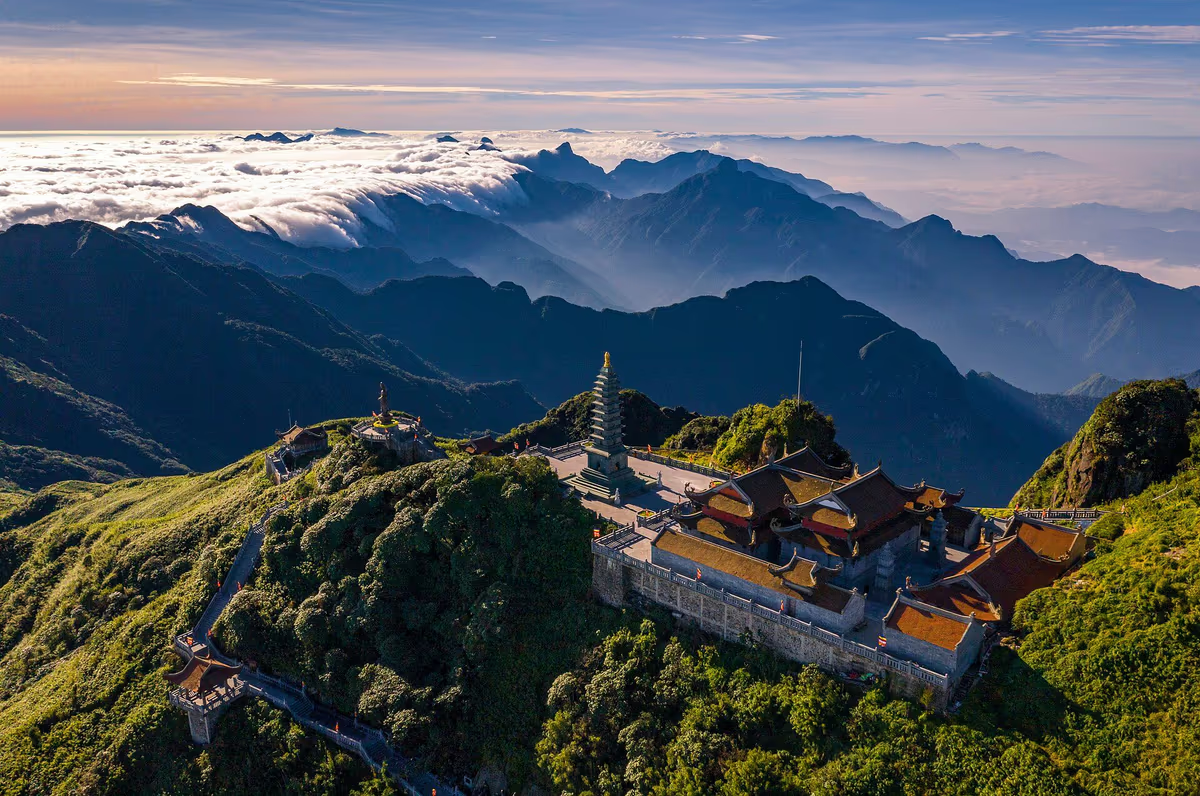
When to Go: The Months
The best months for cloud hunting in Sapa are November to January, according to the Fansipan cable car operator, which calls winter the ideal time. The operator's guide to the O Quy Ho Pass picks October to December and describes the dry season as running roughly from September to April. The wet months are different: from June to August fog and rain cut visibility, and a summer cloud is usually drifting cloud rather than a clean deck.
This strip is our reading of the operators' guidance, not weather statistics, and we marked a month "Maybe" when no source we trusted said anything specific. It is not a forecast. A site that tracks Fansipan weather reports the lowest cloud cover in December and January and the best visibility in October and November, which fits the winter advice: when the sky above is clear, the cloud sea below stays lit and visible. Cloud cover, that site says, is highest in June and July, which is the opposite of what you want. A cloud sea has also been photographed at the Fansipan summit in March, so the season does not end in January. For month-by-month temperatures see our Sapa weather guide, and for one month in detail our guide to Sapa in November.
What Time of Day?
Early morning is the time, because radiation fog is a night-and-dawn event and the Fansipan operator calls early morning the ideal time for cloud hunting. Its advice is to ride up between about 8:30 and 11:00, with 8:00 to 10:00 giving good light and visibility, and it warns that later in the day the summit may be in thick fog. The cable car does not open early enough for a summit sunrise: an operator page labelled 2025 lists opening at 8:00 on Monday to Friday and at 7:30 on Saturday and Sunday, so confirm the current hours before you plan around them.
The evening before
Check the forecast and the sky; a clear, calm night is the setup you want.
Fog builds in the valleys
Cold air pools and fog forms; on high ground it can linger.
Good light and visibility
The operator's best window at the summit; the cable car opens at 7:30 or 8:00.
Cloud rises or thickens
The summit may be in thick fog; the operator lists 10:00–14:00 as the crowd peak.
Where to Go: The Viewpoints Compared
The best viewpoint is the one above the cloud on the day, and that changes with the weather, so the cards below compare the four realistic options by height and by what can go wrong.
Fansipan summit
Highest- Height
- 3,143 m; the cable car gains about 1,410 m in 15–20 minutes
- Best for
- The surest chance of being above the cloud
- Watch out
- You can arrive to thick fog and no view; the summit is cold and windy
O Quy Ho (Tram Ton) Pass
Road viewpoint- Height
- About 2,000 m at the top of the pass
- Best for
- October to December, early morning and sunset
- Watch out
- Fog cuts visibility in the rainy season; leave before dark because cold fog thickens after sunset
Ham Rong Mountain
Above town- Height
- A few hundred metres above Sapa town
- Best for
- A quick look over the town and the cloud lying on the ridges
- Watch out
- Often inside the cloud on the mornings the valleys fill
The valley trails
Below town- Height
- The valley floor sits several hundred metres below the town
- Best for
- Cloud lying across the slopes, not a flat deck
- Watch out
- You are below the cloud, so you see the layers but not the sea
Fansipan: Above the Cloud, Unless It Isn't
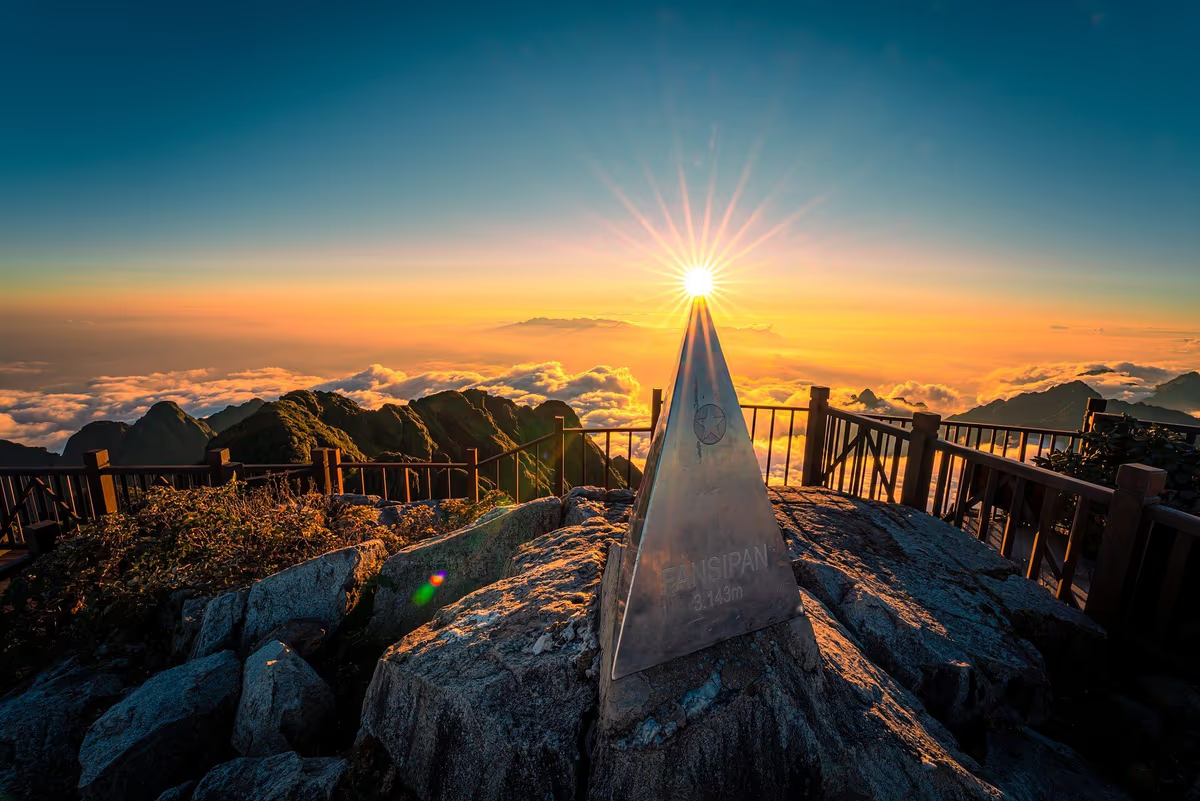
Fansipan gives the best chance of a cloud sea because the summit stands more than 1,000 metres above the town. The operator describes the cable car from Hoang Lien station to the summit area as 6,292.5 m long with a height difference of 1,410 m, and says the lower station is at over 1,600 m. After the ride you still climb steps to the 3,143 m marker. The honest risk is a bad day: the cable car runs in the weather it is allowed to, and a ride can end in grey with no view. Our guide to Fansipan covers the routes, and our page on the Sapa cable car has the ride in detail; if the altitude worries you, read whether Sapa is high altitude.
O Quy Ho Pass: The Road Viewpoint
The O Quy Ho (Tram Ton) Pass tops out at about 2,000 m, according to the operator's guide, and it is a high viewpoint you can reach by road. The operator singles out October to December for cloud hunting and sunsets, and notes that cloud is present all year but fog cuts visibility in the rainy season, and cold fog thickens after sunset, so leave before dark. Our guide to the activities on the pass has a section on the Heaven's Gate viewpoint, and our page on the best sunrise and sunset spots covers the light.
Ham Rong and the Valleys
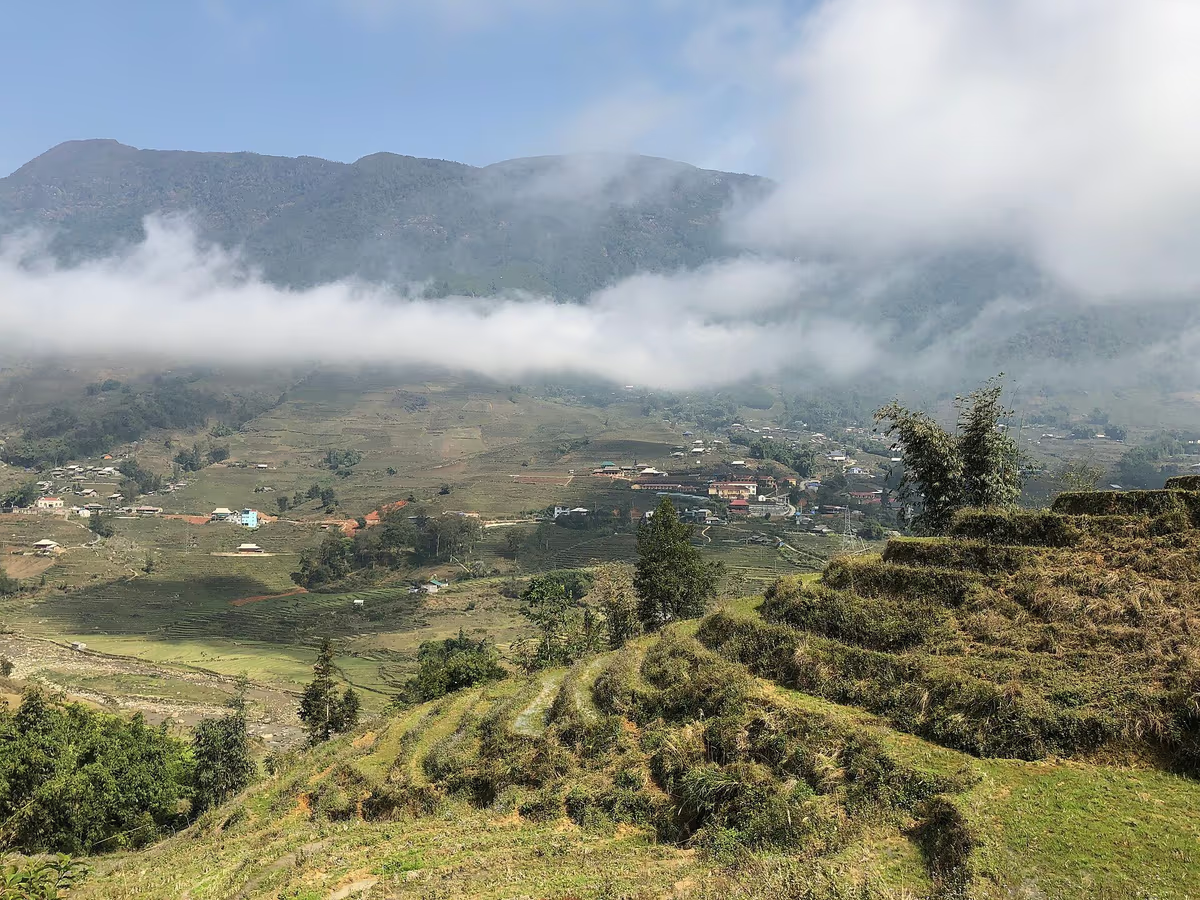
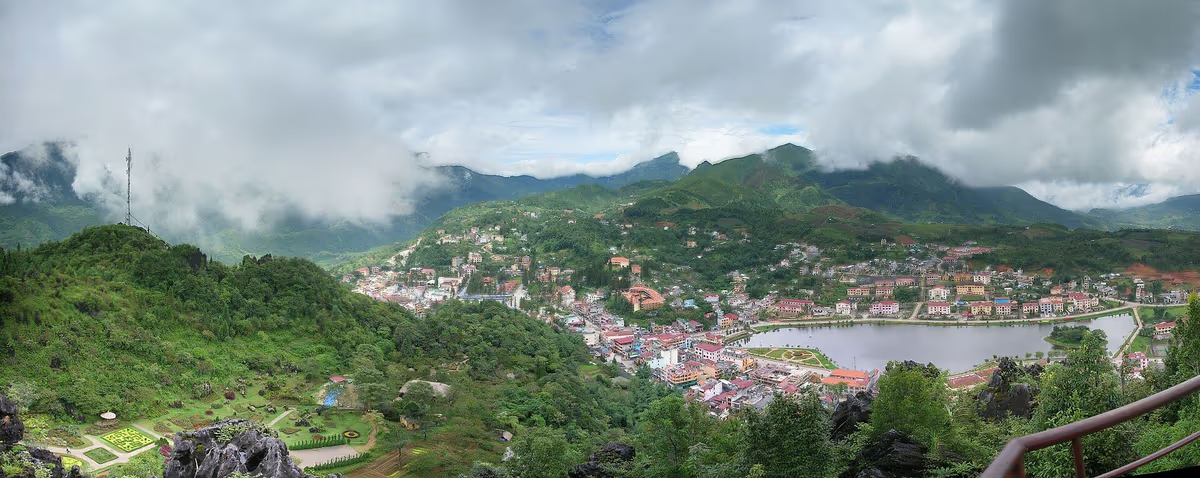
Ham Rong Mountain rises a few hundred metres above Sapa town (tourism pages disagree on the exact height, so we give none). It is a short climb from town and a good first try, though on a morning when the valleys are full you may be inside the cloud. The valley treks are a different experience: you are below the cloud, but the early light on cloud lying across the terraces is worth the walk. Our guides to Ham Rong and the Muong Hoa Valley cover both, and our photography spots page has the viewpoints for photographers.
Ridge Walks and Homestays Above the Muong Hoa Valley
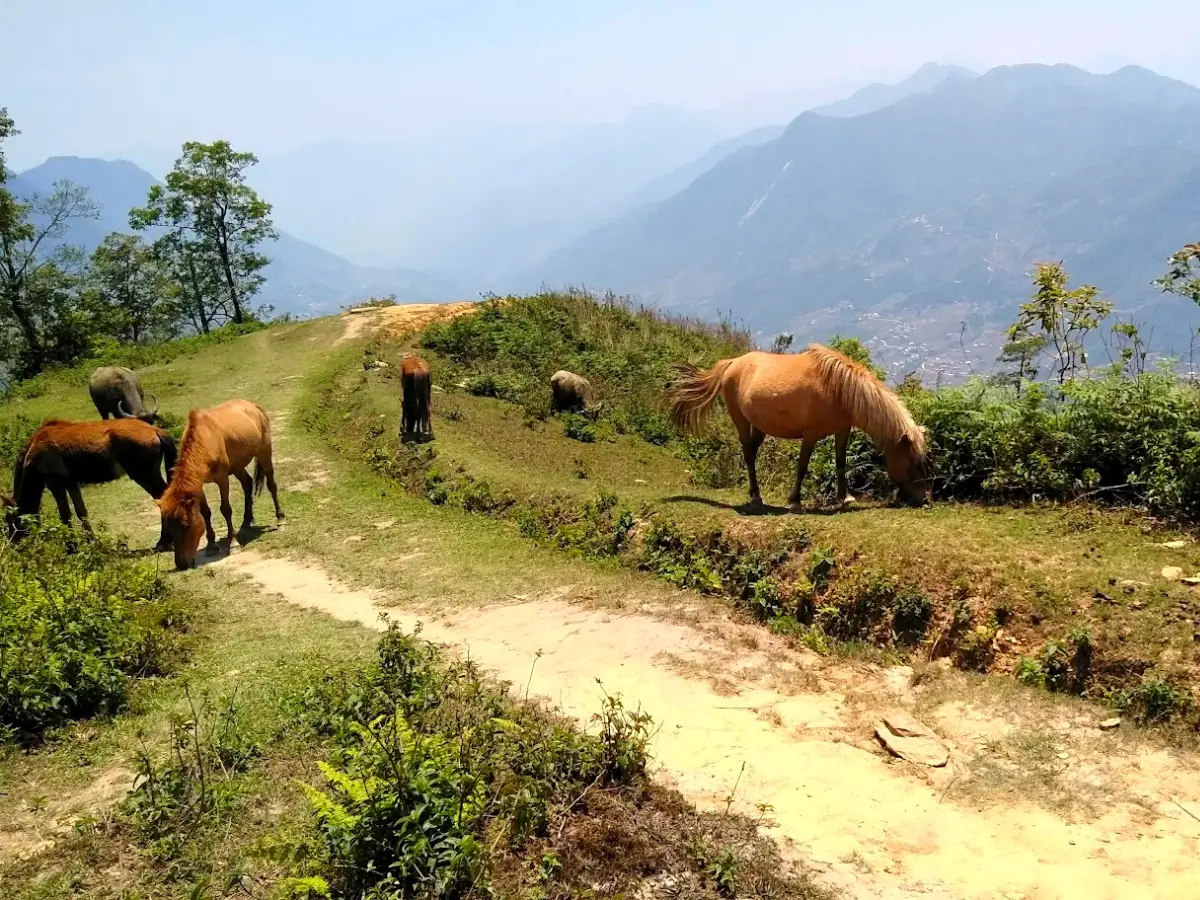 Local Favourite
Mountain Views and Villages Trek
Ridge views over the Muong Hoa Valley on a day trek, with the weather deciding how much cloud you see.
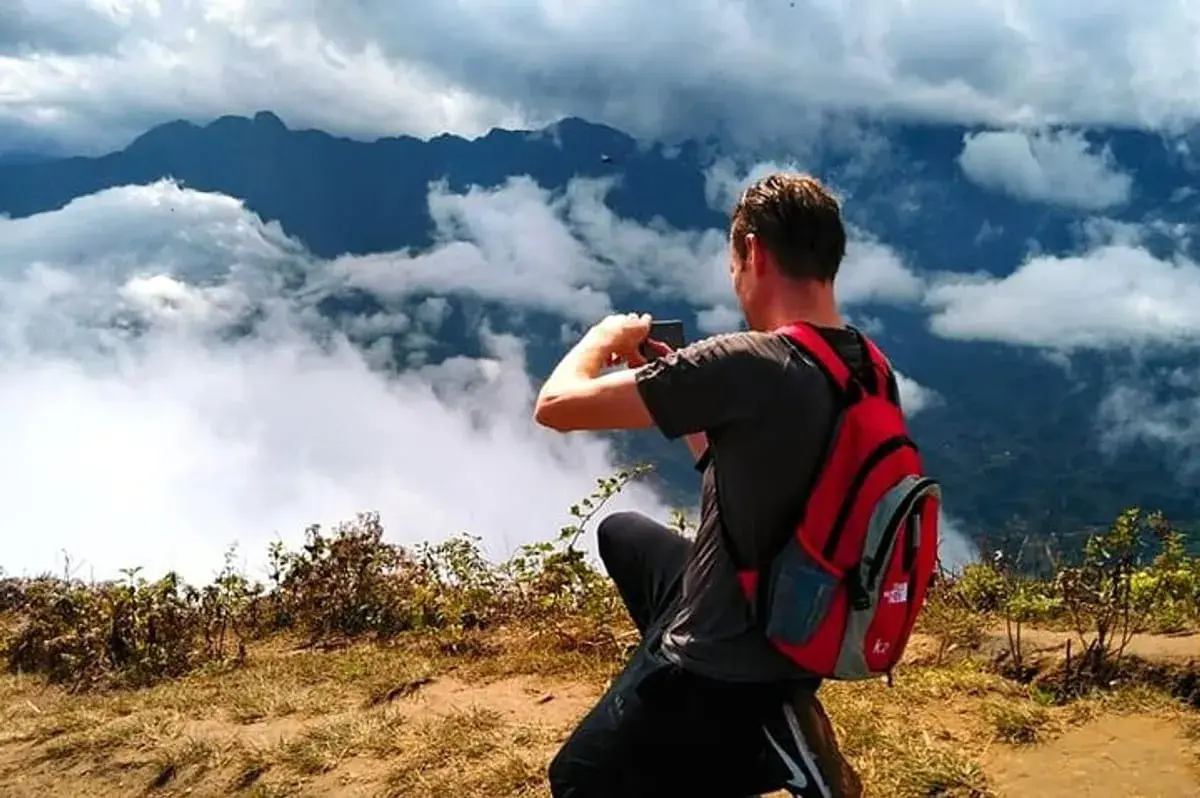 2D1N Trek
Mountain Views & Muong Hoa Valley Trek
Mountain views and a night in the valley, so you can see both the evening and the morning light.
 Homestay
Rice Terraced Fields & Homestay
Wake up in a village house and see what the morning has done to the valley.
How to Decide on the Day
Deciding on the day is the part that makes or breaks a cloud-hunting trip, and the physics gives you a short list of signals. The national weather service publishes forecasts for Lao Cai province, but we could not find a town-level Sapa forecast from it, so the signals below are our reasoning from how the cloud sea forms, not a threshold you can look up.
- Good signs: a clear night sky, light wind, humid air or rain the day before, and a cold dawn. That is the recipe for radiation fog in the valleys.
- Bad signs: cloud above you rather than below, strong wind, and a high cloud deck that hides the sun, because the cloud sea needs clear, dry air above it.
- Check at the last moment. The operator advises checking the forecast and says clear, cloudless days give the best views. Look at the sky at dusk and again at dawn before you pay for a ticket.
- Give yourself options. Plan two or three mornings, not one. A short trek through the valleys gives you several mornings in the area, and ask your guide or hotel what the sky is doing before you commit to a ticket.
Nobody can promise a sea of clouds, and we will not. The cable car can ride into fog, the pass can fill with mist, and a perfect forecast can still fail. If a site quotes you a percentage chance for a month, it is not drawn from published weather data that we could find. The right way to treat cloud hunting is as one good thing that may happen on a trip that is worthwhile without it.
What Goes Wrong, and What to Bring
The common failures are predictable. In the rainy season, June to August, fog and rain remove the view. At the summit the cloud can rise and swallow you later in the morning. In the crowd peak, the operator lists 10:00 to 14:00, queues eat the morning window. On the pass, fog thickens after sunset and the road is no place to be in the dark.
Dress for the cold, not the town. One climate table gives Sapa town about 6 to 7 °C at night and 12 to 13 °C by day in December and January, and the operator says the summit is 5 to 10 °C colder than the town, with wind. Layers, a hat, gloves and a waterproof jacket are the minimum, and the operator notes the summit stays cool and windy even in summer. Our packing list has the full kit, and our guide to the best time to visit Sapa puts the cloud season in the context of the whole year.
Fansipan and Longer Treks for Several Chances at Clear Weather
 Fansipan
 Trek One Day Tour – Roof of Indochina
The one-day route to the 3,143 m summit with a local guide, for the view from above the cloud.
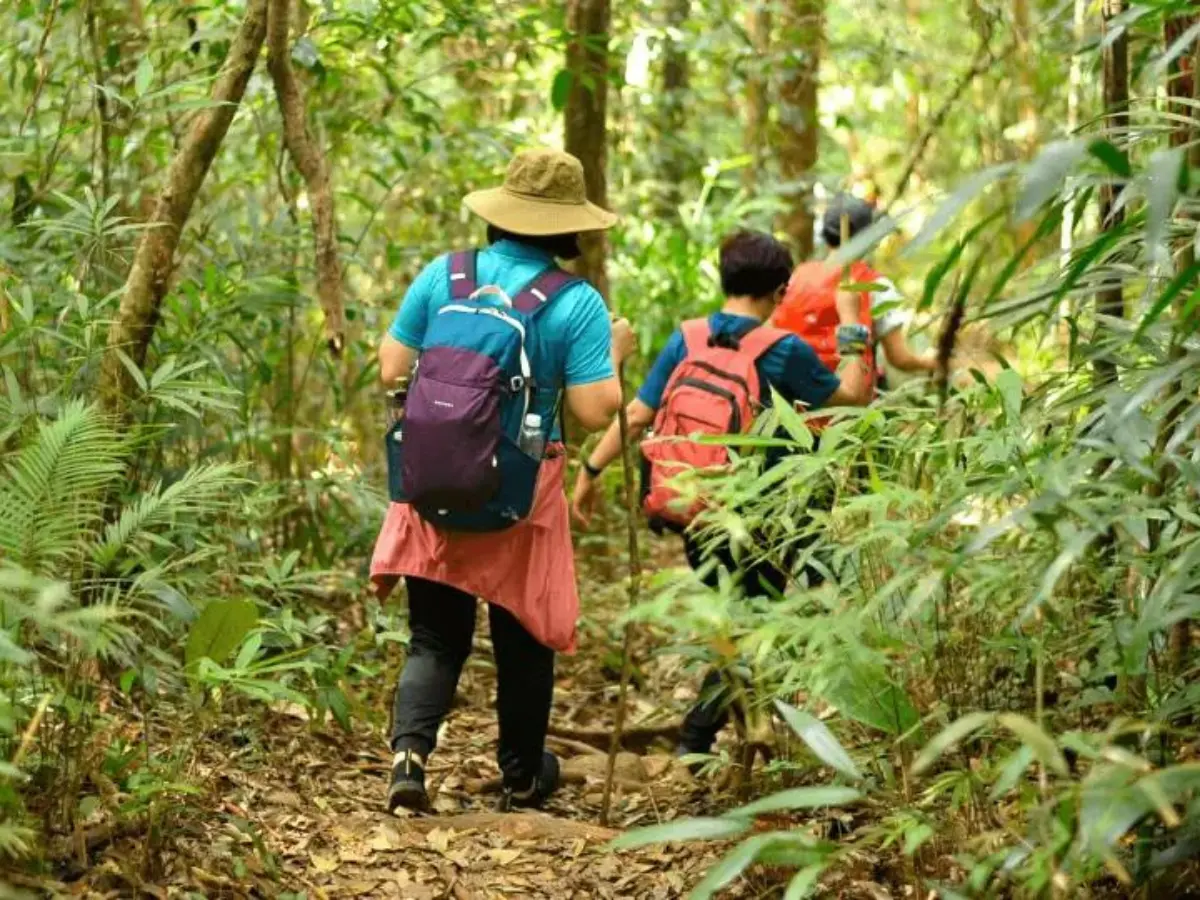
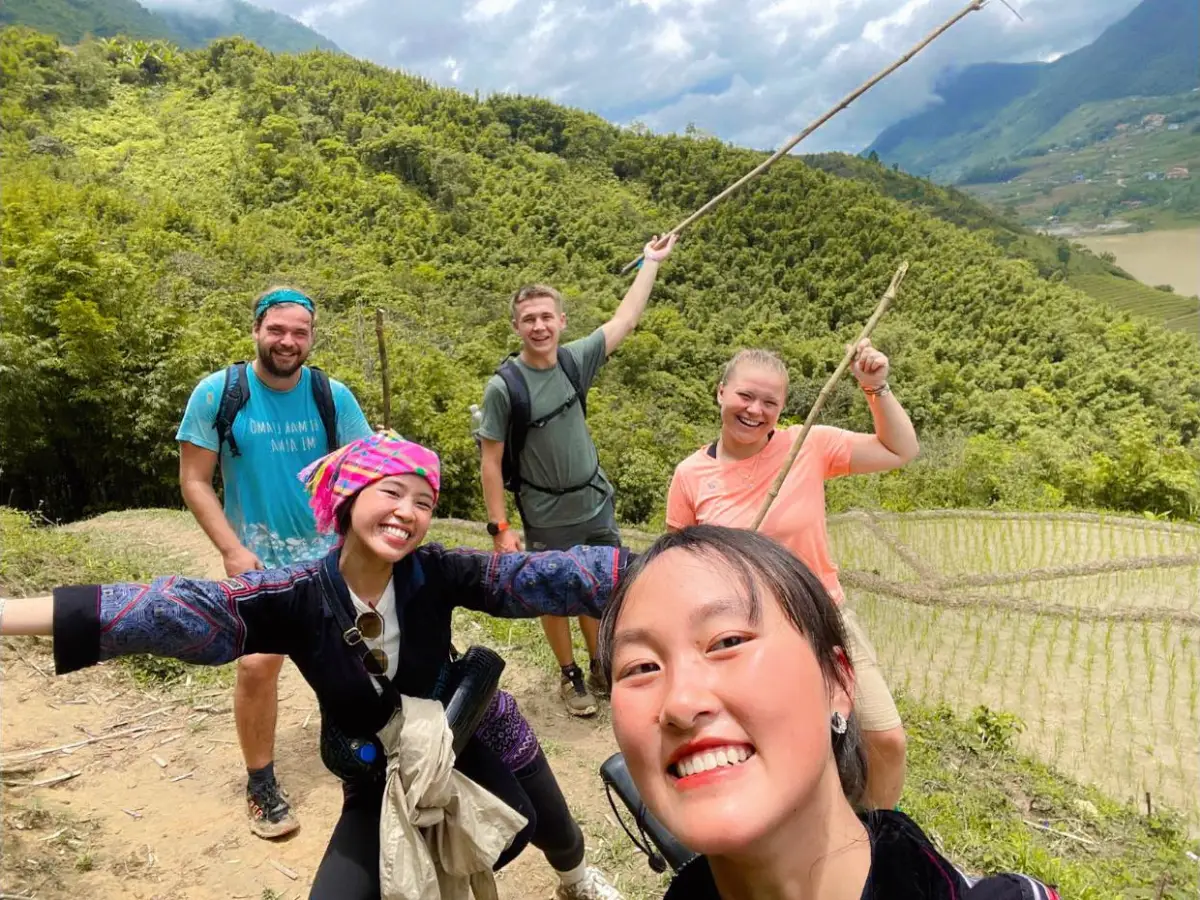 3D2N Trek
3D2N Experience the Real Sapa
Three days through valley villages, which gives you several mornings to catch clear weather.
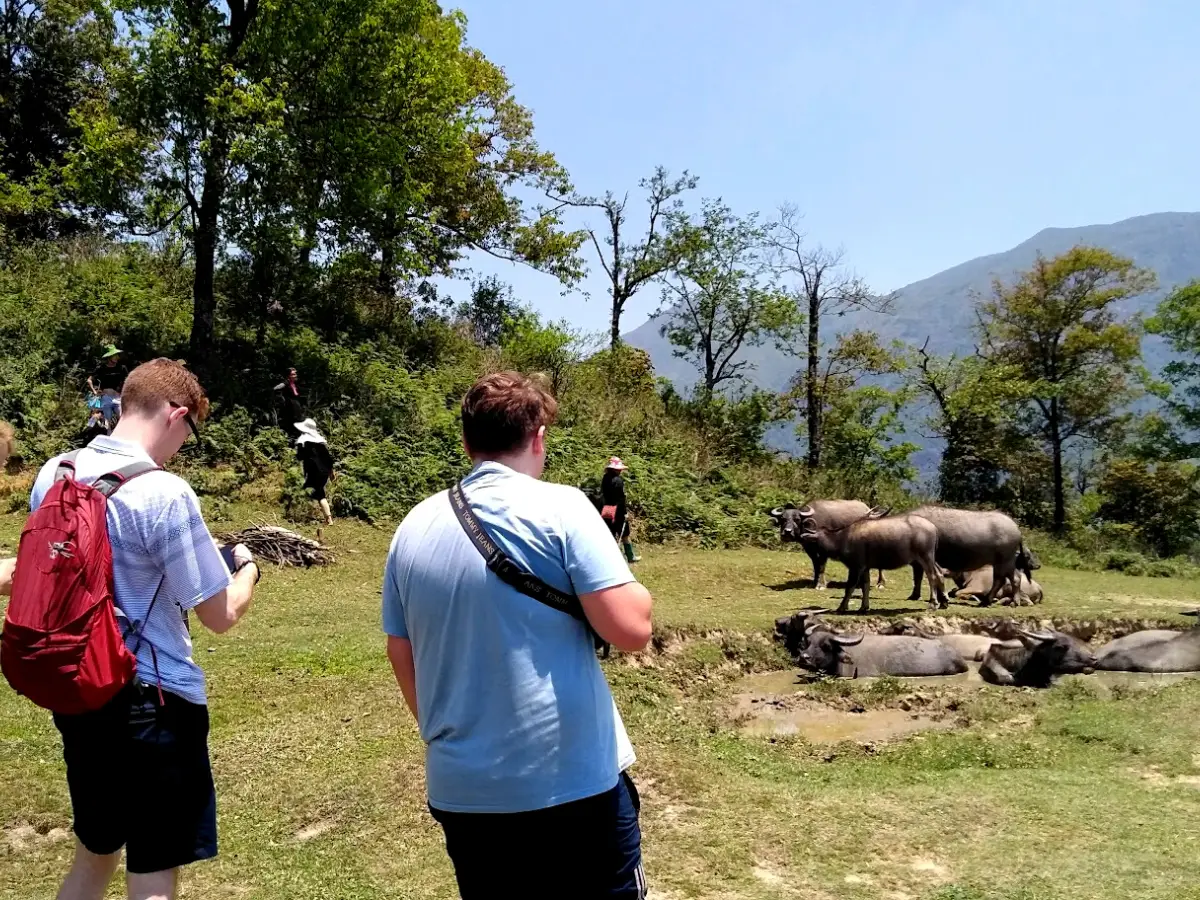 1-Day Trek
Trekking Through Rice Terraced Fields
Lao Chai to Ta Van through the valley, a good way to see low cloud lying on the terraces.
Rent at Our Office Before You Trek
 Gear Rental
Trekking Boots Rental
Waterproof ankle-support boots. Cleaned and checked before each rental. Available at 105 Thach Son Street.
 Gear Rental
Walking Poles Rental
Trekking poles available to rent at $2/day at our office, 105 Thach Son Street. Essential for descents.
Frequently Asked Questions
The Fansipan cable car operator calls November to January the ideal time for cloud hunting, and its guide to the O Quy Ho Pass singles out October to December. The dry season runs roughly from September to April. No month guarantees a cloud sea, and we found no weather statistics for the real odds, so plan two or three mornings rather than one.
Early morning. Fog that forms on clear, calm nights usually thins soon after sunrise as the ground warms, though not always on high ground. The cable car operator calls early morning ideal, suggests riding between about 8:30 and 11:00, and warns that the summit may be in thick fog later in the day.
Somewhere above the cloud. The Fansipan summit at 3,143 m is the surest height, the O Quy Ho (Tram Ton) Pass at about 2,000 m is the best road viewpoint, and Ham Rong Mountain, a few hundred metres above the town, gives a lower view. Sapa town and the valley are usually inside or beneath the cloud.
Sometimes you can see cloud lying in the valleys around town, especially in the early morning, but the town sits at about 1,500 m and is often in the cloud rather than above it. For a true sea of clouds you normally need to be higher, on Fansipan, the pass or a ridge.
No. The cable car runs in the weather it is allowed to, and a ride can end in thick fog with no view. The operator says clear, cloudless days give the best views, advises checking the forecast and says mornings tend to have less fog. Treat a clear summit as a bonus, not a promise.
An operator page labelled 2025 lists Monday to Thursday 8:00–14:30, Friday 8:00–15:30, Saturday 7:30–15:30 and Sunday 7:30–14:30, with the last ride down usually between 16:00 and 17:00. Hours change, so confirm before you go. The cable car does not open early enough for a summit sunrise.
Cold, especially in the season for it. A climate table lists Sapa town at about 6–7 °C at night and 12–13 °C by day in December and January, and the operator says the summit is 5–10 °C colder than the town, with wind. Wear layers, a hat, gloves and a waterproof jacket.