 Sinh Giang
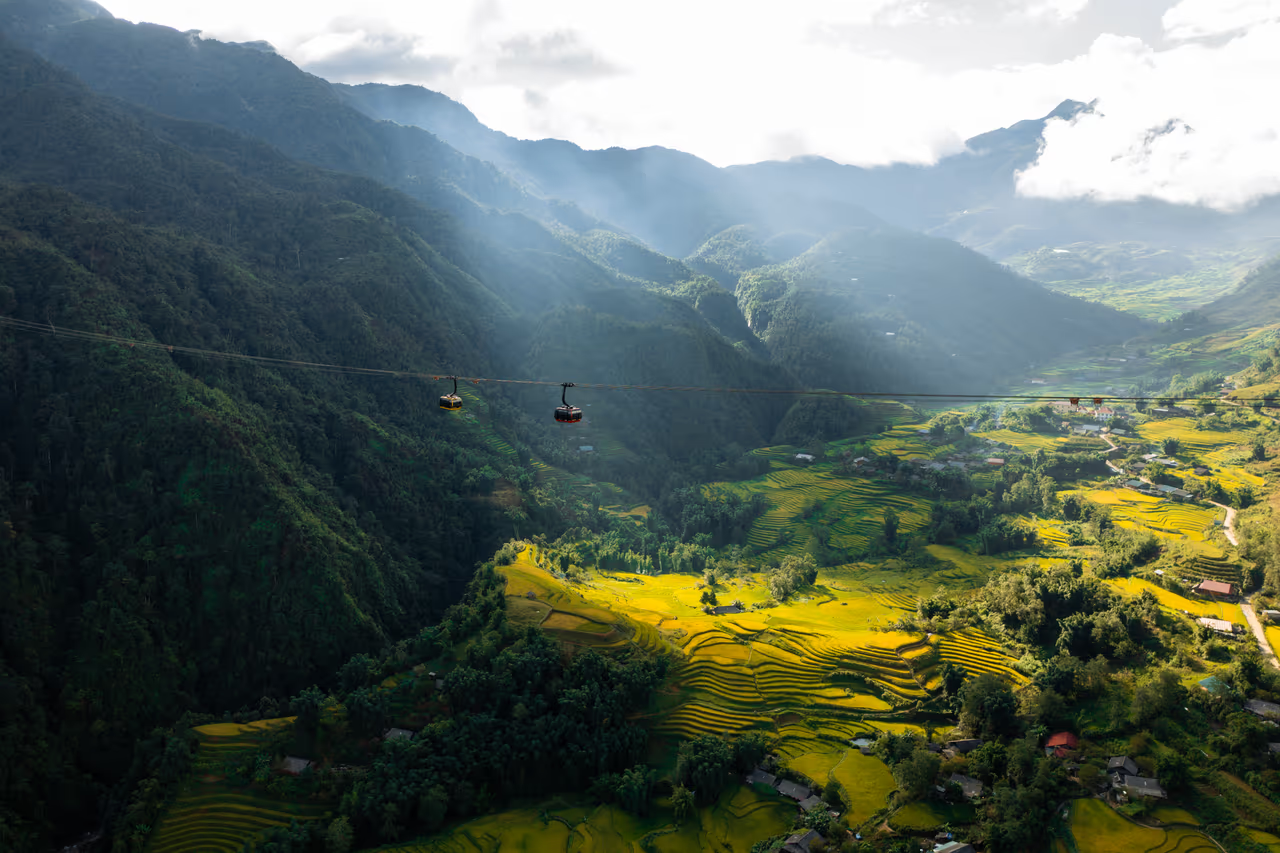
The Sapa cable car is the Sun World Fansipan Legend — a world-record three-rope cable car that carries you from the top of Sapa town up to just below the 3,143-metre summit of Fansipan, the highest peak in Vietnam and all of Indochina, in about fifteen minutes. What used to be a hard two-day trek through the forests of the Hoang Lien range is now a glass-cabin glide over the Muong Hoa Valley, and it has changed who gets to stand on the roof of Indochina: not just fit hikers, but grandparents, small children, and anyone with an hour to spare.
I run treks in these mountains, so I will be honest with you throughout this guide. The cable car is a genuinely spectacular ride and, for most visitors, the right way up. But it does not quite reach the true summit, prices and add-ons catch people out, and fog can hide the whole valley on the wrong day. Below you will find the 2026 ticket prices, exactly how the journey works from Sapa town to the marker at the top, what you will see, the best time to ride, and a fair comparison with trekking — everything you need to decide whether the Sapa cable car belongs in your trip.
What Is the Sapa Cable Car?
The Sapa cable car is officially the Sun World Fansipan Legend, a cable car system built by the Austrian-Swiss ropeway engineers Doppelmayr Garaventa and opened on 2 February 2016. It runs from a station beside Sun Plaza at the top of Sapa town across the Muong Hoa Valley to a station perched near the summit of Fansipan. The cabins — each carrying up to around thirty passengers — hang from three cables rather than one, which is what keeps them steady in the strong mountain wind that sweeps the Hoang Lien Son ridge.
When it opened, the system collected two Guinness World Records at once: the longest non-stop three-rope cable car in the world, at 6,292.5 metres, and the greatest elevation gain of a three-rope cable car, climbing 1,410 vertical metres from valley floor to summit station. Those numbers are not just trivia — they are the reason a journey that once demanded strong legs and an overnight camp now takes a quarter of an hour.
Most people simply call it the "Sapa cable car" or the "Fansipan cable car," and both point to the same ride. The whole thing sits inside a large Sun World tourist complex — landscaped gardens, a golden-roofed pagoda cluster, restaurants, and two short mountain trains — so plan for a half-day rather than a quick up-and-down.
The Sapa Cable Car at a Glance
Here are the numbers you will actually plan around — price, timing, hours, and season — before we get into the detail. Treat the ticket figure as a 2026 guide rather than a fixed rate, because Sun World nudges prices up most years and charges more on peak holidays.
How the Journey Works, Step by Step
The Sapa cable car is only the middle leg of a longer chain, and the two little mountain trains at either end are what confuse most first-timers. Here is the full journey from the centre of Sapa town to the summit marker, in order.
Reach Sun Plaza in Sapa town
The whole system begins at Sun Plaza, the tall French-style building at the top of Sapa, beside the stone church square. From central Sapa it is a five-minute walk uphill or a very short taxi ride.
Ride the Muong Hoa funicular (optional)
A short mountain train, the Muong Hoa funicular, carries you from the Hotel de la Coupole area to the cable-car departure station, saving a walk. It is a separate ticket, and on a quiet day you can skip it and walk instead.
Board the cable car
This is the main event — about fifteen minutes across the Muong Hoa Valley, climbing 1,410 metres past waterfalls, terraced fields, and the villages of Lao Chai and Ta Van far below.
Arrive at the summit station and complex
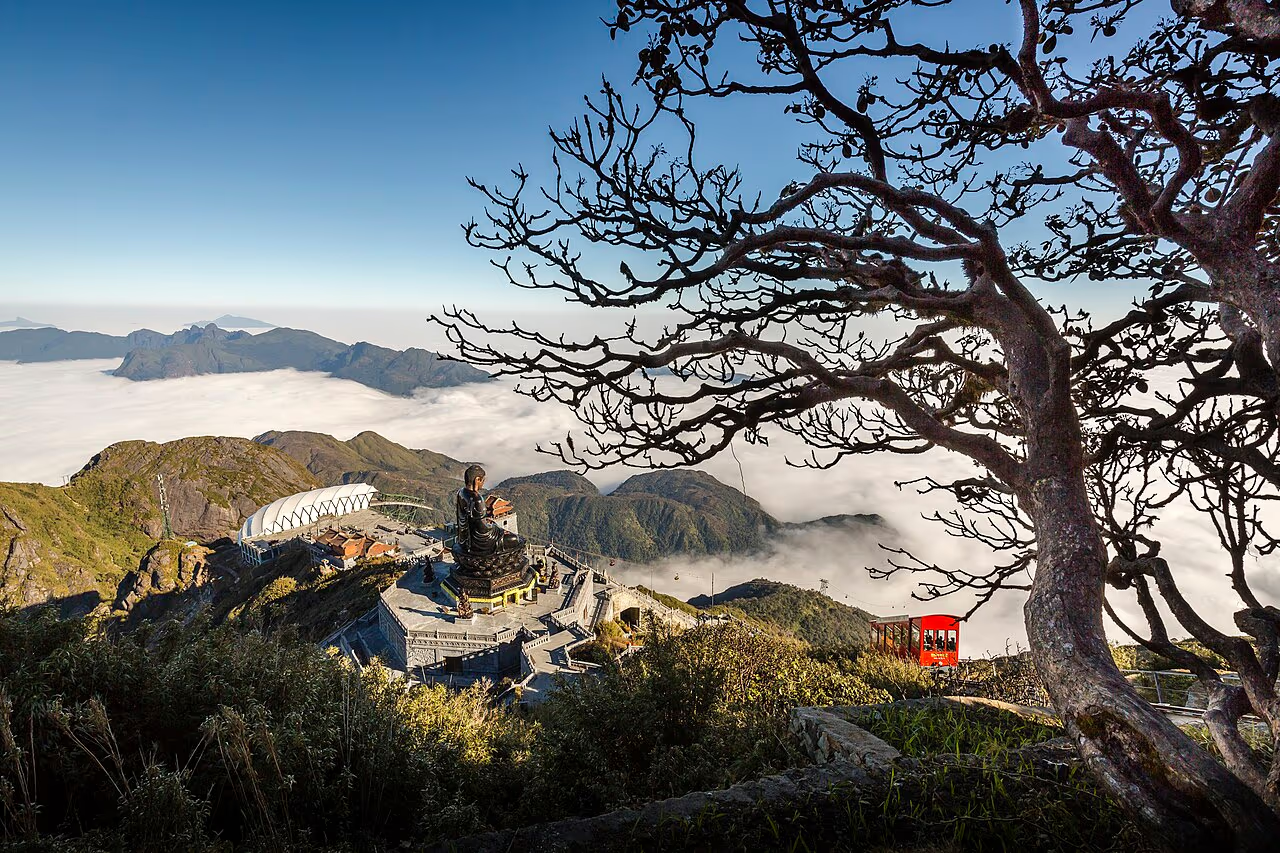
You step out into the Sun World spiritual complex — pagodas, gardens, and the Great Buddha — set on the ridge below the very top of Fansipan.
Finish to the 3,143 m marker
The cable car does not reach the true peak. From the complex you climb roughly 600 stone steps to the summit marker, or take the short summit funicular for a small extra fee.
The reason this matters is money and effort: the headline cable-car ticket does not include either funicular, and the last stretch to the marker is a real, if short, climb at high altitude. Budget for the add-ons you want and pace yourself on those final steps — the air at 3,000 metres is noticeably thinner than in the valley.
What You See on the Way Up
The ride itself is the reason so many people rank the Sapa cable car among the best fifteen minutes of their trip. As the cabin lifts away from the station, the whole Muong Hoa Valley opens beneath you — a staircase of rice terraces cut by generations of Black H'mong and Giay farmers, the silver thread of the Muong Hoa stream, and the tin roofs of Lao Chai, Ta Van, and Y Linh Ho scattered along the slopes.
In late September and early October the terraces below burn gold with ripe rice, and the contrast against the dark forest is unforgettable — this is the view in the photo at the top of this guide. Higher up you pass over old-growth forest of the Hoang Lien National Park, then break through into a different world of wind-bent bamboo and, on the best days, a rolling sea of cloud that hides the valley entirely and leaves only the peaks floating above the white. On a foggy day you will see grey and little else, which is exactly why timing your ride matters so much.
Reaching the Summit: 3,143 Metres
The summit itself is a small rocky platform crowned by a grey metal pyramid stamped "FANSIPAN 3,143m," and touching it is the moment most people come for. From the upper cable-car station you have two ways to reach it: climb the roughly 600 stone steps that zig-zag up the ridge, or ride the short summit funicular that lifts you most of the way for a separate fee. Reasonably fit visitors manage the steps in twenty to thirty minutes with a few rests; anyone with knee trouble, heart concerns, or young children should simply take the funicular and enjoy the climb saved.
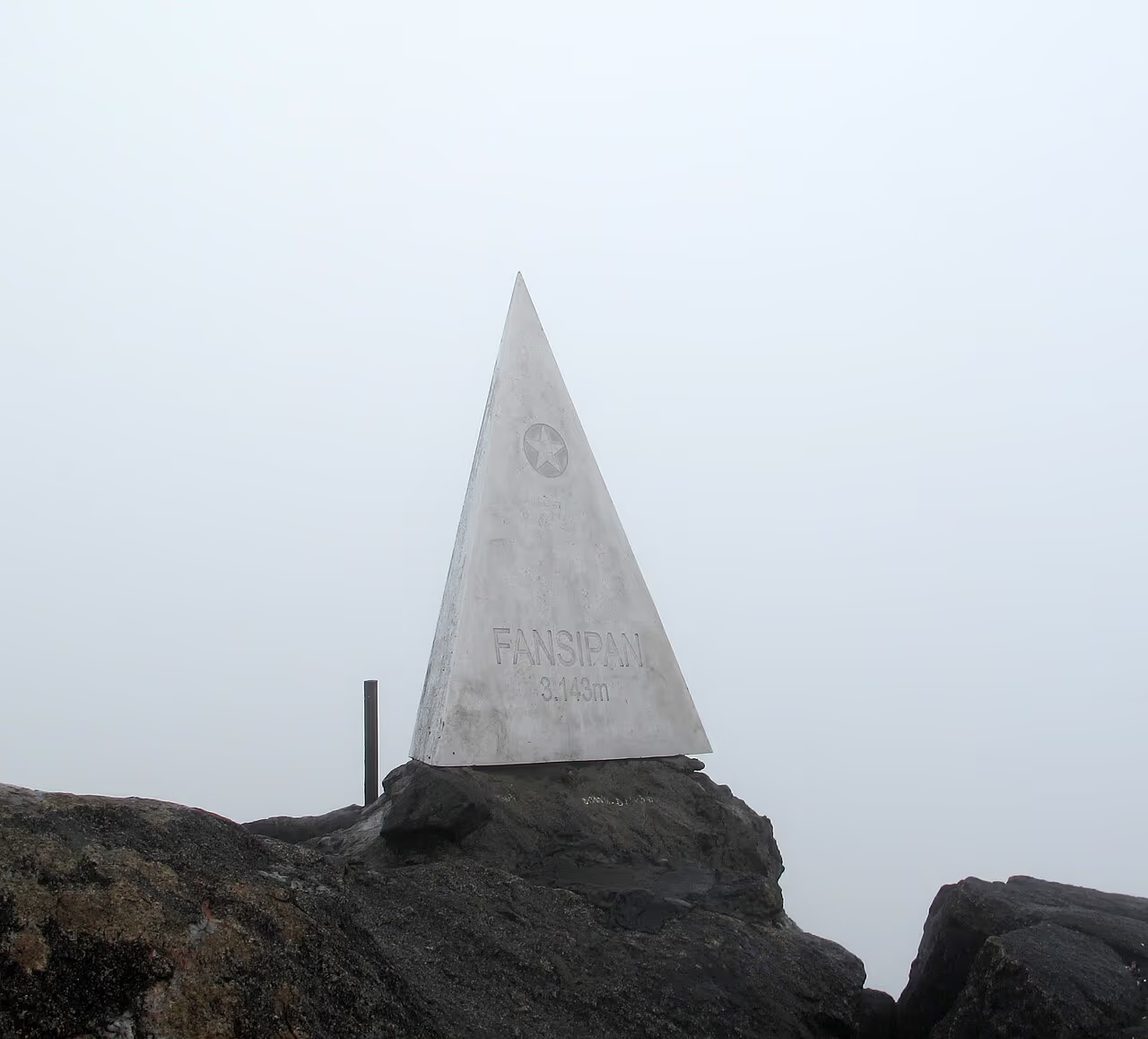
The summit is genuinely cold — often 10–15°C below Sapa town, and near freezing on winter mornings, with a wind that cuts through thin clothing. Even if you leave Sapa in a t-shirt, carry a warm layer and a windproof jacket in your bag. The gift shops at the top sell overpriced fleeces to visitors who did not.
The Spiritual Complex at the Top
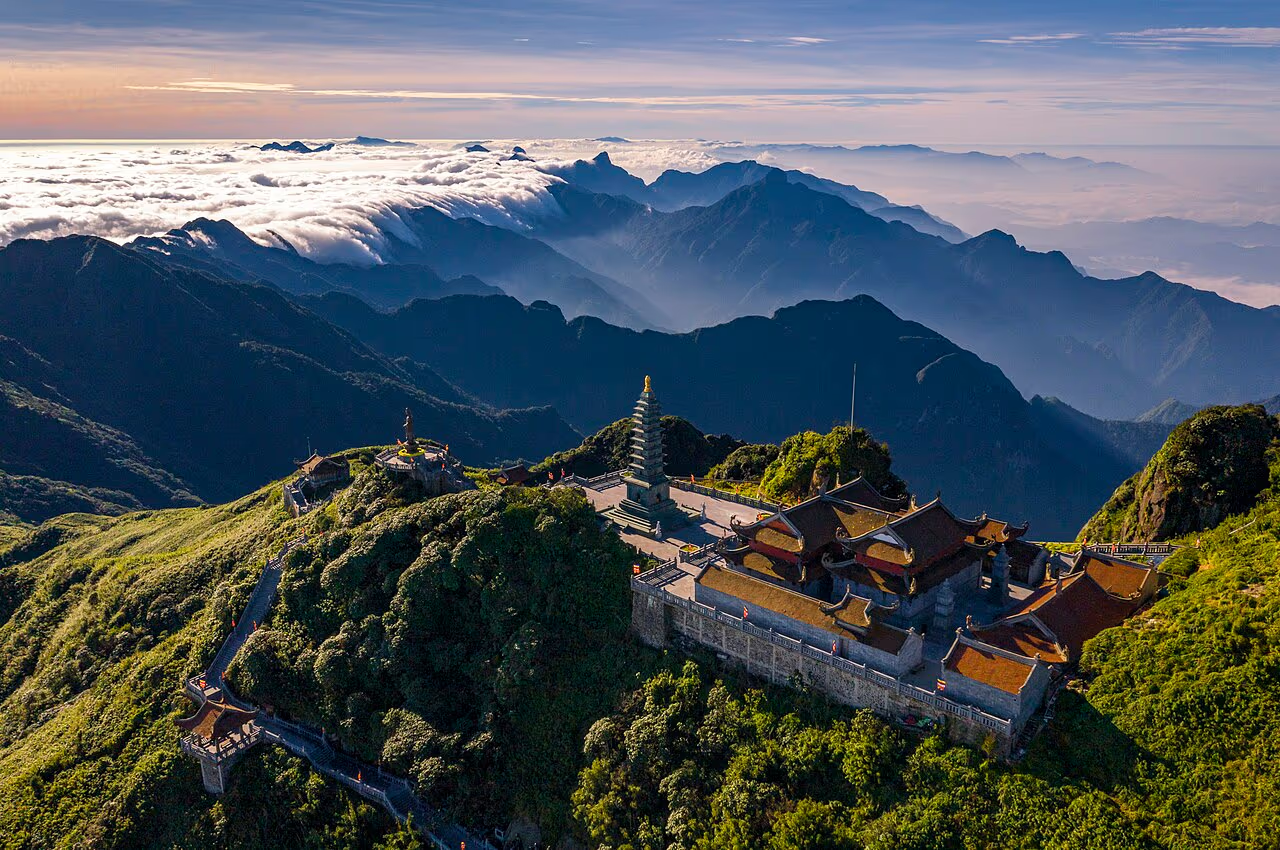
Between the cable-car station and the summit sits one of the largest mountaintop temple complexes in Vietnam, and it is worth slowing down for rather than rushing past. Sun World built a cluster of pagodas in traditional style along the ridge — Kim Son Bao Thang Pagoda, Bich Van Thien Tu, a bronze bell tower, and a line of stone Arhat statues — all connected by paths that drop in and out of the cloud.
The centrepiece is a towering bronze statue of Amitabha Buddha, over twenty metres tall, that stands facing out across the sea of clouds. On a clear morning, watching the mist part around the Buddha and the golden pagoda roofs is as memorable as the summit marker itself. These are working places of worship for many Vietnamese pilgrims, so dress modestly, keep your voice down, and step aside when people are praying.
Cable Car vs Trekking Fansipan: An Honest Take
Whether the cable car beats trekking depends entirely on what you want from the mountain — speed and comfort, or the slow reward of climbing it on foot. As a trekking company we are hardly neutral, but we send people up the cable car every week and we mean it when we say it is the right choice for most visitors. Here is the fair version.
The cable car is best if you…
- Are short on time — the summit in under an hour, not two days.
- Are travelling with older parents or young children.
- Are unsure about your fitness or have knee, heart, or altitude concerns.
- Want the guaranteed view without the risk of a rained-out climb.
- Want to see the temple complex, which the classic trek route bypasses.
Trekking is better if you…
- Are a fit hiker who wants to earn the roof of Indochina on foot.
- Care more about forest, bamboo, and solitude than the summit selfie.
- Dislike crowds — the summit platform gets very busy by mid-morning.
- Want a real overnight adventure with a local guide and mountain camp.
- Feel the cable car and complex are too built-up for your taste.
The honest middle path, and the one many of our guests choose, is to do both on different days: ride the Fansipan cable car for the summit and the view, then spend a separate day trekking the quiet lower valleys of Muong Hoa on foot, where you meet the villages and terraces up close instead of from the air. If you would rather climb Fansipan the old way, our two-day trek takes the forest route with an overnight camp; if you just want the peak, the one-day cable-car tour handles every ticket and transfer for you.
Fansipan & Valley Tours With Local Guides
 Best Seller
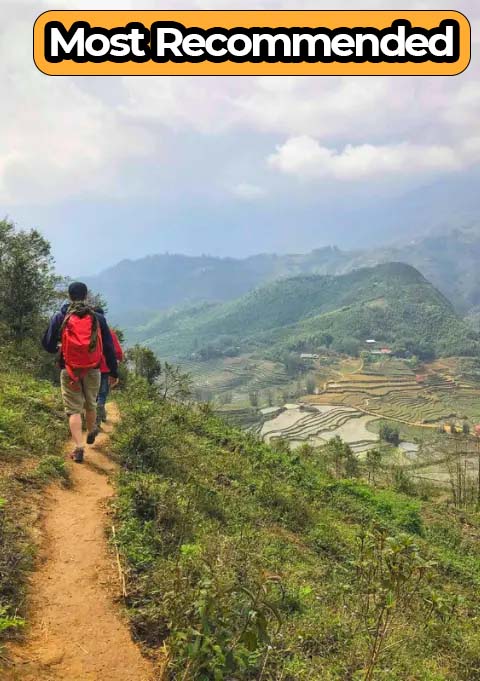
Trekking Through Rice Terraced Fields
Walk the Muong Hoa Valley floor through Lao Chai & Ta Van — best September–October.
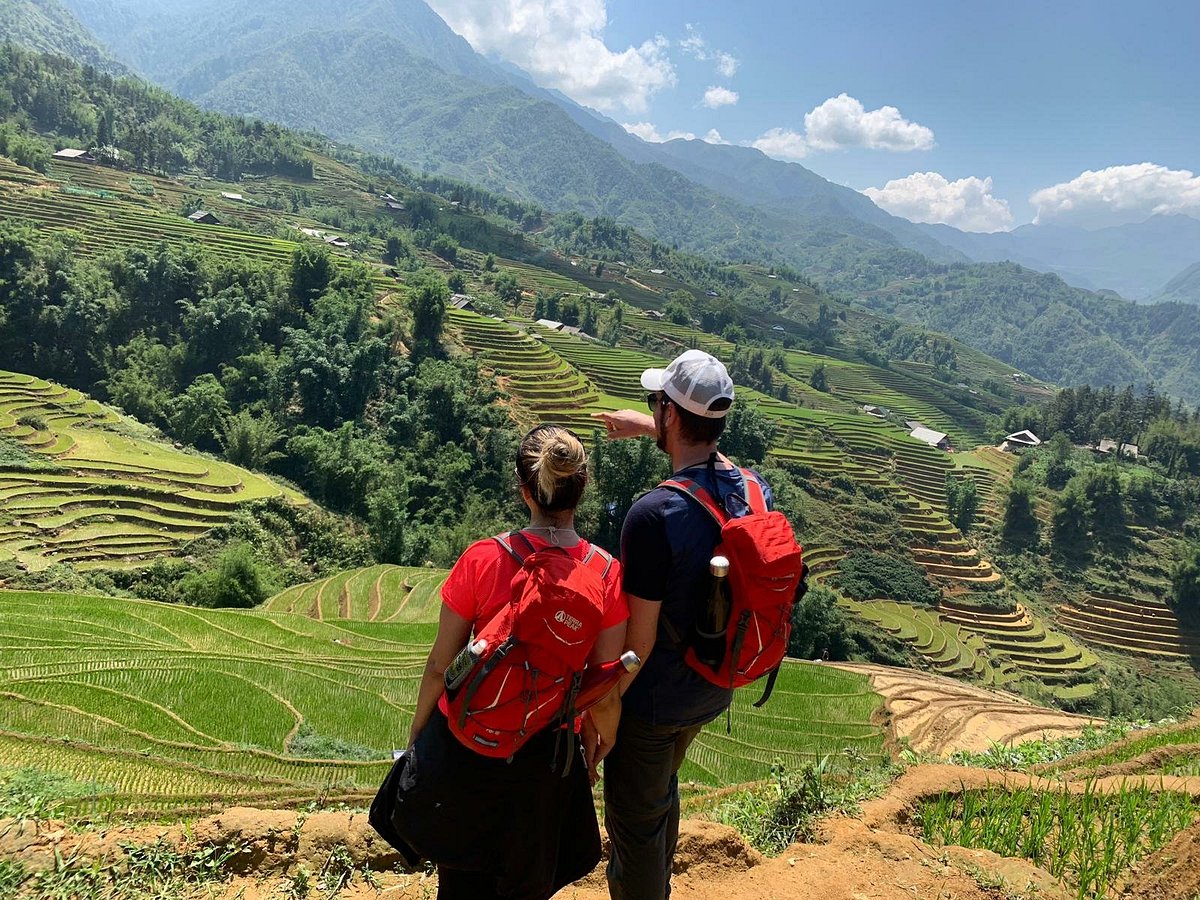
Rice Terraced Fields & Homestay
Overnight with a Black H'mong family in Lao Chai — home-cooked dinner, terraces at dawn.
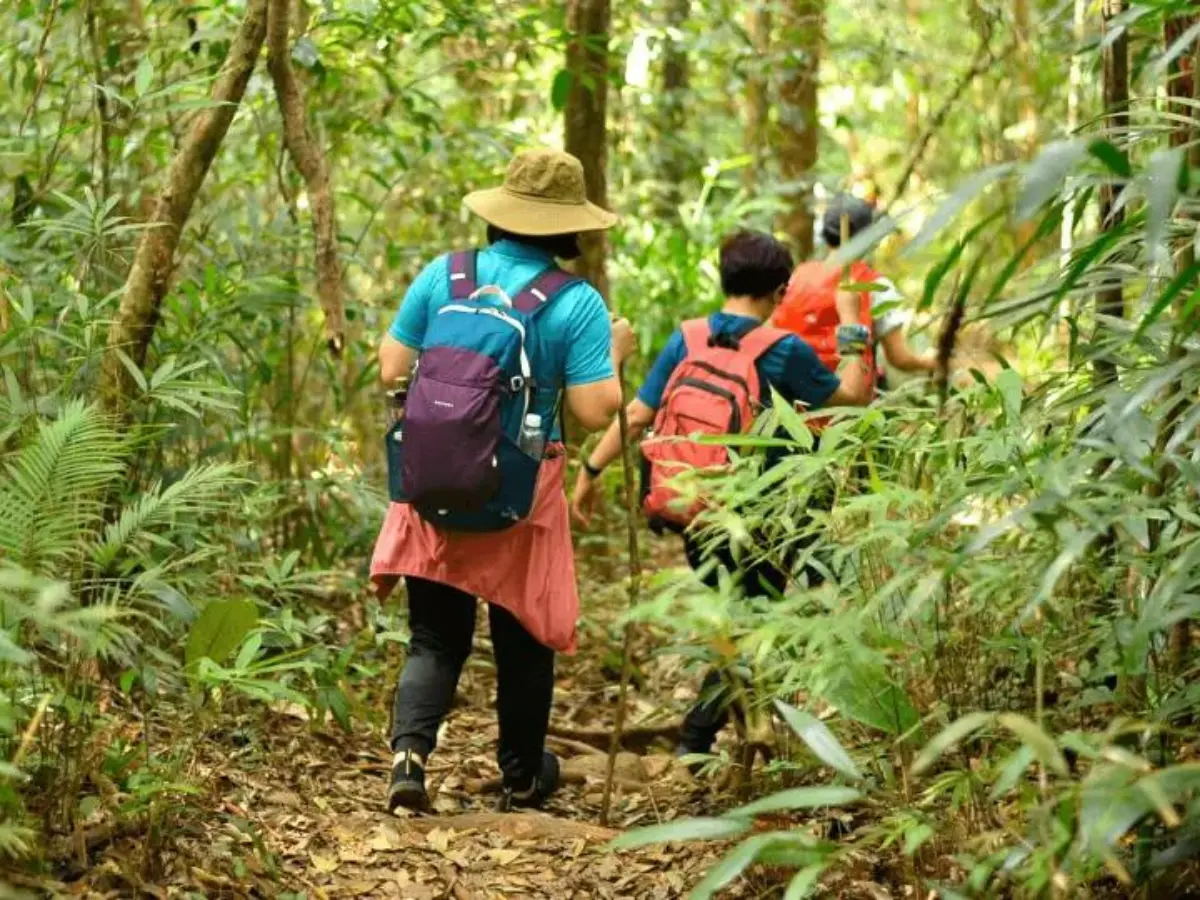
Fansipan Trek One Day Tour – Roof of Indochina
Cable car to Indochina's highest peak — above the clouds, best October–November.
Tickets, Prices & How to Buy in 2026
A round-trip adult ticket for the Sapa cable car costs about 800,000 VND — roughly 33 US dollars — in 2026, and that fare covers the cable car only. Children between 1.0 and 1.3 metres tall pay around 550,000 VND, children under 1 metre travel free, and Vietnamese seniors over 70 ride free with valid ID. The two mountain funiculars are separate: the Muong Hoa funicular at the bottom runs around 150,000 VND return, and the summit funicular that saves the final climb costs roughly 120,000 VND. Combo tickets that bundle the cable car with one or both funiculars are usually a little cheaper than buying them one by one at the counter.
You can buy tickets three ways: at the ticket windows inside Sun Plaza on the day, in advance through the Sun World website or app, or bundled into a guided tour that also handles your transfer from Sapa or Hanoi. Booking a tour is the option most of our guests prefer, because a local guide meets you, buys the right combination of tickets, and points out the villages and peaks you are looking down on — details you would otherwise glide past without knowing their names.
Prices climb on Vietnamese public holidays — especially Tet in late January or February, and the April 30 and September 2 long weekends — when Fansipan fills with domestic tourists. If your dates are flexible, ride mid-week and outside these holidays for shorter queues and steadier pricing.
The Best Time to Ride the Sapa Cable Car
The best time to ride is a dry morning between October and April, when the mountain air is clearest and the odds of the famous sea of clouds are highest. Fansipan makes its own weather: the valley below can be sunny while the summit sits inside a grey cloud, so the single most useful thing you can do is go up early. Aim for the first cabins around 7:30 to 9:00am, before the day's heat pushes cloud up the slopes and before the tour buses arrive.
Each season trades one thing for another. Winter, from December to February, gives the crispest views and the best sea of clouds, but the summit is bitterly cold and occasionally dusted with frost or rare snow. Spring, March and April, is mild and clear — arguably the sweet spot. Summer, June to August, paints the valley its greenest but brings the most cloud and afternoon thunderstorms at the top. Autumn, late September into October, gives you the golden terraces below the cabin, which for many riders is the whole point.
On a fully clouded day you may reach 3,143 metres and see nothing but white — and the cable car does not refund tickets for fog. If the summit is socked in when you arrive in Sapa, wait for a clearer morning if your schedule allows. Checking the Sapa forecast the night before saves a lot of disappointment.
Getting to the Cable Car From Hanoi and Sapa Town
Getting to the cable car is easy once you are in Sapa, and only slightly more involved from Hanoi. The departure point at Sun Plaza sits at the top of Sapa town, a five-minute walk from the stone church square or a short taxi ride from any hotel in the centre — you do not need a car for this leg. The real journey is getting up to Sapa itself, about 320 kilometres north-west of Hanoi through Lao Cai province.
From Hanoi you have three sensible options, and all of them are included as an add-on when you book a tour with us. Choose by your budget and how you feel about the mountain road:
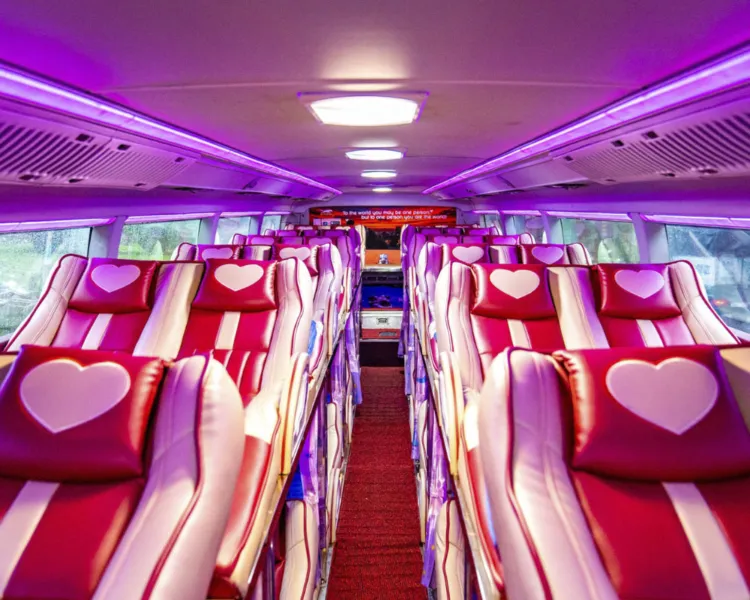 Most Popular
Sleeper Bus
Sleeper & cabin options · 5–6 hours · From $17
 Fastest
Limousine Van
Door-to-door express · ~3.5 hours · Direct highway
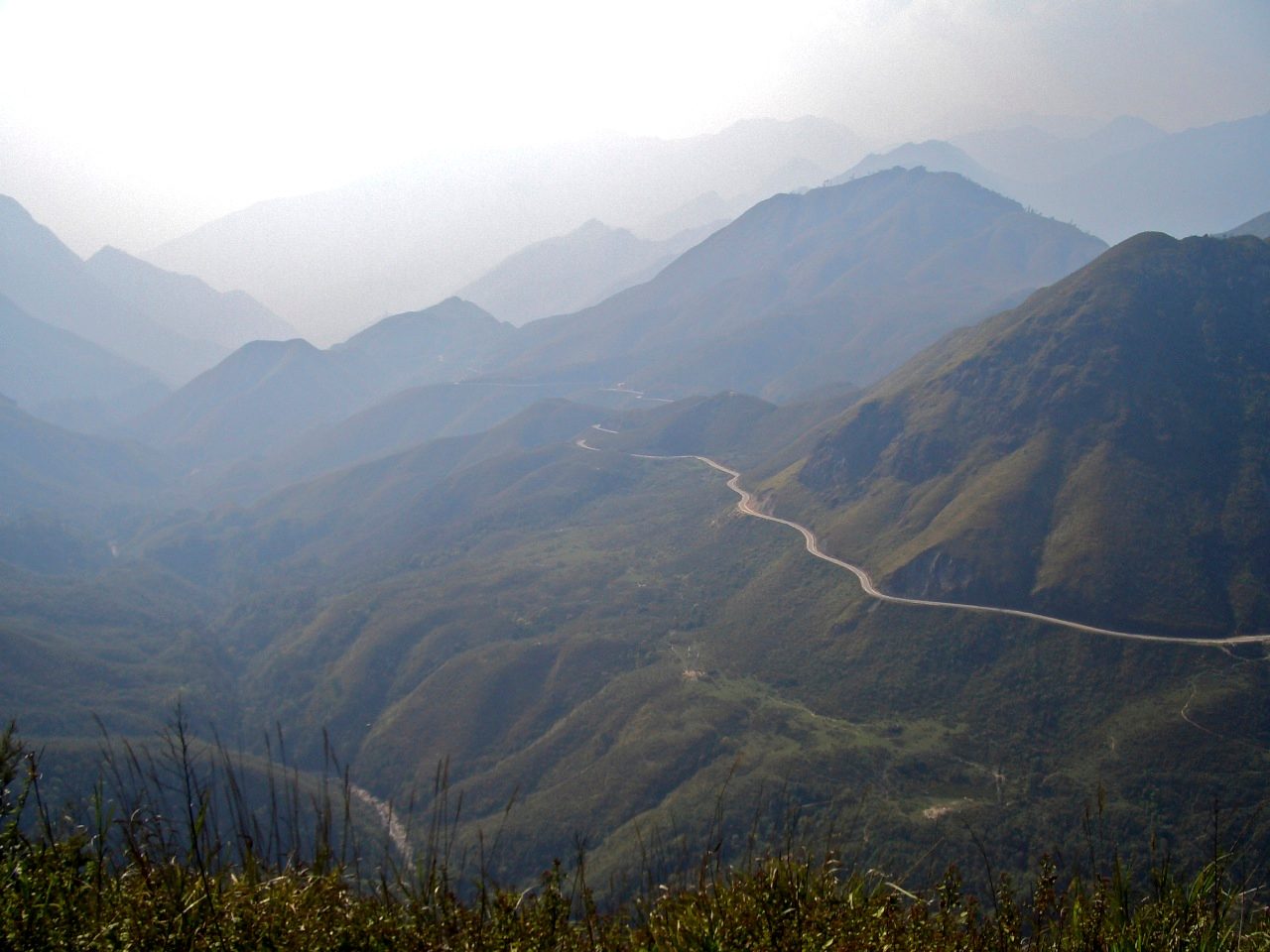 Most Reliable
Overnight Train
Hanoi–Lao Cai · ~8 hours · No mountain-road risk
If you would rather not think about any of it, the simplest route to the summit is a Hanoi to Sapa transfer paired with a Fansipan day tour — you are collected in Hanoi, delivered to Sapa, and walked through every ticket and funicular the next morning.
What to Bring and Practical Tips
Pack for a mountain, not a town, even though you start in comfortable Sapa. The single most common mistake is arriving at 3,143 metres in shorts and a t-shirt, then shivering through the summit. Bring these, and give yourself the time and cash the day really needs.
- A warm layer and windproof jacket — the summit runs 10–15°C colder than town, with a biting wind.
- Comfortable shoes with grip — the 600 summit steps are wet and slick when it is misty.
- Cash in VND — for the two funiculars, food, and the shops, which are pricier at the top.
- Water and a light snack — altitude and steps make you thirstier than you expect.
- A half-day, not an hour — between the funiculars, the complex, and photos, most people spend three to four hours up top.
- Sun protection — above the cloud the sun is fierce even on a cold day.
If you are also planning to trek the valleys on foot during your stay, you do not need to buy heavy gear for one trip. We rent trekking boots and walking poles by the day from our office at 105 Thach Son Street, cleaned and checked before each rental — handy for the muddy village trails below, if not for the cable car itself.
Rent at Our Office Before You Trek
 Gear Rental
Trekking Boots Rental
Waterproof ankle-support boots. Cleaned and checked before each rental. Available at 105 Thach Son Street.
 Gear Rental
Walking Poles Rental
Trekking poles available to rent at $2/day at our office, 105 Thach Son Street. Essential for descents.
Frequently Asked Questions
A round-trip adult ticket on the Sun World Fansipan Legend cable car costs about 800,000 VND, roughly 33 USD, in 2026. Children between 1.0 and 1.3 metres tall pay around 550,000 VND, while children under 1 metre and seniors over 70 travel free with valid ID. The two short mountain funiculars at the summit and at Muong Hoa are sold as separate add-ons.
The cable car ride itself takes about 15 minutes each way, gliding roughly 6.3 kilometres from Sun Plaza station in Sapa town to the top station near the summit. Adding the Muong Hoa funicular and the final climb, the whole journey from Sapa town to the 3,143-metre marker takes around 45 minutes to an hour.
Yes, a little. The cable car stops at a station just below the true summit. From there you either climb about 600 stone steps to the 3,143-metre marker or take the short summit funicular for a small extra fee. Most reasonably fit visitors manage the steps in 20 to 30 minutes with a few rests.
October to April gives the clearest mountain air and the best chance of the famous sea of clouds, and dry mornings before 10am are usually the least foggy. Summer from June to August is greenest in the valley below but brings more cloud and afternoon rain at the summit itself.
It depends on what you want. The cable car reaches the summit in under an hour and suits families, older travellers, and anyone short on time or worried about the climb. Trekking Fansipan over one or two days rewards fit hikers with forest, bamboo groves, and the real sense of earning the roof of Indochina. Many travellers ride the cable car up and pair it with a gentler valley trek lower down.
The cable car departs from the Sun World Fansipan Legend station inside Sun Plaza, at the top of Sapa town beside the stone church square. From central Sapa it is a five-minute walk or a short taxi ride. From Hanoi, most visitors reach Sapa first by sleeper bus, limousine van, or the overnight train to Lao Cai.