 Sinh Giang
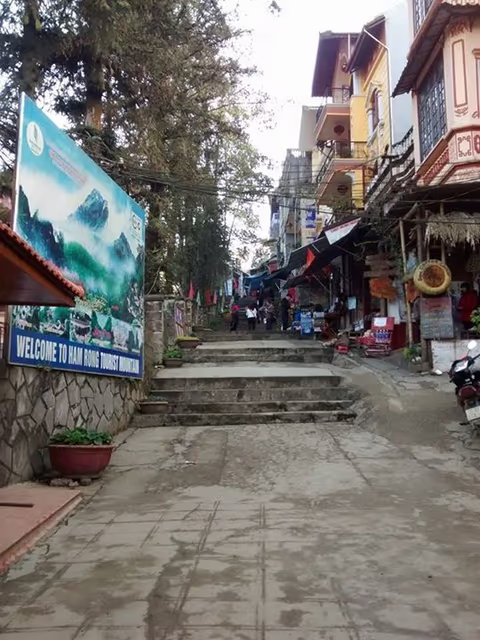
Follow the stone steps that climb out of the market square behind Sapa's stone church, past a hand-painted sign promising "Welcome to Ham Rong Tourist Mountain," and in under half an hour you're standing in a flower garden two hundred metres above the rooftops you just left — no bus, no guide, and no 4am alarm. That's the detail almost nobody mentions about Ham Rong Mountain: of all the places in Sapa billed as "the view," it's the only one you can walk to straight from wherever you're staying.
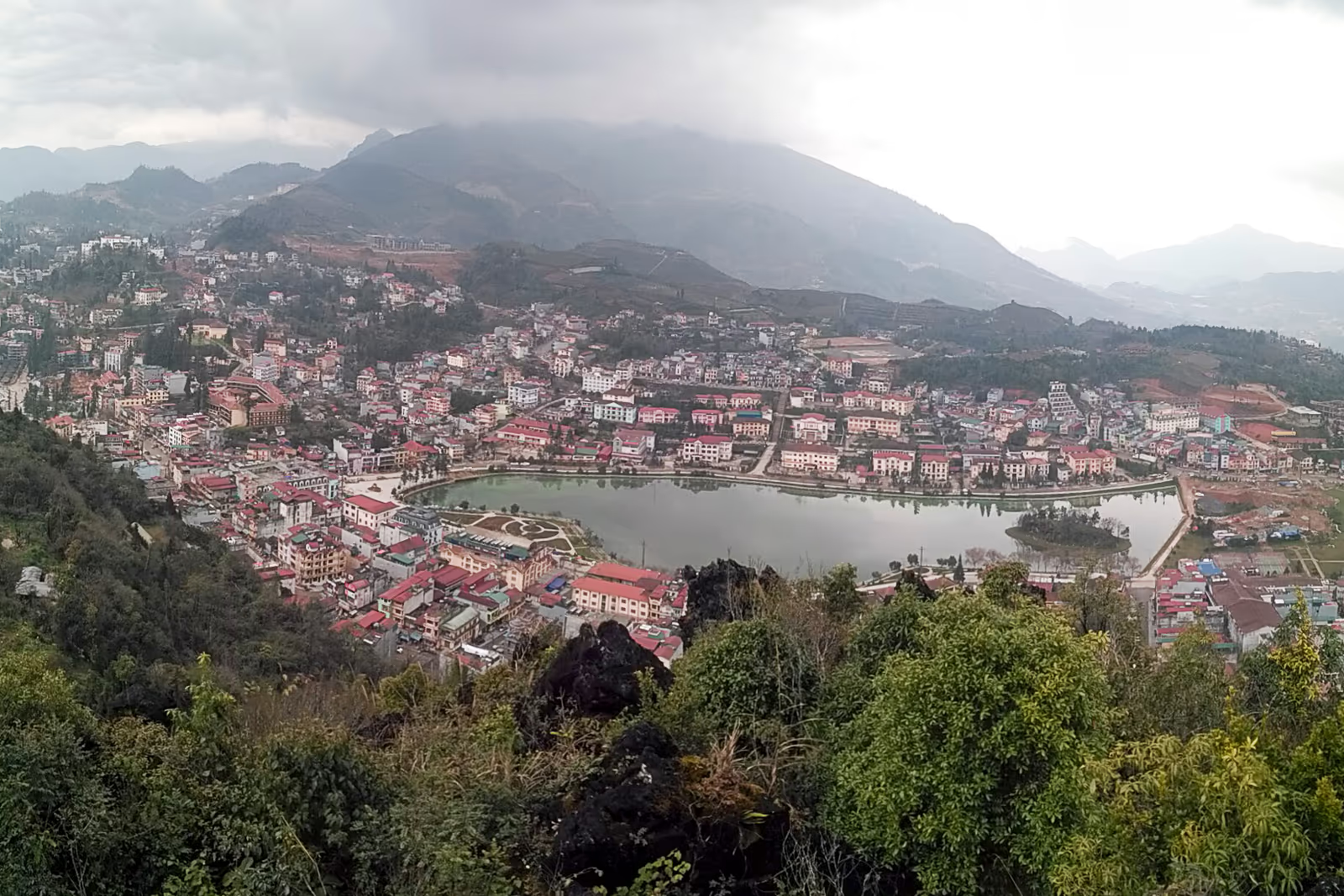
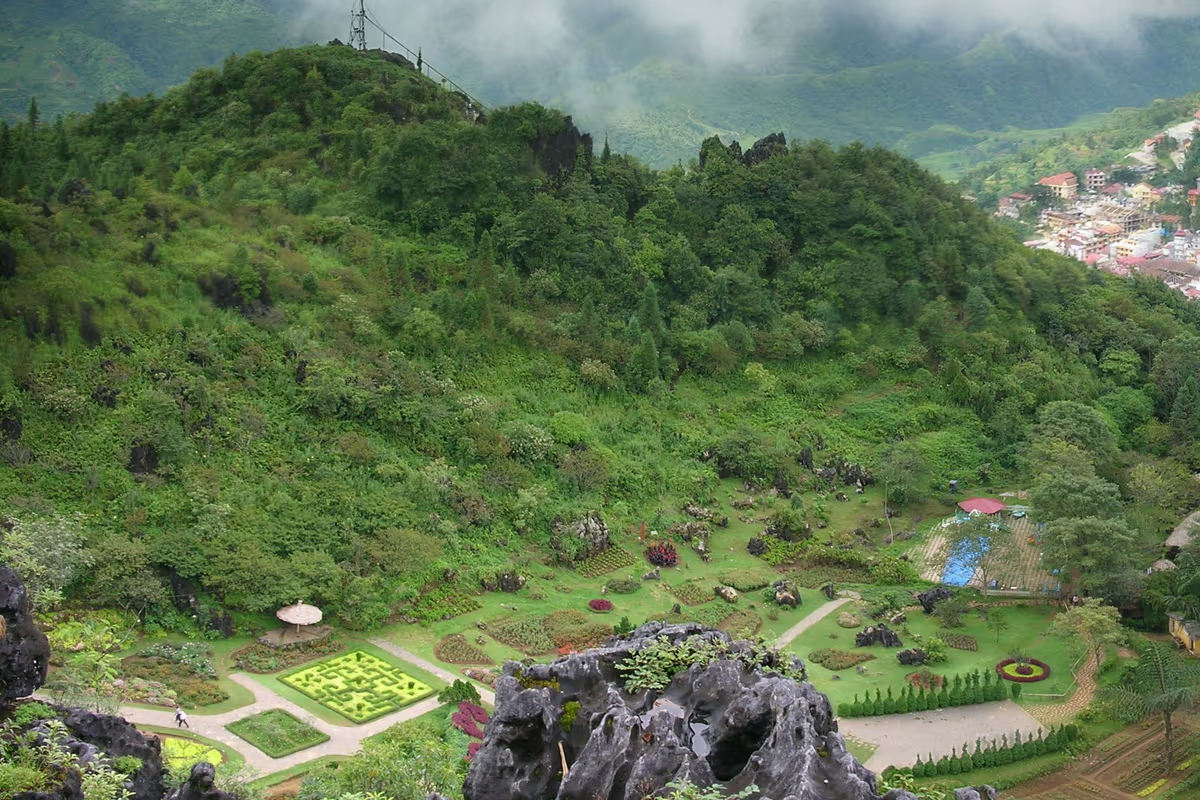
Hàm Rồng — "Dragon's Jaw" in Vietnamese — is the forested, twin-peaked mountain rising immediately behind Sapa town, developed since 1996 into a public eco-tourism site of flower and orchid gardens, karst rock formations, and a summit viewing platform known as the Cloud Yard. It isn't a trek so much as a vertical park: paved, stone-stepped paths wind up through an orchid collection, a hydrangea garden, a moss-covered "stone forest," two narrow rock passages nicknamed Sky Gate, and a small cave, before opening onto the terrace that gives Sapa's closest view of its own town — the heart-shaped lake, the red roofs, and the Hoang Lien Son ridge behind it all.
It's also a site caught in an odd moment. Ham Rong was Sapa's single busiest attraction for years, then fell into a genuine decline once the Fansipan cable car and newer parks opened nearby. It now carries official status as a national scenic site and is the subject of a large proposed redevelopment that, as of this update, had not broken ground. None of that should stop you walking up — the gardens and the view are real and open today — but we've flagged what's confirmed, what's changing, and what to double-check locally, rather than smoothing over the gaps the way some tour-operator write-ups do.
Ham Rong at a Glance
Ham Rong Mountain rises directly behind Sapa town's stone church — here's what to know before you climb it.
Why It's Called the Dragon's Jaw — The Legend Behind Ham Rong
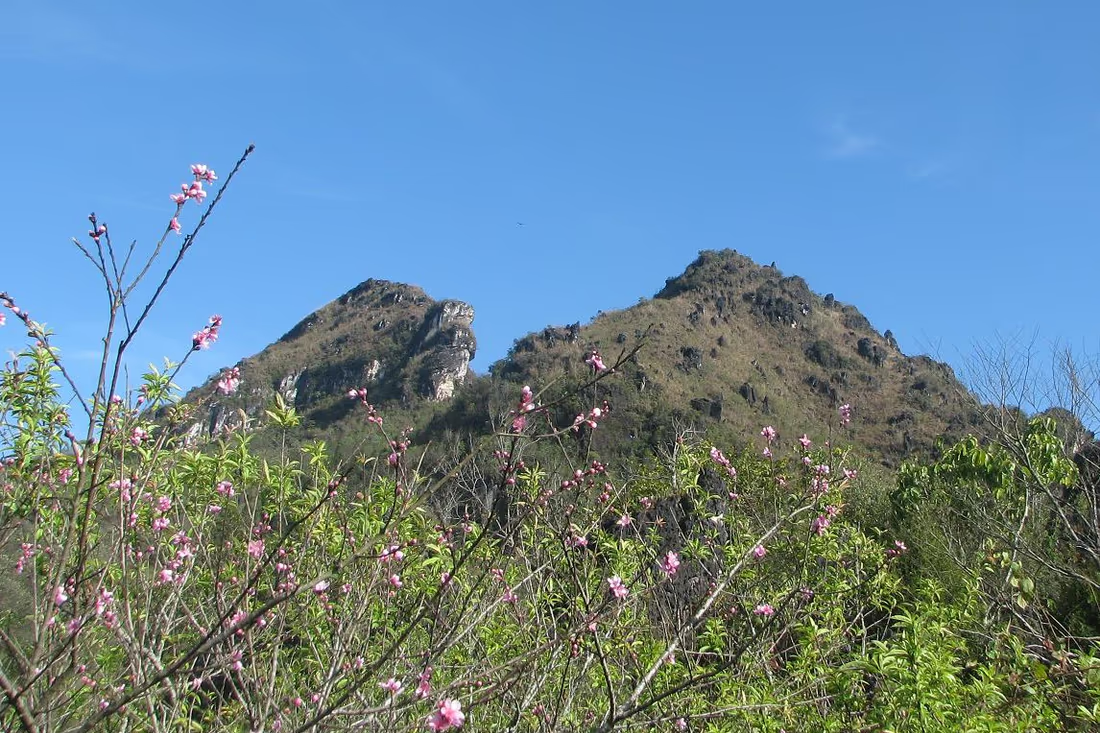
The name translates literally as "dragon's jaw," and the mountain's jagged, double-peaked silhouette — two rock points rising side by side above the tree line — is exactly why local legend gave it that shape in the first place.
The story, still told by guides and recorded in Lao Cai's provincial press, begins "when heaven and earth were still close, and a ladder connected the two." Two dragons fell in love beneath the Hoang Lien Son range. A catastrophic flood swept through and separated them — the male dragon carried downstream toward what's now the Muong Hoa River, the female trapped among the mountain's crevices as the waters receded. Unable to follow him, she turned to stone where she stood, her head left permanently facing the Hoang Lien Son ridge, still watching for a mate who never returned. The twin rock peaks visible from Sapa town today are read as her open jaw.
The legend isn't just a tourist-board flourish. H'mong, Giay, Xa Pho and Dao families from villages around Sapa still hold Lunar New Year ceremonies on the mountain tied to this story, treating Ham Rong as more than scenery — worth knowing if you pass a small shrine or offering near the summit and wonder what it's for.
Where Ham Rong Is, and Why It's Sapa's Only Walk-In Viewpoint
Ham Rong sits inside Sapa town itself, its entrance gate about five minutes on foot from the market square and directly behind the Sapa Stone Church — the French-built landmark locals use as the usual reference point for directions. That alone makes it unusual among Sapa's well-known viewpoints: reaching the Fansipan summit means a cable car or a multi-day trek, the O Quy Ho Pass viewpoint means a 30–40 minute drive north on Highway 4D, and the ridge above Lao Chai for sunrise means leaving town by motorbike before dawn. Ham Rong is the only one of the four you can walk to from your hotel in normal daylight hours, with no transport and no guide required for the walk itself.
The tourism site covers what Lao Cai's provincial newspaper, Báo Lào Cai, describes as roughly 100 hectares — an older figure, repeated elsewhere, puts it closer to 148 hectares, and the two don't agree, so treat "around 100–150 hectares" as the honest range rather than a precise number. Construction of the eco-tourism area began in 1996, and in December 2009 the Lào Cai provincial government approved detailed planning for the site under an investment plan reportedly running to 1,200 billion VND. Ham Rong now carries formal status as a National Scenic Site (Danh lam thắng cảnh Quốc gia) — Vietnam's heritage-protection designation for notable landscapes — part of why a large redevelopment project proposed for the mountain, covered further down this guide, needed a public environmental review before construction could start.
Elevation on the mountain runs from around 1,450 metres at the lowest entrance point up to roughly 1,850 metres at the true summit, with the main public viewing terraces sitting close to 1,800 metres — similar in altitude to Sapa town itself, just high enough above it for the rooftops to disappear into a single pattern below. At that height, year-round temperatures average a cool 15–18°C, part of why the site has been able to grow temperate flowers that don't survive in lowland Vietnam.
The Three Zones — Flower Garden, Stone Forest, and the Summit
Vietnamese guides to Ham Rong consistently describe the walk as passing through three linked zones — the Flower Garden nearest the entrance, the Thạch Lâm Stone Forest in the middle section, and the summit area around the Cloud Yard viewing terrace. Here's what's actually inside each one.
The Flower Garden — What's Blooming, and When
The Flower Garden is the first zone you reach, and for many visitors — especially anyone short on time or energy — it's also the only zone they need: the Lao Cai Tourist Information and Promotion Center puts the walk from the entrance to the Flower Garden at under 30 minutes on a paved, gently graded path, no real fitness required.
What's growing changes through the year. The two orchid houses hold an estimated 6,000 plants across roughly 194 species, enough variety that something is usually in bloom regardless of season, though peak orchid flowering in Sapa generally runs from the cooler months into early spring. Separately, the open flower beds are known locally for hydrangeas (cẩm tú cầu) that grow unusually large at this altitude — some reported at 30 centimetres across — alongside seasonal plantings the site's management has been actively renewing since 2024 as part of a wider push to bring visitors back. Peach and plum trees scattered through the camping ground at the western edge blossom in the pink-and-white flush that marks Tết (Lunar New Year), typically late January or early February depending on the lunar calendar that year.
A caveat worth being honest about: exact bloom timing shifts year to year with the weather, and we couldn't find an official, continuously updated "what's blooming now" source for Ham Rong specifically. If a particular flower is the reason for your visit — hydrangeas, orchids, peach blossom — message your guide or hotel a day or two ahead and ask what's actually open, rather than planning solely around the calendar below.
Easy Tours You Can Combine With Ham Rong
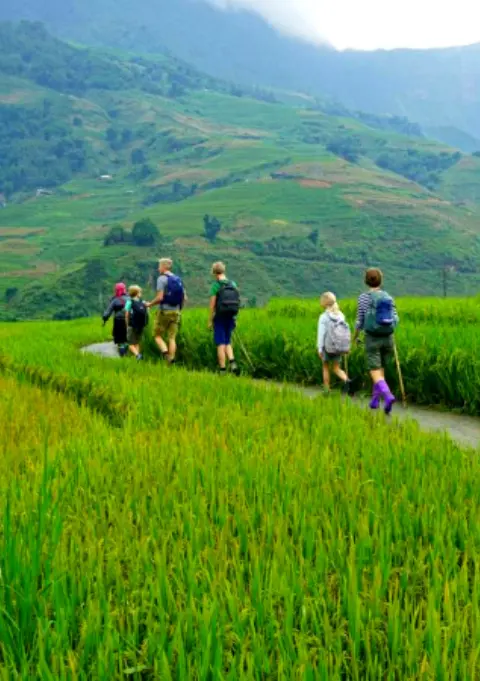 Seniors & Families
Sapa Easy Trekking For Seniors
Gentle valley paths in the morning, with no steep sections — easy to combine with a Ham Rong walk the same afternoon.
 Easy
Easy
Sapa Private Car Tour
For travelers who want Sapa's roadside viewpoints without walking far, with time left over for the Ham Rong flower garden on foot.
Stone Forest and the Summit Walk — Sky Gate, Cloud Yard, and the View
Past the Flower Garden, the path climbs into the Thạch Lâm Stone Forest — a stretch of weathered, moss-covered limestone outcrops that karst geology scattered across this part of the ridge long before anyone built a path through them. The trail winds between and sometimes through the rock, including a short natural passage mapped as Tam Môn Cave, before narrowing at two rock gateways known as Sky Gate 1 and Sky Gate 2 (Cổng Trời) — framed openings in the stone that many visitors use as a natural photo frame for the valley below.
From Sky Gate 2, at roughly 1,700 metres, the path makes its final climb to the Cloud Yard (Sân Mây) — Ham Rong's main viewing terrace, and the payoff for the walk. On a clear day you're looking almost straight down at Sapa's heart-shaped lake and the red-roofed town wrapped around it, with the Hoang Lien Son range filling the horizon behind. On a foggy one — common at this altitude, especially December through February — you may be looking at nothing but white, worth knowing before you commit half a day specifically to the climb for the view.
Ham Rong Compared to Sapa's Other Viewpoints
Of Sapa's four best-known viewpoints, Ham Rong is the odd one out — not because the view is better or worse, but because of how you reach it.
- Fansipan summit — reached by a 20-minute cable car (or a multi-day trek) to Vietnam's highest peak at 3,143 metres; the most dramatic view by far, and the most expensive, with a cable car ticket alone running well above Ham Rong's entrance fee.
- O Quy Ho Pass — a sweeping view of the pass road and valley, reached by a 30–40 minute drive north out of town on Highway 4D; no entrance fee at the main viewpoint, but transport is required.
- Lao Chai ridge (sunrise) — the best spot for a rice-terrace sunrise over the Muong Hoa Valley, but it means leaving Sapa town by motorbike before dawn, usually with a guide since the trail has no signage.
- Ham Rong — the only one of the four reachable entirely on foot from Sapa town in normal daylight hours; the trade-off is a closer, town-and-lake view rather than a wide mountain or terrace panorama.
If your time in Sapa is short, or you'd rather not arrange transport or an early departure, Ham Rong is the viewpoint that fits around everything else on your itinerary instead of requiring you to plan a morning around it.
Rent at Our Office Before You Trek
 Gear Rental
Trekking Boots Rental
Waterproof ankle-support boots. Cleaned and checked before each rental. Available at 105 Thach Son Street.
 Gear Rental
Walking Poles Rental
Trekking poles available to rent at $2/day at our office, 105 Thach Son Street. Useful on Ham Rong's uneven stone steps.
Practical Info — Tickets, Hours, and Getting There
From the market square, walk toward the Sapa Stone Church and continue on the small road behind it; the Ham Rong entrance gate and ticket booth are about five minutes further on foot, clearly marked by the blue "Welcome to Ham Rong Tourist Mountain" sign. No pre-booking is needed to walk in.
Tour operators and travel guides consistently quote around 70,000 VND for adults and roughly 30,000 VND for children, with opening hours commonly given as 7am to 6pm — but the child-ticket height cutoff varies between sources (1m, 1.2m and 1.4m all appear), which tells you these numbers are being copied between blogs rather than pulled from one official list. We could not confirm either figure against an official Ham Rong or Lao Cai tourism price list during this update. Treat both as indicative, confirm at the gate or with your guide before you go, and bring small Vietnamese dong notes either way.
What is confirmed, from the Lao Cai Tourist Information and Promotion Center's own site: the walk from the entrance to the Flower Garden takes under 30 minutes, and the complete path to the summit and back takes three to four hours at a comfortable pace — plan your day around whichever of those two trips you're actually making, since "visiting Ham Rong" can mean either one.
- Footwear: closed, grippy shoes — the stone steps get slick after rain and some sections are worn.
- Cash: small Vietnamese dong notes for the entrance fee and any snack or drink stalls along the way.
- Water: bring your own for the full summit loop; drinking-water points have been added near the entrance as part of the 2024–2025 renovation, but don't rely on them for the whole route.
- Photo costumes: ethnic-costume photo rental is available on site if you want the classic Sapa viewpoint photo — a recent addition mentioned in local coverage of the site's renovation.
- Timing: mornings generally give clearer views before afternoon cloud builds up; December through February brings the highest chance of fog hiding the view entirely, regardless of time of day.
A Mountain in Transition — Renovation, Decline, and What's Next
Ham Rong's visitor numbers tell an unusual story for a Sapa attraction. During its peak years, 2014–2016, it drew an estimated 70–75% of all of Sapa's tourists — about 600,000 visitors in 2015 alone, with daily peaks reported above 15,000 people. Then newer attractions opened, the Fansipan cable car chief among them in 2016, and Ham Rong's numbers fell for years, to the point that Báo Lào Cai described the official national scenic site as having "fallen into disrepair" from limited reinvestment. Site management has been pushing a visible recovery since 2024: restored stone paths, newly planted flower beds, added drinking-water points and costume rental, and events like mountain-running races. Over the 30 April–1 May 2025 holiday, the site reported just over 4,000 visitors — a 30% increase on the same holiday the year before — an early sign the recovery is real, though still a fraction of the 2015 peak.
A larger change may be coming. In August 2024, Lao Cai authorities released an environmental impact assessment for public comment on a proposed 630.6-billion-VND redevelopment of the site, spanning over 310,000 square metres and reportedly including a cable car, a performance centre, a Buddhist temple, restaurants and gift shops, aimed eventually at around 10,000 visitors a day. The investor was approved back in 2021 for a 70-year operating term, but as of this update we found no confirmation that construction has actually begun — treat the project as planned rather than underway, and ask locally if you want to know what, if anything, is currently under construction on the mountain. Separately, and not to be confused with the tourism project, Lao Cai has also proposed a roughly 2,500-billion-VND road tunnel through Ham Rong to ease Sapa town's chronic traffic congestion — a transport project, not a tourism one, but a sign of how central this single mountain is to the town built around it.
Frequently Asked Questions
Ham Rong ("Dragon's Jaw") is the forested, twin-peaked mountain rising directly behind Sapa town, reaching roughly 1,450 to 1,850 metres. It has been developed since 1996 into a public eco-tourism site with a flower and orchid garden, a stone forest, and a summit viewing terrace. The entrance gate is about a five-minute walk from the town market, directly behind the Sapa Stone Church.
Tour operators and travel guides consistently quote around 70,000 VND for adults and roughly 30,000 VND for children, with hours from about 7am to 6pm — but the child-ticket height cutoff varies between sources (1m, 1.2m and 1.4m all appear), and we could not confirm either figure against an official Ham Rong or Lao Cai tourism price list during this update. Treat both as indicative and confirm at the gate or with your guide before you go.
According to the Lao Cai Tourist Information and Promotion Center, the walk from the entrance to the Flower Garden takes under 30 minutes on a paved, gently graded path. The complete route to the summit viewing terrace and back takes three to four hours at a comfortable pace, including the stone forest and Sky Gate sections.
The garden holds an estimated 6,000 orchid plants across roughly 194 species, plus open flower beds known for large hydrangeas and, near the western camping ground, peach and plum trees that blossom around Tet (Lunar New Year), typically late January or February. Exact bloom timing shifts with the weather each year, so confirm what's currently flowering with your guide or hotel before planning a visit around a specific bloom.
They show different things. Fansipan's cable car reaches a much higher, more dramatic summit for a significantly higher ticket price, and O Quy Ho Pass gives a sweeping valley and road view but requires transport out of town. Ham Rong's advantage is that it's the only one of the three you can walk to directly from Sapa town, and the payoff is a close-up view of the town and lake itself rather than a wider mountain panorama.
Yes — Ham Rong is open and operating, and has been visibly renovating its paths and gardens since 2024. A separate, much larger 630.6-billion-VND redevelopment project (reportedly including a cable car and performance centre) was still at the public environmental-review stage as of this update, with no confirmation that construction had begun. Check locally for the current state of any work on the mountain before you plan your visit.