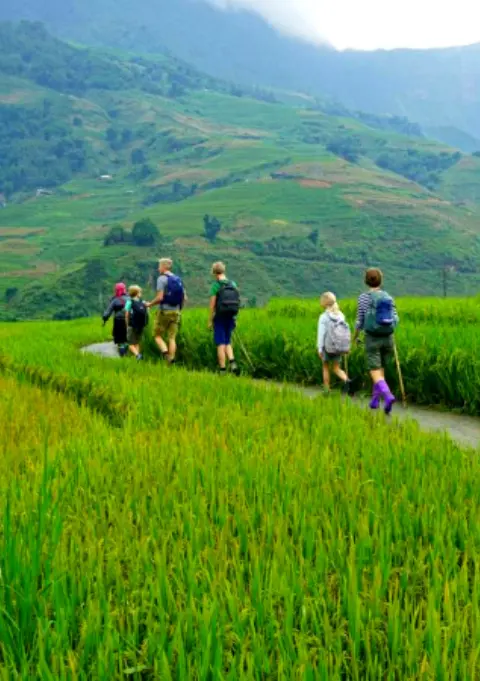
 Sinh Giang
The best photography spots in Sapa are the Muong Hoa Valley rice terraces around Lao Chai and Ta Van, the Fansipan summit above a sea of clouds, Cat Cat village in the morning mist, the Silver Waterfall (Thac Bac) on the Lai Chau road, and the Ham Rong garden viewpoint looking down over Sapa town. Each one is a different picture — the terraces are about layers and light, Fansipan is about scale and cloud, the villages are about people and detail — and each has an hour of the day and a season when it truly works. Get the timing right and Sapa gives you photographs you will still be showing people years later.
I have walked these trails with photographers for years, from people carrying two camera bodies and a tripod to travellers with nothing but a phone, and the truth is the same for all of them: the place does most of the work, but knowing where to stand and when is what separates a snapshot from a keeper. This guide maps out every spot worth your time, the exact light that flatters it, the month that transforms it, and how to photograph the Black H'mong and Red Dao communities who live here with respect. Whether you are planning a serious landscape trip or just want your holiday photos to sing, this is the local's map to shooting Sapa.
A map of Sapa's best photography spots
Sapa's photo spots fan out from the town in every direction: the deep valley to the southeast, Fansipan rising to the west, the waterfalls up the northern pass, and the villages scattered along the valley floor. This map shows where each sits and how far you are looking to travel — most are within a short drive or an easy walk of Sapa town.
The Muong Hoa Valley rice terraces — the shot Sapa is famous for
The terraces of the Muong Hoa Valley are the single most photographed subject in Sapa, and for good reason: nowhere else in Vietnam do the rice steps stack so high and so cleanly up the mountainsides. The classic view is the stretch of valley floor between Lao Chai and Ta Van, where the terraces climb both walls of the valley and the Muong Hoa stream threads silver through the bottom. From the ridge road above Y Linh Ho you look down on hundreds of curved terrace walls catching the light; from the valley floor you shoot up through them, using a farmer, a buffalo or a Black H'mong woman in indigo as your point of scale.
For the strongest images, walk rather than drive. The roadside viewpoints on the way to Ta Van are fine for a quick stop, but the terraces reveal themselves properly on foot — a bend in the trail opens onto a whole hidden amphitheatre of paddies, a duck pond mirrors the sky, an old woman is bent double planting seedlings. I take photographers along the low path from Lao Chai because it keeps you inside the terraces rather than looking at them from a distance. The higher ridge trail from the Sapa side gives the sweeping wide-angle layers; the valley floor gives the intimate, human frames. On a full day you can shoot both.
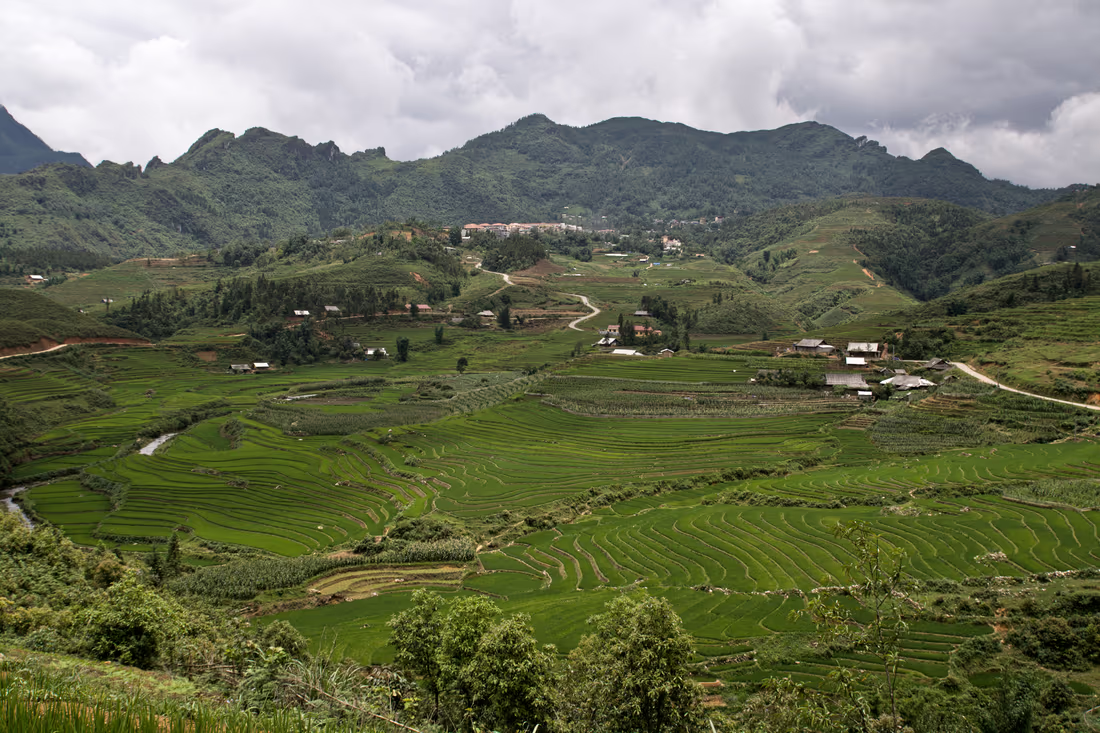
The light is everything here. In the two hours after sunrise, low sun rakes across the terrace walls and every step throws a shadow, turning a green hillside into a sculpted staircase. Mist often sits in the valley until eight or nine, and a shot of terraces emerging from cloud is the definitive Sapa photograph. Come back in the late afternoon and the west-facing slopes above Ta Van glow gold. Avoid the flat window between eleven and two, when the overhead sun bleaches the greens and kills the shadows — that is the time to eat lunch with a village family, not to shoot.
Stay overnight in the valley if you are serious about the terraces. Day-trippers from Sapa town arrive after the mist has burned off and leave before the afternoon gold. From a Lao Chai or Ta Van homestay you simply step outside at 6am into the best light of the day, with the whole valley to yourself and your camera.
Fansipan summit: shooting above the clouds
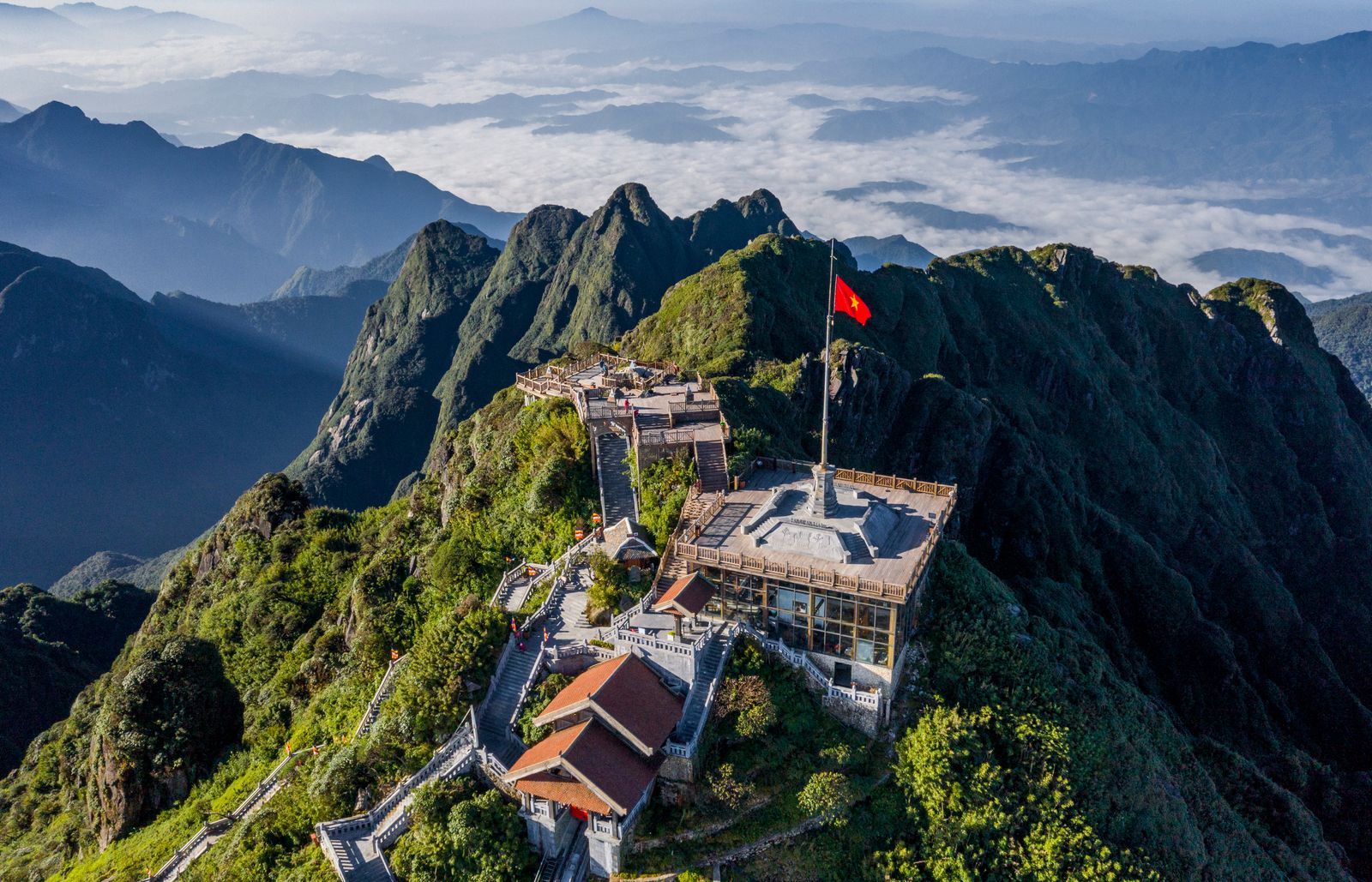
At 3,143 metres, Fansipan is the highest peak in Indochina, and on a clear morning the view from the top is the most dramatic photograph in the region — a temple complex and summit marker floating above an unbroken sea of clouds, with distant blue ridges breaking through like islands. The cable car from Sapa climbs to just below the summit in around fifteen minutes, gaining more than 1,400 metres and giving you shots down onto the clouds from the gondola itself. From the upper station a walkway and a short flight of steps lead to the summit pyramid, the giant bronze Buddha and the layered pagodas of the spiritual complex.
The whole thing lives or dies on weather. Fansipan makes its own cloud, and by late morning the summit is often swallowed in fog with nothing to see. Your entire strategy should be to be on the first cable car of the day, ideally after a cold clear night, when the inversion sits low in the valleys and the summit stands above it in sunshine. Check the forecast the evening before and stay flexible — I tell photographers to keep Fansipan as a "clear morning" card and swap the day around if the sky opens. December and January give the highest odds of a proper cloud inversion, and occasionally a dusting of frost on the railings for foreground.
Bring a wide lens for the sea-of-clouds panorama and a short telephoto to pick out the pagoda roofs against the cloud. The summit is cold and windy even in summer, so protect your gear and your hands, and remember that batteries drain fast in the cold — keep a spare in an inside pocket. This is a landscape you shoot fast in a short clear window, so know your composition before you arrive.
Treks Built Around the Best Views
 Best Views
Mountain Views and Villages Trek
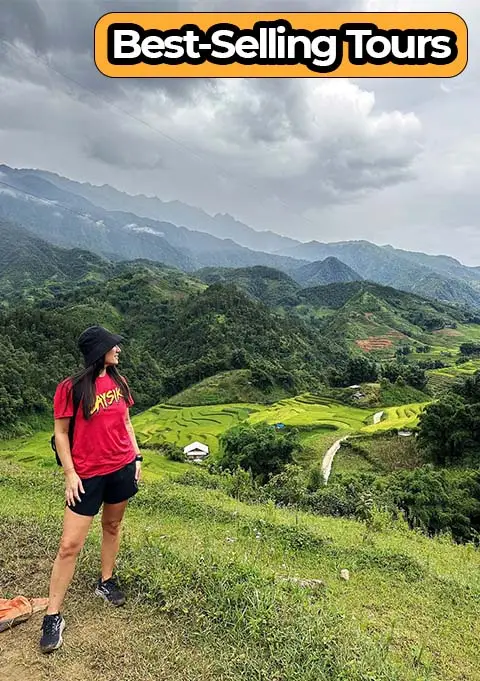
Ridge trails with the widest panoramas of any 1-day route — the classic layered-terrace wide angle, then down through Black H'mong villages.
 Best Seller
Trekking Through Rice Terraced Fields
The valley-floor route through Lao Chai and Ta Van — the intimate, human frames, with buffalo, ponds and villagers for scale.
Cat Cat village: mist, water and detail on Sapa's doorstep
Cat Cat is the closest village to Sapa town — a twenty-minute walk downhill from the church — and it is the easiest place in the region to make strong village photographs. The path drops through Black H'mong houses to a small waterfall and an old hydro station where the stream tumbles over rocks, and the whole hollow catches mist in the early morning. Because it is so accessible, Cat Cat gets busy by mid-morning, so the photographer's move is to be there at opening, when the light is soft, the tour groups have not arrived, and the wood smoke from the breakfast fires still hangs in the air.
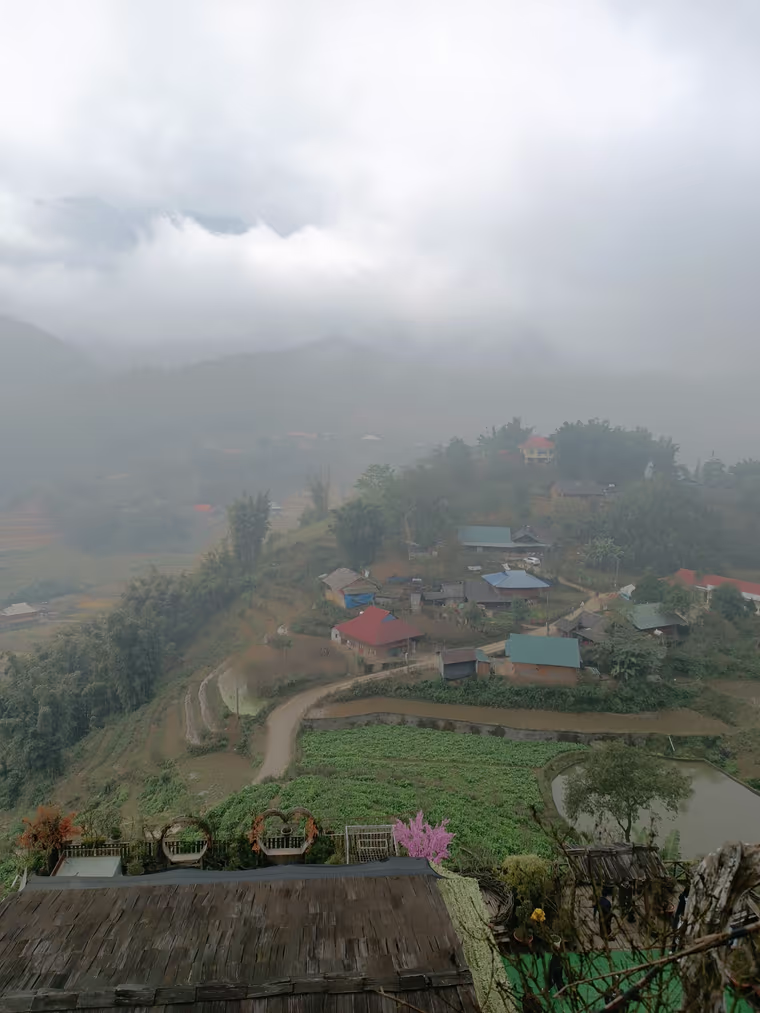
Cat Cat rewards the details as much as the wide views: hemp being spun on a doorstep, indigo cloth drying on a line, a water wheel turning, an old woman's silver earrings catching the light. If you want quieter, less-arranged village photography, walk on to Lao Chai, Ta Van, Y Linh Ho or the Red Dao village of Ta Phin, where daily life carries on without a ticket gate. This is where a local guide changes everything — walking in with someone the families know means people are relaxed and doors open to courtyards and kitchens you would never find alone. The mist that photographers chase here rolls in over the terraces most mornings before about seven, so plan around it rather than hoping for it.
Silver Waterfall and Love Waterfall: the water shots
Twelve kilometres northwest of Sapa on the road towards Lai Chau, the Silver Waterfall (Thac Bac) drops around 200 metres down a black rock face in a long white ribbon, roadside and easy to reach. It photographs best after rain, when the flow is full and the spray hangs in the air, and in soft overcast light that lets you use a slow shutter without blowing out the highlights. A set of steps climbs alongside it, giving you angles from the base looking up and from halfway looking across — bring a polariser to cut the glare off the wet rock and a cloth to keep spray off the lens.
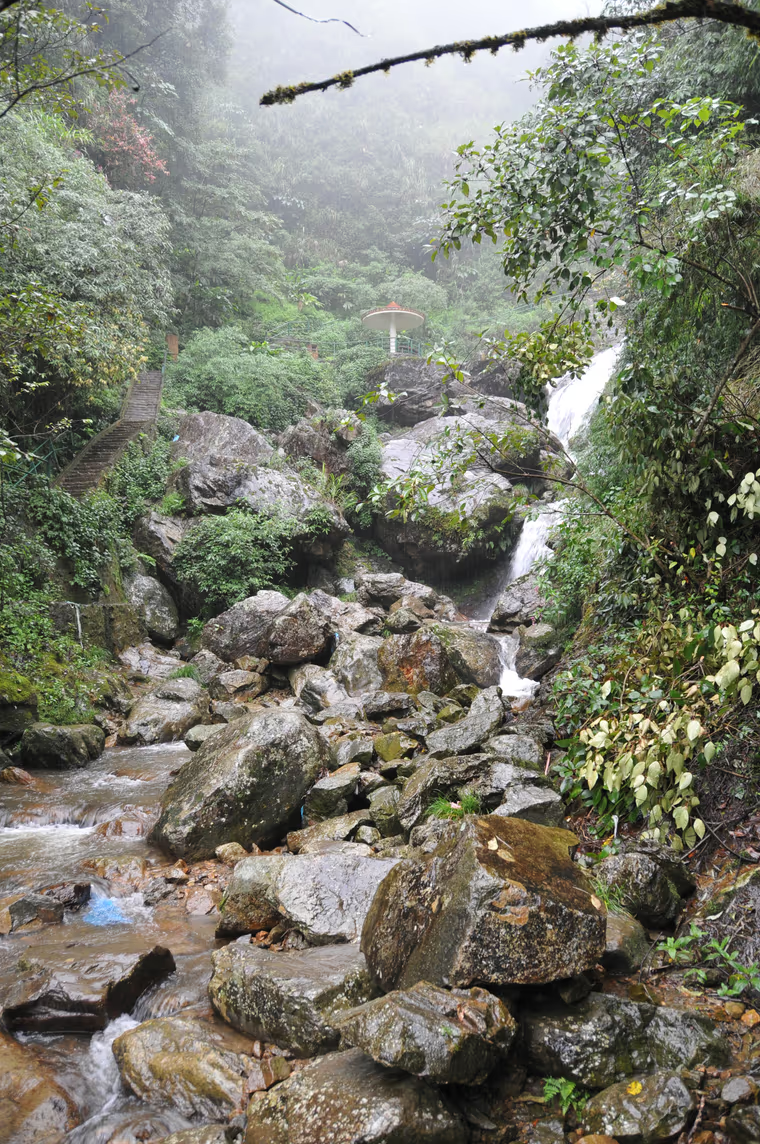
A few minutes further up the same road, near the top of the Tram Ton Pass, the Love Waterfall sits at the end of a short forest walk through bamboo and cardamom — quieter, greener and more intimate than Thac Bac, and the better subject if you like water framed by jungle. Both waterfalls pair naturally with a Fansipan morning, since the pass road passes all three; a common photographer's day is the first cable car at dawn, then the two waterfalls on the way back down while the light is still soft. In the dry months of spring the falls thin out, so if water volume matters to your shot, come after the summer rains.
Which spot suits which kind of photographer?
Not everyone comes to Sapa for the same picture. A landscape shooter, a documentary photographer and a traveller with a phone will each get the most from a different plan. Here is how I would point each of them.
The landscape shooter
The culture & portrait shooter
The phone & casual traveller
Ham Rong and Sapa town: the view from above
You do not have to leave town for a good photograph. The Ham Rong (Dragon Jaw) mountain garden rises straight up behind Sapa church, and a stepped path climbs through orchid beds and rock formations to a series of viewpoints that look down over the whole town, the church, and the terraced hills beyond. It is touristy and cultivated rather than wild, but the top-down view of Sapa cradled in its bowl of mountains — especially with afternoon cloud pouring over the far ridge — is a picture you can only get from up here. Go late afternoon for the light and to catch the cloud spilling in.
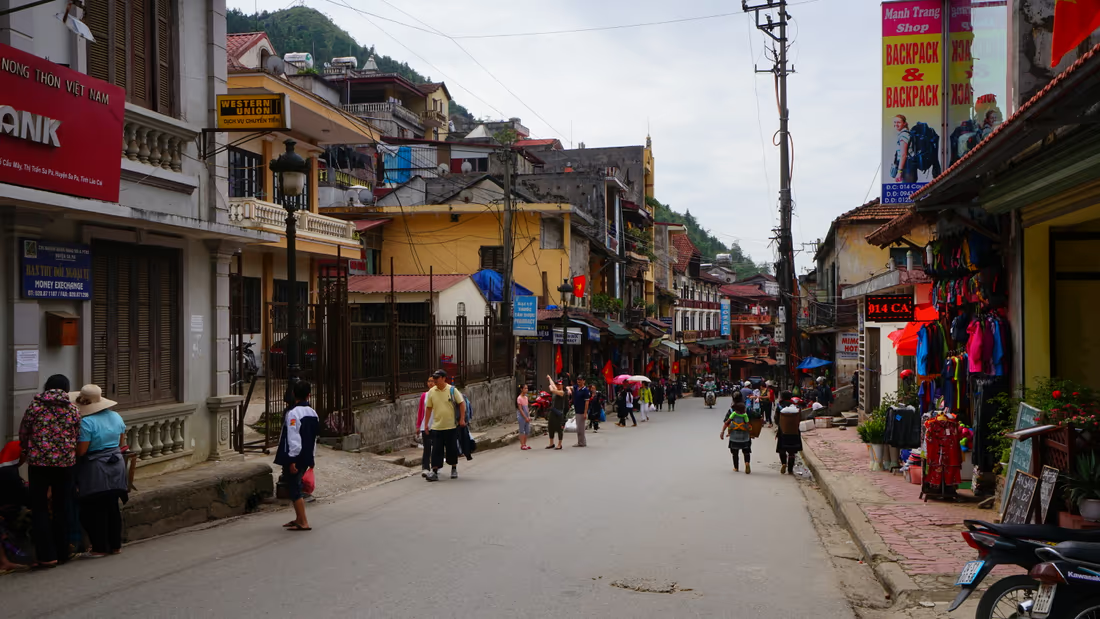
Sapa town rewards a wander with a camera too. The stone church in the central square is the town's landmark, best shot in the blue hour when its lights come on against the evening mist. Cau May street and the market lanes give you street life, ethnic textiles, and Black H'mong and Red Dao women selling handicrafts. On a misty evening the whole town turns moody and cinematic, neon signs glowing through the fog — a very different Sapa from the bright terraces, and worth staying out for. Keep an eye on the weather: the same fog that ruins a summit view makes the town atmospheric.
Hanoi to Sapa — How to Arrive for Your Shoot
 Budget
Sleeper Bus
Lie-flat berths, day and overnight departures. Take an overnight bus to land in Sapa at dawn — in time for the morning mist.
 Most Comfortable
Limousine Van
9-seat premium van, door to door from your Hanoi hotel. The quickest way up, with room for camera bags and a tripod.
 Scenic
Overnight Train
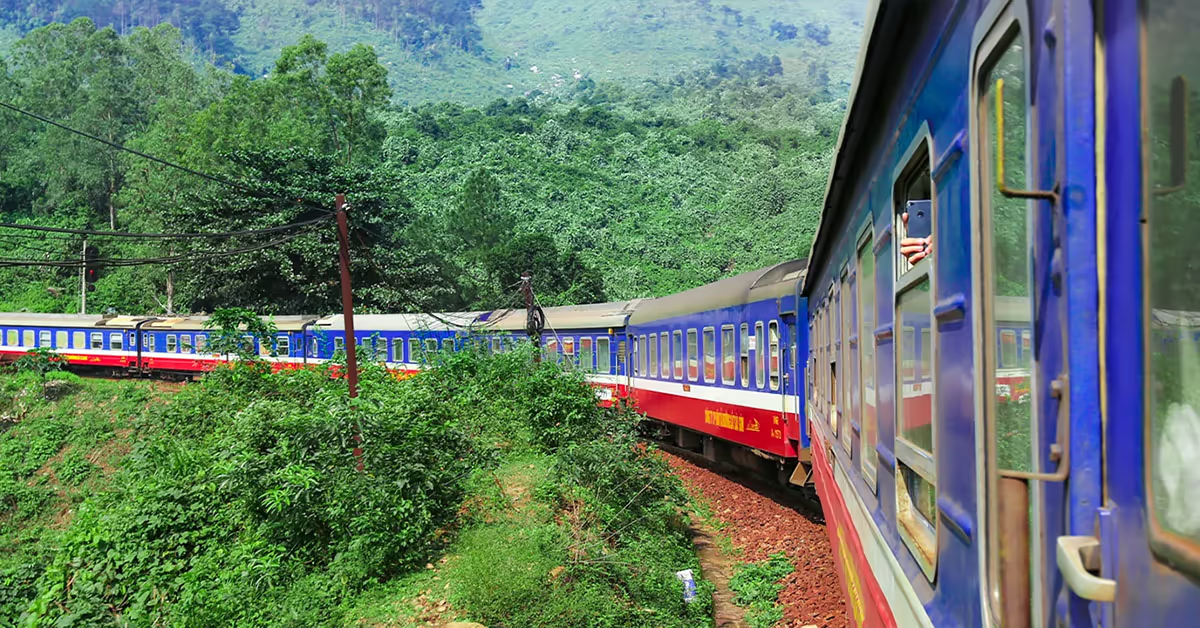
King Sapa Train sleeper cabins to Lao Cai, then a 1-hour transfer up through the terraces as the sun comes up.
The best season for photography in Sapa, month by month
Sapa photographs completely differently across the year, and the two windows that stand out are the flooded terraces of late spring and the golden harvest of autumn. This calendar shows how each month rates for landscape photography, based on the light, the state of the rice, and how often the sky is clear.
The water season from mid-May to mid-June is when farmers flood the terraces to transplant the young rice, and for a few weeks the paddies become mirrors that double the sky, the clouds and the terrace walls. Shoot them at dawn and dusk when the water is still and the light is low. The golden harvest from mid-September to mid-October is the most photographed moment of the Sapa year: the ripe rice turns the entire valley amber, and low autumn light makes it glow. These two windows book out fastest, so plan ahead.
The shoulder months still deliver. Spring, from March into April, brings fresh green shoots, wild blossom and clearing skies. November is often crisp and clear after the rains, good for sharp wide views. Deep winter, December and January, is cold and frequently fogged in the valley — but it gives the best odds of a dramatic cloud inversion from Fansipan, and occasionally frost. The wet summer months of July and August are lush and green but stormy; shoot early mornings before the afternoon rain and keep your gear covered. Whenever you come, book at least two days ahead so we can plan your shooting days around the forecast.
Golden hour, mist and the light that makes Sapa
If you take one thing from this guide, make it this: in Sapa, when you shoot matters more than what you shoot. The valley runs roughly northwest to southeast, so at sunrise the low sun lights the eastern slopes above Ta Van and rakes across the terraces, while at sunset it drops behind Fansipan and backlights the ridges. The first two hours after sunrise, roughly six to eight, and the last two before sunset, from about four, are your working hours. The mist is the other gift — it pools in the valley overnight and burns off through the morning, so a shot of terraces or a village half-dissolved in cloud is there for the taking if you are up early.
Weather here changes in minutes, and that is a feature, not a bug. A ridge that is socked in fog at nine can open into brilliant clarity by ten, then close again. Patience pays: I have watched photographers give up on a grey summit and miss the ten-minute window when the clouds parted. Keep shooting, keep waiting, and treat a moody, misty frame as a win rather than a consolation prize — some of the most atmospheric Sapa images are made in exactly the weather people came hoping to avoid.
Gear and practical tips for shooting Sapa
You do not need a lot, but a few things matter. A wide-to-standard zoom covers most terrace and village scenes; a short telephoto around 70–200mm compresses the terrace layers and reaches distant hillsides and the pagodas on Fansipan. A polarising filter cuts haze and deepens the greens and is the single most useful filter here. Bring more batteries than you think — the cold on Fansipan and the constant shooting drain them fast — and a rain cover or dry bag, because the weather turns without warning. Grippy footwear is essential on wet, muddy terrace paths, and walking poles free up your balance for carrying a camera; we rent both at our office. And if you travel with just a phone, do not apologise for it — a modern phone shoots the valley beautifully, and travelling light means you actually walk to the spots that matter.
The Black H'mong and Red Dao people are not part of the scenery — they are your hosts. Always ask before photographing a person, especially portraits and children; a smile and a raised camera with a questioning look is enough, and a nod means yes. Never push a lens into a doorway or a market stall without a word. Walking with a local guide means these moments come naturally, with consent, and the photographs are warmer for it.
Overnight Treks for Sunrise & Mist
 Best for Sunrise
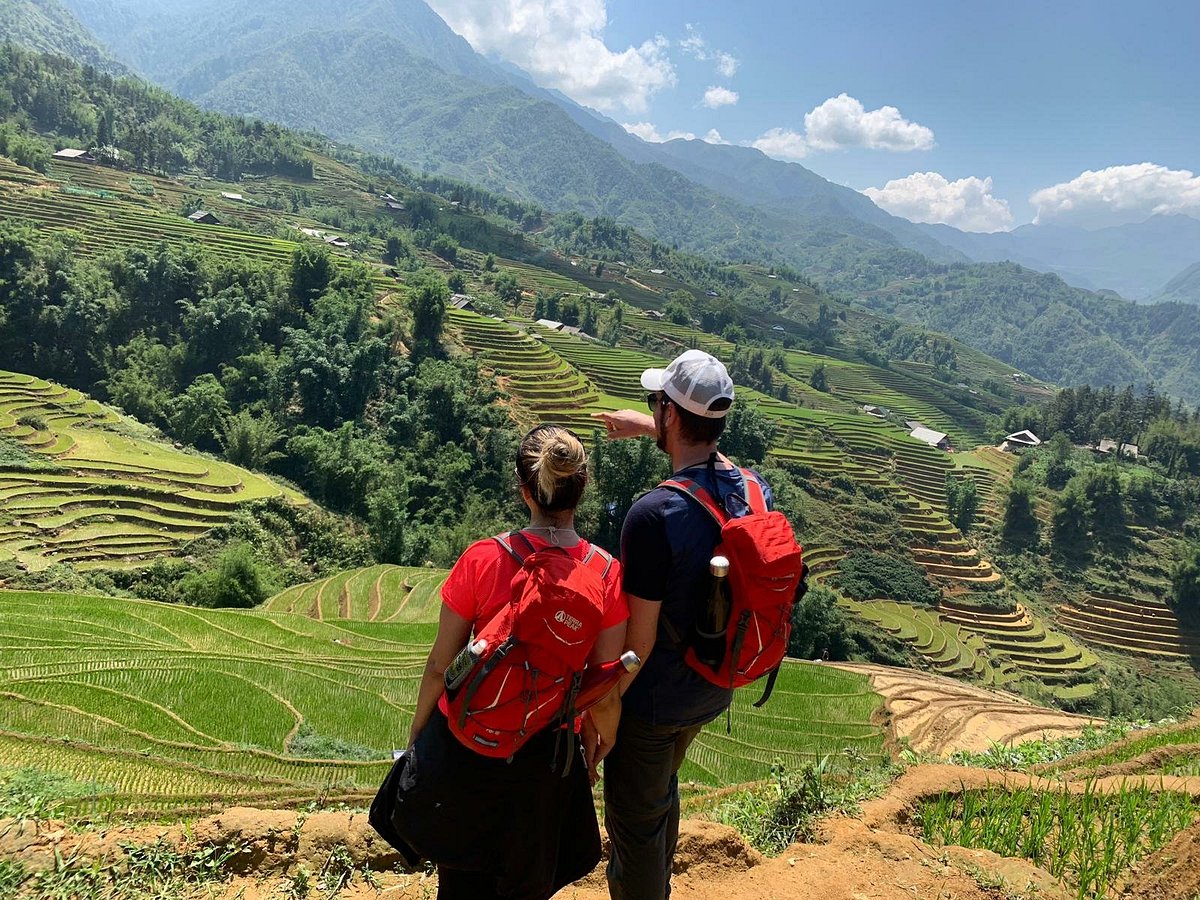
Rice Terraced Fields & Homestay
Sleep in the valley and step outside at 6am into the best light of the day — mist on the terraces, no crowds, camera in hand.
 Easy Walking
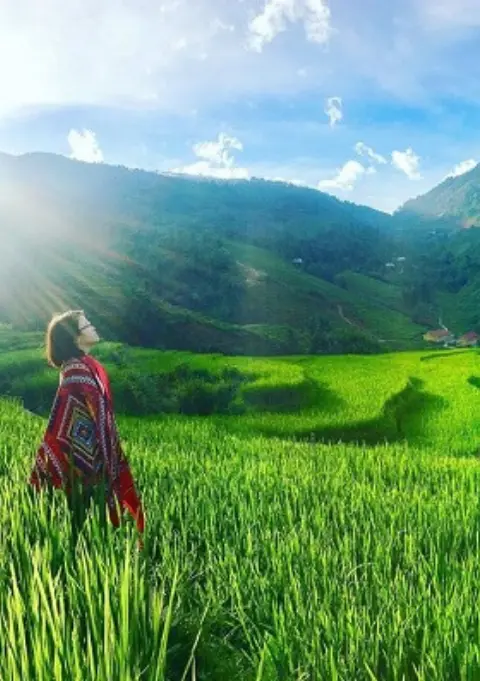
Rice Paddies and Cultures — Easy Hiking
Flat, slow-paced valley walking with plenty of stops — the relaxed pick if you want time to set up each shot rather than rush.
Beyond the classics: quieter spots worth the walk
Once you have the famous frames, Sapa keeps giving for photographers willing to walk a little further. Y Linh Ho, the first Black H'mong village down the valley from Sapa, sits among some of the steepest, most dramatic terraces and sees a fraction of the visitors of Ta Van. Ta Phin, the Red Dao village to the north, offers the distinctive red headscarves, indigo dyeing and the herbal-bath tradition — rich, colourful documentary subjects, and the reason it deserves its own trip. Further out, the Bac Ha Sunday market, two hours from Sapa, is the most colourful ethnic market in the northern highlands, where Flower H'mong women in vivid embroidery gather to trade — a photographer's day out on its own.
For pure landscape, the Tram Ton Pass (O Quy Ho), the highest road pass in Vietnam on the way to Lai Chau, gives enormous cloud-filled valley views and spectacular sunsets from the ridge — a short drive from town and a reliable fallback when the summit is fogged. And do not overlook the ordinary: a buffalo crossing a flooded paddy, a child on a water buffalo, laundry drying against an indigo wall, smoke rising from a homestay roof at dusk. These are the frames that say Sapa as much as the big vistas do, and they are everywhere along the trail once you slow down and look. A guide who knows the valley can put you in front of them at the right hour — that is the difference between hoping and knowing.
Rent at Our Office Before You Trek
 Gear Rental
Trekking Boots Rental
Waterproof ankle-support boots for steady footing on wet, muddy terrace paths — cleaned and checked before each rental. Available at 105 Thach Son Street.
 Gear Rental
Walking Poles Rental
Trekking poles available to rent at $2/day at our office, 105 Thach Son Street. They free up your balance for carrying a camera on the descents.
Frequently Asked Questions
The strongest are the Muong Hoa Valley rice terraces around Lao Chai and Ta Van, the Fansipan summit above a sea of clouds, Cat Cat village in morning mist, the Silver Waterfall (Thac Bac) on the Lai Chau road, and the Ham Rong garden viewpoint over Sapa town. For terraces the single best stretch is the Lao Chai to Ta Van path in the valley floor; for the big mountain shot nothing beats the Fansipan cable car and summit at dawn.
The first two hours after sunrise, roughly 6 to 8 am, when low side-light rakes across the terrace walls and mist still sits in the valley. Late afternoon from about 4 pm to sunset gives warm golden light on the west-facing slopes above Ta Van. Avoid the flat midday hours between 11 am and 2 pm, when the sun is overhead and the terraces lose their depth and shadow.
Two windows stand out. Mid-May to mid-June is the water season, when the flooded terraces turn into mirrors that reflect the sky. Mid-September to mid-October is the golden harvest, when the ripe rice glows across the whole valley — this is the most photographed moment of the Sapa year. Spring brings cloud and blossom, while December and January can deliver dramatic frost and cloud inversions on Fansipan.
Yes. The Fansipan cable car climbs to just below the 3,143-metre summit, and on a clear morning you shoot down onto a sea of clouds with the temple complex and summit marker in the frame. Go on the first cable car of the day for the best light and the thinnest crowds, and check the forecast — the summit is often fogged in by late morning, so an early clear window is everything.
No permit is needed for the landscapes, but a local guide makes the difference for village and portrait photography. Walking in with someone the Black H'mong and Red Dao families know means people are relaxed rather than posing, doors open to courtyards and kitchens you would never find alone, and you always know when to ask before photographing a person. Always ask first for portraits — a smile and a nod is enough, and it is far better than a rushed snatched shot.
A wide-to-standard zoom covers most terrace and village scenes, and a short telephoto (around 70–200mm) compresses the terrace layers and reaches distant hillsides. Bring a polarising filter to cut haze and deepen the greens, spare batteries because the cold drains them fast, and a rain cover or dry bag — Sapa's weather turns in minutes. A phone with a good camera is genuinely enough for the valley if you travel light; the light and the place do most of the work.