
 Sinh Giang

For most short trips, the simplest answer is a travel eSIM installed before you fly, if your phone supports eSIM and is unlocked. For a long stay or a lot of data, a local carrier SIM or eSIM can be cheaper, but the rules for new local subscriptions tightened on 15 April 2026, when Circular 08/2026/TT-BKHCN started requiring facial biometric checks for new mobile registrations. We found no published page that says how that applies to a foreigner on a passport, so the sensible plan is to bring your passport, allow extra time at the counter and ask before you pay.
We are a trekking company in Sapa. We do not sell SIM cards or eSIMs, we take no commission from any carrier or eSIM seller, and this page has no affiliate links. We checked the carriers' pages and the press on 30 and 31 October 2026. Several carrier pages returned nothing to our tools, so we say plainly what we could and could not verify, and we mark every price that may have changed.
Three Options, Side by Side
There are really three ways to get data in Vietnam, and the right one depends on how long you stay and how much you want to deal with a counter. This table is our comparison. The "verified" column tells you how much of each row rests on a source we could read.
| Option | Good for | Watch out for | What we could verify |
|---|---|---|---|
| Travel eSIM bought online | Short trips; no queue; install before you fly | May be data-only, with no Vietnamese number; needs an unlocked eSIM phone | We did not check any seller plan |
| Local carrier physical SIM | Long stays; a Vietnamese number; cheap data | Passport and facial check; counter time; one SIM slot used | Rule change on 15 April 2026; passport use reported by guides |
| Local carrier eSIM (for example MobiFone) | A local number without a plastic card | Needs a compatible phone and identity check | MobiFone pages: prices, device list, passport accepted for a SIM-to-eSIM change |
| Roaming from your home carrier | One or two days; no setup | Often the most expensive option | Not checked: rates differ by country and plan |
If you are unsure, choose the travel eSIM and keep your home SIM in the second slot for calls and bank codes, with data roaming switched off on that line. That combination avoids the counter, avoids the new registration rules, and costs little. If you will be in Vietnam for a month or more and need a Vietnamese number for deliveries, rides and local accounts, plan on a local SIM or eSIM and set aside an hour.
What Changed on 15 April 2026
The biggest change this year is identity checking. A Bao Tay Ninh report republished from the national news agency on 10 April 2026 says that from 15 April 2026, under Circular No. 08/2026/TT-BKHCN of the Ministry of Science and Technology, "all newly registered mobile subscriptions must also undergo facial biometric verification, with personal data cross-checked against the National Resident Database and the identity database". Verification, it says, can be done in the VNeID app, in a carrier's app or in person at an authorised point, and it matches four data fields: identity number, full name, date of birth and facial data. ID Tech reported on 17 April 2026 that the circular was in force and that the face check happens at activation.
A second part of the rule concerns changing phones. The same report says that within two hours of detecting a device change the operator suspends outgoing calls and texts until the user re-verifies, and that two-way service is suspended after 30 days. Subscribers with a Level-2 VNeID account or a chip identity card are exempt, unless they change devices from 15 June. A draft circular published for comment in January 2026, reported by Tuoi Tre on 31 January, used the same four fields and talked about suspending outgoing calls from 1 March. That draft date was not the final one, so rely on 15 April.
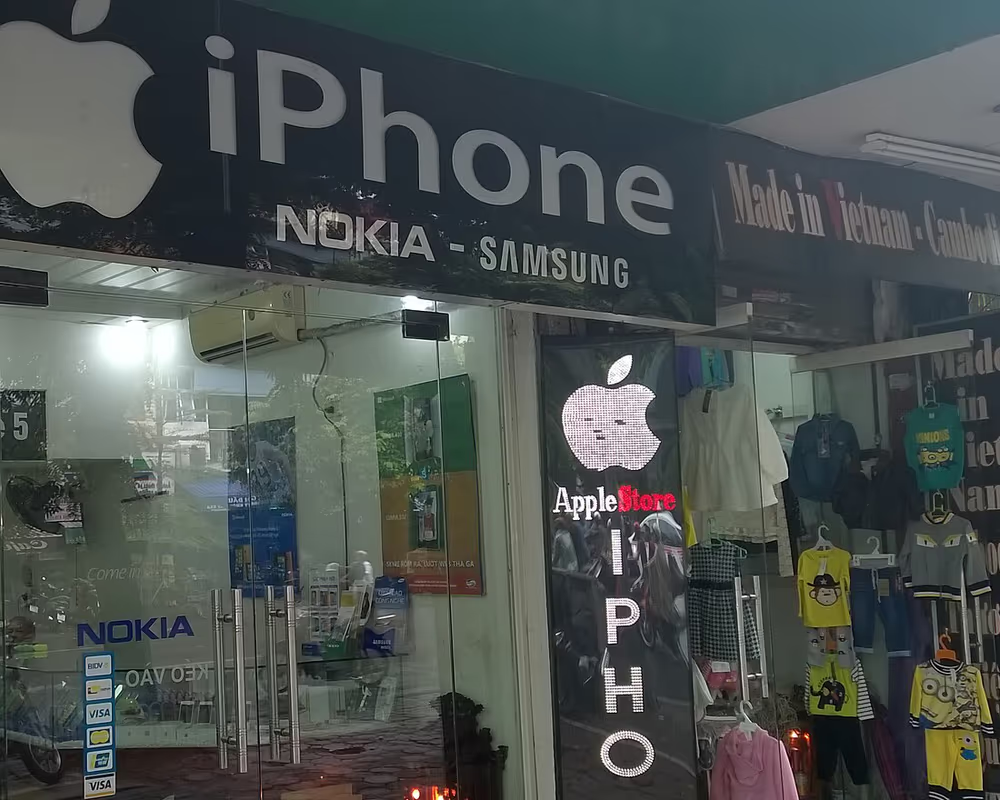
What none of the pages we read says is how a foreign tourist is handled. They mention identity numbers and the national resident database, which a visitor does not have, and they do not mention passports or tourists. It is possible that carriers use a passport-based route for foreigners, which several travel guides say has been the practice, but we have no official statement. So treat the new rule as a reason to buy a local SIM at a carrier store or airport counter and not from a street seller, to bring your original passport, and to allow time. One travel guide warns that a card sold without any identity check is a "ghost SIM" in someone else's name, and advises refusing it. We agree with the advice, though we cannot confirm the term.
eSIM or Physical SIM: Check Your Phone First
An eSIM is a chip built into the phone, loaded with a carrier profile by scanning a QR code or using an app. A physical SIM is the card you push into a tray. Before you buy anything, find out whether your phone has an eSIM chip, because plans are useless if it does not. A practical check is to open the About screen in your phone's settings and look for an EID number, a 32-digit identifier that eSIM-capable phones display. If there is no EID, there is no eSIM.
MobiFone gives a device list, and it is worth reading for what it shows about the confusion. Its eSIM page lists iPhone XS, XS Max and XR and newer, and models from Samsung, Xiaomi and Oppo. Its own FAQ says "iPhone 11 or newer, depending on the country". The two disagree, and we cannot tell you which is right for your handset, so check with Apple or your phone's maker, not with a seller. Also check that your phone is not carrier-locked. A phone sold on contract may refuse a foreign profile, and the fix is a call to your home carrier before you leave.
What a Local SIM or eSIM Costs: What We Could Verify
Prices are the part of this topic most polluted by sales pages, so here is what we could read on carrier pages themselves. MobiFone's eSIM page, whose footer shows 2025, lists 100,000 VND for a new prepaid eSIM, made of 25,000 VND for the eSIM and 75,000 VND for activation, and 25,000 VND to swap an existing SIM for an eSIM. At roughly 26,000 VND to the US dollar that is about 4 US dollars. The page asks for an original citizen card or passport when converting an existing SIM, and the upload step names a photo of the identity document.
Data bundles are separate. MobiFone's home page lists domestic plans such as D5 at 5,000 VND a day for 500 MB, D7 at 7,000 VND a day for 2 GB, D10 at 10,000 VND a day for 6 GB, 3D5 at 15,000 VND for 3 GB over three days, and MBF30 at 30,000 VND for 12 GB over seven days. VinaPhone's home page lists 5G30 at 30,000 VND for 7 GB a day for three days, 5G70 at 70,000 VND a week with 8 GB a day, and 5G150 at 150,000 VND a month with 7 GB a day. None is labelled as a tourist product, neither page is dated, and we could not tell whether a new subscriber can buy them before activation, so use them as a sense of scale and not as a quote.
| Carrier | Item | Price on the page |
|---|---|---|
| MobiFone | New prepaid eSIM (eSIM 25,000 + activation 75,000) | 100,000 VND |
| MobiFone | Swap SIM to eSIM | 25,000 VND |
| MobiFone | D10: 6 GB a day | 10,000 VND a day |
| MobiFone | MBF30: 12 GB over 7 days | 30,000 VND |
| VinaPhone | 5G30: 7 GB a day for 3 days | 30,000 VND |
| VinaPhone | 5G70: 8 GB a day for a week | 70,000 VND |
| Viettel | Page returned no readable text | Not verified |
The gap in the table is Viettel, the largest carrier, whose home page returned nothing to our tools. VinaPhone's eSIM page was also empty. We will not guess at their prices, and we recommend you ignore any page that quotes Viettel tourist prices without a date or a screenshot. We did not find an official page listing airport counters or tourist SIM bundles at Noi Bai, Tan Son Nhat or Da Nang, so prices you see in blogs for airport SIMs are unverified.
Coverage in Sapa and the Mountains
The question guests ask most is whether the signal holds in Sapa. The honest answer is that the town is fine and the valleys are patchy, and that no one has given us a measurement to prove otherwise. We found no coverage map from any carrier for Sapa, Lao Chai, Ta Van, Muong Hoa or Fansipan. MobiFone's eSIM page says only that the signal quality is "stable nationwide", which is a marketing line. In our guide to working from cafés we wrote that Viettel holds up best on the trails around Lao Chai, Ta Van and Ta Phin; that is a guide's impression, not a survey, and we are not claiming more now.
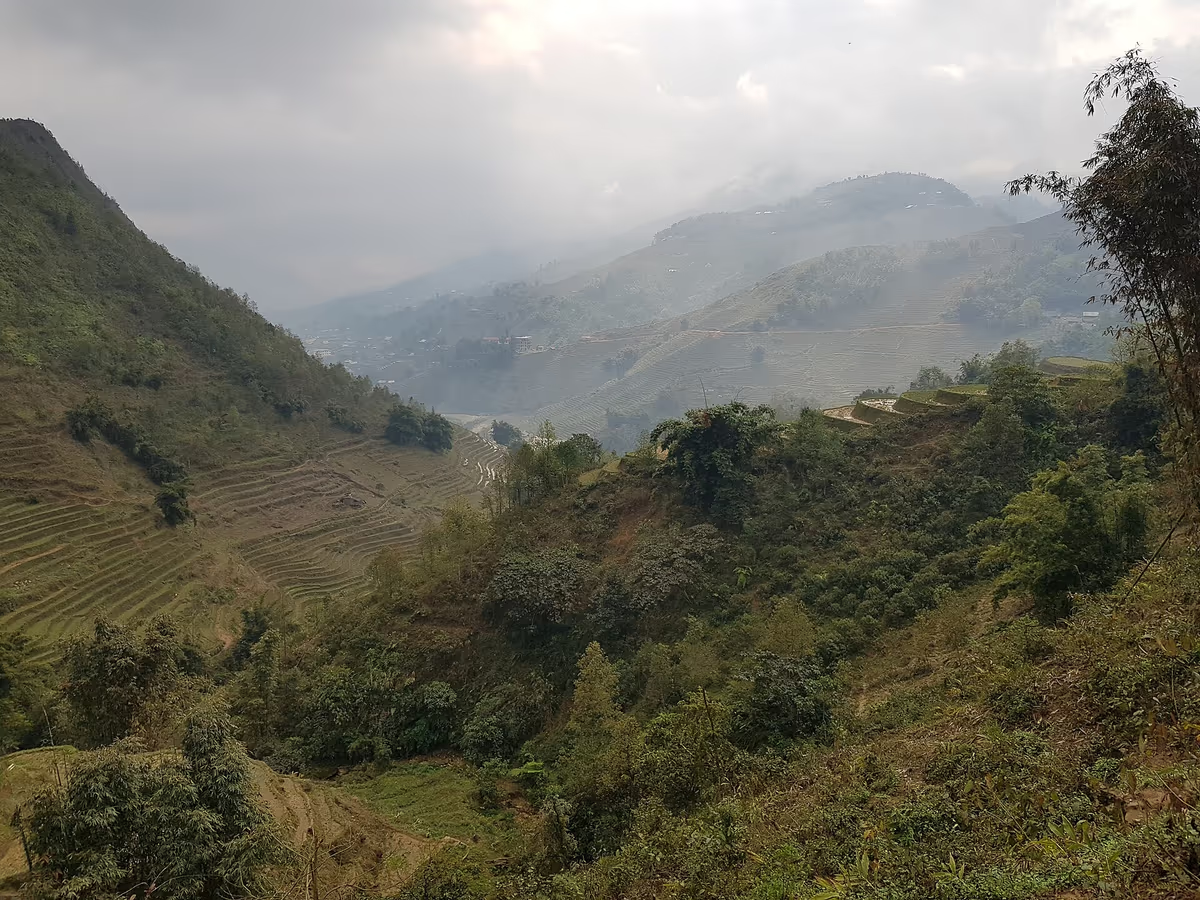
What to do with that uncertainty is simple. Do not buy a plan because someone says one network is best in Sapa; buy one that works at home in your own phone, and add a plan B. If you have a phone with an eSIM and a physical slot, you can carry two networks, which is the closest thing to a real coverage guarantee. Ask your homestay host or guide which network works in their village, because they know where the signal is. And download offline maps for the area before you leave town, since a map that needs data fails at the moment you need it.
Setting Up an eSIM, Step by Step
This is our routine for a travel eSIM bought online before a trip. The steps are the same for most sellers, but the menus differ, so read your seller's instructions too.
Check your phone
Look for an EID in the About screen and confirm the phone is unlocked. If you are not sure, ask your home carrier before you pay.
Buy the plan on home Wi-Fi
Choose a plan for the days you will be in Vietnam. Check that it states coverage in Vietnam, the data amount and the start rule.
Ask about the phone number
Check whether the plan includes a Vietnamese number and SMS. If you need Grab, Zalo or a local bank code, this matters.
Install the profile
Scan the QR code or use the seller's app on Wi-Fi. Label the line "Vietnam" so you do not confuse it with your home line.
Set the data line
Make the Vietnam line your mobile data line and switch on data roaming for that line only. Switch data roaming off on the home line.
Test on arrival
When you land, check that the phone shows a Vietnamese network. If it does not, restart the phone and turn the line off and on again before you contact support.
Keep the QR code and the profile
Do not delete the eSIM before the trip ends. Most profiles cannot be reinstalled, and many QR codes are valid for one install only.
The Local Number Question
Data is not the same as a phone number, and that difference catches many visitors. A data-only eSIM gives you internet and no number that can receive a text. A commercial travel-site guide built around Vinaphone says a local +84 number is needed for Grab, Zalo and bank codes, and adds that tourist SIMs from Vinaphone include a local number automatically while data-only eSIMs from international providers often lack one. That page is itself a commercial site with travel booking widgets, and we could not verify the claim with Grab or any bank. The advice still holds because it costs nothing to ask.
Before you buy a travel eSIM, ask whether the plan includes a Vietnamese number and SMS. If it does not, you can still use a ride app with the booking sent from your hotel's Wi-Fi, a taxi from a counter, or a transfer arranged in advance, and you can use WhatsApp for calls over data. If you need to receive a bank code from home, keep your home SIM in the second slot with roaming off, and turn roaming on only for the moment you need the code. Check your home carrier's roaming charges first, because that is the one place a data-only plan can cost you.
If You Buy a Physical SIM Anyway
A local SIM is a good choice for a stay of a month or more, and the plan is simple. Buy it at a carrier store or an airport counter, not from a street seller. Bring your original passport, and expect a face check on the phone or on a tablet. MobiFone says its prepaid numbers must be activated within 72 hours and that one person can register three, a limit given for holders of the old identity card, and we do not know how it applies to foreigners. MobiFone names its dealers as large phone retailers and its own stores, which tells you where to look.
Keep the card's packaging and the receipt. If the number is registered under the wrong name, or the face check fails, the counter can fix it more easily at the time than you can a week later. Do not let anyone register the card in their own name to save time. The rule exists to link each number to a real person, and a number registered to someone else is a number you do not control, and may lose, if the operator suspends it.
Valley Treks Where the Signal Comes and Goes
 1-Day Trek
Trekking Through Rice Terraced Fields
The Lao Chai to Ta Van valley day with a local guide, finishing in Sapa town.
 Local Favourite
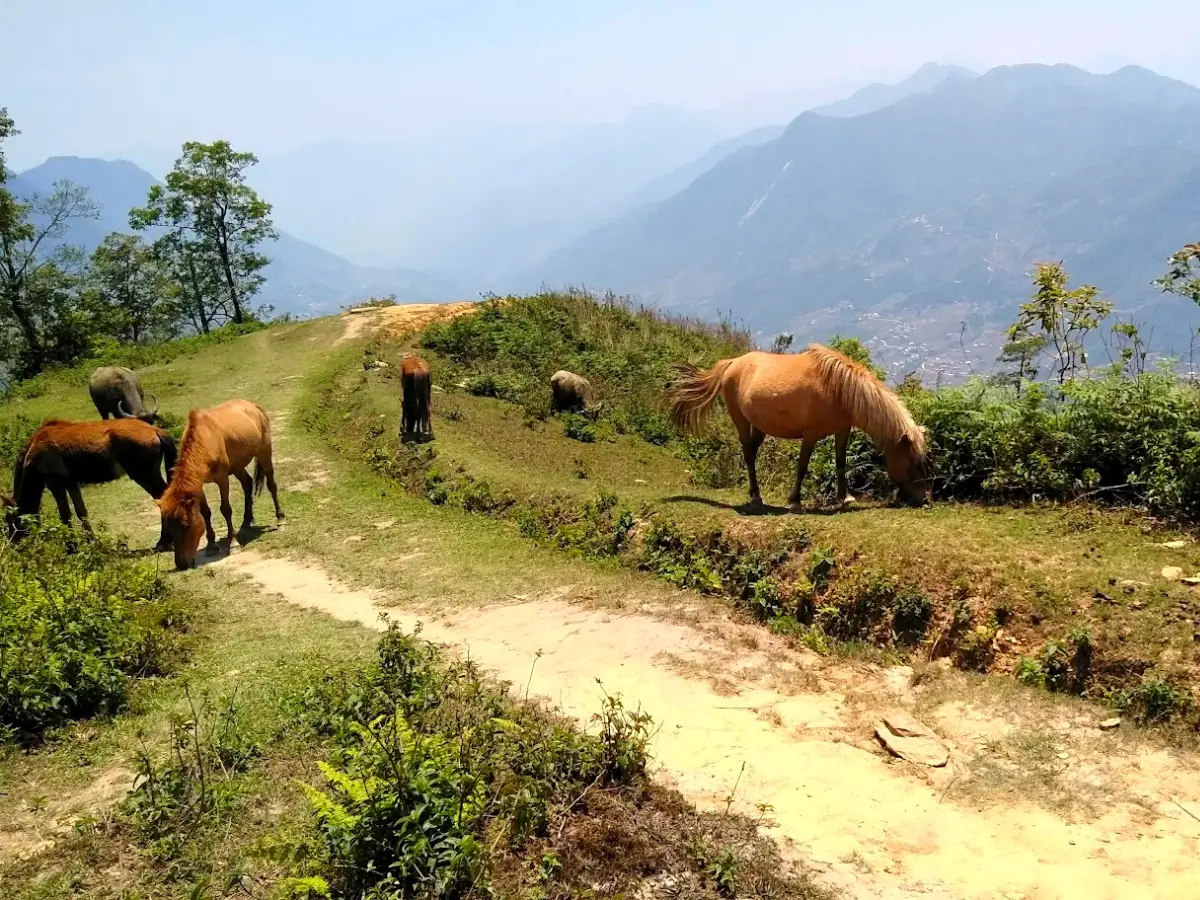
Mountain Views and Villages Trek
Quieter ridge and village trails above the valley.
 Homestay
Rice Terraced Fields & Homestay
A night with a local family in the valley, with dinner and breakfast.
How Much Data Do You Need?
Less than the sellers suggest, unless you work online. Messaging, maps, translation and a few ride bookings use little data; video calls, streaming and automatic photo backup use the most. These are our rules of thumb, not measured figures. For a two-week trip of messaging, maps and photo sharing, a modest plan is normally enough, and a plan priced per day suits a short stay better than a big monthly bundle you will not finish.
The biggest saving is a settings change. Switch off automatic cloud backup of photos on mobile data, set app updates to Wi-Fi only, and download offline maps and translation packs at your hotel. If you plan to use your phone as a hotspot for a laptop, check the plan for a hotspot limit, because some travel eSIMs restrict or throttle tethering. We could not check any seller's terms, so read them before you pay and note whether data speeds drop after a daily allowance.
Sapa Practicalities
The signal is only one part of staying reachable in the hills. Phones lose battery quickly in the cold and damp, and a phone in an inside pocket lasts longer than one in a daypack. Carry a power bank and a short cable, and a waterproof bag or a sealed plastic pouch. Tell your guide your WhatsApp number at the start of the day, and agree what to do if the group splits. Homestays vary in Wi-Fi, from none to a decent connection in the main room, so ask when you book.
Save the emergency numbers before the trip: 113 for police, 114 for fire and 115 for an ambulance. These are the national numbers, and we could not verify whether a data-only plan can place a voice call, so keep a line that can. In the mountains a guide or a homestay host is usually the fastest route to help, and the best protection is to walk with one and to tell someone your route. If you work remotely from Sapa, our guide to cafés for remote work covers connections for longer stays, and the same two-network habit applies.
Mistakes We Would Avoid
Buying before checking the phone
No EID, or a locked phone, means the plan will not install. Check first and buy second.
A data-only plan when you need a number
Ask whether it includes a Vietnamese number and SMS before you pay.
Forgetting to turn on data roaming
Travel eSIMs usually need roaming switched on for that line. Switch it off on your home line.
Deleting the profile early
Most eSIM profiles cannot be reinstalled. Keep it until you are home.
A street-corner SIM
The new registration rule exists to stop this. Use a carrier shop or an airport counter.
Which One Fits You?
If you are still deciding, this comparison is our judgement, built on the sources above.
A travel eSIM suits you if
- you are in Vietnam for two weeks or less
- your phone is unlocked and has an eSIM chip
- you can manage without a Vietnamese number
- you want to avoid the counter and the face check
A local SIM or eSIM suits you if
- you stay a month or more
- you need a Vietnamese number for deliveries, rides or accounts
- you will bring your passport and allow an hour
- you plan to use a lot of data over time
What We Checked, and What We Could Not
We read MobiFone's eSIM page, its FAQ and its home page, VinaPhone's home page, a Bao Tay Ninh report of 10 April 2026, an ID Tech report of 17 April 2026, a Tuoi Tre report of 31 January 2026 on the draft circular, and a commercial guide to Vietnam SIM cards. We could not read Viettel's pages, VinaPhone's eSIM page, the circular itself or any Ministry page, and we found no official source for tourist SIM bundles, airport counters, how foreigners are verified, Sapa coverage, or whether data-only eSIMs include a number.
SIM prices and registration rules change faster than most travel facts. If you read this after the end of 2026, treat the figures as history and check the carrier's current page. We will update this guide when the carrier pages and the circular can be read, and when we can test a tourist registration at a counter ourselves.
Rent at Our Office Before You Trek
 Gear Rental
Trekking Boots Rental
Waterproof ankle-support boots. Cleaned and checked before each rental. Available at 105 Thach Son Street.
 Gear Rental
Walking Poles Rental
Trekking poles available to rent at $2/day at our office, 105 Thach Son Street. Essential for descents.
Frequently Asked Questions
For a trip of two weeks or less, an eSIM bought online before you fly is usually the least effort, if your phone supports eSIM and is unlocked. For a long stay or heavy data use, a local carrier SIM or eSIM can cost less per gigabyte, but since 15 April 2026 new local subscriptions need a facial check, so allow time and bring your passport.
Expect to. Travel guides say physical SIMs are registered to a passport, and MobiFone accepts a passport when you convert an existing SIM to an eSIM. We found no official page that spells out the rule for foreign visitors, so ask the counter before you pay, and avoid anyone who sells you a card without checking your identity.
Circular 08/2026/TT-BKHCN of the Ministry of Science and Technology took effect on 15 April 2026. Reports say new mobile subscriptions must complete facial biometric verification checked against the national resident database, and that changing handsets can trigger a re-check. The pages we read do not say how the rule applies to tourists.
Often not. Many travel eSIMs are data-only, and one carrier-linked guide says a local +84 number is needed for services such as Grab, Zalo and bank codes. We could not verify that with Grab or a bank. Ask the seller before you buy: does the plan include a Vietnamese number and the ability to receive SMS?
MobiFone's eSIM page lists 100,000 VND for a new prepaid eSIM, made of 25,000 VND for the eSIM and 75,000 VND for activation, and 25,000 VND to swap an existing SIM. That page may be out of date, and it is for subscribers, not a tourist bundle, so check the current price when you buy.
Only if it has an eSIM chip and is not locked to another carrier. MobiFone lists iPhone XS, XS Max and XR and newer, and some Samsung, Xiaomi and Oppo models, but its own FAQ says iPhone 11 or newer depending on country, so the two disagree. Check your phone's settings for an EID number, and ask your carrier about unlocking.
Often in the villages and the town, but not everywhere. We found no official coverage map for Sapa, Lao Chai, Ta Van or Fansipan, and carriers' claims of nationwide quality are marketing, not measurements. Download offline maps, tell your guide your number and expect gaps in the deep valleys.
The national emergency numbers are 113 for police, 114 for fire and 115 for an ambulance. Save them before you go, and do not assume a data-only plan can place a voice call: keep your home SIM line available too. In the mountains your guide or homestay host is usually the fastest route to help.