 Sinh Giang
The best cafes in Sapa for remote work are The Hill Station Signature Cafe for the most reliable fibre WiFi and quiet focus time, Viet Emotion Cafe for a central spot where you might meet other remote workers, and Gerbera Garden Coffee and Tea House for working outdoors in cool mountain air. When those three fill up, Tu Le Cafe, The Alley Cafe, and Jolie Vue Lounge cover the overflow. The rest of this guide is the detail behind that — WiFi speeds, power-outlet counts, the exact hours the tour groups arrive, and how each place actually feels after four hours at a keyboard.
I work for Trekking Tour Sapa, so I am in Sapa town most days of the week and have opened a laptop in every place on this list a dozen times over. This is not a round-up copied from other blogs — it is what I actually know: the WiFi on a wet Wednesday in March, the exact hour the tour groups arrive, and how long you can nurse a single coffee before the staff start giving you the look.
Why Sapa Works as a Remote Work Base
Sapa works as a remote work base because three things rarely line up elsewhere: a comfortable climate, fibre internet, and a cost of living low enough that you barely notice it. The town sits at 1,500 metres in Lao Cai Province, in Vietnam's far northwest near the Chinese border, and that altitude holds the temperature between 15 and 20 degrees Celsius most of the year — you work in a light jacket, with no air conditioning droning over your calls. Below the town, the rice terraces of Lao Chai and Ta Van shimmer in the morning haze; you are looking at one of the most photographed valleys in Southeast Asia.
The cost comparison is almost silly. A full working day in a Sapa cafe — two or three coffees plus a bowl of pho or a banh mi — runs 80,000 to 150,000 Vietnamese dong, roughly $3 to $6 USD, against $25 to $50 for a co-working day pass in London or Paris. Nobody rushes you, and nobody has ever charged me a minimum spend.
Vietnam's fibre rollout reached Sapa properly around 2020, and the cafes I recommend run their own dedicated routers rather than sharing a hotel's line. Real-world speeds of 15 to 40 Mbps are normal in the good spots — plenty for Zoom, Google Meet, or pushing a file to a client — and outside the peak tourist window of 11am to 2pm the connection beats a lot of city co-working spaces I have paid for. What a speed test misses is the pace: women from Ta Phin and Y Linh Ho walking in to sell embroidery, the cloud lifting off the ridgeline around nine — a tempo calm without being sleepy, which matters more for deep work than an extra 10 Mbps.
The best window tables fill up between 8am and 9am on weekdays. For a seat with a direct view of the valley and a power outlet within reach, be there before the tour groups start their morning check-ins — I set my alarm for 7am on heavy writing days.
The Hill Station Signature Cafe — Best Overall for Focus Work
The Hill Station Signature Cafe is the single best place to work in Sapa if you need reliable WiFi and quiet for a solid half-day. It sits above the main tourist strip on a calmer street, so the noise from the Sapa market and the tour groups near the church never reaches the upper floor. The interior is colonial — dark wooden furniture, high ceilings, tall windows framing the ridgeline above Ta Phin — the kind of room that makes you sit up straighter and get things done.
The WiFi here is the most consistent I have tested in town: download speeds usually land between 25 and 38 Mbps, and I have taken back-to-back video calls on weekday mornings without a single drop. The upstairs seating runs on its own dedicated router rather than sharing with the kitchen and bar. Ask specifically for the upstairs WiFi password — the network name up there differs from the ground floor, and people miss it.
Power outlets sit at most upper-floor tables, which I cannot say of every cafe in Sapa, and the padded wooden chairs have proper backs rather than the cheaper spots' low plastic stools. The menu covers Vietnamese egg coffee, ca phe sua da, smoothies, and a few Western breakfasts; a ca phe trung runs around 45,000 dong. The staff are used to laptops and will not push you out after three hours, though ordering something every ninety minutes keeps it fair.
One honest caution: Hill Station gets busy from around 10:30am, when the first day tours filter back into town — the ground floor fills first, then the stairs. After 10am on a weekend, expect real competition for the window seats and their outlets. Treat it as a morning cafe and you will love it; treat it as an all-day office and you will occasionally be disappointed.
Viet Emotion Cafe — Best for Meeting Other Remote Workers
Viet Emotion Cafe is the most social of the good work cafes — the place to go when you would not mind if the person at the next table turns out to be a developer just off the overnight train from Hanoi. Since around 2022 it has built a quiet reputation with the laptop crowd, and it is centrally located just off the main square near the Sapa Stone Church, easy to find on your first morning.
The coffee leans more traditionally Vietnamese than Hill Station — the robusta beans make a darker, more bitter cup — though they will make you a flat white or latte if you ask. I usually take the ca phe den da, plain iced black, about 30,000 dong, which carries me through a two-hour block without a refill.
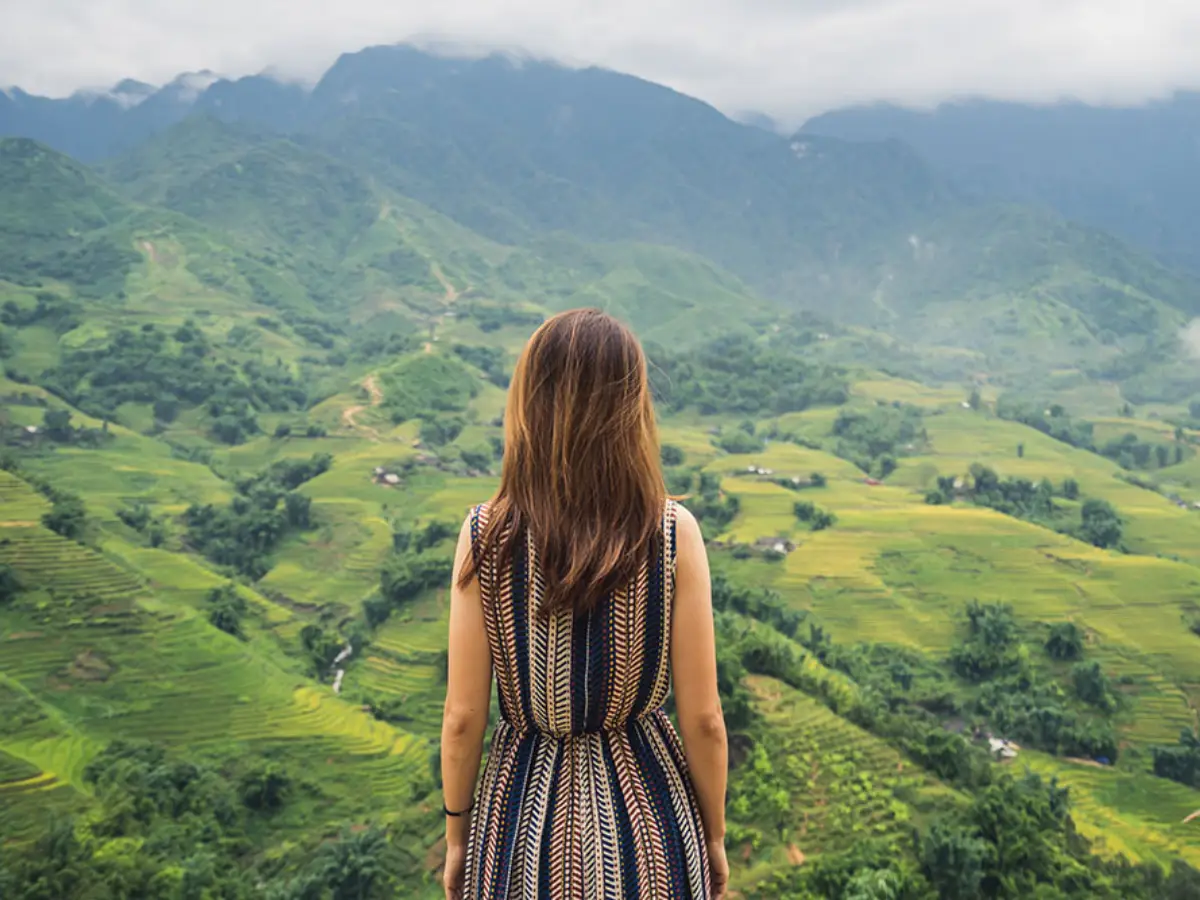
WiFi averages 20 to 28 Mbps in my testing: not quite Hill Station territory, but reliable enough for email, admin, and most calls. The front tables have good views of the ridgelines above the Muong Hoa Valley. The trade-off is noise — the room fills around midday and can get loud, so I save deep-focus writing for Hill Station or home and use Viet Emotion for inboxes, short calls, planning, and the occasional accidental networking session.
Gerbera Garden Coffee and Tea House — Best Outdoor Working
If you want to work outside, Gerbera Garden Coffee and Tea House is the only serious option in Sapa. The garden seating is tucked behind a narrow entrance on a side street near the Sapa market, and it feels removed from the town noise even though the main square is two minutes away. Black H'mong and Red Dao women passing by often stop to photograph the flower beds — which tells you how the local community, not just tourists, sees the place.
Working outdoors is possible almost year-round here, unusual for Vietnam: the altitude keeps the air cool enough that you will not overheat from April through October. The catch before a long session is that the WiFi does not reach the garden consistently — a reasonable 18 Mbps indoors drops to 8 to 12 Mbps in the flower beds, fine for email and messaging but not a client video call.
Gerbera Garden is my Pomodoro cafe — twenty-five minutes head-down, five minutes watching the mist lift above Ta Phin — and the regular visual reset genuinely improves the writing I get done here. The tea list is a bonus most people overlook: local Sapa oolong plus herbal blends made from mountain herbs grown around Y Linh Ho village, about 8 km from town on the Muong Hoa Valley road.
The outdoor seating at Gerbera Garden has noticeably weaker WiFi than indoors. If you have a video call scheduled, sit inside or hotspot from your phone for that call. The garden is best for offline work — writing, editing, or design on local files — anything that does not need a rock-solid connection.
The Hidden Gems — Tu Le Cafe, The Alley Cafe, and Jolie Vue Lounge
Three smaller spots are worth knowing when the main cafes fill or you want somewhere off the first page of the travel blogs. These are where locals and long-stay remote workers rotate when Hill Station is packed.
Tu Le Cafe is a small, cramped spot on a side street near the Sapa bus station — wooden tables, mismatched chairs, a chalkboard menu, nothing designed for Instagram. The owner speaks basic English and is used to foreigners working. The WiFi is unreliable at peak hours but strong from 7am to 9am, when it is mostly locals at breakfast, so I use it for that early slot when Hill Station is already busy. The ca phe sua nong is the best I have had in Sapa town, about 25,000 dong.
The Alley Cafe is tucked down a narrow alley off the main street, marked only by a small handwritten sign that most tourists walk past. Inside is a genuinely cosy room — wooden floors, bookshelves, one long table for four. Power outlets run the length of the main wall, and the WiFi password changes every Monday. This is where I go to concentrate for a full morning with zero risk of a tour group beside me. The catch is capacity: it seats maybe twelve, and when it is full, it is full. Arrive by 8am or have a backup.
Jolie Vue Lounge and Coffee is the upmarket one, with a terrace looking straight down the Sapa valley toward the terraces of Hang Da and Hau Thao. Drinks cost more — 60,000 to 80,000 dong — but the view earns it. The WiFi is stable at around 22 Mbps. Skip the low lounge armchairs for anything over two hours; the terrace tables are proper working height and where you want to be with a laptop.
Sapa Cafe Comparison — WiFi, Outlets, Noise, and Price
Here is every cafe side by side, so you can match the place to the work you have that day: Hill Station or The Alley for deep focus and calls, Viet Emotion to be sociable, Gerbera Garden or Jolie Vue for the view, and Tu Le for an early start. The table is based on my own repeated testing, not on what the cafes advertise.
| Cafe | WiFi (typical) | Outlets | Noise | Best for | Coffee price |
|---|---|---|---|---|---|
| The Hill Station Signature Cafe | 25–38 Mbps Best | Most tables | Low (AM) | Deep focus & video calls | ~45,000₫ |
| Viet Emotion Cafe | 20–28 Mbps Good | Some tables | Medium | Email, short calls, meeting people | ~30,000₫ |
| Gerbera Garden | 18 in / 8–12 out Mixed | Indoor only | Low | Outdoor / offline focus, tea | ~40,000₫ |
| The Alley Cafe | 20–25 Mbps Good | Along one wall | Very low | Uninterrupted morning focus | ~35,000₫ |
| Tu Le Cafe | Strong 7–9am only Early | Few | Low (AM) | Early start before the crowds | ~25,000₫ |
| Jolie Vue Lounge | ~22 Mbps Good | Terrace tables | Low–Medium | The view; lighter work sessions | 60,000–80,000₫ |
What to Look for When Choosing a Sapa Cafe for Work
Five factors actually matter for remote work in Sapa, in order of importance: WiFi reliability (not just raw speed), power-outlet availability, seating comfort for long sessions, the noise level at the hours you plan to work, and how far the cafe is from your accommodation. Get those five right and almost any cafe on this list becomes an office.
WiFi reliability is not the same as WiFi speed, and confusing the two is the most common mistake I see. A 40 Mbps line that drops for two minutes every hour will wreck a call; a rock-steady 20 Mbps line is worth far more. When I test a cafe, I run a speed test three times across twenty minutes and mark it unreliable for calls if the numbers swing, no matter how high the peak reads. A dedicated router — not one shared with a hotel above — is the best predictor of a stable connection.
Power outlets are genuinely limited in some older buildings in Sapa town — plenty of cafes have only two or three wall sockets serving fifteen tables. Arrive early, take a seat near a wall, and carry a short extension board if this matters; I keep a three-socket adapter in my bag during heavy work weeks.
Noise is manageable if you time it right. The quiet window is 7am to 10am on weekdays and 7am to 9am on weekends; after that the tour groups come down for breakfast and by midday the streets near the Sapa Stone Church are genuinely loud. Plan deep-focus work for the morning and push calls and lighter admin to the afternoon. Work with the town's rhythm instead of against it and Sapa stops feeling like a compromise.
Slot an Easy Trek Into Your Afternoon Off
Best Seller
Trekking Through Rice Terraced Fields
Flexible afternoon start — the Muong Hoa Valley floor through Lao Chai and Ta Van.
Sapa Easy Trekking For Seniors
The gentlest route we run — flat paths and short distances, perfect to unwind after a screen day.
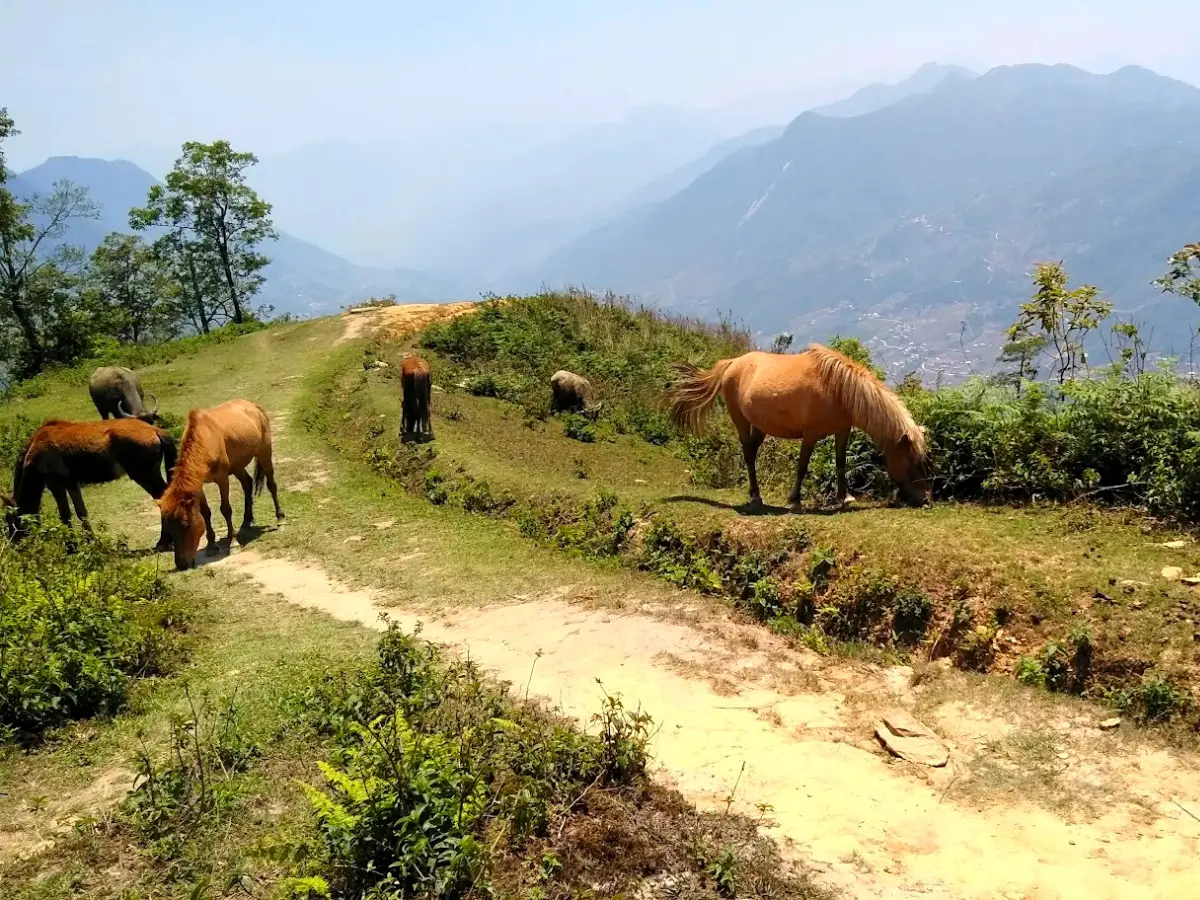
Mountain Views & Villages
The ridge trail above town — the same valley you have watched from the cafe window, from the other side.
WiFi, Connectivity, and eSIM in Sapa
Connectivity in Sapa is better than its remote-mountain reputation suggests: the town runs on VNPT and Viettel fibre, cafe WiFi in the good spots holds 15 to 40 Mbps, and a cheap local SIM or eSIM gives you solid 4G backup almost everywhere. The one rule that saves you is simple — never rely on a single connection for anything that matters.
Of the mobile networks, Viettel has the best coverage across Lao Cai Province and holds up on the trails around Lao Chai, Ta Van, and Ta Phin where others fade; Vinaphone (VNPT) is a close second in town. Buy a physical tourist SIM at Hanoi's Noi Bai airport or any Viettel shop in Sapa for 100,000 to 150,000 dong — roughly 10GB over 30 days. If your phone supports eSIM, providers like Airalo let you install a Vietnam plan before you land.
My working setup is boring on purpose: cafe WiFi as primary, phone hotspot on Viettel 4G as instant backup. Before any important call I run a quick speed test, and if the line looks shaky I tether to my phone for that call — exactly how I handle video calls from Gerbera Garden's outdoor tables, where the WiFi is weakest. With that two-layer approach I have never missed a meeting in Sapa.
Note each cafe's WiFi password on your first visit — several change weekly (The Alley resets every Monday). And top up your Viettel data before it runs out, not after: you do not want to discover an empty balance halfway through a client call.
The Digital Nomad Scene in Sapa — What Has Changed Since 2020
Before 2020, the only laptops in Sapa cafes belonged to travel bloggers and the odd freelancer stretching a holiday. Then three things arrived at once — fibre internet, the global normalisation of remote work, and a cost of living low enough to make a month here feel almost free — and out of that came a small but steady stream of people who choose Sapa specifically to work from the mountains.
Let me be honest: it is not Chiang Mai. There is no co-working space, no nomad Slack group, no Tuesday meetups. What Sapa has instead is a handful of cafes that quietly upgraded their routers and chairs because they watched the laptops arrive; the owners at Hill Station and Gerbera Garden both told me they invested in better connections after 2021, once people started asking about the WiFi before they ordered.
The community is small and low-key — on a weekday morning at Hill Station you might share the upstairs with a writer from Australia, a developer from Germany who came for a trek and extended, a designer from Hanoi escaping the heat, nobody especially chatty before 11am. What makes it work is the stack a city cannot give you: cleaner, cooler air at 1,500 metres without the lowland humidity; the Black H'mong and Red Dao villages around Ta Van, Ma Tra, Ta Phin, and Lao Chai; and the fact that you can close the laptop at 1pm and be walking the rice terraces of the Muong Hoa Valley by 2pm. That trade, more than the WiFi, is why people who try a Sapa workation come back.
Planning Your Workday Around Sapa's Rhythms
Time blocking works better in Sapa than in most cities because the town has genuinely distinct quiet and noisy periods. The 7am-to-10am morning block is the gold for writing and creative work; the louder 10am-to-2pm block, with the most dramatic light on the valley, is when to schedule long meetings; and by 3pm to 6pm it quietens again as the tour groups leave — exactly the atmosphere for two hours of focused editing.
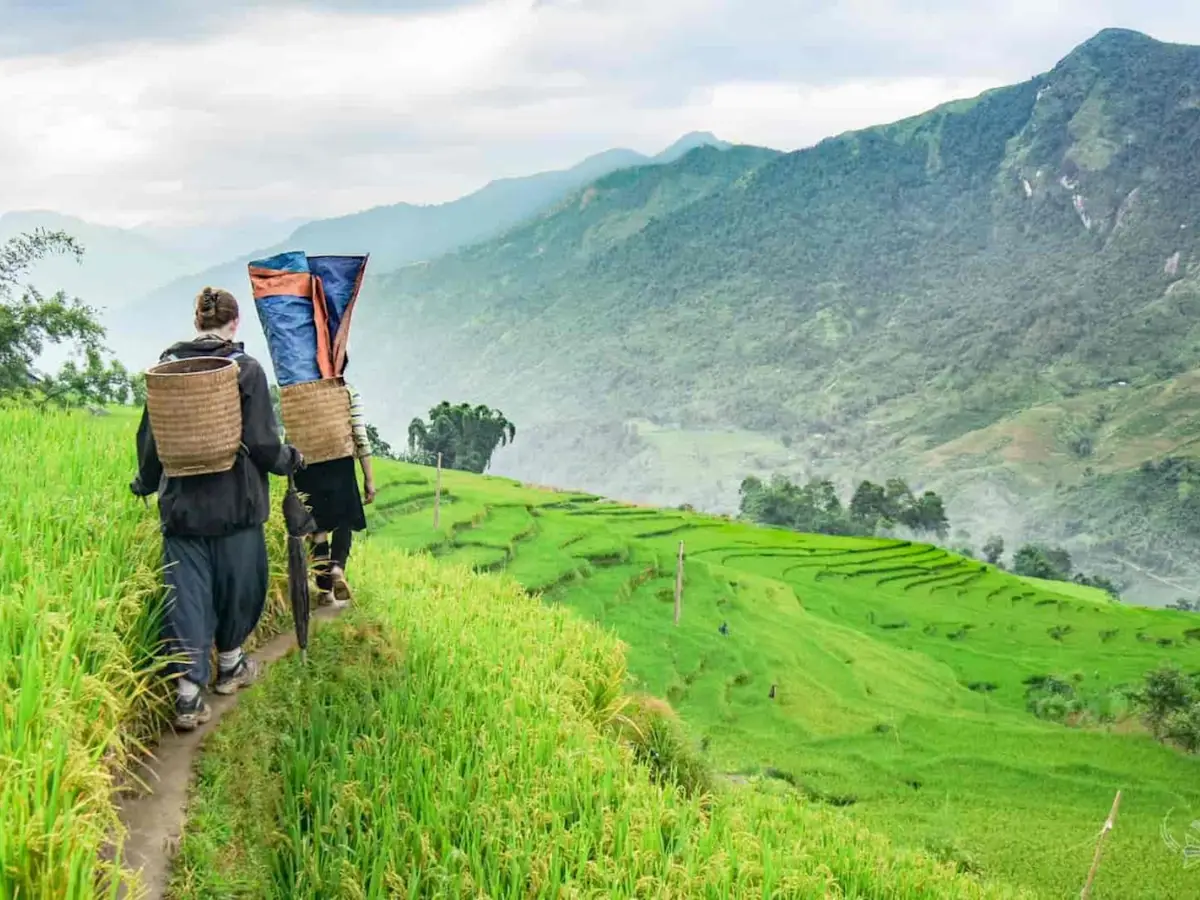
Outdoor breaks are built into the geography here: walk ten minutes from any cafe and you are at the lip of a trail dropping into the Muong Hoa Valley, and those resets do more for your head than a lap around a city block ever could.
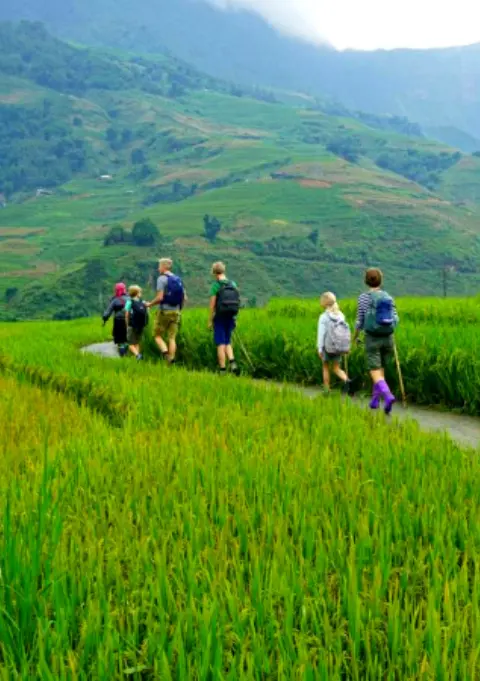
Combining remote work with a half-day trek is easier than most people expect. Our team at Trekking Tour Sapa arranges afternoon departures for guests who want to work first: a local guide meets you at your hotel around 1pm, walks you through the rice terraces of the Trekking Through Rice Terraced Fields route toward Ta Van and Lao Chai, and has you back in town by 5:30pm for the quiet late-afternoon editing slot. Others pair the gentler Rice Paddies and Cultures half-day with a focused morning, and if you would rather stay near town, the Mountain Views and Villages ridge trail shows you the same valley you have watched from the cafe window, from the other side.
Tell us on WhatsApp that you want a flexible afternoon pickup rather than the standard 8am start. Our guides are based locally in Sapa town and adjust departure times around your work schedule — message us the evening before and we will confirm a time.
Cafes to Avoid for Work — and When Even the Good Ones Get Busy
Not every cafe in Sapa is built for a laptop, and knowing which to skip saves a wasted morning. Avoid the bars and lounges around the main square that turn up their music before noon, any place with only low stools, and the big tour-group cafes right beside the Sapa Stone Church — loud from breakfast onward, with shared WiFi that crawls once a coach empties out. A beautiful view means nothing if you cannot hear yourself think or the connection dies at 11am.
Even the good cafes have windows to avoid: Hill Station's ground floor fills from 10:30am, Viet Emotion peaks around midday, and every window seat in town is contested on weekends from 9am, when domestic tourists from Hanoi arrive. Saturdays, Sapa market weekends, and public holidays are busiest — over Tet (late January or February) the whole town shifts and family-run spots like Tu Le close for several days. If you land in a peak window, go early and keep a second cafe in mind.
The Best Months for a Sapa Workation
The best months to base yourself in Sapa for remote work are March to May and September to November — mild temperatures, clearer skies, and the rice terraces at their most photogenic. Summer works too if you come for the cool escape rather than the views; winter is workable but genuinely cold. Here is how the year breaks down for a laptop rather than a camera.
| Season | Weather for working | Verdict |
|---|---|---|
| Mar–May (Spring) | Mild 15–22°C, clearer skies, terraces filling with water and green shoots. | Peak |
| Jun–Aug (Summer) | Cool relief from lowland heat, but the wettest months — afternoon rain is common. Mornings are best. | Good |
| Sep–Nov (Autumn) | Dry, comfortable, golden rice harvest around late September. The finest working light of the year. | Peak |
| Dec–Feb (Winter) | Cold, 5–12°C, heavy mist, occasional frost near Fansipan. Cafes use small heaters; sit inside. | Fair |
If you are flexible, aim for late September and October: the harvest colours the Muong Hoa Valley gold, the humidity is gone, and every cafe on this list is at its best for a laptop. For a month-by-month breakdown, our guide to the best time to visit Sapa covers weather, crowds, and the trekking seasons in detail — worth a read if you are planning a longer workation.
Practical Details — Connectivity, Costs, and What to Bring
Vietnam uses Type A and Type C sockets at 220V. If your devices use UK three-pin or Australian plugs, pack a compact universal adapter — you will not find them easily in Sapa. The 220V standard is fine for European and Australian gear; American travellers need a converter only for high-draw items like hair dryers, since laptops and phones handle 220V through their own bricks. Bring a spare cable too.
If you are staying more than a few nights, book in the town centre or on the main road above the market, within a ten-minute walk of these cafes. Some outskirts guesthouses are lovely but add 20 minutes each way, which adds up over a week of morning commutes. The area around Thach Son Street — where our office at 105 Thach Son Street sits — puts you five to eight minutes from almost every cafe here.
The economics are the quiet reason people extend their stay. A monthly budget for a remote worker in Sapa — a $15–25 guesthouse room, $5–8 a day on local food, $2–4 on coffee, and a $5–8 SIM — runs roughly $400 to $700 USD depending on your accommodation, comparable to Chiang Mai and well below Bali or Lisbon.
What you actually need to bring is short: a universal adapter, a phone with a local SIM or eSIM for backup data, a light layer for cool mornings even in summer, and a small extension board if you are particular about outlets. Everything else Sapa provides — the coffee, the views, the cool air, and, whenever you close the laptop, a valley full of trails ten minutes away. That combination is why the cafes in Sapa for remote work keep quietly filling with laptops, year after year.
Step Away From the Screen — Gear Ready at Our Office
 Gear Rental
Trekking Boots Rental
Waterproof ankle-support boots. Cleaned and checked before each rental. Available at 105 Thach Son Street.
 Gear Rental
Walking Poles Rental
Trekking poles available to rent at $2/day at our office, 105 Thach Son Street. Essential for descents.
Frequently Asked Questions
Yes, in the better-connected cafes — The Hill Station Signature Cafe and Viet Emotion Cafe both have stable connections that handle Zoom and Google Meet without issues. Speeds typically range from 15 to 40 Mbps download. Avoid peak tourist hours (11am to 2pm) when shared connections can slow. Always ask for the WiFi password and run a quick speed test before ordering your second coffee.
Arrive between 7am and 10am. This is before the day-tour groups flood Sapa town, before noise levels rise, and before the prime window seats fill. Most cafes open by 7am or 7:30am. The mist is still on the Muong Hoa Valley, the temperature is around 15 degrees Celsius, and the atmosphere is noticeably quieter than midday.
Yes, but availability varies. The Hill Station Signature Cafe and Gerbera Garden Coffee and Tea House have power outlets at most seats. Tu Le Cafe and The Alley Cafe have fewer outlets, so arrive early to claim a seat near the wall. Vietnam uses Type A and Type C sockets — bring a universal travel adapter if your devices use UK or Australian plugs.
A full working day — two to three coffees or teas plus lunch — will cost between 80,000 and 150,000 Vietnamese dong, which is roughly $3 to $6 USD. That is significantly cheaper than a co-working day pass in Hanoi, Ho Chi Minh City, or any European city. Most cafes do not charge a minimum spend, but ordering every two hours is respectful during busy periods.
Sapa sits at 1,500 metres altitude and stays between 10 and 22 degrees Celsius for most of the year. Even in June and July, mornings are cool. Cafes use ceiling fans rather than air conditioning, so the temperature inside is comfortable for working. Bring a light layer for early mornings — by 10am it usually warms up. In winter (December through February), temperatures drop to 5 degrees and some cafes use small electric heaters.
Absolutely — this is one of the best things about basing yourself in Sapa as a digital nomad. Work from a cafe in the morning, join an afternoon guided walk, and be back in Sapa town by 5pm. Our guides at Trekking Tour Sapa can arrange flexible morning pickups from your accommodation so you can work first and trek after lunch. Message us on WhatsApp and we will plan around your schedule.
Half-Day Treks That Pair Well With a Morning Working Session
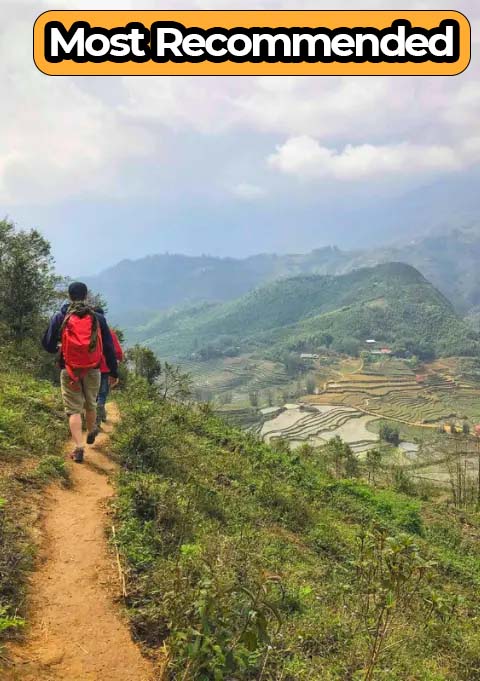 Best Seller
Trekking Through Rice Terraced Fields
Afternoon departure possible — walk the Muong Hoa Valley floor through Lao Chai and Ta Van.
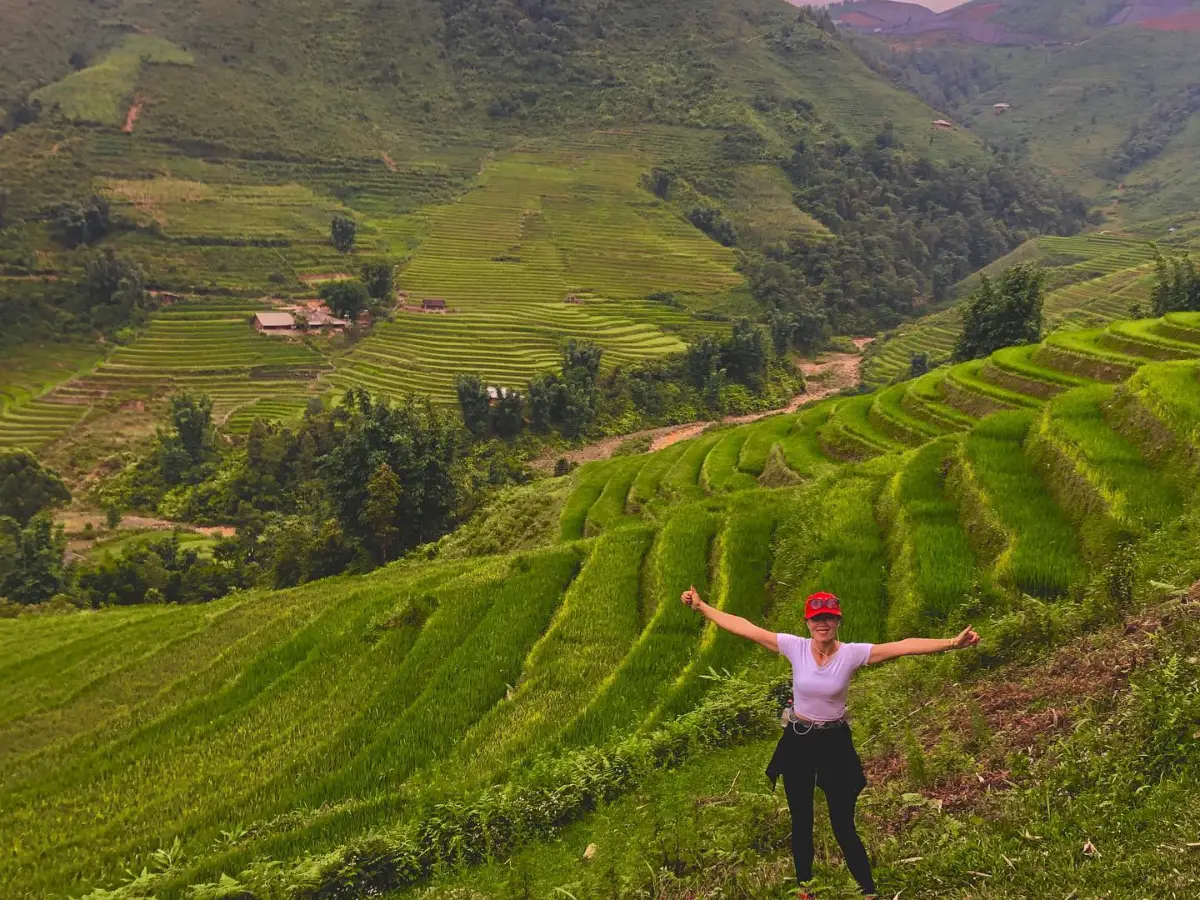
Rice Paddies & Cultures — Easy Hiking
A gentle half-day walk through Black H'mong villages — easy enough after a full morning at a laptop.
Mountain Views & Villages
The ridge trail above Sapa — the views you see from the cafe window, but from the other side.