 Sinh Giang
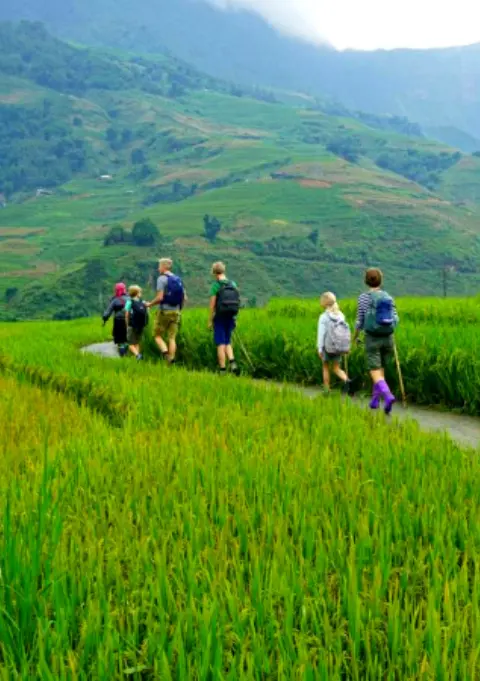
On a Sapa trek you can expect to spend most of the day walking earth and stone paths through the Muong Hoa Valley — down into terraced rice fields, across streams and small footbridges, and through Black H'mong and Red Dao villages where daily life carries on around you. A day trek covers roughly 8–15 km / 5–9 miles at an easy pace with a hot lunch at a village home, plenty of stops for photos and rest, and a licensed local guide the whole way. It is not a wilderness expedition; it is a long, scenic, cultural walk. You will get muddy, meet people, eat well, and see some of the most photographed rice terraces in Southeast Asia up close.
I am Sinh Giang, and I send travellers out on these trails every day from our office at 105 Thach Son Street. Below I walk you through exactly what a Sapa trek feels like from morning to afternoon — the pace, the villages, the food, the weather, and the small surprises — so you arrive knowing what is coming and can simply enjoy it.
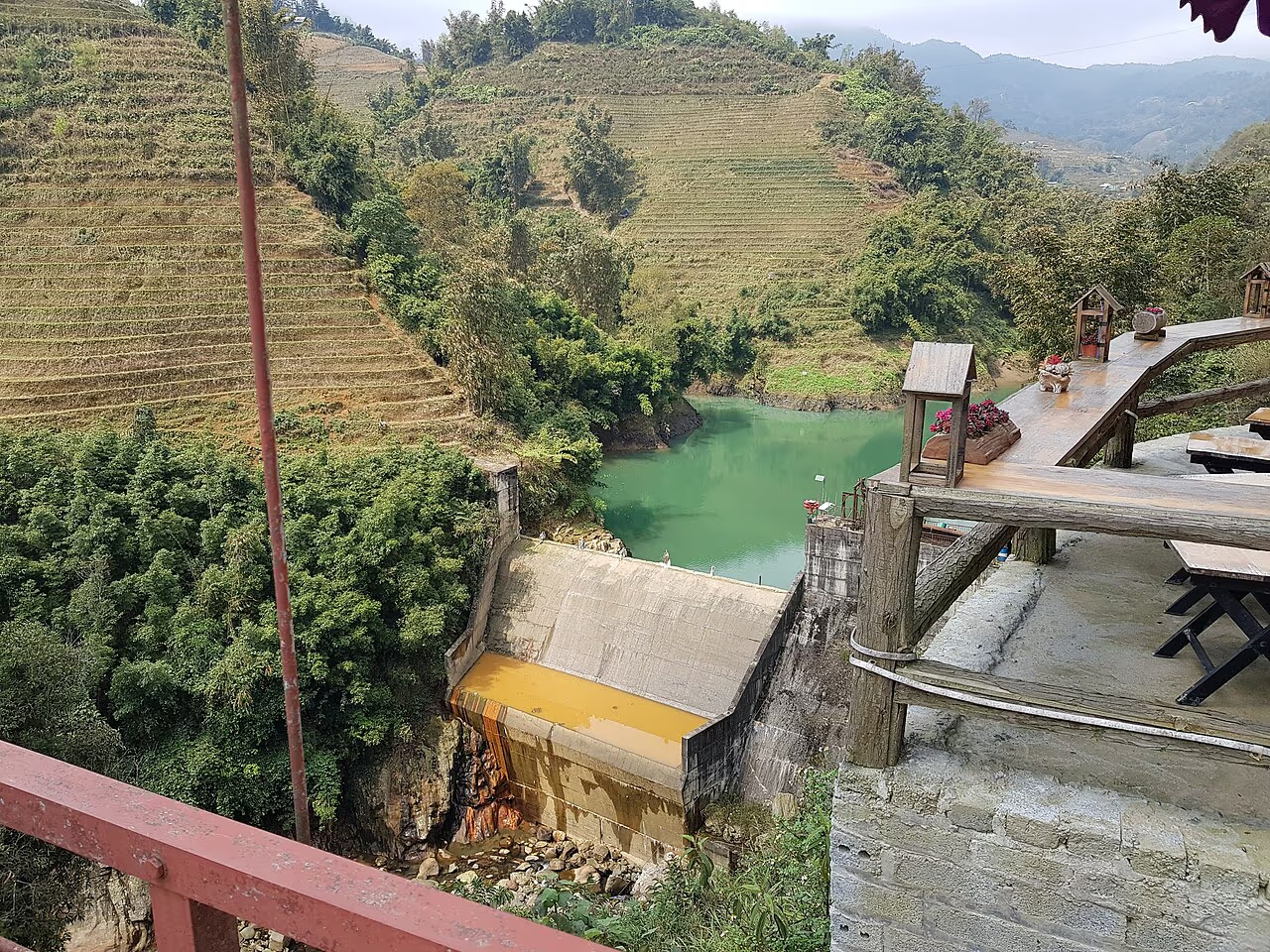
What to Expect on a Sapa Trek, in Short
A Sapa trek is three things woven into one day: a walk, a landscape, and a cultural encounter. Before the hour-by-hour, here is the shape of what you are signing up for.
The walking
3–5 hours on uneven, often muddy paths with gentle ups and downs. Steady, not strenuous — poles help on the descents.
The villages
You walk right through Lao Chai, Ta Van, Y Linh Ho and more — homes, schools, workshops and terraces, not a staged show.
The food & people
A hot lunch cooked at a family home, your Black H'mong guide's stories, and villagers going about an ordinary day.
Put those three together and you have the honest character of a Sapa trek: physically easy-to-moderate, visually spectacular, and genuinely human. What you will not find is a manicured trail or a tourist bubble — the paths are real working routes between villages, and that is exactly what makes the day feel like something you earned rather than something you bought.
A Sapa Trekking Day, Hour by Hour
Here is how a typical guided day trek unfolds, from the morning pickup to the afternoon return. Times shift a little with the route and the season, but the rhythm is the same on almost every day trek we run.
Pickup and drive to the trailhead
We collect you from your hotel anywhere in Sapa Town, or you meet us at our office at 105 Thach Son Street. After a short briefing you drive or walk the first stretch to where the trail drops into the valley. Grab coffee before you go — mornings up here are cool and often misty.
Down into the Muong Hoa Valley
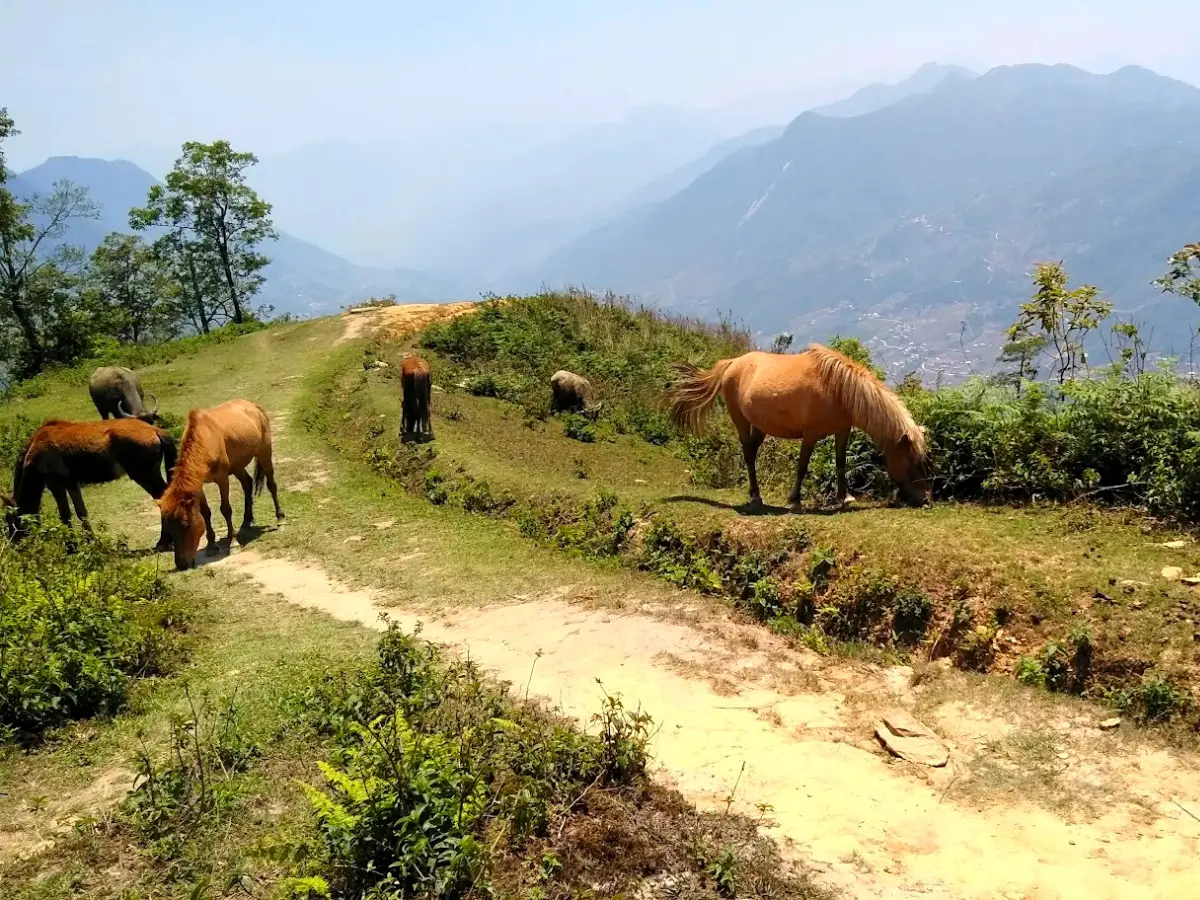
The first descent takes you off the road and onto earth paths through Y Linh Ho, with the terraces opening up below. This is the slippery-when-wet section where your poles earn their keep. Your guide sets an even pace and stops often — for photos, for water, and to explain what you are looking at.
Through Lao Chai and the terraces
You walk the valley floor into Lao Chai, a Black H'mong village, crossing streams and skirting rice paddies. Buffalo, ducks, children walking to school, women embroidering in doorways — this is village life at walking speed, and the best photography of the day.
Lunch at a family home in Ta Van
Lunch is a hot, home-cooked meal at a village house in or near Ta Van — usually rice, stir-fried vegetables, spring rolls, and grilled or braised meat, with fruit to finish. It is included in every trek. This is the hour most travellers say they remember best.
Ta Van village and the hanging bridge
After lunch you explore Ta Van, home to the Giay people, and cross the valley on footbridges with the terraces stretching up both sides. The afternoon light on the paddies is softer and the trail flattens out — an easier stretch to enjoy.
Transfer back up to Sapa
A short vehicle transfer brings you back up to Sapa Town, usually to your hotel or to Sapa Church if you prefer to be dropped in the centre. You are back with time for a hot shower and a coffee before dinner, pleasantly tired.
That is a day trek. If you have booked a two-day trek with a homestay, the afternoon does not end with a transfer back — instead you keep walking to your homestay village, and the evening opens up in a way a day trek never can. More on that below.
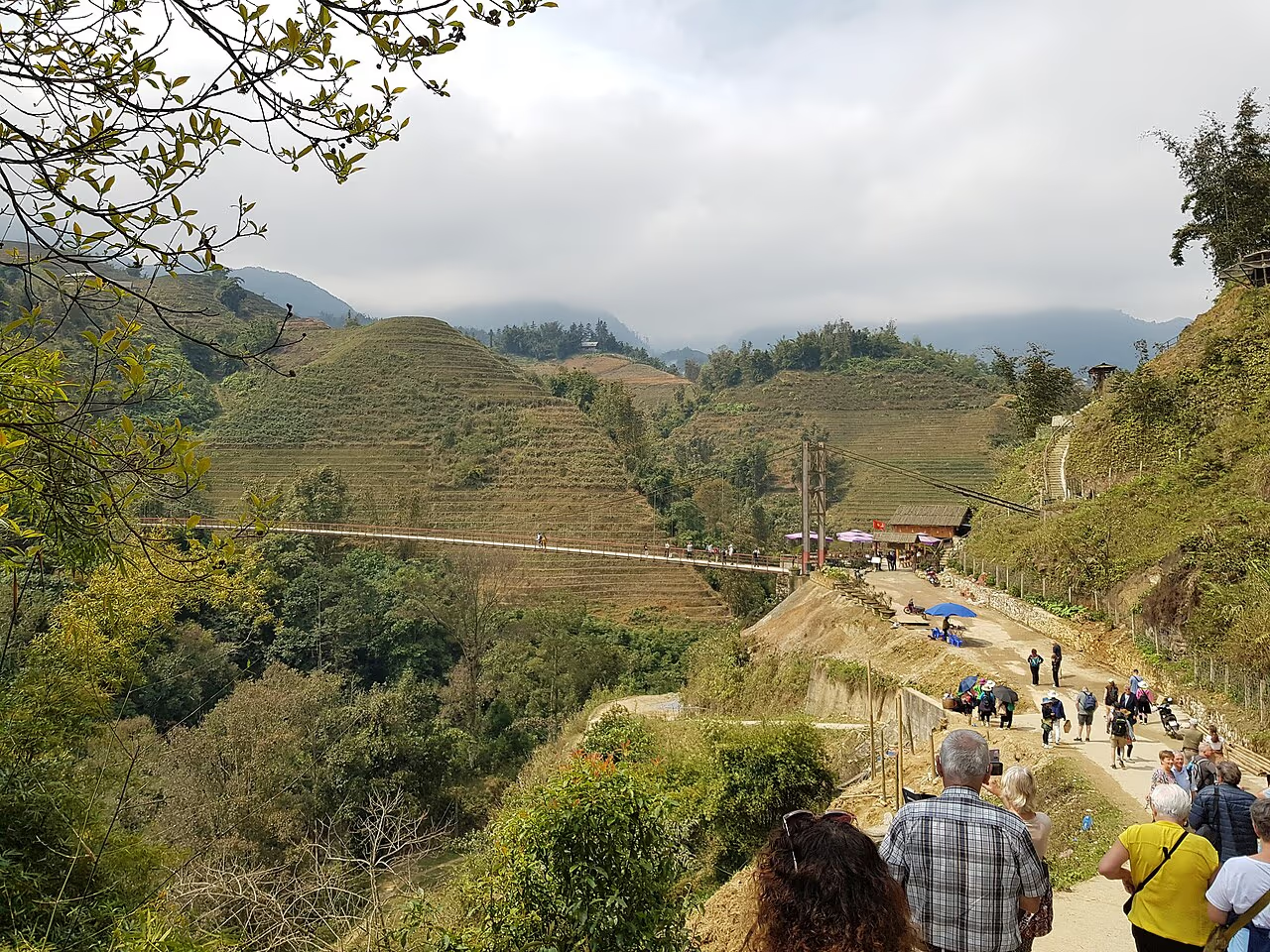
The Villages and People You'll Meet
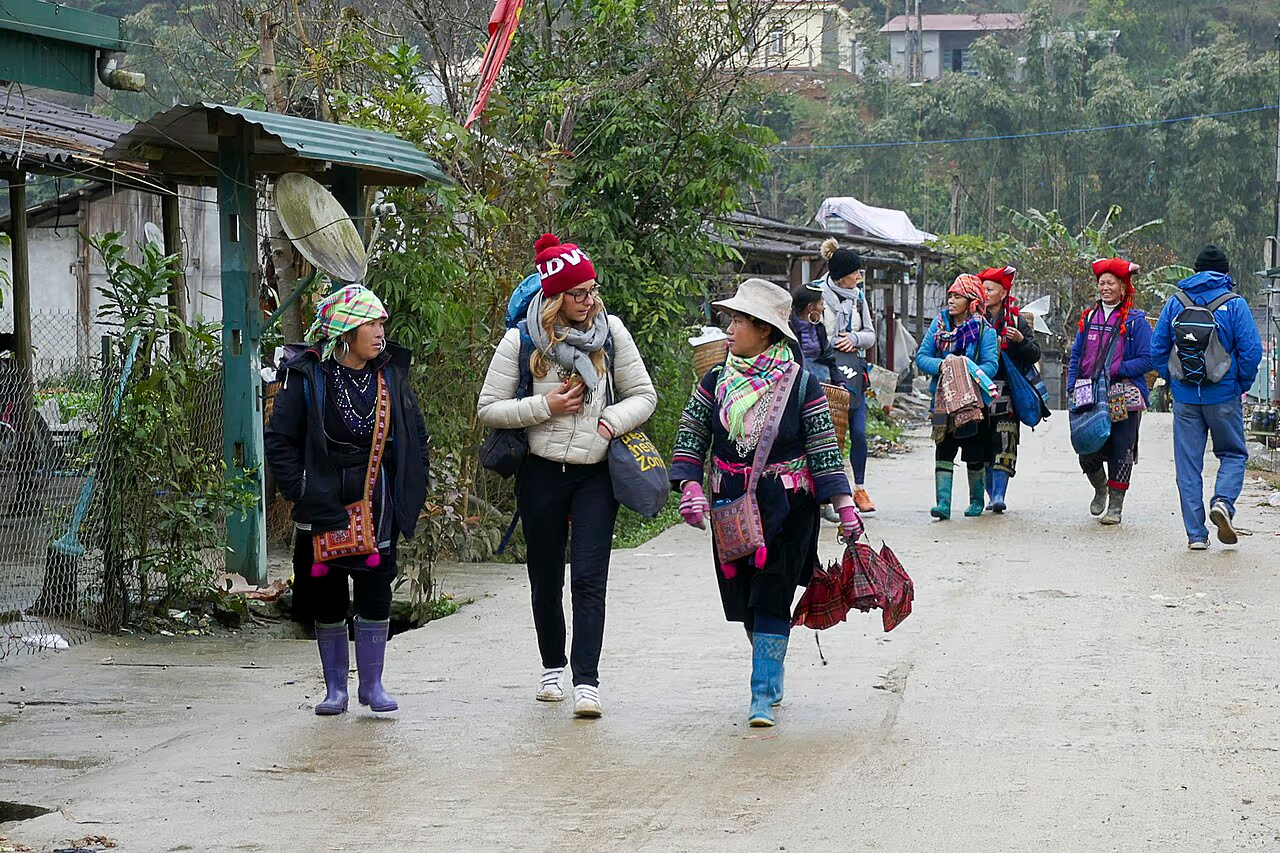
The people are the part of a Sapa trek most travellers underestimate before they come and rave about afterwards. You are walking through the working villages of several ethnic minority communities — principally the Black H'mong and the Red Dao, with the Giay people around Ta Van — and your guide belongs to one of them. This is not a performance staged for visitors; it is real life you are briefly a guest in.
Expect to see women in indigo-dyed hemp and bright embroidery, some of whom may walk alongside you for a stretch and offer handmade textiles — a polite "no thank you" is completely fine if you are not buying. Expect children calling hello from doorways, buffalo blocking the path, rice drying on mats, and the smell of wood smoke from kitchens. Your Black H'mong guide will explain the things you cannot see: why a terrace is shaped the way it is, what a particular festival means, how the community farms and lives. That running commentary is what turns a pretty walk into an education, and it is the single biggest reason to trek with a local guide rather than alone.
Popular Treks to Start With
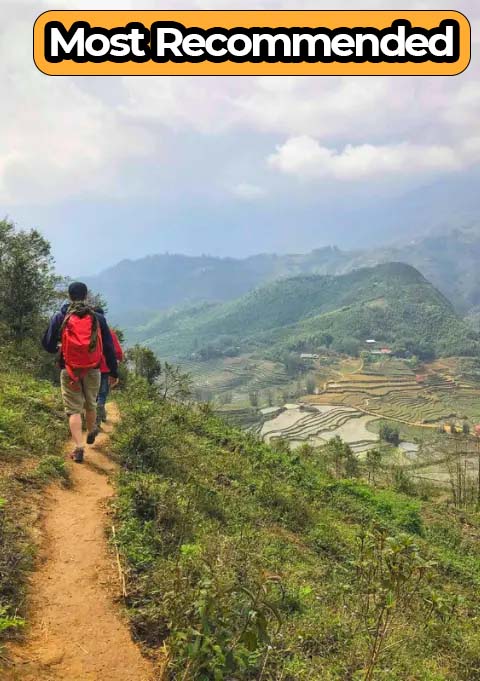 Best Seller
Trekking Through Rice Terraced Fields
Walk the Muong Hoa Valley floor through Lao Chai & Ta Van — our most-booked day trek.
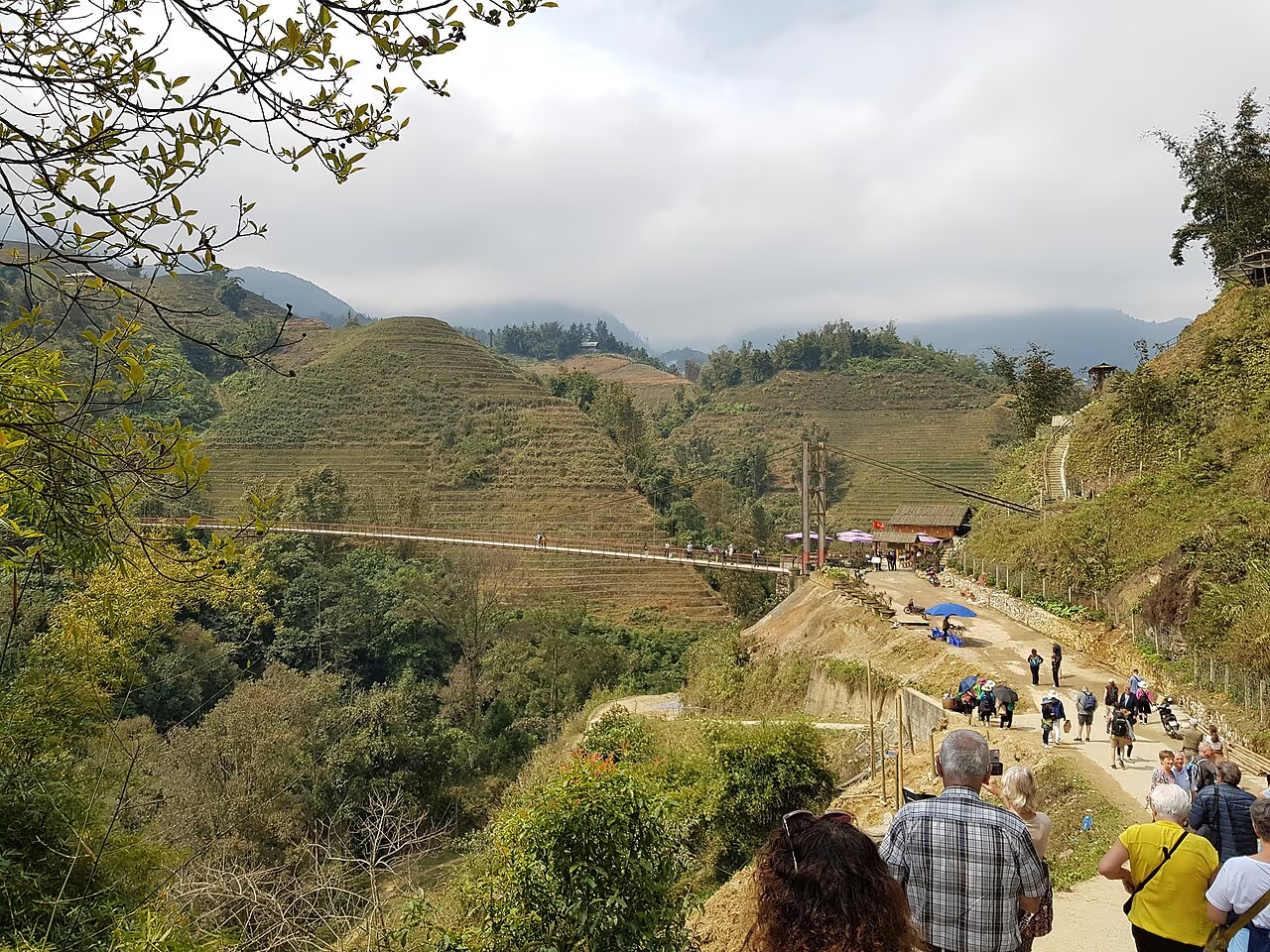
Mountain Views and Villages Trek
Ridge paths above the valley through Y Linh Ho and Lao Chai — the cheapest full day out.
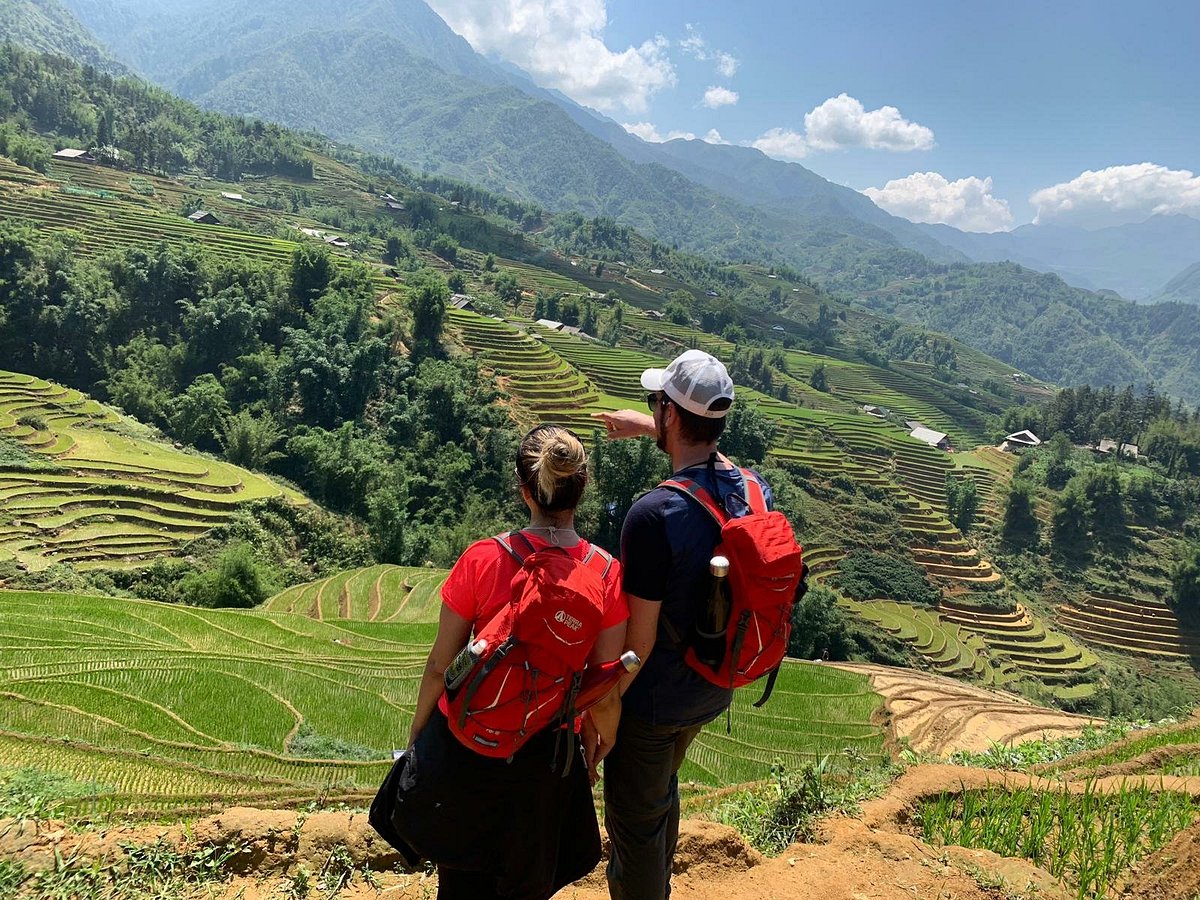
Rice Terraced Fields & Homestay
Overnight with a Black H'mong family in Ta Van — dinner, rice wine, terraces at dawn.
What to Expect from a 2-Day Trek and Homestay
A two-day trek adds the part a day trip cannot give you: an evening and a night inside the valley, after the day-trippers have gone home. Here is what each day looks like.
You trek the classic valley route as on a day trip, but instead of driving back you carry on to your homestay in Ta Van or a quieter village. The afternoon light empties the trails of crowds. In the evening you help cook or simply watch, share a family dinner with rice wine, and sleep in a simple bed under blankets as the valley goes dark and quiet.
You wake to mist lifting off the terraces — the view people travel across the world for, and you have it almost to yourself. After breakfast you trek out through different villages and paths than day one, so you see new ground, before the transfer back to Sapa Town by early afternoon. Two days doubles the valley you cover and halves the crowds.
If you can spare the night, the two-day trek is the one I recommend most. The trekking is much the same, but the homestay evening — the meal, the quiet, the sunrise — is what turns a good trip into the story you tell when you get home. It is also where the real difference between "seeing" Sapa and "staying in" Sapa shows up.
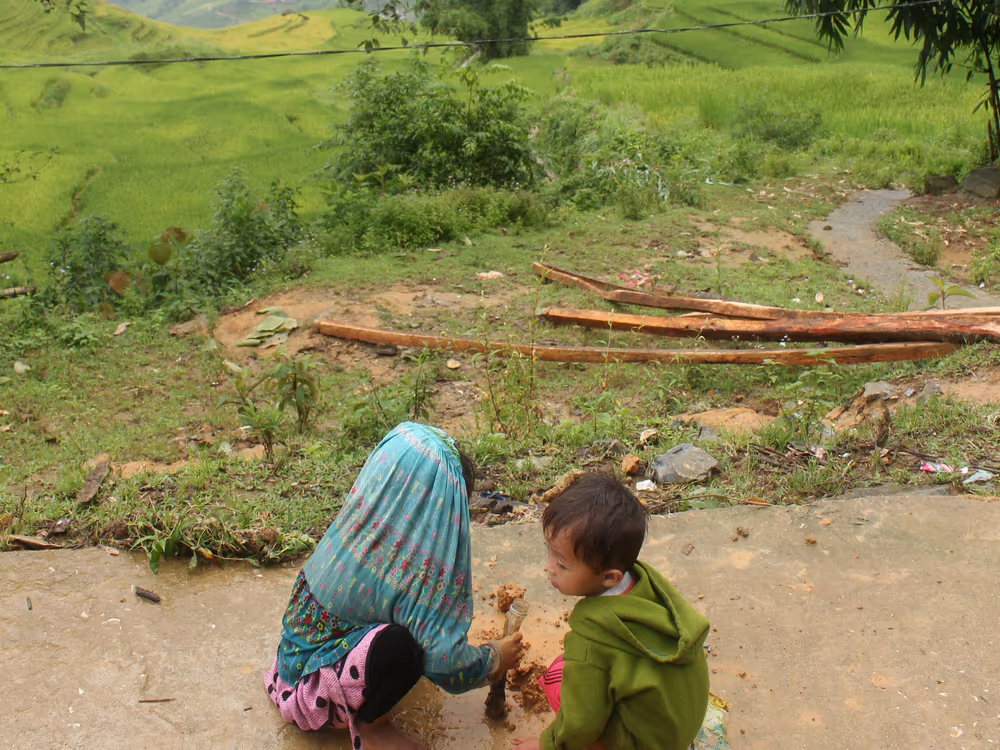
What to Expect from the Weather and Trail
Expect the weather to change fast and the trail to be earthy, uneven and often muddy — this is a mountain valley, not a paved park. Sapa sits at altitude, so mornings are cool and misty even in summer, afternoons can bring sudden rain, and the same trail can be dusty one week and slick clay the next. None of this is a problem when you are ready for it; it is simply the texture of the place.
The trail underfoot is the thing most first-timers are not prepared for. You will walk on packed earth, loose stone, narrow paddy bunds and the occasional concrete stretch through a village. After rain the descents get slippery, which is why we hand out walking poles and recommend proper footwear — the two things that keep the day comfortable. Bring a rain jacket regardless of the forecast, wear layers you can peel off as the mist burns away, and accept that your shoes will get muddy. Expect all of that, and the weather becomes part of the adventure rather than a disappointment.
Rent at Our Office Before You Trek
 Gear Rental
Trekking Boots Rental
Waterproof ankle-support boots. Cleaned and checked before each rental. Available at 105 Thach Son Street.
 Gear Rental
Walking Poles Rental
Trekking poles available to rent at $2/day at our office, 105 Thach Son Street. Essential for descents.
Who a Sapa Trek Suits — Families, Seniors and First-Timers
Most people can do a Sapa trek — the question is which route and pace, not whether you can go at all. The classic valley trails are easy-to-moderate, so families with school-age children, first-time trekkers and reasonably active older travellers all do them comfortably every day. What matters is matching the route to the group and being honest with us about mobility.
For families, children from around eight upwards usually manage a day trek well, especially at a private pace with plenty of snack and photo stops — and the villages, buffalo and river crossings keep them engaged in a way a museum never will. For older travellers or anyone with knee concerns, our Easy Trekking for Seniors route keeps the gradients gentle, uses shorter distances, and always provides poles; the descents are the only part that asks anything of your knees, and poles solve most of that. First-timers worry the most and need to worry the least: you set the pace, your guide adjusts the route, and nobody is left behind. If you are genuinely unsure, take a private tour — it lets us slow the whole day down to whatever suits you and turn back early if you have had enough.
What Each Season Looks Like on the Trail
Sapa treks run all year, but what you see and how the trail feels changes a lot by season — so expect a different day depending on when you come. There is no single "best" month; each has a trade-off between the view, the crowds and the mud.
From March to May the valley is green and the weather mild, with wildflowers and freshly planted paddies mirroring the sky — one of the prettiest and most comfortable windows to walk. June to August is the lush, deep-green growing season; it is also the wettest, so expect warm days, sudden downpours and the muddiest trails of the year. September and October are the famous golden-harvest weeks when the terraces turn amber before cutting — the most spectacular scenery and, unsurprisingly, the busiest, so book ahead. From November to February the paddies are bare and the air is cold and often misty, with a real chance of fog that hides the valley; it is the quietest season, best for travellers who want empty trails and do not mind wrapping up warm. Whenever you come, bring layers and a rain jacket — the one constant in Sapa is that the weather does what it likes.
What to Bring and How to Prepare
You do not need much to be ready for a Sapa trek, and most of what matters you either already own or can rent at our office. The goal is simple: dry feet with grip, layers for changing weather, and a light pack.
Wear or bring waterproof shoes or boots with good tread — this is the single most important item, and if you did not pack any, we rent cleaned, checked pairs for $2 a day. Add walking poles ($2 a day) for the descents, a rain jacket or poncho, light layers for the cool mornings, sunscreen and sunglasses, and a small daypack with 1.5–2 litres of water. Snacks are optional since lunch is included. Charge your phone or camera fully — you will use it more than you think. If you are doing a homestay, bring a small change of clothes and a travel towel; the family provides bedding and blankets. That is genuinely the whole list. Everything else you might see on an over-long packing guide is weight you do not need.
How to Book and What Happens Next
Booking a Sapa trek is quick and low-commitment: you tell us your dates and group size, we confirm the route and price, and you hold your spot with a small deposit. Most travellers message us on WhatsApp, we reply within 5–10 minutes with a straight answer and the full price with nothing hidden, and you pay the balance on the day. There is no account to create and no pressure to decide on the spot.
We recommend booking at least two days ahead where you can, especially in the busy September–October rice-harvest window, so we can match you with the right guide and arrange a homestay if your trek includes one. Cancellation is free up to 7 days before departure and a date change is free with 48 hours' notice, so an early booking keeps your flexibility. Once you are booked, we send you a simple what-to-bring note and confirm your morning pickup — and then all you have to do is show up and walk. If you still are not sure which trek fits you, message us and we will tell you honestly what to expect on each one.
Frequently Asked Questions
Expect 3–5 hours of walking across the day on earth and stone paths through the Muong Hoa Valley, covering about 8–15 km at an easy pace. You walk through Black H'mong and Red Dao villages, cross streams and footbridges, stop often for photos, and share a hot home-cooked lunch. A licensed local guide is with you the whole way. It is a scenic cultural walk, not a wilderness expedition.
A day trek involves roughly 3–5 hours of actual walking and 8–15 km depending on the route, spread across the day with stops for lunch, photos and villages. Two-day treks cover similar ground each day with a homestay night in between. You can always take a private tour to go slower with more breaks.
Yes — a hot, home-cooked lunch at a village home is included on every one of our treks, usually rice, stir-fried vegetables, spring rolls and grilled or braised meat with fruit to finish. Drinking water is included too. On a two-day trek, dinner and breakfast at the homestay are also included. You only pay extra for personal drinks and snacks.
The classic valley route passes through Y Linh Ho, Lao Chai and Ta Van, home to the Black H'mong and Giay communities, with the Red Dao living in villages like Ta Phin nearby. You walk right through working villages — past homes, schools, terraces and workshops — rather than viewing them from a distance, which is what makes the trek feel authentic.
Wear waterproof shoes or boots with good grip — the most important item — plus light layers for cool mornings and a rain jacket, since Sapa weather changes fast. Bring sunscreen, sunglasses, a small daypack and 1.5–2 litres of water. Walking poles and boots both rent for $2 a day at our office. For a homestay, add a change of clothes and a travel towel.
A day trek is perfect if you are short on time and want the highlights of the Muong Hoa Valley. But if you can spare a night, the two-day trek with a homestay is the one we recommend most — you get the valley after the day-trippers leave, a family dinner, and mist lifting off the terraces at dawn. The trekking is similar; the homestay evening is the difference.