
 Sinh Giang
Most visitors to Vietnam need a visa, and for most of them the answer in 2026 is an e-visa applied for online on the government's portal, valid for up to 90 days and priced at about 25 US dollars for one entry. A smaller group, including German, French, Italian, Spanish, British, Russian, Japanese, South Korean and Nordic passport holders, can arrive without a visa for 45 days. US, Canadian and Australian passport holders do not appear on any exemption list we could read, so they need an e-visa. That is the short version, and the details below come from the sources we could actually open.
We are a trekking company in Sapa, not a visa agency, so we do not process visas and we earn nothing from this page. What we can do is read the official sources, say which parts we could and could not verify, and explain what the rules mean for a trip to Hanoi and Sapa. We checked the pages on 30 and 31 October 2026. Several sources were closed to us, including the e-visa portal itself, which returned a certificate error, so we flag every figure that comes from a secondary source.
*Fee figures come from the Government news page on Circular 28/2026/TT-BTC and from press reports, not from the e-visa portal itself.
Do You Need a Visa? Start With Your Passport
The first question is which passport you hold, because the answer changes everything after it. Citizens of the twelve countries on the 45-day exemption list can arrive and receive a stay of 45 days from the date of entry, whatever the passport type or purpose. Everyone else needs a visa, and the e-visa is the usual route for tourists. The Immigration Department's e-visa page says applicants must be outside Vietnam and hold a valid passport, and it names no nationality list, which matches the press description that citizens of every country can apply.
| If you hold a passport from | Then | What we could verify |
|---|---|---|
| Germany, France, Italy, Spain, UK, Russia, Japan, South Korea, Denmark, Sweden, Norway, Finland | No visa for up to 45 days from entry | Resolution 44/NQ-CP, valid 15 March 2025 to 14 March 2028 (law database, 19 March 2025) |
| Other European countries | Possibly exempt under a later resolution | Reported, but we could not open the resolution text |
| United States, Canada, Australia | E-visa or a visa from an embassy | Not on any list we read |
| Most other countries | E-visa, up to 90 days | Immigration Department e-visa page |
| Chinese citizens in groups to Khanh Hoa | Visa-free under a pilot to 31 December 2027 | VnExpress, 13 October 2026; not for independent travellers |
If you are not sure, treat the e-visa as the default (our guide for travellers from India covers that passport in more detail) and check for an exemption second. An e-visa you did not need costs you the fee; arriving without a document you needed costs you the flight. The same applies if you plan to stay longer than your exemption: the 45 days start on the day you enter and do not restart in the middle of a trip, as far as we could read. We could not verify any rule about leaving and coming back, such as a gap between two exempt stays, so do not plan a "border run" on the strength of this page.
The Vietnam E-Visa: What the Official Page Says
The e-visa is an electronic visa issued by the Immigration Department of the Ministry of Public Security, applied for on the Vietnam Electronic Visa Portal. The Immigration Department's page says the portal moved to two new addresses on 11 November 2024, evisa.gov.vn and thithucdientu.gov.vn, and the notice itself sits on its older address. That matters, because lookalike sites are the biggest practical risk. Start from the Immigration Department's own page, follow its link, and check the address before you type a passport number.
On that page, the official statements we could read are short. An e-visa is "valid for maximum of 90 days, single or multiple entry". Applicants must be outside Vietnam and hold a valid passport. The fee is paid through the portal's electronic payment gateway, and it "will not be refunded if the application is refused". Holders of an e-visa who are already in the country "may be considered to get new visa if being invited/guaranteed" by an authority, organisation or individual in Vietnam. The page does not state the processing time, the list of files you upload, or the fee amount.
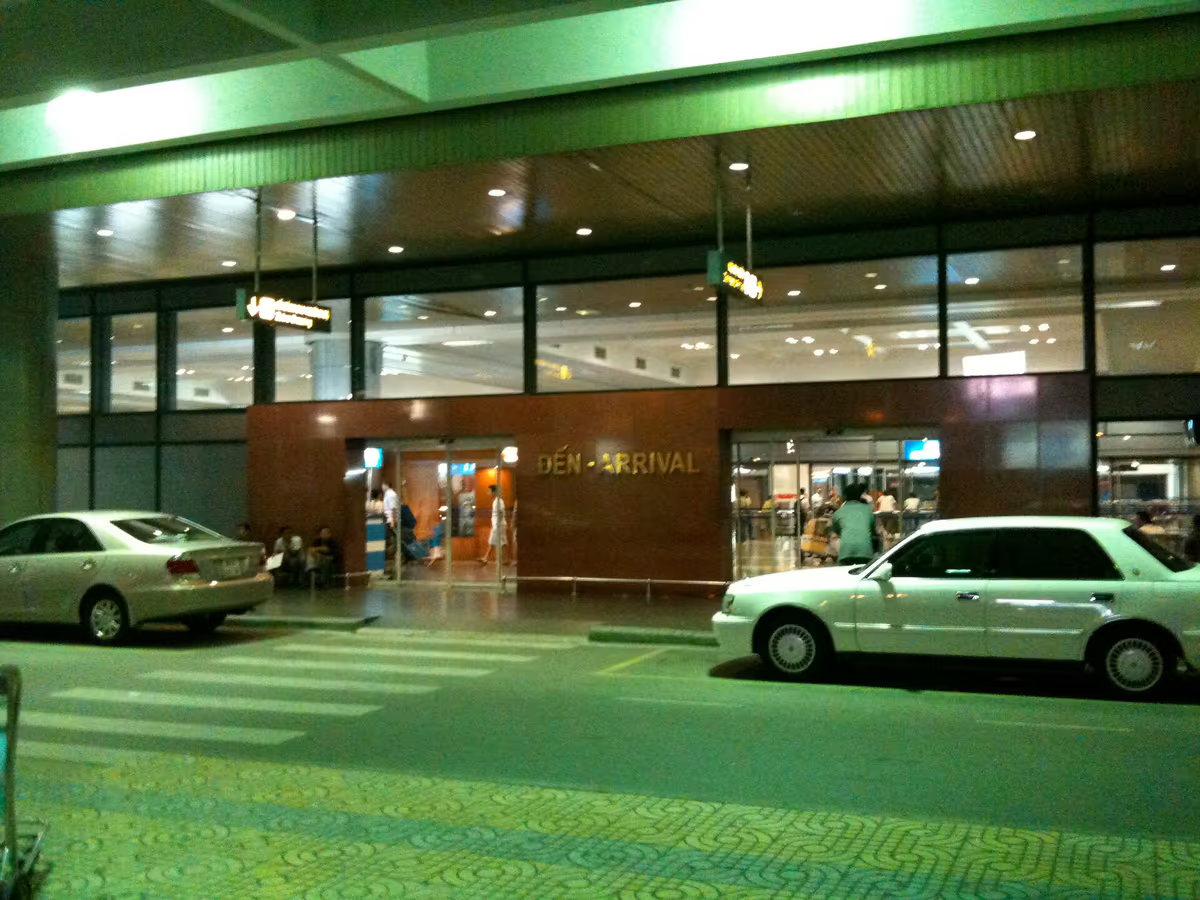
Where can you enter? A February 2025 report on the e-visa, a machine translation of a Vietnamese article from VnEconomy, lists the international gates open to e-visa holders: 16 land gates, 13 airports and 13 sea ports. The airports include Noi Bai in Hanoi, Cat Bi, Van Don, Da Nang, Cam Ranh, Phu Quoc and Tan Son Nhat in Ho Chi Minh City. The land gates include Lao Cai, Mong Cai, Huu Nghi and Tay Trang. The report says foreigners must enter and exit through those gates. We could not confirm the list is current, so check it against the portal on the day you apply.
What a Visa Costs in 2026
The government's fee table is Circular 28/2026/TT-BTC of the Ministry of Finance, which the Government news site reported on 1 April 2026 as taking effect that day. It sets the fee for a single-entry visa at 25 US dollars and a multiple-entry visa valid under 90 days at 50 US dollars. Longer multiple-entry visas cost more: 95 US dollars for over 90 to 180 days, 135 for over 180 days to one year, and so on up to 165 for five to ten years. The same page lists 10 US dollars for each extension of temporary stay and 5 US dollars for a transfer of visa validity.
We should be exact about what this proves. The circular page lists visa fees, and it has no separate line for the e-visa. The 25 and 50 dollar e-visa fees come from two other places: the February 2025 VnEconomy report ("$25 for a single-entry, and $50 for a multiple-entry") and a 2026 guide in Vietcetera. The two agree with the circular's amounts, which is reassuring, but we have not seen the portal's fee page. Treat 25 and 50 dollars as the expected government fee, and confirm at the payment step.
Beware of the extra. Visa agencies appear high in search results and add a service fee. One agency page we saw lists a package at 80 US dollars, which is the agency's price and not the government's. An agency may be useful if you want help with a complicated case, but you do not need one for a straightforward tourist e-visa, and you should not pay a "processing fee" without knowing what it buys. The government fee is non-refundable if the application is refused, so pay once, on the official portal.
How to Apply, Step by Step
We could not open the application form, so these steps follow the Immigration Department's page and plain sense. Where a step is our advice, not a documented requirement, we say so.
Check you need one
Look up your passport above and on your embassy's page. If you are on an exemption list, you may not need an e-visa at all.
Open the official page
Start from the Immigration Department's e-visa page and follow its link to the portal. Check the address in the browser before you continue.
Enter details exactly as in your passport
Name, date of birth, passport number and expiry. A single wrong digit is the most common reason an e-visa causes trouble at the airport. This is our advice.
Choose your entry gate and dates
The page says e-visa holders must use listed gates. Pick the airport or land gate you will actually use, and make the dates cover your whole trip with a margin.
Pay through the portal
The fee is paid through the portal's payment gateway and is not refunded if the application is refused. Keep the receipt.
Download and check the approval
When it arrives, compare every field with your passport. Save a copy on your phone and print a paper one, because airlines and border officers ask for it. This is our advice.
Timing is the part we cannot verify. Some agency sites say about three working days, but the official page we could read states no figure. Our first-timer guide suggests applying a couple of weeks before travel, and we would not apply later than that. If you are travelling at Tet, a school holiday, apply earlier still, and do not buy a non-refundable flight until you have the approval in hand.
Single or multiple entry?
Choose by your route, not by the price. A single-entry visa covers one arrival, and once you leave Vietnam it is used. If your plan is Hanoi, Sapa and home, one entry is enough. If you will cross to China at Lao Cai, hop over to Laos, or fly out to another country and come back, you need the multiple-entry option, which the fee table puts at twice the price for a visa under 90 days. We could not verify whether an e-visa can be changed after you pay, so decide before you click, and write the first and last dates with room to spare. This is our advice, based on how the fee table and the validity are described.
Visa Exemption: Who Gets 45 Days
Vietnam has used visa exemptions as a tourism tool, and the most important one for Western visitors is Resolution 44/NQ-CP. A law-database report dated 19 March 2025 says it gives citizens of Germany, France, Italy, Spain, the United Kingdom, Russia, Japan, the Republic of Korea, Denmark, Sweden, Norway and Finland "a temporary stay period of 45 days from the date of entry, regardless of passport type and purpose of entry". It applies from 15 March 2025 to 14 March 2028 and "will be considered for extension under Vietnam's laws". It replaced two earlier resolutions, 32/NQ-CP of 2022 and 128/NQ-CP of 2023, which expired on 15 March 2025.
| Country | Stay | Valid |
|---|---|---|
| Germany, France, Italy, Spain | 45 days from entry | 15 March 2025 to 14 March 2028 |
| United Kingdom, Russia | 45 days from entry | 15 March 2025 to 14 March 2028 |
| Japan, Republic of Korea | 45 days from entry | 15 March 2025 to 14 March 2028 |
| Denmark, Sweden, Norway, Finland | 45 days from entry | 15 March 2025 to 14 March 2028 |
You may read that a second resolution, numbered 229/NQ-CP, added twelve more European countries for 45 days from 15 August 2025 to 14 August 2028, including the Netherlands, Poland, Switzerland and the Czech Republic. Several search results say so, but the two law reports we opened concern only Resolution 44, and the KPMG documents we tried to read were unreadable to our tool. Until you confirm it on an embassy or official page, do not rely on that list. The same goes for the 15-day exemptions for some Southeast Asian countries, which we could not verify at all, so we do not list them.
Exemption is a convenience, not a right to stay: you still need a passport valid for the trip, an onward plan and the means to support yourself, and an officer can ask. We found no verified rule on required passport validity or on onward tickets in the official pages we read. Airlines tend to enforce both, so ask yours before you buy.
Staying Longer, Extensions and Overstays
If you want more than your 45 or 90 days, plan it before you arrive. Circular 28/2026/TT-BTC lists a fee of 10 US dollars each time for an extension of temporary stay, so extensions exist, but we could not read a procedure for tourists, and the e-visa page describes only a route to a new visa through a sponsor in Vietnam. A short extension of a tourist stay is a matter for the immigration office or a licensed agent, and a fee table does not tell you that it will be granted.
We found no verified figure for overstay fines, so we will not quote one. Our advice is blunt: if your visa or stay expires before you leave, fix it before the date, not after. A visa that runs out on the day you fly leaves no margin for a delayed flight, and a typo you notice at the check-in desk is much more expensive than one you notice at home. Build in a spare day or two if you can.
The exemption resolutions run to 2028, but pilot schemes appear and end quickly: a visa-free pilot for Chinese tour groups to Khanh Hoa began on 12 October 2026 and runs to 31 December 2027. It does not apply to Western independent travellers. Always check the date on the page you are reading.
Mistakes We Would Avoid
These are our reading of how trips go wrong, not statistics. None needs special knowledge, only a slower look at the details.
A lookalike website
Pay only on the government portal reached from the Immigration Department's page. A search result that looks official is not proof.
A wrong name or passport number
Copy from the passport page, not from memory. Check the approval field by field.
An entry gate you will not use
The page says e-visa holders must use listed gates. A land crossing such as Lao Cai is on the list we saw; confirm yours before you pay.
Dates that end on the flight date
Leave a margin for delays. Check that the whole trip, including the day you leave, is covered.
Trusting an old blog
Visa pages from 2023 or 2024 may describe expired exemptions and old fees. Look for the date.
Entering Vietnam Overland and Going to Sapa
Many travellers reach Sapa by flying into Hanoi and taking a bus, van or night train, so their first Vietnamese immigration desk is Noi Bai. A smaller number arrive overland from China through the Lao Cai border at Hekou. Lao Cai is on the February 2025 list of land gates open to e-visa holders. The crossing is a short bridge, with porters and carts moving goods, as the photograph shows, and Sapa lies about an hour up the mountain road from the town.
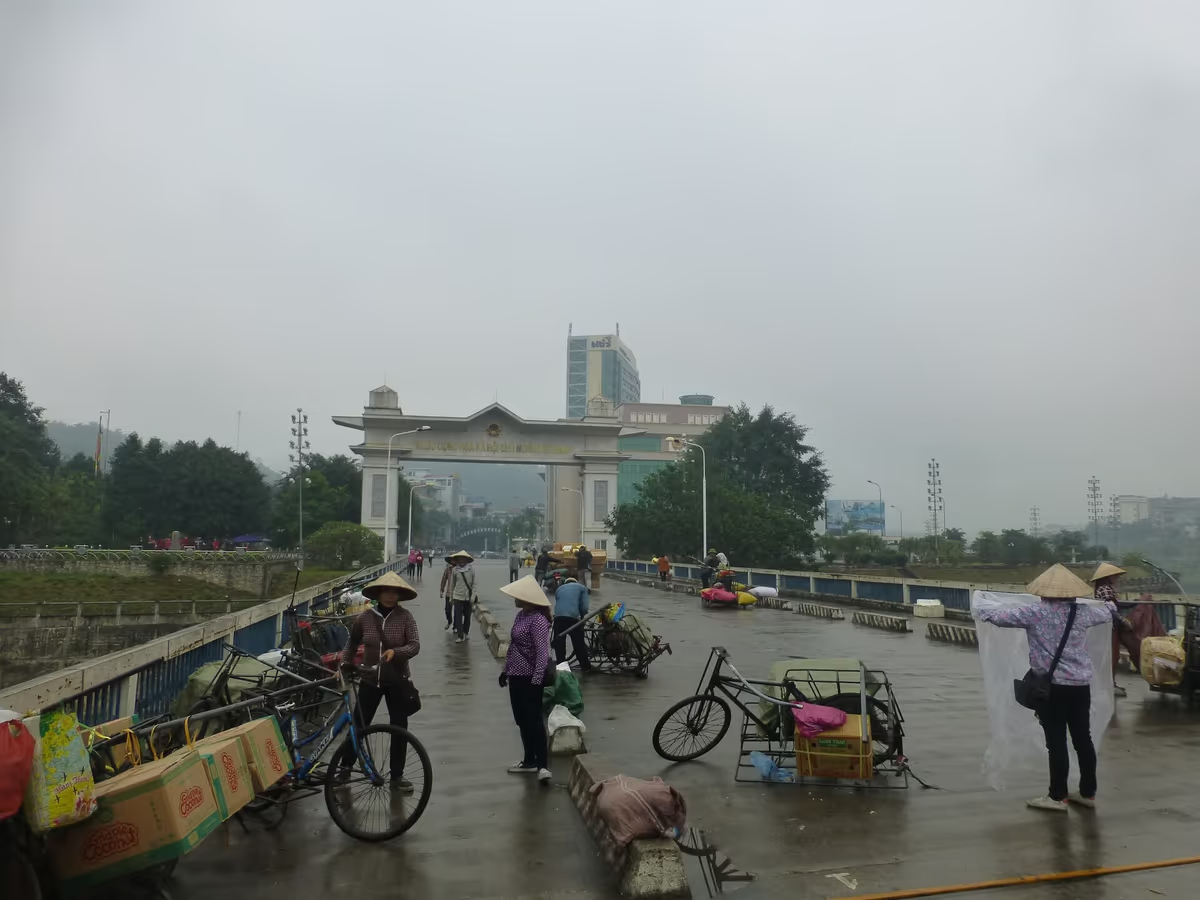
We cannot tell you what China requires on its side, the crossing's opening hours or how long the queue is, because we found no verified source for them, and they are not our business. What matters for you is that your Vietnamese approval lists the gate you will use and that your dates cover the trip. If you plan to cross at Lao Cai, check this with your embassy, because a land crossing is a place where a rule is more likely to be enforced to the letter than at an airport.
Once you are in Vietnam, no one checks your visa on the road to Sapa, but hotels and homestays register foreign guests with the police and will ask for your passport at check-in. Bring it, and leave a photocopy or photo of it in your hotel safe before a long trek. If you take the night train to Lao Cai, our guide to getting to Sapa explains how the arrival and the transfer up the mountain work.
Plan the Road Once the Visa Is Sorted
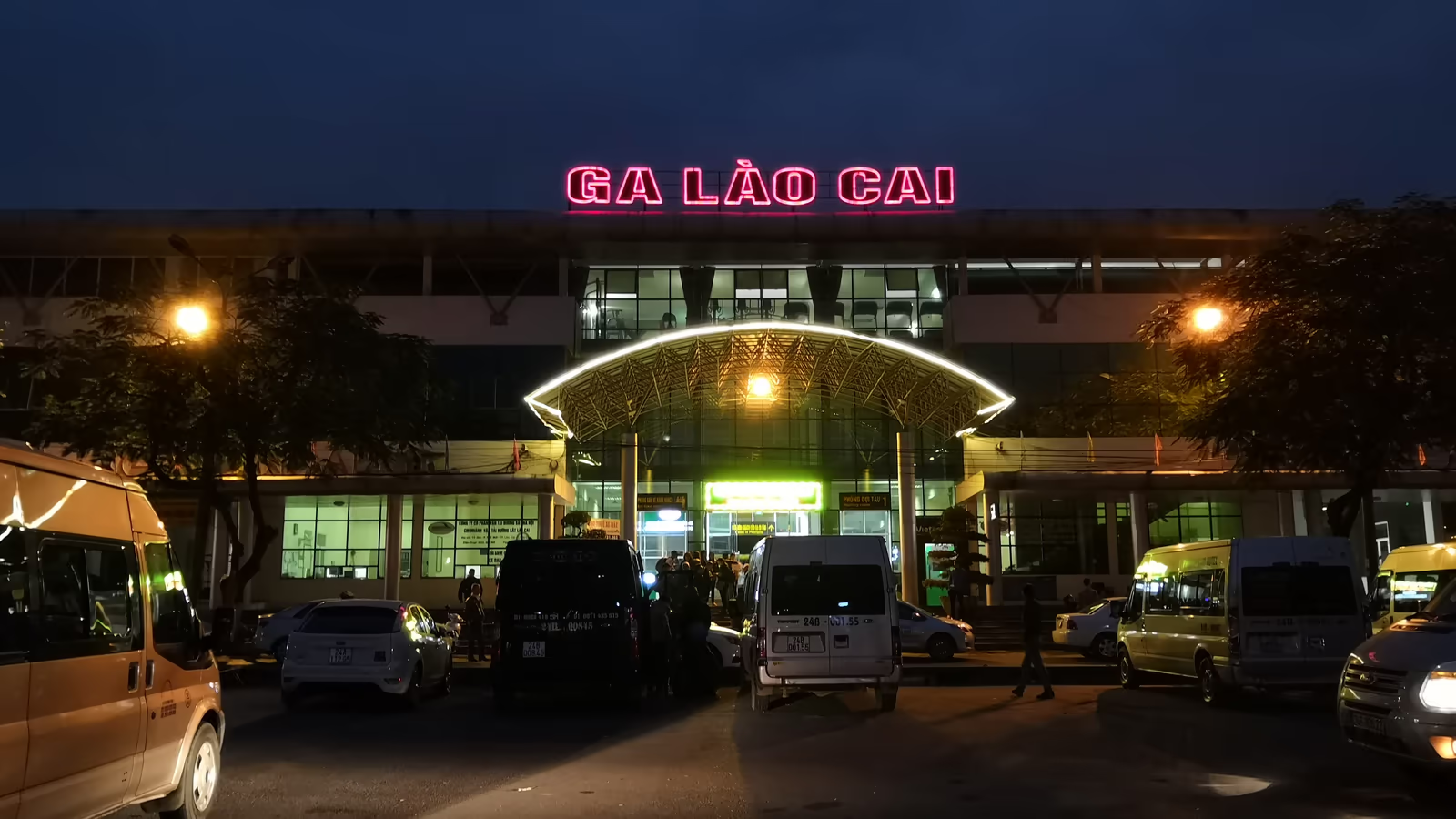
Once your entry is settled, the next question is how to get from Hanoi or Lao Cai to Sapa. We run transfers and can match them to your flight or train, and our guide compares the options.
A Sample Timeline for a Sapa Trip
Here is how we would order the paperwork for a ten-day trip that includes three nights in Sapa. It is our suggestion, built from the sources above and from what guests ask us, and it is not an official schedule.
Check your passport and your rule
Confirm the passport has plenty of validity, look up your nationality on an embassy or official page, and decide whether you need an e-visa or an exemption.
Apply for the e-visa if you need one
Apply through the portal from the Immigration Department's page. Pay once, and save the receipt and the approval.
Have the approval in hand
Check every field, print it, and send a copy to anyone who will meet you. Book your Hanoi to Sapa transfer or night train now.
Arrive and cross the border desk
Carry the passport and the approval or exemption evidence. Allow time for the queue before a pickup, and keep your first hotel address ready.
Move up to Sapa
Take the bus, van, train and transfer, or a private car. Hotels will register you at check-in, so keep your passport handy.
Decision Guide: Which Route Fits You?
If you are still weighing options, this comparison is our judgement. It does not replace the official pages.
An e-visa suits you if
- you are a US, Canadian, Australian or other passport holder not on an exemption list
- you want up to 90 days, or the choice of multiple entry
- you can apply two weeks or more before travel
- you will enter through a gate on the e-visa list
An exemption suits you if
- your passport is on the Resolution 44 list of twelve countries
- your trip is under 45 days from entry
- you do not plan to leave and re-enter during the trip
- you confirmed your passport on an embassy or official page
What We Checked, and What We Could Not
We read the Immigration Department's e-visa page, the Government news report of 1 April 2026 on Circular 28/2026/TT-BTC, two law-database reports on Resolution 44/NQ-CP, VnEconomy's February 2025 report on the e-visa, a Vietcetera visa guide, and VnExpress on the Khanh Hoa pilot for Chinese groups. We could not open the e-visa portal (a certificate error), the Immigration Department's other pages or the KPMG alerts, and we found no official source for processing time, uploaded files, passport validity, onward tickets, the re-entry rule, extension procedure or overstay fines. The Belarus position is disputed between sources, and we left it out.
Visa rules are among the fastest-changing facts on this site. If your trip is more than a month away, check again at booking time and again before you fly. We will update this guide when the portal and the ministry pages can be read, and when the second resolution can be confirmed.
Easy Valley Walks After the Journey
 1-Day Trek
Trekking Through Rice Terraced Fields
The Lao Chai to Ta Van valley day with a local guide, finishing in Sapa town.
 1-Day Trek
Rice Paddies and Cultures — Easy Hiking
Flat valley walking with stops at Red Dao homes.
 Very Easy
Sapa Easy Trekking For Seniors
Gentle, flat paths through Y Linh Ho and Ta Van at an easy pace.
Rent at Our Office Before You Trek
 Gear Rental
Trekking Boots Rental
Waterproof ankle-support boots. Cleaned and checked before each rental. Available at 105 Thach Son Street.
 Gear Rental
Walking Poles Rental
Trekking poles available to rent at $2/day at our office, 105 Thach Son Street. Essential for descents.
Frequently Asked Questions
Most visitors do. You can skip it only if your passport is on an exemption list, such as the 45-day exemption for Germany, France, Italy, Spain, the United Kingdom, Russia, Japan, South Korea, Denmark, Sweden, Norway and Finland. Everyone else, including US, Canadian and Australian passport holders on the lists we read, needs a visa or an e-visa before arrival.
Secondary sources and visa fee tables give 25 US dollars for a single-entry e-visa and 50 US dollars for a multiple-entry one, valid for up to 90 days. The official Immigration Department page says the fee is paid through the portal's payment gateway and is not refunded if the application is refused. Agencies add their own fees on top.
Up to 90 days, single or multiple entry, according to the Immigration Department's e-visa page. The stay you are allowed on each entry and the dates on your approval are what count, so check them against your flights before you pay for anything else.
Resolution 44/NQ-CP gives a 45-day stay from the date of entry to citizens of Germany, France, Italy, Spain, the United Kingdom, Russia, Japan, South Korea, Denmark, Sweden, Norway and Finland, from 15 March 2025 to 14 March 2028. Reports describe a second resolution adding other European countries, but we could not open its text.
Possibly. Circular 28/2026/TT-BTC lists a fee of 10 US dollars each time for an extension of temporary stay, which suggests extensions exist. The official e-visa page we read describes only a route to a new visa through a sponsor in Vietnam. We could not verify the extension procedure, so ask the immigration office or a licensed agent before you rely on it.
Yes, if you hold a valid visa or exemption. Lao Cai is on the list of land gates open to e-visa holders in a February 2025 report. It sits at the border with Hekou in China, about an hour below Sapa. Check that your e-visa lists the gate you will actually use before you apply.
No. Several agency sites appear above the government portal in search results and charge service fees; one agency page we saw lists an 80 US dollar package. Start from the Immigration Department's own page and follow its links to the portal, and read the address bar before you enter a passport number.
Treat it as a new problem to fix before you fly. We could not verify the portal's correction process. Airlines and border officers compare the approval with your passport, so contact the issuing office, or apply again with correct details while you still have time, instead of hoping nobody notices.
