 Sinh Giang
The Hanoi to Sapa journey has no single fixed departure — day vans and seat buses leave roughly every one to two hours between 6am and 5pm, overnight sleeper buses depart from 9pm to around 11:30pm, and the night train leaves Hanoi’s main station between 8:30pm and 10:30pm before connecting to a short shuttle up from Lao Cai. Whichever you choose, expect five and a half to six hours by road, or about eight hours by train plus an hour’s transfer — and with no airport in Sapa, every route into the mountains passes through Hanoi or Lao Cai first. What changes trip to trip isn’t the distance, it’s the timetable: which departure gets you into Sapa in time for lunch instead of costing you a night’s sleep, and which gets you back to Hanoi in time for an international flight. We run this route constantly from our office on Thach Son Street, so this guide sets out the actual departure and arrival windows for buses, vans and trains in both directions — Hanoi to Sapa and Sapa to Hanoi — so you can build your itinerary around a specific clock time, not a rough guess.
We’re a local team on this road several times a week, picking guests up from the same Old Quarter corners in Hanoi and dropping them at the same office door in Sapa. What follows is the timetable as it actually runs, along with the connections and cut-off times that catch first-time visitors out.
Hanoi to Sapa at a Glance
Before the full timetables, here is the shape of the journey in numbers — distance, duration, and the two starting points that matter for planning any Hanoi to Sapa trip.
Two numbers explain almost every decision in this guide. First, 320 km — short on a map, but the road climbs from sea level to Sapa’s 1,600m, so speed is limited on the final mountain stretch even though the Noi Bai–Lao Cai expressway handles the first 90% quickly. Second, no airport — Lao Cai province has no commercial airstrip, so a flight only gets you as far as Hanoi’s Noi Bai International Airport, roughly 30–40 minutes outside the city, and the road or rail journey still has to happen after that. For a full breakdown of every transport option and how they compare on comfort and price, see our companion guide on how to get to Sapa; this guide focuses purely on when each option actually departs and arrives.
Bus & Van Timetable: Hanoi to Sapa
Limousine vans and seat buses are the backbone of the Hanoi to Sapa route, running most hours of the day and night. Below are the typical departure windows we see operators run — individual companies vary by 15–30 minutes either side, so always confirm the exact time and pickup point when you book.
Seat Bus, Limousine Van, or Sleeper — What's the Difference
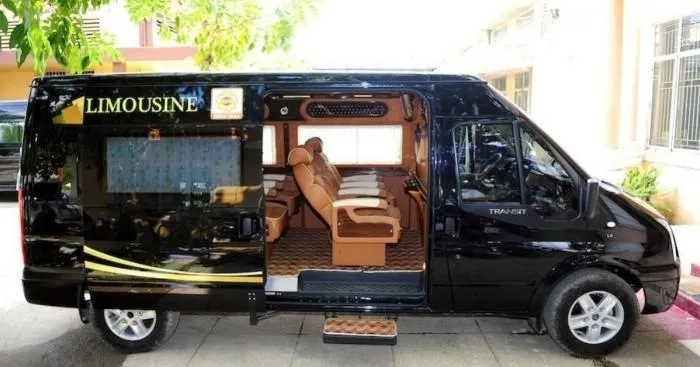
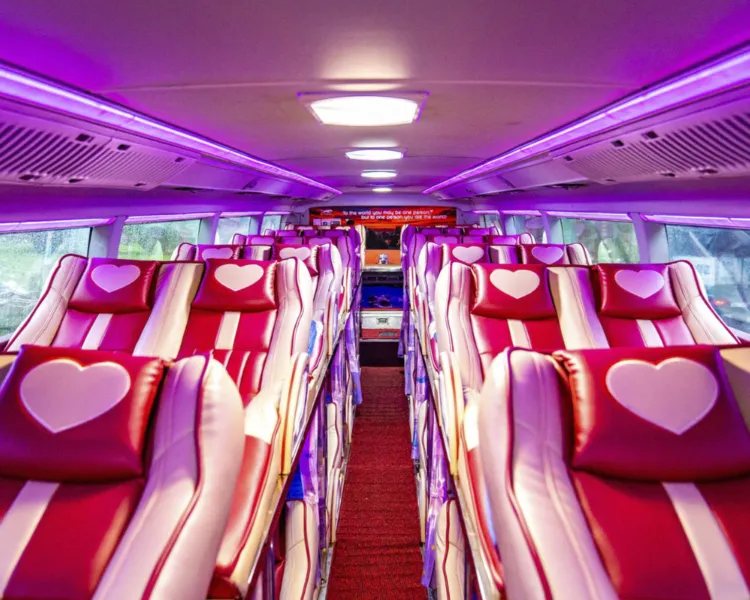
“Bus to Sapa” actually covers three different vehicles, and the price gap between them buys real comfort, not just a nicer logo on the side panel. A seat bus is the cheapest option — upright reclining seats, usually four to a row, closer to a long-distance coach than anything luxurious. A limousine van seats nine to eleven passengers in individual leather-look recliners with more legroom, a footrest, and often a curtained window — this is the option most first-time visitors picture when they book a “VIP” transfer, and it's usually the best value for a daytime trip. A sleeper bus replaces seats with two rows of flat or semi-flat berths stacked in two tiers, so lying down is possible but privacy is limited to a thin curtain; a cabin sleeper or “couple cabin” goes a step further, closing off two to four berths behind a sliding door for parties who want their own space. None of these differences change the timetable much — a seat bus and a limousine van on the same 07:30 departure arrive within the same window — the difference is entirely in how rested you feel once you get there.
Daytime Departures
| Departs Hanoi | Arrives Sapa | Journey time | Best for |
|---|---|---|---|
| 06:00 | 11:30–12:00 | ~5.5–6h | Early risers — a full first afternoon in Sapa |
| 07:30 | 13:00–13:30 | ~5.5–6h | The standard morning departure most travellers pick |
| 09:00 | 14:30–15:00 | ~5.5–6h | A relaxed start after a proper Hanoi breakfast |
| 11:00 | 16:30–17:00 | ~5.5–6h | Arriving in time to settle in before dinner |
| 13:00 | 18:30–19:00 | ~5.5–6h | Half a day in Hanoi first, arriving after dark |
| 15:00 | 20:30–21:00 | ~5.5–6h | Late departure — check-in only, trek starts next morning |
| 17:00 | 22:30–23:00 | ~5.5–6h | The last realistic same-day option |
Overnight Sleeper Bus Departures
Overnight sleeper buses use flat or semi-flat berths instead of seats, and the timetable is built around one goal: landing you in Sapa close to sunrise, with the whole day still ahead of you.
| Departs Hanoi | Arrives Sapa | Journey time | Notes |
|---|---|---|---|
| 21:00 | 02:30–03:00 | ~5.5–6h | Earliest overnight option — arrival is very early |
| 22:00 | 03:30–04:00 | ~5.5–6h | The most popular overnight departure |
| 22:30 | 04:00–04:30 | ~5.5–6h | Standard alternative if 22:00 is sold out |
| 23:30 | 05:00–05:30 | ~5.5–6h | Latest departure — arrival close to sunrise over the valley |
If four or more hours in a shared berth doesn't appeal, ask about a cabin sleeper when booking any of the overnight departures above — the same timetable applies, but you and a travel companion get a private curtained or door-enclosed space instead of an open row of bunks. It typically costs $6–10 more than a standard sleeper berth and is worth requesting at least a day ahead, since most buses carry only two to four cabins per departure.
Easy Treks to Book Once You've Arrived
 1 Day Trek
Trekking Through Rice Terraced Fields
The classic Muong Hoa Valley route — Ta Van, Lao Chai, Y Linh Ho. Easy to join the morning after any overnight arrival.
 1 Day Trek
Mountain Views & Villages Trek
A ridge trail with wide valley views — a good option if you land groggy off a night bus and want fresh air.
 All Levels
Sapa Easy Trekking
Gentle flat paths with walking poles provided — forgiving on tired legs after a long journey.
Train Timetable & the Lao Cai–Sapa Shuttle
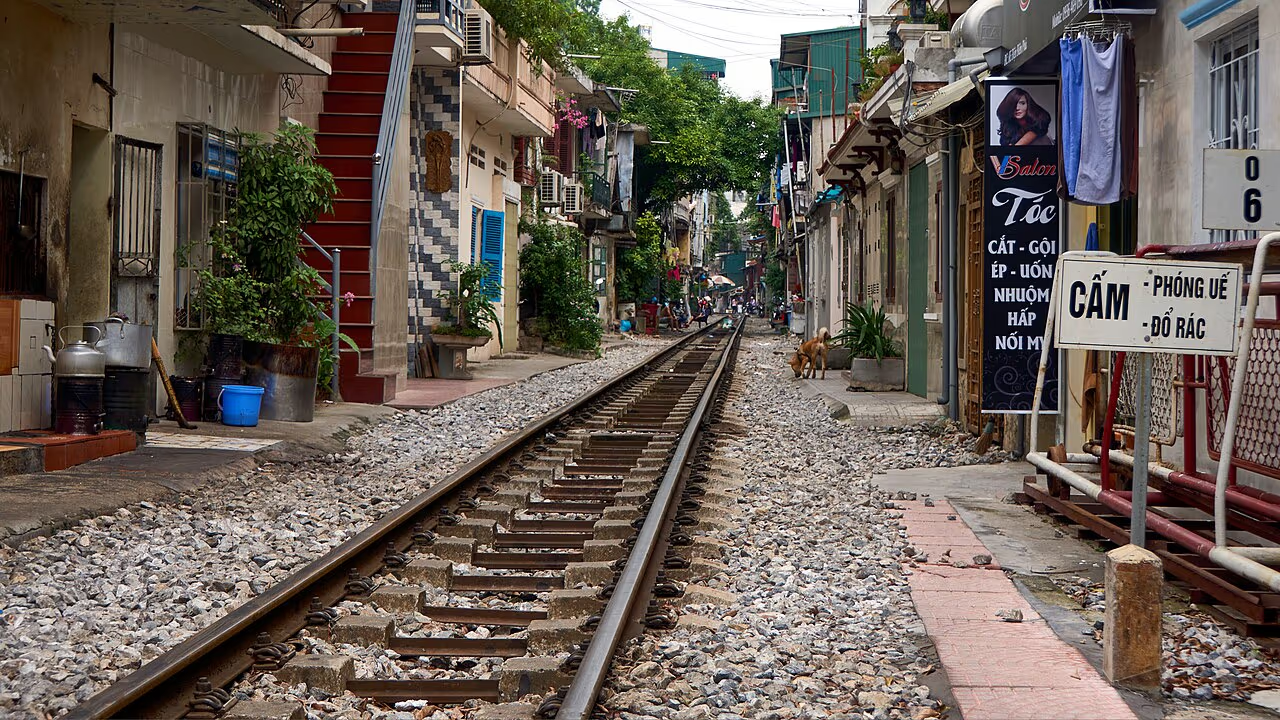
The overnight train is the slowest option on paper but the most restful in practice — a proper berth instead of a reclining seat. It runs Hanoi to Lao Cai only; Lao Cai is the end of the line, and every train traveller finishes the trip by road.
| Departs Hanoi | Arrives Lao Cai | Duration | Shuttle to Sapa | Arrives Sapa |
|---|---|---|---|---|
| 20:35 | 04:30–05:00 | ~8h | ~1 hour | ~06:00–06:30 |
| 21:10 | 05:10–05:40 | ~8h | ~1 hour | ~06:30–07:00 |
| 21:50 | 05:50–06:20 | ~8h | ~1 hour | ~07:00–07:30 |
| 22:20 | 06:15–06:45 | ~8h | ~1 hour | ~07:30–08:00 |
Shuttle vans and private cars wait at Lao Cai station for each morning arrival, so there is rarely more than a 15–20 minute wait before the final climb to Sapa begins. The shuttle itself covers about 38 km, rising steadily from roughly 100m at Lao Cai to Sapa town’s 1,600m — noticeably cooler air by the time you step off.
“We took the 21:10 train and were drinking coffee in Sapa by 7:30am, completely rested. Genuinely the easiest overnight journey I've done in Southeast Asia.”
— Traveller review, Ta Van trek booking, March 2026Train Classes: Soft Seat, Hard Sleeper & VIP Cabin
Vietnam Railways and several private carriage operators run this overnight service in parallel, and each offers two or three classes on the same departure time. A soft seat car is the cheapest, upright airline-style seating for travellers who don't mind staying awake most of the journey. A hard sleeper berth (despite the name, reasonably padded) puts you in a six-berth open compartment, three bunks to a side — functional and social, but not private. A soft sleeper or VIP cabin, run by private carriages attached to the state service, is what most travellers heading to Sapa actually book: four padded berths per compartment, a door that closes, air conditioning, and sometimes a small table. The departure and arrival times in the table above apply to every class on a given train — what changes is which carriage you're assigned to, and how well you sleep on the way.
The Climb in Numbers: Elevation Profile
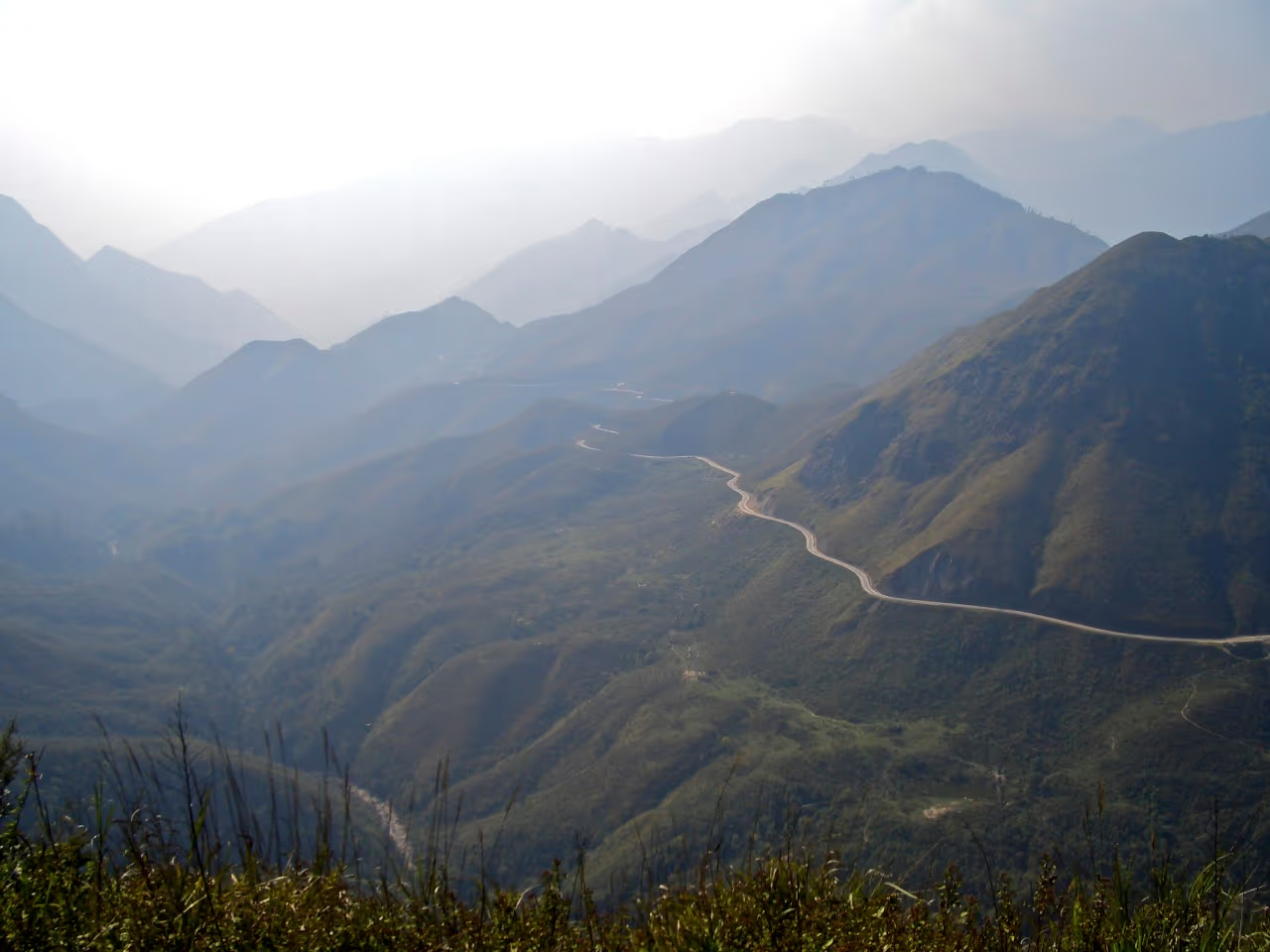
The reason the last stretch always feels slower than the map suggests is elevation — the road and rail route barely climbs for the first 300 km, then gains most of its height in the final 38 km from Lao Cai up to Sapa.
That final climb explains a few things travellers notice: the temperature drop of 10–15°C between Hanoi and Sapa on the same day, the switchbacks that slow the last 30–40 minutes of any road journey, and why the shuttle from Lao Cai takes a full hour to cover a distance that would be twenty minutes on flat ground. It also explains why buses time their arrival for daylight on the mountain section — night driving on the switchbacks is avoided wherever schedules allow.
Day or Night? Which Timetable Fits You
Neither option is objectively better — a day departure and an overnight departure solve different problems, and the right pick usually comes down to how many days you actually have in Sapa.
Take a day departure if…
Take an overnight departure if…
In practice, we see roughly six in ten of our guests choose a day departure for their first trip to Sapa, then switch to an overnight option on the way back once they know what to expect from the road. If you're only doing this route once, that split is a reasonable default — daylight going in, so you actually see the valley open up as you climb, and an overnight coming back to reclaim a full final day of trekking instead of losing an afternoon to travel.
Compare Every Transport Option in Detail
Sapa to Hanoi: The Return Timetable
The return leg is where most trip planning actually goes wrong — travellers time their trek perfectly but leave the trip home as an afterthought, then find the convenient departure is sold out or too late for their flight. Here is the Sapa to Hanoi timetable in full.
Day Departures: Sapa to Hanoi
| Departs Sapa | Arrives Hanoi | Journey time |
|---|---|---|
| 07:00 | 12:30–13:00 | ~5.5–6h |
| 09:00 | 14:30–15:00 | ~5.5–6h |
| 11:00 | 16:30–17:00 | ~5.5–6h |
| 13:00 | 18:30–19:00 | ~5.5–6h |
| 15:00 | 20:30–21:00 | ~5.5–6h |
| 17:00 | 22:30–23:00 | ~5.5–6h |
Overnight Departures: Sapa to Hanoi
| Departs Sapa | Arrives Hanoi | Journey time |
|---|---|---|
| 19:00 | 00:30–01:00 | ~5.5–6h |
| 20:00 | 01:30–02:00 | ~5.5–6h |
| 21:00 | 02:30–03:00 | ~5.5–6h |
| 22:00 | 03:30–04:00 | ~5.5–6h |
Train: Sapa to Hanoi via Lao Cai
Since the train starts from Lao Cai, not Sapa, you need to catch a shuttle down the mountain first — build in the full hour, plus a buffer for Sapa town traffic on market days.
| Shuttle from Sapa | Arrives Lao Cai | Train departs | Arrives Hanoi |
|---|---|---|---|
| 18:15 | 19:15 | 19:35 | ~03:30–04:00 |
| 19:15 | 20:15 | 20:35 | ~04:30–05:00 |
| 19:50 | 20:50 | 21:10 | ~05:10–05:40 |
| 20:30 | 21:30 | 21:50 | ~05:50–06:20 |
Make the Most of Your Time in Sapa


How Weather Can Change the Timetable
Every timetable in this guide holds on a clear day — the honest caveat is that Sapa's mountain weather occasionally rewrites it. The switchback road between Lao Cai and Sapa town sits in cloud for much of the year, and during the wetter months (roughly May to September) heavy rain can trigger short landslide closures or force convoys to slow to walking pace on the worst bends. Fog is the more common culprit: a thick bank rolling in over the Tram Ton Pass area can add thirty minutes to an hour to any bus, van or shuttle on the final stretch, even when the rest of the journey ran on time. Winter brings its own version of the same problem — December and January occasionally drop close to freezing on the pass, and drivers slow deliberately rather than risk the road surface.
None of this affects the flatter, faster first 90% of the route; the Noi Bai–Lao Cai expressway runs on schedule in almost all conditions. It's specifically the final 38–40 km climb, in either direction, where weather adds time. Two practical takeaways follow directly from this: build a buffer into any tight onward connection exactly as the flight-connection warning above suggests, and expect operators to prioritise safety over the printed schedule — a delayed arrival on a foggy morning is normal, not a sign anything has gone wrong.
What It Costs, by Departure Type
Price tracks comfort more than speed — a $10 seat bus and a $45 soft-sleeper train berth can arrive within an hour of each other, so the extra cost buys sleep quality, not time saved.
| Option | Typical price (USD) | Notes |
|---|---|---|
| Seat bus (day) | $10–14 | Cheapest; upright seating only |
| Limousine van (day) | $14–20 | Reclining VIP seats, hotel pickup included |
| Sleeper bus (overnight) | $16–20 | Flat or semi-flat berth |
| Cabin sleeper / couple cabin | $22–30 | Private curtained cabin for 1–2 people |
| Train soft-sleeper berth | $30–45 | 4-berth or 6-berth cabin, price by class |
| Private car (door to door) | $80–120 | Per vehicle, split between your group |
For a first Hanoi to Sapa trip on a normal budget, we usually point guests toward the limousine van by day or the standard sleeper bus by night — both sit in the middle of this range, and the jump in comfort from a seat bus is larger than the jump in price. A private car only makes sense once you're travelling in a group of three or four and splitting the fare, at which point it can undercut the per-person cost of individual sleeper berths.
For a broader look at how this fits into overall trip costs across Vietnam, our Vietnam travel costs guide breaks down daily budgets by travel style.
Rent at Our Office Before You Trek
 Gear Rental
Trekking Boots Rental
Waterproof ankle-support boots. Cleaned and checked before each rental. Available at 105 Thach Son Street.
 Gear Rental
Walking Poles Rental
Trekking poles available to rent at $2/day at our office, 105 Thach Son Street. Essential for descents.
Booking Tips for Your Preferred Time
Getting the exact departure you want — not just any seat on any bus — comes down to booking early enough and building in the right buffers around Hanoi traffic and Sapa's mountain weather.
Four rules that save the most trip planning headaches
- Book 2–3 days ahead for a normal week; book a week or more ahead for weekends, the September–November harvest season, and around Tet.
- Add 30–60 minutes to any departure before 8pm for Hanoi evening traffic, especially from the Old Quarter.
- Never book your last possible connection — leave one buffer bus or train between your Sapa departure and any flight or onward booking.
- Confirm your pickup point the day before — hotel pickup and fixed-corner pickup are both common, and mixing them up is the most frequent booking mistake.
Choosing Your Pickup Point in Hanoi
Operators generally offer two pickup styles, and choosing the wrong one against your hotel's location is a common reason travellers miss a departure. Hotel pickup is the easier option if you're staying inside the Old Quarter or French Quarter — a van collects you directly, usually within a 15–20 minute window either side of the scheduled time, so it's worth staying reachable by phone that morning. Fixed-corner pickup, common with budget seat buses, means walking to a specific street corner at an exact time; it's non-negotiable, and the driver will not wait or call ahead. If your hotel sits outside the central Old Quarter — out toward Tay Ho or the airport road, for example — confirm whether pickup is even offered, since some operators only collect from a defined central zone and charge extra, or expect you to reach a meeting point yourself, for anything further out.
What Happens If You Miss Your Departure
Missing a fixed-corner pickup is more common than operators like to admit, usually because of Hanoi traffic underestimated by five or ten minutes. Most bus and van companies do not hold a seat once the vehicle leaves — there's no refund for a missed corner pickup, though some will let you catch the next available departure that day for a rebooking fee if seats remain. Hotel pickups are more forgiving; a driver calling ahead means a five-minute delay rarely causes a problem, but anything longer risks the same non-refundable outcome. If you know your morning is tight — an early flight landing, a slow checkout, market-day traffic — book a slightly later departure rather than the earliest one, and treat the saved hour as insurance rather than wasted time.
Booking Transport for Groups and Families
Groups of three or more often save money booking a private car rather than individual seats, especially for an early or late departure when the shared-bus timetable doesn't line up well with a family's schedule. It also removes the two biggest sources of return-trip stress — a fixed pickup corner and a fixed departure time — since a private car waits for you rather than the other way around. For families with young children, we generally recommend the mid-morning day departures (09:00 or 11:00 from Hanoi) over the earliest or latest options: early enough that the drive is still comfortable, late enough to avoid a pre-dawn hotel checkout with a tired toddler.
Our team can arrange your Hanoi–Sapa transfer alongside your trek booking, matched to whichever departure time works best for your itinerary. Chat with us on WhatsApp →