 Sinh Giang
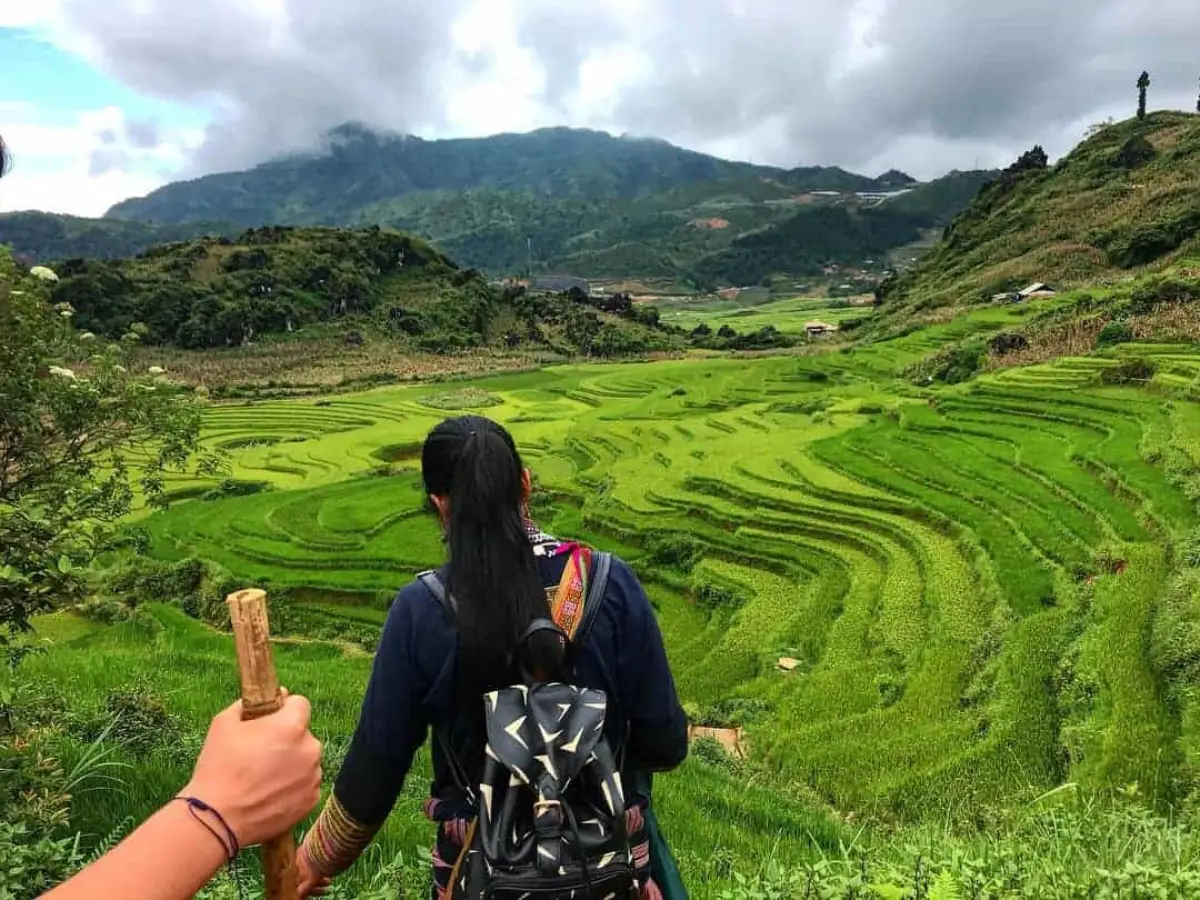
The question comes up constantly: can you trek Sapa without a guide? And there is a lot of advice online that swings too far in one direction — either "absolutely, just follow Google Maps" or "never go without a guide, it is too dangerous." Neither of these is fully honest.
The truthful answer is more nuanced. For most of the popular routes, yes — you can find the main path. But finding the path and having a good experience are two entirely different things. This article gives you the complete picture: where you will manage fine on your own, where you will genuinely get turned around, what you will miss, and what you need to know if you choose to go solo.
What You Can Actually Do Without a Guide
Your options for genuine independent exploration in and around Sapa are real — they are just more limited than you might expect from reading travel blogs. Here are the routes and attractions where you can manage without any guidance.
Cat Cat Village
Cat Cat is a 20-minute walk downhill from Sapa center along a paved and well-marked path. The entry fee is 70,000 VND (around $3 USD) and the route is completely obvious — you will not get lost. You will find a small waterfall, traditional Black H'mong weaving demonstrations, and a compact settlement. It is genuinely worth the walk and perfectly accessible solo. The trade-off: it is also the most touristified spot in the Sapa area, built largely for foot traffic exactly like yours. Your expectations should match that reality.
Ham Rong Mountain
Ham Rong sits directly above Sapa town. It is a landscaped park and terraced garden more than a trek — the paths are paved, clearly marked, and busy with other visitors. The entry fee is 70,000 VND. You get good views over Sapa town and the valley on a clear day. No guide needed, no navigation challenge.
Fansipan by Cable Car
The cable car to Fansipan — at 3,143 m / 10,312 ft the highest peak in Vietnam — is entirely independent. You pay 800,000 VND for the cable car and 150,000 VND entry at the summit complex. No trekking skills are needed. The ride takes about 20 minutes each way. If your goal is to say you stood on Fansipan, this works fine on your own. If your goal is to actually trek to the summit on foot, that is a different matter — see the safety section below.
The Paved Road Toward Lao Chai
From Sapa town you can walk 3-4 km along the paved road in the direction of Lao Chai village. You will get your first views of the Muong Hoa Valley rice terraces and pass through the edges of village settlements. It is a legitimate way to see the landscape without a guide, though you will be walking on asphalt rather than the trail paths, and you will be passing through — not through the community with any real access.
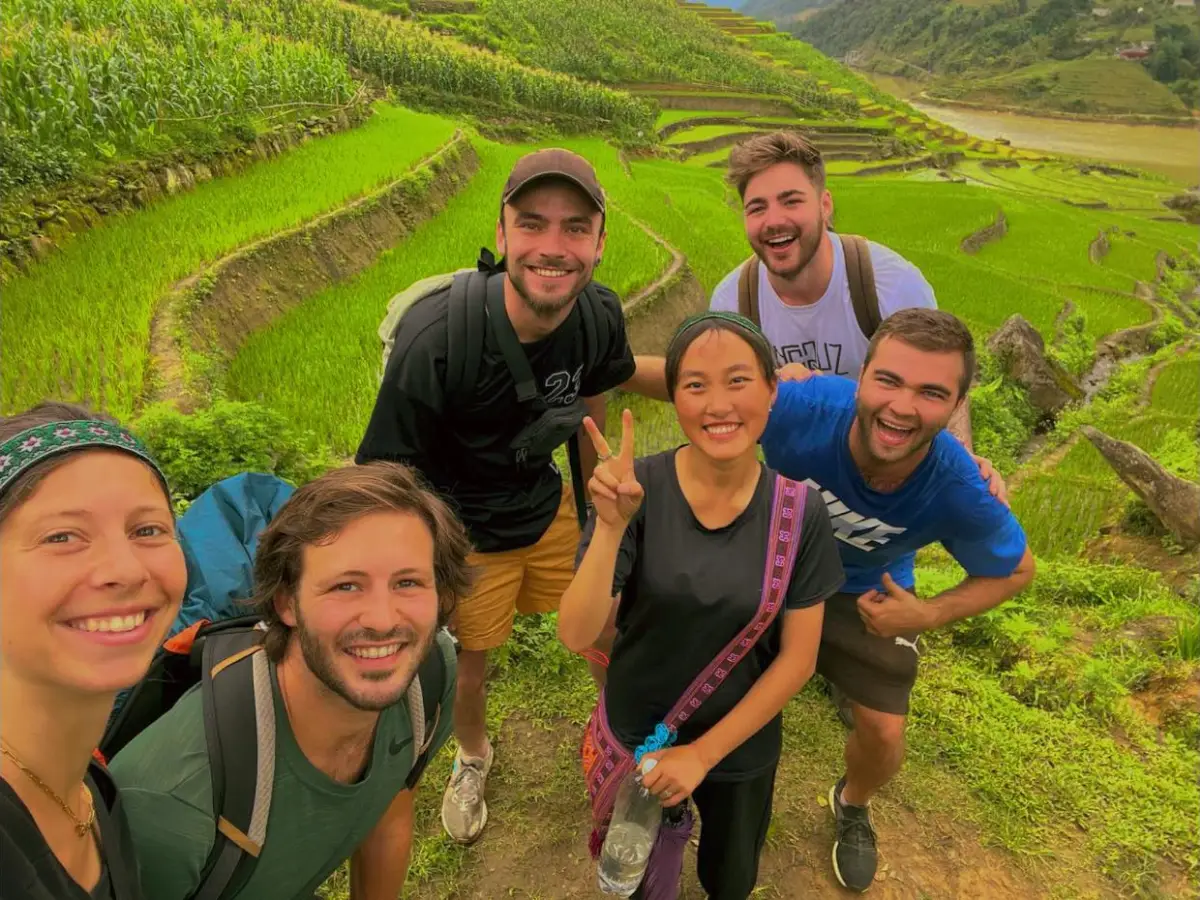
Best-Rated 1-Day Treks from Sapa
 1 Day
1 Day
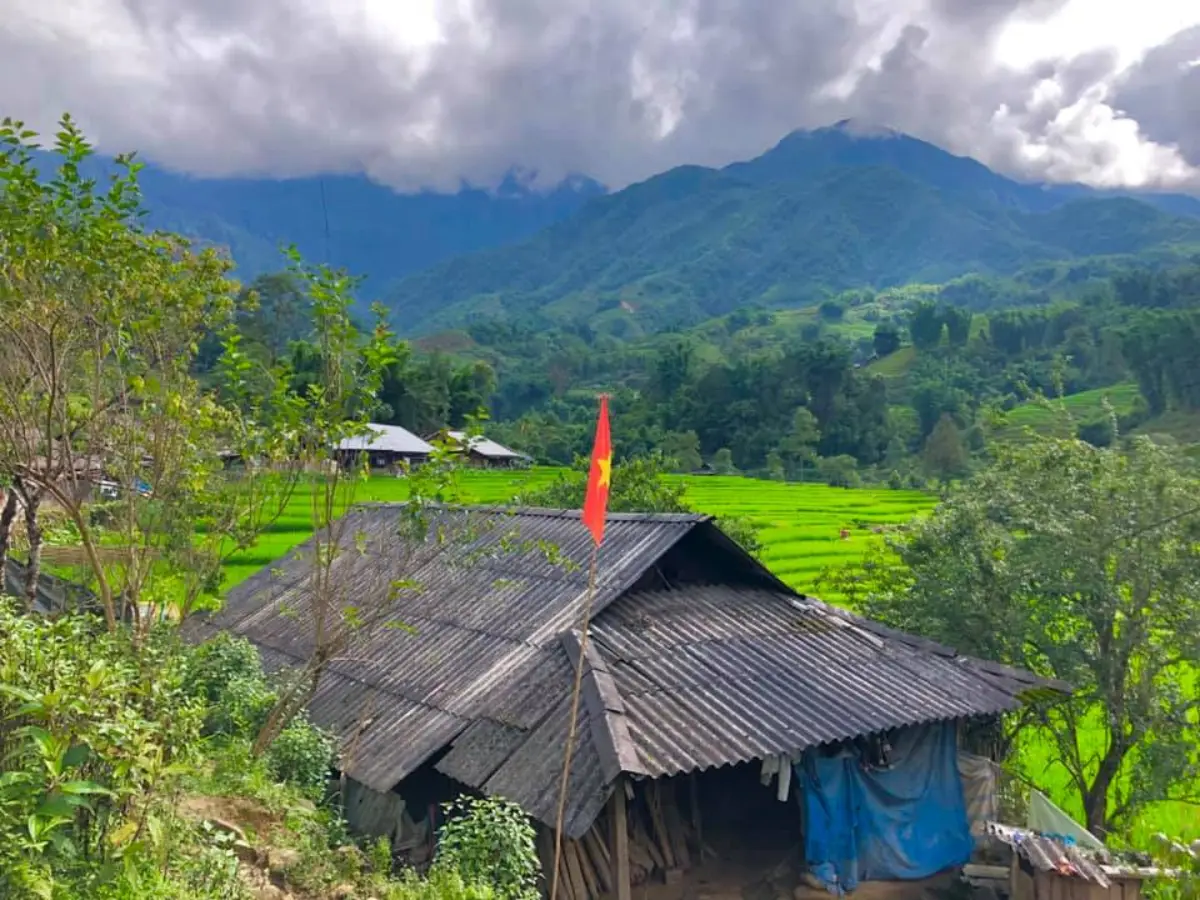
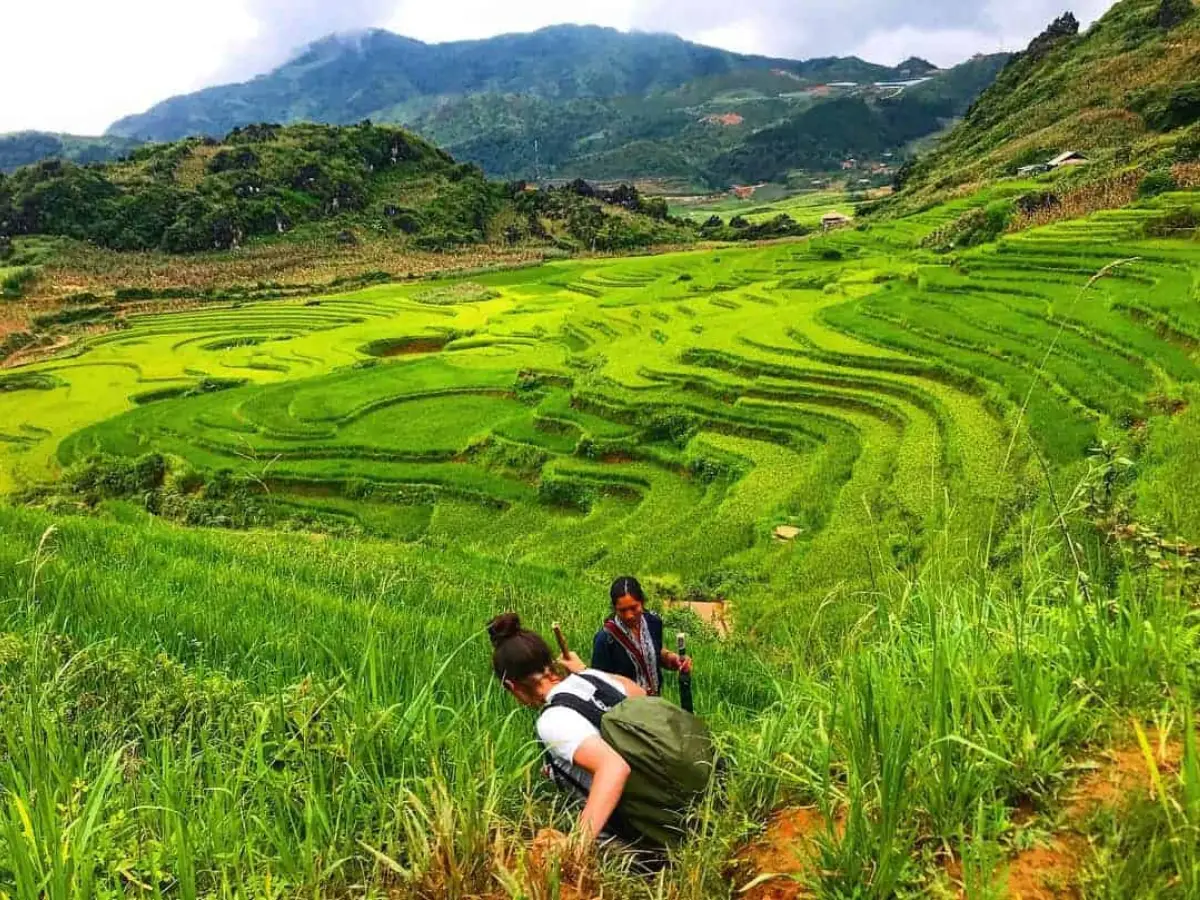
Trekking Through Rice Terraced Fields
Ta Van village, Muong Hoa Valley rice terraces, local Black H'mong family lunch.
 1 Day
1 Day
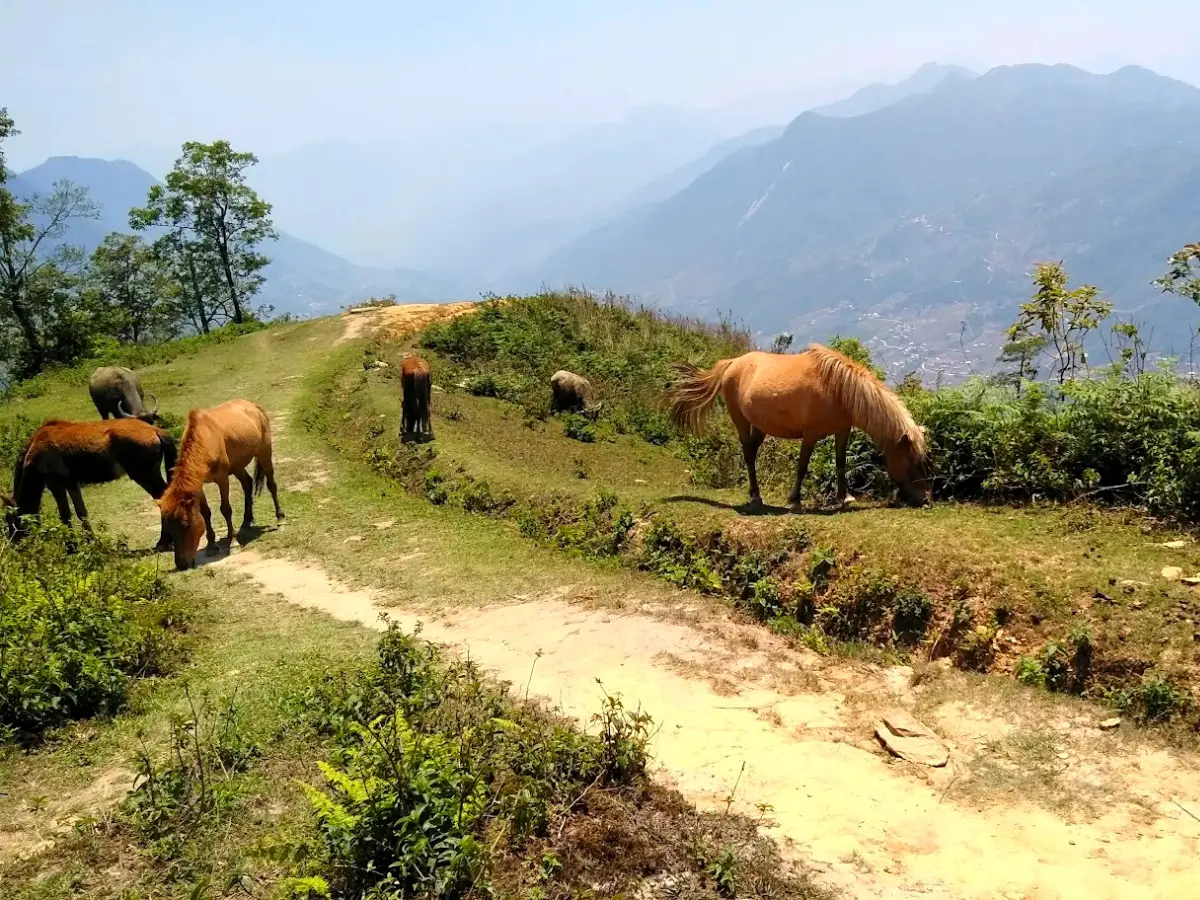
Mountain Views and Villages Trek
Ridge trail above Sapa town with panoramic valley views. Visits two H'mong villages.
 1 Day
1 Day
Rice Paddies and Cultures – Easy Hiking
Gentle trail through Hau Thao and Y Linh Ho villages. Perfect first trek.
Where Independent Trekkers Consistently Get Lost
This section is based on what actually happens, not what the trail looks like on a map. The following routes have a consistently high rate of confusion for solo trekkers — even experienced hikers with good navigation skills.
The Muong Hoa Valley Trail System
This is the most common place for things to go wrong. The Muong Hoa Valley between Sapa and Ta Van looks simple on Google Maps — there appears to be a clear trail running alongside the river. At ground level, the reality is 20 or more paths that converge and diverge without any signage. The GPS signal works fine. The problem is that the trail forks are on agricultural land, and the correct turn is simply not obvious. Many independent trekkers end up walking across someone's rice paddy because the path they were following ended at a field boundary with no indication of which way to go next.
Ta Van to Ma Tra
The route between Ta Van village and Ma Tra requires crossing multiple terraced farm fields on paths that are sometimes 30 cm / 12 inches wide and sit on raised earth borders between paddies. After rain — which in Sapa can happen on any day of the year — these paths become genuinely slippery. The path also runs through privately farmed land and is not marked in any way. Even with offline maps, identifying the correct branch at each junction requires knowledge that comes from having walked it repeatedly.
Y Linh Ho to Lao Chai
The valley trail between Y Linh Ho and Lao Chai is visible and appears walkable solo. The issue is the branching points along the way. At several junctions, the path splits and the correct branch is the less-obvious one. Without local knowledge, most people take the more-used-looking path, which often leads into a village end-point with no exit route. You will eventually find your way, but you will spend significant time backtracking.
Google Maps shows trails in the Muong Hoa Valley that do not reflect ground conditions. The paths exist but the branching complexity is not visible at map scale. Even experienced trekkers with hiking GPS devices regularly report getting disoriented on their first solo attempt here. Maps.me performs better for trail detail — download the Vietnam offline map before you arrive.
What You Actually Miss Without a Guide
Navigation aside, the more significant question for most travelers is not whether you can physically complete the trail — it is whether the experience will be what you came for. Here is what a guide actually provides beyond knowing the path.
Access to Homes and Families
A guide who grew up in Ta Van or Lao Chai is personally known to the families in those villages. When you arrive at a home with a local guide, you are entering as a known guest. When you arrive alone, you are a stranger — and while Sapa communities are not unfriendly, there is a meaningful difference between being politely waved through and being invited in, shown how indigo is processed, offered tea, and able to ask questions through someone who speaks both English and the local language. The lunch at a family home that is included in most guided treks is a genuine meal cooked in a home kitchen, not a restaurant experience.
Cultural Navigation You Cannot Do Alone
The Black H'mong and Red Dao communities in the Muong Hoa Valley have specific customs around greeting, entering homes, photographing people, and interacting with children. These are not written down anywhere and are not covered in any guidebook with real accuracy. A guide navigates this automatically — explaining to you what is appropriate, translating not just language but context, and making the interaction respectful rather than uncomfortable for the community.
The Non-Touristic Routes
The trails on our guided tours include paths that are not marked on Google Maps and do not appear on any tour board in Sapa town. The ridge route above Hang Da, the path through the cardamom forest above Y Linh Ho, the trail that drops through bamboo groves before Hau Thao — these are places you cannot find independently because there is simply no public information about them. Access depends on community relationships that our guides have built over years of bringing small groups through respectfully.
Understanding What You Are Seeing
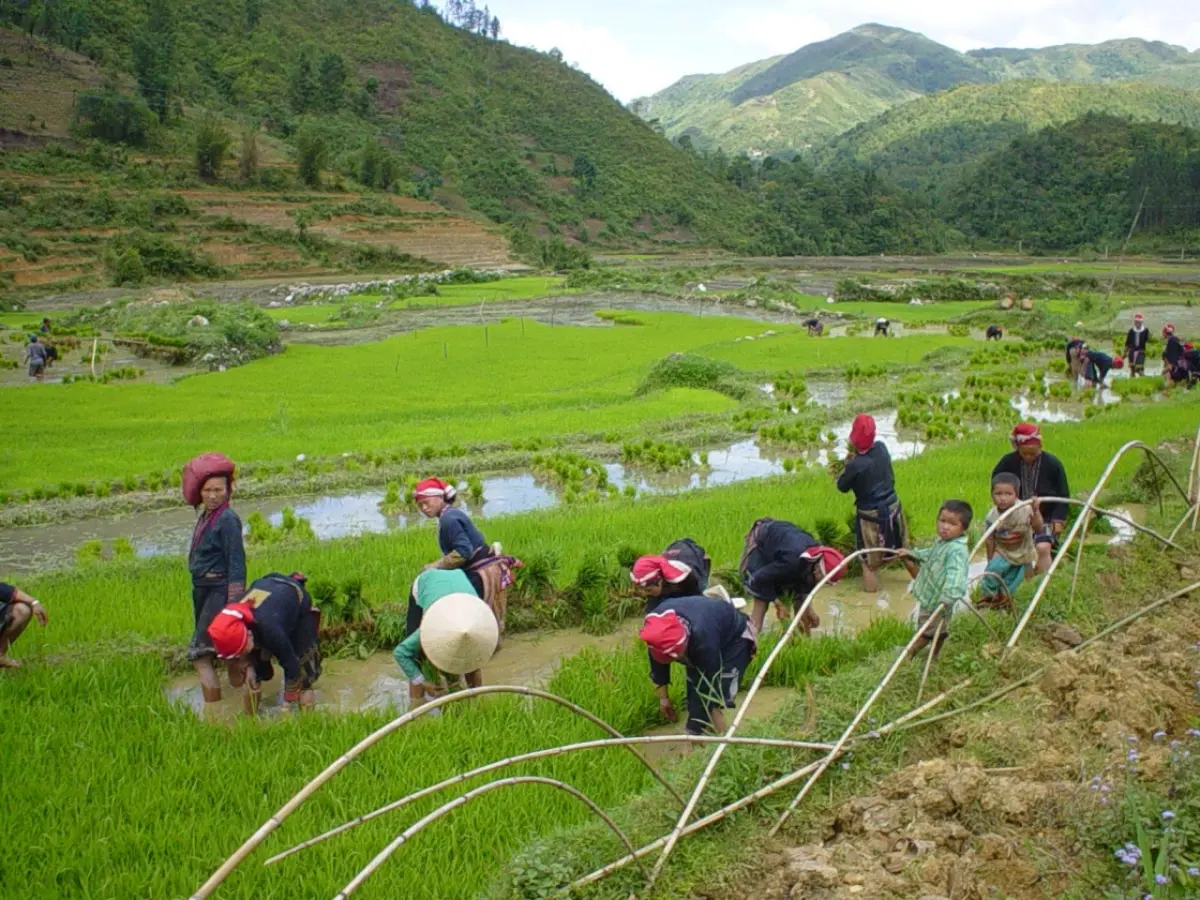
The visual landscape of the terraces is stunning whether or not you have a guide. But the landscape becomes meaningful at a completely different level when someone explains that the Black H'mong traditionally farm the lower terraces while Red Dao communities tend the upper slopes because of historical land-use agreements. Or when you stop in front of what looks like a wooden frame hung with dark cloth and learn that you are looking at an indigo-dyeing setup that has been working in the same family for four generations. Without that context, you are looking at scenery. With a guide, you are reading the landscape.
Trek + Homestay Packages (2 Days, 1 Night)
 2D1N
2D1N
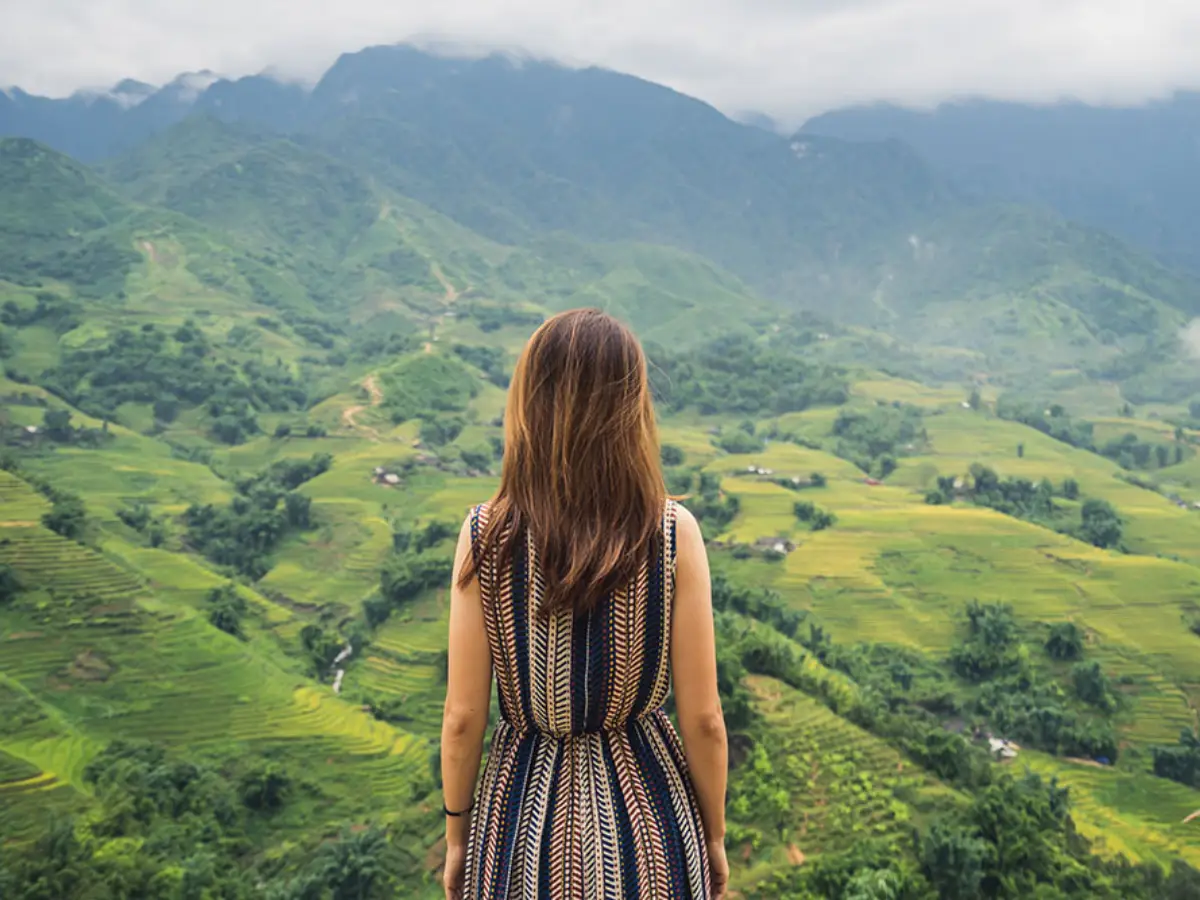
Rice Terraced Fields & Homestay
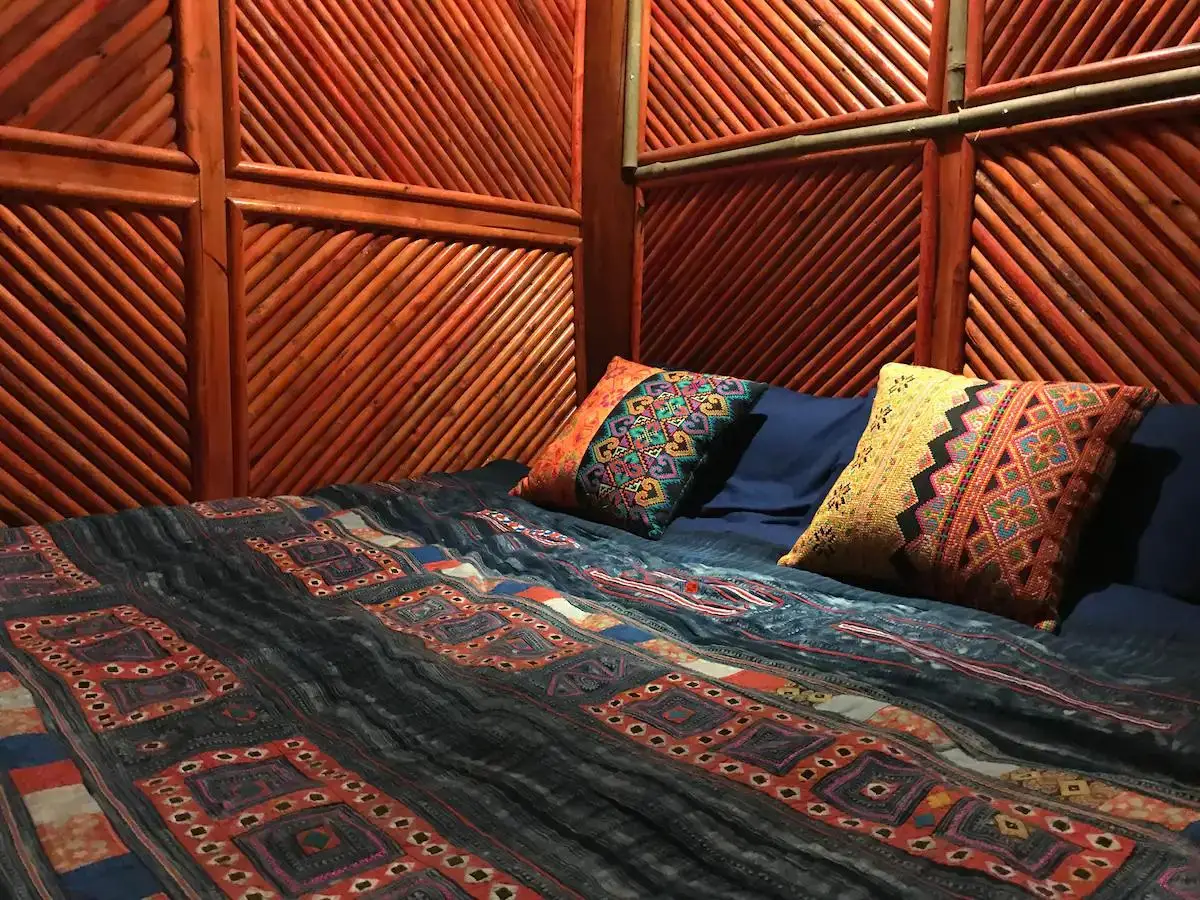
Two days in Ta Van and Lao Chai villages with overnight stay at a Black H'mong family home.
 2D1N
2D1N
Mountain Views & Muong Hoa Valley Trek
Ridge walk above the valley, overnight in a Red Dao village, morning terraces at sunrise.
 2D1N
2D1N
Explore Nature and Homestay
Less-touristed trails through cardamom forest, bamboo groves, and traditional farming villages.
Is It Dangerous to Trek Alone in Sapa?
Honest answer: not inherently dangerous, but there are real risks that are worth taking seriously. Sapa is not a remote wilderness environment. You are not hours from civilization. But there are specific conditions where things can go wrong.
Getting Lost on Private Land
The most common risk is walking deeper into a trail system that ends at a private farm with no through-route and losing your signal. This is not life-threatening, but it can mean two hours of backtracking on wet terrain in fading light. It happens regularly enough that it is worth planning around.
Terrain Injuries
The terrace-edge paths that make up much of the trekking in Muong Hoa Valley are narrow raised earth walls between paddies. They are often damp and can be slippery after morning mist or rain. An ankle injury on a path 4 km from the road, without phone signal, with no one who knows your route — this is the scenario worth thinking through before you go solo.
Sapa Weather
Sapa weather can shift from clear to zero-visibility fog in under 30 minutes, particularly on the higher ridge trails above 1,800 m. This is most relevant to anyone attempting the Fansipan trekking route on foot rather than by cable car, and to trails on the ridge above Ma Tra. In fog, the terrain becomes genuinely disorienting.
In 2022, there was a drowning incident at Thac Bac (Silver Waterfall) involving unguided visitors who entered the water during monsoon conditions. The waterfall area looks approachable and safe during dry weather — in the wet season, water volumes and currents become dangerous very quickly. Always check conditions and never enter waterfall areas during or after heavy rain.
What a Guide Costs — and What You Actually Get
One of the arguments for going solo is cost. Here is what the numbers actually look like, and what is included.
A group tour with a guide costs $30–45 USD per person, which includes the guide, lunch at a local family home, and an insurance-covered activity. For two people, a private guided tour starts around $60–85 USD total — not per person. That works out to $30–42 USD each for a full day.
What you are paying for is not just navigation. Your guide speaks English and grew up in the communities you are visiting. Your lunch is eaten with a Black H'mong or Red Dao family in their home, cooked on a wood-fire stove. Your route includes paths that are not accessible any other way. The activity is insured and the guide has a local phone network that works even in valleys where tourist SIM cards lose signal.
If your goal is to see rice terraces and get some walking in, you can achieve that for free by walking the paved road from Sapa toward Lao Chai. If your goal is to understand the valley, meet the people who farm it, and see parts of it that no independent traveler reaches — the $35–45 USD is not a premium. It is the price of the actual experience.
If You Do Decide to Go Without a Guide: A Practical Checklist
If you have read all of the above and are still set on trekking independently, these are the steps that meaningfully reduce your risk and improve your experience.
Maps.me has significantly more trail detail than Google Maps for this area. Download the Vietnam offline map while you still have reliable Wi-Fi — mobile data in the valley is intermittent. It will not solve the unmarked fork problem, but it gives you the best possible navigation baseline.
Leave your planned route and expected return time with your hotel or accommodation. This sounds obvious and most people skip it. Do not skip it. If you are not back by a specific time, someone will know where to start looking.
There are no shops, stalls, or reliable water sources on the trail paths. Bring 1.5–2 litres minimum. In hot months (May–August) bring more.
The narrow terrace-edge paths become genuinely dangerous when wet. The soil is clay-rich and slippery. If it rained the previous night or morning, stick to paved sections or wait.
Sapa trails have no lighting. Getting caught on a narrow terrace path after dark is not something you want to manage. Start by 8am at the latest for any route beyond Cat Cat or Ham Rong.
In Vietnamese, xin chao (sin chow) is hello. Black H'mong communities appreciate any effort toward acknowledgment. You will not be able to communicate meaningfully without a guide, but a smile and a greeting gesture goes further than arriving silently with a camera out.
Maps.me performs better than Google Maps for trail-level navigation in the Muong Hoa Valley. Download the Vietnam offline pack (around 250 MB) while you have Wi-Fi at your hotel. Open it before you leave — the app needs to load the local tile data. Even with offline maps, treat any fork you cannot confirm as a reason to stop and reconsider rather than a reason to guess.
Rent at Our Office Before You Trek
 Gear Rental
Trekking Boots Rental
Waterproof ankle-support boots. Cleaned and checked before each rental. Available at 105 Thach Son Street.
 Gear Rental
Walking Poles Rental
Trekking poles available to rent at $2/day at our office, 105 Thach Son Street. Essential for descents.
Frequently Asked Questions
No. There is no law in Vietnam requiring tourists to hire a guide for trekking in Sapa. You are free to walk independently on any public trail. The decision is entirely yours.
Guides are not legally mandatory. However, they are strongly recommended for any trail beyond Cat Cat Village or Ham Rong Mountain. The Muong Hoa Valley trail system, Ta Van, and routes toward Ma Tra have 20+ unmarked forks where independent trekkers consistently get lost.
A group tour with a guide costs $30–45 USD per person including lunch. A private guided tour for 2 people starts at around $60–85 USD total. This includes an English-speaking local guide, lunch at a family home, and access to community relationships built over years.
Yes, guides are sometimes available on the day, especially if you contact a tour office early in the morning. However, booking 1–2 days in advance is strongly recommended to guarantee availability, particularly during peak season (September–October and March–May).
Stop and do not keep walking deeper into the trail system. Check your offline map on Maps.me first. If you have phone signal, call your hotel or a local tour office. If you are on agricultural land, local farmers are generally helpful and can point you back toward the main road. Always tell someone your planned route and expected return time before setting out solo.
Sapa is generally considered safe and solo female travelers trek here regularly. The main risks are navigational (getting lost) and terrain-related (slippery paths in wet conditions) rather than personal safety concerns. A guide significantly reduces both risks. If trekking solo, stick to established routes like Cat Cat Village or the paved road toward Lao Chai, go in daylight, and keep someone informed of your plans.