
 Sinh Giang
Vietnam’s currency is the dong (VND), and the only way to pay for most things is to carry it: a 100,000-dong note is about US$3.90 at the State Bank of Vietnam’s reference rate of 25,631 dong to the dollar on 28 October 2026. Take it from machines rather than from the airport counter, count it twice, keep small notes for tips and markets, and use cards only in hotels and tourist restaurants. Everything below is checked against official or press sources opened on 31 October 2026, and we say plainly where we could not confirm a number.
We guide in Sapa, where the nearest bank machine can be a long walk from the trail, so we care about the details: which notes look alike, what a withdrawal really costs, what the law says about dollars, and how much cash to hold before you leave town. Our Vietnam travel costs guide covers the daily budget; this page is about the money itself.
The Dong in One Page: Notes, Coins and What Each Is Worth
Six polymer notes carry nearly all everyday spending, from 10,000 to 500,000 dong, and three small paper notes cover the change.
The State Bank of Vietnam’s own page lists the polymer notes as 500,000, 200,000, 100,000, 50,000, 20,000 and 10,000 dong, issued between 2003 and 2006, and cotton-paper notes of 5,000, 2,000, 1,000, 500, 200 and 100 dong. It also lists five coins, from 200 to 5,000 dong. A Tuoi Tre report of 24 January 2026 says all 12 banknote denominations and all five coins remain legal tender, after the central bank called a rumour that it would withdraw the low notes “false and unfounded”. In daily use, our reading is that the six polymer notes and the 5,000, 2,000 and 1,000 paper notes are the ones you will actually touch; coins are rare in what we see.
Dollar values are our arithmetic at the reference rate of 25,631 dong per dollar (28 October 2026). Rates move every day, so treat them as a guide.
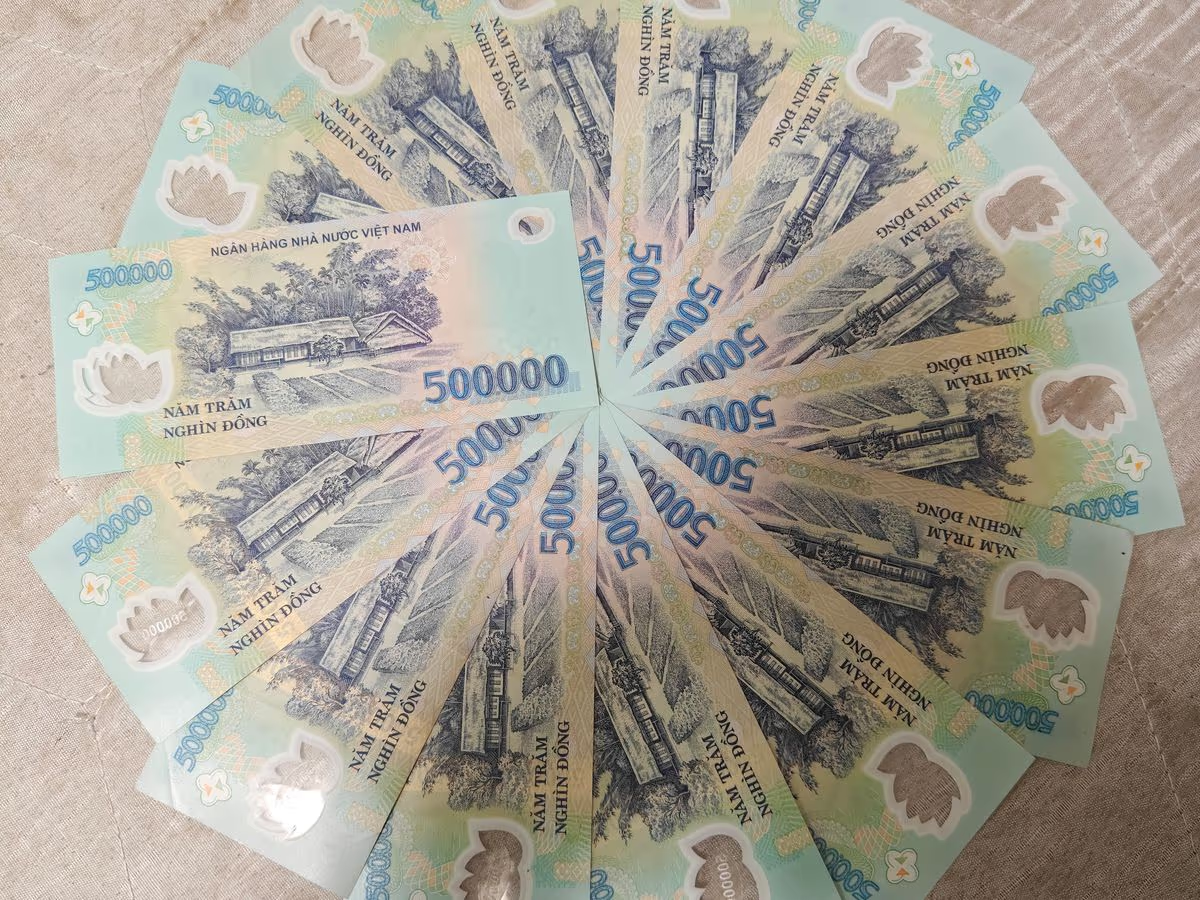
Two practical points follow from the table. First, the 500,000-dong note is worth under US$20 yet is the note shopkeepers and drivers least like to break, so ask for smaller ones whenever a machine or a counter hands you a choice. Second, we do not describe the security features of the polymer notes: the State Bank’s English pages do not list them, and we found no visitor-facing version. What the travel guides we read agree on is simpler, and we repeat it later: hold a note up to the light, and refuse one that is torn or has a hole in it.
Reading the Zeros Without a Calculator
Drop three zeros and divide by about 25: 250,000 dong becomes 250, which is roughly US$10.
The big numbers take a day to get used to. At 25,631 dong to the dollar, the shortcut of “remove three zeros, then divide by 25” lands within about 3 per cent of the true figure, which is close enough to judge a price. A 40,000-dong bowl of pho in Sapa town becomes 40, divided by 25, so about US$1.60. A 150,000-dong village entrance ticket is 150 divided by 25, or US$6. Going the other way, multiply dollars by 25 and add three zeros: $20 is about 500,000.
Most mistakes are an extra or missing zero, not a scam. A 20,000-dong note and a 200,000-dong note look different but are easy to confuse in a dim taxi or a market lane. Say the number aloud as you hand it over and wait for the other person to say it back. Our guide to scams in Hanoi and Sapa shows the price checks that go with it.
In our experience sellers often drop the last three zeros, saying “fifty” for 50,000 dong. If someone quotes “fifty”, they mean 50,000, not 50 dollars. When the amount matters, ask them to type it on a phone calculator. It takes ten seconds and removes the doubt for both of you.
The Exchange Rate: What You Will Actually Get
The official reference rate was 25,631 dong per US dollar on 28 October 2026, and Vietcombank bought dollars at 25,640 and sold them at 26,020 that morning.
VietnamPlus reported those figures on 28 October 2026: the State Bank of Vietnam’s reference rate was 25,631, down 2 dong on the previous session, and Vietcombank’s 8:30 am board showed 25,640 (buying) and 26,020 (selling), with BIDV at 25,645 and 26,025. The reference rate is a daily benchmark; banks set their own board rates, so a counter gives you the bank’s buying rate. The gap between buying and selling, 380 dong at Vietcombank that morning, is how a bank earns on the swap: sell it US$100 and you receive 2,564,000 dong; hand those dong back later and you pay the selling rate, which returns about US$98.5. That is a round-trip cost of about 1.5 per cent before any commission.
| Rate | Dong per US dollar | What it means for you |
|---|---|---|
| State Bank reference rate | 25,631 | A daily benchmark, not a price you can get |
| Vietcombank buying | 25,640 | What you receive when you sell dollars |
| Vietcombank selling | 26,020 | What you pay to turn dong back into dollars |
| BIDV buying and selling | 25,645 and 26,025 | A few dong apart from Vietcombank |
We found no published rate for 29 to 31 October, so we use 28 October throughout. Check a live rate on the day you change money: our travel costs guide uses roughly 25,000 for easy sums, close enough for a budget but not for a counter. We did not check board rates for other currencies.
Getting Dong from an ATM: Fees, Limits and the Steps That Save Money
An ATM is the simplest way to get dong, and it is also the most variable: the same card can cost nothing at one machine and US$4 at the next.
Vietnamese ATMs pay out dong only, according to a LocalVietnam guide updated on 1 June 2023, so the machine converts from your home currency at the bank’s rate. Two charges stack up. The Vietnamese bank may charge a fee for foreign cards, and your own bank may add a foreign-transaction fee and a cash-withdrawal fee on top. The figures below are the ones we could source. Only VietinBank’s comes from the bank itself; the rest are one travel site’s report from January 2026, and other guides we read give different limits and fees, so expect some of them to be out of date by the time you read this.
| Bank | Reported fee | Reported limit per withdrawal | Source and date |
|---|---|---|---|
| VietinBank | 4%, minimum 80,000 dong | Not published on the fee page | VietinBank fee schedule, effective 16 November 2025; read 31 October 2026 |
| TPBank | About 3.3%, introduced mid-2025 | Not confirmed | Backpack Moments, updated 13 January 2026 |
| Agribank, Vietcombank, BIDV, Shinhan, HSBC | Usually 55,000 dong | 3 million dong | Backpack Moments, 13 January 2026 |
| ACB | None reported | 3 million dong | Backpack Moments, 13 January 2026 |
| VPBank | None reported | 10 million dong | Backpack Moments, 13 January 2026 |
The limit matters as much as the fee. If a machine caps you at 3 million dong (about US$117), VietinBank’s 4 per cent comes to 120,000 dong, or about US$4.70, while a flat 55,000-dong fee is about US$2.15. Taking out 3 million dong three times at a flat-fee machine costs three fees, so the fewer, larger withdrawals are cheaper, as long as you can keep the cash safe. Your home bank’s own charges come on top, and some machines do not show the fee on screen, so you may see it only on your statement.
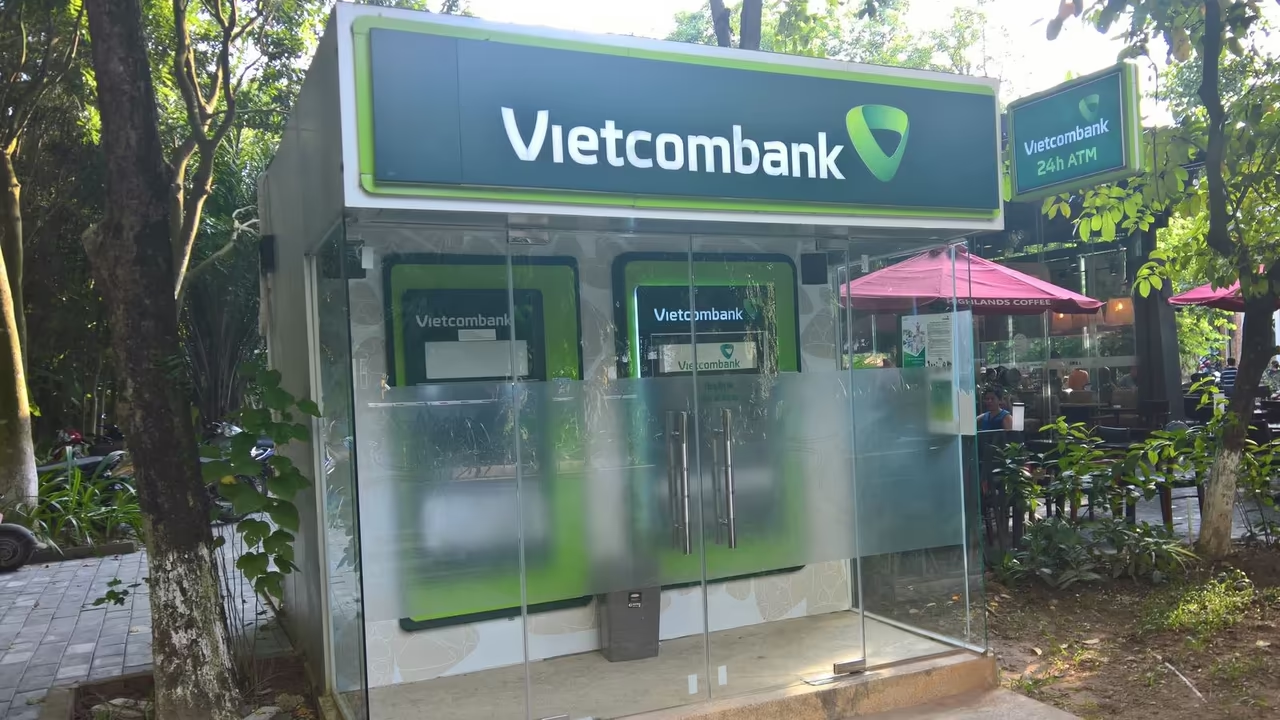
Here is the routine we give guests who ask, in the order it saves money:
- Pick a bank-branded machine in a lit lobby or booth, inside or next to a branch if you can. Avoid machines in dark alleys, and accept no help from strangers at the keypad.
- Choose dong, not your home currency. Western Union’s guide advises withdrawing in dong to avoid dynamic currency conversion charges, which is the machine’s own, usually poorer, conversion. If the screen offers to bill you in dollars or pounds, decline.
- Read the fee screen before you press confirm. If the fee is a flat amount, take the largest sum the machine and your own card limit allow. If it is a percentage, take what you need.
- Count the notes before you walk away and take your card. Polymer notes can stick together, so count slowly and twice.
- Split the cash: a day’s money in your pocket, the rest in a zipped bag, and a spare card kept separately.
Tell your bank you are travelling before you leave, so the first withdrawal does not trigger a fraud block. Western Union gives the same advice.
Changing Cash: Banks, Licensed Gold Shops and Airport Counters
For changing dollars, a bank branch is the safest and a licensed gold shop is the best-reported; the airport counter, hotel desk and tour agency are the places to avoid.
Western Union’s guide lists banks, licensed exchange bureaus, gold shops licensed for currency exchange and online platforms as the safe routes, and warns against unlicensed street changers. Backpack Moments, updated 13 January 2026, calls licensed gold shops its best option for rates, notes that banks take a few minutes and want your passport, and names airports, hotels and tour agencies as the worst for rates. It adds that 50 and 100 dollar notes get slightly better rates, and that damaged notes get a worse rate or are refused. We ran no rate comparison of our own, so we give no figure for how much worse an airport is.
Our own rule is simple. Bring a small, clean emergency stash in US dollars, not the whole trip’s budget, and use your card at ATMs for the rest. Count the dong in front of the clerk before you leave the window, as Western Union advises, and do not hand over your dollars until you have seen the rate written down.
Cards, E-wallets and QR Codes: Where Cash Is Not Needed
Cards work in hotels, big shops and tourist restaurants, and fail in markets, village homestays and most food stalls.
Backpack Moments reports that cards are accepted in cities and tourist hotspots, at larger hotels, in bigger supermarkets and with most tour operators, that some merchants add a 2 to 4 per cent commission, and that small shops, open-air markets and family guesthouses are usually cash only. Our Sapa hotel guide agrees: rooms are almost always priced and best paid in dong, even where a booking site shows dollars, and some smaller guesthouses add a fee for cards.
QR payment is where Vietnam is changing fastest, though mostly for visitors from Asia. VietnamPlus reported on 29 September 2026 that QR payment links now cover visitors from Singapore, China, South Korea, Laos, Cambodia and Thailand, and the national payment operator NAPAS said in June 2026 that its cross-border service, VietQRGlobal, covers China and South Korea, with Singapore, India and Taiwan planned. None of these sources confirm that a US or European bank card or app will scan a Vietnamese QR code, so we do not tell guests to rely on it. Treat QR as a bonus if you see the sign, not as your plan.
Paying in Dollars: What the Law Says and What Happens
By law, prices in Vietnam are meant to be in dong, but many tourist businesses still quote and accept dollars.
State Bank Circular 32/2013/TT-NHNN, which we read on the English-language legal database on 31 October 2026, says transactions in Vietnam are generally not to be conducted in foreign currency, and lists “listings, advertisements, price quotations” among them. It gives hotel, air-transport and tourism businesses one exception: they may display prices in dong and an equivalent foreign currency on foreign-language websites and publications, but menus and service price lists are excluded. We could not confirm whether the circular has been amended and did not check penalty rules, so we give no fine.
In practice, a Tuoi Tre report from 2018 was headlined “Payment in foreign currencies rampant in Vietnam despite illegality”, and our own tipping guide says a guide will take dong or dollars without hesitation. The sensible position is to pay for things in dong, because a shop’s own dollar rate is its private choice, not a published rate, and to keep dollars for tips if you wish. We are not lawyers, and nothing here is legal advice.
Ask for the price in dong first. If you still want to pay in dollars, agree the rate before you hand anything over.
What Common Things Cost in Dong
A small table of local prices helps you spot a bad quote, and every row below comes from a source we cite.
| Item | Price | About in US dollars | Source |
|---|---|---|---|
| Bowl of pho, Sapa town | About 40,000 dong | $1.60 | Our tipping guide |
| Bus 86, Noi Bai Airport to Hanoi Railway Station | 45,000 dong, cash | $1.75 | Vietnam Airlines guide, via our scams guide; other guides differ |
| Sapa metered taxi across town | 40,000 to 60,000 dong | $1.55 to $2.35 | Our getting-around guide, September 2026 |
| Motorbike rental in Sapa, per day | 150,000 to 200,000 dong | $5.85 to $7.80 | Our getting-around guide, September 2026 |
| Cat Cat village entrance | About 150,000 dong per adult | $5.85 | Our permit guide, 30 October 2026 |
| Fansipan cable car, adult round trip | 850,000 dong | $33.15 | Our permit guide (operator page, 10 March 2026) |
Small daily costs run in tens of thousands, entry tickets in hundreds of thousands, and the cable car passes 800,000. Keep a handful of 20,000, 50,000 and 100,000 notes in a separate pocket for tea, water, a short ride and a tip.
Tipping in Dong: Who, When and How Much
Tipping is not expected in restaurants or taxis, but guides, drivers and homestay families in the mountains rely on it.
Western Union’s guide says tipping is not customary and suggests 5 to 10 per cent for private tours and upscale restaurants, and notes that some tourist establishments add a service charge. Backpack Moments says locals rarely tip and that tipping is optional for exceptional service. Our own tipping guide goes further for trekking, because a guide’s day rate is low and tips are part of the pay. It puts the figures like this, per person:
Day trek guide
Per person- Common range
- $5 to $10 for a one-day trek, in dong or dollars.
Multi-day guide
Per day- Common range
- $10 to $15 per person per day for an outstanding multi-day guide.
- Porters
- $5 to $8 per day per porter, given separately.
Driver
Per trip- Common range
- 50,000 to 100,000 dong ($2 to $4) if the driver was part of your tour and the service was good.
Homestay family
Per person- Common range
- 50,000 to 100,000 dong ($2 to $4), given directly at breakfast before you leave.
Hand tips over yourself in paper notes: a 100,000-dong note is far more practical than a handful of coins. The reasoning is in our full guide to tipping a guide in Sapa.
Cash in Sapa: What to Carry Before You Leave the Town
Draw cash in Sapa town before you walk into the valleys, because once you are on the trail there is nowhere to get it.
Our Sapa hotel guide says there are ATMs around the lake and on Cau May Street, that they can run empty on a busy weekend, and that you should draw what you need before heading into the valley. We publish no ATM list, because it changes. What the guide does say is that machines run out on busy weekends. If a machine shows “out of service”, try another bank rather than waiting.
At the trailhead, everything is cash: homestay dinners, a bottle of water in a village, the 150,000-dong Cat Cat ticket, a bamboo-leaf snack from a stall. Check the Included list on your tour page, because what you carry is for tips, drinks and souvenirs. A tip of $5 to $10 is about 130,000 to 255,000 dong, so for a one-day trek we would carry around 300,000 dong in mixed notes, and a little more for a homestay night to cover the family’s tip. That is our rule of thumb, not an official figure.
Walk Sapa’s Valleys With Cash You Already Know How to Count
 Best Seller
Trekking Through Rice Terraced Fields
The Muong Hoa valley floor with Black H’Mong and Red Dao villages, led by a local guide.
 Local Favourite
Mountain Views and Villages Trek
Ridge and village trails with views across the valley, finishing in a village home.
 Most Popular
Rice Terraced Fields & Homestay
Two days through the Muong Hoa valley, with a night in a Black H’Mong home.
If you are arriving from Hanoi, our how to get to Sapa and Hanoi to Sapa timetable pages explain the options, and the transport page shows the tickets and transfers we can arrange. If you are travelling alone, see our solo travel guide for money-safety habits.
Fake Notes, Note Swaps and Wet Polymer
The most common note trick is not a forged note but a switch of the 500,000 for a 20,000.
Backpack Moments warns that the commonest trick is a 500,000-dong note swapped for a 20,000 one, often in taxis, and that 20,000 and 500,000 look alike, as do 10,000, 50,000 and 200,000. Its advice is to change large notes at reputable places, check notes against the light, refuse notes with tears or holes, and count slowly because polymer notes stick together when wet. It also warns of ceremonial “spirit money” passed off in the dark. We have not tested these claims, but they match what we teach: pay with the smallest note that covers the fare, say the amount aloud, and keep large notes in a separate pocket.
Our Vietnam safety guide has a longer table of common tricks and what to do when one happens.
Leaving Vietnam: Cash Declarations and Leftover Dong
You must declare cash above US$5,000 or 15 million dong when you enter or leave, and dong is hard to turn back into dollars once you are home.
Vietnam Law Magazine, in an article of 10 July 2023, says travellers carrying more than 15 million dong or US$5,000 (or the equivalent) must declare the cash at the border-gate customs office, citing State Bank Circular 15/2011/TT-NHNN. Traveller’s cheques and bank cards are not counted. At the reference rate of 25,631, 15 million dong is only about US$585, which is a figure people reach more easily than they expect if they withdraw cash on the last day. We did not find a newer official notice, so check customs before you fly.
The dong is not traded freely abroad, so few banks at home will buy it back, and those that do give a poor rate. Western Union’s guide says you will need to exchange it back before you leave. Spend your cash down over the last two days, and if you must change dong, do it at a bank counter in Vietnam, not at the departure gate, accepting the round-trip cost of about 1.5 per cent worked out above.
A Simple Cash Plan for a Short Trip to Hanoi and Sapa
On a five-day Hanoi and Sapa trip, three withdrawals are enough: one in Hanoi for the first two days, one before the night transport to Sapa, and one in Sapa town before you walk into the valleys, in mixed notes with the tips from the table above set aside.
For a longer trip, our backpacking Vietnam guide and first-time visitor guide add routes and basics, what to buy in Vietnam shows how bargaining and cash work at markets, and the visa guide covers entry. In Hanoi, our two days in Hanoi itinerary shows where the cash goes, and the weather by month page helps you pick the season.
Rent at Our Office Before You Trek
 Gear Rental
Trekking Boots Rental
Waterproof ankle-support boots. Cleaned and checked before each rental. Available at 105 Thach Son Street.
 Gear Rental
Walking Poles Rental
Trekking poles available to rent at $2/day at our office, 105 Thach Son Street. Essential for descents.
Sources and How We Checked
Every figure above comes from a source we opened on 31 October 2026 unless another date is shown.
- Notes and coins: State Bank of Vietnam pages on money issuance and on protection of the currency (25 July 2025); Tuoi Tre, 24 January 2026. The bank’s table has a typing error in the 10,000-dong issue date, so we give only 2003 to 2006.
- Exchange rates: VietnamPlus, 28 October 2026 (reference rate, Vietcombank and BIDV board rates at 8:30 am). We found no rate for 29 to 31 October.
- ATMs: VietinBank fee schedule, effective 16 November 2025 (the only official figure); Backpack Moments, 13 January 2026; LocalVietnam, 1 June 2023 (ATMs pay out dong only). Other guides differ.
- Changing money, cards and tipping norms: Western Union’s Vietnam guide and Backpack Moments. These are company and travel guides, not official rules.
- Law and customs: State Bank Circular 32/2013/TT-NHNN in English on a legal database; Tuoi Tre, 2018; Vietnam Law Magazine, 10 July 2023, citing Circular 15/2011/TT-NHNN. Newer rules may exist.
- QR payments: VietnamPlus, 29 September 2026, and NAPAS, 8 June 2026. Neither names a Western bank card.
- Local prices and tips: our own guides to tipping, permits, getting around Sapa and scams, each with its own date.
We could not verify current limits and fees for most ATMs, the gold-shop rate against banks, or whether a US or European card can pay by Vietnamese QR. Check before you go: banks change fees without notice.
Frequently Asked Questions
The Vietnamese dong (VND). The State Bank of Vietnam lists polymer notes of 10,000 to 500,000 dong and cotton-paper notes of 5,000 dong and below, plus five coins. On 28 October 2026 the State Bank's reference rate was 25,631 dong per US dollar.
About US$3.90 at the State Bank's reference rate of 25,631 dong per dollar on 28 October 2026. The rate moves daily, so check a live figure before you change money.
Both work, and neither is free. Vietcombank's rates on 28 October 2026 were 25,640 buying and 26,020 selling dollars, and ATM fees run from nothing to 4 per cent. Withdraw in dong and read the fee screen.
VietinBank's schedule, effective 16 November 2025, shows 4 per cent with an 80,000-dong minimum for foreign cards. One travel site reported flat fees of about 55,000 dong at several banks in January 2026. Check the screen, because fees change.
Often yes in tourist areas, but prices are meant to be set in dong under State Bank Circular 32/2013. We could not confirm whether it has been amended. Pay in dong where you can, and keep dollars for tips if you wish.
Yes. Hotels are best paid in dong, village stalls and homestays are cash, and our Sapa hotel guide says the ATMs around the lake and Cau May Street can run empty on busy weekends. Draw cash in town before you head into the valleys.
Our tipping guide gives $5 to $10 per person for a one-day trek and $10 to $15 per person per day for an outstanding multi-day guide, in dong or dollars. Drivers and homestay families commonly receive 50,000 to 100,000 dong.
There is no stated ceiling, but cash above US$5,000 (or equivalent) or 15 million dong must be declared at the border, according to Vietnam Law Magazine citing Circular 15/2011 in July 2023. We did not find a newer official notice, so check customs before you fly.