 Sinh Giang
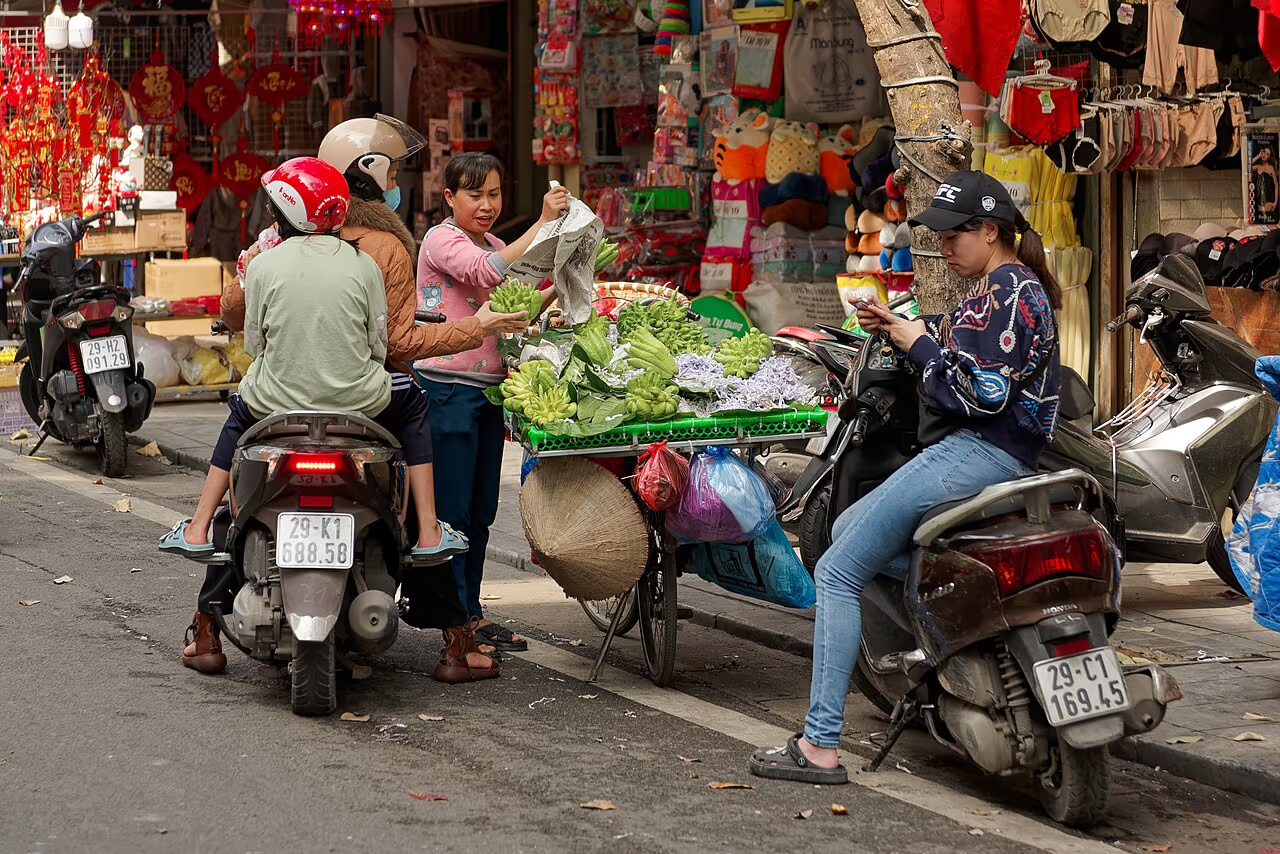
Two days in Hanoi is enough to fall for the place. With 48 hours you can walk the tangled Old Quarter, circle Hoan Kiem Lake, stand on the famous Train Street, tour the Temple of Literature and the Ho Chi Minh Mausoleum, catch a water-puppet show, and eat some of the best street food on earth — all without rushing. This is a local, hour-by-hour itinerary for the perfect 2 days in Hanoi: Day 1 keeps you in the atmospheric old town and around the lake; Day 2 opens out to the city's history, culture and the calmer shores of West Lake. Along the way I'll tell you exactly where to eat, where to stay, how to handle the traffic, and — because it's what our guests almost always do next — how to carry on from Hanoi up to the mountains of Sapa.
I'm Sinh Giang, part of the local team at Trekking Tour Sapa. We meet travellers every week who have just spent a couple of days in Hanoi before coming up to trek with us, so I hear the honest verdicts: what was worth it, what they'd skip, and what they wish they'd known before they landed. This guide is built from those conversations — a route you can actually walk, paced for real feet and real Hanoi heat, not a wish-list you'd need a week to finish.
A quick word on the city itself. Hanoi is Vietnam's thousand-year-old capital, and it wears its age well: a French-colonial layer over an ancient Vietnamese core, wrapped around a string of lakes. It is louder, older and more atmospheric than Ho Chi Minh City in the south, and the Old Quarter — 36 narrow streets each once dedicated to a single trade — is the beating heart of it. Get that geography in your head and the two days below fall neatly into place.
Is 2 Days in Hanoi Enough?
For the city itself, yes — two days in Hanoi is plenty to see the highlights and soak up the atmosphere without feeling rushed. Where 48 hours runs short is if you also want a big day trip: Ha Long Bay, Ninh Binh or the Perfume Pagoda each eat a whole day of travel, so those belong in a three- or four-day plan. Treat Hanoi as a two-day city stop, and you'll leave satisfied.
Who is this two-day plan for? Honestly, almost everyone — first-time visitors who want the classics, couples after a romantic city break, families, and solo travellers alike. It leans on walking and street food rather than expensive attractions, so it's as kind to a backpacker's budget as it is to a comfort-seeker's. If you have mobility limits, the good news is that Day 1 is almost entirely flat and you can Grab between any two points; only the Old Quarter's uneven pavements and the occasional temple step ask much of you. Adjust the pace to suit — there's no prize for finishing early.
The itinerary that follows assumes you arrive the evening before Day 1, or early on Day 1 itself, and that you're staying in or beside the Old Quarter. If your flight lands late, don't worry — the plan is flexible, and half of Hanoi's best moments happen after dark anyway. Ready? Here's Day 1.
Day 1: The Old Quarter, Hoan Kiem & the Night Market
Day one stays close to home. The Old Quarter and Hoan Kiem Lake are the soul of Hanoi, and they reward slow wandering rather than a checklist sprint. Here's how to spend the first of your two days in Hanoi, from a noodle-soup breakfast to a beer on Ta Hien street at night.
Breakfast: pho where the locals go
Start the way Hanoi does, with a steaming bowl of pho — the northern beef noodle soup that was invented in this city. Skip the hotel buffet and find a busy hole-in-the-wall like Pho Gia Truyen on Bat Dan street, where you queue, point and slurp elbow-to-elbow with office workers. A bowl costs around 50,000–70,000 VND. It's the honest, perfect first taste of the city.
Day 1 · 7:30 AMWander the 36 streets of the Old Quarter
Spend the morning simply getting lost in the Old Quarter. Each lane was historically home to one trade — Hang Bac for silver, Hang Ma for paper offerings, Hang Gai for silk — and many still are. Peek into the crumbling tube houses, dodge the scooters, buy a coffee from a lady on a plastic stool, and drop into Bach Ma Temple, the oldest in the quarter. Don't over-plan this bit; the getting-lost is the sightseeing.
Day 1 · 9:00 AMHoan Kiem Lake & Ngoc Son Temple
Walk south to Hoan Kiem Lake, the green heart of Hanoi, wrapped in legend about a magic sword and a giant turtle. Cross the scarlet Huc Bridge to Ngoc Son Temple on its little island (entry ~50,000 VND), then find a bench under the willows to watch the city breathe. The red Turtle Tower in the middle of the water is Hanoi's postcard image. It's a lovely, shady midday pause.
Day 1 · 11:00 AMLunch: bun cha, Hanoi's signature dish
For lunch, eat bun cha — smoky grilled pork patties and belly in a bowl of sweet-savoury broth, with a mountain of fresh herbs and cold rice noodles to dip. It is Hanoi's defining lunch, best around midday when it's freshly grilled. Bun Cha Huong Lien (the "Obama" spot) is famous, but any busy local place delivers. Add a plate of fried crab spring rolls (nem cua be) and you've eaten like a true Hanoian.
Day 1 · 12:30 PMTrain Street & an egg coffee
In the afternoon, find Train Street — the narrow residential track where the railway runs a metre from people's front doors. Have a drink at one of the trackside cafés and, if you time it right, watch a train squeeze past (check the day's schedule locally, as access is sometimes restricted for safety). Afterwards, warm up with Hanoi's own invention, ca phe trung (egg coffee), at Cafe Giang, where it was created in 1946. It's like drinking a warm tiramisu.
Day 1 · 3:00 PMEvening: bia hoi on Ta Hien street
As the light fades, the Old Quarter's beer corner — Ta Hien street — fills up. Pull up a tiny plastic stool and order bia hoi, the fresh, cheap draft beer brewed that morning, for around 10,000–15,000 VND a glass. Graze on street skewers, dried squid and peanuts, watch the world go by, then wander the weekend night market (Fri–Sun) that runs up Hang Dao street. It's the perfect, low-key first night.
Day 1 · 6:30 PM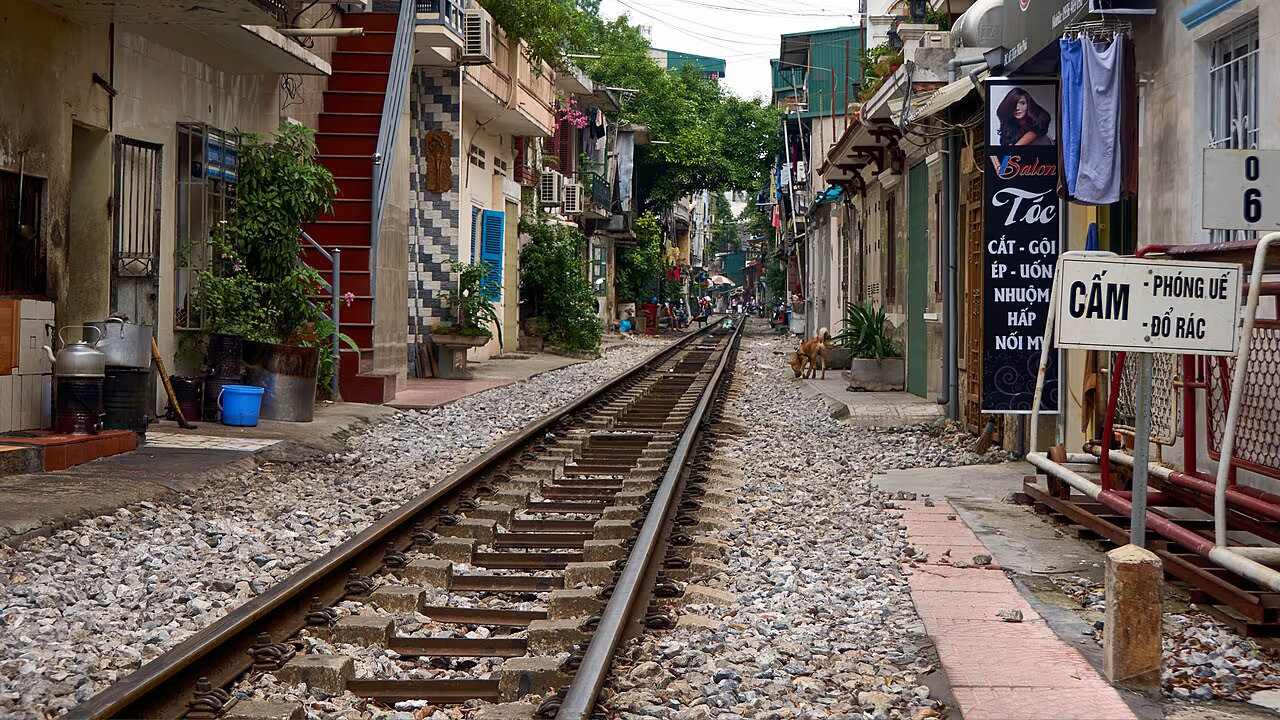
Add a Sapa Trek to Your Northern Trip
 Most Popular
Easy
Most Popular
Easy
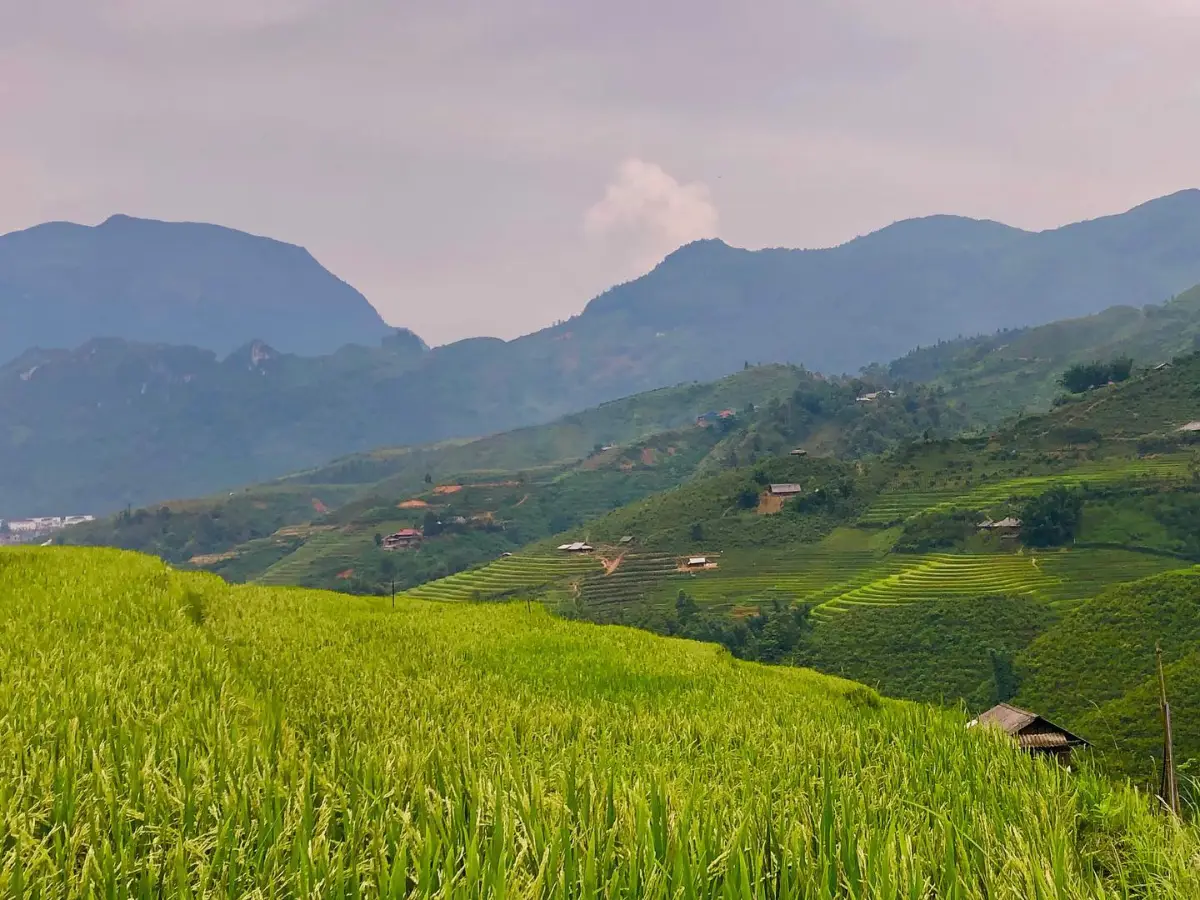
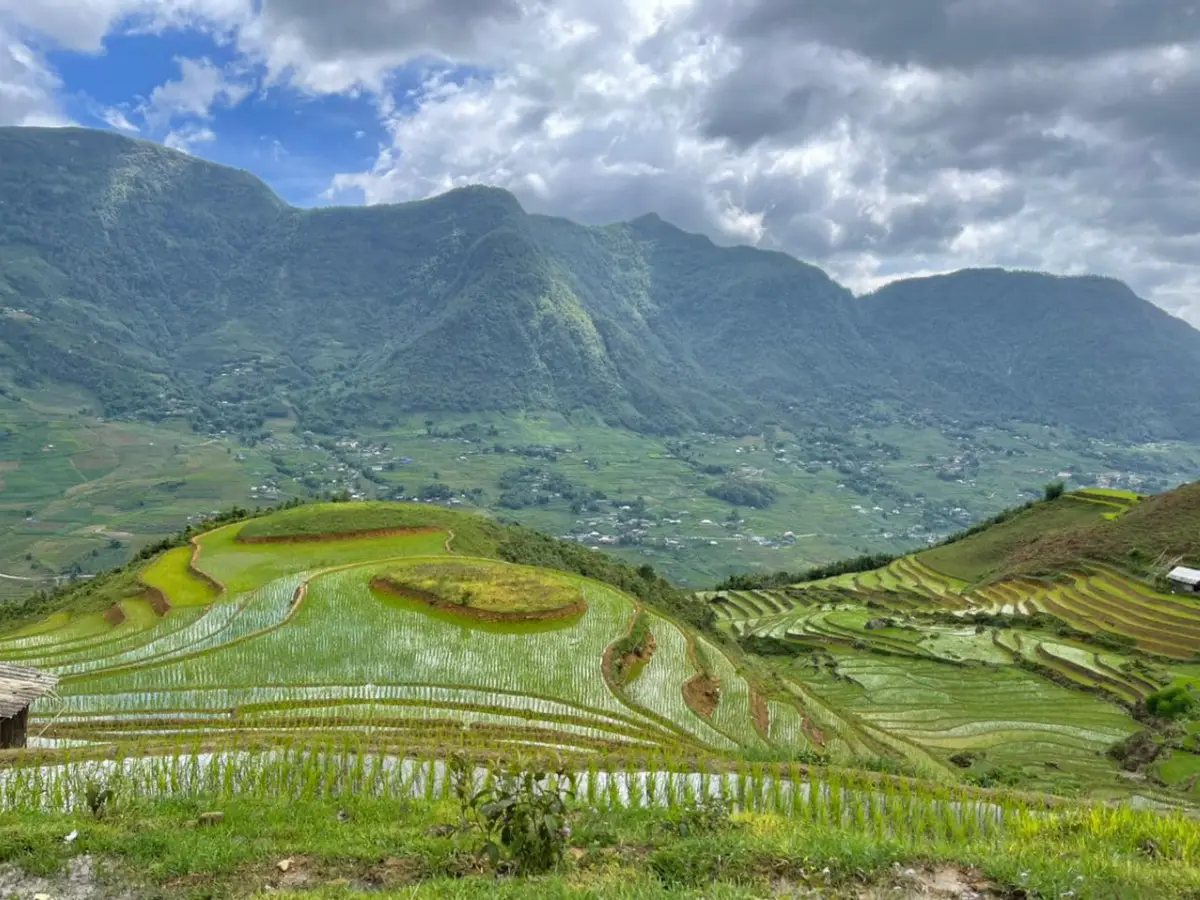
Rice Terraced Fields Trek
The classic Muong Hoa valley walk through Lao Chai and Ta Van — with a home-cooked lunch in a local family's kitchen.
 Easiest
Very Easy
Easiest
Very Easy
Sapa Easy Trekking
A relaxed, scenic day walk at a gentle pace with a local lunch — ideal for families and older travellers.
 2D1N
Easy–Mod
2D1N
Easy–Mod
Rice Fields & Homestay
Trek the valley and sleep in a local homestay — a wood-fire dinner and rice wine included. The full Sapa experience.
Day 2: History, Culture & West Lake
Day two widens the lens from the Old Quarter to Hanoi's grander, older and greener corners — the mausoleum quarter, a thousand-year-old university, and the lakeside pagodas of Tay Ho. It's a slightly more spread-out day, so an early start and a couple of Grab rides keep it comfortable. Here's the second of your two days in Hanoi, hour by hour.
Ho Chi Minh Mausoleum & the Presidential Palace
Start early at the Ho Chi Minh Mausoleum complex, where Vietnam's founding leader lies in state. The mausoleum keeps strict morning hours (roughly 8–11 AM, closed Mondays and Fridays) and a dress code — cover shoulders and knees, and expect a security line. Even from outside, the vast Ba Dinh Square, the stilt house where Ho lived, and the whimsical One Pillar Pagoda nearby are worth the early wake-up.
Day 2 · 8:00 AMThe Temple of Literature
A short ride away sits the Temple of Literature, Vietnam's first university, founded in 1070 and dedicated to Confucius. Its walled courtyards, lotus ponds and stone stelae carried on the backs of turtles are the most serene spot in the city — a green, orderly counterpoint to the Old Quarter's chaos. Entry is around 70,000 VND. Give it a proper hour; it's one of Hanoi's genuine must-sees.
Day 2 · 10:00 AMLunch & a museum: pick your history
Grab lunch near the temple — try cha ca, Hanoi's turmeric-and-dill fish cooked at your table — then choose one museum for the afternoon. The Vietnam Museum of Ethnology is superb for understanding the country's 54 ethnic groups (including the H'mong and Dao you'll meet in Sapa). History buffs may prefer the Hoa Lo Prison ("Hanoi Hilton") back near the Old Quarter, a sobering, well-presented site.
Day 2 · 12:30 PMWest Lake & Tran Quoc Pagoda
Mid-afternoon, escape to West Lake (Ho Tay), Hanoi's largest, ringed by cafés and quieter than the centre. Visit Tran Quoc Pagoda, the oldest Buddhist temple in the city, glowing red on its little peninsula — especially lovely in late-afternoon light. It's the prettiest, most peaceful hour of the day, and a lovely place to slow down before the evening.
Day 2 · 3:30 PMEvening: water puppets & a farewell feast
End your two days with a show at the Thang Long Water Puppet Theatre by Hoan Kiem — a 45-minute performance of an art form born in the Red River's flooded rice paddies, all live music and lacquered puppets dancing on water (book ahead, ~100,000–200,000 VND). Afterwards, one last Old Quarter feast: banh mi, a bowl of pho for the road, and an egg coffee to toast a city you'll want to come back to.
Day 2 · 6:00 PM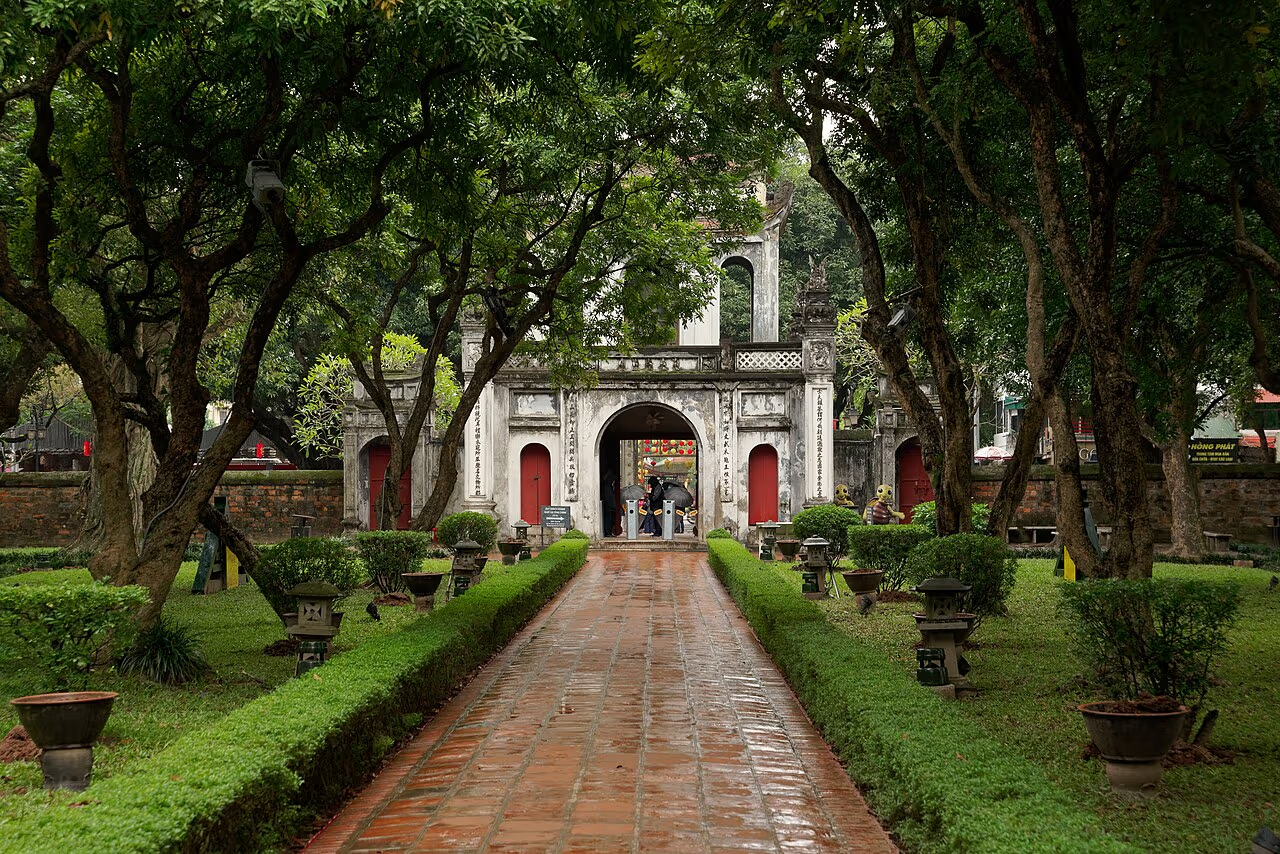
“Almost everyone who treks with us has just done a day or two in Hanoi first. The ones who loved it are the ones who slowed down and ate on the plastic stools — not the ones who tried to see everything.”
— Sinh Giang, Trekking Tour SapaWhere to Stay in Hanoi for Two Days
For a 48-hour trip, location beats everything — you want to walk out of your hotel into the action, not lose an hour in traffic each way. Stay in or right beside the Old Quarter and you'll be minutes from the lake, the food, the night market and the pickups for onward travel. Here's how the main areas compare.
| Area | Best for | Feel |
|---|---|---|
| Old Quarter (Hoan Kiem) | First-timers, walkers, street food & nightlife | Buzzy, central, noisy — the classic choice |
| French Quarter | Boutique hotels, couples, a quieter base | Elegant, leafy, upscale — still walkable |
| West Lake (Tay Ho) | Longer stays, cafés, a local expat vibe | Calm and green, but 15–20 min from the centre |
| Around the train station | Late arrivals / very early departures | Convenient for transit, thin on charm |
Hanoi has excellent value across the board — a spotless hostel bed runs a few dollars, a smart Old Quarter boutique hotel 20–40 dollars, and a genuinely lovely lake-view room still rarely tops 60–80 dollars. Book something with a rooftop or a good breakfast and a front desk that can help arrange your onward train or bus; it makes the whole trip smoother. If you land very late or leave very early for Sapa, one night near the transit points can be worth the trade-off in atmosphere.
One honest word on noise. The Old Quarter is wonderful precisely because it never quite sleeps — but that means karaoke, early deliveries and the general hum of a living neighbourhood. If you're a light sleeper, ask for a room away from the street, pack earplugs, or lean toward the French Quarter, which trades a little atmosphere for calmer nights. Whichever you choose, a two-day stay is short enough that a great location almost always beats a quiet one; you'll be out exploring far more than you're in the room.
Getting Around Hanoi
Getting around Hanoi is easy once you accept its two golden rules: walk the Old Quarter, and use the Grab app for everything else. The centre is small and the streets are the sightseeing, so you'll cover most of Day 1 on foot. For the more spread-out Day 2, or any time it's hot or wet, Grab summons a cheap, metered car or a motorbike taxi in minutes with no haggling — a short ride across town is usually a dollar or two.
Two practical things to master. First, crossing the road: Hanoi's rivers of scooters won't stop, so you step off the kerb and walk slowly and steadily at a constant pace, letting the traffic flow around you — don't freeze or dart back. It feels mad for a day, then becomes second nature. Second, avoid renting your own motorbike in the central chaos unless you're a confident, experienced rider; it's not the place to learn. Regular metered taxis (stick to Mai Linh or Vinasun) are a fine backup if your phone dies. That's genuinely all you need to move around the city with confidence.
A few small setup steps make Grab and everything else painless. Pick up a local eSIM or a cheap tourist SIM at the airport on arrival — data is what powers Grab, maps and translation, and it costs only a few dollars for the week. Keep a stack of small-denomination notes on you, because street stalls, cyclos and many cafés are cash-only and rarely have change for a big bill. Withdraw from a bank ATM (Vietcombank, BIDV, Techcombank) rather than the standalone machines that charge steep fees. With data in your pocket and small notes in your wallet, you'll glide through the city rather than getting stuck at every transaction.
The Food You Have to Eat in Hanoi
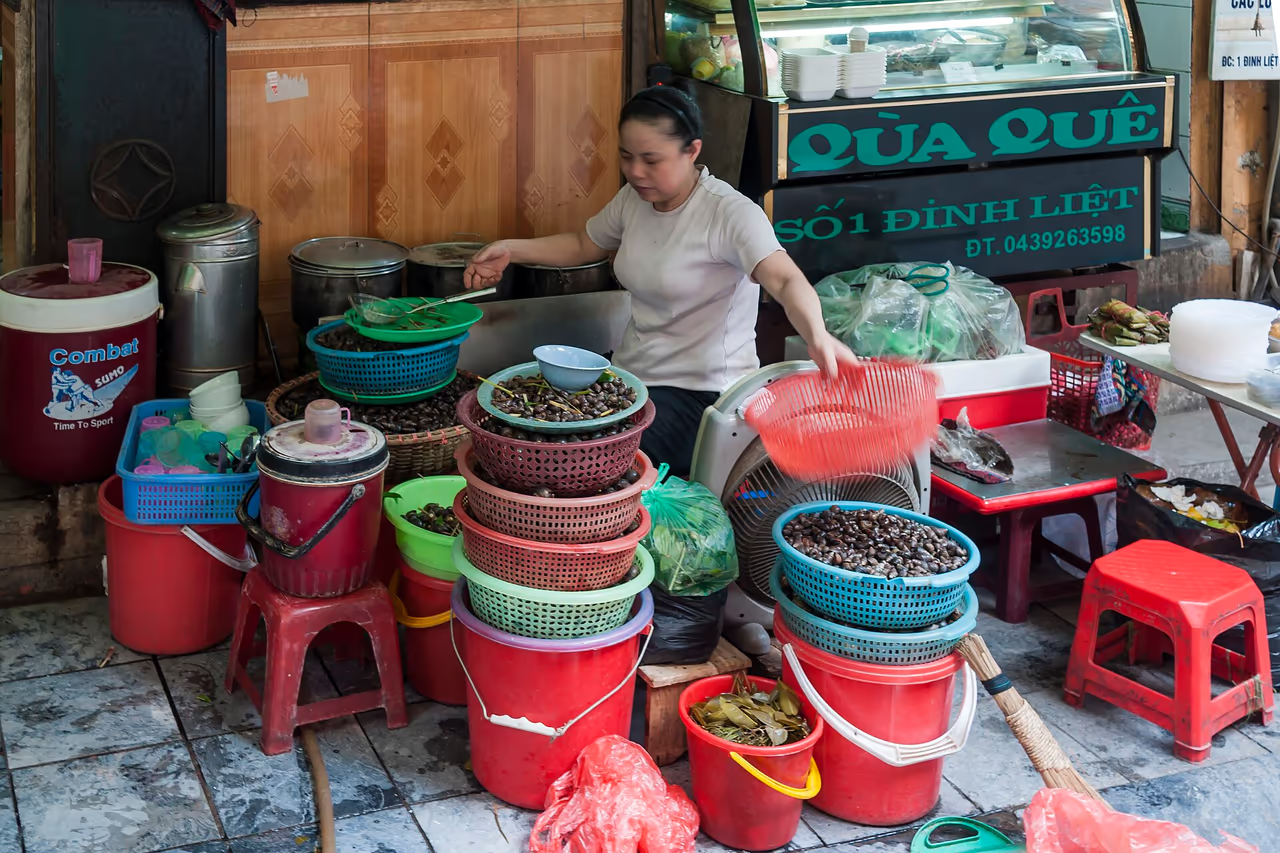
Hanoi is, quite simply, one of the great street-food cities of the world, and eating well here costs almost nothing. Over two days you can work through the city's greatest hits without ever sitting in a formal restaurant — here are the dishes to prioritise, most of which are already folded into the itinerary above.
Pho is non-negotiable: the clear, star-anise-scented beef noodle soup was born in Hanoi, and a breakfast bowl at a busy local shop is a highlight in itself. Bun cha — grilled pork, cold noodles and herbs — is the city's signature lunch. Egg coffee (ca phe trung), a Hanoi invention, whips egg yolk and condensed milk into a warm, custardy cloud over strong coffee. Add banh mi for a snack, bia hoi (fresh draft beer) on Ta Hien street in the evening, cha ca (sizzling turmeric-dill fish) for a special dinner, and com — young green rice — if you visit in autumn. The golden rule is the same as everywhere in Vietnam: eat where the locals queue, where it's cooked fresh in front of you, and drink bottled water. Do that and Hanoi will feed you like royalty for a few dollars a day. For the full country picture on eating and drinking safely, our guide on whether Vietnam is safe covers food and water in detail.
After Hanoi: Take the Overnight Train Up to Sapa
Here's what most travellers do once their two days in Hanoi are up: they head for the mountains. Sapa — Vietnam's famous trekking region of rice terraces and hill-tribe villages — is the natural next chapter of a northern trip, and getting there from Hanoi is half the fun. It's the perfect contrast to the city: quiet, green and cool after all that traffic and noise.
You have three good options from Hanoi to Sapa. The overnight train to Lao Cai lets you sleep in a cosy cabin and wake near the mountains, then a 45-minute road transfer climbs up to Sapa town — the romantic, restful choice. Comfortable cabin sleeper buses and limousine vans run door to door in about 5–6 hours, day or night. Or a private car gives you the flexibility to stop at viewpoints on the way. We book all three for our guests every week, and can arrange your transfer as part of a trek so you step off the train straight into a guided day in the valleys. Compare the options on our Hanoi to Sapa guide, or just ask us.
Hanoi → Sapa: Train, Sleeper Bus or Private Car
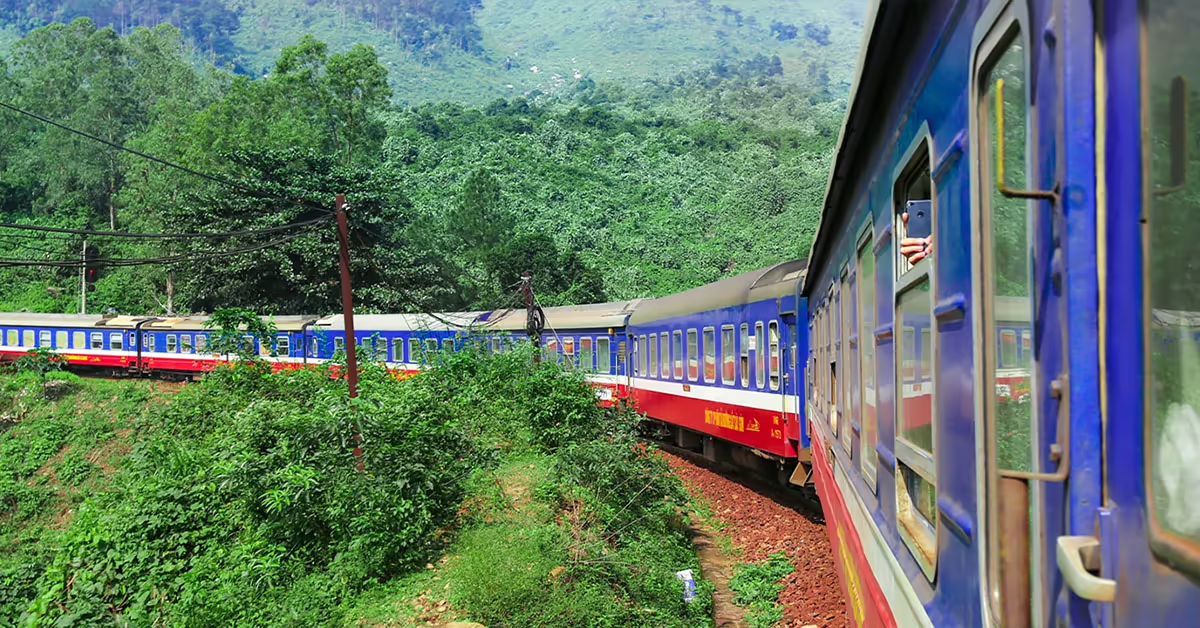
Sleep your way to the mountains on the overnight train, or roll door-to-door on a cabin sleeper bus in 5–6 hours. We'll book your seat, arrange the Lao Cai–Sapa transfer, or set up a private car — and pair it with a trek so your Sapa days are ready the moment you arrive. See our Hanoi–Sapa transport page for times and prices.
Ask about Hanoi–Sapa transfersIf you'd rather ride than sit, the mountain road itself is a bucket-list journey — see our guide to the Hanoi to Sapa motorbike route. And if you want the whole thing handled end to end, our Sapa tour from Hanoi bundles the transfer, guide, homestay and meals into one easy package. However you travel, the pattern is the same one our guests love: two days eating and wandering in Hanoi, then straight up into the rice terraces.
Popular Sapa Treks From Hanoi
 Great Value
Easy
Great Value
Easy
Mountain Views & Villages
Quieter trails, big views and real village kitchens — a perfect first day in the mountains after Hanoi.
 Quieter Trails
Moderate
Quieter Trails
Moderate
Explore Nature & Homestay
Off the tourist track through quiet valleys, with a home-cooked family dinner and breakfast. Fully guided.
Practical Tips for 48 Hours in Hanoi
A handful of small, local pointers will make your two days smoother — the things our guests tell us they wish they'd known before they arrived. None of it is complicated; it's just the difference between fighting the city and flowing with it.
Hanoi Quick Reference
- Airport transfer:Noi Bai to Old Quarter — ~45 min, Grab or fixed-price taxi
- Getting around:Walk the centre; Grab app for everything else
- Cash:Carry small VND notes — street food is cash only
- Water:Bottled or filtered only — never the tap
- Mausoleum:Mornings only, closed Mon & Fri; dress modestly
- Onward to Sapa:Overnight train or 5–6 hr sleeper bus
A few more honest notes. Bargain gently and with a smile in the markets, but never over street food — a glance at the posted or asked price is enough to keep you right. Keep your phone secure in crowds and on the back of a motorbike taxi, as opportunistic snatching is the one common Hanoi hassle. Carry a light layer in winter (December–February can be genuinely cool and damp) and an umbrella in summer for the afternoon downpours. And build in slack: Hanoi rewards the traveller who lingers over a coffee more than the one racing between sights.
Heading to Sapa? Rent Trekking Gear at Our Office
 Gear Rental
Trekking Boots Rental
Waterproof ankle-support boots. Cleaned and checked before each rental. Available at 105 Thach Son Street.
 Gear Rental
Walking Poles Rental
Trekking poles available to rent at $2/day at our office, 105 Thach Son Street. Essential for descents.
Frequently Asked Questions
Yes, 2 days in Hanoi is enough to see the highlights and get a real feel for the city. In 48 hours you can walk the Old Quarter and Hoan Kiem Lake, see Train Street, the Temple of Literature and the Ho Chi Minh Mausoleum complex, watch a water-puppet show, and eat your way through the street-food scene. It's not enough to also add a full day trip to Ha Long Bay or Ninh Binh — for that you need three or four days. Most travellers use Hanoi as a two-day city stop at the start or end of a northern Vietnam trip, then head to Sapa or the coast.
For a two-day trip, stay in or right beside the Old Quarter (Hoan Kiem district). It puts you walking distance from the lake, the night market, Train Street, hundreds of street-food stalls and the bus and train pickups for onward travel to Sapa or Ha Long. The French Quarter just south is quieter and more upscale if you prefer boutique hotels, and it's still a short walk or cheap Grab ride to everything. Avoid staying far out — Hanoi traffic makes distance expensive in time.
The Old Quarter is best explored on foot — it's compact, and the tangle of streets is half the fun. For longer hops use the Grab app (Vietnam's Uber) for cars and motorbike taxis: it's cheap, metered and avoids haggling. Traditional taxis are fine if you use Mai Linh or Vinasun. Skip renting your own motorbike in central Hanoi unless you're very experienced — the traffic is intense. To cross the road, walk slowly and steadily and let the scooters flow around you; don't stop suddenly.
Hanoi is one of the best street-food cities in the world. In two days try pho (the northern beef noodle soup that was born here), bun cha (grilled pork with noodles and herbs, Hanoi's signature lunch), banh mi, and egg coffee (ca phe trung) — a Hanoi invention. Add fresh bia hoi (draft beer) on Ta Hien street in the evening, and cha ca (turmeric-dill fish) if you have a spare dinner. Eat where the locals queue and it's cooked fresh in front of you.
Either works, but most travellers do Hanoi first because you fly into Hanoi's Noi Bai airport, spend two days in the city, then take the overnight train or a sleeper bus up to Sapa. That order lets you shake off jet lag in the city and arrive in the mountains rested for trekking. Doing Sapa first and Hanoi last is also fine, especially if you want to end your trip with easy city comforts and shopping. The transfer between them is about 5–6 hours by road or an overnight on the train via Lao Cai.
There are three main ways from Hanoi to Sapa. The overnight train runs from Hanoi to Lao Cai (about 8 hours in a sleeper cabin), then a 45-minute road transfer up to Sapa town — romantic and restful. Comfortable cabin sleeper buses and limousine vans go door to door in about 5–6 hours, day or night. A private car is the most flexible. We can book any of these for you, or arrange a private transfer, when you plan your Sapa trek — just message us.
Hanoi is a very safe city for tourists, with low rates of violent crime. The main things to watch are opportunistic petty theft (keep your phone and bag secure in crowds and on the back of motorbikes), overcharging by a few taxis and stalls (use Grab and glance at prices), and the traffic. Solo and female travellers generally feel comfortable here. Use normal city sense, keep valuables close in the night market, and you'll have no trouble. For a full country view, see our guide on whether Vietnam is safe.
The best months to visit Hanoi are October to April, when the weather is cooler and drier. Autumn (September–November) is the local favourite — mild, golden and pleasant for walking. Winter (December–February) is cool and can be grey but very comfortable for sightseeing. Summer (May–August) is hot and humid with heavy afternoon downpours, so plan indoor breaks and early starts. Whenever you come, two days is easy to fill; just pace outdoor time around the heat or rain.