 Sinh Giang
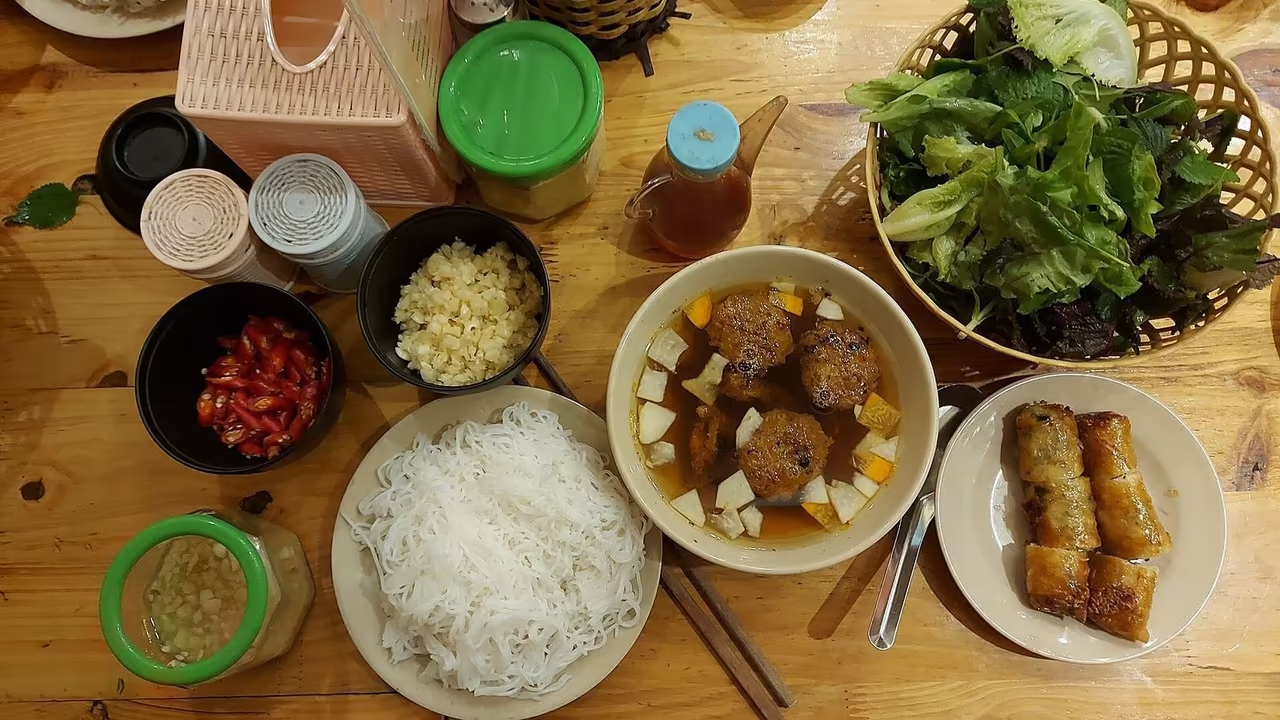
Bun cha (bún chả) is grilled pork served in a bowl of sweet, sour and salty dipping sauce, with a plate of rice noodles and a basket of herbs, and it is the lunch most people in Hanoi will name first. You eat it at midday, at a low table, by dropping noodles and leaves into the bowl a few at a time. A set costs roughly 35,000 to 100,000 VND depending on the shop, and the busiest places are full between about 11:30 and 13:00. That is the whole dish; the rest of this guide is about doing it well.
We are a Sapa trekking company, not a food-tour operator, and almost every guest we meet passes through Hanoi on the way to us. So we wrote down what we could confirm about this one dish. Every fact below was checked on 31 October 2026 against Michelin Guide Vietnam, Vietnamese and English-language news outlets, the US CDC and listings that carry opening hours and prices. We say which source each number comes from, and where sources disagree we say that instead of picking a winner. For the wider picture of what to eat in the country, see Vietnam street food by region; this page goes deeper on one dish.
Key Takeaways
- A bun cha set has three parts: grilled pork (sliced belly and minced patties) in a light dipping sauce, a plate of rice vermicelli, and a basket of fresh herbs (Michelin Guide, 20 March 2025).
- It is a lunch dish. Reports and listings put the rush at 11:30 to 13:00, so go at 10:00 or after 14:30 if you dislike queues.
- Dated prices run from 35,000 to 65,000 VND at plain Old Quarter shops and 60,000 to 100,000 VND at the places visitors know. Crab spring rolls (nem cua be) are extra.
- Opening hours for the same shop often differ between sources, so check a map on the day. We say where they disagree.
- The CDC advises travellers to avoid fresh salads and raw vegetables. The herb basket is exactly that, so decide before you sit down.
What Is in a Bun Cha Set
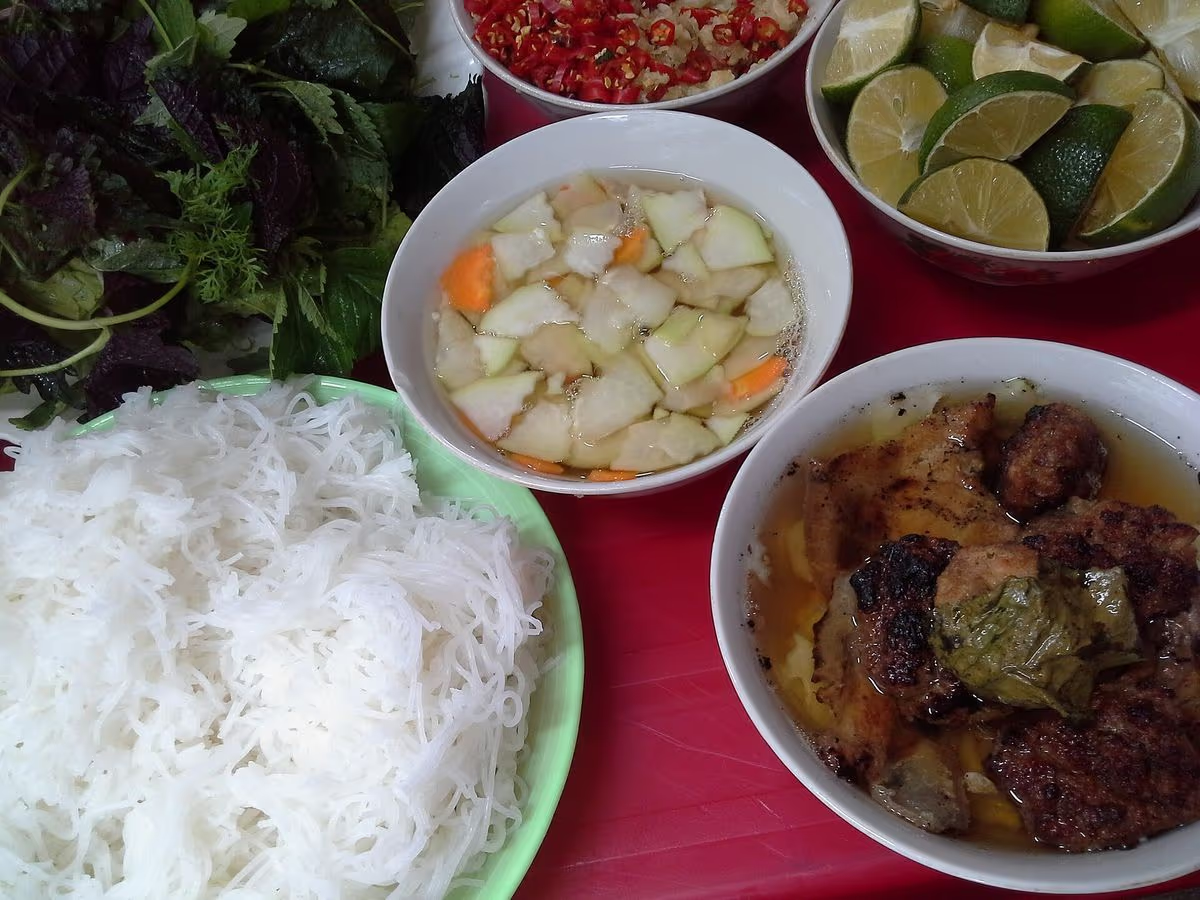
A bun cha set arrives as separate dishes, and the point is that you assemble each mouthful yourself. Michelin Guide Vietnam, in a feature on iconic dishes dated 20 March 2025, describes three parts: a bowl of grilled pork belly slices and minced pork patties in a light, mildly sweet dipping sauce with pickled vegetables, a plate of rice vermicelli, and a basket of fresh herbs. The same feature says the dipping sauce is built from fish sauce, sugar, water and vinegar, and that the technique for the minced patties shows French colonial influence. The pieces below are the ones you will see on the table.
Cha mieng (chả miếng)
Sliced pork- What it is
- Pork belly slices, marinated and grilled over charcoal until the edges blacken. Wikipedia lists charcoal as the usual fuel; we could not find an official standard.
- On the table
- Floating in the dipping bowl, often with a leaf of herb folded over it.
Cha vien (chả viên)
Minced patties- What it is
- Minced pork shaped into small patties and grilled, the part Michelin says shows French influence.
- On the table
- In the same bowl as the sliced pork. Some shops give more patties than slices, so ask what comes in a standard set.
Bun (bún)
Rice vermicelli- What it is
- Fresh rice noodles, cold or at room temperature, pressed into small cakes or piled on a plate.
- On the table
- A plate of its own. You lift a few strands at a time into the bowl; ask whether a refill costs extra.
Nuoc cham (nước chấm)
The sauce- What it is
- A thin, warm-sweet dipping sauce. VnExpress (4 August 2024) gives a traditional ratio of fish sauce, sugar and vinegar at one part each to five parts of boiled, cooled water, with green papaya, carrot, garlic and chilli added.
- On the table
- Served in the bowl with the pork. Lime, chopped chilli and crushed garlic are usually on the table to add.
Rau song (rau sống)
Herb basket- What it is
- Lettuce and mixed herbs. Wikipedia, which we use only for orientation, names lettuce, Lang mint, Vietnamese balm and bean sprouts; the exact mix changes from shop to shop.
- On the table
- A basket or plate in the middle. See the section on herbs and the CDC before you decide how much of it to eat.
Nem cua be (nem cua bể)
Optional, extra- What it is
- Fried crab spring rolls. Vietnamnet (24 July 2025) lists them, and seafood rolls, at Bun Cha Huong Lien. We found one dated price: 25,000 VND a portion for crab rolls or fermented pork rolls (nem chua) at Huyen Anh (Viet Bao, 24 August 2026).
- Diet and allergy
- They contain crab. Not for shellfish allergy.
Where It Came From, and What Nobody Knows
Nobody can tell you when bun cha was invented. Michelin calls its origin unclear and relays a legend of a Hanoi grill master at the end of the 19th or the start of the 20th century. Viet Nam News (1 November 2016) is blunter: "no one knows exactly when, where, or how" it began, and in earlier days vendors carried it through the streets in bamboo baskets. One page on Wikipedia says the first shop stood on Gia Ngu Street, but that sentence carries no citation, so we do not repeat it as fact.
What the sources do agree on is how Hanoi writers treated it. VnExpress (4 August 2024) retells an anecdote from Thach Lam's essay collection Ha Noi bam sau pho phuong, in which a country scholar smells grilled meat in the city and recites a couplet asking whether this is the treasure of a thousand years of Thang Long; Viet Nam News paraphrases Thach Lam as treating bun cha as one of the capital's key dishes. Sources print the year as 1942 or 1943, so we give 1943 with that note. Another Hanoi writer, Vu Bang, praised the dipping sauce in his book Mieng ngon Ha Noi, calling the fish sauce not too salty and the vinegar blend well judged (VnExpress, 4 August 2024). We looked for a bun cha passage in Vu Bang's better-known Thuong nho muoi hai and could not confirm one, so we do not attribute it.
Bun Cha Dac Kim at 1 Hang Manh is the old name most visitors meet. VnExpress (25 November 2014) dates it to 1965; other sources say 1966, so "since the mid-1960s" is as far as we will go. Viet Nam News (July 2025) adds a detail useful to first-timers: the shop keeps forks for guests who are not used to chopsticks.
On the evening of 23 May 2016, then-US President Barack Obama ate bun cha with the chef Anthony Bourdain at Bun Cha Huong Lien, 24 Le Van Huu Street (Dau Tu newspaper, 25 May 2016). Bourdain tweeted that the dinner cost 6 US dollars in total; we read this through the Australian broadcaster SBS rather than the original post, and it covers two people with spring rolls and beer. Vietcetera quotes the owner as saying the meal was arranged in advance, so the shop's account is that it was not a surprise walk-in. Tuoi Tre (10 June 2018) reports that the shop keeps the table in a glass case. Michelin lists the shop as a Plate restaurant in 2024, 2025 and 2026 according to one guide site; we could not load Michelin's own page.
The honest reading is that Huong Lien is famous for the dinner, not for being the best bowl in Hanoi. Local Vietnam, a commercial guide updated on 11 October 2026, says the shop now cooks for volume and is no longer the best bun cha in the city. That is one opinion, and we have not tasted every shop in this guide, so treat it as a counterweight to the headlines, not a verdict.
Where to Eat Bun Cha in Hanoi
Start with the shop's reputation only after you have checked its hours, because the same shop is listed with different opening times in different places. The table below keeps to shops that at least one source from 2024 to 2026 confirms, and it shows the hours where two sources disagree. "BG" is Michelin's Bib Gourmand, a value-for-money listing; "Plate" and "Selected" are Michelin's lighter recognitions. We could not open Michelin's pages directly, so these labels come from news reports and guide sites and are worth a second look.
| Shop | Address | Hours as listed | Price | Michelin |
|---|---|---|---|---|
| Bun Cha Huong Lien | 24 Le Van Huu | 8:00 to 20:00 | About 60,000 for bun cha; Obama combo about 100,000 | Plate, 2024 to 2026 (one guide site) |
| Bun Cha Dac Kim | 1 Hang Manh | 8:30 or 9:00 to 21:00 (two sources) | 60,000 to 70,000 (2024); 50,000 to 100,000 (2025) | Listed four years running (Vietnamnet); tier not confirmed |
| Tuyet Bun Cha | 34 Hang Than | Three different timetables listed | 35,000 to 50,000 (April 2024) | BG, 2024 to 2026 |
| Bun Cha Ta | 21 Nguyen Huu Huan | 8:00 to 22:00 | About 60,000; 60,000 to 110,000 by topping | BG, 2024 to 2026 |
| Bun Cha Chan | Listed at 115A Phung Hung; other blogs give Mai Hac De | 7:00 to 14:00 and 17:00 to 22:00, or 10:00 to 15:00 | 40,000 to 60,000 (2025) | BG, 2024 to 2026 |
| Bun cha, alley 74 Hang Quat | Alley 74, Hang Quat | 10:00 to 14:00 (undated source) | No 2024 to 2026 price found | None |
| Bamboo-skewer bun cha, Huyen Anh | Hang Gia / Hang Giay area, no exact address | Not listed | 60,000; rolls 25,000 (August 2026) | None |
A few notes on reading that table. For Bun Cha Chan the address itself is disputed between sources, so copy the name into a map app and trust the pin over our line. For Tuyet at 34 Hang Than, one listing gives 8:30 to 17:30 daily, a Vietnamese Michelin page gives two sessions, 7:30 to 11:00 and 13:30 to 17:00, and a third source says 11:00 to 15:00; a shop that closes in the afternoon can still be shut when you arrive, so aim before 11:00. For the shop in alley 74 Hang Quat, Viet Bao (24 August 2026) reports that the peak is 11:30 to 13:00 and that portions can run out early.
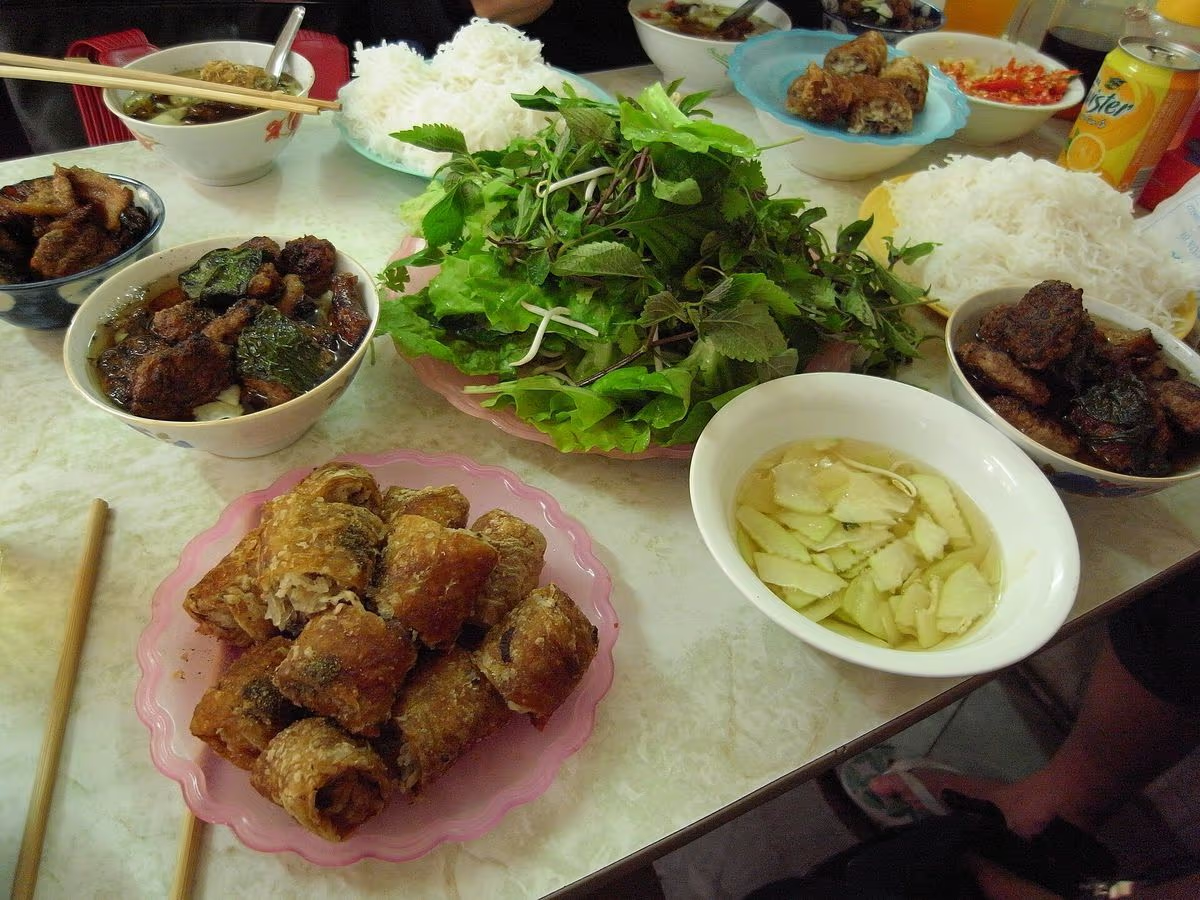
We would not rank these shops, because the sources are listings and news items, not tastings. If you want a story, go to Huong Lien. If you want an old Old Quarter name used to visitors, Dac Kim has forks. If you want Michelin's value listing, Tuyet, Bun Cha Ta and Chan carry Bib Gourmand listings for 2024 to 2026. Viet Nam News noted in 2016 that charcoal smoke on the pavement is the commonest sign of a bun cha shop.
Sapa Treks With a Village Lunch
 1-Day Trek
Trekking Through Rice Terraced Fields
Lao Chai to Ta Van with lunch at a family restaurant in Y Linh Ho.
 Homestay
Rice Terraced Fields & Homestay
Dinner and breakfast with a family in Ta Van, lunch on day one.
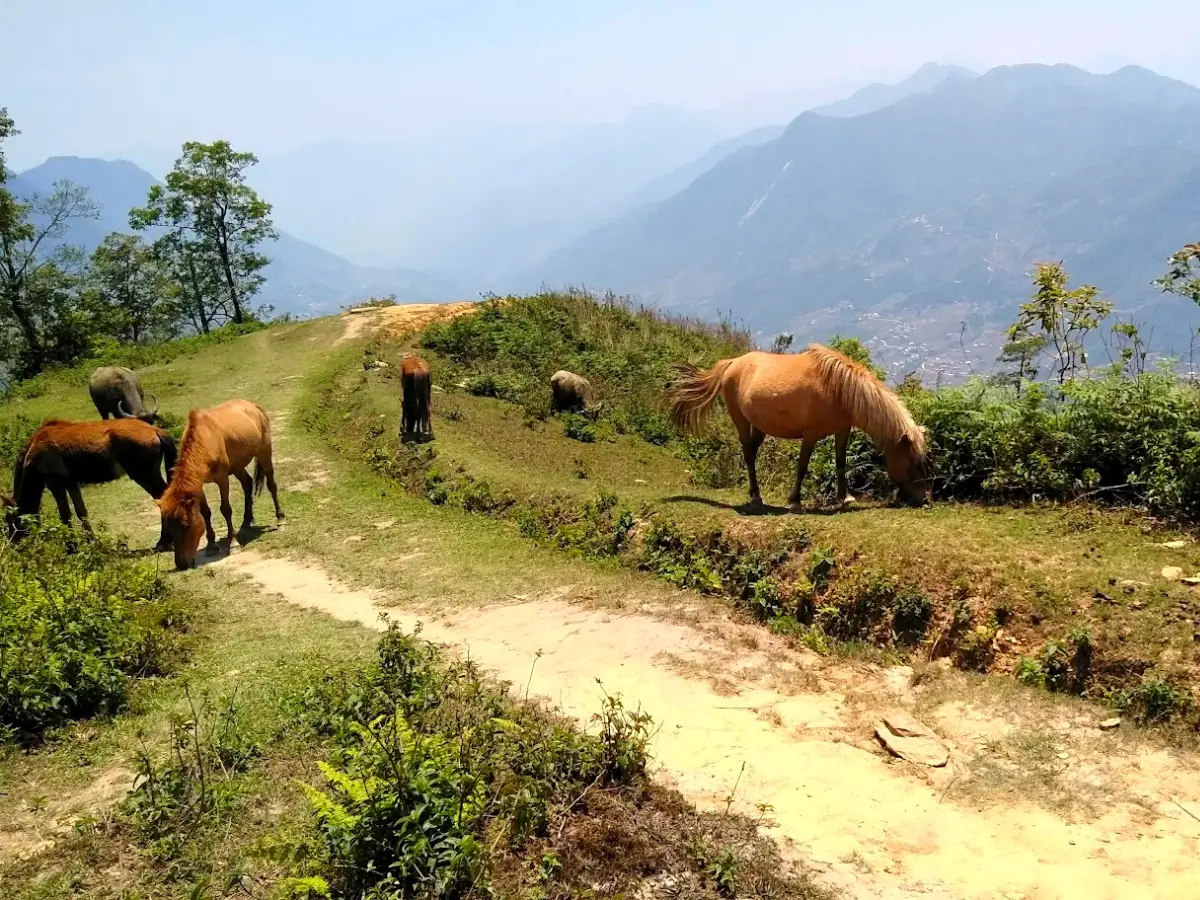 Local Favourite
Mountain Views and Villages Trek
Lunch at a restaurant run by local people in Hang Da village.
How to Order and Eat It, Step by Step
Ordering is easy once you know that you are buying a set, not a single plate. At most shops you sit, say or point to the number of portions, and the dishes arrive within minutes. Local Vietnam (11 October 2026) advises pointing at the photo of the combo on the menu at Huong Lien and paying at the counter afterwards; that is a tip from a guide site for one shop, so ask at others how payment works.
Sit and say how many sets
Say "một suất" for one set, "hai suất" for two. If the menu has a combo with spring rolls and a drink, you can point at it.
Decide on the rolls
Nem cua be or seafood rolls come as an extra at shops that sell them. Skip them if you have a shellfish allergy.
Adjust the bowl
Taste the sauce first. Add a squeeze of lime for sour, chilli for heat and crushed garlic for bite. Most shops leave these on the table.
Take a little noodle and a leaf or two
With chopsticks, lift a small bundle of noodles, drop it into the bowl with a few herbs, and eat it with a piece of pork. Keep the rest on the plate so it does not go soft.
Repeat in small mouthfuls
Vietnam News describes the practice as dipping ingredients into the sauce rather than drowning them. Ask for more noodles or sauce if you run short.
Pay and go
Many shops bring a bill or ask you to settle at the counter. We found no source on whether cards are accepted, so carry cash.
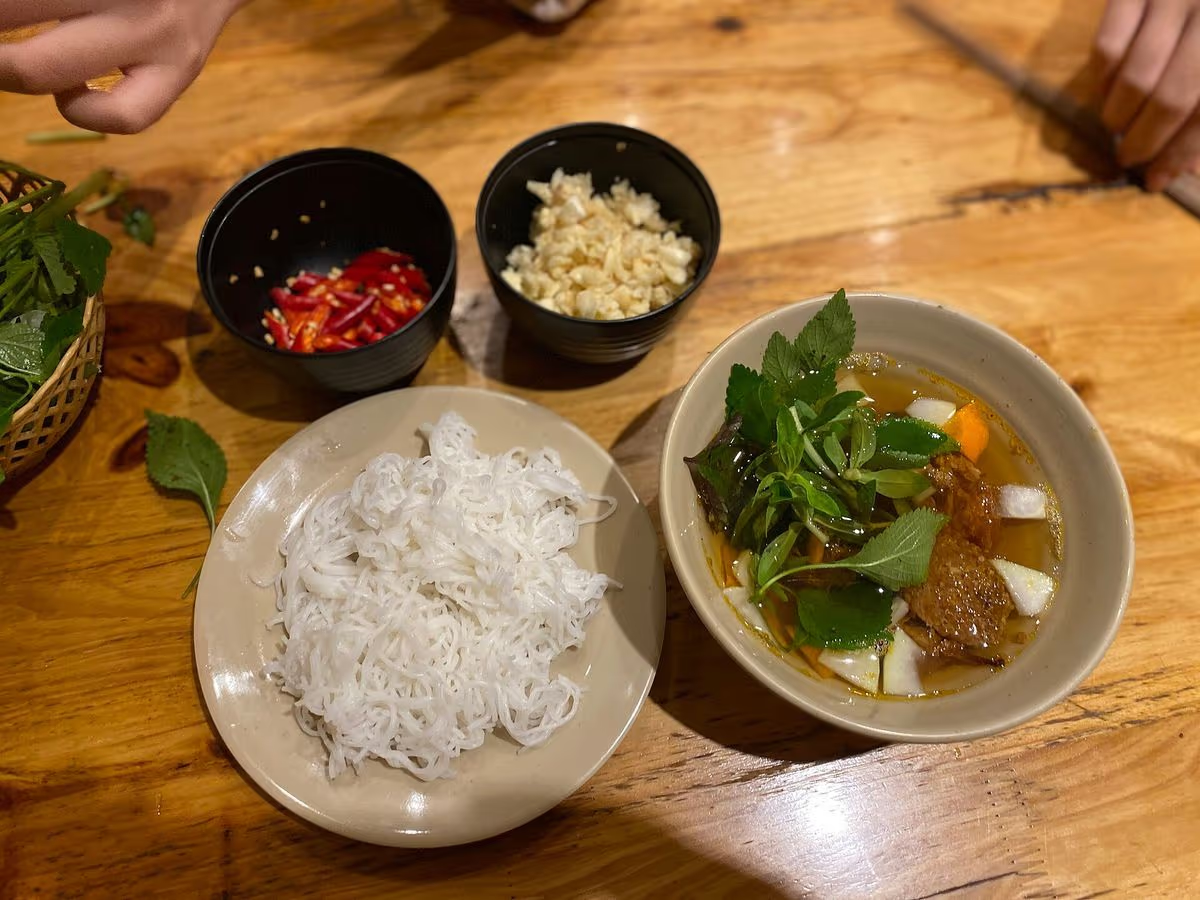
You do not need to eat the whole basket. In our view the common mistake is to treat the herbs as a salad and pile them in; the idea is a leaf or two with each bite. The sauce is a dip, not a soup, and a bowl that has sat for ten minutes with noodles in it will taste different from a fresh one.
When to Go: Building a Day Around Lunch
Lunch is the time to go, and in at least one shop portions can run out early. Reports and listings put the rush at 11:30 to 13:00. Local Vietnam suggests arriving at 10:00 or 14:30 to avoid the crowd at Huong Lien. Because shop hours vary, the cleanest approach is to arrive just before the start of the rush, at about 11:00, and leave before it ends.
That shapes a day. If you are heading to Sapa the same evening, you can use the late morning for the Old Quarter on foot, eat bun cha at 11:00 or 11:30, and still have the afternoon for packing or the train or bus. We have written about the Old Quarter on foot, the water puppet show and egg coffee evening and a two-day Hanoi plan, so we do not repeat them here. The sketch below only shows where lunch sits.
Old Quarter first, not last
Walk the streets around Hoan Kiem Lake while the heat is low. Stay within ten minutes of your lunch shop so you are not crossing the city at midday.
Bun cha before the rush ends
Arrive about 11:00. Order, eat slowly, pay. Keep 45 minutes in the plan; the meal itself is quick but a queue is not.
Coffee, then your transfer to Sapa
If you are leaving for Sapa tonight, the Hanoi to Sapa guide lists how long each route takes. Eat lighter in the evening; a sleeper bus or train is easier after a lunch than after a feast.
What Bun Cha Costs
The prices we could source fall into three bands, and the band tells you more than the exact number. The 60,000 VND figure appears on several pages; Vietnamnet (24 August 2026) converts it to about 2.30 US dollars.
The low band comes from Vinpearl (November 2025), which estimates 35,000 to 55,000 VND, and from Vietnamnet (27 April 2024), which reports 35,000 to 50,000 at Tuyet. The middle band comes from Ngoi Sao (15 June 2025), which headlines shops that charge 100,000 VND a portion, and from Viet Bao and Vietnamnet in 2026. At Huong Lien, Local Vietnam gives 60,000 for plain bun cha and about 100,000 for the Obama combo of a bun cha, a roll and a beer, while another listing says 120,000; there is no official price list we could find. Prices rise with extra patties, with rolls and with drinks, so the figure on the menu board beats any number here.
Two practical points. First, ask the price before you order in a shop with no menu, and look at what the neighbouring table is paying. Our guide Is Vietnam Safe for Tourists? covers overcharging in general; it is rare at a shop with a fixed menu and common where nothing is written down. Second, at the prices above, a bun cha lunch is a cheap sit-down meal, and it fills you up.
Herbs, Ice and Allergies
The risk with bun cha is not the grilled pork, which is cooked hot, but the raw herbs and any ice. The CDC page on food and water safety for travellers, last reviewed 6 January 2026, says to avoid fresh salads, even finely cut ones, and that raw vegetables are safer if you peel or wash them yourself with safe water. It also says not to use ice where clean water is limited, to eat street food only when it is hot, and to wash your hands with soap or a gel of at least 60 percent alcohol. The CDC's Vietnam page, reviewed 25 August 2026, recommends typhoid vaccination for most travellers and hepatitis A vaccination for those not already protected. Ask a doctor about both before you leave.
Easy choices
- Pick a busy shop where the meat comes off the grill in front of you.
- Eat the pork and noodles while hot; take only a few herbs.
- Use hand gel before you eat.
Think twice
- A full basket of raw leaves if your stomach is delicate.
- Ice in the drink when the shop does not say where it comes from.
- Crab rolls if you have a shellfish allergy.
On allergies, we found no source that covers bun cha specifically, so this is general reasoning from the ingredients: pork in every set, fish sauce in the dipping bowl, crab in some rolls, and sometimes peanuts or other items in a sauce a shop makes its own. If you avoid any of these, say so in writing, with a phone translation if you need it, and check what the shop can leave out. We found no restaurant that confirms a vegetarian bun cha, though blogs mention one exists. A cook can leave the pork out of a bowl, but the sauce is usually made with fish sauce, so ask. We found no source on halal or kosher bun cha, so ask the shop.
Bun Cha in Sapa
Bun cha is a Hanoi dish, and Sapa is not where you go for it. Our team would send you to a village lunch on a trek instead. But we looked for a Sapa shop that sells it, and found one we could confirm with dated reviews: Bun Cha Nga Canh, 596 Dien Bien Phu Street, listed on Wanderlog with 2026 Google reviews, open from 5:00 to 21:30, rated 4.4 on 1,165 reviews, with a bowl at about 50,000 VND according to guests. The caveat is important. One reviewer wrote on 7 April 2026 that "it is definitely not a Ha Noi bun cha", describing a broth-based bowl closer to pho and a little spicy. We would treat it as a Sapa version of the name, not as the Hanoi dish.
We found no source that explains Sapa grilled pork in terms of local pigs or charcoal, so we do not claim it. If you want a Sapa meal worth planning around, see what to eat in Sapa and Sapa restaurants.
The Part We Do Sell
- Hanoi to Sapa transport — sleeper buses, limousines and the overnight train, bookable with your trek
- Hanoi to Sapa guide — what each option costs and how long it takes
- How to get to Sapa — the first leg, in detail
For a bigger trip, Vietnam for first-timers and a one-week itinerary show where a Hanoi lunch fits, and how to get to Sapa covers the journey north.
Sources and What We Could Not Confirm
We checked these on 31 October 2026. Where the entry says "listing", it is a commercial or user-written page, which is weaker than a news report.
- Michelin Guide Vietnam feature on bun cha, 20 March 2025.
- VnExpress, 4 August 2024 and 25 November 2014; Viet Nam News, 1 November 2016 and July 2025.
- Dau Tu, 25 May 2016; Tuoi Tre, 10 June 2018; SBS; Vietcetera: the Obama dinner.
- Vietnamnet, 27 April 2024, 24 July 2025 and 24 August 2026; Viet Bao, 24 August 2026; Ngoi Sao, 15 June 2025.
- Listings: Local Vietnam, 11 October 2026; enprimeurclub.com, March 2026; Wanderlog, 2026.
- CDC food and water safety page, reviewed 6 January 2026; CDC Vietnam page, reviewed 25 August 2026.
What we could not confirm: whether Michelin's own pages carry the labels in the table (they would not load), a current official price list for any shop, whether the shops take cards, a vegetarian bun cha at a named shop, and any source for a Hai Phong, Hue or Saigon version of the dish. We also found no source that ties bun cha to a specific street in the early 20th century. When in doubt, a shop's own sign and your map app are better than this page.
Rent at Our Office Before You Trek
 Gear Rental
Trekking Boots Rental
Waterproof ankle-support boots. Cleaned and checked before each rental. Available at 105 Thach Son Street.
 Gear Rental
Walking Poles Rental
Trekking poles available to rent at $2/day at our office, 105 Thach Son Street. Essential for descents.
Frequently Asked Questions
Bun cha is a Hanoi lunch of grilled pork in a light dipping sauce, served with a plate of rice vermicelli and a basket of fresh herbs. Michelin Guide Vietnam describes the three parts in a feature dated 20 March 2025. You dip noodles and leaves into the bowl and eat them with the pork.
We cannot name a single best shop, because the sources we found are listings and news reports, not tastings. Bun Cha Huong Lien at 24 Le Van Huu is the shop of the 2016 Obama dinner, Bun Cha Dac Kim at 1 Hang Manh has forks for visitors, and Tuyet, Bun Cha Ta and Bun Cha Chan carry Michelin Bib Gourmand listings for 2024 to 2026 according to the sources we read.
Dated prices run from 35,000 to 65,000 VND at plain Old Quarter shops and 60,000 to 100,000 VND at the shops visitors know. Vietnamnet converted 60,000 VND to about 2.30 US dollars on 24 August 2026. Crab spring rolls are an extra, 25,000 VND a portion at one shop in August 2026.
Eat it at lunch. Reports put the rush at 11:30 to 13:00, and Local Vietnam suggests 10:00 or 14:30 to avoid the crowd at Huong Lien. Opening hours differ between sources for the same shop, so check a map on the day.
The pork is cooked hot, but the herb basket is raw. The CDC, in a page last reviewed on 6 January 2026, tells travellers to avoid fresh salads and to eat street food only when it is hot. Choose a busy shop, take only a few leaves if your stomach is delicate, and ask a doctor about typhoid and hepatitis A vaccines.
We could not confirm one at any named shop. Some blogs mention a vegetarian version, but a standard set contains pork and a dipping sauce made with fish sauce. Ask the shop what it can leave out, and do not assume that a bowl without pork is free of fish sauce.
There is a shop called Bun Cha Nga Canh at 596 Dien Bien Phu Street, listed with 2026 Google reviews and a bowl at about 50,000 VND. One reviewer on 7 April 2026 called it not a Hanoi bun cha and described a broth-based bowl, so treat it as a local version of the name.
No. We run Sapa treks and Hanoi to Sapa transfers, and our village lunch on a trek is the food we can vouch for. We wrote this guide because many guests pass through Hanoi before they reach us, and we say which facts we could not confirm.