 Sinh Giang
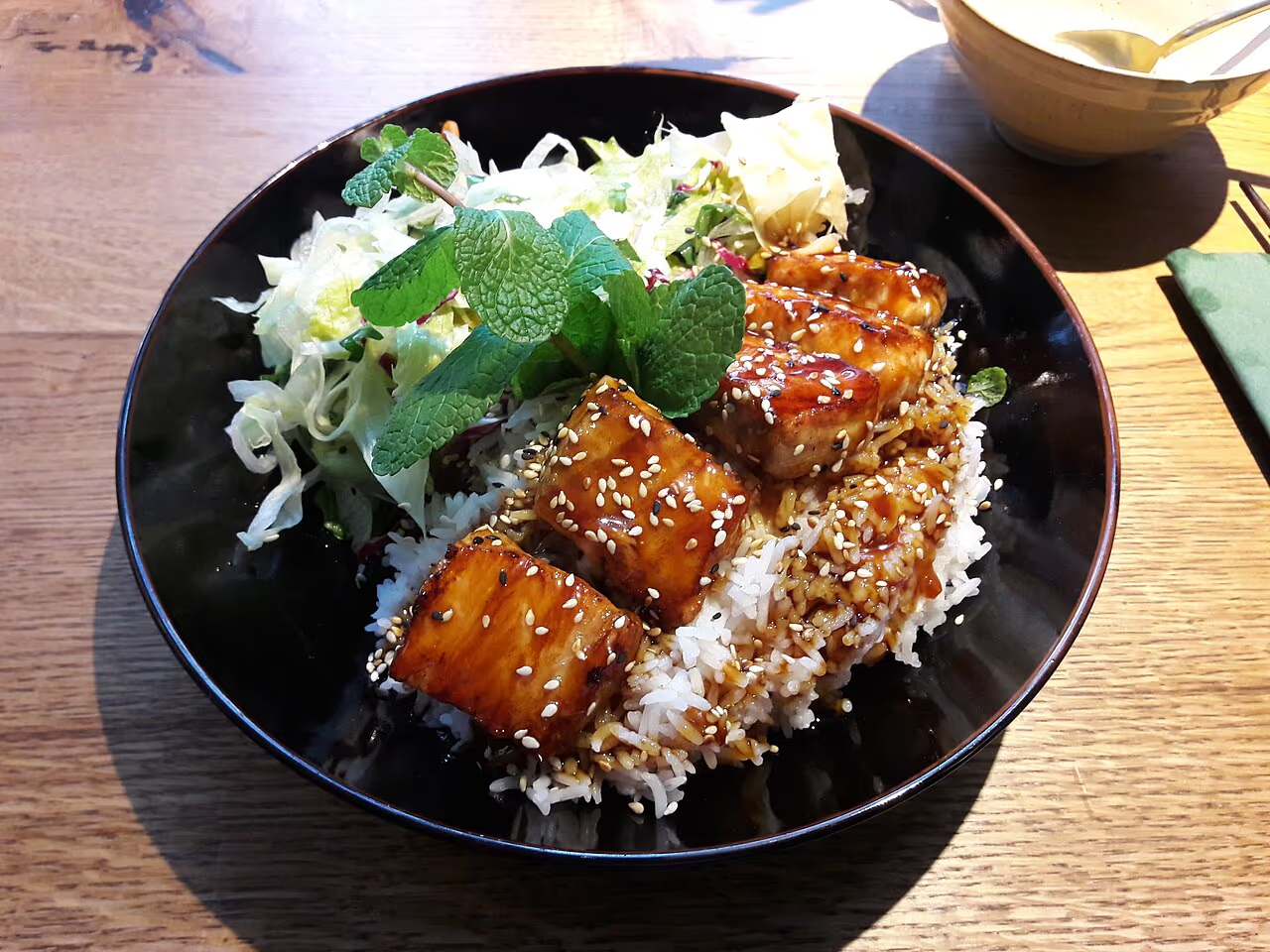
Eat in Sapa the way the mountains want you to: start with a cold-water salmon or sturgeon hotpot (locals call the fish ca hoi), try a bowl of thang co if you are feeling brave, then graze the grilled skewers, corn, eggs and com lam bamboo rice at the night market. For sit-down Sapa restaurants, the reliable cluster runs along Cau May Street and Fansipan Street in the town centre, a few minutes from Sapa Lake — that is where you will find English menus, hotpot, and everything from local grills to pizza. This is the honest local rundown: what the signature dishes are, which streets to walk, what it all costs, and where to eat depending on your budget and your mood.
I have grown up eating this food and I send guests out to these tables every week, so the advice here is what I would tell a friend, not a copy-paste of a booking site. Sapa is a small town — you can walk the whole eating district in fifteen minutes — but the range packs in tight, from a 30,000-dong bowl of noodles on a plastic stool to a proper salmon feast in a warm dining room. The trick is knowing which dish belongs to Sapa and which is just a menu filler.
If you take one line from this guide, take this: the food most worth your money here is the food you cannot get the same way anywhere else in Vietnam — the mountain salmon, the smoky grilled meats, the wild greens picked that morning, and the corn wine that appears whether you asked for it or not.
What Are the Best Restaurants in Sapa?
The best restaurants in Sapa are the ones serving the mountain's own food — salmon and sturgeon hotpot, grilled local meats, and garden vegetables — clustered along Cau May Street and Fansipan Street near Sapa Lake. Before the numbers, here is the shape of Sapa's small but dense eating scene.
None of the Sapa restaurants is Michelin-fussy, and that is the point. This is a mountain town where the good food is honest, warming and tied to the land: fish from cold streams, chickens from the yard, greens from the terrace edges, wine from the corn crop. A "best" restaurant here is one that cooks that local produce well and does not drown it in a tourist menu of a hundred dishes it cannot possibly make fresh. My rule of thumb is simple — the shorter and more local the menu, the better the meal. Later in this guide I break the choices down by budget and by occasion so you can pick the right table for the night you are having.
Sapa's Signature Dishes and Local Specialties
Sapa's signature dishes are cold-water salmon and sturgeon hotpot, thang co stew, grilled skewers and corn, com lam bamboo rice, and black chicken — cooked with wild mountain greens and washed down with corn wine. Order these before you order anything you could eat in Hanoi. Here is what each one actually is and whether it is worth trying.
Salmon and sturgeon hotpot (ca hoi, ca tam)
This is the dish Sapa is famous for and the one I send almost every guest to try first. The cold, fast streams around town are the right temperature to farm salmon and sturgeon, so the fish is genuinely local rather than trucked up from the coast. It usually arrives as a hotpot: a bubbling sour-and-spicy broth in the middle of the table, a platter of sliced raw fish, and heaps of vegetables and noodles you cook yourself. The salmon skin is often served crisped and separate, and the sturgeon is firmer and richer. It is warming, sociable and made for a cold evening — the single most Sapa meal you can eat.
Thang co
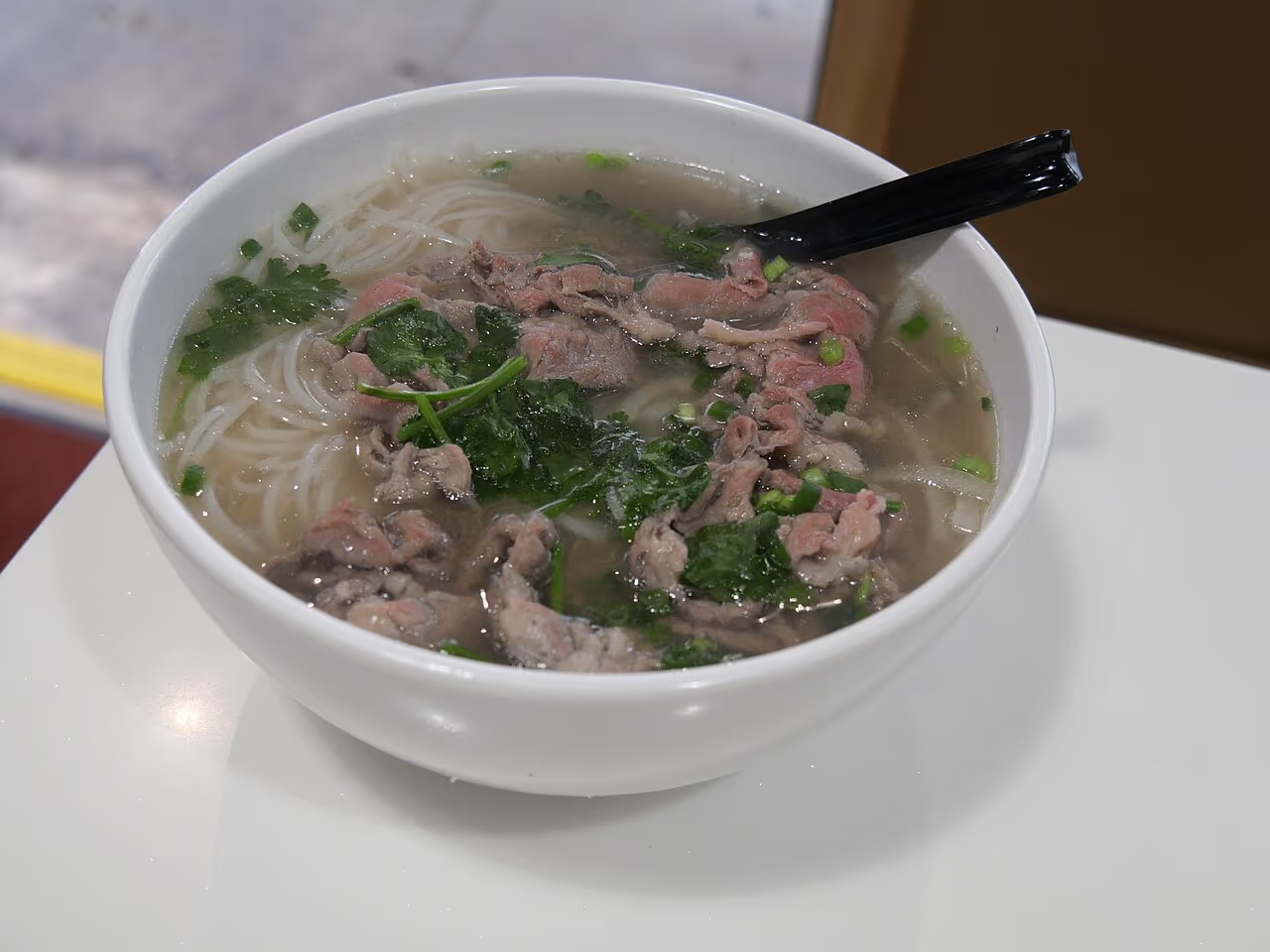
Thang co is the traditional stew of the Black H'mong, a slow-simmered pot of horse (or sometimes beef) meat and offal seasoned with cardamom and mountain herbs. You will smell it before you see it at the markets. It is an acquired taste and I will not pretend otherwise — it is strong, and the offal is not for everyone — but it is the most authentic thing on any menu here, and travelers who try it at a market stall over a shared cup of corn wine tend to remember it fondly. If you want the real, unpolished version, look for it at the Sunday markets rather than a tourist restaurant.
Grilled skewers, corn and eggs (do nuong)
Come evening, the streets fill with small charcoal grills, and this is my favourite cheap eating in Sapa. Skewers of pork, chicken wings, tofu, mushrooms, whole small fish and rolled greens sizzle over the coals; grilled corn and boiled or grilled eggs sell for a few thousand dong each; and there is often smoky grilled sticky rice too. You point, they grill, you eat standing in the cold with a beer or a hot soy milk. It is social, forgiving on the wallet, and exactly what you want after dark.
Com lam (bamboo sticky rice)
Com lam is sticky rice packed into a hollow bamboo tube and roasted over fire until the grains take on a faint smoky, woody flavour. You peel back the bamboo and eat it with sesame salt or dipped in the juices of grilled meat. It is a mountain staple, cheap, and a nice thing to carry on the trail. Every night market has a stall selling it warm.
Black chicken, wild greens and mustard greens
Black chicken (ga den) is a local breed with dark skin and bones, usually served grilled with lime-salt-pepper dip or simmered into a medicinal-tasting soup with herbs — leaner and more flavourful than ordinary chicken. Alongside it you will meet the vegetables that make Sapa's cool climate special: rau cai meo (H'mong mustard greens, slightly bitter and stir-fried with garlic), chayote tips, wild ferns, and other greens picked from the terrace edges that morning. Order a plate of stir-fried greens with any meal — they are fresh, cheap and genuinely of this place.
Smoked meats, sausages and Sapa fruit
A few more mountain specialities are worth hunting down. Thit trau gac bep is buffalo meat rubbed with mountain spices and smoked slowly over the kitchen fire until it is dark, chewy and intensely savoury — the H'mong version of jerky, sold in vacuum packs at the markets and a good gift to carry home. You will also find smoky local pork sausages (lap xuong) hung above the same fires. In season, do not miss Sapa's fruit: the cool climate grows sweet plums and peaches in early summer, chayote and cardamom year-round, and the roadside stalls stack them high. Grilled sweet potato and cassava appear on the same charcoal grills as the skewers once the nights turn cold. None of these is a full meal, but together they are the snacks that make wandering the streets and markets its own kind of eating.
If you only have one dinner in town, order a shared salmon hotpot, a plate of stir-fried H'mong mustard greens, and some grilled black chicken between the table. Add a bottle of ruou ngo if you want the full local experience. That is the meal I would put in front of my own family's guests.
Corn wine (ruou ngo)
Ruou ngo is a clear, strong spirit distilled from corn, made in the villages around Sapa and Bac Ha. It appears on tables at homestays and local restaurants, often poured before you have decided you want it, and refusing politely is completely fine. Treat it with respect — it is stronger than it tastes, and the toasting can escalate quickly. One or two small cups with dinner is a lovely way to warm up on a cold night; a whole bottle shared with a H'mong family is a story you will tell for years.
Where to Eat: The Best Areas in Sapa
The best areas to eat in Sapa are all within a short walk of each other in the town centre: Cau May Street for tourist-facing restaurants, Fansipan Street for a mix of local and traveler spots, the night market and food street for cheap grilled food, and the lanes around Sapa Lake for the view. Here is how they differ.
Cau May Street
Cau May is the main tourist eating street and the easiest place to start. It runs up from near the church and is lined with restaurants that have English menus, photos, salmon hotpot, Vietnamese classics and a fair amount of Western food (pizza, burgers, pasta) for when you have had enough rice. Quality varies, and the very front-row places lean touristy, but there are genuinely good kitchens along here. Walk a minute or two off the busiest stretch and prices drop while the food often improves.
Fansipan Street
Fansipan Street, running roughly parallel, mixes local eateries (quan an) with traveler cafes and cheaper rice-and-noodle spots. This is where I point people who want to eat where locals and long-stay travelers actually eat rather than on the main tourist drag. You will find good pho, bun cha, cheap set meals, and a couple of solid hotpot places, usually at lower prices than the equivalent on Cau May.
The night market and food street
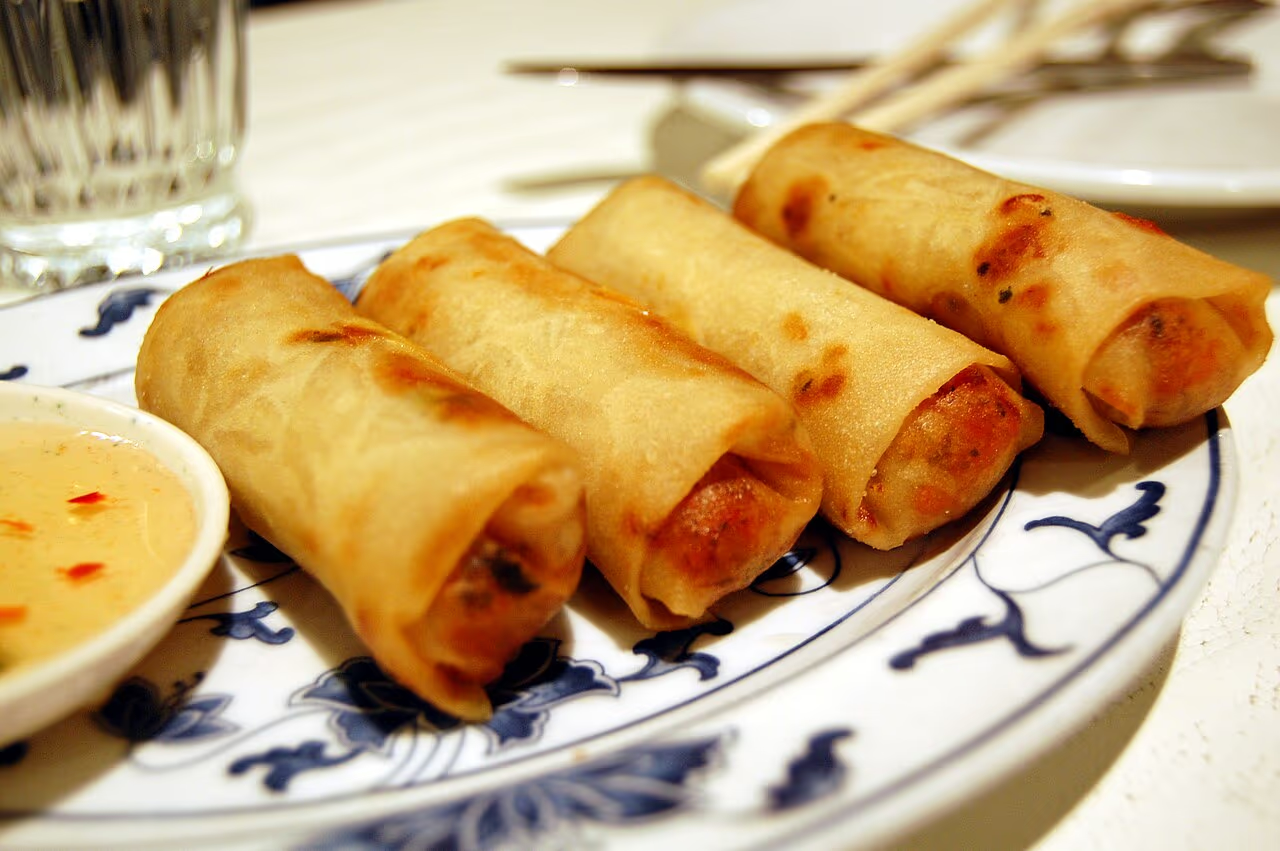
Behind the main streets, the night market and its food lanes are where Sapa eats cheapest and most authentically after dark. This is grilled-skewer, corn, egg, com lam and hotpot territory, cooked over charcoal in front of you, eaten on low plastic stools in the cold. It gets busiest and best in the evening, especially around the weekend when H'mong and Red Dao sellers come in from the villages. For atmosphere and value, nothing in town beats it.
Around Sapa Lake and the church
The lanes ringing Sapa Lake and the stone church hold a cluster of cafes and restaurants where you are partly paying for the view and the central location. It is a pleasant spot for a coffee, a lakeside beer at sunset, or a relaxed dinner, though you will pay a small premium for the position. Good for a slower evening rather than a bargain.
Restaurant Types in Sapa, Compared
Sapa has four broad kinds of place to eat, and knowing which is which saves you both money and disappointment: local eateries, tourist restaurants, hotel restaurants, and street food. The table below lays them side by side so you can match the place to the meal you want.
| Type | Price per person | Best for | What to expect |
|---|---|---|---|
| Local eatery (quan an) | $2–$5 | Cheap, authentic everyday food | Small family-run spots, short menus, pho, rice sets and grills; often little English but the best value. |
| Tourist restaurant | $6–$15 | Comfort, English menus, variety | Cau May and Fansipan Street; salmon hotpot, Vietnamese classics and Western dishes, photo menus, warm rooms. |
| Hotel restaurant | $12–$30 | Convenience, a treat, buffets | Higher prices and Western breakfasts; reliable and comfortable but rarely the most authentic or best-value food. |
| Street food / night market | Under $1.50 an item | Atmosphere, grazing, late snacks | Charcoal grills, skewers, corn, eggs, com lam; cooked to order, eaten on stools in the cold. Cheapest and most fun. |
My honest steer: eat most of your meals at local eateries and the night market, treat yourself to one good salmon hotpot at a proper restaurant, and only lean on the hotel restaurant when you are too tired to walk out. The gap in authenticity between a $3 local plate of greens and grilled meat and a $25 hotel plate is bigger than the price gap — and it runs in the local eatery's favour.
How Much Does Eating in Sapa Cost?
Eating in Sapa is cheap by Western standards: a simple local meal is around 50,000–90,000 VND ($2–$4), a shared salmon hotpot works out to roughly $6–$10 a head, and night-market snacks are under $1.50 each. Here is a realistic daily picture so you can budget.
- Breakfast — a bowl of pho or a banh mi and a Vietnamese coffee: 30,000–60,000 VND ($1.20–$2.50).
- Lunch — a rice set (com), noodles or a bowl of thang co at a local eatery: 50,000–90,000 VND ($2–$4).
- Dinner, budget — night-market skewers, corn, com lam and a beer: 80,000–150,000 VND ($3–$6).
- Dinner, hotpot — a shared salmon or sturgeon hotpot for two to four people: 400,000–700,000 VND ($16–$28) total, so $6–$10 each.
- Coffee or a lakeside beer — 20,000–50,000 VND (under $2).
All in, most travelers eat very well on $10–$20 a day. Note that many local places and the night market are cash-only (Vietnamese dong), so carry small notes — the same cash-only rule applies out in the villages if you are trekking. Prices creep up on the main tourist front of Cau May and inside hotels, and drop the moment you step onto a side lane or a plastic stool.
Look for the busy tables. In a mountain town where produce is fresh and turnover matters, the local eatery packed with Vietnamese diners at lunchtime is almost always cooking better food than the empty tourist restaurant with the biggest sign. Follow the crowd and you rarely go wrong.
Where to Eat by Budget and Occasion
The right restaurant in Sapa depends less on a ranking than on the night you are having — backpacking cheap, celebrating a trek, or feeding fussy kids. Here is who should head where.
Budget traveler
Couple celebrating a trek
Family with kids
Whichever camp you fall into, do not spend every meal in the same category. The best food memories in Sapa come from mixing it up — a $3 lunch of greens and grilled pork on a plastic stool one day, a warm salmon hotpot to celebrate the next.
Vegetarian and Dietary Options
Sapa is genuinely easy for vegetarians and most diets, because the local table is built on garden vegetables, tofu, mushrooms and wild greens rather than meat. You will not struggle here. Most tourist restaurants on Cau May and Fansipan Street have a clear vegetarian section, and there are dedicated vegetarian (com chay) places in town, often near the church.
Two phrases go a long way: say com chay for vegetarian, or khong thit for "no meat." Be aware that fish sauce and shrimp paste sneak into many dishes, so strict vegetarians and vegans should say khong nuoc mam (no fish sauce) too. Stir-fried mountain greens, tofu in tomato sauce, fried rice with vegetables, mushroom hotpot and fresh spring rolls are all easy wins. There is even a vegetarian hotpot on many menus, built around tofu, mushrooms and the same wild greens, so you do not have to miss out on the signature Sapa experience. For allergies, the language barrier is the real risk, so it helps to have your restriction written in Vietnamese on your phone. If you are trekking or doing a homestay with us, just tell us when you book and the family will cook a full vegetarian spread — it is no trouble at all in the villages, where meat is the occasional luxury and vegetables are the everyday.
Is the Food Safe? What to Expect
Food in Sapa is generally safe if you use ordinary travel sense: eat food cooked hot in front of you, choose busy stalls, and be a little careful with tap water and pre-cut fruit. The grilled and boiled street food is low-risk precisely because it is cooked to order over charcoal.
Stick to bottled or boiled water — the tea and coffee everywhere is made with boiled water and fine. The night-market skewers, grilled corn, com lam and hot noodle soups are cooked fresh and hot, which is exactly what you want. Where I would be slightly more cautious: ice in very cheap spots, salads and pre-cut fruit that has been sitting out, and offal dishes like thang co if your stomach is sensitive — not because they are dirty, but because they are rich and unfamiliar. Bring a basic stomach remedy just in case, as you would anywhere in Southeast Asia, and you will almost certainly never need it. In years of sending guests out to eat, upset stomachs are rare and usually down to over-doing the corn wine rather than the food.
The Best Food After a Trek
After a full day trekking the Muong Hoa Valley, the meal to plan for is a hot salmon or sturgeon hotpot shared around a table with your group, chased with a cup of corn wine. Nothing resets tired legs and a cold body like it. If you want faster and cheaper, a bowl of pho or a run at the night-market grills does the job too.
There is a good reason the hotpot is the classic post-trek reward: it is hot, it is shared, it is slow, and it turns a group who spent the day walking the terraces above Lao Chai and Ta Van into a table telling stories. Order plenty of greens to go in the broth — after a day's climb your body wants them — and let someone else do the cooking for once. If you have not yet booked the walking that earns you this dinner, here are the day treks our guests pair with a big night out in town.
Day Treks From Sapa Town
 Popular
Mountain Views and Villages Trek
A full day through the villages and terraces — back in town in time for a hotpot.
 Best Seller
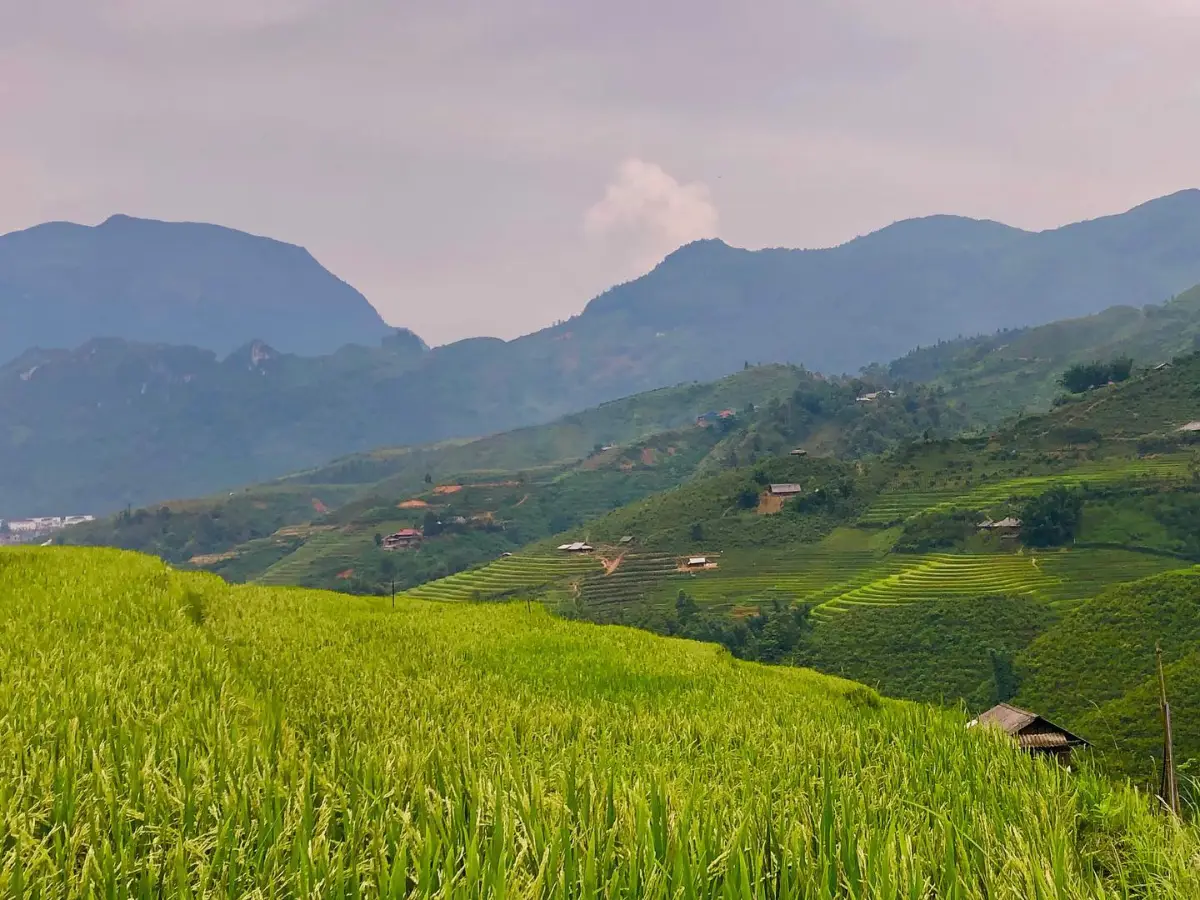
Trekking Through Rice Terraced Fields
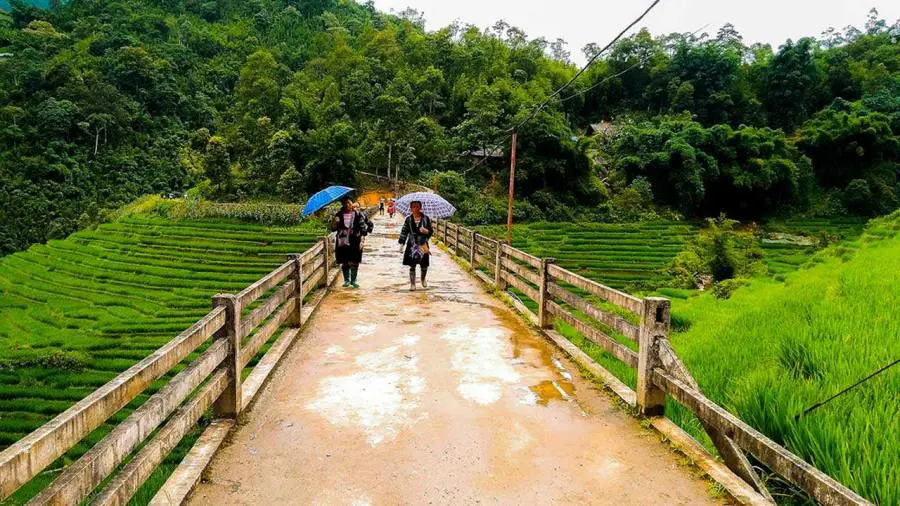
The classic Lao Chai–Ta Van walk through the heart of the Muong Hoa Valley.
 Very Easy
Sapa Easy Trekking For Seniors
A gentle, flatter route for a relaxed day and an easy appetite by dinner.
Breakfast and Coffee in Sapa
For breakfast, Sapa runs on two things: a hot bowl of pho or noodle soup at a local eatery, and strong Vietnamese coffee. Most hotels also lay on a simple Western breakfast, but the best cheap start to a trekking day is a street bowl of pho for a dollar or two.
Vietnamese coffee here is worth slowing down for — thick, dark drip coffee (ca phe) served hot with condensed milk (ca phe sua nong), which is exactly the drink for a chilly Sapa morning, or iced (ca phe sua da) on a warmer day. Several cafes around Sapa Lake and along Cau May do a good version with a mountain view. If you want something different, look for egg coffee (ca phe trung), a Hanoi speciality that has found its way up here. A banh mi from a street cart, a bowl of xoi (sticky rice) or the pancakes and fruit at a homestay round out the breakfast options. Whatever you choose, fuel up properly — the trails start early and the valley air burns through calories fast.
Eating With a Local Family on a Homestay Trek
The most memorable meal in Sapa is not in any restaurant — it is dinner cooked by a Black H'mong or Red Dao family on a homestay trek, eaten around one table in a stilt house after a day on the trail. If restaurants show you Sapa's food, a homestay shows you how it is actually lived.
On an overnight trek into Ta Van or Lao Chai, the family cooks a big shared spread from their own garden and kitchen: steamed rice, stir-fried mountain greens, tofu, spring rolls, an omelette, and pork or chicken, with corn wine poured for whoever wants it. It is more food than you expect and better than most restaurant meals, precisely because it is home cooking with produce picked that day. You can watch or help in the kitchen, and dietary needs are easy to cater for with a little notice. Our full Sapa trekking homestay guide walks through what the evening and the food are really like. If a homestay night is not for you, a town base still puts you within a short trek of the valley by day and back to the restaurants by night — and our guide to the best time to visit Sapa helps you pick the right season for both the trekking and the harvest food.
Overnight & Multi-Day Homestay Treks
 Best Seller
Rice Terraced Fields & Homestay
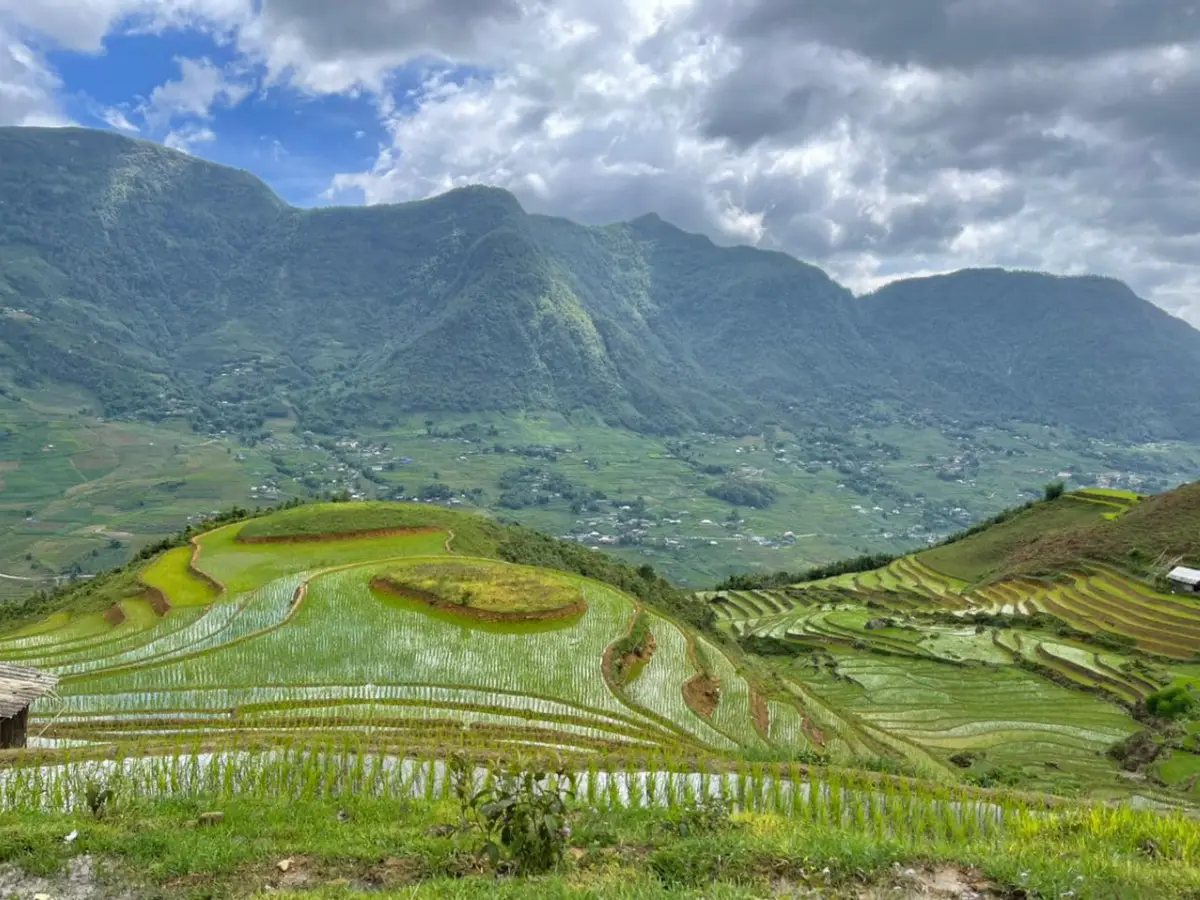
A full day through the terraces and a home-cooked dinner with a family in Ta Van.
 3D2N
3D2N
Experience The Real Sapa
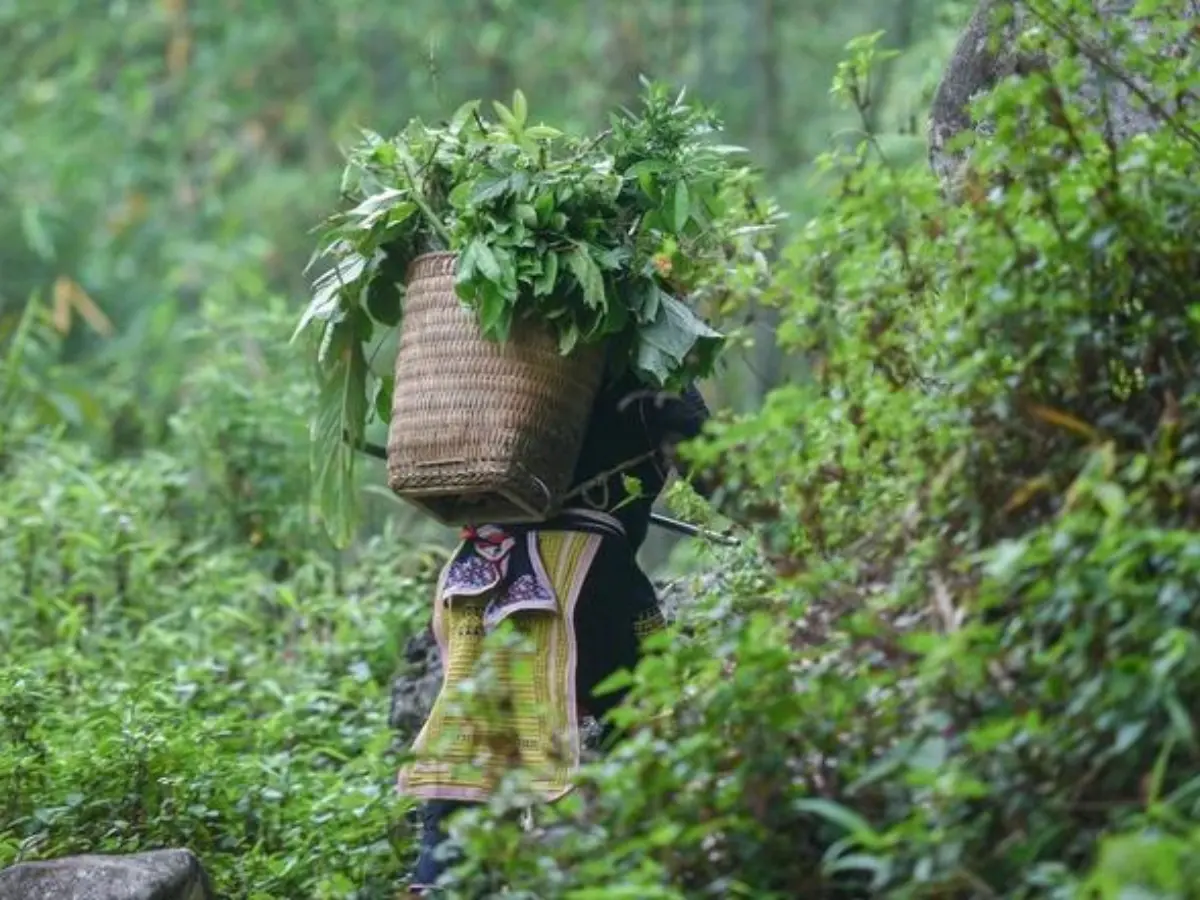
Three days and two homestay nights of village cooking through the quieter valley.
 4D3N
4D3N
The Unlimited — 4-Day Sapa Trekking
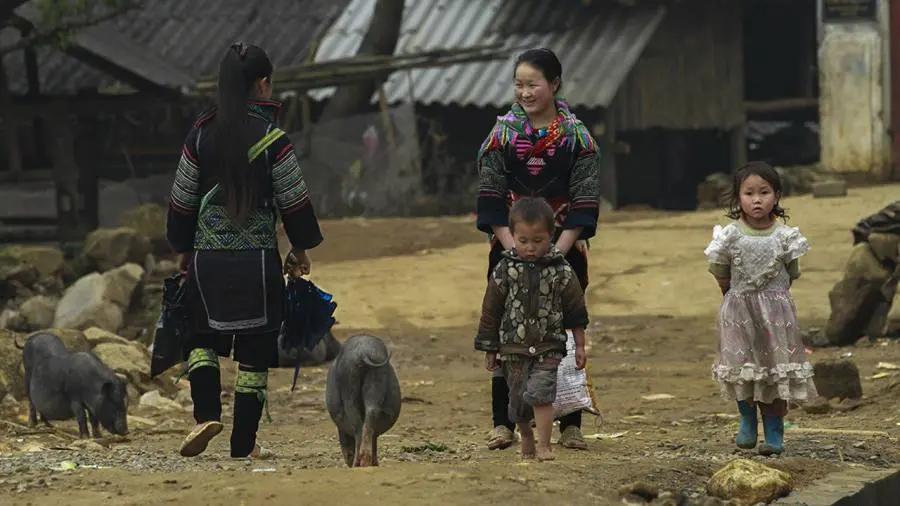
Four days and three homestays deep in the valley, eating with a new family each night.
Markets, Rainy Days and Getting Here
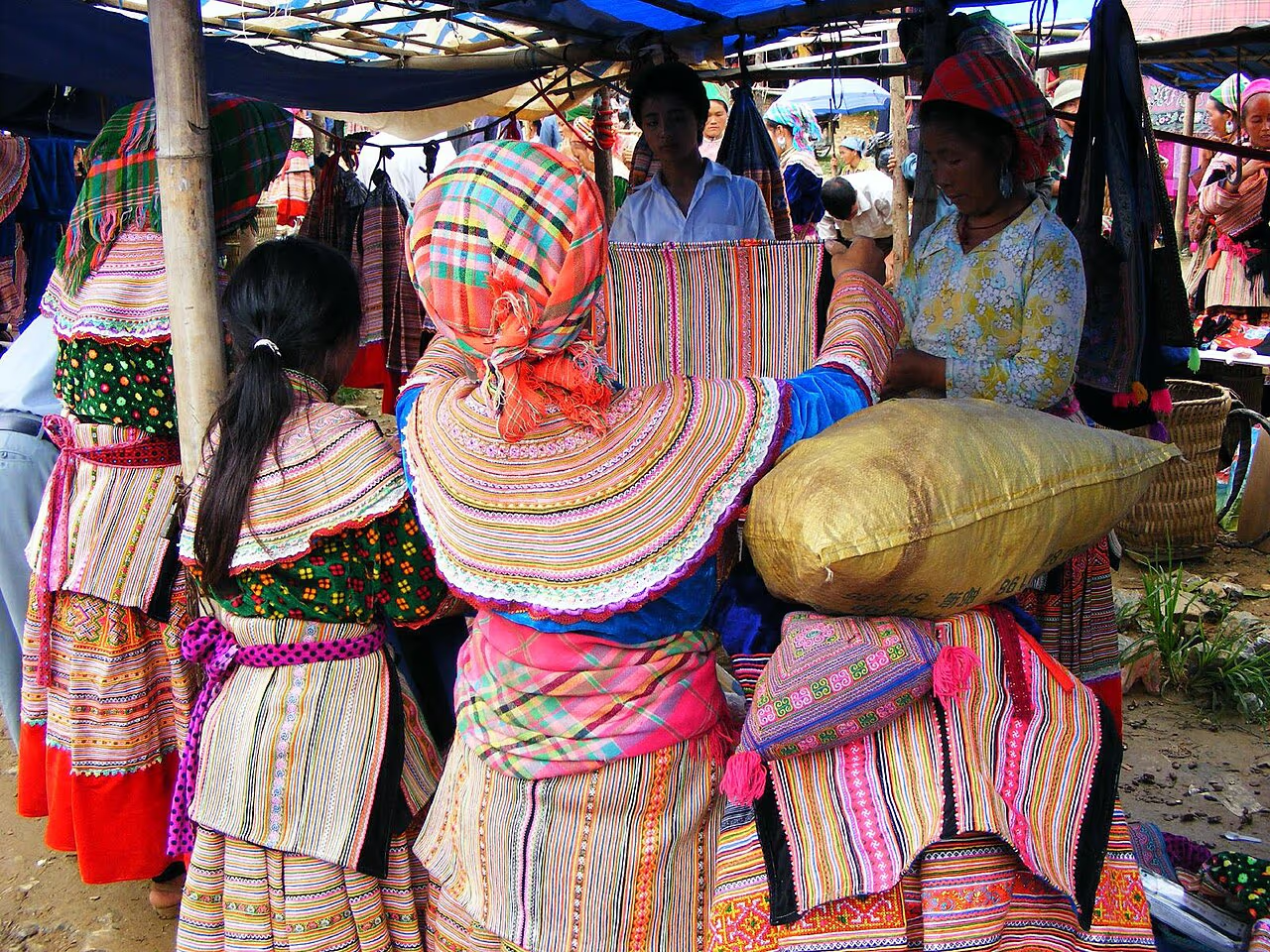
Beyond the town's restaurants, the region's markets are where food and culture meet — and on a wet day, a long lunch is one of the best things to do in Sapa. The famous Bac Ha market, about two and a half hours away and held on Sundays, is a riot of H'mong and Flower H'mong sellers, livestock, corn wine and steaming pots of thang co; the smaller Ta Phin and Sapa town markets are easier day options for local produce, herbs and snacks.
Market food is a different, rawer experience than a town restaurant, and worth building a morning around. At Bac Ha you eat thang co and grilled meat shoulder to shoulder with Red Dao and Flower H'mong families who have walked in from the surrounding hills, and the corn wine flows from re-used plastic bottles by mid-morning. Even the small daily market in Sapa town has a food corner where you can point at a pot and eat cheaply among locals. If you want to see where the ingredients on your restaurant plate actually come from — the greens, the buffalo, the corn wine — the market is the answer.
When the mist rolls in and the trails turn to mud, eating and drinking your way slowly through town is no bad plan — our guide on what to do in Sapa when it is raining leans hard on exactly that. And if you are still planning the journey up, most people cover the Hanoi–Sapa leg overnight and arrive hungry for breakfast; here is how they get here.
How Travelers Reach Sapa From Hanoi
Cover the Hanoi–Sapa leg the night before, arrive in the morning, and you are at a pho stall by breakfast.
 Budget
Sleeper Bus
Overnight or day departures, flat reclining seats.
 Popular
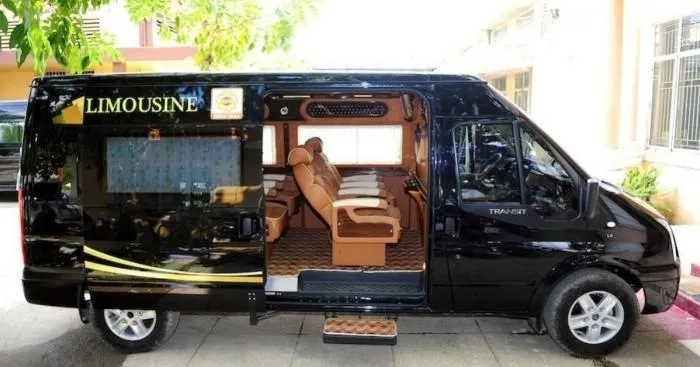
Limousine Van
Door-to-door hotel pickup, 9-seat comfort van.
 Scenic
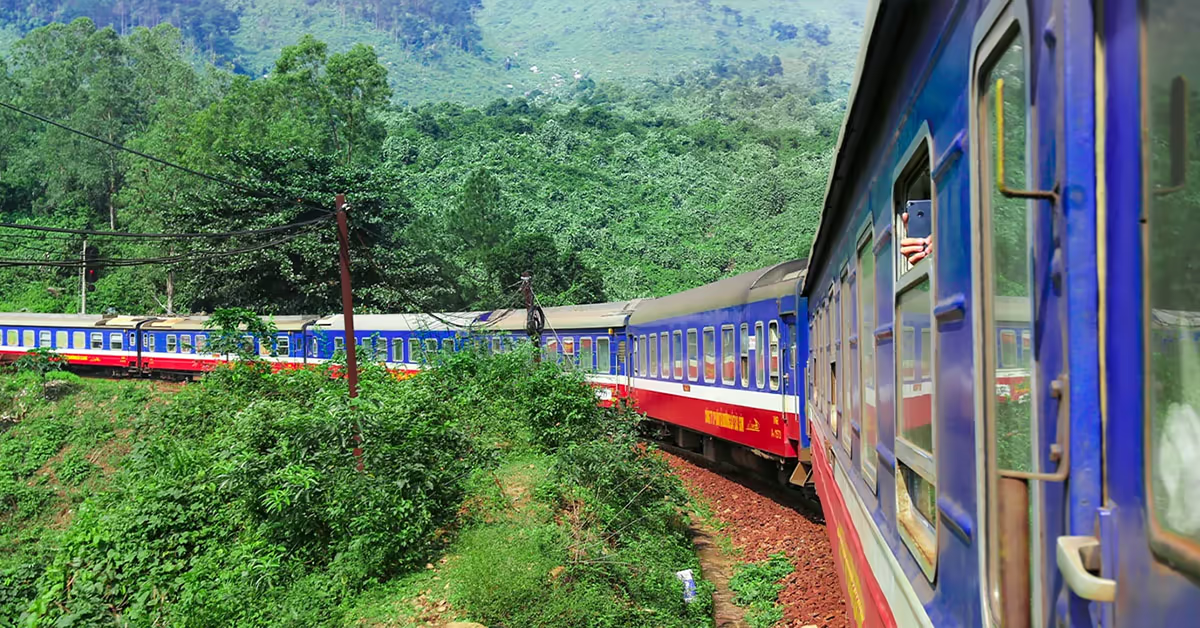
Overnight Train
Hanoi to Lao Cai, then a 1-hour transfer to Sapa.
A Few Honest Do's and Don'ts
To eat well in Sapa without overthinking it, follow the crowd, try the local specialties first, and do not judge a place by how big its English sign is. A handful of small habits make all the difference.
- Do order at least one salmon hotpot and one plate of stir-fried mountain greens while you are here — they are what Sapa does best.
- Do carry cash in small dong notes; the best local eateries and the night market rarely take cards.
- Do eat where the Vietnamese diners are eating — busy tables mean fresh food and fast turnover.
- Don't fill up only on Western food; you can get pizza anywhere, but not this salmon or these greens.
- Don't feel obliged to finish every cup of corn wine — a polite refusal is completely normal.
- Don't expect fine dining; the joy here is honest mountain cooking, not white tablecloths.
Do those few things and you will eat better than most visitors, for less money, and come away with a real taste of the mountains rather than a generic tourist meal.
Frequently Asked Questions
Sapa is famous for cold-water salmon and sturgeon hotpot (ca hoi), raised in the mountain streams; thang co, the traditional H'mong stew; grilled skewers, corn and eggs from the night market; com lam, sticky rice cooked in bamboo; black chicken; wild mountain greens and mustard greens; and ruou ngo, the local corn wine. These are the dishes you cannot get the same way anywhere else in Vietnam, and they are the reason to eat local while you are here.
The main cluster of restaurants in Sapa is along Cau May Street and Fansipan Street in the town centre, within a few minutes' walk of Sapa Lake and the stone church. Cau May has the highest concentration of tourist-facing restaurants with English menus and salmon hotpot; Fansipan Street mixes local eateries with traveler cafes; and the night market and food street behind them is where you find the cheapest, most authentic grilled food. For a first meal, start on Cau May and wander outward.
A simple local meal of rice, greens and grilled meat costs around 50,000 to 90,000 VND (roughly $2 to $4) per person. A shared salmon or sturgeon hotpot for two to four people runs 400,000 to 700,000 VND (about $16 to $28) total, so $6 to $10 each. Night-market skewers, corn and com lam are 10,000 to 30,000 VND (under $1.50) a piece. Hotel and higher-end tourist restaurants charge two to three times the local rate. Sapa is inexpensive by Western standards.
Yes. Sapa is easy for vegetarians because the local diet leans heavily on garden vegetables, tofu, mushrooms and wild mountain greens. Most tourist restaurants on Cau May and Fansipan Street have a clear vegetarian section, and there are dedicated vegetarian (com chay) spots in town. Say com chay for vegetarian or khong thit for no meat. If you are on a trek or homestay with us, tell us when you book and the family will cook a full vegetarian spread.
Street food in Sapa is generally safe if you use the same common sense you would anywhere: choose busy stalls with high turnover, eat food that is grilled or boiled hot in front of you, and be a little more careful with pre-cut fruit and tap water. The night-market skewers, grilled corn, com lam and hot noodle soups are cooked to order over charcoal and are a low risk. Stick to bottled or boiled water and you will almost certainly be fine.
After a day on the trail, the classic Sapa reward is a hot salmon or sturgeon hotpot shared around a table with your group, followed by a shot or two of corn wine. If you want something faster and cheaper, a bowl of pho or thang co, grilled skewers and com lam from the night market hit the spot. The hotpot is the one worth planning for — it is warming, social and exactly what a cold mountain evening calls for.
Rent at Our Office Before You Trek
 Gear Rental
Trekking Boots Rental
Waterproof ankle-support boots. Cleaned and checked before each rental. Available at 105 Thach Son Street.
 Gear Rental
Walking Poles Rental
Trekking poles available to rent at $2/day at our office, 105 Thach Son Street. Useful on any valley trek.
Hungry yet? Come to Sapa, walk the terraces above Ta Van and Lao Chai by day, and let the mountains feed you by night — from a plastic-stool bowl of pho to a salmon hotpot that warms the whole table. For more on planning the trip around the food, the villages and the seasons, browse our full library of Sapa travel guides, or see every Sapa trekking tour we run and start matching your appetite to the trail.