 Sinh Giang
When it rains in Sapa, the best things to do are soak in a Red Dao herbal bath in Ta Phin village, trek the flat Muong Hoa Valley floor through Lao Chai and Ta Van on paved paths, browse the covered Sapa market early for genuine Black H'mong handicrafts, take a Vietnamese cooking class, or spend a warm hour inside the Sapa Culture Museum. Rain never shuts this place down — it changes its character: the smell of wet earth, cardamom from the gardens near Ma Tra village, and woodsmoke; the terraces softening into grey-green layers; the valley filling with a mist photographers wait months to see.
I've guided treks in these mountains since I was nineteen, and some of my best days out here have been the wet ones. This guide covers the indoor options for a heavy downpour, how to trek safely when the trails turn to slick red clay, which months bring the worst weather, and the experiences that are genuinely better in the rain than under dry-season sun.
Understanding Sapa's Rainy Season
Sapa's rainy season runs from May through September, with July and August the wettest by a clear margin — and the rain usually arrives in the afternoon, so mornings are often your window to get out. Understanding this rhythm turns "it's raining" from a wasted day into a matter of timing.
Within those five months the rain shifts in character. In May, farmers flood the terraces for planting, so the Muong Hoa Valley fills with water and reflection. June and July are the heart of it — weather systems push up from the south and can sit over the valley for two or three days at a stretch. August stays heavy, but the rice is now tall and electric-green above Lao Chai and Y Linh Ho. By September the downpours ease and the fields turn from green to gold — the most photographed month in Sapa, rain or shine.
The dry season runs October through April. October and November are the peak trekking months — 15 to 25°C, mostly clear skies, and the just-finished harvest leaving the terraces a warm amber. March and April are the second-best window: warmer days and paddies flooded again for planting, creating those mirror reflections of the sky. December through February bring frost and fog above 1,500 metres near Fansipan, though Sapa Town stays cold and dry. No month is off-limits, but June through August ask more of you in return for the greenest, quietest version of the valley.
| Month | Conditions | Trekking Rating | What's Special |
|---|---|---|---|
| Jan–Feb | Cold (5–12°C), dry, occasional frost on peaks | Good | Quiet, authentic villages, possible snow above 1,800m |
| Mar–Apr | Warming (15–22°C), mostly dry, terraces flooded | Peak | Water mirror reflections in flooded paddies |
| May | Warm, rain starts mid-month | Good | Terraces turn vivid green, fewer crowds |
| Jun–Aug | Wet season, 20–28°C, heavy afternoon rain | Fair | Greenest terraces, dramatic mist, leeches on trails |
| September | Rain easing, rice turning gold | Good | Best photography month — golden harvest terraces |
| Oct–Nov | Dry, clear, 15–25°C | Peak | Best overall trekking weather of the year |
| Dec | Cold (5–10°C), dry, misty mornings | Good | Peaceful, few tourists, authentic village life |
The Red Dao Herbal Bath — Best Rainy-Day Activity in Sapa
If it is raining hard and you do only one thing in Sapa, make it the Red Dao traditional herbal bath in Ta Phin village — warm, deeply cultural, and restorative after a day on wet trails. This is no tourist spa: the Red Dao people of Ta Phin have used it for generations for postpartum recovery, muscle pain, cold prevention, and restoring balance after long days in the fields.
Red Dao women gather 10 to 12 plant species from the forests around Sa Seng Mountain and the ridgelines above Ta Phin — roots, bark, dried leaves, and fresh herbs that shift by family and season, so no two baths are identical. These simmer in large pots for at least two hours before you arrive. By the time the water fills the tall wooden tub it has turned deep reddish-amber, and the smell is earthy, resinous, and faintly medicinal.
You soak for 30 to 45 minutes in very warm water — around 40°C — and the heat and herbal compounds loosen tired muscles. After a long, slippery descent through the Muong Hoa Valley in the rain, your legs will feel like different legs. A full session costs roughly 150,000–200,000 VND per person (around $6–8 USD), and the women who run the baths in Ta Phin will show you the herbs if you ask. It is as much a cultural conversation as a physical treatment — exactly why it tops any rainy-day list.
Ta Phin village is 12 km from Sapa Town — a 20-minute drive. Ask our team to arrange the herbal bath as an add-on to any tour. We book only with families we know personally, so you soak in a proper wooden tub in someone's home, not a resort's version of it.
Trekking in Sapa Rain — What Actually Works
Yes, you can still trek in Sapa when it rains — you just need a waterproof jacket, boots with real grip, and a flat valley route instead of an exposed ridge. Rain doesn't cancel a trek; it changes how we approach it. I've led groups through steady rain many times, and a properly equipped group has a completely different day from someone in a cotton hoodie and city trainers. The Muong Hoa Valley is forgiving when you respect the weather, unforgiving when you don't.
Gear You Actually Need
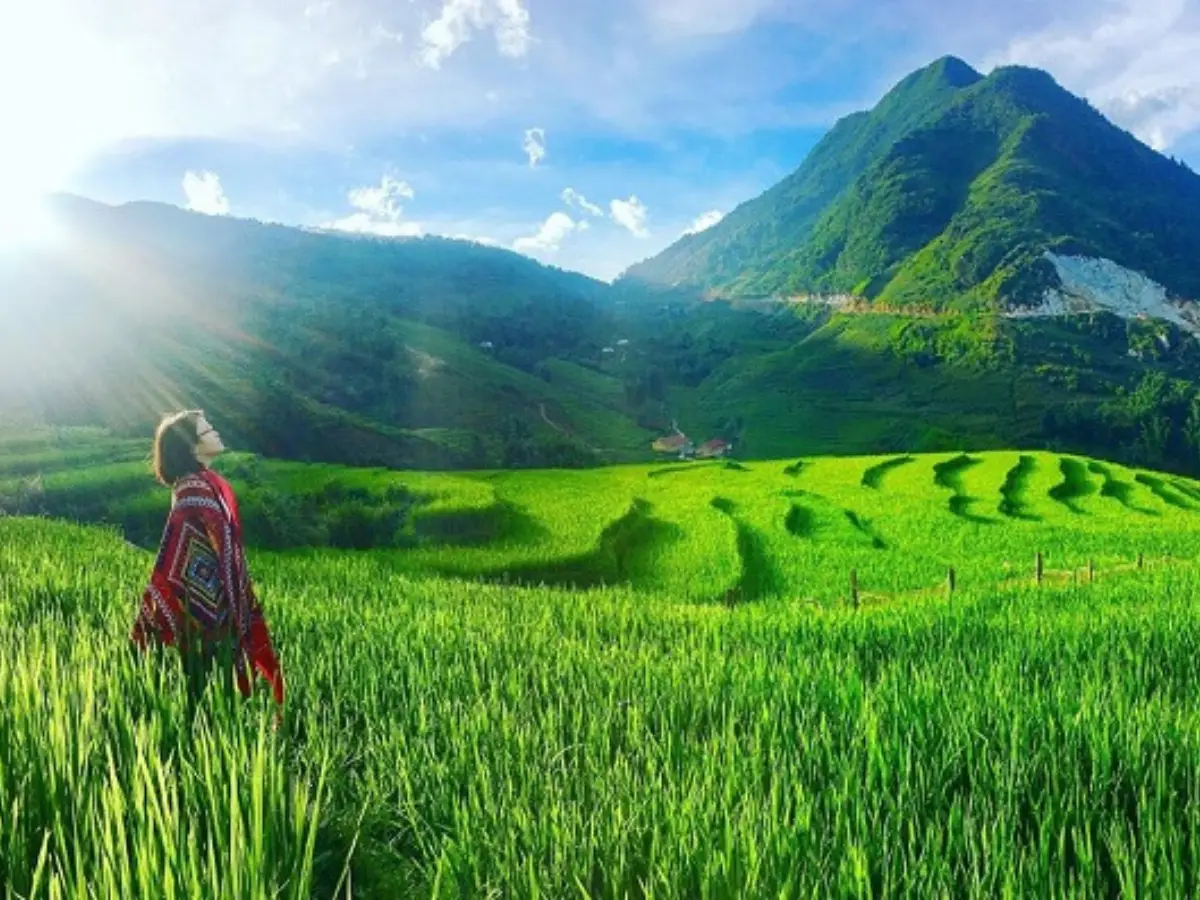
A waterproof jacket is non-negotiable — not a windbreaker or a flimsy poncho, but a proper layer with sealed seams, because Sapa rain comes in sideways on exposed trail and a light jacket soaks through in twenty minutes. This one item almost entirely decides whether a wet-season trek is good or miserable. If you don't have one, we rent ponchos and jackets at our office at 105 Thach Son Street.
Non-slip footwear is the second critical item. The paths through the terraces at Lao Chai, Ta Van, and Y Linh Ho turn into red clay mud within an hour of rain, and that clay is genuinely slick — more like wet soap than dirt. Flat-soled sneakers leave you sliding on every descent. Wear trail runners with aggressive tread or boots with ankle support. We also bring walking poles on every rainy-day trek — a single pole cuts the risk of a downhill slip more than anything else — and keep spares at the office.
Third, most people forget a dry bag or waterproof phone case. Your phone, camera, and passport should live inside something waterproof within your daypack — daypacks themselves are rarely truly waterproof, and a soaked passport two weeks into a longer Vietnam trip is a real problem, not a minor inconvenience.
Which Routes Work in Rain
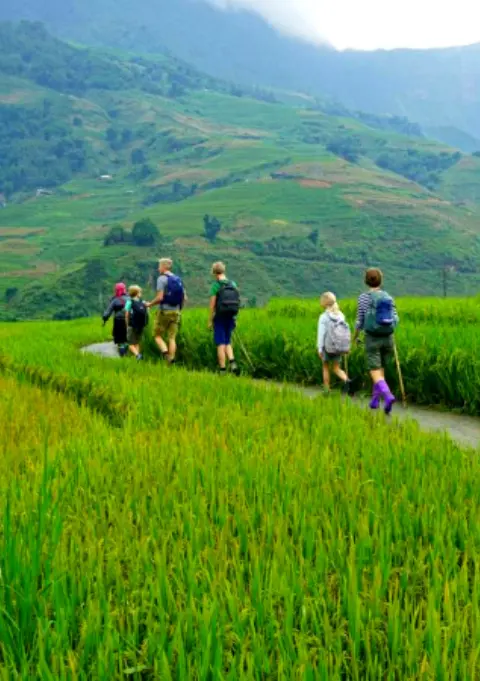
For rainy conditions, choose the flatter valley routes over exposed ridges. The Trekking Through Rice Terraced Fields route along the Muong Hoa Valley floor — through Lao Chai and on to Ta Van — stays mostly on concreted paths and is manageable in moderate rain, and the hanging bridge over the Muong Hoa stream turns cinematic in the mist. If you'd rather build the day around a night with a local family, a Sapa trekking homestay keeps the walking short and the indoor time long — a good fit for a wet forecast.
The ridge trails above Ma Tra and the longer loops through Hang Da and Hau Thao are a different proposition — unpaved, steep, and properly slippery after heavy rain, hard to manage without real boots. We run those only in dry or lightly overcast conditions. By contrast, Sapa Easy Trekking For Seniors along the Y Linh Ho and Lao Chai route handles light rain well — mostly paved, with gentle gradients where a slip is unlikely.
Leeches are common on wet trails between May and September, especially where there's long grass and leaf litter — the secondary forest between Y Linh Ho and Lao Chai is the most leech-prone stretch we walk. Leech socks (around 30,000 VND at any outdoor shop in Sapa Town) pull up over your boots and tucked-in trousers and work well. Check your legs at each rest stop. The bites are painless and harmless, just an unpleasant surprise later in the day.
Staying Safe When the Trail Is Wet
Wet-trail safety in Sapa comes down to three habits: slow down, shorten the route, and never rush a descent. On a rainy day I slow the group's pace by about twenty percent and add rest stops, because tired legs slip more than fresh ones. Descents are where almost every fall happens — the clay is worst on the drops between terrace levels, so take short steps, keep your weight low, and plant a pole before each drop. If it becomes a genuine downpour with poor visibility, we turn back or cut to the nearest road; no view is worth a sprained ankle. Streams that were ankle-deep in the morning can rise fast, so we cross early or use a bridge. None of this is dramatic — a wet-weather trek is simply planned differently, and a good local guide does that in real time.
Rain and Photography — Why the Wet Season is Worth It
The Muong Hoa Valley is more photogenic in mist and rain than under a hard blue sky. In direct sun the greens wash out; when the mist rolls in — usually around 7am and again late afternoon — the valley stacks into layers of depth no dry-season visit can match. The rice at its tallest in August lays a texture across the hillsides above Lao Chai that is extraordinary in soft rain-light, and a single figure in an indigo jacket on a terrace edge becomes the kind of frame people build a whole trip around.
Fansipan summit views, on the other hand, are essentially impossible in the heavy wet season — cloud cover is near-total from July through August, and the cable car often rises into a wall of white. If the cable car is your main goal, aim for October through December, when visibility above 2,500 metres is most reliable.
Indoor Activities: Sapa Culture Museum, Market, and Cooking
The best indoor activities in Sapa on a heavy-rain day are the Sapa Culture Museum, the covered morning market, and a Vietnamese cooking class — all dry, all central, and all more rewarding than they sound. If the rain is relentless and you just want to stay warm, Sapa offers far more under a roof than most visitors expect.
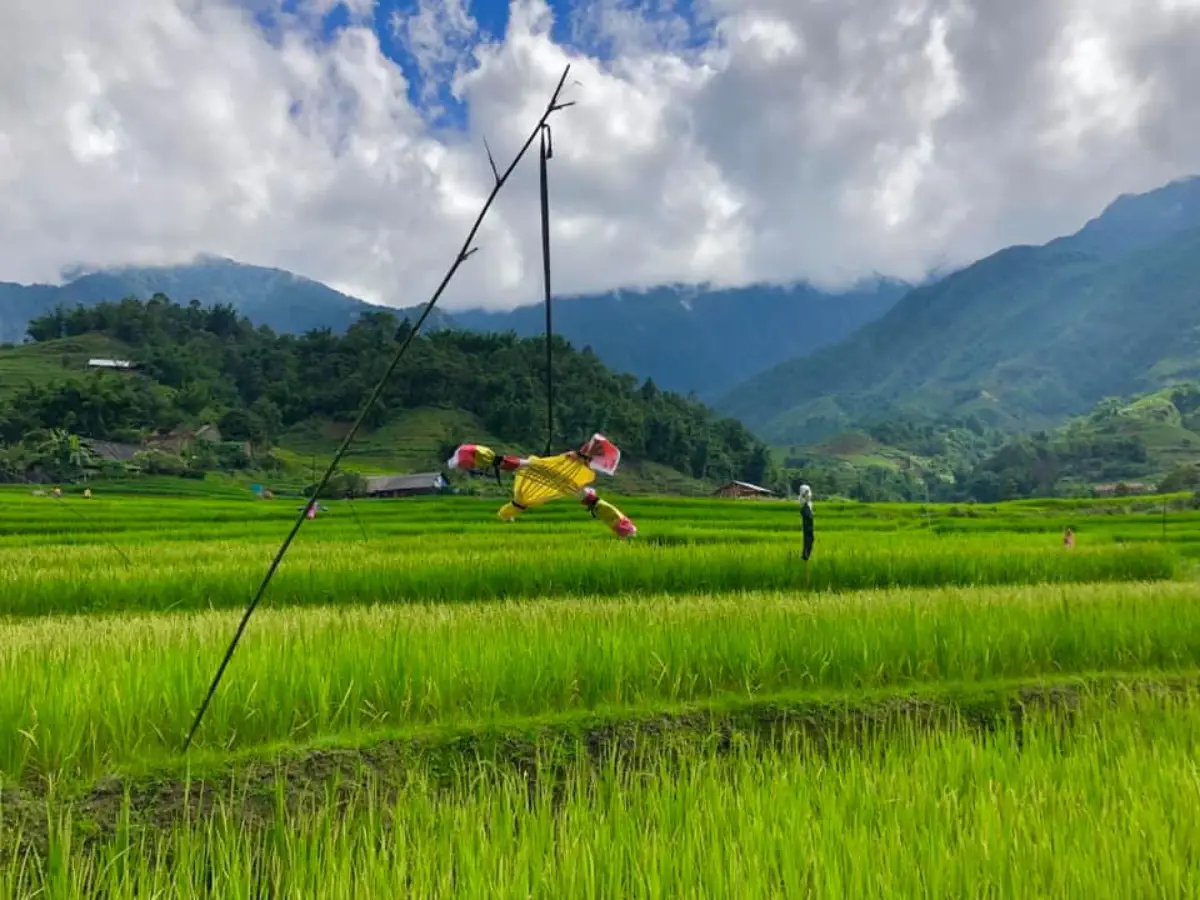
Sapa Culture Museum
The Sapa Culture Museum on Fansipan Road is small — about an hour — but it holds real artifacts and clear accounts of the ethnic minority groups of Lao Cai Province: the Black H'mong, Red Dao, Tay, Giay, Xa Pho, and Phu La. The exhibits unpack embroidery styles, the meaning behind costume colours, and the terraced-agriculture systems that shaped the hillsides above the Muong Hoa Valley. Do it early and everything you see in the villages afterwards makes more sense — which is why I send people here on a wet morning.
It's a short walk from the central square, entry is around 70,000 VND, and it stays warm, dry, and rarely crowded in the rain.
Sapa Market — Handicrafts and Morning Trade
The Sapa market is covered across its main section and trades normally in the rain — what changes is who's behind the stalls. On busy dry days the pitches near the main road lean toward mass-produced souvenirs; in the rain that crowd thins, and the sellers who remain are mostly Black H'mong and Red Dao women walking in from Lao Chai, Ta Van, and Ta Phin with the real thing: indigo-dyed hemp clothing, silver jewellery, embroidered shoulder bags, and sashes that take days of stitching.
The best window for authentic goods is early morning, 6am to 9am; by 10am the tour buses arrive and the dynamic shifts. For a piece of Black H'mong embroidery genuinely made by the woman selling it, a rainy early morning is your best chance. Vendors expect a little friendly negotiation, but prices for real handwork are gentle — a hand-stitched bag often runs 150,000 to 300,000 VND ($6–12 USD) for something that took several evenings by the fire.
Vietnamese Cooking Classes
Several restaurants and homestays in Sapa Town run morning cooking classes, usually two to three hours. The good ones start with a walk to the market for ingredients, then teach three or four dishes from scratch — pho bo (beef noodle soup), banh cuon (steamed rice rolls), and a stir-fry around local mountain greens. A class runs around $20–30 USD per person and sends you home with a skill, not just a full stomach — the ideal use of a heavy-rain morning. Ask our team for the instructors who cook well rather than just going through the motions.
Homestay Experiences with Black H'mong and Red Dao Families
Rain quietly produces some of the most authentic moments a Sapa homestay can offer, because it forces the household indoors and slows the day down. When it's clear, everyone works outside; when it rains, the family gathers inside, the fire gets going, and time stretches out. I've sat in wooden houses in Lao Chai watching rain sheet across the valley while the grandmother showed my group how she cards raw cotton — something she'd never pause to do on a busy dry day.
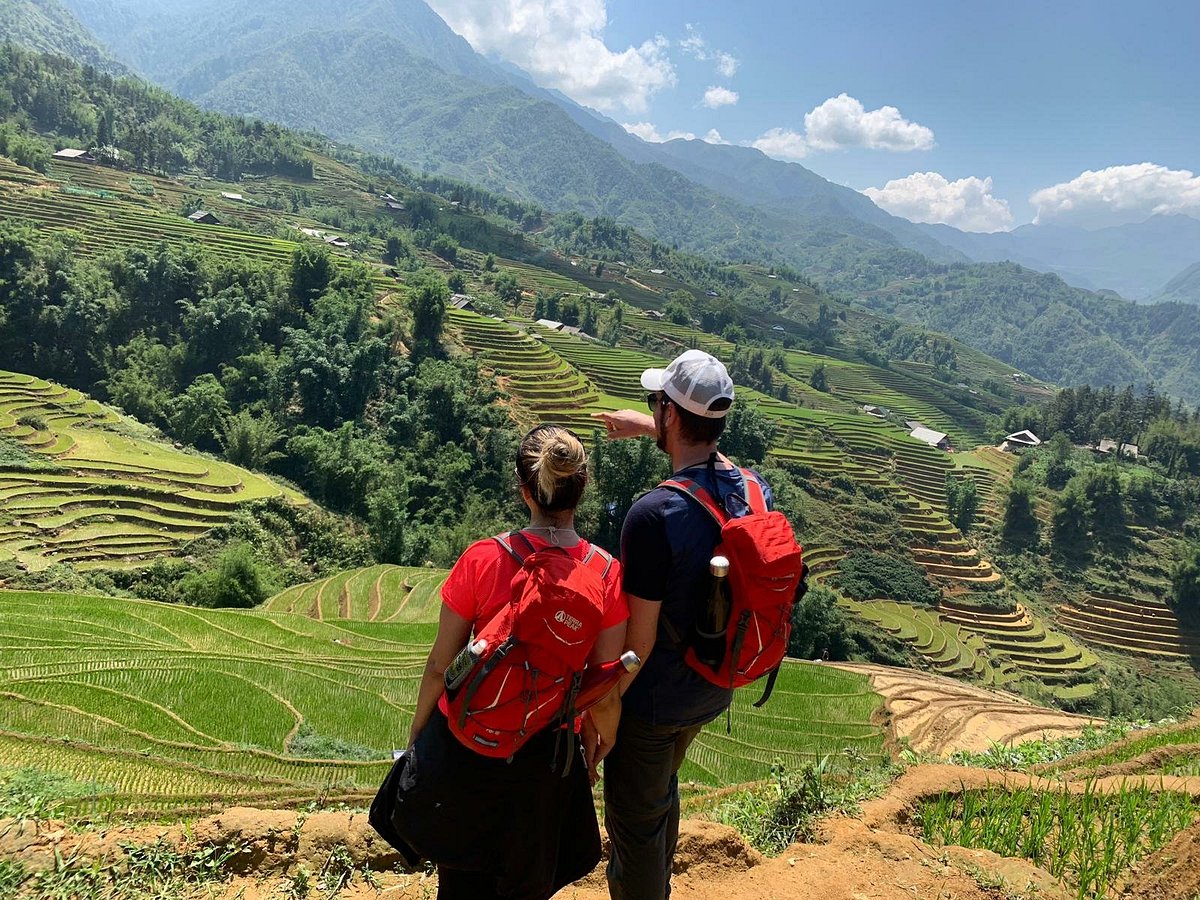
A two-day, one-night Sapa trekking homestay with a Black H'mong family in the Muong Hoa Valley gives you the full version: arriving in the afternoon, sharing the family dinner of rice, stir-fried greens, and home-raised pork or chicken, sleeping in a traditional wooden house, and waking at dawn to watch the terraces surface from the mist. The rain that felt like an inconvenience on day one is usually the best part of the trip by day two.
Red Dao families in Ta Phin keep stronger boundaries between their domestic life and tourism than the Black H'mong communities in the valley — most contact happens through the herbal bath and market trade rather than overnight stays. There are a few Red Dao homestays in Ta Phin our team knows, though, which we can arrange with notice for groups keen on Red Dao culture and textile work.
Homestay & Valley Trips That Shine in the Rain
Homestay
Rice Terraced Fields & Homestay
A night with a Black H'mong family in the Muong Hoa Valley — the more indoor time, the better a wet forecast fits.
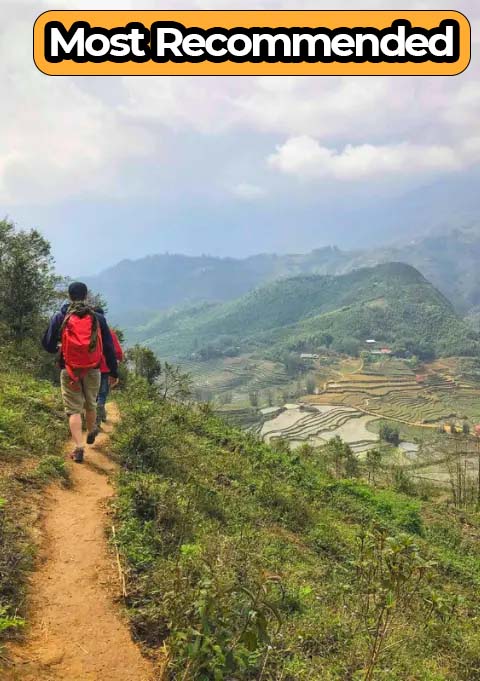 Best Seller
Trekking Through Rice Terraced Fields
Flat, mostly paved valley route through Lao Chai and Ta Van — greenest and mistiest in the rainy season.
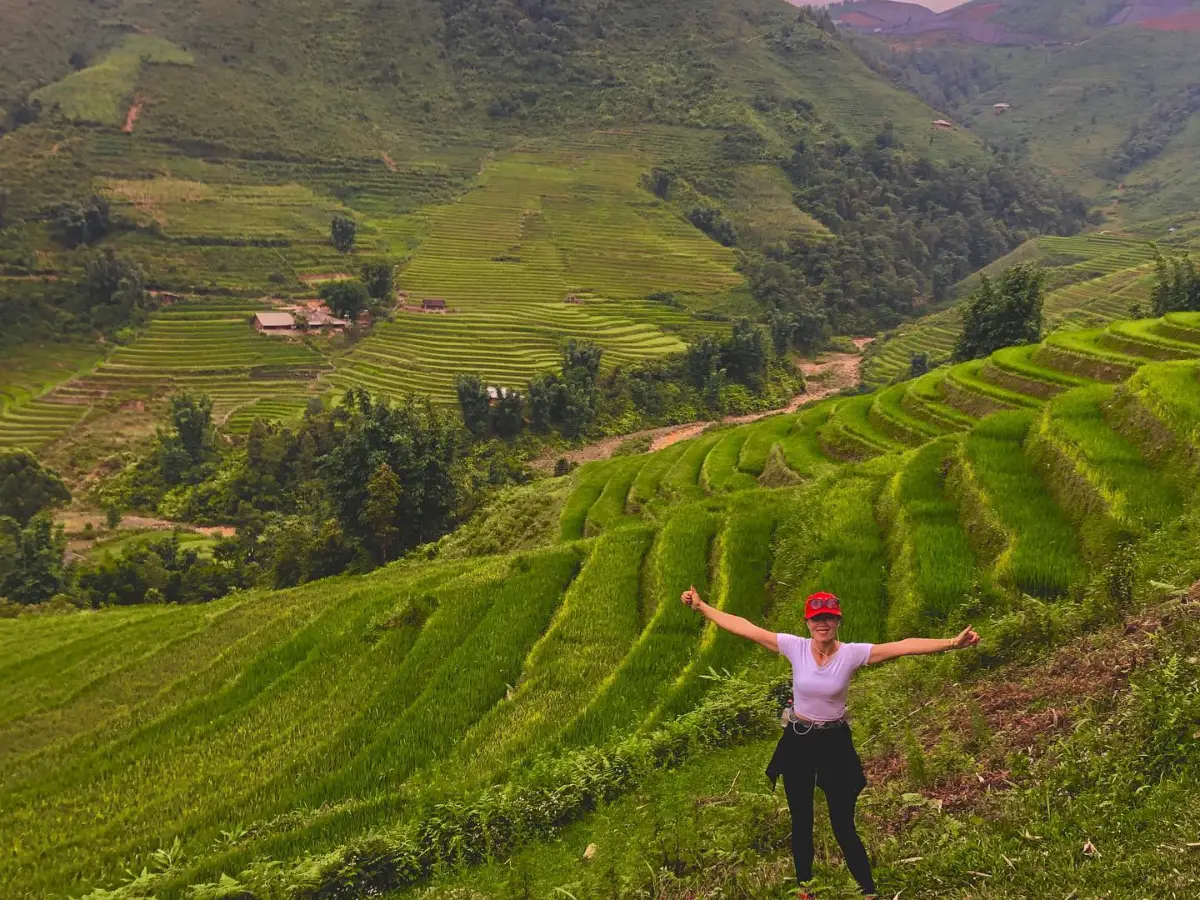
Rice Paddies & Cultures
Gentle valley walking through Black H'mong villages — a safe pick when rain is forecast but not heavy.
Rainy Day Food — Hotpot, Pho, and Black H'mong Corn Wine
The best food to eat in Sapa on a rainy day is hotpot, a bowl of dark mountain pho, and — if you're brave — thang co, all warmed along by a small glass of Black H'mong corn wine. Cold, damp weather and Sapa cuisine are made for each other: the food of Lao Cai Province was built for mountain winters, which is why it tastes so right when the mist comes down.
Hotpot is the dish I always crave when the mist comes in — a broth of pork bones, dried shiitake, and local herbs over a charcoal burner at the table. You add sliced pork belly, mountain vegetables including the distinctive bac ha that only grows above 1,200 metres, and whatever the kitchen gathered that morning. The steam and broth alone are worth a rainy afternoon; ask our team for the spots we take our guides for lunch.
Pho in Sapa differs from Hanoi's — a darker broth with more star anise and cinnamon, larger portions, mountain food not city food. The Black H'mong around town make a buffalo version you won't find in southern Vietnam. Early, as the rain starts, a bowl in a small restaurant with the windows fogged from the cold is one of the most satisfying things Sapa offers.
Thang co isn't for everyone: the traditional Black H'mong stew of horse or buffalo meat and organs, heavily spiced with sa phin (a local herb like long pepper) and five spice, cooked in a big communal pot over a wood fire. It's served at village markets and festivals, and the version at the Bac Ha market (about 60 km away) is the most authentic. If you eat what the locals eat, try it.
Black H'mong corn wine, known locally as ruou ngo, is distilled from fermented maize grown on the terraced hillsides — clear, rough, and strong at 35 to 50%, not a sipping drink. It's what families pour at the homestay table to open a meal, and on a cold, wet evening in a wooden house at 1,200 metres with a hotpot steaming, it makes sense in a way it can't in a city.
Cat Cat Village in the Rain
Cat Cat Village is a fine option in light rain, but take it slowly — the polished stone steps near the top turn dangerously slick when wet. It's the closest ethnic minority village to Sapa Town, about 3 km down a steep road, and the path through the gardens and old water mills is paved for most of its length; the valley floor near the bottom is flatter and safer than those worn upper steps. It's worth visiting in any weather for the weaving demonstrations, the Black H'mong indigo dress worn for daily life rather than for tourists, and some of the best silverwork near Sapa Town.
What to Pack for a Rainy-Season Visit
For a rainy-season visit, pack a proper waterproof jacket, non-slip trail shoes, a dry bag for your electronics, quick-dry trousers, and a warm evening layer — those five carry ninety percent of the load. People planning June or July trips ask me this every week; here's what matters.
Waterproof Gear
- Waterproof jacket with sealed seams
- Non-slip trail shoes or hiking boots
- Dry bag or waterproof phone case
- Quick-dry trousers (not jeans)
Trail Essentials
- Walking poles (available to borrow at our office)
- Leech socks — available in Sapa Town for 30,000 VND
- Warm layer for evenings (temperature drops sharply after rain)
- Spare socks in a zip-lock bag inside your pack
Photography in Rain
- Camera rain sleeve or waterproof bag
- Microfibre cloth for lens cleaning
- Extra battery (cold reduces battery life)
- Wide aperture lens for low-light mist shots
Cultural Etiquette
- Small gift for homestay families (fruit, biscuits) is appreciated
- Ask before photographing individuals in villages
- Remove shoes when entering a traditional home
- Cash in small denominations for market purchases
If your dates are flexible, September is the sweet spot of the wet season — the heaviest rains have eased, the rice is turning golden, and the valley still holds the dramatic mist that makes Sapa photography so distinctive. It's the month guests most often extend their stay by a day, and the morning light on the gold-green terraces above Lao Chai can't be replicated at any other time of year.
Getting to Sapa in the Rainy Season
The two ways to reach Sapa in the rain are the express bus (about six hours from Hanoi) and the overnight train to Lao Cai (around nine hours door to door) — both run reliably in wet weather, just a little slower after heavy rain. The full breakdown of routes and prices is in the how to get to Sapa guide. The Sapa Express bus climbs steeply on the final 30 km, so after serious rain add 30 to 60 minutes; the train's four-berth soft sleepers are the most comfortable option. Our team can arrange transport from Hanoi with any booking — message us on WhatsApp and we'll match it to your group.
Tours That Work Well in Wet Weather
Best Seller
Trekking Through Rice Terraced Fields
Muong Hoa Valley floor route — mostly paved paths, suitable in moderate rain. Greenest in wet season.
Rice Paddies & Cultures
Flat valley route through Black H'mong villages — a good choice when rain is forecast but not heavy.
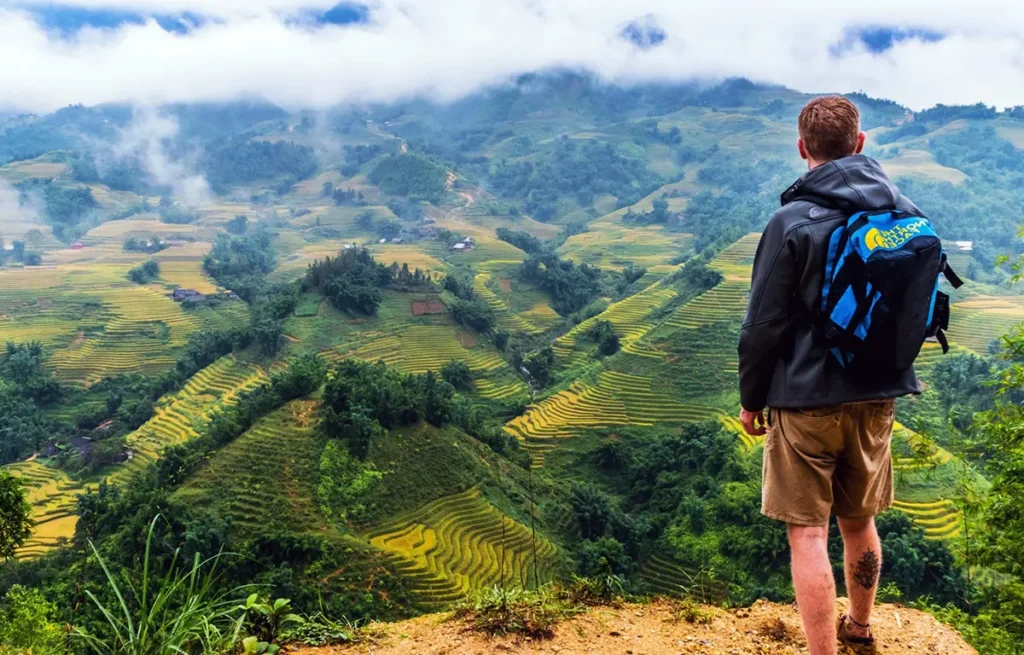
Sapa Easy Trekking For Seniors
Gentle paved route — the most rain-suitable trekking option we offer, good for all fitness levels.
Don't Let Rain Stop You — Waterproof Gear at Our Office
 Gear Rental
Trekking Boots Rental
Waterproof ankle-support boots. Cleaned and checked before each rental. Available at 105 Thach Son Street.
 Gear Rental
Walking Poles Rental
Trekking poles available to rent at $2/day at our office, 105 Thach Son Street. Essential for descents.
Is Sapa Still Worth Visiting in the Rain?
Yes — Sapa is genuinely worth visiting in the rain, provided you come with the right gear and a flexible plan. The wet season trades a little comfort for a lot of atmosphere, and for many travellers that's a good deal.
Here's the honest ledger. The costs: muddier trails, ridge routes and Fansipan summit views often off the table, leeches on the forest sections between May and September, and afternoons that can vanish under a downpour. The benefits: the Muong Hoa Valley at its deepest, most electric green; the dawn mist that is Sapa's most photographed sight and only exists in humidity; tourist numbers down well over half from June through August, so the villages, market, and homestays feel like themselves; softer prices; and indoor highlights like the herbal bath, market handicrafts, hotpot, and cooking classes.
Who should still come in the rainy season? Photographers, travellers who want the quiet authentic villages, anyone on a budget, and people happy to walk flat valley routes rather than chase summit views. Who should wait for the dry season? First-timers whose trip hinges on clear Fansipan panoramas, travellers with mobility concerns who can't risk a slick descent, and anyone unwilling to carry a proper waterproof. If you're in the first group, book with confidence — just message us first so we can match the route to the forecast.
Frequently Asked Questions
Yes — the wet season from May to September is actually one of the most visually stunning times to visit Sapa. The rice terraces in Muong Hoa Valley are at their greenest and most dramatic. The mist that rolls in over Lao Chai and Ta Van in the mornings is unlike anything you see in the dry season. Rain does bring some challenges — muddy trails, leeches on longer routes, reduced visibility on Fansipan — but it also means fewer crowds and a more authentic, quieter experience in the villages.
The Red Dao traditional herbal bath is the single best rainy-day activity in Sapa. The Red Dao people of Ta Phin village have used this treatment for generations — a large wooden tub filled with a blend of 10 to 12 mountain herbs, including roots, bark, and leaves that are boiled together for at least two hours before you arrive. The water turns a deep amber-brown and the smell is earthy and warming. A full session runs about 45 minutes and costs roughly 150,000–200,000 VND (around $6–$8 USD). The Sapa Culture Museum on Fansipan Road is also worth an hour, especially for context on Black H'mong and Red Dao histories.
Yes, but you need the right gear and the right route. A waterproof jacket is essential — Sapa rain is not a light drizzle, it comes in sideways on the exposed ridgeline trails. Non-slip hiking boots or trail shoes with real grip are critical; the paths through the rice terraces turn into red clay mud quickly and standard sneakers will leave you sliding on every descent. We always bring walking poles on rainy days and slow the pace by about 20%. For rainy conditions, I recommend flatter routes like the Muong Hoa Valley floor walk through Lao Chai and Ta Van rather than the higher ridge trails above Ma Tra or Hang Da.
Sapa's wet season runs from May through September, with July and August seeing the heaviest rainfall. Rain typically arrives in the afternoon — mornings are often clear, which is useful if you want to trek early. October through April is the dry season, with October and November being the most popular months for trekking (15–25°C, clear skies, golden harvest rice terraces). March and April are also excellent with warm temperatures and the terraces flooded for planting season, giving a mirror-like reflection of the sky.
Most of the main villages — Lao Chai, Ta Van, Y Linh Ho — are accessible in light to moderate rain because the main paths are concreted. Cat Cat Village is accessible in light rain but the stone steps down from the gate become very slippery, so take it slowly. Ta Phin village is a 12 km drive from Sapa Town and worth visiting on any day — the Red Dao community there is one of the most welcoming we know. The more remote villages like Hang Da and Hau Thao involve unpaved trails that become genuinely difficult in heavy rain, so we advise those only in dry weather.
Pack a waterproof jacket — not a light rain shell but a proper waterproof layer, because Sapa rain is heavy and cold. Non-slip hiking shoes or trail runners with a good tread pattern. Quick-dry clothing, since cotton stays wet and cold. A small daypack with a rain cover or a dry bag inside for your camera and electronics. Leech socks if you are trekking through long grass or forest sections — they are cheap, available in Sapa Town, and save a lot of surprise. A warm layer for evenings, as the temperature drops sharply after rain, especially above 1,500 metres.