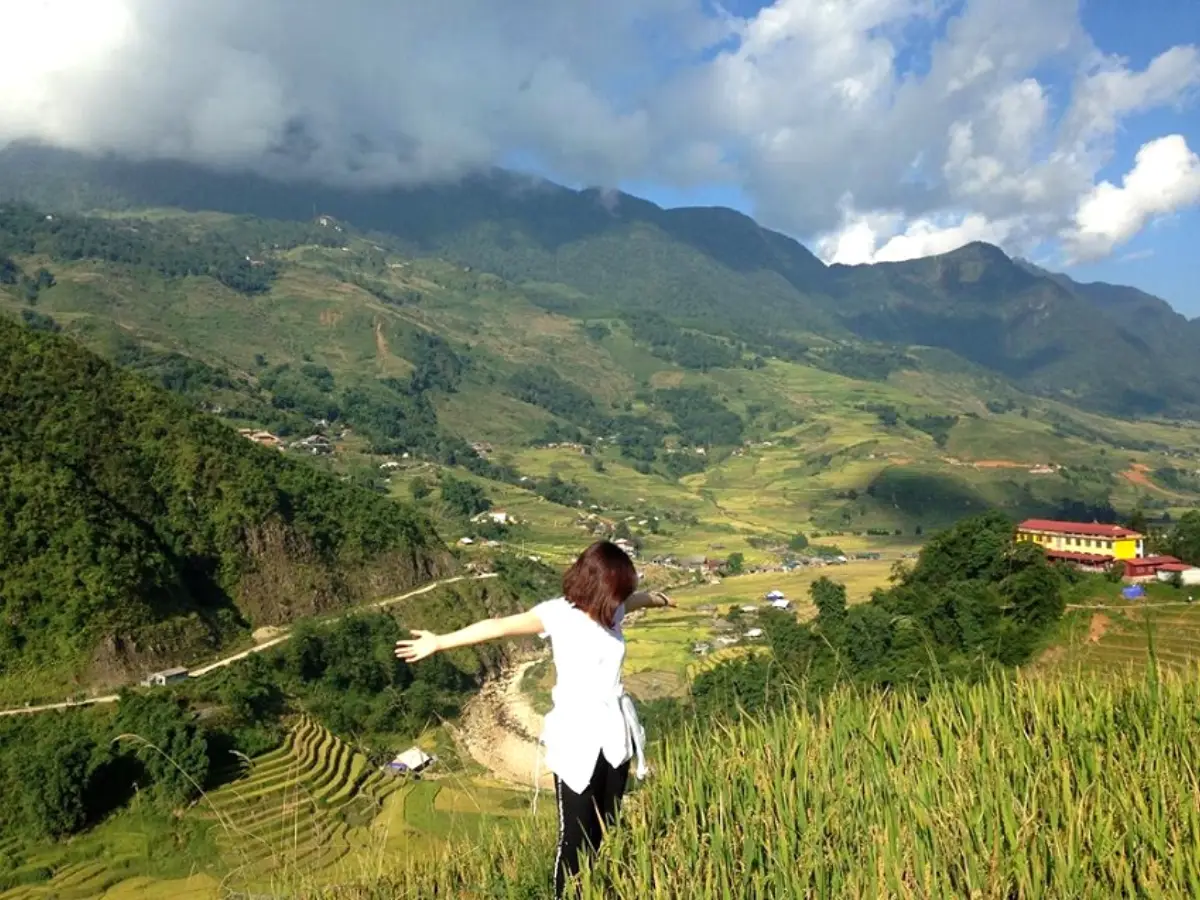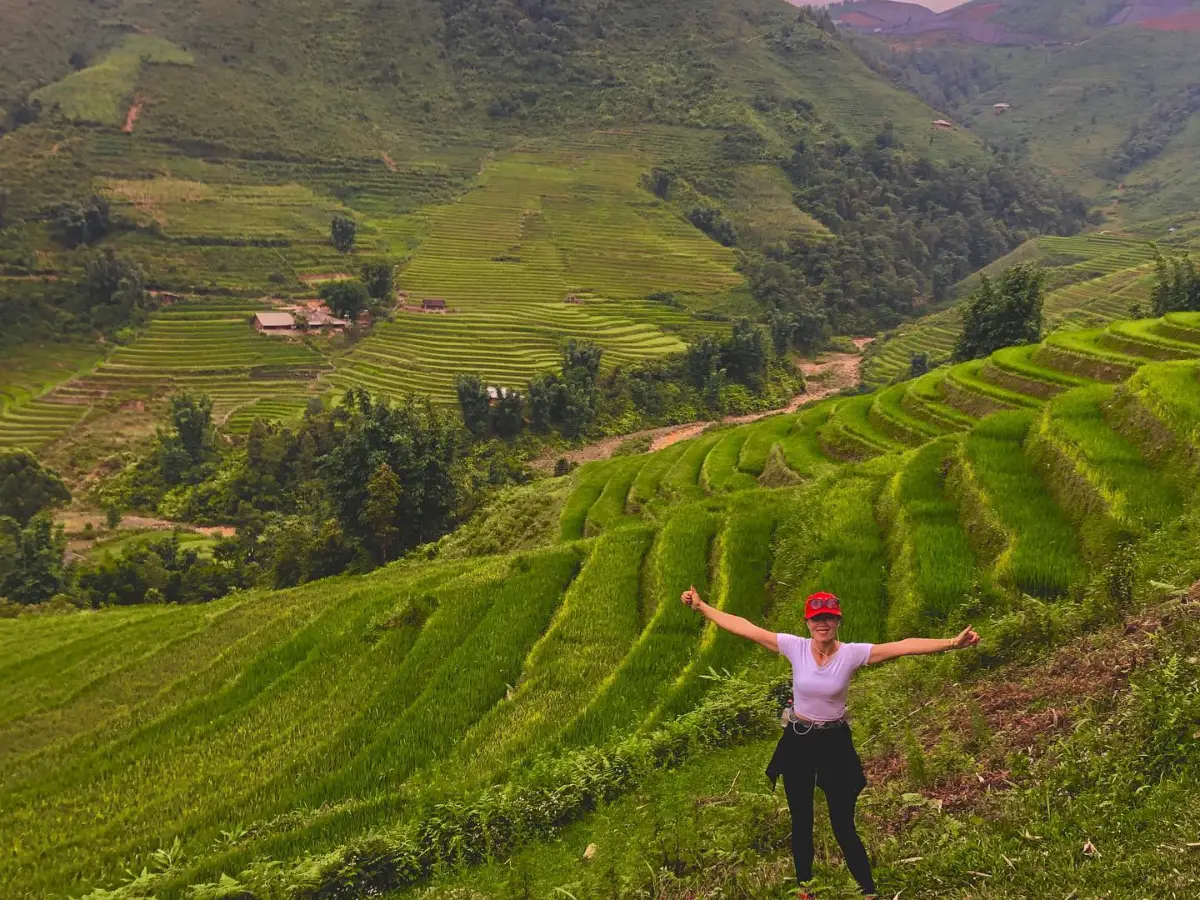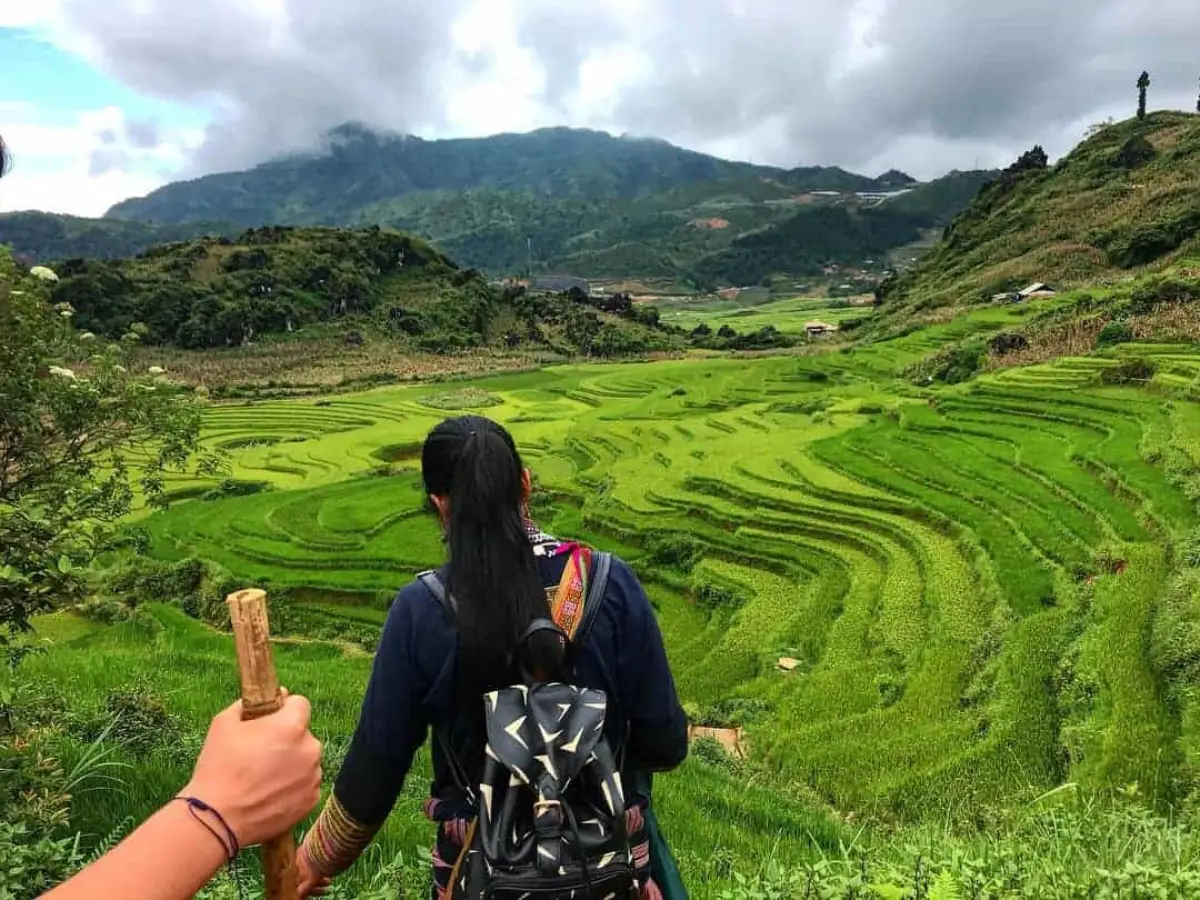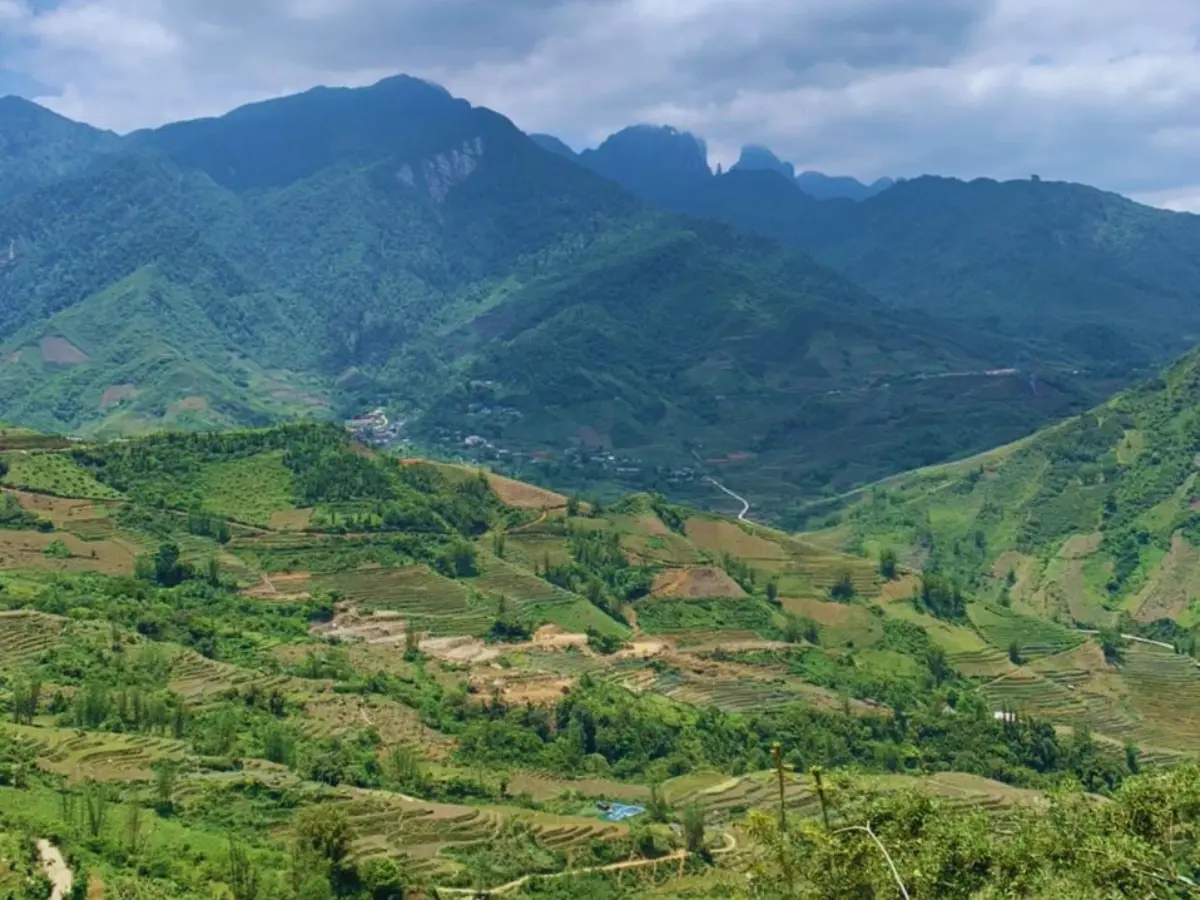
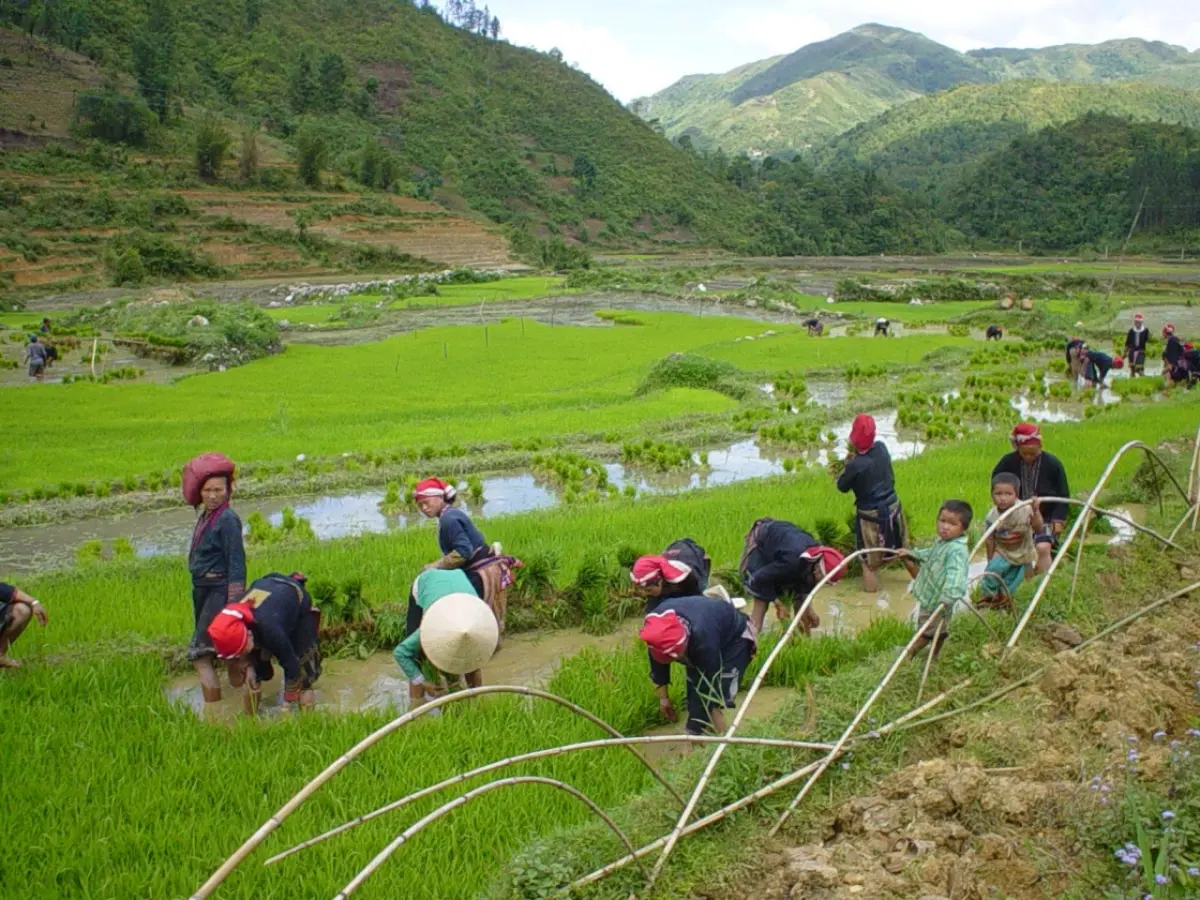
The trail to Ta Phin village forks about 20 minutes out of Sapa town — left for the main road, right for the footpath that drops into the valley through cardamom fields. The cardamom smells sharp and green in the morning, especially after rain. It is a Dao crop, not an H'mong one: the Red Dao have been cultivating it on these slopes for generations, and the smell — along with the splash of red you see on the headdresses of women working the hillside gardens — is usually the first sign that you have crossed from Black H'mong territory into Red Dao land.
Most travelers to Sapa spend their time in the Muong Hoa Valley, where the famous rice terraces and the villages of Lao Chai, Ta Van, and Y Linh Ho are all Black H'mong communities. The Red Dao live differently — at higher elevation, in a village that requires a specific effort to reach, with a culture that has developed separately despite five centuries of shared mountain geography. Understanding who the Red Dao are, and what makes them distinct, is the difference between seeing Sapa's ethnic minorities as a blurred backdrop and actually understanding what you're looking at.
Who Are the Red Dao in Sapa?
The Dao people — spelled Yao in Chinese records — migrated into Vietnam from Yunnan province in southern China over several centuries, with the main waves arriving in the 17th and 18th centuries. The Red Dao are one of the largest sub-groups of the broader Dao ethnic family; the "red" refers to the color of their headdress and the prominence of red thread in their embroidery, not a separate ethnic designation. In Vietnam, there are roughly 750,000 Dao people in total, spread across the northern mountain provinces. In Lao Cai province alone — which includes Sapa — the Dao population is around 75,000, with a significant portion concentrated in the Ta Phin area.
The Red Dao in Ta Phin are one of several sub-groups within the Dao family — others include the White Dao, the Dao Tien, and the Lan Ten Dao — each with distinct clothing, dialects, and ritual traditions. In the Sapa area, the Red Dao are by far the most prominent, and when tourists or travel writers refer to "the Dao in Sapa," they almost always mean the Red Dao of Ta Phin.
Ta Phin Village — The Heart of Red Dao Life Near Sapa
Ta Phin sits at roughly 1,500 metres above sea level on a plateau north of Sapa town, separated from the H'mong villages of the Muong Hoa Valley by a ridge and a stretch of pine forest. The village is not particularly large — it is more of a loose collection of hamlets spread across several hundred metres of hillside — but it is the commercial and cultural centre of the Red Dao community in this area.
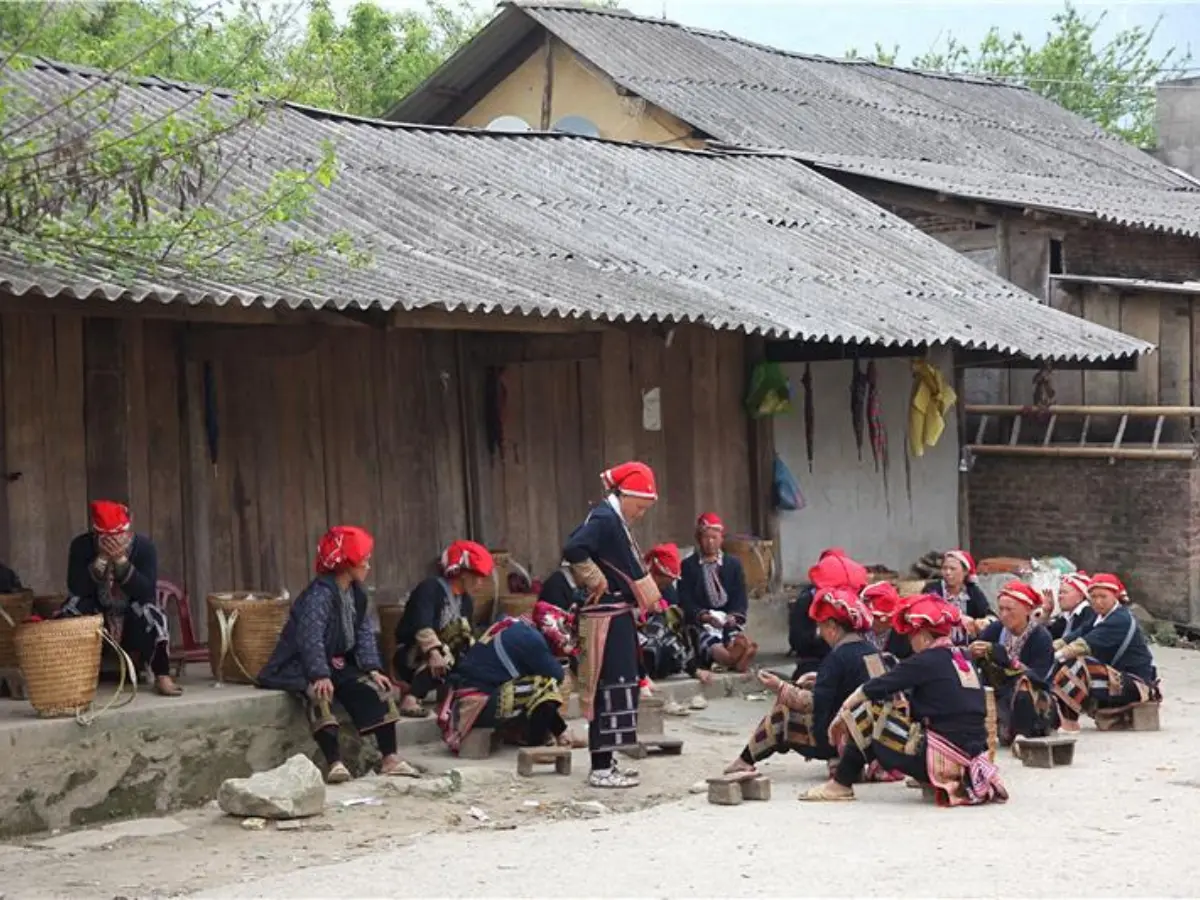
The main entry point for most travelers is a small market square where women sell embroidery, handicrafts, and hand-stitched clothing in traditional patterns. This is where you first encounter the full visual force of Red Dao dress: a cluster of women sitting on low stools, their red turbans catching the light as they work thread through cloth with needles so fine they seem to vanish between their fingers. The work they are doing is not a demonstration — they embroider constantly, in their spare moments, because a good set of Red Dao clothing takes hundreds of hours and is never truly finished. Most women carry needlework with them the way other people carry a phone.
Beyond the market, Ta Phin has a small pagoda that dates to the French colonial period, a cave system in the limestone hillside (Tien Son Cave) that the Red Dao consider sacred, and a scattering of homes where families offer herbal baths to visitors. The cave is the landmark most guidebooks mention, but the bath houses are what bring most travelers back a second time.
See Sapa's Ethnic Villages on Trek
 Best Seller
Trekking Through Rice Terraced Fields
Walk the Muong Hoa Valley through Black H'mong villages. A full-day trek through Lao Chai and Ta Van.
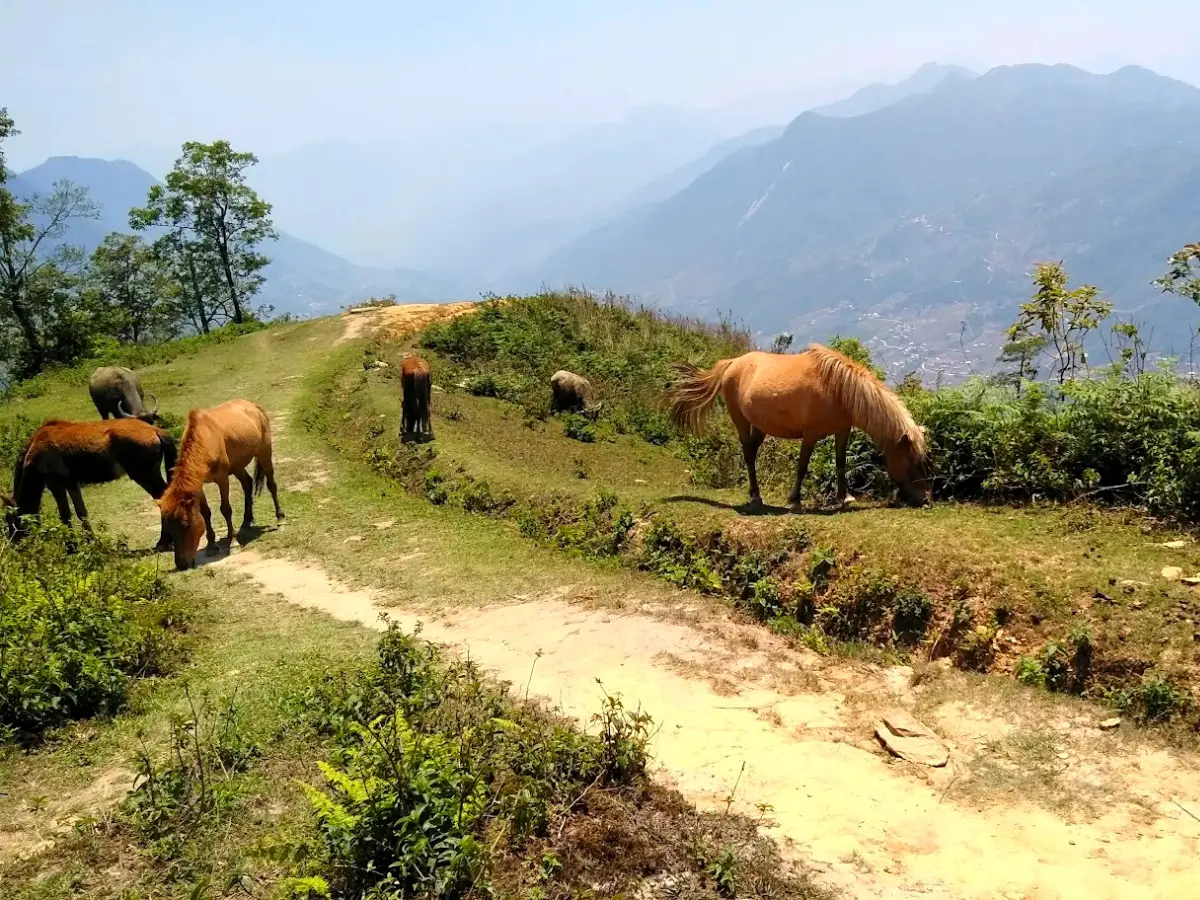
Mountain Views and Villages Trek
Ridge trail with panoramic views above Sapa — passes through quieter H'mong settlements with fewer day-trippers.
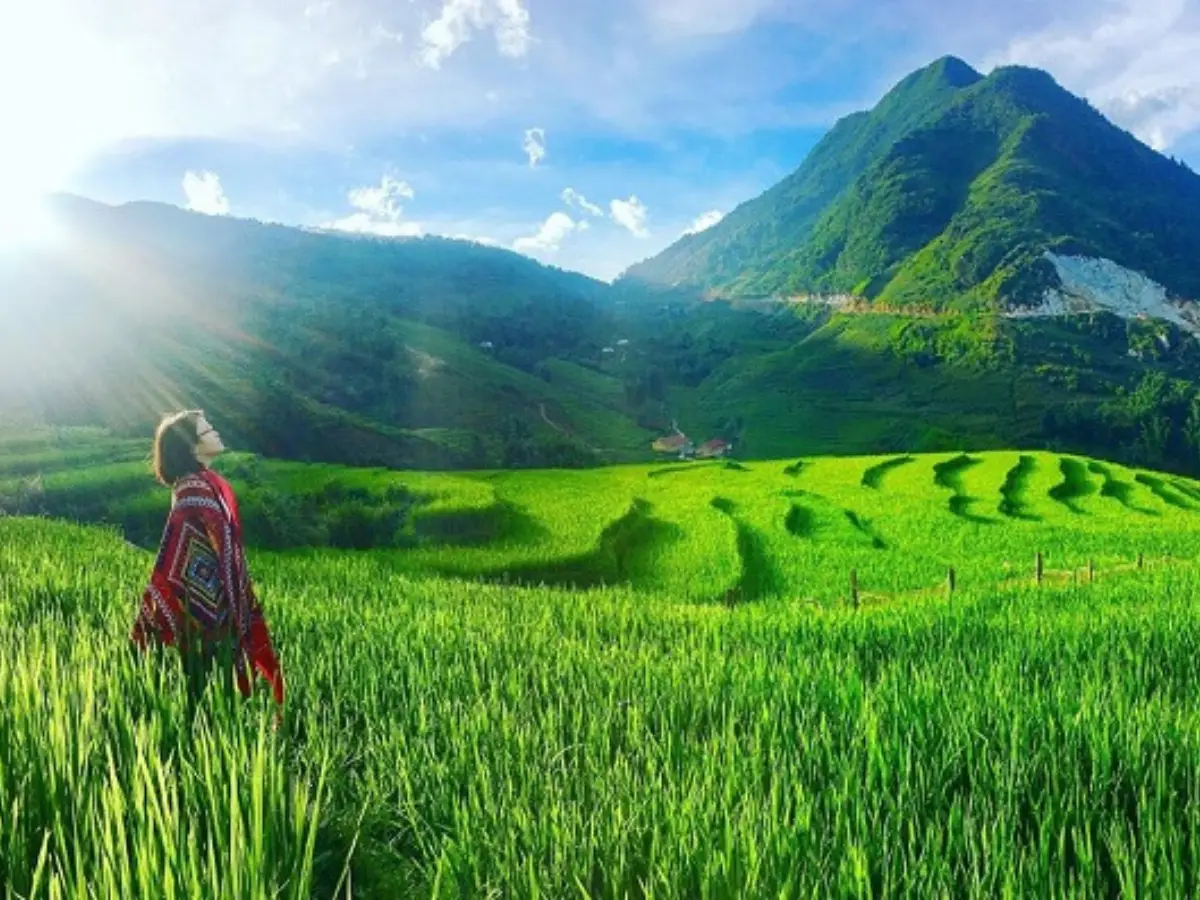
Rice Paddies and Cultures – Easy Hiking
Flat valley routes through working paddies with stops at Black H'mong homes. Cultural contact without strenuous climbing.
Red Dao Clothing — Reading What People Wear
The single most useful thing to know before you visit Sapa is how to tell the Red Dao and Black H'mong apart. Both groups wear traditional dress daily — this is not a special occasion thing — but they look completely different, and confusing them in conversation is the quickest way to signal that you have not paid attention to where you are.
Red Headdress
The large red turban — cloth wrapped and folded, decorated with silver coins, pompoms, and tassels — is the defining marker. The more elaborate the headdress, the higher the social occasion. Daily wear is simpler; festival headdresses can weigh over a kilogram.
Most VisibleSilver Coin Jewelry
Heavy silver necklaces, bracelets, and earrings are worn alongside collar and cuff panels trimmed with old French Indochina coins or cast silver replicas. Silver historically represented family wealth and was passed down through generations as inheritance.
Wealth SymbolDense Embroidery
Red Dao embroidery uses red, white, and black thread in geometric and animal motifs — dragons, phoenixes, and abstract patterns — worked across the front panel, sleeves, and back of the tunic. A complete set of ceremonial clothing represents over 400 hours of needlework.
Cultural IdentityTattooed Forearms
Older Red Dao women sometimes have tattooed forearms — a traditional practice that marked a woman's maturity and identity within the community. The practice has largely stopped among younger generations, but it remains a visible marker on women over 50 in Ta Phin.
Fading Tradition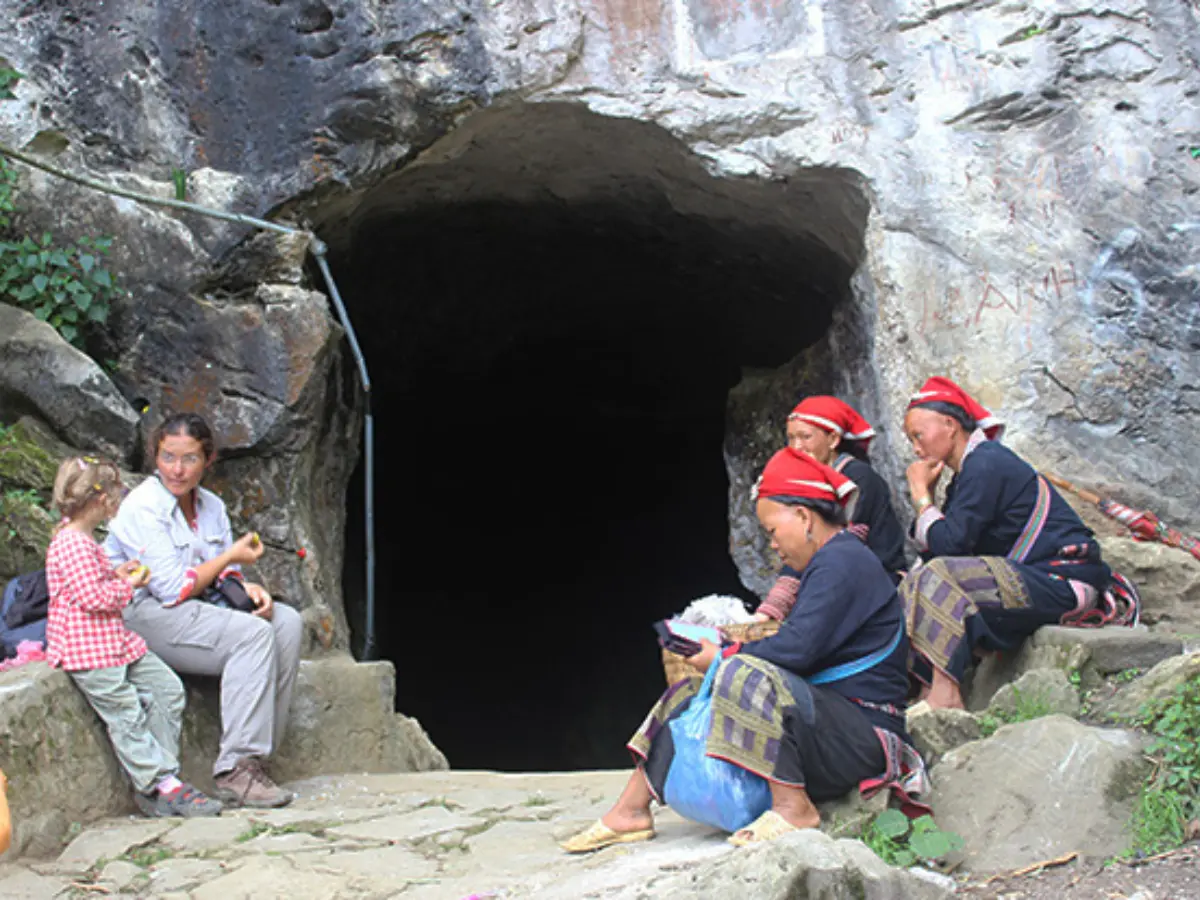
The Herbal Bath Tradition
The Red Dao herbal bath is the most widely known thing about Ta Phin among tourists, which means it is also the most likely to be oversimplified. It is not a spa service that the Dao have packaged for visitors. It is a medicinal practice with a specific therapeutic logic that goes back centuries, rooted in the Taoist healing traditions the Dao brought with them from Yunnan.
The bath uses a blend of roughly 120 different mountain herbs — including plants collected from the Hoang Lien Son range above 2,000 metres, roots of species like Gynura divaricata and Schefflera heptaphylla, bark, and dried fungi — simmered for several hours until the water turns dark brown and the steam carries a complex, slightly astringent smell. The Dao families who prepare these baths keep their herb combinations proprietary; different households have different formulas developed over generations.
For a full account of the herbs, the healing theory, and the best way to experience the bath, read our guide to Sapa Traditional Medicine and Red Dao Herbal Baths. For trekkers, the short version is: it genuinely eases muscle fatigue, and 20 minutes in a wooden soaking tub at the end of a long day on the trail is a different experience from sitting in a resort jacuzzi.
Red Dao Embroidery and the Craft Economy
If the herbal bath is the experience most travelers remember, the embroidery is what they most often bring home. Red Dao needlework is sold at stalls throughout Ta Phin village and at the Saturday market in Sapa town, where Red Dao women from outlying settlements come specifically to trade. The quality range is wide — from quickly stitched tourist items to pieces that represent weeks of labor — and the difference is visible if you look closely at the density and regularity of the thread work.
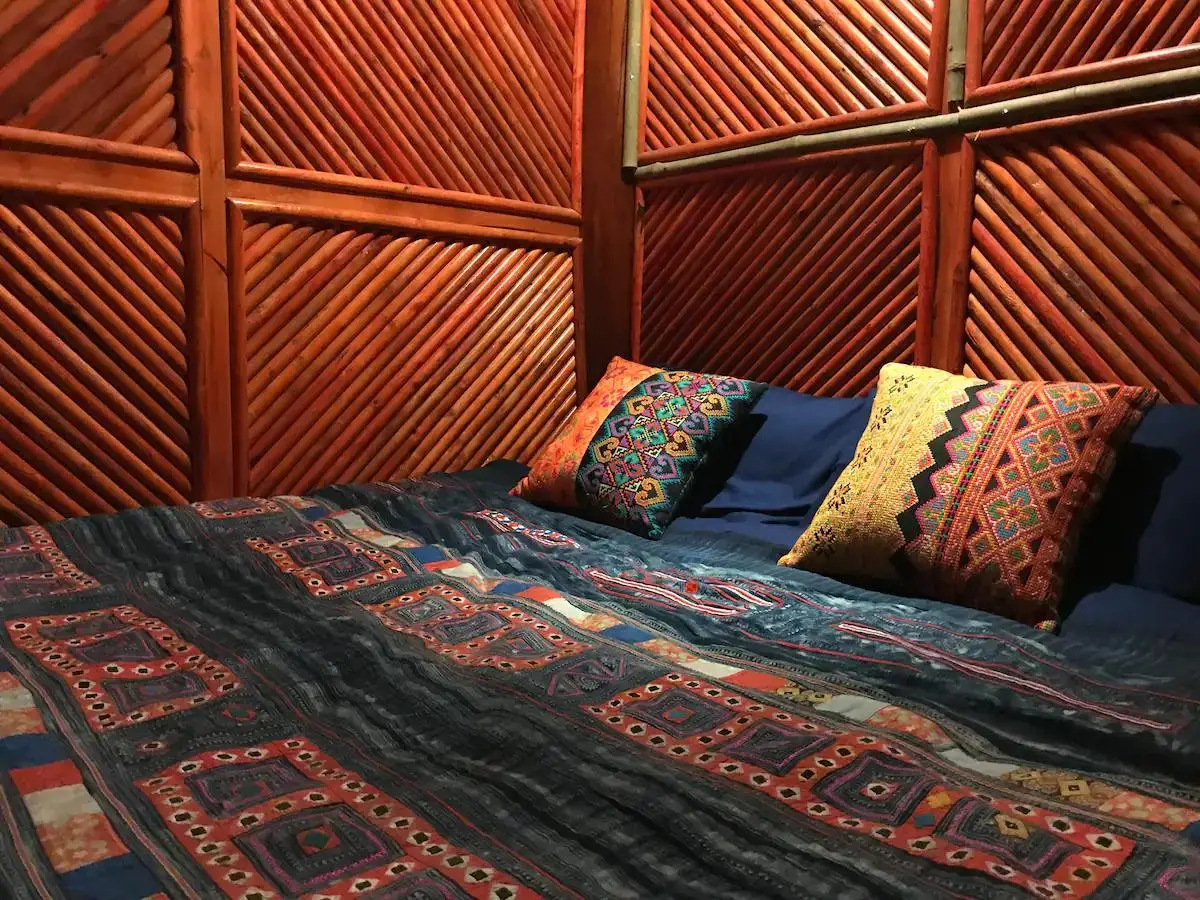
The most meaningful pieces are the ones that were not made for sale. Red Dao women make their own clothing and their children's clothing throughout their lifetimes, and the most elaborately embroidered garments — the full-dress sets worn at New Year and at weddings — are rarely if ever sold. What appears in the market is either work made specifically for the tourist trade or, occasionally, older pieces that a family has decided to part with. Buying from a woman you have met on a trek, rather than from an aggregator stall, is the most direct way to ensure the money goes to the maker.
The craft economy in Ta Phin is primarily female-run. Men tend to manage agricultural work and heavier labor; women control the embroidery production and most of the market trade. This gives Red Dao women a degree of economic independence that has increased as tourism revenues grew through the 2000s and 2010s. Several women in Ta Phin now run their own herbal bath businesses with employees, which would have been unusual for the community two generations ago.
Stay Longer — Reach Ta Phin and Red Dao Villages
 Most Popular
Rice Terraced Fields & Homestay
2 days in the Muong Hoa Valley with a Black H'mong family overnight. Includes a morning visit to the quieter northern villages before any day-trippers arrive.
 Includes Ta Phin
Experience The Real Sapa – 3D2N
3 days through H'mong and Red Dao communities. Includes Ta Phin village, herbal bath experience, and overnight with a local family. Visits areas no 1-day tour reaches.
Red Dao and Black H'mong — Two Communities on the Same Mountain
The question travelers ask most often is: what is the difference between the Red Dao and the Black H'mong? The answer is: almost everything. They are not sub-groups of the same people. They are distinct ethnic groups with different linguistic families, different migration histories, different spiritual practices, different agricultural traditions, and different clothing systems. The only things they share, in broad terms, are a mountain environment and five centuries of neighboring each other without merging.
In terms of where you will encounter each group: Black H'mong communities are concentrated in the Muong Hoa Valley — Lao Chai, Ta Van, Y Linh Ho, Hang Da, Hau Thao, Ma Tra. These are the villages you walk through on almost every 1-day trekking route from Sapa. The Red Dao are primarily in Ta Phin and its surrounding hamlets to the north — a separate destination that requires a different route. On a standard 1-day trek, you will almost certainly meet Black H'mong people and almost certainly not meet Red Dao people. On a 3-day or 4-day tour, you have a good chance of both.
Ask before photographing, especially inside the village market and near the herbal bath houses. If you buy embroidery, take the time to talk to the woman who made it — Your guide will translate. Do not bargain aggressively: pieces that look simple took hours. If you are invited to watch someone embroider, sit quietly and wait to be spoken to rather than leaning in immediately. When entering a home for a herbal bath, shoes come off at the door. The household altar, usually on the back wall of the main room, should not be touched or photographed without explicit invitation.
What Travelers Actually Experience in Ta Phin
I have led trekking groups to Ta Phin more times than I can count. The experience is consistently different from the Muong Hoa Valley, and not just because of the geography. The Muong Hoa Valley has a well-established trekking circuit — the paths are clear, the villages see dozens of groups on a busy day, and the rhythm of tourist traffic has become part of the village landscape. Ta Phin is less worn into this pattern. Groups arrive more sporadically; the village does not orient itself around trekking groups the same way Lao Chai does.
What travelers usually remember most is the herbal bath at the end of a long walking day. After 15–20 km on mountain trails, lowering yourself into a wooden tub of dark, steaming herb water is a sensory experience that is hard to describe accurately in advance — the heat, the smell, the way the muscles in your legs seem to release all at once. It works. The Red Dao figured this out a long time ago.
The second thing travelers remember is the embroidery. Sitting with a woman while she works, asking her through a guide what the patterns mean, watching the motifs emerge one stitch at a time — this is the kind of encounter that does not happen on a busy tourist trail. In Ta Phin, if you are willing to slow down and sit, people will sit with you.
If you want to experience both the Black H'mong villages of the Muong Hoa Valley and the Red Dao community of Ta Phin, the minimum sensible option is a 3-day trek. One day is not enough to reach both communities properly. The mountain between them takes time — but that is exactly why the people on each side of it have stayed so distinct for so long.
Rent at Our Office Before You Trek
 Gear Rental
Trekking Boots Rental
Waterproof ankle-support boots. Cleaned and checked before each rental. Available at 105 Thach Son Street.
 Gear Rental
Walking Poles Rental
Trekking poles available to rent at $2/day at our office, 105 Thach Son Street. Essential for descents.
Frequently Asked Questions
The most obvious difference is the headdress. Red Dao women wear large red turbans or cloth headdresses decorated with coins and tassels — the red color gives the sub-group its name. Their tunics are embroidered with dense geometric and floral patterns in red, white, and silver thread, often weighted with silver coins around the collar and cuffs. Black H'mong women wear deep indigo-dyed hemp clothing with minimal embroidery, no headdress, and silver earrings rather than coin-trimmed tunics. The two groups are visually unmistakable once you know what to look for.
Ta Phin village is located about 12 km north of Sapa town, up a winding road through pine forest that climbs to around 1,500 metres. By motorbike or car it takes roughly 25–30 minutes from Sapa town centre. Some trekking routes reach Ta Phin on foot — the trail from the Sapa side takes about 3–4 hours through forest and small Dao farming settlements. Our multi-day tours that include Ta Phin combine this approach with a vehicle pickup, so you are not walking back the same way.
The Red Dao herbal bath is a medicinal tradition rooted in Taoist healing practices the Dao people brought with them from southern China. The bath uses a blend of around 120 mountain herbs boiled for several hours and added to a wooden soaking tub. The water turns dark and smells strongly herbal. The Red Dao have used it for generations to treat muscle fatigue, poor circulation, and skin conditions. For trekkers, a 20-minute soak after a long day on the trail genuinely eases tired legs. We offer it as an add-on at Ta Phin on our 3-day and 4-day tours.
Most Red Dao villagers in Ta Phin speak little or no English — Vietnamese is their second language, and H'mong dialects are not spoken here. Women at the village market stalls often know a few basic transaction phrases from years of dealing with tourists, but for any real conversation you will need a guide who speaks Vietnamese and has familiarity with the Dao community. Our our local guide has trekked in and out of Ta Phin for years and has good relationships with several Dao families there.
Always ask first — a smile and gesture toward your camera is universally understood. Red Dao women in Ta Phin are generally comfortable being photographed, especially those who sell embroidery and handicrafts in the village; they understand that a good photo often makes a traveler more likely to return or recommend the village. Avoid photographing inside herbal bath establishments without clear permission, and never photograph women during the bath itself. If someone declines, accept it without pressure. Our guides will brief you before you enter the village.
Our 3D2N Experience The Real Sapa and 4D3N tours both include Ta Phin village and time with Red Dao families. The 1-day trekking routes focus on the Muong Hoa Valley and Black H'mong villages — they do not visit Ta Phin. If visiting the Red Dao community is specifically what you want, book a multi-day tour or contact us on WhatsApp to arrange a custom day trip to Ta Phin.