
 Sinh Giang
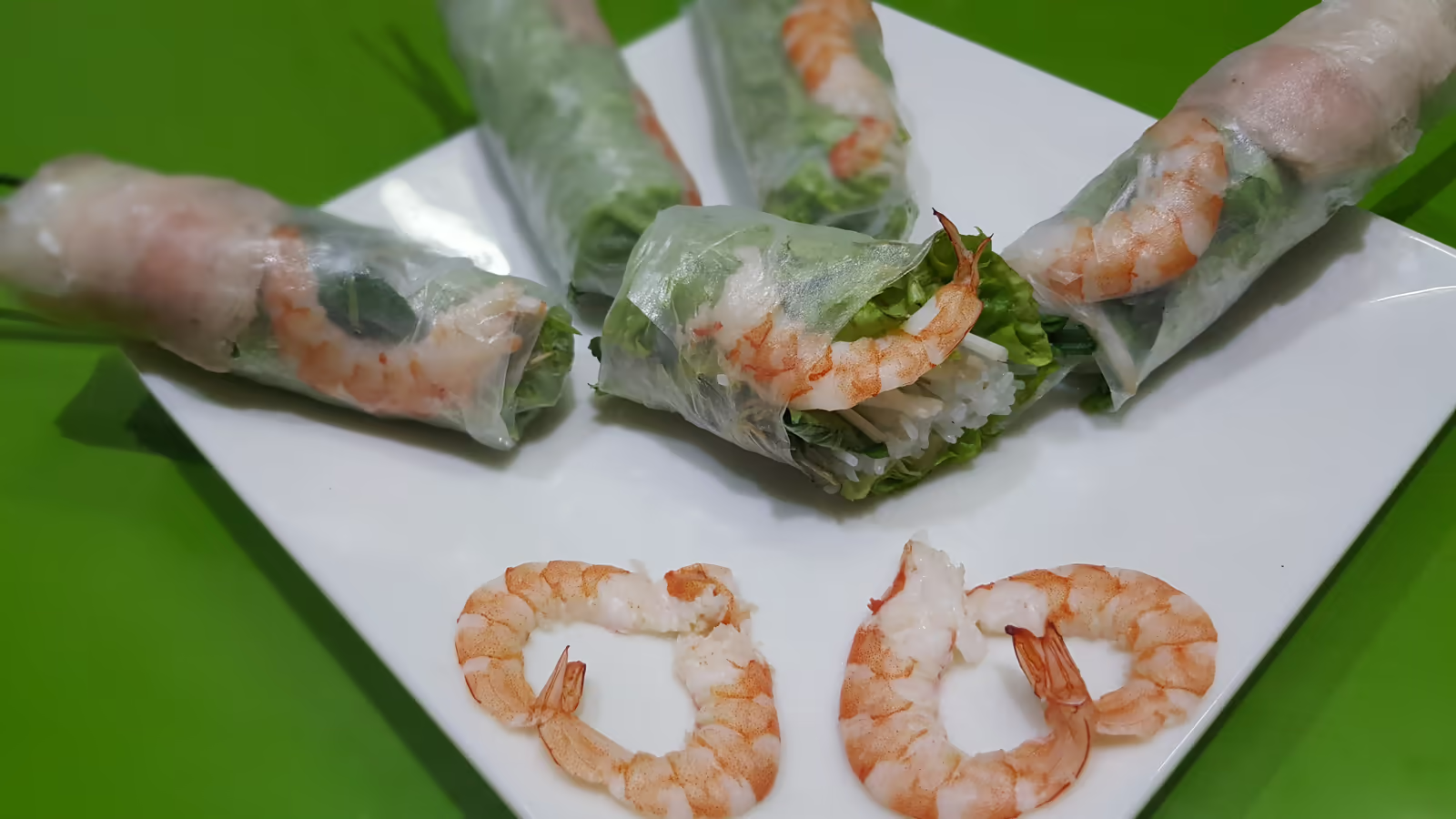
Vietnam has two different spring rolls, and menus in English often blur them. The fresh one is made of rice paper, herbs, noodles and shrimp or pork, and is eaten cold: goi cuon in the south, nem cuon in the north. The fried one is a crisp roll of minced pork, glass noodles and mushrooms: cha gio in the south, nem ran in the north. Order the fresh one for a light snack, the fried one when you want something hot, and expect to pay about 10,000 to 30,000 VND from a street vendor (vietnamtourism.com, 12 July 2026).
We are a Sapa trekking company, not a restaurant guide, so this page is built from published food sources that we read on 3 November 2026, with the source and date next to every price and claim. Where two sources disagree, as they do on the wrapper of a fried roll and on the name of the central peanut sauce, we say so. For the other famous Vietnamese dishes, our pho guide, banh mi guide, bun cha guide and banh xeo guide work the same way.
Key Takeaways
- Fresh roll: nem cuon in Hanoi, goi cuon in Saigon. Fried roll: nem ran in Hanoi, cha gio in Saigon. Hue and Da Nang use the northern names (vietnamtourism.com, 12 July 2026).
- Street prices: fresh rolls 10,000 to 20,000 VND, fried rolls 15,000 to 30,000 VND a portion, restaurants 50,000 to 100,000 VND. Tourist-area vendors may charge double or triple.
- Sauce changes with the city: nuoc cham in Hanoi, fermented anchovy or peanut sauce in Saigon, peanut sauce in Hue, Da Nang and Hoi An.
- Wrap the fried roll in lettuce and herbs before you dip it, and dip only one end. Eat fresh rolls straight away.
- Almost all dipping sauces contain fish sauce, so a vegetarian needs to ask: khong mam, toi an chay.
Two Rolls and Their Four Names
Vietnam has a fresh roll and a fried roll, and each has a northern and a southern name. The mix-up starts because English menus call both “spring rolls” and because the south’s name for one is close to the north’s name for the other. vietnamtourism.com (12 July 2026) sets the names out, and localvietnam.com (May 2026) agrees.
| Roll | Hanoi, Hue, Da Nang | Saigon, Hoi An | How it is served |
|---|---|---|---|
| Fresh, rice paper | nem cuon | goi cuon | Cold, dipped, eaten at once |
| Fried, crisp | nem ran | cha gio | Hot, wrapped in lettuce and herbs, then dipped |
The page says Hue and Da Nang use the northern words in its table, while Da Nang vendors may use either; Hoi An follows the south. Rice paper itself is banh trang (localvietnam.com). Two other words are useful: nem nuong is grilled pork sausage that fills some central fresh rolls, and cha is Vietnamese pork sausage. Vietnamtourism.com calls “summer rolls” a Western marketing term. In Vietnam, goi cuon means “salad roll”, which is a fair description.
| Region | Fresh roll | Fried roll |
|---|---|---|
| North | Thinner paper; perilla and fish mint; sometimes cha sausage | Smaller and crisper; pork, glass noodles, wood-ear mushroom; snails in some versions |
| Centre | Grilled pork sausage (nem nuong) in some rolls | May include whole shrimp |
| South | Thicker paper with tapioca starch; boiled shrimp, pork belly, vermicelli, mint or Thai basil | Taro or jicama added for sweetness; sweet potato or taro in place of glass noodles on one page |
| Mekong Delta | Coconut milk worked into the sauce | Not stated |
Which roll should you order?
Pick by the weather, the hour and your diet. The table below is our own reading of the descriptions in the sources, so treat it as a rule of thumb and not a ruling.
| You want | Order | Why |
|---|---|---|
| Something light on a hot afternoon | Fresh roll | Cold, mostly herbs, noodles and boiled shrimp or pork |
| Something hot and crisp with beer | Fried roll | Fried to order; the frying also kills most pathogens |
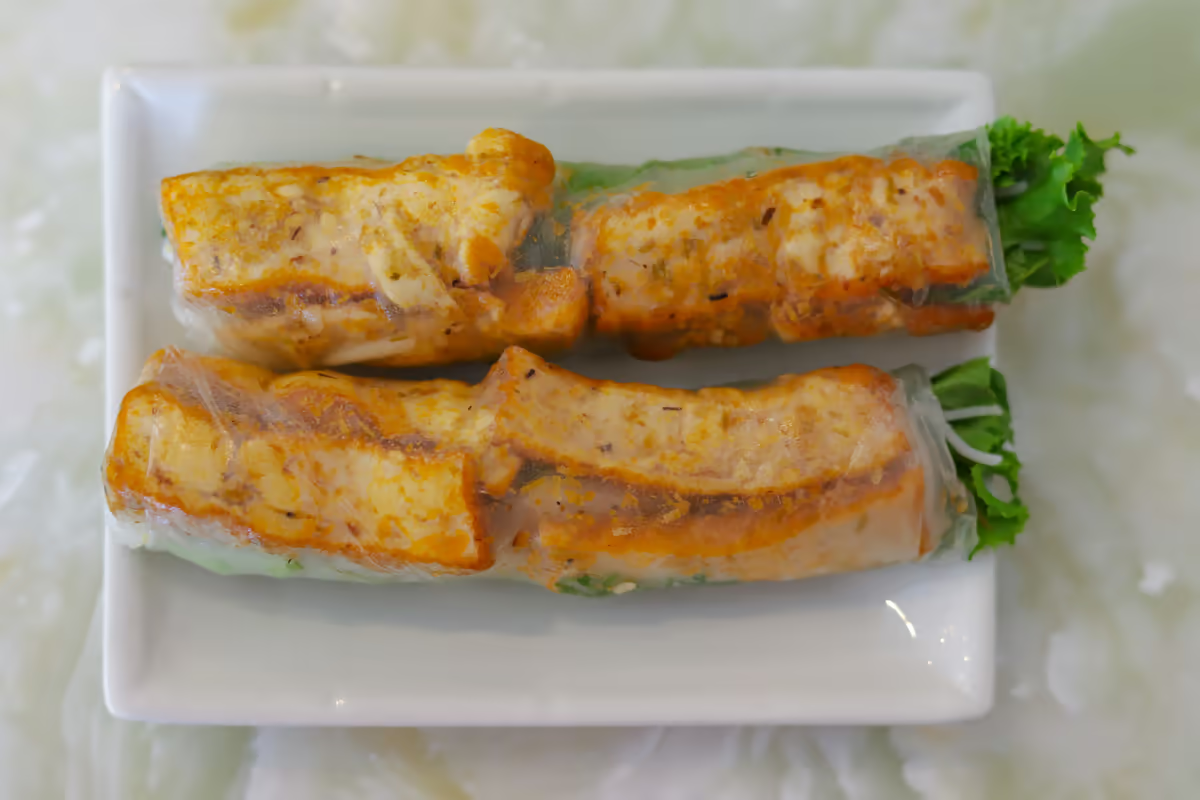
| A vegetarian snack | Goi cuon chay | Tofu, mushrooms and vegetables; ask for a sauce without fish sauce |
| Little time at the stall | Fried roll | Fresh rolls must be eaten at once, so they suit a seat and a minute to spare |
| Peanut allergy | Neither, without a conversation | Peanut sauce is the usual dip in Saigon, Hue, Da Nang and Hoi An |
Taken region by region, the pattern is simple. In the north the rolls are lighter and the herbs are sharper, perilla and fish mint, and the fried roll is small and crisp. In the centre the fillings get heavier, with grilled sausage in a fresh roll and whole shrimp in a fried one. In the south the rolls are sweeter, with taro or jicama, Thai basil and fatter pork, and the dip is peanut or fermented anchovy. That is a generalisation drawn from three sources, and a single cook can break every rule in it.
Fresh Rolls: Goi Cuon and Nem Cuon
A fresh roll is rice paper softened in water and wrapped around cooked ingredients and raw herbs, with no frying. The standard southern version, according to localvietnam.com (11 May 2026), is boiled shrimp, thin slices of boiled pork belly, rice vermicelli, lettuce and fresh herbs, most commonly mint. The shrimp are halved lengthwise so that they show through the paper. Vietnamtourism.com adds more vermicelli, sweeter herbs such as Thai basil and a fattier cut of pork in the south.
The northern roll is different in small ways. vietnamtourism.com lists perilla and fish mint as typical northern herbs, and localvietnam.com says some northern versions include cha and that the northern rice paper is thinner, while southern paper is thicker and made with tapioca starch. Street vendors also vary the filling with cucumber strips, bean sprouts or grilled pork. In the Mekong Delta, coconut milk is worked into the sauce.
On origin, localvietnam.com says the dish comes from southern Vietnam and gives no date, so we have not repeated any. It also says CNN once included goi cuon in a list of the world’s most delicious foods, without a year, and we could not check that.
Fried Rolls: Cha Gio and Nem Ran
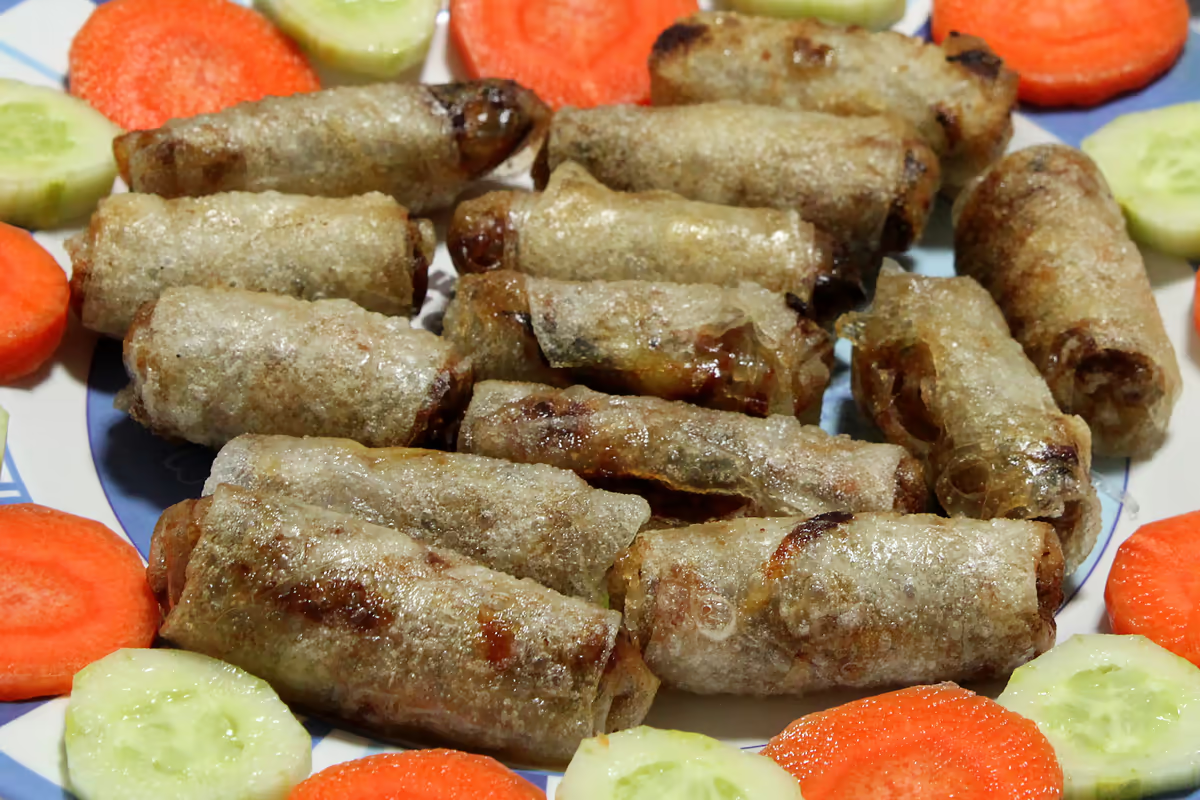
The fried roll is a rolled parcel of minced pork and other fillings, deep-fried until the wrapper blisters and cracks. Localvietnam.com (12 May 2026) lists ground pork, often with shrimp and sometimes crab, glass noodles made from mung beans, carrot, jicama or bean sprouts, wood-ear mushroom, fish sauce, pepper and sometimes egg. vietnamtourism.com says northern rolls are smaller and crispier, southern rolls add taro or jicama for sweetness and central rolls may include whole shrimp. A Vietnam Discovery article from 2020 adds that northern versions can contain snails and that tofu replaces the meat in vegan rolls, and it describes cha gio re, which uses a thin vermicelli-like sheet instead of rice paper, as rare and seen at big parties and restaurants.
vietnamtourism.com says southern fried rolls sometimes use wheat-based wrappers, localvietnam.com says the wrapper is rice paper, and Vietnam Discovery says wheat sheets are an overseas adaptation common in US restaurants. We cannot settle it from these pages, so treat “rice paper” as the usual answer in Vietnam and ask if wheat matters to you.
One more point from localvietnam.com: Vietnamese communities in Europe, North America and Australia have served cha gio for decades, so you may meet the dish abroad too. Vietnam Discovery says the egg roll and the imperial roll are different wrappers and different dishes, so do not expect the same thing under those names.
The Dipping Sauce, City by City
The sauce changes more than the roll does. Hanoi pairs both rolls with nuoc cham, the light fish-sauce dip with vinegar and less chilli. Saigon serves them with mam nem, a fermented anchovy sauce with pineapple, garlic and chilli, or with peanut sauce. Hue, Da Nang and Hoi An favour peanut sauce (vietnamtourism.com, 12 July 2026).
| City | Fresh / fried | Typical sauce |
|---|---|---|
| Hanoi | nem cuon / nem ran | nuoc cham, lighter, with vinegar and less chilli |
| Saigon | goi cuon / cha gio | mam nem (fermented anchovy) or peanut sauce |
| Da Nang | goi cuon or nem cuon / cha gio or nem ran | tuong xao, a peanut sauce |
| Hoi An | goi cuon / cha gio | peanut sauce |
| Hue | nem cuon / nem ran | tuong xao, a peanut sauce |
Vietnamtourism.com describes tuong xao as fermented bean paste with peanut butter, coconut water and garlic, and calls sweet chilli sauce a tourist adaptation. Localvietnam.com gives the central peanut-based sauce as nuoc leo, so the name is not settled either; use the description and not the word. If you do not eat fish sauce, read the diet section below before you order.
What They Cost and Where to Look
One trap is the unit. The same vietnamtourism.com page gives fried rolls as 15,000 to 30,000 VND “per portion” in its key facts and fresh and fried street rolls as 10,000 to 20,000 VND “per roll” in the body, so before you order, ask whether the price is for one roll or for a plate. If a stall gives a price in thousands, as many do, remember that “20” means 20,000 VND. Our currency guide explains the notes, and a few small bills in your pocket save an argument.
Spring rolls are cheap, and the only real way to overpay is to sit in the wrong place. vietnamtourism.com (12 July 2026) gives these ranges, with one caution that tourist-area vendors may charge double or triple the local price.
| Where | Fresh rolls | Fried rolls |
|---|---|---|
| Street vendor | 10,000 to 20,000 VND (US$0.40 to 0.80) | 15,000 to 30,000 VND (US$0.60 to 1.20) a portion |
| Restaurant | 50,000 to 100,000 VND (US$2 to 4) | |
The page names areas and not individual stalls. In Hanoi, look in the Old Quarter and around Dong Xuan Market for nem ran; in Saigon, around Ben Thanh Market and Bui Vien walking street for goi cuon; in Da Nang, Con Market and the Son Tra night market; in Hoi An, the central market and the night market. Busy vendors with high turnover serve the freshest rolls, the same page says. For prices and honesty in general, our guide to tourist traps in Hanoi and Sapa explains how to check a price before you eat, and the Vietnam currency guide covers small notes.
How to Order and How to Eat
Point and ask for a portion, then say what you want left out. vietnamtourism.com gives these phrases, which we have not tested ourselves, and they are the northern and southern forms.
| Say | It means |
|---|---|
| Mot phan nem ran | One portion of fried rolls (Hanoi) |
| Mot dia goi cuon | One plate of fresh rolls (Saigon) |
| Nuoc cham / tuong dau phong | Fish-sauce dip / peanut and soybean paste |
| Khong mam nem | No fermented anchovy sauce |
| Goi cuon chay, cha gio chay | Vegetarian fresh roll, vegetarian fried roll |
| Khong thit heo, khong tom | No pork, no shrimp |
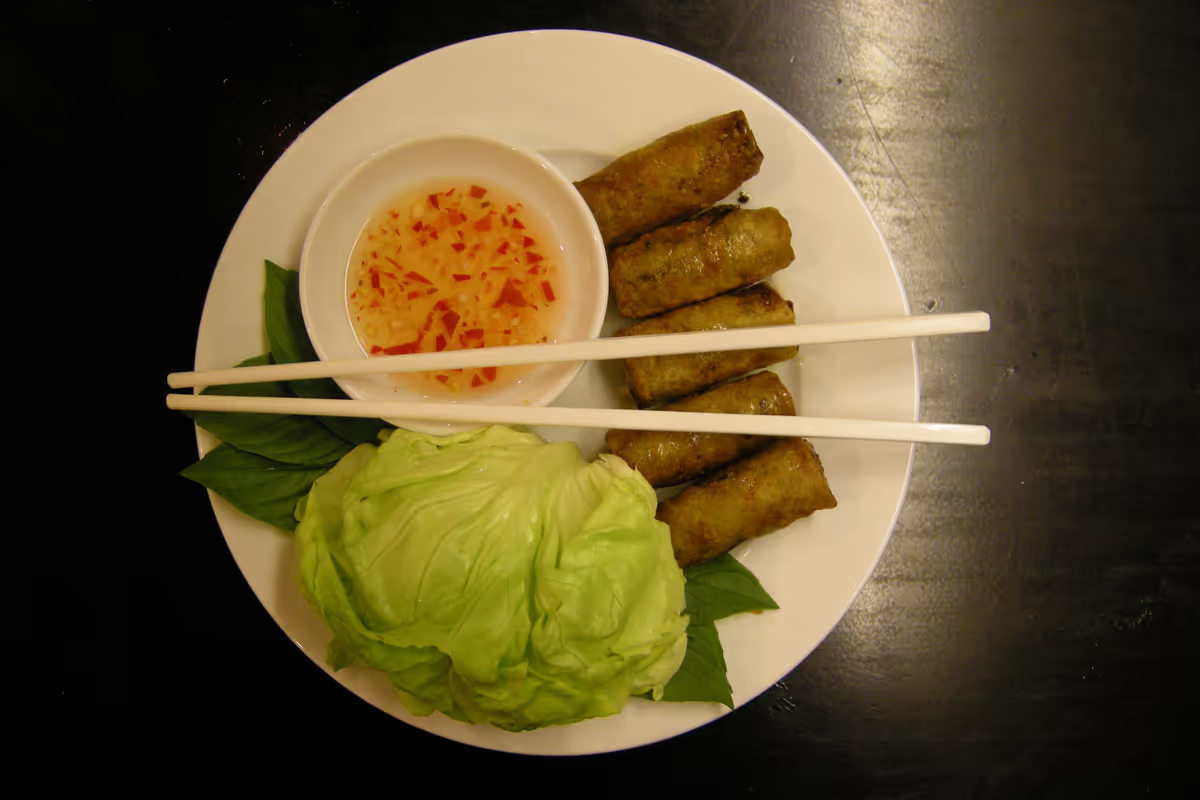
Eat fresh rolls at once: they are meant to be dipped and eaten, and should not sit. For the fried roll, wrap it in a lettuce leaf with herbs, then dip, and hold the roll by one end and dip only the other. Start with two or three. The same page suggests two to four fresh or four to six fried rolls a person as a snack, and six to eight fresh or eight to ten fried as a main meal.
A first order in Hanoi, step by step
This is our own suggestion for a first plate, assembled from the sources above, and not a description of a particular stall.
- Choose a busy stall in the Old Quarter or near Dong Xuan Market, with a queue of local customers and a pan that never goes cold.
- Ask the price first: a street portion of fried rolls should be 15,000 to 30,000 VND, and a quote of two or three times that suggests a tourist price.
- Order one portion of nem ran and say what you avoid, for example khong thit heo for no pork.
- Wrap, then dip: a roll in a lettuce leaf with herbs, one end into the nuoc cham.
- Stop at two or three and decide whether you want more, as the guide suggests, so that you can still eat the next dish.
Vegetarian, Allergies and Safety
A vegetarian roll exists, but the sauce is the trap. vietnamtourism.com says goi cuon chay uses tofu, mushrooms and extra vegetables, fried vegetarian rolls use tofu and vegetables, and almost all dipping sauces contain fish sauce. Ask for soy sauce or a separate vegetarian sauce, and say khong mam (no fish sauce) and toi an chay (I eat vegetarian). Vietnam Discovery agrees that tofu makes a vegan fried roll, and adds that mashed sweet potato or mung beans in the filling can keep a roll crisp for longer, which is useful to know if you are taking a fried roll away to eat later. Vendors who do not have a vegetarian sauce may offer soy sauce, according to vietnamtourism.com, which is a simple fallback when the stall is busy.
For allergies, the ingredients tell you what to check, though none of these pages gives allergy advice. Shrimp and crab are common fillings, peanut sauce is common in the centre and south, and fish sauce is nearly everywhere, so a shellfish, peanut or fish allergy needs a plain conversation and a written note, not a phrase from a menu. The travel insurance guide and health guide cover the wider picture.
On safety, the same site says fresh rolls are generally safe because the ingredients are boiled or raw and assembled to order, the frying kills most pathogens in fried rolls and sauces left out at room temperature can spoil. Choose busy vendors and avoid pre-made rolls that have sat out for hours.
Spring Rolls Inside Other Dishes
You will meet the fried roll as a side as often as a dish of its own. Our bun cha guide describes the Hanoi set of grilled pork patties in dipping sauce, rice noodles, a basket of herbs and a plate of fried rolls, and says crab rolls (nem cua be) are an extra, at 25,000 VND a portion at one shop in August 2026. Our banh xeo guide notes that one Hanoi pancake shop serves nem lui, grilled lemongrass skewers, with its pancakes, which is a different roll that is grilled rather than fried. In both cases the herbs and lettuce that come with the roll are for wrapping, so use them.
At a family meal in the mountains the roll turns up too. Our guide to what to eat in Sapa describes a trek dinner with a local H’mong family as a shared spread of valley vegetables, grilled or braised meat, sticky rice and spring rolls, cooked over a wood fire, and mentions fresh spring rolls as one of the dishes of the area.
Menu words that mean a spring roll
Five words cover almost every menu. Nem on a Hanoi menu usually means a roll, fried (nem ran) or fresh (nem cuon). Cha gio is the southern fried roll. Goi cuon is the fresh roll, literally a salad roll. Banh trang is the rice paper they are wrapped in. And cha on its own is pork sausage, which can be an ingredient. If a menu says only “spring rolls”, ask whether they are cuon (rolled and fresh) or ran and gio (fried), because the English word does not say.
Variants Worth Knowing
Local names help you spot a regional specialty. Localvietnam.com names nem cua be, a crab roll from Hai Phong, as a regional fried roll. Vietnamtourism.com mentions nem nuong, grilled pork sausage, in central fresh rolls. Vietnam Discovery lists the vermicelli-sheet roll, cha gio re, and snail rolls in the north. None of the three pages gives a place to try them, so use the market areas above and ask the vendor what is in the roll that day. For the sweets that follow the savoury dishes, see our Vietnamese desserts guide to che and other sweet soups.
A last note on what these rolls are not. They are not banh cuon, the steamed rice-sheet rolls that Hanoi eats for breakfast; the sources we read mention banh cuon only as a link title and do not describe it, so we leave it for another guide. For the wider food picture, our street food by region guide shows where each dish belongs.
A short glossary for the stall
| Word | Meaning | Source |
|---|---|---|
| banh trang | Rice paper, the wrapper of a fresh roll | localvietnam.com |
| cha | Vietnamese pork sausage | localvietnam.com |
| nem nuong | Grilled pork sausage, a filling in central fresh rolls | vietnamtourism.com |
| nuoc cham | Light fish-sauce dip with vinegar | vietnamtourism.com |
| mam nem | Fermented anchovy sauce with pineapple, garlic and chilli | vietnamtourism.com |
| tuong xao | Peanut sauce of Hue and Da Nang | vietnamtourism.com |
| chay | Vegetarian | vietnamtourism.com |
If you remember only three things, make them these: fresh rolls are for eating at once, the fried roll goes into lettuce before the sauce, and a vegetarian has to ask about the dip as well as the roll. Everything else, the city names and the herbs, is a pleasure you can pick up on the way, and the cost of a mistake is about 20,000 VND.
After a Sapa Trek
The pages we read do not name any Sapa vendor, so we will not invent one. What we can say is that the dish is easy to order once you know the two names, and that Hanoi, on the way back from the mountains, is the best place to practise them. Our guides to what to eat in Sapa and Sapa restaurants cover the local food, and the guide to getting to Sapa shows the road back to Hanoi.
Two common mistakes to avoid on the way: do not let a fresh roll sit while you finish your drink, and do not dip the whole roll. If you are planning a food-led trip after the mountains, read the Vietnamese coffee guide and the language guide for phrases beyond these six. A day in the valleys with a local guide is a good way to start, and the tour cards below show the options.
Sapa Treks With a Village Lunch
 1-Day Trek
Trekking Through Rice Terraced Fields
Lao Chai to Ta Van with lunch at a family restaurant in Y Linh Ho.
 Homestay
Rice Terraced Fields & Homestay
Dinner and breakfast with a family in Ta Van, lunch on day one.
 Local Favourite
Mountain Views and Villages Trek
Lunch at a restaurant run by local people in Hang Da village.
Sources and the Dates We Checked Them
We read these pages on 3 November 2026. Where a page could not be opened in full or two pages disagree, the text says so. All are commercial or tour-company sites.
- vietnamtourism.com, goi cuon vs nem, the real difference, updated 12 July 2026; the source of most prices, names and sauces.
- localvietnam.com, nem ran and cha gio, 12 May 2026, and goi cuon, 11 May 2026; both cut off before the price and sauce sections, so we use them for ingredients and wrappers only.
- Vietnam Discovery, spring roll cha gio, updated September 2020; a tour company article and the oldest source here.
- A Saveur recipe page could not be opened (access refused) and was not used.
The Part We Do Sell
- Hanoi to Sapa transport — sleeper buses, limousines and the overnight train, bookable with your trek
- Hanoi to Sapa guide — what each option costs and how long it takes
- How to get to Sapa — the first leg, in detail
Rent at Our Office Before You Trek
 Gear Rental
Trekking Boots Rental
Waterproof ankle-support boots. Cleaned and checked before each rental. Available at 105 Thach Son Street.
 Gear Rental
Walking Poles Rental
Trekking poles available to rent at $2/day at our office, 105 Thach Son Street. Essential for descents.
Frequently Asked Questions
Goi cuon is the fresh roll: rice paper around boiled shrimp or pork, vermicelli, lettuce and herbs, eaten cold. Cha gio is the fried roll of minced pork, glass noodles and mushrooms, eaten hot. Hanoi calls them nem cuon and nem ran (vietnamtourism.com, 12 July 2026).
Nem ran is the northern name for the fried spring roll that the south calls cha gio. In Hanoi it is usually smaller and crisper, served with nuoc cham, and wrapped in lettuce and herbs before dipping.
From a street vendor, fresh rolls cost about 10,000 to 20,000 VND and fried rolls 15,000 to 30,000 VND a portion. A restaurant charges 50,000 to 100,000 VND, and tourist areas may charge double or triple (vietnamtourism.com, 12 July 2026).
Hanoi uses nuoc cham, a light fish-sauce dip. Saigon uses fermented anchovy sauce or peanut sauce, and Hue, Da Nang and Hoi An use a peanut sauce. Sweet chilli sauce is a tourist adaptation, according to vietnamtourism.com.
Only if you ask. Vegetarian rolls (goi cuon chay, cha gio chay) use tofu, mushrooms and vegetables, but almost all dipping sauces contain fish sauce. Say khong mam for no fish sauce and toi an chay for I eat vegetarian.
Wrap the roll in a lettuce leaf with herbs, then dip it. Hold the roll by one end and dip only the other end into the sauce. Eat fresh rolls straight away and do not let them sit.
Generally yes if you choose well. Fresh rolls use boiled or raw ingredients assembled to order, and frying kills most pathogens in fried rolls. Pick busy vendors with high turnover and avoid rolls that have sat out for hours or sauces left at room temperature.
vietnamtourism.com points to the Old Quarter and the Dong Xuan Market area for nem ran. It names areas and not individual stalls, so look for a busy vendor and check the price before you sit down.