 Sinh Giang
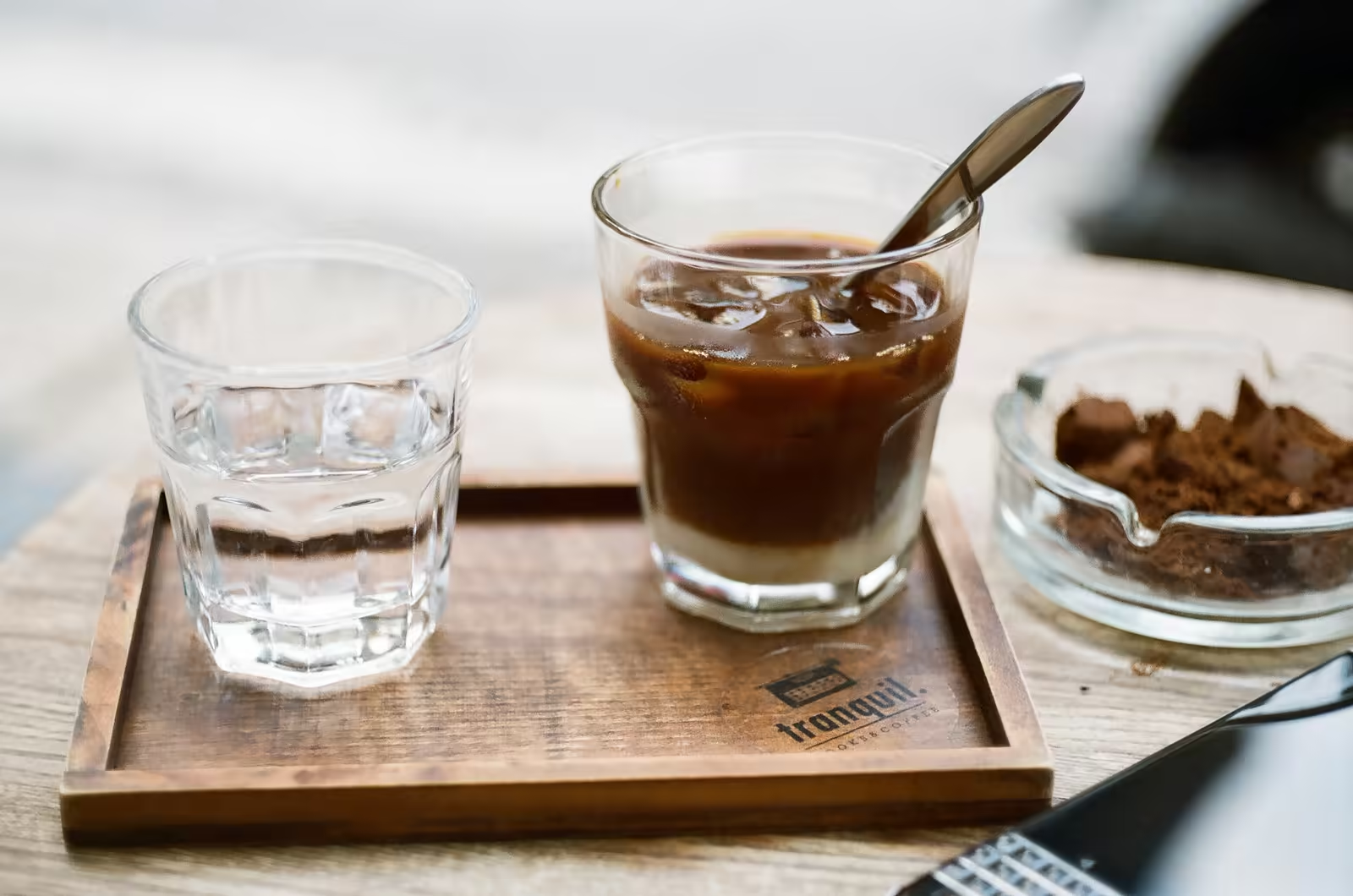
Order ca phe sua da first. It is strong Vietnamese coffee dripped over sweetened condensed milk and poured over ice, and it is the drink most of the country starts its day with. Then try one egg coffee (ca phe trung) in Hanoi, because it is a dessert you will not find done properly anywhere else. Expect to pay roughly 25,000 to 50,000 VND a cup, which is a little over one US dollar at about 26,000 VND to the dollar (our own rounding, so check the day's rate). Vietnam is usually ranked second in the world for coffee, behind Brazil, and about 96 per cent of its crop is robusta, the bean that gives these drinks their bite.
We are a Sapa trekking company, so this is a visitor's guide to drinking coffee in northern Vietnam, not a barista's manual. It covers what each drink is, how to ask for it less sweet, the real story of egg coffee, one drink you should skip, and where to drink in Hanoi and in Sapa before a trek. Every price, date and number was checked on 31 October 2026 and carries its source, because cafe prices change and some of the best-known stories turn out to be family memory, not record.
What to Order: Eight Vietnamese Coffees at a Glance
If you only learn one word, learn ca phe, which is simply coffee. Everything after it says how it is made. Most menus in Hanoi and Sapa show English names, but the staff will understand the Vietnamese ones, and saying them gets you the local version and not the tourist one.
| Drink | In Vietnamese | What is in it | Try it if you want |
|---|---|---|---|
| Iced black coffee | cà phê đen đá | Phin-brewed coffee over ice, with or without sugar | The strongest, cleanest taste |
| Iced milk coffee | cà phê sữa đá | Phin-brewed robusta dripped onto condensed milk, then poured over ice | The classic first cup |
| Hot milk coffee | cà phê nâu (north) | The same coffee with condensed milk, served hot; ca phe sua in the south | A hot drink on a cold Sapa morning |
| Bac xiu | bạc xỉu | Mostly milk with a little coffee; Wikipedia says it began in the 1950s in Cho Lon, Saigon | A gentle, sweet cup |
| Egg coffee | cà phê trứng | Coffee under a cream of whipped egg yolk, sugar and condensed milk | A dessert in a cup |
| Salt coffee | cà phê muối | Phin coffee over salted milk cream; Wikipedia credits two founders in Hue in 2010 | A sweet-salty, smooth cup |
| Coconut coffee | cà phê cốt dừa | Coffee with coconut milk, often blended with ice | A frozen, cooling drink |
| Yogurt coffee | cà phê sữa chua | Coffee with yogurt | A tangy surprise |
Kaveyeats' guide also lists sinh to ca phe, a coffee smoothie, and says a hot milk coffee is ca phe nau in the north and ca phe sua in the south. That regional split is worth knowing: a Hanoi local says ca phe nau and a Saigon local says ca phe sua.
Why Vietnamese Coffee Tastes Like This
Vietnamese coffee is dark, bitter and strong because it is mostly robusta. Daily Coffee News, reporting the US Department of Agriculture's Foreign Agricultural Service figures on 24 June 2026, puts Vietnam's output at 29.0 million 60-kilogram bags in 2024/25 and an estimated 31.7 million in 2025/26, with a forecast of 32.5 million for 2026/27. Of the 2025/26 estimate, 30.5 million bags are robusta and only 1.2 million are arabica. Search summaries of the same USDA reporting place Vietnam second in the world behind Brazil; we did not open the USDA report itself, so we say "second" with that caveat.
The history comes from Vietnam's own trade press. The Ministry of Industry and Trade's newspaper Congthuong wrote on 17 March 2023 that the French introduced coffee in 1857, that Buon Ma Thuot in Dak Lak was chosen for robusta in 1914, and that about 710,000 hectares are planted, mostly in five Central Highlands provinces. Buon Ma Thuot alone is about 210,000 hectares and over 30 per cent of output. Other pages date the first robusta plantings to around 1908 and disagree on which variety arrived first, so the century-and-a-half story is solid but the first-bean detail is not.
The sweet milk is part of the same story. Most Vietnamese coffee drinks use sweetened condensed milk, not fresh milk, as both sweetener and cream, which is why a cup that tastes sugary has not necessarily been given sugar. It is also why asking for less sugar needs a sentence, not a word. More on that below.
The Phin: How the Coffee Is Actually Made
The metal drip filter on top of your glass is called a phin. It is a small cup with a perforated base, a press plate for the grounds and a lid, and it sits on top of the glass so the coffee drips slowly through. The slow drip is why a Vietnamese coffee arrives strong and a little thick, and why it takes time.
Condensed milk goes in the glass first
For a milk coffee, a spoonful or two of sweetened condensed milk sits in the bottom. For a black coffee the glass is empty or holds a little sugar.
The grounds are pressed lightly in the phin
Coarse-ground robusta goes in the chamber and the press plate sits on top. A first splash of hot water makes the coffee "bloom" so the water can pass through evenly.
Hot water is topped up and the lid goes on
The coffee drips for a few minutes. Do not lift the lid to look; you are meant to wait. A good drip is slow and steady.
Stir, then pour over ice or drink it hot
Once the drip stops, move the phin aside, stir the milk into the coffee and either drink it hot or pour it over a glass of ice. Many street stalls skip the show and serve it pre-mixed.
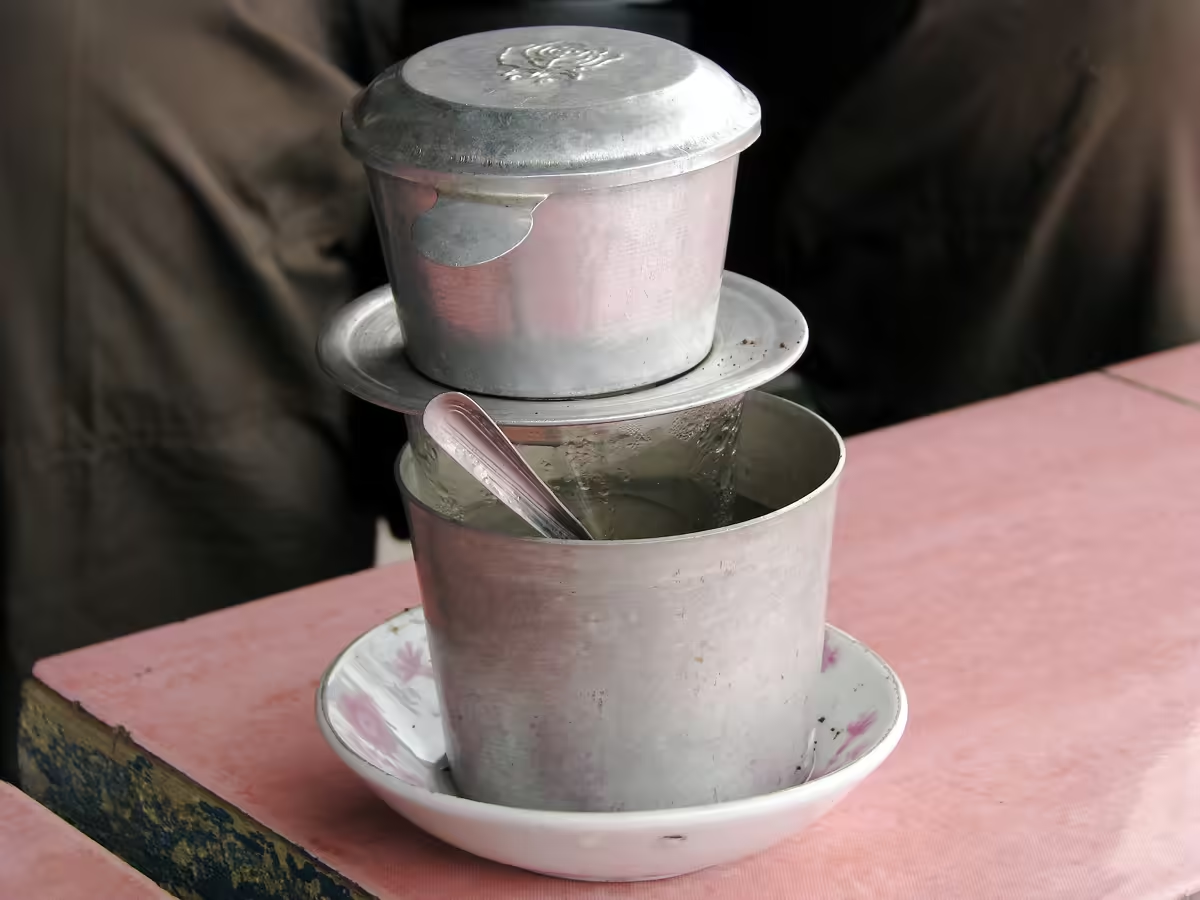
If you are at a streetside stall with a plastic stool, the coffee often arrives already mixed and over ice, because the stall serves hundreds of cups a day. In a sit-down cafe or a hotel lobby you will usually get the phin on the glass and have to wait, which is a good time to watch the street.
How to Order, and How to Make It Less Sweet
The single most useful skill is controlling the sweetness. Because the sugar comes from the condensed milk, "less sugar" is not always the same as "less sweet". Kaveyeats' guide lists the drinks but gives no sweetness phrases, so the words below come from travel-blog summaries we could not match to an official source; they are widely used, but treat them as common practice, not a rule. They work best with a smile and a gesture of pinching your fingers together.
| You want | Say | Sounds like |
|---|---|---|
| Iced milk coffee, please | Cho tôi một cà phê sữa đá | chaw toy moht ka feh suh-ah dah |
| No sugar | không đường | kohng duhng |
| Less sugar | ít đường | eet duhng |
| More sugar | nhiều đường | nyew duhng |
| Less ice | ít đá | eet dah |
| No ice | không đá | kohng dah |
If you read Vietnamese words aloud in English, a tone mark can change the meaning, and our Vietnamese phrases guide shows how to say these properly and how to ask for the bill. For most coffee orders, though, a finger pointing at the menu and the number of cups you want will get you what you need.
Point at a photo, hold up the number of fingers for the cups you want and say ca phe. If you want black, say ca phe den (den means black). If you want the milk version, say ca phe sua. You will be understood almost everywhere.
Egg Coffee: The Drink Hanoi Made Famous
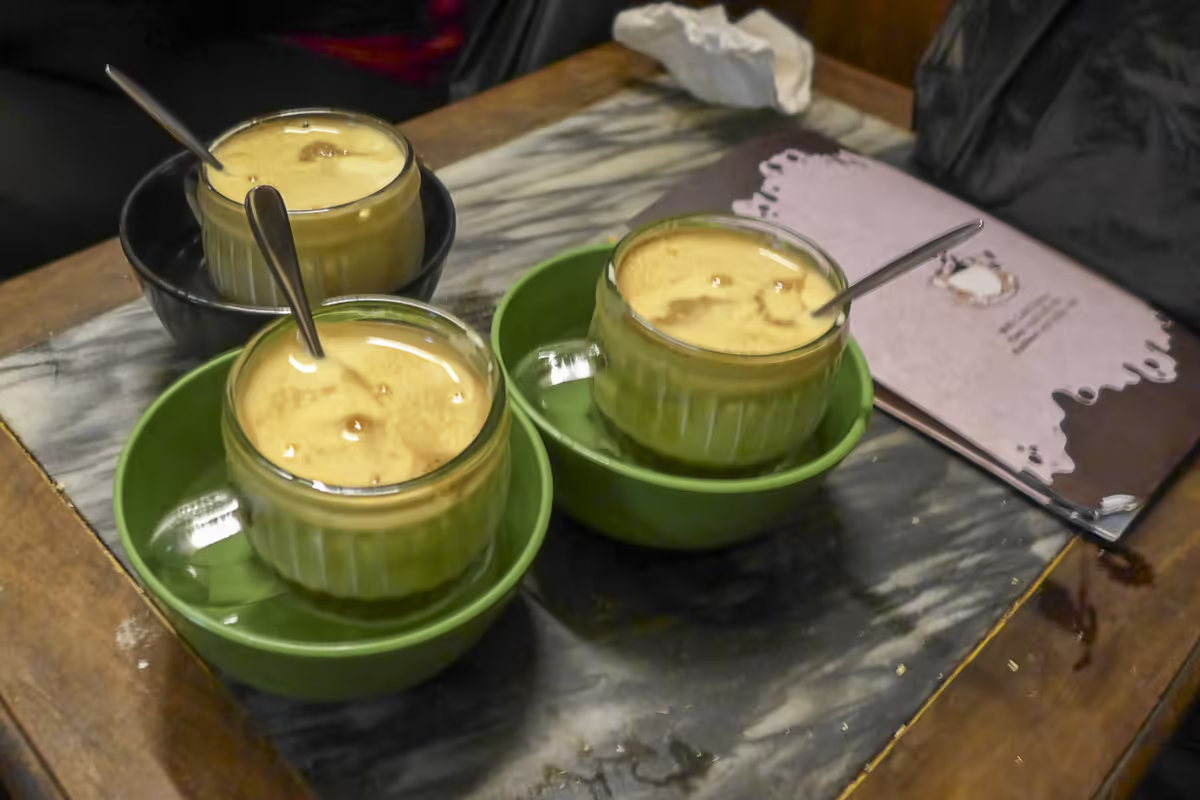
Egg coffee is the one drink that sends visitors looking for a specific cafe. Seasia's article of 25 October 2026 describes the recipe as yolks, sugar and condensed milk beaten into a cream and spooned over phin coffee, served either hot in a cup standing in a bowl of hot water or iced. It tastes closer to a coffee-flavoured custard than to a latte, and if you do not like sweet drinks, take two sips and share the rest.
The 1946 story, and what stands behind it
The story most guides tell is that Nguyen Van Giang, a bartender at the Grand Metropole in Hanoi, invented it in 1946 when fresh milk was scarce. The same Seasia article says this origin "is not supported by records from 1946" and "rests mainly on media reports published later and on family testimony". It quotes Giang's sons, Nguyen Van Dao in a CNN report of 2017 and Nguyen Tri Hoa in a Xinhua report of 2018. It also dates the opening of Cafe Giang to the 1960s, while other guides say Giang opened his own cafe in 1946, so the sources disagree. Treat the 1946 account as the family's account, and as plausible, not as proven.
Where to drink it in Hanoi
Three names come up every time, and for a visitor the choice is about setting more than about the coffee. Prices below come from an Asia Tour Advisor guide dated 29 March 2026, and other 2026 guides give higher or lower figures, so read each as a range of about 30,000 to 50,000 VND and ask before you order. We have not rechecked opening hours.
Cafe Giang
The original family cafe- Where
- 39 Nguyen Huu Huan, Old Quarter, at the end of a narrow passage
- Listed price
- About 35,000 VND hot, 40,000 iced (March 2026 guide)
Cafe Dinh
Lake view- Where
- Second floor, 13 Dinh Tien Hoang, overlooking Hoan Kiem Lake
- Listed price
- About 30,000 hot, 35,000 iced (March 2026 guide); other guides print 25,000 to 55,000
Loading T
A second-floor cafe- Where
- Second floor, 8 Chan Cam, Old Quarter
- Listed price
- About 45,000 hot, 50,000 iced (March 2026 guide)
The Metropole
The hotel version- Where
- La Terrasse and Le Club Bar, Sofitel Legend Metropole Hanoi
- Listed price
- Not published where we looked; ask when you sit down
VietNamNet, in a feature dated 22 November 2020, says Cafe Giang is run by a sibling of the founder of Cafe Dinh, so the two share a family. Our fuller account of both cafes, including how to find the lane at Giang, is in the Hanoi water puppet show, egg coffee and food tours guide, which also fits the drink into an evening before a Sapa night train.
A note on raw egg
Traditional egg coffee is made with raw yolk. A travel guide we read says so, though we found no cafe that states how its cream is heated or whipped, and we will not guess. The US Centers for Disease Control lists children under five, adults 65 and over, people with weakened immune systems and international travellers among those at higher risk from Salmonella, though its page does not mention eggs. In the UK, the Food Standards Agency changed its advice in October 2017 so that raw or runny eggs are acceptable for most people only if they carry the British Lion mark, a UK scheme that does not apply to eggs bought in Vietnam.
If you are pregnant, elderly, have a weakened immune system or are travelling with small children, ask the cafe whether the yolk is cooked, or pick a different drink from this guide. We could not verify any Hanoi cafe's practice, so this is a question to ask, not an answer we can give.
Try egg coffee if…
- You like thick, sweet, dessert-like drinks
- You are in Hanoi for a day or two and want a local story
- You have asked how the cream is prepared and are happy with the answer
Skip it, or ask first, if…
- You avoid raw or lightly cooked egg for any health reason
- You want a plain, bitter coffee to wake up before a trek
- You are short of time; a good cup is slow
Walk Off the Coffee in the Sapa Valleys
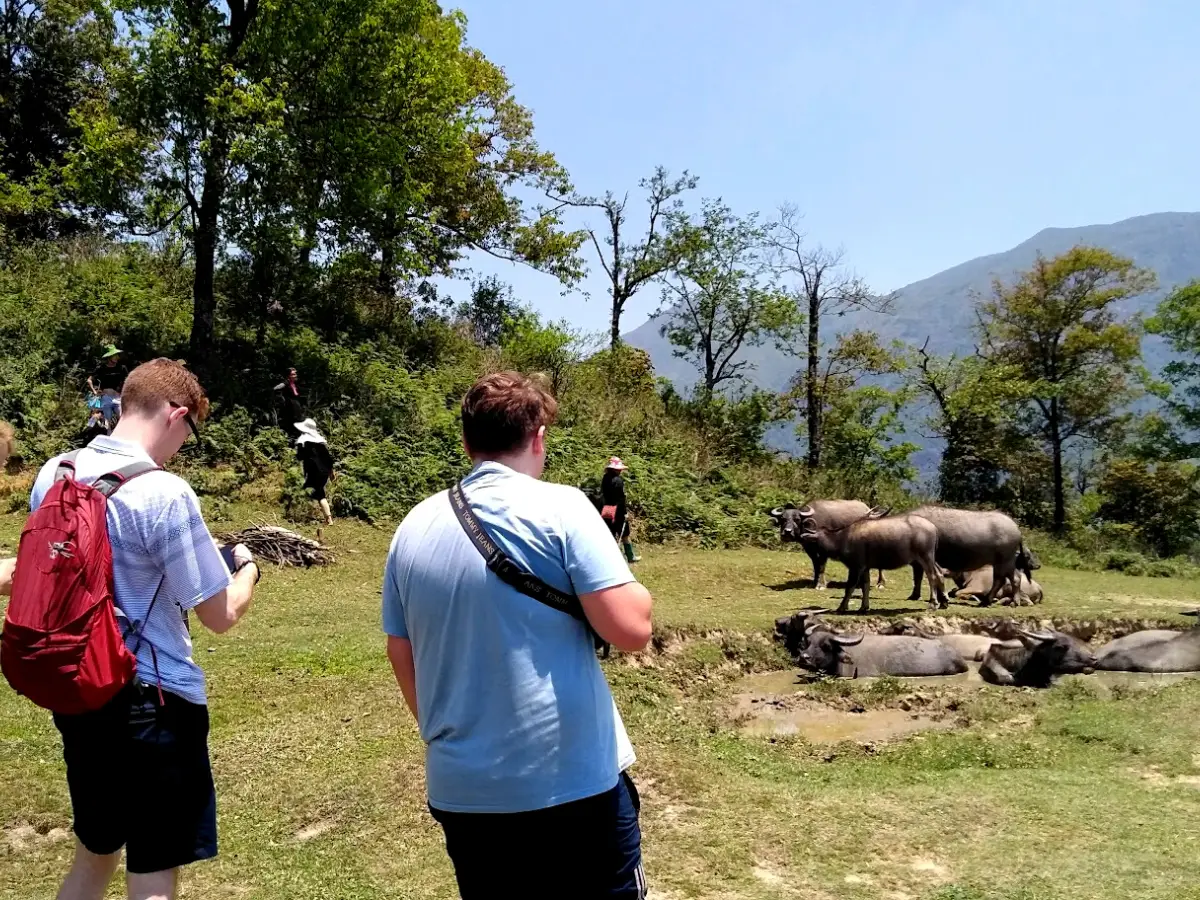 1-Day Trek
Trekking Through Rice Terraced Fields
The Lao Chai to Ta Van valley day, with a local guide and a finish in Sapa town.
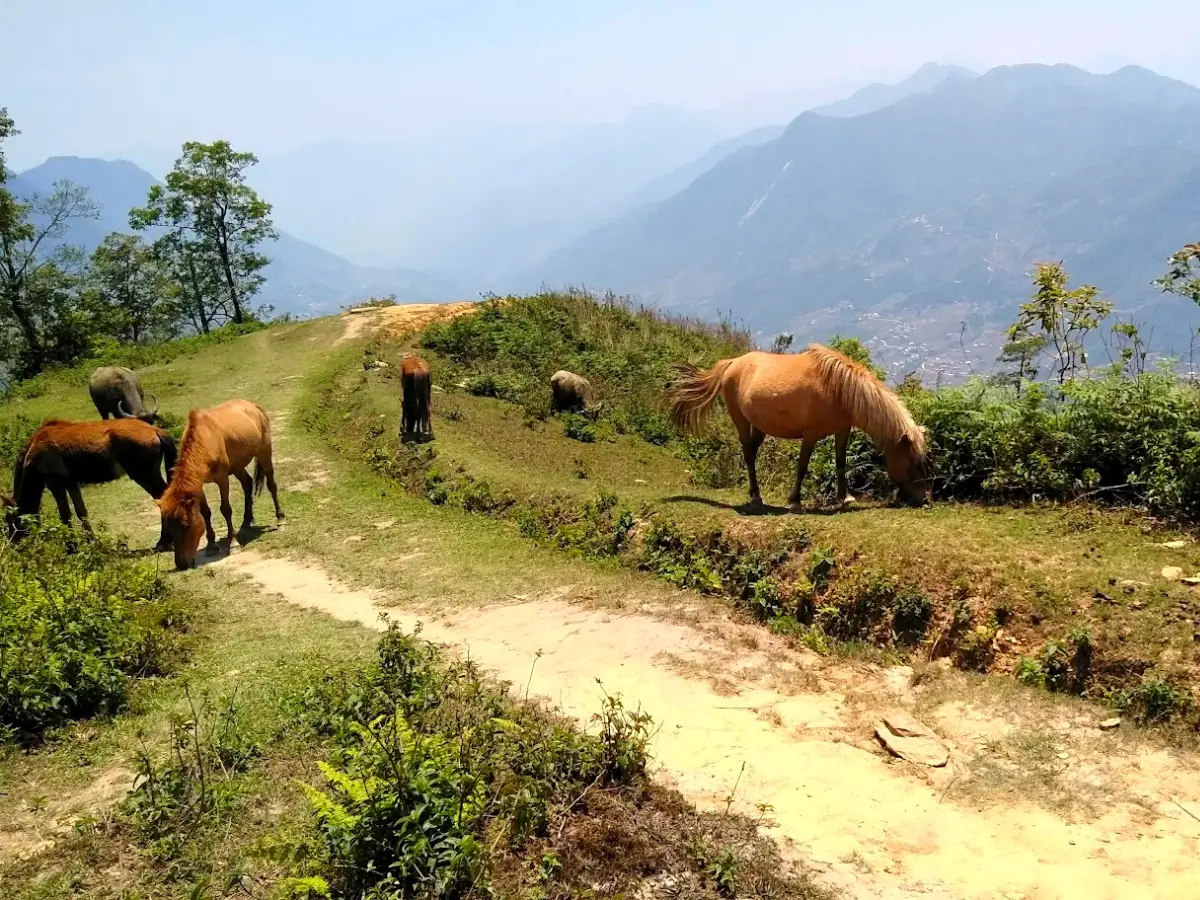 Local Favourite
Mountain Views and Villages Trek
Quieter ridge and village trails above the valley.
 Homestay
Rice Terraced Fields & Homestay
A night with a local family in the valley.
Beyond Egg Coffee: Coconut, Salt and Bac Xiu
Three more drinks are worth a place on a short list. Coconut coffee, ca phe cot dua, is the one that Cong Caphe made a chain out of; a search summary says the brand was founded in Hanoi in 2007 on Trieu Viet Vuong Street and that coconut coffee is its signature, and an Inside Retail report of 9 August 2026 says it is expanding abroad, including to Indonesia. In the heat it is the easiest to love, because it arrives half frozen.
Salt coffee, ca phe muoi, is much younger than the Hanoi favourites. Wikipedia's article on Vietnamese iced coffee says two people created it in 2010 at a Hue cafe called Ca Phe Muoi, and that it is phin coffee over a cream of salted milk. The salt does not make the drink taste salty; it rounds out the bitterness. Bac xiu is the opposite of a strong coffee: mostly milk, a little coffee, a lot of sweetness. It is a good choice for anyone who finds a phin coffee too harsh.
The drink to skip: weasel or civet coffee
Vietnam sells "weasel coffee", beans said to have passed through a civet. World Animal Protection says civets are caught with traps, snares and dogs and are often kept in small, bare cages where many show signs of stress, and that the certifier UTZ stopped certifying caged civet coffee on 4 June 2014. Its study was in Indonesia, not Vietnam, and a 2013 BBC undercover report found caged civets in Sumatra. Travel guides add that fake "weasel coffee" is common in Vietnam; we saw no figure for how common, so we give none. Our advice is simple: unless you can see a wild-collected claim and a credible source, order a normal phin coffee and enjoy it.
What Coffee Costs in 2026
A cup of coffee on a Hanoi street costs less than a bottle of water at an airport, and the price climbs with the view. The bars below use the lowest and highest published figure we found for each type of cup.
Sources: Vietnamspot Hanoi prices page, 2026 (read through a search summary); Asia Tour Advisor, 29 March 2026; Sun Paradise Land cafe guide, 22 October 2025. Bars follow the highest figure of 70,000 VND. All checked 31 October 2026.
Coffee Culture in Hanoi: Where to Sit
In Hanoi the coffee shop is a place to sit and watch the street, and in the Old Quarter that often means a plastic stool on the pavement. A tourist-street cafe will cost more than a local one a block away, and we say that because a food-budget page updated on 3 October 2026 notes that tourist cafes can triple local prices and that walking a block away drops them. If a menu shows no prices, ask.
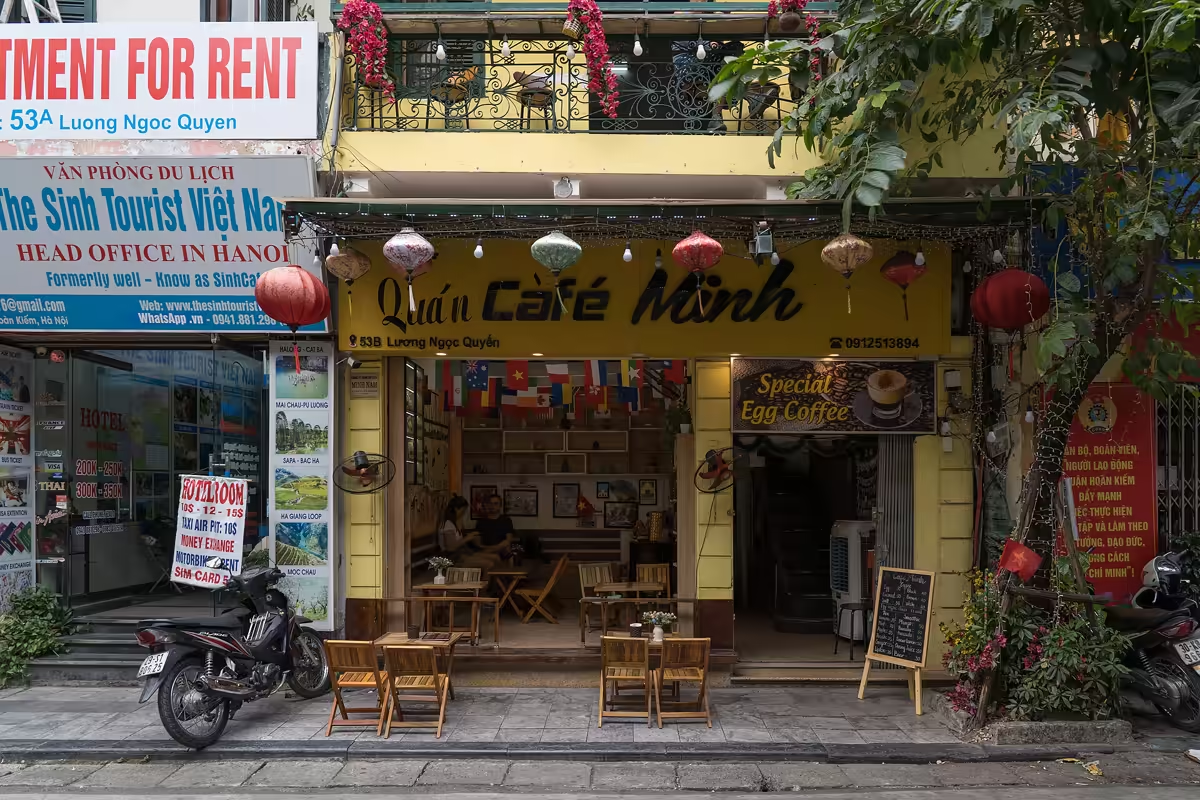
For the chain cafes, the Vietnamese brands Highlands and Phuc Long are everywhere, but we did not research them and give no prices. For an evening in Hanoi that combines a show and an egg coffee, our things to do in Hanoi guide lists what sits near Hoan Kiem Lake and two days in Hanoi places a cafe stop in a full itinerary. For what else to eat, see Vietnam street food by region.
Coffee in Sapa: Cafes, Cold Mornings and Views
Sapa is not a coffee-growing town. A Vietnamese article quotes a Lam Dong official saying arabica is also grown in Sa Pa, but we found no production figures, and the northwest's best-known arabica areas are Son La and Dien Bien. What Sapa has is cafes with views, and cool mornings that suit a hot drink. Since the 2025 province merger (National Assembly Resolution 202/2025/QH15 of 12 June 2025), Sapa is a ward of Lao Cai province.
A Sun Paradise Land cafe guide dated 22 October 2025 lists these, and we repeat it with two cautions: Sun Paradise Land is a commercial site, and we have not re-checked that each cafe is open this season.
| Cafe | Where | Price noted |
|---|---|---|
| Fansipan Terrace Cafe | 67 Fansipan Street | 30,000 to 70,000 VND |
| Cafe In The Clouds | 60 Fansipan Street | Not stated |
| La Do Homestay & Coffee | 31 Hoang Lien Street | Not stated |
| The Haven | Vong Canh Hill, Cat Cat village | Not stated |
For a different way to use a cafe, our guide to cafes in Sapa for remote work goes through power sockets, Wi-Fi and which places let you stay. For the food that goes with the coffee, see what to eat in Sapa, and for the weather that decides whether you want it hot or iced, see Sapa weather in October and in November.
A Coffee, Then a Sapa Valley Walk
1-Day Trek
Trekking Through Rice Terraced Fields
The Lao Chai to Ta Van valley day, with a local guide and a finish in Sapa town.
Local Favourite
Mountain Views and Villages Trek
Quieter ridge and village trails above the valley.
Homestay
Rice Terraced Fields & Homestay
A night with a local family in the valley.
Coffee Before a Trek
If you are trekking in the morning, have your coffee after you eat, not before. The US Food and Drug Administration, on a consumer page dated 28 August 2024, cites 400 milligrams of caffeine a day as an amount not generally associated with dangerous effects for most healthy adults, and lists insomnia among the signs of too much. It puts brewed coffee at 113 to 247 milligrams for a 12-ounce cup. Robusta beans are generally richer in caffeine than arabica, and retailer pages give figures such as 2.2 to 2.7 per cent against 1.2 to 1.5 per cent; those are not authoritative, so take them as a guide only. We did not find a trustworthy per-cup number for a phin coffee, so treat a small glass as stronger than its size suggests.
Practical habits: drink water as well, because a strong coffee and a long uphill morning do not mix well with dehydration; do not try a new strong drink on the morning of a long hike; and if your sleep on the night train or bus north was short, a cup is fine but it does not replace rest. These are general habits, not medical advice.
Where Coffee Orders Go Wrong
Four things trip people up. First, the cup is smaller and stronger than you expect, so two phin coffees in a morning is plenty. Second, "less sugar" does not always change a drink that is sweetened by condensed milk, so taste before you stir the last of it in. Third, menus without prices at tourist cafes invite a surprise; ask. Fourth, a "weasel coffee" tasting offer is rarely what it says. If you want to avoid the common tourist-price traps in Hanoi and Sapa, our Vietnam scams guide lists fifteen and a way to check each.
How We Checked This
We opened these pages on 31 October 2026: the Seasia egg coffee article (25 October 2026); Daily Coffee News on the USDA figures (24 June 2026); the Congthuong article on Vietnamese coffee (17 March 2023); Kaveyeats' ordering guide; Wikipedia on Vietnamese iced coffee; VietNamNet on Hanoi egg coffee cafes (22 November 2020); Asia Tour Advisor (29 March 2026); Sun Paradise Land (22 October 2025); World Animal Protection on civet coffee; the CDC page on Salmonella; the US FDA caffeine page (28 August 2024); Inside Retail (9 August 2026); and the Luat Viet Nam notice on the 2025 merger of Lao Cai and Yen Bai.
What we could not confirm: the USDA ranking itself, which we read only through search summaries; any cafe's current opening hours and prices; how any Hanoi cafe prepares its egg cream; the share of "weasel coffee" that is fake; and a reliable caffeine figure for a phin coffee. Where we say so in the text, it is because a figure rested on a single page or a summary.
For more on the north, see our northern Vietnam travel guide and first-time Vietnam, and to add a Sapa trek to a Hanoi stay, our tour list shows every trip.
Rent at Our Office Before You Trek
 Gear Rental
Trekking Boots Rental
Waterproof ankle-support boots. Cleaned and checked before each rental. Available at 105 Thach Son Street.
 Gear Rental
Walking Poles Rental
Trekking poles available to rent at $2/day at our office, 105 Thach Son Street. Essential for descents.
Frequently Asked Questions
Ca phe sua da, strong phin-brewed robusta dripped onto sweetened condensed milk and poured over ice, is the drink most visitors try first. Wikipedia describes it that way. The black version is ca phe den da, and the hot milk version is ca phe nau in the north and ca phe sua in the south.
A street ca phe sua da is about 20,000 to 40,000 VND according to a 2026 prices page, egg coffee in the old Hanoi cafes is about 30,000 to 50,000 VND, and a Sapa view cafe such as Fansipan Terrace Cafe lists 30,000 to 70,000 VND. We checked these on 31 October 2026; prices change, so ask before you order.
Egg coffee, ca phe trung, is coffee topped with a cream of whipped egg yolk, sugar and condensed milk. The common story credits Nguyen Van Giang, a Metropole bartender, in 1946. A Seasia article of 25 October 2026 says that origin rests on later media reports and family testimony, not records from 1946.
The traditional recipe uses raw yolk. We found no Hanoi cafe that publishes how it heats or whips the cream. The CDC lists children under five, adults 65 and over, people with weakened immune systems and international travellers among those at higher risk from Salmonella, so ask the cafe whether the yolk is cooked or choose another drink.
Ca phe sua da is strong coffee with condensed milk over ice. Bac xiu is mostly milk with a little coffee and is much sweeter and gentler. Wikipedia says bac xiu began in the 1950s in Cho Lon, Saigon. If a phin coffee is too strong for you, bac xiu is the easy choice.
Say it ngot or it duong for less sugar, and khong duong for none. Because the sweetness in most drinks comes from condensed milk, those words may not change a drink that is sweetened in advance, such as bac xiu or salt coffee. These words come from travel-blog summaries, not an official source.
Usually yes in taste. About 96 per cent of Vietnam's crop is robusta, which is richer in caffeine than arabica, and a phin glass is small and concentrated. The US FDA cites 400 milligrams of caffeine a day as an amount not generally associated with dangerous effects for most healthy adults. We found no reliable per-cup figure for a phin coffee.
A Sun Paradise Land cafe guide dated 22 October 2025 lists Fansipan Terrace Cafe at 67 Fansipan Street, Cafe In The Clouds at 60 Fansipan Street, La Do Homestay and Coffee at 31 Hoang Lien Street and The Haven at Vong Canh Hill in Cat Cat. It is a commercial site and we have not re-checked opening hours, so check on the day.