 Sinh Giang
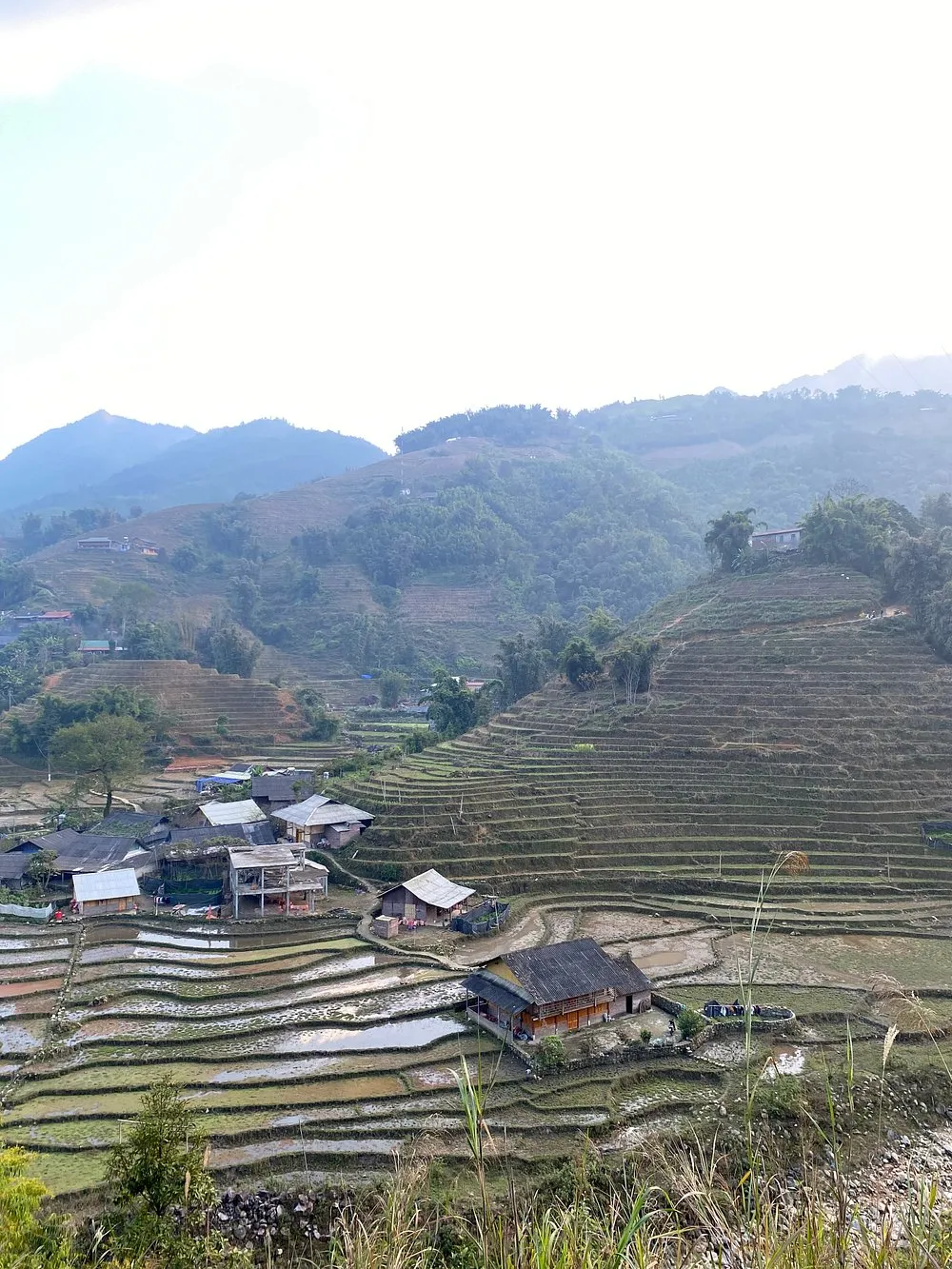
Sapa weather in October is the best of the whole year for most travelers: warm, dry days between 18–23°C (64–73°F), cool mornings and evenings that dip to around 15°C (59°F), and roughly 100mm of rain spread across the month — less than half of what falls at the peak of the summer monsoon. The humidity drops, the afternoons stay bright, and you get long stretches of clear sky over the Muong Hoa Valley, with about eleven hours of daylight to trek in. The heavy summer rain has passed, the air turns crisp and clean, and Fansipan and Sa Seng Mountain stand out sharply on most days instead of sitting buried in cloud. A typical day starts cool and a little misty down in the valley, burns off to sunshine by mid-morning, and holds dry through the late afternoon. When rain does come it is usually a short passing shower rather than the all-day downpours of summer, so trekking plans rarely change. If you want firm, dry trails, golden rice terraces at the tail end of the harvest, and the reliable mountain light that photographers travel for, October is the month I tell people to come.
I grew up in these valleys and have guided through every season, and Sapa weather in October is the reason it is our busiest month. It is peak season for a good reason — but that also means you should reserve your hotel and your trek two to three days ahead, because the good small-group spaces fill fast. In this guide I will walk you through exactly what October feels like week by week, what the harvest looks like in Lao Chai and Ta Van, what to pack for the mild days and cool nights, and which of our tours make the most of the clear October conditions. Everything here comes from running treks through this month year after year — not from a forecast table.
Sapa Weather in October: Temperature and Rainfall
Sapa weather in October means warm, comfortable days and cool nights, with far less rain than the summer months. Daytime temperatures in Sapa Town sit between 18–23°C (64–73°F) — mild enough to trek all day in a t-shirt and light layers. Early mornings and evenings drop to around 15°C (59°F), and up on the higher trails toward Fansipan or in the villages of Ma Tra and Ta Phin it can feel a couple of degrees cooler again, especially before the sun clears the ridge. It is the kind of weather that makes long walking days genuinely pleasant.
Rainfall in October is low — roughly 100mm for the whole month, about half of what falls in June or July. The southwest monsoon has broken by early October, and the pattern shifts to dry, settled days with only occasional short showers, usually brief and passing rather than the long afternoon downpours of summer. Skies are clear far more often than not, which is exactly why the Muong Hoa Valley photographs so well this month and why the ridge views open all the way to Fansipan on most days.
October is one of the few months where you do not have to race the weather. Even so, I still recommend an early start — an 8am pickup gets you into the Muong Hoa Valley while the light is soft and the harvest crews are already out in the fields around Lao Chai and Ta Van. Mid-October mornings can hold a light valley mist that burns off by 9am, and catching that clearing is one of the most beautiful moments of the whole trekking year. Bring a light layer for the first hour and you will be in a t-shirt by mid-morning.
Is October a Good Time to Visit Sapa?
Yes — October is widely considered the single best time to visit Sapa, and I agree. The weather is dry and mild, the trails are firm, the skies are clear, and the last of the golden rice harvest is still standing in the terraces during the first two weeks of the month. For a first visit where you want reliable conditions, comfortable trekking, and the classic golden-terrace photographs Sapa is famous for, October is as good as it gets in northern Vietnam.
The one honest trade-off is that everyone else knows this too. October is peak season, so Sapa Town is busier, hotels are around 15–25% more expensive than in the low season, and the most popular routes see more visitors. Our treks still run in the same small-group format (maximum 12 people), but the good dates book out — which is why I always tell guests to reserve two to three days ahead rather than turning up and hoping. Here is how October compares to the months around it:
| Month | Day temp | Rain | What you see | Crowds |
|---|---|---|---|---|
| September | 19–24°C | Moderate | Peak golden harvest, some late showers | Busy |
| October | 18–23°C | Low (~100mm) | Tail of harvest, clearest skies, firm trails | Peak |
| November | 13–20°C | Very low (~60mm) | Cut terraces, cool crisp air, cloud seas | Moderate |
| December | 9–15°C | Low | Cold, frequent fog, bare terraces | Quiet |
What You Will See in October — The Rice Harvest
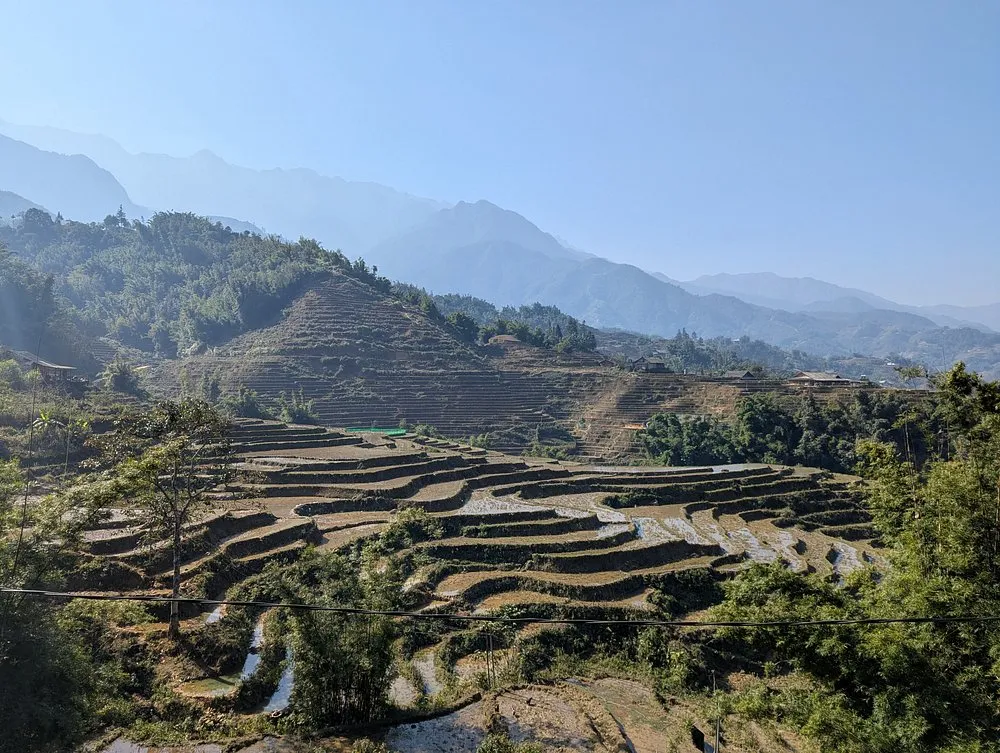
Early October is your last chance to see the golden rice harvest in the Muong Hoa Valley. The rice harvest in Sapa peaks from mid-September into the first week or two of October, so if you arrive in weeks one and two you will still find whole hillsides of ripe golden terraces around Lao Chai, Ta Van, and Y Linh Ho, with Black H'mong and Red Dao families out cutting the rice by hand. By mid to late October most of the lower terraces have been harvested, leaving a patchwork of cut stubble, drying straw, and bare brown earth — quieter to look at, but with the clearest air and the widest mountain views of the year.
Up toward the village of Ma Tra and along the ridge trails above Hang Da and Hau Thao, the higher terraces hold their gold a little longer than the valley floor. This is also the month the big views open up: with the monsoon cloud gone, Sa Seng Mountain and the ridges descending from Fansipan stand out sharp and blue on most afternoons. If catching the golden terraces matters to you, aim for the first ten days of October; if you care more about crisp panoramic views and firm trails, the second half of the month is superb.
The exact harvest window shifts by a week or two each year depending on the summer weather. For the best odds of seeing golden terraces AND enjoying dry trails, the first two weeks of October are the sweet spot. If your dates are flexible, message us before you book and we will tell you honestly what the fields are doing that week — we walk them every day and we would rather send you to the right valley than the busiest one.
Sapa Weather in October, Week by Week
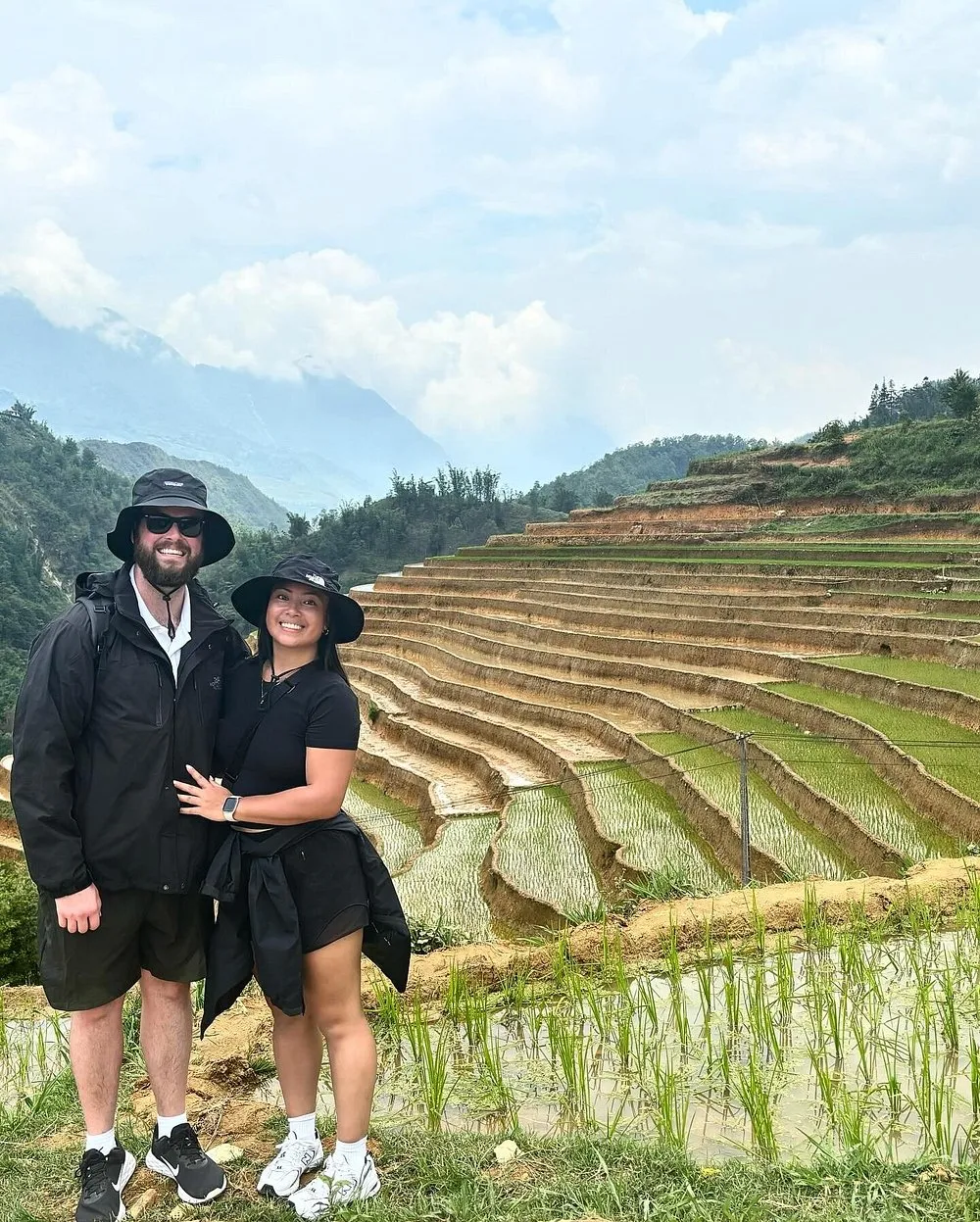
The weather in Sapa does not stay the same from the first day of October to the last — it shifts noticeably across the month. The opening week still carries a little late-monsoon moisture and the tail of the golden harvest, the middle weeks bring the driest and clearest conditions of the whole year, and by the final week the air turns crisp with the first cool nights of the coming winter. Knowing which week you are travelling helps you pick the right trek and pack the right layers, so here is how the month breaks down from a guide who walks the Muong Hoa Valley every day of it.
Early October (1–10): warm days and the last golden terraces
The first ten days are the warmest of the month — 19–23°C by day, cooling to around 16°C at dawn. The southwest monsoon has broken, but its very tail can still send a brief afternoon shower, usually over in twenty minutes. This is the golden-harvest window: the terraces around Lao Chai, Ta Van, and Y Linh Ho are still standing gold, and Black H'mong and Red Dao families are out cutting rice by hand. Trails are already firm and dry. If seeing the classic golden Sapa terraces is the reason you are coming, these are the days to book.
Mid October (11–20): the clearest, most settled weeks
The middle of the month is the sweet spot. Rain all but stops, the skies open, and the overnight valley mist that pools over the Muong Hoa Valley burns off by around 9am — the single most beautiful moment of the trekking year to catch. The lower terraces are mostly cut by now, but the higher fields toward Ma Tra and Ta Phin hold their gold a little longer. This is also when Fansipan visibility is at its best: with the summer cloud gone, the ridges descending from the summit and the shoulder of Sa Seng Mountain stand out sharp and blue most afternoons. Expect 18–22°C days.
Late October (21–31): crisp air and the widest views
The final week is the coolest, driest, and clearest of all. Nights slip toward 13–14°C — the first real hint of November's chill — while days stay a comfortable 17–21°C. The terraces are bare and brown now, cut back to stubble and drying straw, but in exchange you get the widest mountain panoramas of the year and the very first of the "cloud sea" mornings that November is famous for, when a low blanket of cloud sits in the valley below the ridge line. For travellers who prefer crisp air and big views over golden rice, late October is quietly superb.
Best Sapa Tours in October
October's dry, clear weather suits every route we run — from valley harvest walks to the big Fansipan views. These are the tours our guests book most in October. All run in small groups (max 12) and book out fast in peak season, so reserve two to three days ahead.
 Best Seller
Trekking Through Rice Terraced Fields
Walk the valley floor through Y Linh Ho, Lao Chai and Ta Van — the classic October harvest route with firm, dry trails.
 Best Views
Mountain Views and Villages Trek
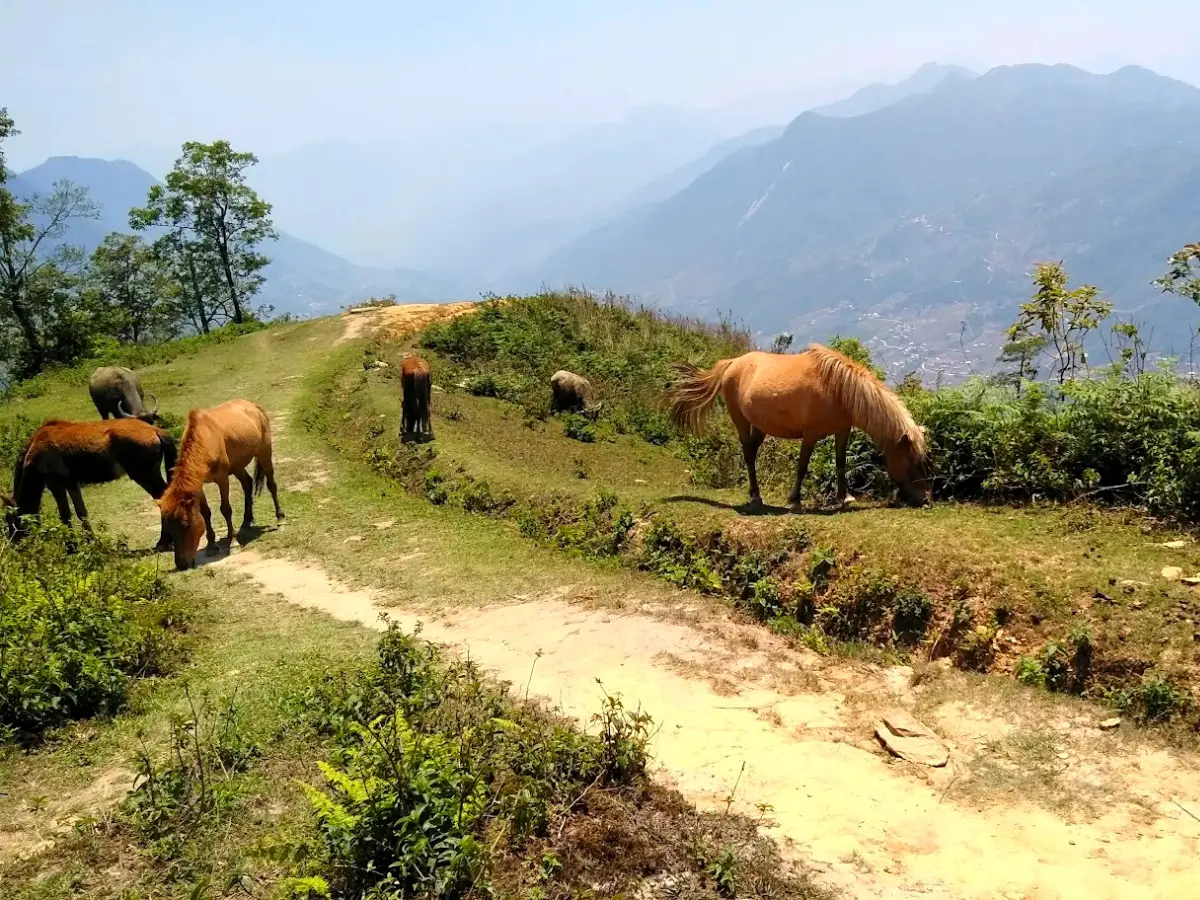
A higher ridge route above the valley — October's clear skies make this the best month for the wide Fansipan panoramas.
Rice Fields and Fansipan Experience
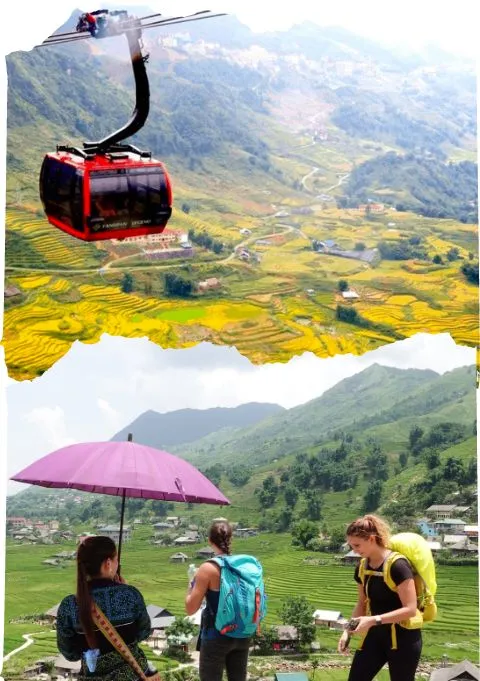
Trek the terraces in the morning, then ride the cable car up Fansipan — October's clear air gives the best summit views of the year.
 Challenge
Fansipan Trek One Day Tour
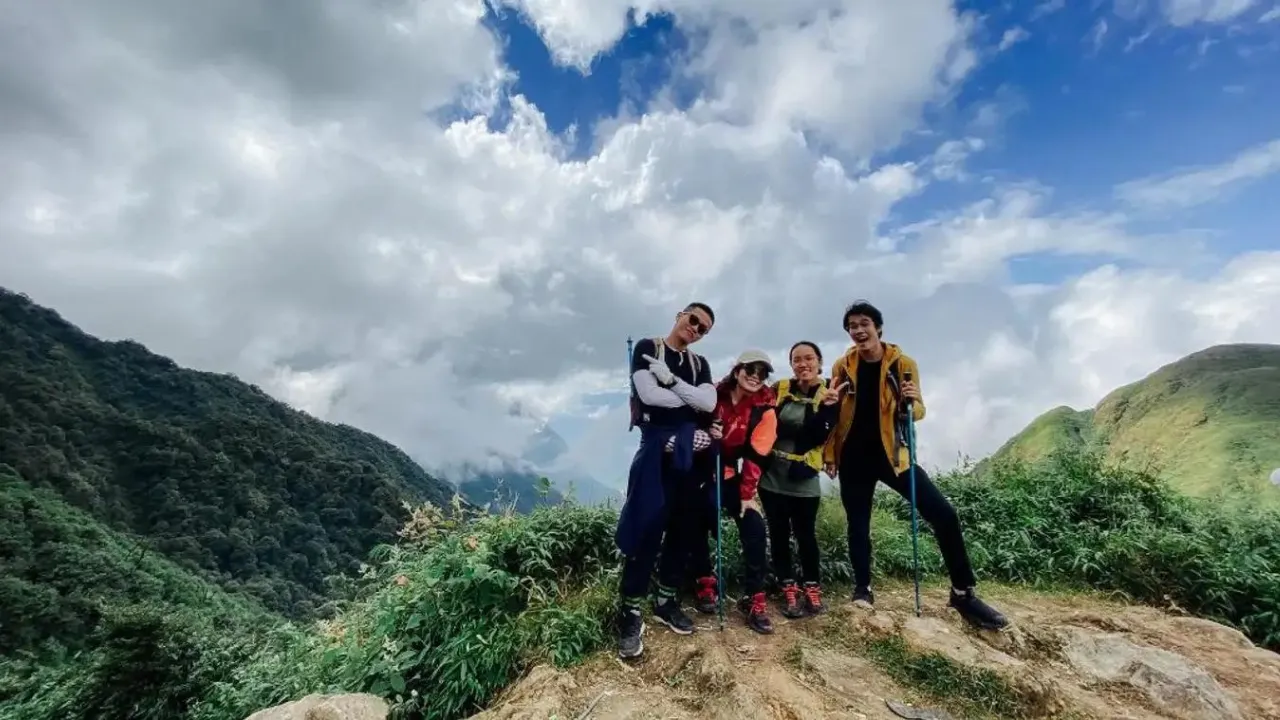
Summit the highest peak in Indochina on foot — October's dry weather and stable trails make it the safest month to climb.
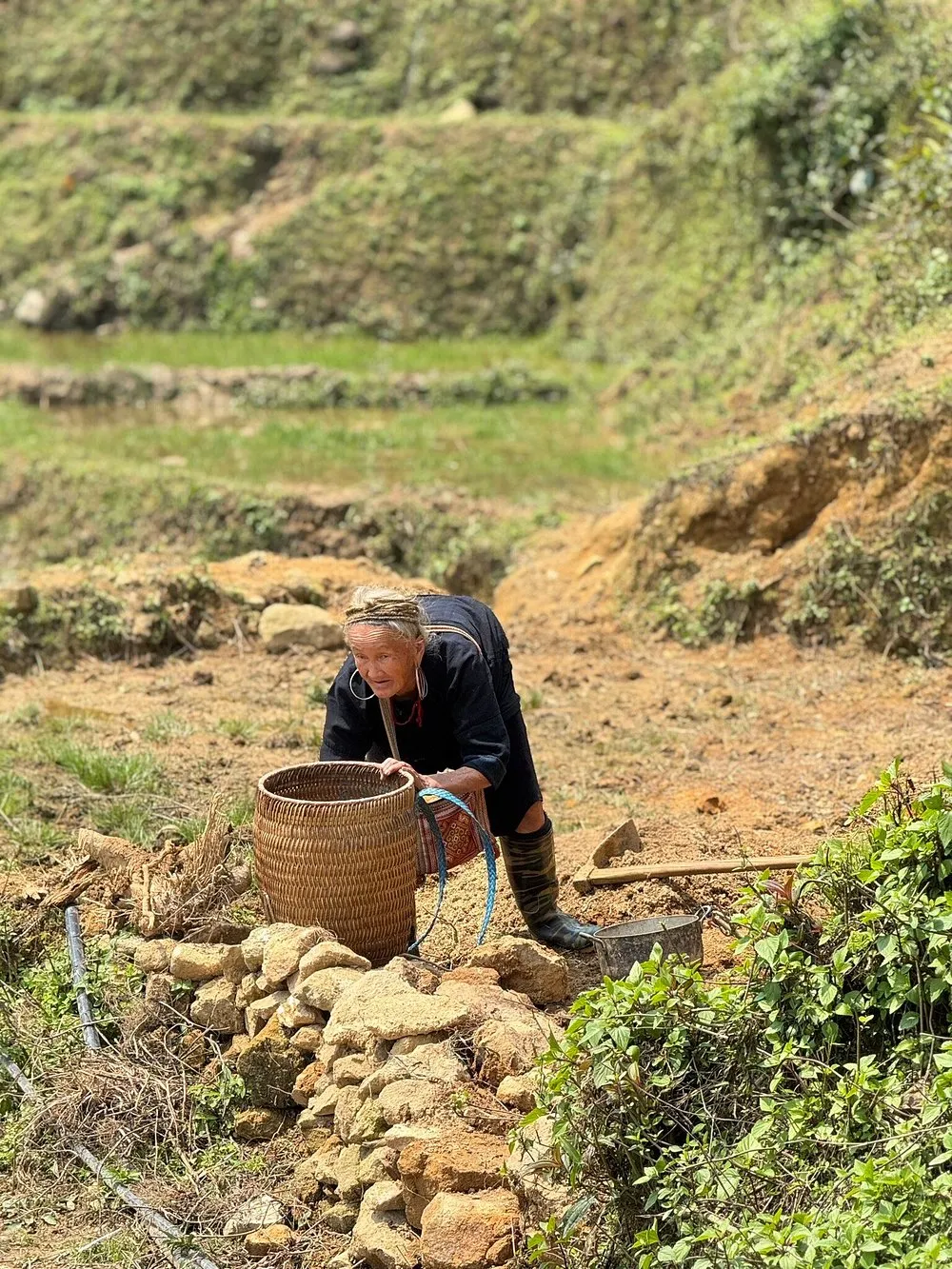
Discover Rice Fields and Nature
A quieter route away from the busy October trails — terraces, streams and forest paths toward the Ta Phin side of the valley.
What to Pack for Sapa in October
Pack layers, not winter gear. October days are mild enough to trek in a t-shirt, but mornings and evenings around 15°C (59°F) call for something warmer, so the goal is to be able to add and shed layers through the day. Here is what I tell guests to bring, based on guiding October treks every year:
- Light layers — a t-shirt plus a fleece or light insulated jacket covers the full daytime range. You will trek in the t-shirt by mid-morning and want the fleece for early starts and the ridge above Ma Tra and Ta Phin.
- Comfortable trekking shoes with good grip — trails are firm and dry in October, so heavy waterproof boots are not essential, but a shoe that grips on the harvested-terrace edges makes the descents easier.
- A light rain jacket — just in case. October is dry, but the occasional short shower still passes through, and a packable jacket weighs nothing in the daypack.
- Sunscreen and sunglasses — the clear October days mean real sun on the open terraces. This is one of the sunnier trekking months, and the glare off wet-cut stubble is surprisingly strong.
- A warm layer for early starts — if you are chasing the morning mist clearing over the Muong Hoa Valley, the first hour before sunrise clears the ridge is genuinely cool.
- Small daypack with water — 1.5–2 litres. There is less sweat-loss than summer, but the longer clear-weather days mean you cover more ground.
You will rarely need heavy winter gear in October — save that for December and January. If you would rather travel light, you can rent trekking boots and walking poles from our office at 105 Thach Son Street for $2 per day each.
What to Do in Sapa in October
October is the one month where the weather does not dictate your plans — you can trek all day, ride the cable car for clear Fansipan views, and still catch the last of the harvest, all in the same trip. With dry, settled conditions, the best approach is simply to do more: a full-day valley trek, a market morning, and a mountain day are all comfortable this month.
The Trekking Through Rice Terraced Fields route through the Muong Hoa Valley — from Sapa Town down through Y Linh Ho, Lao Chai, and finishing at Ta Van — is the best single-day option in October, especially in the first two weeks while the golden harvest is still standing. For the widest views, the Mountain Views and Villages Trek takes the higher ridge above the valley, where October's clear air opens the panorama all the way to Fansipan and Sa Seng Mountain.
If Fansipan itself is on your list, October is the month for it — either on foot with the Fansipan Trek One Day Tour, or the easier way by cable car as part of the Rice Fields and Fansipan Experience. The dry, stable weather makes this the safest and clearest month to be on the mountain. For a quieter day away from the busier peak-season trails, the Discover Rice Fields and Nature route heads toward the Ta Phin side of the valley.
Beyond trekking, the Saturday-evening Sapa market is at its liveliest in October, when Black H'mong and Red Dao women from villages including Hang Da and Hau Thao bring hand-embroidered fabric and silver jewellery to town. Ta Phin — home to one of the largest Red Dao communities in the Lao Cai area — is well worth a half-day, and October's dry roads make the drive out there straightforward.
A Typical October Trekking Day, Hour by Hour
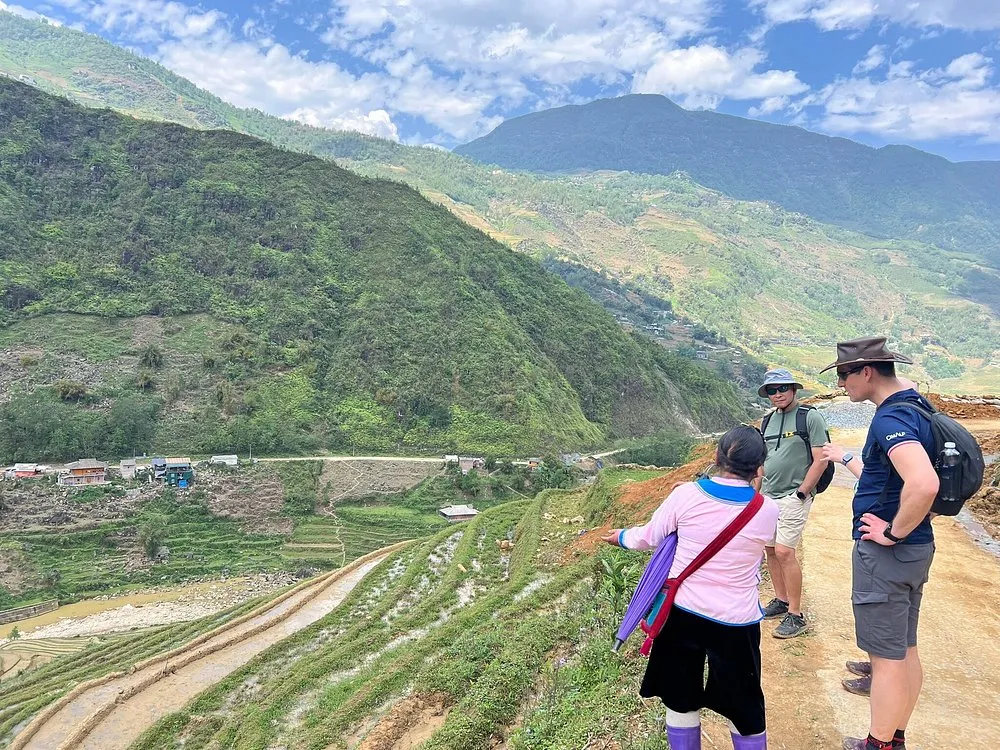
A typical October trekking day with us runs from a mid-morning start to a mid-afternoon finish, timed around the clear light and the harvest crews in the Muong Hoa Valley. Because the weather is so settled this month, the day almost never gets rearranged by rain — which means we plan the route around the best light and the quietest trails rather than dodging downpours. Here is roughly how a full-day valley trek unfolds in October.
8:00am — Pickup. We collect you from your hotel anywhere in Sapa Town, or you meet us at the Trekking Tour Sapa office at 105 Thach Son Street. October mornings are cool, around 16°C, so you will start in a fleece — bring a light layer you can stuff in the daypack by mid-morning.
8:30am — Into the valley at Y Linh Ho. A short drive drops you at the top of the trail, where the path descends into the Muong Hoa Valley. In mid-October the overnight mist is often still lifting off the terraces here, and watching it clear as you walk down is one of the highlights of the day.
10:00am — Through Lao Chai. By now the fleece is off and you are trekking in a t-shirt. The trail winds through the Black H'mong village of Lao Chai, past terraces that in early October are still being cut by hand. Your guide — who grew up in one of these villages — stops to explain the rice cycle, the indigo dyeing, and the difference between the H'mong and Red Dao communities who share the valley.
12:00pm — Lunch with a local family in Ta Van. Lunch is a home-cooked meal with a family we have worked with for years, usually eaten on a veranda looking back up the valley. October's clear skies make this the kind of long, unhurried midday stop that summer's heat and rain rarely allow.
1:30pm–3:00pm — Afternoon walk and drive back. The afternoon takes a gentler ridge route with the wide, clear views October is known for, before we drive you back to town. You are usually back by mid-afternoon with time to rest — or, this being peak season, to catch the Sapa market in the evening.
October vs November in Sapa — Which Is Better?
October is the better all-round month, but November has a real case if you value quiet trails and cloud seas over the golden harvest. October gives you the tail of the rice harvest, the clearest skies of the year, mild temperatures, and firm trails — at the cost of peak-season crowds and higher hotel prices. November keeps most of the good weather, drops the crowds, and adds the dramatic "cloud sea" mornings, but the terraces are cut and bare and the air turns noticeably colder. Here is how they stack up:
My honest recommendation: if the golden terraces and reliable weather are your priority, October is worth the crowds and the extra cost — it is the premium month for a reason. If you have flexibility and prefer a quieter, cooler, more atmospheric Sapa, read our full guide to Sapa weather in November before you decide.
Crowds, Prices and Booking Sapa in October
October is peak season in Sapa, so the single most useful thing to know is this: book both your trek and your accommodation a few days ahead. The best small-group dates and the better valley-view hotels fill up first, and the golden-harvest fortnight in early October is the busiest window of all. Prices run roughly 15–25% higher than the low season, but the reliable weather and the golden terraces are exactly why October is worth planning around rather than leaving to chance.
What fills up first are the Ta Van homestays and the weekend dates — Saturdays especially, because of the evening market. If you want to stay overnight in the valley rather than in Sapa Town, reserve that a week or more ahead in October. For a day trek, two to three days' notice is usually enough, even in peak season, because we cap every group at twelve people and run several small departures rather than one large one. That cap is also why our treks still feel calm on the trail even when the town itself is busy: we walk the quieter paths toward Y Linh Ho, Ma Tra, and the Ta Phin side of the valley, away from the coach-tour crowds.
To reserve, the fastest way is WhatsApp — a real member of our team, usually Sinh Giang or Trang Mua, replies within 5–10 minutes with honest advice on which dates still have golden terraces and which routes suit your fitness. Tell us your travel dates and group size and we will confirm availability and hold your spots. If you are weighing up which of the best Sapa tours in October fits your trip, we are happy to talk it through before you commit to anything — there is no deposit pressure, cancellation is free up to 7 days before you trek, and a date change is free with 48 hours' notice.
One last piece of local advice: if your dates are flexible, aim for a weekday in the first two weeks of October. You get the golden harvest, the firm dry trails, the clear Fansipan views, and noticeably fewer people than a peak weekend — the best version of the best trekking month of the year.
October is peak season, so the Hanoi–Sapa night buses and limousines fill up fast — book your transfer a few days ahead, the same as your trek. We can arrange the whole journey for you: see our Hanoi to Sapa transport options for bus types, timings and prices. The roads are dry and clear this month, so the drive up is smooth and the mountain views on the final stretch are some of the best of the year.
Rent at Our Office Before You Trek
 Gear Rental
Trekking Boots Rental
Waterproof ankle-support boots. Cleaned and checked before each rental. Available at 105 Thach Son Street.
 Gear Rental
Walking Poles Rental
Trekking poles available to rent at $2/day at our office, 105 Thach Son Street. Essential for descents.
Frequently Asked Questions
October is one of the best months to visit Sapa. Daytime temperatures sit at a comfortable 18–23°C (64–73°F), mornings and evenings cool to around 15°C (59°F), and rainfall drops sharply to roughly 100mm — less than half of the summer peak. Skies are clearer, humidity is lower, and you get long stretches of dry, sunny weather that are ideal for trekking through the Muong Hoa Valley.
Yes — October is arguably the best month of the year to visit Sapa. The rice harvest is finishing in the lower terraces around Lao Chai and Ta Van, the weather is dry and stable, and visibility over Fansipan and Sa Seng Mountain is at its clearest. The trade-off is that October is peak season, so book tours and homestays a few days ahead, especially around weekends.
Sapa receives around 100mm of rain in October, roughly half of what falls in the summer months. Rain that does come is usually a short shower rather than all-day drizzle, and full clear days are common. This makes October one of the driest, most reliable months for trekking and photography in the whole year.
Pack layers. Daytime is mild in a t-shirt and light trekking trousers, but mornings and evenings around 15°C (59°F) call for a fleece or light insulated jacket. Bring comfortable trekking shoes with good grip, a light rain jacket just in case, sunscreen and sunglasses for the clear days, and a warm layer for early starts. You will rarely need heavy winter gear in October.
Early October still catches the tail end of the golden rice harvest in the lower valleys around Lao Chai, Ta Van and Y Linh Ho, especially in the first week or two. By mid-to-late October most terraces have been cut and the fields turn to stubble and earth tones. For peak golden terraces, mid-September to early October is the window — come early in the month if the harvest is your priority.
October suits almost every route because the trails are dry and firm. Our most popular October tours are the Trekking Through Rice Terraced Fields day trek, the Mountain Views and Villages Trek, and the Fansipan-focused tours, which reward you with the clear summit views October is famous for. Book two to three days ahead in October, as this is our busiest season.