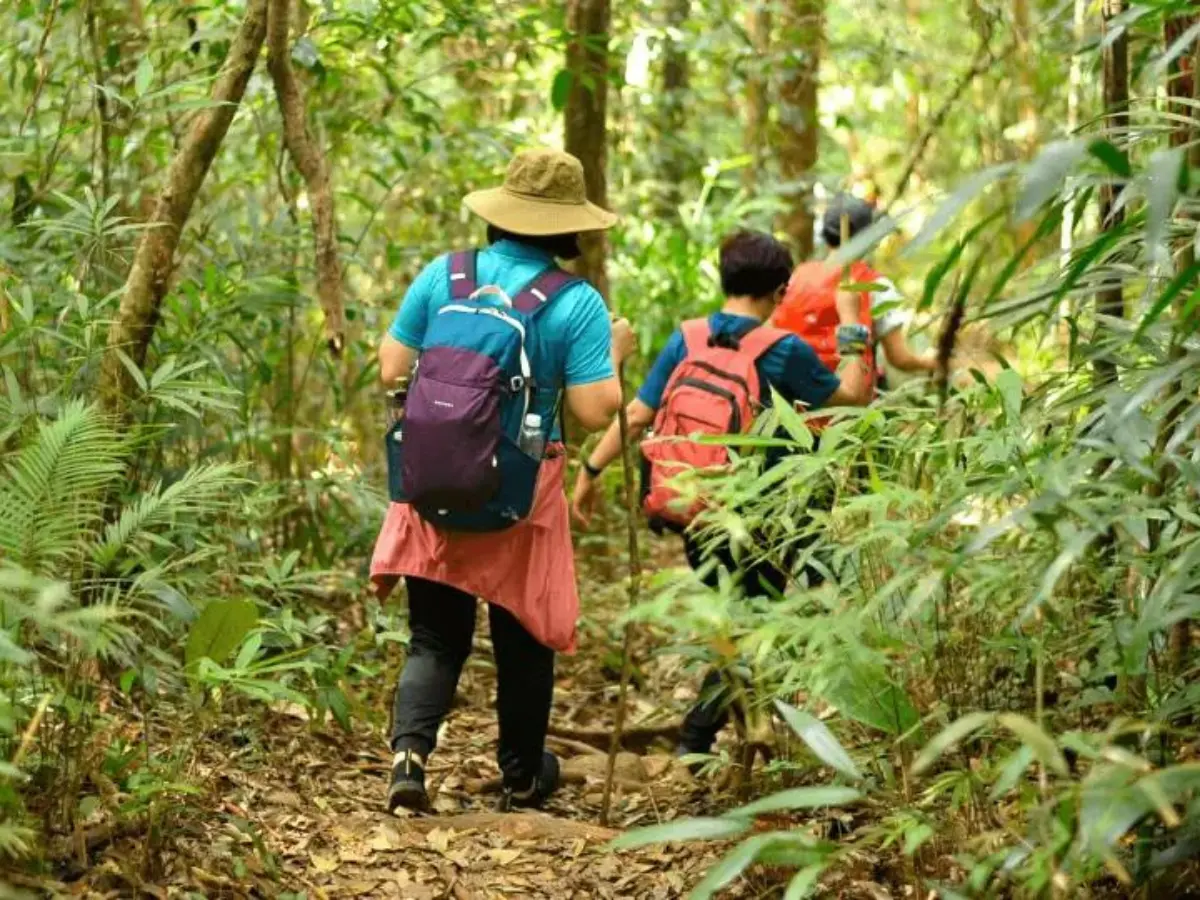
 Sinh Giang
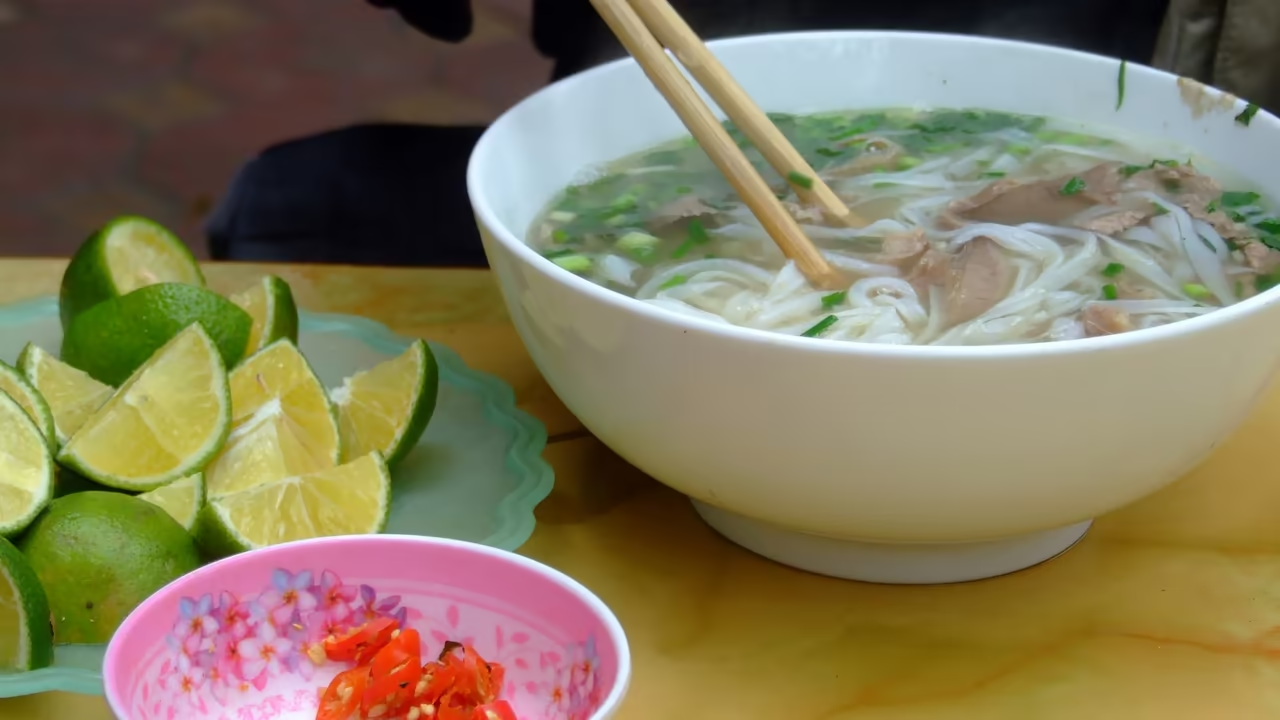
Pho is a rice-noodle soup in a clear beef or chicken broth, and the best bowl for a first-time visitor is a plain phở bò tái eaten at a busy Hanoi stall in the morning. At the well-known Hanoi shops a bowl cost roughly 50,000 to 100,000 VND in the 2026 press and travel lists we checked on 31 October 2026, and a bowl at a neighbourhood stall can cost less. Hanoi pho has a light, savoury broth with few extras. Saigon pho is sweeter and arrives with a plate of bean sprouts and herbs and bottles of hoisin and chilli sauce on the table.
We are a Sapa trekking company, so we will say the awkward part first: we did not find a pho tradition in Sapa town itself, and we could not find a reliable price for a bowl there. Most of our guests eat their pho in Hanoi before the night train or sleeper bus north, so this guide spends most of its time there, then tells you what to eat in Sapa instead. Every price, date and claim below carries the source and the day we read it, because pho prices move and a lot of pho history is repeated without proof.
The Short Answer: Three Numbers Worth Knowing
Before the detail, these are the facts people most often get wrong about pho.
If you read one thing, read this: order phở bò tái (beef with rare slices) or phở gà (chicken), taste the broth before you add anything, squeeze in a little lime, and pay at the end. The rest of this page explains why, and where.
What Pho Is, and Where It Really Comes From
Pho (phở, said roughly “fuh”) is flat rice noodles in a long-simmered broth, topped with thin slices of beef or pieces of chicken, spring onion and herbs. The broth is the dish. According to the general reference on pho, it is built from charred onion and ginger, beef bones and cuts such as oxtail and flank, and a handful of spices: cinnamon, star anise, black cardamom, coriander and fennel seed, and clove, with fish sauce near the end. The cook skims the pot to keep it clear. We found no reliable source for the “12 hours” you often read; recipes we saw give a few hours, so we would trust “several hours” and no more.
The early 20th century, in the north
Pho is usually placed in northern Vietnam in the early 20th century, around the villages of Nam Dinh province, and dated between about 1900 and 1907. Wikipedia’s pho article (read 31 October 2026) summarises the Vietnamese scholarship behind that range and says the dating is contested. The same article says the first fixed pho stands in Hanoi appeared in the 1910s, and that around 1925 a villager from Van Cu opened the first “Nam Dinh style” stand in the capital. A 1931 dictionary is the first to define pho as a soup. Vietnam’s official tourism site says it grew out of xao trau, a buffalo-and-rice-noodle dish, with beef later replacing buffalo. We treat that as one account, not settled fact.
Two popular stories deserve caution. One says pho is a French dish, a Vietnamese reading of pot-au-feu; the pho article notes this is contested because the two dishes differ. The other says French demand for beef left a surplus of bones that vendors turned into broth. It is repeated by Vietnam’s tourism site and by the general reference, but as a theory. The honest summary is that pho took shape in the north in the early 1900s, probably from several influences, and that nobody can name one inventor.
How it reached the south
After the 1954 partition more than a million people moved south, and pho went with them. Southern cooks adapted it: more herbs, bean sprouts, lime, hoisin and chilli sauce, and a sweeter broth. Vietcetera, in a piece published around late October 2025, gives a concrete example: Pham Dinh Nhan, a cook from Nam Dinh who ran a pho stall on Ba Trieu Street in Hanoi, moved to Saigon after 1954 and founded Pho Tau Bay. That one family’s move is a neat picture of how a northern soup became two regional dishes.
Heritage, and what UNESCO has not said
Pho has official recognition at home. The government news portal and Vietnam Investment Review both reported on 13 August 2024 that “Pho Ha Noi” and “Pho Nam Dinh” were added to Vietnam’s national intangible cultural heritage list by the Ministry of Culture, Sports and Tourism. International recognition is a different matter. Vietnam’s state news agency reported on 6 January 2026 that a dossier to propose pho, together with water puppetry, for UNESCO’s intangible heritage list had received in-principle approval from a deputy prime minister, with the Hanoi People’s Committee to lead it. A proposal is not an inscription. If a menu or a tour page calls pho “UNESCO-listed”, it is ahead of the facts. Wikipedia adds that 12 December is Vietnam’s “Day of Pho”, declared in 2017, which is a fun date to plan a trip around.
Hanoi vs Saigon: What Actually Differs
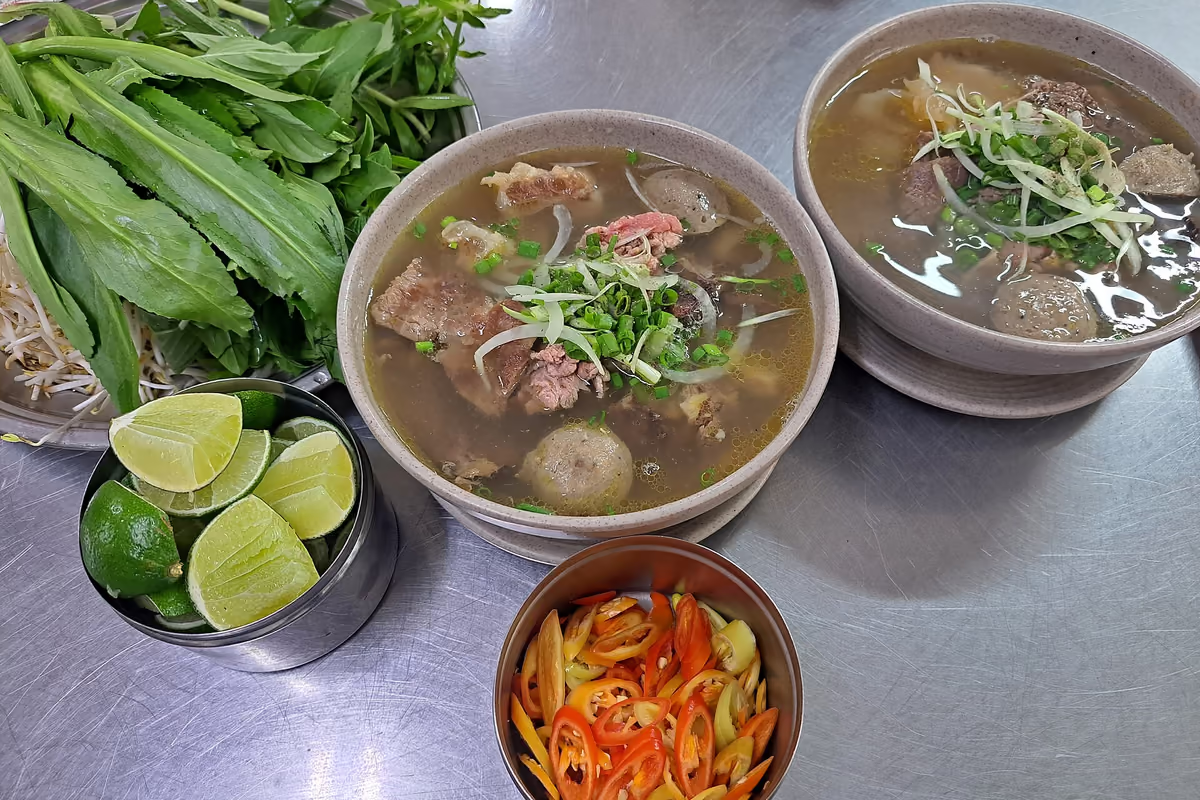
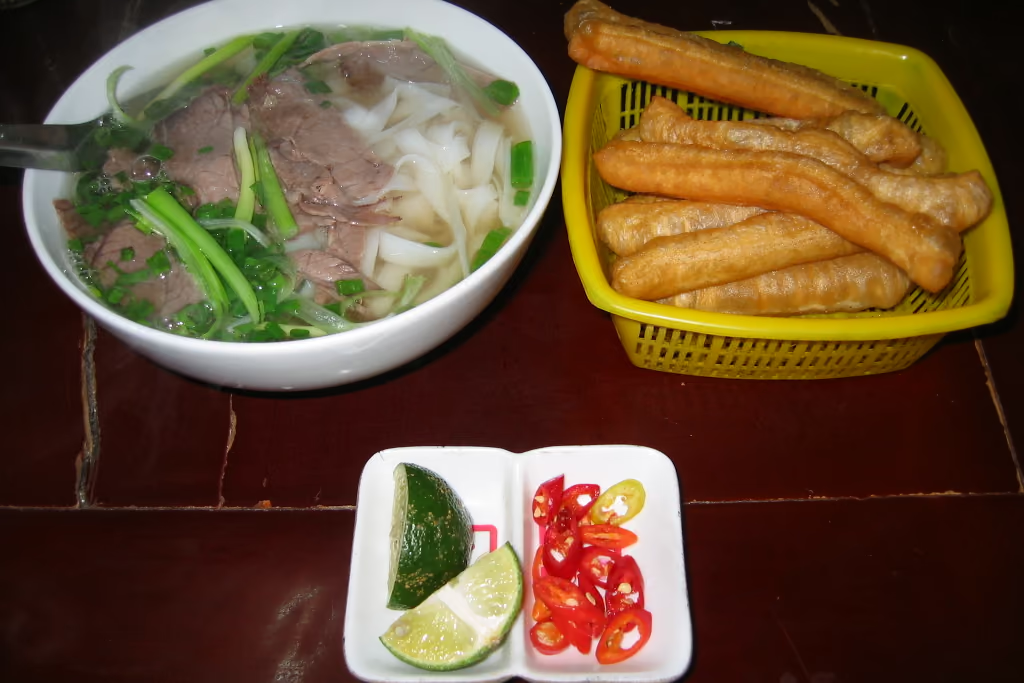
The two styles differ in the broth, the toppings and the table. Hanoi pho is savoury and clear, served with blanched spring onion, chopped green onion, coriander, pickled garlic, chilli sauce and often fried dough sticks. Saigon pho has a sweeter, often cloudier broth and comes with bean sprouts, fresh chilli, hoisin sauce and a bigger herb plate. Wikipedia’s pho article describes both, and Vietnam’s tourism site agrees that Hanoi pho is the simpler of the two. Nothing here is a rule: every shop does it a little differently.
Hanoi style
The northern bowl- Broth
- Savoury and clear, with little sweetness
- On the table
- Chilli sauce, pickled garlic in vinegar, lime; a few herbs at most
- On the side
- Quay, the fried dough sticks, for dipping
- Try it for
- The cleanest taste of the broth itself
Saigon style
The southern bowl- Broth
- Sweeter, often a little cloudier
- On the table
- Bean sprouts, a plate of herbs, fresh chilli, hoisin and chilli sauce
- On the side
- Usually the herb plate rather than dough sticks
- Try it for
- A bowl you build yourself, bite by bite
Taste the broth first, add the extras second. In Hanoi, a pile of sauces on top of a good bowl hides what the cook spent the morning making. In Saigon, the sauces and herbs are part of the dish.
Beef or Chicken? Choosing Your First Bowl
Beef pho, phở bò, is the classic and the one most guides mean. Chicken pho, phở gà, uses the same flat noodles in a chicken broth with chicken instead of beef. Vietnam’s tourism site says chicken pho dates to 1939 in Hanoi, but that is one source, so treat the year as a story and the dish as a fact. The three Hanoi chicken specialists in our price table carry the highest listed prices in it, so chicken pho is not the budget option there.
If you have never had pho, we would order in this order of confidence:
- Phở bò tái chín for the classic taste: some rare slices, some well-done, in a clear broth.
- Phở gà if you want something lighter, or if rare beef worries you.
- Phở cuốn as a snack beside a bowl, to see pho’s noodles used a different way.
Whichever you choose, order one bowl each rather than sharing. A bowl is cheap, the portion is meant for one, and a shared bowl cools quickly.
How to Order Pho Without Speaking Vietnamese
You do not need Vietnamese to order pho. At most stalls you sit, say “phở bò” or “phở gà” and hold up a finger for each bowl. A few extra words let you choose the beef cut. The meat terms below come from Saigoneer’s ordering guide (1 July 2014) and from Wikipedia’s pho article, which agree on all but one word. A Vietnam Airlines guide swaps two of them, so if a cook looks puzzled, point at the meat in the display.
| Say | It means | Good to know |
|---|---|---|
| phở bò / phở gà | Beef pho / chicken pho | The two basic choices |
| tái | Rare beef | Thin slices that cook in the hot broth |
| chín | Well-done beef | Safer if you dislike pink meat |
| tái chín | A mix of rare and well-done | Often the default order |
| nạm | Flank | Chewier, with more beef taste |
| gầu | Fatty brisket | Soft and rich |
| gân | Tendon | Gelatinous; an acquired taste |
| bò viên | Beef meatballs | Common in southern bowls |
| nước béo | Fattier broth | Ask for it if you like richness |
| không hành | No green onion | From a Vietnam Airlines guide; “không” means “none” |
| thêm | More | “Thêm thịt” asks for extra meat, usually charged |
How a stall visit runs, step by step
Go early
A Vietnam Airlines guide notes that many pho shops sell out before noon, so morning is the safe time. Plastic stools and shared tables are normal.
MorningSay the bowl, hold up the fingers
“Phở bò tái” and a finger for each person. Add “không hành” if you want no green onion.
10 secondsTaste the broth, then season
Squeeze a little lime, add chilli or a spoon of garlic vinegar if you like. Use chopsticks for noodles and the spoon for broth.
The first sipPay at the end, in cash
Most pho places are cash-only, according to the same Vietnam Airlines guide. If prices are not displayed, ask before you order.
Small notesQuay, and two Hanoi pho dishes you may not expect
In Hanoi many bowls come with quẩy, fried dough sticks you dip into the broth. Wikipedia places the habit in the post-war subsidy years. Then there are two dishes that share the name but not the bowl. Phở cuốn is flat pho noodle sheets rolled around herbs and beef, eaten with a dipping sauce, and phở chiên phồng is puffed, fried pho dough, usually topped with beef and greens. Both are Hanoi dishes; a travel writer on The World of Street Food (August 2026) describes the fried one, and the Ngu Xa street area is often named for the rolled one. We could not confirm their origins, so we leave history out.
Where to Eat Pho in Hanoi, With Prices We Could Check
Hanoi has thousands of pho stalls, and we are not going to pretend that a short list is a ranking. What follows are the shops that came up again and again in 2026 press and travel lists, with the price range each source printed. Treat the ranges as a guide, not a menu: the figures come from articles, and the articles disagree a little.
| Shop | Listed price | Source and note |
|---|---|---|
| Pho Gia Truyen, 49 Bat Dan | 55,000–70,000 | Vietnamnet. Vietnam Airlines gives 60,000–100,000 |
| Pho Thin, 13 Lo Duc | Not confirmed | Address agrees between Vietnam Airlines and Tablejourney (27 October 2026); we found no reliable price |
| Pho 10, 10 Ly Quoc Su | 70,000–120,000 | Vietnam Airlines only |
| Pho Khoi Hoi, 50 Hang Vai | 40,000–75,000 | Dan Tri. Vietnamnet gives 50,000–90,000 |
| Pho Bo Lam, 48 Hang Vai | 25,000–70,000 | Dan Tri; extra meat costs more |
| Pho Ga Tien (chicken) | 50,000–90,000 | Dan Tri |
| Pho Ga Cham (chicken) | 75,000–160,000 | Dan Tri |
| Pho Ga Huyen Huong (chicken) | 90,000–160,000 | Dan Tri and Vietnamnet |
Two lessons come out of that table. First, two articles about the same shop can differ by 10,000 to 15,000 VND (Khoi Hoi is 40,000 to 75,000 in one and 50,000 to 90,000 in the other), so a few thousand dong either way is normal. Second, the cheapest listed price, 25,000 VND, is under a sixth of the dearest, 160,000 VND, and the chicken specialists charge more than most beef shops. If your budget is tight, a beef bowl at a stall away from the Old Quarter’s main tourist street costs less than any of these, but we have no sourced price for that, so ask before you sit.
Michelin and the queue
The 2026 Michelin Guide Vietnam was announced on 4 June 2026, with Hanoi gaining seven new places, according to Tuoi Tre (5 June 2026). Dan Tri reported that five Hanoi pho shops are in the 2026 selection: Bo Lam, Khoi Hoi, Ga Cham, Ga Tien and Ga Huyen Huong. We could not open Michelin’s own site to confirm which tier each shop sits in, so we say only that they are listed. A listing tends to bring queues and sometimes a price rise, so the cheapest way to try a listed shop is to go at an off-peak hour.
Which one should you pick?
Choose a famous shop if
- You have one meal in Hanoi and want a name you can find again
- You do not mind queuing and sharing a table
- You want chicken pho made by a chicken specialist
Choose a stall near your hotel if
- You are short of time before a train or bus
- You want a quieter bowl and a lower bill
- You would rather taste an ordinary bowl, as a local would
After the Noodles, the Mountains
 1-Day Trek
Trekking Through Rice Terraced Fields
The Lao Chai to Ta Van valley day, with a local guide and a finish in Sapa town.
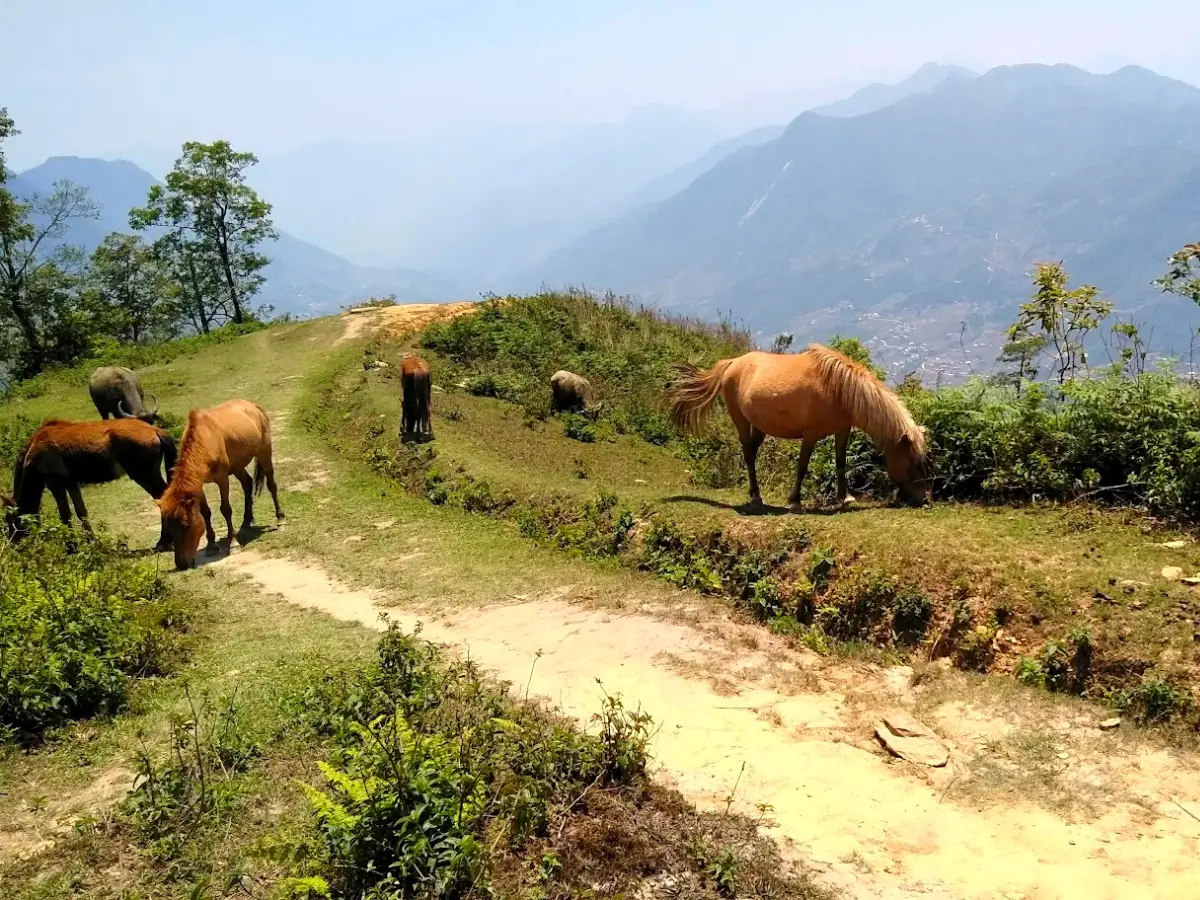 Local Favourite
Mountain Views and Villages Trek
Quieter ridge and village trails above the valley.
 Homestay
Rice Terraced Fields & Homestay
A night with a local family in the valley.
Six Mistakes Visitors Make With Pho
None of these will ruin a trip, but each one costs a little taste or a little money.
- Reaching for the hoisin in Hanoi. Hoisin and a pile of chilli sauce belong to the southern bowl. In Hanoi, taste the broth plain first.
- Arriving at noon. A Vietnam Airlines guide notes that many shops sell out before midday, and a late visit means a tired broth or a closed shop.
- Saying “extra meat” without asking the price. Dan Tri’s June 2026 piece notes that extra meat is charged separately at Pho Bo Lam, and the same habit applies elsewhere.
- Trusting a price you have not seen. If no price is displayed, ask before you order. The ranges in this guide came from articles, not menus.
- Judging a shop by a single review. Two sources can give a different price for the same shop, as the table above shows. Read the date, and read more than one source.
- Eating the raw greens without thinking. The CDC notes that raw greens can carry germs after washing. Eat what you are comfortable with, and keep the broth hot.
Pho in Sapa: What We Could and Could Not Confirm
Pho is on menus in Sapa town, as it is almost everywhere in Vietnam, but we found no evidence of a notable pho shop or a local pho speciality there. A Sun Paradise Land food guide dated 20 September 2026 says only that the area offers popular Vietnamese dishes “such as pho”. We found no reliable price for a bowl in Sapa town, so we will not invent one. If you want a Sapa price, ask before you order, and compare it with the Hanoi ranges above.
What Sapa does have is food you will not find in Hanoi. A tourism guide updated on 29 August 2026 describes thắng cố as a H’mong stew of horse (sometimes buffalo or pork) and offal with mountain herbs, at roughly 60,000 to 90,000 VND a bowl; we treat that price as indicative because the source is a commercial site. The same guide and the Sun Paradise Land piece both mention salmon hotpot at roughly 250,000 to 400,000 VND for two. Our guide to what to eat in Sapa has the full list, including bamboo rice and five-colour sticky rice, and Vietnam street food by region places pho among the other northern dishes.
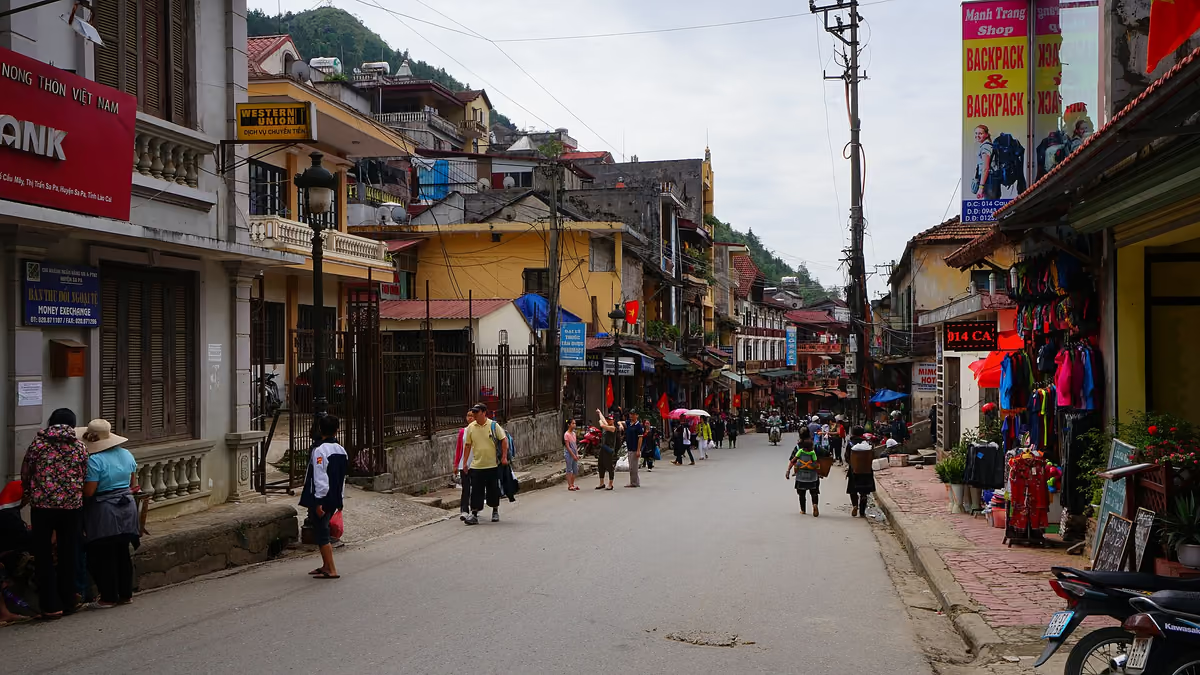
Night food stalls in Sapa open from about five in the afternoon, according to the same guides, and Cau May Street is the road most visitors mean, though we could not confirm the exact stall lines. After a day on the trail, a hot bowl of noodle soup is a fair reward, and you will find one. Just do not expect Hanoi’s depth. Our own advice is to eat your best pho in Hanoi and your best mountain meal in Sapa.
Is Street Pho Safe to Eat?
Pho is a good first street dish because it arrives steaming hot. The US Centers for Disease Control and Prevention says food that is cooked and served hot is the safest, and advises travellers to drink sealed bottled water or water boiled for one minute and to avoid ice unless it is made from safe water. It also warns that raw greens can carry germs even after washing. That is a sensible reason to watch the herb plate and to prefer a bowl straight from the pot. The CDC’s Vietnam page, last reviewed on 25 August 2026, recommends hepatitis A and typhoid vaccination for most travellers and washing hands, or using sanitiser with at least 60 per cent alcohol when there is no soap. Speak to a travel clinic about your own case.
Choose a busy stall where the broth is boiling and the turnover is high. Skip the ice in drinks unless you know where it came from. If you have a sensitive stomach, ask for chín (well-done) beef rather than rare slices.
Fitting Pho Into a Hanoi Day Before Sapa
Pho works well as the first meal of a Hanoi day or the last before a night departure. Our timetable lists night trains from Hanoi at 20:35, 21:10, 21:50 and 22:20 and sleeper buses from 21:00 to 23:30, which leaves time for an early dinner. Because many shops sell out before noon, breakfast is the easier slot; for an evening meal a chicken specialist or a stall that stays open is the safer bet. Our guide to a Hanoi evening shows how a water puppet show and an egg coffee fit around dinner, and two days in Hanoi places a pho breakfast inside a full 48 hours. For the daytime sights, see things to do in Hanoi.
From the Noodle Shop to the Night Train
- Hanoi to Sapa transport — sleeper buses, limousines and the overnight train, bookable with your trek
- Hanoi to Sapa guide — what each option costs and how long it takes
- How to get to Sapa — the first leg, in detail
Questions We Hear About Pho
Is pho eaten for breakfast?
Yes. In Hanoi pho is a standard breakfast, and many shops sell out before noon, as a Vietnam Airlines guide notes. It is also sold later in the day, but the broth and the choice of meat are best early.
Is there pho without meat?
Vegetarian pho exists, but the traditional broth is made with bones, so ask whether a bowl is truly vegetarian before you order. Chicken pho is lighter than beef but is not meat-free.
What should I not do in a pho shop?
Do not drown the bowl in sauce before tasting it, and do not leave without checking the price if none is displayed. Pay at the end and in cash, and expect to share a table.
Rent at Our Office Before You Trek
 Gear Rental
Trekking Boots Rental
Waterproof ankle-support boots. Cleaned and checked before each rental. Available at 105 Thach Son Street.
 Gear Rental
Walking Poles Rental
Trekking poles available to rent at $2/day at our office, 105 Thach Son Street. Essential for descents.
Sources We Checked
All pages were read on 31 October 2026 unless a date is given. Where a source did not print a date we say so in the text.
- Wikipedia, “Pho”, on history, the two regional styles, ordering terms and broth.
- Vietnam Tourism, “The history of pho”, undated.
- Vietcetera, “Along the flow of history: the evolution of pho”, around late October 2025.
- Government news portal and Vietnam Investment Review, 13 August 2024, on Hanoi and Nam Dinh pho entering Vietnam’s national intangible cultural heritage list.
- Vietnam News Agency, 6 January 2026, on the pho and water puppetry UNESCO dossier.
- Saigoneer, “A guide to ordering pho in Vietnamese”, 1 July 2014.
- Dan Tri International, 7 June 2026, and Vietnamnet, 6 September 2026, on Hanoi pho prices; Tuoi Tre, 5 June 2026, on the 2026 Michelin Guide Vietnam; Vietnam Airlines, undated pho guide.
- Sun Paradise Land, 20 September 2026, and Vietnam Tourism, updated 29 August 2026, on Sapa food.
- US CDC Travelers’ Health, Vietnam, reviewed 25 August 2026.
Frequently Asked Questions
Hanoi pho has a savoury, clear broth and few extras: spring onion, coriander, pickled garlic, chilli sauce and often fried dough sticks. Saigon pho has a sweeter, often cloudier broth and comes with bean sprouts, fresh chilli, hoisin sauce and a bigger herb plate. Every shop varies, so treat this as a tendency, not a rule.
In 2026 press and travel lists we read on 31 October 2026, bowls at well-known Hanoi shops were listed between 25,000 and 160,000 VND, with most beef bowls around 50,000 to 100,000 and chicken specialists higher. These are article figures, not menus, and two articles can differ by 10,000 to 15,000 VND for the same shop. Ask the price before you order.
Say "phở bò" for beef or "phở gà" for chicken and hold up a finger for each bowl. "Tái" is rare beef, "chín" is well-done and "tái chín" is a mix. Add "không hành" for no green onion. Meat terms vary by shop, so point at the meat if unsure.
No. Pho Ha Noi and Pho Nam Dinh were added to Vietnam's national intangible cultural heritage list, reported on 13 August 2024. On 6 January 2026 Vietnam's state news agency reported that a dossier to propose pho for UNESCO's list had received in-principle approval. A proposal is not an inscription.
Pho is usually placed in northern Vietnam in the early 20th century, around Nam Dinh province, and dated between about 1900 and 1907, though scholars dispute the years. After 1954 it spread south and changed. Claims that pho is a French dish or has one named inventor are contested.
Pho is on menus in Sapa town, but we found no evidence of a notable pho shop or a reliable bowl price there. Sapa's own foods, such as thang co, a H'mong stew, and salmon hotpot, are better reasons to eat out in town. Ask the price before you order.
The US CDC says food that is cooked and served hot is the safest choice, and advises sealed or boiled water and no ice of uncertain origin. It warns that raw greens can carry germs even after washing. Pick a busy stall where the broth is boiling, and ask a travel clinic about your own health needs.
Morning. Pho is a standard breakfast, and a Vietnam Airlines guide notes that many shops sell out before noon. If you travel to Sapa by night train or sleeper bus, an early pho breakfast or a chicken pho supper fits easily before a 20:35 to 22:20 departure.