 Sinh Giang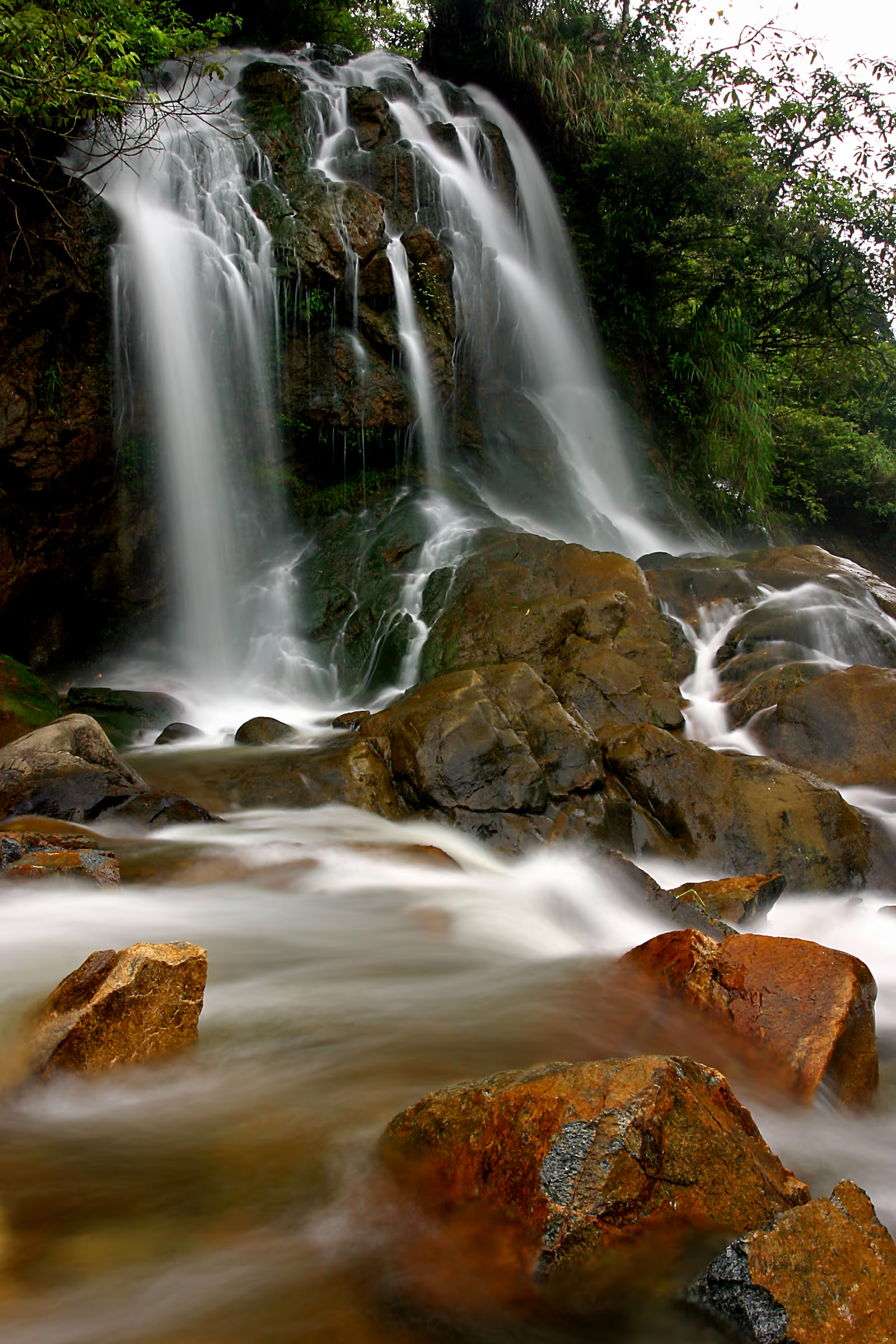
Cat Cat Village sits at the bottom of a short, paved path about two kilometers below Sapa town — a Black H'mong settlement built around a waterfall and a century-old French hydro station, and by far the easiest village to visit in the whole valley. You can walk down in under 40 minutes, see a waterfall, watch water wheels turn, browse a genuine H'mong craft market, and be back in town in time for lunch.
It won't feel like the quiet, working villages further into Muong Hoa Valley — Cat Cat has been built for visitors for decades, and it shows. That's not automatically a bad thing. This guide covers exactly what you'll find there, what it actually costs in 2026, when to go to dodge the tour-bus crowds, and an honest answer to the question every traveler asks before coming: is Cat Cat Village actually worth your time in Sapa, or should you skip straight to a proper trek?
Cat Cat Village at a Glance
Before the history and the honest opinions, here are the numbers you actually need to plan around.
Cat Cat is inside the Muong Hoa Valley commune, reached by the same paved road used by taxis, motorbikes and the occasional tour bus heading further into the hills. Unlike almost every other village covered in Sapa trekking itineraries, you don't need boots, a guide or a full day here — comfortable shoes and about two hours will cover it properly.
Where Is Cat Cat Village and How Do You Get There?
Cat Cat Village is reached by a signed, paved path that drops away from the southern edge of Sapa town, close to the central market and a short walk from most hotels — you can be at the entrance gate in under ten minutes on foot from the town square.
From the gate, a wide stone-and-concrete path descends through terraced fields and past H'mong houses for roughly 1.5 km down to the waterfall and hydro station at the bottom of the valley. Most travelers walk down and either walk back up or take a motorbike taxi for the return climb, since it's a genuine uphill effort in the mountain air. If you're short on time, traveling with young children, or visiting with older parents, a taxi can drop you directly at the lower gate near the waterfall, cutting the walk to a flat 10–15 minutes each way.
A metered taxi from most hotels in Sapa town to the Cat Cat entrance costs roughly 30,000–50,000 VND (about $1.30–$2), and ride-hailing apps like Grab operate in Sapa and will quote a fare before you book. Motorbike taxis (xe ôm) wait near the town square and along the road down, typically charging a similar or slightly lower rate for the same trip. If you've rented your own motorbike, there's a small parking area near the entrance gate — useful if you plan to continue on to other sights the same day rather than looping back through town.
The walk down is easy, but the walk back up gains roughly 150–200 meters over two kilometers of paved incline and steps — it's the part visitors underestimate. If you're with kids, seniors, or simply don't want a sweaty finish to your morning, arrange a taxi or motorbike back up from the lower gate; drivers wait there throughout the day.
How Much Time Should You Spend at Cat Cat Village?
Most travelers need between 1.5 and 3 hours at Cat Cat Village, depending on how much time they spend at the craft stalls and whether they walk both directions or take a taxi one way.
A brisk visit — walk down, waterfall, water wheels, walk back up — takes about 90 minutes if you don't linger. Add another 30–45 minutes if you want to watch the weaving and indigo-dyeing demonstrations properly, browse the silver jewelry stalls, or time your visit around the midday cultural performance near the entrance. Photographers should budget closer to three hours, since the best light at the waterfall comes in the early morning or the last hour before the gate closes, and both are worth a second pass if your first visit landed at midday.
Because it's this short, Cat Cat pairs naturally with other half-day plans: a late breakfast in town, the walk down and back, then lunch back in Sapa before an afternoon at the market or a shorter trek elsewhere. It's rarely worth building an entire day around — that's better spent on one of the full treks further into Muong Hoa Valley.
A Short History of Cat Cat Village
Cat Cat's story stretches back further than its French name suggests — Black H'mong families were farming this stretch of the valley long before colonial engineers arrived to dam the waterfall in the 1920s.
H'mong settlement
Black H'mong families farm rice and hemp along the stream that becomes the waterfall.
French hydro station
Colonial engineers dam the waterfall to power one of the region's first hydroelectric stations.
First photographs
Early images show the falls as a curiosity stop for officials stationed in Sapa.
Sapa reopens
Vietnam reopens Sapa to international travelers; Cat Cat becomes the natural first stop.
Most-visited village
Paved paths, craft stalls and cultural shows make Cat Cat Sapa's busiest single village visit.
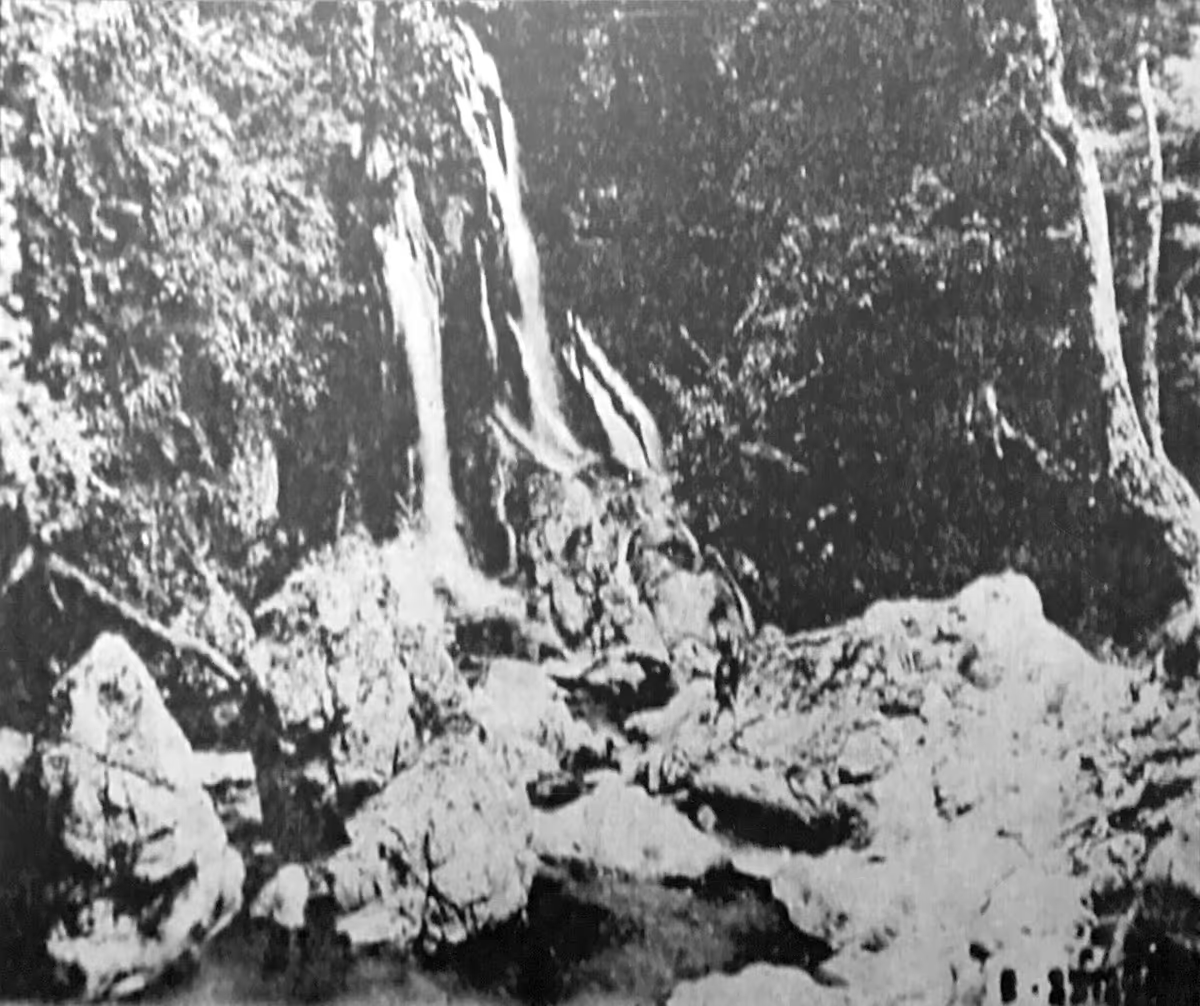
Even the village's name carries a small mystery: locals and guidebooks alike often say "Cat Cat" comes from a French mishearing of a local word for the stream, though the exact origin is debated — the village itself is far older than the name that stuck. What's certain is the hydro station, whose stone walls and turbine housing still stand beside the waterfall today, built to bring electricity to the growing French hill station above. A photograph from 1927, kept in the Sapa Museum archive, shows the same falls not long after the station was completed — quieter, unpaved, and visited only by the handful of colonial officials posted to the highlands.
After Vietnam reopened Sapa to foreign visitors in the early 1990s, Cat Cat's short distance from town made it the obvious first stop for the tour operators who followed. Paths were paved, a ticket gate was added, and craft stalls multiplied along the route — turning a farming village into what it is today: still lived-in, but built around visitors as much as around rice.
Cat Cat Is a Half-Day Stop — Pair It With a Full Trek
 Best Seller
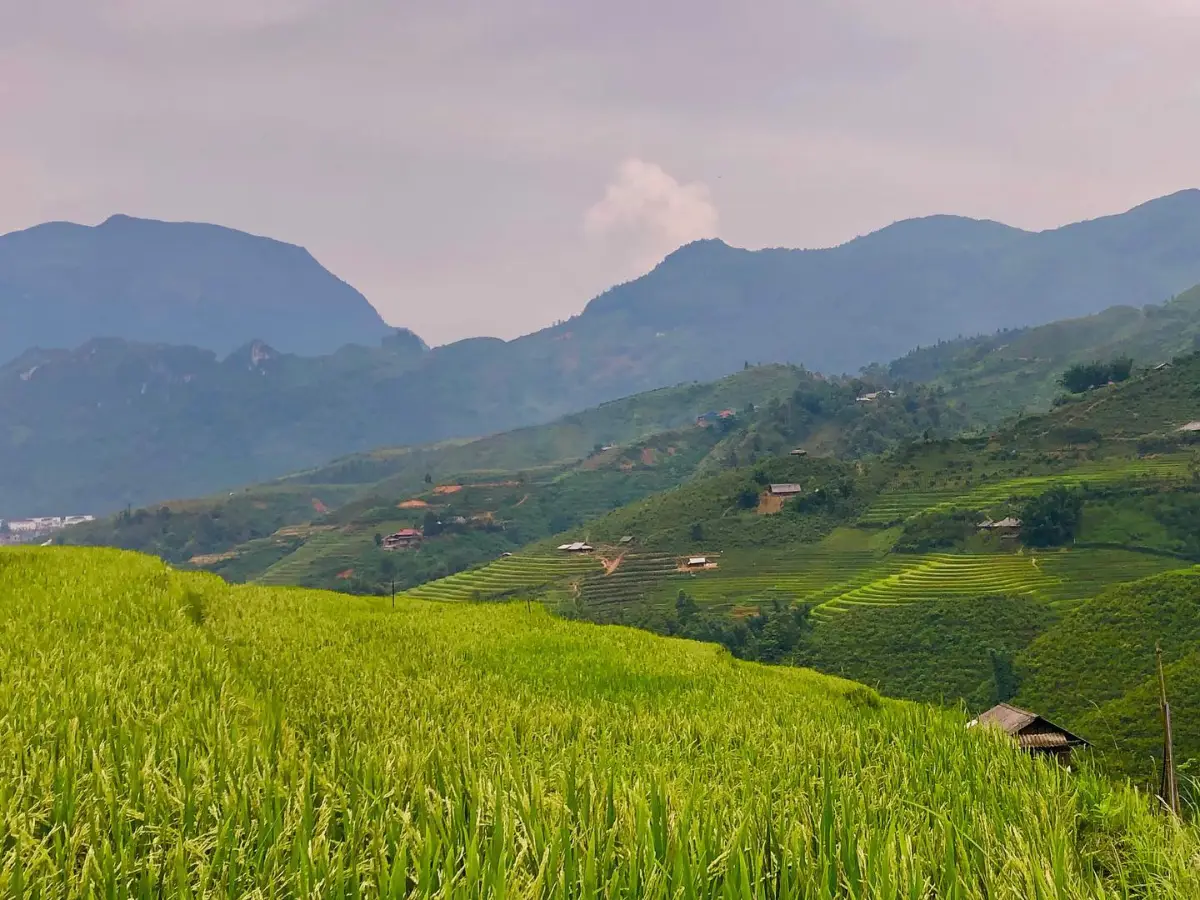
Trekking Through Rice Terraced Fields
A full day through Lao Chai and Ta Van — the terraced valleys Cat Cat only hints at, with real village life along the way.
 Very Easy
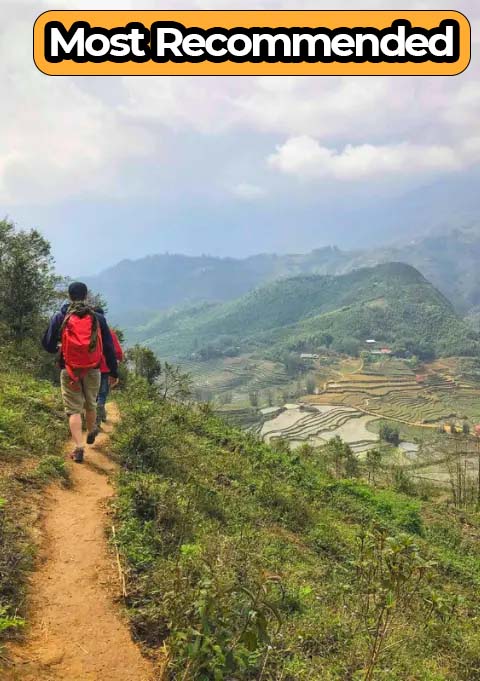
Sapa Easy Trekking For Seniors
Gentle, flat paths and short distances — for travelers who liked Cat Cat's easy pace but want real countryside, not a paved tourist path.
2D1N
Rice Terraced Fields & Homestay
Sleep in a H'mong homestay past the crowds — the overnight version of what Cat Cat only shows you for an hour.
What You'll Actually See Inside Cat Cat Village
Cat Cat's main sights cluster around the valley floor: the waterfall and hydro station, a handful of working water wheels, and a stretch of craft stalls run by local families along the return path.
The waterfall itself is modest by Sapa standards — a two-tiered drop into a shallow pool, crossed by a small stone bridge that's become the village's most-photographed spot. Beside it, the old hydro station's stone walls and turbine housing are still standing, now more a piece of industrial history than a working plant, though a small display explains how it once lit up the French hill station above.
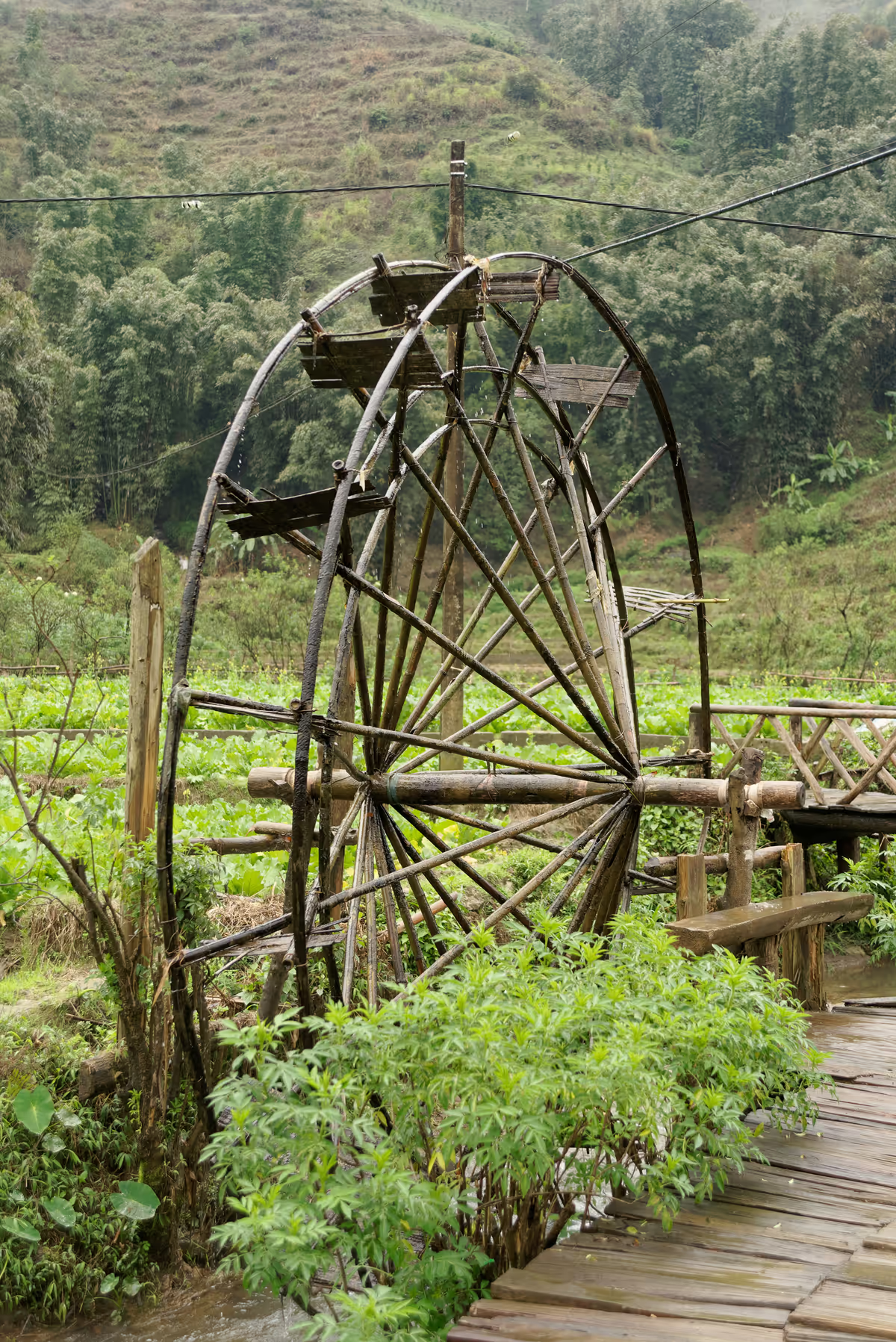
Further along the stream, a few wooden water wheels still turn — most kept running for demonstration rather than daily use, but genuine examples of how H'mong households once husked rice and ground corn using nothing but the current. Around them, terraced rice fields climb the hillside in narrow steps, at their best from late September into October when the paddies turn gold.
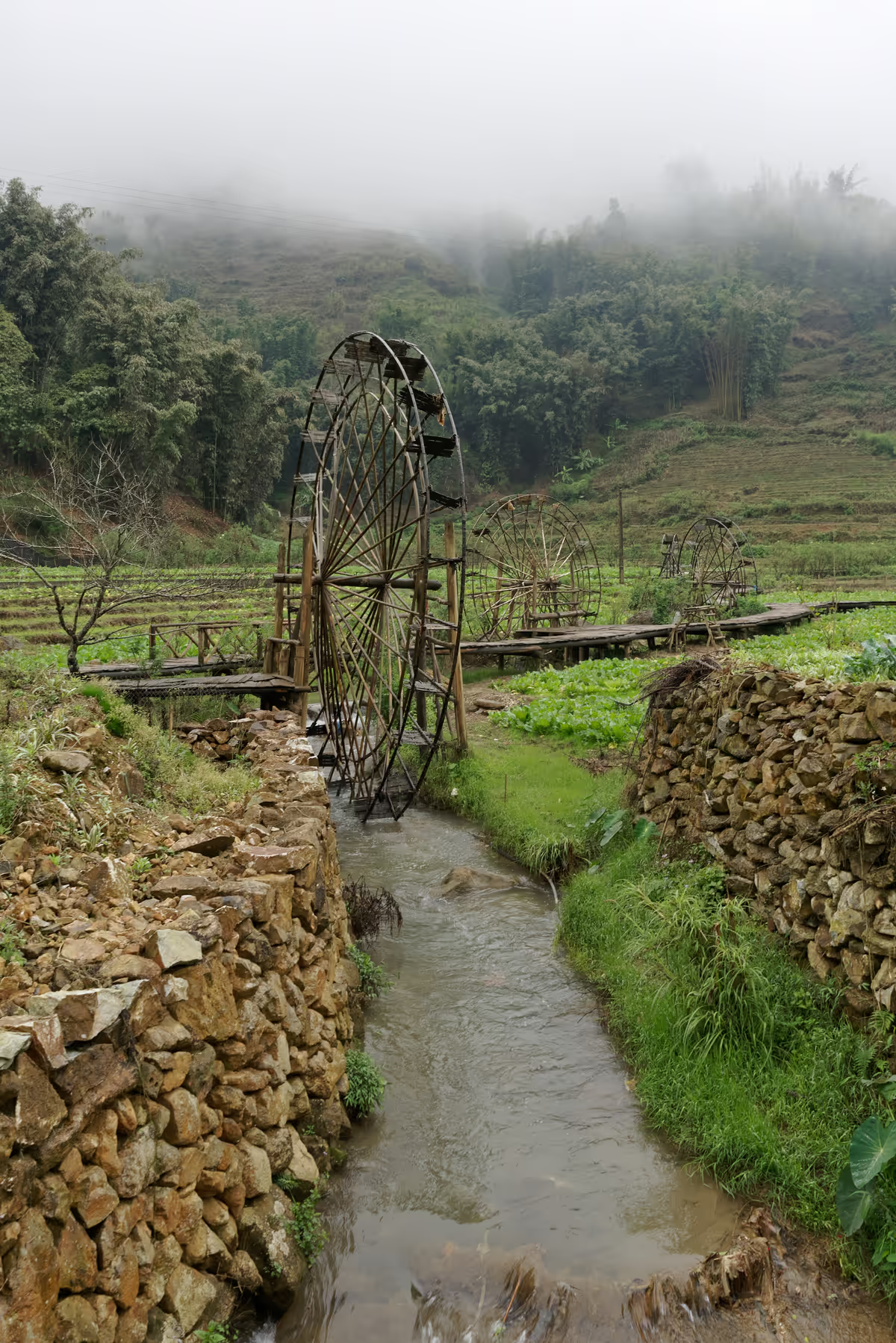
The path back up runs past a long row of stalls selling handwoven textiles, indigo-dyed fabric, and hammered silver jewelry — much of it made by the same families who live along the route. You'll also see looms set up in open doorways, with women demonstrating the weaving and dyeing process rather than simply selling the finished cloth. It's worth stopping to watch even if you don't buy; the indigo-dyeing process alone, which can take days of repeated dipping and drying, is a craft most visitors have never seen up close.
On certain days, a small stage near the entrance hosts a short Black H'mong cultural performance — pan-pipe music and traditional dance, usually timed around the busiest midday hours when tour groups pass through. It's worth checking the schedule board at the gate if you want to catch it, though it's a staged extra rather than a core part of the visit.
Photography Tips for Cat Cat Village
The stone bridge over the waterfall is the obvious shot, but it's also the most crowded spot in the village between 10:00 AM and 1:00 PM — arrive before 8:00 AM if you want it without a dozen other travelers in frame. The light at that hour comes in low and soft through the valley mist, which flatters both the falls and the terraced fields above them.
For the water wheels, shoot from the small footbridges downstream rather than directly beside them — the extra distance lets you frame the wheel against the rice terraces behind it instead of a flat wall of green. If you want portraits of local weavers or dyers at work, always ask first; most are happy to be photographed while demonstrating their craft, but treat the houses along the path as homes, not photo backdrops, since families do still live in them.
The Black H'mong Community at Cat Cat
Cat Cat is a genuinely inhabited Black H'mong village, not a recreation — but decades as Sapa's most-visited site have reshaped daily life along the main path more than in almost any other village nearby.
Families still live in the houses lining the route, and many of the women you'll see in indigo-dyed traditional dress are residents, not performers hired for the day. At the same time, a large share of ground-floor rooms along the path have become shops, cafés or small guesthouses, and the constant flow of visitors means interactions here tend to be transactional — a sale, a photo, a short exchange — rather than the longer conversations possible in quieter villages further up the valley.
The indigo cloth you'll see hanging to dry outside several houses follows a process that hasn't changed much in generations: hemp or cotton fabric is dipped repeatedly in a fermented indigo vat, dried in the sun, and dipped again — sometimes ten or more times — until the cloth deepens from pale blue to the near-black shade Black H'mong clothing is known for. The finished fabric is then often beaten with a wooden mallet on a flat stone to bring out a faint sheen before it's cut and embroidered. The geometric patterns stitched along hems and collars aren't purely decorative either — many trace back to symbols historically used to mark clan lines and family identity, a detail worth asking about if a stallholder is willing to explain their own work.
Silver jewelry sold along the path is usually hammered rather than cast, worked from raw silver bars into the chunky necklaces and earrings traditionally worn for festivals and weddings. Genuine handmade pieces show small hammer-mark irregularities up close; the smoother, more uniform pieces are typically machine-made imports brought in to meet demand, and worth knowing the difference between if buying as a souvenir rather than simply admiring the craft.

Cat Cat is often described as the most commercialised village near Sapa, and that's a fair description, not a criticism to avoid the place entirely. Decades of steady tourism have paved the paths, multiplied the souvenir stalls, and turned the morning cultural show into a fixed part of the schedule. If your goal is a quiet, working village that feels untouched by tourism, Cat Cat won't deliver that — Ta Van, Lao Chai or a homestay further into Muong Hoa Valley will get you closer. If your goal is an easy, interesting first taste of H'mong culture and Sapa's terraced landscape in under two hours, Cat Cat does exactly what it promises.
Is Cat Cat Village Worth Visiting? An Honest Take
Yes — for the right traveler and the right expectations, Cat Cat Village is worth the short walk down, even with the crowds and the souvenir stalls.
It earns roughly a 4.0 out of 5 for authenticity when compared honestly against other villages in the valley — the lowest score among Sapa's main village visits, precisely because of how built-up the main path has become. But that same accessibility is what makes it the right call for specific travelers: anyone with only a morning free in Sapa, families with young children, older parents who can't manage a full day's trekking, or first-time visitors who want an easy orientation to H'mong culture before deciding whether to commit to a longer trek.
If you have even one extra day, pairing Cat Cat with a proper trek through Ta Van, Lao Chai or Y Linh Ho gives you both sides of the valley — the easy, well-explained introduction, and the quieter, working villages that Cat Cat's own crowds have moved away from.
Cat Cat Village vs. Other Sapa Villages
Here's how Cat Cat actually compares to the other villages travelers most often ask about, so you can decide where to spend your limited time.
| Village | Distance from Sapa | Effort | Feel |
|---|---|---|---|
| Cat Cat Village | 2 km | Easy, paved path | Busy, well-organized |
| Ta Van | 9–10 km | Moderate, full day trek | Working village, quieter |
| Lao Chai | 7–8 km | Moderate, half/full day | Rice terraces, farming life |
| Ta Phin | 12–14 km | Moderate, usually by car + walk | Red Dao culture, herbal baths |
| Y Linh Ho | 10–12 km | Harder, remote trails | Least visited, most authentic |
The pattern is consistent across the valley: the closer a village sits to Sapa town, the easier it is to reach and the busier it tends to feel. Cat Cat sits at one end of that spectrum, Y Linh Ho at the other — most travelers land somewhere in the middle by combining an easy stop like Cat Cat with one proper trek further out.
Best Time to Visit Cat Cat Village (Avoiding the Crowds)
The best time to visit Cat Cat Village is before 8:00 AM or after 3:00 PM — outside the window when day-trip buses from Hanoi and group tours from Sapa town arrive together.
The midday crush is driven almost entirely by day-trip groups arriving from Hanoi on the overnight train or early bus, who reach Cat Cat between roughly 10:00 AM and 1:00 PM as part of a packaged Sapa itinerary. Weekends bring domestic tourists on top of that, so a weekday morning visit is your quietest realistic option if you can't manage sunrise. Late afternoon works almost as well, with the added benefit of softer light for photos at the waterfall.
Best Season to Visit Cat Cat Village
Cat Cat is a year-round destination, but the season changes what you'll actually see more than it changes the crowd pattern above.
September and October bring the rice terraces around the village to their gold, ready-to-harvest peak — this is the single best window for photos of the terraced fields framing the waterfall, and also the busiest season overall since it overlaps with Vietnam's most popular travel months. March through May offers a gentler alternative: fresh green terraces, mild temperatures, and noticeably thinner crowds than autumn. Winter (December–February) is the quietest season by far, but mountain mist and occasional cold snaps can make the waterfall photos flatter and the paved path genuinely slippery — worth the trade-off only if solitude matters more than ideal conditions to you. Summer (June–August) brings the heaviest rain, which swells the waterfall itself but also turns the steepest sections of path treacherous; a poncho and grippy shoes are non-negotiable if you visit then.
If you're timing a Vietnam trip specifically around Sapa's golden rice terraces, late September into early-to-mid October is the narrow window locals watch for — but book your visit for early morning even in this season, since it's also when Cat Cat sees its heaviest tour-bus traffic of the year.
Entrance Fee, Opening Hours and Practical Tips
As of 2026, Cat Cat Village charges an entrance fee of approximately 70,000 VND (around $3 USD) per adult, collected in cash at the gate at the top of the path; young children typically enter free or at a reduced rate.
The village is generally open from around 6:30 AM to 6:00 PM daily, though the ticket booth itself may open slightly later — arriving right at opening gives you the best chance of a quiet first hour. A few practical notes worth knowing before you go:
- Wear comfortable closed shoes — the path is paved but has a steady incline and some steps, and can be slippery after rain.
- Bring small denomination cash, both for the entrance fee and for any purchases from craft stalls — card payment is not reliably available.
- A light jacket helps even on warm days; the valley floor near the waterfall stays noticeably cooler and mistier than the road above.
- Bargaining is normal and expected at the souvenir stalls, though prices here tend to start higher than at Sapa's central market given the tourist volume.
- Restrooms are available near the entrance gate and at a couple of points along the main path.
- If mobility is a concern, ask about vehicle access to the lower gate near the waterfall — it cuts the walk significantly for wheelchair users, strollers, or anyone who can't manage the full descent and climb.
Combining Cat Cat with Other Nearby Sights
Because a visit only takes a couple of hours, most travelers fold Cat Cat into a bigger half-day rather than treating it as a standalone trip. Ham Rong Mountain, on the opposite edge of Sapa town, has its own flower gardens and a viewing platform over the whole valley, and pairs naturally with a morning at Cat Cat plus lunch back in town. Sapa Lake, right in the town center, is worth a short stop either before you head down to the village or after you climb back up — it's a flat, easy walk with good views of the church and surrounding hills. Travelers with a full day free sometimes add the Sapa Museum, which holds the same kind of historical photographs referenced earlier in this guide and gives useful context before or after seeing the hydro station in person.
Common Mistakes First-Time Visitors Make at Cat Cat
Underestimating the return climb is by far the most common one — travelers walk down enthusiastically, spend an hour at the waterfall, and only realize on the way back up how steep and sustained the path actually is, especially in midday heat. Arranging a taxi or motorbike for the uphill leg in advance solves this entirely.
The second mistake is arriving between 10:00 AM and 1:00 PM without knowing it's peak season for day-trip buses, then judging the whole village as overcrowded and overly commercial based on that one narrow window. An early or late visit changes the experience substantially. The third is treating the visit as a full morning activity and rushing the walk down to Sapa's other attractions afterward — most travelers are pleasantly surprised by how quickly Cat Cat can be done properly, leaving time for Ham Rong Mountain, the market, or simply an unhurried lunch in town.
Not in Sapa Yet? Here's How Most Travelers Arrive From Hanoi
 Budget
Sleeper Bus
Overnight or day departures, flat reclining seats.
 Popular
Limousine Van
Door-to-door hotel pickup, 9-seat comfort van.
 Scenic
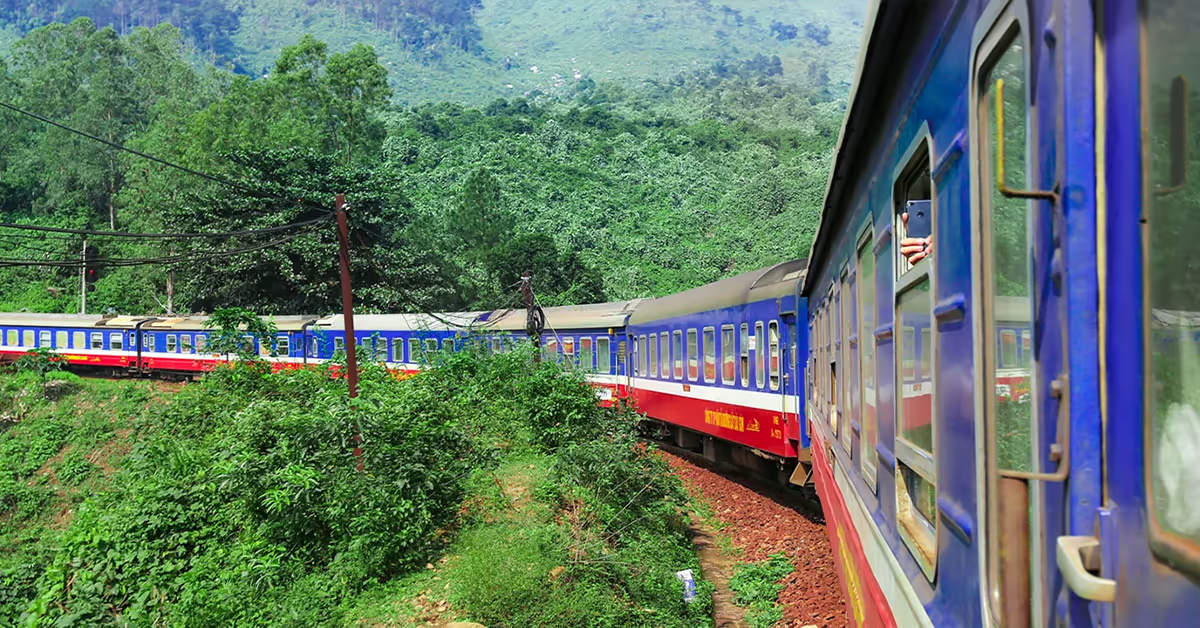
Overnight Train
Hanoi to Lao Cai, then a 1-hour transfer to Sapa.
Frequently Asked Questions
Cat Cat Village is about 2 km from Sapa town center, a walk of roughly 30–40 minutes downhill, or a 5–10 minute taxi or motorbike ride.
As of 2026, the entrance fee for Cat Cat Village is approximately 70,000 VND (about $3 USD) per adult, with reduced or free entry for young children — pay in cash at the gate.
Yes, if you're honest about what it is: an easy, scenic, well-organized introduction to Black H'mong culture and Sapa's terraced valleys, not a quiet or untouched village. It's the right choice for travelers with limited time, older parents, or young children; if you want a deeper, quieter experience, pair it with a full day trek to Ta Van or Lao Chai.
The main draws are the Cat Cat waterfall, an old French-built hydro station, working wooden water wheels, terraced rice fields, and craft demonstrations of weaving, indigo dyeing and silver jewelry making by local Black H'mong families.
Arrive before 8:00 AM or after 3:00 PM. Between 10:00 AM and 1:00 PM the village fills with day-trip tour groups and gets genuinely crowded, especially on weekends.
Yes — the paths are paved and well signed, so Cat Cat is easy to visit independently by walking, taxi or motorbike from Sapa town. A guide adds context on H'mong culture and history, but isn't required for this particular village.
Rent at Our Office Before You Trek
 Gear Rental
Trekking Boots Rental
Waterproof ankle-support boots. Cleaned and checked before each rental. Available at 105 Thach Son Street.
 Gear Rental
Walking Poles Rental
Trekking poles available to rent at $2/day at our office, 105 Thach Son Street. Handy for the climb back up from Cat Cat.