 Sinh Giang
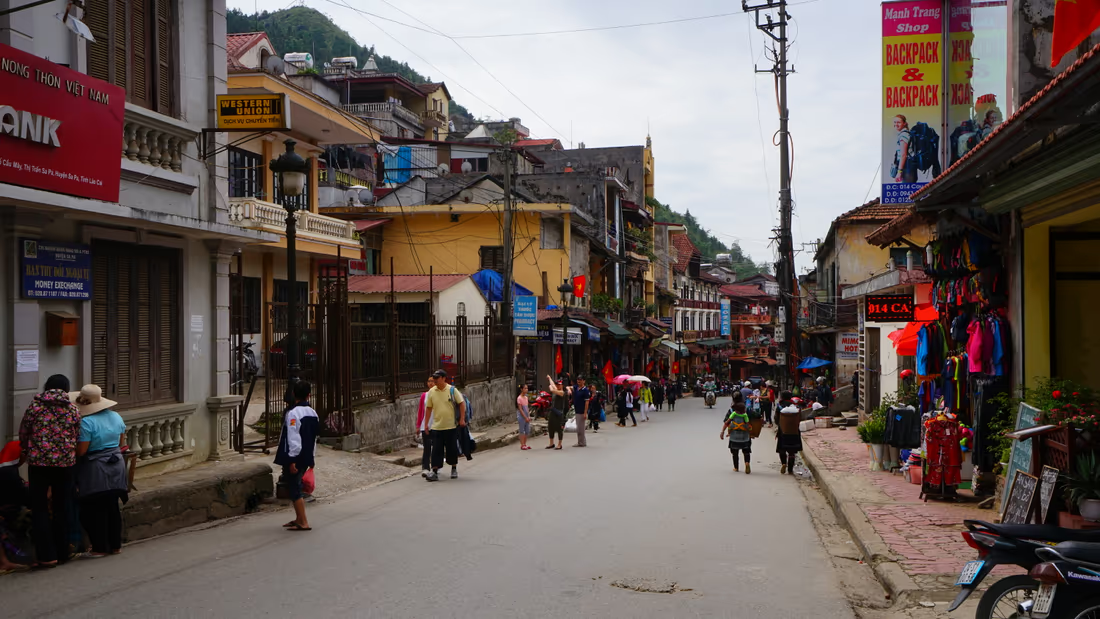
Step off Cau May Street after dark and you will hear it before you see it: two-stroke engines idling outside the market, a driver calling "moto, moto?" as you pass, and somewhere behind you the meter-clock tick of a parked taxi waiting for the last bus-load of trekkers. Sapa town is small, but it is built on a slope, and that changes how you get from A to B here far more than it does in Hanoi or Ho Chi Minh City.
This guide covers local transport within Sapa town and out to the trailheads — Grab, taxis, xe om and walking. If you are still figuring out how to reach Sapa in the first place, our guide to getting to Sapa from Hanoi covers the bus, train, limousine van and private car options for that leg. This article picks up once you have already arrived.
Is Sapa Town Walkable?
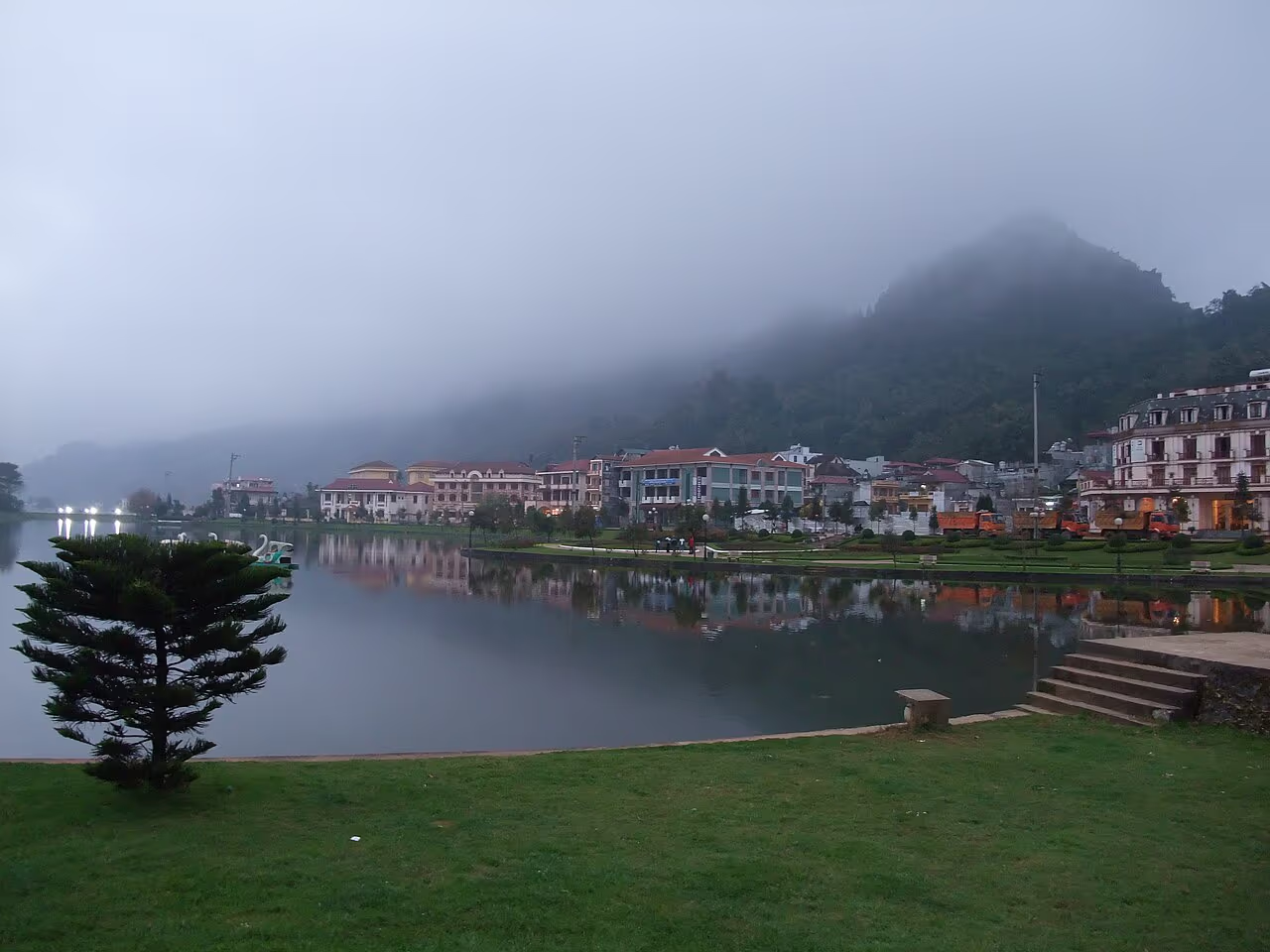
Yes. The core of Sapa — Sapa Lake, the market, the stone church and Cau May Street — sits within about a 15–20 minute walk end to end. It is genuinely pleasant on foot in the early morning or evening, when the mist sits low over the valley and the street vendors are just setting up. The catch is the gradient: nearly every street either climbs or drops, so pack shoes with grip and expect a little breathlessness if you are not used to altitude (Sapa sits at roughly 1,500 meters). Pavements thin out or disappear on the smaller side streets near the market, so you will share the road with motorbikes more than you might expect.
If your hotel is on or near Cau May Street, you can reach the lake, the market and most restaurants entirely on foot. Anything past the church toward Ham Rong Mountain, or down toward the old cable car road, starts to feel far enough that a xe om is worth the small cost.
Does Grab Work in Sapa?
Partly, and this is the question we get asked most often on WhatsApp. Grab bike is fairly dependable inside the town center, especially in the afternoon when demand is steady. Grab car is a different story — the fleet of registered cars is small compared to Hanoi, several streets around the market and church are too steep or narrow for a car to comfortably turn, and during rain or the evening rush after tour buses return, you will often see "no cars available" for 10–15 minutes at a time. We are not going to pretend it works better than it does: if you need to be somewhere on a schedule, do not rely on Grab car as your only plan.
Taxi Prices in Sapa
Metered taxis — look for local companies like Sapa Taxi or Fansipan Taxi rather than unmarked cars — start around 11,000 VND on the flag and add roughly 13,000–15,000 VND per kilometer. A ride across town typically lands at 40,000–60,000 VND, and a trip out to a trailhead village might run 80,000–150,000 VND depending on distance and road condition. For longer or fixed trips, most drivers will offer a flat rate before you get in; agree the number out loud first. One honest caveat: after around 9–10pm, some drivers switch to a flat "night rate" instead of running the meter, and taxis become noticeably scarcer overall, so if you are coming back from dinner late, it is worth asking your restaurant to call a cab in advance rather than trying to flag one on the street.
| Option | Best For | Typical Cost (in town) | Availability |
|---|---|---|---|
| Walking | Lake, market, Cau May St | Free | Always, but hilly |
| Grab bike | Short hops, daytime | 15,000–30,000 VND | Fairly reliable |
| Grab car | Rain, luggage, groups | 30,000–70,000 VND | Inconsistent |
| Metered taxi | Fixed schedule, night | 40,000–60,000 VND | Good, thins out after 10pm |
| Xe om | Trailheads, quick trips | 20,000–150,000 VND | Best after dark or off-road |
Let a Local Guide Handle Transport For You
 Easiest
Sapa Private Car Tour
See Sapa's viewpoints by car with short walks at each stop — no taxis or xe om to arrange.
 Best Seller
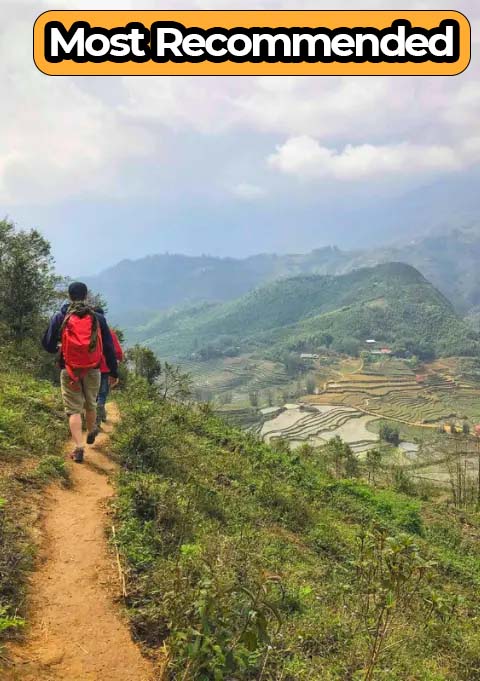
Trekking Through Rice Terraced Fields
Hotel pickup and drop-off included — no need to find your own way to the Lao Chai trailhead.

Sapa Easy Trekking For Seniors
Gentle paths near Y Linh Ho and Ta Van — your guide meets you at the hotel door.
Xe Om (Motorbike Taxi): How It Works & What to Pay
Xe om — literally "hug the bike" — is a motorbike taxi with no meter and no app in most cases. You flag a driver down, usually clustered near the market or Cau May Street, tell him where you are going, and agree a price before you climb on. A short hop within town runs about 20,000–30,000 VND, while a ride out to Ta Van or Lao Chai (roughly 8–10 km down into the Muong Hoa Valley) is typically 100,000–150,000 VND one-way, more if the road is muddy after summer rain. Xe om is often the fastest option after dark or on the unpaved stretches near Ta Phin, where Grab and metered taxis rarely go.
Getting to the Trailheads — Ta Van, Lao Chai, Ta Phin, Y Linh Ho
Once you leave the town center, distances add up fast. Y Linh Ho is the closest trailhead, a short descent from town; Lao Chai and Ta Van sit further down the Muong Hoa Valley, home to Black H'mong and Giay families; Ta Phin, largely Red Dao, is on the opposite side of town and needs its own trip. Independent travelers usually reach these on a hired xe om, a rented motorbike, or a private car booked through their hotel. It works, but it takes more coordinating than most people expect — agreeing a fair price, describing the exact drop-off point, and arranging a pickup time so you are not stranded at the trailhead at dusk.
Every guided trek we run — including the walk through Trekking Through Rice Terraced Fields and our senior-friendly route through Sapa Easy Trekking For Seniors — includes hotel pickup and drop-off in town as standard. It is one less thing to negotiate on a holiday.
Renting a Motorbike Yourself
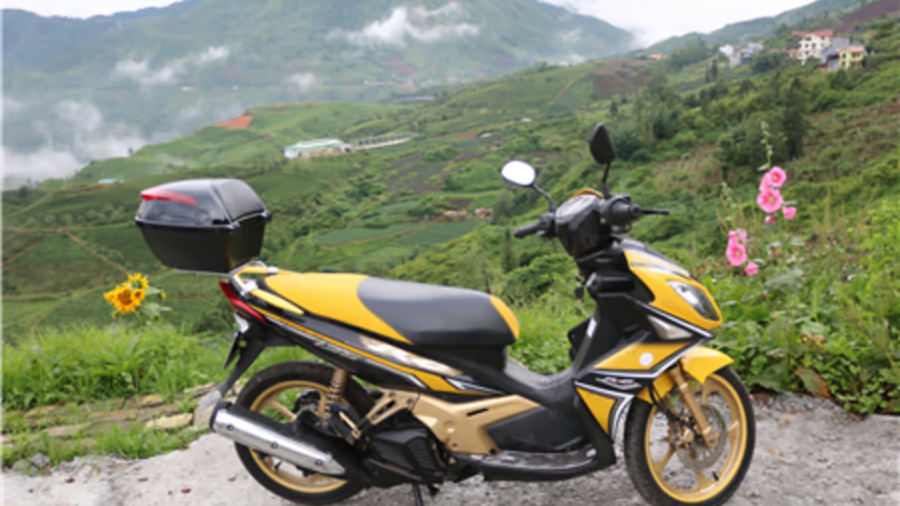
Rental shops around Cau May Street offer semi-automatic and automatic bikes for roughly 150,000–200,000 VND a day. It is a genuinely fun way to see the Tram Ton Pass at O Quy Ho or loop out toward Ta Phin — if you already know how to ride on mountain roads. Here is the honest part: these roads climb quickly, corner blind, and turn slick with almost no warning once fog rolls in, which happens often during the rainy season from June to September. We see visitors get hurt on rented bikes most years, usually first-timers who underestimated a wet corner. If you are not a confident rider, hire a driver instead, or book a guided motorbike tour where an experienced local, not you, handles the descent.
Rent at Our Office Before You Trek
 Gear Rental
Trekking Boots Rental
Waterproof ankle-support boots. Cleaned and checked before each rental. Available at 105 Thach Son Street.
 Gear Rental
Walking Poles Rental
Trekking poles available to rent at $2/day at our office, 105 Thach Son Street. Essential for descents.
Getting Around at Night
Transport thins out fast once the sun goes down behind Fansipan. Most xe om drivers head home by 9–10pm, Grab becomes even less reliable than during the day, and taxis start quoting flat night rates instead of running the meter. If you are eating dinner away from your hotel, ask the restaurant staff to call a taxi for your return rather than counting on flagging one down on Cau May Street later. It is a small precaution, but it saves the 20-minute wait we sometimes hear about from guests standing outside a closed shopfront at 10pm.
Frequently Asked Questions
Partly. Grab bike is reasonably reliable inside Sapa town, especially around Cau May Street and the lake. Grab car is far less dependable — the streets around the market and up toward the church are steep and narrow, driver supply is small compared to Hanoi, and you will often see "no cars available" at busy times or in rain. For anything outside the town center, a metered taxi or xe om is usually faster than waiting on a Grab car.
Metered taxis from local companies like Sapa Taxi or Fansipan Taxi start around 11,000 VND on the flag and add roughly 13,000–15,000 VND per kilometer, so a ride across town typically runs 40,000–60,000 VND (about $1.50–2.50). For a fixed trip out to a trailhead village, most drivers will quote a flat price before you get in — always agree on that number first, since some ask for a flat "night rate" after around 9–10pm instead of using the meter.
Xe om is a motorbike taxi — you sit behind a local driver, usually flagged down on the street rather than booked through an app. There is no meter, so you agree on a price before you get on. A short hop within town runs about 20,000–30,000 VND ($1), while a ride out to a village like Ta Van or Lao Chai (around 8–10 km) is typically 100,000–150,000 VND one-way, more after heavy rain when the roads get muddy. It is the fastest way to reach a trailhead if you have not booked a tour transfer.
Yes — the core of Sapa town, from Sapa Lake to the market and along Cau May Street, is compact enough to cross on foot in 15–20 minutes. It is hilly, so expect some uphill walking, and pavements can be uneven or missing on side streets. For anything beyond the town center — the trailheads at Y Linh Ho, Ta Van, Lao Chai or Ta Phin — you will need a taxi, xe om, rented motorbike, or a tour transfer.
You can, by taxi or xe om, but it takes more coordinating than most visitors expect: agreeing a fair price, finding a driver who knows the exact drop-off point, and arranging a pickup time to get back. Every trek we run includes hotel pickup and drop-off in Sapa town as standard, so most guests find it simpler to let the guide handle transport and focus on the walk itself.
Only if you already have real riding experience. The roads around Sapa climb fast, corner blind, and include sections like O Quy Ho Pass that turn slick and foggy with almost no warning, especially in the rainy season from June to September. Rental bikes run about 150,000–200,000 VND per day, but we see visitors get hurt on these roads most years. If you are not a confident rider on mountain roads, a hired driver or a guided tour is the safer way to see the same views.