
 Sinh Giang

For most travellers, 10 to 14 days is the sweet spot in Vietnam. That's enough to do the classic north-to-south run — Hanoi, Ha Long Bay, the mountains of Sapa, the lantern-lit old town of Hoi An, and either Ho Chi Minh City or the Mekong Delta — without spending every second day on a plane or a bus. So when people ask us how many days in Vietnam they really need, that's the honest headline: a week is the workable minimum for one region, ten days to two weeks is ideal for a first visit, and three or four weeks lets you slow right down and see it all. Below I'll break down exactly what fits into 5, 7, 10, 14 and 21-plus days, with a sample route for each, and I'll be straight about the one mistake we see most: trying to cram the whole long, thin country into too few days.
I'm Sinh Giang, part of the local team at Trekking Tour Sapa. We spend our days helping travellers plan the northern leg of their Vietnam trips, and over the years we've watched which trip lengths leave people relaxed and which leave them exhausted at the airport wishing they'd done less. This guide distils that: not a fantasy itinerary, but a realistic read on how far your days actually stretch here.
One thing to hold in your head from the start: Vietnam is roughly 1,650 km / 1,025 miles from top to bottom, but only about 50 km wide at its narrowest. That shape is the single biggest factor in your planning. The highlights are strung along the length of the country, so the more days you have, the fewer of them you'll spend simply getting from one to the next — and the more time you'll spend actually standing in the places you flew here to see.
The Short Answer: How Long You Really Need
If you want a single sentence: aim for two weeks if you can, ten days if you can't, and never less than five. Here's how the main trip lengths map onto what you'll realistically experience — from a quick regional taste to a full, unhurried loop of the country.
Notice that the recommendation isn't really about ticking off more places — it's about pace. The same core route (north, centre, south) can be done in ten days or spread luxuriously over three weeks. Fewer days means faster hops and more internal flights; more days means slower overland travel, more rest, and time to let a place surprise you. Decide which of those trips you actually want, and the number of days follows.
There are really only two ways people get this wrong, and they're mirror images of each other. The first is over-ambition: booking a nine-day trip and pencilling in Hanoi, Sapa, Ha Long, Hue, Hoi An, Da Nang, Ho Chi Minh City and the Mekong Delta, then discovering that half those days are swallowed by airports and check-ins. The second, rarer mistake is under-planning a long trip — three weeks with no shape to it, drifting and missing the highlights that a little structure would have delivered. The fix for both is the same: settle your total honestly first, then choose a realistic number of bases for that total and let the route connect them. As a rough rule, count on one genuinely new base for every two to three days you have.
What You Can See by Trip Length
Here's the quick decision matrix. Each row is a realistic amount of ground for that number of days without turning your holiday into a transit marathon — use it to sanity-check your own plan before you book flights.
| Days | What realistically fits | Best for |
|---|---|---|
| 5 days | One region — e.g. Hanoi + Ha Long + a short Sapa trek | Short breaks, a focused first taste |
| 7 days | The whole north, or the centre & south | One half of the country, done well |
| 10 days | North + centre + one southern city, 1–2 flights | The classic first-timer highlights |
| 14 days | Full north-to-south with breathing room | Most first trips — the ideal length |
| 21+ days | Everything above plus the far north & Mekong Delta, slowly | Slow travel, second visits, no rushing |
Two quick notes on reading the table. First, all of these assume you use one or two internal flights (Hanoi–Da Nang and Da Nang–Ho Chi Minh City are the common ones) — they're cheap and save whole days over the train. Second, "one region done well" almost always beats "three regions in a blur." If your instinct is to add another stop, consider adding a rest day instead; you'll enjoy the trip far more.
5 Days: One Region, Done Well
Five days is the realistic minimum for Vietnam, and the trick is to resist the whole country and commit to one compact region. Our clear favourite for a five-day trip is the north, because Hanoi, Ha Long Bay and Sapa sit within a few hours of each other and give you a city, a seascape and the mountains in one tidy loop.
A tried-and-tested five-day northern route looks like this: two days in Hanoi to see the Old Quarter and the street food, one overnight cruise on Ha Long Bay among the limestone karsts, then straight up to Sapa for a two-day trek and a homestay night in the Muong Hoa Valley. You finish tired in the good way, having seen three completely different faces of Vietnam. If beaches are more your thing, spend the five days in the centre instead — Hoi An's old town and the beaches of Da Nang — but you won't combine north and south in five days without wasting most of them in the air.
The reason five days works in the north and struggles nationwide comes down to geography again. Hanoi, Ha Long and Sapa form a triangle you can travel by road and overnight train, so no leg costs you a full day. Stretch the same five days from Hanoi to Ho Chi Minh City and you've added a two-hour flight plus the airport time on either side — effectively half a day gone, on a trip where you only had five. Keep your five days tight and regional and they feel generous; spread them the length of the country and they feel frantic. If you're arriving jet-lagged from Europe or North America, factor in that your first day is really a half-day, and plan the gentlest thing — a slow wander round Hanoi — for it.
One Week: Pick a Half of the Country
One week is enough for Vietnam if you focus on a single half of the country. Seven days gives you a little more room than five — an extra day in the mountains, or a slower pace between stops — but it still isn't enough to run the full length from Hanoi to Ho Chi Minh City without it becoming a race.
The northern week is the one we know best and quietly recommend most: two days in Hanoi, a night on Ha Long Bay, and three days around Sapa, which lets you trek two different valleys and really settle into a homestay rather than rushing a single day walk. It's a week of city, sea and mountains with almost no wasted travel time. The alternative — a central-and-southern week — pairs Hoi An and Hue with Ho Chi Minh City and a Mekong Delta day trip, trading Sapa's scenery for beaches and a warmer climate. Both are genuinely great weeks; you just can't have both in seven days. For a fuller day-by-day plan, see our 1-week Vietnam itinerary.
Popular Sapa Treks for a Northern Trip
 Most Popular
Easy
Most Popular
Easy
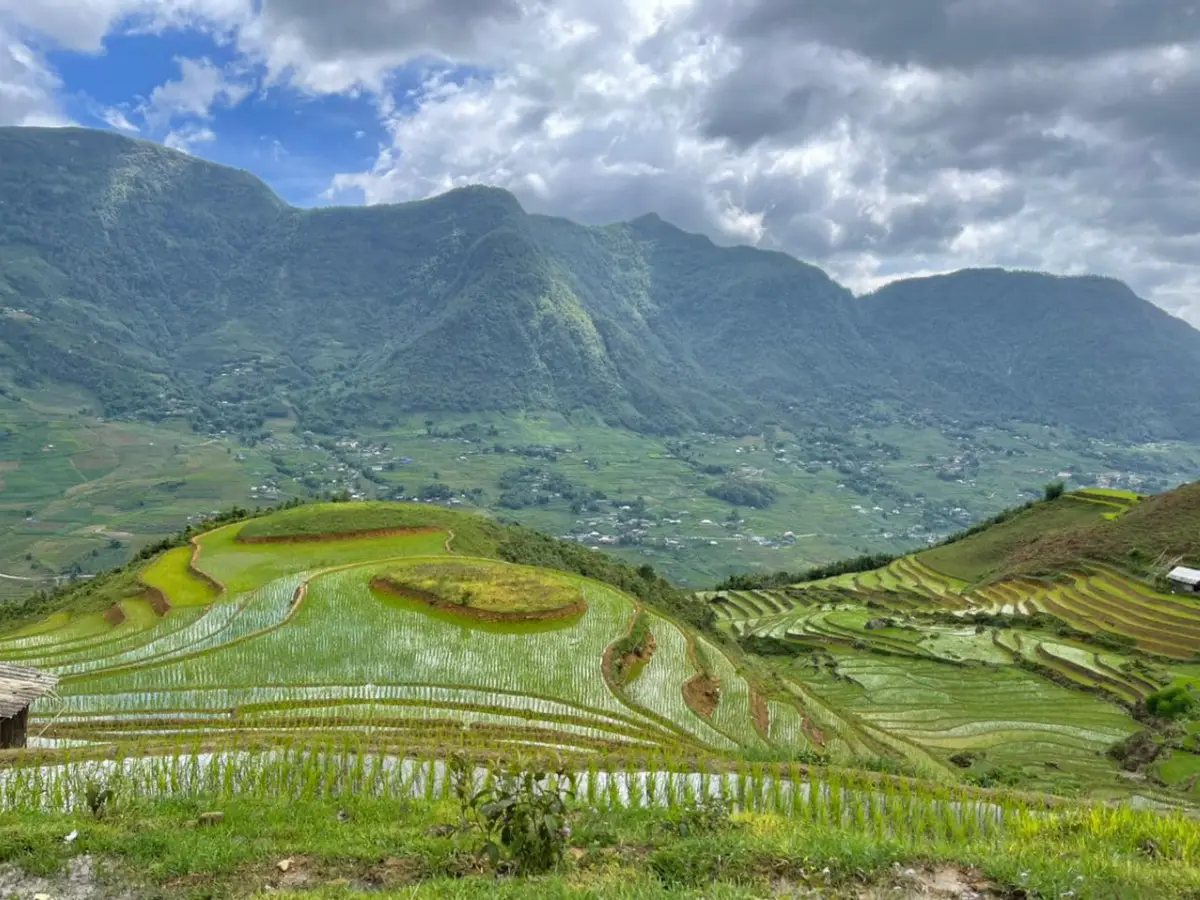
Rice Terraced Fields Trek
The classic one-day Muong Hoa valley walk through Lao Chai and Ta Van — perfect if you only have a day in the mountains.
 Best Seller
Easy–Mod
Best Seller
Easy–Mod
Rice Fields & Homestay
The two-day trek and homestay night that makes Sapa special — the ideal length if you have a week in the north.
 Quieter Trails
Moderate
Quieter Trails
Moderate
Explore Nature & Homestay
Off the tourist track through quiet valleys with a family dinner — add it if you can spare a third day in Sapa.
10 Days: The Classic Vietnam Trip
Ten days is where Vietnam really opens up, and it's the length we'd point most first-timers to if two weeks isn't possible. Ten days lets you link the north, the centre and the south into one flowing trip, using a couple of short internal flights to skip the long overland hauls.
The classic ten-day route runs like this: start with two days in Hanoi, head up for a two- or three-day Sapa trek, then cruise Ha Long Bay for a night. Fly south to Da Nang for two or three days around Hoi An's old town and beaches, then finish in Ho Chi Minh City with a Mekong Delta day trip. You come away having seen mountains, a world-famous bay, a UNESCO old town and a buzzing southern city — the full sweep of the country, at a pace that still leaves room to breathe. It's the itinerary we help assemble most often, and the one people rarely regret. Our full 10-day Vietnam itinerary maps it out day by day.
The one piece of logistics that makes ten days work is the internal flight. Domestic hops between Hanoi, Da Nang and Ho Chi Minh City are frequent and inexpensive — often cheaper than you'd expect, and an hour or two in the air instead of twelve on a train. Book the Hanoi–Da Nang leg for after your northern days and the Da Nang–Saigon leg near the end, and the whole route clicks together. The trap at this length is trying to save money by taking the reunification train the full length of the country; it's a wonderful journey, but on a ten-day trip it swallows days you don't have. Save the long train ride for a two-week-plus trip where it becomes part of the experience rather than a drain on it. On ten days, spend a little on flights and buy yourself two extra days on the ground.

Two Weeks: The Full North-to-South
Two weeks is the length most experienced travellers recommend for a first trip, and it's easy to see why: fourteen days does everything ten days does, but with the rush taken out. You get the same north-centre-south sweep plus the luxury of depth — an extra day trekking in Sapa, a slower pace on the central coast, and time to explore the Mekong Delta properly rather than on a hurried day trip.
A relaxed two-week route might give you three days in the Hanoi area, three days in Sapa and the far-northern hills, a Ha Long overnight, three or four days around Hoi An, Hue and Da Nang, and three days in the south between Ho Chi Minh City and the delta. Fourteen days is also the point at which the reunification train stops being a time-sink and becomes a pleasure — you can afford one scenic overland leg, say Hue to Da Nang along the Hai Van Pass, and watch the coast unspool from the window without it costing you a highlight elsewhere. That flexibility — the freedom to occasionally choose the slow, beautiful option over the fast, efficient one — is really what the extra days buy you. The magic of fourteen days is the rest days you can fold in — an afternoon doing nothing in Hoi An, a lazy morning in a Sapa homestay — which are often the moments people remember most. If you have the fortnight, take it; you can see our 2-week Vietnam itinerary for the detailed version.

“The travellers who go home happiest aren't the ones who saw the most — they're the ones who gave themselves a day to do nothing. Build slack into your days; Vietnam rewards it.”
— Sinh Giang, Trekking Tour SapaThree to Four Weeks: Slow Travel, Nothing Skipped
If you're lucky enough to have three or four weeks, Vietnam turns from a highlights reel into a proper journey. Three-plus weeks means you can travel more of the country overland, watching the landscape change through the train window, and add the corners that shorter trips have to cut.
With this much time you can give the far north the space it deserves — the Ha Giang motorbike loop, Bac Ha's Sunday market, and quieter treks beyond Sapa — then work down through the centre at a stroll, linger on the beaches around Da Nang and Nha Trang, and finish deep in the Mekong Delta. You'll also have room for the unplanned days that make long trips special: an extra night somewhere you loved, a detour a local recommended, a day when the only plan is a hammock. Few travellers have a month to spare, but those who do rarely wish they'd hurried. For inspiration on the northern leg specifically, our north Vietnam itinerary goes further than the standard loop.
What Changes the Number of Days You Need
The right number of days isn't the same for everyone — a handful of factors push it up or down. Run through these before you lock in your plan, because they matter more than any generic recommendation.
Your travel pace is the biggest one. If you like slow mornings and rest days, add 20–30% to any itinerary above; if you're happy to move fast and start early, you can compress it. How you travel between stops matters too: internal flights turn a travel day into a couple of hours, while trains and buses are cheaper and more scenic but eat time — budget-conscious travellers should add days for overland transfers. Your must-sees shape it as well: a trip built around trekking and mountains concentrates in the north and needs fewer total days than one that also wants delta, beaches and every big city. Finally, the season plays a part — if you're chasing the golden rice harvest in Sapa (September–October) or dodging central Vietnam's autumn rains, you may want extra buffer days for weather. Weigh these honestly and your ideal number will usually settle a day or two either side of the ten-to-fourteen sweet spot.
Where Sapa Fits — and Why Not to Skip the North
Wherever your total lands, our honest advice is to give the north a fair share of it. Vietnam's most dramatic scenery — the cascading rice terraces, the hill-tribe villages, the misty valleys — is up here around Sapa, and it's the part of the country first-timers most often say they wish they'd given more time. Two to three days is the sweet spot for Sapa itself: enough for a proper trek through the Muong Hoa Valley and a night in a local homestay, rather than a rushed day trip that misses the point.
Getting to Sapa from Hanoi is easy and folds neatly into any itinerary. The overnight train to Lao Cai lets you sleep on the move and wake near the mountains, then a 45-minute transfer climbs up to Sapa town. Comfortable cabin sleeper buses and limousine vans run door to door in about 5–6 hours, day or night. We arrange the transfer as part of a trek for our guests every week, so you step off the train straight into a guided day in the valleys — no wasted days, which is exactly what you want when every day counts. Compare the options on our Hanoi to Sapa guide.

Hanoi → Sapa: Train, Sleeper Bus or Private Car

Sleep your way to the mountains on the overnight train, or roll door-to-door on a cabin sleeper bus in 5–6 hours. We'll book your seat, arrange the Lao Cai–Sapa transfer, or set up a private car — and pair it with a trek so your Sapa days are ready the moment you arrive. See our Hanoi–Sapa transport page for times and prices.
Ask about fitting Sapa into your tripStill weighing up how to split your days, or which package suits your length of trip? Our guide on how to choose a Vietnam travel package walks through matching a route to your time, budget and pace — a useful next read once you've settled on roughly how many days you have. And whenever you're ready to pin down the northern leg, a real person on our team is a message away.
Easy Sapa Treks to Anchor Your Northern Days
 Easiest
Very Easy
Easiest
Very Easy
Sapa Easy Trekking
A relaxed, scenic day walk with a local lunch — ideal for families and older travellers, and easy to fit in one day.
 Great Value
Easy
Great Value
Easy
Mountain Views & Villages
Quieter trails, big views and real village kitchens — a perfect first day in the mountains after Hanoi.
A Quick Planning Reference
Before you count out your days, keep these practical realities in mind — they're the details that quietly decide how far your time stretches in Vietnam.
Days in Vietnam — At a Glance
- Ideal length:10–14 days for a first trip
- Realistic minimum:5–7 days, one region only
- Days for the north:5–7 (Hanoi + Ha Long + Sapa)
- Days in Sapa:2–3, incl. a homestay night
- Save time:1–2 internal flights north–south
- Golden Sapa rice:Sep–Oct harvest — add buffer days
It's also worth thinking about the shape of your days, not just the count. Arrival and departure days are rarely full — a morning landing plus hotel check-in eats one, an evening flight home eats another — so a "ten-day trip" often has eight usable days once you subtract them. Build that into your maths from the start rather than discovering it in Hanoi. And leave at least one soft buffer day near the end: Vietnamese weather, especially in the central provinces between September and December, can rearrange a beach afternoon or a Ha Long cruise at short notice, and a spare day means a cancelled boat isn't a lost highlight.
Above all, don't let the map tempt you into over-packing your days. Vietnam isn't going anywhere, and the travellers who commit to one region — or who take two weeks over the whole thing — consistently have a better time than those who try to sprint from the northern border to the delta in a week. Choose your number honestly, then spend it on fewer places, more slowly.
Trekking in Sapa? Rent Your Gear at Our Office
 Gear Rental
Trekking Boots Rental
Waterproof ankle-support boots. Cleaned and checked before each rental. Available at 105 Thach Son Street.
 Gear Rental
Walking Poles Rental
Trekking poles available to rent at $2/day at our office, 105 Thach Son Street. Essential for descents.
Frequently Asked Questions
For most travellers, 10 to 14 days is the sweet spot in Vietnam. That gives you time for the classic north-to-south run — Hanoi, Ha Long Bay, the mountains of Sapa, the old town of Hoi An and either Ho Chi Minh City or the Mekong Delta — without spending every day in transit. The absolute minimum for a satisfying trip is about a week, which is enough to do one half of the country well. If you have three or four weeks, you can slow right down and add the far north, the central coast and the delta at a gentle pace. Vietnam is a long, thin country, so more days always buy you fewer travel days between highlights.
One week is enough for Vietnam if you focus on a single region rather than trying to see the whole country. A great seven-day trip is the north: two days in Hanoi, a night on Ha Long Bay, and two or three days trekking in Sapa. Alternatively, spend the week in the centre and south — Hoi An, Hue and Ho Chi Minh City. What a week does not allow is the full north-to-south route; the internal flights and long transfers would eat most of your time. Pick a half, do it properly, and save the rest for next time.
Ten days is a very comfortable amount of time in Vietnam and covers the classic highlights without rushing. A typical ten-day route runs Hanoi (2 days), Sapa (2–3 days trekking), Ha Long Bay (1 night), then a flight south to Hoi An (2–3 days) and finishing in Ho Chi Minh City or the Mekong Delta. You get the mountains, the bay, the coast and a big city, with one or two internal flights to save time. For a first trip to Vietnam, ten days hits the balance of breadth and depth better than almost any other length.
Two weeks is plenty for a full, unhurried Vietnam trip from north to south. Fourteen days lets you do everything a ten-day trip does, plus add depth — more time trekking in Sapa or the far north, a slower pace on the central coast around Hoi An, Hue and Da Nang, and time to explore the Mekong Delta properly. It is the length most experienced travellers recommend for a first visit because you rarely feel rushed and can absorb a couple of rest days. If you can spare fourteen days, take them.
Plan on five to seven days to do the north of Vietnam well. A good split is two days in Hanoi, one night cruising Ha Long Bay, and two to three days trekking around Sapa in the Muong Hoa Valley. If you have longer, add the far north — Ha Giang's motorbike loop or Bac Ha's Sunday market — which needs another two or three days. The north is where Vietnam's dramatic scenery and hill-tribe cultures are, so we always suggest giving it a fair share of any itinerary rather than treating Hanoi as just a stopover.
The realistic minimum for a worthwhile Vietnam trip is about five days, and ideally a week. In five days you can enjoy one compact region — for example Hanoi, Ha Long Bay and a short Sapa trek in the north, or Hoi An and Da Nang in the centre. Anything shorter than five days means you spend most of your time on planes and transfers rather than actually experiencing places. If your holiday is very short, resist the urge to squeeze in the whole country; choose one area and enjoy it.
With only a week, choose the north if you want mountains, dramatic scenery and cultural depth, or the south and centre if you prefer beaches, old towns and a warmer climate year-round. The north gives you Hanoi, Ha Long Bay and the rice-terrace trekking of Sapa in one tidy loop — our home turf and, we think, the most rewarding week in the country. The south and centre give you Hoi An's lantern-lit old town, the beaches of Da Nang, and Ho Chi Minh City's energy. Both are excellent; the north simply has the landscapes Vietnam is most famous for.
Two to three days is ideal for Sapa. A two-day, one-night trek lets you walk through the Muong Hoa Valley villages of Lao Chai and Ta Van, stay overnight in a local homestay, and get the real experience rather than a rushed day trip. Three days adds a second, quieter valley or a visit to Ta Phin or Bac Ha market. You can do a single day trek if time is tight, but the overnight homestay is what makes Sapa special. Factor in the overnight train or a 5–6 hour transfer from Hanoi each way when you budget your days.