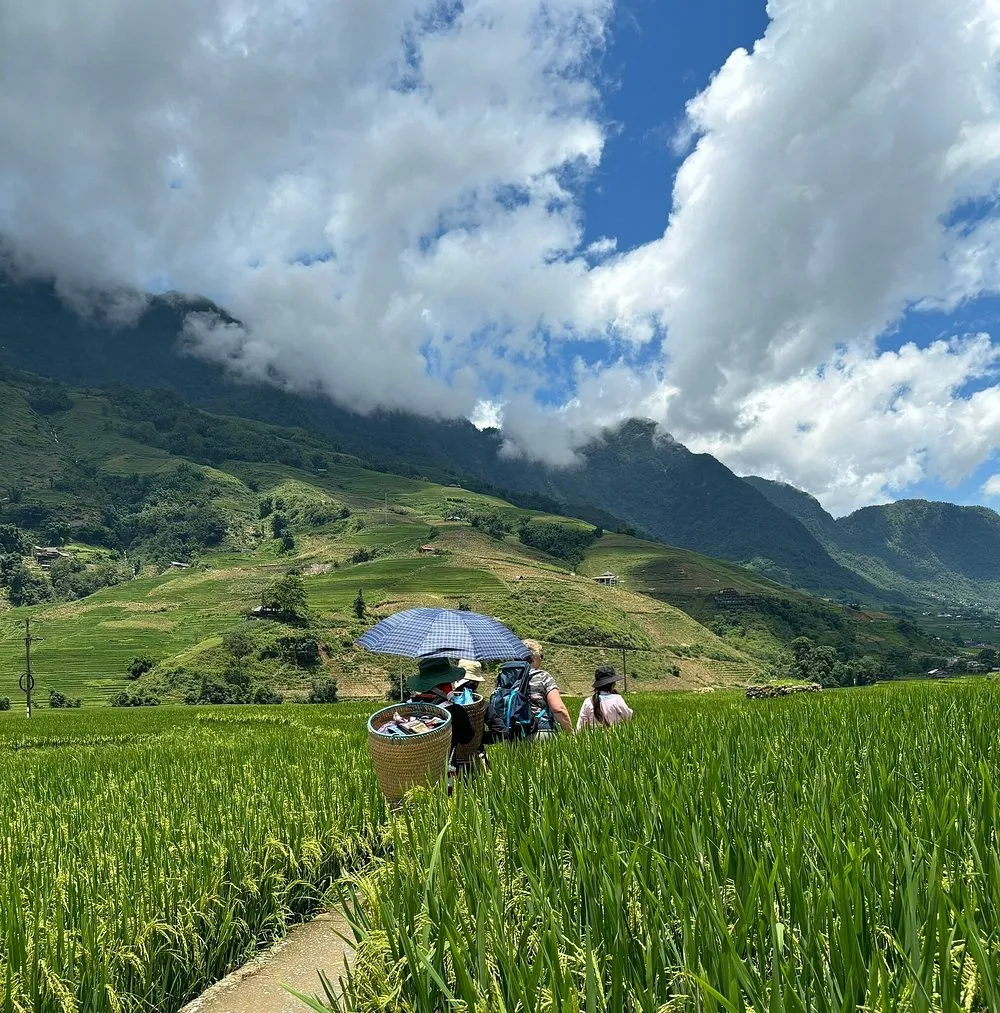
 Sinh Giang
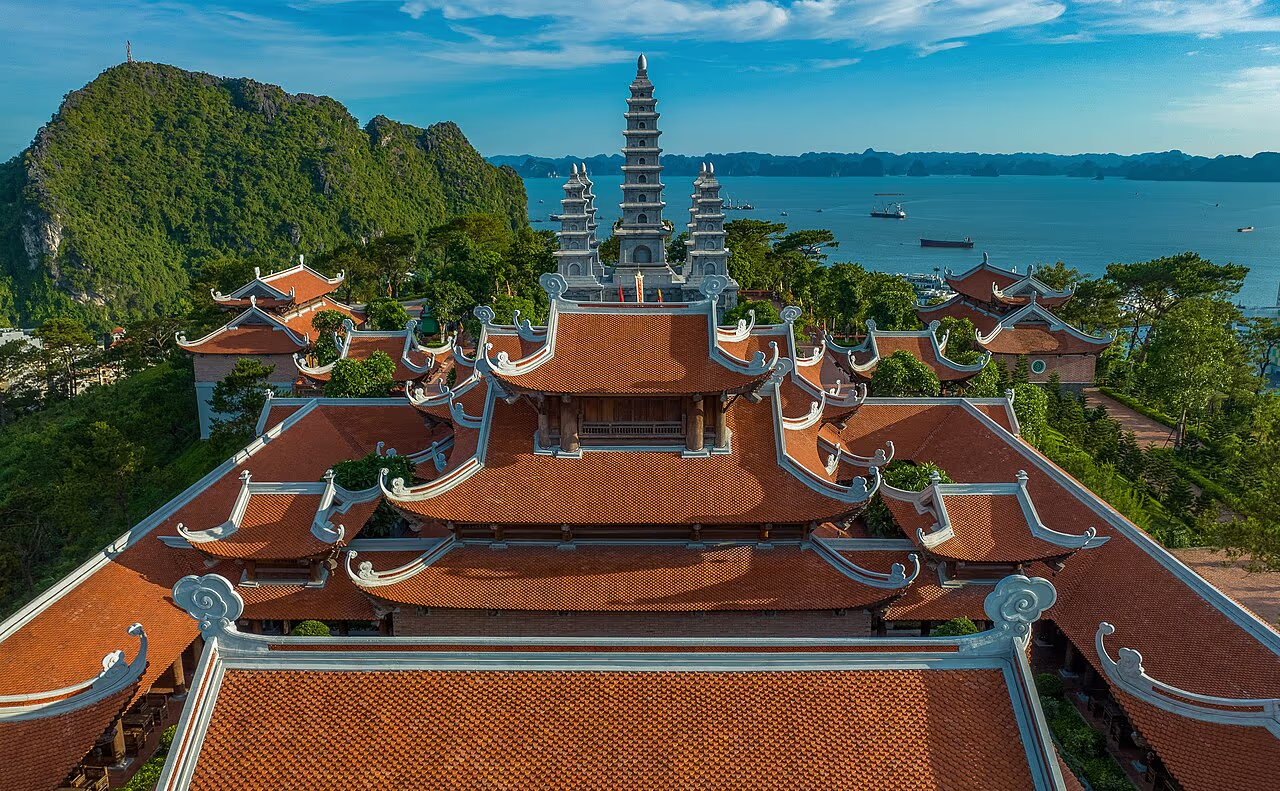
Ten days in Vietnam is a wonderful trip — but it comes with one big rule: don't try to see the whole country. Vietnam stretches more than 1,600 km from north to south, and cramming Hanoi, Ha Long, Sapa, Hue, Hoi An, Saigon and the Mekong into ten days turns a holiday into a blur of airports and packed bags. The travelers who love their ten days are the ones who choose a focus and go deeper, not faster.
Our strong recommendation — and the itinerary this guide is built around — is to spend your ten days on the north and centre: Hanoi, a Ha Long Bay cruise, a proper trek and homestay in Sapa, then the imperial city of Hue and the lantern-lit charm of Hoi An. It's the richest, most varied and least rushed way to spend the time, and it skips only the southern leg, which is easily saved for a future trip. We're a local trekking company in Sapa, so we'll be honest about the trade-offs — including why the north is worth protecting in a short trip.
Below you'll find the big decision laid out plainly, three ways to structure your ten days, a day-by-day plan, and the practical details on cost, timing and transport. If you only have ten days, here's how to spend them well.
A word on why we're so firm about focus. Vietnam looks compact on a map but it's deceptively long — flying Hanoi to Ho Chi Minh City takes over two hours, the same as crossing much of Europe. Every region you add to a short trip means another airport, another check-in, another half-day lost to transit and another hotel to pack up. On a ten-day trip, two or three of your days can quietly vanish into logistics if you're not careful. Choosing a region and going deep is how you get those days back — and how the trip stops feeling like a race.
For a bit of geography to plan around: Vietnam splits naturally into three. The north (Hanoi, Ha Long, Sapa, Ninh Binh) is cool, mountainous and the most culturally distinctive; the centre (Hue, Da Nang, Hoi An) is the coastal, historic heart with the best beaches and food; and the south (Ho Chi Minh City, the Mekong) is hot, flat and fast-moving. A ten-day trip comfortably covers any one region in real depth, or two adjacent ones at a relaxed pace — which is exactly why north-plus-centre works so well.
10 Days at a Glance
The shape of a well-planned ten days.
The Big Decision: What to Leave Out
The single most important choice for a 10-day trip is whether to race the length of the country or focus on part of it. Here's the honest comparison — and why we come down firmly on one side.
Focus: North & Centre
- A relaxed pace — time to enjoy, not just tick off
- A real Sapa trek and a village homestay, not a rushed day
- Only one internal flight (Hanoi to Da Nang)
- The most varied, distinctive scenery in the country
- The south stays as a perfect reason to return
The whole country in 10 days
- Four or five flights — days lost to airports
- Packing and unpacking every day or two
- Everywhere skimmed, nothing savoured
- The Sapa and Mekong legs both feel rushed
- You arrive home needing a holiday from your holiday
Could you do the classic Hanoi–Ha Long–Hoi An–Saigon dash in ten days? Yes, and we'll include that option below for those set on a taste of everything. But for most travelers, going deep on the north and centre is the better, more memorable trip — you come home with experiences, not just a checklist.
There's also a quality-of-memory argument. Ask travelers what they remember from a trip and it's rarely the number of places — it's the morning they woke to mist over the Sapa terraces, the family they ate with, the afternoon they lingered in a Hoi An cafe. Those moments come from having time, not from covering ground. Ten focused days give you several of them; ten frantic days give you a blur and a camera roll. We know which trip our guests rave about years later.
None of this means ten days is too short — it is plenty for a deeply satisfying trip. It is only too short for the whole country. Reframe it from "how much of Vietnam can I see?" to "how well can I see this part of Vietnam?" and the planning gets easier and the trip gets better. That single shift in mindset is the most useful thing in this whole guide.
It is worth saying that the north-and-centre route also gives you the best variety for the time: a buzzing capital, a world-famous bay, high mountains and hill-tribe culture, an imperial city and a lantern-lit trading town, plus beaches if you want them. That is a remarkable spread of experiences for ten days and one internal flight — arguably more contrast than you would get racing the whole country, where much of the time goes on travel between similar-feeling cities.
Three Ways to Spend 10 Days
There's no single right answer — it depends on what you're after. Here are the three routes that work best in ten days.
| Option | Route | Best for |
|---|---|---|
| A. North & Centre (our pick) | Hanoi · Ha Long · Sapa · Hue · Hoi An | First-timers wanting balance & depth |
| B. The North, deep | Hanoi · Ha Long · Sapa · Ninh Binh | Nature, culture & slow travel |
| C. Classic highlights dash | Hanoi · Ha Long · Hoi An · HCMC | Wanting a taste of the whole country |
Option A is what we recommend and detail below — the best all-round balance. Option B swaps the centre for more time in the north (Sapa plus Ninh Binh's "Ha Long on land"), ideal if you love landscapes and want the gentlest pace. Option C is for travelers who can't bear to miss the south — it works, but accept that it's faster and lighter on each stop.
A little more on the alternatives. Option B — the deep north — is our pick for repeat visitors and lovers of landscape and culture: more days trekking around Sapa, plus the karst scenery of Ninh Binh ("Ha Long Bay on land") and time in Hanoi, all reachable without a single internal flight. Option C — the classic dash — is the one to choose only if seeing Saigon and the south is non-negotiable for you; it covers the famous names but trades away the slow, immersive days that make the north so special. For first-timers without a fixed must-see-the-south agenda, Option A wins almost every time.
You can also mix the options to taste. Love the sound of Option B but cannot skip Hoi An? Trim a Sapa day and add two nights in Hoi An at the end. Set on Option C but worried about the pace? Drop the Mekong day trip and give Hoi An more time instead. The three routes are starting points, not rigid templates — the constant is to keep your flights few and your stops unhurried. Tell us your priorities and we will help you shape the northern half around whatever you choose.
The Recommended 10-Day Itinerary, Day by Day
Here's Option A in detail — the north and centre, balanced and unrushed, with the Sapa trek as its heart.

Arrive Hanoi
Land, settle in the Old Quarter, an easy first evening of street food
Hanoi
Old Quarter, Hoan Kiem Lake, Temple of Literature, egg coffee
Ha Long Bay
Overnight cruise among the karsts — kayaking, a cave, sunset
Back to Hanoi → Sapa
Cruise to late morning, then the overnight transfer up to Sapa
Sapa trek
Trek the Muong Hoa Valley terraces; lunch and a night in a homestay
Sapa & Fansipan
More trekking or the Fansipan cable car, then transfer back to Hanoi
Fly to Da Nang → Hue
Short flight to the centre; on to imperial Hue for the afternoon
Hue
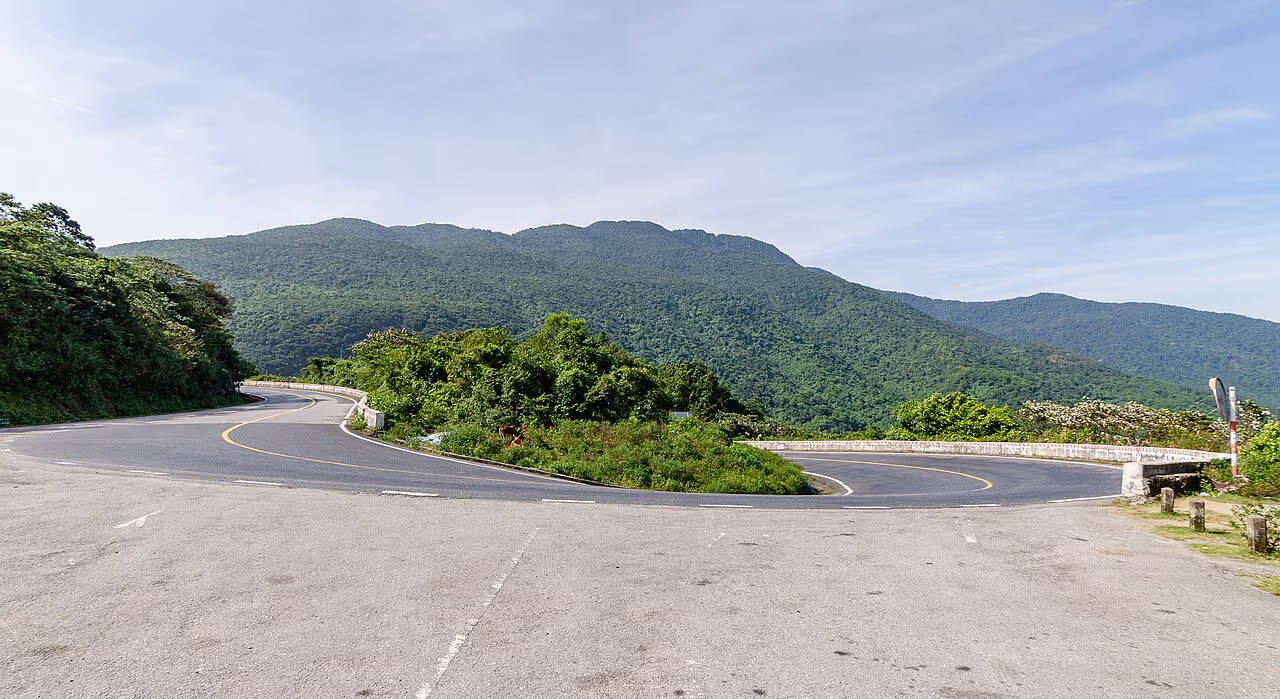
The Citadel, royal tombs and the Perfume River, then over the Hai Van Pass
Hoi An
Lantern-lit old town, tailors, a cooking class, the beach
Hoi An → depart
A final morning, then fly home from Da Nang
Note how the north gets six full days and only one internal flight is needed (Hanoi–Da Nang on day 7) — that's the efficiency that keeps this trip relaxed. If you'd rather end in the north, simply run it in reverse and fly home from Hanoi.
A few notes on the northern legs, which are the trickiest to time. The Ha Long cruise is best as a one-night trip from Hanoi (you're back by lunchtime on day 4), which dovetails neatly with an evening transfer up to Sapa — so you lose no daytime to the journey north. In Sapa, two nights (days 4–6) is the sweet spot: enough for a proper valley trek, a homestay night and the Fansipan cable car, without feeling rushed. Keep day 6's return to Hanoi flexible, as it connects to your one internal flight south the next morning.
If you are travelling in Option B (the deep north) instead, you would replace the day-7 flight with an overland trip to Ninh Binh — about two hours south of Hanoi — for a day of boat trips through the karst and a climb to the Mua Cave viewpoint, before returning to Hanoi to fly home. It is a gentler, flight-free version that swaps the imperial centre for more of the northern landscapes, and it is wonderful for travelers who prefer nature to cities.
Families and older travelers do especially well on this focused route. Fewer flights mean less stress and fewer early starts; the gentle Sapa valley walk (rather than a hard trek) suits all ages; and basing in just a few comfortable hotels makes the trip far easier with kids or grandparents than a constant-moving dash. If that is your group, lean toward Option A or B, favour private transfers, and build in a rest day — ten days is plenty when you are not rushing.
Your Sapa Trek (Days 4–6)
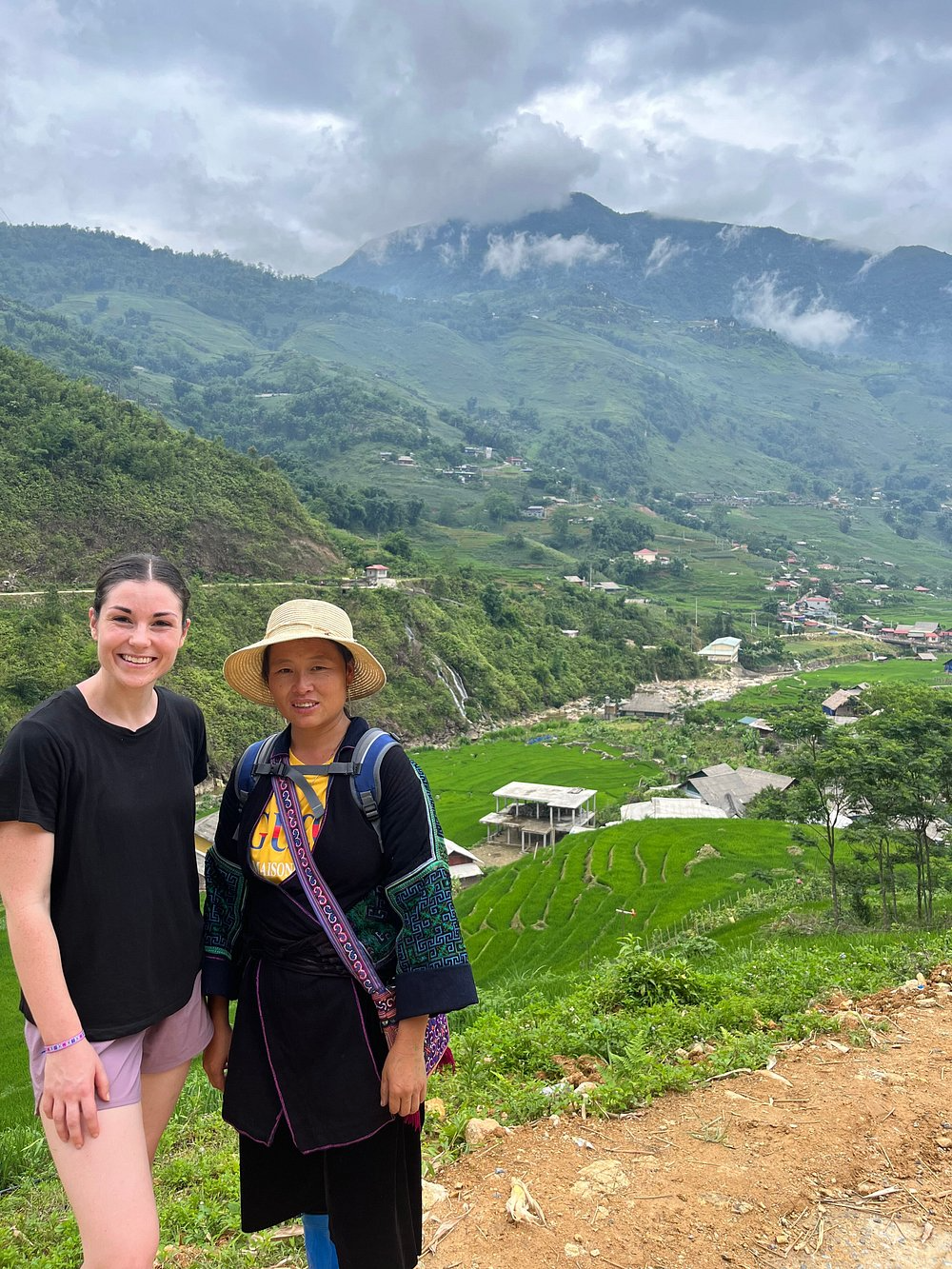 2D1N Homestay
Rice Terraced Fields & Homestay
Two days trekking the valley and a night in a village home — ideal for the Sapa leg.
 1 Day Trek
Trekking Through Rice Terraced Fields
The classic Muong Hoa Valley day trek if your Sapa time is shorter.
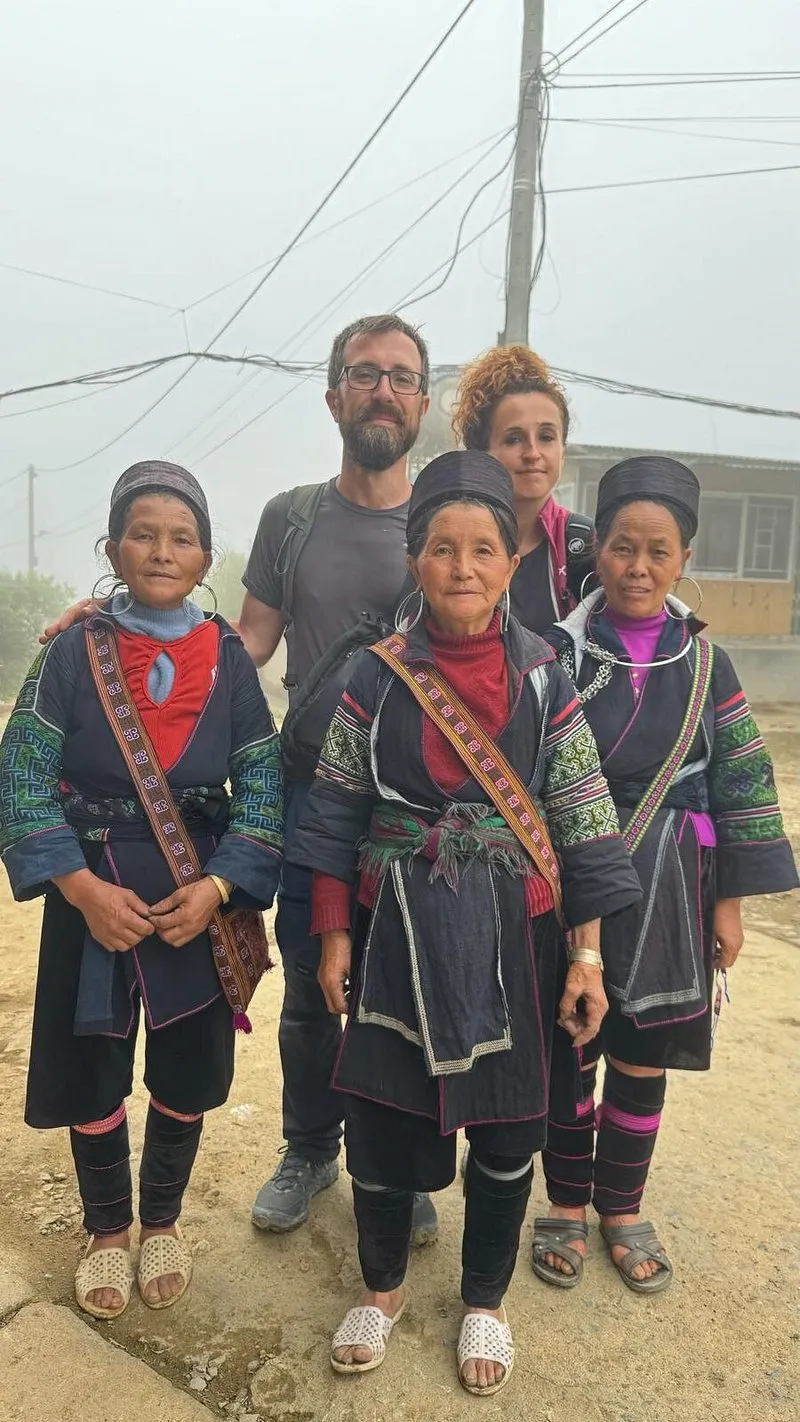 Families & Seniors
Sapa Easy Trekking For Seniors
A gentle valley walk where poles can be rented at our office — for 60+ travelers and families.

Where to Stay on This Route
You only need to book a handful of places, which keeps things simple. In Hanoi, stay in or near the Old Quarter so you can walk to the sights and street food; it's also where most transfers pick up. On Ha Long Bay, your bed is the cruise boat itself — choose a reputable operator on the quieter Lan Ha or Bai Tu Long bay over the busiest central route. In Sapa, the standout is a village homestay on your trek (arranged as part of the tour), optionally with a night in a Sapa-town hotel with valley views.
In the centre, base yourself in Hoi An — it's far more charming than Da Nang for an overnight, with boutique hotels, homestays and riverside guesthouses a short ride from the beach and the airport — and visit Hue as a day trip or a single night on the way. Across the whole route you can travel comfortably for mid-range prices; Vietnam's hotels and homestays offer some of the best value in Asia, and you rarely need to book more than a few weeks ahead outside peak holidays.
A practical booking order: reserve your Ha Long cruise, your Sapa trek and the Hanoi–Da Nang flight first, since those are the fixed pillars of the trip, then fill in hotels around them. Because you only have a handful of bases, you can often book better-quality places than on a multi-stop dash — one nice Old Quarter hotel, one good cruise, one characterful Hoi An stay — for the same overall budget. Quality over quantity applies to beds as much as to destinations.
What 10 Days in Vietnam Costs
Vietnam is excellent value, and ten focused days cost less than you might think. For a comfortable mid-range trip — decent hotels, a good Ha Long cruise, a guided Sapa trek, one domestic flight and plenty of great food — budget roughly $1,000–1,300 per person, excluding international flights to and from Vietnam.
Backpackers can do these ten days for around $600–800 using hostels, sleeper buses and street food, while travelers wanting boutique hotels, private guides and a luxury cruise might spend $2,000–3,000+. Day to day, your money goes a long way: a superb bowl of pho costs a dollar or two, and a full day's guided trekking in Sapa — with a local guide, lunch and a homestay — costs a fraction of equivalents almost anywhere else. Spend where it counts (a reputable Ha Long boat and a good Sapa guide) and Vietnam delivers extraordinary value.
Where does the money go? Your biggest line items on this route are accommodation (9 nights), the Ha Long cruise and the Sapa trek — everything else, including food and local transport, is remarkably cheap. The single internal flight is usually under 50 US dollars if booked ahead. The smartest spending move is to not skimp on the two experiences that define the trip: a reputable Ha Long boat and a good local Sapa guide. The cheapest versions of both can disappoint, and the price difference is small against the difference to your trip.
To trim costs without hurting the trip: travel in shoulder season for cheaper rooms, eat where the locals eat (street food and family restaurants are both the cheapest and often the best meals you will have), book the internal flight a few weeks ahead, and use Grab rather than negotiating taxis in the cities. Conversely, the homestay night in Sapa costs very little and delivers the trip is most memorable evening — it is the best value on the whole route.
When to Go
October to April is the best overall window for a north-and-centre trip, with the north cooler and drier and the centre largely dry. September to November is especially lovely in the north, with the Sapa rice harvest turning the terraces gold and the clearest mountain skies. Avoid the central region's wettest months (roughly October to early December, when Hue and Hoi An can flood), and pack warm layers for the cool, sometimes misty northern mountains whatever the month.
If your dates are flexible, late September into November is our favourite window for this exact route: the Sapa rice terraces are golden, the northern skies are clearest, and the central coast is mostly past its worst rain by mid-November. Spring (March to April) is the next-best, warm and dry across both regions. Whenever you come, the north is always cooler than the centre, so you really are packing for two climates in one bag.
Avoid, if you can, the far northern winter deep-freeze (late December to January), when Sapa can drop close to freezing and sit under thick fog that hides the views, and the central floods that occasionally hit Hue and Hoi An in October and November. Neither is a dealbreaker — the cable car and indoor sights run regardless — but for this scenery-led route, clear autumn or spring weather genuinely lifts the whole experience.
Getting Around
The beauty of the north-and-centre plan is that it needs just one internal flight — Hanoi to Da Nang (about 1.5 hours) — so you spend your days in places, not airports. Within the north you travel overland: Hanoi to Ha Long Bay by road, and Hanoi to Sapa by comfortable limousine van or overnight sleeper bus (Sapa has no airport). Getting that Hanoi–Sapa transfer right is the key to a smooth, relaxed trip.
One scheduling tip that saves stress: don't book your one internal flight too early in the day after returning from Sapa. Give yourself a buffer — arrive back in Hanoi the evening before and fly to Da Nang mid-morning, rather than racing from an overnight bus straight to the airport. The same goes for your international departure: leave comfortable time after the short Da Nang flight. On a ten-day trip the margins are tighter, so a little breathing room around the flights pays off.
Beyond the one flight, getting around on the ground is easy and part of the fun: the Ha Long transfer and the Hanoi–Sapa van or sleeper bus are all comfortable and can be arranged door-to-door, and the Hue–Hoi An drive over the Hai Van Pass is a scenic highlight in its own right. We can set up the entire northern half — transfers, the trek, the homestay — so the only thing you book separately is the short flight south and your hotels.
However you build it, the through-line of a great ten-day Vietnam trip is the same: choose less, experience more, and let the Sapa days — the trekking, the homestay, the terraces at dawn — be the heart of it. Get those right and the rest of the itinerary falls into place around them. Ten focused days in Vietnam, done this way, send most travelers home already planning their return.
The Comfortable Way North


What to Pack
Pack light and layered. The centre is warm and humid, so bring breathable clothes, but the north — especially Sapa — is cool to cold and often wet, so add a warm layer and a rain jacket. For the Sapa trek you'll want grippy footwear; you don't have to fly with boots, though — rent waterproof boots and trekking poles at our office in Sapa the day before.
Boots & Poles for the Sapa Leg
 Gear Rental
Trekking Boots Rental
Waterproof ankle-support boots, cleaned and checked before each rental. At 105 Thach Son Street.
 Gear Rental
Walking Poles Rental
Trekking poles at $2/day from our office at 105 Thach Son Street — great on the muddy terraces.
Tips for Your 10-Day Trip
- Pick a focus. Ten days is too short for the whole country — go deep on the north and centre rather than skimming everything.
- Protect the Sapa days. A trek and homestay is the trip's highlight; don't trade it for an extra rushed city.
- Only one internal flight needed. Hanoi to Da Nang links the two regions — book it early for the best fare.
- Use an overnight transfer to Sapa. It saves a hotel night and a day of travel.
- Fly into Hanoi, out of Da Nang (an open-jaw ticket) to avoid backtracking.
- Don't over-schedule. Leave space for a slow coffee, a beach hour, a homestay evening — the unplanned moments are the best ones.