
 Sinh Giang
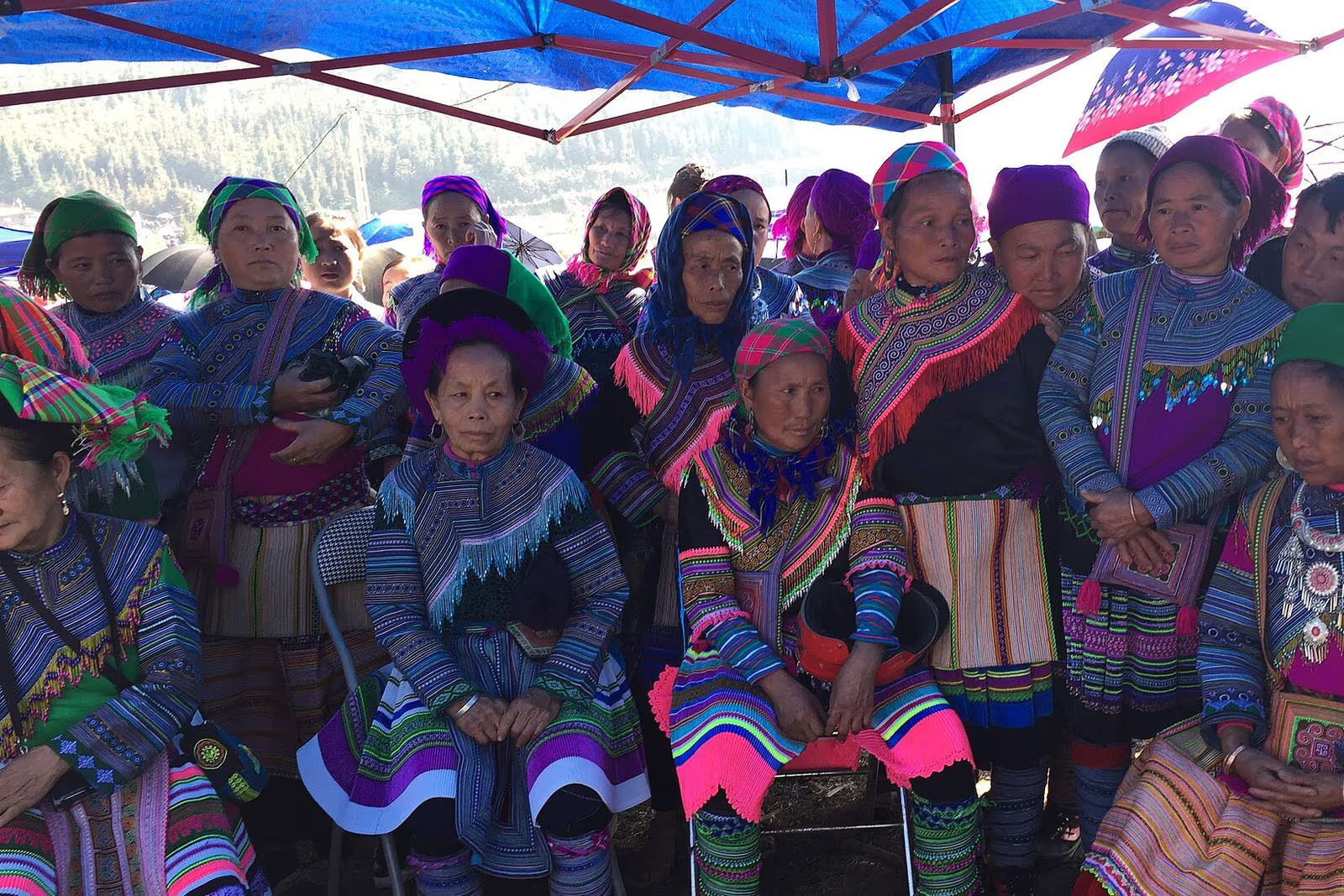
If you want to see a H'mong festival in Sapa, the one to plan around is Gầu Tào, a spring prayer-and-games gathering held in the first lunar month, a week or two after Vietnamese Tet. In Cat Cat village, the stone-stepped hamlet just below Sapa town, it is a public one-day event: in 2026 it took place on Saturday 28 February, the twelfth day of the lunar year, with a pole raised in the village, a shaman's rite, rice wine, a tug-of-war and visitors from several countries joining the dance.
What many people search for instead is "H'mong New Year", and that is a different thing. Traditionally the H'mong New Year, Nào Pê Chầu, comes about a month before Tet, and we could not find a public program for it in Sapa itself. This guide separates the two, gives you real calendar dates for the 2027 and 2028 seasons, and says plainly which dates are published and which are our own arithmetic. It also covers the practical side that decides whether the trip works: what Tet week does to crowds, transport and opening hours, and which weeks are better for a first-time visitor.
One honest limit before we start. Festival dates in the mountains move from year to year because the organisers choose the day, so treat anything in a future year as a planning window rather than a promise. We mark each date below as reported (taken from the Lao Cai press or an official decision) or estimated (worked out from the lunar calendar).
What Is the Gau Tao Festival?
Gầu Tào is a traditional H'mong outdoor gathering whose core is a prayer: for health, for children, for good weather and harvests, and for luck in the year ahead, offered on behalf of families, clans and the wider community. Vietnamese sources describe it as a "hội chơi ngoài trời", an outdoor play gathering, which is a fair summary, because the solemn part sits beside games, music and a lot of standing around in the cold with a bowl of rice wine. It opens with the raising of a ceremonial pole, the cây nêu, which in H'mong belief links the people with the spirits. Vietnam's Ministry of Culture, Sports and Tourism recognised the Gầu Tào of the H'mong as national intangible cultural heritage in 2012.
The tradition has a second job that outsiders often miss. A report on a Gầu Tào in Muong Khuong district, also in Lao Cai province, notes that the pole links people with the gods and that young people meet at the festival and many marry afterwards. That is the same social role the Sapa Love Market is known for, and it is why the two get mixed up. If courtship songs are what you came for, read our guide to Sapa's Love Market; it is a separate custom with its own calendar.
When Is Gau Tao in Sapa? Dates for 2026, 2027 and 2028
Gầu Tào belongs to the first lunar month, so its Western date follows Tet: the festival season runs from the first to the fifteenth day of the lunar year, and the Cat Cat event has landed on the eleventh or twelfth day. The table gives the reported dates and our estimates side by side.
| Year | Tet (lunar day 1) | Gầu Tào season (days 1–15) | Cat Cat, lunar day 11–12 | Status |
|---|---|---|---|---|
| 2025 | Wed 29 Jan | 29 Jan – 12 Feb | about 8 Feb (day 11) | Reported: day 11; date worked out |
| 2026 | Tue 17 Feb | 17 Feb – 3 Mar | Sat 28 Feb (day 12) | Reported |
| 2027 | Sat 6 Feb | 6 – 20 Feb | about 16–17 Feb | Estimated |
| 2028 | Wed 26 Jan | 26 Jan – 9 Feb | about 5–6 Feb | Estimated |
The organisers pick the day each year: it was lunar day 11 in 2025 and day 12 in 2026, and other villages hold their own Gầu Tào on other days. In 2026 Pha Long commune in Muong Khuong, a different district from Sapa, held its festival on lunar days 4 to 6, opening on 20 February. Use the 2027 and 2028 rows to choose a week, then confirm the exact day with a local source before you pay for anything you cannot cancel. A travel site that lists Gầu Tào dates which do not match the real Tet calendar is not a source to trust.
Tet itself is easier to pin down. The government approved a seven-day Tet holiday for 2027, Thursday 4 to Wednesday 10 February, with Tet on Saturday 6 February. Tet 2028 is Wednesday 26 January; the length of that year's holiday had not been announced when we checked in October 2026.
Where Is It Held, and Can Visitors Join?
Yes, visitors can join, and the easiest place to do it from Sapa is Cat Cat village, a short walk down from the town. The Cat Cat event is organised by the local commune committee together with the village's tourism company, and it is open to visitors; in 2026 Canadian guests joined the dance. The administrative label has changed in recent years (Cat Cat has been reported under Hoang Lien commune in 2025 and Ta Van commune in 2026 after the commune mergers), so we simply call it Cat Cat village. Our guide to Cat Cat village explains the walk and the village itself.
It helps to know what the event is and is not. Traditionally Gầu Tào is a family and village rite led by an elder, held at home villages. The Cat Cat edition is a public version of it, staged where visitors can reach it, and it is a real expression of H'mong culture that is also, openly, an attraction. Both things are true, as with the Love Market. Other H'mong communities hold their own, including Pha Long and other villages in Muong Khuong district, which the local press reported drawing thousands of people in 2026. Those villages are a long way from Sapa town and are not on the ordinary visitor route.
What You Will See on the Day
The 2026 Cat Cat program gives a good picture of a typical public Gầu Tào. It was a single-day event, and the Lao Cai press listed the following parts. The order and the details differ from year to year, so read this as a sample rather than a schedule.
The Pole and the Prayer
The day opens with the raising of the cây nêu, a tall pole set up in the village. A shaman then performs a rite asking for health, prosperity and good luck for the community. If you arrive after this part you will still see the pole standing, which is the visual landmark of the festival; the ritual itself is the section to watch quietly from the edge.
Rice Wine, Wrist Strings and Games
The program continued with a rice-wine toast and a blessing in which strings are tied round wrists, then games: traditional H'mong games, singing and dancing, and a tug-of-war that usually pulls in anyone standing nearby. Visitors are often invited into the circle. Accept if you are asked; do not push your way in.
We found no published etiquette guide for Gầu Tào, so this is our own practical advice. Ask before you photograph a person, and especially a shaman at work. Do not touch the pole or step into a ritual space unless you are invited. Do not feed or offer money to children for photos. Follow your guide's lead on whether to join a circle or stay back, and keep your voice low during the prayer.
And the H'mong New Year?
The H'mong New Year, Nào Pê Chầu, is traditionally celebrated on the 30th day of the 11th H'mong lunar month, which usually falls about a month before Vietnamese Tet. A guide site gives 18 January for 2026. Documented early celebrations include Muong La and Moc Chau in Son La province, where H'mong communities hold public festivals in January.
We could not find evidence of a public early H'mong New Year program in Sapa. What the Lao Cai press does record is that H'mong villages in the province mark Tet with the rest of the country, with their own customs: soot is swept out of the house on the 30th, there are taboos on the first day, young people gather for festivities from the second day, and the fifteenth day of the first month is regarded as the "great Tet". In short, in Sapa the H'mong festive season is the Tet fortnight itself, and Gầu Tào sits at the end of it.
If you are told that the H'mong New Year in Sapa falls in December or January, ask whose celebration that is and where. It may be the early Nào Pê Chầu observed in other provinces, which is real but not something we can point you to in Sapa. We would rather say we do not know than send you up a mountain for a festival that is not happening.
Other Festivals Around Sapa at Tet Time
Gầu Tào is only one of several events in the valley around the lunar new year. They belong to different communities and different calendars, which is why a comparison helps.
Gầu Tào
H'mong- When
- First lunar month; Cat Cat on day 11–12 in 2025 and 2026
- Where
- Cat Cat village (public); other villages hold their own
- What to expect
- Pole raising, shaman's rite, rice wine, games, tug-of-war
Tết nhảy (Pút Tồng)
Red Dao- When
- Before the 30th of the last lunar month (Lao Cai press, 2023); we have no fixed Western dates
- Where
- Red Dao villages
- What to expect
- Ritual dancing, recognised as national heritage in 2013; we know of no public schedule, so ask a guide before turning up
Roóng Poọc
Giay- When
- Early in the first lunar month, on a Thìn (Dragon) day
- Where
- Ta Van, in the Muong Hoa Valley
- What to expect
- Planting-season festival; Western dates change yearly, so check locally
Sapa Love Market
H'mong & Dao- When
- Saturday evenings, not tied to Tet
- Where
- Sapa town, the Stone Church square
- What to expect
- Courtship songs and instruments, now largely staged for visitors
The Giay festival is described in our guide to the Giay people of Sapa, and the Red Dao way of life in our guide to the Red Dao. The Tay, who live mostly in Ban Ho, have their own calendar; see the Tay of Sapa. In 2026 Ta Van also held a ceremony marking the start of work in the fields on 7 March, lunar day 19. We could not confirm a Lồng Tồng festival in Sapa town, and we do not list Dao fire-dance dates because we found none we could verify.
Treks Through the Villages Behind the Festival
 1-Day Trek
Rice Paddies and Cultures – Easy Hiking
Flat valley walking with stops at Red Dao homes — a quiet way to meet the communities whose festivals this guide covers.
 Homestay
Rice Terraced Fields & Homestay
Sleep in a village house, share the evening meal and ask your host family how they keep the Tet season.
 3D2N Trek
3D2N Experience the Real Sapa
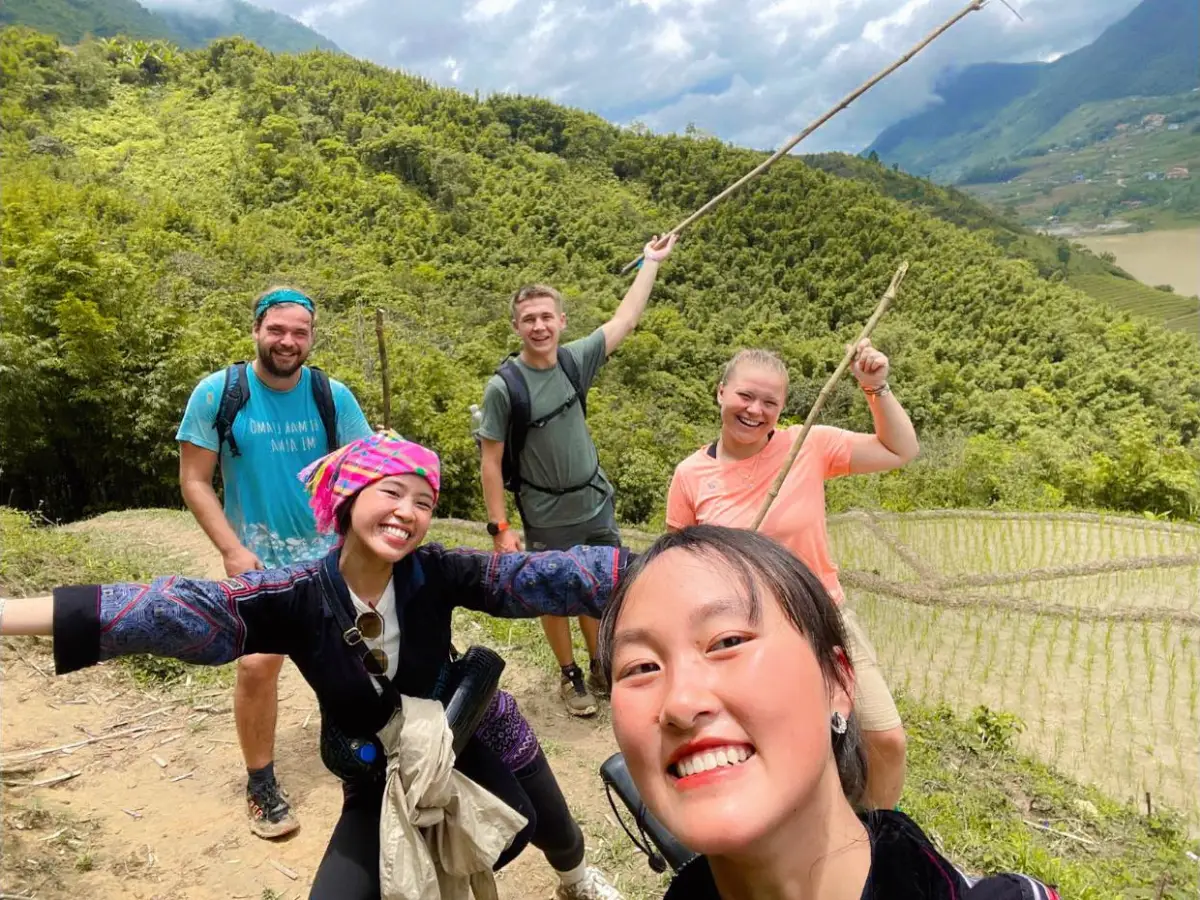
Black H'mong, Giay and Red Dao villages over three days, with two homestay nights.
Tet in Sapa: Crowds, Closures and Prices
Tet week is the busiest time of year in Sapa, and it is not the best week for a first visit. During the nine-day Tet holiday in February 2026 Lao Cai province reported about 779,300 visitors, 54,600 of them from abroad, and Sapa alone took about 215,000. Hotels were 95–100% full on the second to fourth days of Tet.
- Transport sells out first. A commercial Vietnam travel blog reports trains and sleeper buses selling out four to six weeks ahead at two or three times the usual fare. That is a secondary source, so treat the numbers as a warning rather than a tariff, but the direction is right. Our guide on how to get to Sapa lists the options.
- Some businesses close. The same source says small restaurants and independent tour desks often shut for the first days of Tet, roughly the first to the third day. Bring snacks on Tet day one and do not count on finding a particular cafe open.
- Prices rise. We have no official figure for Sapa hotel price rises at Tet, so we will not invent one. Assume higher rates and book early.
- The holiday is official. Tet 2027 comes with a seven-day public break, 4 to 10 February, and Vietnamese families travel in that week, which is why the numbers above are so high.
How to Plan a Gau Tao Trip: Three Windows
There are three realistic ways to build a visit around the season, each with a different trade-off between atmosphere, crowds and certainty. The comparison is our own judgement from the 2026 reports, not measured crowd data.
Villages are preparing and many families are home. Transport is tightening but not yet at its worst. You see the season build without the holiday crowds.
The Gầu Tào fortnight. Cat Cat's public event has landed on day 11 or 12, so aim for the week containing those days, and ask which day the organisers have chosen.
The first three days are family days. Sapa is at its most crowded and some businesses are shut. Come only if you want the holiday atmosphere and have booked everything.
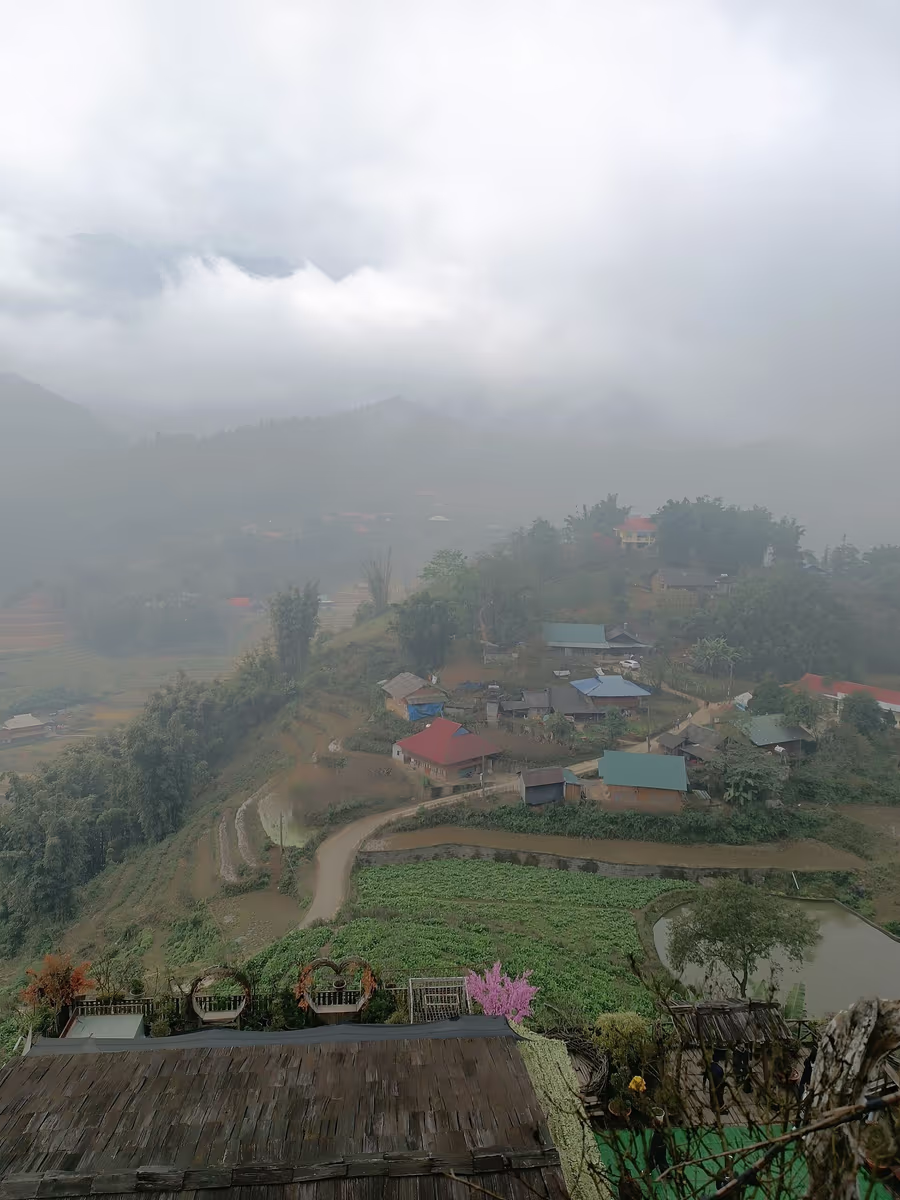
The weather matters as much as the calendar. The photo of Cat Cat above was taken two days after Tet 2025 and shows the typical picture: low cloud, mist and damp. Our Sapa weather guide and best time to visit page cover January and February in detail, and our packing list for Sapa trekking covers what to wear. The rice terraces are bare at this time of year, so if green or golden terraces are the point of your trip, choose another season.
Is a Tet and Gau Tao Trip for You?
It suits you if
Think again if
Visiting Respectfully
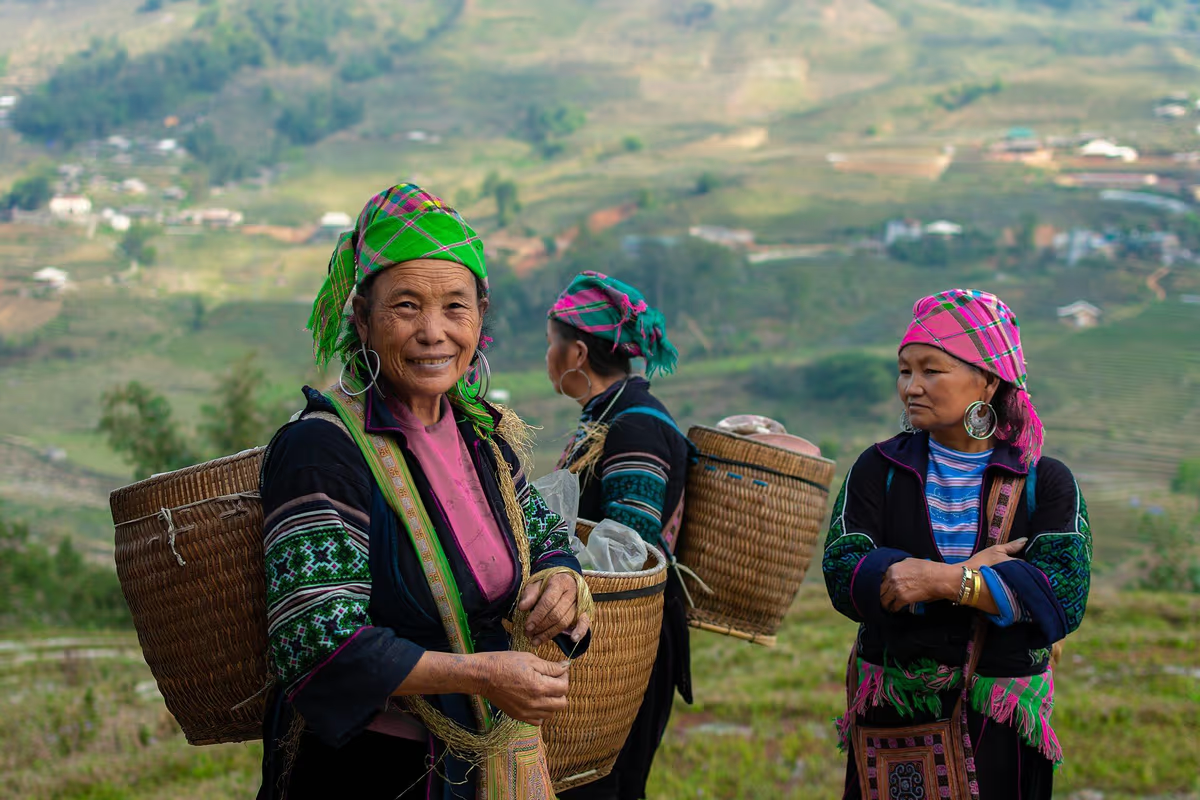
The villages are homes first and attractions second. A few habits make a visit better for everyone. Go with a guide or a homestay family who knows the people, so that introductions replace staring. Ask permission before photographing, and offer to show the picture. If a household invites you in for tea or rice wine, accept a small amount rather than refusing, and sit where you are shown. Do not hand out sweets or money to children. Buy handicrafts from the women directly if you want something, and expect to pay a fair price rather than bargaining to the last dong.
For background on the community behind the festival, see our guide to Black H'mong culture in Sapa. Most of the families we walk past on the valley treks are Black H'mong; the festival in Cat Cat involves Black H'mong families as well.
Easy Days Out for a Cold-Season Visit
 Very Easy
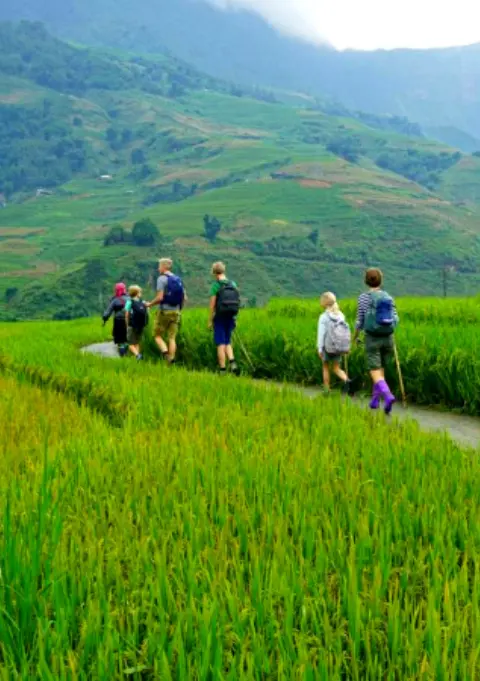
Sapa Easy Trekking For Seniors
Gentle, flat paths through Y Linh Ho and Ta Van — a short day that suits cold, misty weather.
 Local Favourite
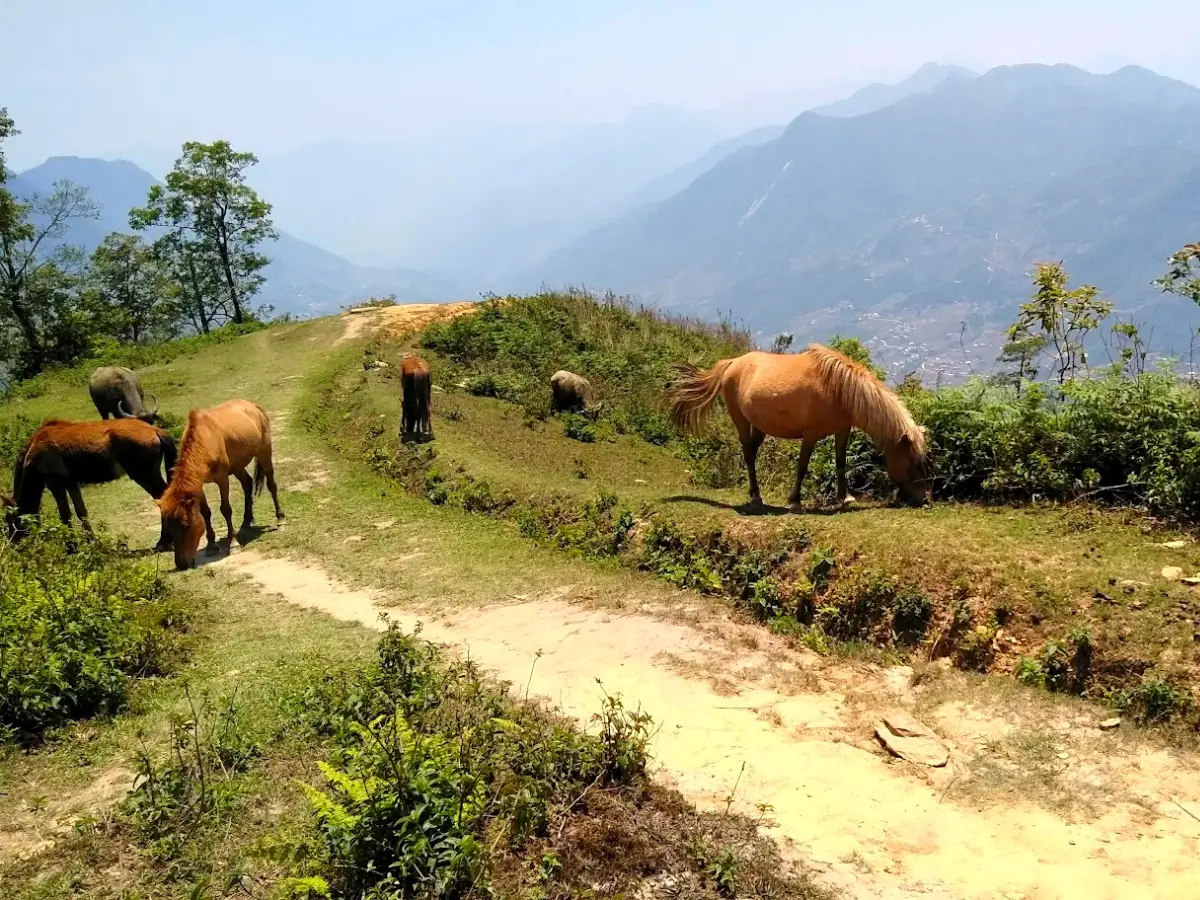
Mountain Views and Villages Trek
Ridge views over the Muong Hoa Valley and villages on the way; ask us what the clouds are doing before you go.
 1-Day Trek
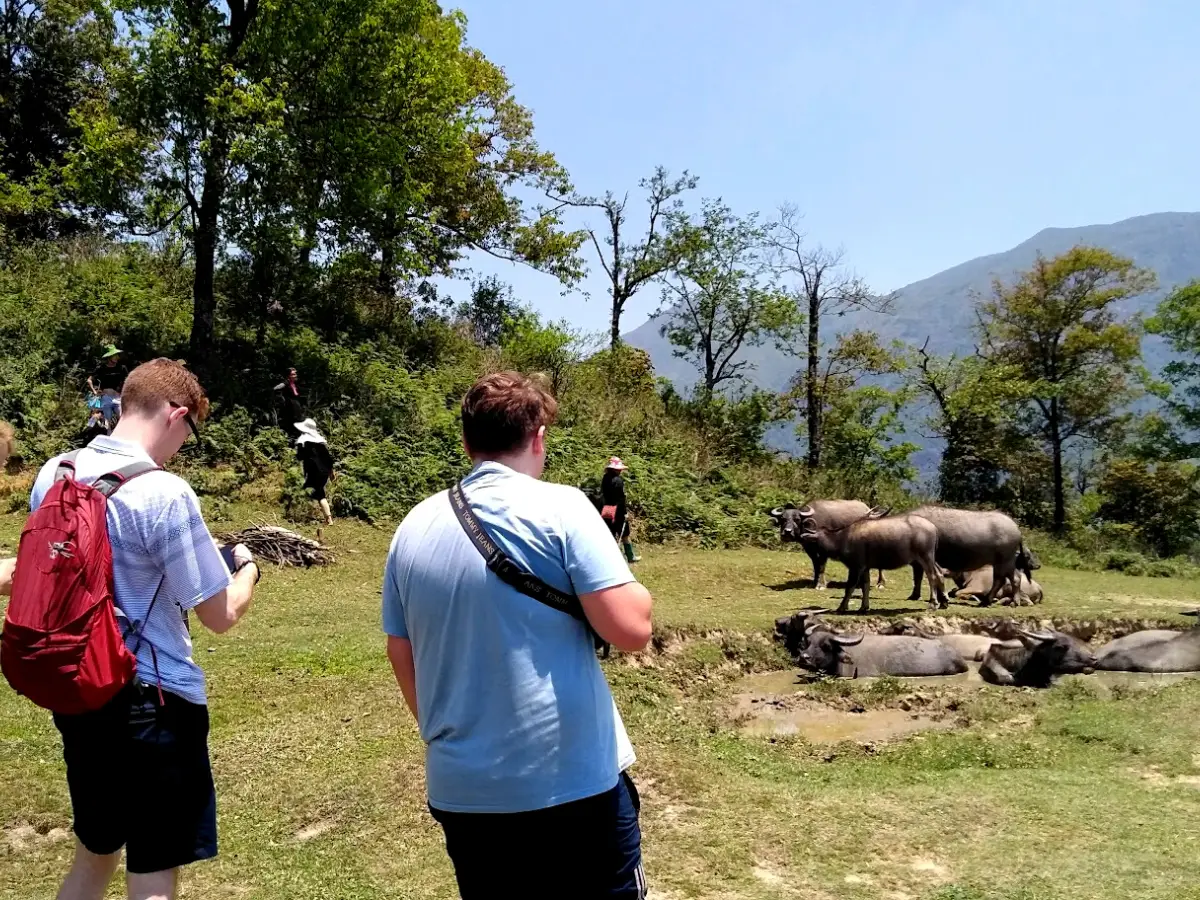
Trekking Through Rice Terraced Fields
Lao Chai to Ta Van through the valley villages, finishing back in Sapa town.
Rent at Our Office Before You Trek
 Gear Rental
Trekking Boots Rental
Waterproof ankle-support boots. Cleaned and checked before each rental. Available at 105 Thach Son Street.
 Gear Rental
Walking Poles Rental
Trekking poles available to rent at $2/day at our office, 105 Thach Son Street. Essential for descents.
Frequently Asked Questions
Gầu Tào is a traditional H'mong outdoor festival held in the first lunar month, after Tet. At its heart is a prayer for good health, children, a good harvest and luck for families, clans and the whole community. It opens with the raising of a ceremonial pole (cây nêu) and a shaman's rite, followed by games such as tug-of-war. Vietnam listed it as a national intangible cultural heritage in 2012.
The festival season runs from the first day to the 15th day of the first lunar month, which is 6–20 February 2027. In Cat Cat village the public event fell on lunar day 11 in 2025 and lunar day 12 in 2026, so expect roughly 16–17 February 2027. Organisers set the exact day each year, so treat that as an estimate and check before you book anything non-refundable.
Traditionally the H'mong New Year (Nào Pê Chầu) falls on the 30th day of the 11th H'mong lunar month, roughly a month before Vietnamese Tet, and celebrations are documented in provinces such as Son La. We could not find a published program for an early H'mong New Year in Sapa itself. In the Sapa area the festive season is Vietnamese Tet followed by Gầu Tào.
Yes. The Cat Cat village event is organised with the local tourism company and is open to visitors, and in 2026 it included visitors from abroad. Traditionally Gầu Tào is a family and village rite led by an elder, so go as a guest: stay at the edge of ritual spaces, ask before photographing people and follow what your guide or host tells you.
No. Gầu Tào is an annual H'mong festival in the first lunar month. The Sapa Love Market is a courtship tradition of the H'mong and Dao, now staged mainly as a Saturday-evening gathering in Sapa town. They are different events on different calendars, although young people have long used Gầu Tào as a chance to meet.
It is the busiest week of the year. In the nine-day Tet holiday of February 2026 Sapa received about 215,000 visitors and hotels were 95–100% full on days two to four of Tet. Trains and sleeper buses sell out weeks ahead, and small restaurants and independent tour desks often close for the first days of Tet. We have no official figure for price rises, so expect higher rates and book early.
Dress for cold, damp mountain weather: layers, a waterproof jacket, a hat and shoes with grip, because the festival grounds are open-air and village paths turn muddy. Wear what you would wear to any village visit.