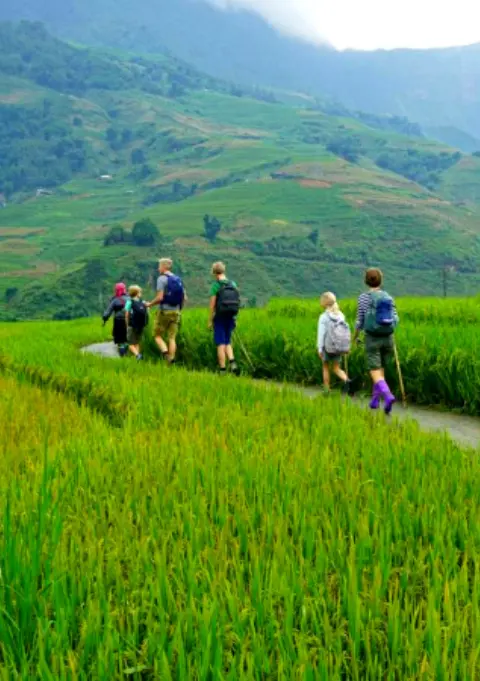
 Sinh Giang
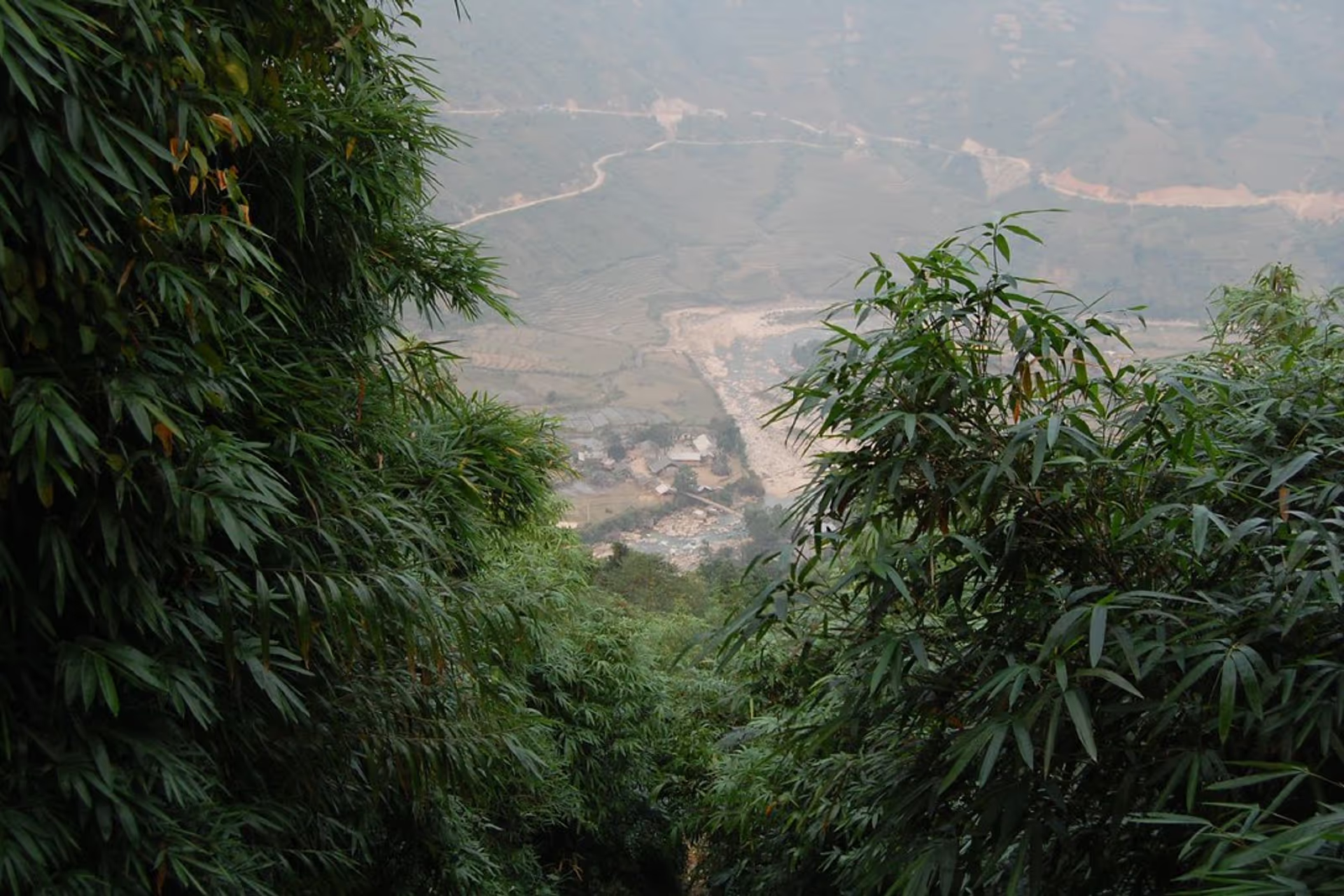
The floor under your feet in a Ban Ho stilt house isn't really a floor — it's split bamboo, laid flat and lashed down, and it gives a little with every step the way a trampoline barely moves. Guests who stay the night here usually mention it before anything else: you can see faint light through the gaps from the room below, and the whole upstairs seems to breathe with the valley's warm air instead of sealing it out. It's a small, physical detail, but it tells you more about who the Tay are than most write-ups manage in a page.
Almost nothing in English has been written about Sapa's Tay community specifically, because there's so little of it to write about by volume — a single village, Ban Ho, well south of the Muong Hoa Valley trails that most visitors walk. This guide covers who the Tay are, why their stilt houses look and work the way they do, what a night in one is actually like, and the honest limits of what a day trip or a short trek can show you.
Who Are the Tay People, and Why Are They in Sapa at All?
The Tay are Vietnam's second-largest ethnic minority and the country's largest Tai-Kadai-speaking group, numbering around 1.8 million people according to the 2019 national census. Their language sits in the Thai branch of the Tai-Kadai (Kra-Dai) family, related to Giay, Nung, Lao and Thai, and historically they are lowland, wet-rice farmers rather than the hillside swidden farmers more typical of Sapa's Black H'mong and Red Dao communities.
Here's the honest caveat worth stating upfront: the real Tay heartland isn't Sapa at all. It's further east — Cao Bang, Lang Son, Ha Giang, Tuyen Quang, Thai Nguyen and Bac Kan, provinces where Tay villages, markets and festivals are the dominant local culture. In Lao Cai province, and in the Sapa area specifically, the Tay are a much smaller, outlying community, concentrated almost entirely in and around a single village — Ban Ho — rather than spread across the valley the way Black H'mong villages are. If you've read about Tay culture in a general Vietnam guidebook, it was very likely describing Cao Bang or Ha Giang, not Sapa.
That's also why this community is barely covered in English travel writing: there's genuinely less of it to cover here than there is of the Black H'mong, Red Dao or Giay communities that dominate the Muong Hoa Valley trekking routes closer to town.
One detail that surprises travelers who've spent time in Thailand or Laos: Tay, as a Tai-Kadai language, is distantly related to Thai and Lao, and the group's own name for itself simply means "people." That doesn't make it mutually intelligible with modern Thai — centuries of separate development have taken care of that — but it explains why a Thai speaker occasionally catches a familiar-sounding word in a Tay conversation, in a way that wouldn't happen with H'mong or Dao, whose languages belong to an entirely different family (Hmong-Mien). Almost everyone in Ban Ho today also speaks Vietnamese fluently, learned at school, and younger residents working in homestays or as guides often have functional English too.
Ban Ho: Sapa's Tay Village, On the Map
Ban Ho sits roughly 25–30 km south of Sapa town, down a winding mountain road that drops steadily in both altitude and temperature — by the time you reach the valley floor, Ban Ho feels noticeably warmer and more humid than the town you left. As of 1 July 2025, it is its own administrative commune, Xa Ban Ho, formed under Resolution 1673/NQ-UBTVQH15 by merging the old Ban Ho commune with the former Thanh Binh ward of Sa Pa town — part of a wider restructuring that reorganised the whole of Sa Pa's 16 old wards and communes into a single ward and five communes.
Before that merger, the old Ban Ho commune alone covered about 115 km² and counted roughly 2,900 residents as of a 2017 count, spread across seven hamlets: Ban Den, Hoang Lien, La Ve, Ma Quai Ho, Nam Toong, Seo Trung Ho and Ta Trung Ho. No official population figure has been published yet for the newly merged commune, so treat that 2,900 number as an older, pre-merger baseline rather than today's count. Ban Den, closest to the stream junction, is where most of the homestay houses sit.
There's no simple public bus route down. Most visitors arrive by rented motorbike (around 100,000–150,000 VND a day), a hired car or jeep (350,000–500,000 VND for the round trip is typical), or on foot as part of a multi-day trek that routes through the valley rather than back-tracking to town each night.
How long you actually need depends on what you came for. A hot spring stop, a walk through Ban Den and lunch is a comfortable single day, round trip, without an overnight. Seeing the stilt houses lived-in rather than passed-through — the evening fire, the family meal, the morning mist over the valley before anyone else is awake — genuinely needs the night, which is also the only way most of the swimming spots make sense on a relaxed schedule rather than a rushed one squeezed between driving times.
How the Tay Compare to Sapa's Other Communities
Outsiders often lump the Tay in with the Giay, since both speak closely related Tai-Kadai languages and share a lowland rice-farming tradition — but each is a distinct group with its own language, dress and village history. Here's how the four communities you're most likely to meet around Sapa compare:
Black H'mong
Hillside- Language family
- Hmong-Mien
- Clothing
- Indigo-dyed hemp clothing, minimal embroidery
- Where you meet them
- Villages on the valley's slopes: Lao Chai, Y Linh Ho, Sin Chai
Red Dao
Hillside- Language family
- Hmong-Mien (Dao branch)
- Clothing
- Red headscarves, heavy silver jewellery, indigo embroidery
- Where you meet them
- Ta Phin valley and hamlets like Giang Ta Chai
Giay (Zay)
Lowland- Language family
- Tai-Kadai (Kra-Dai)
- Clothing
- Simple, mostly plain-coloured tunics
- Where you meet them
- Ta Van's historic riverside core
Tay
Lowland- Language family
- Tai-Kadai (Thai branch)
- Clothing
- Plain indigo cotton, almost no pattern or colour
- Where you meet them
- Ban Ho, further south and at lower, warmer elevation
Stilt Houses: Why the Tay Build the Way They Do
Nationally, Tay housing is mixed — across the eastern heartland provinces, many families have moved into ground-level brick houses over the past few decades, and the stilt house is now one regional style among several rather than a universal rule. In Ban Ho specifically, the wooden stilt house is still the visible, lived-in standard: a raised timber frame with the ground level left open for storage, tools or livestock, and the living space built a full storey up, reached by an open staircase or ladder.
The upstairs floor is often finished in split bamboo rather than solid board — peeled canes laid flat side by side, which flex slightly underfoot and let air move freely through the house, a real advantage in a valley that sits noticeably warmer and more humid than Sapa town itself. Walls are timber plank, roofs are tiled or corrugated metal, and a veranda along one side is where shoes come off before stepping inside.
The logic behind building up on stilts at all is the same practical reasoning found across stilt-house traditions throughout Southeast Asia: it keeps the living space and stored rice above ground-level damp and the stream's occasional flood line, lets air circulate underneath to cool the house in the valley's warm months, and leaves the space below free for tools, firewood or livestock without any of it sharing air with the family's sleeping and cooking quarters above. None of that is unique to the Tay — Black H'mong and Giay builders elsewhere in the Sapa area solve similar problems with their own, slightly different timber techniques — but it's a useful frame for why the architecture looks the way it does rather than treating it as decoration.
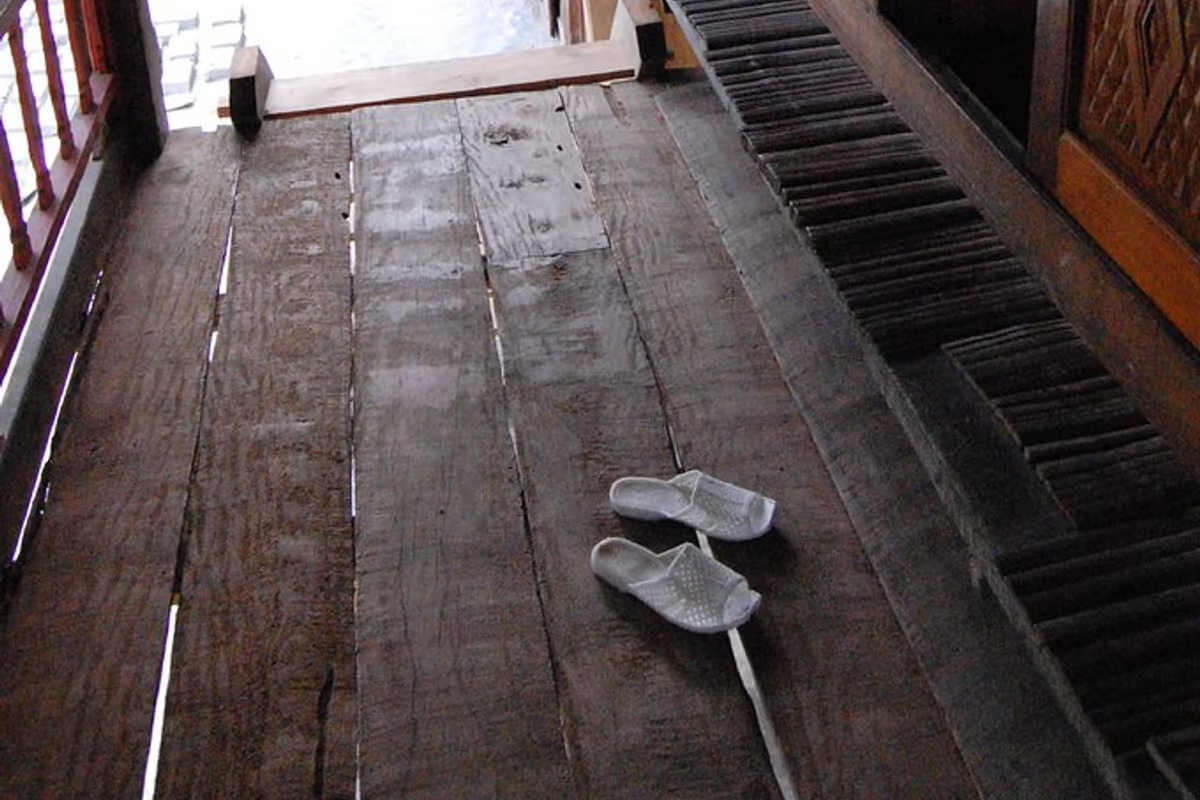
If you're staying overnight, expect a shared sleeping area rather than a private room — mattresses laid out on the bamboo floor, usually for the whole group together. The floor flexes and occasionally creaks with movement in the night; it's completely normal and not a sign of anything wrong with the house.
What Tay Clothing Looks Like
Tay women's traditional dress is deliberately plain next to the bright, heavily patterned outfits of Black H'mong or Red Dao neighbours: a long tunic-style dress dyed a single, deep indigo, with a split bodice, a cinched waist and horizontal fastenings at the armpit rather than buttons down the front — closer in silhouette to the Kinh ao dai than to anything embroidered. An indigo headscarf and a plain cloth belt are the usual accessories; colour and pattern are kept to a minimum on purpose, which is itself the visual marker that tells a Tay outfit apart from an H'mong or Dao one at a glance.
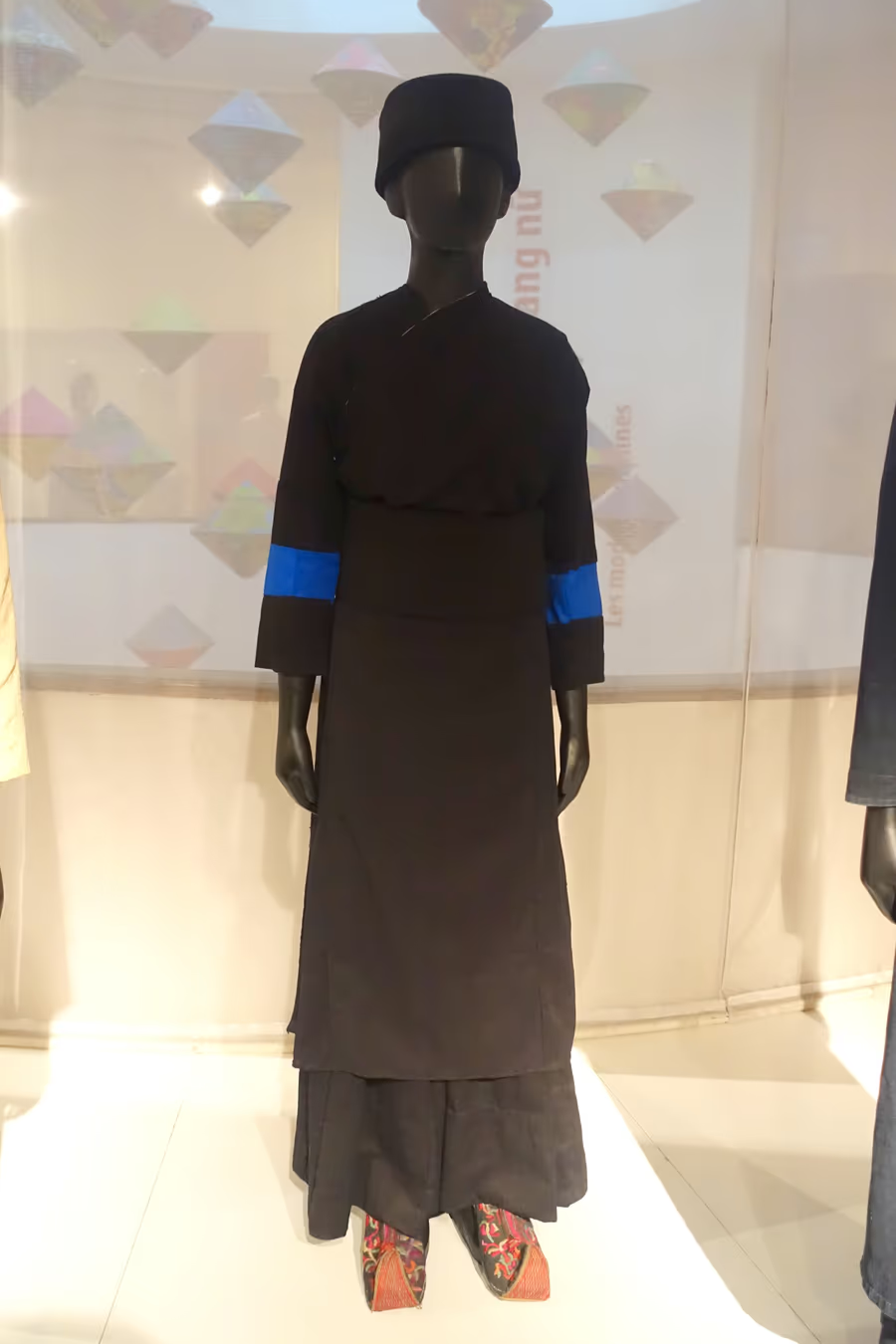
Day to day, most Tay residents of Ban Ho now wear ordinary modern clothing, the same as anywhere else in rural Vietnam — the indigo costume comes out for festivals, ceremonies and cultural performances rather than farm work, which is worth knowing before you go expecting to see it on every visit.
The Tours That Actually Reach Ban Ho
 Reaches Ban Ho
The Unlimited — 4-Day Sapa Trekking
8 villages, 5 ethnic groups — including a night in a Tay stilt-house homestay near Ban Ho.

Sapa Valley Trek and Homestay
Closer Giay and Black H'mong homestays in Muong Hoa Valley — not Ban Ho, but a good shorter alternative.
 Most Popular
Rice Terraced Fields & Homestay
The quickest homestay option if 4 days isn't possible — Lao Chai, not Ban Ho.
The Hot Spring, the Waterfall, and the Stream
Ban Ho's main non-cultural draw is a small natural hot mineral spring on the edge of the village, locally described as around 200 m² with water temperatures of roughly 43–45°C. Local tourism write-ups also claim the spring's temperature shifts opposite to the weather — cooler on hot days, warmer on cold ones — which we could not confirm on any official or scientific source during this guide's research, so treat that specific claim as local lore rather than a verified fact. Either way, it's a modest, undeveloped spot rather than a built spa resort, worth a short stop if you're already in the village rather than a destination in its own right.
More reliably interesting is the water running through the valley itself. The Seo Trung Ho waterfall, named for one of Ban Ho's seven hamlets, drops around 100 metres and ends in a pool used for swimming in warm months, and the La Ve stream — cold, clear, and fed straight off the mountains — runs down through Ban Den to join the Muong Hoa system. Neither has lifeguards or marked safe zones, so treat any swimming spot here the way you would an unsupervised river anywhere: check the current, stay close to shore in unfamiliar water, and don't swim alone after rain has raised the level.
Long before any tourist ever made the trip down from Sapa, the hot spring was simply a practical, warm place to wash — locals' own use of it for bathing and laundry predates its current, much smaller role as a stop on a day trip, and some residents still use it that way rather than treating it as a sight to visit. It's worth keeping that in mind and giving space to anyone using it for its original purpose rather than crowding the pool for photos.
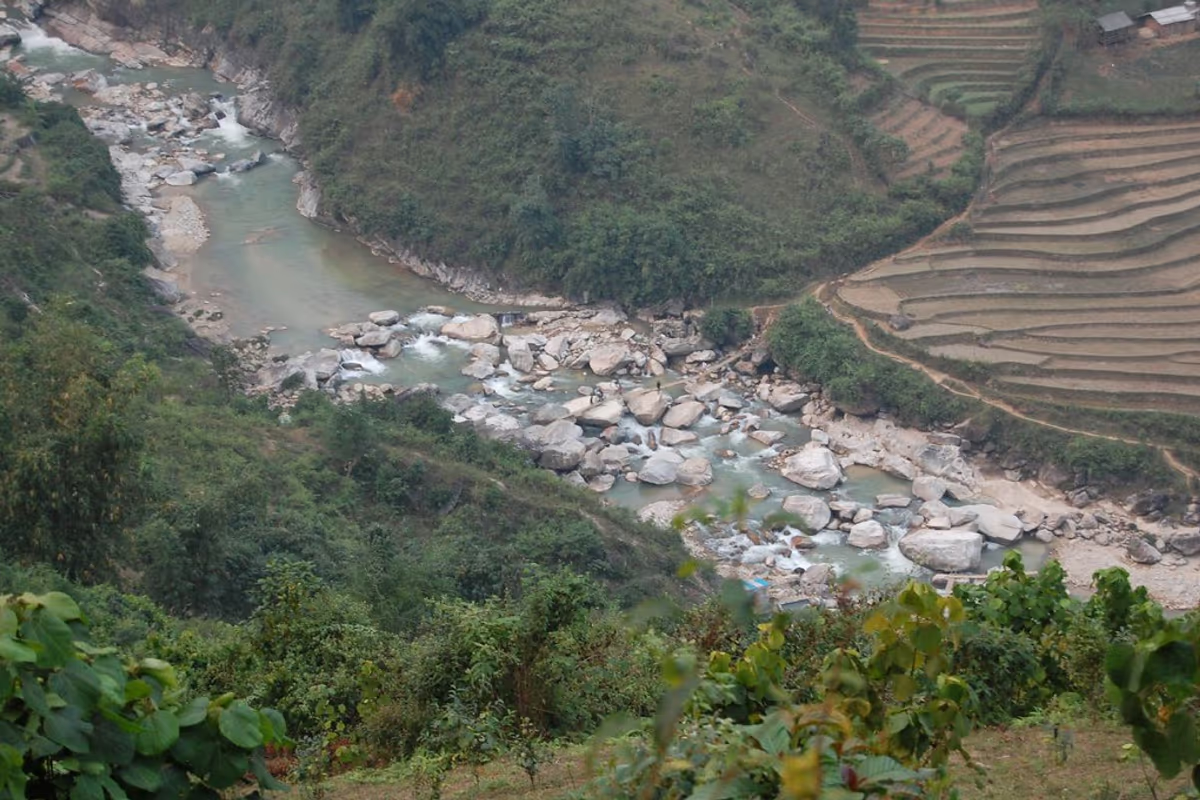
Rocks in and around the stream are often algae-slick even when they look dry, and water levels can rise fast after rain further up the valley. Treat it as you would any unsupervised river — not a liability waiver, just common sense a long way from the nearest clinic.
A Day Trip to Ban Ho, Hour by Hour
Most visitors who aren't overnighting see Ban Ho as a single long day from Sapa town. Here's roughly how that day plays out:
Depart Sapa
By motorbike, car or jeep
Arrive Ban Ho
Walk the village, Ban Den hamlet
Hot spring
Short stop, not a long soak
Lunch
Grilled fish, com lam, rice wine
Stream / waterfall
Seo Trung Ho pool, if dry season
Depart
Back to Sapa before dark
Food in Ban Ho
Lunch in Ban Ho leans on the stream and the surrounding forest rather than the trekking-trail staples of further north: grilled fish caught locally, com lam (sticky rice cooked inside a length of bamboo over coals), purple sticky rice, and home-brewed rice wine offered as a welcome rather than an upsell. It's simpler and less touristed than a Lao Chai or Ta Van lunch stop, mostly because far fewer groups make it this far south.
Five-colour sticky rice (xoi ngu sac) — rice naturally dyed in five shades using forest leaves and roots — turns up at festivals and for guests on more ceremonial occasions rather than at every meal, a dish shared with the neighbouring Nung and other Tai-Kadai groups further east rather than unique to Ban Ho specifically. Day to day, expect foraged forest greens stir-fried simply, and whatever vegetables the household's own garden plot is producing that week — the menu follows the season rather than a fixed tourist set, which is itself part of the honest appeal of eating in a working household instead of a restaurant built for groups.
Lễ Hội Xuống Đồng — The Tay "Going Down to the Fields" Festival
The Tay festival most associated with the group nationally is Lồng Tồng, known locally in Sapa as Lễ Hội Xuống Đồng ("going down to the fields"), held in the first lunar month — typically the 8th day of Tet, so late January or February on the Western calendar. It marks the start of the agricultural year with ceremonial offerings to the spirits for good weather and a healthy harvest, followed by xoe folk dancing and games like tug-of-war and offering-tossing.
The honest caveat: this timing rarely overlaps with when most travelers visit Sapa. The region's two peak trekking windows — April–May and September–October — both fall well outside the early-lunar-year festival dates, so unless you're specifically planning a winter trip around Tet, you're more likely to hear about this festival from your guide than to see it happen.
Visiting Ban Ho Respectfully
Ban Ho is a working village, not a cultural park built for visitors, and the single most important rule follows from that: ask before photographing people, and ask before stepping inside a house that isn't the one you've arranged to stay in. A nod and a raised camera is usually understood even without shared language, and a "no" should be respected without negotiation.
Arrange a homestay through a guide or operator rather than knocking on doors looking for a room — it's how the household gets paid fairly and how you end up in a house that's actually set up for guests, with a spare mattress and a second mosquito net rather than displacing the family from their own sleeping space. There's no ATM in the village, so bring enough small-denomination Vietnamese dong in cash for lunch, drinks and any gifts you want to leave — cards and e-wallets don't reach this far south. A bottle of the household's own rice wine, bought rather than haggled over, tends to be better received than trying to negotiate the homestay rate down.
Rent at Our Office Before You Trek
 Gear Rental
Trekking Boots Rental
Waterproof ankle-support boots. Cleaned and checked before each rental. Available at 105 Thach Son Street.
 Gear Rental
Walking Poles Rental
Trekking poles available to rent at $2/day at our office, 105 Thach Son Street. Essential for descents.
Frequently Asked Questions
The Tay are Vietnam's second-largest ethnic minority, numbering around 1.8 million people nationwide according to the 2019 census, and the largest Tai-Kadai-speaking group in the country. Their historic heartland is further east — Cao Bang, Lang Son, Ha Giang, Tuyen Quang, Thai Nguyen and Bac Kan provinces — so the Tay community around Sapa is a small, outlying pocket rather than a heartland population. In the Sapa area they are concentrated almost entirely in and around Ban Ho, a village about 25–30 km south of town, where they have lived as lowland, stream-side rice farmers for generations alongside Black H'mong, Red Dao and Giay neighbours on the surrounding slopes.
Ban Ho sits roughly 25–30 km south of Sapa town, in what is now Xa Ban Ho (Ban Ho commune), formed on 1 July 2025 by merging the old Ban Ho commune with the former Thanh Binh ward of Sa Pa town. The road down is a winding mountain route that drops in altitude and temperature as it goes, so Ban Ho feels noticeably warmer than Sapa itself. There's no simple public bus; most visitors reach it by rented motorbike (roughly 100,000–150,000 VND a day), a hired car or jeep, or as part of a multi-day trek that routes through the valley on foot.
Nationally, it's mixed — many Tay households in their eastern heartland provinces have moved into ground-level brick houses over the past few decades, and stilt houses are now just one regional style rather than the rule. In Ban Ho specifically, wooden stilt houses (nha san) are still the visible, lived-in norm: a raised timber frame with the ground floor left open for storage or animals, and a bamboo-slat upstairs floor — split bamboo laid flat, which flexes slightly underfoot and lets air move through the house in the valley's warm, humid climate.
Yes. Several households in Ban Ho, especially around Ban Den village, take homestay guests, and our 4-day Unlimited trekking tour is the one itinerary that actually routes through Ban Ho and overnights in a Tay stilt house in nearby Thanh Phu. Our shorter 2-day and 3-day homestay treks stay in the closer Giay and Black H'mong villages of the Muong Hoa Valley instead, since Ban Ho's distance makes it a poor fit for a 1- or 2-day schedule — message us on WhatsApp if you specifically want Ban Ho worked into a custom shorter itinerary.
All three — Tay, Giay (Zay) and Nung — speak closely related Tai-Kadai languages and share a lowland, wet-rice farming tradition, which is why outsiders often mix them up. But each is a distinct, separately recognized ethnic group with its own language, dress and village history. In the Sapa area specifically, the Giay are the lowland group around Ta Van, while the Tay are the lowland group around Ban Ho, further south and at lower, warmer elevation — a useful landmark for telling them apart on the ground.
It's a small natural hot mineral spring on the edge of the village, commonly described locally as around 200 square metres with water around 43–45°C. Local tourism write-ups also claim the temperature shifts with the weather — cooler on hot days, warmer on cold ones — which we could not independently verify on an official source, so treat that particular claim as local lore rather than a confirmed fact. It's a pleasant, low-key stop rather than a developed spa resort; worth a short visit if you're already in Ban Ho, not a reason on its own to make the long trip from town.