 Sinh Giang
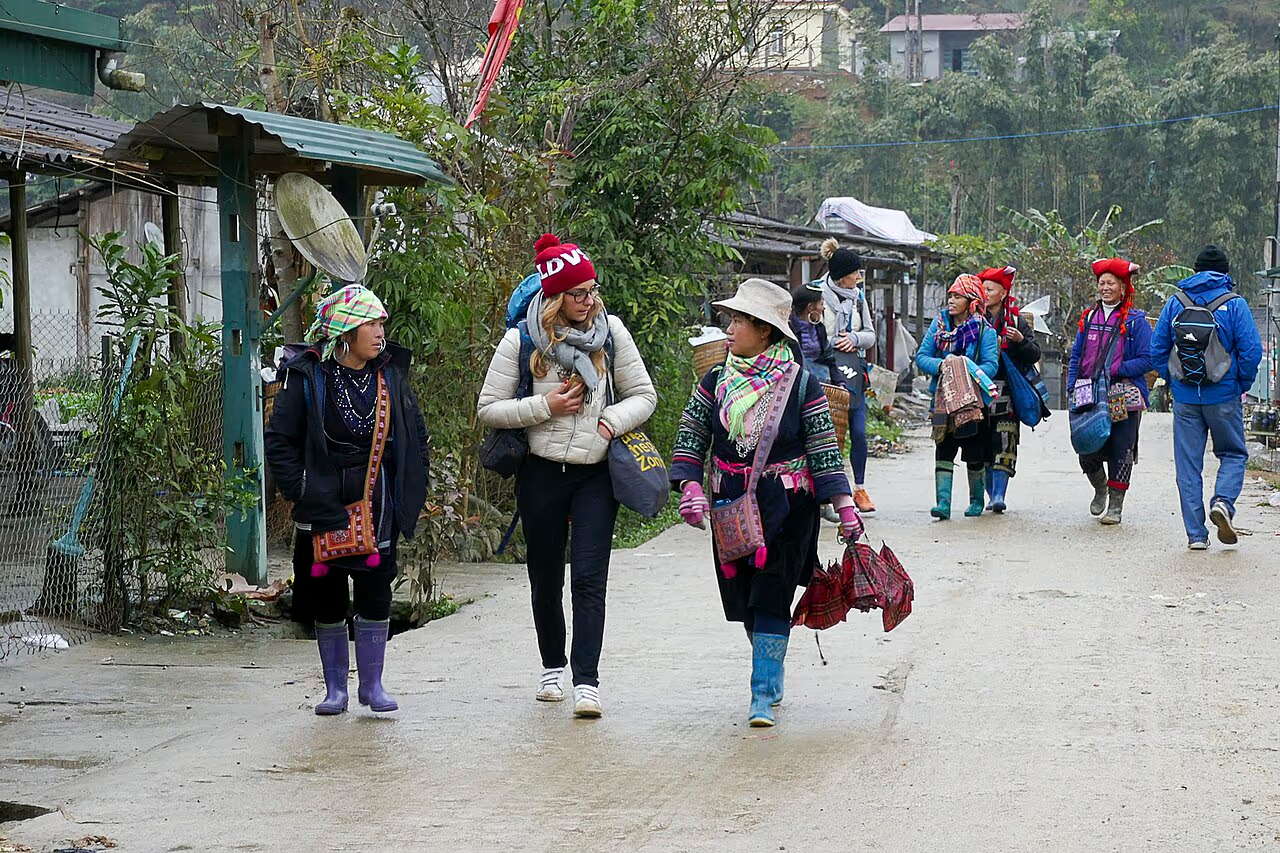
The villages are the soul of Sapa. Scattered through the Muong Hoa Valley and the hills around town, these ethnic-minority communities — Black H'mong, Red Dao, Giay and Tay — are where the famous rice terraces were carved, where the markets and the embroidery come from, and where a simple home-cooked lunch can become the memory of your whole trip. Visiting them, on foot and with a local guide, is the real Sapa experience.
But not all villages are equal. Some, like Cat Cat, are easy and close but heavily touristed; others, like Ta Van and Lao Chai, are the classic trekking villages; and a few, like Ta Phin and the far valleys, reward those who go deeper. We're a local Black H'mong company born and raised in these valleys, so this is the honest guide to which villages are worth your time, what makes each one special, and how to visit them respectfully.
One thing to know up front: the best way to experience any of these villages is to walk into them on a trek, not drive up for a photo. The magic is on the trails between them and in the family homes you're welcomed into — and that only really happens with a local guide who knows the people.
It's worth understanding why there are so many distinct villages in such a small area. Each ethnic group settled at a different altitude and built its own way of life: the Black H'mong high on the slopes farming terraces and hemp, the Giay lower by the rivers, the Red Dao in their own side valleys with their herbal medicine, the Tay lower still in the warm river valleys. The result is that a single day's trek can take you through two or three completely different cultures, each with its own dress, houses, language and food — all within a few kilometres. That density of living culture, set in this landscape, is what makes the Sapa villages so special.
A note on the word "village": these are not single, neat settlements with a centre and a square. Most are scattered communes — houses spread across a hillside or strung along a valley, linked by footpaths and fields — so "visiting" one really means walking through it, past homes, terraces and people at work, rather than arriving at a fixed point. That is why trekking and village-visiting in Sapa are the same activity: you experience the villages by walking the land they farm.
The Villages at a Glance
The essentials before we get into each one.
The Best Villages to Visit Near Sapa
Here are the villages worth your time, from the classic to the far-flung — with an honest word on which suits which kind of traveler.
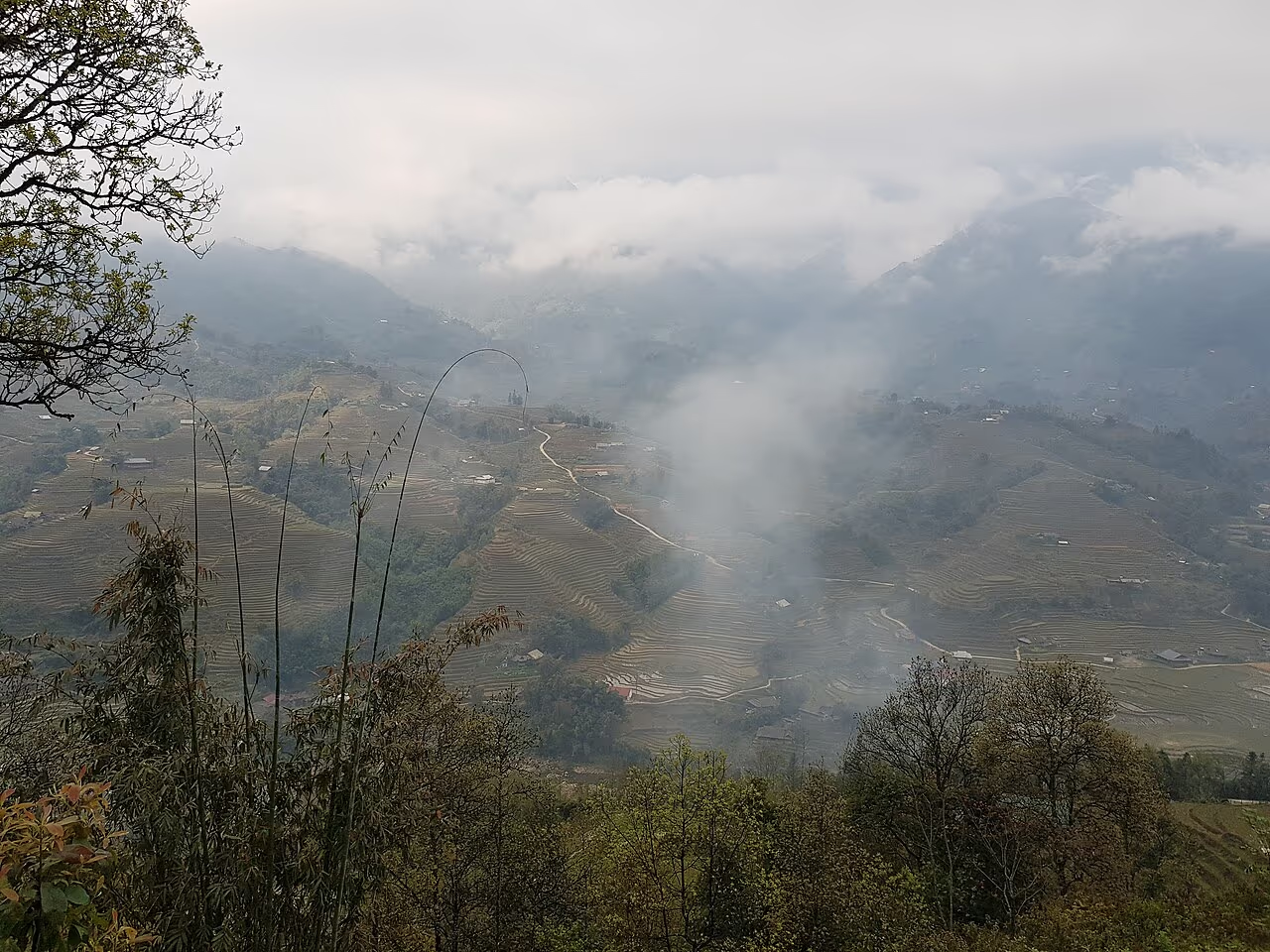
A quick orientation: most of the famous villages line the Muong Hoa Valley south-east of town — Y Linh Ho, Lao Chai, Ta Van and Giang Ta Chai, strung along the river and reached on the classic trek. Cat Cat sits just below town to the south; Ta Phin lies in its own valley to the north-east; and the Tay villages like Ban Ho are lower and further out. You can string several Muong Hoa villages together in one day's walk, which is exactly what the classic trek does.
1. Ta Van — the classic homestay village
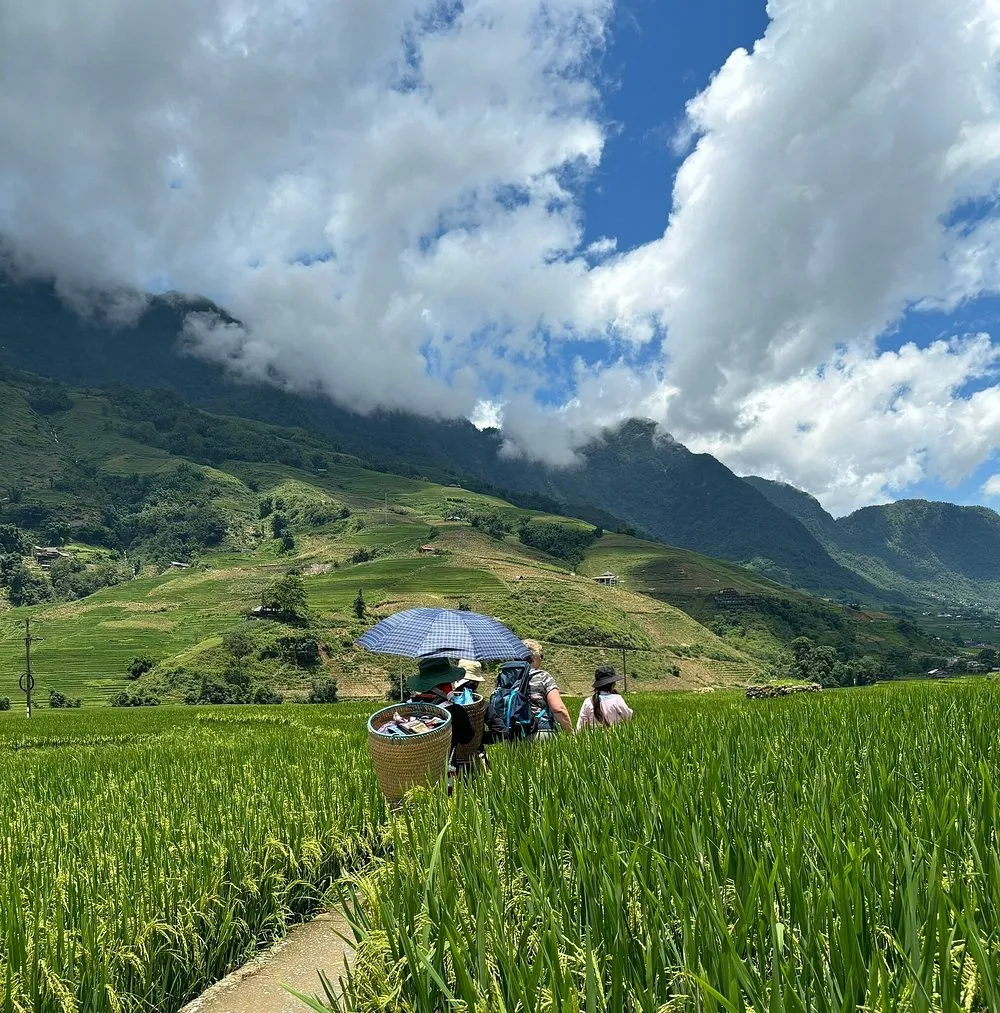
If you visit one village, make it Ta Van. Set deep in the Muong Hoa Valley about 9 km from town, this Giay village (with H'mong and Dao neighbours) is the heart of the classic Sapa trek and the best place for an overnight homestay. You reach it on foot through the terraces, crossing the river, and it's where most of our guests have their family lunch or spend the night — waking to mist over the rice. It's popular, but it has kept its working-village soul, and an evening here once the day-trippers leave is pure magic.
What to do in Ta Van beyond the homestay: wander the lanes between the wooden houses, watch the Giay and H'mong going about daily life, cross the river on the suspension bridge, and simply sit with a tea or a beer looking out over the terraces. There's a small entrance fee to the village. If you stay the night, ask your hosts about helping cook dinner — rolling spring rolls or grilling over the fire with the family is the kind of small, unscripted moment that people remember long after the views.
Ta Van does get busy on the main path through the middle of the day, so the trick is to be there outside those hours. Stay overnight, or trek a route that reaches it in the late afternoon, and you will see a completely different, calmer village — children walking home from school, families cooking, the day winding down over the terraces. That quieter Ta Van is the one worth planning for.
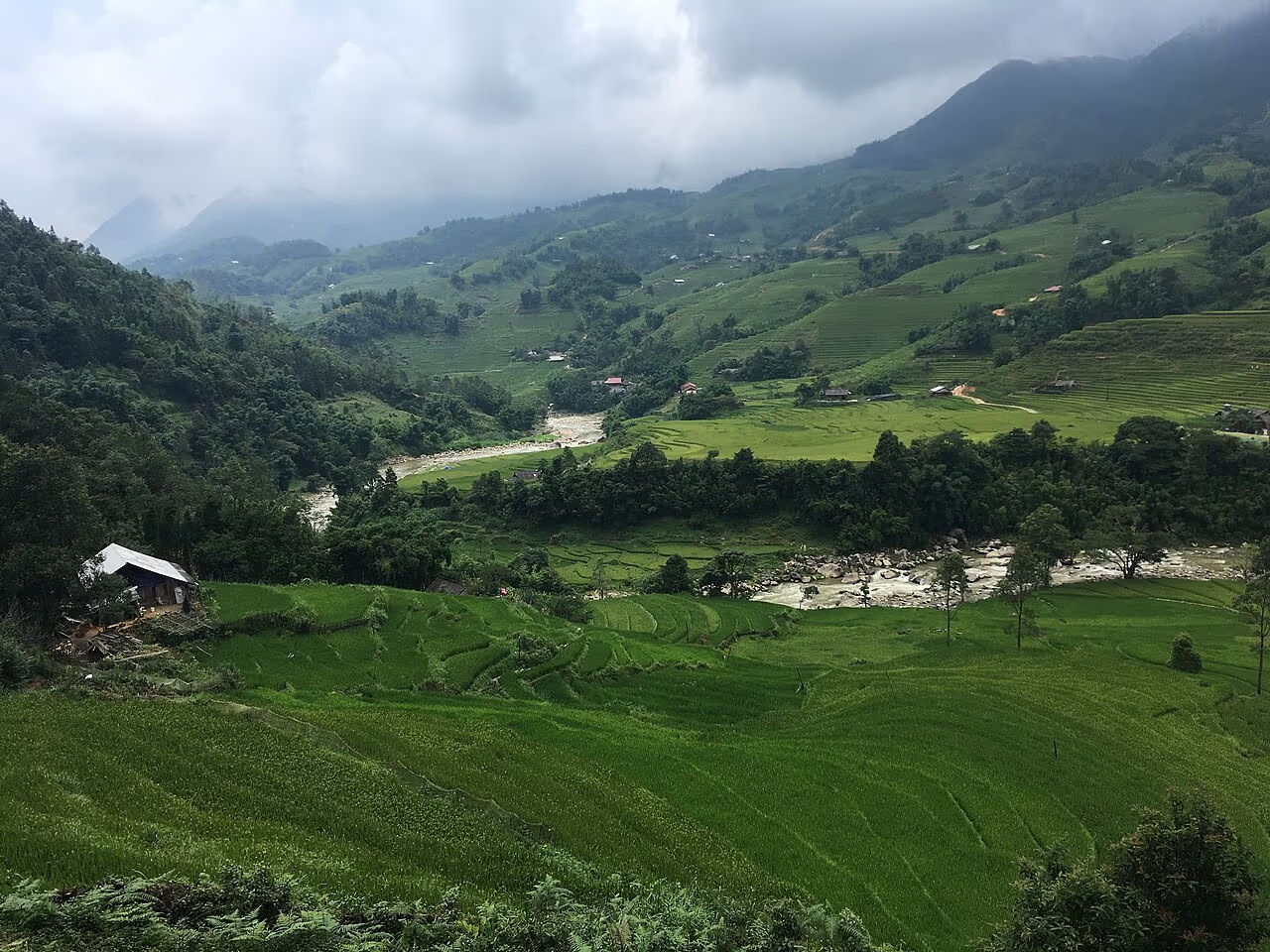
Trek to Lao Chai & Ta Van
 1 Day Trek
Trekking Through Rice Terraced Fields
The classic Lao Chai – Ta Van route with a local guide and a family lunch.
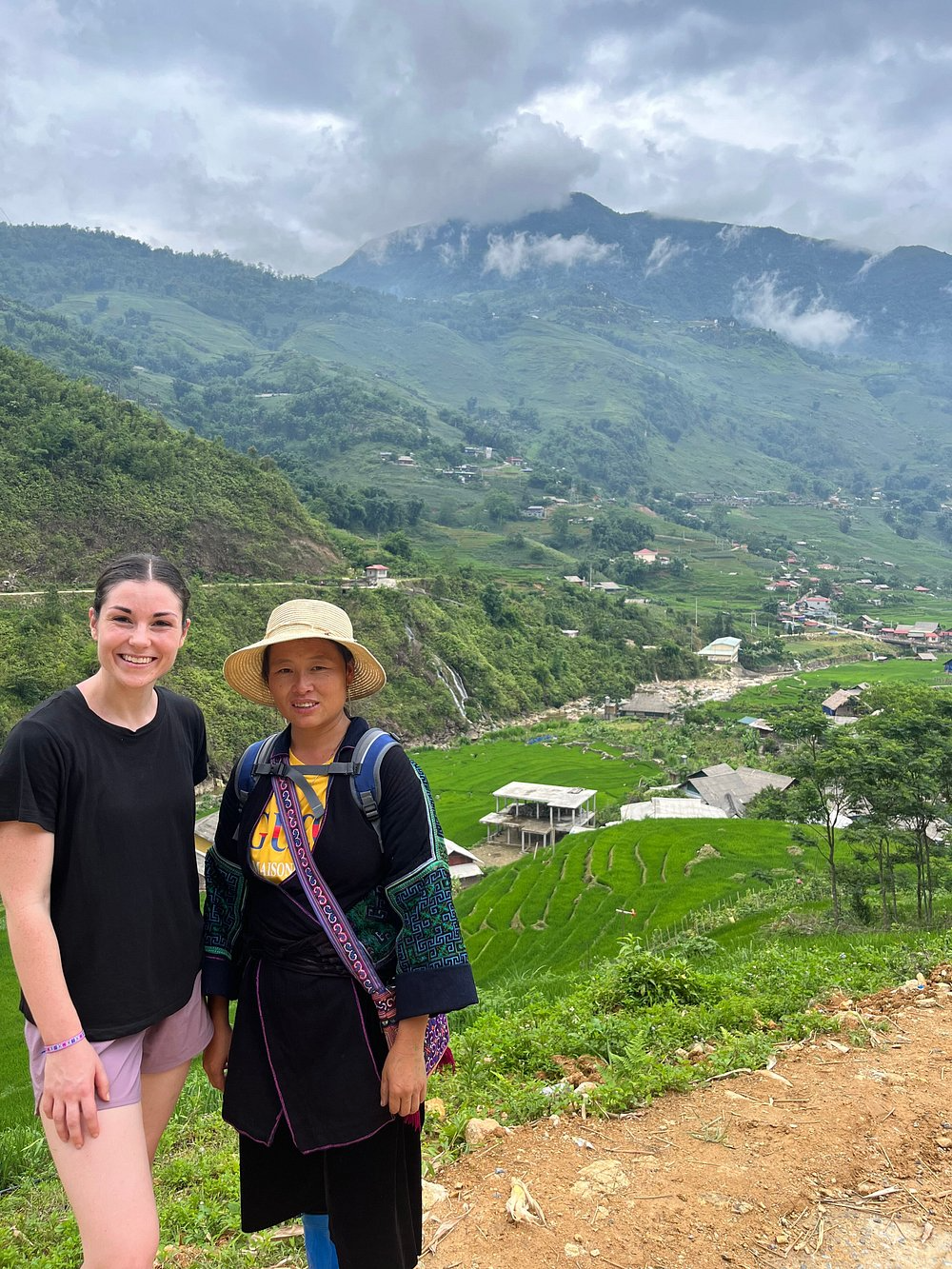 2D1N Homestay
Rice Terraced Fields & Homestay
Two days through the villages and a night in a Ta Van family homestay.
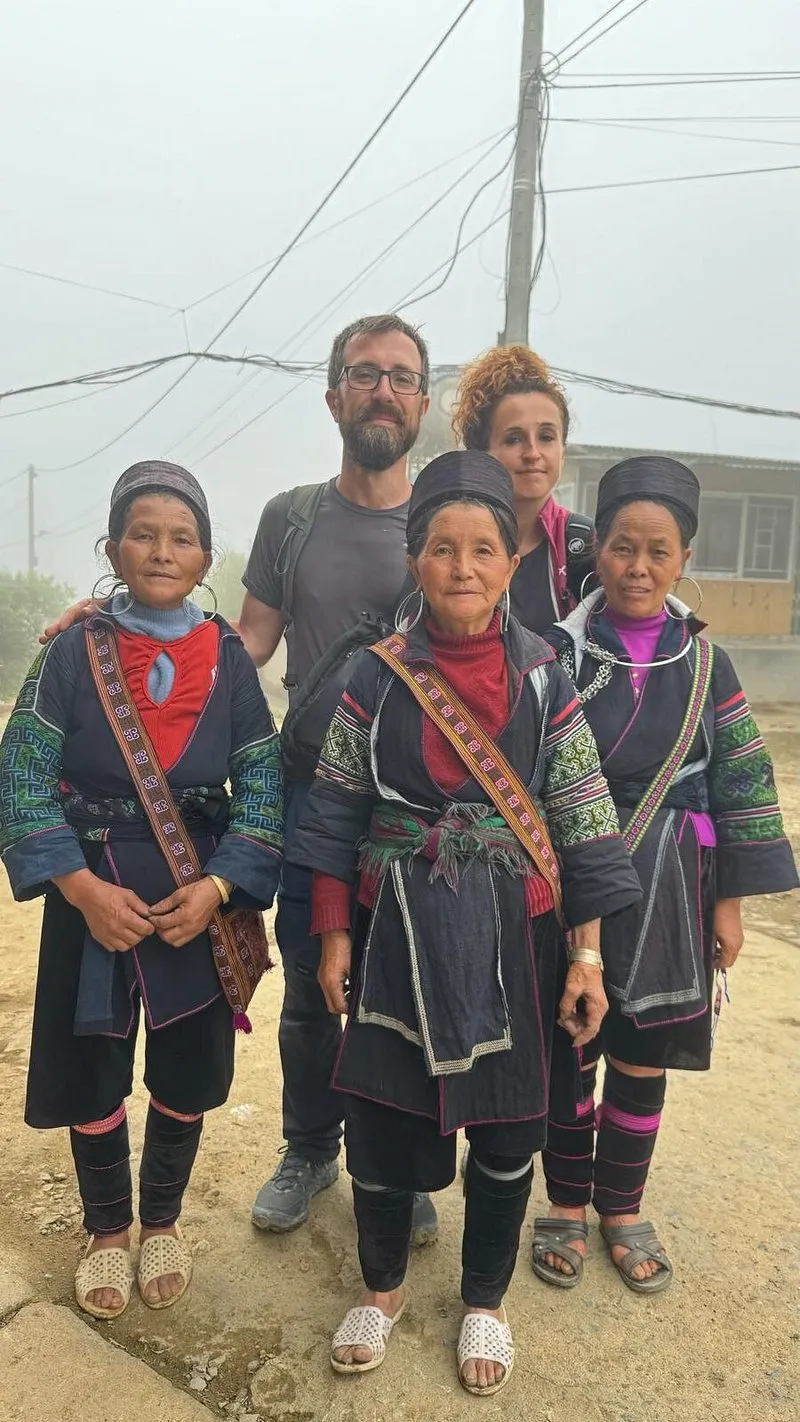 Families & Seniors
Sapa Easy Trekking For Seniors
A gentle, flat village walk where poles can be rented at our office — perfect for 60+ and families.
2. Lao Chai — the Black H'mong heartland
Just before Ta Van on the classic route, Lao Chai is a large Black H'mong village spread across the valley floor about 7 km from town, ringed by some of the most photographed terraces in Sapa. It's where you'll see indigo dyeing, hemp weaving and farming up close, and where many H'mong guides come from. Walked as part of the Lao Chai – Ta Van route, it's the quintessential Sapa village experience — busy with trekkers by day, but beautiful and deeply characterful.
Lao Chai is also the best place to understand H'mong farming and craft up close. You'll likely see indigo plants and the deep-blue dye that stains the women's hands, hemp being stripped and woven, and water buffalo working the paddies. Many of the women who walk and sell alongside trekkers are from here, and buying a piece of embroidery directly from its maker is both a good souvenir and a fair way to support the village. It flows straight into Ta Van, so the two are almost always walked together.
3. Y Linh Ho — rugged & quieter
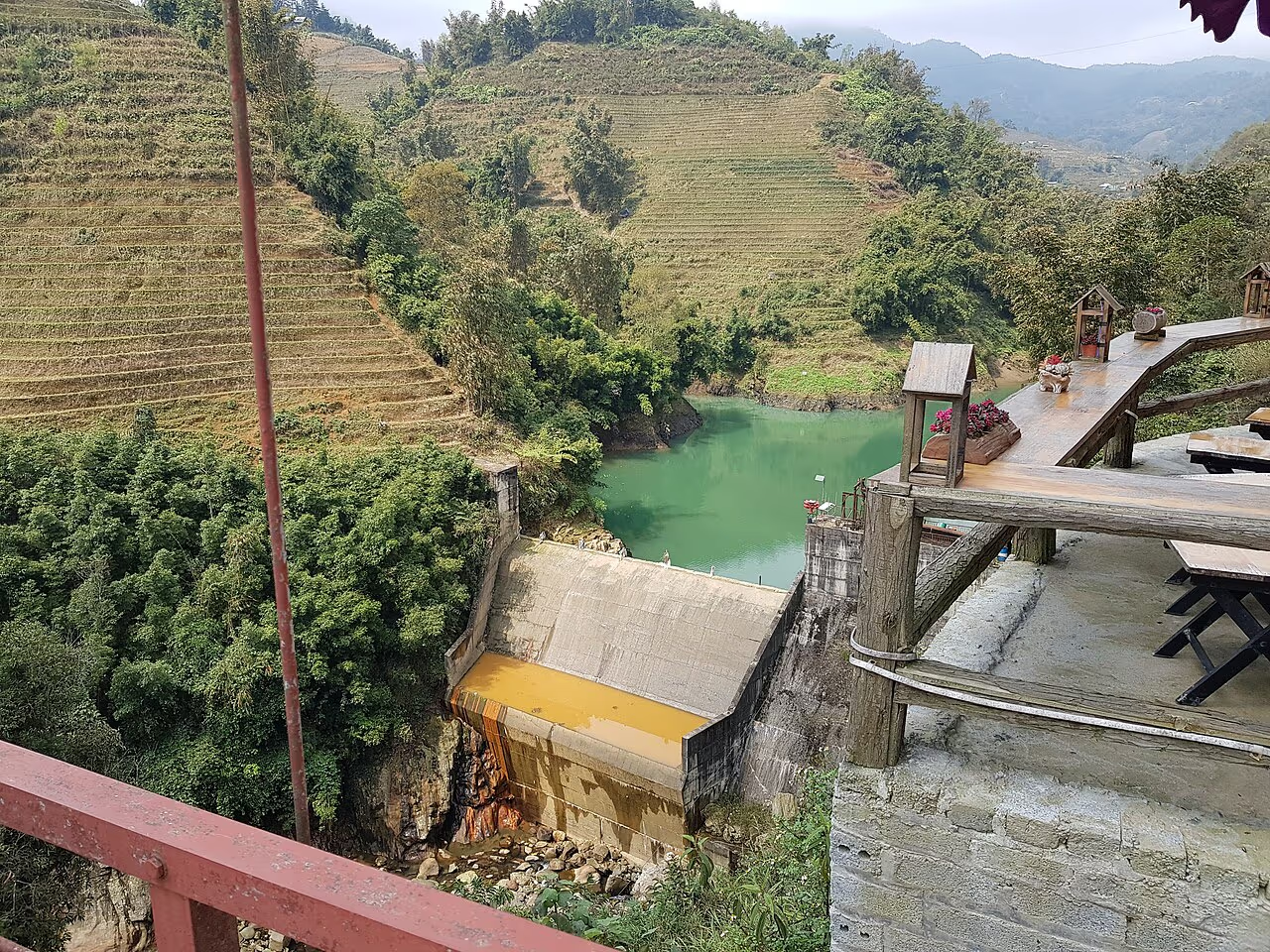
Y Linh Ho is a scattering of small Black H'mong hamlets on steeper, more rugged ground above Lao Chai, about 6 km from town. It's the starting point for the longer, slightly tougher version of the classic trek, with narrow trails, bamboo and far fewer people in the early stretch. If you want the valley with more of a sense of adventure and fewer crowds, start your trek here — it's wilder and more rewarding underfoot.
Because Y Linh Ho is spread thinly across difficult terrain, it feels far more remote than its short distance from town suggests — steep paths, bamboo thickets, and homesteads clinging to the slopes. It's not a "sight" so much as a stretch of authentic, hard-farmed hill country, and walking through it is a highlight of the longer valley trek for travelers who want to feel they've earned the scenery.
4. Cat Cat — the easy one (but touristy)
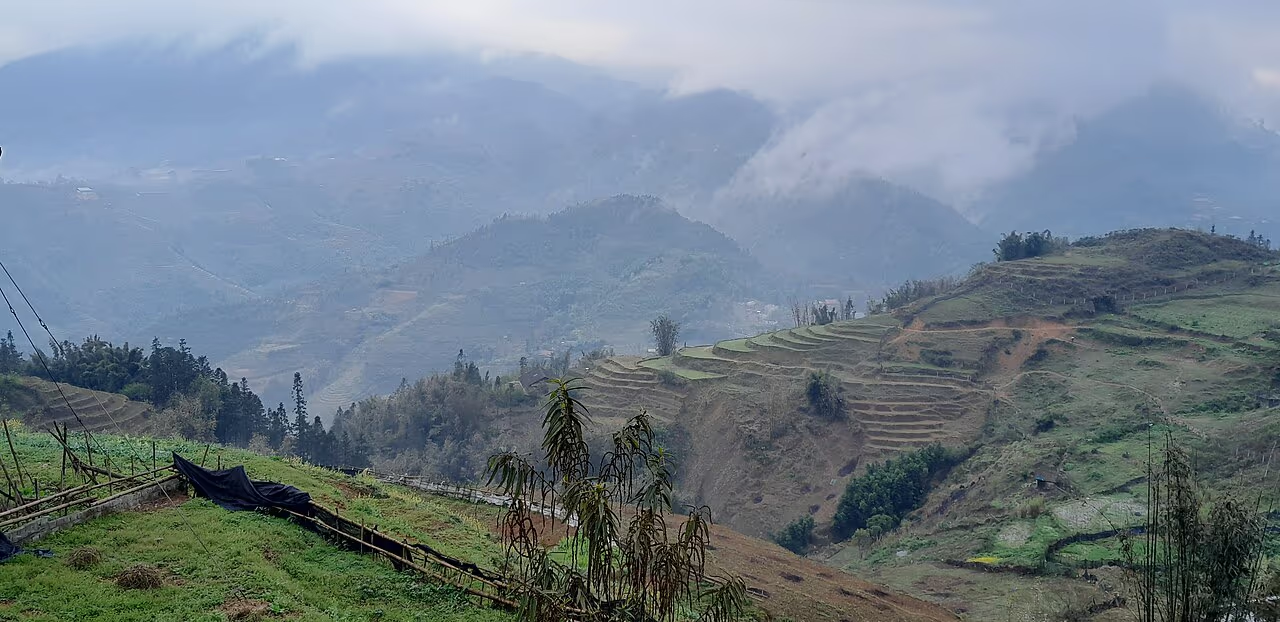
Cat Cat is the closest village to town — a short, mostly paved walk down to a Black H'mong settlement with a waterfall, an old French hydro-station, craft demonstrations and photo spots. It's easy, scenic and good for limited time, energy or small children, with a small entrance fee. The honest catch: it's the most commercialised village in Sapa, more open-air attraction than working community. Enjoy it for what it is — but don't mistake it for the real, quiet valley you'll find on a proper trek.
If you do visit Cat Cat, go first thing in the morning before the tour groups arrive, and treat it as a gentle introduction rather than the main event — perhaps on your arrival afternoon, saving a proper valley trek for a full day. The waterfall and old French hydro-station are genuinely pretty, and the short loop is manageable for almost anyone, which is its real value: it's the one village that travelers with very little time or mobility can still enjoy.
5. Ta Phin — Red Dao culture & herbal baths
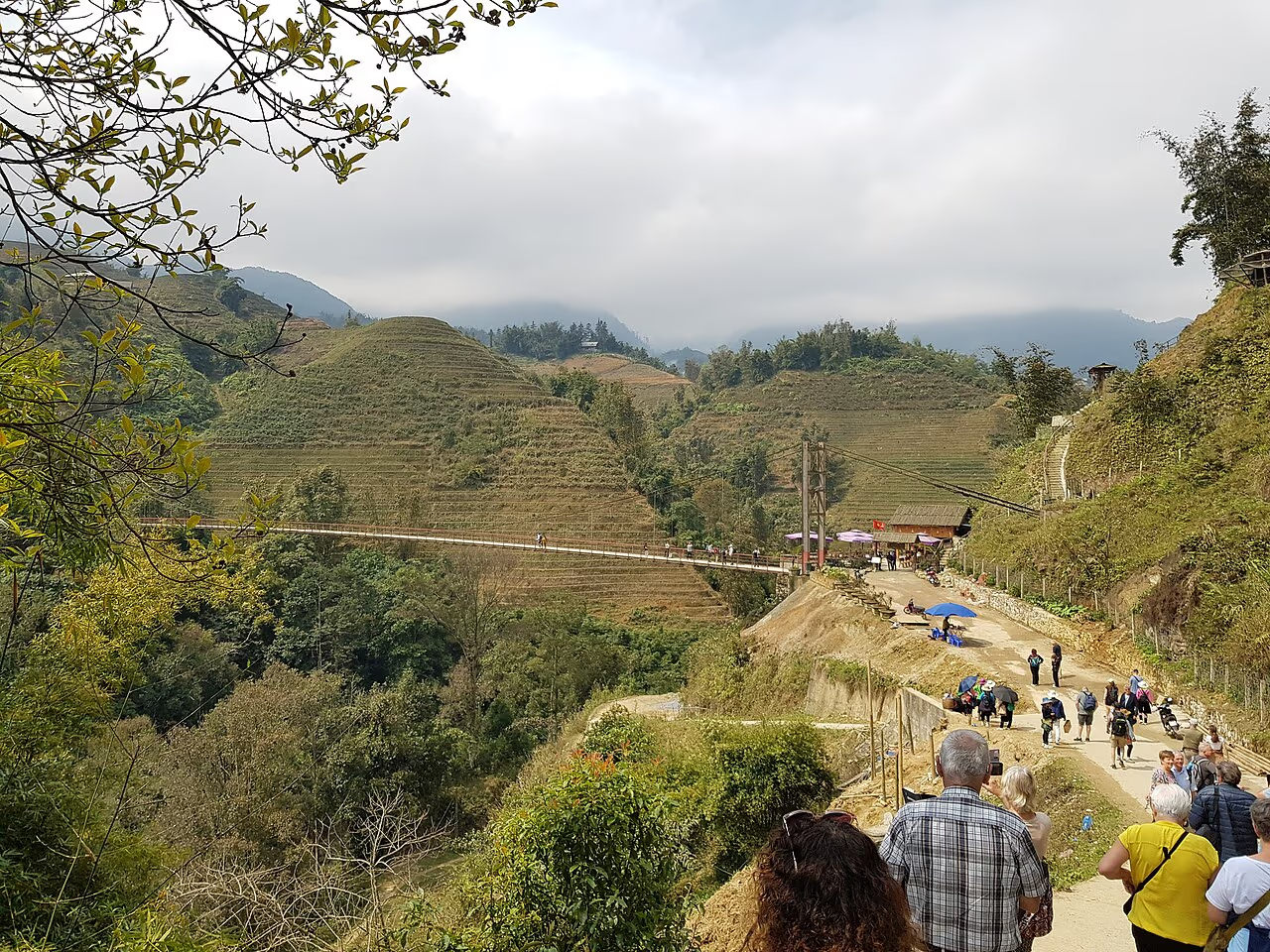
In a quieter valley north-east of town, about 12 km away, Ta Phin is the heartland of the Red Dao (with a Black H'mong community too), famous for their intricate embroidery and traditional herbal-bath medicine. A Ta Phin visit mixes terraces, a cave, village life and the chance to soak in a tub of medicinal mountain herbs with a Red Dao family. It sees far fewer trekkers than the Muong Hoa villages — a lovely, more cultural day, especially as a second outing.
The Red Dao herbal bath is the thing not to miss in Ta Phin. After a walk through the village and its terraces, you soak in a wooden tub of steaming water infused with a dozen or more mountain herbs — a traditional remedy the Red Dao have used for generations to ease aching muscles and warm the body. Have it with a local family rather than a town spa for the authentic version. Ta Phin is also famous for its intricate embroidery, sold by the women themselves, and for a large limestone cave on the edge of the village.
Getting to Ta Phin is a little different from the Muong Hoa villages — it is in its own valley, reached by a short drive plus a walk, or as a half-day trek loop. That slight extra effort is exactly why it stays quieter and more relaxed than the classic route. For travelers who have already done the Lao Chai – Ta Van trek and want a contrasting second day with a stronger cultural focus, Ta Phin is the natural choice.
6. Ban Ho, Sin Chai & the far villages
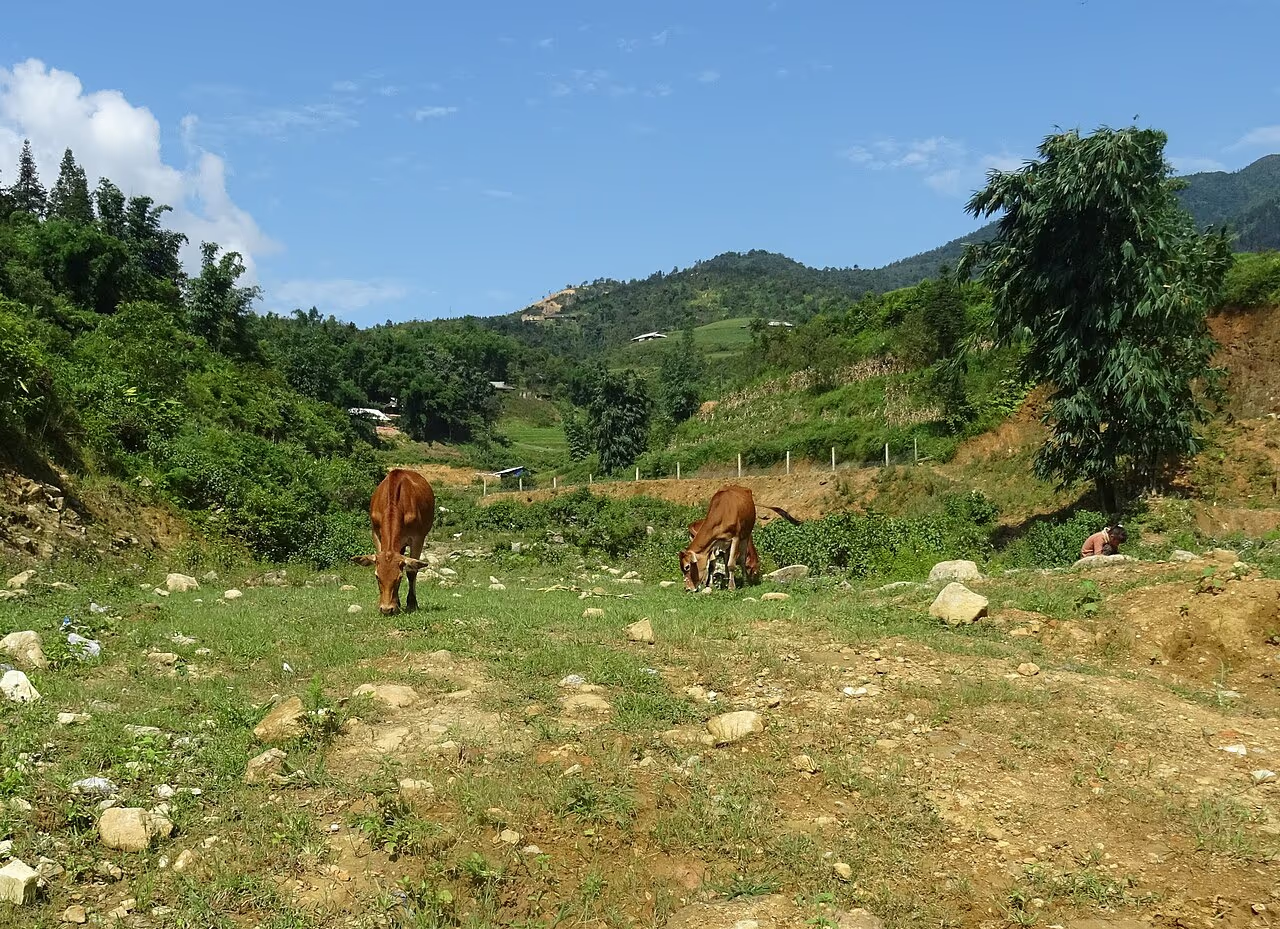
For travelers who want to go beyond the classic route, a few further villages reward the effort. Sin Chai, a large Black H'mong village below Fansipan near Cat Cat, sees few tourists despite being close. Ban Ho, around 25 km out, is a lower, warmer Tay village by a river with swimming spots and homestays — a peaceful overnight off the main trail. Others like Giang Ta Chai (Red Dao, with a waterfall) and Su Pan dot the deeper valley. These take more time and usually a longer or multi-day trek, but they're where Sapa feels most untouched.
These far villages suit travelers on their second visit, or anyone with three or more days who wants to get well beyond the day-trip zone. Ban Ho in particular makes a lovely contrast to the high Muong Hoa villages: it's warmer, set by a river with natural swimming holes, and the Tay stilt houses and slower pace feel a world away from busy Sapa town. Reaching any of them well usually means a longer or multi-day trek, which is part of the appeal — the journey is the experience.
A practical heads-up for the far villages: facilities are basic, English is limited, and there is little in the way of shops or cafes, so a guide and some planning matter more here than on the popular routes. That very lack of infrastructure is what keeps them authentic, but it does mean they suit the more adventurous, flexible traveler rather than someone wanting comfort and convenience close at hand.
The Villages Compared
Six villages side by side, so you can match one to your time and the kind of experience you want.
| Village | Ethnic group | From Sapa | Character | Best for |
|---|---|---|---|---|
| Ta Van | Giay | ~9 km | Scenic, homestays | The overnight / classic |
| Lao Chai | Black H'mong | ~7 km | Classic trek hub | First-timers |
| Y Linh Ho | Black H'mong | ~6 km | Rugged, quieter | Keen trekkers |
| Cat Cat | Black H'mong | ~2 km | Easy, touristy | Limited time, families |
| Ta Phin | Red Dao | ~12 km | Cultural, herbal baths | Culture, a quieter day |
| Ban Ho | Tay | ~25 km | Remote, riverside | Off the beaten path |
The pattern is simple: the closer and easier the village, the busier it is. Cat Cat is effortless but commercial; Lao Chai and Ta Van balance access with real village life; and the further you walk — Y Linh Ho, Ta Phin, Ban Ho — the quieter and more authentic it gets.
For most first-time visitors with a day or two, the sweet spot is the Lao Chai – Ta Van trek (optionally starting at Y Linh Ho for more challenge), with an overnight in Ta Van. Add Ta Phin as a gentler second day if you have it, and save the far villages for a return trip. That combination gives you several cultures, the best of the scenery, and a homestay night — the complete Sapa village experience without trying to see everything.
Our Pick: The Villages Ranked
If you're choosing where to spend your time, here's how we rank them overall — weighing scenery, authenticity, the welcome, and how rewarding the visit is.
Ta Van tops it as the all-round best — scenic, welcoming and perfect for an overnight — while Cat Cat scores lowest not because it's ugly (it isn't) but because it's the least authentic. The "best" village, though, is really the one you reach on foot with time to linger.
However you rank them, resist the urge to tick off as many as possible. One village experienced slowly — a long lunch, a chat with a family, time to wander — beats five villages glimpsed from a passing walk. The travelers who love Sapa most are almost always the ones who slowed down and went deep in one or two places rather than racing through the lot.
If we had to send a first-timer to just one village, it would be Ta Van on an overnight trek; if to two, Lao Chai and Ta Van together; and if you have a third day, Ta Phin for its Red Dao culture and herbal baths. That simple progression — one, then two, then a contrasting third — is how we'd build almost any Sapa villages itinerary.
And do not overlook simply being in a village without an agenda. Some of the best moments come from sitting on a porch out of the rain with a cup of tea, watching ducks on a flooded paddy, or being beckoned over to see a baby or a loom. Those unplanned encounters — only possible when you slow down and your guide can translate — are what separate a village you visited from one you connected with.
"We did the trek to Ta Van and stayed the night with our guide's family. Helping cook dinner, the rice wine, the kids teaching us card games, waking to fog on the terraces — it wasn't a village we visited, it was a family we'll never forget."
— Sophie & James W., Melbourne, Australia (October 2025)
How to Visit the Villages
The villages all lie in the valleys around Sapa town, which you reach overland from Hanoi (about 5–6 hours, no airport). Once in Sapa, the best — and most rewarding — way to visit the villages is to trek between them with a local guide, following the trails through the terraces rather than driving up to a viewpoint. Cat Cat you can walk to alone; for everything deeper, a guide unlocks the trails, the language and the welcome into family homes. Sort your Hanoi–Sapa transfer first, then let us handle the rest.
On timing, the villages are beautiful year-round but best from September to November (golden harvest, clear skies) and March to May (mild, with flooded or green terraces). Whatever the season, visit early or late in the day for the quietest, most authentic village atmosphere — the middle of the day is when the tour buses and the crowds are at their peak, especially in Cat Cat and on the busiest stretch of the Lao Chai – Ta Van route.
How long do you need? You can see a village or two on a half-day, but to do them justice give yourself two days: a full-day trek through the Muong Hoa villages, ideally with a homestay night, and an optional second day out to Ta Phin or a quieter route. With travel from Hanoi that means about three to four days in Sapa total — enough to slow down and actually meet people rather than just pass through.
Get to Sapa in Comfort


For any village trek, the trails get muddy — so decent footwear matters. You don't need to fly with boots; rent them in town the day before.
Boots & Poles, Rented in Town
 Gear Rental
Trekking Boots Rental
Waterproof ankle-support boots, cleaned and checked before each rental. At 105 Thach Son Street.
 Gear Rental
Walking Poles Rental
Trekking poles at $2/day from our office at 105 Thach Son Street. Great on the muddy village trails.
Village Culture & Etiquette
A little cultural awareness makes a village visit richer for you and kinder to your hosts. These are working communities with their own beliefs and customs, not open-air exhibits. Dress modestly, ask before photographing people (a smile and a gesture is usually enough), and take your shoes off when entering a home. In some H'mong and Dao houses there's a sacred altar or central post you shouldn't touch or sit with your feet pointing toward — your guide will quietly steer you right.
On shopping and giving: buying handicrafts directly from the women who make them is welcome and fair, but please don't give money or sweets to children, which encourages begging and keeps kids out of school — support the community through guides, homestays and crafts instead. A genuine interest in people's lives, a few words of greeting, and patience with the hard-sell on the busier trails go a long way. Travel this way and the villages stay warm, welcoming places — for the families who live there and the travelers who follow you.
Finally, remember that your visit has real impact. Tourism is now a major part of these villages' economy, and done well it funds schooling, healthcare and a reason for young people to stay rather than leave for the cities. Choosing community-rooted guides, sleeping in family homestays, eating village food and buying local crafts all keep that money where it does the most good — turning your trip into something that helps sustain the very culture you came to see.